




Recent studies1 suggest that treadmills can provide the most calorie-burning opportunities and highest level of energy expenditure, but cardio can be a benefit in any form. An exercise bike is one of the best cardio machines you can buy, thanks to its lower impact on the joints and smaller footprint.
We’re confident you can find a high-quality vessel for your at-home cycling workouts with our help. Our team of fitness professionals has tested more than 50 of the best exercise bikes, and in 2025 alone, we helped more than 3,100 people find the right ride. Whether aiming for a budget-friendly option or a tech-heavy model, here are our favorite exercise bikes available today.
GGR Gold Pick – Best Exercise Bike
After testing dozens of exercise bikes from top fitness brands, we’ve crowned the 4.6-star-rated NordicTrack X24 Bike as our current favorite thanks to its suite of on-demand workout options, incline/decline capabilities, and whisper-quiet operation.
Best Exercise Bikes of 2026
- Best Overall Exercise Bike – NordicTrack X24 Bike
- Best Peloton Bike Alternative – Aviron Fit Bike
- Best Air Bike – Rogue Echo Bike
- Best Exercise Bike for HIIT – REP Fitness Strive Air Bike
- Best Magnetic Exercise Bike – Bowflex VeloCore
- Best Exercise Bike Without a Subscription – Concept2 BikeErg
- Best Exercise Bike for Streaming – Peloton Cross Training Bike
- Best Recumbent Exercise Bike – Sole LCR Exercise Bike
- Best Budget Exercise Bike – MERACH S36 Magnetic Resistance Bike
Current Top Deals
- Sole LCR Exercise Bike – Beat the Heat Sale – Save $300
- Aviron Fit Bike – Save $500
- Bowflex VeloCore – $900 off + free shipping
How We Selected the Best Exercise Bikes
We take these bikes through challenging workouts to get a feel for how they’ll last over time. To get a 3 out of 5, an exercise bike must have a weight capacity of 275 pounds and a sizable flywheel (between 18 or 20 pounds). Higher weight capacities and flywheel weights will lead to better ratings, especially if the bike shows very little wobbling during our testing.
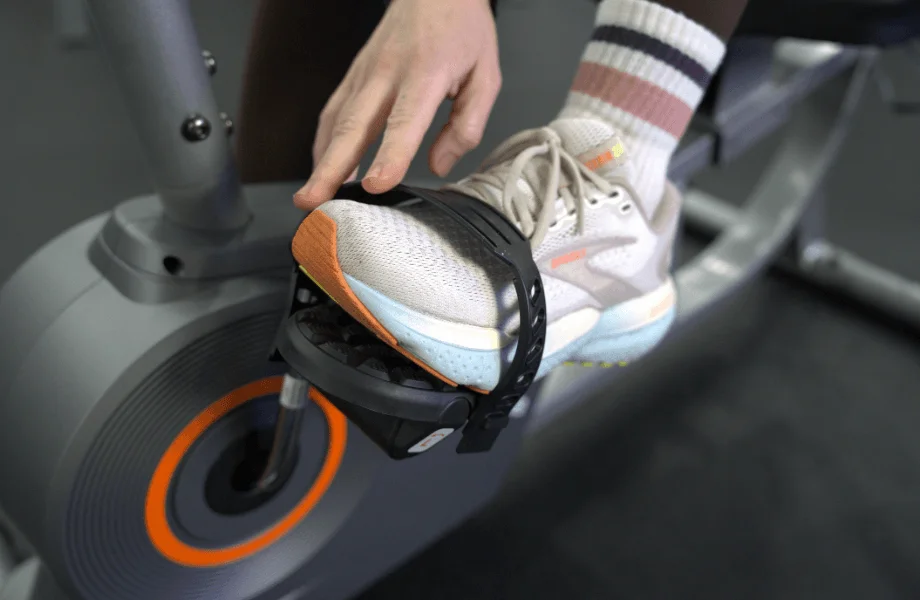
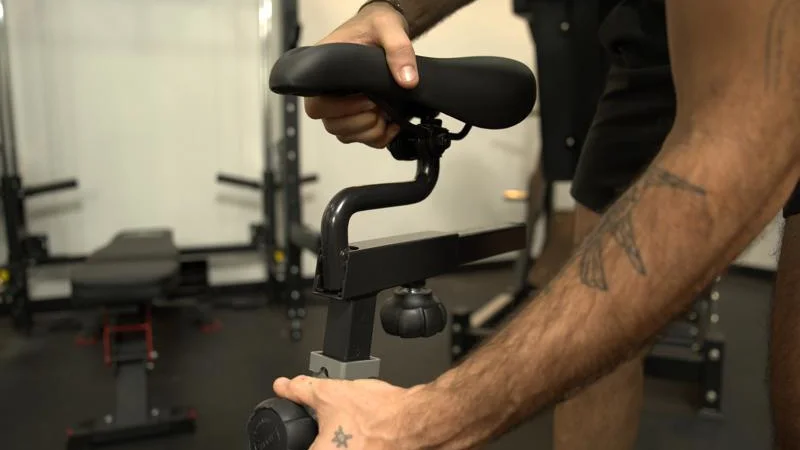
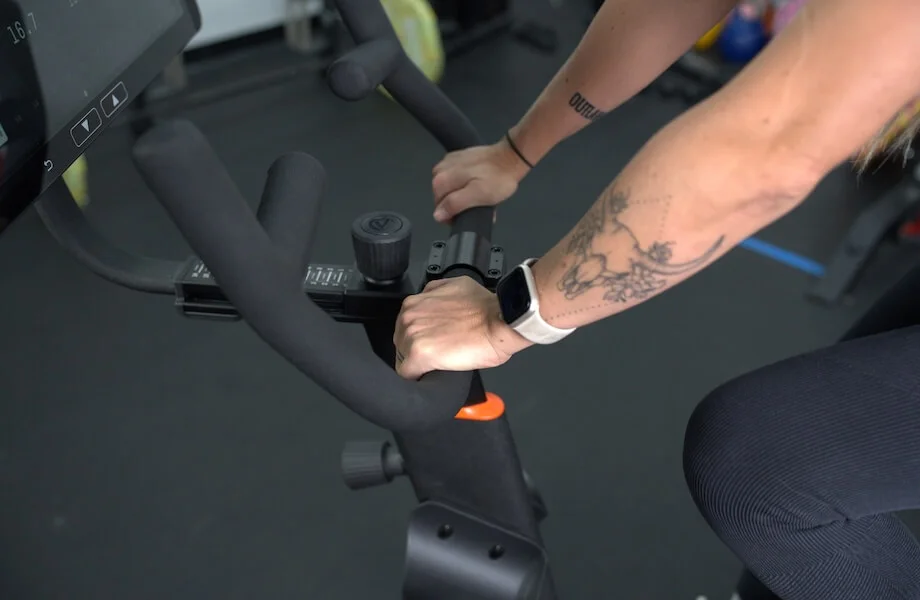
An exercise bike should have customizable settings to allow for varied workouts and a comfortable session. Our testers take a look at the resistance levels offered, as well as seat and handlebar adjustments that can be made.
For an exercise bike to get a 3 out of 5, it must have at least 12 levels of resistance and have some adjustments between the seat and handlebars. Added customizations like incline or decline settings and digital resistance toggles can lead to a higher score.
The programming offered by exercise bikes can vary from brand to brand, but most should offer some sort of built-in workouts. Bikes that earned a 3 out of 5 here offer built-in workout programs, but higher scores go to bikes that offer dynamic programming or live streaming classes through services like iFIT.

From air bikes and studio cycles to folding and recumbent bikes, we’ve tested more than 50 of the best exercise bikes and have researched dozens more. We test each exercise bike thoroughly through multiple workouts and sessions, rating the stationary bicycle on multiple factors according to our exercise bike testing methodology. Our team evaluates these bikes in key categories like durability, programming, customizations, ergonomics, and more.
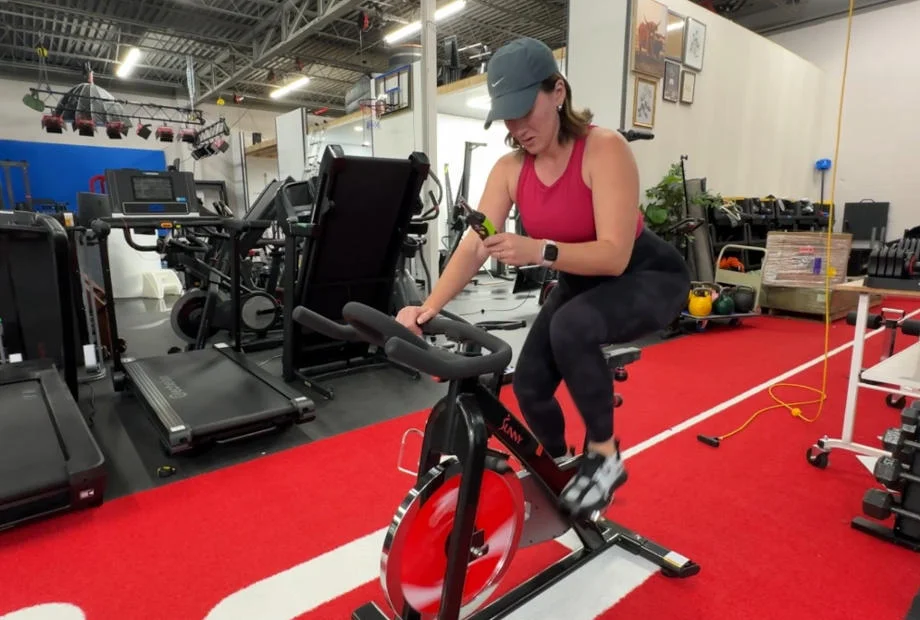
In determining our top picks for the best exercise bikes, each stationary bike was examined and rated by our expert team of certified personal trainers, CrossFit coaches, endurance athletes, and Olympic weightlifters. We also consulted with personal trainers and spoke with Dr. Chris Mohr, who holds a PhD in exercise physiology. To ensure accuracy, we had this article reviewed by Amy West, MD, as well—a dual board-certified physician in both Physical Medicine & Rehabilitation and Sports Medicine.
Latest Updates
In July 2026, we reviewed our list of the best exercise bikes and made a few changes based on our latest testing. The NordicTrack X24 still earns our top recommendation, but we swapped out picks that didn’t hold up in durability and value. New additions—like the REP Fitness Strive Air Bike and MERACH S36 Magnetic Resistance Bike—stood out for their high scores in these categories.
Best Exercise Bikes Video Review
Best Overall Exercise Bike: NordicTrack X24 Bike
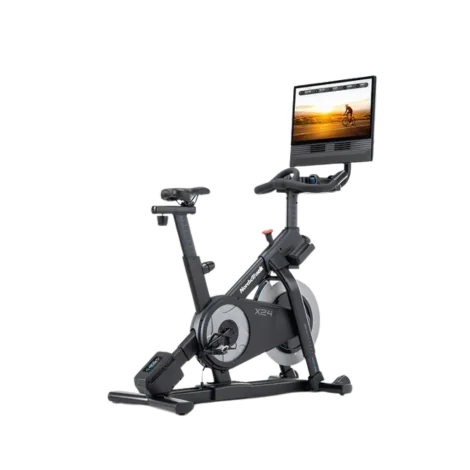








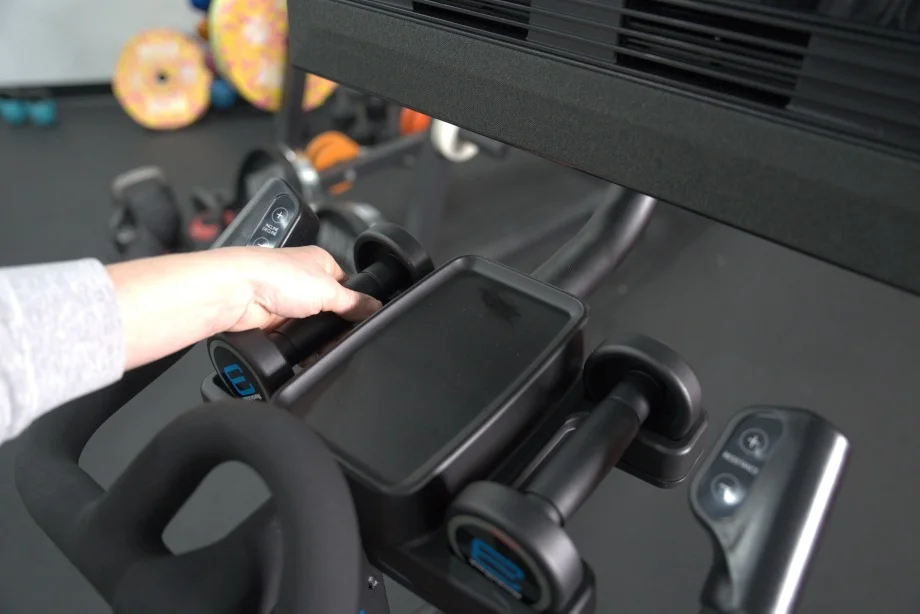
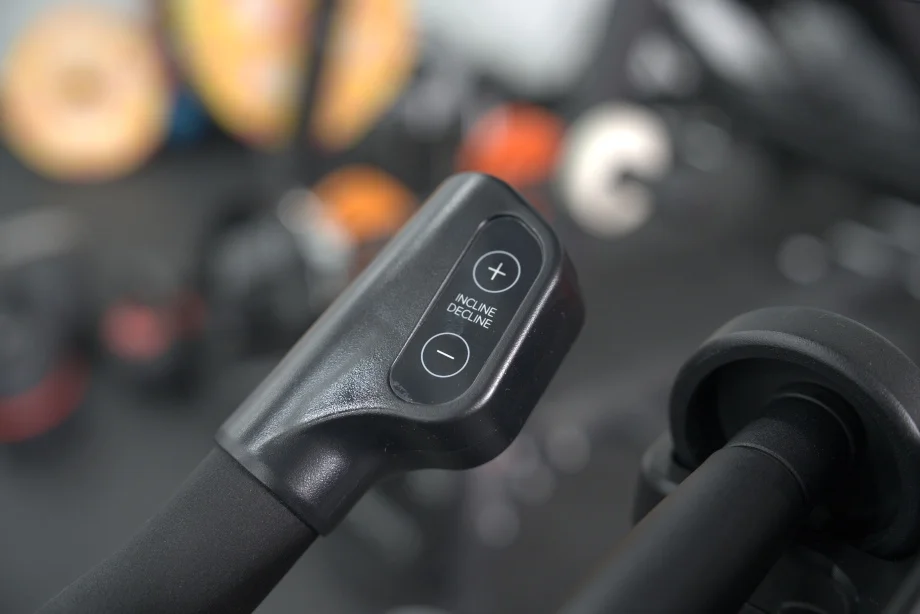
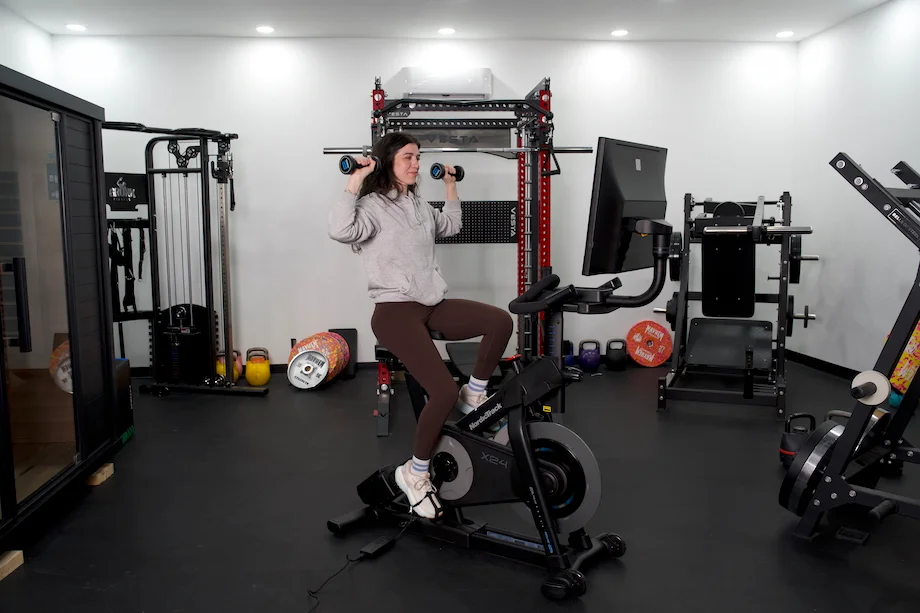
The X24 Bike is NordicTrack’s latest exercise bike offering an impressive incline range between -10% and 20% alongside iFIT compatibility for engaging on-demand workout programming. This all-new stationary bike also comes with two 3-pound dumbbells, which are ideal for taking part in iFIT’s library of non-cycling modules as well.
Offering excellent tech capabilities, ample customization options, and top-notch programming, the NordicTrack X24 takes the No. 1 spot on our list of the best exercise bikes. The iFIT platform (available for around $39 monthly) offers a library of more than 10,000 on-demand workout modules our testers all love. It also brings SmartAdjust technology to the X24, which automatically toggles your speed, incline, and decline in accordance with your on-screen instructor.
Our Experience Using the NordicTrack X24 Bike
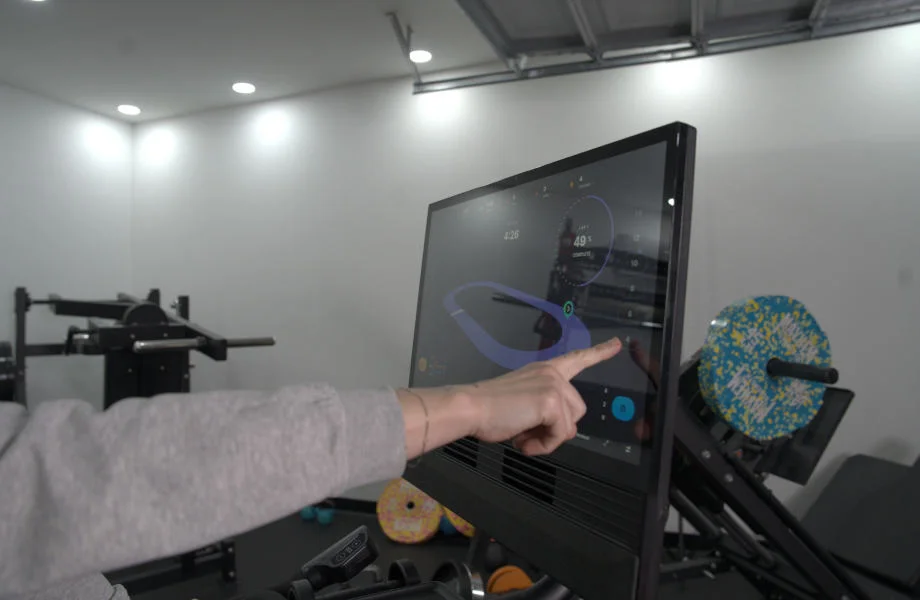
Equipped with a 24-inch pivoting touchscreen and high-tech features like smart resistance controls and an AI coach, the X24 has all the bells and whistles you need for streamlined cycling sessions. Of course, the biggest draw is iFIT integration, which opens the door to scenic rides, challenges, and more.
“The classes can adjust things like your machine’s incline, decline, and speed, so all you need to focus on is giving the workout your all,” says Caroline Lubinsky, a CrossFit Level-1 Trainer who has tested iFIT with other compatible machines.
Aside from its iFIT compatibility, one of the coolest aspects of this machine is that it simulates uphill and downhill rides. Few bikes on the market offer this capability, which is why the X24 received a perfect customizations score from our team.
The footprint of this NordicTrack stationary bike equates to roughly 8.54 square feet, which should fit in most training setups.
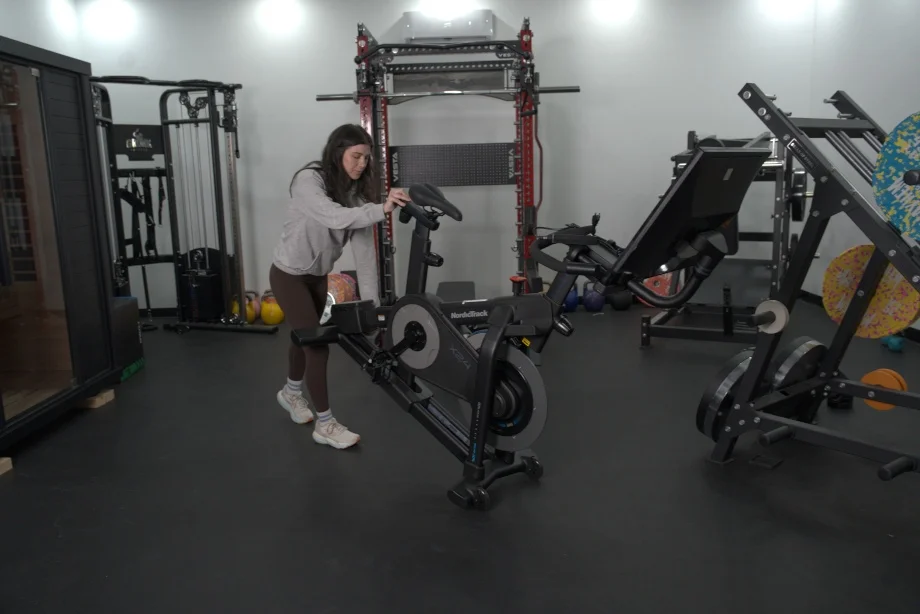
That said, “It is a big, heavy bike,” Lindsay told me. “Most fit, able-bodied individuals should be able to move it around, though older people or those with mobility issues may need assistance getting it from one room to another.”
Another drawback is that this is an expensive bike—almost double the price of the average exercise bike. We think it provides a lot of value, but this may not be the best option if you’re on a tight budget.
There are so many workout options with iFIT, and the machine will automatically adjust the intensity of your workout. The adjustments are so smooth that I didn’t even notice them until it got harder or easier, depending on what the class was doing.
Former GGR Everything Lead Reviewer Lindsay Scheele, CPT, CNC
Overall, the NordicTrack X24 earned one of the highest overall scores of any bike we’ve tested. For around $2,000, you get all the modern conveniences you’d expect from a machine in this price range, including an AutoBreeze™ cooling fan that automatically changes intensity to match your workout, premium speakers, and Bluetooth connectivity. Plus, the 20% incline to -10% decline range provides more than enough flexibility to make your workouts more challenging so you continue to progress.
For more details on our team’s experience with this premium machine, check out our NordicTrack X24 Bike review or read our in-depth testing breakdown below.
How the NordicTrack X24 Bike Compares
The NordicTrack X24 offers a lot of tech features, a lengthy warranty, and a high user weight capacity. You’ll pay a lot for it, but it’s often on sale, especially during holiday periods like Black Friday.
| NordicTrack X24 Bike | Average Exercise Bike | |
| Price | $1,999.99 | $1,409 |
| Product Weight | 205 lbs | 129 lbs |
| Dimensions | 56.4” L x 21.8” W x 62.7” H | 55″ L x 22.3″ W x 52.5″ H |
| User Weight Capacity | 350 lbs | 320 lbs |
| Warranty | 10-year frame, 2-year parts, 1-year labor | 5-year frame, 2-year parts |
If you’re looking for a more compact, maneuverable (and budget-friendly) exercise bike for your training needs, consider the MERACH S36 Magnetic Resistance Bike.
Best Peloton Bike Alternative: Aviron Fit Bike
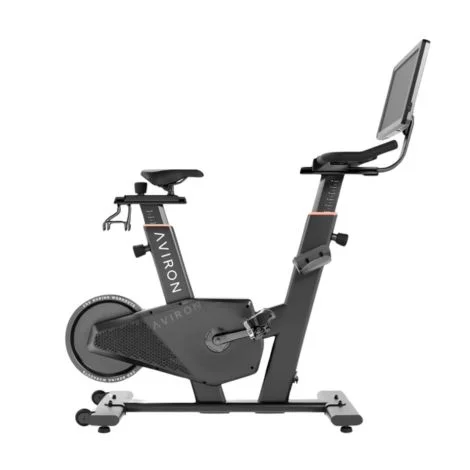

If you’re looking for an exercise bike that offers more than instructor-led studio classes, the Aviron Fit Bike might be your answer. It’s a stationary bike that rides like a real bicycle because the pedals and flywheel function independently from one another, making it possible to make micro adjustments to speed and coast without losing flywheel momentum. Plus, Aviron’s programming is known for its interactive and competitive games that keep home exercisers more engaged than traditional classes.
What our tester says:
“The programming is an absolute treat with this bike. If you’re a fan of gamified fitness, where your programming is closer to a trip to the arcade than a trip to the gym, this is the bike for you.”
While the Peloton Cross Training Bike is (understandably) one of the best exercise bikes with a screen, the studio-style programming may not be everyone’s cup of tea. For those who want a digital training experience with a refreshed aesthetic, there’s a viable alternative: the Aviron Fit Bike.
“The programming is top-notch and a nice reprieve from your typical studio classes,” notes a GGR product tester. “I’ve been a fan of Aviron’s programming for a while and do feel more engaged and focused on the gamified programs. After all, how can you not be focused when there’s a high score at stake?”
Our Experience Using the Aviron Fit Bike
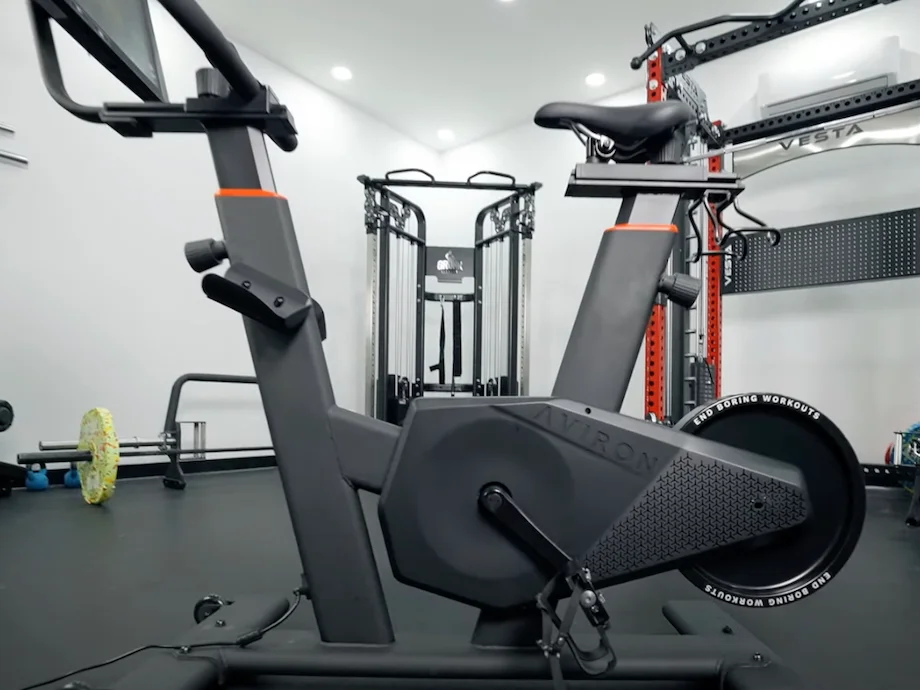
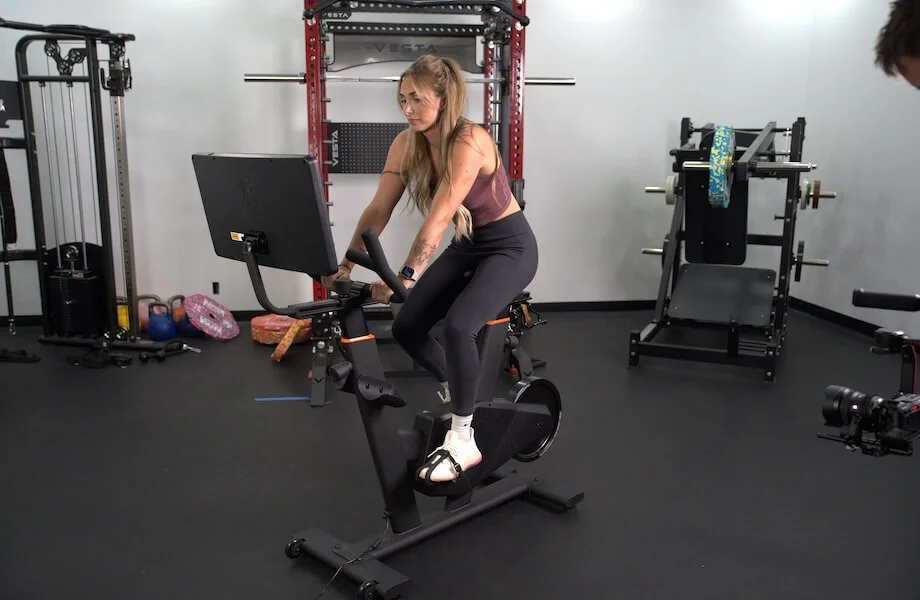
Aviron hit an ergonomic home run by employing a 10-point adjustment system across the bike’s saddle and handlebars, allowing you to craft the perfect setup for your preferred body positioning. However, that’s not the only user-friendly design feature that stands out as our top Peloton alternative.
“One thing that makes this bike different is its freewheel design,” explains former Garage Gym Reviews Everything lead reviewer Lindsay Scheele, CPT, CNC. “On a lot of other bikes, the flywheel and the pedals work in tandem to create momentum as you ride. On the Aviron bike, the flywheel and the pedals operate independently, which mimics the feeling of riding a road bike.”
While our tester commended the compact build, the cumbersome 22-inch touchscreen display detracts from the bike’s portability.
“It makes for a top-heavy profile that can be difficult to maneuver, even with the front transport wheels. I’d be careful about moving this exercise bike from one room to the next,” our tester noted.
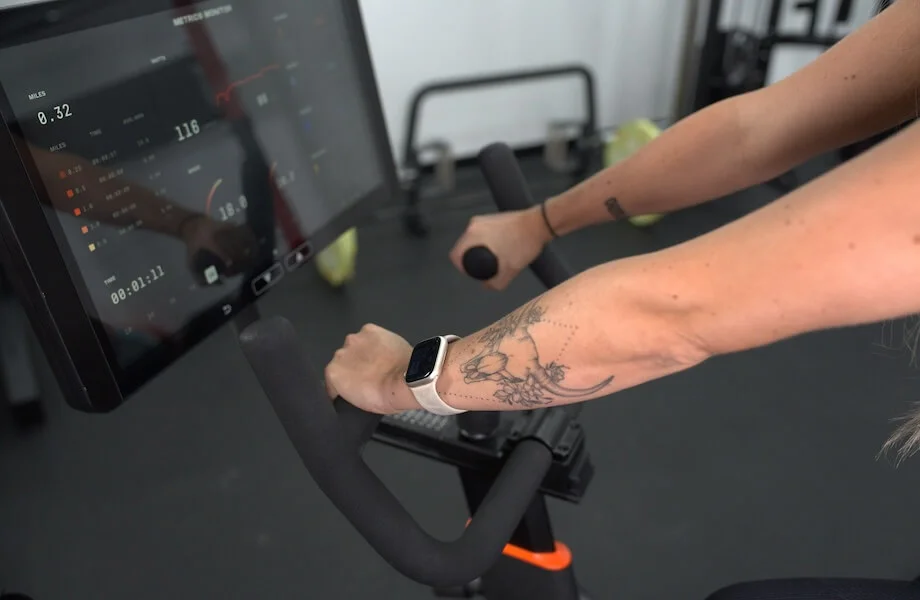
At $2,700, the Aviron Fit Bike is about twice as expensive as the average bike. Meanwhile, the Aviron App is a subscription-based service that costs $34 per month or around $348 billed once a year (which works out to about $29 per month). This membership includes unlimited access to on-demand classes, guided programs, and Aviron’s game library. You can also add unlimited profiles for other members of your family.
However, it’s clear the cost of ownership is pretty high, especially compared to some more budget-friendly options on this list.
As I was using and testing it, it didn’t shake at all—even at high resistance and high speed. The screen doesn’t shake either, which is rare.
Former GGR Everything Lead Reviewer Lindsay Scheele, CPT, CNC
Backed by an industry-leading 20-year warranty, the Aviron Fit Bike is a great long-term investment for serious cyclists who want to take advantage of the brand’s high-quality programming. Gamified training certainly isn’t the same as taking a live studio class, but that’s exactly why you should consider this as an alternative to the uber-popular Peloton. As long as you can stomach the high sticker price and subscription cost, this machine checks every box we look for (other than portability).
For more information, be sure to read our Aviron Fit Bike review.
How the Aviron Fit Bike Compares
The Aviron Fit Bike may be more expensive than its competitors, but you also get a unique workout experience and an unmatched warranty.
| Aviron Fit Bike | Average Exercise Bike | |
| Price | $2,699 | $1,409 |
| Product Weight | 139 lbs | 129 lbs |
| Dimensions | 62.5″ L x 22″ W x 60.5″ H | 55″ L x 22.3″ W x 52.5″ H |
| User Weight Capacity | 350 lbs | 320 lbs |
| Warranty | 20 years | 5-year frame, 2-year parts |
If you’re interested in streamable workouts yet aren’t looking for a Peloton Bike, consider the NordicTrack X24 and its iFIT compatibility.
Best Air Bike: Rogue Echo Bike
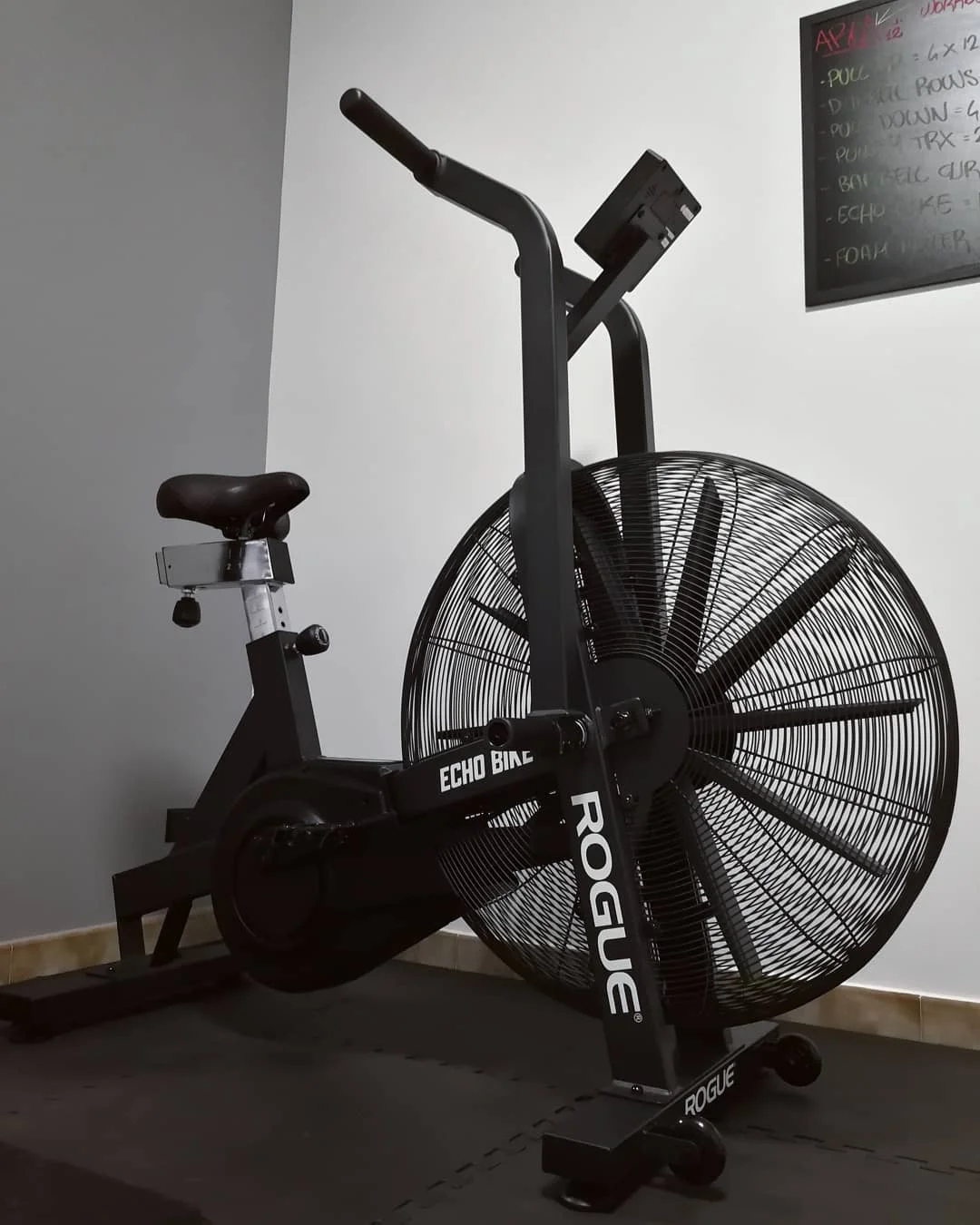
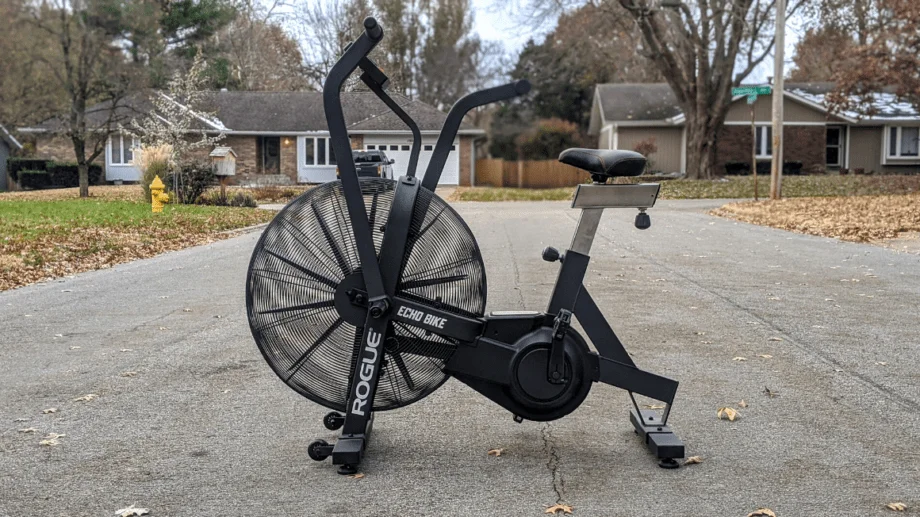
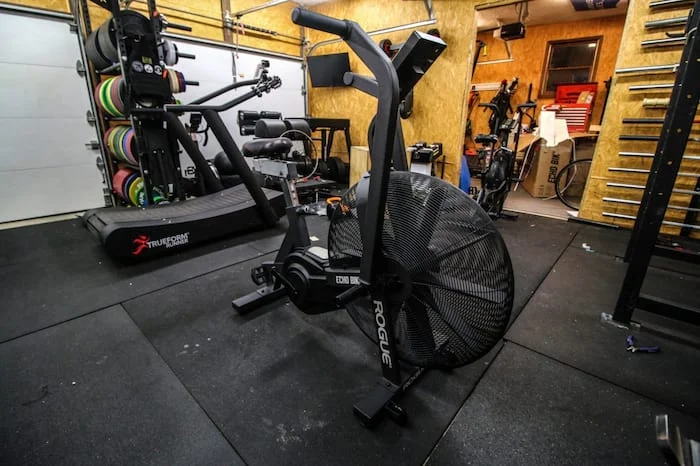
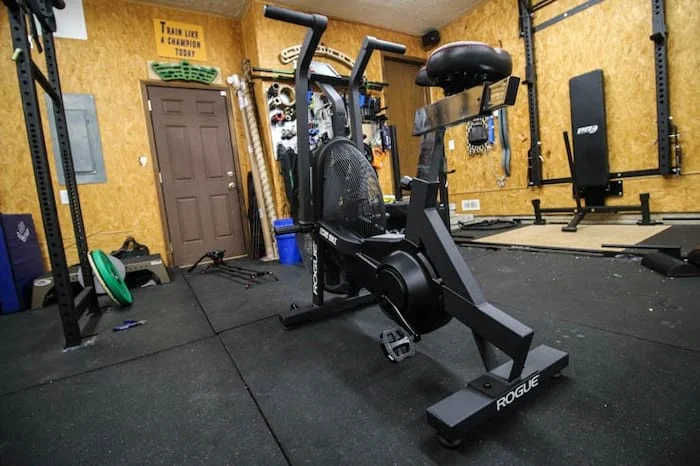
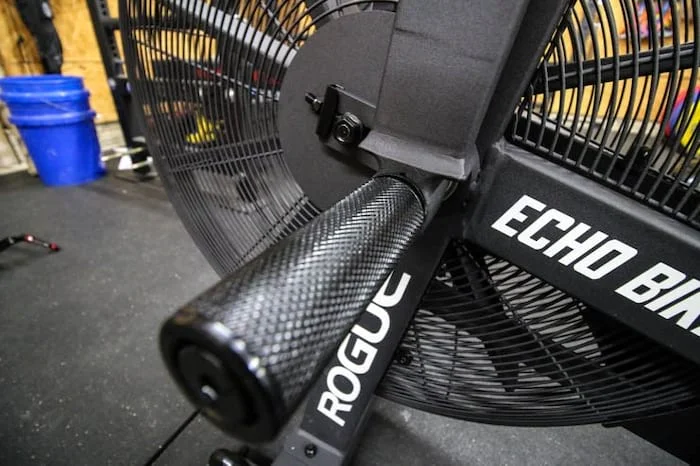
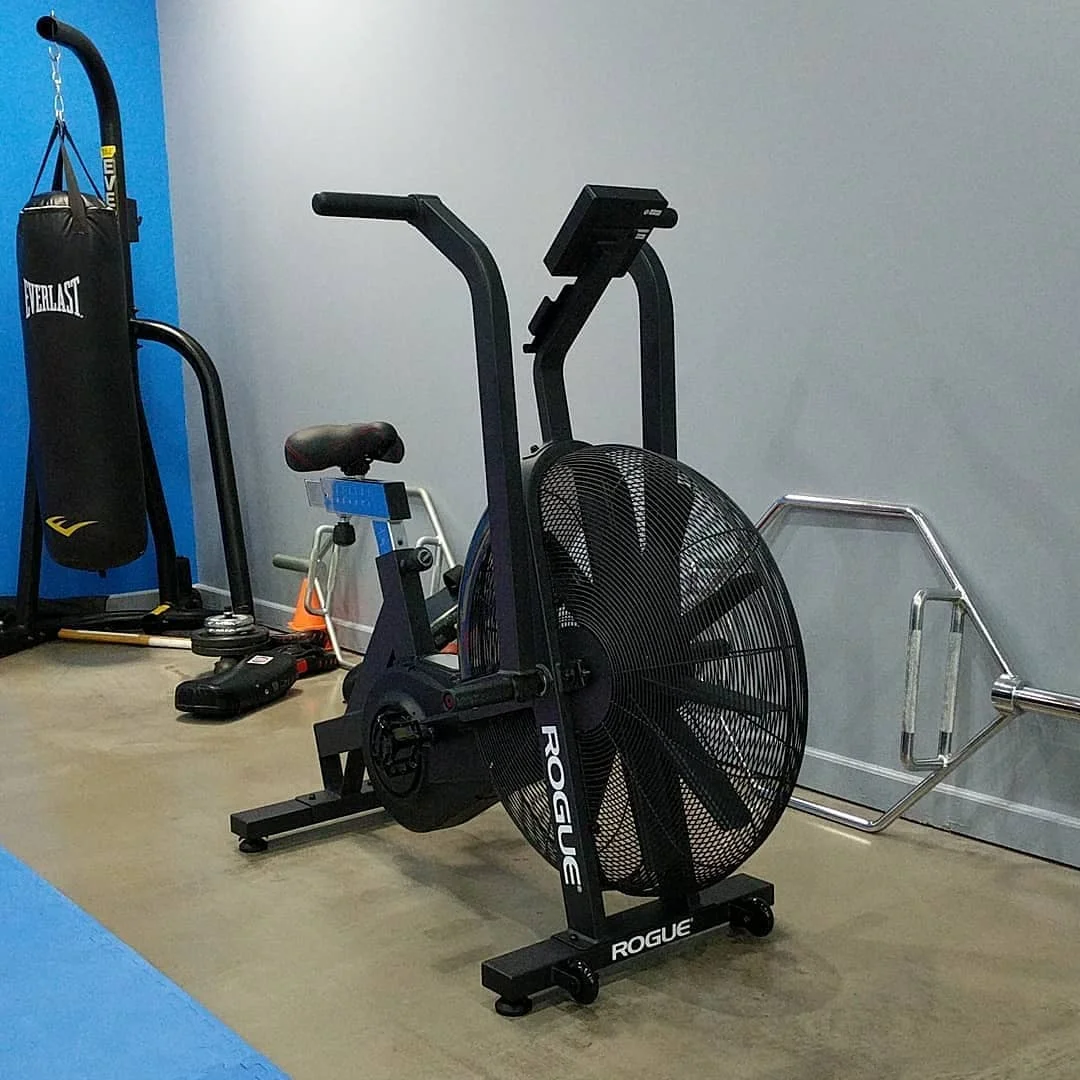



We’ve tested just about every air bike on the market, and the Echo combines many of our favorite features into one. The belt drive is much more durable and requires less maintenance than a chain drive. The size and weight make it extremely stable, and the price is much less than we’d expect for such a quality piece of equipment.
What our tester says:
“Call it beginner’s luck, but Rogue Fitness did a great job with their first-ever conditioning machine. This is a piece of equipment that will give people of all fitness levels a hardcore full-body workout, look great in their home gym, and last for many years.”
Studies show2 that air bikes can provide a challenging cardio workout that can help improve cardiorespiratory fitness in a short amount of time. Of the bunch, the Rogue Echo Bike is one of the best air bikes, and it’s up for any challenge you throw at it, given its durable frame, smooth ride, and surprising portability. It’s also the official air bike of the CrossFit Games.
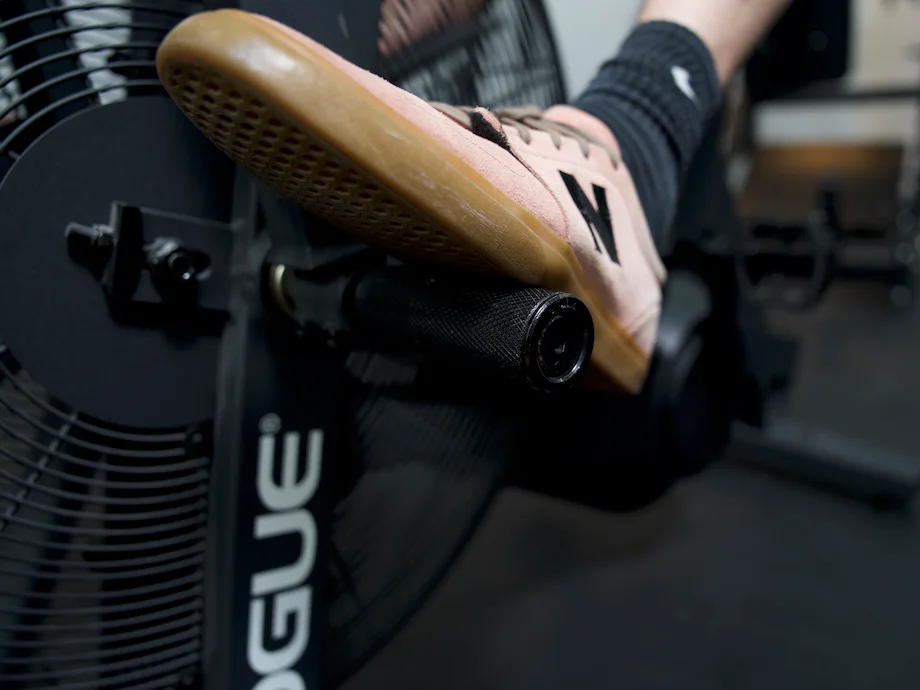
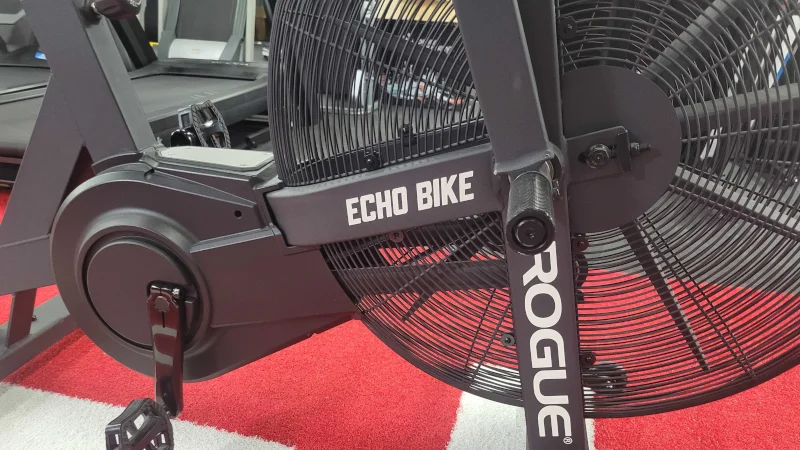
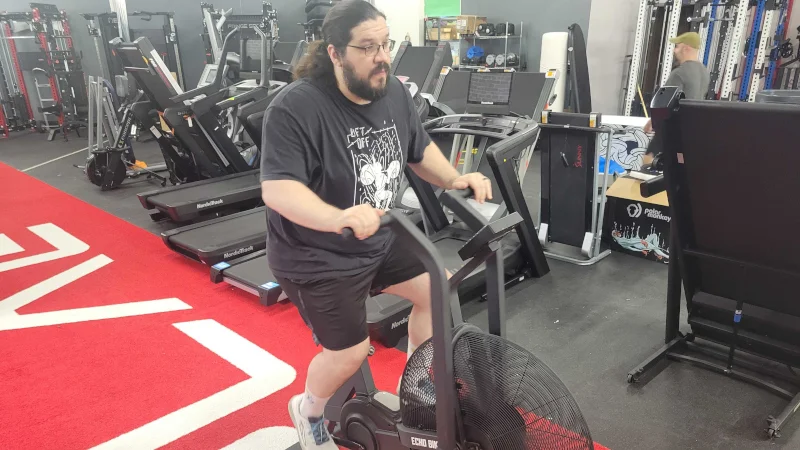
Our Experience Using the Rogue Echo Bike
After using the Echo Bike for many years, GGR founder Coop Mitchell calls it “bombproof” and states that with minimal maintenance on it, the bike still looks and feels like new.
“Until recently, my garage gym has not been climate-controlled, so it’s been in both the extreme heat and the extreme cold. I’ve also moved it to my personal training studio, where it’s used more often, and the only maintenance I’ve had to perform on it is wiping it down with disinfectant spray,” he told me.
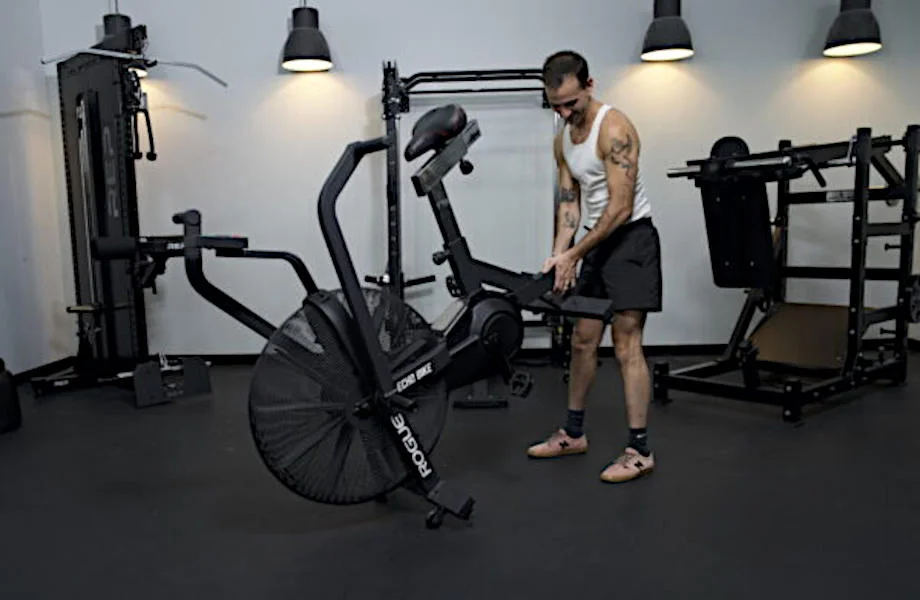
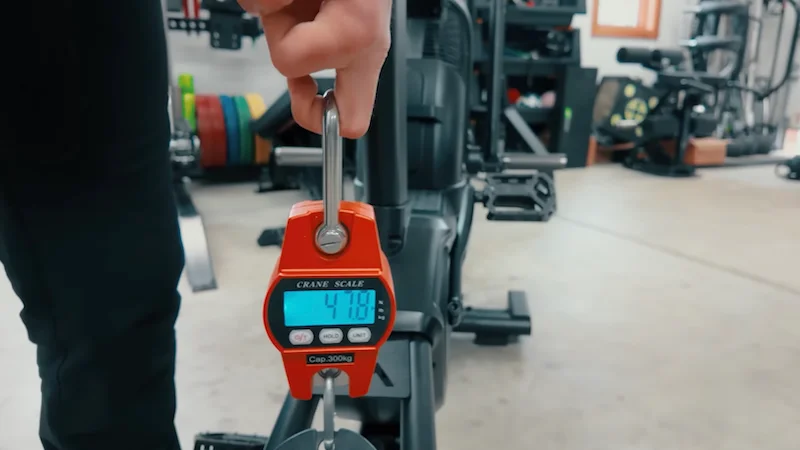
The bike weighs 123 pounds, but we tested the felt weight with a luggage scale to see how heavy it was when we tilted it to move it. It came in at 41 pounds—a weight that most able-bodied people should be able to handle. The 1-inch transport wheels on the front make it easy to move around when you need extra space.
Like most air-resistance bikes, the Echo is loud and produces about 76.3 decibels of sound at the highest intensity. This is equivalent to the sound of a vacuum cleaner or dishwashing machine.
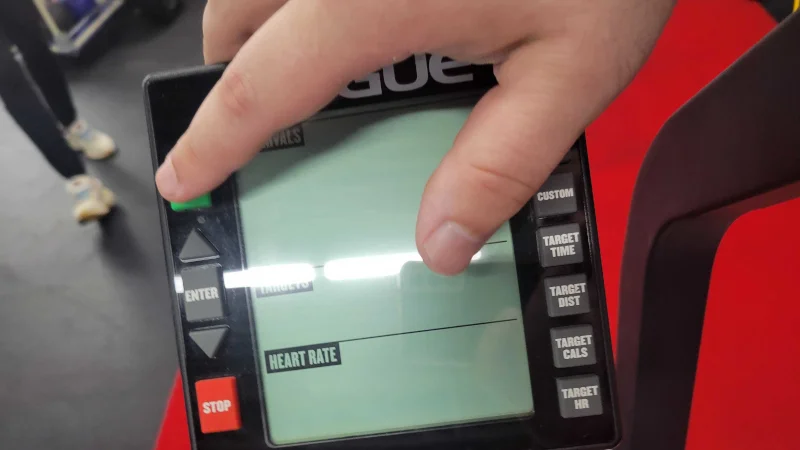
The Echo Bike doesn’t come with dynamic programming, but it does offer several preset workouts. For example, you can choose a preset interval mode or create a workout based on a target time or distance goal.
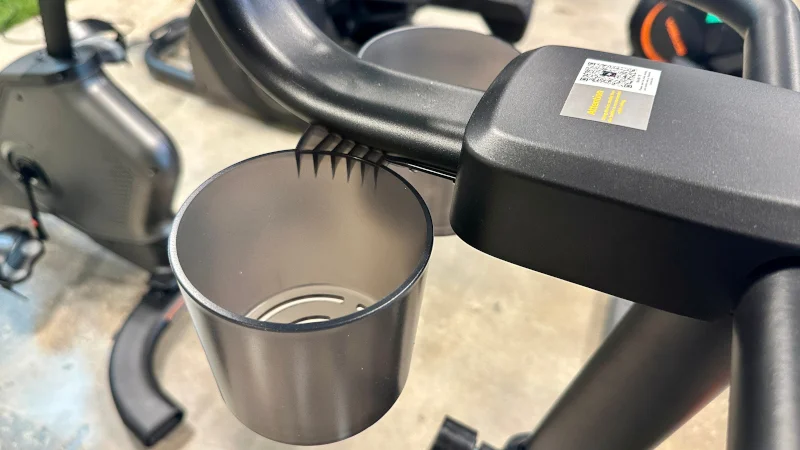
You also won’t find any conveniences on the Echo Bike, like a water bottle holder, phone holder, or wind guard. Rogue sells all of these accessories, but you’ll have to pay for them separately.
Rogue Fitness did a great job with this conditioning machine. This is a piece of equipment that will give people of all fitness levels a hardcore full-body workout, look great in their home gym, and last for many years.
Coop Mitchell, GGR founder and home gym expert
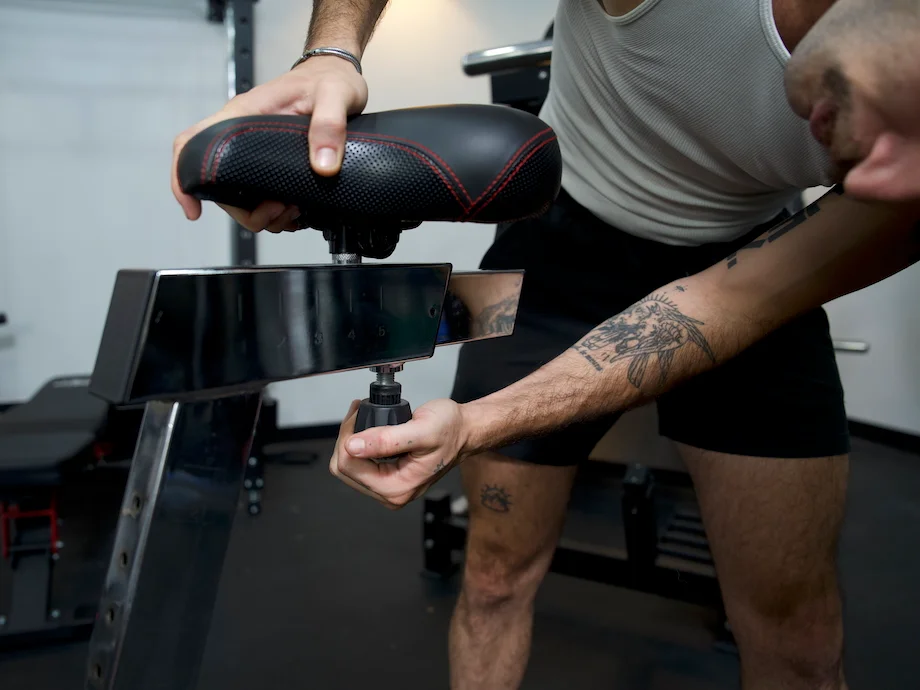
Built like a tank, the Rogue Echo Bike boasts a rugged design that’s made to withstand repeated bouts of high-intensity training. Although it lacks conveniences, it offers multiple adjustment options, a responsive, low-maintenance belt-drive system, and an easy-to-read LCD console screen all for less than $1,000. It’s hard to argue with the value you get at that price point, especially given Rogue’s reputation for crafting durable equipment that lasts for years.
Check out our full Rogue Echo Bike review for even more information on our experience.
How the Rogue Echo Bike Compares
Despite having a shorter-than-average warranty, the Rogue Echo Bike stands out from other exercise bikes in nearly every other area.
| Rogue Echo Bike | Average Exercise Bike | |
| Price | $945 | $1,409 |
| Product Weight | 123 lbs | 129 lbs |
| Dimensions | 55″ L x 29.5″ W x 52.25″ H | 55″ L x 22.3″ W x 52.5″ H |
| User Weight Capacity | 330 lbs | 320 lbs |
| Warranty | 2 years | 5-year frame, 2-year parts |
If you’re on the lookout for an air bike that includes several conveniences, we recommend the REP Fitness Strive Air Bike.
Best Exercise Bike for HIIT: REP Fitness Strive Air Bike
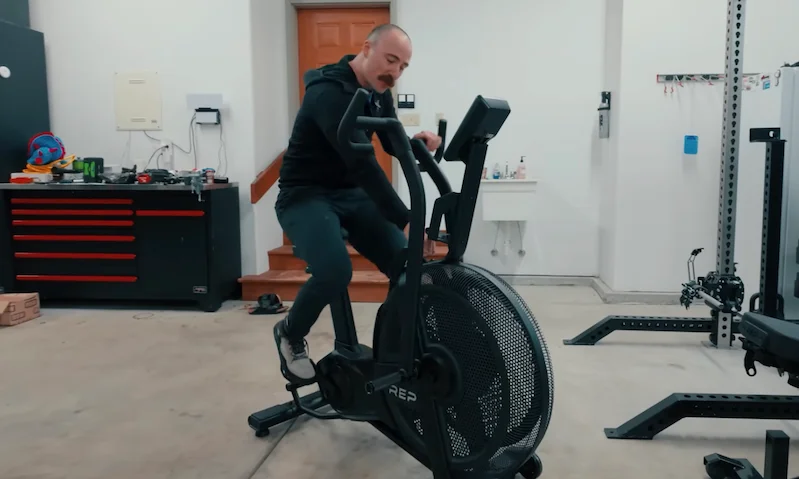
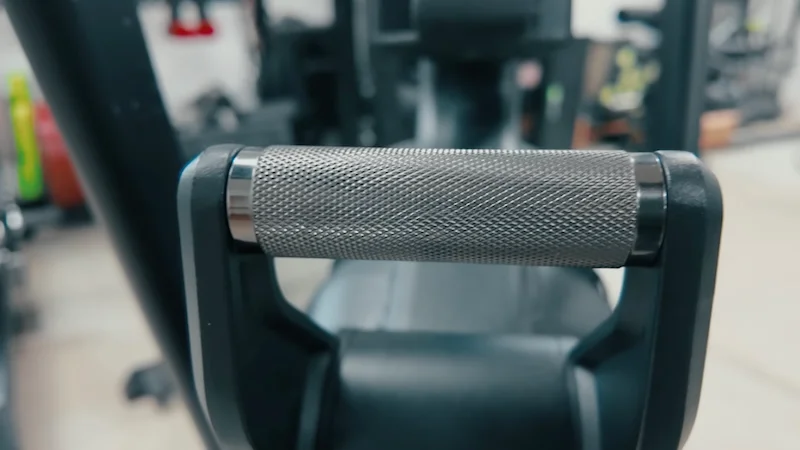
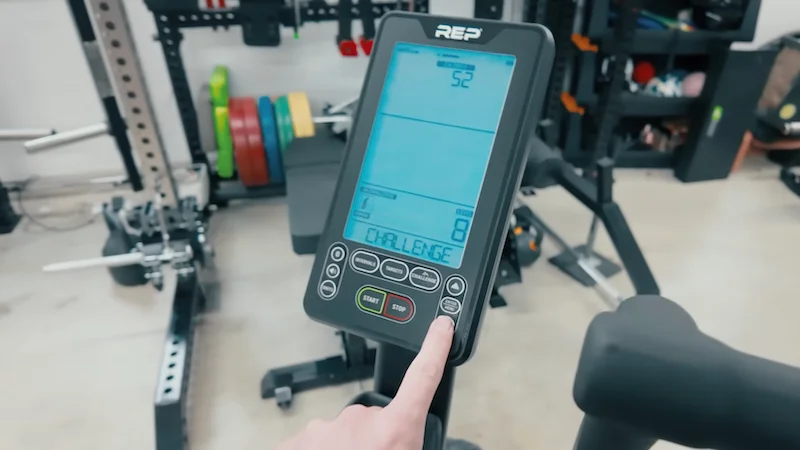
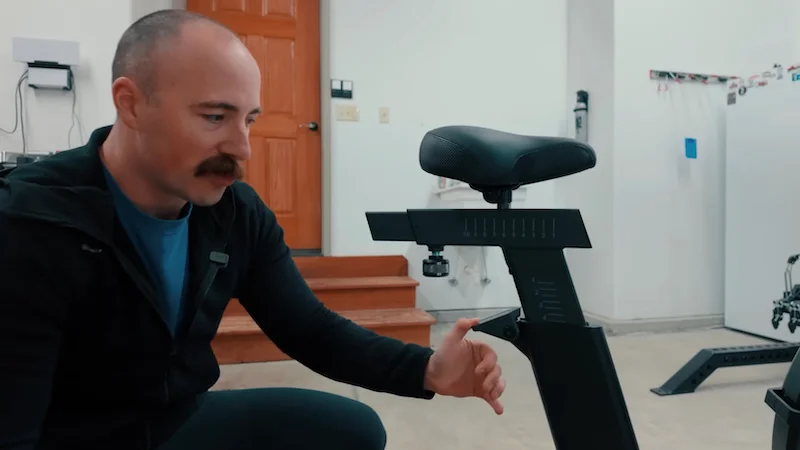
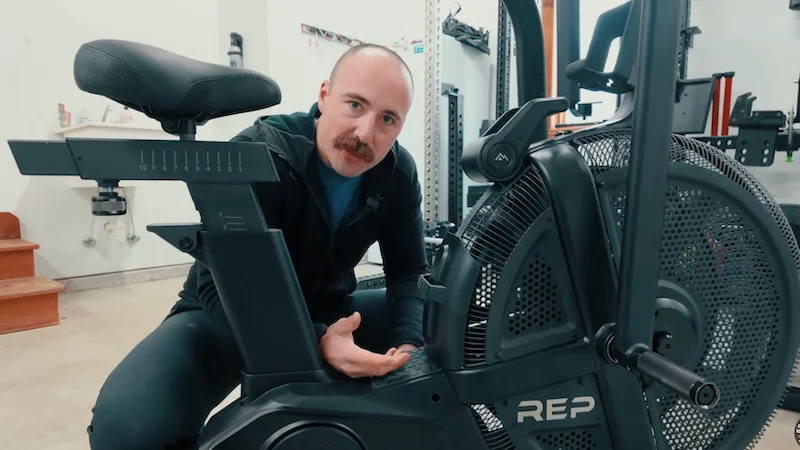



The REP Strive Air Bike stands out by giving users control over resistance with its innovative Variable Pitch Resistance system, making it more versatile than a traditional fan bike. Its premium build quality, smooth belt drive, and commercial-grade construction justify the higher price, though its weight and premium cost may not suit every home gym budget.
If you want to reap the benefits of HIIT from a seated position, the REP Fitness Strive Air Bike is our go-to choice. Featuring patent pending Variable Pitch Resistance™ (VPR™) that allows you to control the resistance by adjusting the fan blade angle, this premium air bike has a sturdy steel frame and quick-adjust comfort seat that creates a stable, comfortable training environment.
Our Experience Using the REP Fitness Strive Air Bike
GGR founder Coop Mitchell has tested some of the top air bikes on the market, so it says a lot when he anoints the Strive as the best he’s ever used. That stems largely from the unique VPR™ system that you can control with a beautifully knurled handle.
“As you pull the handle back, the fan blades gradually rotate and change their angle,” Coop explains. “Instead of always cutting through the air the same way, they begin to capture more wind, creating significantly more resistance.”
Offering three resistance ranges (1-3 for easy, low-intensity cardio, 4-6 for classic air bike, and 7-8 for high intensity), the Strive Air Bike is built for full-body conditioning.
“The harder setting dramatically increases the amount of power you have to produce, making it ideal for sprint intervals,” Coop explains. “This allows one bike to accommodate very different styles of training and different users in a way that traditional air bikes simply can’t.”
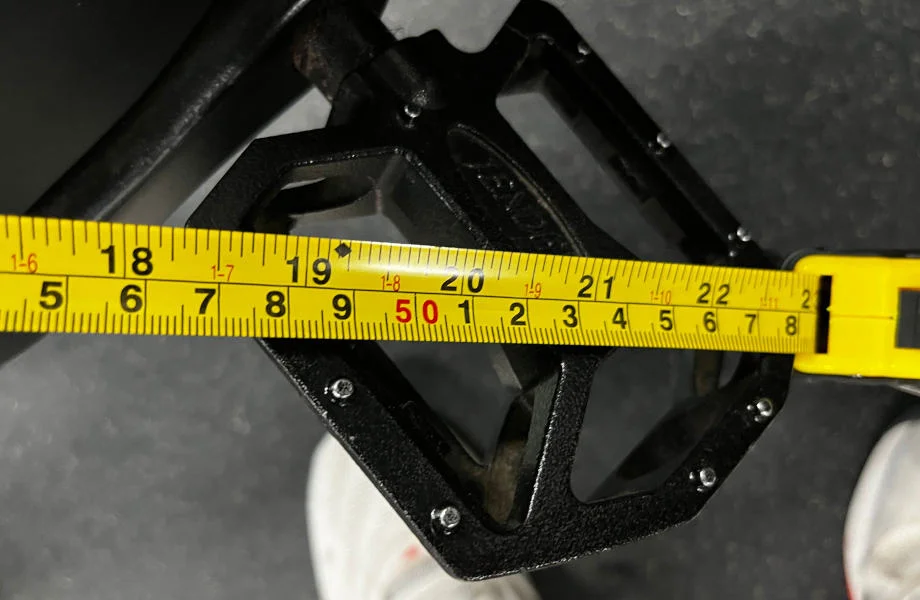
While he largely had nothing but positive feedback about this well-designed bike, Coop mentioned that the Q-factor (the distance between the pedals) measures around 250mm—about the same as the Rogue Echo Bike. He had hoped REP would use a narrower Q-factor to reduce the stress on your knees, but that wasn’t the case.
Coop also says the squared-off rear edge can make dismounting a bit of a pain, as he hit it multiple times. So, be mindful when getting on and off the Strive Air Bike once you’re done breaking a sweat.
Instead of only being useful for brutal sprint workouts, you can now use it much more comfortably for steady-state cardio, lower-intensity conditioning, or coaching athletes with different fitness levels.
GGR founder Coop Mitchell
Overall, the Strive Air Bike raises the bar for premium air bikes by pairing exceptional build quality (something we’re used to seeing with REP products) with a genuinely useful innovation in Variable Pitch Resistance. While it’s more expensive than the Rogue Echo Bike and has a few minor drawbacks—such as a wide Q-factor and non-spinning foot pegs—the VPR system makes the Strive more versatile for everything from all-out sprints to steady-state cardio.
How the REP Fitness Strive Air Bike Compares
The REP Fitness Strive Air Bike is a bit more affordable than the average exercise bike. Its slightly bulkier frame provides a 30-pound weight capacity advantage.
| REP Fitness Strive Air Bike | Average Exercise Bike | |
| Price | $1,299.99 | $1,409 |
| Product Weight | 146 lbs | 129 lbs |
| Dimensions | 57.41” L x 27.23” W x 53.24” H | 55″ L x 22.3″ W x 52.5″ H |
| User Weight Capacity | 350 lbs | 320 lbs |
| Warranty | 10-year frame, 2-year parts, 1-year labor | 5-year frame, 2-year parts |
If you’re keen on adding an air bike to your home gym, the Rogue Echo Bike combines reliable performance with a more cost-conscious price tag of $945.
Best Magnetic Exercise Bike: Bowflex VeloCore
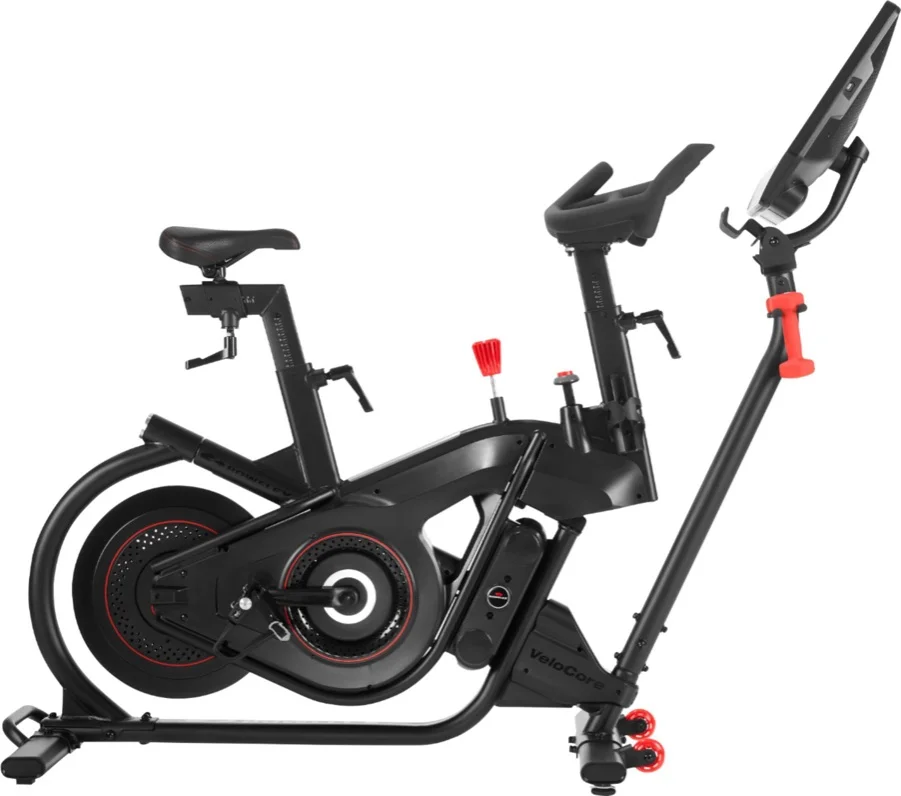
We were very impressed with the Bowflex VeloCore. It’s a durable, innovative exercise bike that will appeal to a lot of people. We would consider adding it to your fitness equipment repertoire.
What our tester says:
“Nothing feels cheap on this bike. It all feels intentional and quality-made.”
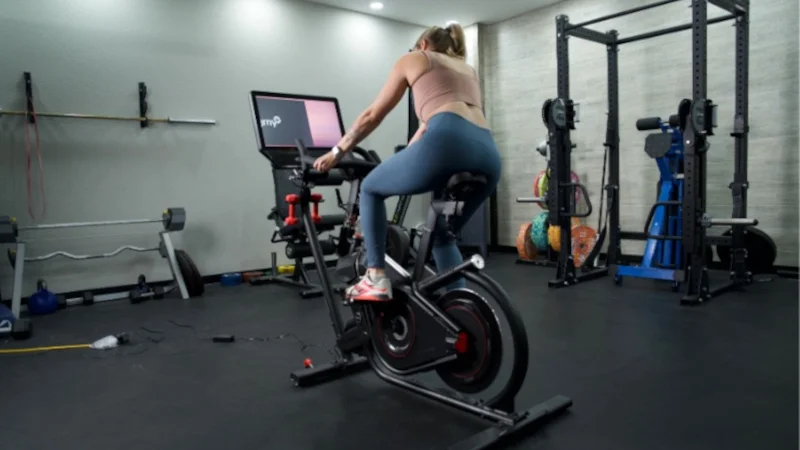
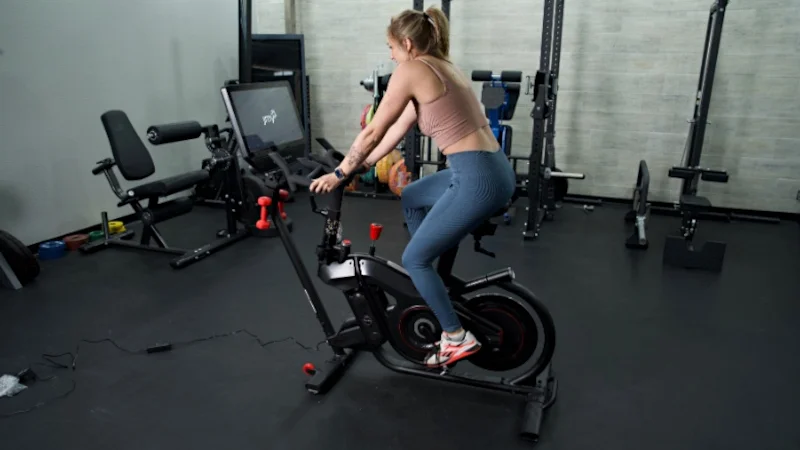
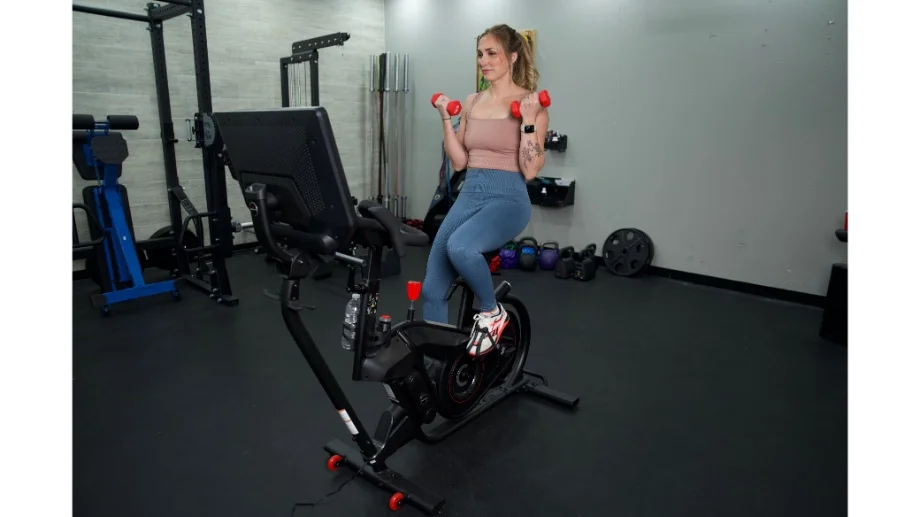
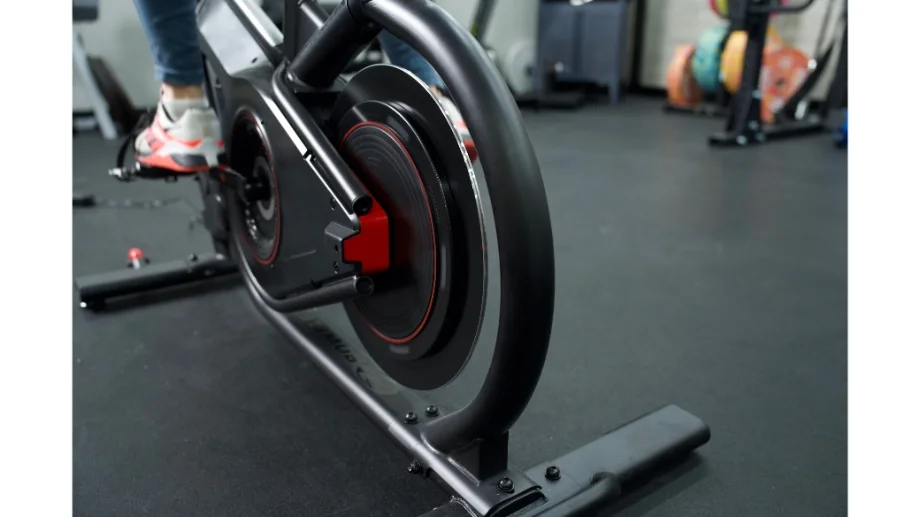
With over 100 magnetic resistance levels adjusted across a convenient center toggle, the Bowflex VeloCore allows you to tailor the intensity exactly how you like. What truly separates this bike from the competition is a feature that blew us away during testing—Lean Mode.
You hit a giant red button in front of the seat and the frame begins to lean as you would taking turns on the road. As a bonus, the VeloCore forces you to use your abdominal muscles to steady yourself in a way most traditional exercise bikes can’t.
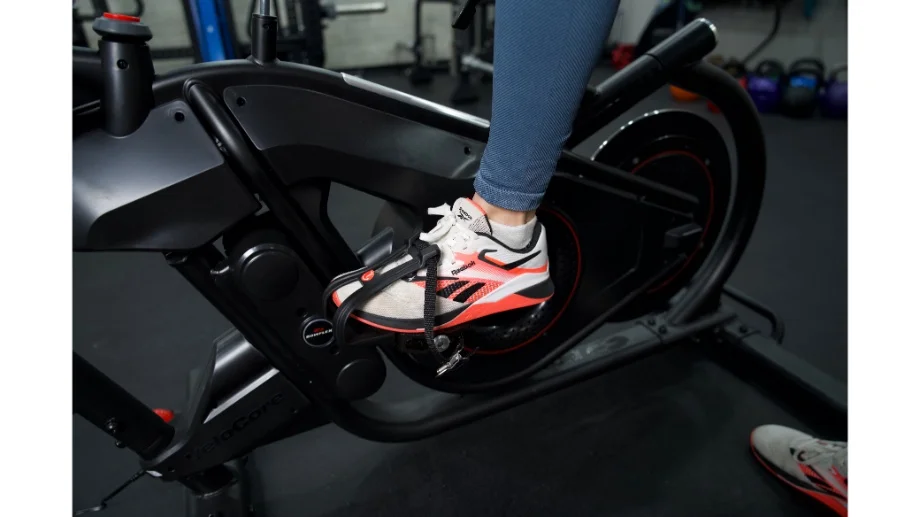
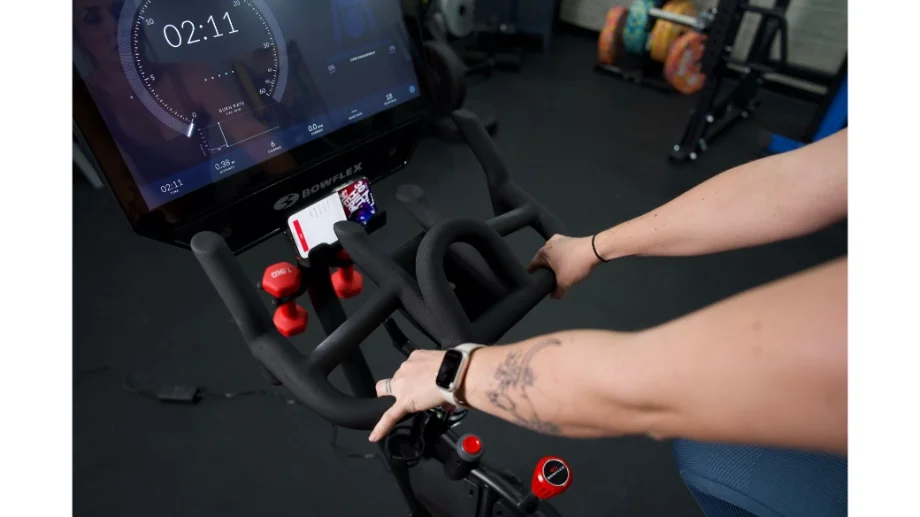
Our Experience Using the Bowflex VeloCore
Luckily, Lean Mode isn’t just some marketing gimmick that oversells and underdelivers.
“I really feel it in my obliques, swaying back and forth,” says product tester Caroline Lubinsky, CF-L1. “Honestly, it was just a lot of fun, too. You sort of feel like a kid again.”
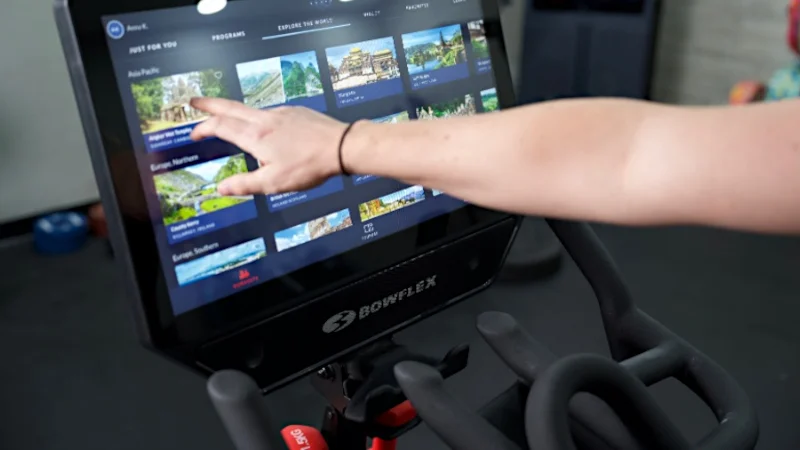
The VeloCore also stands out for its excellent dynamic programming via the JRNY platform. (As a bonus, you get two months free when you purchase the bike.) We tested the JRNY app separately (check out our full JRNY App review) and enjoyed how much variety there was in terms of class length and equipment demands. The trainers also provided clear instructions and were easy to follow.
Tipping the scales at 158.3 pounds, the VeloCore is a heavy-duty bike with a 325-pound weight capacity. Even with that solid build, we measured the felt weight at just 26.2 pounds, making it extremely easy to move around.
Our only major complaint is that there’s no digital resistance adjustment, so you have to change it manually when your instructor tells you to (which can disrupt your flow).
We found the assembly a bit difficult, with fairly unclear instructions, so we docked a few points from the delivery and setup score. You’ll need a second set of hands to help you get the boxes inside your home; they’re quite unwieldy and hard to grip if you try to move them by yourself.
Nothing feels cheap on this bike. It all feels intentional and quality-made.
Former GGR Everything Lead Reviewer Lindsay Scheele, CPT, CNC
Although it costs roughly $2,200, the Bowflex VeloCore offers excellent durability and all the conveniences you could ask for in a top-rated exercise bike. The steel base provides an ultra-stable platform for everything from steady-state sessions to more challenging HIIT bike workouts that’ll leave you gasping for air. Just keep in mind that you’ll have to budget for the monthly JRNY subscription fee if you want to take full advantage of this bike’s capabilities.
Find out more by reading our full Bowflex VeloCore review.
How the Bowflex VeloCore Compares
Check out how the Bowflex VeloCore stacks up against the competition below.
| Bowflex VeloCore | Average Exercise Bike | |
| Price | $2,199.99 | $1,409 |
| Product Weight | 158.3 lbs | 129 lbs |
| Dimensions | 59.8” L x 24.1” W x 55.3” H | 55″ L x 22.3″ W x 52.5″ H |
| User Weight Capacity | 325 lbs | 320 lbs |
| Warranty | 2-year frame, 2-year mechanical parts, 1-year electronics and touchscreen, 1-year labor | 5-year frame, 2-year parts |
If you want another bike that offers streaming classes without the leaning effect, the Peloton Cross Training Bike is a great option.
Best Exercise Bike Without a Subscription: Concept2 BikeErg
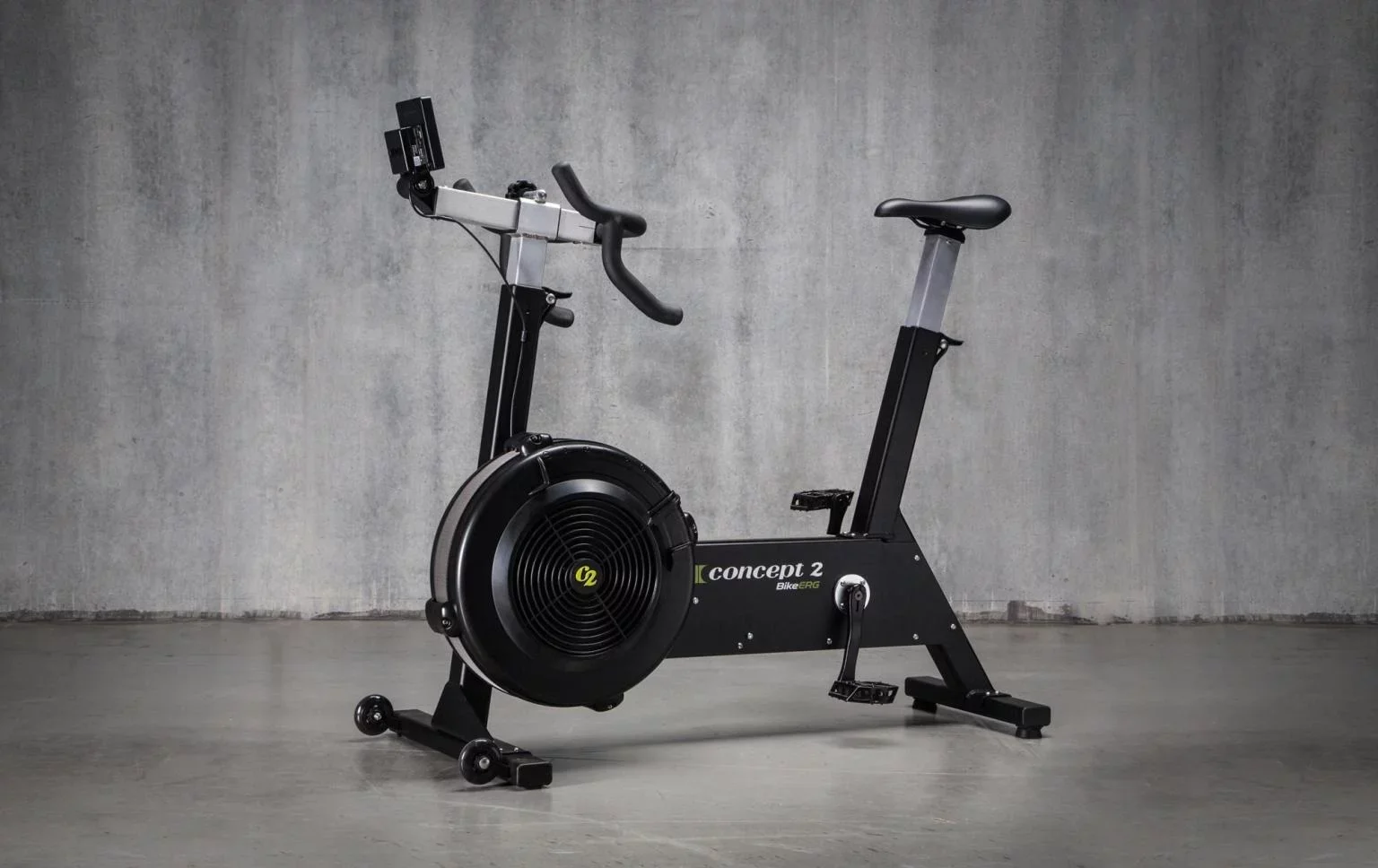
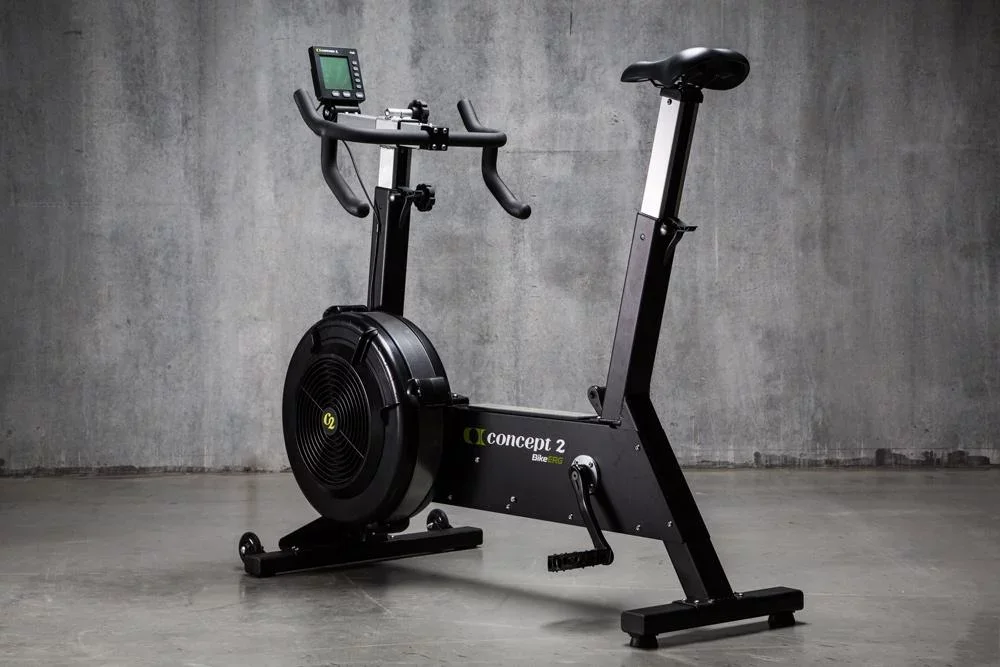
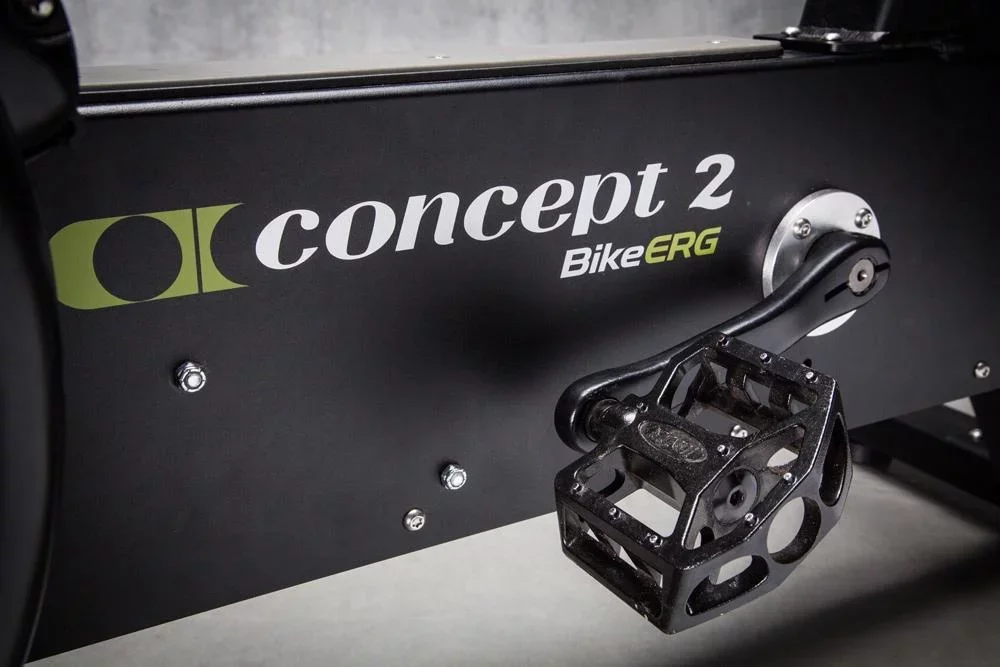
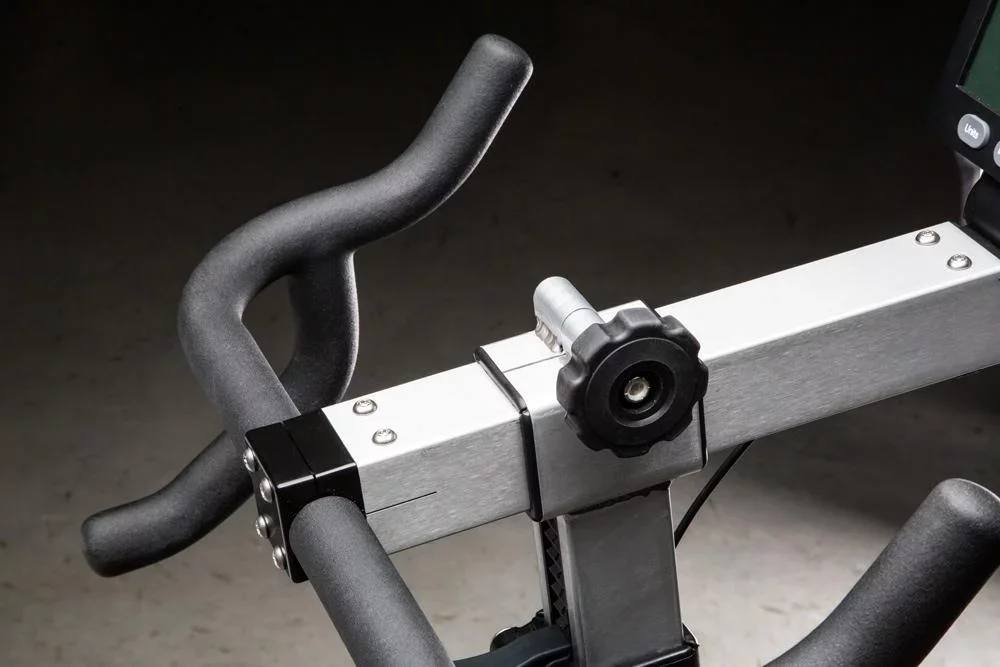
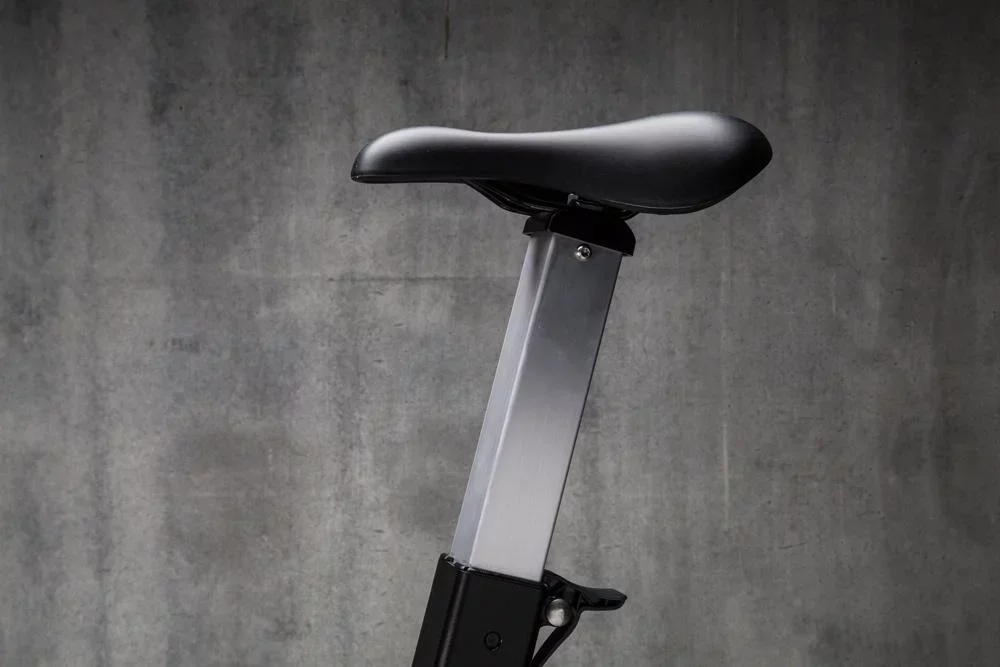
After using the Concept 2 BikeErg over the course of two years in a variety of workouts from sprints to long-distance bikes, we highly recommend it to anyone wanting an air bike. Although we like air bikes with arms, we actually prefer the BikeErg and have found it to be great for general fitness as well as simply blowing up the quads. The BikeErg is a Concept 2 product; we think that speaks for itself.
What our tester says:
“Even though there are some things it lacks, like a water bottle holder and dynamic programming, it feels really solid and sturdy and if it can hold up well in a warehouse where it gets abused a lot, I’m sure it would do just fine in a home gym setting.”
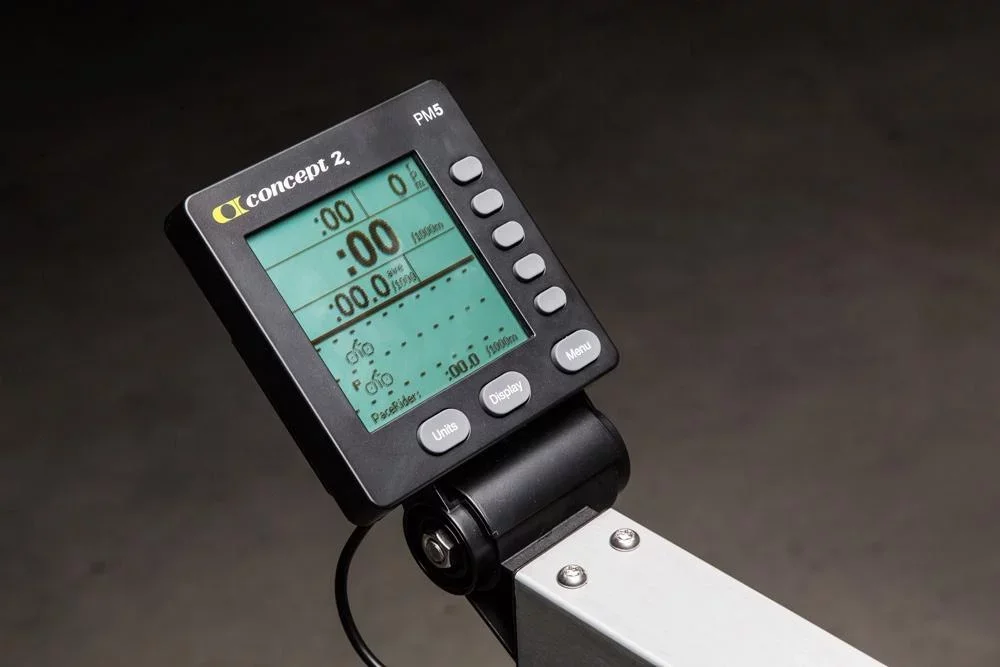
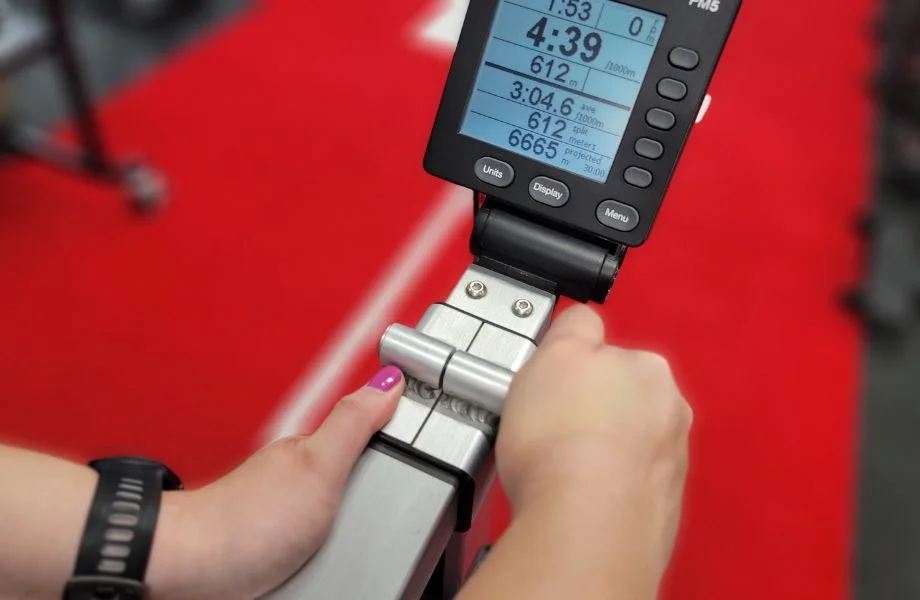
Fancy touchscreens and integrated programming are all the rage, but they can increase the cost of any bike. For a machine that combines affordability with challenging workouts, consider the Concept2 BikeErg. It’s priced at $1,100 and comes with the PM5 monitor you may know and love from its sister (and my favorite rowing machine), the Concept2 RowErg. It doesn’t have the moving handlebars like other air bikes do, yet it still offers plenty of workout potential thanks to its air resistance profile.
Our Experience Using the Concept2 BikeErg
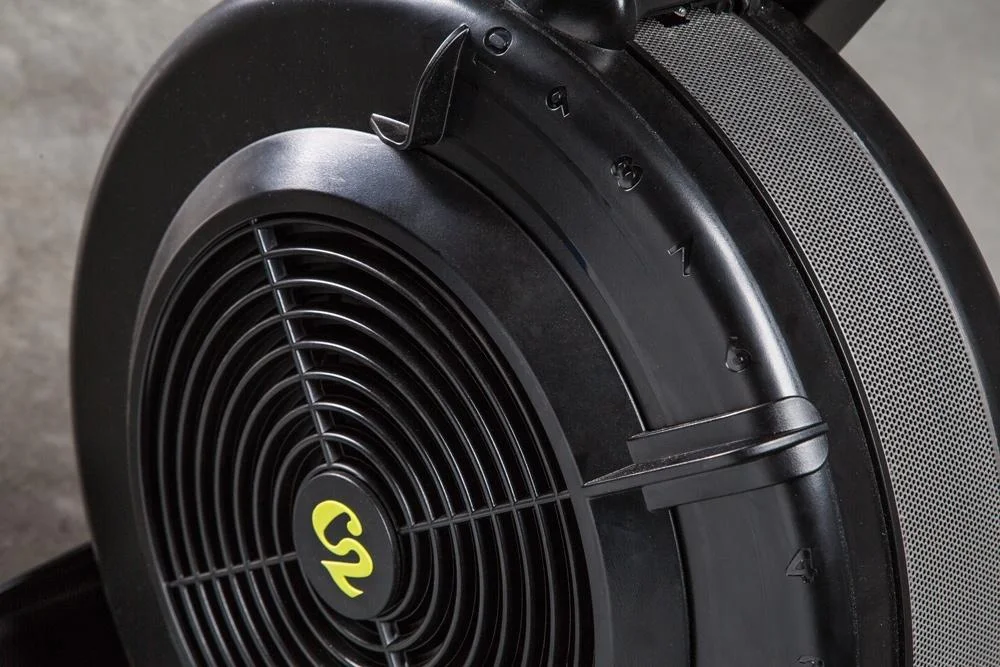
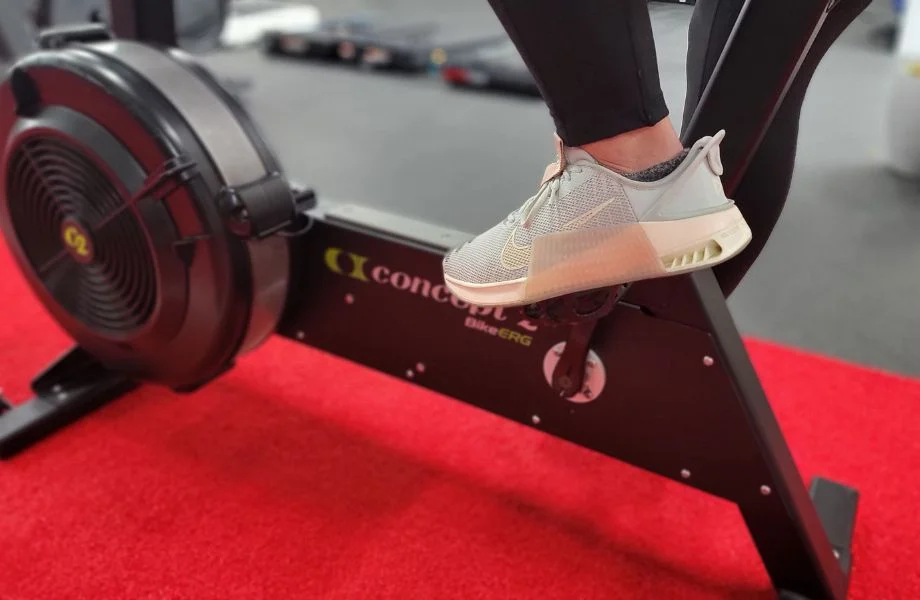
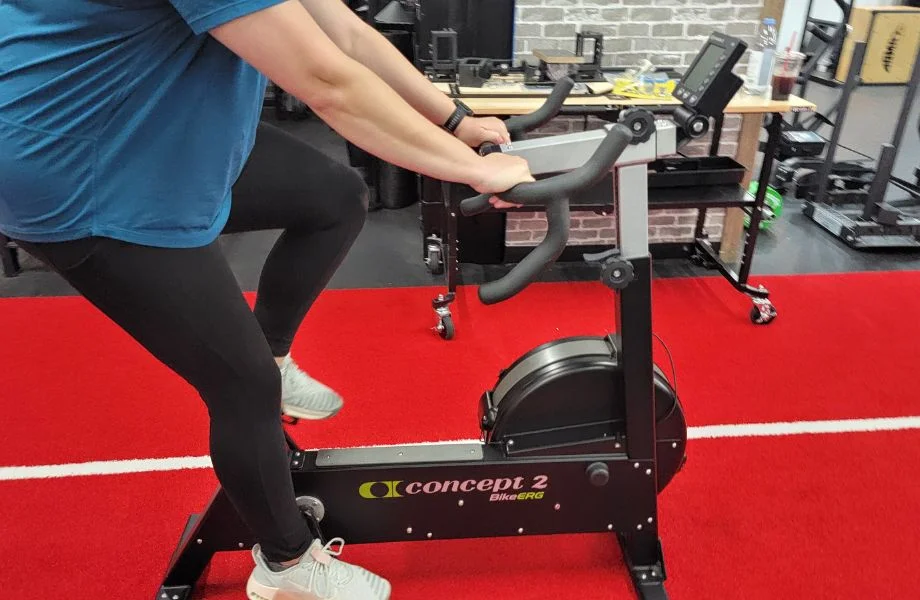
If you’re wondering if the BikeErg delivers a killer workout, the answer is a resounding YES. It’s different from a traditional exercise bike in that it uses a flywheel and damper system where the wind generates resistance, as opposed to a friction-based brake. When GGR managing editor Amanda Dvorak, CPT, CNC, tested the BikeErg, she told me she wasn’t expecting it to feel as challenging as it did.
“It really lit up my quads—even more than my Peloton when I have the resistance up to the high 60s or 70s,” she says.
Like other Concept2 products, the BikeErg brings that same build quality that results in an ultra-stable training experience.
“I’m a bigger athlete, but I didn’t experience any wobbling or shaking on the bike,” Amanda says. “Plus, knowing how well my Concept2 RowErg is holding up despite my not being very gentle with it, I feel confident giving the BikeErg’s durability a near-perfect score.”
Obviously, the bike doesn’t have on-demand classes like a Peloton or the best NordicTrack exercise bikes. However, the PM5 monitor comes with a few pre-programmed workouts and is compatible with cycling apps like Zwift.
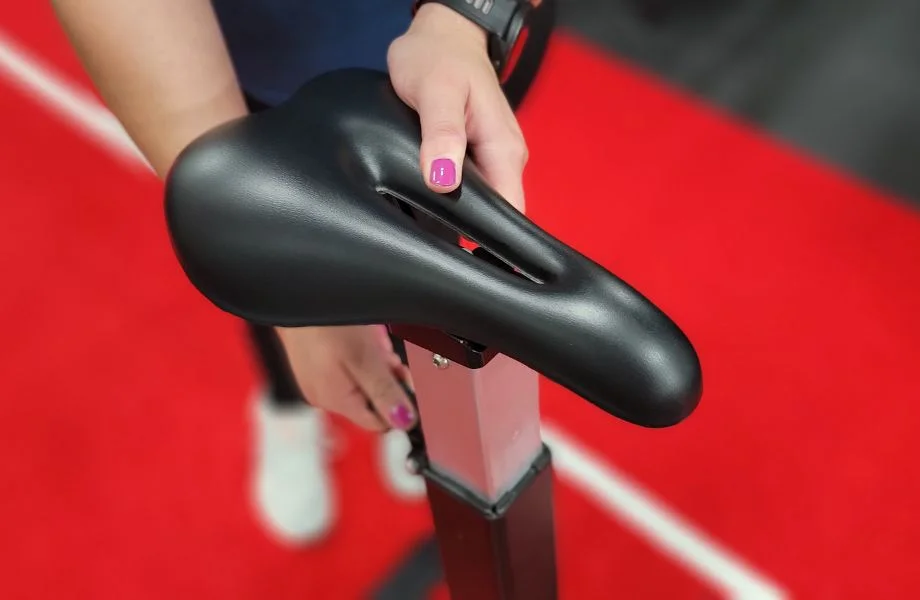
Some customer reviews called out the seat for being uncomfortable, too, but you can swap the seat for another saddle if you’d like. Concept2 claims that most standard bike accessories will fit on the BikeErg.
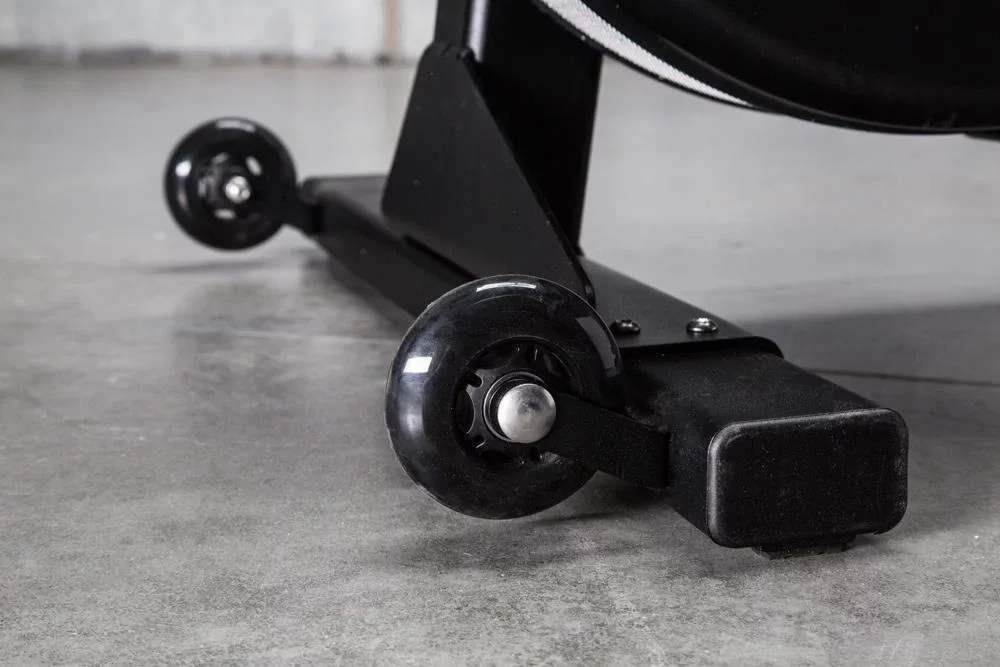
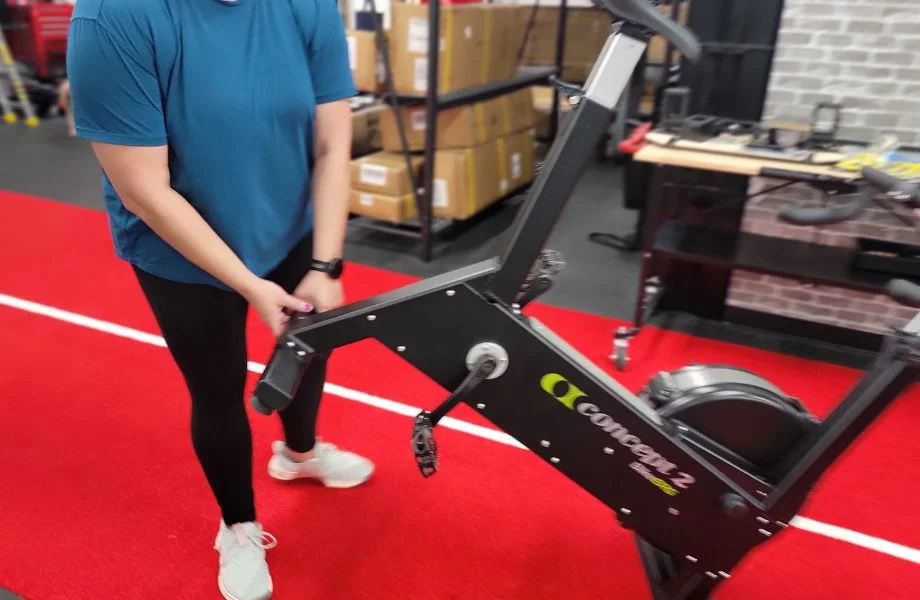
The combination of steel and aluminum provides enough stability for powerful sprints but is also light enough for easy movement and storage.
GGR founder Coop Mitchell
If you don’t need streaming classes or a sleek touchscreen, the Concept2 BikeErg is a smart long-term investment that offers commercial-grade construction, a low-maintenance design, and proven durability. This makes it a valuable tool for home gym owners, CrossFit athletes, and serious cyclists alike. Backed by the reliable PM5 performance monitor, it delivers an engaging training experience without requiring a subscription, making it an excellent choice for anyone seeking a durable, non-traditional air bike that can withstand rigorous cycling workouts.
Check out our in-depth Concept2 BikeErg review for more information.
How the Concept2 BikeErg Compares
While it doesn’t offer dynamic programming, the Concept2 BikeErg outshines its competitors in terms of portability with a 68-pound product weight and a higher-than-average weight capacity.
| Concept2 BikeErg | Average Exercise Bike | |
| Price | $1,100 | $1,409 |
| Product Weight | 68 lbs | 129 lbs |
| Dimensions | 48″ L x 24″ W x 41″ H | 55″ L x 22.3″ W x 52.5″ H |
| User Weight Capacity | 350 lbs | 320 lbs |
| Warranty | 5-year frame, 2-year parts | 5-year frame, 2-year parts |
If you want a traditional air-resistance bike with moving arms, check out the Rogue Echo Bike.
Best Exercise Bike for Streaming: Peloton Cross Training Bike
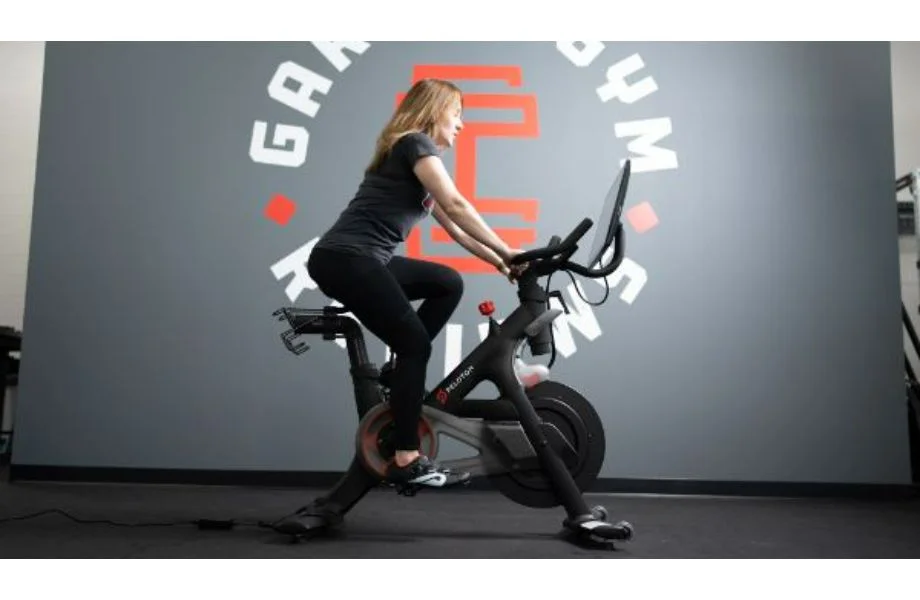
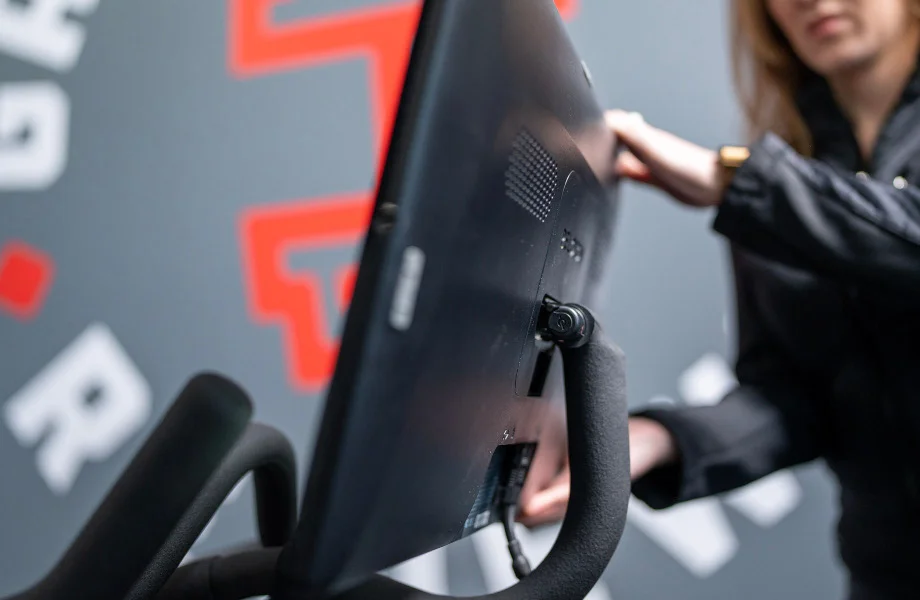
One of the more expensive options for virtual biking, the Peloton Bike is designed to be an all-in-one fitness solution on a high-quality cardio machine. You’re paying not only for the bike, but the unique training experience it makes accessible from the comfort of your home.
What our tester says:
“Sure, this bike may need regular maintenance and other bikes may be built better, but the streaming experience is unbeatable. I’ve had to reach out to Peloton support twice in two years, and they’ve been vey responsive and fast to ship replacement parts. I’m happy with my purchase.”
There is nothing else like the Peloton Bike experience—and I should know, since I’ve owned one for almost five years! The GGR team has also tested and reviewed many Peloton alternatives (and even has some recommended on this list), but few can compare to the OG. With a smooth, quiet magnetic resistance system, superior programming and seamless connection to the Peloton App, the Cross Training Bike is a tech-focused option that delivers a unique workout experience.
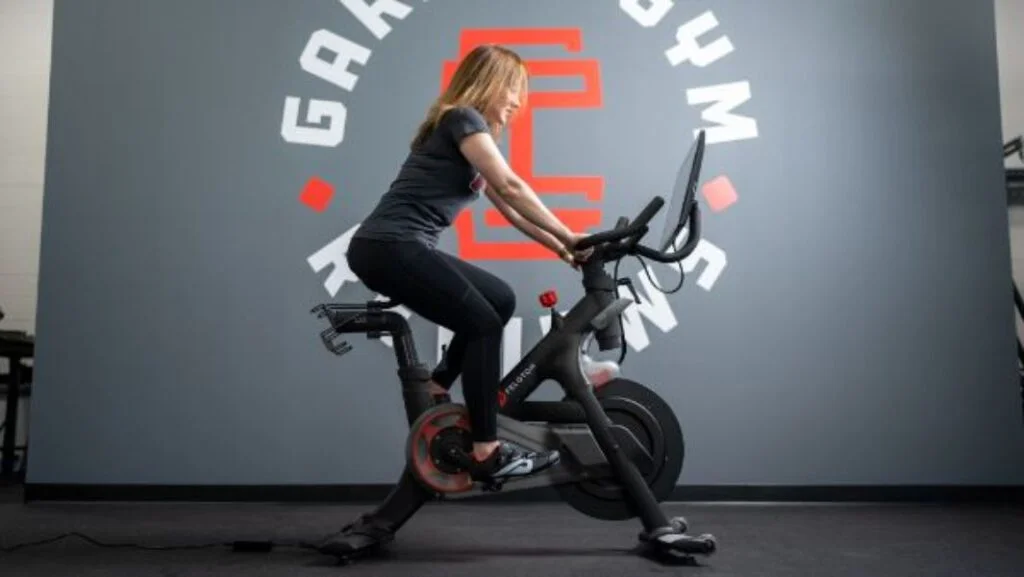
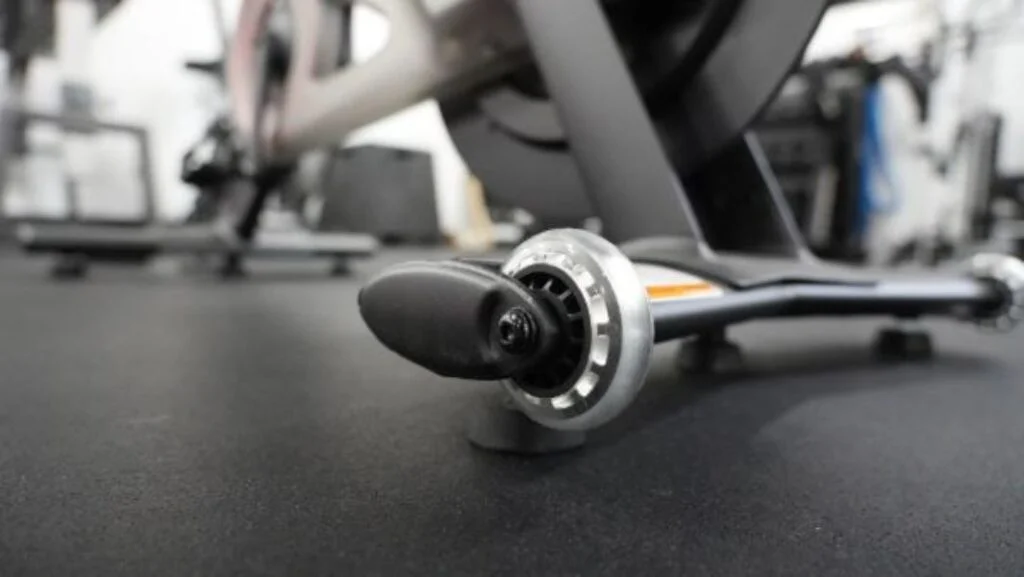
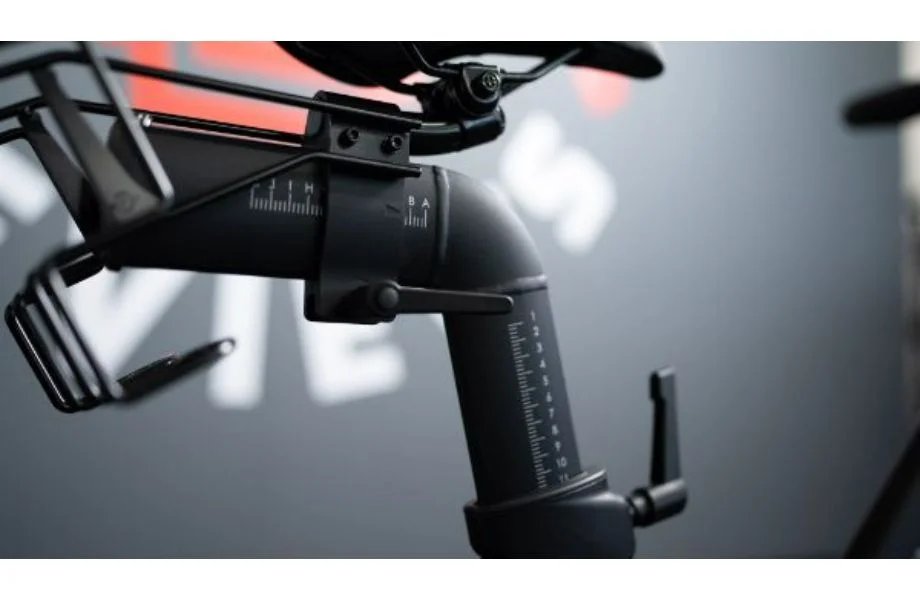

Our Experience Using the Peloton Cross Training Bike
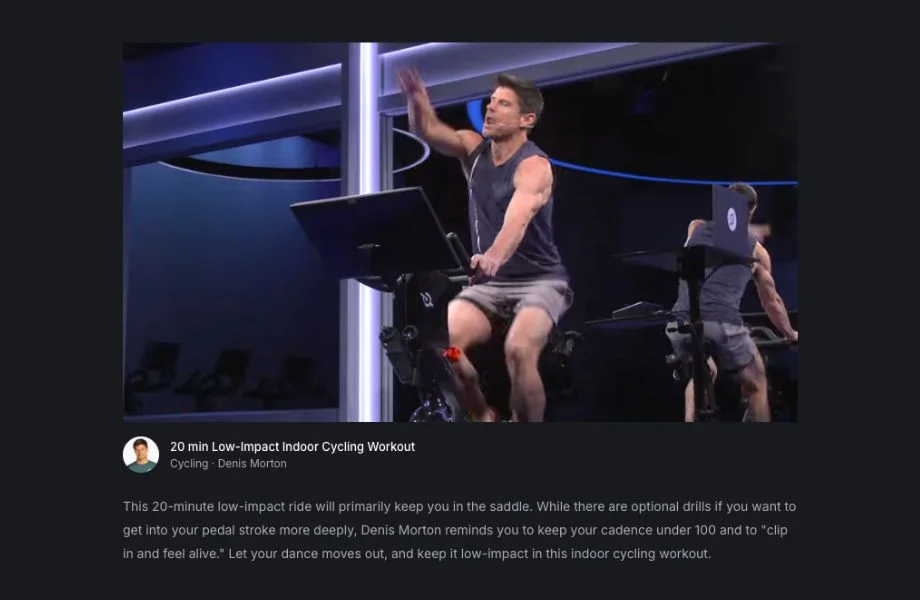
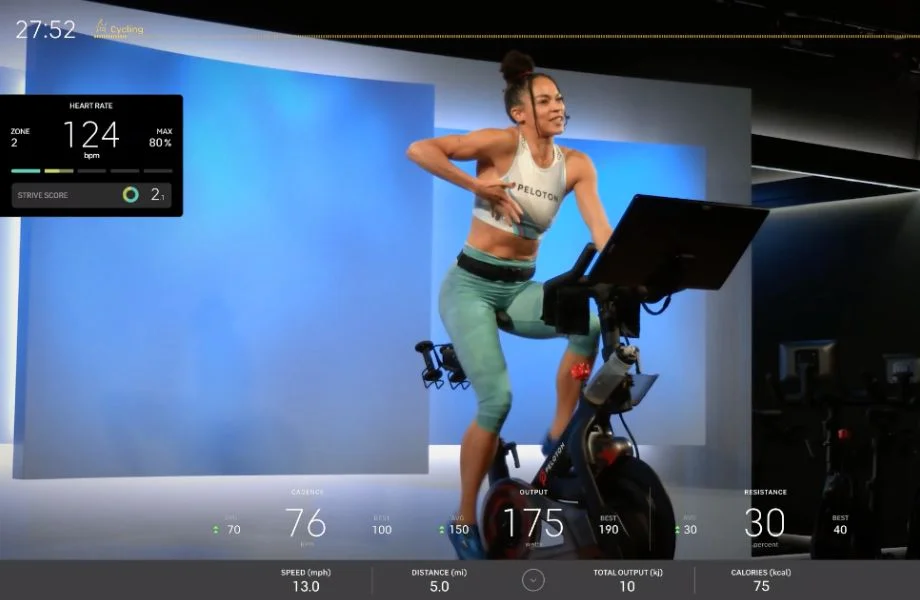
Although the Peloton App All-Access membership costs $49.99 per month for unlimited access to classes, we think it’s well worth it. The high-energy instructors and engaging training model can help fuel motivation to return to training at a regular cadence, bringing fun and enthusiasm to each cycling session.
While my Peloton Cross Training Bike is not my main mode of exercise, I turn to it when I feel like I’m in a slump with my usual workout routine. My favorite thing about the classes is that there is truly something for everyone. Regardless of how much time you have to work out, what type of music you prefer, or how intense you like your rides to be, you can find a class in the Peloton app.
That said, GGR Senior Staff Writer Matt Dustin, CSCS, PN1-NC, relayed some minor issues.
“I love using the Peloton Cross Training Bike, but I had to get the screen replaced because it wouldn’t turn on, and the bearings in the flywheel need to be replaced somewhat often, which is a pain.”
Peloton’s price point may also put it out of reach for some buyers. At $1,695, it’s on par with many competitors, but the monthly subscription fee certainly isn’t something to scoff at. Plus, you only get one year of warranty coverage, which is far shorter than what competitors offer.
Whether I’m in the mood for a tough workout or an easier ride while watching a show, Peloton has plenty to choose from. There are always new classes being added, too, so you’ll never get bored or run out of options.
Matt Dustin, CSCS, PN1-NC, GGR Senior Staff Writer
Whether it’s Netflix, Disney+, YouTube, or a workout class, the Peloton Cross Training Bike is built with streaming in mind. Entertainment-focused riders who like to watch shows while exercising will love this bike. At the same time, performance-oriented folks will appreciate its robust data tracking capabilities, along with the suite of advanced performance metrics and training insights available through the Peloton platform.
Read our Peloton Bike review for our full thoughts on this uber-popular machine.
How the Peloton Cross Training Bike Compares
The Peloton Cross Training Bike is unbeatable when it comes to programming, but there are a few things to keep in mind before ordering one. As you’ll see, you get a lower weight capacity, shorter warranty, and higher price point.
| Peloton Cross Training Bike | Average Exercise Bike | |
| Price | $1,695 | $1,409 |
| Product Weight | 135 lbs | 129 lbs |
| Dimensions | 59″ L x 22″ W x 59″ H | 55″ L x 22.3″ W x 52.5″ H |
| User Weight Capacity | 297 lbs | 320 lbs |
| Warranty | 1 year | 5-year frame, 2-year parts |
If the Peloton classes don’t interest you but you still want a bike that offers high-quality programming (and you’re willing to pay a bit more), check out the NordicTrack X24 Bike.
Best Recumbent Exercise Bike: Sole LCR Exercise Bike
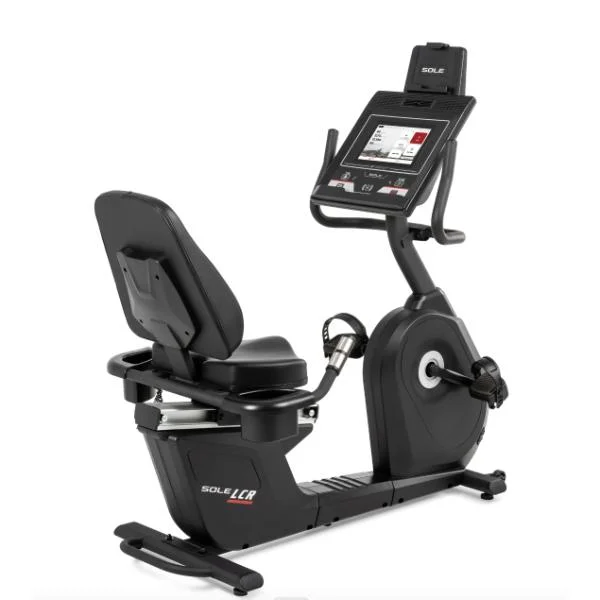

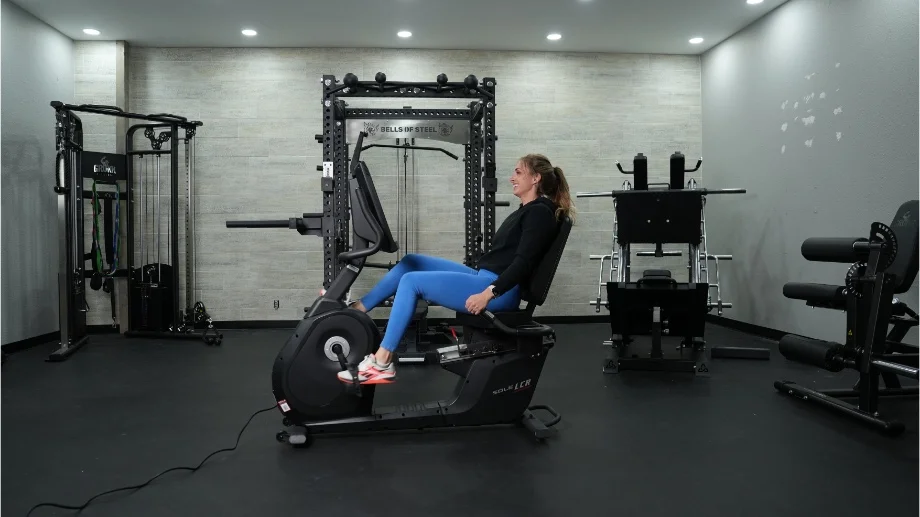
The Sole Light Commercial Recumbent Bike is a durable and high-value recumbent bike that our testers liked for its challenging resistance, comfortable seat and backrest, and great warranty.
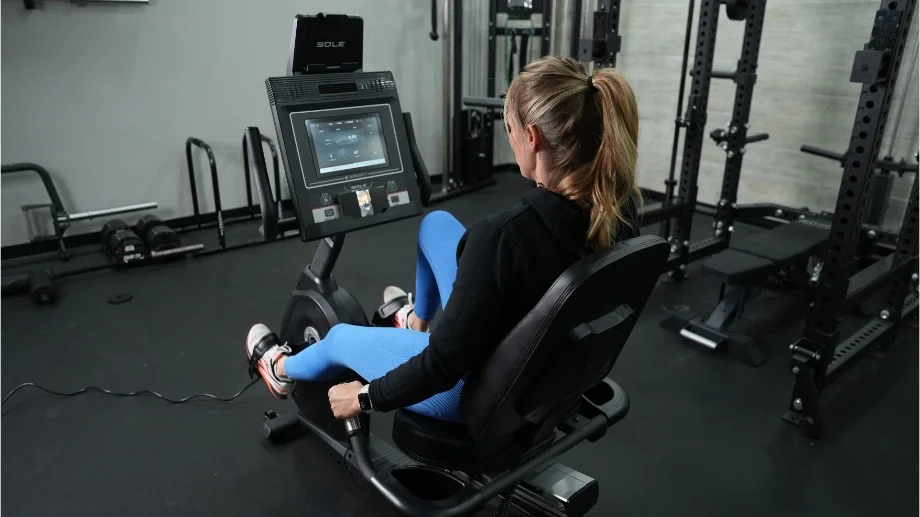
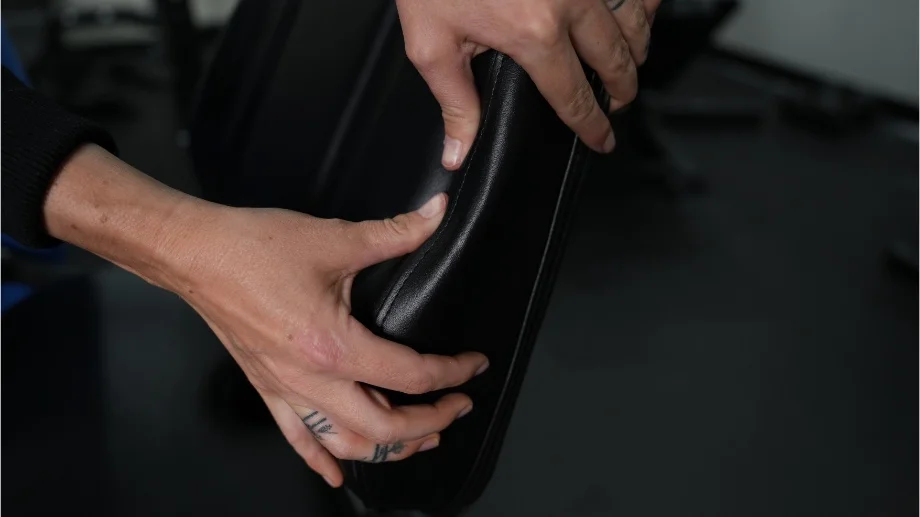
Given their reclined seating style, the best recumbent bikes can help create a more approachable body positioning ideal for older athletes with limited mobility or those rehabbing from an injury. If you’re in the market for a comfortable ride, we suggest the Sole LCR. With wide pedals and a well-cushioned cushioned seat with lumbar support, it checks the all-important boxes for ergonomics and adjustability.
Our Experience Using the Sole LCR Recumbent Bike
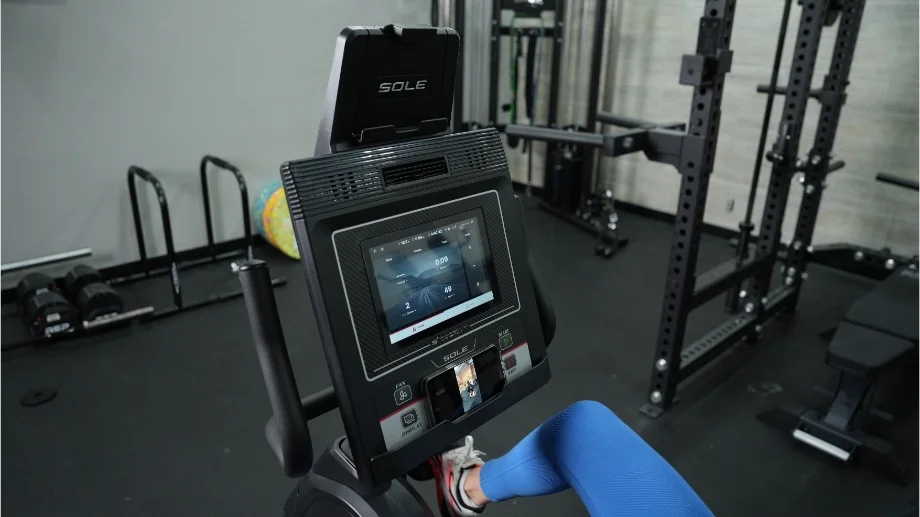
With a sleek design, built-in touchscreen for streaming media, and 40 levels of magnetic resistance, this is one of our favorite recumbent bikes on the market. Lindsay Scheele, CPT, CNC, says the LCR has “one of the most comfortable seats” she’s ever used.
The Sole LCR also has a heavy flywheel (31 pounds), which is why it can provide such a great challenge. Lindsay noted that while most recumbent bikes feel a little too easy on the highest setting, the LCR offers enough resistance to provide a challenging workout.
In addition to having its own preset programs, you can mirror your phone or tablet and follow along with streaming classes from other services, or simply watch your favorite streaming media. The Sole+ app offers workout modules, as well, and the service is free to download.
“You don’t have to scroll and scroll to find what you’re looking for, as the screen is very easy to use,” Lindsay explains.
While we love this bike, it’s not cheap. At the time of writing, it’s listed at roughly $2,000, though we’ve regularly seen it on sale for $1,799. We still think it’s a solid value pick, but there are certainly more affordable bikes to consider if you’re on the hunt for more budget-minded cycling.
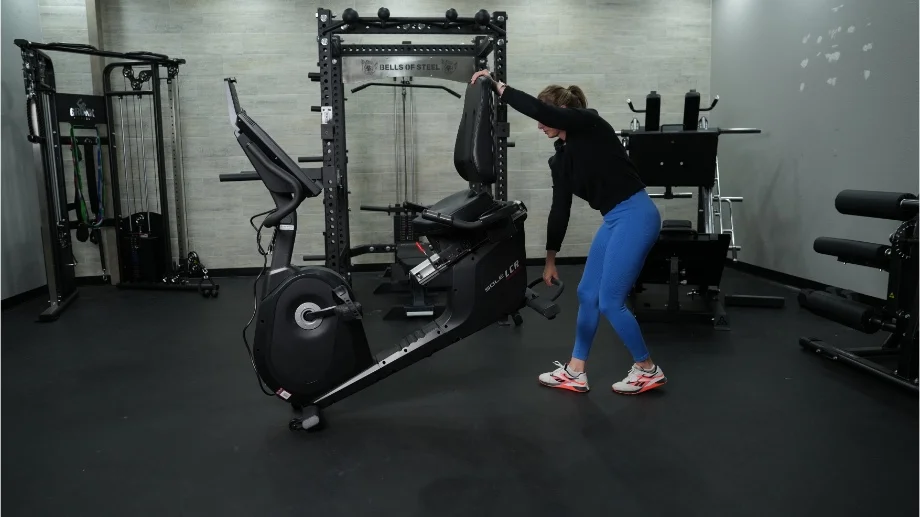
Additionally, recumbent bikes, by nature, are going to require more space than a standard upright bike. Be sure to measure your available flooring before opting for this stretched cycling option.
The Sole LCR is challenging. By the time I got to the end of the 40 levels of resistance, I was slogging through the workout. The resistance is definitely there if you’re looking for a challenge.
Former GGR Everything Lead Reviewer Lindsay Scheele, CPT, CNC
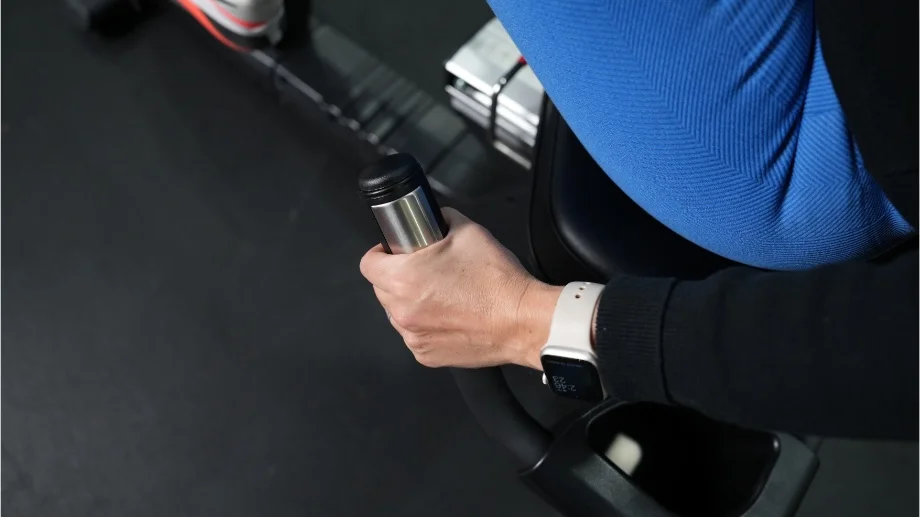
Built with a solid steel frame that supports up to 350 pounds, the Sole LCR has a few added perks and benefits, including handlebars that allow heart rate monitoring, an adjustable seat that accommodates different body types, and a convenient wireless charging station. We also appreciate the lifetime frame warranty and the fact that this bike only takes about 30 minutes to assemble.
For more, be sure to read our full Sole LCR Recumbent Bike review.
How the Sole LCR Compares
While the Sole LCR is more expensive than your average exercise bike, it offers a higher weight capacity and lifetime frame warranty.
| Sole LCR Recumbent Bike | Average Exercise Bike | |
| Price | $1,999.99 | $1,409 |
| Product Weight | 152 lbs | 129 lbs |
| Dimensions | 56″ L x 29″ W x 60″ H | 55″ L x 22.3″ W x 52.5″ H |
| User Weight Capacity | 350 lbs | 320 lbs |
| Warranty | Lifetime warranty (frame), 3 years (parts and wear items), 1 year (labor), 90 days (cosmetic items) | 5-year frame, 2-year parts |
If you want a more budget-friendly bike and don’t need the backrest offered by a recumbent bike, we recommend the MERACH S36—our pick for the best budget exercise bike.
Best Budget Exercise Bike: MERACH S36 Magnetic Resistance Bike
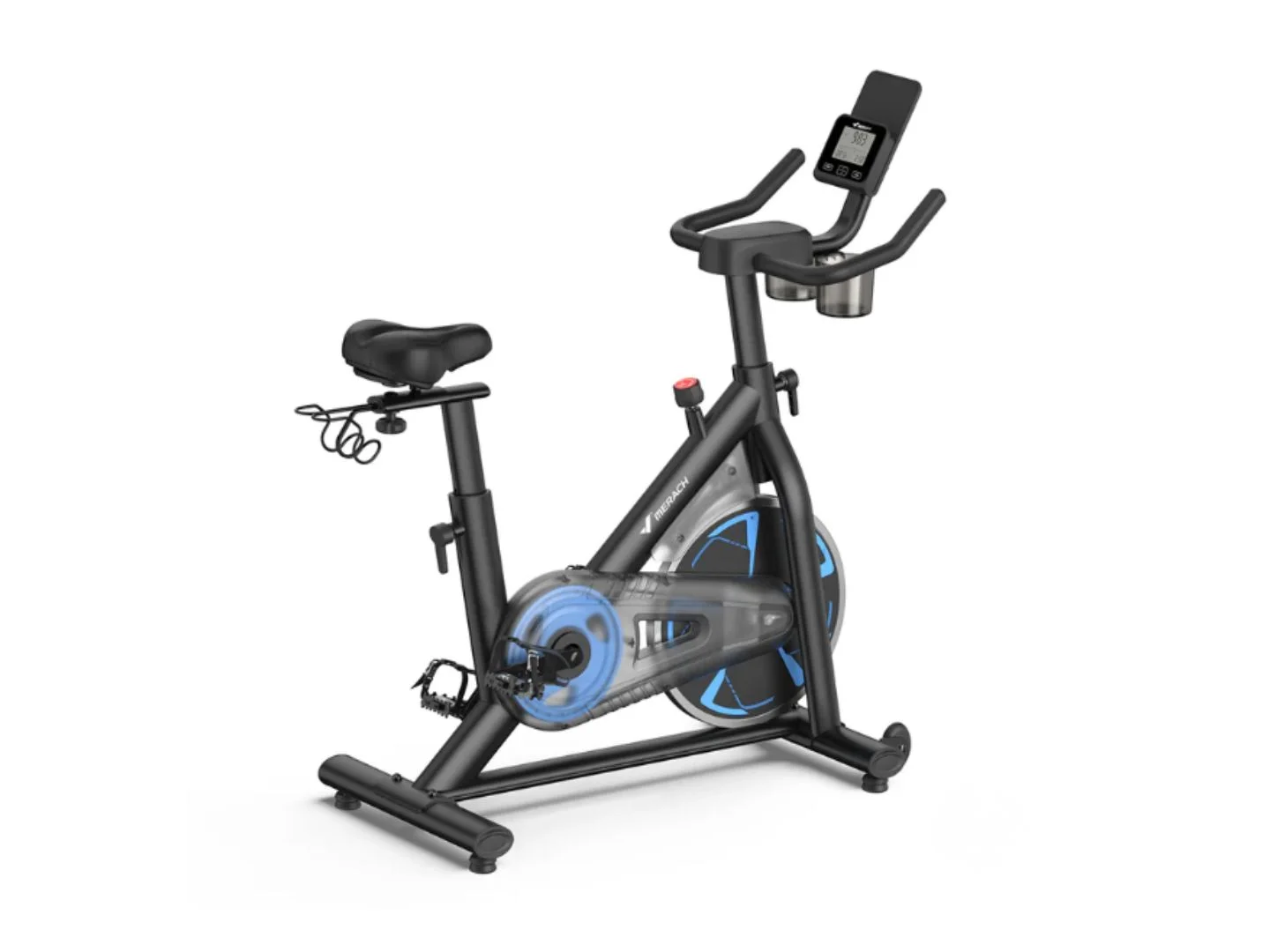

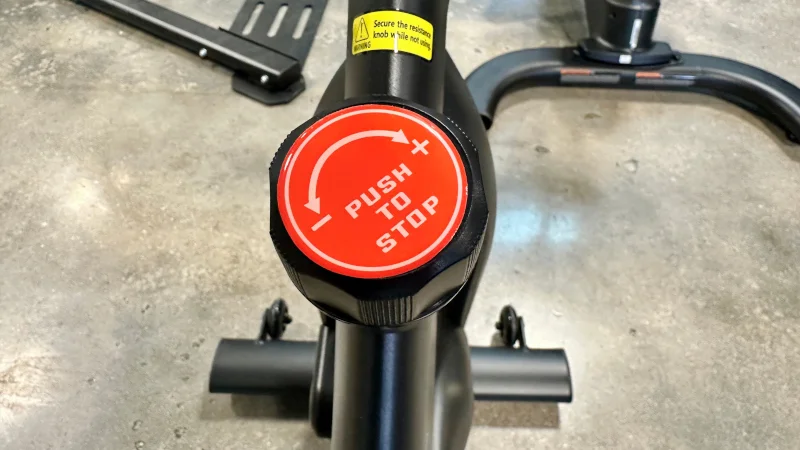
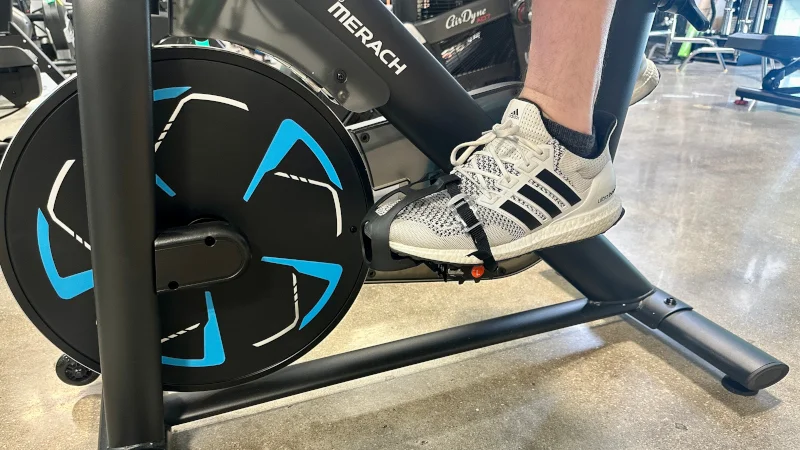
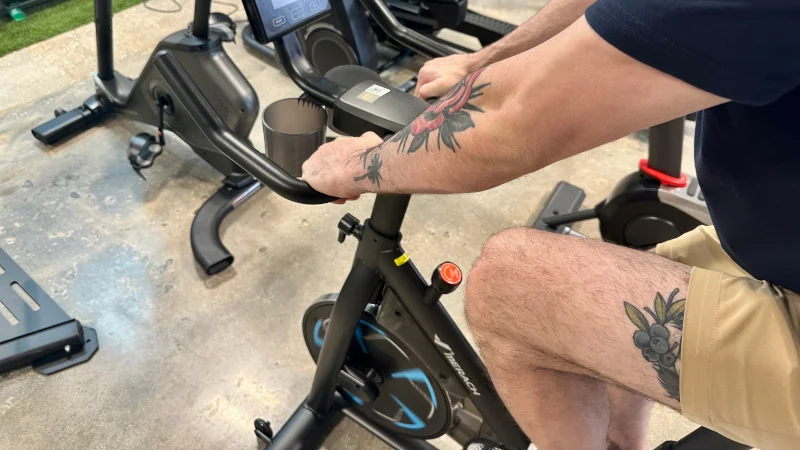
For under $400, the MERACH S36 is a steal for those wanting a stable, quiet exercise bike without breaking the bank.
Between its whisper-quiet magnetic resistance system, sturdy construction, and unbeatable price point, the MERACH S36 earns the nod as our best budget exercise bike. Despite costing less than a third of the average exercise bike, the S36 delivers a great home workout experience that opened some eyes.
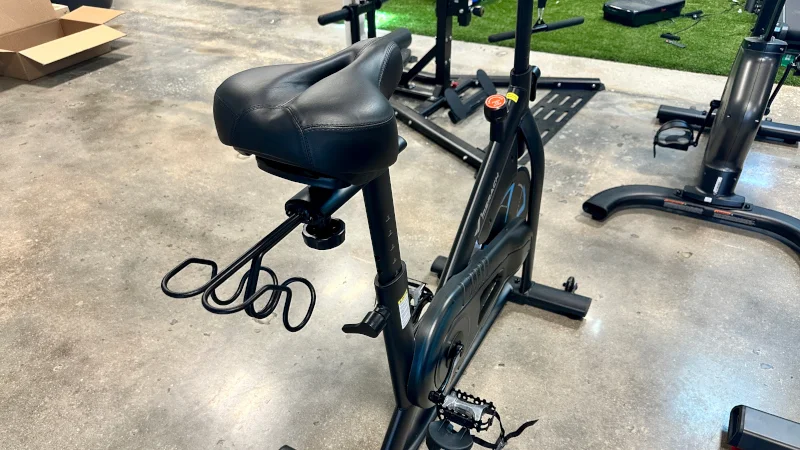
“This was a pleasant surprise, honestly. The bike was sturdy enough for steady-state cardio, as well as high-intensity training,” says GGR Editor Ben Emminger, NASM-CNC, NASM-CSNC. “The seat is plush enough that you wouldn’t mind staying in the saddle for an extended period.”
Our Experience Using the MERACH S36
At just $399, the MERACH S36 delivers exceptional value and performs well where it matters most. During testing, Ben was impressed by its stable ride quality, whether tackling seated endurance sessions, standing climbs, or faster-paced intervals.
“The pedals and drivetrain performed exceptionally well during climbs, and I felt very supported when placing my full bodyweight across the pedals,” Ben says. “As I progressively worked toward my full sprinting pace, I didn’t notice any vibrations or excessive instability.”
The bike also operates quietly thanks to its magnetic resistance system, making it a smart choice for anyone with family members or roommates to consider.
“The magnetic resistance is whisper-quiet at any resistance, and I could see this being a definite positive for athletes training around sleeping children of work-from-home partners,” Ben told me.
The tradeoff comes in the tech department. A basic LCD display tracks essential workout metrics, but there are no integrated heart rate sensors or onboard workouts.
You can, however, pair the bike with apps like Zwift, Kinomap, MERACH, and FantomFite for a more engaging experience. Our only other gripe is that moving the bike requires a bit more effort since there’s no dedicated handle for lifting it onto its transport wheels.
“You need to lift either from the rear base or the metal dumbbell holster at the rear of the seat,” Ben says.
Other studio bikes I’ve ridden often have that classic ‘hum’ to the flywheel once you begin to ramp up the resistance, but this one was virtually silent. At less than $400, it’s a definite steal.
GGR Editor Ben Emminger, NASM-CNC, NASM-CSNC
The MERACH 36 Magnetic Resistance Bike punches far above its weight class, delivering a smooth, stable workout experience that you might not expect from something that fits the budget-friendly category. With two-way adjustable handlebars, a four-way adjustable seat, and a 330-pound weight capacity, it accommodates users of different body types well. It’s also quite compact, making it a great option if you have limited room.
Check out how the MERACH 36 stacks up to other exercise bikes we tested.
How the MERACH S36 Compares
At around $400, the S36 costs less than a third of the average exercise bike. Despite its lighter frame, it actually has a 10-pound weight capacity advantage, as well.
| MERACH S36 Magnetic Exercise Bike | Average Exercise Bike | |
| Price | $399 | $1,409 |
| Product Weight | 74 lbs | 129 lbs |
| Dimensions | 44.9″ L x 20.5″ W x 47.2″ H | 55″ L x 22.3″ W x 52.5″ H |
| User Weight Capacity | 330 lbs | 320 lbs |
| Warranty | 2-year warranty | 5-year frame, 2-year parts |
If you’re willing to splurge, the NordicTrack X24 Bike also has a quiet magnetic resistance system but comes with far more tech capabilities and excellent iFIT programming.
Our Testers

Lindsay Scheele, CPT, CNC
Lindsay has lent her expertise as an on-screen reviewer for all types of equipment for Garage Gym Reviews Everything.

Ben Emminger, NASM-CNC, NASM-CSNC
Ben brings years of experience testing everything from strength equipment to footwear to cardio machines.

Matt Dustin, CSCS, PN1-NC
Matt is a longtime personal trainer and nutrition coach who’s helped clients achieve their health and fitness goals.

Amanda Dvorak, CPT, CNC
Amanda is a dedicated editor and exercise enthusiast who enjoys CrossFit training.

Caroline Lubinsky, CF-L1
Caroline is a former NCAA D1 Women’s College Soccer player who also played in the WPSL, the second highest level of professional women’s soccer in the United States.
Other Exercise Bikes We Researched
If you think these are the only exercise bikes we researched or tested, you must be new around here. Here are the other bikes that didn’t quite make the final cut.
- Schwinn Airdyne AD7: This is another air bike that costs more than the Rogue Echo Bike, and while it comes with a more advanced display, we don’t think that’s worth the extra price. Read our full Schwinn AD7 review for more information.
- YOSUDA Indoor Cycling Bike: Another budget-friendly exercise bike, the YOSUDA bike can be excellent for beginner athletes or those watching their fitness investments. That said, the price does relate to the build quality—many components are constructed from flimsy plastic.
- CAROL Bike: The CAROL Bike comes pre-assembled and is compatible with the brand’s digital library of on-demand workouts. We left it off this round-up, though, since the available programs aren’t refreshed or updated as frequently as other services.
- Titan Fan Bike: This beefy Titan Fitness Fan Bike can support athletes up to 330 pounds and features rugged front transport wheels for easier transport. However, we’ve found similar air bikes at a lower price point.
GGR Exercise Bike Testing Results
The GGR team uses a comprehensive exercise bike testing methodology to assess everything from the footprint and portability to the tech capabilities. We also look at the company’s warranty and return policies to see how customer-oriented they are.
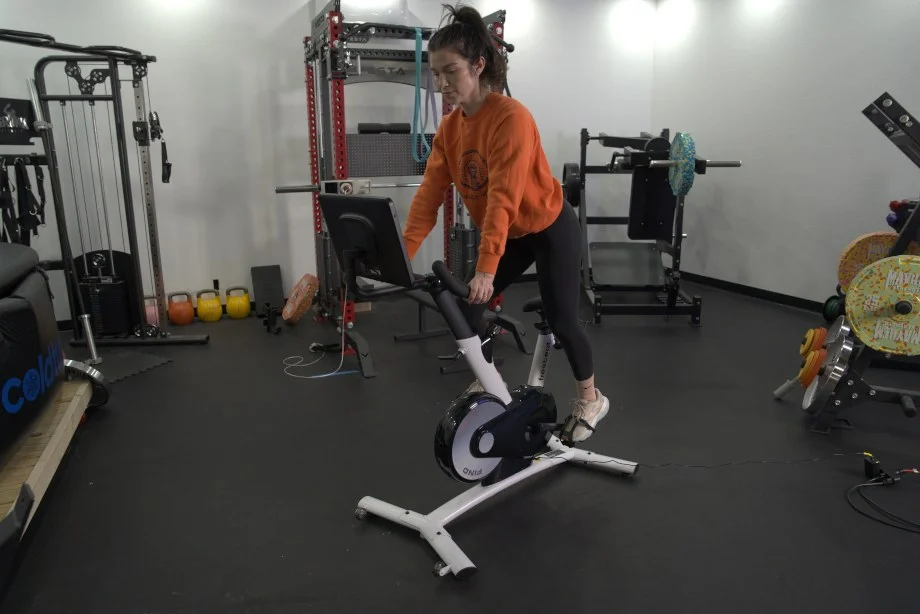
Here’s a thorough breakdown of how each model fared across every category we test. While no bike is perfect, we strive to only include top-performing models that don’t just look good on paper.
Footprint and Portability
Footprint and portability reflect how much space a bike takes up and how easy it is to move when you’re done training. The Aviron Fit Bike is the only model that failed to meet our threshold for a 3 out of 5. On the other hand, three bikes earned near-perfect scores in this category.
Overall, the average footprint and portability score is 3.7 out of 5. That means only the Aviron Fit Bike and NordicTrack X24 Bike fell short of that mark. However, it’s fair to point out that the X24 still earned a passable score (3 out of 5).
Delivery and Setup
This category encompasses two factors. First, we take note of the delivery options, including whether a company offers in-room delivery. Second, we evaluate how easy (or difficult) it is to get the bike set up so you can start spinning your wheels.
Luckily, all of the bikes on this list met our threshold for a 3-out-of-5 rating. In fact, the average rating in this category is 4.1 out of 5. The Peloton Cross Training Bike was the only model to earn a perfect score, but three others earned near-perfect 4.5-out-of-5 marks. So, even though the Aviron Fit Bike and Bowflex VeloCore “only” earned 3s, they’re still pretty easy to set up.
Durability
When you’re investing potentially thousands of dollars in a piece of fitness equipment, you want to make sure it’ll last. The durability score is a direct reflection of the build quality of all of the bike’s components. This category also takes into account the weight capacity, as more durable bikes can typically support heavier users.
As you might expect on a “best of” list, every bike passed this test with flying colors. In fact, only one model (the Peloton Cross Training Bike) earned lower than a 4.5. That stems from its below-average weight capacity of 297 pounds. Still, it’s tough to knock a 4-out-of-5 rating.
Meanwhile, the Aviron Fit Bike, Rogue Echo Bike, and REP Fitness Strive Air Bike all earned perfect marks, cementing their status as ultra-reliable machines.
Customizations
This category accounts for all the ways you can tailor your training experience. This mostly revolves around the number of adjustable resistance levels and how easily you can make those changes.
Yet again, our lineup is stacked with high-scoring models in this category. Three bikes earned a 4 out of 5, with two (the NordicTrack X24 and Sole LCR) earning perfect marks. It’s worth noting that we did not rate the Rogue Echo Bike for customizations due to its limited adjustability as an air bike. We did, however, rate the Strive Air Bike in this category since it has unique Variable Pitch Resistance™ technology.
Adjustability and Ergonomics
You won’t be encouraged to ride a bike if it’s uncomfortable. Naturally, the adjustability and ergonomics score reflects how comfortable it is to use the bike for users of different body types. After all, a shorter user has different ergonomic needs than someone who stands 6’2”.
To no surprise, each bike that made the cut performed well for adjustability and ergonomics. The average rating in this category is 4.3 out of 5. With every model earning a 4 or higher, you shouldn’t have to worry about not being able to find a comfortable position. The Sole LCR earned the highest score, which shouldn’t be a surprise since it’s a recumbent bike.
Tech Capabilities
From touchscreen consoles to AI coaching to automatic adjustments, today’s exercise bikes offer so much more than their less-capable predecessors. While you’ll have to make sacrifices with budget-friendly equipment, premium models should be outfitted with all the tech you need for a connected, streamlined experience.
The average tech capabilities score of 4.0 out of 5 reflects a lineup that ranges from fully connected smart bikes to more traditional performance-focused machines. The NordicTrack X24 Bike, Aviron Fit Bike, and Bowflex VeloCore earned perfect 5-out-of-5 ratings by offering large HD touchscreens, Bluetooth connectivity, and access to feature-rich training platforms with automatic resistance adjustments and detailed performance tracking.
The Peloton Cross Training Bike and Sole LCR Exercise Bike also scored highly at 4.5 out of 5, delivering robust tech packages that enhance your experience. Meanwhile, the Rogue Echo Bike and REP Fitness Strive Air Bike (3.5/5) prioritize durability and workout performance over high-end technology, while the Concept2 BikeErg (3/5) takes a similarly minimalist approach with its reliable PM5 monitor. The MERACH S36 earned the lowest score at 2.5 out of 5 due to its basic console and limited smart bike features.
Dynamic Programming
Whether it’s iFIT, JRNY, or another programming platform, your training experience can be completely different when you have on-demand classes or a variety of workout options at your disposal. On the other hand, bikes that have limited app compatibility or just a few built-in programs are far less likely to inspire consistent use.
Thankfully, most of the bikes on this list met our threshold for a 3-out-of-5 rating for dynamic programming, with the average rating coming out to an even 4.0 out of 5. Four models—the NordicTrack X24, Bowflex VeloCore, Sole LCR, and Peloton Cross Training Bike—earned perfect marks. The Aviron Fit Bike followed closely with a 4.5-out-of-5 score, offering an entertaining, gamified approach to cardio.
Meanwhile, the Rogue Echo Bike (3.5/5), REP Fitness Strive Air Bike (3/5), and Concept2 BikeErg (3/5) prioritize durability over interactive programming, providing basic onboard workouts or performance tracking rather than immersive programming. The MERACH S36 Magnetic Resistance Bike earned the lowest score at 2 out of 5 due to its limited built-in training content and lack of advanced coaching features.
Conveniences
It’s easy to overlook something like a water bottle holder or tablet holder for your iPad…until you realize it’s not there. Conveniences like these make your training experience hassle-free, and we take careful note of whether a bike includes these user-friendly features.
The average score of 4.0 out of 5 reflects a category with a fairly wide range of performance across our test lineup. The NordicTrack X24 Bike and REP Fitness Strive Air Bike earned perfect 5-out-of-5 ratings, meaning you have to make zero compromises. The Aviron Fit Bike and Bowflex VeloCore also impressed with 4.5-out-of-5 scores.
At the opposite end of the spectrum, the Rogue Echo Bike received a 2-out-of-5 rating, making it the clear outlier due to its limited capabilities in this area (which isn’t a surprise for an air bike). The Concept2 BikeErg scored a bit higher, but not by much, while the Peloton Cross Training Bike, Sole LCR Exercise Bike, and MERACH S36 Magnetic Resistance Bike each earned solid 4-out-of-5 scores.
Customer Reviews
In addition to the brand’s website, we check retailers like Amazon for ratings and feedback from actual customers. This gives us a good idea of what to expect, but we still enter our testing process with an open mind since each person’s experience is different.
Value
While price isn’t everything, it’s one of the top considerations whether you’re shopping for premium or budget home gym equipment. Rather than focusing solely on the number, however, we weigh whether the cost is justified based on the build quality, features, and performance.
Your goal should be to get a good bang for your buck, and that’s exactly what you get with every model on our list. The average value score is 4.3 out of 5, which shows that every bike on our lineup delivers a strong return on investment. The MERACH S36 Magnetic Resistance Bike earned a perfect 5-out-of-5 rating, standing out as the clear value leader thanks to its budget-friendly price, quiet magnetic resistance, and feature set that punches well above its cost.
Several premium models—including the Rogue Echo Bike, REP Fitness Strive Air Bike, Bowflex VeloCore, and Peloton Cross Training Bike—also received impressive 4.5-out-of-5 scores by justifying their higher price tags with excellent performance and build quality. Meanwhile, the NordicTrack X24 Bike, Aviron Fit Bike, Concept2 BikeErg, and Sole LCR Exercise Bike all scored 4 out of 5, offering solid overall value despite a few trade-offs.
Financing, Warranty, and Returns
The average score for financing, warranty, and returns comes in at a 4 out of 5, indicating that most of the bikes we tested offer solid post-purchase support. The NordicTrack X24 Bike, Aviron Fit Bike, and Sole LCR Exercise Bike earned perfect 5-out-of-5 ratings thanks to generous warranties, financing options, and customer-friendly return policies. On the other end of the spectrum, the Rogue Echo Bike and Bowflex VeloCore each scored 3 out of 5, reflecting more limited warranty coverage.
The Concept2 BikeErg (3.5/5) falls closer to the middle, offering an excellent reputation for durability but less comprehensive ownership benefits. Overall, while warranty and financing packages vary, most premium exercise bikes provide enough protection and purchasing flexibility to inspire confidence in your investment.
Benefits of Exercise Bikes
“Cycling can offer similar cardiovascular benefits to running and walking,” states Dr. Raj Dasgupta, M.D., FACP, FCCP, FAASM. When practiced regularly, exercise bikes and other types of cardio are excellent for lowering your chance of developing major illnesses and enhancing your level of cardiovascular fitness.
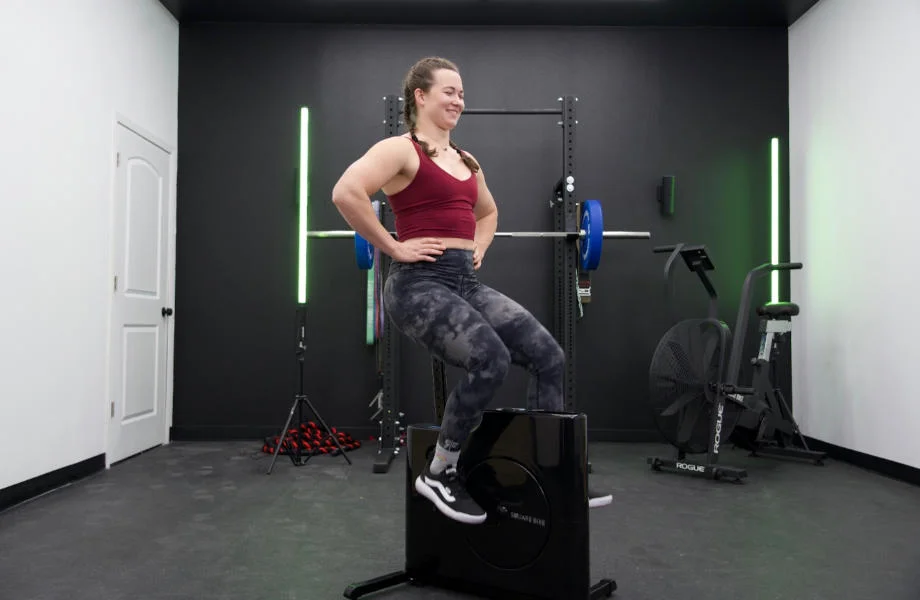
However, the benefits of indoor cycling go well beyond just improving body composition, according to GGR editor and competitive triathlete Amanda Capritto, CPT, CES, CNC, CF-L1, CSNC.
Using an exercise bike on a regular basis can improve your general health and fitness in many ways. Exercise on a stationary bike might also assist you with reducing body fat, building lower body strength, promoting weight loss, burning calories, and strengthening your core. It also has mental health benefits.
Here are just a few more reasons why an exercise bike might be the right purchase for you.
It Can Improve Cardiovascular Conditioning
Consistent pedaling, especially when you’re riding with the resistance all the way up, can be a great way to improve your stamina and cardiovascular conditioning. Adults should get 150 minutes of moderate aerobic exercise or 75 minutes of vigorous exercise, per week, according to the American Heart Association3. Reaching this number may be easier on an exercise bike than other cardio machines.
“They help build cardiovascular endurance, support fat loss, and improve lower body strength,” says Christopher Mohr, Ph.D., RD. “Bikes are also convenient if you want consistent training indoors regardless of the weather.”
It Can Be Done By Most People
Unless you have a special cycling bike, you don’t need special equipment, and most bikes can be adjusted for people of varying fitness levels. “Indoor exercise bikes grant a range of fitness enthusiasts the chance to exercise, even when the weather is unsafe or there are other reasons to avoid going outdoors for cardio,” says Amanda.
Dr. Mohr echoes that sentiment, noting that cycling is a valuable activity for people of all skill levels.
“Beginners can go slow and steady, while those who are advanced can push intensity with intervals or resistance. As long as you’re consistent and vary your workouts, cycling holds up as a strong option,” he explains.
It’s Low-Impact Training
Similar to an elliptical, a spin bike puts much less strain on your knees, feet, and hips when compared to running. This makes it a great pick for anyone who’s trying not to aggravate an underlying injury or strain, senior citizens, or those recovering from injury. “Exercise bikes are a great option for people who need to keep undue pressure and shock off of their joints,” says Amanda.
It’s Good for Strengthening Lower-Body Muscles
Here’s the thing: An exercise bike won’t train your lower-body muscles quite as well as a deadlift or back squat. However, regular biking can help develop and strengthen certain muscles in your legs and lower body.
“Exercise bikes mainly target the quads, hamstrings, glutes, and calves,” explains Dr. Mohr. “Plus, your core muscles kick in to stabilize the trunk, especially if you’re riding upright without leaning too heavily on the handlebars.
It Can Be Useful for Seniors
Because it’s a low-impact movement, exercise bikes can be a great option for seniors looking to get their cardio workouts in each week. The best exercise bikes for seniors can help minimize joint impact, which can be more accommodating for aging populations. Exercise bikes allow you to pedal at your preferred level of intensity without the joint or skeletal impact you may feel during other cardiovascular activities, like running.
Amanda adds, “Recumbent exercise bikes can further reduce joint impact4 thanks to the seat’s reclined position. That can help alleviate pressure even more from the hips, knees, and lower back.”
Buying Guide: What to Look for in the Best Exercise Bikes
The best exercise bike is completely subjective because what works for you might not work for someone else. After all, different exercise bikes vary in functionality. I’ve developed a guide on how to choose an exercise bike based on one’s living space, budget, and fitness goals. Here are our suggestions for items to consider when looking for an indoor exercise bike:
Build Quality
An exercise bike with a heavy frame that’s made of high-quality steel will last much longer and be more stable than a bike made of more lightweight material. The trade-off, though, is that the bike with high-quality construction will be much more expensive.
Adjustability
Regardless of which type of resistance system your bike uses, you’ll want to make sure it offers a good number of adjustments. By this, we mean making it easier or more difficult to pedal. More affordable bikes will have less adjustability than more expensive options.
Ride Experience
This not only refers to how stable the bike is and how the resistance feels, but also encompasses things like interactive workout programming and whether or not the bike has any comfort amenities, like a padded saddle or built-in cooling fan.
Pedals
A bike isn’t much of a bike without the pedals—and exercise bike pedals have some important differences across models. Here’s a quick breakdown of some of the most common types of pedals you’ll see on our list:
- Flat Pedals: Many models feature flat pedals like the kind you’d find on your childhood bicycle. They’re easy to use and are comfortable for most foot sizes.
- Foot Straps: These look like standard-issue pedals, except there’s a strap that you can tighten around your foot to help them stay in place during a workout. These can be very useful for higher-intensity training.
- Toe Cages: Living up to their name, toe cages basically act like a little plastic basket to lock your feet into to avoid slips or disconnect mid-ride. Some bikes come with these as the default pedal, while others sell them as an upgrade. Either way, they work great if you’re the type of cyclist to almost-quite-literally pedal yourself out of your shoes during a workout.
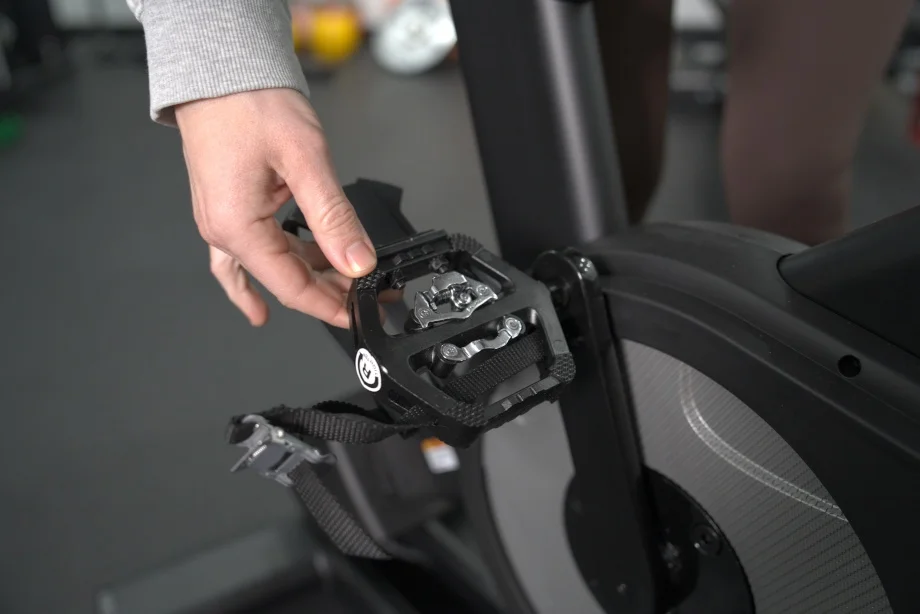
- Clip-In Pedals: These require special cycling shoes with a cleat that clips into the specific pedal. You’ll need to make sure the shoes/cleats correspond with the right pedal type, which will likely either be Look Delta or SPD. Peloton is one of the more notable examples of a brand using a clip-in pedal system.
Many companies offer hybrid pedals, as well, with toe cages on one side and a flat surface
Screens and Console
With the ability to stream a workout class directly to your bike, you’ll want to make sure you know all about the screen situation before you make a purchase. For anyone looking to take virtual spin classes regularly, you’ll want a screen that’s sized to your preference. Look for a high-quality LED screen (preferably a touchscreen) and a console that shows a range of workout metrics. If you need to use your own device as a screen, make sure your phone or tablet is compatible with the bike.
That said, if you’re looking for a low-tech workout, you might want to avoid paying a premium for fancy screens and features that you’re not going to use. Luckily, there are still plenty of bikes for people who just want to pedal the time away with minimal tech.
Footprint
The average size of the bikes we tested is 55 inches long by 22.3 inches wide by 52.5 inches tall, with an overall weight of roughly 129 pounds. Look for bikes within these general parameters, and don’t forget about potentially having to move it up stairs or through tight hallways and doorways in your living space. In short: measure, measure, measure!
Resistance Type and Calibrations
Determining the right type of resistance you want in an exercise bike is essential before making a purchase. (Don’t worry, we break down all three of these resistance types below.) The differences in the bike’s weight, noise levels, and price can vary considerably based on the resistance, and these factors will help you make the right decision.
Along with these resistance types, you’ll want to consider how easy it is to calibrate your exercise bike. This is important, partly because a properly calibrated bike will have consistent resistance levels and will more accurately measure your workout metrics. It’s a non-negotiable aspect of exercise bike maintenance, but it can also be overwhelming for newcomers. If you’re stuck, many brands have calibration information on their official websites or YouTube channels for easy reference.
Subscriptions
One price-related wrinkle to consider before purchasing an exercise bike is whether you’ll need a monthly app subscription to take advantage of all the virtual classes and features on offer. While plenty of models come with preset workout routines that don’t require a subscription, others rely on platforms like iFIT or the Aviron app if you want to stream a class or enjoy other training programming.
Some bikes will offer a free trial to these apps for a certain period of time, but after that, you’re looking at $20 to $45 per month for the service. While value is in the eye of the beholder, make sure you’re aware of any potential subscription costs before you take the plunge.
FAQs About the Best Exercise Bikes
What is the best exercise bike for home use?
After testing more than 50 exercise bikes, we put the NordicTrack X24 at the top of our list. Compatible with iFIT programming, this tech-laden model features a pivoting 24” touchscreen, 24 levels of silent magnetic resistance, and plenty of user-friendly conveniences.
Are exercise bikes good for weight loss?
Exercise bikes can be an effective tool for helping reach your weight-loss goals. A well-rounded body recomposition plan should include both cardiovascular exercise and strength training, along with maintaining a calorie deficit.
What features should I look for in a high-quality exercise bike?
Look for a sturdy frame, adjustable seat and handlebars, reliable performance tracking, and workout programming that fits your training goals. Higher-end bikes typically have large touchscreen displays and enhanced tech capabilities that can help create a more engaging experience.