



If you’re looking for the best weighted vests, you’ve come to the right place. A weighted vest can take any workout from “eh” to “I might die” in a matter of minutes. All jokes aside, training with a weighted vest can improve your fitness, particularly your stamina and muscular endurance, by adding resistance to basic exercises like push-ups, squats, lunges, pull-ups, and running or walking.
Smaller fitness tools might be easier on your wallet than squat racks or cable machines, but that doesn’t mean you should skip the research when choosing a weighted vest. Our team of certified personal trainers, athletes, and coaches has evaluated more than 50 top options using our in-depth equipment testing methodology. We’re proud to have helped more than 140,000 readers buy the best strength and conditioning equipment for their home gyms, and we’re confident we can find the right vest for you, too.
GGR Gold Pick — Best Weighted Vest
We chose the REP Fitness Strata Weight Vest as the best weighted vest given its excellent build quality, durability, and performance. Our top pick earned at least a 4 in all testing categories, posting an impressive overall score of 4.5 out of 5.
10 Best Weighted Vests
- Best Weighted Vest Overall – REP Fitness Strata Weight Vest
- Best Weighted Vest for CrossFit – 5.11 TacTec Plate Carrier
- Best Durable Weighted Vest – GORUCK Ruck Plate Carrier 3.0
- Best Premium Weighted Vest – OMORPHO G-Vest+
- Best Adjustable Weighted Vest – Rogue Plate Carrier
- Best Weighted Vest for Walking – Fringe Sport WODmaster Weight Vest
- Best Weighted Vest for Beginners – LifePro Weighted FlexVest with Ankle Weights
- Best Weighted Vest for Running – Hyper Vest Elite
- Best Budget Weighted Vest – Zelus Weighted Vest
- Best Weighted Vest for Women – Hyperwear Hyper Vest Fit
Current Top Deals
- REP Fitness Strata Weight Vest – Free shipping on all orders
- GORUCK Ruck Plate Carrier 3.0 – Free U.S. shipping for GORUCK Tribe Members
- 5.11 TacTec Plate Carrier – On sale for $149
How We Selected the Best Weighted Vests
We look at how much weight the vest can hold and how adjustable that load is. A 3-out-of-5 score requires at least two weight options, or a modular system that allows for some progression and use across multiple activities.
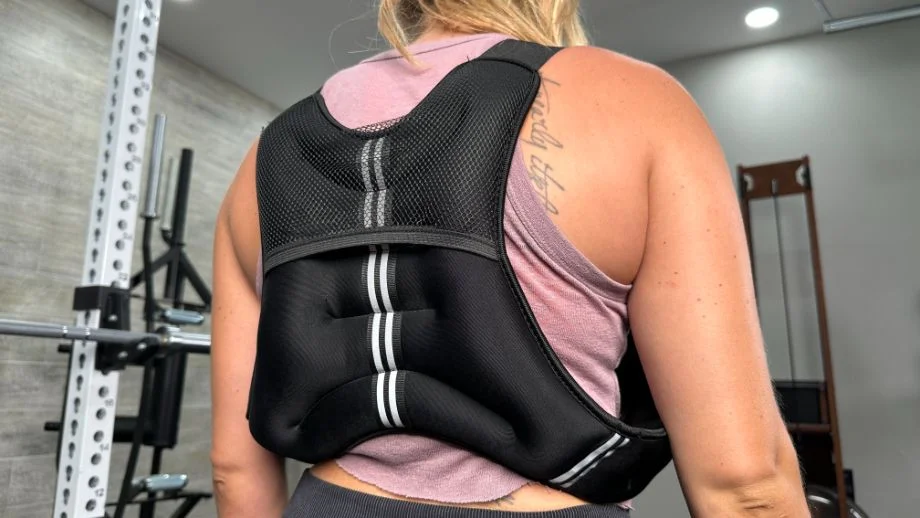
We assess fit, range of motion, and available size or adjustment options. To earn a 3 out of 5, a vest must offer some adjustability (such as shoulder or waist straps) and allow natural arm movement during workouts. Higher scores go to vests that offer maximum comfort and adjustability.
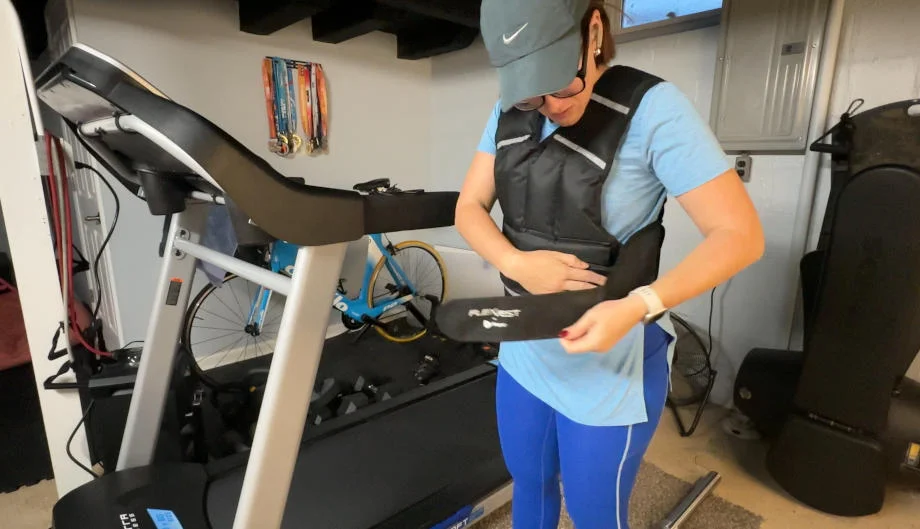
We evaluate fabric strength, stitching, and hardware like zippers and Velcro. A 3-point rating means the vest uses generally durable materials, even if some components feel less robust than more premium options. Higher scores go to vests that are made from ultra-durable materials that should last for years.
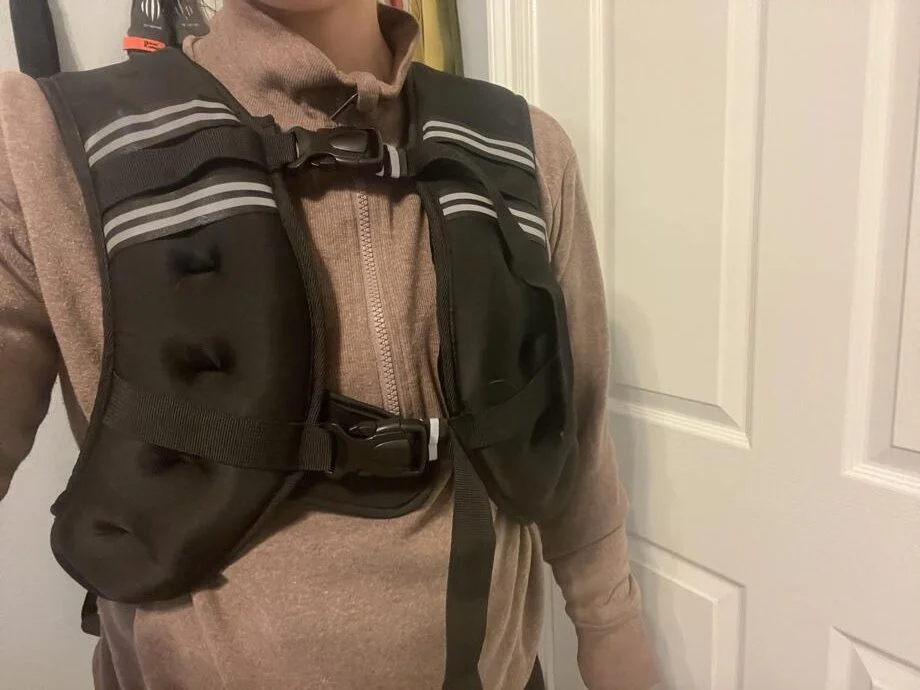
Our team has tested more than 50 weighted vests (and counting) using our multi-point fitness equipment testing methodology. We utilized these vests for HIIT, CrossFit, and other types of workouts, evaluating key categories such as breathability, durability, security, and performance.
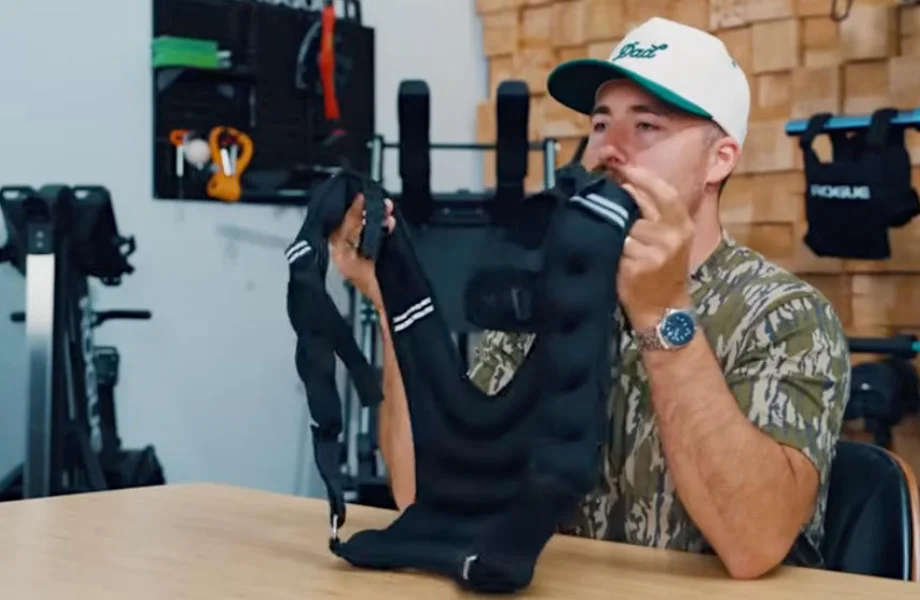
In addition to our hands-on testing of each product on this panel, we spoke with several experts—including Chris Mohr, PhD, RD, Dr. Raj Dasgupta, and several fitness coaches on the GGR team—to share additional insights on how weighted vests can be a worthwhile investment for improved fitness and wellness.
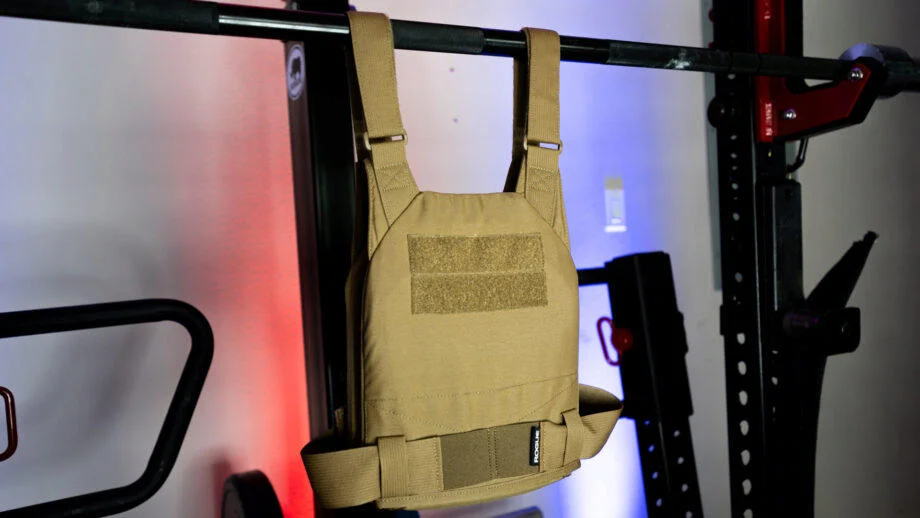
Latest Updates
In June 2026, we selected the REP Fitness Strata Weight Vest as our best weighted vest overall, largely due to its exceptional performance and durable materials. Our previous top pick—the GORUCK Ruck Plate Carrier 3.0—remains on our list as the best durable weighted vest.
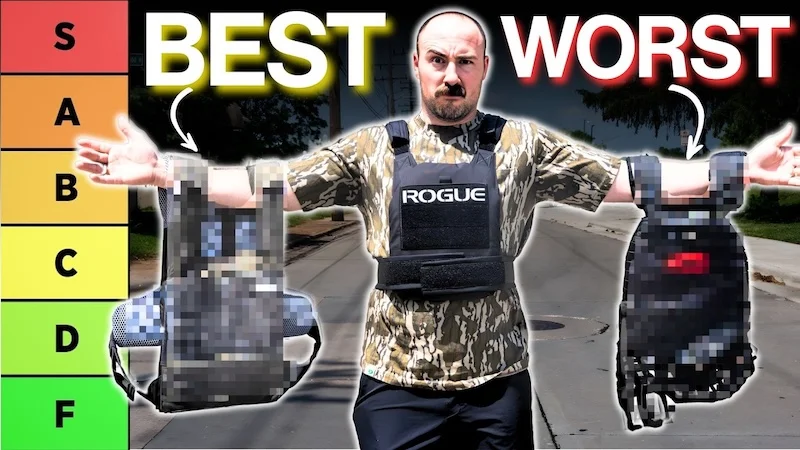
Best Weighted Vests Video Review
Best Weighted Vest Overall: REP Fitness Strata Weighted Vest
Updated by: Caine Wilkes, OLY, CNC, USAW-L1
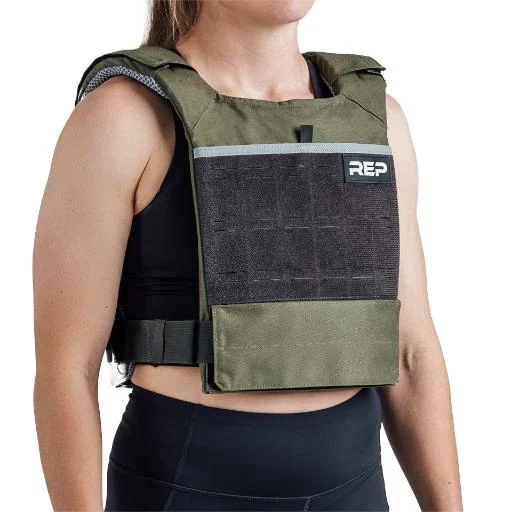










The Rep Fitness Strata Weight Vest is a classic plate carrier able to hold a pair of 5- to 20-pound weight plates, with one in the front and one in the back. Made with 750D Cordura nylon and a padded interior, it's made to be durable but also comfortable for most users. Although only one size, its adjustable waist and shoulder straps should allow this quality weighted vest to securely fit onto most athletes.
What our tester says:
“The Strata Weight Vest didn’t move at all while I did dips and pull-ups. Thanks to its adjustable shoulders and waist, I was able to make this plate carrier be as secure as I needed.” -Matt Dustin, CSCS, PN1-NCWhy does the Strata Weight Vest from REP Fitness get our nod as the best overall weighted vest? It’s hard to pick just one reason, since it earned scores no lower than a 4 out of 5 across the board. Where it excels, however, is in the broad weight capacity it offers, as well as its durable materials and secure fit.
GGR Senior Staff Writer Matt Dustin, CSCS, PN1-NC, gave the materials and durability a 5 out of 5. “It feels extremely durable,” he told me. “I could see some minor wear and tear occurring eventually, but it still feels like it should last for a very long time.” Along with durable 750D Cordura nylon and a padded interior, REP backs this weighted vest for three years of home use, which is a nice touch.
Weight Capacity: 5/5
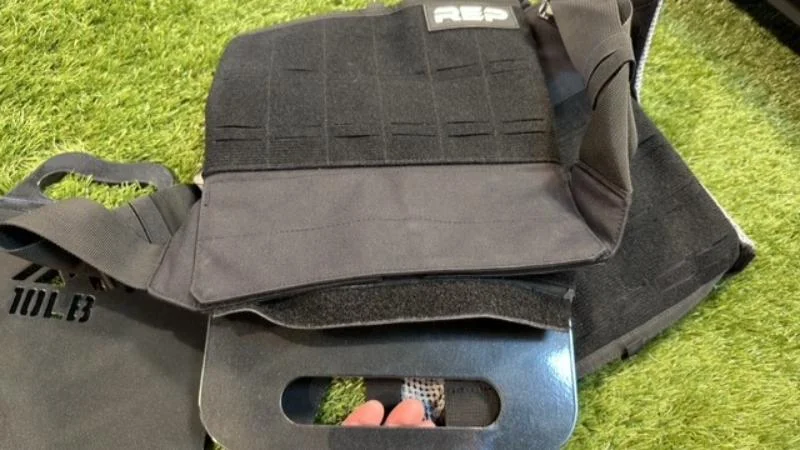
Durability: 5/5
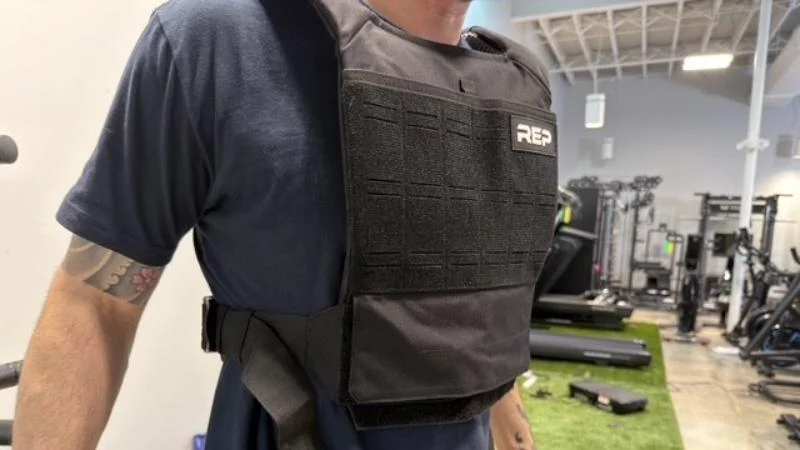
Breathability: 4/5
Why We Like the REP Fitness Strata Weight Vest
At a first glance, the Strata Weight Vest looks like a simple plate carrier, but it’s made well and still has some unique features, including a front pocket for holding your phone. It’s not necessarily made to be the most breathable vest, but Matt never felt too heated during trials and rates the breathability at 4 out of 5.
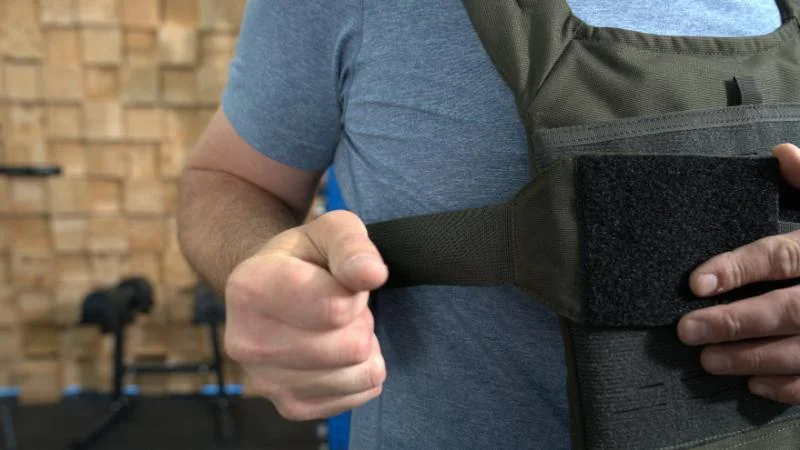
Although it comes in one size, the waist and shoulders are adjustable, allowing the vest to accommodate a variety of body types and sizes. This also allows for a more secure fit; Matt rates the secureness and performance at 5 out of 5, adding that the Strata didn’t wobble at all while he did bodyweight exercises like dips, pull-ups, and jumps.
The weighted vest begins at about $88 without any weight plates, but REP Fitness also has branded weight plate pairs available ranging from 5 to 20 pounds, plus it also should hold most standard vest plates. “The heaviest options aren’t cheap,” Matt told me, “But I still think the value is quite solid for this weighted vest’s performance and comfort.” Accordingly, he gives the overall value a 4 out of 5.
The Strata didn’t move at all while I did dips and pull-ups. With the adjustable shoulders and waist, you can get this weighted vest to be as secure as you want, so I’d imagine very few people would have issues with it slipping around.
Matt Dustin, CSCS, PN1-NC
What We Didn’t Like About the REP Fitness Strata Weighted Vest
Although the weighted vest is highly adjustable, the Strata does have a minimum and maximum circumference for the vest belt—28 to 60 inches, respectively. While a good portion of people should find the sizing accommodating, larger- and smaller-bodied folks may need a more tailored option for an optimally secure fit.
Also, while we were impressed with the Strata’s weight capacity, it’s important to note that there aren’t any micro-adjustments to be made to the plate carriers; the plates are all you can add or remove. To use a different weight, you’ll also need to purchase a heavier (or lighter) pair of plates. Keep this in mind if you’re looking for a more versatile weighted vest.
For more micro-adjustments in your weighted vest, check out the Hyperwear Hyper Vest Elite. It ranges from 10 to 25 pounds, but allows for weight changes as small as 2.25 ounces.
Testing Breakdown
The REP Strata Weight Vest excelled in all tested categories, but it particularly shined in durability, performance, and weight capacity.
Vs. The Average
Even if you buy the 20-pound pair of vest plates with the REP Strata, you’ll come in just under the average price for a weighted vest. As such, this weighted vest provides solid value at its price point, especially when you consider the above-average three-year warranty for home use.
| REP Fitness Strata Weight Vest | Average Weighted Vest | |
| Price | Starts at $87.99 (without plates) | $210 |
| Minimum Weight | 10 lbs | 7 lbs |
| Maximum Weight | 40 lbs | 44 lbs |
| Adjustable or Fixed | Adjustable | Varies |
| Weight Increments | Pairs of 5-, 7-, 10-, 15-, or 20-lb plates | Varies |
| Warranty | 3 years for home use (weight vest), 1 year (weight plates) | 1 year |
Best Weighted Vest for CrossFit: 5.11 TacTec Plate Carrier
Updated by: Amanda Capritto, CPT, CES, CF-L1, CNC, CSNC



_
What our tester says:
__“This vest will last for years no matter how many insane CrossFit workouts you put it through.”_
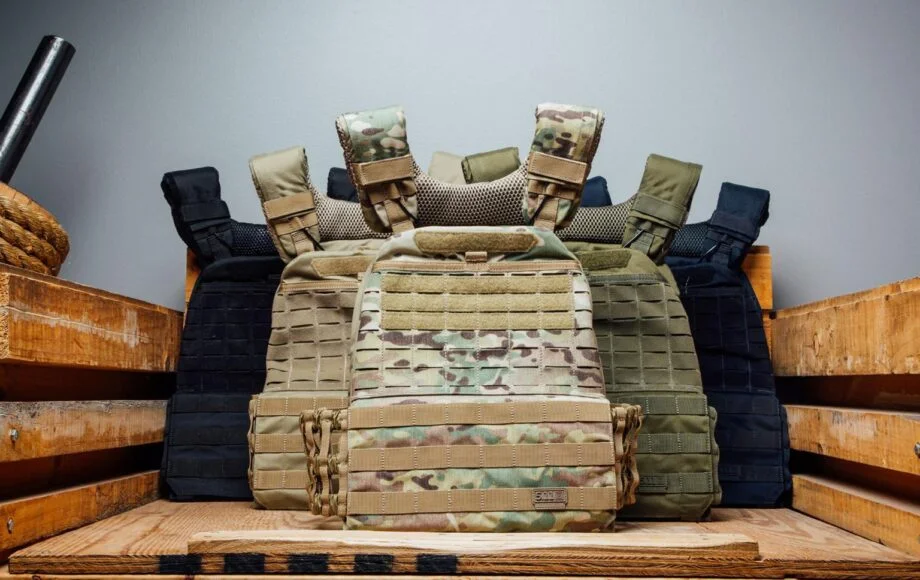
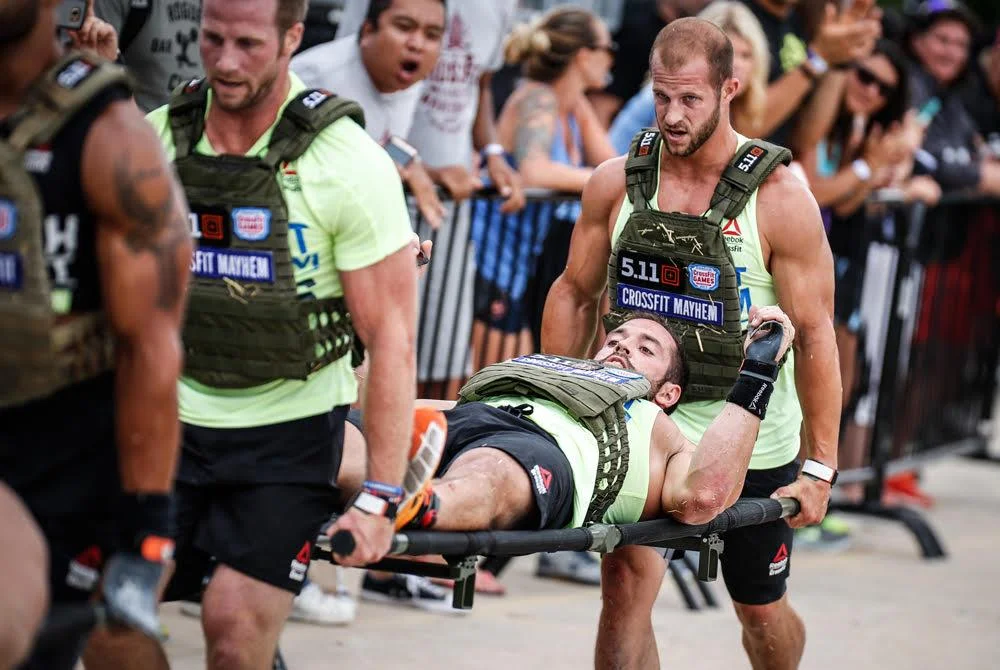
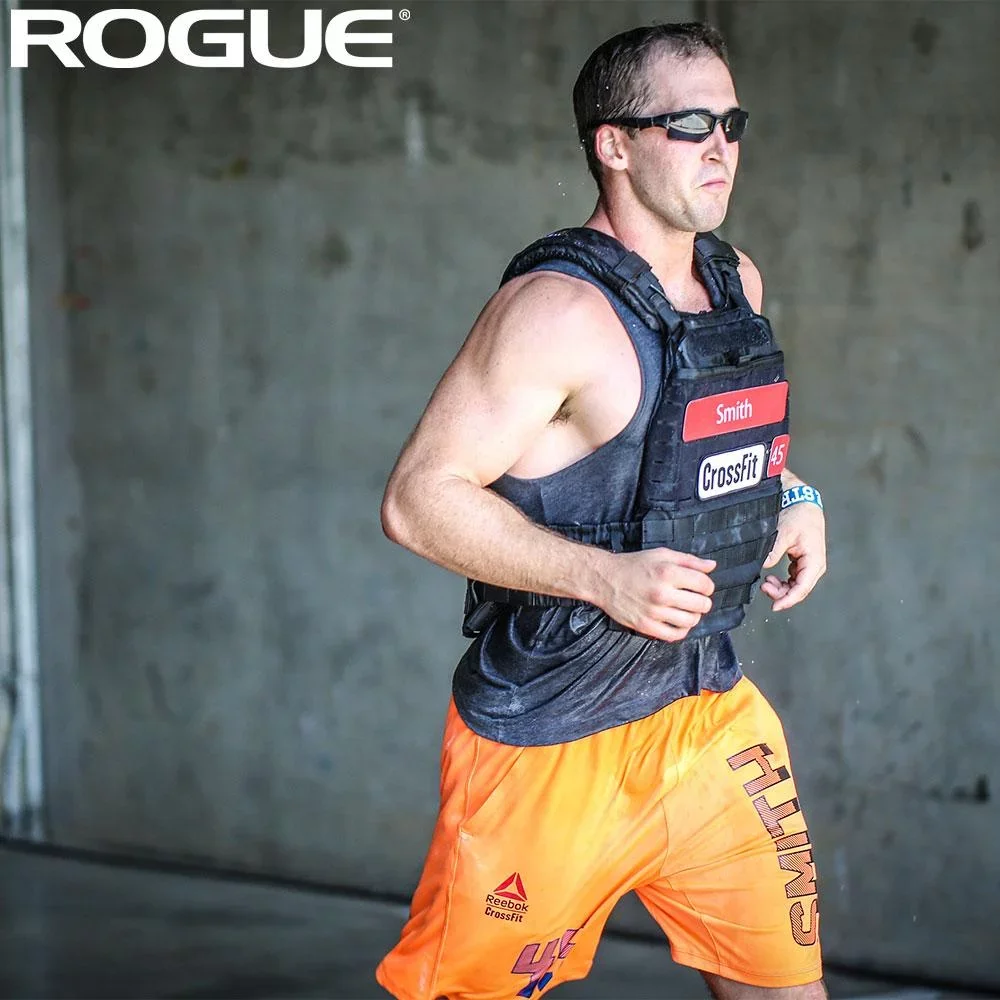
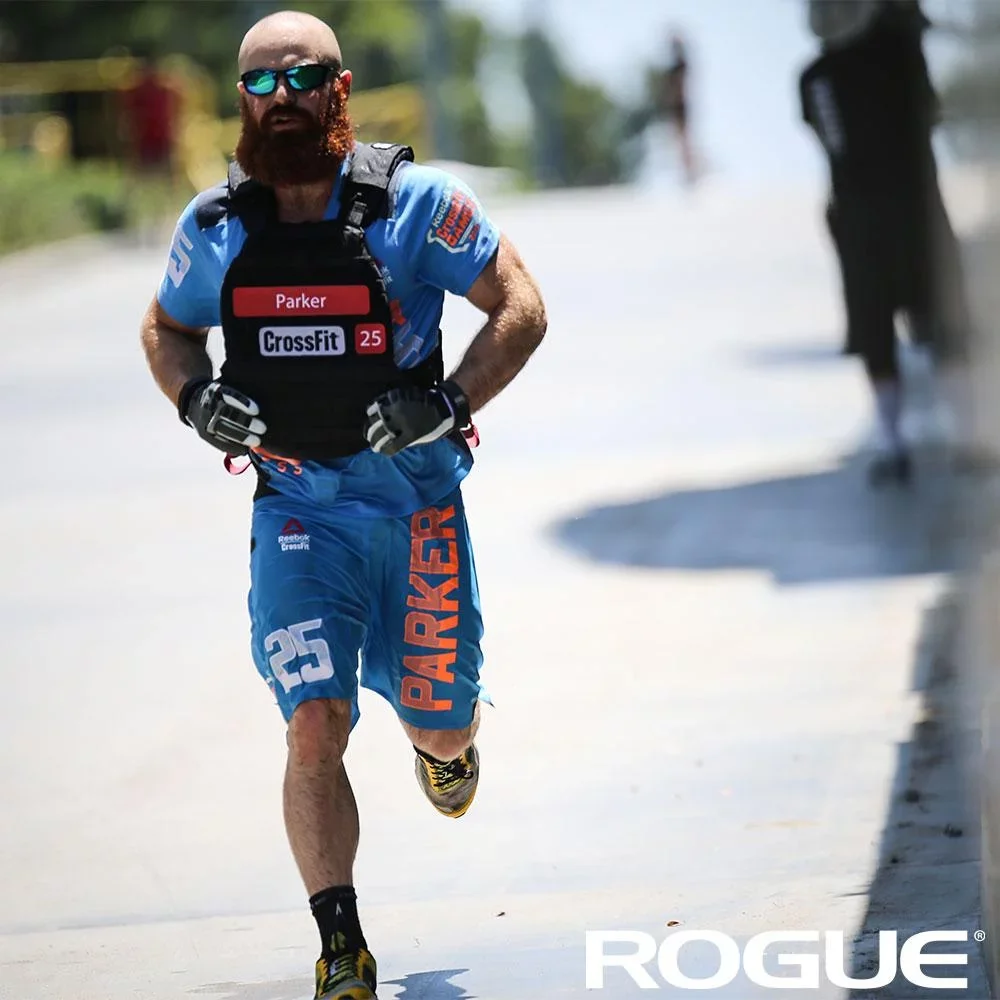
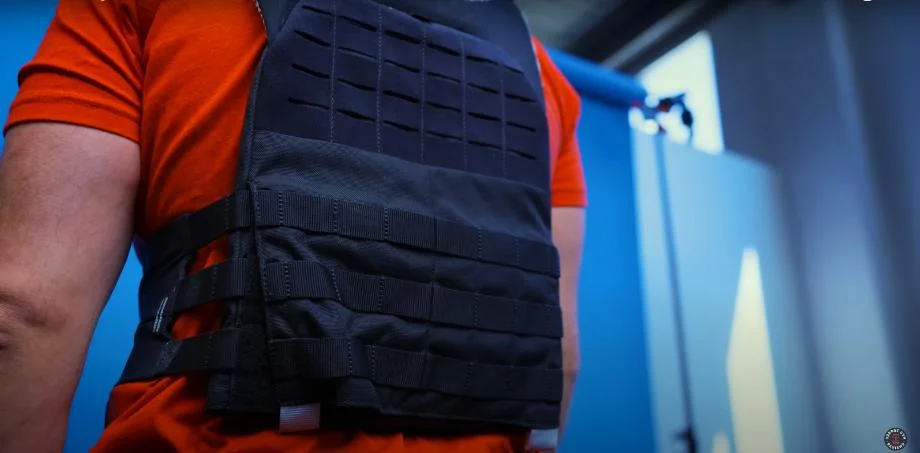
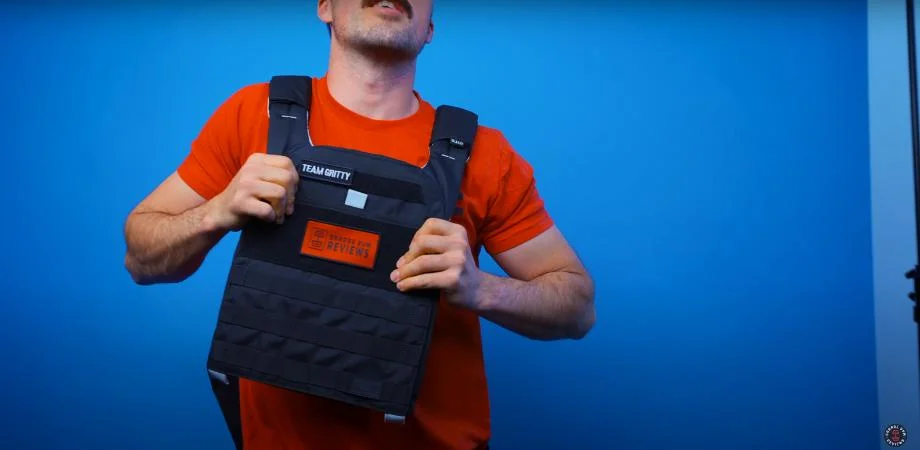
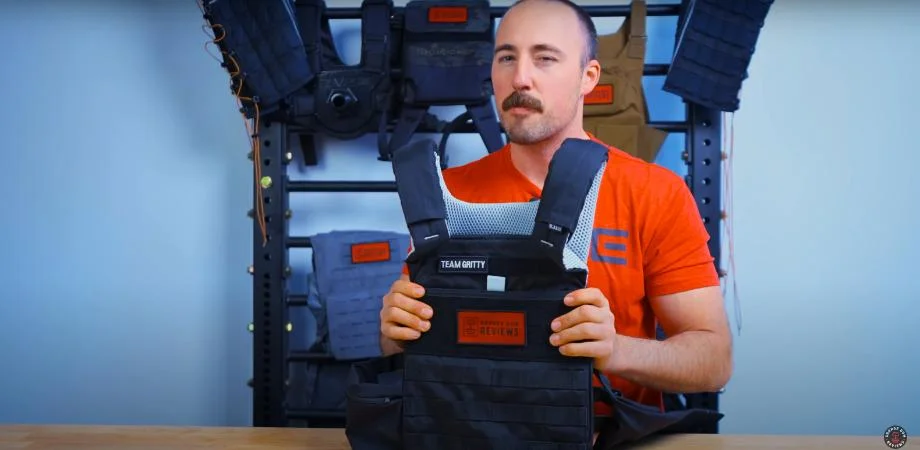
The 5.11 TacTec Plate Carrier was, at one time, the best (and pretty much only) option if you wanted a high-quality weighted vest. It wasn’t initially meant for use as a fitness tool, but rather as a flak jacket to hold ballistic plates for operators in the military. 5.11 realized those ballistic plates could easily be replaced with steel plates for improving fitness. GGR founder Coop Mitchell explains, “Soon after its release, the TacTec Plate Carrier was repurposed by CrossFit athletes and has been used in countless CrossFit Games events, including the infamous Murph workout.” This solidifies its ranking as the best weighted vest for CrossFit.
RELATED: Best CrossFit Equipment
Versatility: 4/5
Durability: 5/5
Breathability: 4/5
Why We Like the 5.11 TacTec Plate Carrier
Coop thinks the 5.11 weighted vest is a good option for CrossFit specifically because of its sheer durability. “This vest will last for years no matter how many insane CrossFit workouts you put it through,” he says. It’s also a great weighted vest for obstacle course races, such as Tough Mudders and Spartan Races, where your vest is sure to get beat up. It easily earned a perfect 5-out-of-5 score for durability—just one of two vests on our list to do so.
One specific feature of the 5.11 vest that Coop says he really likes is the strap design. The shoulder straps feature thick, foam-filled pads with mesh backing to allow for improved breathability. “I prefer the minimalist design of other plate carriers, but for extremely long rucking and training, the shoulders on the 5.11 vest will prove to be a bit more comfortable,” he says.
On its own, the vest weighs just 2.5 pounds, but it’s designed to hold armor-style weight plates in both the front and back. The carrier also works with 5.11-branded plates and most similarly shaped weighted vest plates, which opens the door to a broad range of loading options (if you’re willing to invest in multiple plate sets).
For instance, Rogue Fitness offers compatible plate sets in 5-, 7.5-, 10-, and 20-pound profiles, giving athletes the ability to add anywhere from 10 to 40 pounds in total. Because you can easily tailor the resistance to your training needs while maintaining flexibility, we rated the TacTec Plate Carrier a solid 4 out of 5 for versatility..
“If you like the look, want a vest that’s extremely durable, and don’t mind paying for it, the 5.11 Tactical Weight Vest is still a great option.”
Cooper Mitchell, GGR founder
What We Didn’t Like About the 5.11 TacTec Plate Carrier
The TacTec Plate Carrier is definitely one of the most “tacti-cool” looking weighted vests, but as Coop points out, that style means it has some unnecessary features that add to overall bulk, like the MOLLE panels and GrabDrag handle. Many athletes may prefer a more minimalist silhouette. Coop gives the TacTec Plate Carrier 3 out of 5 for comfort.
Additionally, the price is a bit high. The cost of just the vest is $250, and that doesn’t include shipping or the cost of the required weight plates. Though it’s worth the price for the right buyer (everything is), we had to rate the value at 3 out of 5 points.
For a plate carrier weighted vest at a lower cost, check out the Rogue Plate Carrier, which retails for $165 (before adding the cost of weight plates).
Testing Breakdown
One of two weighted vests in our breakdown that earned a perfect score for durability, this abrasion-resistant vest is ideal for the high-impact, high-intensity nature of CrossFit.
Vs. The Average
The 5.11 TacTec Plate Carrier is quite expensive, but its lifetime warranty and exceptional durability justify the price for those who intend to get a lot of use out of it.
| 5.11 TacTec Plate Carrier | Average Weighted Vest | |
| Price | $250 (without weight) | $210 |
| Minimum Weight | 5 lbs | 7 lbs |
| Maximum Weight | 40 lbs | 44 lbs |
| Adjustable or Fixed | Adjustable | Varies |
| Weight Increments | Varies | Varies |
| Warranty | Lifetime | 1 year |
Read our full 5.11 TacTec Plate Carrier review for more tester insights and details.
Best Durable Weighted Vest: GORUCK Ruck Plate Carrier 3.0
Updated by: Amanda Capritto, CPT, CES, CF-L1, CNC, CSNC


_
What our tester says:
__“Everything about this vest feels well-made and super durable. The Velcro is super secure and the material of the vest is really thick and high-quality. I don’t feel like it would rip or tear anytime soon.”_
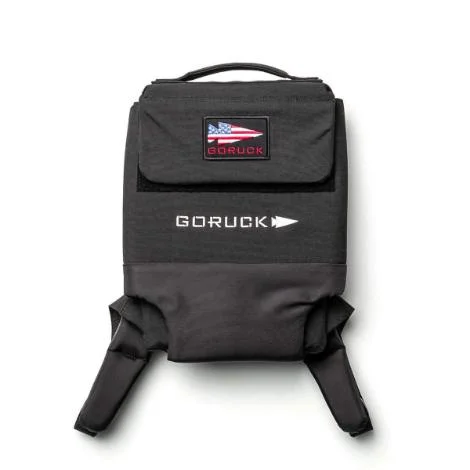
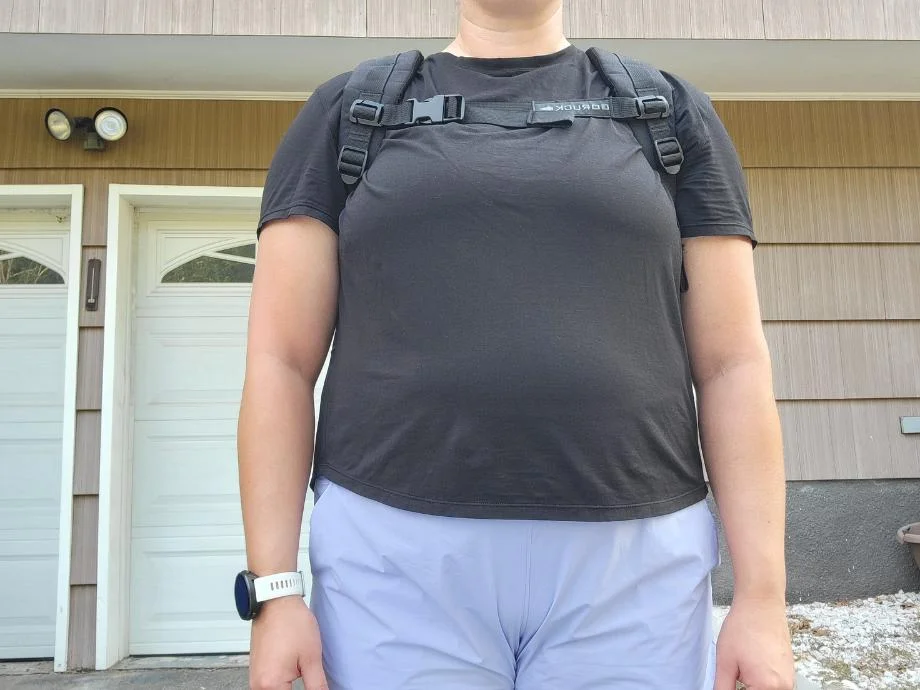
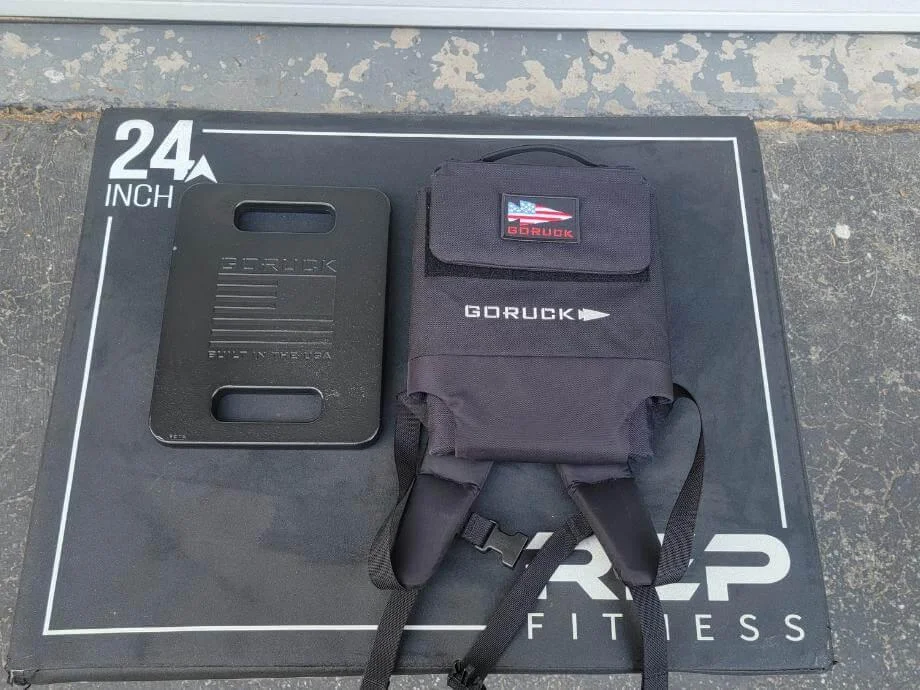
Thanks to its overbuilt design and added lumbar support, the GORUCK Ruck Plate Carrier 3.0 enters our list as the most durable weighted vest. Using variable weight vest plates at an additional cost, the Plate Carrier 3.0 is made primarily of heavy-duty Cordura fabric and has EVA foam padding in the lumbar region. The shoulder straps also contain EVA foam padding for comfort.
“Everything about this vest feels well-made and super durable,” GGR editorial team member Amanda Dvorak, ISSA-CPT, ISSA-CNC, tells me. “The Velcro is super secure and the material of the vest is really thick and high-quality. I don’t feel like it would rip or tear anytime soon.” She rates the durability and materials at 5 out of 5.
RELATED: GORUCK Sandbags Review
Versatility: 4/5
Durability: 5/5
Security & Performance: 4/5
Why We Like the GORUCK Ruck Plate Carrier 3.0
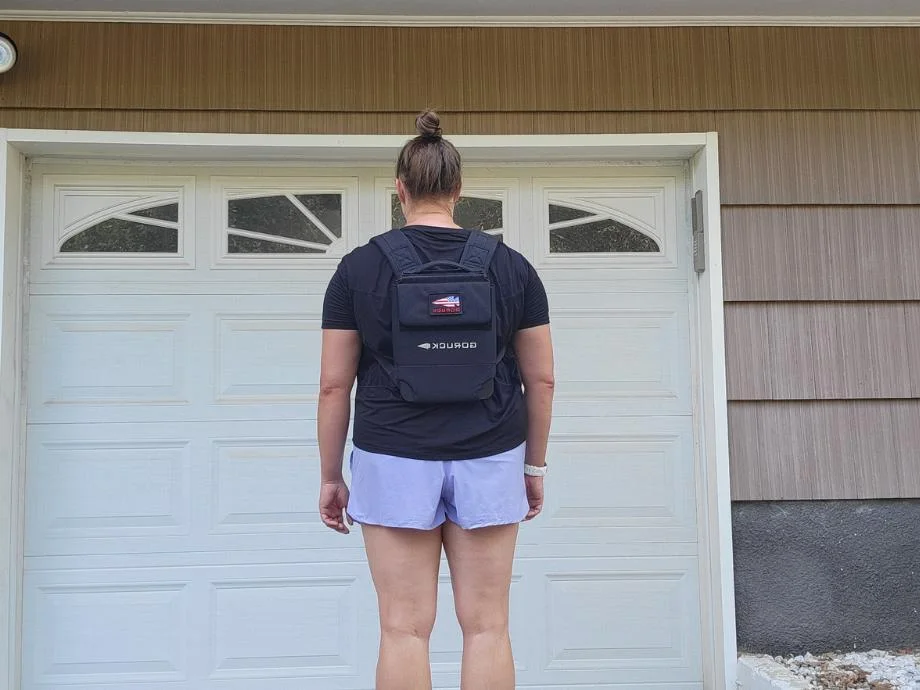
The GORUCK Ruck Plate Carrier 3.0 is certainly a unique weighted vest. Most weight vests intend to evenly distribute a load around your entire torso, preventing the weight from centering on your back. The Ruck Plate Carrier purposely centers the entire load on your back and leaves the chest and abdomen open.
The backpack design adds breathability and optimizes mobility at your front because, well, there are no weight plates there. Centering the weight in your mid-back also promotes good posture by pulling the shoulder blades back and down. If you struggle to keep your chest up while wearing a regular weighted vest, the GORUCK Plate Carrier 3.0 could be a good option for you.
This weighted vest comes in three sizes—Standard, Long, and Heavy—and it has an adjustable chest strap, earning it a 4 out of 5 for adjustability and comfort.
You will have to buy the plates separately; they come in 10, 20, or 30 pounds for the Standard carrier, and 30 or 45 pounds for the Long carrier (the Heavy profile can support up to 90 pounds). This is pretty typical when it comes to weighted vests, and with the Ruck Plate Carrier 3.0 listed at $115 (for the standard size), it’s a pretty good bargain even when factoring in the cost of the plates. This earned it a 4 out of 5 for weight capacity and versatility.
“It cost me about $175 for the vest and a 20-pound weight,” adds Amanda, “but I think it’s worth the price. It feels very durable and well-made.” As such, she rates the value a solid 4 out of 5.
“It feels really snug when walking. I also did some jumping exercises in it to test the security, and it shifted around a little, but nothing terrible.”
Amanda Dvorak, ISSA-CPT, ISSA-CNC
What We Didn’t Like About the GORUCK Ruck Plate Carrier 3.0
Amanda noticed that the back of the vest doesn’t breathe too well. “My back would get pretty sweaty after walks with the vest on,” she recalls. “Even when I wore it on a cooler 65-degree morning, I still got pretty sweaty with it.” She did appreciate the free front and the breathability there, but noted that you’ll feel the weight (and heat) on your back, even with the added lumbar support.
The weighted vest isn’t machine-washable, either, so Amanda docked a point to rate the durability and construction at 4 out of 5. That said, the vest can be hosed down and scrubbed with soap, then hung to dry, according to GORUCK’s website.
If you want something equally as adjustable but prefer a more evenly distributed weight profile, we suggest opting for a plate carrier like the Rogue Plate Carrier.
Testing Breakdown
Our most durable pick exceeded benchmarks in all categories but one—breathability—which we feel is a fair trade-off for all the good that comes with the GORUCK Ruck Plate Carrier 3.0.
Vs. The Average
The GORUCK Ruck Plate Carrier 3.0 is significantly less expensive than average, yet holds its own in terms of adjustability and boasts a lifetime warranty.
| GORUCK Ruck Plate Carrier 3.0 | Average Weighted Vest | |
| Price | $115 (without weight) | $210 |
| Minimum Weight | 10 lbs | 7 lbs |
| Maximum Weight | 30 lbs | 44 lbs |
| Adjustable or Fixed | Adjustable | Varies |
| Weight Increments | 10 lbs | Varies |
| Warranty | Lifetime | 1 year |
Best Premium Weighted Vest: OMORPHO G-Vest+
Updated by: Amanda Capritto, CPT, CES, CF-L1, CNC, CSNC


_
What our tester says:
__“The cost is high, which could price people out when there are much more affordable options on the market. But for athletes looking to get 1% better, this micro-weight system is like striking gold.”_
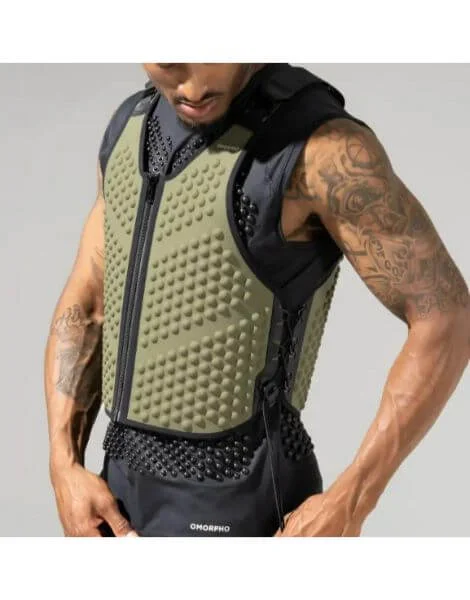
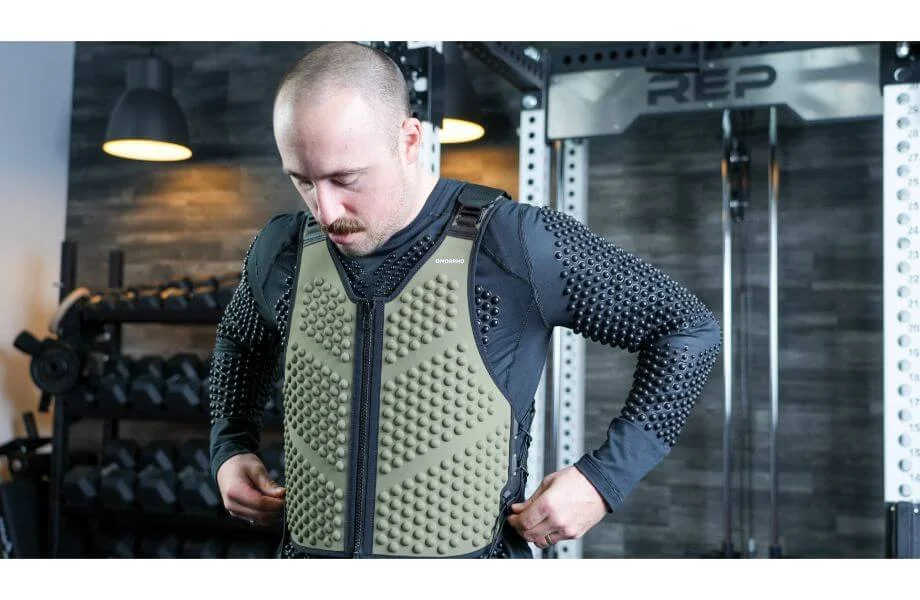
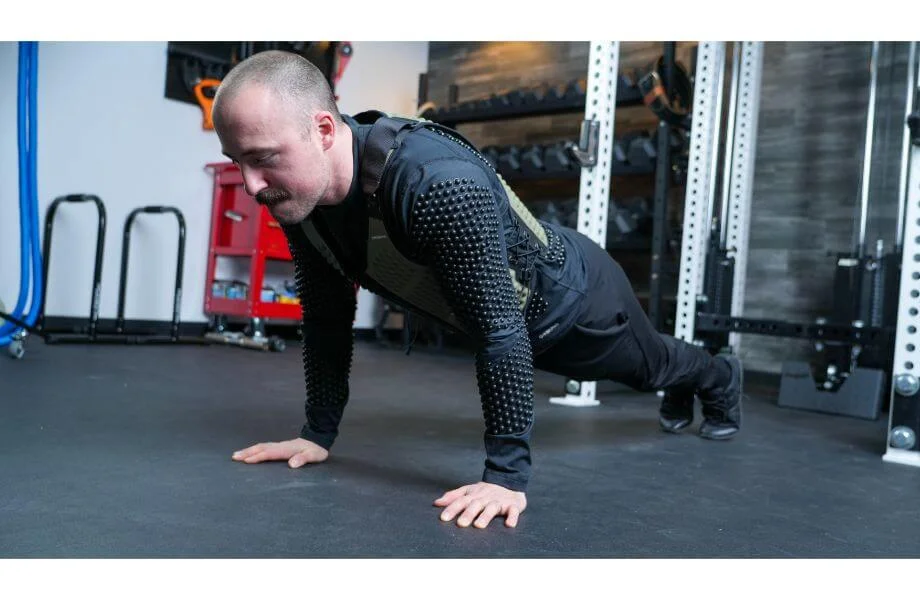
The Omorpho G-Vest+ isn’t something we’d recommend for everyone, especially because of its high price point, but it’s a great option for people who aren’t concerned with budget and are looking for high-performance weighted clothing. As GGR founder Cooper Mitchell puts it, “Not only does it look better than most weighted vests, it also has a tag that can be scanned to access workout sessions you can do with the vest.” It’s a premium product for a premium price and can be worthwhile to the right athletes.
Durability: 4.5/5
Security & Performance: 5/5
Value: 3.5/5
Why We Like the OMORPHO G-Vest+
The biggest difference between this and other options on this list is the aesthetic. It’s more sleek and modern looking than most other weight vests, which appears to be a large portion of the points with OMORPHO weighted clothing. We do admit, it looks cool (and you’ll probably feel cool wearing it).
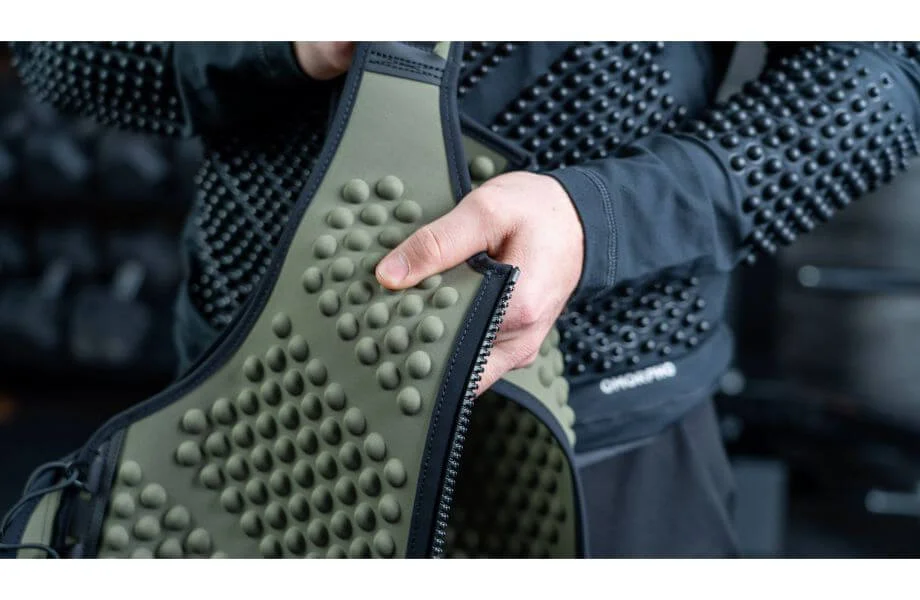
But aesthetics aren’t all this vest is good for. It has a ventilated design with adjustable shoulder straps and locking side cords, so it will feel comfortable no matter how sweaty you get and it can be fitted to your exact measurements. This earns the vest a 4 out of 5 for adjustability and comfort.
Plus, though Coop had some concerns about the longevity of the micro weights at first, they have shown no sign of wear and tear, even after hours of sweat-inducing workouts. For that, he rated the durability a 4.5 out of 5.
“Do I like and recommend it? It depends,” Coop says. “The cost is high, which could price people out when there are much more affordable options on the market. But for athletes looking to get 1% better, this micro-weight system is like striking gold.”
“It fits and feels very shirt-like, which most weight vests do not, and it’s built really well. They clearly understand materials; it’s very nice sweat-wicking material.”
Cooper Mitchell, GGR founder
What We Didn’t Like About the OMORPHO G-Vest+
What the OMORPHO vest primarily lacks is weight capacity and versatility, earning just 1 out of 5 points in that category. There are two sizes (Small to Medium and Large to Extra-Large), and the weight for both is on the lighter side—8 pounds, 12 ounces and 9 pounds, 14 ounces, respectively. “That’s not as heavy as some of our other options, but it will still provide a challenge if worn during bodyweight or calisthenic workouts,” Coop says.
Additionally, this vest is pricey. While it still earned 3.5 out of 5 points for value due to its premium materials and unique build, its near-$320 price tag is certainly not within reach for all athletes.
If you need more weight capacity and a lower price, we recommend the Zelus Weighted Vest, which has options ranging from 6 to 30 pounds for $20 to $100.
Testing Breakdown
The OMORPHO G-Vest+ wowed our testers with its durability and performance, making up for its lackluster versatility score.
Vs. The Average
The OMORPHO G-Vest+ is pricey, without question. Between that and its fixed, lower weights, it’s a niche product we recommend only for premium-minded buyers.
| OMORPHO G-Vest+ | Average Weighted Vest | |
| Price | $299 | $210 |
| Minimum Weight | 8 lbs 12 oz (size S/M) | 7 lbs |
| Maximum Weight | 9 lbs 14 oz (size L/XL) | 44 lbs |
| Adjustable or Fixed | Fixed | Varies |
| Weight Increments | N/A | Varies |
| Warranty | 60 days | 1 year |
Our tester divulges all the details on this vest in our OMORPHO Weighted Clothing review.
Best Adjustable Weighted Vest: Rogue Plate Carrier
Updated by: Amanda Capritto, CPT, CES, CF-L1, CNC, CSNC

_
What our tester says:
__“After testing the vest firsthand, I found it to be quite comfortable overall. You’re definitely aware that you’re wearing a plate carrier, but the smooth contact points and extra padding beneath the plate pockets help prevent rubbing and make the added weight feel more natural.”_
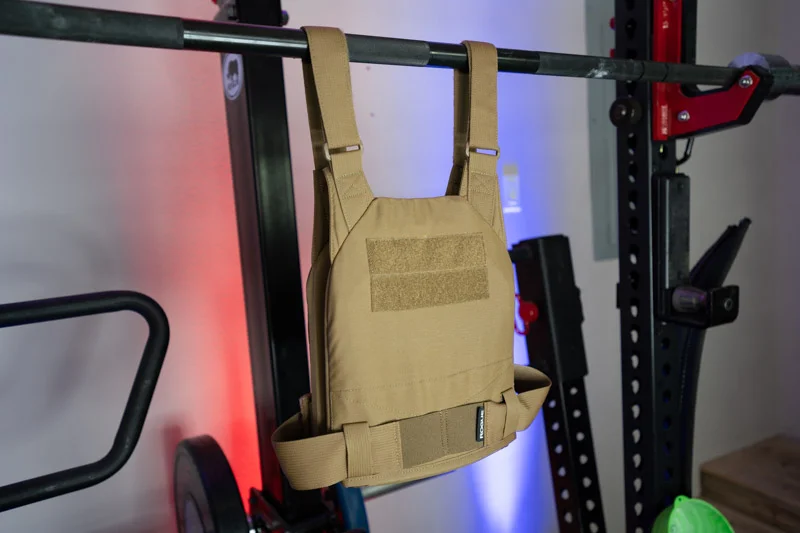
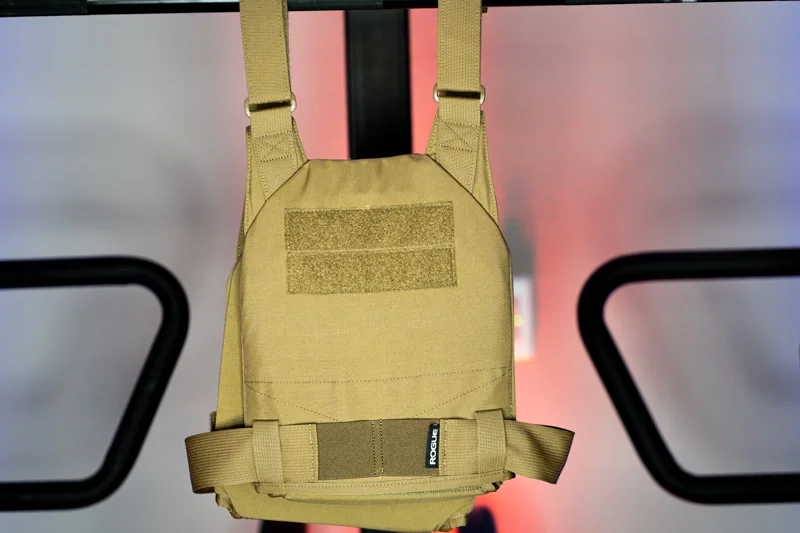
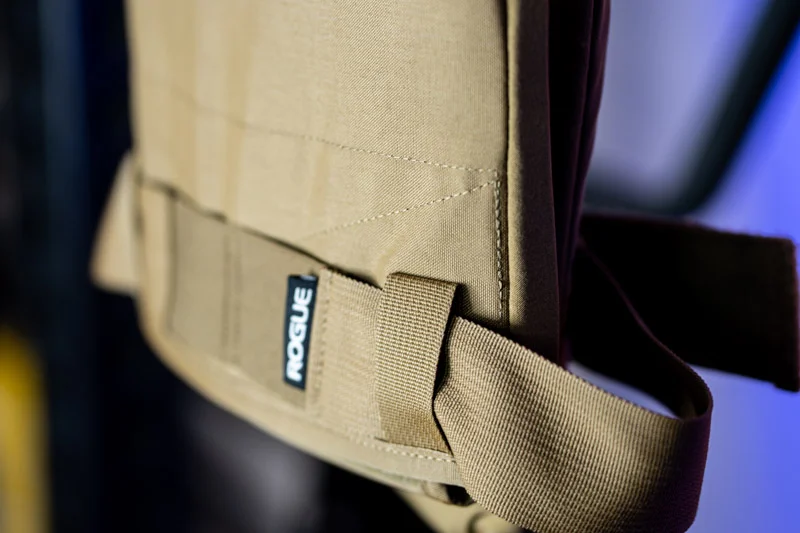
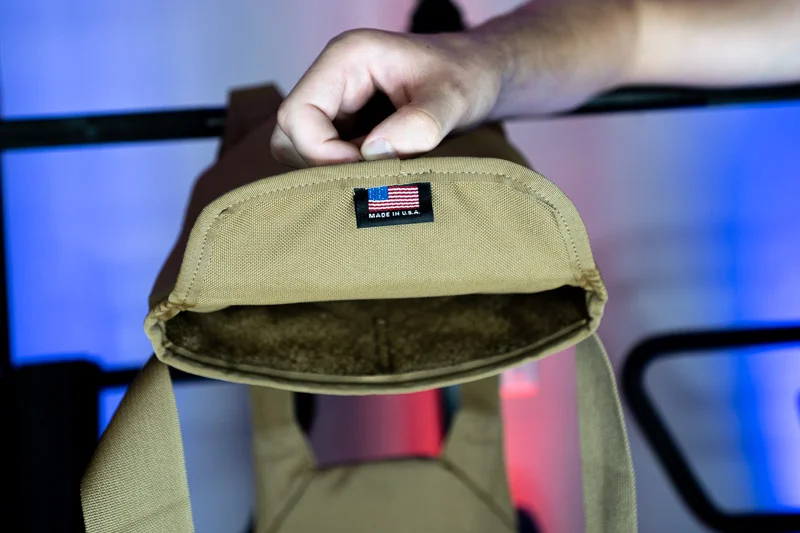
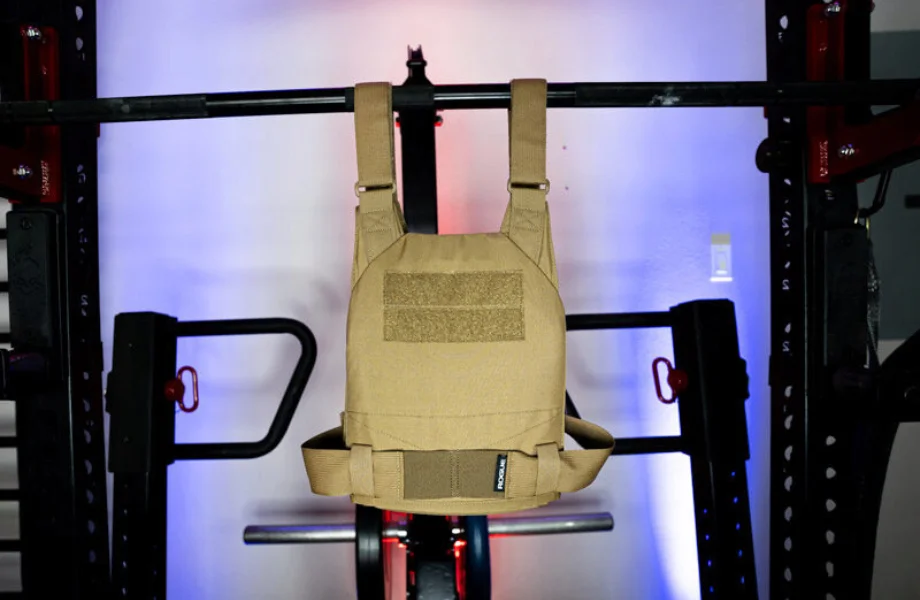
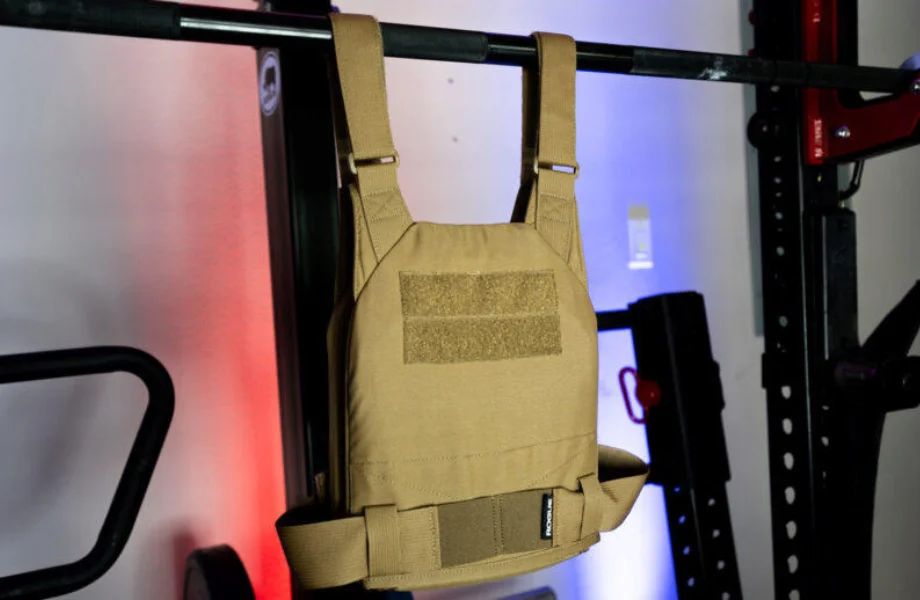
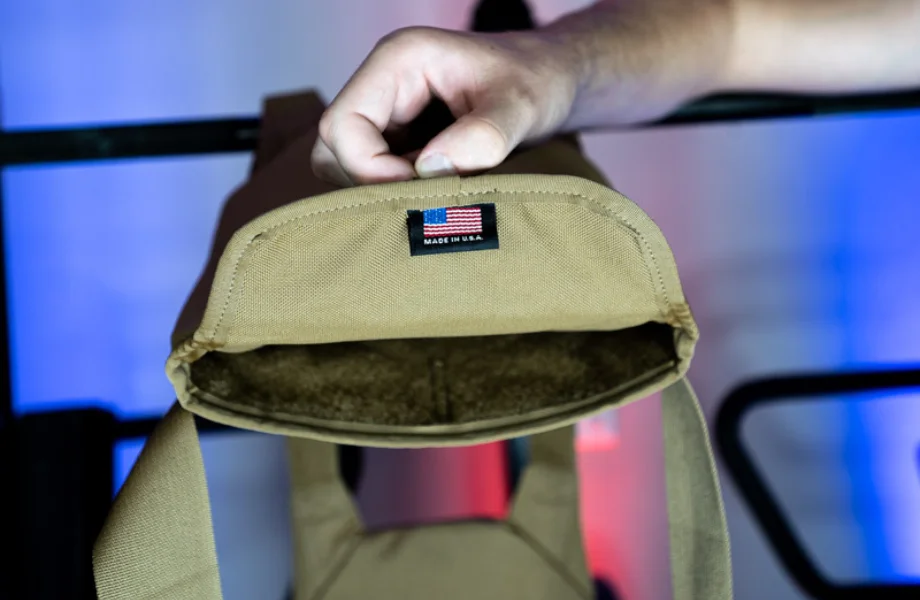
The Rogue Plate Carrier is our best-rated adjustable weighted vest largely due to its value proposition. As GGR founder Coop Mitchell explains, Rogue dwindled down all of the tactical elements you’d see for military and law enforcement use in their plate carrier and kept the features that matter most. “In a nutshell, you get a made-in-the-USA vest designed specifically for its ability to hold up to 40 pounds that’s extremely comfortable and priced very competitively,” he says. “It comes in three sizes and has adjustable Velcro straps to secure the vest to your liking. For most people, this is the best option for those reasons alone.”
Durability: 4.75/5
Value: 4.25/5
Versatility: 4/5
Why We Like the Rogue Plate Carrier
The Rogue weight vest is extremely compact, streamlined, and useful. It has everything you want and nothing you don’t (including no chafing, Coop points out). Most people use weight vests for running, bodyweight exercises, and general CrossFit-style workouts. “This is why I recommend the Rogue Plate Carrier; it’s good at all of the above,” Coop says, rating it a 4 out of 5 for versatility.
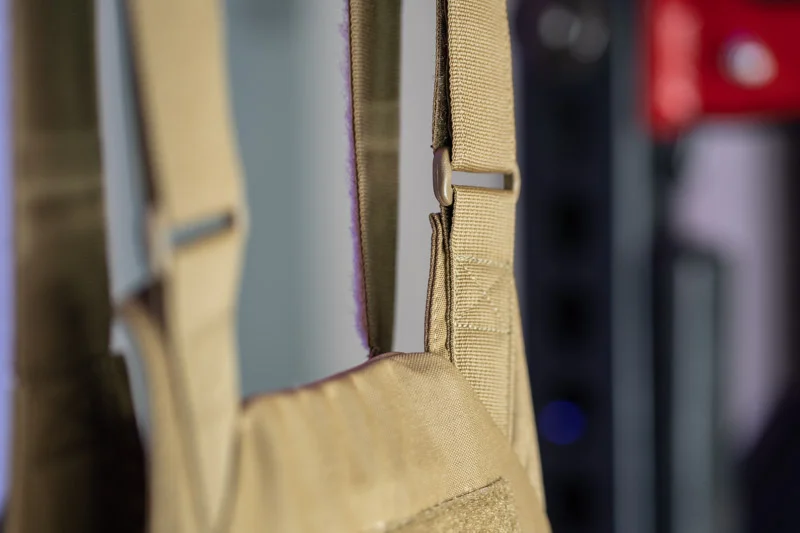
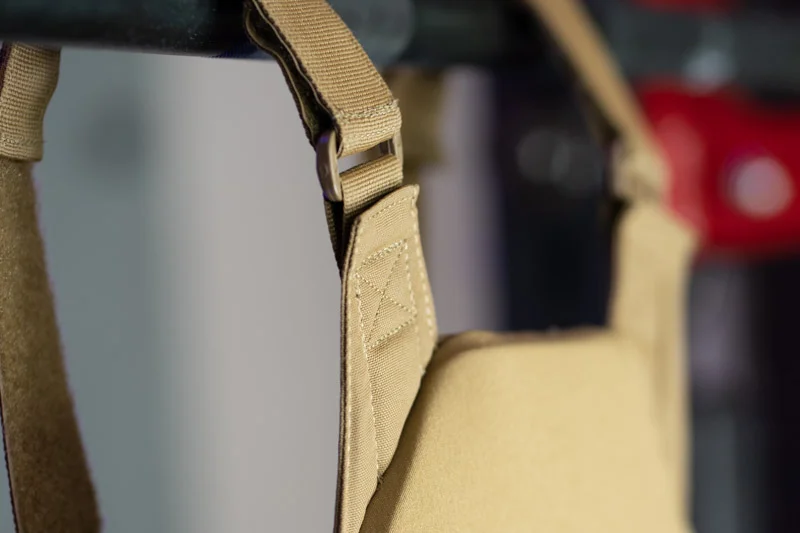
It also offers extreme durability thanks to the Cordura fabric and reinforced stitching. Strategically placed padding and stretch-woven fabric keep you comfortable for long and intense workouts, which led to a 4.75 out of 5 score for materials and durability. “Somehow,” Coop adds, “It also manages to have a relaxed fit without compromising security.”
During everything from CrossFit-style workouts to running, Coop says the vest stayed secure without bouncing or shifting. It really shines during bodyweight movements like push-ups, pull-ups, and sit-ups, as it sits close to the torso and stays locked in place when cinched down properly.
Coop points out, too, that the minimalist design lends itself to great comfort, no matter what type of workout you’re doing. “After testing the vest firsthand, I found it to be quite comfortable overall. You’re definitely aware that you’re wearing a plate carrier, but the smooth contact points and extra padding beneath the plate pockets help prevent rubbing and make the added weight feel more natural,” he says. “It almost feels like moving with a heavier version of yourself rather than wearing bulky equipment.”
“Over time, many weight vests fade and lose their stiffness or edge. Being that this vest is made using 500D/1000D Cordura fabric, tear strength and abrasion resistance should make trainees feel at ease knowing their vest should stand the test of time and use.”
Cooper Mitchell, GGR founder
What We Didn’t Like About the Rogue Plate Carrier
One minor drawback of the plate carrier is the shoulder strap design. They’re simple, unpadded straps, which may be fine for shorter training sessions but can become uncomfortable during longer, heavier rucks or when worn against bare skin. The good news, though, is that Rogue has introduced optional shoulder pads for under $20, which helps address this comfort issue. Still, it’s not necessarily something we think you should have to pay extra for.
The Rogue Plate Carrier also lacks a little in the breathability department, earning 3.5 out of 5 points in the category. This is just an unfortunate fact of thick, military-spec Cordura fabrics. It’s a trade-off for durability and resistance to mildew and rot. However, the lack of side panels does help increase breathability.
Looking for a plate carrier with ultra-comfortable straps for long days out on the trails? A good fit for you may be the GORUCK Ruck Plate Carrier 3.0; a backpack-style weighted vest with thick shoulder pads.
Testing Breakdown
One of our highest-scoring weighted vests overall, the Rogue Plate Carrier impressed our testers with excellent adjustability, durability, and performance.
Vs. The Average
The Rogue Plate Carrier is reasonably priced compared to similar options, and is rather adjustable for a plate carrier vest.
| Rogue Plate Carrier | Average Weighted Vest | |
| Price | $165 (without weight) | $210 |
| Minimum Weight | 5 lbs | 7 lbs |
| Maximum Weight | 40 lbs | 44 lbs |
| Adjustable or Fixed | Adjustable | Varies |
| Weight Increments | Varies | Varies |
| Warranty | Lifetime | 1 year |
Read our full Rogue Plate Carrier review for everything you need to know about this weighted vest.
Best Weighted Vest for Walking: Fringe Sport WODmaster Weight Vest
Updated by: Amanda Capritto, CPT, CES, CF-L1, CNC, CSNC
_
What our tester says:
__“I like that Fringe Sport had the forethought to add reflective strips to this weight vest, knowing that many people go on their walks in the early morning before the sun comes up or in the evening after it’s set.”_
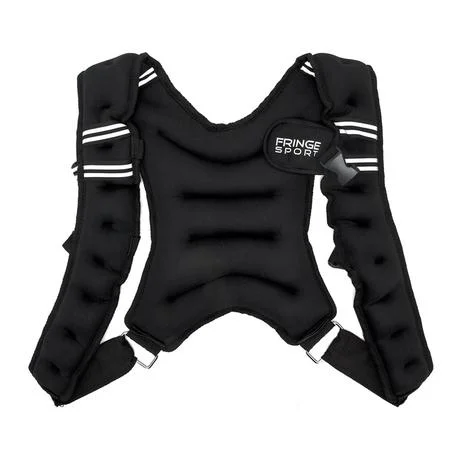
The specific weight vest design you see in the Fringe Sport WODMaster Weight Vest is ideal for walking and hiking long distances because it largely leaves the torso unobstructed, which can make for a much more breathable fit. “I like that Fringe Sport had the forethought to add reflective strips to this weight vest, knowing that many people go on their walks in the early morning before the sun comes up or in the evening after it’s set,” says GGR founder Coop Mitchell. Safety first!
RELATED: Best Reflective Running Gear
Breathability: 4/5
Adjustability: 3/5
Security & Performance: 4/5
Why We Like the Fringe Sport WODmaster Weight Vest
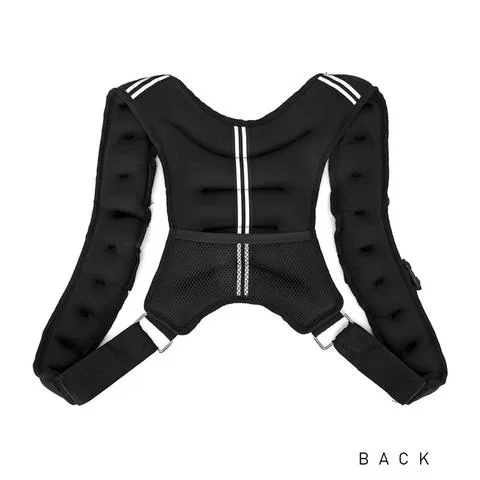
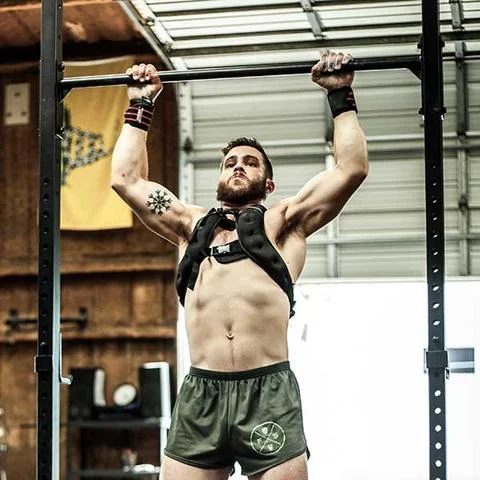
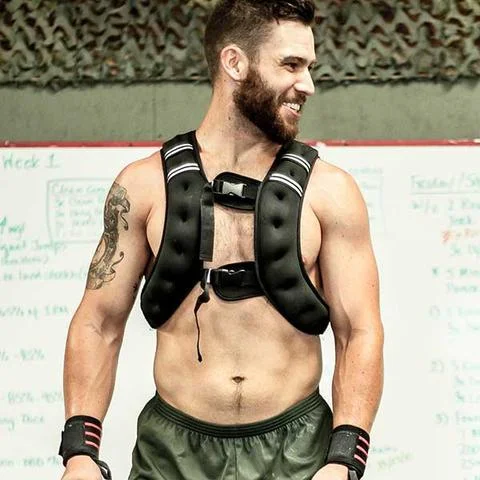
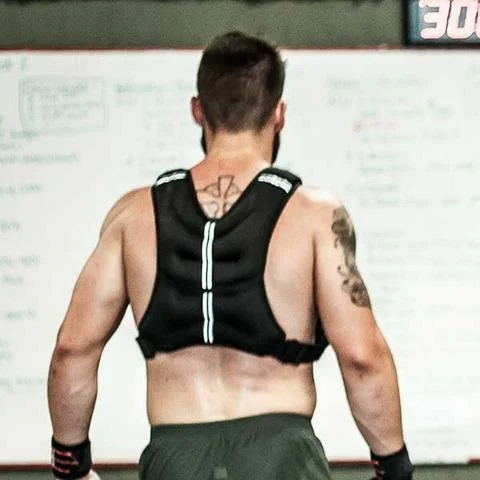
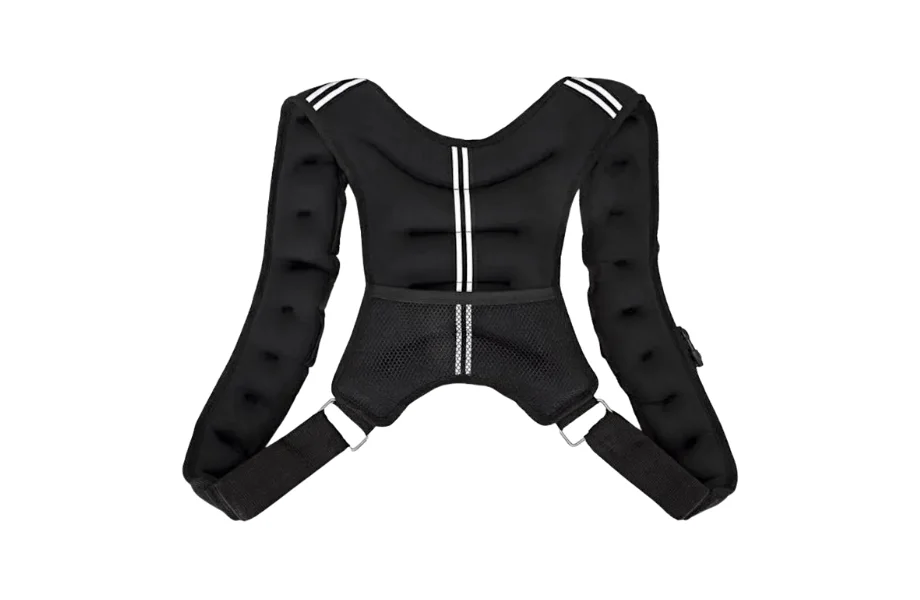
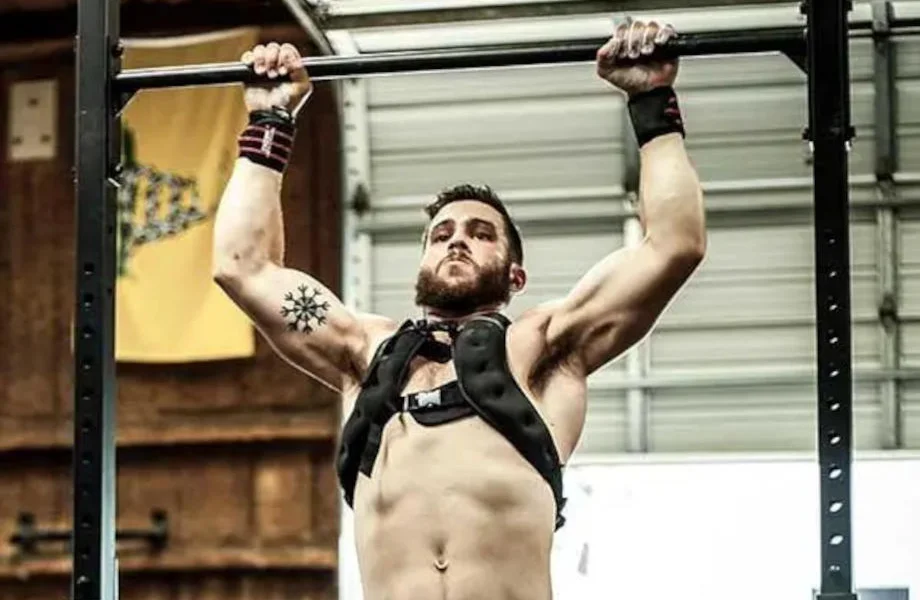
Instead of covering the chest, abdomen, and entire back, this vest features a minimal profile that covers just the mid-back and traps, with two weighted straps that wrap from the front of the shoulders, across the pecs, and to the lats. The result is a comfortable, open fit that stays snug during long endurance workouts.
Yes, the name is “WODMaster,” suggesting the vest is made for CrossFitters, but we like this design a lot for walking. “There are a lot of companies that make vests like this one, but in my experience, the Fringe Sport model is one of the best,” says Coop. “The way that the steel shot weights are actually stitched into the design means you won’t have issues with it flopping around or shifting, which is important while out walking long distances.” Accordingly, he rates it a 4 out of 5 for security and performance.
This vest only comes in one size, but it has six adjustment points, so you shouldn’t have any problem adjusting the vest to get a good fit. Still, because it’s one-size-fits-all, we had to cap our adjustability and comfort rating at 3.5 out of 5. (Note: Fringe Sport says on the website that some vests may come with tags that say M/L or L/XL, but clarifies that they are all the same size).
“If you’re walking, rucking, that sort of thing—this vest is great for that. You can find tons of similar ones on Amazon, but in my experience, the Fringe Sport one is one of the best of this style.”
Cooper Mitchell, GGR founder
What We Didn’t Like About the Fringe Sport WODmaster Weight Vest
Made primarily with neoprene, this isn’t the most durable weighted vest available, earning a 3.5 out of 5 score for the category. That said, if you’re only using it for walking, the construction and resiliency shouldn’t matter as much. We’re not sure how long the buckles and Velcro closures will last on this vest, but as a general rule, Velcro starts to fail after a while if it’s not of the highest quality. Just try to keep dirt and sweat out of the Velcro and you should be able to enjoy this weighted vest for years.
The outer neoprene casing holds a tightly packed steel shot that’s held in place with double stitching. Unfortunately, you can’t remove or add any sand or steel shot, so this weight vest is fixed at 20 pounds. As such, we award it just 2 out of 5 points for weight capacity and versatility.
For a great walking vest that also has adjustable weight, consider something like our top pick, the GORUCK Ruck Plate Carrier 3.0, which is designed specifically for long outdoor adventures.
Testing Breakdown
Though the Fringe Sport WODmaster weight vest could use some improvement in the versatility department, it can still be a great choice for those prioritizing security and breathability, evidenced by its high scores in those categories.
Vs. The Average
The Fringe Sport WODmaster Weight Vest costs about $140 less than the average weighted vest, making it a great choice for value-minded buyers.
| Fringe Sport WODmaster Weight Vest | Average Weighted Vest | |
| Price | $72 | $210 |
| Minimum Weight | 20 lbs | 7 lbs |
| Maximum Weight | 20 lbs | Varies |
| Adjustable or Fixed | Fixed | Varies |
| Weight Increments | N/A | 1 year |
| Warranty | 1 year | 251 days |
Best Weighted Vest for Beginners: LifePro Weighted FlexVest with Ankle Weights
Updated by: Amanda Capritto, CPT, CES, CF-L1, CNC, CSNC
_
What our tester says:
__“The heavier version (5-20 pounds) fits me fine—it’s a bit big in the chest area but it’s not a huge deal since I can tighten the waist.”_
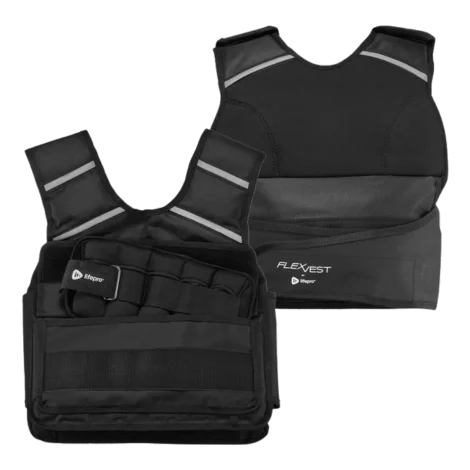
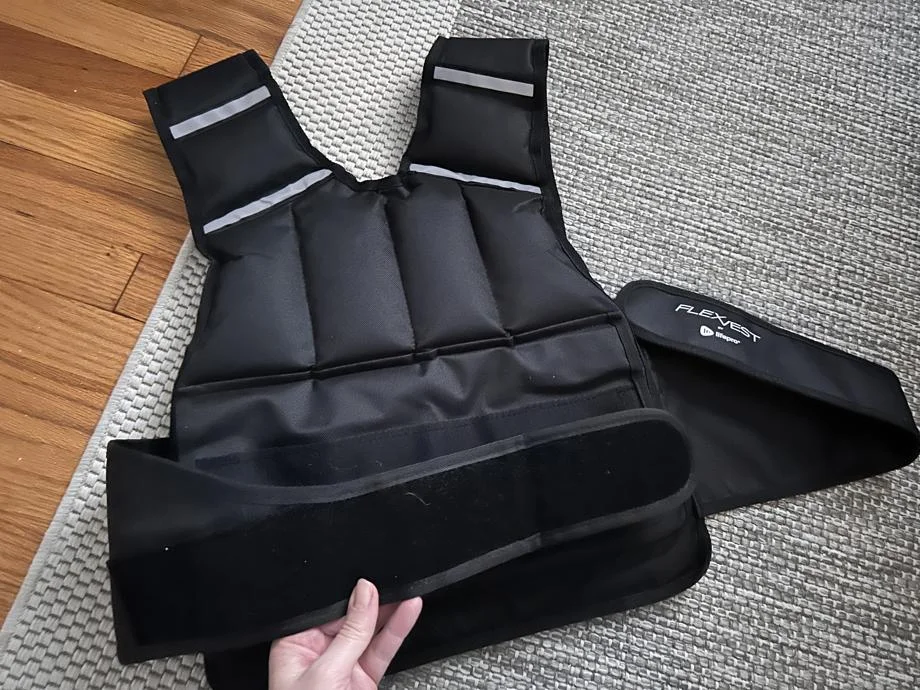
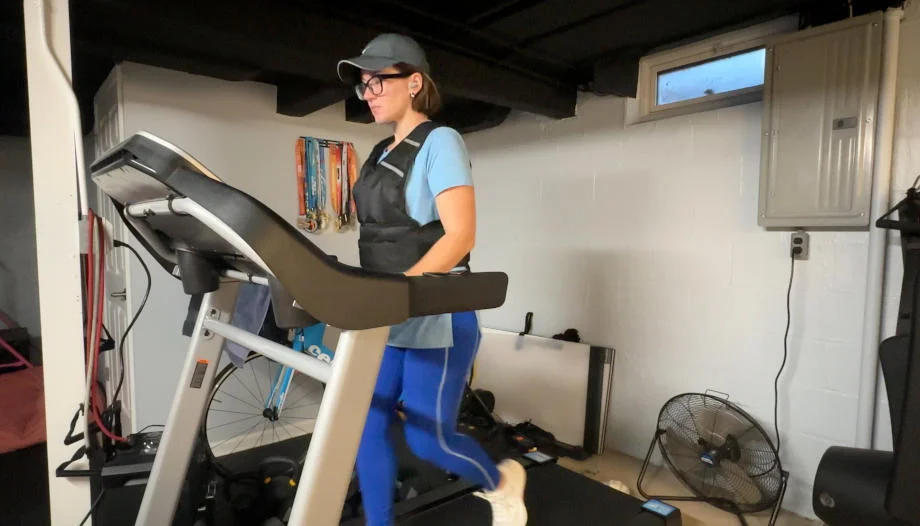
If you’re just getting started with weighted vest workouts, the LifePro Weighted FlexVest offers an ideal mix of comfort, functionality, and versatility. GGR Director of Content Nicole Davis, CPT, PN1-NC, tested the 5- to 20-pound version, and rates adjustability and comfort at a perfect 5 out of 5. Another reason we chose LifePro as the best weighted vest for beginners is how much bang you get for your buck. Although it’s listed for about $65, you can often find it on sale for much cheaper on Amazon as well as the company’s website. Plus, the FlexVest comes with a lifetime warranty, which leads us to rate the price and value at 4 out of 5.
Security & Performance: 4/5
Adjustability: 5/5
Price & Value: 4/5
Why We Like the LifePro Weighted FlexVest with Ankle Weights
Featuring built-in storage pockets and a reflective trim for added visibility, this well-designed vest earns a strong materials and durability score of 4 out of 5. Plus, it’s covered by a lifetime warranty, which speaks to the overall quality. “The Velcro seems durable, and I’ve had no issues thus far,” Nicole reports.
LifePro also offers this weighted vest in a smaller 5- to 15-pound iteration, which may be preferable for smaller athletes. “The heavier version (5-20 pounds) fits me fine—it’s a bit big in the chest area but it’s not a huge deal since I can tighten the waist,” Nicole says in regards to the fit.
Nicole found the vest held up well during workouts, rating the security and performance at a rock-solid 4 out of 5. She docked one point because it jostles slightly during her runs, but she attributes that to the chest area being big on her. “For other women, I might recommend the 5- to 15-pound version since it may fit better throughout,” she explains.
“This feels like a good value for sure, especially for a beginner. There aren’t a ton of weight options in terms of micro adjustments there, but if you’re just looking for a solid weighted vest for walking, this is a good option.”
Nicole Davis, CPT, PN1-NC
What We Didn’t Like About the LifePro Weighted FlexVest
Although LifePro says the FlexVest is made with sweat-resistant fabric, we docked a few points from the breathability score (3.5 out of 5) because Nicole still dealt with some minor moisture buildup. “I think it’s kind of inevitable, and I would not consider myself a heavy sweater,” she says. “It’s probably more breathable than something like canvas, so in comparison to other weight vests it might be better. Overall, though, I would not consider this sweat-wicking fabric.”
There aren’t a ton of weight options in terms of micro-adjustments. That said, the additional weights can also be used as ankle weights, instead, which just adds more versatility and value. So, despite it not being super-duper adjustable, it still earns 3 out of 5 for weight capacity and versatility.
Need something even less expensive? Our budget pick, the Zelus Weighted Vest, retails for as low as $25, depending on how much weight you’re looking for.
Testing Breakdown
The LifePro Weighted FlexVest exceeded our expectations for performance, value, and adjustability.
Vs. The Average
Far less expensive than average but still relatively adjustable (and backed by a lifetime warranty) the LifePro Weighted FlexVest is a great choice.
| LifePro Weighted FlexVest with Ankle Weights | Average Weighted Vest | |
| Price | $64.99 | $210 |
| Minimum Weight | 5 lbs | 7 lbs |
| Maximum Weight | 15 lbs (women’s); 20 lbs (men’s) | 44 lbs |
| Adjustable or Fixed | Adjustable | Varies |
| Weight Increments | 5 lbs | Varies |
| Warranty | Lifetime | 1 year |
Best Weighted Vest for Running: Hyperwear Hyper Vest Elite
Updated by: Amanda Capritto, CPT, CES, CF-L1, CNC, CSNC
_
What our tester says:
__“Overall, I feel like the Hyper Vest Elite allows for more range of motion than most weight vests, which is ideal for anyone who regularly wears a weighted vest for running or high-intensity workouts with a lot of impacts.”_
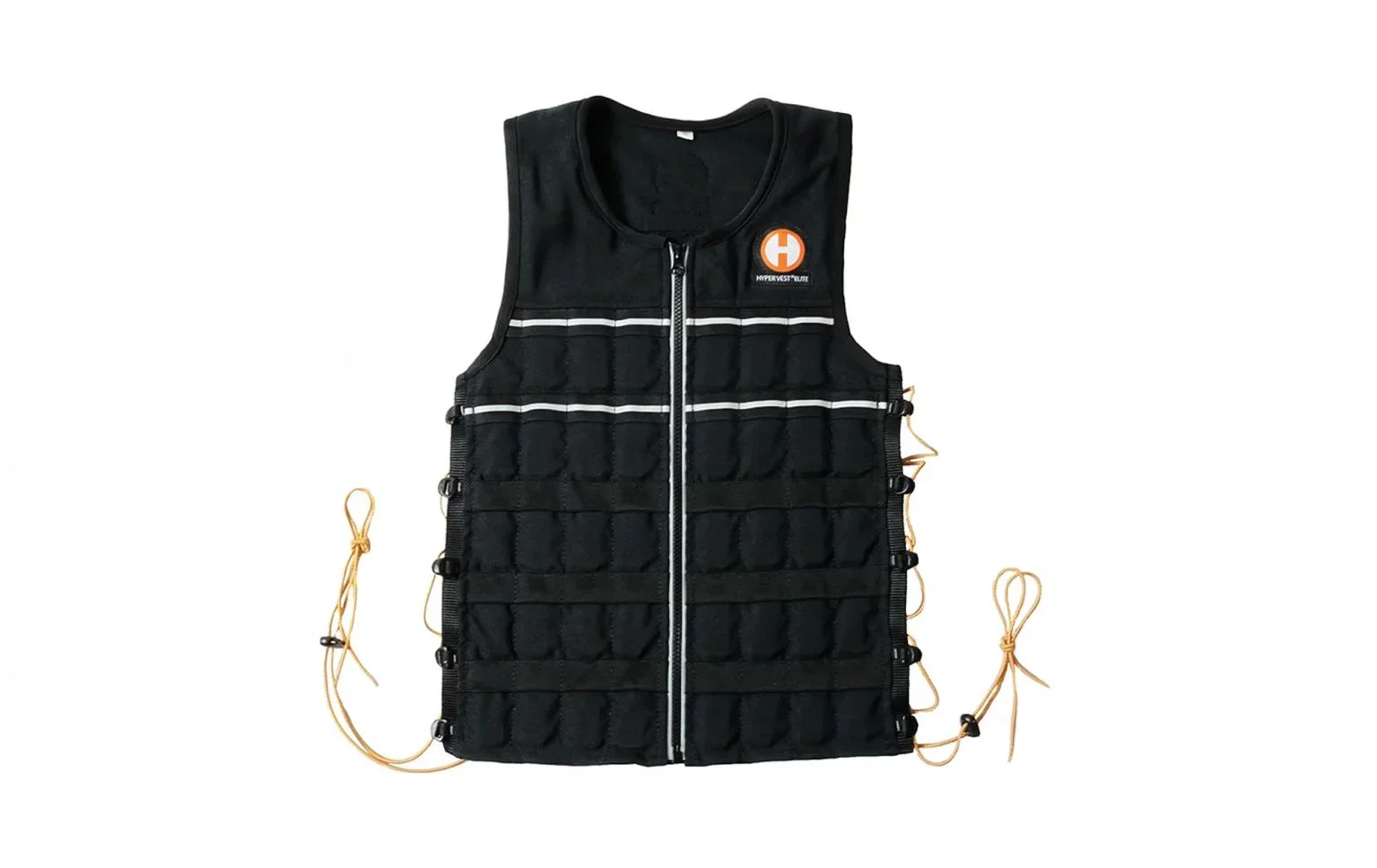
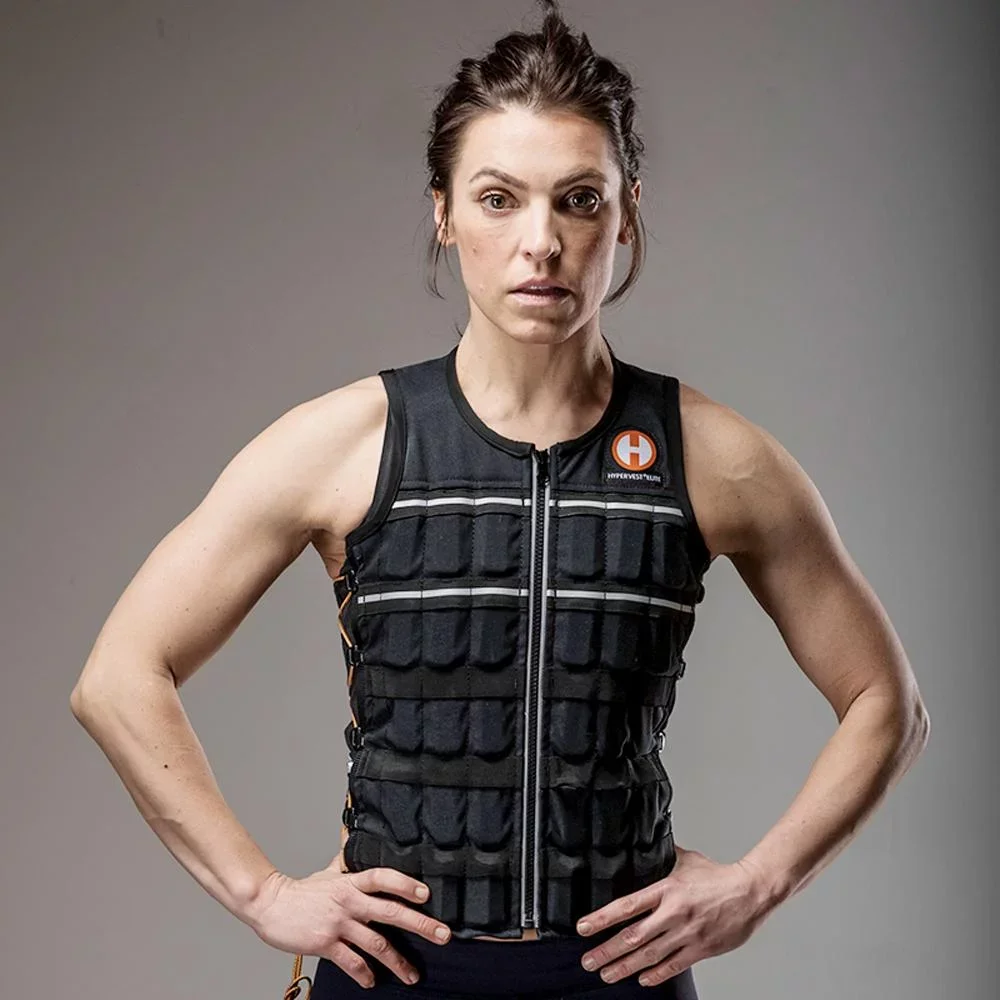
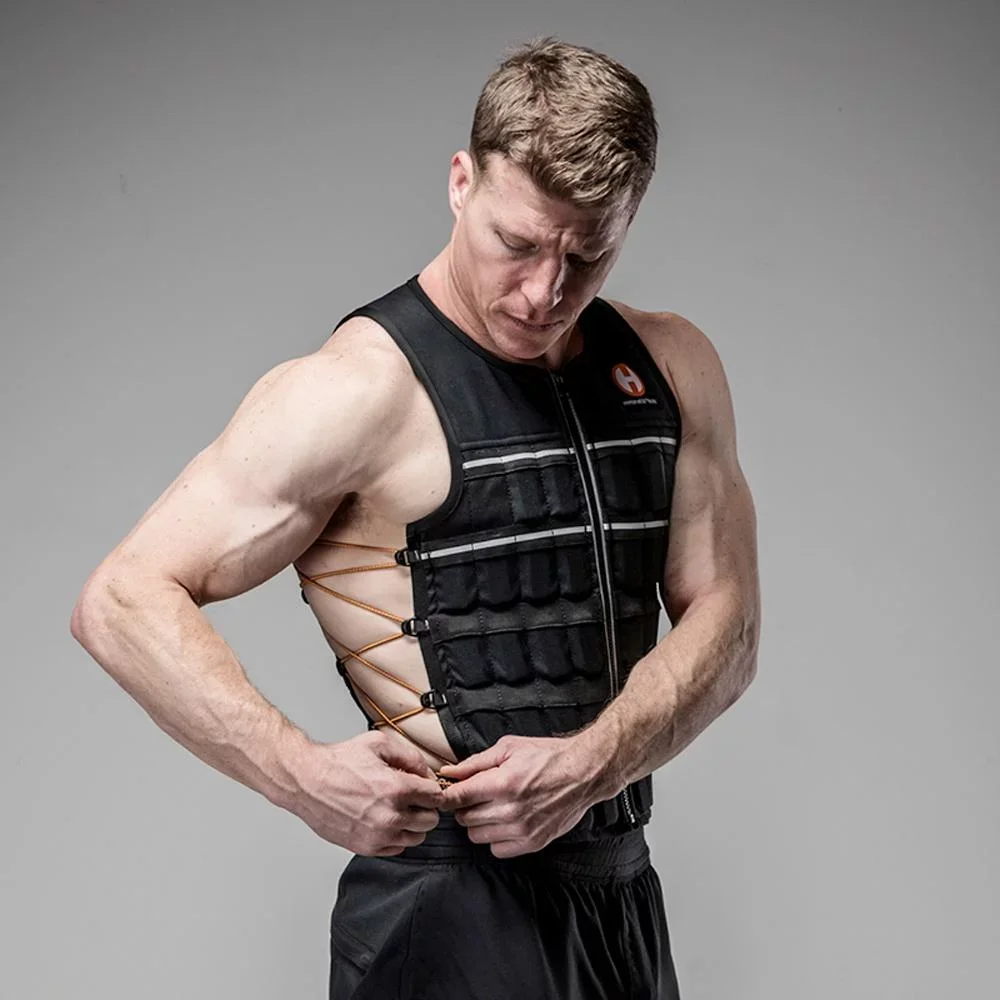
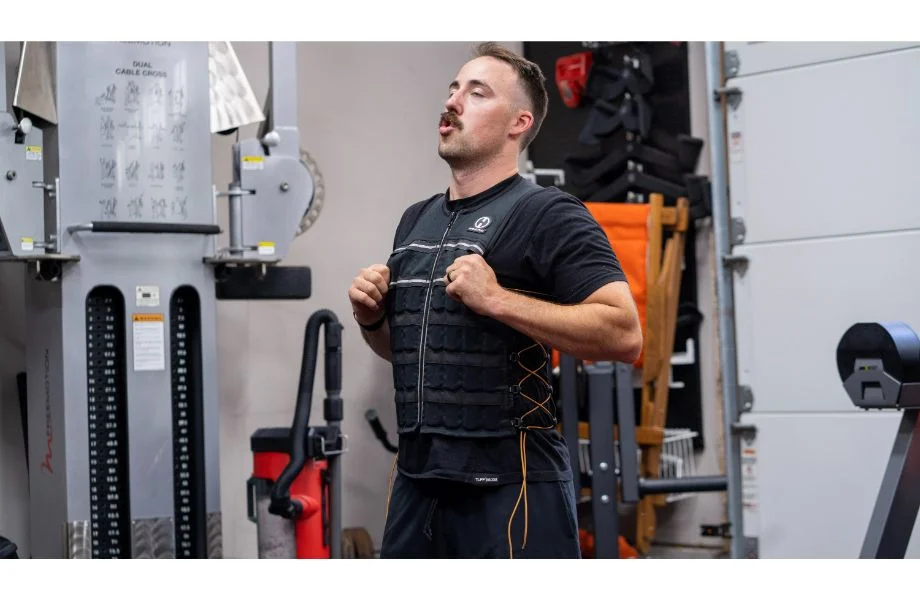
If you tend to avoid weighted vests because you haven’t found one with a secure fit that doesn’t bounce or jostle around while walking or jogging, you need to check out the Hyperwear Hyper Vest Elite Weighted Vest. In fact, this received a very high score for security and performance, coming in at 4 out of 5 stars from our product testers. GGR founder Cooper Mitchell tells me, “My favorite thing about this vest is that it feels more like a weighted T-shirt than an actual vest.” If that’s not what you want for running, we don’t know what is!
Adjustability: 4.5/5
Security & Performance: 4/5
Durability: 3.5/5
Why We Like the Hyperwear Hyper Vest Elite
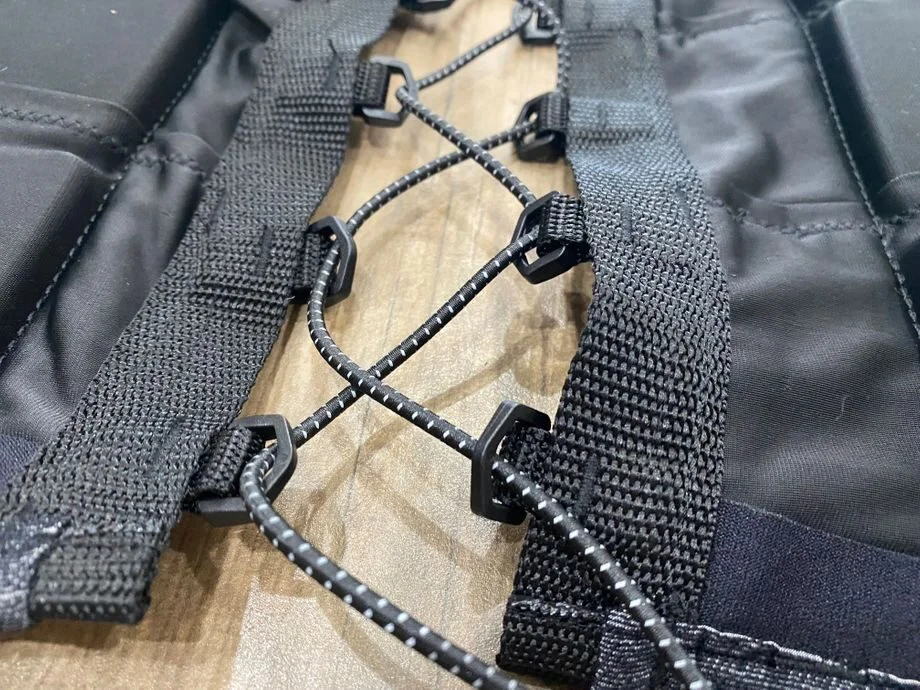
Thanks to the lack of side panels, an elastic adjustment system, and tightly pocketed weight bars, this vest provides an ultra-contoured fit that hugs your body even during high-impact movements. The fabric is a thin Cordura that, in combination with the open sides, makes for a super breathable weighted vest. All of this led Coop to rate the Hyper Vest Elite with a nearly perfect 4.5-out-of-5 rating for adjustability and comfort.
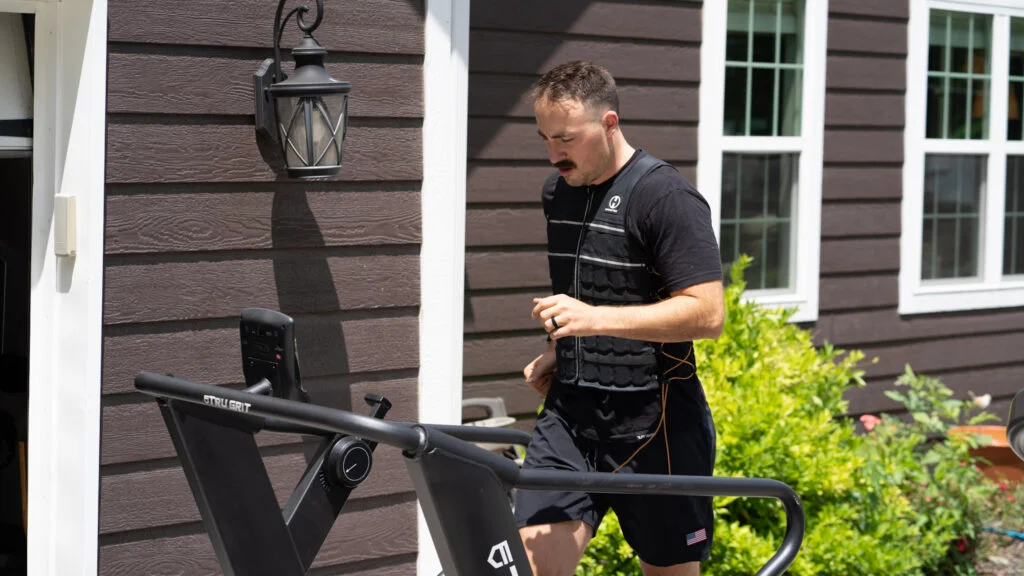
“Overall, I feel like the Hyper Vest Elite allows for more range of motion than most weight vests, which is ideal for anyone who regularly wears a weighted vest for running or high-intensity workouts with a lot of impacts,” Coop says.
RELATED: Best Running Shoes
He rates the versatility and weight capacity at 4 out of 5. The 20-pound maximum weight might be a bit light for some, but it will work for most people, even CrossFitters chasing RX workouts. “Other options allow for much higher weights, although this is a trade-off required for the shirt-like feeling,” Coop points out. It also has great weight distribution thanks to the small steel weights as opposed to a larger steel plate in front and back.
“This is easily one of the most breathable weighted vests I’ve tested. It hugs your body close, but I ‘ve never felt claustrophobic or felt that my range of motion was restricted.”
Cooper Mitchell, GGR founder
What We Didn’t Like About the Hyperwear Hyper Vest Elite
“I can foresee some problems with durability due to the fabric thickness and single-stitching,” Coop says, rating the durability a 3.5 out of 5. But after using it for about a year, he says it’s still holding up pretty well. Also, it’s not cheap. Priced between $200 and $400 depending on the exact weight and style, Coop says, “I would definitely make sure this is the type of weight vest you want before committing.”
The Hyperwear Hyper Vest Elite is unique, but not everyone will enjoy the tight fit and contour. But for those who see it as a big bonus to not have to deal with weight shifting or shuffling during runs, box jumps, burpees, and the like, the value is solid at 3 out of 5.
There are few vests like this one on the market. Hyperwear does make a women’s-specific profile, though, for athletes interested in a more contoured fit: The Hyper Vest Fit.
Testing Breakdown
The Hyperwear Hyper Vest Elite scored well for adjustability and comfort, breathability, and security and performance, solidifying its place as the best weighted vest for running.
Vs. The Average
The Hyper Vest Elite has a smaller weight range than the typical weighted vest, but it’s an ideal range for running (as is the vest’s second-skin design).
| Hyperwear Hyper Vest Elite | Average Weighted Vest | |
| Price | $259.95-$349.95 (dependent on size/weight) | $210 |
| Minimum Weight | 10 lbs | 7 lbs |
| Maximum Weight | 25 lbs | 44 lbs |
| Adjustable or Fixed | Adjustable | Varies |
| Weight Increments | 2.25 oz | Varies |
| Warranty | 1 year | 1 year |
Read our full Hyperwear Hyper Vest Elite review to learn more about what our tester thinks.
Best Budget Weighted Vest: Zelus Weighted Vest
Updated by: Amanda Capritto, CPT, CES, CF-L1, CNC, CSNC
_
What our tester says:
__“Even the 30-pound model doesn’t dig in at the shoulders, and with multiple points of adjustment, it can fit a range of body shapes and sizes.”_
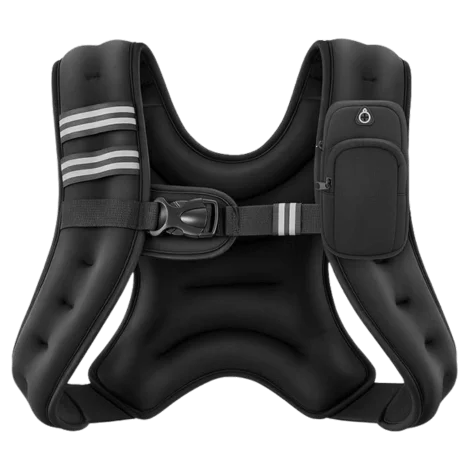
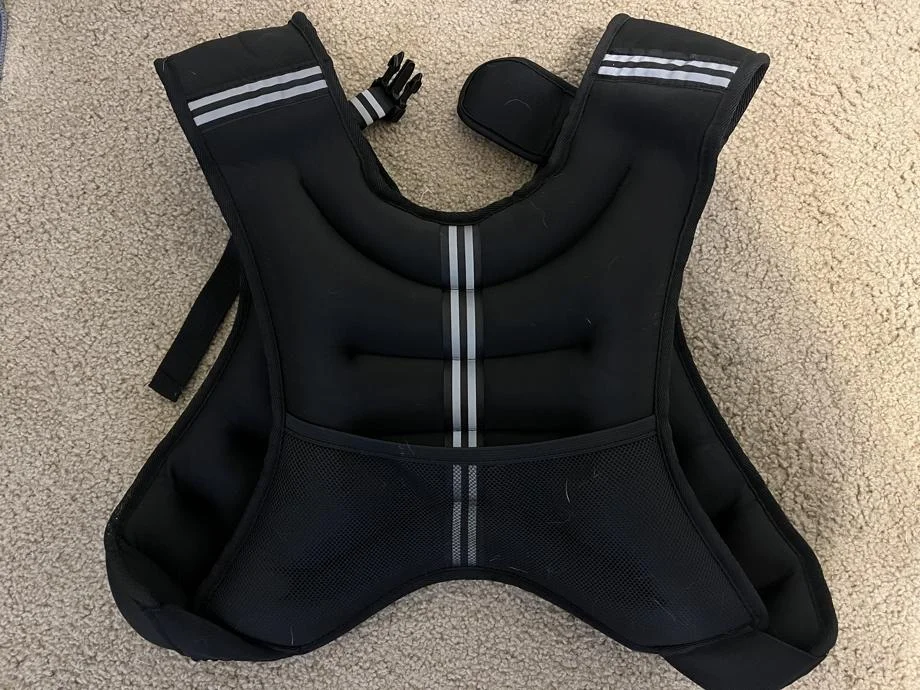
If you are looking for a simple, inexpensive way to add weight to your workouts, look no further than the Zelus weighted vest on Amazon. It’s a generic neoprene weighted vest—the type of which you can find dozens online—but I snagged it when it was on sale and I’ve been thoroughly impressed with the fit and performance of this budget home gym equipment. I got the 30-pound option for $75 (list price is $100) and I’d buy it again in a heartbeat.
Durability: 3.5/5
Breathability: 5/5
Adjustability: 4/5
Why We Like the Zelus Weighted Vest
I bought the Zelus weighted vest because I lived and traveled in a camper van for two years and needed a way to add more weight to my workouts without taking up a ton of space—if you’re not familiar, camper van living spaces max out at about 40 square feet. Well, this vest did the trick. I wore it to increase the challenge of basic bodyweight exercises like squats and lunges, as well as build strength through weighted plyometric exercises.
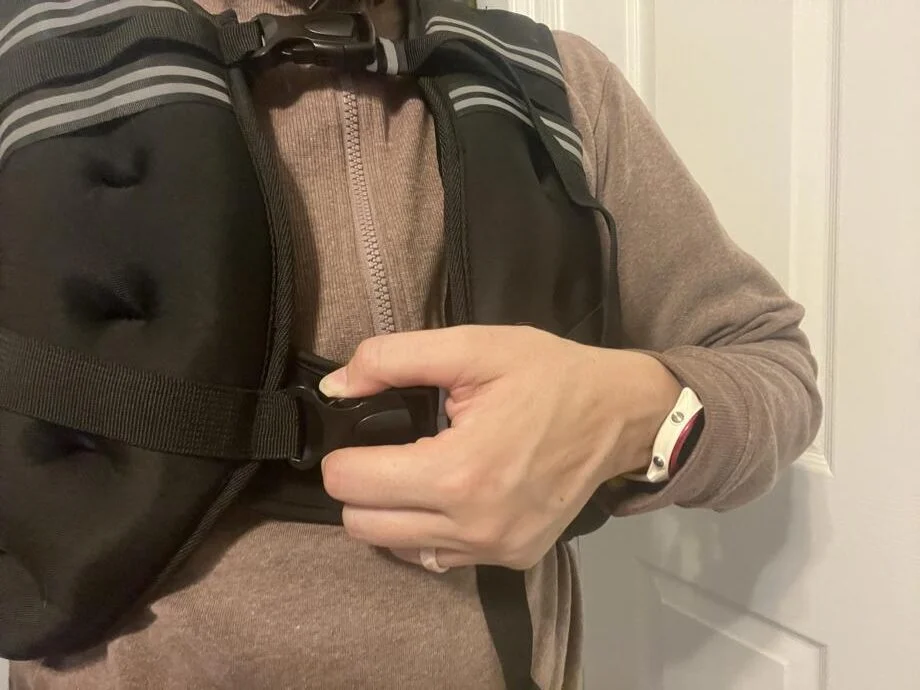
I found the vest to be quite comfortable despite its low price point, and it earned a 4 out of 5 for adjustability and comfort in my book. Even the 30-pound model doesn’t dig in at the shoulders, and with multiple points of adjustment, it can fit a range of body shapes and sizes. I will say, it’s a little loose on me even (I’m 5’6”, 145 pounds) with all of the straps pulled as tight as possible, so petite athletes may want to look elsewhere.
The design of the vest also makes it very breathable, enough so that I give it 5 out of 5 points in that category. When it’s on, most of my torso remains unobstructed by any fabric, as do my sides. The bulk of the vest sits against the upper back, where some sweat buildup is inevitable but surprisingly tolerable.
“This is a no-frills vest that’s great for walking and adding weight to basic strength training exercises like squats, lunges, and push-ups. I recommend it to anyone who wants to increase the challenge of their workouts without spending a ton.”
Amanda Capritto, CPT, CES, CF-L1, CNC, CSNC
What We Didn’t Like About the Zelus Weighted Vest
The weight on the Zelus vest is fixed, so make sure you’re sure about which one you want to buy. There are tons of options—6, 8, 12, 16, 20, 25, and 30 pounds—so I still rated the vest’s versatility and weight capacity at a 3 out of 5. You could, theoretically, buy multiple, but you’d end up paying the equivalent of a good adjustable vest.
Additionally, the material is okay, but not fantastic, lending itself to a 3.5-point score for durability. This vest will hold up fine if you’re just walking and doing general strength workouts at home, but the fabric is susceptible to abrasions during movements like burpees or rope climbs.
If you’re looking for something adjustable that’s still on the lower end of the price range, the LifePro Weighted FlexVest with Ankle Weights can be a good choice.
Testing Breakdown
Despite its budget-friendly price tag, the Zelus weighted vest doesn’t fall short when it comes to adjustability, durability, or breathability.
Vs. The Average
The price for the Zelus Weighted Vest varies, but falls below the industry average regardless of the weight you choose. It’s unfortunately not adjustable, but we do appreciate the slightly longer-than-average warranty.
| Zelus Weighted Vest | Average Weighted Vest | |
| Price | $19.98-$99.99 (dependent on weight) | $210 |
| Minimum Weight | 6 lbs | 7 lbs |
| Maximum Weight | 30 lbs | 44 lbs |
| Adjustable or Fixed | Fixed | Varies |
| Weight Increments | N/A | Varies |
| Warranty | 1 year | 1 year |
Best Weighted Vest for Women: Hyperwear Hyper Vest Fit
Updated by: Amanda Capritto, CPT, CES, CF-L1, CNC, CSNC
_
What our tester says:
__“I personally like the material; it feels nice and high-quality but is kind of stretchy, making it more comfortable than stiff plate carriers made with military-spec nylon textiles.”_
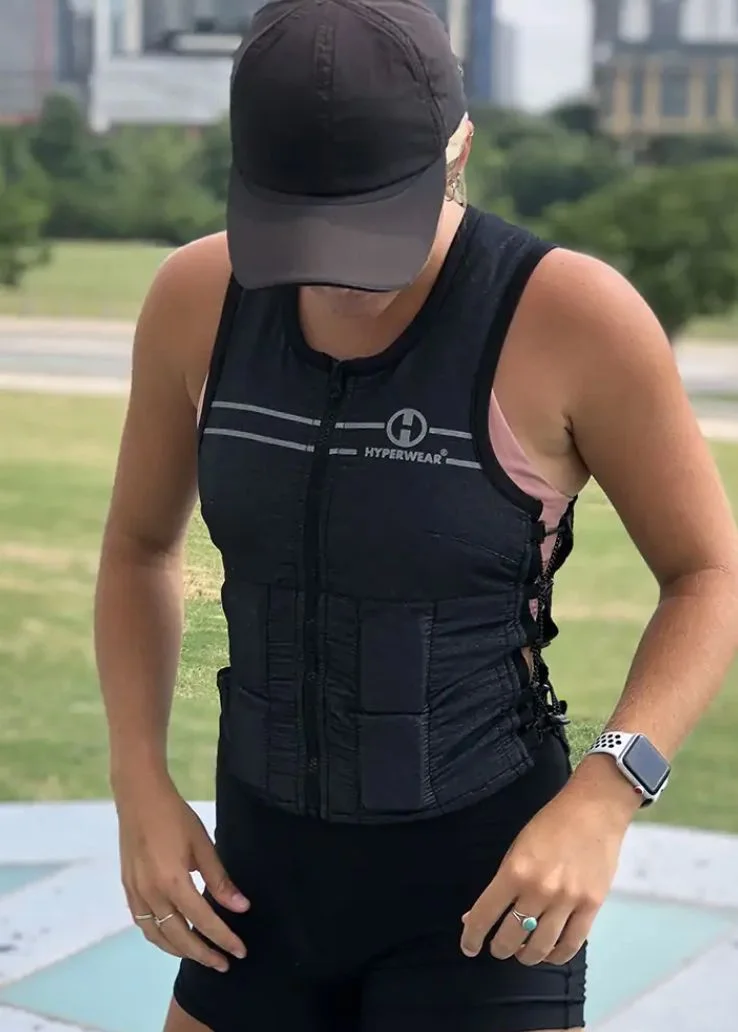
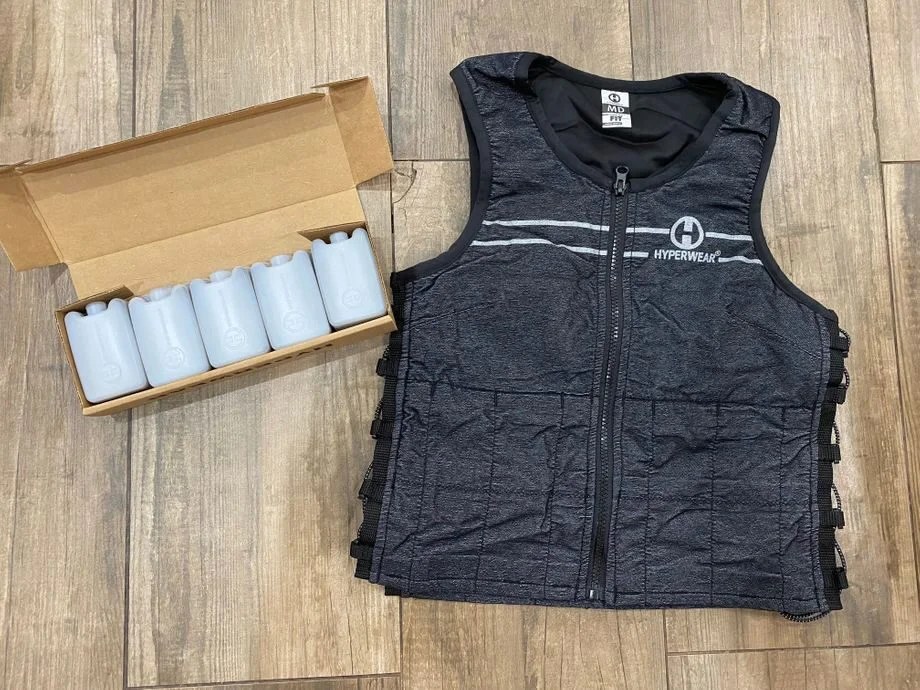
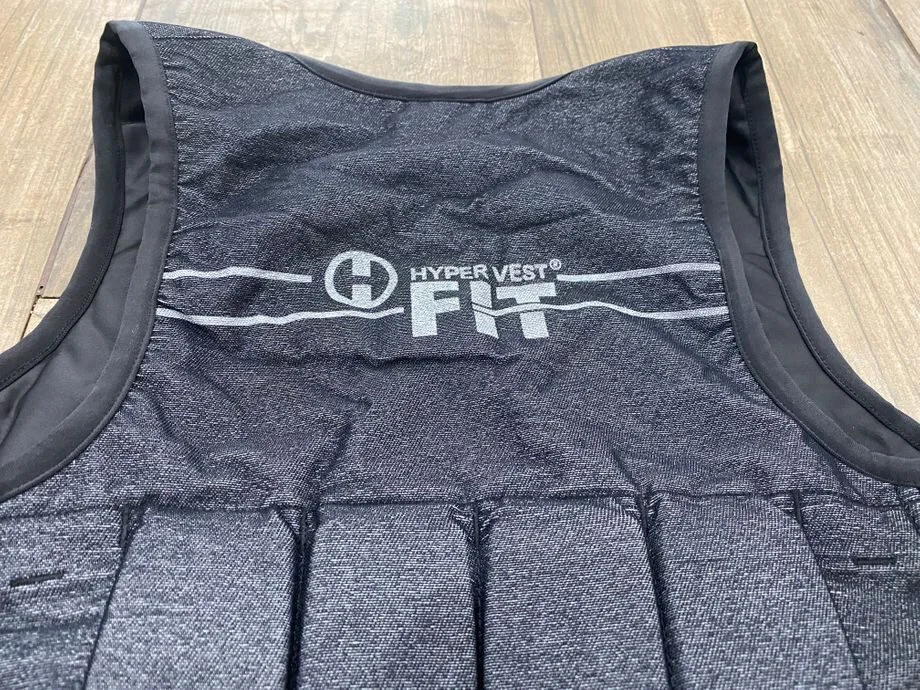
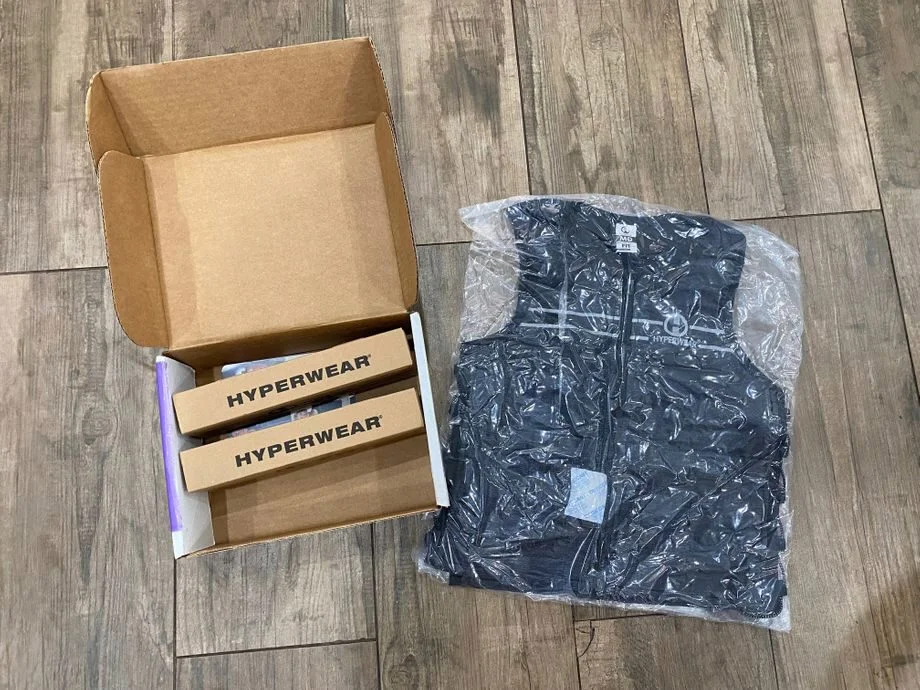
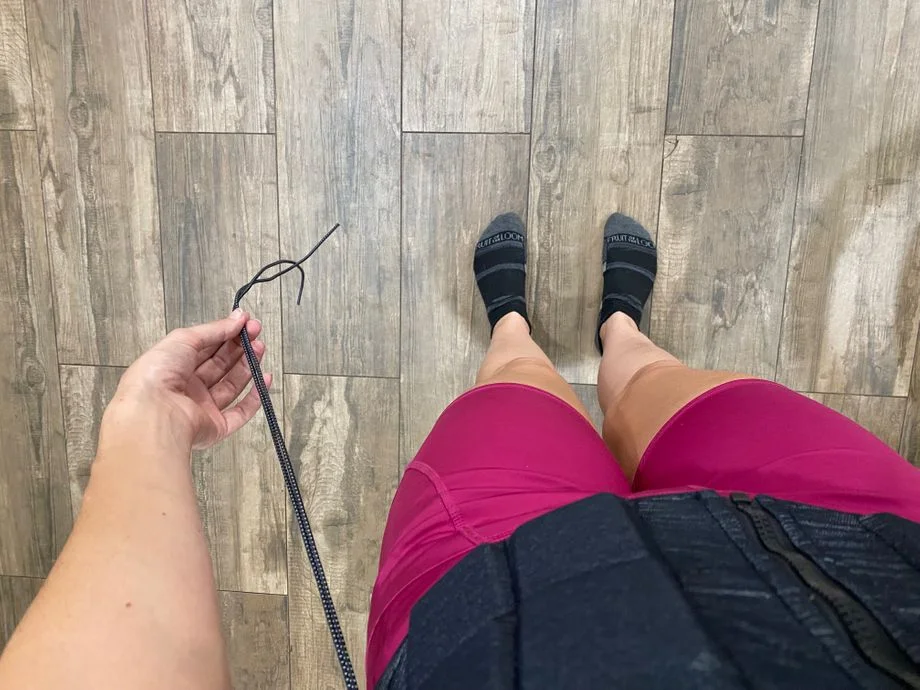
Another pick from Hyperwear, the Hyper Vest Fit was designed specifically for women. The vest consolidates all the weight into the abdomen and back, leaving the chest panels free of added weight. I personally tested this weighted vest and even after years of trying additional options, I maintain that this is a solid choice for any woman looking to add a bit of weight to their walks, runs, hikes, or bodyweight workouts.
Security & Performance: 4.5/5
Adjustability: 3/5
Breathability: 5/5
Why We Like the Hyperwear Hyper Vest Fit
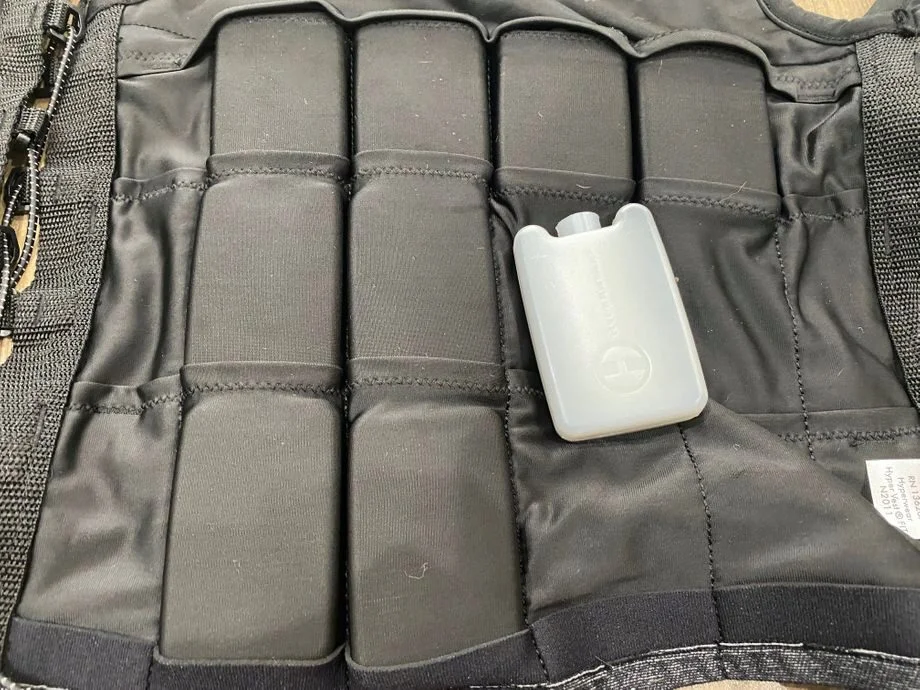
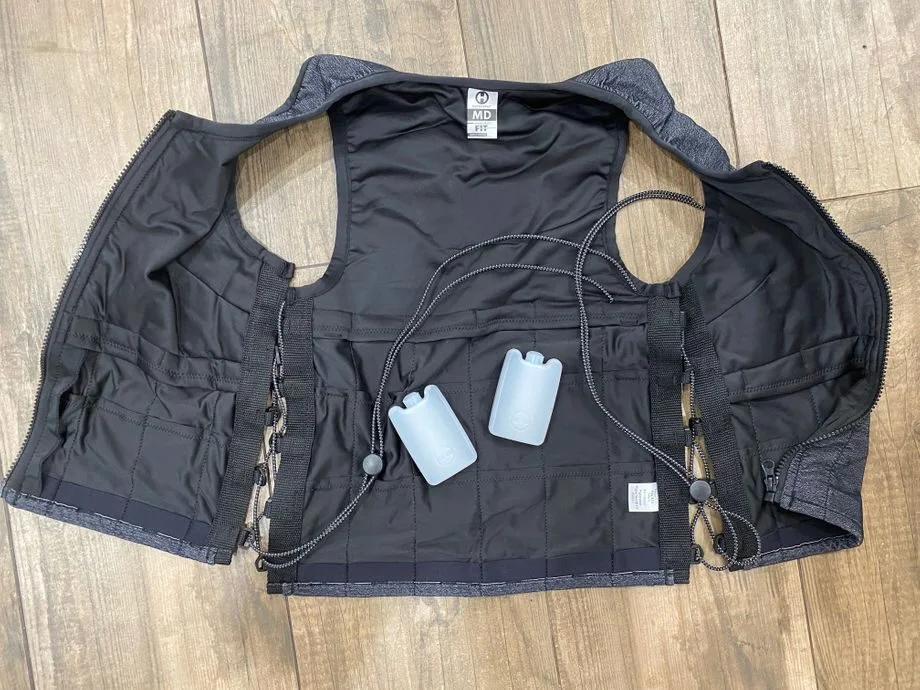
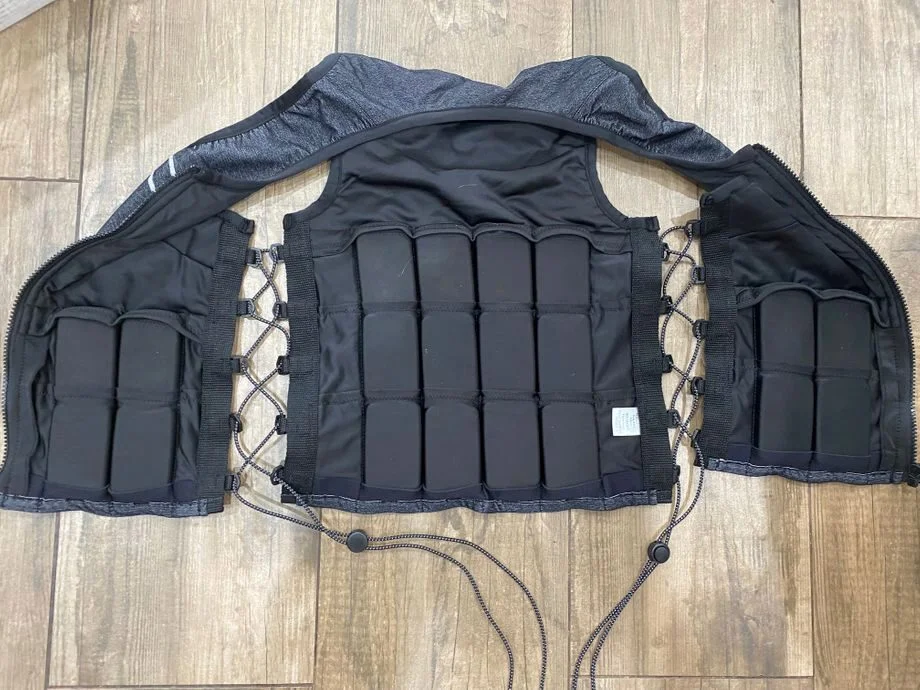
This vest uses a steel shot enclosed in hard plastic casings, which I think is a phenomenal improvement over fabric-encased steel shots. There’s way less of a chance that you’ll experience spilled or leaked steel shot with the plastic weights. They weigh half a pound each. The slots for them in the vest begin just beneath the sternum area, and the vest can hold up to 10 pounds.
The Hyper Vest Fit has open side panels with adjustable elastic closures. It’s made of Cordura fabric with one-way stretch to minimize bouncing and shifting. I personally like the material; it feels nice and high-quality but is kind of stretchy, making it more comfortable than stiff plate carriers made with military-spec nylon textiles.
While I think it’s durable enough for most cases—walking, running, general strength training, etc.—it definitely doesn’t seem as durable as a mil-type plate carrier. It could definitely snag if you were trail running in an overgrown area, for example. I give it 3.75 out of 5 for durability (partially bolstered by the fact that it’s machine-washable, which is a major bonus).
“The best thing about this vest is how breathable it is; a close second is the fact that it fits securely enough to not jostle at all, even while running and jumping.”
Amanda Capritto, CPT, CES, CF-L2, CNC, CSNC
What We Didn’t Like About the Hyperwear Hyper Vest Fit
I don’t love that this weighted vest only goes up to 10 pounds. The standard prescribed weight for CrossFit workouts is a 14-pound weighted vest for women, so this one won’t do for any RX CrossFit ladies. That said, it is still quite adjustable, so it earns 3.5 out of 5 points for weight capacity and versatility.
Another callout: This vest isn’t cheap, especially for its lower weight capacity of 10 pounds. It earns a 3 for value, though, given its solid design that has all the right features for certain athletes; namely, women who run.
If you love the style of this vest but need more than 10 pounds, check out the Hyperwear Hyper Vest Elite, which goes up to 20 pounds.
Testing Breakdown
Our tester was impressed by the adjustability and comfort of the Hyperwear Hyper Vest Fit, as well as the security, performance, and breathability.
Vs. The Average
Though highly adjustable with small weight increments, the Hyper Vest Fit is best suited for individuals who want a lighter-weight vest since it tops out at 10 pounds.
| Hyperwear Hyper Vest Fit | Average Weighted Vest | |
| Price | $115 | $210 |
| Minimum Weight | 0 lbs | 7 lbs |
| Maximum Weight | 10 lbs | 44 lbs |
| Adjustable or Fixed | Adjustable | Varies |
| Weight Increments | 0.5 lb | Varies |
| Warranty | 1 year | 1 year |
Picking the Right Weighted Vest for You
Choosing the right weighted vest boils down to several factors, including your budget, training style, and comfort preferences. Use this chart to quickly compare options and find the best fit for your personal fitness goals.
| Vest | Best For | Weight Type | Weight Range | Adjustable? | Price |
|---|---|---|---|---|---|
| REP Fitness Strata Weighted Vest | Functional fitness | Plate-loaded | 10 to 40 lbs | Yes | $87.99 (without weight) |
| 5.11 TacTec Plate Carrier | CrossFit | Plate-loaded | 30 lbs | Yes | $250 (without weight) |
| GORUCK Ruck Plate Carrier 3.0 | Rucking workouts | Plate-loaded | 30 lbs (Standard), 45 lbs (Long), 90 lbs (Heavy) | Yes | $115 (without weight) |
| OMORPHO G-Vest+ | HIIT training | Steel ball bearings | 9 lbs, 14 oz | No | $299 |
| Rogue Plate Carrier | Minimalist design | Plate-loaded | 40 lbs | Yes | $165 (without weight) |
| Fringe Sport WODmaster Weight Vest | Walking | Steel shot | 20 lbs | No | $72 |
| LifePro Weighted FlexVest with Ankle Weights | Beginners | Sand-loaded | 20 lbs | Yes | $64.99 |
| Hyperwear Hyper Vest Elite | Running | Precision steel micro-weights | 20 lbs | Yes | $259.95-$349.95 (dependent on size/weight) |
| Zelus Weighted Vest | Budget-conscious buyers | Sand-loaded | 30 lbs | No | $19.98-$99.99 (dependent on weight) |
| Hyperwear Hyper Vest Fit | Women | Plastic-encased steel shot | 10 lbs | Yes | $115 |
Other Weighted Vests We Researched
The 10 weighted vests above are far from the only options we researched and tested. Over the years, our team has collectively tested about 50 vests. Here are a few that stood out, for better or for worse.
- Condor Sentry Plate Carrier: Although this isn’t the cheapest option and it isn’t the highest quality, either, the Condor Sentry Plate Carrier combines elements of the 5.11 TacTec Plate Carrier and Rogue Plate Carrier for a very reasonable price. The straps on the side use buckles that can come loosened during training, and there have been quite a few reports of the buckles breaking. The yoke straps are too narrow for me, as well, which causes discomfort and scraping on the neck. However, there are plenty of positive customer reviews, too.
- North Gym Adjustable Weighted Vest: This was originally our pick for the best value weighted vest. Unfortunately, the price has increased significantly since the last iteration of this guide. We still love the North Gym Adjustable Weighted Vest, and we’d call it the best adjustable weighted vest, but the price is more than the Rogue Plate Carrier.
- Aduro Sport Weighted Vest: This is just like the Fringe Sport WODMaster weighted vest, but we don’t think the quality is up to par. In our experience and in reading other opinions and reviews, the steel shot that fills the vest falls out pretty quickly along the seams. In addition, with only one adjustment option, it can fit awkwardly on certain body types.
- RUNFast/Max Adjustable Weighted Vest: This was, at one point, a best seller on Amazon, likely because it’s available with up to 140 pounds of weight. That’s a massive amount for a sand-filled weighted vest. It’s clear that the materials used to make this vest are cheap and the sewing is poorly done, though, which means you won’t be enjoying 140 pounds of sand for very long.
- miR Weighted Vest: The miR Weighted Vest is made by the same company that makes the RUNFast/Max. The miR is a very similar design, but made with better materials and is, therefore, more expensive. I like the design, but I haven’t had enough use with the vest to recommend it at this point.
- V-FORCE Weight Vest: V-FORCE is one of the original made-in-the-USA adjustable weight vest designs. They have a simple strapping system with an extremely high max weight that’s been copied the world over. I’d like more time with the vest before recommending it, though.
- Cross101 Adjustable Weighted Vest: This is a decent budget-friendly option. It’s made by the same company that makes the miR Weighted Vests, but it’s a much cheaper design. The fit is pretty bad though, and most people will practically swim in the vest. The weights are also very cheap and use sand as the filler, which will inevitably leak.
How We Picked and Tested the Best Weighted Vests
Our testing team researched more than 50 weighted vest models and ultimately tested nearly two dozen to put together this guide. In our testing, we evaluated such categories as:
- Weight Capacity and Versatility: We prioritized vests that allow for progression and multiple training uses. A 3-out-of-5 score requires more than one weight configuration or a modular loading system that isn’t limited to a single fixed weight.
- Adjustability and Comfort: We considered how the vest fits different body types and whether it allows unrestricted movement. To earn a 3, a vest must include some form of adjustability and feel comfortable enough for general training.
- Materials and Durability: Construction matters for safety and longevity, so we evaluated fabrics, stitching, and fasteners. A 3-point rating indicates materials that feel solid overall, even if certain components aren’t premium-grade.
- Breathability: We assessed how well each vest handles sweat and airflow during workouts. A 3-point score means at least some ventilation or moisture-wicking materials are used.
- Security and Performance: We tested vests across different movements to see how well they stay in place. To score a 3 out of 5, minor shifting is acceptable as long as it doesn’t disrupt performance.
- Value: Price was weighed against features, durability, and versatility. A 3-point rating reflects a vest that’s fairly priced for what it offers compared to similar options.
- Customer Experience: We factored in warranty coverage, return policies, and accessibility of customer support. A 3-out-of-5 score means standard protections and reasonable responsiveness from the company.
Benefits of Weighted Vests
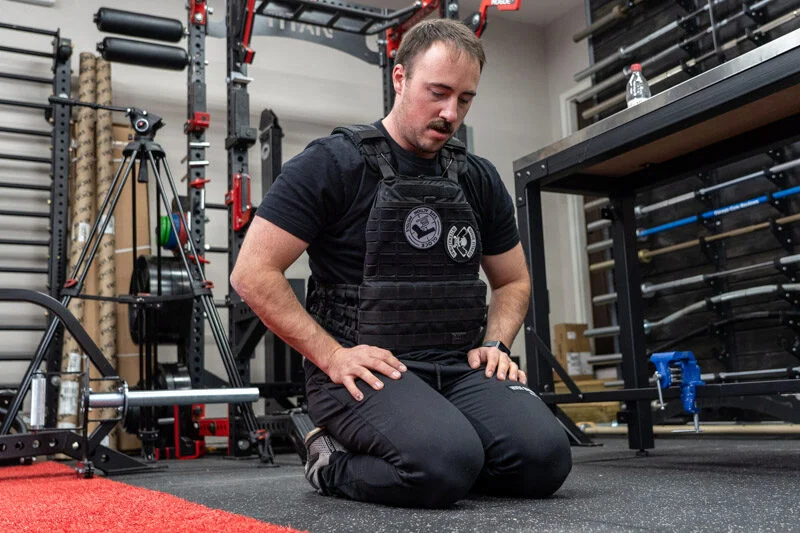
Wearing a weighted vest is a great way to bolster your existing walking, running, or bodyweight workout routine.
Cardiovascular Fitness
Walking, even without a weighted vest, is a great way to improve your cardiovascular fitness. “Walking is frequently overlooked, often because people underestimate how effective it can be, prioritize more intense training, or aren’t fully aware of its benefits,” says Dr. Raj Dasgupta, GGR Chief Medical Advisor. “However, walking delivers meaningful physical health advantages, including improved heart health.”
RELATED: Treadmill Walking Workout
Weighted vests put additional stress on your cardiovascular system, which makes it harder to breathe and therefore increases your heart rate. Over time, your heart will grow accustomed to the stress and become stronger, thereby increasing your overall cardiovascular fitness.
Muscular Endurance
Muscular endurance refers to how long your muscles can sustain repeated contractions under a given load. In other words, how many air squats you can do without giving up due to lactic acid buildup or succumbing to muscle failure. Wearing a weight vest for exercises like squats, pull-ups, and push-ups trains your body to do more reps with more weight. So, when you take that vest off, you’ll feel like Superman.
Effective for Warming Up
Using a weighted vest in your warm-up can be a great way to prime your legs for a running workout, according to a 2015 study1. Participants of the trial performed a 10-minute self-paced jog, a 5-minute sub-maximal run, followed by a series of quick 10-second strides—performed with or without a weighted vest.
After warming up, athletes who used a weighted vest showed a large increase in their peak running speed, as well as significant improvements in their leg stiffness and running economy. Adding just a bit of resistance to some warm-up sprints might be enough to get the most out of your next cardio session.
Bone Density
Working out with a weighted vest is a form of resistance training, which supports stronger bones2 by prompting the body to build more bone tissue.
“As muscles contract and create tension during weight-bearing movements, they place stress on the bones, signaling bone-forming cells to increase density,” says Chris Mohr, PhD, RD. “This process helps maintain bone strength and can lower the risk of osteoporosis over time.”
Strength
If you’re feeling stuck in your pull-ups, push-ups, or other calisthenic movements, try adding a weighted vest. You’ll initially have to lower your reps, but you’ll soon find that your bodyweight strength has increased.
Stamina
Using a weighted vest during endurance training activities can help you go the distance when it’s race day. Running, walking, and hiking with a weighted vest increases your capacity to travel long distances under physical stress.
RELATED: How to Build Stamina for Running
Weight Loss
If you’re looking to lose weight, a weighted vest can help you reach your goals. As Chris explains, “Adding weight to your walks—like with a vest or rucksack—increases the challenge of your walk and thus increases calorie burn.”
Studies have shown that using a weighted vest for exercise during periods of weight loss can help with weight maintenance over time. In one study3, adults who wore a weighted vest lost similar amounts of weight compared to those who did not, but the weighted vest group kept off more weight and had higher resting metabolic rates at a six-month follow-up.
“Muscle is a metabolically active organ that is really the organ of longevity,” Chris explains. “It increases your resting metabolic rate, which means you burn more calories even when at rest.”
RELATED: How Much Cardio to Lose Weight?
Portable
Not to mention, weighted vests can be an excellent example of a portable home gym, so you can take your workout anywhere. Of course, if you’re flying, the weight may not work with your carry-on or checked luggage. If you’re taking a road trip, though, bring along your vest and you have easy access to a good workout wherever your path takes you.
How Much Weight Should I Start With?
New to weighted vests? Looking to train for a ruck? You might be wondering how to get started, or how much weight is a good starting point.
Most experts and coaches agree that starting light is your best bet to allow yourself time to acclimate to a new form of training. That starting weight is typically 5% to 10% of your body weight. So, if you weigh 150 pounds, aim for a weighted vest that’s 8 to 15 pounds.
The rule of thumb is always to start light and add weight as you grow accustomed to the weighted vest—and as you get stronger.
Safety Tips For Weighted Vests
Just like any sort of strength training, weighted vests can come with some risk of injury, especially if you’re not taking the proper precautions. Here are a few safety tips to minimize any potential for mishaps and help you get the most out of your weighted vest workouts:
Secure Your Vest
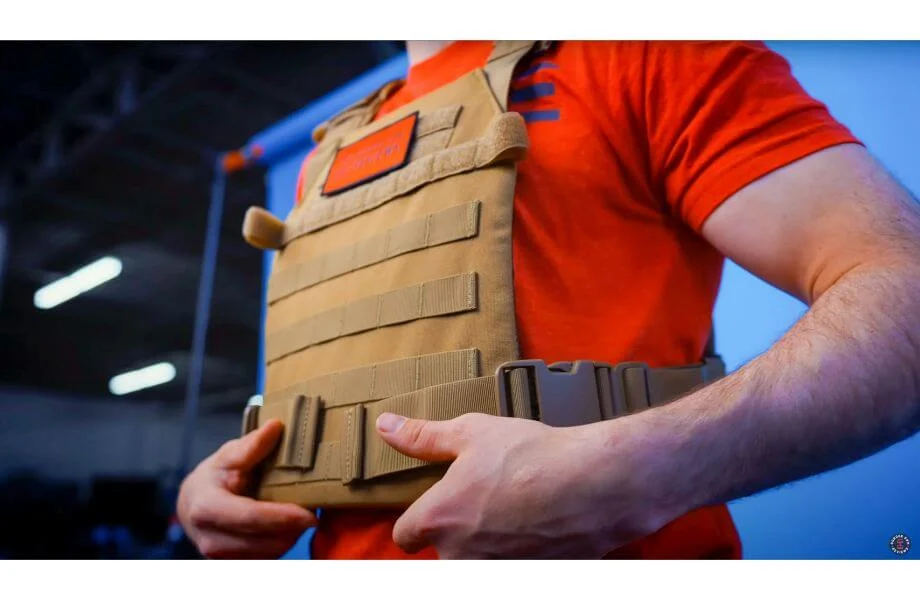
If a weighted vest isn’t properly secured around your chest and torso, a light jog can cause unnecessary strain on your back and joints via the impact of a weighted vest jostling around during strides. Make sure to properly secure your vest prior to exercise to keep the weight from bouncing around during your run.
Use the Proper Weights
Don’t fill your weighted vest with plates or weights it’s not suited for. Using heavier or ill-fitting plates can cause wear and tear on your weighted vest. Even worse, a weight could fall out of a pocket if it doesn’t properly fit. If purchasing separately, research which plates or weights are compatible with your vest profile for an optimal setup.
Start Light
If you’re new to training with a weighted vest, don’t start out the gate with a 100-pound ruck. Start with a lighter weight—around 5 or 10 percent of your bodyweight—to ensure you’re not overtraining or placing unnecessary stress and strain on your muscles and joints from the start.
Just like with any strength training, a good rule of thumb is to start with a light enough weight that you can handle; then, gradually progress to a heavier weight as you acclimate to the new training.
Emphasize Proper Form
Another important factor to stress for beginners is to focus on technique before adding more weight to your vest. Putting even 10 pounds on your chest will require you to think about proper posture. If you’re not careful, the added weight can make it easy to slouch during your jog or drop your chest on a bodyweight squat. Focus on technique while exercising with a weighted vest and lighten the load if you find yourself struggling with improper form.
Allow Proper Time To Recover
Going from a 1-mile jog to a 1-mile jog with a weighted vest can be a grueling difference. It’ll burn more calories and involve your muscles quite a bit more. Because of this, it’s important to make sure you’re recovering properly from your workouts…well, it’s always important, but even more so when you’re increasing the intensity of your workout with a weighted vest.
RELATED: Post-Workout Recovery Myths
Make sure to incorporate rest days into your training regimen, and avoid using a weighted vest for every workout. Keep it to a few times a week, especially at the beginning.
Weighted Vests Vs Plate Carriers
As you shop around for weighted vests, you might see some vests referred to as “plate carriers.” What’s the difference between them, and which one should you go with?
The term “weighted vest” generally covers the broad scope of weighted apparel that can be worn for rucks or bodyweight workouts. That said, an actual weighted vest differs quite a bit from a plate carrier. The largest difference is how the vest fits on the person; a weighted vest is often made to be form-fitting, whereas a plate carrier hangs over the user’s shoulders and is then secured with straps along the torso.
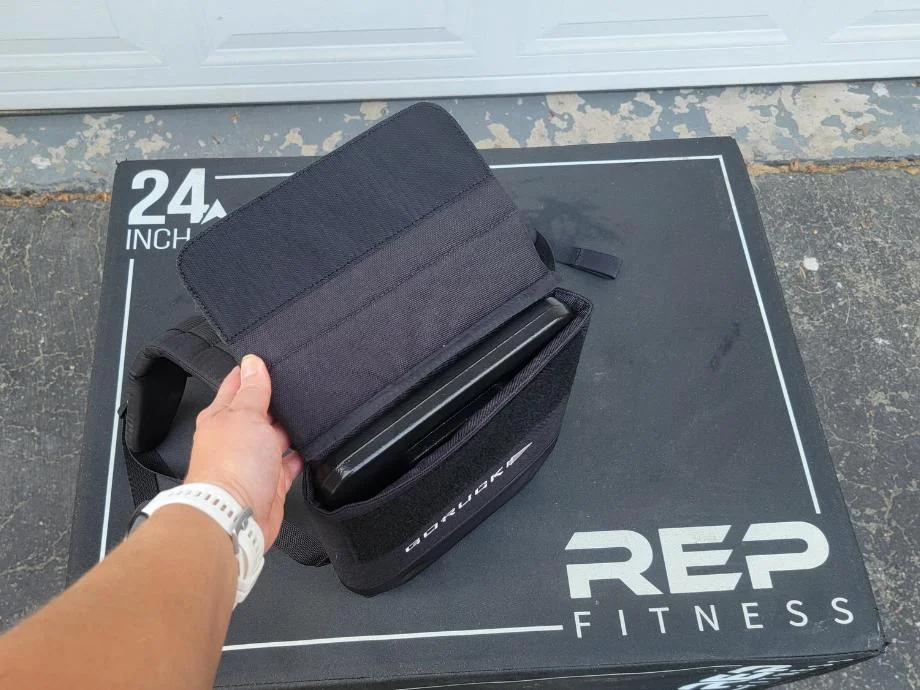
Plate carriers often feature a design inspired from tactical wear, so they’re usually made with a durable outdoor material like a ripstop canvas or nylon fabric. Plus, the weight used is an actual square weighted plate inserted into the front or back of the vest—where a tactical vest would normally hold a ballistic plate. This modular design gives athletes the chance to swap out plates for lighter or heavier loads, usually between 10 and 30 pounds.
Weighted vests, on the other hand, often use multiple pockets to create their respective loads. These pockets are distributed more evenly throughout the weighted vest and are filled with smaller weight plates or small sandbags (usually a couple pounds each).
So, which should you go for? Ultimately, it’ll depend on the type of training you want to do. Weighted vests can feel a bit more comfortable and evenly distributed for bodyweight workouts and exercises, but a durable plate carrier is fantastic for rucking. Plate carriers can often be loaded heavier, which may be beneficial for high-intensity sessions where you’re really trying to push yourself.
Types of Weighted Vests
It might be surprising, but there’s a lot of variety when it comes to weighted vests. They can vary by loads, the type of weights used, and by whether or not you can adjust the weights in the vest.
Adjustable Weighted Vests
As the name suggests, adjustable weighted vests allow you to customize the amount of weight for your workout. If it’s a plate carrier, you can switch out a 5-pound plate for a heavier 10- or 20-pound plate. Likewise, you can remove small weights from weighted vests with pockets to make smaller adjustments.
Adjustable weight vests can be great for beginners since you can adjust to a manageable total to start and gradually increase the weight as you get stronger and grow more accustomed to this mode of training.
Fixed Weighted Vests
A fixed weighted vest has a set weight that can’t be adjusted: What you see is what you get. The design varies, but the weight tends to be more evenly distributed throughout the weighted vest with miniature weights or sandbags. Plate carriers can also be fixed, mostly in that the plates they accept or handle are only one weight.
Vests By Weight Options
Here are some different designs of weighted vests by the method weights are added. This isn’t an exhaustive list, but we’re tackling the major categories:
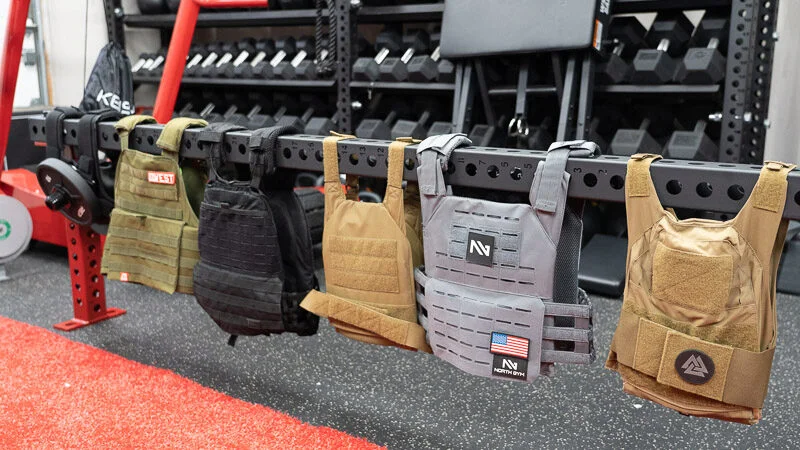
- Plate-Based Vests: These vests use specially made square plates that mimic ballistic plates used in tactical plate carriers and weighted ruck vests.
- Filler-Based Vests: These weighted vests are lined with small pockets throughout, each capable of handling a small weight or sandbag. They can be fixed or adjustable, but each pocket accounts for a small amount of weight (usually 1 or 2 pounds).
- Hybrid Weighted Vests: As the name implies, these weighted vests use a combination of different weights to create their respective working totals. For example, a plate may be inserted to the back, but the front may have smaller weights or bags of sand loaded for micro-adjustments. Like traditional plate carriers, it’s not uncommon to find hybrid weighted vests that take inspiration from tactical gear used by military and law enforcement.
Buying Guide: What to Look for in Weighted Vests
Before you buy a weighted vest, consider these factors to choose the best one for you.
Primary Use
As with most items that you plan to fill your home gym with, I recommend taking a look at the movements you most often do. Do you do a lot of running or quick, explosive movements? Then you’ll want a vest that you can use for those purposes without it flopping around. However, if you do more pull-ups and dips than sprints and burpees, then a vest that has the capability of getting heavy may be a better option.
Here’s the thing: There are vests that can do it all. However, they often lack in some areas if they can do everything. For instance, a vest that can get heavy and be used for running is often time-intensive to adjust the weight and won’t feel very secure during runs. This is why, for most people, we suggest a vest that isn’t crazy heavy but instead can add 20 pounds or so to your body weight, as it will feel the most comfortable and be the most versatile.
Size and Fit
This goes hand-in-hand with the primary use you need a vest for. A weighted vest should fit like a good shirt: Not too tight, not too loose. You’ll want it to be secure as you move around during your workout, but not so tight that it restricts movements.
Tighter fits tend to perform better for running, jumping, and other bouncy movements. You probably don’t need something ultra-fitted if you only plan on using your weighted vest for pull-ups, squats, lunges, and the like.
Construction and Durability
Look at what the vest is made of and what you plan to use if for. Materials like Cordura and other heavy-duty nylon blends are best if you plan to put your weighted vest through intense workouts and expose it to the outdoor elements. Some higher-end weighted vests have thin water-resistant coatings for extra durability.
Analyze the closure systems, too: Does it use buckles, straps, or Velcro, and will the specific closure system serve your needs? This isn’t an area you want to skimp on if your workout routine involves a lot of high-intensity, dynamic exercises or extended time outdoors (such as rucking).
RELATED: Outdoor Training Guide
Check to see if you can take the vest apart for washing it, and if you can toss it in the washing machine or if it must be hand-washed.
Finally, check for any extra features you may want. Do you want a mesh pocket for storage, or maybe even a bottle holder? Some next-level weighted vests come with those cool features, but you’ll probably pay a premium.
Proper Weight
On average, weighted vests range from 10 to 40 pounds. However, some vests go heavier, making them better suited for more advanced users. Most people don’t need or want a weighted vest heavier than 40 pounds, but it all depends on your fitness level and how you want to use the vest. It’s wise to choose an adjustable one that can grow with you as your fitness improves.
Loading
Some people may prefer a back-loaded weighted vest over one where the weight sits on your chest, and others may prefer a plate-loaded vest over one that’s pre-loaded. The type that’s best for you depends on your workout needs and your budget. Plate-loaded, military-spec styles tend to be more expensive but are also generally more versatile and adjustable.
Type of Weights
Different vests are compatible with different kinds of weights. Most of the weighted vests we recommend use steel or iron plates, but others use bags of sand or steel shot. Some unique vests, such as the Hyperwear models, use miniature steel plates that are about the size of Pez dispensers. Factors such as budget and primary use will determine which type of weighted vest is best for you.
Aesthetics
Don’t fall into the trap of buying the coolest-looking weighted vest. Seriously, the looks of the vest are secondary to the function and feel of the vest (and this rings true for pretty much all of the best home gym equipment). That said, we still recognize that aesthetics are important to most people, and most want a vest that looks cool. So, don’t buy one you hate the look of, but don’t base your entire decision around style, alone.
Budget
Of course, budget plays a huge role in purchasing decisions. It’s always a good place to start, so you don’t wind up disappointed that the vest you love most is out of your price range—or end up stretching your dollar to get it when it’s not realistic.
FAQs About the Best Weighted Vests
How heavy should a weighted vest be?
It depends on what you want to use it for. It’s wise, though, to buy an adjustable vest that allows you to add additional weight over time. For example, if you’re new to fitness, choose a vest that ranges from 10 to 20 pounds. That way, you can add extra weight as your fitness improves.
What is the best brand for weighted vests?
Which brand of weighted vest will suit you best will depend on several factors; namely, your fitness levels and goals, the vest’s intended use, and your budget.
Rogue Fitness is a very popular brand with a great plate carrier; TacTec also is a popular brand, specifically for tactical vests that double as plate carriers. If you’re into rucking and long-distance hiking with a weighted vest, we like GORUCK. Fringe Sport, LifePro, and various Amazon brands have great budget options, as well. t.
Are weighted vests worth it?
Weighted vests can certainly add a challenge to your next bodyweight workout. The added weight takes a cardio-focused movement like running, or bodyweight movements like push-ups or pull-ups, and transforms them into resistance training. A 2021 review4 demonstrated that weightlifting and resistance training improved sprint times, vertical jumps, and maximal strength lifts in athletes.
What are the downsides of weighted vests?
While weighted vests can be a great addition to workouts, there are a couple of things to watch out for. For one, the added weight can increase the stress on your joints, especially in bounding movements like running. Another thing to be mindful of is making sure the weighted vest has a good fit. Odd fits or vests that are too large can shift and move, causing excessive stress on your body and joints.
Chris Mohr, PhD, RD, offers some wise words: “For beginners, it’s smart to start with lighter weights and focus on mastering the correct form. A weight that allows you to do 12 to 15 repetitions of an exercise while still being challenging but doable is a good starting point. As your strength improves, you can gradually increase the weight and it’s important to push and challenge yourself, safely, as added resistance will offer bigger benefits.”
Does walking with a weighted vest burn more calories?
Yes, walking with a weighted vest can increase your caloric output because your body works harder to carry the extra load. The heavier the vest (within safe limits, of course), the greater the energy expenditure compared to normal walking.
References
- Barnes, K. R., Hopkins, W. G., McGuigan, M. R., & Kilding, A. E. (2015). Warm-up with a weighted vest improves running performance via leg stiffness and running economy. Journal of science and medicine in sport, 18(1), 103–108. https://doi.org/10.1016/j.jsams.2013.12.005
- Beavers KM, Lynch SD, Fanning J, et al. Weighted Vest Use or Resistance Exercise to Offset Weight Loss-Associated Bone Loss in Older Adults: A Randomized Clinical Trial. JAMA Netw Open. 2025;8(6):e2516772.
- DeLong, C., Nicklas, B.J., Beavers, D.P. et al. Does weighted vest use during weight loss influence long-term weight loss maintenance? A pilot study in older adults living with obesity and osteoarthritis. Int J Obes 49, 1662–1665 (2025).
- García-Valverde, A., Manresa-Rocamora, A., Hernández-Davó, J. L., & Sabido, R. (2022). Effect of weightlifting training on jumping ability, sprinting performance and squat strength: A systematic review and meta-analysis. International Journal of Sports Science & Coaching, 17(4), 917-939. https://doi.org/10.1177/17479541211061695