




When it comes to blending strength and conditioning, kettlebells are some of the most versatile home gym essentials around. The tricky part about buying the best kettlebell, though, is that many of them look and feel the same. However, there are key differences—be it price, coating, durability, weight increments, or even the handle width—that can impact your workout experience.
The GGR team has tested almost every type of kettlebell you can find. The kettlebells on this list are our picks for the best of the best based on our experience. In 2025 alone, we helped over 1,350 athletes find their ‘bell of choice, and we’re confident we can do the same for you with our detailed reporting below.
Coop’s Pick — Best Kettlebell
Cooper Mitchell, GGR founder, says his favorite kettlebells for home gym users are the Freak Athlete Adjustable kettlebells because they give you a good weight range and a solid value for the price. Plus, the cast iron shell is plenty durable, and the pin selector system makes weight adjustments a breeze.
The 7 Best Kettlebells of 2026
- Best Kettlebell Overall – REP Fitness Kettlebell Set
- Best Kettlebell Set – Rogue E-Coat Kettlebells
- Best Competition Kettlebell – Titan Competition Style Kettlebells
- Best Adjustable Kettlebell – REP Fitness Adjustable Kettlebells
- Best Kettlebell for Beginners – GIANT Lifting V3 Kettlebells
- Best Budget Kettlebell – Yes4All Vinyl Coated Kettlebells
- Best Powder-Coated Kettlebell – Iron Bull Kettlebell
Current Top Deals
- REP Fitness Kettlebell Set – Free shipping on every order
- Titan Competition Style Kettlebells – Save up to 65% sitewide
- GIANT Lifting V3 Kettlebells – Up to 35% off | Use GGR for add’l 5% off
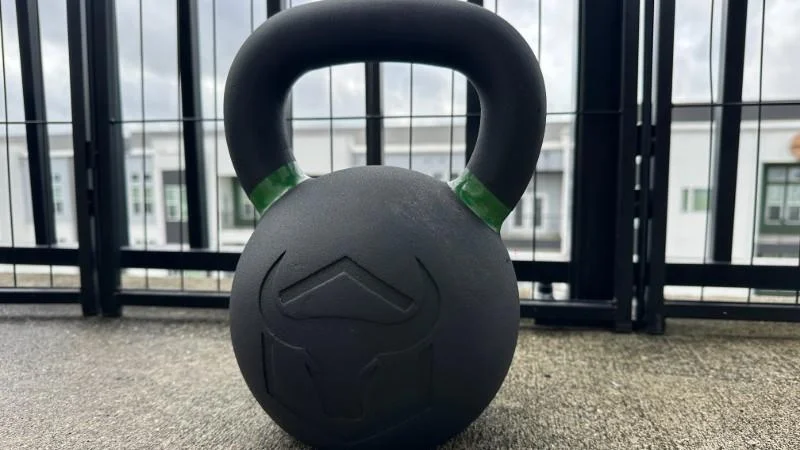
A kettlebell’s construction is an essential part of how effective it is in your training. To earn a 3 out of 5 in this category, a traditional kettlebell needs to be solid metal, but can have minor imperfections. An adjustable kettlebell must be sturdy with smooth weight transitions, but is allowed a somewhat clunky construction.
We award extra points for kettlebells with even weight distribution, perfectly flat bases, and overall better feel in our hands.
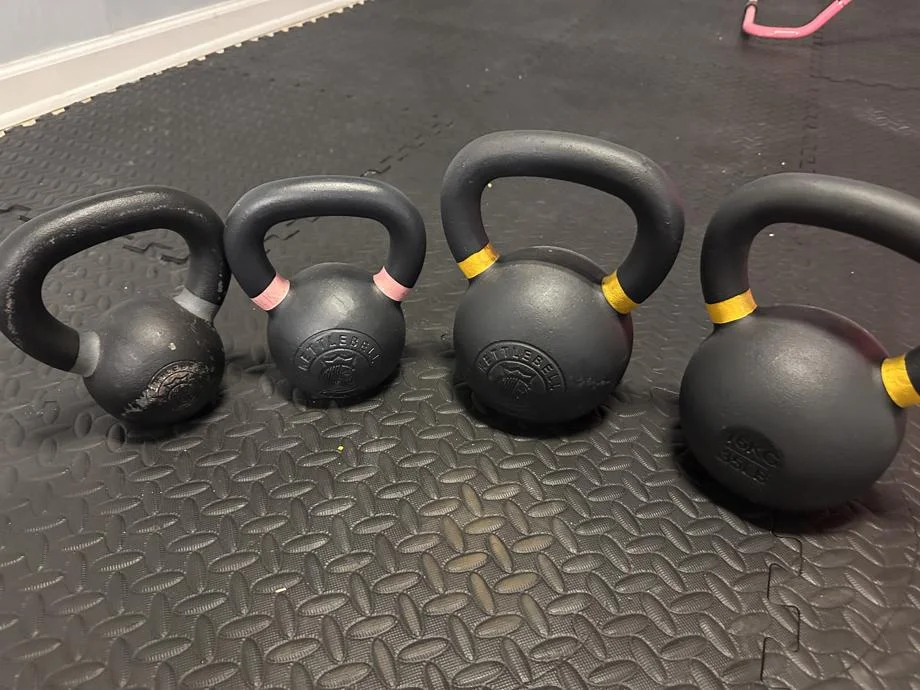
Another primary consideration for kettlebells is weight range. To earn at least a 3 out of 5, standard kettlebells must have a sufficient weight selection to accommodate a variety of exercises and training intensities.
A perfect score in this category indicates a wide weight range from light to heavy, dual weight markings (pounds and kilograms), and color-coded shells or handles.
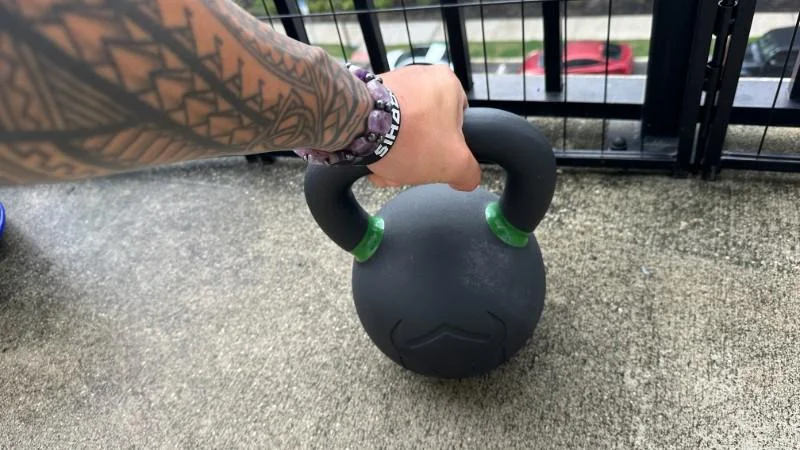
The handle design on a kettlebell is another key indicator of a quality product. We measure a kettlebell’s handle diameter, assess it’s control, and how it feels during long sets. To earn a 3 out of 5 in this category, we have to be able to keep a firm grip on a handle even if there’s some slickness from sweat.
To earn extra points in this category, kettlebell handles should have textured or powder-coated surfaces, diameter options, and comfortable clearance between the handle and the ball.
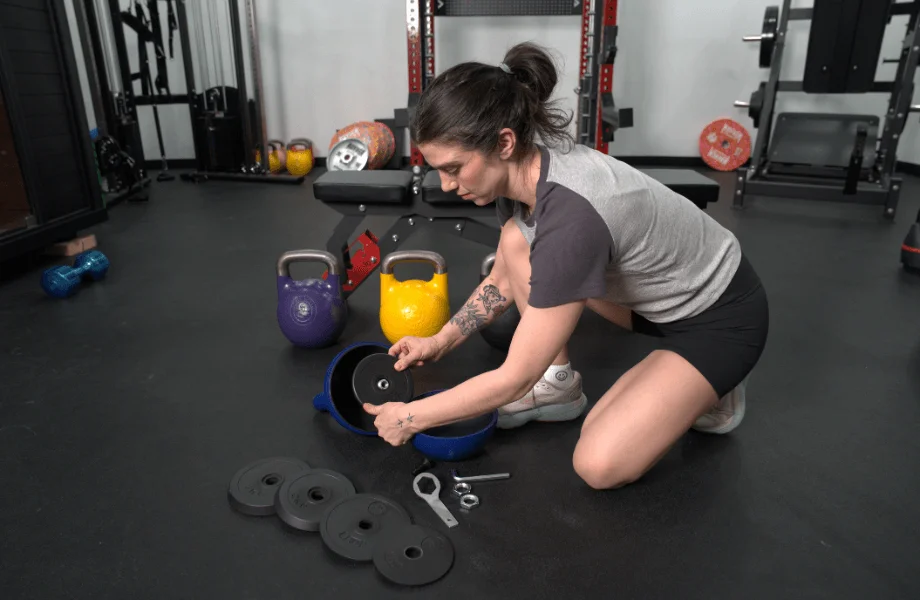
The GGR team is made up of certified personal trainers, CrossFit coaches, and competitive athletes who use and test kettlebells on a regular basis. We’ve personally put our hands on just about every type of ‘bell there is—from the most basic all the way to fully adjustable models. We use our kettlebell testing methodology to evaluate kettlebells using a 1-5 scoring system, assessing key factors like construction, durability, overall value, and more.
In addition to our research and proprietary testing, we consulted with GGR Chief Medical Advisor, Dr. Raj Dasgupta, MD, FACP, FCCP, FAASM, and exercise physiologist Dr. Chris Mohr, RD, to discuss how kettlebell training can be an integral part of your overall exercise routine. To ensure medical accuracy, we also contacted Dr. Bilal Ahsan, a resident physician in Physical Medicine and Rehabilitation (PM&R) specializing in musculoskeletal, neurological, and sports-related conditions.
Best Kettlebell Overall: REP Fitness Kettlebell Set
Updated by: Amanda Capritto, CPT, CES, CF-L1, CNC, CSNC
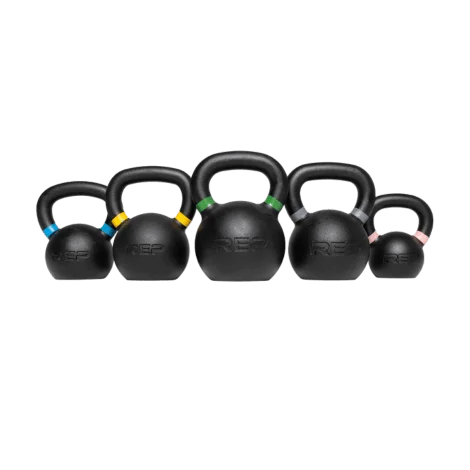







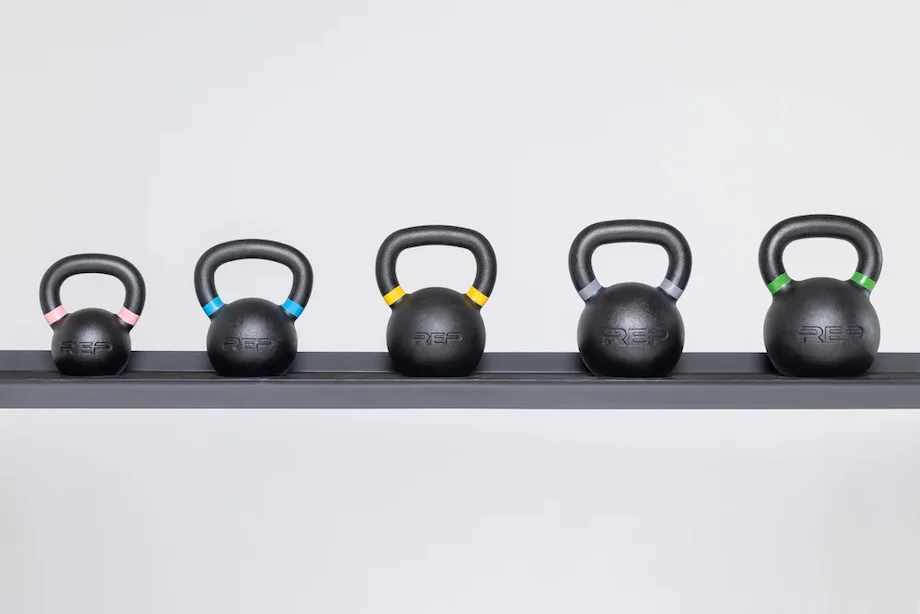
The REP Fitness Kettlebell Set can be a convenient way to purchase multiple kettlebell weights in one fell swoop. You receive five varying weights in one bundle, and REP also offers dual-weight packages that can create paired bells for specific exercises like presses, carries, and more.
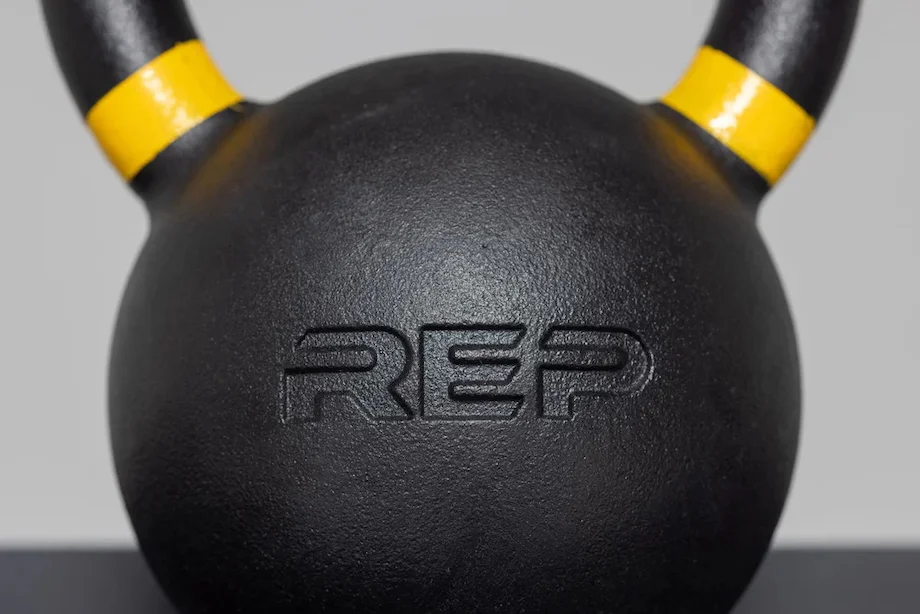
The REP Fitness Kettlebell Set can be ideal for full-body kettlebell workouts since it includes a solid weight range of 8 kilograms (17.6 pounds) to 24 kilograms (52.9 pounds). Made from cast iron with a shiny, textured finish, each kettlebell has a color-coded handle for easy weight identification. With REP’s attention to detail and excellent engineering, this set earns a rock-solid 4-out-of-5 rating for value. Overall, the high-quality construction helps REP earn the nod as our consensus top pick.
Durability: 5/5
Weight Options: 3/5
Construction: 5/5
Why We Like the REP Fitness Kettlebell Set
REP has earned a reputation for producing high-quality fitness equipment, and this kettlebell set is no different. As someone who’s used both budget-friendly and high-end models, I appreciate the gravity die-cast design, which helps produce a durable, precise kettlebell with a perfectly flat base. “The base really helps when trying to keep your home gym organized,” adds Ben Emminger, NASM-CNC, NASM-CSNC.
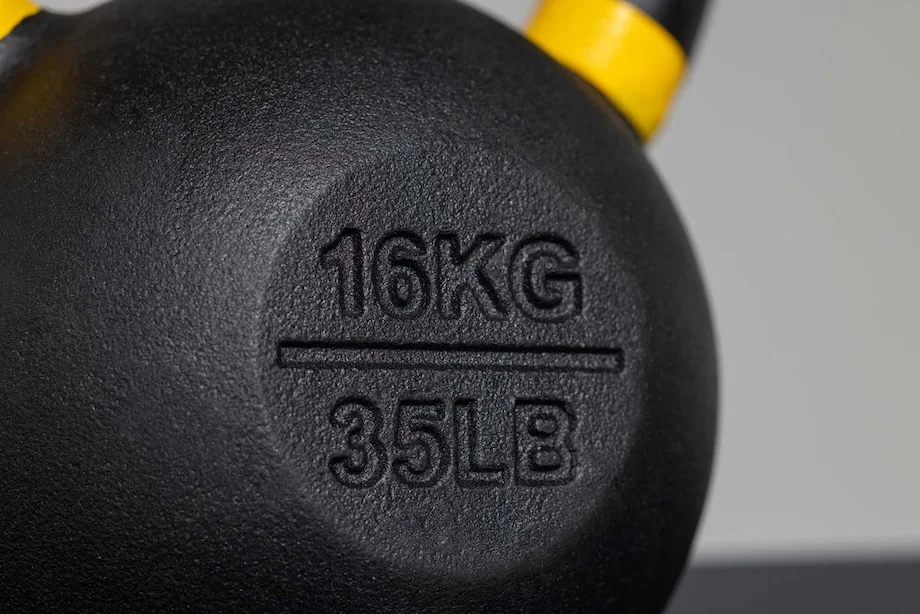
Each ‘bell is labeled with both kilogram and pound weight increments, meaning you don’t have to worry about trying to do any complicated conversions in the middle of your training session. Overall, I give this set dual 5-out-of-5 scores for construction and durability.
In addition, REP deserves a tip of the cap for providing free shipping. This is a big cost savings, especially when you’re buying an entire set of kettlebells. Combined with the fact that you can choose between a single or double set (offering dual weights of the same total for two-kettlebell movements), REP gets a 5-out-of-5 rating for purchasing and shipping.
These REP kettlebells are a nice blend of performance and consistency. The handle is comfortable yet tacky, and I’d have no qualms about adding them to my home gym.
Ben Emminger, NASM-CNC, NASM-CSNC
What We Don’t Like About the REP Fitness Kettlebell Set
Our main callout with the REP Fitness Kettlebell Set is the somewhat limited weight range. The heaviest kettlebell is 24 kilograms (roughly 53 pounds). This may suffice for beginners and intermediate trainees, but more advanced users will likely need to invest in a few more heavier ‘bells for exercises like goblet squats or even swings. As a result, we rate the weight options for this specific set at 3 out of 5.
Ben does note, though, that higher weights can be purchased independently, albeit with a little more time spent finalizing your online cart. “Think of this set as a great starting point,” he says. “Then, if you need lighter or heavier profiles, just add them as à la carte items prior to checkout.”
Additionally, while we rate the durability with a perfect score, some customer reviews point out that the powder coating can begin to chip over time. This can be subjective depending on how much wear and tear you put these ‘bells through, but it is worth mentioning that these weights aren’t entirely impervious to deterioration.
If you need to go heavier, consider adding several GIANT Lifting V3 Kettlebells to your set.
Testing Breakdown
Here’s how the REP Fitness Kettlebell Set fared based on our fitness equipment testing methodology.
Vs. The Average
You get a less expansive weight range with the REP Fitness Kettlebell Set. The median handle diameter falls right around the average.
| REP Fitness Kettlebell Set | Average Kettlebell | |
| Price | Single Set: $360.99 Double Set: $704.99 | Cheapest: $44.50 Most Expensive: $209.15 |
| Weight Range | 8-24 kg (17.6-52.9 lbs) | 7-31.4 kg (15.6-69.3 lbs) |
| Handle Diameter | 32-39 mm, depending on the size | 34.87 mm |
Best Kettlebell Set: Rogue E-Coat Kettlebells
Updated by: Amanda Capritto, CPT, CES, CF-L1, CNC, CSNC
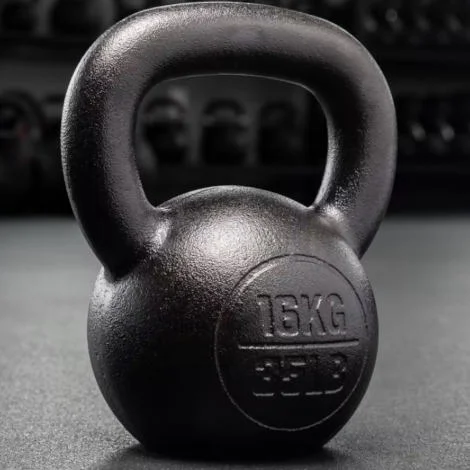
The Rogue E-Coat Kettlebells combine traditional cast-iron strength with a modern, durable finish that resists corrosion and chipping. Ideal for both home and commercial gyms, these kettlebells deliver consistent balance, long-lasting performance, and premium feel—making them a top choice for serious strength athletes and home gym enthusiasts alike.
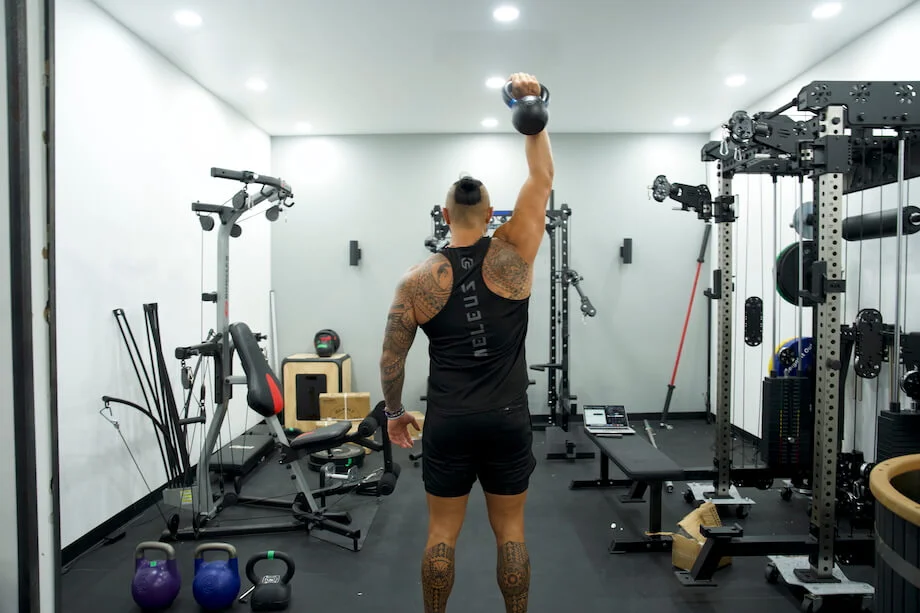
Earning an impressive overall score of 4.35 out of 5, the Rogue E-Coat series has everything we look for in the best kettlebells. Featuring a cast iron core and durable e-coat finish, you shouldn’t have to worry about damaging them with repeated drops. Well-built and priced fairly, we’re confident the E-Coat kettlebells can quickly become staples in your home gym. One of the best parts? They’re available in a variety of set configurations to suit the needs of different athletes, making them our pick for the best kettlebell set.
Construction: 5/5
Handle: 4/5
Value: 4/5

Why We Like Rogue E-Coat Kettlebells
After using many Rogue kettlebells over the years, GGR founder Coop Mitchell puts it bluntly, “By far, the E-Coat line is my favorite.”
GGR product tester Stephen Sheehan, CPT, CNC also got a chance to test these, and he says he can see why Coop is such a big fan. E-coats are highly durable and resistant to chipping, scratching, and rusting. They also make for a stronger grip on the kettlebell. The Rogue E-Coat Kettlebell is also made from ductile cast iron, which offers more durability and resistance to corrosion than standard cast iron or steel. As such, durability shouldn’t be a concern with these ‘bells, and we give them a 5-out-of-5 rating in this all-important category.
There are 12 available weight increments in the E-Coat line ranging from 9 to 88 pounds. This can give you plenty of flexibility for progressive overload since you can purchase heavier kettlebells as you get stronger. We rate the weight options at a perfect 5 out of 5, especially since you can also purchase these kettlebells in various sets, including a 26-35-70-pound set for $226 or a 10-piece set ranging from 9 to 70 pounds for $625.
I would choose the E-Coat after testing them over powder-coated or regular kettlebells.
GGR Everything Lead reviewer Lindsay Scheele, CPT, CNC
What We Don’t Like About Rogue E-Coat Kettlebells
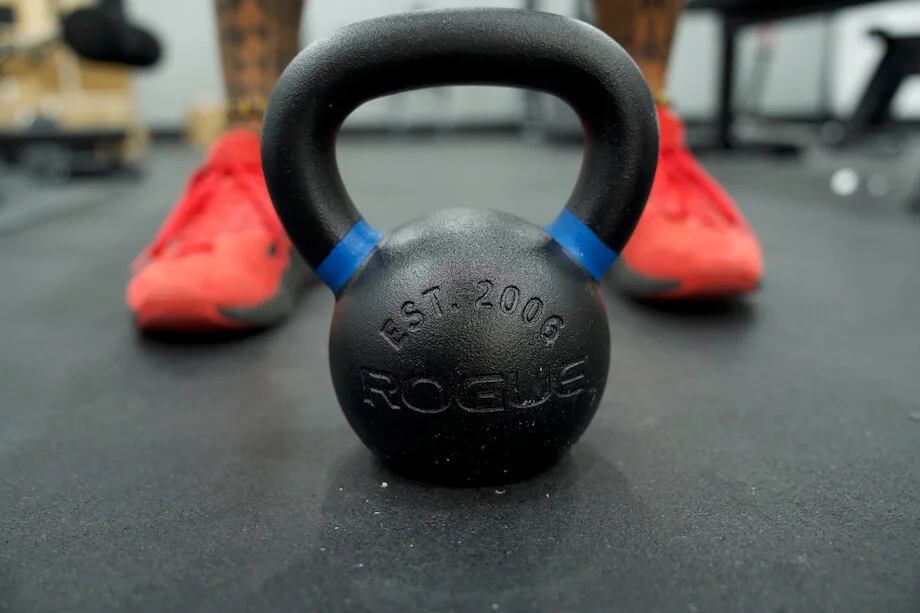
While I had no complaints about the diameter or shape of the handle, I docked a point off the score (4 out of 5) because the e-coat finish can make it a bit more challenging to maintain control of the kettlebell when your hands get sweaty. This might not be a concern if you’re just using a kettlebell for a few exercises, but it could be problematic if you’re into high-intensity interval training (HIIT) where you can break a serious sweat.
In addition, Coop points out that because these are not competition kettlebells, there may be some very slight discrepancies in weight. That’s typical of most non-competition kettlebells, however, so don’t necessarily take this as a shot at Rogue.
If you don’t want the e-coat finish, you might want to choose the Titan Competition Style Kettlebells, instead. These kettlebells have a smooth coating profile as well as the universal sizing of competition-grade bells.
Testing Breakdown
Here’s how the Rogue E-Coat Kettlebells scored based on our fitness equipment testing methodology.
Vs. The Average
The Rogue E-Coat Kettlebells are generally more affordable than the average kettlebell. They also offer a higher weight range.
| Rogue E-Coat Kettlebells | Average Kettlebell | |
| Price Range | Cheapest: $44 Most expensive: $163 | Cheapest: $44.50 Most Expensive: $209.15 |
| Weight Range | 9-88 lbs | 7-31.4 kg (15.6-69.3 lbs) |
| Handle Diameter | 30.48-38.1 mm | 34.87 mm |
Check out our full Rogue E-Coat Kettlebell review for more information.
Best Competition Kettlebell: Titan Competition Style Kettlebells
Updated by: Stephen Sheehan, CPT, CNC
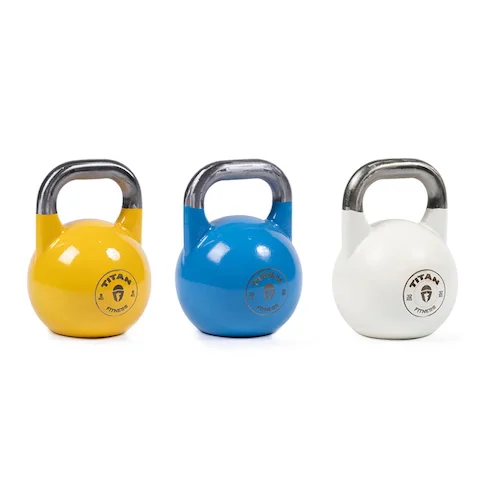
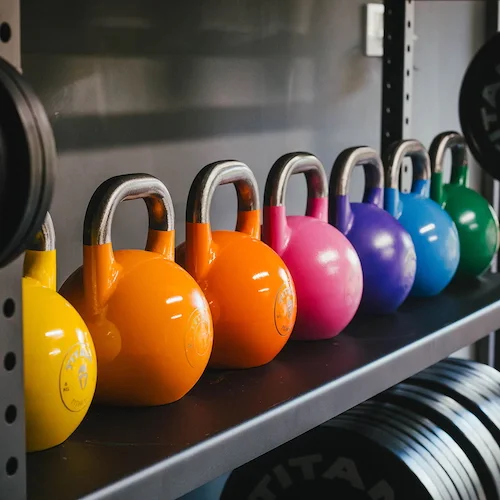


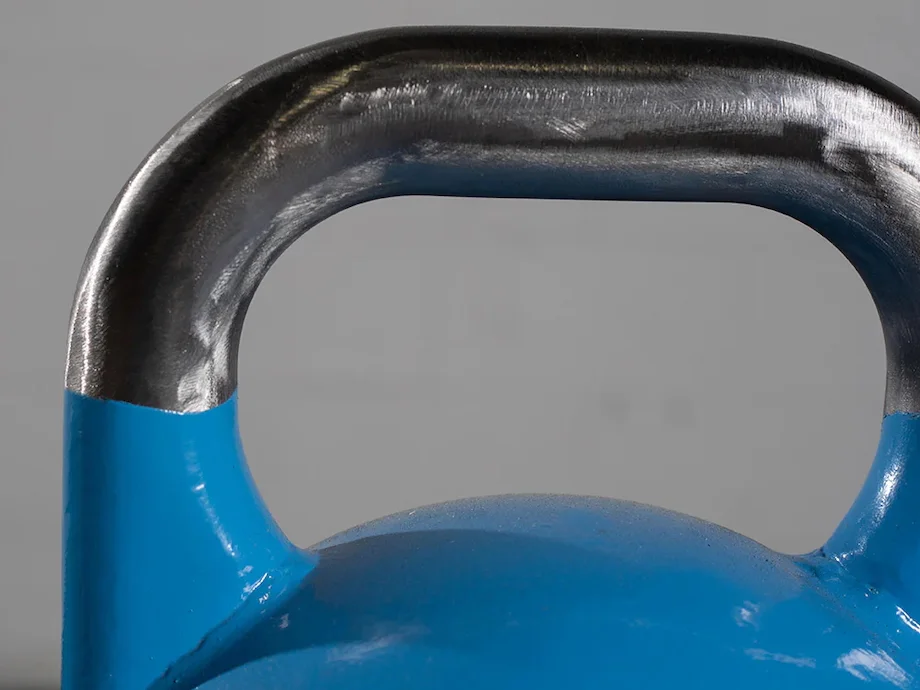
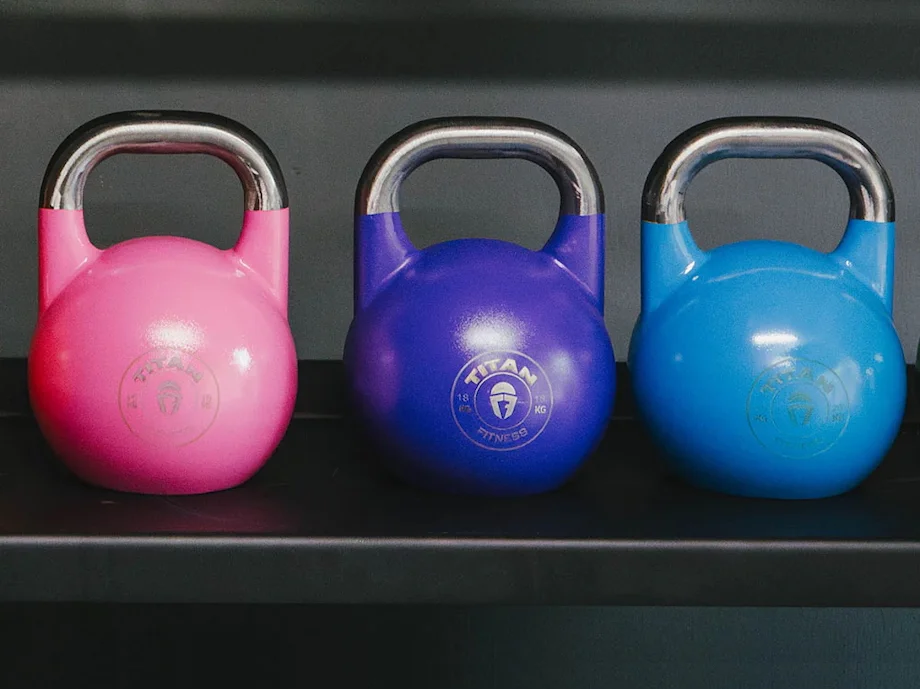
Titan Fitness Competition Style Kettlebells are designed with the same dimensions so you can focus on your form as your progress. Sold individually, they have color-coded handles that make it easy to identify the weight. They’re a solid option, but be aware that some customers have reported issues with the paint chipping.
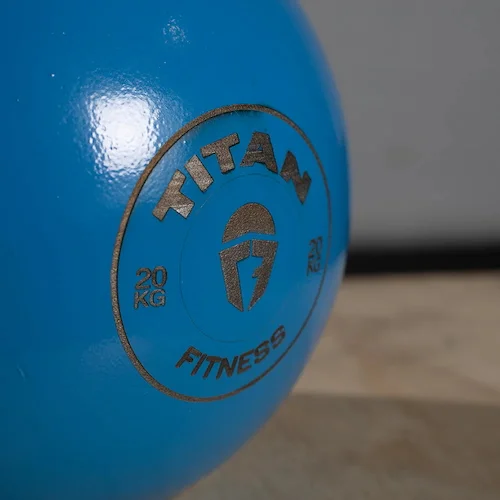
Titan Competition Style Kettlebells can deliver pro-level performance at a more affordable price than high-end options. Each ‘bell meets international standards for size, shape, and handle diameter, allowing for seamless transitions between at-home training and the competition floor. The consistent design also enables smooth transitions between weight totals without disrupting your technique. We also appreciate that these are color-coded and laser-engraved for easy weight identification, leading to a strong construction score of 4.5 out of 5.
Construction: 4.5/5
Handle: 5/5
Weight Options: 3/5
Why We Like Titan Competition Style Kettlebells
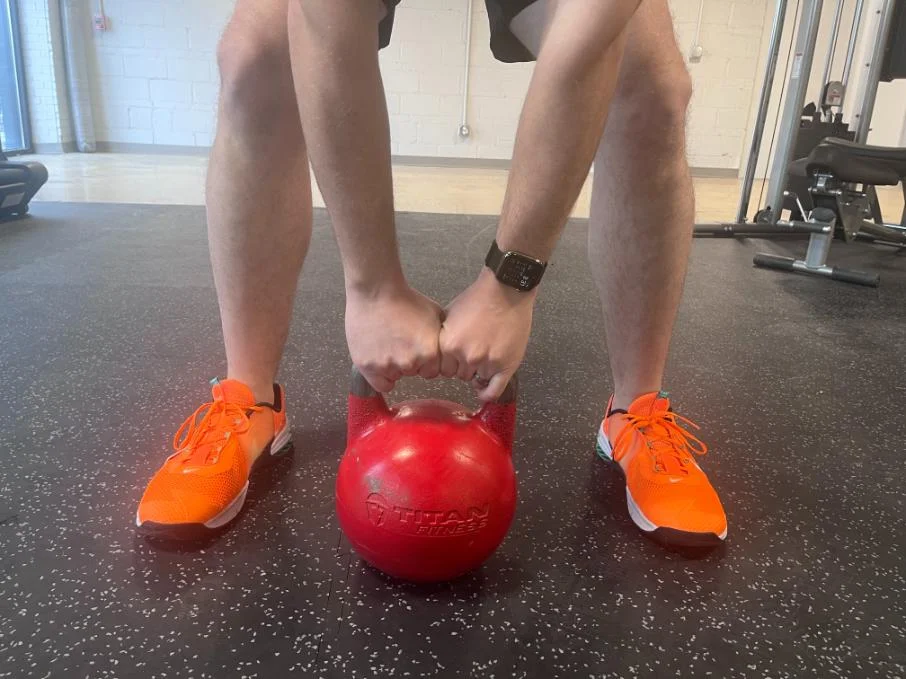
Because this is a competition kettlebell, the weights are highly accurate and the handles are a standard 35 millimeters on every ‘bell. “It’s nice to have this standardized handle across the range,” notes Ben Emminger, NASM-CNC, NASM-CSNC. “It helps you maintain consistent form regardless of your working weight.”
We also really like that each ‘bell comes in its own color, which can be a nice alternative to your typical black, iron-cast kettlebell. Between the build quality and affordable pricing, we rate the value at 5 out of 5.
Meanwhile, budget-conscious buyers will also appreciate that Titan offers free shipping on all orders, which is a huge cost efficiency that many other brands do not offer. That earns a perfect 5-out-of-5 rating for purchasing and shipping (and a big tip of the cap for customer service). So, if you want to stock up on several competition-style ‘bells, you can do so without having to worry about escalating shipping costs.
I’ve used these Titan ‘bells a handful of times at various gyms. The comfort is top-notch when working through certain movements, and each free weight is as rock-solid as ever, even despite varying levels of wear and tear.
Ben Emminger, NASM-CNC, NASM-CSNC
What We Don’t Like About Titan Competition Style Kettlebells
As a budget option, Titan Competition Kettlebells do have some issues, namely with the paint. Several reviewers have reported flaking or chipping, and Ben can attest. “While it’s more of a cosmetic flaw than a structural compromise,” he states, “These kettlebells can quickly look worn-in given the thinner paint that chips easily.” While this doesn’t typically affect the performance of the product, it can affect aesthetics. We docked some points off the durability score, resulting in a 3.5-out-of-5 rating.
Also, most competition ‘bells like this one don’t come in heavy weights because people don’t really use higher totals in competition. Even though we only give this a 3 out of 5 for weight options, we still think it delivers good value for the price.
If you prefer to use an adjustable kettlebell over multiple kettlebells, the REP Fitness Adjustable Kettlebells are some of our favorite on the market.
Testing Breakdown
The Titan Competition Style Kettlebells scored at least a 4 out of 5 in all but two categories. Here’s a complete breakdown of our ratings:
Vs. The Average
The Titan Competition Style Kettlebells have essentially the same handle diameter and weight range as the average kettlebell.
| Titan Competition Style Kettlebells | Average Kettlebell | |
| Price Range | Cheapest: $84.99 Most Expensive: $184.99 | Cheapest: $44.50 Most Expensive: $209.15 |
| Weight Range | 8-32 kg (17.6-70.6 lbs) | 7-31.4 kg (15.6-69.3 lbs) |
| Handle Diameter | 35 mm | 34.87 mm |
Best Adjustable Kettlebell: REP Fitness Adjustable Kettlebells
Updated by: Stephen Sheehan, CPT, CNC
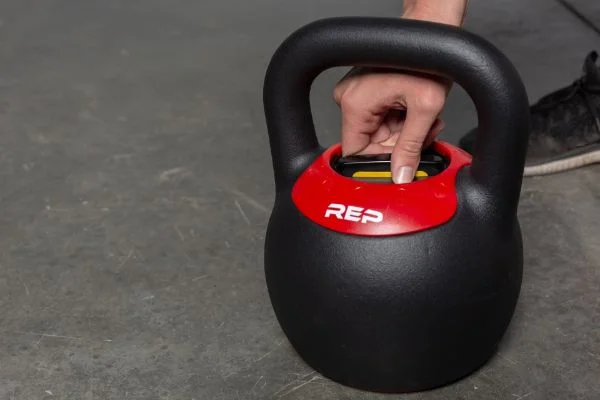
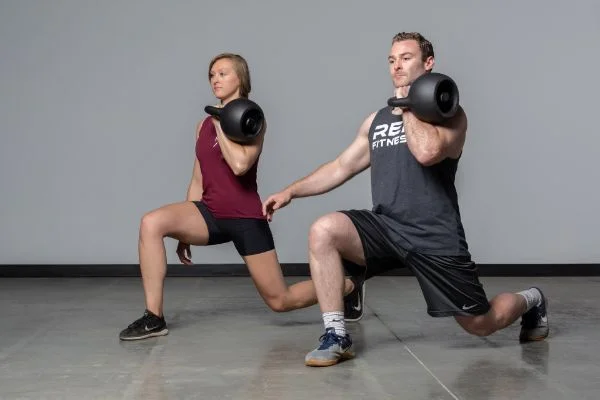
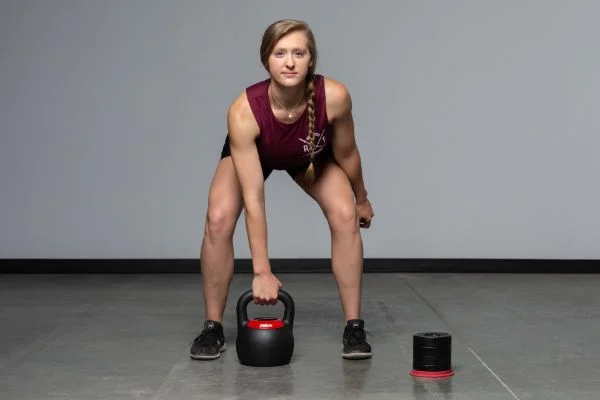

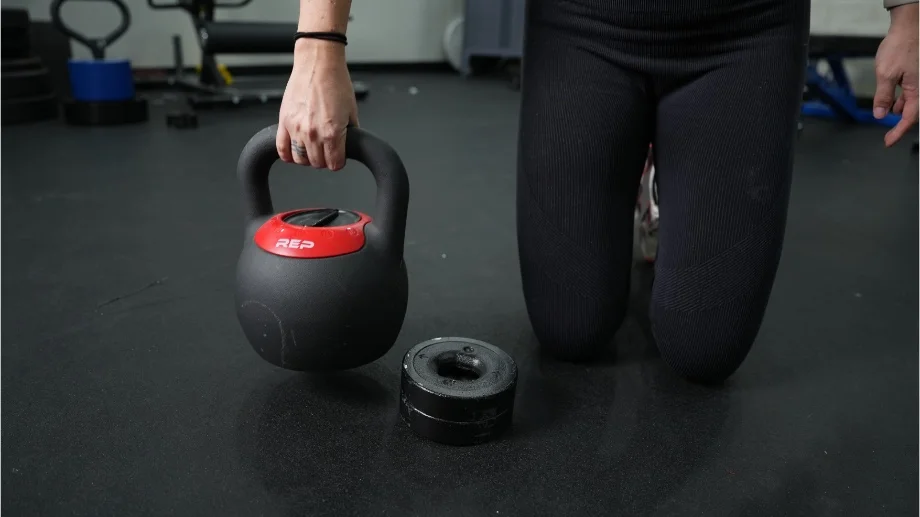
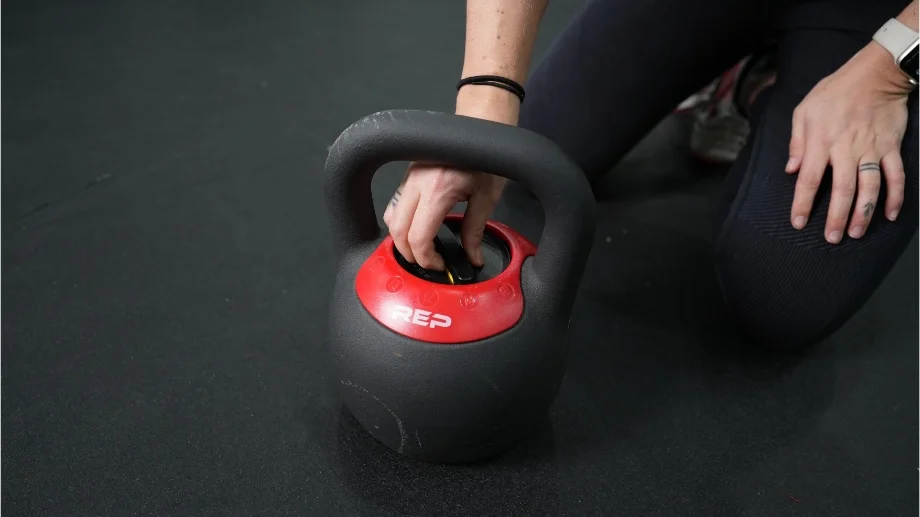
If you close your eyes (although we don’t advise it because kettlebells are heavy) when using the REP Fitness Adjustable Kettlebells, you will think that you are using a regular kettlebell. The adjustment mechanism works quickly and efficiently, allowing you to make seamless transitions during your workouts.
The best adjustable kettlebells allow you to save money and space. If you’re looking to preserve real estate and keep some extra money in your pocket, I recommend investing in a REP Fitness Adjustable Kettlebell. Earning an impressive overall score of 4.7 out of 5, this is a high-quality option that can give you the flexibility to train light, heavy, or anywhere in between.
Construction: 4.5/5
Adjustment Speed: 5/5
Weight Options: 4/5
Why We Like REP Fitness Adjustable Kettlebells
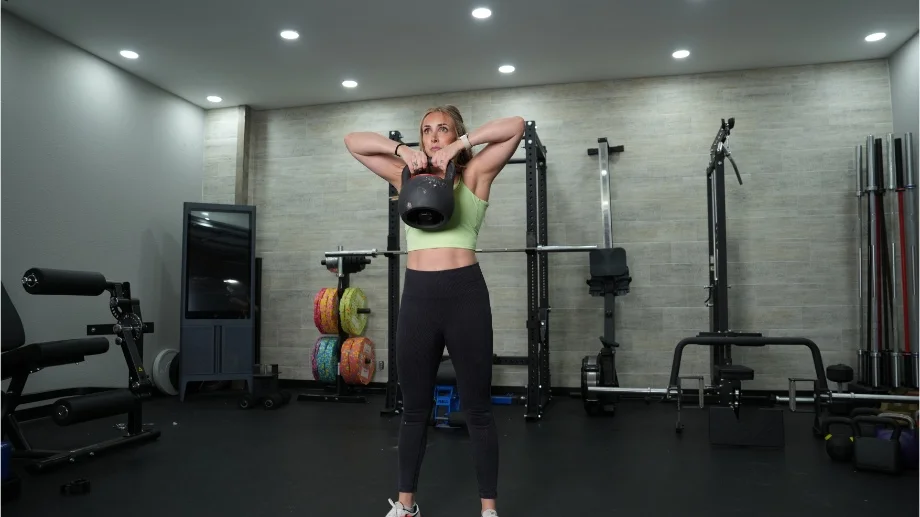
GGR founder Cooper Mitchell has used these REP adjustable kettlebells for a variety of exercises, including swings, farmer’s carries, Turkish get-ups, and goblet squats. He’s been impressed by the overall build quality and ease of use, rating the construction at a near-perfect 4.5 out of 5.
Depending on your experience level, you can choose between an 8- to 16-kilogram option, a 16- to 24-kilogram option, or a 20- to 40-pound option. While we’d like to see a broader weight range within one kettlebell, we still rate it at 4 out of 5 for weight options. Most importantly, you can make quick weight changes mid-workout. Coop rated it at 5 out of 5, noting, “All you have to do is use a push-and-twist dial on top to easily find the exact weight you need.”
I like that these are useful for both beginners and experienced lifters.
GGR founder Cooper Mitchell
What We Don’t Like About REP Fitness Adjustable Kettlebells
During testing, Coop found that the weight plates inside rattled a little, which can be unnerving. However, none of the plates fell out or came loose. Overall, this is a well-built adjustable kettlebell that should work for most users. My only caveat here is that advanced users may not get enough of a challenge from a ‘bell that “only” goes up to 53 pounds.
If you need an adjustable kettlebell with a higher weight capacity, consider the Ironmaster Quick-Lock Adjustable Kettlebell Handle, which supports up to 80 pounds.
Testing Breakdown
The REP Fitness Adjustable Kettlebells scored at least a 4 out of 5 in every category. Here’s a detailed breakdown:
Vs. The Average
REP Fitness Adjustable Kettlebells feature roughly the same weight range as your average adjustable kettlebell, and the slightly thicker handle can help improve control during certain movements.
| REP Fitness Adjustable Kettlebell | Average Adjustable Kettlebells | |
| Price | Cheapest: $149.99 Most Expensive: $219.99 | $165 |
| Weight Range | 8-16 kg; 16-24 kg; 20-40 lbs | 8-20 kg (17.6-44 lbs) |
| Weight Increment | 2 kg (4.4 lbs), or 5 lbs | 2 kg (4.4 lbs) |
| Replaces | 5 kettlebells | 8 kettlebells |
| Handle Diameter | 34.6 mm | 33 mm |
| Adjustment Mechanism | Push-and-twist dial | Varies |
| Materials | Cast iron shell with matte powder coat | Varies |
| Warranty | Lifetime | 4 years |
For more details, check out our REP Fitness Adjustable Kettlebell review.
Best Kettlebell for Beginners: GIANT Lifting V3 Kettlebells
Updated by: Stephen Sheehan, CPT, CNC
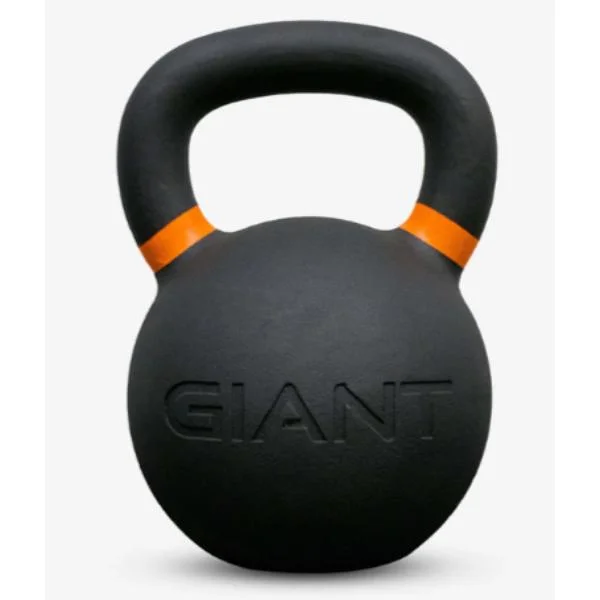
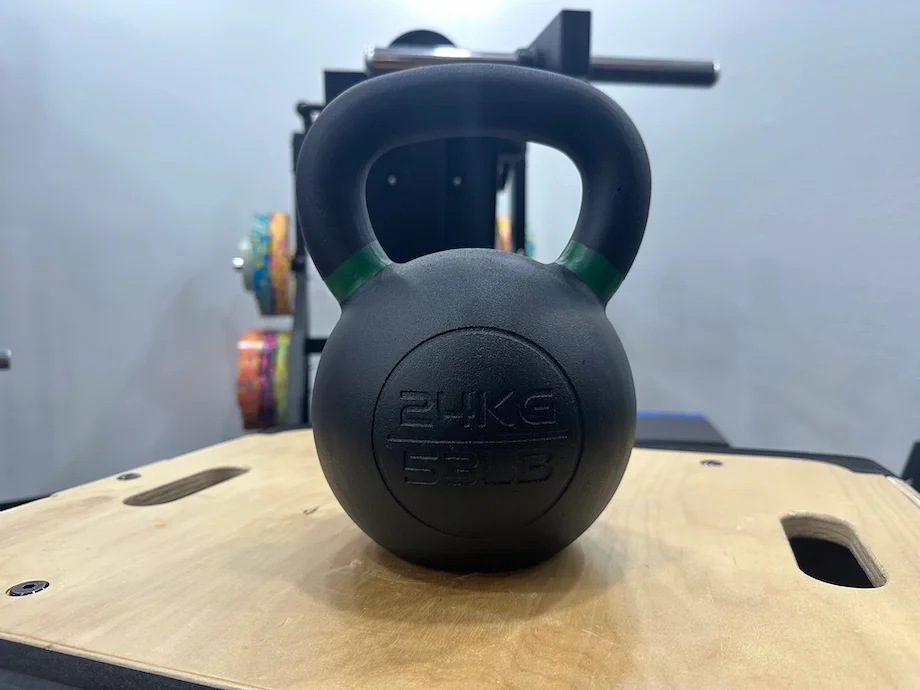
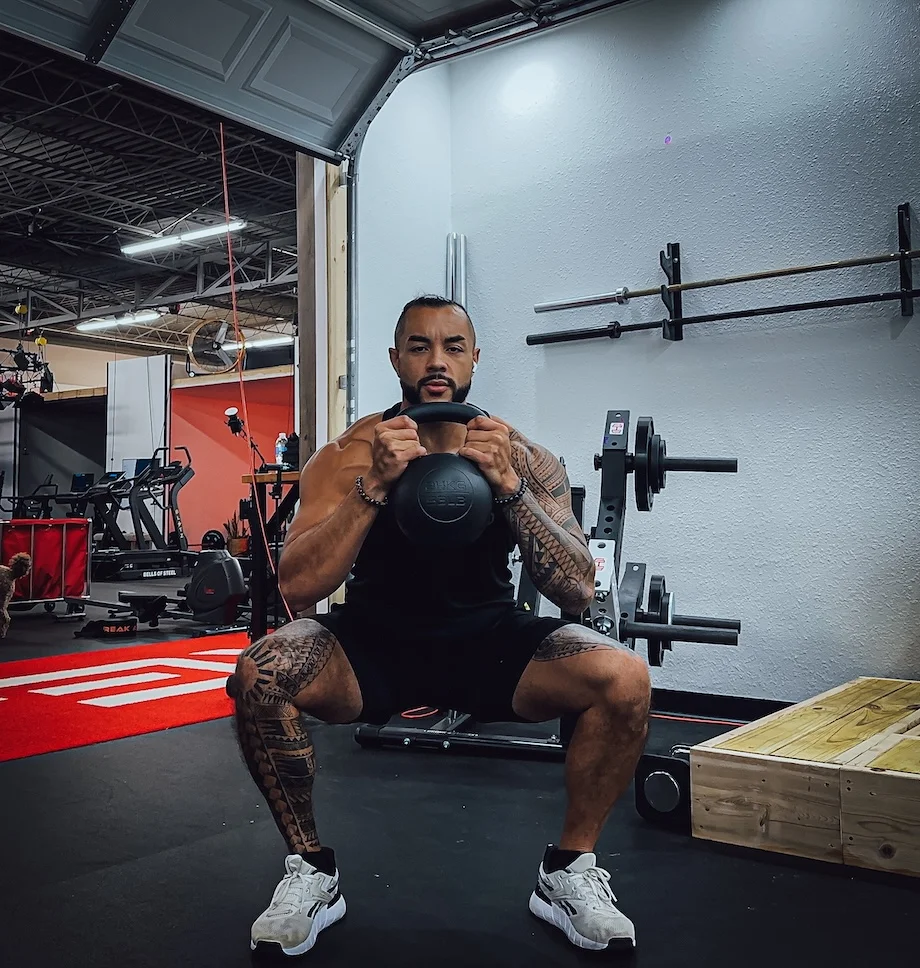
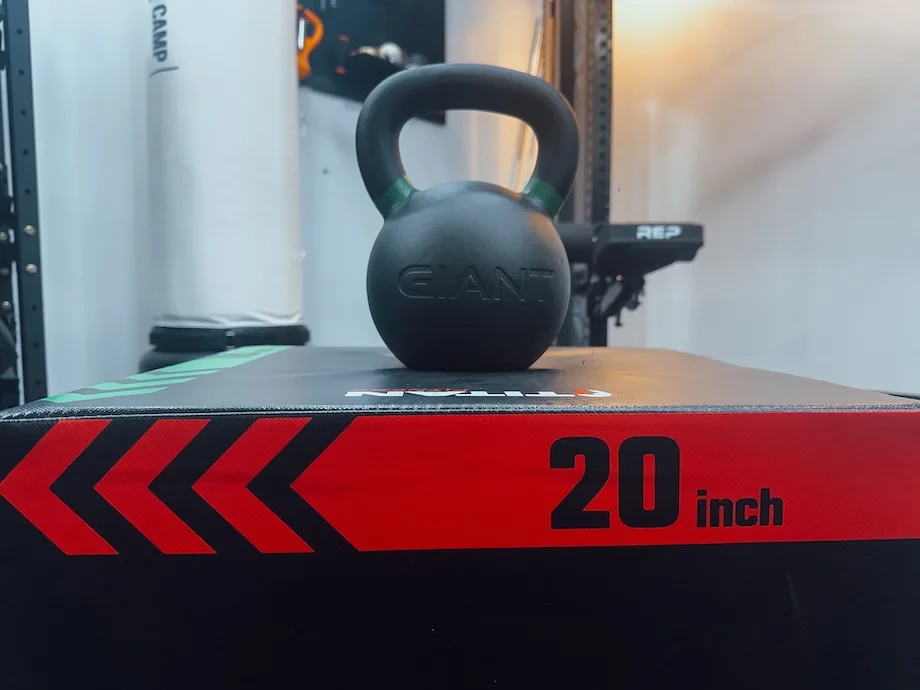

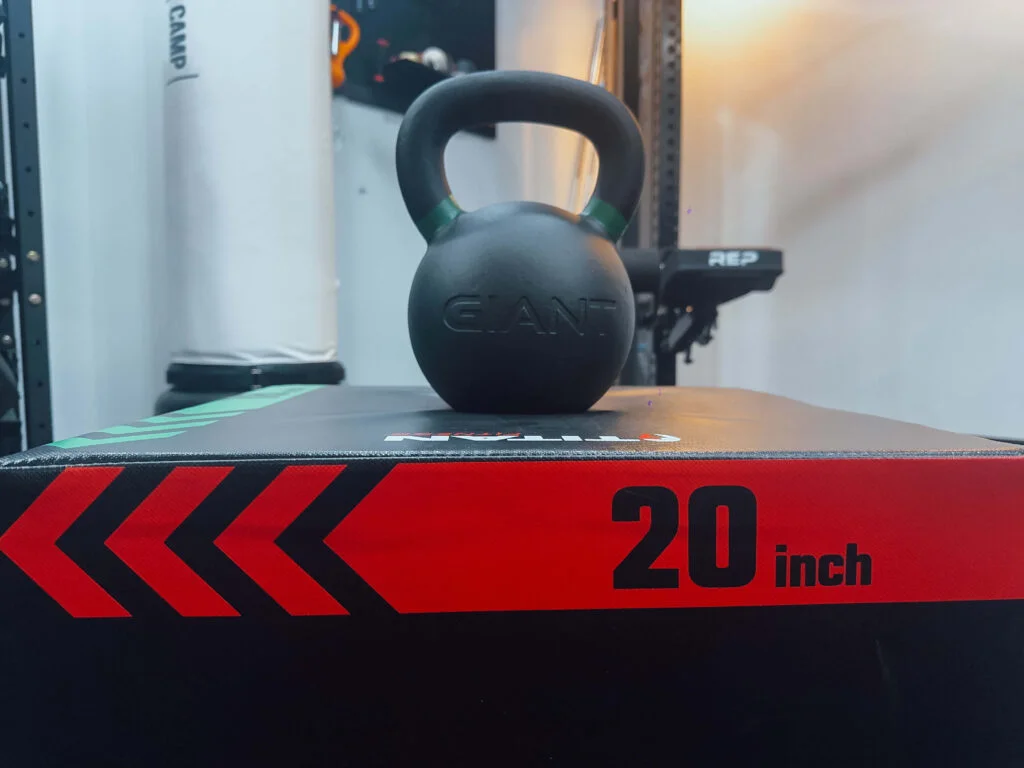
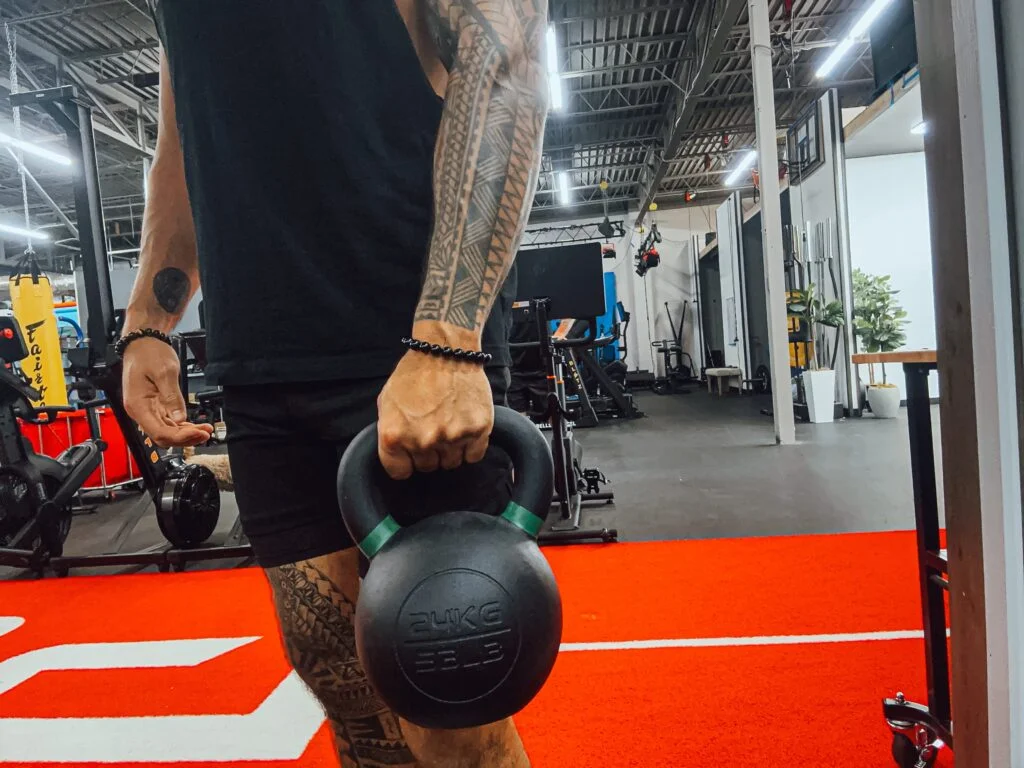
The Giant Lifting V3 Kettlebells are a durable set of kettlebells that come with color-coded handles for easy weight identification. Available in a wide range of weights, they’re well-suited for lifters of all experience levels.
What Our Tester Says:
“You get a great grip with this, and it feels like the coating can take a beating along with your workout. The black powder coating is helpful with sweaty hands.”
The GIANT Lifting V3 Kettlebells are ideal for beginner kettlebell workouts due to their straightforward design and wide range of weight options (13 choices between 4 and 48 kilograms). The powdercoat finish provides a solid, comfortable grip that helps prevent any slipping—something that’s especially important when you’re learning new kettlebell exercises. Earning an impressive overall score of 4.62 out of 5, these ‘bells should work well for users of all experience levels.
Durability: 5/5
Handle: 5/5
Weight Options: 5/5
Why We Like GIANT Lifting V3 Kettlebells
I got my hands on the V3 Kettlebells shortly after they hit the market, and let’s just say I came away mightily impressed. From a design standpoint, they check every box. In addition to color-coded handles, there are markings for both pounds and kilograms. They also have a flat base for easier storage. The construction easily earns a perfect 5 out of 5.
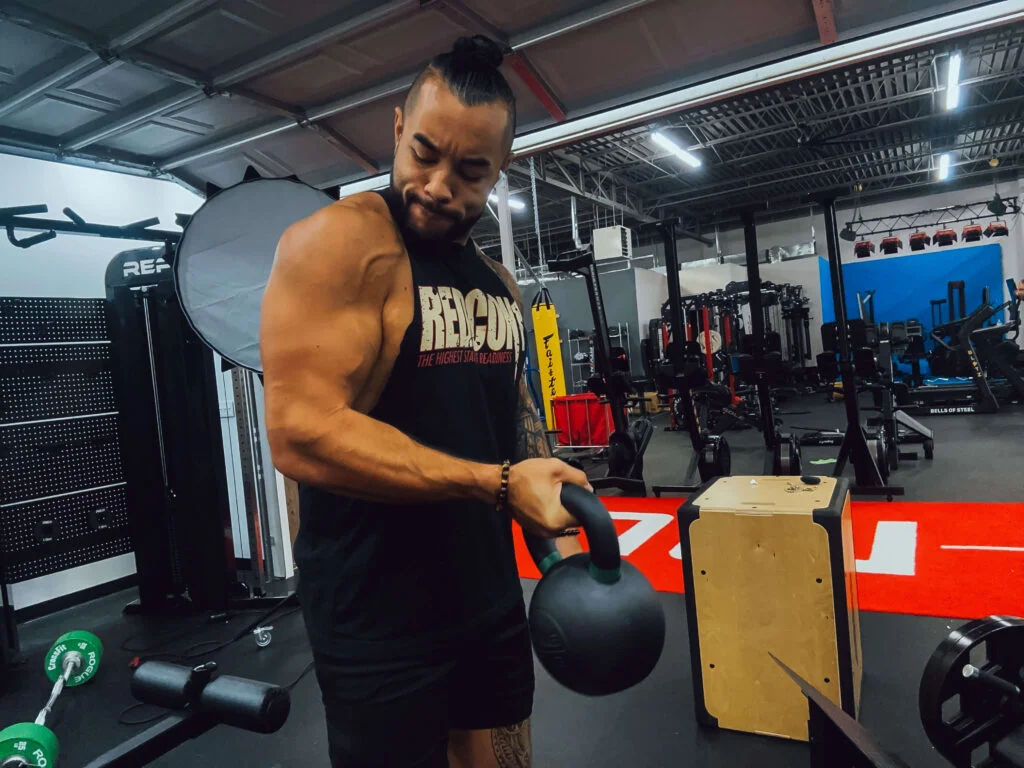
Most importantly, these ‘bells performed well across multiple exercises. I had no trouble maintaining control for kettlebell curls and overhead presses. Ditto for two-handed exercises like goblet squats and swings. Although we didn’t have access to a wide range of weights during testing, beginners can buy a few of the lighter ‘bells to get started before progressing to heavier totals. With sizes ranging from 9 pounds to 106 pounds, GIANT gets a 5-out-of-5 rating for weight options.
These look, feel, and perform like high-end kettlebells that I’d be willing to invest in.
GGR Senior Staff Writer Stephen Sheehan, CPT, CNC
What We Don’t Like About GIANT Lifting V3 Kettlebells
From a design and performance perspective, I have zero complaints about the V3 Kettlebells. Perhaps the only drawback here—and it’s a fairly notable one—is the price. The lightest option (9 lbs) costs $35, while the heaviest option (106 lbs) costs $277.78. These certainly aren’t the most expensive kettlebells on the market, but they’re not as budget-friendly as something like the Yes4All powder-coated kettlebells, where the 9-pound model costs just $19.52.
Another related callout: GIANT only covers these kettlebells with a one-year warranty. That’s another reason why we gave a 3-out-of-5 value rating.
If you need something more budget-friendly, check out the Yes4All Vinyl Coated Kettlebells.
Testing Breakdown
The GIANT Lifting V3 Kettlebells earned perfect scores across five categories. Other than the price, it’s hard to knock much against them.
Vs. The Average
The GIANT Lifting Kettlebells are more expensive than the average kettlebell when you go for heavier options. You do, however, get a more expansive weight range.
| GIANT Lifting V3 Kettlebells | Average Kettlebell | |
| Price | Cheapest: $35 Most Expensive: $277.78 | Cheapest: $44.50 Most Expensive: $209.15 |
| Weight Range | 4-48 kg (9-106 lbs) | 7-31.4 kg (15.6-69.3 lbs) |
| Handle Diameter | 30-40 mm, depending on the size | 34.87 mm |
Best Budget Kettlebell: Yes4All Vinyl Coated Kettlebells
Updated by: Stephen Sheehan, CPT, CNC
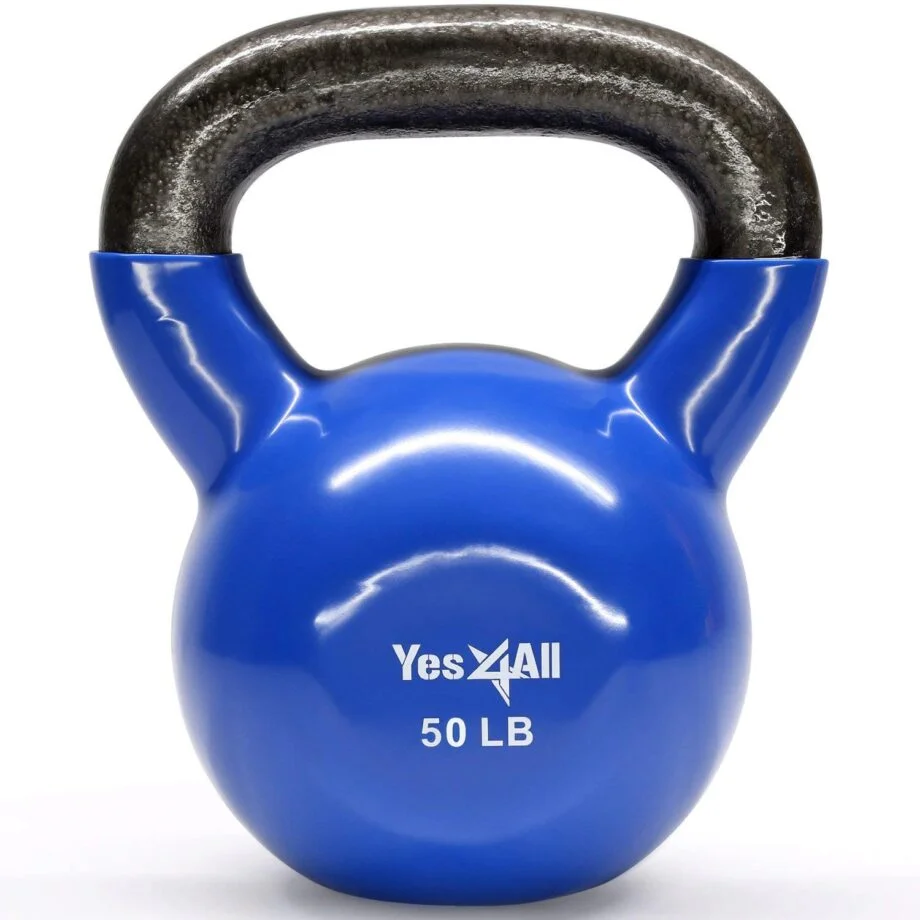
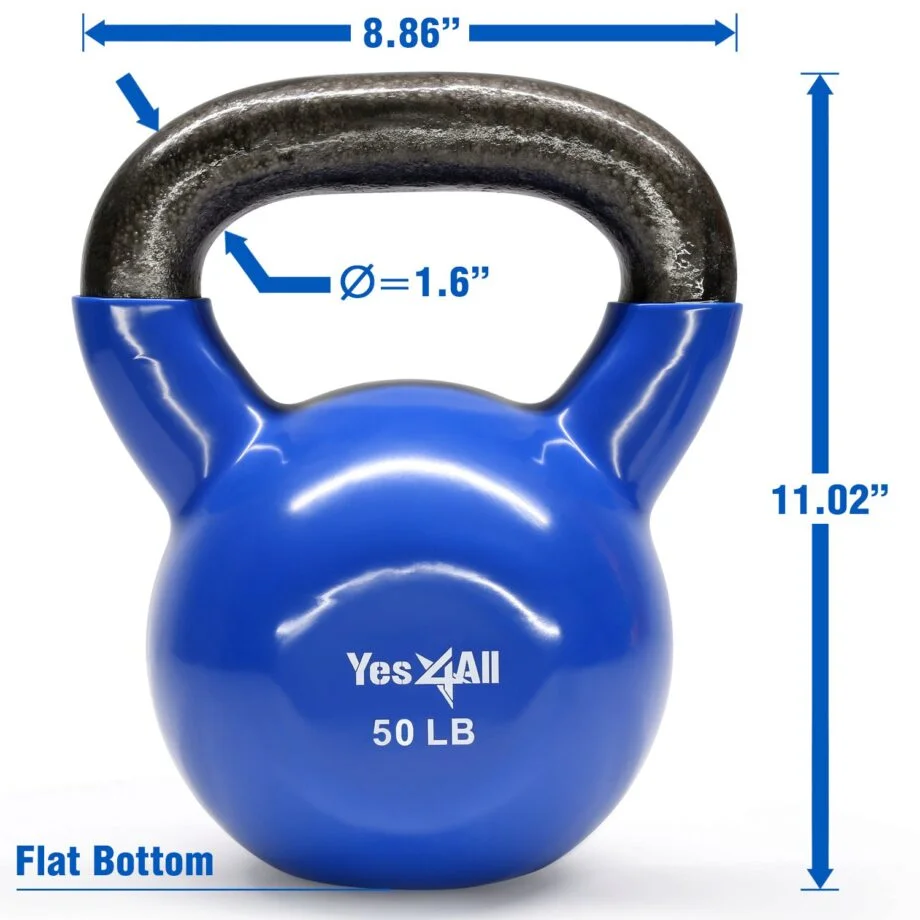
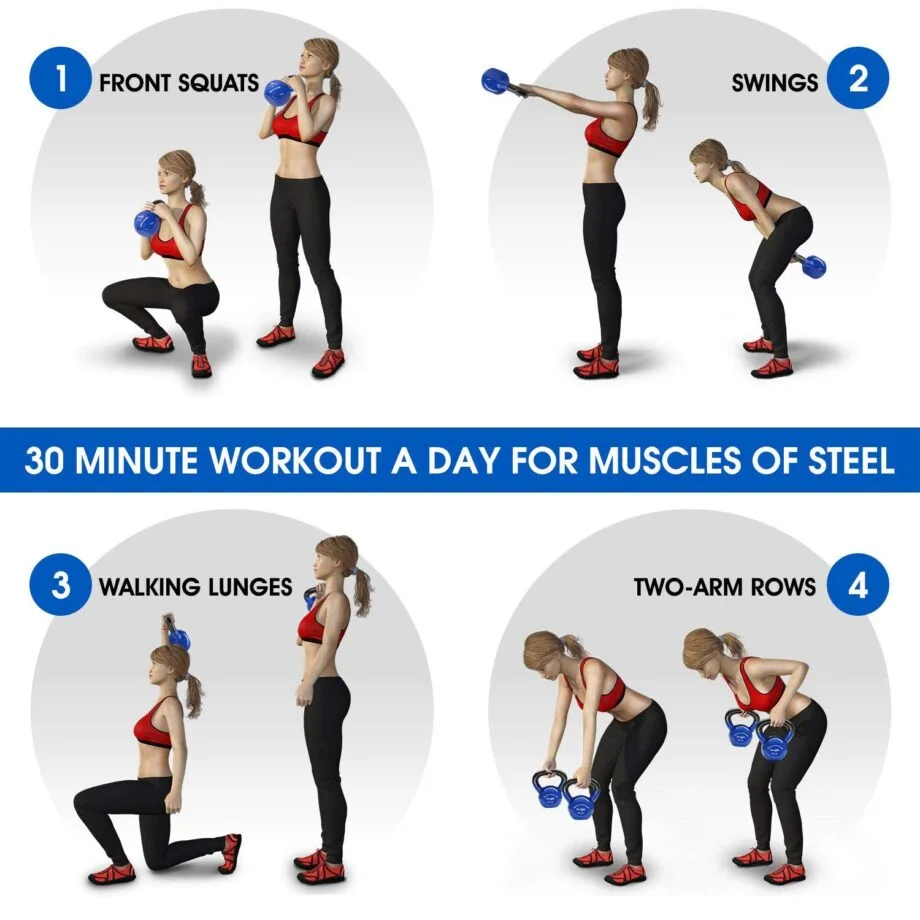
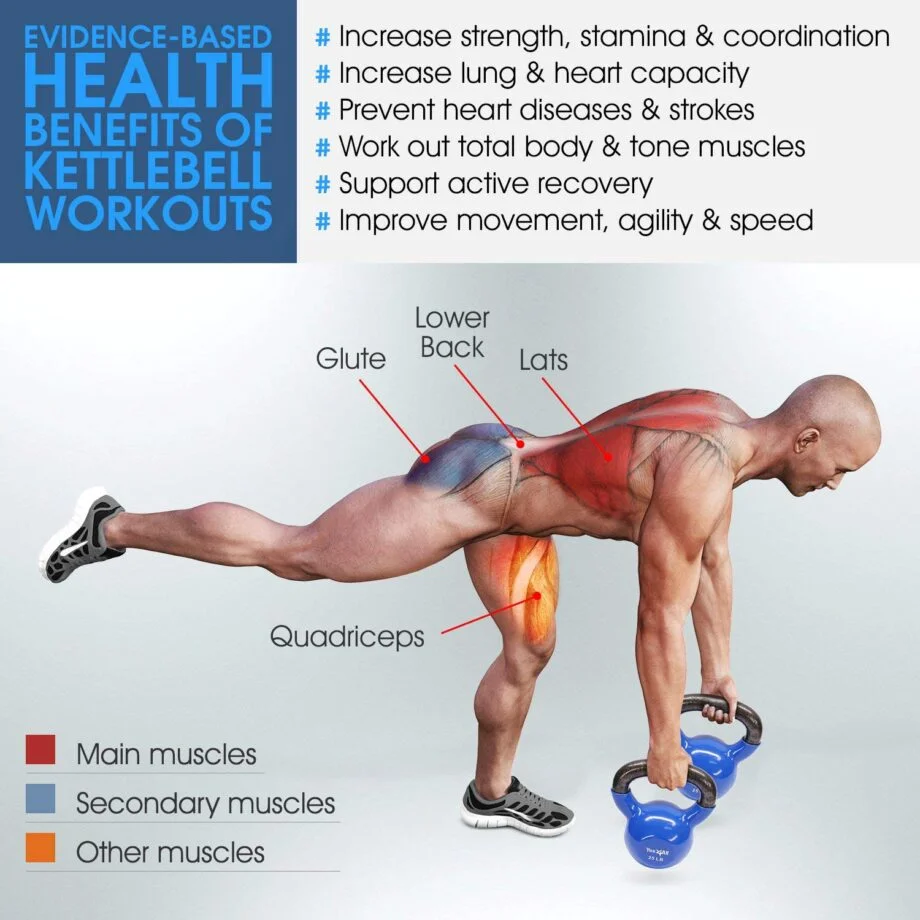
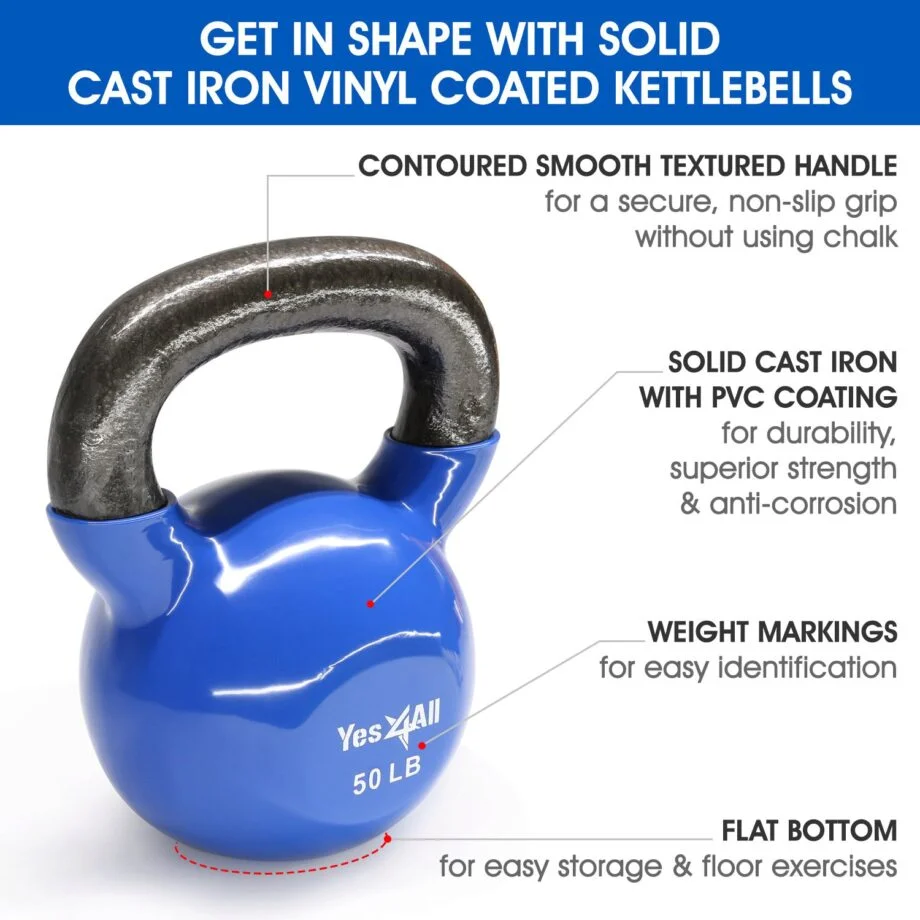
Yes4All kettlebells certainly aren’t on the same level as some of the other contenders in this lineup, but they’re affordable and a great option if you’re just starting your fitness journey. Most importantly, if you have small hands, you should have no trouble maintaining control during your exercise routine.
If you’re trying to minimize costs while maximizing gains, the Yes4All Vinyl Coated Kettlebells are your best bet. You can find these budget-friendly ‘bells on Amazon or even Walmart at affordable prices, making them a wise investment for beginners who want to get comfortable with kettlebell training. From a value perspective, these earn a strong 4-out-of-5 rating.
Value: 4/5
Weight Options: 5/5
Construction: 2.5/5
Why We Like Yes4All Vinyl Coated Kettlebells
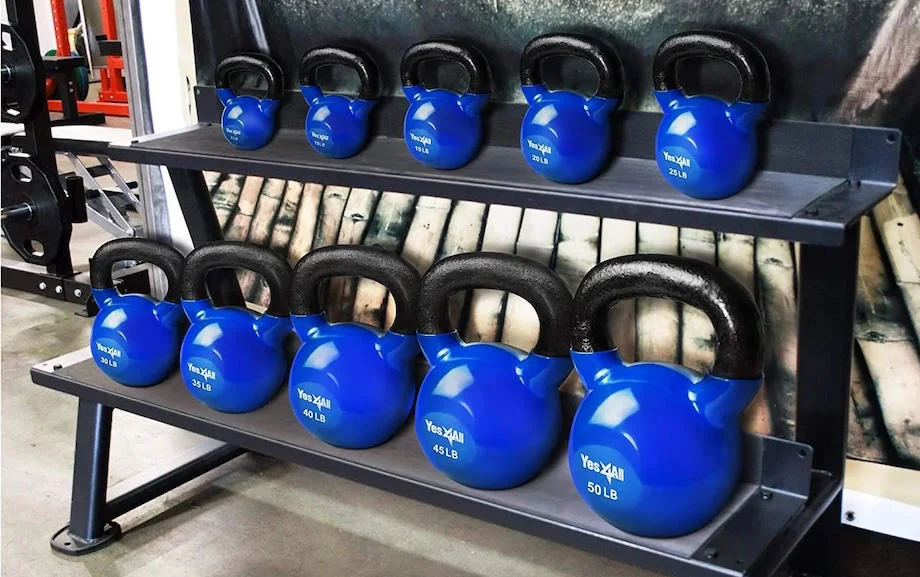
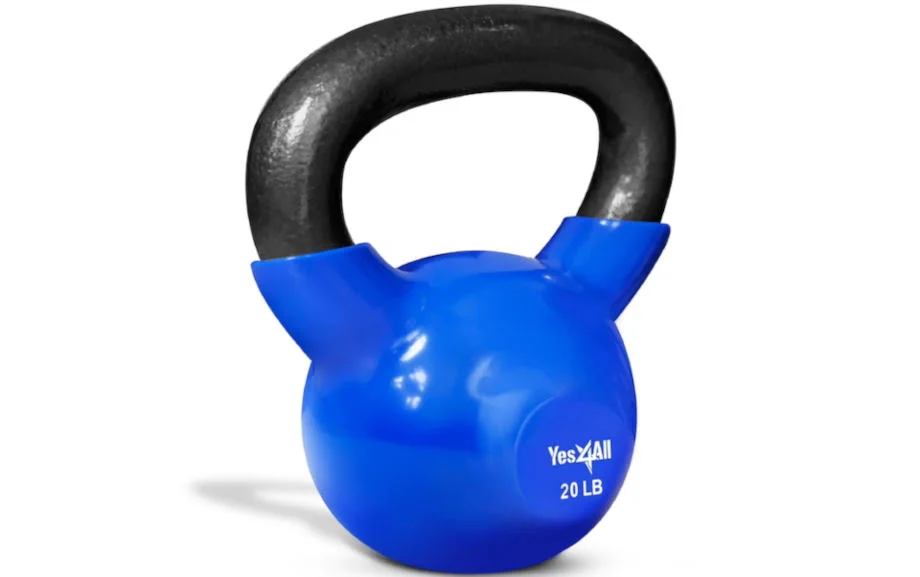
Although we haven’t tested this particular kettlebell profile yet, we have tried some of Yes4All’s other products. This is a kettlebell that, as we like to say, “Gets the job done.” The weight tolerance is pretty on point, there are good weight options, and it’s coated in plastic, which isn’t our favorite, but it does offer some protection for your home gym as well as rust resistance. We rate the weight options at a perfect 5 out of 5, too, as you can go as light as 5 pounds or as heavy as 90. This allows you to perform just about any exercise with a safe amount of weight while still giving you room to progress.
Although these are by no means the most high-quality ‘bells on the market, you get great value. In addition to their affordable price, you can score free shipping if you’re an Amazon Prime member—a nice bonus for anyone looking to build a collection of budget home gym equipment and one of the reasons we gave a 5-out-of-5 rating for purchasing and shipping. Based on my experience with similar Yes4All kettlebells, I’d be more than happy investing in a few different sizes and using these for strength training.
If you’re looking for just a simple free weight that can get the job done, these Yes4All kettlebells can suffice. Any higher expectations, though, and it may be wise to invest a little more in your home gym setup.
Ben Emminger, NASM-CNC, NASM-CSNC
What We Don’t Like About Yes4All Vinyl Coated Kettlebells
Budget-friendly can mean lower quality, and that’s admittedly the case here. Compared to higher-end options from well-recognized brands like Rogue and REP Fitness, the Yes4All kettlebells have a cheaper look and feel. For one, the handle is a bit smoother, leaving room for slippage that can’t be adjusted with added chalk. That’s not to say these are guaranteed to cause broken windows, but you should be a little more cognizant of your grip when swinging these. From a construction standpoint, these earn a 2.5 out of 5, as they’re nowhere near the top of the line in build quality.
That build quality can also rear its head when it comes to actual weight totals. According to some online customer reviews, there have been noted inaccuracies between listed and actual weights. Granted, you get what you pay for, and the inconsistencies aren’t astronomical, but if you value precision in your home gym equipment, it may be best to invest more in your gear.
If you’re willing to spend more on something far more durable, we recommend the Rogue E-Coat Kettlebells.
Testing Breakdown
The Yes4All Vinyl Coated Kettlebells didn’t score as well in terms of construction or durability compared to other models we tested. However, you get good bang for your buck and ample weight choices.
Vs. The Average
The Yes4All Vinyl Coated Kettlebells are substantially cheaper than the average kettlebell. You also can go heavier, as there are options available up to 90 pounds.
| Yes4All Vinyl Coated Kettlebells | Average Kettlebell | |
| Price Range | Cheapest: $19.52 Most Expensive: $149.38 | Cheapest: $44.50 Most Expensive: $209.15 |
| Weight Range | 5-90 lbs | 7-31.4 kg (15.6-69.3 lbs) |
| Handle Diameter | Not listed | 34.87 mm |
Best Powder-Coated Kettlebell: Iron Bull Kettlebell
Updated by: Stephen Sheehan, CPT, CNC
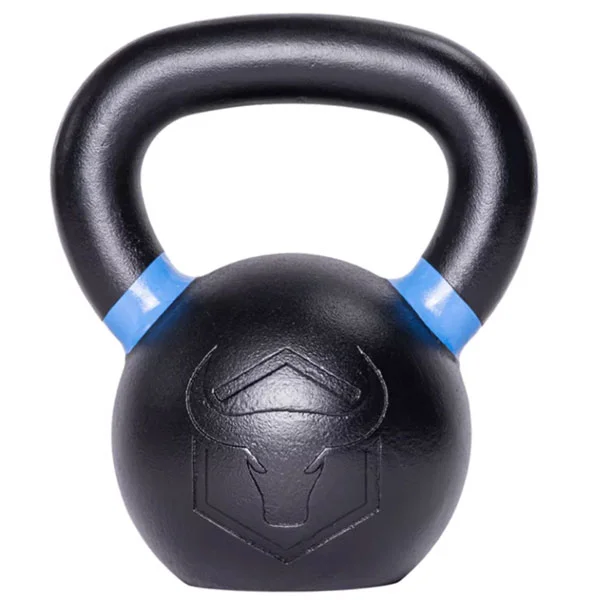
The Iron Bull Kettlebells are constructed with durable cast iron and finished with a powder coating for added durability and longevity. Available in weight options ranging from 4 to 88 pounds and color-coded for easy identification, these kettlebells are a solid choice for any home gym owner.
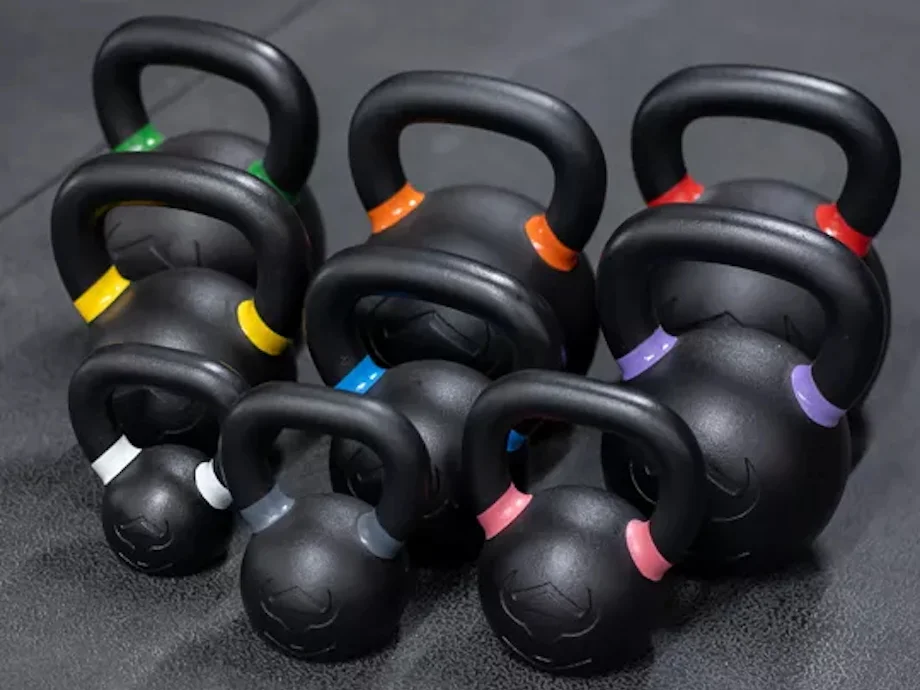
The Iron Bull Kettlebells have a smooth, even powder coating that can make them easier to grip and less likely to become a danger to you and your workout partners. The colored bands on the handle aren’t just for show—they let you know the weight of the kettlebell, which is also printed in kilograms and pounds on the face. And with a wide range that extends to 88 pounds, these earn a perfect 5 out of 5 for weight options.
Construction: 4.5/5
Handle: 4.5/5
Value: 4/5
Why We Like Iron Bull Kettlebells
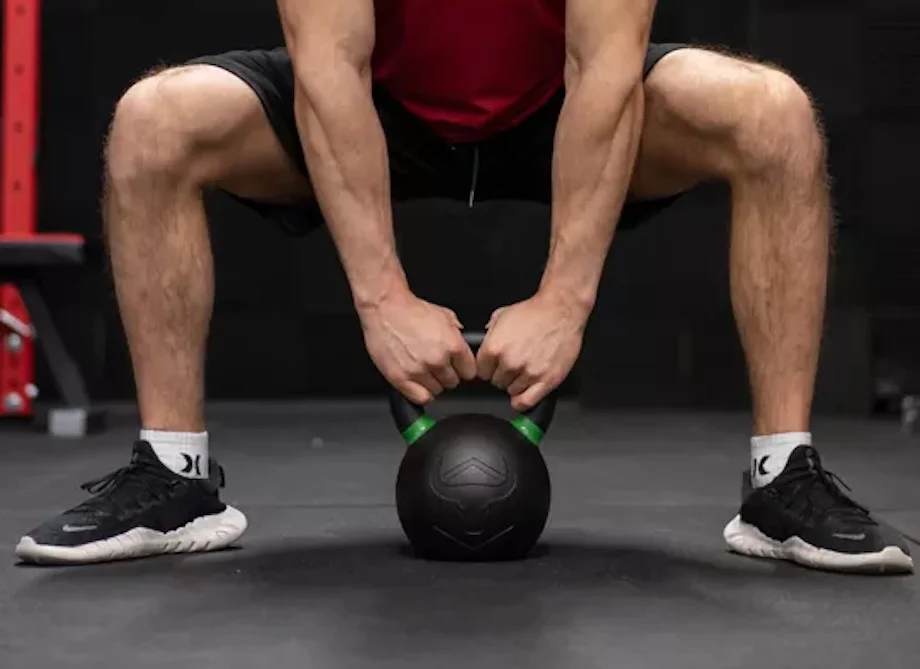
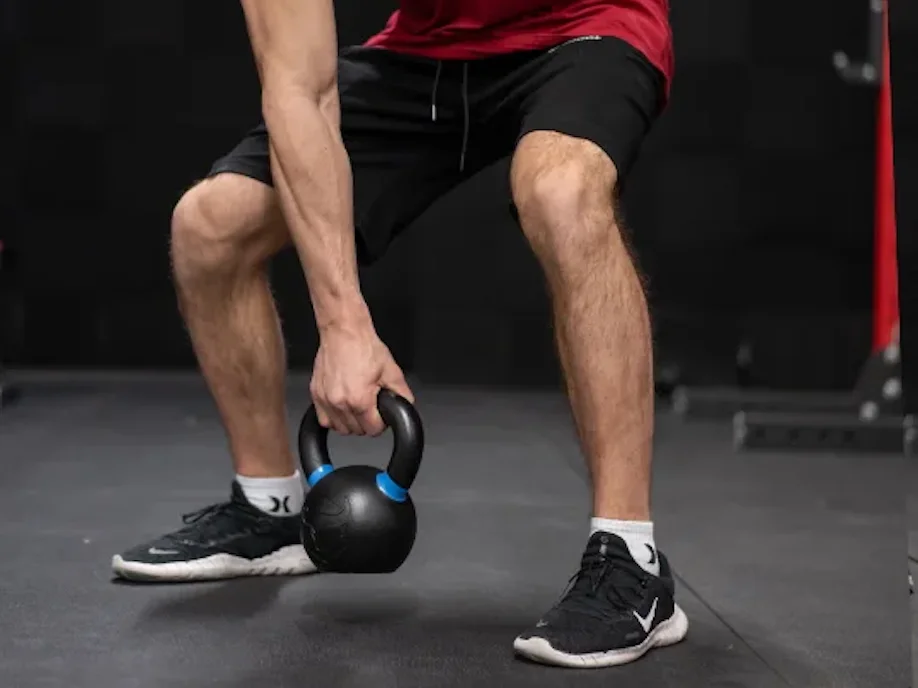
From a design standpoint, these kettlebells have a thick, ergonomic handle that’s easy and comfortable to grip and wide enough to allow you to perform two-handed exercises. We rate the handle at 4.5 out of 5, especially since the heavier ‘bells have a wider diameter for more control. “To me, the wider handle helps you focus on grip control,” states Ben Emminger, NASM-CNC, NASM-CSNC. “Plus, I’m really only using heavier totals for deadlifts and carries, so the extra challenge can be a nice supplemental perk.”
Furthermore, the powder coat finish adds to the aesthetic and performance of these kettlebells. Having used kettlebells with different coatings, I can attest that something like the Iron Bull will allow you to maintain superior control, even when your palms get sweaty. These also hold chalk well, according to Ben. “That’s a big plus if you’re looking to crush some kettlebell CrossFit exercises,” he states.
I do appreciate the handle design, not only for its impressive powdercoat but for the window between the bell and grip. You can comfortably manage two-handed movements with a variety of weight profiles.
Ben Emminger, NASM-CNC, NASM-CSNC
What We Don’t Like About Iron Bull Kettlebells
Unfortunately, Iron Bull only sells these kettlebells in singles, and most of the ‘bells cost anywhere between $2 and $3 per pound (some a little more than $3). On the bright side, you get a 30-day, money-back guarantee, and there are financing options available through Klarna. That’s enticing enough to earn a 4 out of 5 for value, especially given the build quality of the Iron Bulls.
We’ll also call attention to the handle diameter that ranges from 30 to 40 millimeters, depending on your chosen weight. The thicker handles, while a boost to your kettlebell control, may be difficult to grip for those with smaller digits. It’s something to keep in mind if you plan on ordering high-weight profiles right out of the gate.
These are a bit pricey, so if you want to save a little money, the Yes4All Vinyl Coated Kettlebells are a more affordable option that we still like and recommend.
Testing Breakdown
The Iron Bull Kettlebell received one of the highest overall scores of any kettlebell we’ve tested. Here’s a closer look by category:
Vs. The Average
The Iron Bull Kettlebell is available in heavier sizes than the average kettlebell. The cheapest option is right on par with the average cost, as well.
| Iron Bull Kettlebell | Average Kettlebell | |
| Price Range | Cheapest: $45 Most Expensive: $265 | Cheapest: $44.50 Most Expensive: $209.15 |
| Weight Range | 4-40 kg (9-88 lbs) | 7-31.4 kg (15.6-69.3 lbs) |
| Handle Diameter | 30-40 mm, depending on the weight | 34.87 mm |
Other Kettlebells We Researched and Tested
We have a fever, and the only prescription is more kettlebells. Luckily for us, the GGR team has tested dozens of kettlebells over the past few years. Here are a few we’ve had our hands on that you might want to consider:
- Rogue Rubber Coated Kettlebells: These are a great option if you want to protect your floors, especially if you drop your kettlebells fairly often. Unfortunately, they’re not offered in many sizes.
- Bells of Steel Adjustable Competition Style Kettlebell: Made from a steel, powder-coated outer shell with iron plates, this adjustable kettlebell goes from 26 pounds to 45 pounds. However, we only rated it a 2 out of 5 for adjustment speed. As a result, we went with the more time-efficient REP Fitness Adjustable Kettlebell for this roundup.
- Kettlebell Kings Powder Coat Kettlebells: Offering a wide range of weight options, these powder-coated kettlebells carry a premium price tag. While we appreciate the precise weight accuracy and overall build quality, the cost may be too steep for more budget-conscious buyers.
How We Picked and Tested The Best Kettlebells
To find the best kettlebells for your home gym, we looked at every option available on the market today and graded them based on the following criteria:
Construction and Durability
Kettlebells are expensive, so we want to make sure the ones you purchase will last a while. The coating should also not chip easily. The kettlebell should be made with high-quality materials that result in consistent durability and performance. To earn a 3 out of 5, the ‘bell should be made of solid metal but may have minor imperfections, such as a slightly uneven base.
Weight Options
What weight range do the kettlebells come in? Some users may need heavier options for advanced movements. Others may need lighter weights as they embark on their kettlebell training journey. We give at least a 3 out of 5 if there’s a broad range of options that can cater to users of different strength and experience levels.
Handle
It’s very easy to have an accident with a kettlebell, especially during swings—whether that means dropping it or having it slip out of your hands. So, we wanted to make sure the handles on these options allowed for a good grip.
We assess the diameter, finish, and how well you can maintain control during different movements. To earn at least a 3 out of 5, you should have no issues with slippage, and you should be able to grip the kettlebell comfortably.
Value
Is the kettlebell worth its price? Or, rather, can you get a better bang for your buck elsewhere? Some companies sell bundled kettlebell sets, which allow you to save money. In other cases, you may get better value by investing in a single adjustable kettlebell. A value score of 3 out of 5 means the kettlebells are priced fairly but not so much that you’re getting a tremendous bargain.
Warranty, Financing, Returns
As with any piece of home gym equipment, you should make sure the kettlebell has some type of warranty, any available financing options, and that you can return the product if you find you’re not a fan of it. A 3-out-of-5 rating represents a solid but limited warranty (typically around one year) with a standard return policy (typically around 30 days).
Benefits of Kettlebell Training
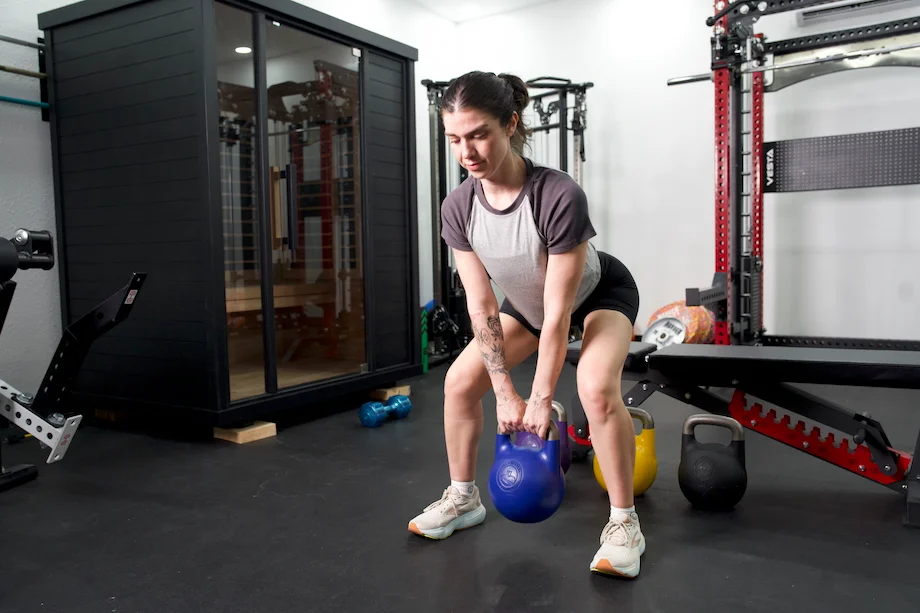
The kettlebell is the king of being an all-in-one tool for conditioning. With a flat bottom and curved bell, the uneven distribution of weight can create an incredibly effective platform for cardio and weight training exercises. Some of the many kettlebell benefits include the following:
Well-Rounded Fitness
You work on several different aspects of fitness when doing kettlebell exercises: endurance, strength, flexibility, and balance, among others. In other words, you get a lot of bang for your buck.
“For exercise to be considered strength or resistance training, it must challenge your muscles to the point where they adapt and become stronger,” says Dr. Christopher Mohr, PhD, RD.
When you invest in the best home gym equipment, it’s key to find a single piece that offers versatility. With a kettlebell, you can work on:
- Core strength
- Stability
- Coordination and body awareness
- Cardio
- Upper and lower body strength
- Glute strength
Clearly, a kettlebell can give you a chance to work on a multitude of modalities. But heed this piece of advice from Dr. Raj Dasgupta, MD, FACP, FCCP, FAASM:
“With whatever exercise you decide to indulge in, try to be consistent, as it can have positive effects on your mental health over time, too,” he explains.
RELATED: Upper Body Kettlebell Workout
Cardio Without Running
Going for a run is great, but I also love it when I can get my heart rate up while using some kind of weight. Kettlebells can be amazing for cardio workouts that include high-intensity intervals as well as low-weight, high-rep options. The Journal of Strength and Conditioning Research1 even found in a 2015 study that four weeks of high-intensity kettlebell snatch training helped increase aerobic capacity of collegiate soccer players.
Of course, there’s nothing wrong with using running workouts to improve your cardiovascular fitness. However, kettlebell training can offer an alternative way to improve your aerobic capacity.
“There’s no ‘best’ type of exercise,” says Dr. Mohr. “The best is the one you’ll enjoy and continue with.”
Helps Develop Explosive Strength
A 2024 comprehensive review2 speaks on the benefits of resistance training with kettlebells. Not only does it help produce and develop strength and endurance, but it also develops explosive strength, or power.
Weightlifters, runners, and other athletes look to the kettlebell to build explosive strength. Exercises like kettlebell swings engage the hips and posterior chain to create power. The kind of explosive energy the hips create is key to activities like sprinting, jumping, and weightlifting movements like the snatch.
Helps Strengthen Your Grip
You’ll be opening pickle jars in no time! Okay, I can’t make that promise, but I can tell you that kettlebells can be a great way to build grip strength.
Don’t believe me? A clinical trial in 20223 showed adults were able to improve grip strength in both hands over a three-month period by taking part in high-intensity hardstyle kettlebell training.

The kettlebell’s center of gravity is about 6 to 8 inches away from your palm, which means that the weight itself is unbalanced in your hands. This makes your gripping muscles (like the forearms and wrists) work harder while you perform just about any exercise with the ‘bell. Kettlebells are also great for actual grip-strengthening exercises like farmer’s carries.
Safe Exercise
I don’t like to say that certain strength training exercises are dangerous or risky. After all, anything you do carries a risk with it. But, when compared to, say, putting a 300-pound barbell on your back and squatting it, the kettlebell exercise appears to carry a little less risk.
Lifting heavy weights has its place, and I’m here for it, but if that’s something that scares you, kettlebell workouts can be a safe alternative. You can still build muscle and power without doing something that may cause you some anxiety. To minimize your risk of injury, you want to keep a strong, controlled grip across the weight. You should also choose a weight total that provides a bit of a challenge but can be moved without compromising your form.
“For beginners, it’s smart to start with lighter weights and focus on mastering the correct form,” says Dr. Mohr. “As your strength improves, you can gradually increase the weight and it’s important to push and challenge yourself.”
Buying Guide: What to Look For In the Best Kettlebells
The best kettlebell for you will depend on multiple factors, including what type of kettlebell you want, what type of exercise you plan on doing, and your fitness levels. To start, let’s get familiar with the two main types of standard kettlebells:
Cast Iron Kettlebells
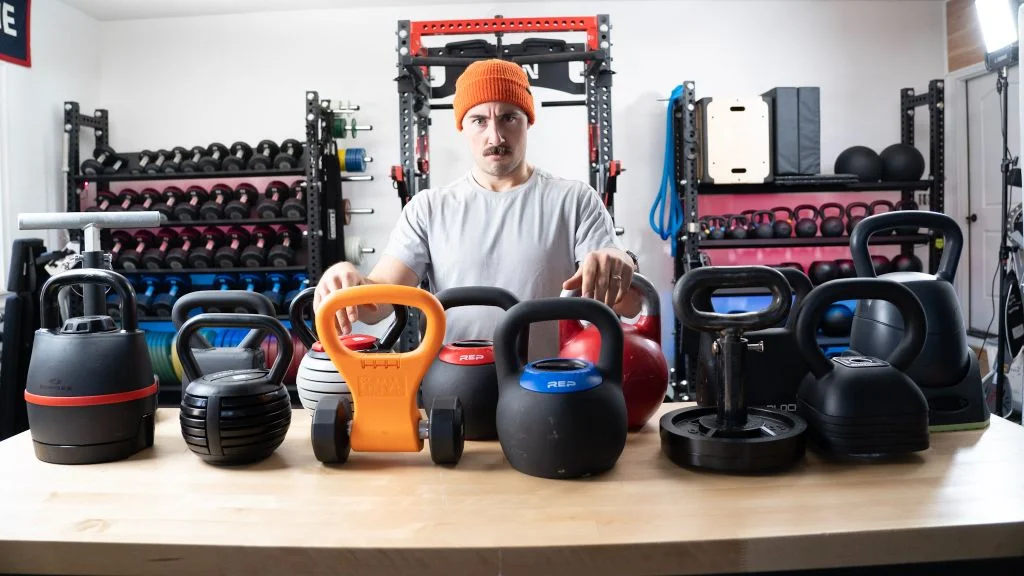
When most people picture a kettlebell, this is what they see. The handle on solid cast iron kettlebells is flared out. The coating on these varies, as well. Most commercial gyms carry this kind of ‘bell, which is great for recreational lifting, two-handed movements, and beginners. The diameter of the ‘bell and its handle usually increases as the weight goes up, so people with larger hands will want to go heavier than someone with smaller hands.
Competition Kettlebells
These ‘bells are made to competition standards with a 35-millimeter handle that does not exceed the width of the bell itself. This narrow grip is useful for the one-handed movements you might see in a competition. Mostly, the people who use a competition kettlebell will be people who are competing (as the name suggests) but they could still work for the everyday athlete.
Once you have an idea of the type of bell you want, you may also want to consider:
Type of Exercise
Kettlebell training is so incredibly versatile. You have endless options for kettlebell movements, most of which will fall into one of two categories:
- Ballistic lifts: These are explosive movements like kettlebell swings, snatches and cleans.
- Grind lifts: These are either more skill- or strength-based movements, like overhead presses, deadlifts, and Turkish get-ups.
Once you ascertain how you will use the workout equipment, you can make other key decisions about factors like the weight you will need, the material you want, and the ergonomics of the ‘bell.
Weight
Kettlebells come in a large variety of weight options, ranging from just a few pounds to literally hundreds of pounds. The lighter weights can be great for certain grind movements like Turkish get-ups and overhead pressing. Moderate to heavier weights are useful in building explosive strength through full-body movements like swings and snatches.
Another consideration: Kettlebell weights are often listed in kilograms. You’ll find kilos used on competition ‘bells because kilos are the universal weight measurement. Ultimately, it doesn’t really matter if you pick a ‘bell in pounds or in kilos unless you need a very specific weight range for your training purposes.
Grip
Kettlebells are literally bell-shaped weights with a wide handle across the top. Competition kettlebells all have a uniform handle size because they have to match the competition standard of 35 millimeters This will typically fit most adult hands just fine, but for people with smaller hands or youth athletes, 35 millimeters may not be a comfortable grip.
Cast iron kettlebells tend to have different grip sizes that vary with the weight of the bell. Therefore, a 12-kilogram kettlebell may have a smaller grip and be better suited for smaller athletes. Having a secure grip is vital for safety while exercising.
Handle
Aside from how thin or thick the grip is, the kettlebell handle itself should be relatively smooth. Sometimes, the casting process leaves behind remnants. This can quickly destroy your hands and ruin your workout. Look for a ‘bell that has a relatively smooth handle that still offers sufficient grip and friction from the powdercoat.
Coating
Kettlebells that are cast iron typically have some kind of coating. This can help increase the durability of the equipment by preventing rust, corrosion, and scratches. Options include:
- Powder Coating: This is a hard coating that is more protective than a simple coat of paint. Many powder-coated kettlebells have a matte finish because it gives you a better grip on the ‘bell. Athletes also find that matte finishes help hold chalk, which can aid in grip.
- Rubber or Vinyl Coating: Some people are attracted to rubber and vinyl-coated kettlebells because they are a little more aesthetically pleasing due to their smooth appearance. A coating like this may be gentler on your flooring and less noisy, too. However, rubber and vinyl can be worn down, chip, and crack over extended use.
- E-Coating: Arguably, an “e-coat” is the best type of high-quality coating you could want on a kettlebell. Essentially, an electrical current coats the ‘bell with paint to a certain desired thickness. E-coats last longer than powder coats, but they’re often more expensive. Also, there are different degrees of e-coating, so look for “military-grade” e-coating if you’re going with this option.
Durability
Kettlebells are a fairly durable piece of equipment, but some can stand up to abuse better than others. If you’re someone who plans on using kettlebells often, make sure it’ll last and not break on you within a couple of months. Look for features that signal durability, such as a single-piece cast iron or steel construction (rather than kettlebells with welded handles) and a tough powder-coated or e-coated finish that resists chips, rust, and corrosion.
Adjustable Kettlebells Vs Standard
For home gym owners, we often recommend adjustable kettlebells over standard ones for two main reasons: They’re generally more affordable and they take up less space. That doesn’t mean they’re perfect for everyone, though.
RELATED: Adjustable Kettlebell Vs Standard
Some adjustable kettlebells have a plastic or rubber handle, which can be much harder to grip than the textured handles often found on standard ‘bells. We don’t have to tell you why this can be an issue, but it can also create problems if your adjustable kettlebell’s shell is made of plastic (which many are). Plastic is much easier to break than steel or iron.
Kettlebells Vs Dumbbells
In a perfect world, your home gym would contain the best kettlebells and dumbbells, but we don’t live in a perfect world. If you’re stuck on which one to choose for your home workouts, here are a few things to keep in mind:
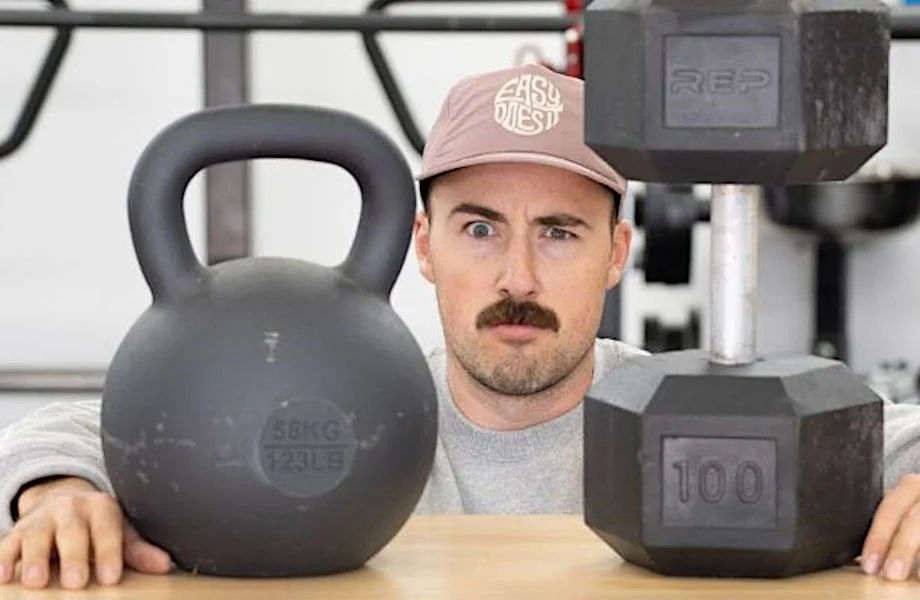
- Kettlebells have much different weight increments than dumbbells, often listed in kilograms over pounds
- Kettlebells will work more of your stabilizer muscles due to their center of gravity being further away from your hand
- Kettlebells can be better for full-body exercises and combining strength and cardio training
- Kettlebells can be great for grip strength
- Dumbbells are easier for beginners because they require less technique than kettlebells
Get the full details in our dumbbells vs kettlebells guide.
How to Hold a Kettlebell
According to certified personal trainer and USA Weightlifting Level-1 Coach Kate Meier, the best kettlebell hand placement depends on what type of movement you’re doing, though there are some universal truths.
“First, always wrap your thumb around the handle (don’t just use your four fingers as your grip),” says Kate. “Secondly, don’t death-grip the kettlebell. You should have a firm grip so it doesn’t fly out of your hands, but you don’t need to squeeze it so hard that your forearms burn (you’ll get a good enough pump with a just-firm-enough grip).”
For Double-Handed Movements
Holding a kettlebell for a double-handed movement like a kettlebell swing will depend on your hand size, Kate says.
“Your hands should be placed just slightly apart, biasing each hand toward the corners of the handle in an overhand grip,” she says. “Depending on how big your hands are and your comfort, you may find your pinkies gripping down the side of the handle, and that’s OK.”
For Single-Handed Movements
When it comes to teaching her clients kettlebell hand placement for single-handed movements, Kate takes it on a case-by-case basis since there are two general categories of single-handed moves—simple and complex.
A simple move would be a row or deadlift, in which she recommends a centered, overhand grip.
The same rule, however, wouldn’t apply to a snatch. Here’s her guidance for that:
“You may find more control and smoother movement by gripping the handle more toward the corner instead of dead center (though this usually comes down to preference),” she says. The reason for the switch is that kettlebell snatches are notorious for bruising wrists and forearms.
For a Turkish get-up, you’ll want to return to a more centered grip while switching up how you grab the handle. “Put your hand up through the underside of the handle instead of an overhand grip,” Kate explains. “Front rack, overhead holds, and carries would also use this through-the-handle grip.”
Best Kettlebells at a Glance
To break this guide down to the short and sweet details, we’ve compiled a table featuring all the most important information you need when deciding between the best kettlebells on the market.
| Model | Best For | Weight Range | Price Range | Notable Features |
| REP Fitness Kettlebell Set | Those looking for a kettlebell set that sports a textured black powdercoat for enhanced grip | 8-24 kg (17.6-52.9 lbs) | Single Set: $360.99 Double Set: $704.99 | Sets can be bought in pairs to accommodate dual-weight movements |
| Rogue E-Coat Kettlebells | Anyone who wants an extra-durable kettlebell set with a wide weight range | 9-88 lbs | $44 to $163 | Cast-iron core and e-coat finish result in impressive durability |
| Titan Competition Style Kettlebells | Seasoned kettlebell users who don’t need a high weight ceiling | 8-32 kg (17.6-70.6 lbs) | $84.99 to $184.99 | Each weight features a 35-millimeter handle for consistency |
| REP Fitness Adjustable Kettlebells | Kettlebell beginners who want to save space | 8-16 kg; 16-24 kg; 20-40 lbs | $149.99 to $219.99 | The push-and-twist dial helps users with quick weight changes |
| GIANT Lifting V3 Kettlebells | Heavy lifters who need a kettlebell over 100 pounds | 4-48 kg (9-106 lbs) | $35 to $277.78 | Powder-coated finish on handles provides a comfortable grip |
| Yes4All Vinyl Coated Kettlebells | Anyone who wants a solid kettlebell at a reasonable price | 5-90 lbs | $19.52 to $149.38 | There are 18 weight options available |
| Iron Bull Kettlebell | Lifters looking for a kettlebell with superior grip | 4-40 kg (9-88 lbs) | $35 to $278 | Heavier models have wider handles for better grip |
FAQs About the Best Kettlebells
What is the best kettlebell workout?
The ‘best kettlebell workout’ can be subjective from one athlete to the next. In our experience, the best kettlebell exercises include kettlebell swings, Turkish get-ups, kettlebell snatches, kettlebell clean and jerks, goblet squats, presses and thrusters, farmers’ carries, and waiters’ carries.
Which is better: an adjustable kettlebell or traditional kettlebell?
While both types of kettlebells can help you achieve your fitness goals, an adjustable kettlebell may be better for saving space and money, while traditional kettlebells are better for durability and consistent performance.
How quickly do you see results from kettlebells?
Kettlebells can help you achieve your desired results, whatever that may be, pretty quickly because they combine elements of strength and cardio training to give you a more efficient workout. The exact timeline will depend on how committed you are to your training, along with other factors like your nutrition and recovery.
References
- Falatic JA, Plato PA, Holder C, Finch D, Han K, Cisar CJ. Effects of Kettlebell Training on Aerobic Capacity. J Strength Cond Res. 2015 Jul;29(7):1943-7. doi: 10.1519/JSC.0000000000000845. PMID: 26102260.
- Jaiswal PR, Ramteke SU, Shedge S. Enhancing Athletic Performance: A Comprehensive Review on Kettlebell Training. Cureus. 2024 Feb 3;16(2):e53497. doi: 10.7759/cureus.53497. PMID: 38440022; PMCID: PMC10910645.
- Meigh, N. J., Keogh, J. W. L., Schram, B., Hing, W., & Rathbone, E. N. (2022). Effects of supervised high-intensity hardstyle kettlebell training on grip strength and health-related physical fitness in insufficiently active older adults: the BELL pragmatic controlled trial. BMC geriatrics, 22(1), 354. https://doi.org/10.1186/s12877-022-02958-z .