


Choosing the right flooring for your home gym is an underrated, but very important part of setting up your space. As GGR founder Coop Mitchell says, “Flooring is the base of your gym,” because it plays a vital—but often overlooked—role in your workout experience. Flooring helps protect your home and home gym essentials, assist with sound absorption, provide a comfortable workout surface, and more.
The GGR team installed, tested, and researched more than a dozen flooring options to bring you the best home gym flooring options below.
GGR Gold Pick — Best Home Gym Flooring
With an overall score of 4.7, the Living.Fit Rubber Flooring Rolls earns our top pick and the best overall moniker on our list. This flooring impressed us with its durability and versatility, but it’s also easy to install, easy to clean, and backed by a 5-year warranty.
The 7 Best Home Gym Flooring Options
- Best Home Gym Flooring Overall – Living.Fit Rubber Flooring Rolls
- Best Home Gym Flooring Rolls – Flooring Inc 8MM Strong Rubber Rolls
- Best Soundproofing Home Gym Flooring – Second Skin Stomp Mat
- Best Home Gym Flooring Mats – Living.Fit Interlocking Rubber Tiles
- Best Budget Stall Mats – Tractor Supply 3/4″ Rubber Stall Mats
- Best Cheap Home Gym Flooring – ProsourceFit Puzzle Exercise Mats
- Best Carpet Tile for Home Gyms – Eclipse Peel and Stick Carpet Tiles
Current Top Deals
- Living.Fit – Save 49% on rubber flooring rolls and 31% on rubber tiles!
How We Selected the Best Home Gym Flooring
Home gym flooring can be heavy and bulky, so our setup score reflects how easy it is to transport and install. To get a 3 out of 5, the flooring may take some trial and error to set up, but you’re able to install it with minimal tools.
We award additional points for lighter materials and simpler setup designs.
This category rates the flooring’s strength and what activities it can withstand. To earn 3 out of 5 stars, the flooring works for low-impact activities, but doesn’t seem durable enough for high-impact activities with repeated dropping, like CrossFit or Olympic lifting.
Products can earn additional points in this category for more durable materials, and demonstrating the ability to take a beating.
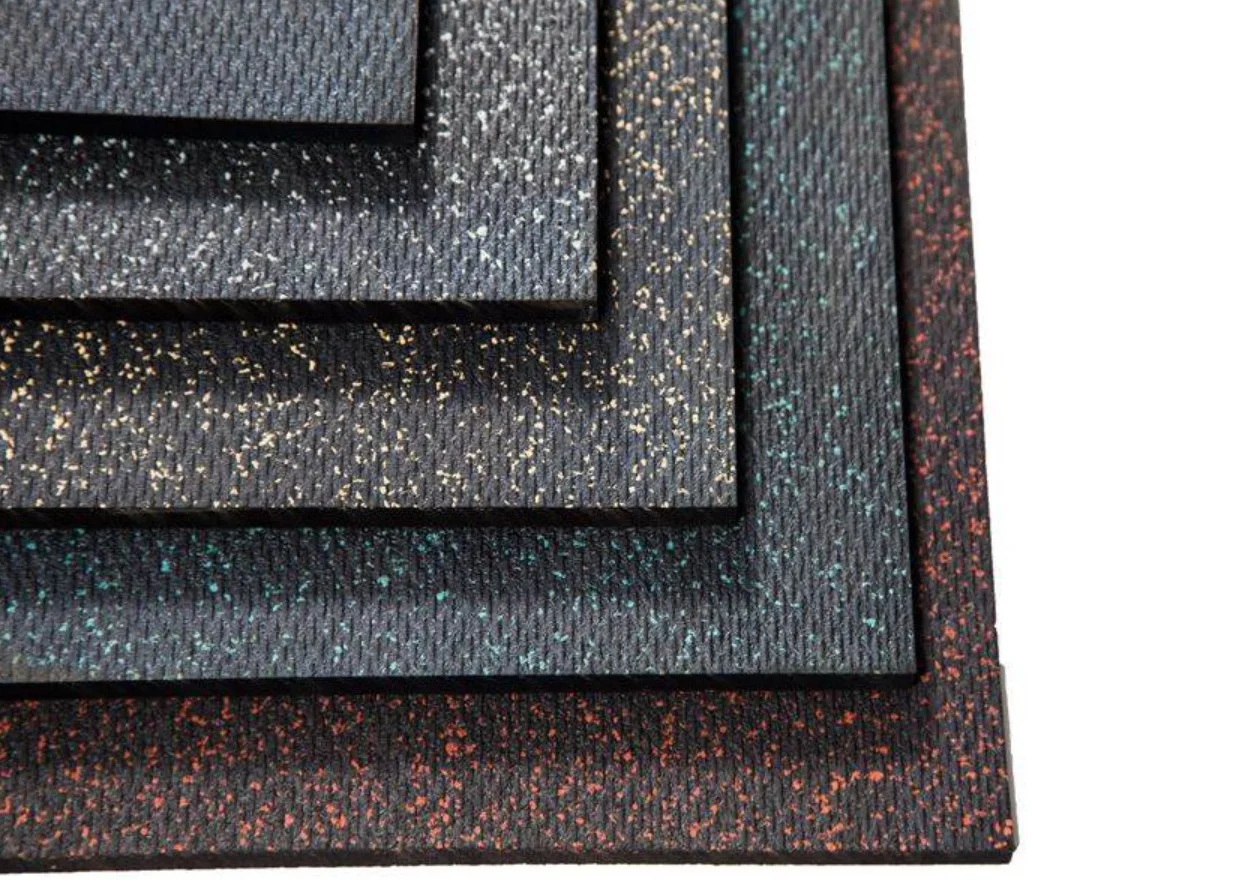
Noise reduction is another key category we consider with home gym flooring. We don’t expect complete silence from most flooring, and we give 3-out-of-5-star ratings to flooring options that help a bit compared to a bare floor (but may still result in a noisy workout).
Products that demonstrate better noise reduction through thicker or softer material earn higher scores.
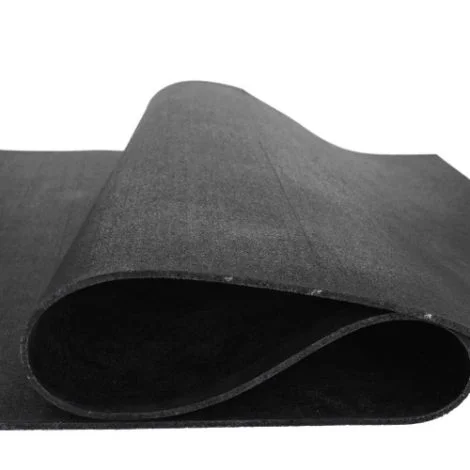
After researching, installing, and testing various flooring types across our gym space, we rate each option according to our equipment testing methodology. This helps us calculate a final review score by rating the most important categories on a scale of 1 to 5 (with 1 being the lowest score and 5 being the highest). We evaluate key categories such as setup, durability, smell, noise dampening, and more.
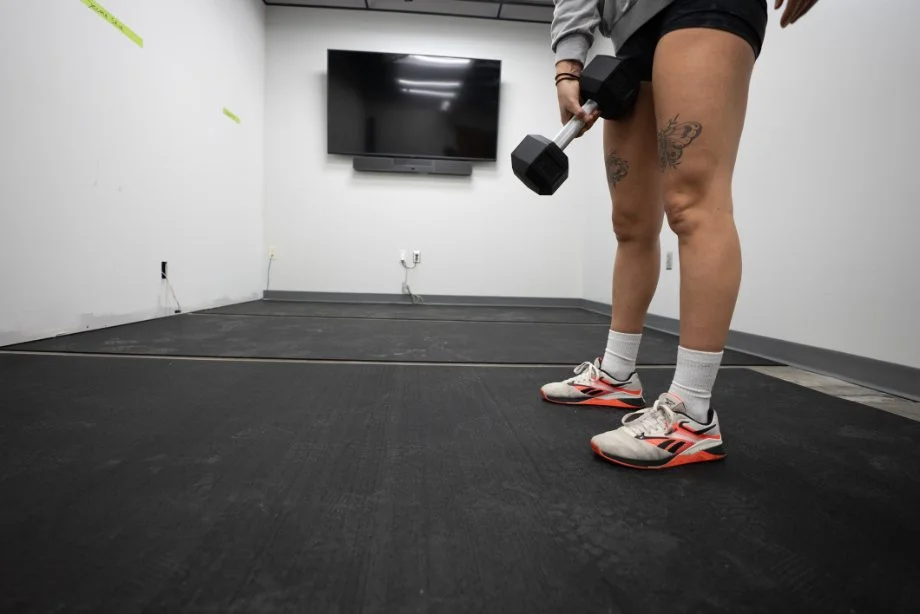
The GGR team includes competitive weightlifters, CrossFitters, certified personal trainers, and many home gym owners. We’ve tested over a dozen types of gym flooring and understand how to help our readers get the best home gym setup for their needs.
In 2025, we helped 1,420 people find the best flooring for their home (or commercial) gyms, and we’re here to help you, too.
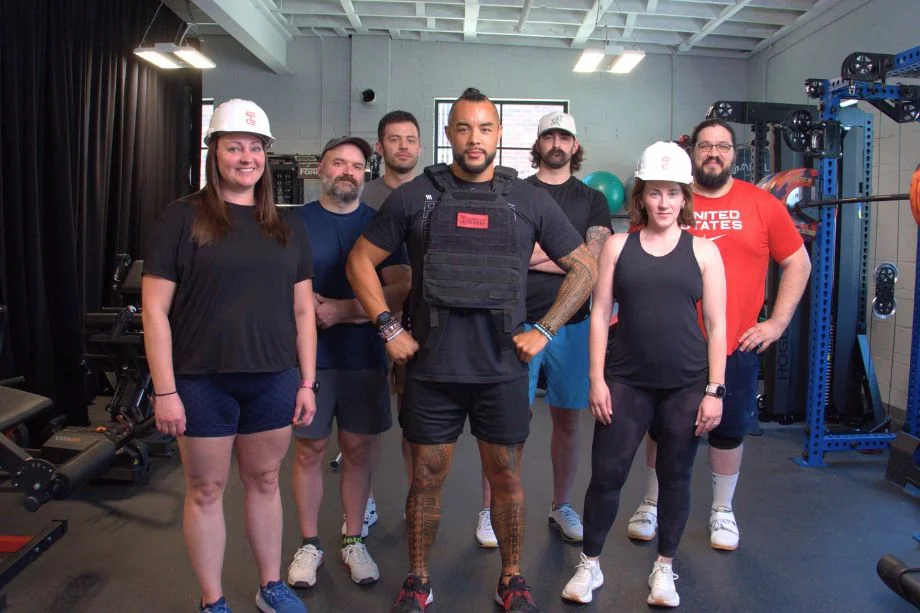
Best Home Gym Flooring Overall: Living.Fit Rubber Flooring Rolls
Updated by: Matt Dustin, CSCS, PN1-NC
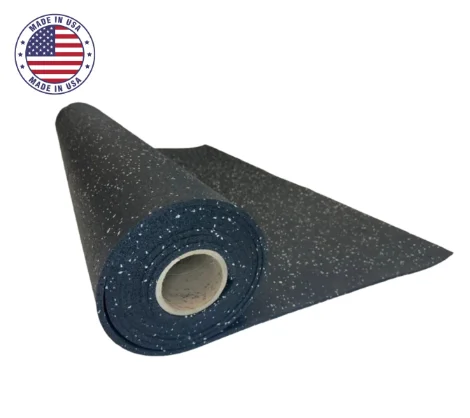






Made of certified clean rubber, Living.Fit Rubber Flooring Rolls are an excellent choice for gym flooring. They can be cut to your desired dimensions, are designed for easy cleaning, and don’t have a strong rubber smell.
If you’re looking for the best overall flooring for your home gym, we think Living.Fit Rubber Flooring Rolls are the right choice for most home gym owners. They’re available in a variety of colors and thicknesses, which allows you to customize your flooring however you see fit, and unlike other types of flooring, they don’t include an overpowering rubber smell.
Living.Fit rubber flooring rolls are made in the USA, and are specifically designed to cover large spaces. They’re sold in 4-foot-by-24-foot rolls, which can be cut to fit your space as needed. These rolls earn 4 out of 5 stars for versatility.
RELATED: Living.Fit Barbell Review
Construction & Durability: 4/5
Versatility: 4/5
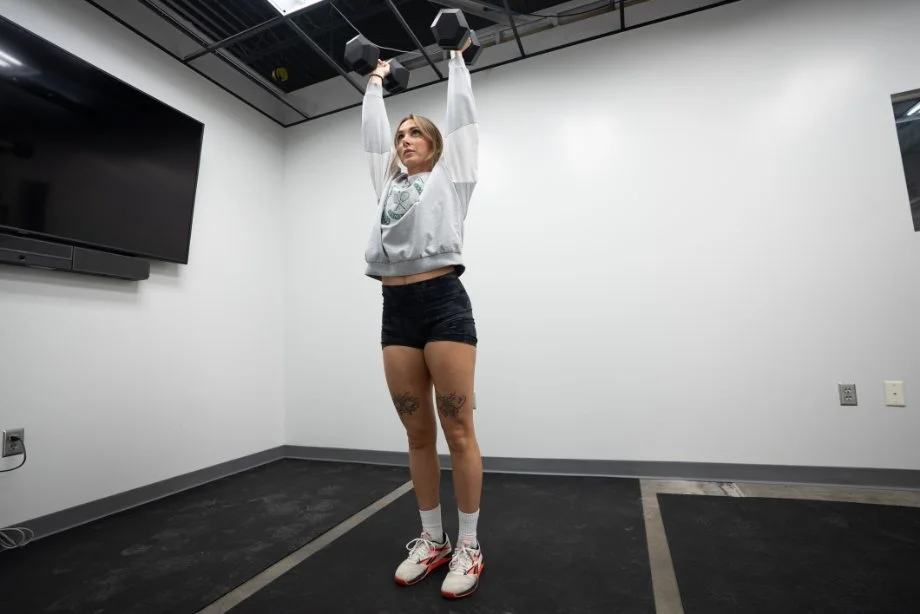
Noise Dampening: 3/5
Why We Like Living.Fit Rubber Flooring Rolls
Made from certified clean rubber, Living.Fit claims that these rolls don’t have any weird rubber smells. Our expert product tester, Paige Barrett, admitted that there is a present odor, but told me that the flooring doesn’t have an overly aggressive smell.
We tested the 8-millimeter thick rolls, which are easy to install and designed for easy cleaning, making them a great choice for both home gyms and commercial training centers alike. It’s not the thickest flooring, but we still give it 4 out of 5 stars for durability, especially since thicker options are available if you don’t mind paying a little more.
“The material is a type of rubber that is very easy to clean,” adds Paige. “I had no issues mopping or wiping it down, unlike other turf or carpeted materials.”
In addition to being easy to clean, the flooring is protected by a five-year warranty, so you can rest assured that even if something happens to these rolls, Living.Fit has you covered. As such, we give the company a 5 out of 5 for the customer experience.
If you’ve got a large space you’re working with, like a basement, garage, or commercial gym, rubber flooring rolls are often much easier to use than interlocking pieces. You may need to cut them, and installation can be difficult, but rolls can make covering large spaces much easier.
This flooring would be useful for a variety of workouts. It can withstand dropping heavy weights without taking any damage, and it’s comfortable enough to run on, if needed.
Our expert product tester
What We Don’t Like About the Living.Fit Rubber Flooring Rolls
The main callout we have with this flooring is the thickness. We tested the 8-millimeter flooring, and while it’s not the most durable flooring we’ve tested, our experience leads us to believe it should be worthwhile for certain setups. You can also order thicker flooring if you don’t mind spending a little more and want better protection.
“This material is shock absorbent and durable,” Paige told me. “However, it’s on the thinner side, so I’m not sure how well it’ll hold up over time, even though our drop tests didn’t cause any damage.”
If your training involves a lot of heavy impact and drops, you might want something a bit thicker, though you can order thicker rolls from Living.Fit for an extra cost.
We’ll also point out the more involved setup process. If you order the rolls, you’ll likely have to trim them to size and use carpet tape for adhesion, which can make installation a little tricky. That said, we rate the process at 5 out of 5 as it’s fairly straightforward, even if you’re only moderately handy.
If you want something a little thicker, we recommend trying Tractor Supply ¾” Rubber Stall Mats; one of the most durable options we’ve ever tested.
Testing Breakdown
These Living.Fit Rubber Flooring Rolls scored highly in nearly every category, which is why we named them the best home gym flooring option overall.
Vs. The Average
Compared to the average home gym flooring option, the Living.Fit rolls are a little thinner, but we still think they’ll hold up for most home gym owners.
| Living.Fit Rubber Flooring Rolls | Average Gym Flooring | |
| Price Per Square Foot | $2.24 | $2.93 |
| Thickness | 6, mm, 8 mm, 9 mm, 12 mm, or 18 mm | 11 mm |
| Available Colors | 8 | 6 |
| Warranty | 5 years | 5 years |
Best Home Gym Flooring Rolls: Flooring Inc 8 mm Rubber Rolls
Updated by: Matt Dustin, CSCS, PN1-NC
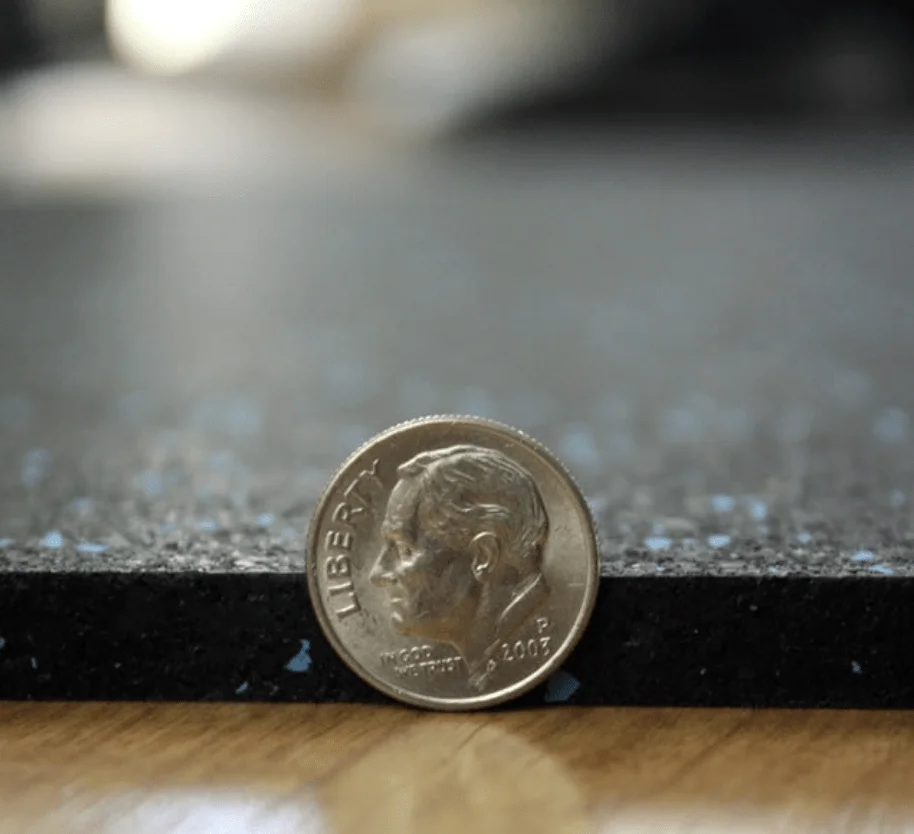
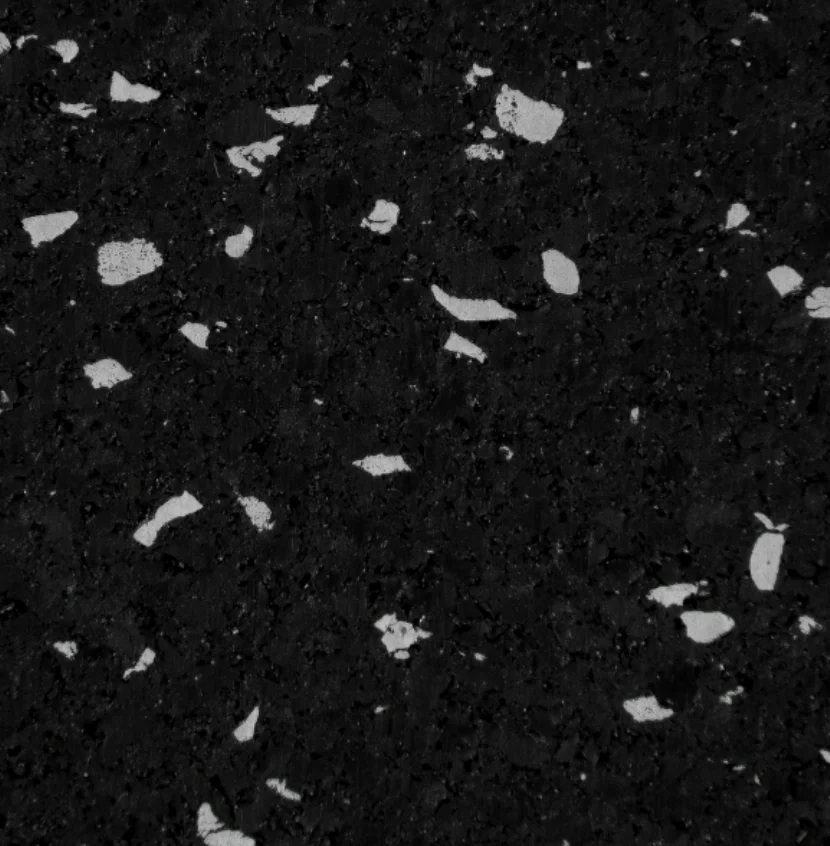
If you want flooring that is consistent, comes with more options, and often less smell than stall mats for your home gym, then Flooring Inc Rubber Rolls around 8mm or thicker is a great choice.
What our tester says:
“After using them for almost a year in my personal garage gym, I’ve become a fan. They hold up against all my gym and cardio equipment and have enough cushioning to protect my floor.”
If you want flooring that is consistent, comes with more options, and often less smell than stall mats for your home gym, then Flooring Inc Rubber Rolls around 8 millimeters or thicker can be a great choice. This is actually the flooring that I have in my latest garage gym build. Although it’s not going to provide any further shock protection over stall mats, it does move less, has less off-gassing, and overall has a more premium look and feel.
In addition to offering 28 colors to choose from, these rolls are affordably priced, and while you need to cut them to size, it’s worth it. The setup process earns 4 out of 5 stars, and they’re easy to clean once installed, too.
We also found the rubber smell to be pleasant, reminding us of a new gym, and gave it 4 out of 5 stars. It’s not completely odor-free, but it smells significantly better than many other options, which is why we think these are some of the best flooring rolls on the market for home gym owners.
Construction & Durability: 5/5
Setup: 4/5
Smell: 4/5
Why We Like Flooring Inc 8 mm Rubber Rolls
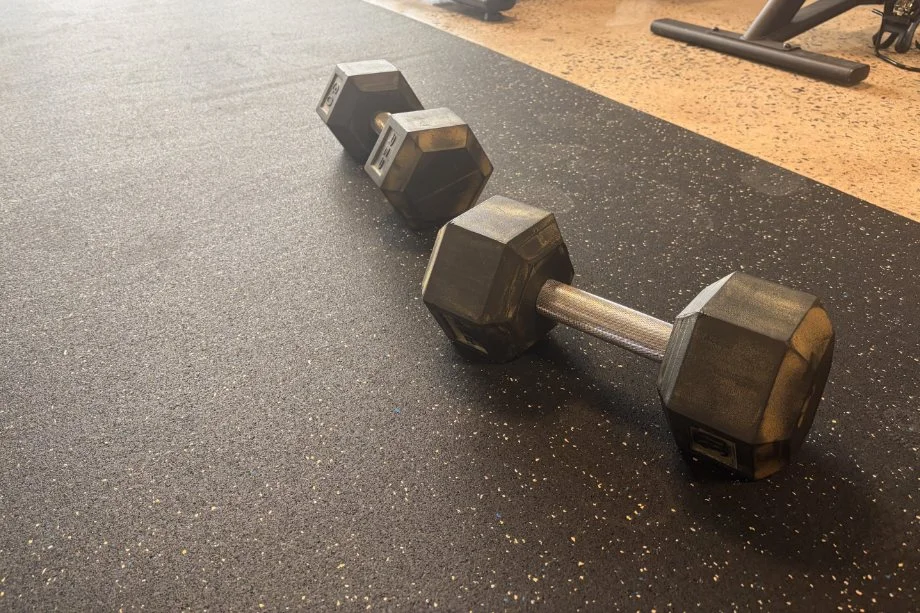
Relative to other rubber mats, this flooring is 8 millimeters thick. That’s slightly less than what we’ve seen in horse stall mats and some interlocking tiles, but after using them for almost a year in my personal garage gym, I’ve become a fan. They hold up against all my gym equipment and cardio machines and have enough cushioning to protect my floor. Accordingly, I give them a 5 out of 5 for durability.
Also, these are the same mats most often used in commercial gym applications. They run between $2.25 and $3 per square foot and come in at least 15-foot rolls, which you’ll clearly need to cut (and why we rate them at 4 out of 5 for the setup process). In my opinion, though, the cutting is worth the work because of the eventual look and feel.
GGR product tester Orlando Castillo adds, “You’d need to add tape to the edges to get it to lay down, or else the seams might be more visible with temperature fluctuations.”
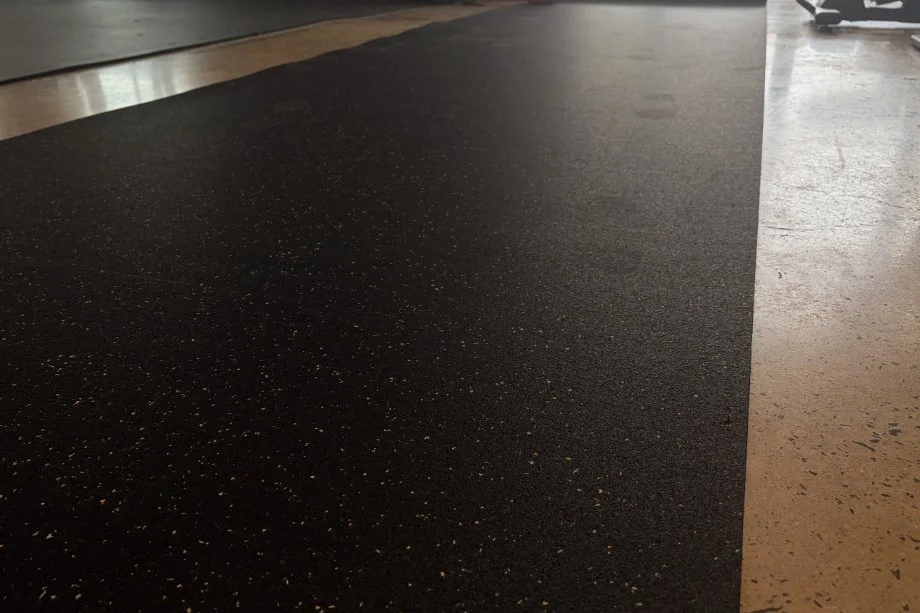
This floor has great grip and noise dampening. The smell wasn’t bad at all, and it should be easy to mop to keep it clean. The speckle design also helps with hiding any dirt or footprints.
Orlando Castillo, GGR expert product tester
What We Don’t Like About the Flooring Inc 8 mm Rubber Rolls
As we pointed out earlier, these mats are thinner than we’d recommend for heavy-duty, high-impact training. They’ll get the job done, but if you’re regularly dropping your best barbell and weight plates, these may not be the best choice.
Flooring Inc 8mm Rubber Rolls are on the more expensive end, too, since you have to buy a whole roll. As such, they only earn 3 out of 5 stars for value.
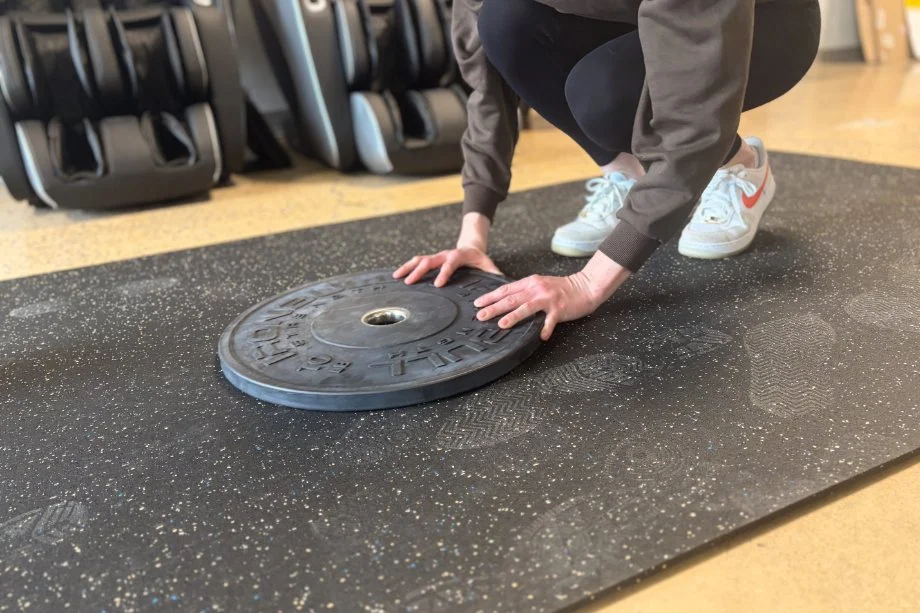
Lastly, we appreciate how grippy and secure the mats feel, but that could be an issue if you don’t want as much traction. “If you are adjusting your bumper plates onto a barbell, the flooring does make it more difficult,” says Orlando. “For other exercises where you need more sliding, like pushing a sled, there is going to be friction, which makes it challenging.”
If you don’t want to work with large rolls of flooring, Living.Fit Gym Mats might be a better choice, as they’re much easier to set up.
Testing Breakdown
The Flooring Inc rolls received high scores in most categories. There are no customer reviews, though, so we didn’t factor that into our overall rating.
Vs. The Average
These Flooring Inc 8 mm Rubber Rolls are cheaper than the average gym flooring, and there are 28 colors to choose from. That said, they’re a little thinner than most.
| Flooring Inc 8 mm Rubber Rolls | Average Gym Flooring | |
| Price Per Square Foot | $2.17 | $2.93 |
| Thickness | 8 mm | 11 mm |
| Available Colors | 28 | 6 |
| Warranty | 5 years | 5 years |
Best Soundproofing Home Gym Flooring: Second Skin Stomp Mat
Updated by: Matt Dustin, CSCS, PN1-NC
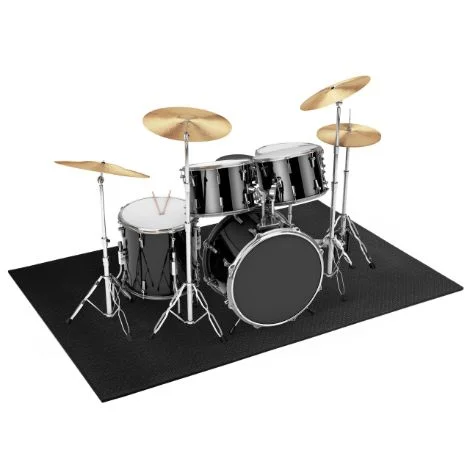
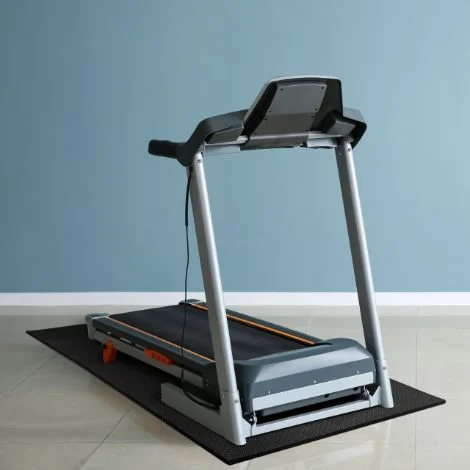
The Second Skin Stomp Mat is a great choice for gym flooring, especially for those who need the ability to soundproof their gym. Coming in two different thickness options, these mats can provide noise reduction for home gyms, as well as for drum sets and laundry machines. Although a bit pricey, its noise reduction might well be worth the price.
If you’re tired of the sound of clanging weight plates or don’t want to upset the rest of your household, the appropriately-named Second Skin Stomp Mats can be a perfect choice. Rubber mats and rolls have always been known for being able to help dampen noise in a gym, but these mats, in particular, have even been trusted by laundromats for silencing machines that tend to cause a lot of noise—so they can work for your loaded barbell and bumper plates, too.
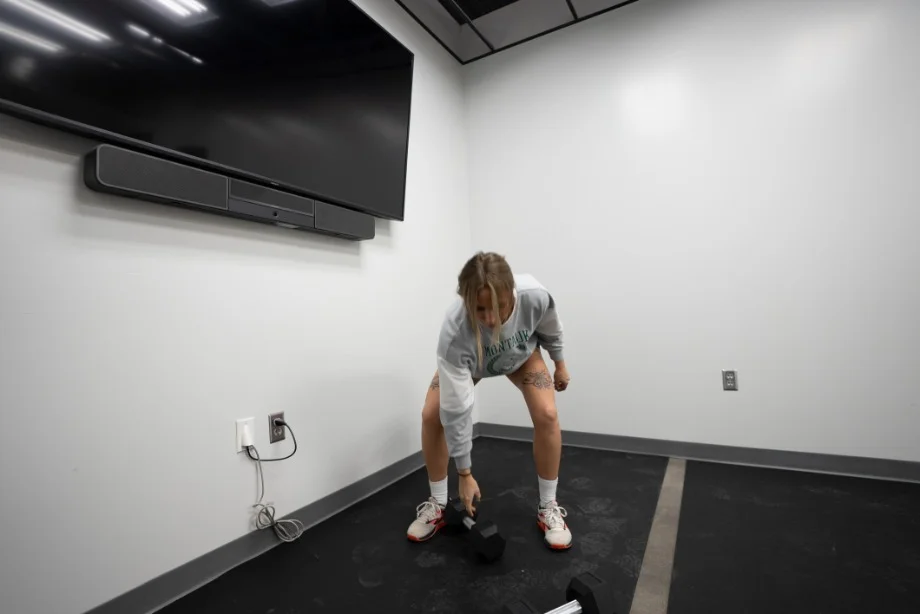
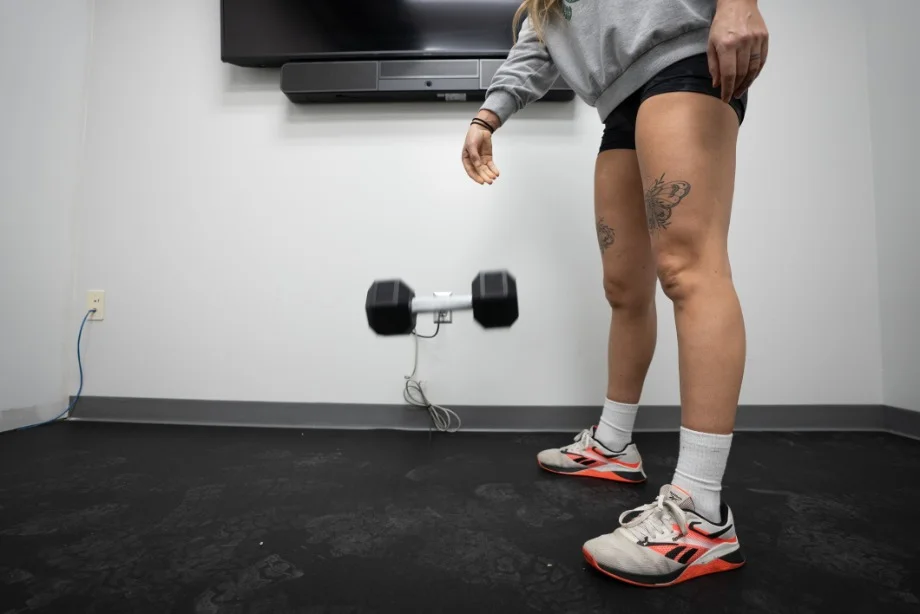
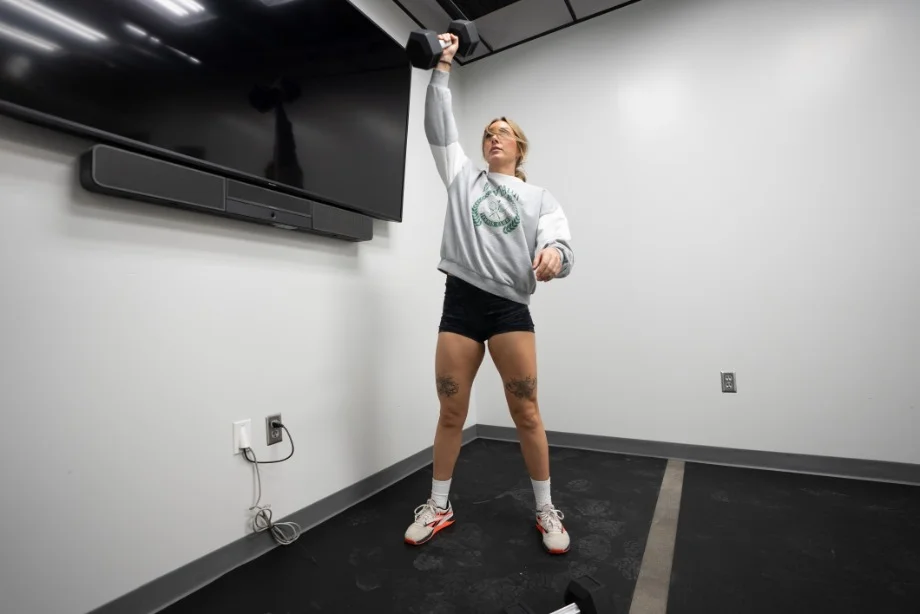
Our product tester, Paige Barrett, gave these Second Skin mats a 4 out of 5 for noise dampening, adding, “When I dropped the weight, it was a lot quieter than I thought it would be, and the material definitely absorbed a lot of the sound.”
Construction & Durability: 5/5
Noise Dampening: 4/5
Value: 2/5
Why We Like the Second Skin Stomp Mat
We love the durability here, on top of the noise dampening. Both the ¼-inch and ½-inch thickness options have an R-value of 2.0 per square inch. For reference, R-value is how thermal temperature insulation is measured. These rubber rolls easily get a 5 out of 5 for durability with that R-value.
Paige adds, “The flooring is made of a rubber material that absorbs the shock of dropping weights, and it feels very durable.”
Each mat is 4 feet by 6 feet, which is more than enough to cover a weightlifting platform, that wobbly exercise bike, or anything else where you want the best soundproofing underfoot. Because you can cut each mat as needed, and it’s a little easier to maneuver than a rubber roll, these mats get a 5 out of 5 for versatility.
The material is versatile enough for any weight/plyometrics/running activity. The material doesn’t feel slippery, at all, so you shouldn’t have any issues doing things that require grip with your hands or feet.
GGR expert product tester
What We Don’t Like About the Second Skin Stomp Mat
While the flooring provides excellent noise protection, it is definitely expensive. It’s available in ¼-inch thickness for $4.17 per square foot, or ½-inch thickness for $7.50 per square foot. Both options cost far more than the average gym flooring, so we give it 2 out of 5 stars for value, even though it’s high-quality.
Second Skin Stomp mats also have a strong rubber smell. We don’t necessarily mind it, but those sensitive to odors may not enjoy the aroma. Paige said it wasn’t too overpowering, and she’s smelled worse before, but it’s worth noting, especially for those who are going to put this in their home.
If you want something more affordable and like working with smaller mats, you can’t go wrong with Tractor Supply ¾” Rubber Stall Mats.
Testing Breakdown
The Stomp Mats from Second Skin received high marks across the board, with the exception of value, as they’re quite expensive compared to most home gym flooring options.
Vs. The Average
We love these mats, but compared to the average gym flooring, they’re more expensive, and (unfortunately) only come in one color.
| Second Skin Stomp Mat | Average Gym Flooring | |
| Price Per Square Foot | $4.17-$7.50 | $2.93 |
| Thickness | 0.25” (6.4 mm) or 0.5” (12.7 mm) | 11 mm |
| Available Colors | 1 | 6 |
| Warranty | 5 years | 5 years |
Best Home Gym Flooring Mats: Living.Fit Interlocking Rubber Tiles
Updated by: Matt Dustin, CSCS, PN1-NC
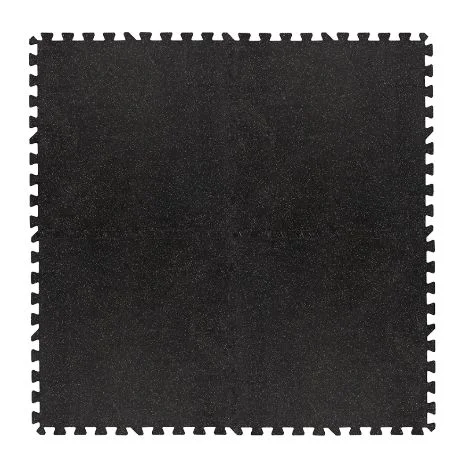

With interlocking pieces and free shipping on select options, Living.Fit Interlocking Rubber Tiles are an excellent choice for gym flooring. Made of a heavy-duty black rubber, the mat is spike-resistant and durable enough to last, backed by a five-year warranty.
We tend not to recommend puzzle-piece gym mats, as they are often made with a high-density EVA foam. These foam tiles don’t stay locked well and also get dirty easily. That’s not the case with Living.Fit’s Interlocking Rubber Tiles, though. Made with heavy-duty rubber, these square mats have jigsaw edges that stay locked together, even through heavy lifting.
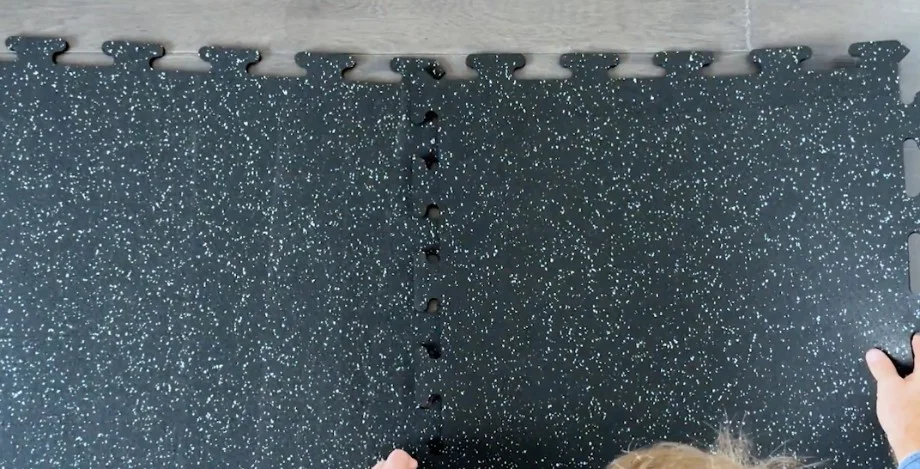
“Installing these is easy with the interlocking mechanism, especially since they aren’t as heavy as larger horse stall mats,” says Jacob Penner, NCSA, USAW-L2, CF-L1, who gave these mats 4 out of 5 stars for the setup process. “The mats aren’t light, but they are manageable if you don’t mind moving heavy-ish things.”
Construction & Durability: 5/5
Setup: 4/5
Smell: 3/5
Why We Like the Living.Fit Interlocking Rubber Tiles
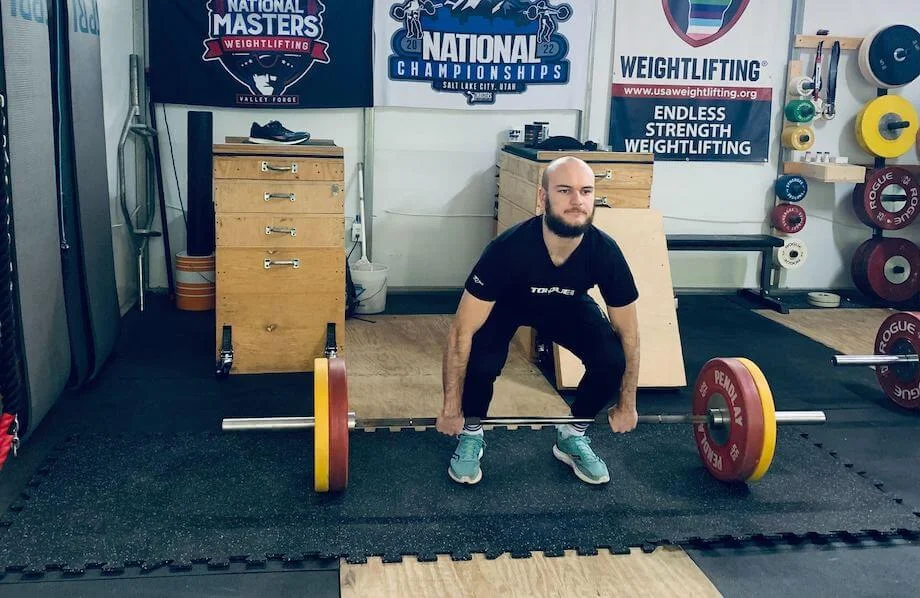
Jacob tried these mats at his gym and was immediately impressed with the durability. At almost a half-inch thick, these mats should provide a good amount of cushioning for your flooring underneath, and they earn 5 out of 5 stars for durability.
“We have dropped about 300 pounds on these from about 6 feet, and the mats didn’t come unhooked,” Jacob told me. “They have lived both inside and outside our gym for about a year, and they are still in great shape.”
For home gym owners who don’t want to deal with heavy, bulky rolls of flooring, these Living.Fit mats are a great choice, too. They’re still somewhat heavy, but you won’t need to trim them to size or use any type of adhesive, as the interlocking edges keep them secured together.
I didn’t expect such high-quality mats. They have a great thickness and the rubber is fantastic. It has a great grip to it, too—three of us walked on it and were shocked.
Jacob Penner, NCSA, USAW-L2, CF-L1
What We Don’t Like About the Living.Fit Interlocking Rubber Tiles
One thing to note is that these mats have a strong rubber smell, according to Jacob. “They have that rubber smell that I personally love, but I know other people don’t like,” he explains.
We don’t mind the smell (and kind of like it), but we know that not everyone is ready to fill their home with the scent of rubber. Accordingly, we give these mats 3 out of 5 stars for the smell.
Jacob also notes that the edges can be a little rolled up initially, similar to using rolls of flooring, and it can take a little while for them to settle down. He says, “The interlocking is easier once they flatten, so I recommend unrolling them and letting them settle, or putting weights on them and then locking them together.”
If you’re looking for smaller mats that are more affordable and easier to work with, the ProsourceFit Puzzle Exercise Mats are worth checking out, though we wouldn’t recommend these gym tiles for heavy-duty lifting due to the foam construction.
Testing Breakdown
While we only gave these mats 3 out of 5 stars due to the rubber smell, they still received high marks across the board in other tested categories.
Vs. The Average
Compared to the average gym flooring, the cost per square foot is higher with these Living.Fit Interlocking Rubber Tiles, even for the thinnest option.
| Living.Fit Interlocking Rubber Tiles | Average Gym Flooring | |
| Price Per Square Foot | $5-$10 depending on thickness | $2.93 |
| Thickness | 6 mm, 8 mm, 9 mm, 12 mm, or 18 mm | 11 mm |
| Available Colors | 7 | 6 |
| Warranty | 5 years | 5 years |
Best Budget Stall Mats: Tractor Supply ¾” Rubber Stall Mats
Updated by: Matt Dustin, CSCS, PN1-NC
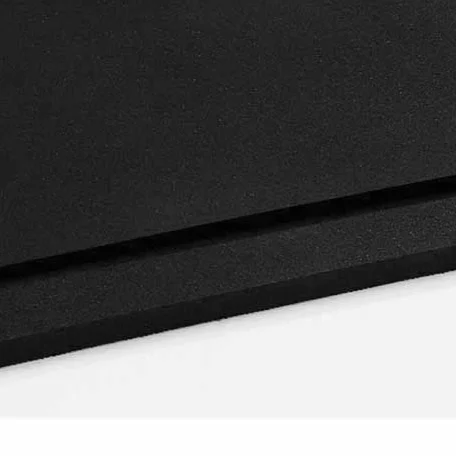
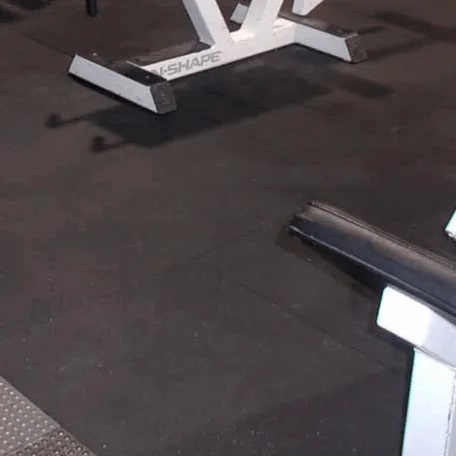
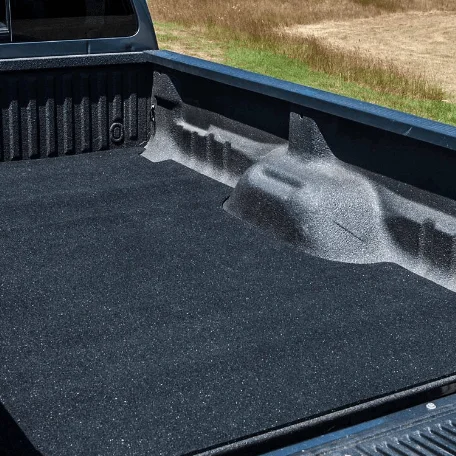

These horse stall mats from Tractor Supply use recycled rubber, are 3/4″ thick, 4 ‘x 6’ in size, and weigh upwards of 100 pounds. You can find horse stall mats at other farm supply stores, and they will be similar in dimensions. The thickness makes this flooring sound-absorbent.
The absolute staple for most home gym floors (especially garage gyms the world over) is the horse stall mat. For most people, the easiest and cheapest place to buy these is Tractor Supply. You can order online or simply go to the store to pick them up (as long as your vehicle is big enough to transport them).
At only $2.38 per square foot, they’re also some of the most affordable rubber mats we’ve seen, and earn 5 out of 5 stars for value.
Construction & Durability: 5/5
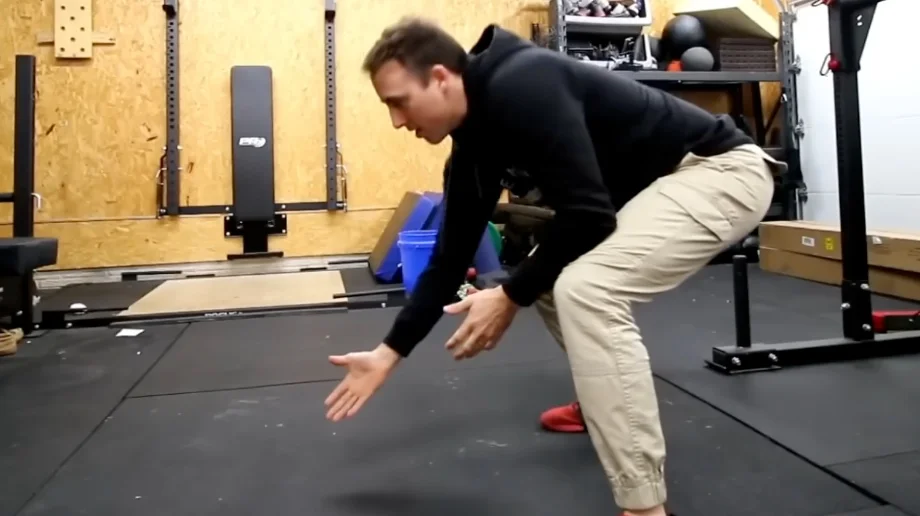
Sound Dampening: 4/5
Value: 5/5
Why We Like the Tractor Supply ¾” Rubber Stall Mats
These horse stall mats from Tractor Supply use recycled rubber, are ¾ inches thick, 4 feet by 6 feet in size, and weigh upwards of 100 pounds. You can also find horse stall mats for home gyms at other farm supply stores with dimensions, but we opt for Tractor Supply mats here, given their online availability.
The thickness makes this flooring sound absorbent and extremely durable, earning a 4 out of 5 for its sound-dampening and a 5 out of 5 for durability. I’ve used these mats in gyms for years and they hold up great. GGR founder Cooper “Coop” Mitchell adds, “I’ve used stall mats in four different garages, dropped weights from overhead, and have never had any issues with stall mats.”
These mats are suitable for any exercise, too, and earn 5 out of 5 for versatility. If you’re into using powerlifting barbells or CrossFit barbells for deadlifts, squats, bench presses, clean and jerks, etc., these mats can withstand literally any workout.
The value on horse stall mats is by and large the absolute best value that’s available. It’s what I’d recommend for most people.
Cooper Mitchell, GGR founder and equipment expert
What We Don’t Like About the Tractor Supply ¾” Rubber Stall Mats
At around 100 pounds each, the mats themselves can be difficult to move and may require more than one person, depending on your strength. A hundred pounds doesn’t seem like a lot, but it’s an odd object, so it can get a little clunky.
GGR editorial staff member, Olympian, and former gym owner Caine Wilkes, OLY, CNC, USAW-L1, says, “Putting these mats down on your garage floor can be a chore due to the size and weight of each mat. I’ve used these mats in building a DIY weightlifting platform, too, and cutting them down to the proper size can be a hassle.”
Additionally, horse stall mats are notorious for the, um, funky rubber smell. I, personally, don’t mind it because that’s what a garage gym smells like to me, but keep that in mind when choosing this option. Many home gym owners online have run into this issue, and suggest things like leaving your mats outside for a week to let the smell dissipate.
If you want heavy-duty mats that are a little lighter and have a milder smell, you may want to consider Second Skin Stomp Mats.
Testing Breakdown
The Tractor Supply Stall Mats are popular for a reason, and received high scores in nearly every category. That said, the rubber smell is very strong, which is the only real issue with these mats.
Vs. The Average
Compared to the average home gym flooring, Tractor Supply mats are more affordable and thicker, but they’re only available in one color, which may be limiting for those looking for a specific color.
| Tractor Supply ¾” Rubber Stall Mats | Average Gym Flooring | |
| Price Per Square Foot | $2.38 | $2.93 |
| Thickness | 0.75” (19 mm) | 11 mm |
| Available Colors | Black | 6 |
| Warranty | 5-year limited warranty | 5 years |
Best Cheap Home Gym Flooring: ProsourceFit Puzzle Exercise Mats
Updated by: Matt Dustin, CSCS, PN1-NC
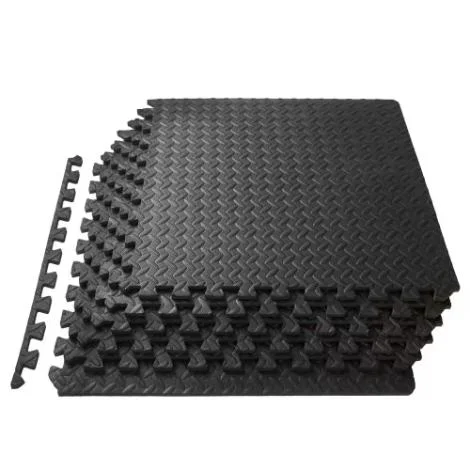
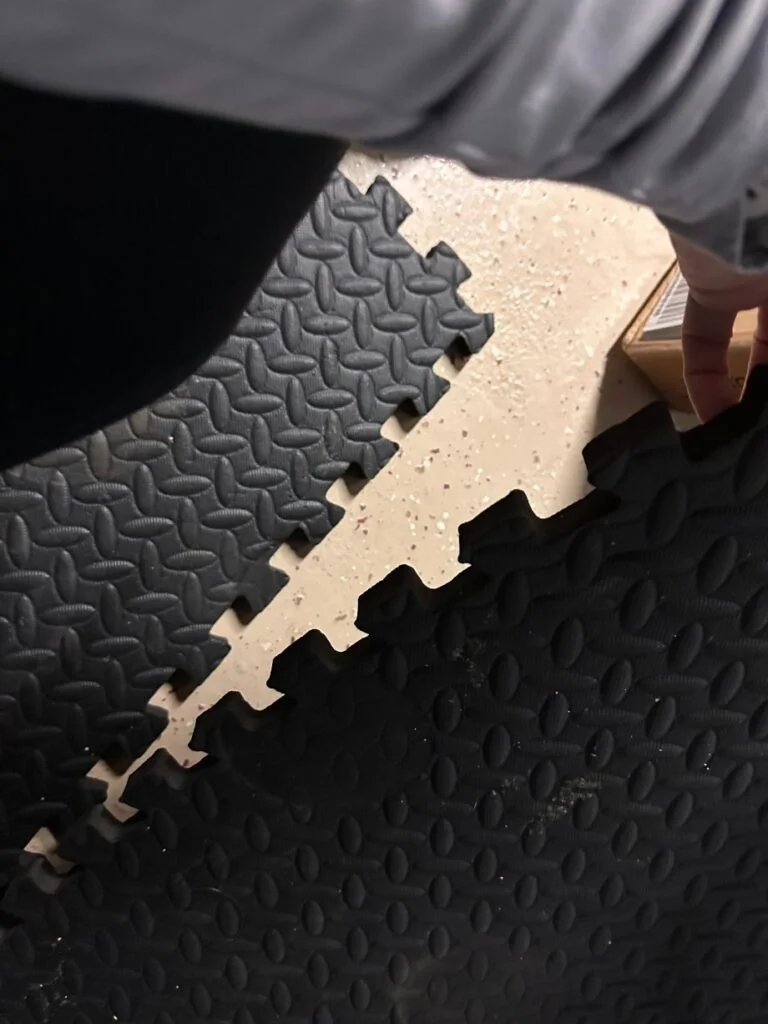
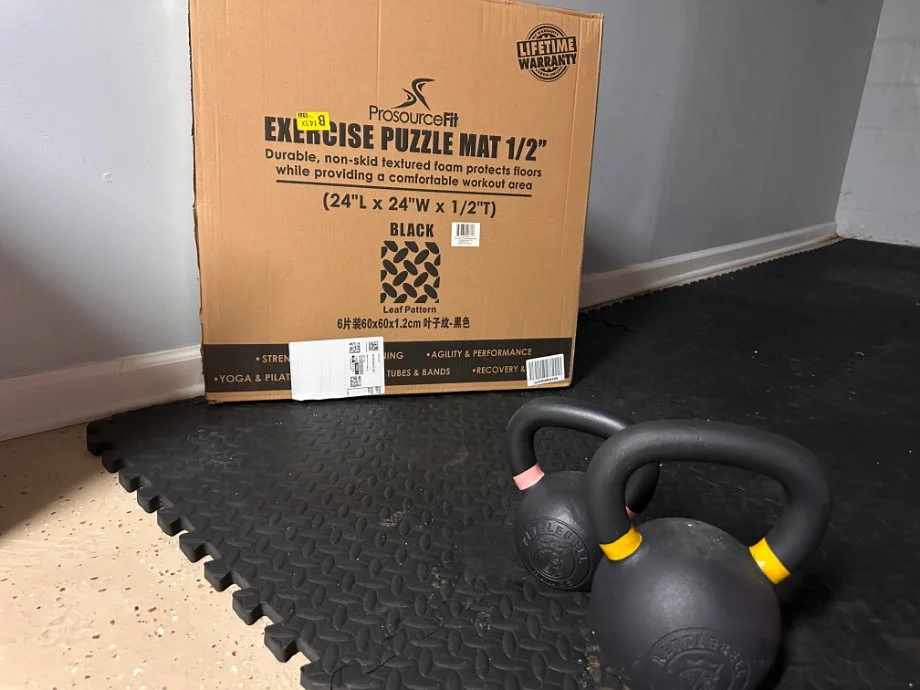
ProsourceFit Puzzle Exercise Mats are an inexpensive flooring option for home gyms. These are best for low-impact exercises, since heavier weights will cause them to break down easily, especially if the weight is dropped onto the mats.
If you’re on a bare-bones budget and need something quick to protect your floor, you can opt for ProsourceFit Puzzle Exercise Mats. Available in packs of six, 12, or 36 tiles, these mats can cover 24, 48, or 144 square feet for cheap; the six-tile pack costs around $25, earning a 5 out of 5 for value.
Not to mention, Amazon Prime members usually receive free shipping, which makes these mats even more affordable for home gym owners. We don’t recommend these foam mats as a full-stop solution for home gym flooring, especially for those lifting heavy weights. However, they can be good for smaller corners of a home gym, or any area where you just want something more comfortable under your feet.
Construction & Durability: 3/5
Setup: 5/5
Value: 5/5
Why We Like the ProsourceFit Puzzle Exercise Mats
If you’re on a budget and don’t plan on using the heaviest weights or dropping barbells, these mats can be a great way to add some comfort to your home gym setup. They’re not made to protect your floor from a heavy barbell, but if you’re more a fan of at-home bodyweight workouts and need some underfoot cushioning, they’re a fantastic choice.
GGR Director of Content Nicole Davis, CPT, PN1-NC, has owned these mats for a few years, and is very impressed. She gives them 5 out of 5 stars for the setup process, and told me, “These are really easy to install, since you just fit them together at the edges.”
Because they’re foam mats, these ProsourceFit profiles are going to feel a bit softer with more cushioning than most rubber mats. This may not be ideal for strength athletes, but that’s kind of the point; they’re meant for those who don’t need heavy-duty protection. If that’s you, we still found them to be surprisingly durable, and give them 3 out of 5 stars for durability.
“We’ve had these set up in our basement for about three years at this point, and they’ve held up shockingly well,” says Nicole. “They’re in the area where my kids play, but I also work out on them, depending on the exercises I’m doing. I’m not dropping heavy weights or doing CrossFit-style movements, but they get used, nonetheless.”
This flooring would work fine for low-impact exercises, as well as plyometrics (as long as it’s adhered to the ground), and some strength training. I would not use it for running drills, Olympic weightlifting, or for a sled.
Nicole Davis, CPT, PN1-NC
What We Don’t Like About the ProsourceFit Puzzle Exercise Mats
As mentioned earlier, one issue with foam mats is the lack of durability. Nicole told me that they’ll compress a bit under heavy weight, adding, “I’ve had 15 and 32 kg kettlebells sitting on them for extended periods of time and they left an imprint. Besides that, they perform pretty well.”
Nicole also gave them 3 out of 5 stars for the workout experience—pretty good, but not without issues.
“My main gripe is that the flooring isn’t very grippy,” she explains. “You have to wear workout shoes to get any sort of traction, and even then, it’s not as good as just being on the epoxy floor with shoes.”
If you want interlocking floor tiles that are significantly more durable, we recommend Living.Fit Gym Mats.
Testing Breakdown
As you can see in our scoring chart, these mats received mostly average scores across the board, with 5-out-of-5-star ratings for setup, smell (or lack thereof), cleaning, and value.
Vs. The Average
ProsourceFit mats are extremely affordable compared to the average home gym flooring, and have a limited lifetime warranty. Just keep in mind that the foam material won’t be as durable as rubber, even if it’s slightly thicker than most other flooring options.
| ProsourceFit Puzzle Exercise Mats | Average Gym Flooring | |
| Price Per Square Foot | $1.12 | $2.93 |
| Thickness | 0.5” (12.7 mm) | 11 mm |
| Available Colors | 5 | 6 |
| Warranty | Limited lifetime warranty | 5 years |
Best Carpet Tile for Home Gyms: Eclipse Peel and Stick Carpet Tiles
Updated by: Matt Dustin, CSCS, PN1-NC
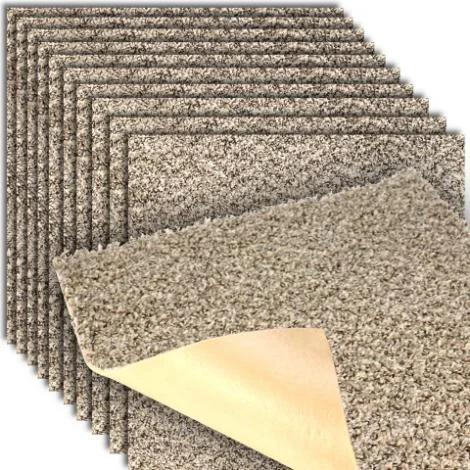
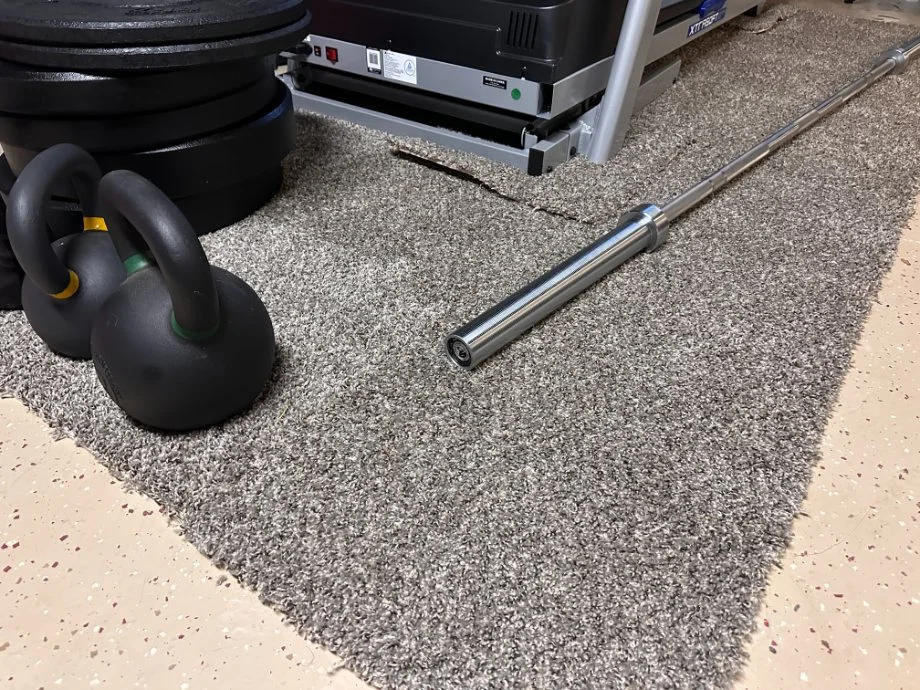
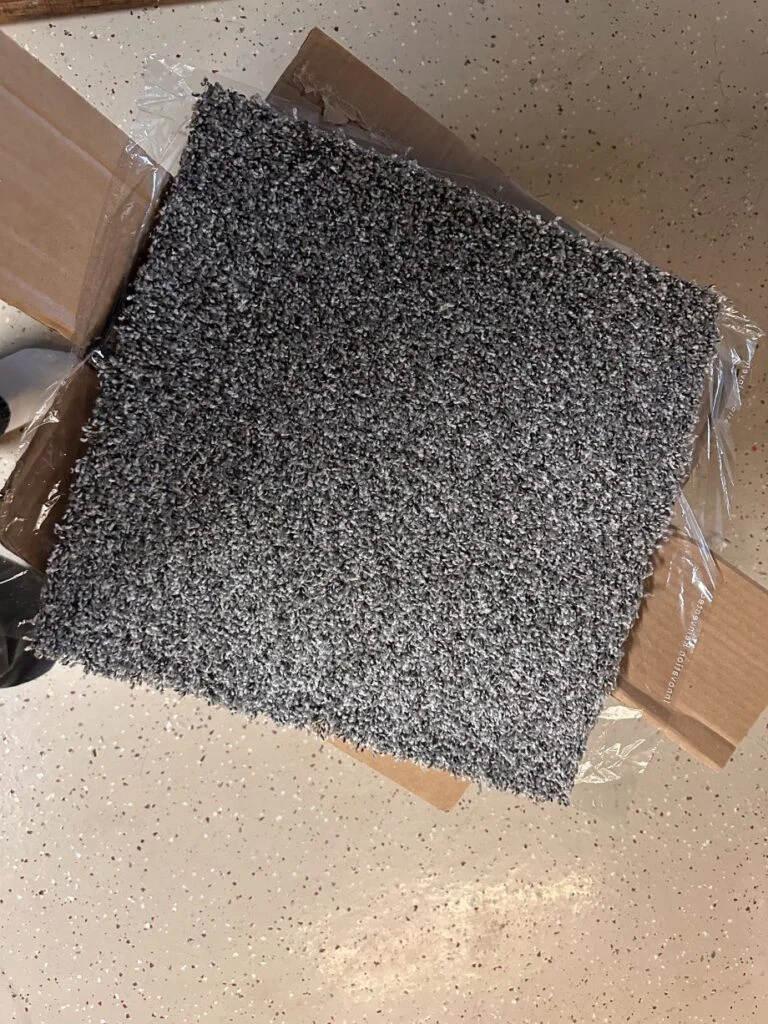
Eclipse Peel and Stick carpet tiles are a budget-friendly and easy-to-install home gym flooring option that feels like carpet. It’s not ideal for lifting heavy weights, but should work for bodyweight exercises or storing your treadmill or other cardio equipment.
Not all home gyms are in garages. Living rooms, spare bedrooms, and basement areas can also double as workout spaces, after all. Depending on your activity, carpeting may be just right. Eclipse Peel and Stick Carpet Tiles are great because they are easy to install, look great, and are fairly easy to maintain. They only cost $3.33 per square foot, too, earning 3 out of 5 stars for value.
Construction & Durability: 3/5
Value: 3/5
Setup: 5/5
Why We Like the Eclipse Peel and Stick Carpet Tiles
Carpet tiles may be a good option for you if you tend to do lower-weight exercises, cardio on a treadmill, stretching, yoga, or Pilates, for example. A nice plus is that the Eclipse Carpet Tiles have an attached polyurethane 6-pound cushion pad underneath, which gives them an added sense of underfoot comfort.
RELATED: Can You Put a Treadmill on Carpet?
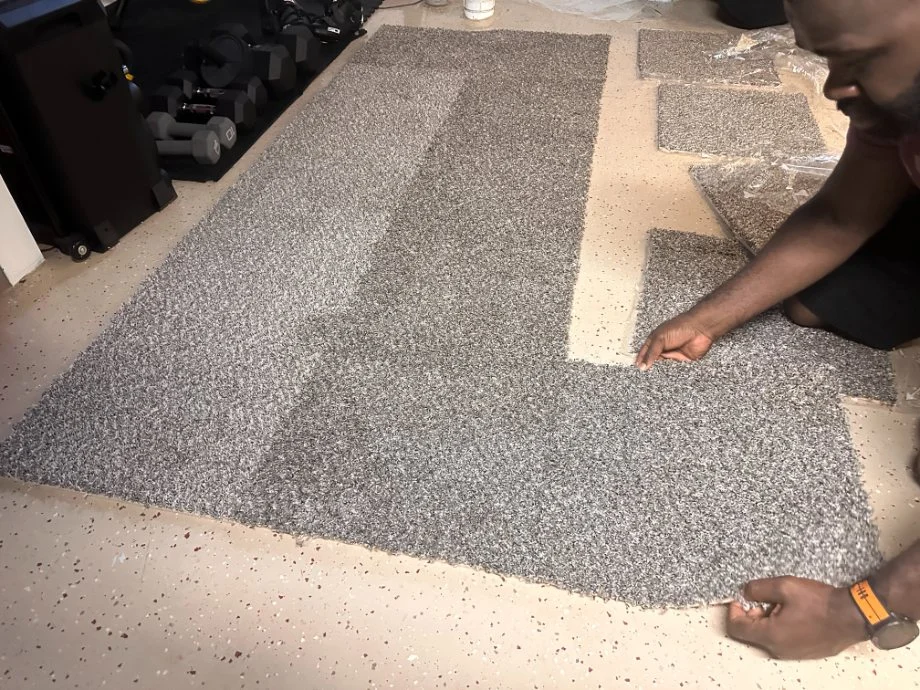
We also love the easy setup process, which earned 5 out of 5 stars from Nicole Davis, CPT, PN1-NC.
“This is truly as the name says—peel and stick,” she told me. “They are forgiving in the sense that you can peel them back up if you need to adjust, but I wouldn’t do that multiple times as the adhesive would probably stop being effective.”
Additionally, peel-and-stick carpet tiles give you the ability to mix and match colors to create a cool-looking space.
Carpet isn’t going to offer as much cushioning as something like a heavy rubber stall mat, but it can do a fine job at protecting your floor from heavy pieces of equipment (like cardio machines) and earns 3 out of 5 stars for durability. Plus, at this price point, they’re easy to fit into most budgets, as we wouldn’t expect something that’s going to last for years to come.
“These won’t last forever, that’s for sure,” Nicole notes. “We’ll probably have to replace them yearly, I’d imagine, but again, for the price and what we bought them for, they’re totally fine.”
We have this underneath our treadmill in the basement and it works great for that—provides some padding to the floor and we have an area to take shoes off and on. I also rest my barbell on this when I’m doing barbell work inside in the winter.
Nicole Davis, CPT, PN1-NC
What We Don’t Like About the Eclipse Peel and Stick Carpet Tiles
Where I wouldn’t use carpet tiles is in a home gym where you’re using heavy weights and barbells. At 3/16 inches thick, this carpet is just too thin and will not provide the shock absorption necessary to protect your floors or foundation. If you want to lift some weights, I’d recommend any of the rubber flooring options we’ve discussed for the most durability and noise-dampening capability.
Since they’re not really durable enough for any type of strength training, these mats only earn 1.5 out of 5 stars for versatility. Nicole says, “This would really only be suitable for low-impact movements like stretching or yoga, or to place underneath equipment, like we’ve done.”
Carpet flooring may also require a bit of extra cleaning, since it may catch dust and sweat easier than rubber floors.
If you like the idea of customizing your space with a variety of tiles but aren’t sold on carpet, you might like Flooring Inc Modular Grid-Loc Tiles.
Testing Breakdown
The Eclipse Carpet Tiles aren’t the most versatile or durable, but received high scores for the easy setup process and lack of odor.
Vs. The Average
The Eclipse carpet tiles cost more than the average gym flooring, even though they’re thinner, and have fewer color choices. However, the carpet is certainly a softer material under foot than dense rubber, which can make them an appealing choice if you just need general comfort rather than heavy-duty protection.
| Eclipse Peel and Stick Carpet Tiles | Average Gym Flooring | |
| Price Per Square Foot | $3.33 | $2.93 |
| Thickness | 3/16” (4.8 mm) | 11 mm |
| Available Colors | 4 | 6 |
| Warranty | Not disclosed | 5 years |
Other Home Gym Flooring We Researched
We narrowed down this list to our top seven options, but there are plenty of flooring picks on the market beyond this guide. Here are a few more we considered that didn’t quite make the cut.
- Flooring Inc. Modular Grid-Loc Tiles: We like the easy installation and aesthetics of this vinyl flooring, but the tiles don’t offer much cushioning for weightlifting.
- PLAE Forge: This is extremely high-quality flooring, but it’s expensive, and more often used in weight rooms and commercial gyms due to the cost.
How We Picked and Tested the Best Home Gym Flooring
Our team of expert testers includes gym owners, CrossFit enthusiasts, certified personal trainers, and more. We’ve tested countless pieces of fitness equipment over the years, walked on a variety of gym floors, and many of us have purchased and installed gym flooring for our own home gyms.
We always test and score each type of flooring using our testing methodology, which rates each product on a scale of 1 to 5 for the most important categories. Here are some of the factors we examine:
Setup
Setting up your home gym flooring can be as simple as placing rubber floor tiles in the correct place, or as complicated as measuring, trimming, and securing large, heavy rolls of rubber. Generally speaking, the more durability and protection a given type of flooring offers, the harder it’ll be to install.
To earn 3 out of 5 stars for this category, it may take some trial and error to install, but most people should be able to do it without any special tools or equipment.
Construction and Durability
This is one of the most important categories to assess for home gym flooring, since it can be available in a variety of materials which vary greatly in durability. Flooring is often made of rubber, plastic, foam, turf, or vinyl, each with their own thicknesses and cushioning levels.
To earn 3 out of 5 stars, the flooring should work for low-impact activities or basic weight training but doesn’t seem like it would withstand repeated CrossFit, Olympic weightlifting, or other high-impact workouts.
Smell
Rubber flooring often has a strong, chemical smell when you first get it. We kind of like this smell, but we know that many can’t stand it, so we use this category to assess whether there’s any strong odor and, if so, how long it takes to go away.
For a 3-out-of-5 rating, the flooring has an initial smell, but it’s bearable and it’ll be gone within a few days (provided you allow for proper aeration).
Noise Dampening
Since many home gym owners have neighbors or roommates who may not appreciate the sound of you dropping a barbell at 7AM, many home gym owners look for noise-dampening features when choosing flooring options.
Most specialty flooring designed to absorb noise is very expensive, so we don’t expect complete noise suppression at an affordable price. Rather, we give 3-star ratings in this category to flooring that certainly helps lessen noise when compared to using a bare floor, but there’s still a noticeable sound.
Versatility and Functionality
While many expect a home gym to offer plenty of versatility, this isn’t always the case with flooring. Rubber flooring can be great for impact protection, but may not work as well for sleds or sprints, compared to something like artificial turf. Foam flooring feels great on your feet and works for aerobics, but isn’t strong enough for regular strength training.
To get a 3 out of 5 here, you can use the flooring for several styles of movement, but it’s prohibitive in at least one area.
Performance and Workout Experience
We use this category to rate the workout experience after taking each flooring option for a spin and using it for a variety of exercise types. We stand on it, drop weights, see how slippery it is, and more.
To earn a 3 out of 5, the flooring is certainly better than what you were working with beforehand, but there are one or two issues, nonetheless For example, flooring may offer plenty of cushioning for bodyweight exercises, but the compression may create an unstable surface for heavy strength movements.
Cleaning and Maintenance
Cleaning your gym floor isn’t always fun, but it’s unavoidable. This category is based on how easy or difficult it is to clean up those pesky home gym germs. Generally, rubber flooring is rather forgiving (and water-resistant) and can be mopped up with some cleaning solution. Other options, like vinyl or carpet, are more susceptible to messes and smells since they’re more absorbent.
To get 3 out of 5 stars, it’s fairly easy to keep the flooring clean with a little elbow grease, but it’s not as simple as running a mop over the floor.
Value
Pricing can vary greatly depending on the materials, size, and more, so we use this category to rate the value we feel you’re getting for the price, rather than simply basing it on the literal dollar amount.
Home gym flooring that receives a 3 out of 5 offers about what you’d expect at the given price point and is similar to other options on the market, but nothing overly impressive.
Customer Experience
This scoring category is based on the company’s customer policies, including warranties, returns, financing options, and customer support. Thirty-day returns are probably the most common policy for home gym flooring, and premium products often offer five-year warranties.
To get a 3 out of 5, either one policy might be severely lacking, or multiple ones are less than stellar. Customer service should be relatively easy to reach, but overall, it’s an average experience; nothing to write home about.
Benefits of Home Gym Flooring
If you’ve been working out on your cement floor with no issues, you might be wondering why you need gym flooring in the first place. Here are a few reasons we think it’s worth investing in a good foundation for your home gym.
Protection
Proper flooring protects your gear, your floor, and even you from excessive wear and tear.
We know that not everyone is into powerlifting or Olympic lifting for their home workouts, but accidental drops happen from time to time, and we’d hate to see you chip your floor, weight plate, or dumbbells as a result. Not to mention, moving equipment around can scuff up your floor, which often happens when moving heavy items.
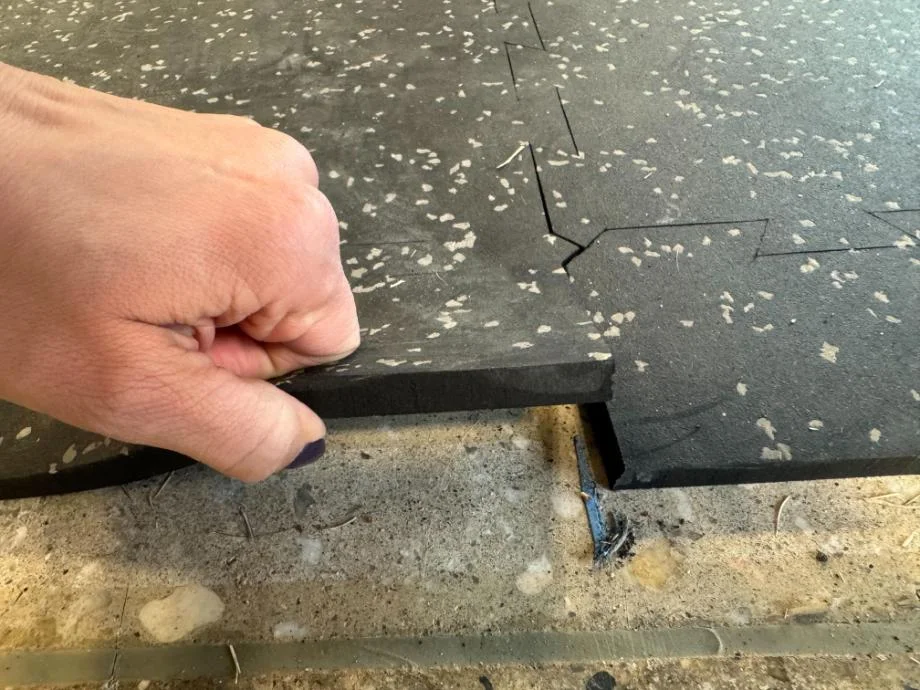
Finally, if you’ve never slipped and fallen on a cement or hardwood floor, I can tell you that it’s not fun. Rubber flooring isn’t exactly cushioned, but it’s a whole lot better than slipping and falling on cement.
Traction
Rubber flooring provides an additional layer of underfoot grip and acts as a non-slip surface to help keep you safe. If you’re training on smooth cement or hardwood flooring and your shoes don’t have the best grip, it’s not uncommon to find yourself slipping a little bit.
RELATED: Best Shoes for Deadlifting
This is especially true for those who like to perform certain movements, like deadlifts, without lifting shoes; socks can be extremely slippery.
GGR founder Cooper Mitchell says, “Rubber flooring is going to allow you some extra grip when you’re squatting, deadlifting, and performing those other movements.”
The one drawback is that too much traction can interfere with pushing a sled, but most home gym owners push their sleds outside, so we don’t think this is a big deal. If you’re fortunate enough to be building a larger workout space, you can always install a strip of turf flooring for sled pushes.
Noise Dampening
While nothing can make a clanging barbell sound completely silent if dropped, gym flooring can certainly help with excess noise. Whether you’re working out in your open garage, a basement, or you have neighbors or roommates who don’t appreciate the loud noise, rubber flooring can help quite a bit.
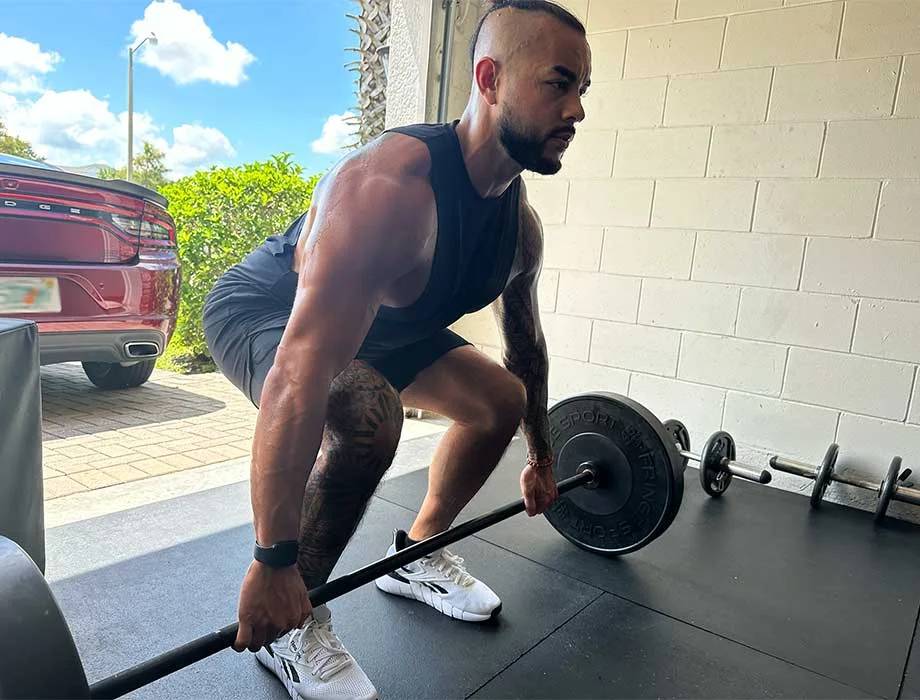
In fact, a 2025 paper1 specifically tested different types of flooring to help minimize noise complaints from free weight usage, and found that rubber flooring was a great option for those with neighbors due to its ease of installation and ability to reduce impact noise.
Buying Guide: What to Look for in Home Gym Flooring
If you’re still not sure which option to go with, here are a few of the most important factors to consider before making your final decision.
Materials
Some types of flooring are better than others for athletic performance, as seen in a 2017 study2 that compared different sports floors with shoe cushioning. The research found that different floors had different responsiveness, depending on the cushioning of the shoe.
While there are quite a few materials to choose from, we think most home gym owners should go with rubber flooring, which is extremely durable and provides plenty of traction.
RELATED: How to Clean Rubber Gym Flooring
“Rubber flooring is going to be the gold standard, at least in my opinion, for most people,” says GGR founder Coop Mitchell. “It’s something that’s going to protect your foundation.”
Coop also suggests avoiding lighter foam flooring for lifters, adding, “It’s basically not going to allow you to stabilize during lifts. Using something like this is, essentially, squatting with running shoes.”
If you mainly train with your bodyweight and want some added cushioning, foam is fine, but it’s not the best choice for strength training.
Size
Unless you’re outfitting a warehouse gym, you’re probably working with a garage, basement, living room, or other space with unusual dimensions. Not only is it important to measure how much square footage you need, but you should consider whether rolls or pre-cut mats would work best.
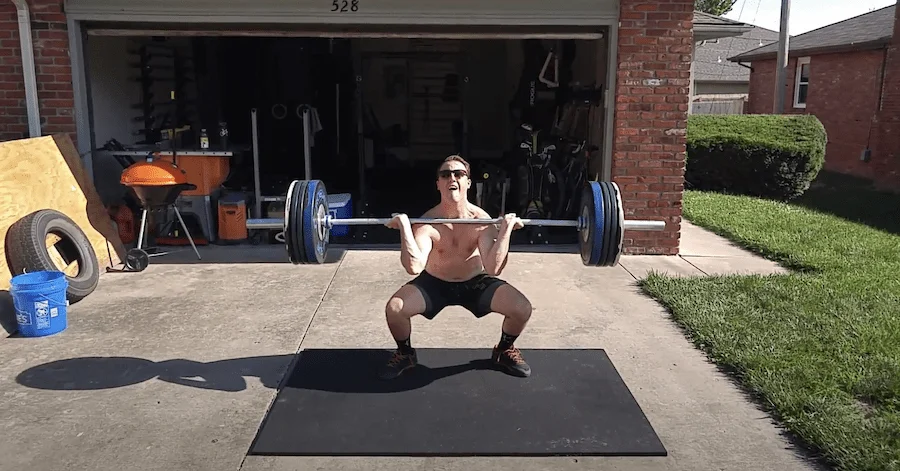
GGR Senior Staff Writer Matt Dustin, CSCS, PN1-NC, states, “I ordered a couple of rolls of flooring for my garage, and I was surprised by how heavy they were. It was pretty difficult to get them unrolled, and I needed an extra pair of hands to help me slide them into place once they were flattened out.”
Flooring rolls are great for large areas, but small mats are often much easier to work with, even if you need to trim them.
Thickness
The type of flooring required will depend on your activities. Some people only want a soft surface for bodyweight exercises, while others need thick rubber to absorb the weight of a dropped barbell.
RELATED: How Thick Should Gym Flooring Be
It’s important to consider what you’ll be using your gym for when choosing the proper flooring thickness, according to Caine Wilkes, OLY, CNC, USAW-L1.
“The largest contributing factor to how thick gym flooring should be is the type of workouts you’re planning to do while on the gym floor,” he told me. “If you’re mostly planning on lightweight calisthenics or yoga exercises, a thinner flooring should do. However, if you’re planning on heavy lifting, or dropping weight from overhead, I’d recommend a half-inch-thick rubber mat, at the minimum, but typically I prefer ¾-inch flooring.”
FAQs About the Best Home Gym Flooring
How thick should home gym flooring be?
The most common thickness for home gym flooring is 8 millimeters. CrossFit exercises and Olympic lifting, on the other hand, require at least 3/8 inches. If you intend to drop very heavy dumbbells and/or kettlebells on a regular basis, we recommend going with ½ or ¾ inches, just to be cautious.
What is the best rubber flooring for a home gym?
Depending on how much wear and tear you expect from your home gym use (dropping weights and dumbbells), the thickness you may want or need might vary. Most rubber flooring is about 8 millimeters thick, but there are thicker options for lifters who will be dropping weights routinely.
As such, we’ve used and love options from Tractor Supply, PLAE Forge, Living.Fit, and more.
Is foam or rubber better for gym flooring?
Foam can often be an inexpensive alternative to rubber flooring for a home gym. It’s great for using underneath home gym storage, or as padding for bodyweight exercises. However, if you’re looking to lift and drop weights, dumbbells, and kettlebells, you’ll want something a bit more durable, like a rubber floor.
What type of flooring is best for a home gym?
The ideal type of flooring for your home gym will protect any subflooring underneath and also provide you with the durability and protection to go through your typical workout routine. Rubber tiles and rolls are some of the most common types of gym flooring due to their durability and protection for lifting and dropping weights, but foam, turf, vinyl, and other types of flooring can be used for different purposes and modes of training.
References
- Frias, J. de, Wozniak, R., Duarte, G., Silverio, R., Hipolito, R., Silva, & Safra, R. (2025). IMPACT NOISE REDUCTION IN GYMS WITH DIFFERENT RUBBER FLOORING. In Even3. https://www.even3.com.br/anais/international-congress-exposition-noise-control-engineering/1092806-impact-noise-reduction-in-gyms-with-different-rubber-flooring/
- Malisoux, L., Gette, P., Urhausen, A., Bomfim, J., & Theisen, D. (2017). Influence of sports flooring and shoes on impact forces and performance during jump tasks. PloS one, 12(10), e0186297. https://doi.org/10.1371/journal.pone.0186297