



It’s easy to get excited about all the fun stuff when building your first home gym—barbells, weight plates, dumbbells, squat racks, and kettlebells, for example—but you also need to remember the important and not-so-sexy items like plate trees and equipment storage solutions.
Unless you have a squat rack with weight storage, plate trees can be necessary items to make sure your weights aren’t just chilling on your home gym flooring. Whether you’re looking to build strength, power, or simply improve your health1, strength training can be a fantastic habit to build, and a plate tree can make your lifting endeavors significantly more convenient.
When searching for the best plate tree for your home gym, there are a few things you should take into consideration: space, weight capacity, and design, to name a few. No matter your preference or need, though, we’re confident that you can find a worthwhile option in this roundup.
GGR Gold Pick – Best Plate Tree
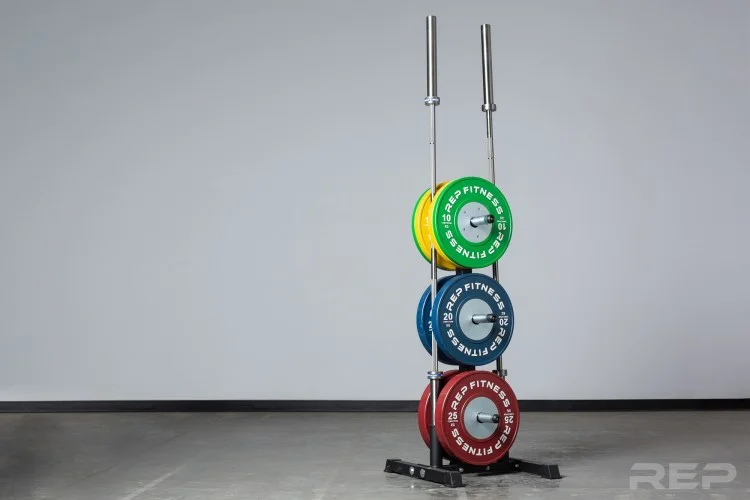
The REP Fitness Bar and Bumper Plate Tree is our pick for the best plate tree on the market, and earns 4.4 out of 5 stars overall. It features chrome-coated weight pegs, an 850-pound weight capacity, and storage for two barbells, making it an excellent storage solution for home gym owners.
Best Plate Trees
- Best Plate Tree Overall – REP Fitness Bar & Weight Plate Tree
- Best Budget Plate Tree – CAP Barbell 2-Inch Plate Tree
- Best Plate Tree With Wheels – XMark Commercial Plate Tree
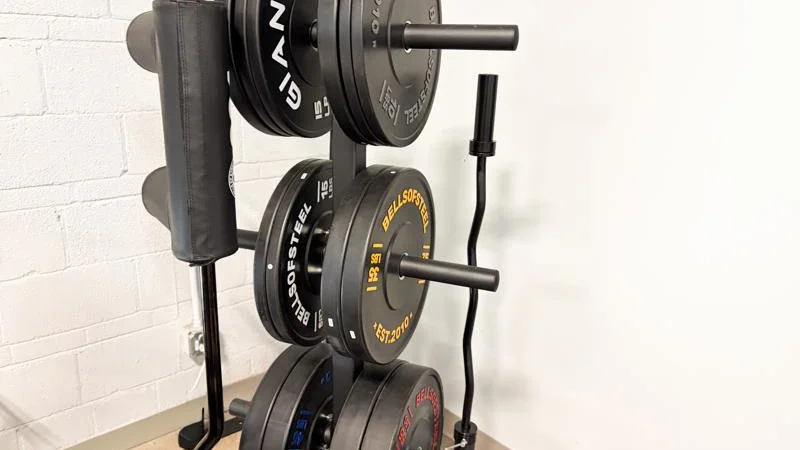
- Best Plate Tree for Bumper Plates – Bells of Steel Bumper Plate Weight Tree and Bar Holder
- Best 1-inch Weight Plate Tree – Marcy 1-inch Weight Plate Rack
How We Selected the Best Plate Trees
Since plate racks are meant to improve your home gym organization and keep areas tidy, we need to carefully measure the footprint and portability to make sure they’re not going to take up too much space in your home or garage gym. We give 3-out-of-5-star ratings to reasonably sized trees that can be moved when needed without tipping.
Nobody wants a plate tree that can’t hold all of your weights, so it’s important to make sure that you’re choosing an option with plenty of storage potential. To earn a 3 out of 5 in this category, a plate tree should be able to support its listed weight capacity without any bending, swaying, or compromised stability.
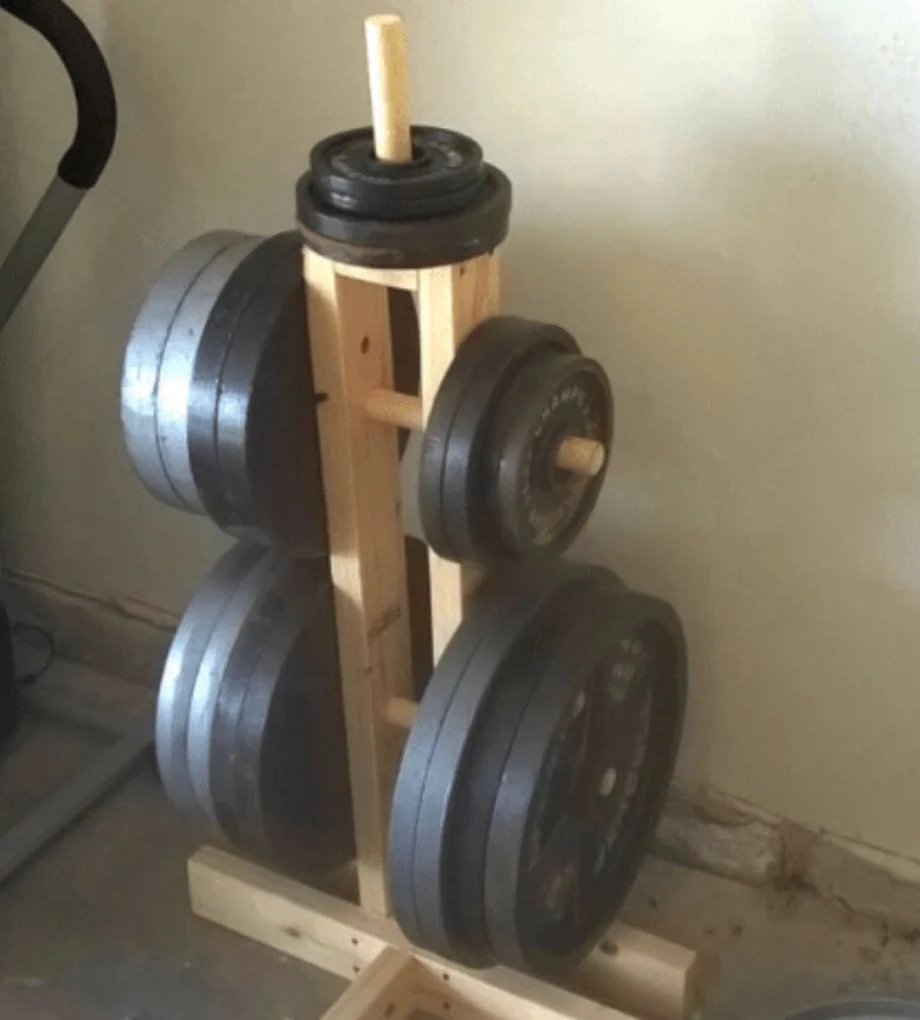
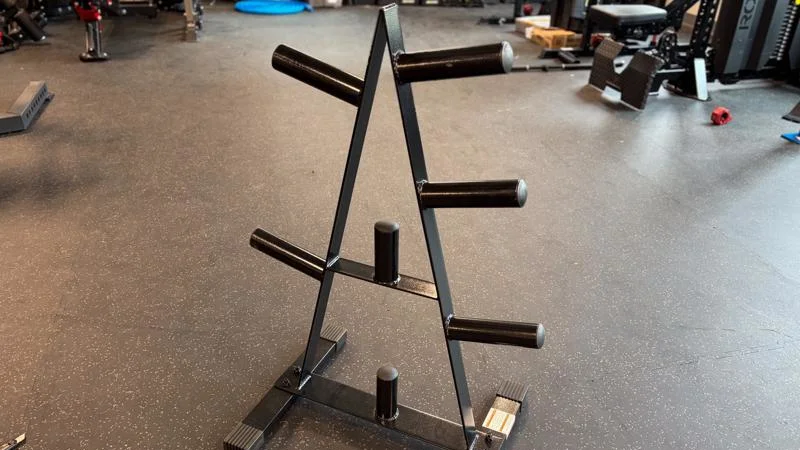
This category is based on how versatile the pegs are. Some plate trees allow you to store any plate size (standard or Olympic) across the pegs, while others may be more limited. For example, full-sized bumper plates may not fit on pegs that are positioned too close together. Average scores are given to trees that feature a stable design with well-spaced pegs.
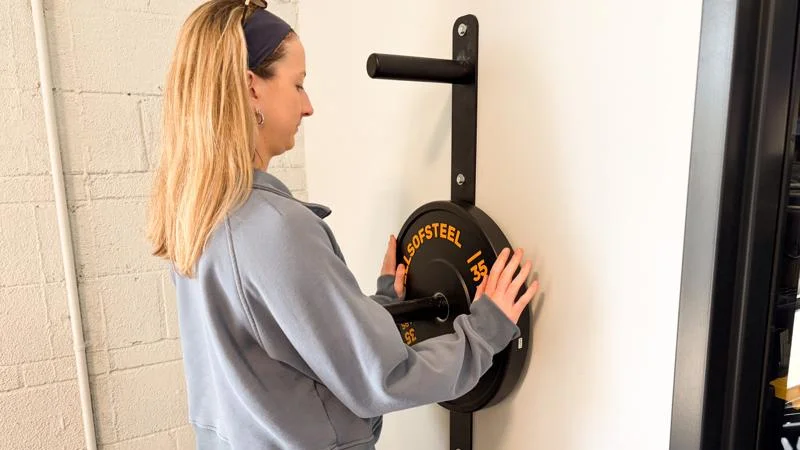
To ensure we’re providing honest, unbiased reviews, all of our ratings and scores are based on hands-on testing and personal experience. We build and test each plate tree, use them as much as possible, and score them according to our equipment testing methodology, which rates the trees in key categories like peg diameter and length, delivery and setup, value, and more.
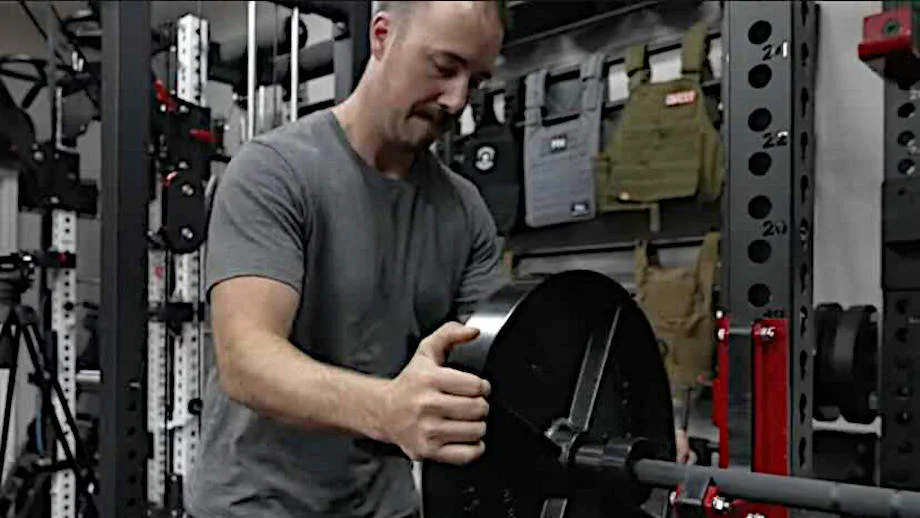
The GGR team of testers includes certified personal trainers, strength coaches, nutrition coaches, CrossFit enthusiasts, gym owners, triathletes, and more. We have years of experience testing the best home gym equipment, including squat racks, barbells, weight plates, plate tress, and much more. In 2025, we helped over 6,786 athletes find their ideal home gym equipment and strength accessories, and we’re here to help you, too.

Latest Updates
In April 2026, we reviewed our list of the best plate trees and made a few changes based on our latest testing. The REP Fitness Bar and Bumper Plate Tree still earns our top recommendation, but we swapped out picks that didn’t hold up in areas like mounting options and durability. New additions—like the Bells of Steel Bumper Plate Weight Tree—stood out for their high scores in these categories.
Best Plate Tree Overall: REP Fitness Bar and Bumper Plate Tree
Updated by: Matt Dustin, CSCS, PN1-NC







At a Glance
- Sturdy construction with a high weight capacity
- Easy assembly process
- Very stable in use
- No transport wheels
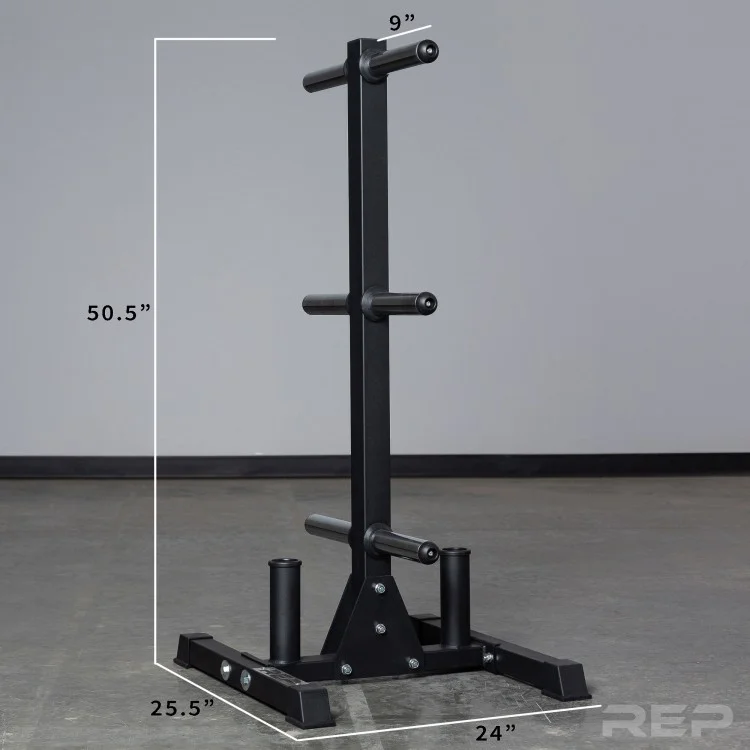
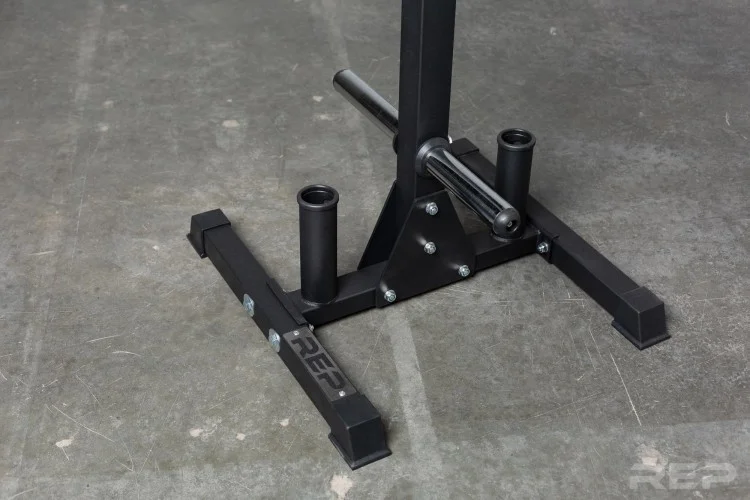
The REP Fitness Bar and Bumper Plate Tree is our top pick for the best plate tree for most home gym owners. It comes with included barbell storage, which isn’t guaranteed with all storage trees, and it has a weight capacity of 850 pounds.
This stellar capacity should be more than enough for most home gym trainees, and the $200 price tag is actually pretty decent for the category (especially one as versatile as this). Overall, we give this plate tree 4.5 out of 5 stars for value.
Footprint: 4/5
Weight Capacity: 5/5
Durability: 5/5
Why We Like the REP Fitness Bar and Bumper Plate Tree
One of the biggest advantages of this plate tree is its quick assembly, and it earns 4 out of 5 stars for the delivery and setup process from our expert product tester, Amanda Dvorak, ISSA-CPT, ISSA-CNC.
“I am NOT handy at all yet I assembled this by myself, which is saying something,” Amanda told me. “Since I got this so long ago, I don’t remember how long it took to put it together, but I want to say it was probably about 1.5 to 2 hours.”
RELATED: REP Fitness Discount Code
Since plate trees are meant to help save space and keep your gym organized, footprint and portability are important considerations; this REP Fitness offering earns 4 out of 5 stars for the category.
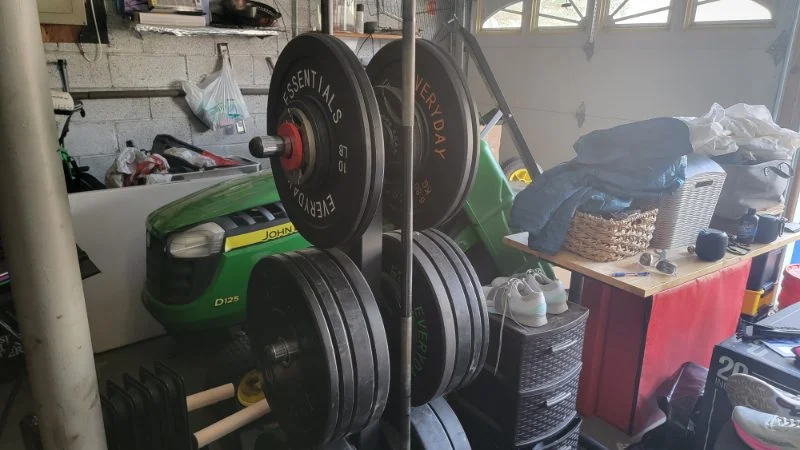
“I have very little room in my garage gym and it fits pretty well,” says Amanda. “My garage is technically a two-car garage, but there’s so much other stuff in it besides my gym equipment, and this plate tree doesn’t feel obtrusive at all.”
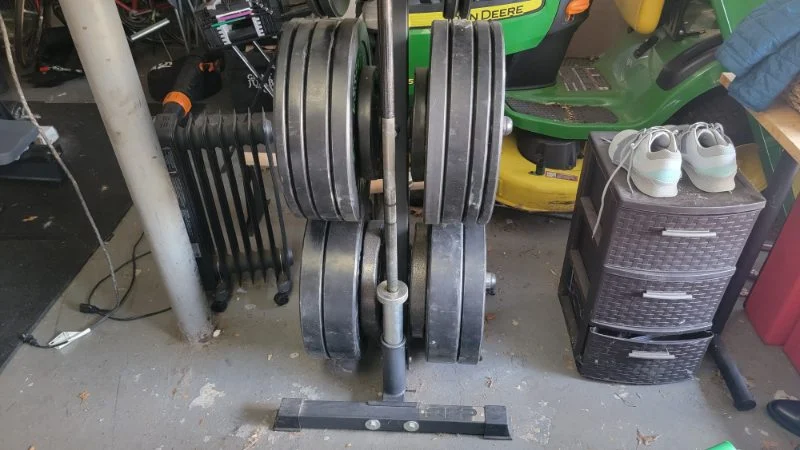
The REP Fitness plate tree also offers an impressive 850-pound weight capacity, which we rate at 5 out of 5 stars. Amanda says it’s very stable, too, and adds, “I’ve never had any issues with it tipping over, even when it’s loaded unevenly from bottom to top or side to side.”
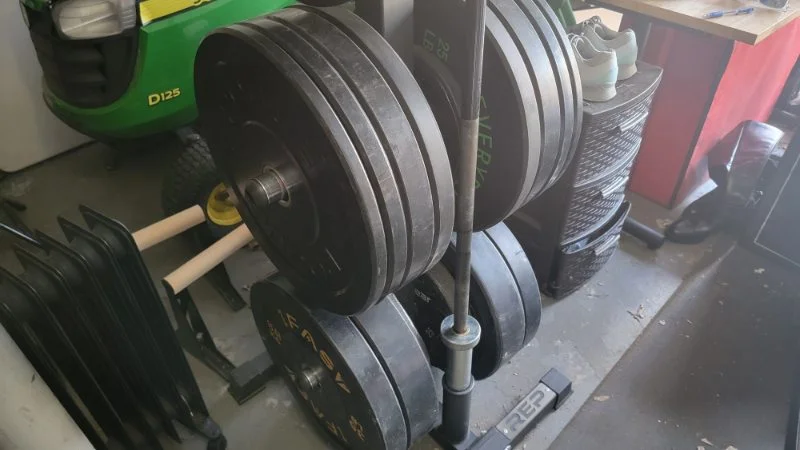
I think I’ve had this plate tree for four years now, and I honestly don’t think you’d be able to know I’ve had it that long. I’m constantly adding and removing plates from it, and there is some dust and cobwebs, but virtually no cosmetic damage and absolutely zero functional damage.”
Amanda Dvorak, ISSA-CPT, ISSA-CNC
Alternatives
We absolutely love this plate tree, but it’s not perfect. While it can hold plenty of weight, it only earns 3 out of 5 stars for mounting options. Amanda notes, “The plate pegs are fixed, and the tree can only fit plates with a 2-inch insert.”
This should still work well for most users, but you can’t adjust the location of the pegs, and it won’t work for smaller plate sets that don’t feature 2-inch centers.
The profile is also missing wheels, which is our only other minor complaint. We know that most people won’t be rolling their plates around the gym on a regular basis, but it’s nice to have the ability to do so.
If you want another heavy-duty plate tree that’s a bit easier to move around your gym, the Bells of Steel Bumper Plate Weight Tree features a similar, durable build and includes built-in transport wheels.
Testing Breakdown
The REP Fitness plate tree received above-average scores in nearly every category, which is why it’s our pick for as the best plate tree, overall.
Vs. The Average
While this plate tree costs slightly more than the average profile, we appreciate the above-average weight capacity and barbell storage capabilities.
| REP Fitness Bar and Bumper Plate Tree | Average Plate Tree | |
| Price | $199.99 | $184.39 |
| Footprint | 24″ L x 24″ W x 50″ H | 22.4″ L x 21.2″ W x 43.2″ H |
| Weight Capacity | 850 lbs | 696 lbs |
| Weight Horn Length | 8” | 8.2” |
| Portable? | No | No |
| Barbell Storage? | Yes | Yes |
Best Budget Tree: CAP Barbell 2-Inch Plate Tree
Updated by: Matt Dustin, CSCS, PN1-NC



At a Glance
- Priced to fit most budgets
- Very durable for the price point
- No barbell storage or transport wheels
- Limited 30-day warranty
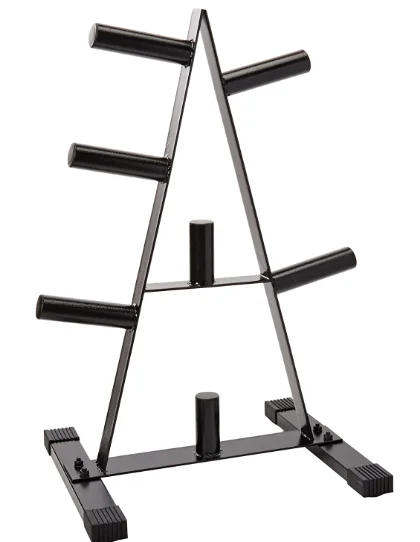
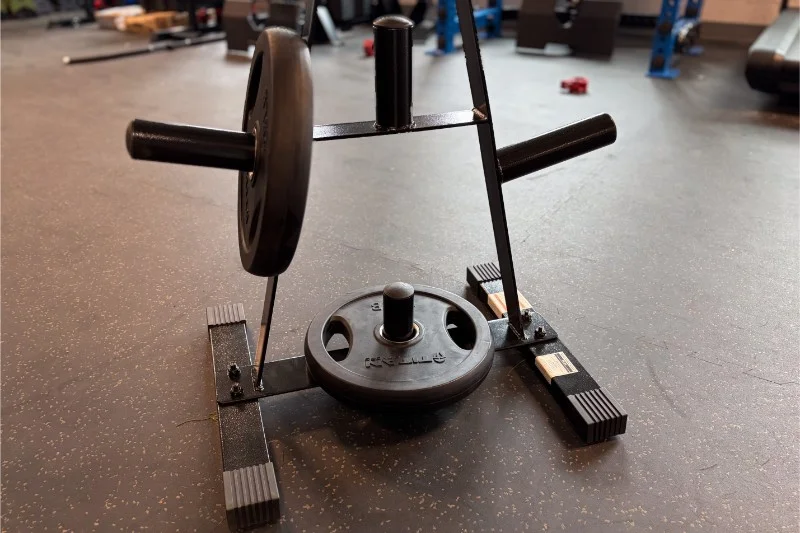
Oftentimes, you’ll need to sacrifice some quality with budget home gym equipment, but the CAP Barbell 2-Inch Plate Tree actually does a pretty good job for a heavy-duty piece of equipment that costs around $70.
It doesn’t have barbell storage or transport wheels, but if you just need a stand to keep your weight plates organized, this can be a fantastic choice, especially at its sub-$100 price point. Nothing about it feels cheap, either, and we give it 4 out of 5 stars for materials and durability.
Footprint: 4.5/5
Weight Capacity: 3.5/5
Durability: 4/5
Why We Like the CAP Barbell 2-Inch Plate Tree
One of our favorite features of the CAP Barbell 2-Inch Plate Tree is the compact dimensions, and we give this plate tree 4.5 out of 5 stars for footprint and portability. For those working within tighter spaces, this can be an excellent choice.
“This is the perfect size for a small gym,” says our expert product tester. “It’s only about 2.5 feet tall, and is not heavy at all. I could move it across the testing facility with no problem, even if it didn’t have wheels or added mobility features.”
This CAP Barbell profile also earns 4.5 out of 5 stars for the peg diameter and length. We had no issues fitting our testing plates onto the pegs, and unless you’re operating a commercial gym with quite a few weight plates, or you’ve accumulated a larger-than-average plate collection, this should get the job done nicely for most home gym owners.
Finally, the price, itself, is nearly impossible to beat. This plate tree costs around $70 on Amazon, which is a steal for the quality it delivers.
“For only $69.99, it’s definitely worth the price,” our tester told me. “I think this tree is durable, stable, and can be a great product for someone who is not looking for anything super flashy. Compared to the price of some other plate trees out there, this is a great value purchase.”
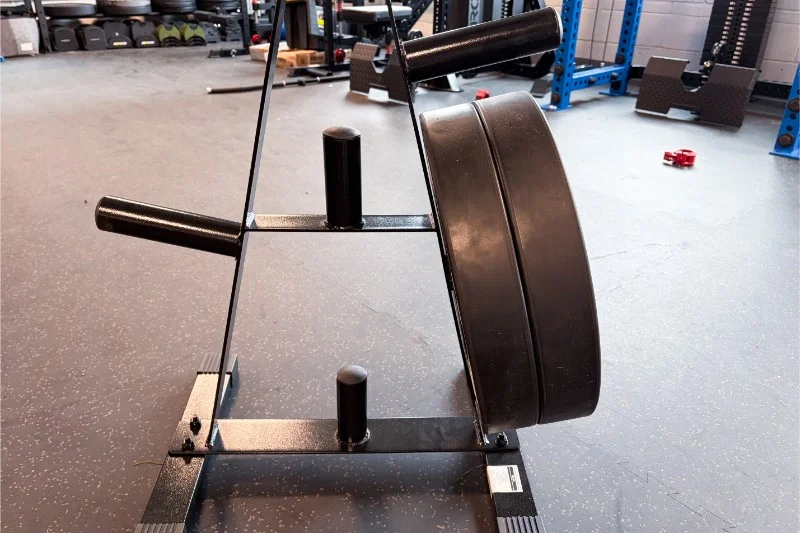
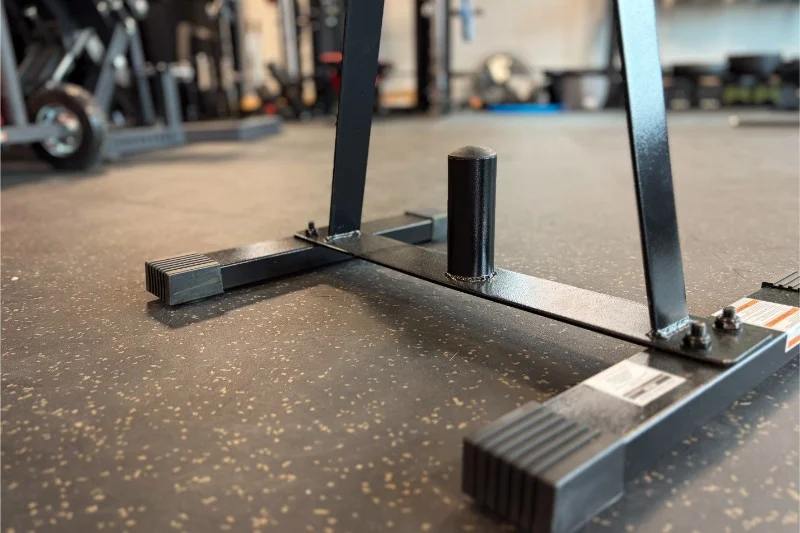
This is definitely a heavy duty plate tree, and I could tell when I was putting it together that it would be durable. The arms are thick pieces of metal, and there are reinforced joints on all of the legs.
GGR Expert Product Tester
Alternatives
One of the downsides to this plate tree is that it only has a 500-pound weight capacity. This should be fine for most home gym owners, but it’s always nice to have a little more for when you get stronger (and start to acquire more free weights).
It’s also too small for bumper plates and there’s no included barbell holder, though you can always store your bar on your power rack’s J-cups.
Our tester also notes that the tree can shift slightly when removing plates from one side or the other. That said, she never felt like it was in danger of falling over.
If you need a higher weight capacity, available barbell storage, and don’t mind spending a bit more money, we recommend the Bells of Steel Bumper Plate Weight Tree and Bar Holder, instead.
Testing Breakdown
While it may not have quite the same weight capacity or mounting options as other plate trees, we still give this CAP Barbell tree above-average scores in most testing categories.
Vs. The Average
This tree is significantly more affordable than the average plate tree, although it has a lower weight capacity and lacks the ability to hold your barbells.
| CAP Barbell 2-Inch Plate Tree | Average Plate Tree | |
| Price | $68.44 | $184.39 |
| Footprint | 22″ L x 19″ W x 37″ H | 22.4″ L x 21.2″ W x 43.2″ H |
| Weight Capacity | 500 lbs | 696 lbs |
| Weight Horn Length | 7.5” | 8.2” |
| Portable? | No | No |
| Barbell Storage? | No | Yes |
Best Plate Tree With Wheels: XMark Commercial Plate Tree
Updated by: Matt Dustin, CSCS, PN1-NC



At a Glance
- Includes heavy-duty locking transport wheels
- Built-in storage for two barbells
- Offers a 750-pound weight capacity
- Above-average cost
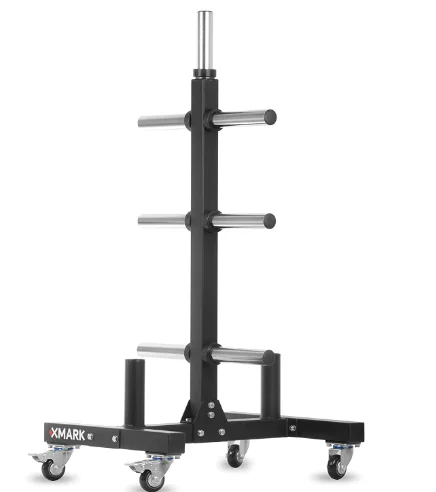
Whether you’re someone who’s working with minimal space and needs to move equipment around frequently, or you like the convenience of rolling your weight plates next to your workout station, the XMark Weight Plate Tree can be the pick for you.
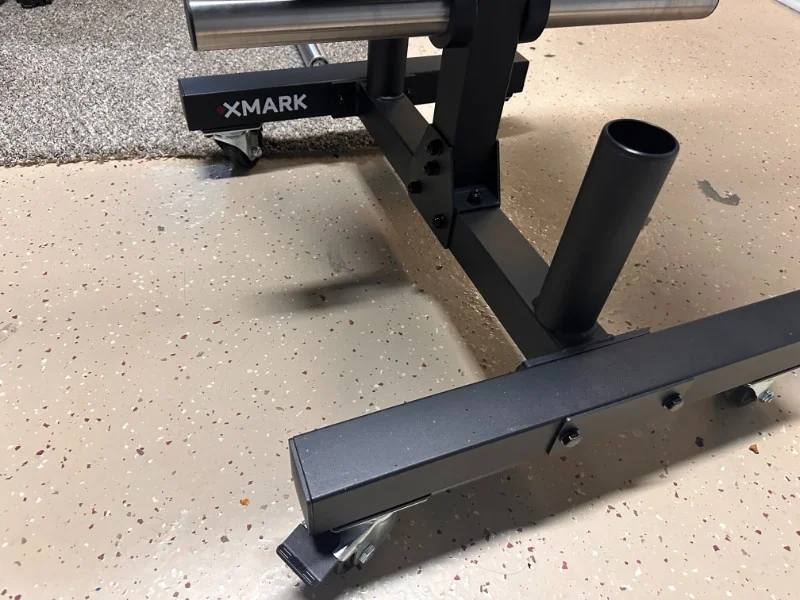
This plate tree comes with four caster wheels that allow for easier transportation. The wheels can also be locked to keep the tree still when you don’t want it moving. Accordingly, it earns 4 out of 5 stars for footprint and portability.
Footprint: 4/5
Weight Capacity: 4/5
Durability: 4/5
Why We Like the XMark Commercial Plate Tree
In addition to being designed for easy transportation around your gym, this plate tree also has an impressive 750-pound weight capacity and two sleeves for storing your barbells. Our product tester, Nicole Davis, CPT, PN1-NC, gives this tree 4 out of 5 stars for materials and durability.
“This thing feels really sturdy and durable,” she says. “It’s made of alloy steel, the wheels are really beefy with good brakes on them, and the base just feels solid.”
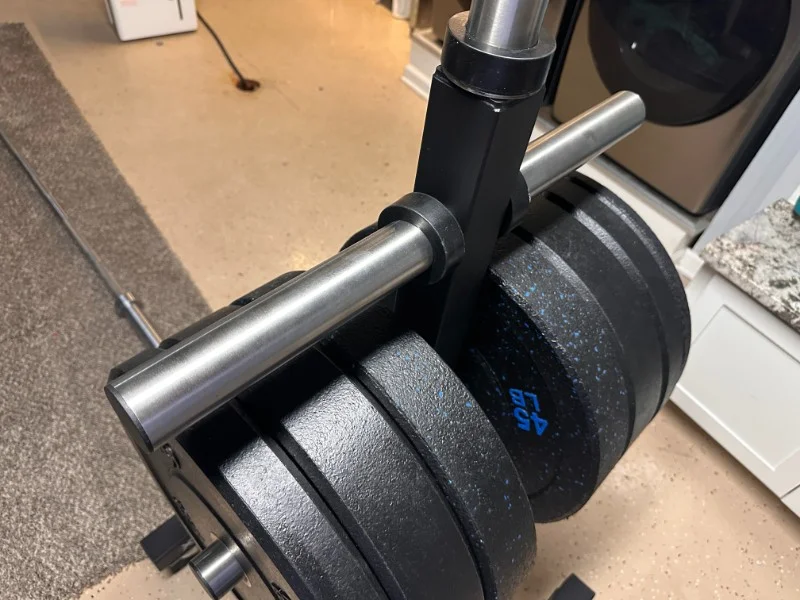
The XMark Commercial Plate Tree also has an impressive 750-lb capacity, which means it can handle the needs of nearly any home gym; it earns 4 out of 5 stars for this category from Nicole. She adds, “I have 250 pounds on this thing now, and it works smoothly with no wobbling or bending.”
Commercial gym owners may need something with a higher weight rating, but we think this should be plenty for 99% of lifters who don’t need 750 pounds worth of weight plates.
We also appreciate that this rack has bar storage for two standard barbells, making it a versatile storage option. If your squat rack doesn’t have barbell storage, or you have some extra bars around your gym, this XMark weight plate tree can help you stay organized.
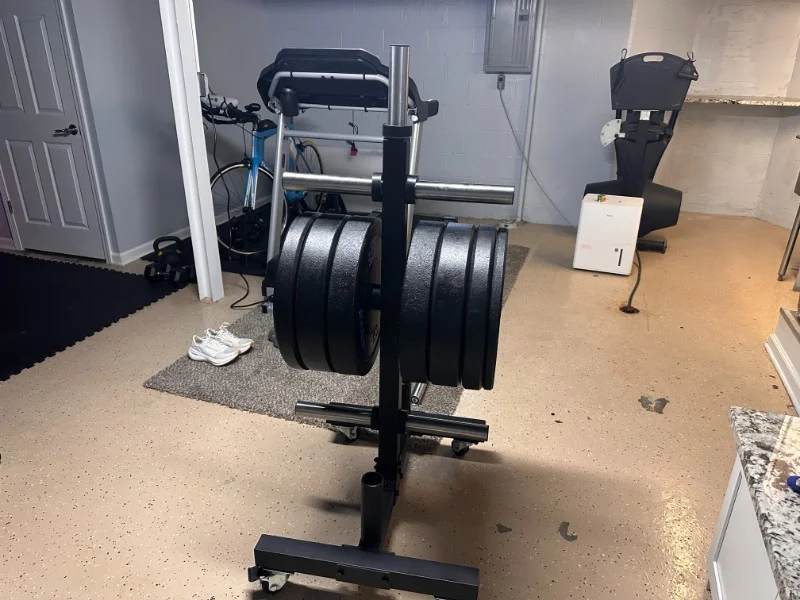
I have what you’d consider a small gym space—a corner of my basement—so this was appealing to me as a compact storage option. The footprint is 29 inches by 24 inches, which works fine, and it rolls super easily with smooth, beefy wheels. Plus, it has two locks once you figure out where you want it to be placed.
Nicole Davis, CPT, PN1-NC
Alternatives
While we like that you can use this plate tree for barbell storage, it’s not a perfect solution for all gyms, as Nicole found out. She states, “My main issue with it, and probably something I should’ve realized before purchasing, is that because my basement ceilings are short—7 feet with rafters in most places—I can’t get a barbell into the holder on this storage rack”
At roughly $239, we think the value is pretty good, too, but it’s not necessarily the best option on the market. Nicole mentioned seeing other manufacturers offer higher weight capacities at a lower price, which may be worth considering.
If you want to save a little money on something that’s just as durable, and you don’t need transport wheels, the REP Fitness Bar and Bumper Plate Treeis another good option to consider.
Testing Breakdown
While it didn’t receive high marks for mounting options or delivery and setup, this plate tree still received high scores in most testing categories and is one of the best portable options on the market.
Vs. The Average
The XMark Weight Plate Tree costs more than the average plate tree but offers a higher weight capacity and built-in transport wheels.
| XMark Weight Plate Tree | Average Plate Tree | |
| Price | $239 | $184.39 |
| Footprint | 22″ L x 20″ W x 41″ H | 22.4″ L x 21.2″ W x 43.2″ H |
| Weight Capacity | 750 lbs | 696 lbs |
| Weight Horn Length | 9.5” | 8.2” |
| Portable? | Yes | No |
| Barbell Storage? | Yes | Yes |
Best Plate Tree for Bumper Plates: Bells of Steel Bumper Plate Weight Tree
Updated by: Matt Dustin, CSCS, PN1-NC
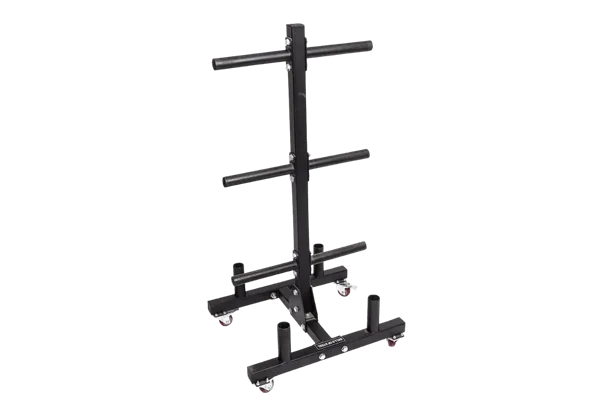

At a Glance
- High weight capacity
- Storage for up to four barbells
- Easily fits standard bumper plates
- Above-average cost
Bumper plates are often thicker than traditional weight plates, and the lighter weight plates are bigger, too. Since they’re meant for specific types of lifting, even the lightest bumper plates typically have the same diameter as the heaviest plates, so you’ll need an accommodating plate tree with plenty of space to house these pieces of exercise equipment.
With excellent durability and plenty of storage options to hold your plates, the Bells of Steel Bumper Plate Weight Tree is one of our favorite Olympic weight plate trees and earns 4 out of 5 stars for mounting options. It has plenty of vertical spacing between the pegs, making it spacious enough to hold your bumper plates without any issues.
Footprint: 4.5/5
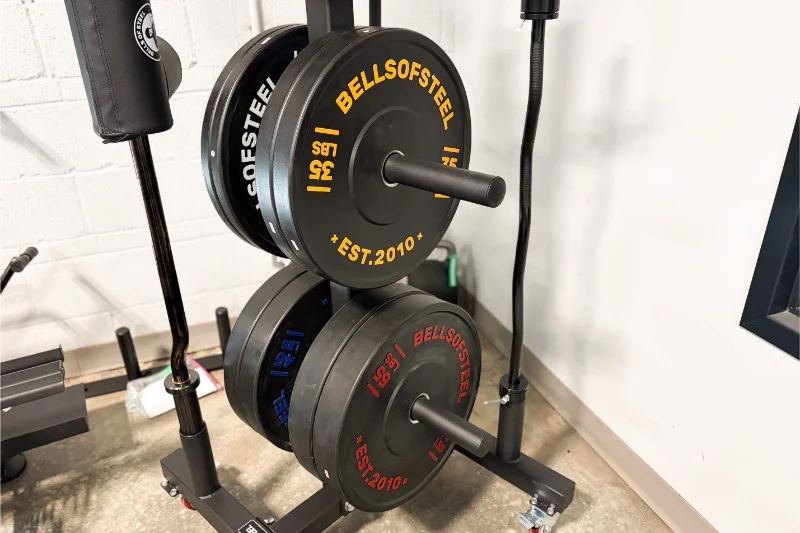
Weight Capacity: 5/5
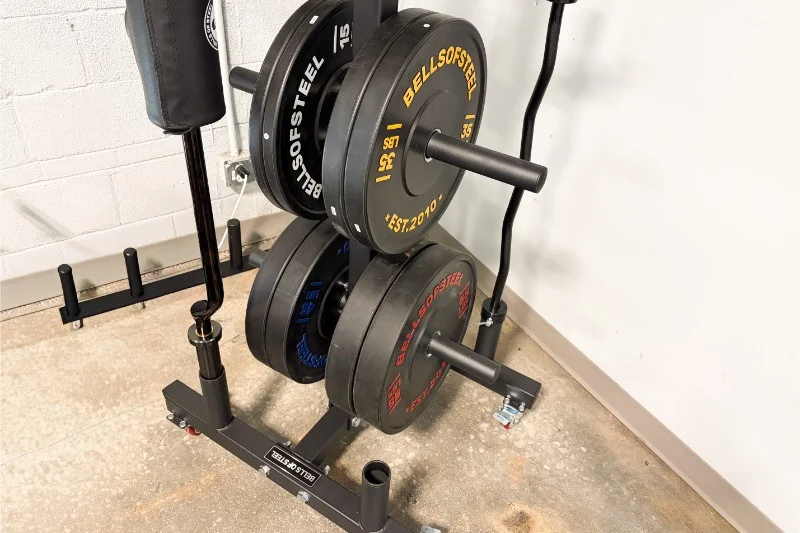
Durability: 5/5
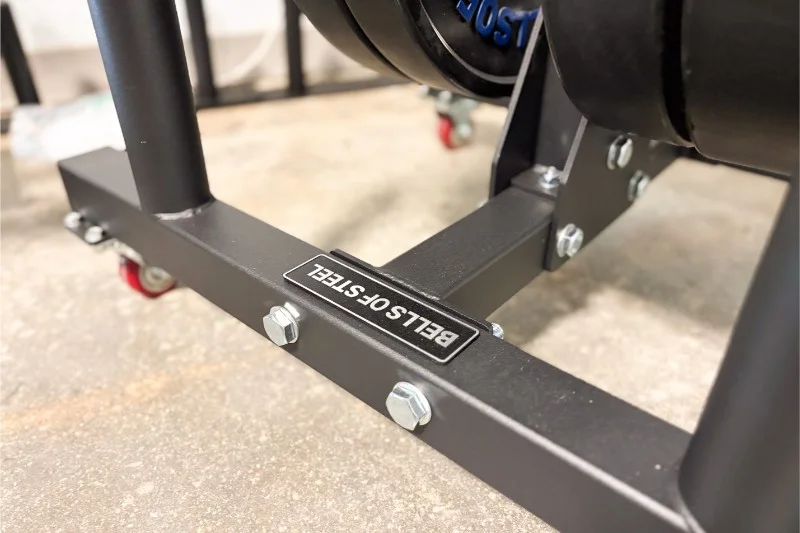
Why We Like the Bells of Steel Bumper Plate Weight Tree
Since this plate tree is designed for both barbell and bumper plate storage, it’s not the smallest plate tree on the market. That said, it still earns 4.5 out of 5 for footprint and portability from our expert tester.
“It’s definitely on the bigger side, but it’s really not too bulky,” she explains. “We can easily fit it between machines or tuck it off into the corner of the gym. It has a larger weight capacity and with the bar holders full, the wheels make it super portable and easy to move around.”
Despite the fact that it’s meant to hold a lot of weight, we didn’t have any issues with plates or barbells getting in the way of each other. The vertical, spacious design results in easy storage for bumper plates, which can be bigger than standard plates, due to the larger diameter of even the lighter weight options.
RELATED: Bells of Steel Promo Code
“It has more than enough room for everything you need, and it was easy to get the plates on all of the pegs,” our tester told me. “I had no issues loading and unloading plates, and unless you have a massive squat or hex bar placed on there, the pegs are completely free with all barbell spots full.”
We’ve run into issues with barbell storage on plate trees in our past testing trials, and are happy to report that this Bells of Steel profile has a fantastic design. The powder-coated finish has a sleek appearance, and it fits plenty of bumper plates, making it a solid choice for any weightlifting setup.
This has a massive weight capacity and had no issues holding a full set of weight plates as well as four Olympic barbells. There was absolutely no instability when loading this thing up, as well as while we rolled it around the testing facility.
GGR Expert Product Tester
Alternatives
There’s not much to complain about with this Bells of Steel plate tree, but it’s worth pointing out that this is the most expensive plate tree on our list. At roughly $361, it’s certainly not cheap, but it offers the highest weight capacity of anything we tested, as well as four barbell slots, so we think it’s well worth it for those who have a large bumper plate collection.
It also has a more complicated setup process, and we give it 3.5 out of 5 stars for the delivery and setup. Our builder was able to complete the assembly with no issues, but it took him over an hour, and he had to use some of his own tools.
If you need bumper plate and barbell storage but are OK with something a little smaller, the REP Fitness Bar and Bumper Plate Tree can be a great option that only costs around $200.
Testing Breakdown
This plate tree received above-average marks across the board, with exceptionally high scores in weight capacity, durability, and peg diameter and length.
Vs. The Average
While this is one of the most expensive weight trees we tested, it offers the highest weight capacity and generous storage options, making it well worth the price for those with a large barbell and plate collection.
| Bells of Steel Bumper Plate Weight Tree | Average Plate Tree | |
| Price | $360.99 | $184.39 |
| Footprint | 24″ L x 24″ W x 51″ H | 22.4″ L x 21.2″ W x 43.2″ H |
| Weight Capacity | 880 lbs | 696 lbs |
| Weight Horn Length | 9” | 8.2” |
| Portable? | Yes | No |
| Barbell Storage? | Yes | Yes |
Best 1-inch Weight Plate Tree: Marcy 1-Inch Weight Plate Tree
Updated by: Matt Dustin, CSCS, PN1-NC


At a Glance
- Designed for 1-inch weight plates
- Small footprint and light frame
- Below-average weight capacity
- Designed for smaller plates
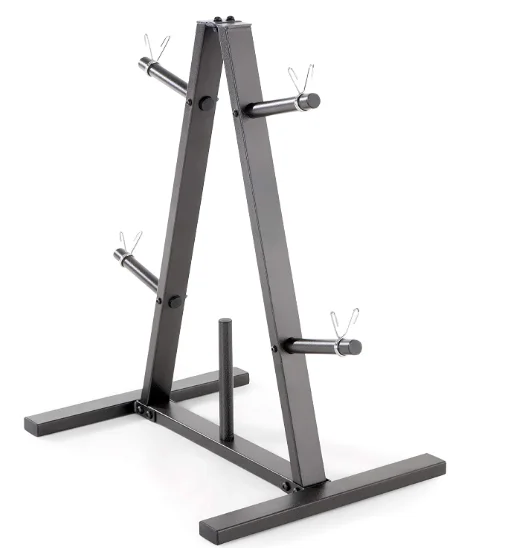
If you’re looking for something small, compact, and designed to fit 1-inch weight plates, we highly recommend the Marcy 1-Inch Weight Plate Tree. Since standard weight plates and bumper plates have a 2-inch hole size, smaller plates don’t often fit on larger weight trees with thicker horns, which is where the Marcy plate tree can come in handy. It’s specifically designed with smaller pegs to store your smaller weight plates.
At the time of writing, it costs less than $60, too, making it an affordable choice that earns 4 out of 5 stars for value.
Footprint: 5/5
Weight Capacity: 2.5/5
Durability: 2/5
Why We Like the Marcy 1-Inch Weight Plate Tree
Since most weight plates use a 2-inch hole, many plate trees are designed accordingly with larger pegs meant to support full-size plates. However, this means that smaller weight plates with 1-inch holes, which are often used for adjustable dumbbells and smaller barbells, won’t fit well.
This Marcy plate tree is specifically designed for these smaller plates, which means it’s also a compact tree that earns 5 out of 5 stars for footprint and portability.
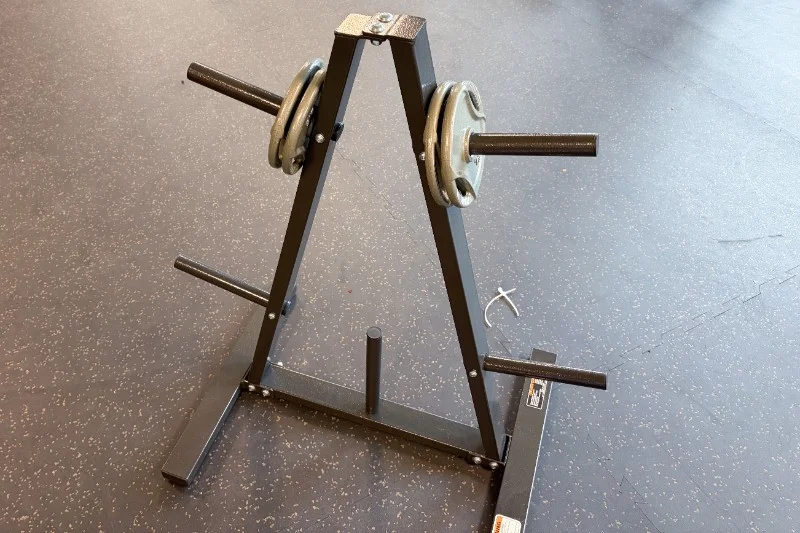
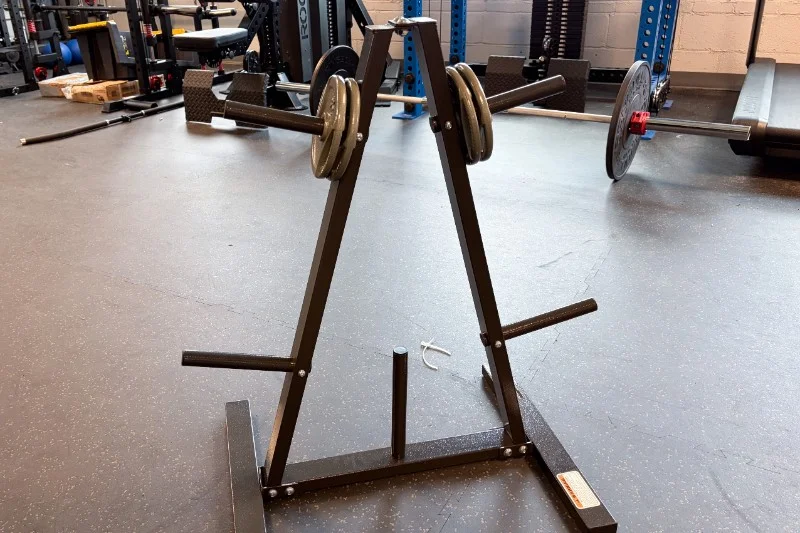
“This is such a tiny weight tree that it would fit perfectly in any small home gym,” says our expert tester. “This is something that could even fit in an apartment-style gym like I turn my living room into when I need it! It’s hardly 2 feet tall and was very easy to move around due to how light it is.”
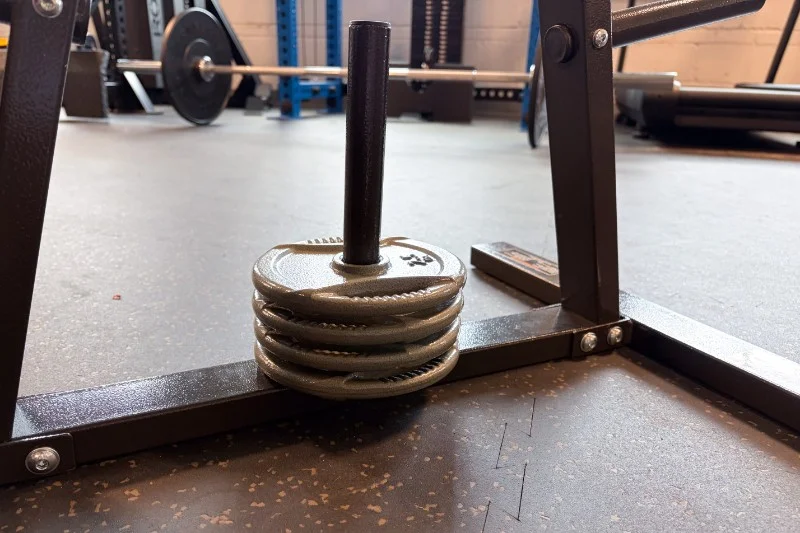
Even though the pegs are thinner than most, they’re long enough to accommodate a few larger plates, if needed, and we give this tree 4 out of 5 stars for the peg diameter and length. Our tester says, “It looked like they could comfortably hold two 45-pound bumper plates given the length of the pegs, but obviously not with the diameter.”
Larger bumper plates may bump the floor due to the lower height of the bottom pegs, but should fit on the top pegs, as well.
For the amount you’re spending, you really get everything you need. It’s a good choice for someone who doesn’t have a ton of space, is just looking to start building up their home equipment, and doesn’t need anything fancy.
Our Expert Product Tester
Alternatives
While this plate tree can work well for smaller plates, it’s not the most durable tree we’ve tested. This is to be expected, though, with something designed for smaller plates. Still, it could be better, and earns 2 out of 5 stars for materials and durability.
“This is one of the least durable weight trees I’ve tested,” our tester told me. “Even when I was putting it together, some of the pegs would get scratched easily if it scraped up against anything metal.”
As noted earlier, it’s also not a very good choice for those with full-sized weight plates. The tree itself is somewhat short, and standard bumper plates are too tall to fit on the lower pegs. This can be a good choice if you’re using smaller, 1-inch plates, but if you’re using full-sized weight plates, we recommend avoiding this tree.
If you want another affordable option that’s designed to work with standard 2-inch plates, we suggest the CAP Barbell 2-Inch Plate Tree, instead.
Testing Breakdown
Even though it’s very compact and affordable, this tree isn’t very durable and has a limited weight capacity.
Vs. The Average
This Marcy 1-Inch Weight Plate Tree is significantly more affordable than the average plate tree, but it has a lower weight capacity and more limited storage options.
| Marcy 1-Inch Weight Plate Tree | Average Plate Tree | |
| Price | $54.99 | $184.39 |
| Footprint | 20″ L x 19″ W x 37″ H | 22.4″ L x 21.2″ W x 43.2″ H |
| Weight Capacity | 500 lbs | 696 lbs |
| Weight Horn Length | 7” | 8.2” |
| Portable? | No | No |
| Barbell Storage? | No | Yes |
Other Plate Trees We Researched
We chose our top five plate trees for this list, but there are plenty of other options to consider. Here are a couple more that didn’t quite make the cut for this guide:
- PRx Weight Plate Wall Storage: We like the convenience of having wall-mounted storage, but plate tree’s assembly and setup can be a little more difficult, and it’s not easy to move around once mounted.
- Steelbody Horizontal Plate and Olympic Bar Rack Organizer: This can be a great choice for those who prefer a horizontal plate organizer, but we found that most home gym owners prefer vertical storage, which can offer better functionality for smaller spaces.
How We Picked and Tested the Best Plate Trees
Since there are plenty of weight plate trees to consider, we developed a comprehensive testing methodology to help us test and rate them. We assign scores of 1 to 5 for the following categories, and the average number is our final product rating.
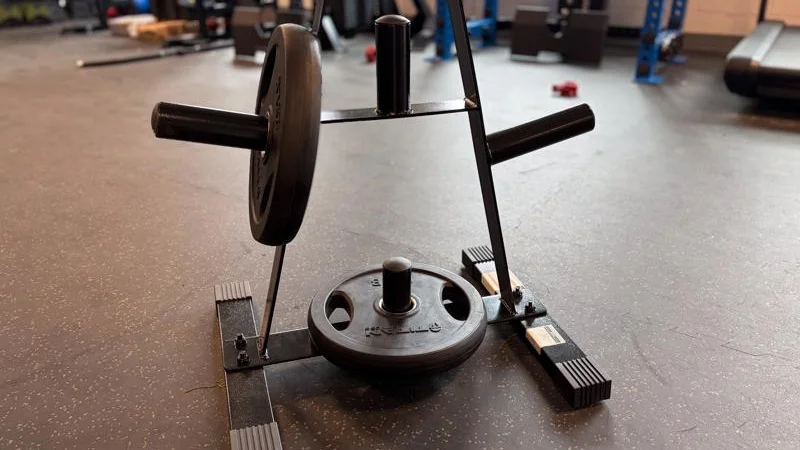
Footprint and Portability
We use this category to assess how much usable floor space a plate tree occupies, as well how easy it is to move around the gym. To earn 3 out of 5 stars, a plate tree should have a reasonable footprint for a single-car-garage-sized-gym, and it can be moved when unloaded without excessive instability.
RELATED: Best Compact Exercise Equipment
Mounting Options
For mounting options, we consider how the plates are stored on a given tree, as well as whether or not there’s any flexibility within the overall configuration. This takes into account specific weight plate sizes, peg placement and orientation, as well as any instances where the plates get in each other’s way when loading or unloading the tree.
For a 3 out of 5, the plate tree features a stable, freestanding design with well-spaced pegs that can accommodate common plate sizes and allow for straightforward loading and unloading. Higher scores are given to plate trees that offer additional mounting options, such as wall-mounted plate trees.
Delivery and Setup
We base this category on shipping timelines, packaging quality, and ease of assembly. For our purposes, we ask one tester to build the tree alone without any assistance. To earn 3 out of 5 stars, it takes about an hour for one person, but you may need to have your own tools on-hand.
Materials and Durability
This rating is based on the overall build quality, which includes steel thickness, weld quality, and finish. We repeatedly load and unload tested plate trees, and whenever possible, leave them in a garage gym for regular use to assess any wear and tear. For a 3 out of 5, a tree should have solid construction with clean welds that can withstand regular use with no structural damage, though coatings may begin to chip or scratch after a while.
Peg Diameter and Length
The diameter of each peg, as well as the length, can directly impact the storage capabilities. Most pegs are designed to fit Olympic plates with a 2-inch hole, although some may be specifically designed for smaller plates. For a 3 out of 5, a plate tree should have Olympic-sized pegs that allow plates to slide on and off easily, but the peg length could be longer to accommodate more bumper plates.
Value
This category considers how the price lines up with competitors, especially when comparing factors like storage components, footprint, and portability. For a 3 out of 5, a plate tree offers fairly standard value and seems to be priced adequately, but items such as warranty or durability could be improved upon.
Weight Capacity
Since a plate tree is designed to continuously hold heavier loads, we assess the total weight capacity as well as any instability we notice when loading the tree. To earn a 3-out-of-5-star rating, a plate tree should safely support its listed weight capacity without any bending, swaying, or side-to-side movement. It can also be loaded however you see fit; for example, your largest plates can fit on any of the pegs, but you should load both sides evenly to avoid tipping.
Customer Experience
Our customer experience score is based on the entire purchasing experience, including shipping policies, financing options, return policies, and warranty coverage. For a 3 out of 5, we should see at least a one-year warranty, 30-day return policy, and multiple ways to reach customer support.
Customer Reviews
To help keep our ratings as unbiased as possible, we take this score directly from the average customer review scores online. In addition to the brand’s own site, we also check reviews on third-party retailers like Amazon to get the most fair and average review score possible.
Benefits of Plate Trees
Strictly speaking, not everyone needs a plate tree in their home gym. Plate trees are necessary for those who have squat racks with no weight plate storage space or those with no squat rack at all.
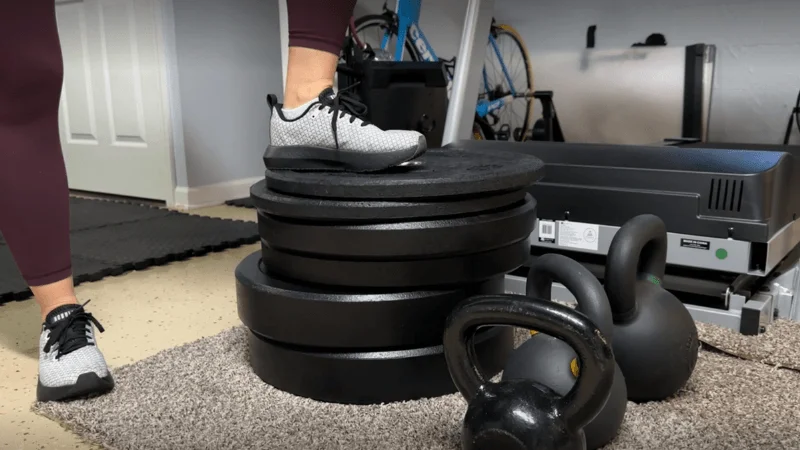
Sure, you could just leave your weight plates on the floor, but nobody wants to look at that potential pigsty. Here are a few of the most important reasons to consider having a plate tree in your gym.
Organization
The biggest benefit to using a plate tree is the ability to keep your stuff organized. Nobody wants plates strewn about the gym, and a good plate tree can not only keep your plates out of the way, but many offer barbell storage, too.
As you start to add more weight plates to your collection, things can get messy, and sorting through plates mid-work isn’t ideal, according to GGR Senior Staff Writer and certified personal trainer, Stephen Sheehan, CPT, CNC.
“Staying organized is one of the biggest keys to efficient home workouts,” he says. “Investing in a weight plate tree can be a great way to keep everything in order so you aren’t scrambling around looking for a certain weight.”
RELATED: Best Home Gym Storage
Safety
In addition to keeping your space organized, plate trees can offer an added degree of safety. Whether it’s dropping a plate on your foot, tripping on something, or getting your fingers pinched while trying to lift a plate that’s lying flat on the floor, small bumps and bruises aren’t uncommon when handling weight plates.
“I think a weight tree is a great safety-enhancing tool, since you don’t have to worry about stumbling over plates on the floor,” says Stephen Sheehan, CPT, CNC. “This is one of the more underrated aspects of home gym ownership, so don’t underestimate how much a weight plate tree can help keep your training space hazard-free.”
Portability
If you regularly re-arrange your gym, you know that unracking all of the plates from your rack, moving the rack, and then re-racking everything can be quite annoying. Thankfully, many weight plate trees are designed with transport wheels that can make it easy to roll your plates around the gym, if needed.
“You might not need a portable weight tree on a daily basis, but you’ll be happy to have it when you do need it,” says Matt Dustin, CSCS, PN1-NC. “Whether you’re moving things around your gym, or simply want to move your plates from one area to another, like from your squat rack to a separate deadlift area, a portable plate tree can be a great upgrade for home gyms, especially those with larger spaces.”
Easy Access
For those who have spent enough time using weight plates, you know that picking one up off the ground can be quite tricky, especially something like a bumper plate with smooth edges. While you can lean them up against your rack, that’s not exactly the safest setup, and for those without heavy-duty squat racks, that’s not an option.
A plate tree can make it significantly easier, faster, and safer to grab the plates you need, according to Matt Dustin, CSCS, PN1-NC.
“There’s nothing more annoying than having stacks of weight plates sitting on the floor, and trying to find the one you need,” he says. “I can’t tell you how many times I’ve pinched a finger trying to carefully lift a bumper plate off the floor, and a plate tree makes it so much easier to grab the plates you need.”
Buying Guide: What to Look for in Plate Trees
Still not sure which of our options is best for you? Here’s how to figure it out:
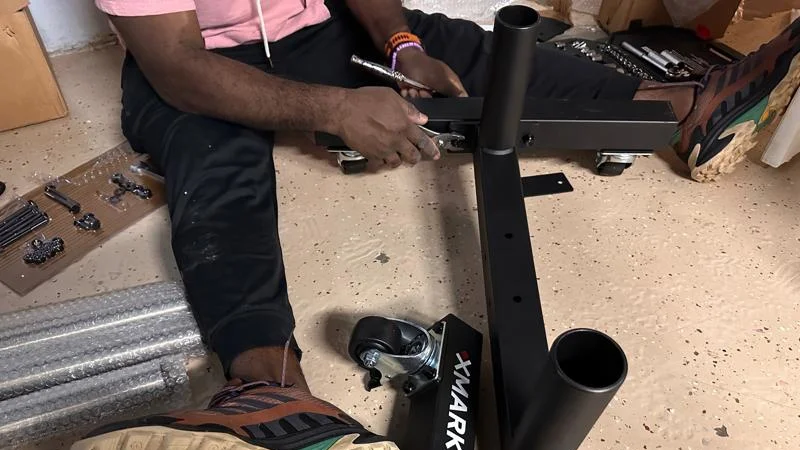
Price
Obviously, you’ll want to make sure whatever you buy fits your budget. Most weight plate trees can cost under $200, though many can even be found for under $100 or even $50—just remember the lower in price you go, the lower the weight capacity can be.
This is one of those gym accessories that’s very nice to have, but not the most exciting thing to buy, especially compared to new machines or rack accessories. You can always upgrade your plate tree down the road, but it doesn’t hurt to spend a little extra on a nicer one from the beginning, especially as plate trees are much more affordable than other pieces of home gym equipment.
RELATED: Best Budget Home Gym Equipment
Weight Capacity
This should be a no-brainer, but stronger people will want a plate tree with a higher weight capacity, while those who aren’t looking to PR every other month will do just fine with a more modest weight capacity.
We recommend considering how much weight you anticipate lifting and keeping in your gym, assuming you don’t already have plates. Think about your strongest lift, and how many weight plates that requires. That’ll likely be your foundation, and you may need additional plates down the road as you get stronger from progressive overload, which has been shown2 to be key in promoting gains in both strength and hypertrophy.
Peg Diameter
Certain plate trees may not work for certain weight plates, so check your plates’ diameter and make sure the pegs on the plate tree can fit them.
Most plate trees are Olympic plate racks designed to work with most iron plates and bumper plates. However, if you have smaller plates designed to go on specialty pieces of equipment, like smaller curl bars or adjustable dumbbells, they may not fit well on a tree designed for traditional plates, and you’ll want to choose a 1-inch rack, instead.
Wall-Mounted Vs Floor Storage
This can come down to how much space you have. If you’re working out of a tiny home gym, we’d recommend going with a wall-mounted option, though you’ll need to make sure it can be safely installed (and you don’t plan on moving any time soon).
If you’re not comfortable installing your own hardware, and don’t want to hire someone, a floor-based plate tree may be a better fit.
FAQs About the Best Plate Trees
Is it possible to overload a plate tree?
Yes. If you go above the recommended weight capacity, your plate tree may bend or become wobbly. Uneven loading can also be a problem, too, if one side becomes heavier than the other, which can cause the tree to tip.
Do I need a weight plate tree?
While not necessary, a plate tree can be a great way to stay organized, as it’s designed to keep your weight plates off the floor. Not to mention, many models also offer barbell storage, which saves even more floor space.
What is a plate tree?
A plate tree is typically a vertical stand with heavy-duty pegs that fit Olympic weight plates. This can be a great way to keep your plates organized, easy to find, and easy to grab. After all, it’s much easier to remove a plate from a tree than it is to peel one off the ground if it’s laying flat.
References
- Westcott W. L. (2012). Resistance training is medicine: effects of strength training on health. Current sports medicine reports, 11(4), 209–216. https://doi.org/10.1249/JSR.0b013e31825dabb8
- Chaves, T. S., Scarpelli, M. C., Bergamasco, J. G. A., Silva, D. G. D., Medalha Junior, R. A., Dias, N. F., Bittencourt, D., Carello Filho, P. C., Angleri, V., Nóbrega, S. R., Roberts, M. D., Ugrinowitsch, C., & Libardi, C. A. (2024). Effects of Resistance Training Overload Progression Protocols on Strength and Muscle Mass. International journal of sports medicine, 45(7), 504–510. https://doi.org/10.1055/a-2256-5857