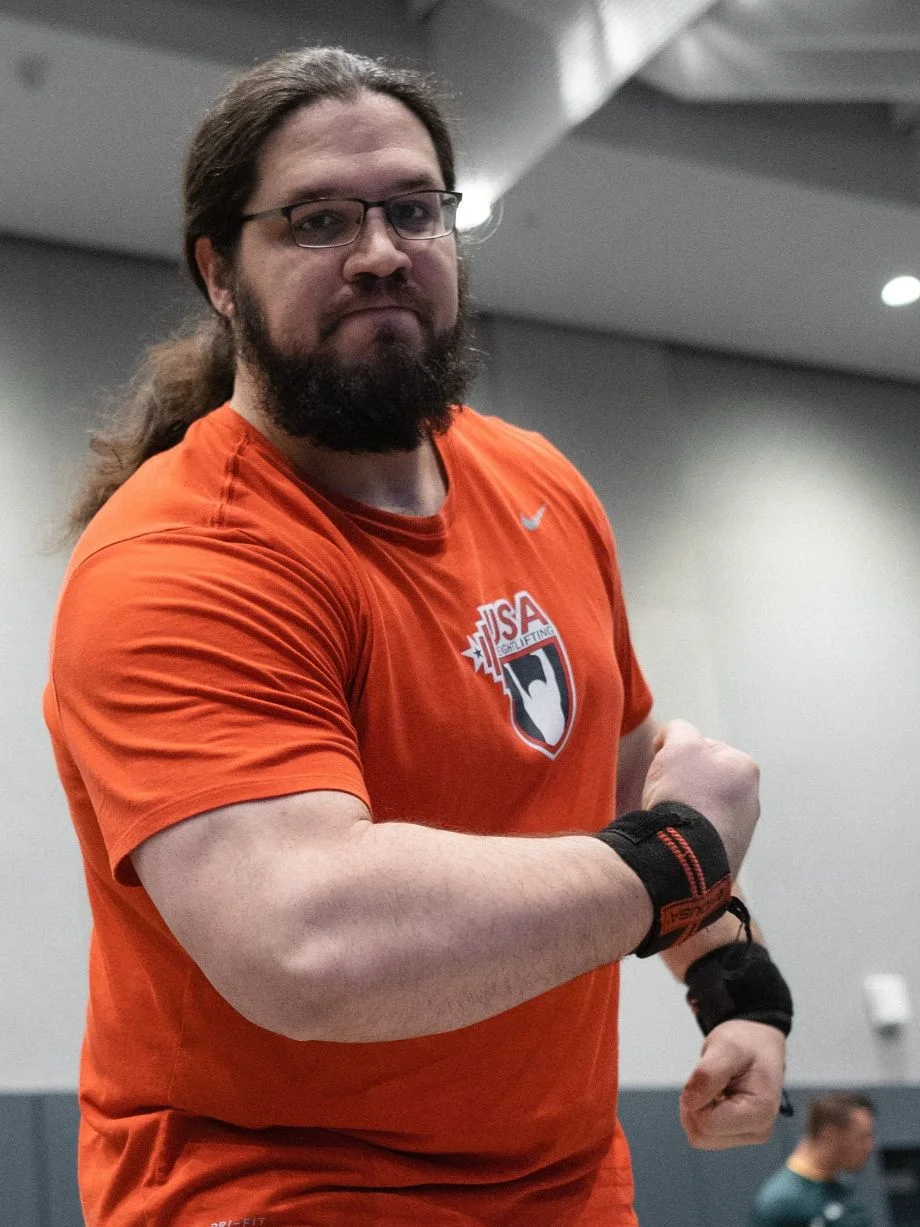

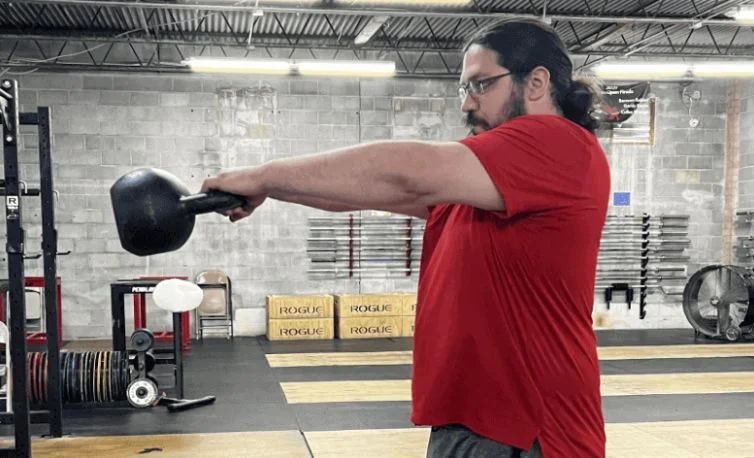
As an Olympian and competitive weightlifter, I compete in two barbell movements: The snatch and the clean-and-jerk. All my training is focused on improving these movements, but not all of my workouts can be built around just two movements and a barbell. There are many tools and many ways to diversify my training, but nothing compares to the utility of a kettlebell.
As an athlete, the kettlebell can be a way to fill the gaps in my typical workout, rounding out my accessory work with unilateral training that isn’t typical in traditional barbell movements. As a coach, I see kettlebell exercises as a method to improve my athletes’ power, body strength, and awareness in multiple ways. Your experience level doesn’t matter; whether you’re an elite weightlifter or a novice fitness enthusiast, kettlebell benefits are numerous and immeasurable.
Let’s talk about how this ball of cast iron with a handle can benefit your training.
1. Gives You a Low-Impact Workout
Kettlebell training can provide less wear-and-tear on the joints than many other exercises. Although they deal with developing power and explosive strength, kettlebell exercises remain low-impact, as they are done with the feet remaining on the floor. This keeps you from over-straining the joints, tendons, and ligaments during your workout.
The loads are also going to be lighter than most Olympic barbell training while still providing a challenge. I have clean-and-jerked more than 500 pounds in my lifting career and still have trouble maintaining my balance on a single-leg deadlift with anything over 35 pounds (don’t laugh!). Kettlebells can provide a challenge in other aspects of fitness, such as balance and coordination, without the heavier weights of barbell training.
2. Versatile and Space-Efficient Equipment
This simple piece of equipment will fill that void in any training regiment. Need to develop explosive strength and power? Try some kettlebell swings. Want to build strength in the upper and lower body? Consider some presses and goblet squats. Even beyond that, abdominals and stabilizers can be attacked with a total-body exercise like Turkish get-ups. The options for exercise provided by a kettlebell can address virtually any area in your fitness endeavors.
Along with being versatile, a kettlebell is compact and portable. It takes up the same amount of space as a dumbbell or cannonball, and most exercises require very little space. This can make a kettlebell an ideal training tool for a lifter on-the-go: Small enough to fit into any home studio or garage gym, yet portable enough to take outdoors (or anywhere, really).
3. Provides a Full-Body Workout
Kettlebells can improve all aspects of fitness; from balance to strength, cardio, and even flexibility and mobility. Furthermore, kettlebell exercises often bombard the entire body and major muscle groups, providing a full-body workout.
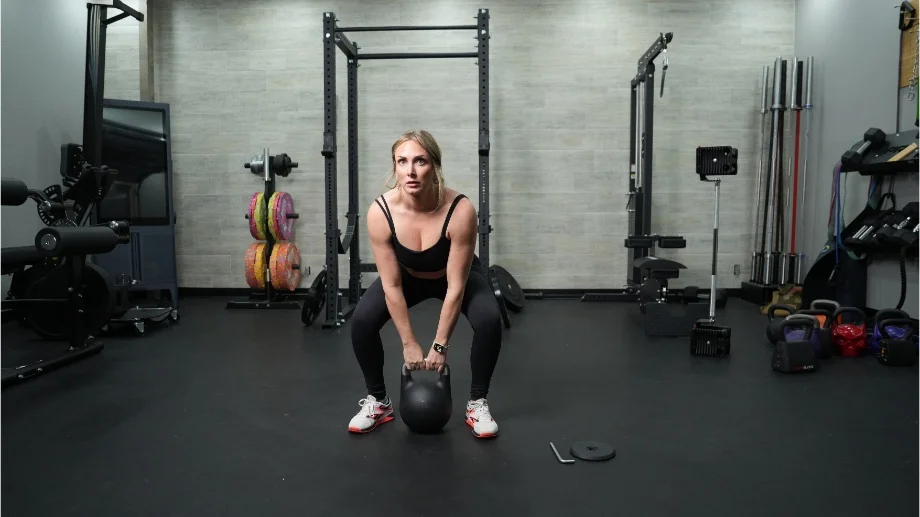
The kettlebell swing attacks the entire posterior chain, including the glutes, hamstrings, and lower back. Another explosive movement, the kettlebell clean-and-jerk, gets the entire body involved from the legs and hips to the overhead motion of the shoulders and arms. Along with explosive movements, kettlebells can get the whole body activated in purposeful, deliberate exercises. Movements like goblet squats, lunges, and presses are all slower exercises that focus on building strength while also demanding the use of stabilizers and the core.
Whether a powerful, fast movement or a slow strategic motion plane, kettlebells can provide that full-body workout experience that gym-goers aim for.
4. Builds Muscle
A high-intensity kettlebell workout can help build lean muscle mass on any athlete. Weighted anaerobic movements performed with lots of repetitions can provoke the muscular adaptation to grow lean, tight muscle tissue. Whatever your fitness goals, more muscle tissue can mean bigger strength gains.
RELATED: Best Adjustable Kettlebells
5. Builds Cardiovascular Endurance
Not many people think about the cardiovascular benefits of weight training, but kettlebells can be great for boosting your cardio. The submaximal loads of a kettlebell allow for the athlete to move quickly through repetitions. Also, kettlebell circuits tend to be short, intense workouts, giving you that cardiovascular response from the high repetitions in a short timeframe.
A 2014 study1 showed that high-intensity kettlebell training demonstrated an increased cardiovascular response when compared to traditional training. As such, you can get a great cardio workout from kettlebells without the impact or timeframe of running hours on end.
6. Builds Core Strength
Whether a slow or ballistic movement, kettlebells demand a lot of stability and strength in the core of an athlete.
One of the best kettlebell exercises (and one of my favorites) is a Turkish get-up; this movement is a slow movement from standing to lying down and back up again, all while keeping a single kettlebell up and overhead throughout the motion. The entire body, from head to toe, is recruited for this exercise, and it requires strength not only in the arms and legs, but the core, as well.
Kettlebells can be helpful in developing a strong core because kettlebell exercises are unilateral in nature: One kettlebell is used in one hand, causing the core to have to fight against the shifted weight load. Exercises like the Turkish get-up and kettlebell snatch are constantly addressing core stability.
7. Builds Grip Strength
It’s worth mentioning the proven grip strength2 influence that kettlebells can have on an athlete. Holding onto an odd object for reps without rest can give your grip an intense challenge across different movements.
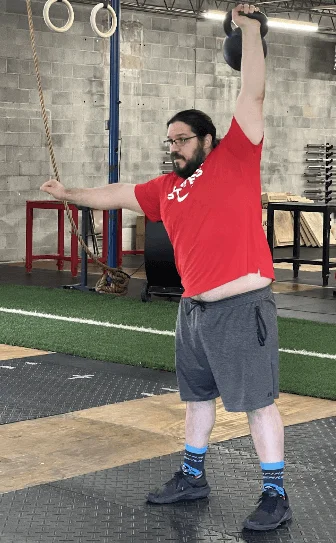
Additionally, the change in pressure throughout a movement, like a clean, can also develop strength in the grip, as well as a heightened sense of in-hand awareness and control. In the clean, the angle of the hand in relation to the kettlebell changes drastically from the finish of the pull to the catch of the clean; this will not only boost your grip strength, but also teach you the body awareness necessary to effectively complete the exercise.
Grip strength is vital for me as a weightlifter. A stronger grip means a stronger pull off the floor, which is vital in Olympic lifting. Kettlebells can help with that pulling power and strength.
8. Corrects Muscle Imbalances
As an elite weightlifter, I’ve had my fair share of muscle imbalances over years of strength training. While there are many ways to address these issues, kettlebells have a natural tendency to help address imbalances.
As stated before, kettlebell exercises are unilateral movements, which can allow you to target a weaker side of the body. When I feel like I’m favoring one leg or hip in my squat, I’ll address it with single leg deadlifts or lunges.
Kettlebells and their exercises help supplement any muscle weaknesses and strengthen weaker muscle areas. Such attention can lead to a more balanced, more powerful, stronger you!
RELATED: Dumbbells Vs Kettlebells
9. Improves Balance and Flexibility
According to this 2013 study3, the benefits of kettlebell training were proven to not only be building strength, but also developing balance. The majority of exercises are multiplanar by design, challenging the athlete to maintain balance through multiple ranges of motion. In turn, these exercises can help build a solid foundation of balance and mobility.
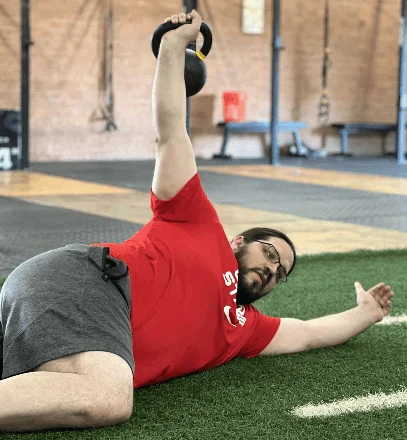
Also, certain exercises can develop range of motion and flexibility. A goblet squat, for example, is a simple way to test and measure the flexibility of the hips while also challenging the athlete to sink lower in the squat while maintaining proper form. By working on range of motion in these workouts, you can begin to develop the mobility and flexibility needed to execute these movements effectively.
10. Builds Power
In Olympic weightlifting, the snatch and clean and jerk are tests of power and explosive strength. Because of this, kettlebells are proven to be a great supplement to Olympic weightlifting and other sports in that they develop power, as well.
Most kettlebell movements require you to drive a weight in a short time for multiple reps. For me, the kettlebell can be a great way to continue developing power and train unilateral movements, all while at submaximal loads. Still, this power development can benefit all levels of athleticism.
11. Burns Calories
Kettlebells have been shown to burn calories4 comparable to running a six-minute mile. In addition, the heart rates of participants were actually higher in kettlebell training versus cardio training. This is due to the full-body, high-intensity workout style that kettlebells lend themselves to.
This all shows that high reps at a high intensity, such as with kettlebells, can be one of the best ways for a calorie burn (and potential weight loss) in your health journey.
Who Should Do Kettlebell Training?
I would recommend kettlebells to all fitness levels. For a power athlete like myself, kettlebells can address imbalances and build core and grip strength, while never taking the focus off of developing power. For any strength athlete, this can be a good tool to address conditioning with high-intensity training, all while tend to other aspects like coordination and balance.
Kettlebells can be great for newcomers, as well, because of the wide range of benefits that kettlebells have. From building core or functional strength to developing balance, coordination, or flexibility and even getting more powerful and athletic. No matter where you start, kettlebells can help address your weaknesses.
How to Incorporate Kettlebell Movements Into Your Training
There are a few ways you can bring kettlebell exercises into your regular workout routine.
In Your Warm-up
I use light kettlebells in my warm-up exercises to help activate muscle groups before training. It’s best to use lighter weights and controlled movements to prime muscles and movement patterns without overdoing it. I like to perform single-leg deadlifts to get my glutes and posterior chain firing properly, as well as arm bars to warm up the shoulders.
As a Cardio Finisher
Another way to incorporate kettlebells into your programs is through HIIT training. One way I get a cardiovascular response quickly is a Tabata workout: 20 seconds of work followed by 10 seconds of rest.
Hitting a tough, high-intensity workout like this with some Russian kettlebell swings or clean-and-jerks can get the muscles fired up and heart rate elevated to burn some calories. Make sure to keep the kettlebell weight manageable, though, in order to move quickly throughout the regimen. The fast pace of a CrossFit workout can also get the heart pumping.
As Accessory Work
Accessories are vital to supplementing your training for correcting imbalances, strengthening weaknesses, and becoming a well-rounded athlete. A lot of the kettlebell work I do to supplement my weight training involves attacking and strengthening the core. Full-body exercises like Turkish get-ups are hugely helpful in my training. I also do side bends to approach the abdominals, while presses help in getting some unilateral training, too, strengthening smaller stabilizer muscles throughout the motion.
Three of the Best Kettlebell Exercises
If you’re ready to start incorporating a kettlebell into your workout routine, here’s quick primer on how to do three of our favorite kettlebell exercises. We know there are plenty of other movements you can do, but in our opinion, these are some of the best.
Kettlebell Swings
The classic kettlebell swing is one of the most popular exercises associated with these free weights. It builds explosive power without causing any additional joint strain, and can be a great way to train hip extension, which primarily targets the glutes and hamstrings.
Muscles Trained: Forearms, hamstrings, glutes, lower back
How to Do It:

- Stand with your feet just wider than shoulder-width apart, with the kettlebell placed on the ground front of you.
- Hinge at the hips to grip the kettlebell with both hands, and squeeze your armpits together with your chest up. Be sure to push your hips back and keep your lower back flat, instead of rounding your back to reach the weight.
- Hike the kettlebell through your legs, let the weight travel behind you, and then drive your hips forward by squeezing your glutes, using momentum to swing the kettlebell up.
- Finish the swing by fully contracting your glutes and quads, bringing the kettlebell to eye level, then repeat.
- You don’t have to lower the weight slowly, but be sure to control it so you don’t slam it into your legs.
Kettlebell Thrusters
While the swing primarily targets the lower body, the kettlebell thruster is a full-body exercise. It’s a great way to build overhead pressing strength, and since it’s a full-body movement, it’s sure to get your heart racing for a great cardio workout.
Muscles Trained: Quads, glutes, hamstrings, triceps, deltoids, upper back
How to Do It:

- Clean a kettlebell to the rack position, resting near your shoulder. You can do single-arm thrusters, or use two matching kettlebells for double-arm thrusters.
- Without lowering the kettlebell, lower yourself into a squat, being sure to keep your chest up and your heels firmly pressed into the ground.
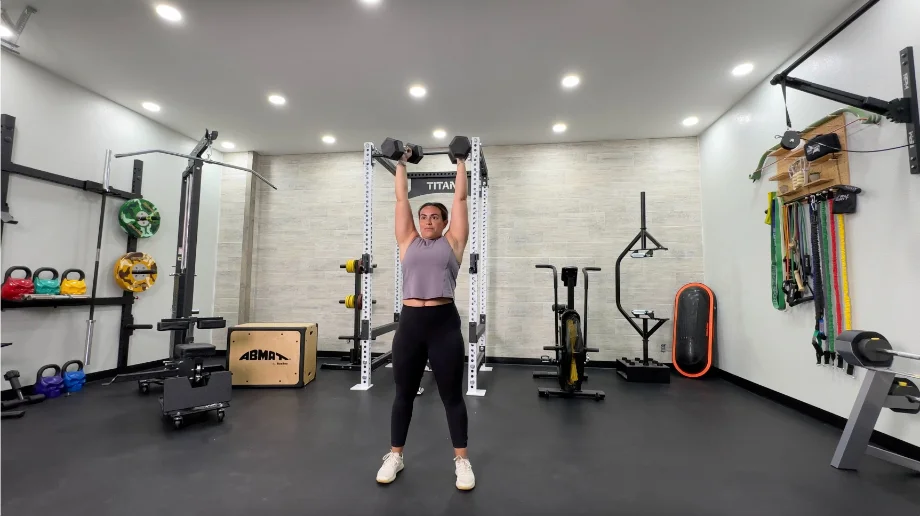
- Extend your hips to stand and straighten your knees to stand up while pressing the kettlebell overhead.
- Finish the movement by locking out your knees, glutes, and triceps, pressing the kettlebell straight up.
- Return the kettlebell to the rack position, reset, and repeat.
Kettlebell Deadlifts
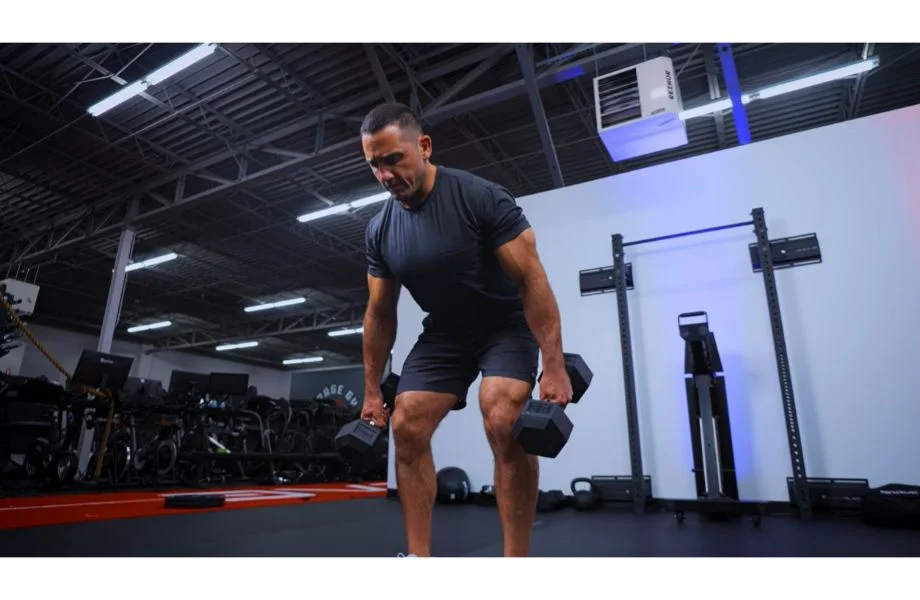
The kettlebell deadlift is similar to a barbell deadlift. However, you’ll be able to keep the weight centered between your legs, while a barbell is typically slightly in front of you. It’s a small difference, but it’s a good alternative to dragging a bar up your shins.
Muscles Trained: Glutes, hamstrings, back, forearms
How to Do It:
- Stand with your feet just wider than shoulder-width apart, with the kettlebell placed on the ground front of you.
- Hinge at the hips to grip the kettlebell with both hands, and squeeze your armpits together with your chest up.
- Brace your core muscles to keep a flat back, and be sure to avoid excessive rounding of the spine.
- Without raising your arms, initiate the movement by squeezing your glutes and pushing your hips forward.
- Finish the deadlift by locking out your hips and knees at the top of the movement.

Full-Body Kettlebell Workout
Now that we’ve shown you our favorite kettlebell exercises, here’s how we recommend combining them for a high-intensity, full-body kettlebell workout. This can be a great way to challenge most of the muscles in your body with only a handful of exercises, and since it’s only three exercises, we recommend putting them together in a high-intensity interval training (HIIT) circuit.
You’ll do four, three-minute rounds where the goal is to go through this circuit as many times as possible, followed by one minute of rest before repeating. It’s not easy, but you’ll be done in roughly 16 minutes, so it can be a great choice for those short on time.
For each round, you’ll have three minutes to go through the following circuit as many times as possible:
| Kettlebell Exercise | Recommended Reps |
| Kettlebell Thruster | 10 reps per arm |
| Kettlebell Swing | 15 reps |
| Kettlebell Deadlift | 15 reps |
Once your three minutes is up, rest for a full minute, and repeat for a total of four rounds. Be mindful, though, of your form and don’t let yourself get too sloppy with the movements as you fatigue; this may increase the risk of injury.
FAQs About Kettlebell Benefits
What do kettlebells do for your body?
Kettlebells can get the whole body involved with minimal stress on the joints. The American Council on Exercise5 states that not only does a kettlebell workout routine build strength, but also aerobic capacity, core strength, and balance; all of which are vital in any training program. Different movements help develop an athlete’s strength from head to toe, but particularly in the core and grip. Finally, kettlebell training can help correct muscle weaknesses and imbalances. The benefits of kettlebell training are undeniably numerous and vast.
Is a kettlebell workout effective?
Kettlebell workouts are effective in that they can offer a versatile training experience. Within a short period of time, you can get a good cardio burn while building strength and muscle simultaneously. The variety of exercises help achieve a full-body workout. They are very efficient in providing a lot of benefits in a short workout time, which is ideal for many adults constantly on the move.
Are kettlebells good for losing belly fat?
Kettlebells can be great for burning calories and building muscle. Burning calories can help with losing fat, but they will not help you to lose it anywhere, in particular. Spot reduction, or targeted fat loss on certain parts of the body, is a myth that stems from the thought that targeting training abdominal muscles will help reduce abdominal fat. While you can build muscle and burn calories, there is no proven way to target fat loss in the belly, or any area of the body specifically.
References
- Fortner, H. A., Salgado, J., Holmstrup, A. M., & Holmstrup, M. E. (2014). Cardiovascular and metabolic demands of the kettlebell swing using a tabata interval versus a traditional resistance protocol. International Journal of Exercise Science, 7(3), 179–185. https://pmc.ncbi.nlm.nih.gov/articles/PMC4831858/
- Chen, H.-T., Wu, H.-J., Chen, Y.-J., Ho, S.-Y., & Chung, Y.-C. (2018). Effects of 8-week kettlebell training on body composition, muscle strength, pulmonary function, and chronic low-grade inflammation in elderly women with sarcopenia. Experimental Gerontology, 112, 112–118. https://www.sciencedirect.com/science/article/abs/pii/S0531556517302528?via%3Dihub
- Beltz, N., Martinez, R., Erbes, D., Doberstein, S., Porcari, J. P., & Foster, C. (2013, December). (PDF) effects of kettlebell training on aerobic capacity, muscular strength, balance, flexibility, and body composition. ResearchGate. https://www.researchgate.net/publication/282443410_EFFECTS_OF_KETTLEBELL_TRAINING_ON_AEROBIC_CAPACITY_MUSCULAR_STRENGTH_BALANCE_FLEXIBILITY_AND_BODY_COMPOSITION
- American Council on Exercise. (n.d.). Kettlebells: Twice the results in half the time?. ACE. https://www.acefitness.org/resources/pros/expert-articles/2982/kettlebells-twice-the-results-in-half-the-time/
- ACE sponsored research study: Kettlebells Kick Butt. ACE Fitness. (n.d.). https://www.acefitness.org/certifiednewsarticle/3172/ace-sponsored-research-study-kettlebells-kick-butt/