


As a home gym owner, having cardio equipment gives you a low barrier to meet the recommended amount of 150 minutes of moderate aerobic activity each week. You may be considering an exercise bike vs treadmill, or maybe an elliptical. There are benefits to all of them, and choosing the right option for you is highly individualized.
This article will focus on the exercise bike and guide you through all the stationary bike benefits, plus define recumbent bike vs upright bike differences; what’s the deal between the two bikes, anyway?
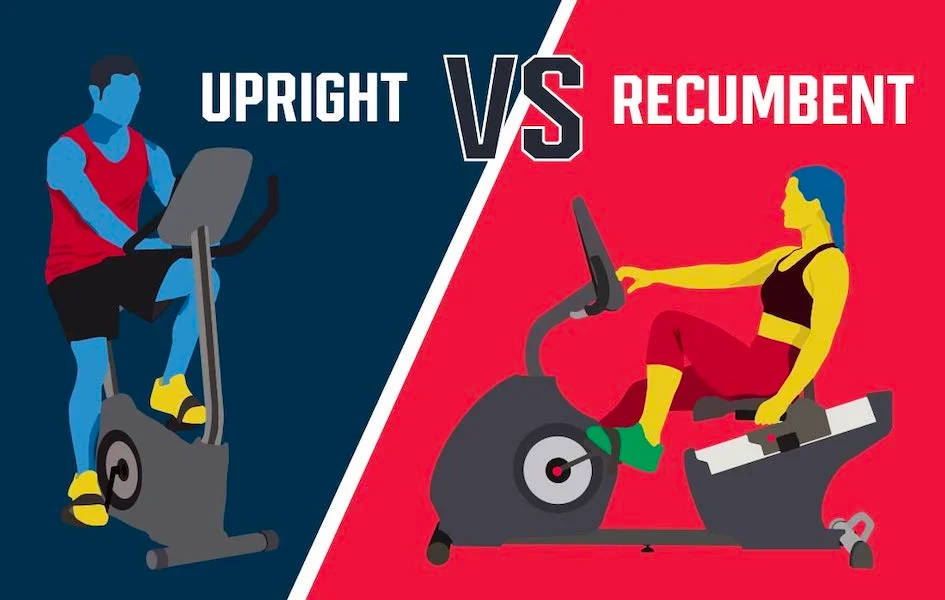
The main difference between these two styles of exercise bikes is the riding position. Recumbent bikes offer riders a comfortable and supported seated position similar to sitting in an office chair. Upright bikes, on the other hand, are more akin to a traditional outdoor bike where you mount the bike and your upper body is not supported by a back rest.
The best exercise bike for your home gym is going to differ depending on your needs. We’ll break it down below.
Recumbent Bike Vs Upright Bike Video Comparison
What Is A Recumbent Bike?
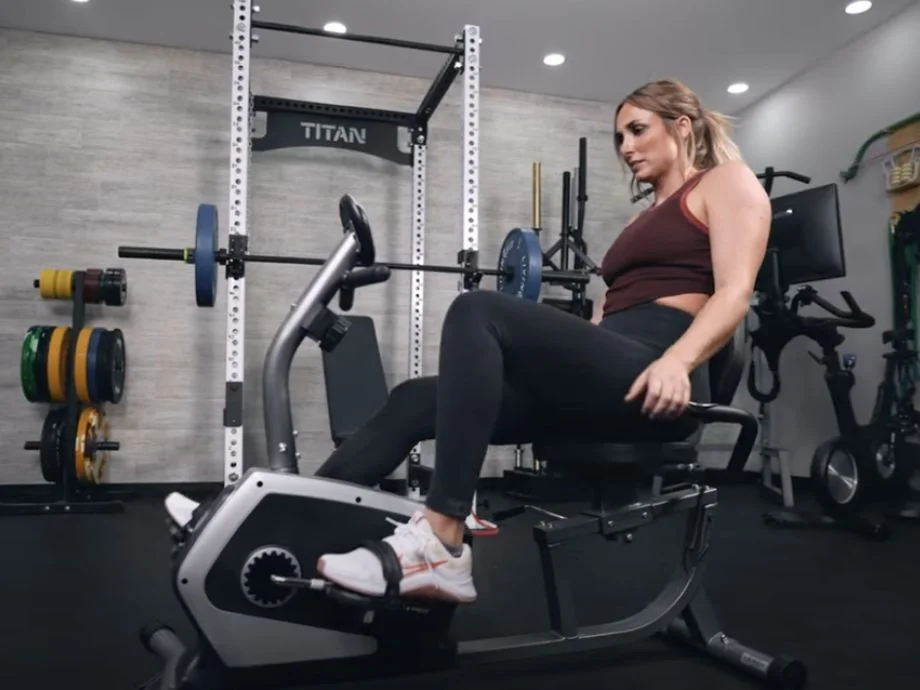
The recumbent bike has a different feel than sitting on an upright bike or pedaling a bicycle on the road. The reclined position allows riders to sit in a cushioned seat with a backrest. The position can alleviate strain on the back and glutes.
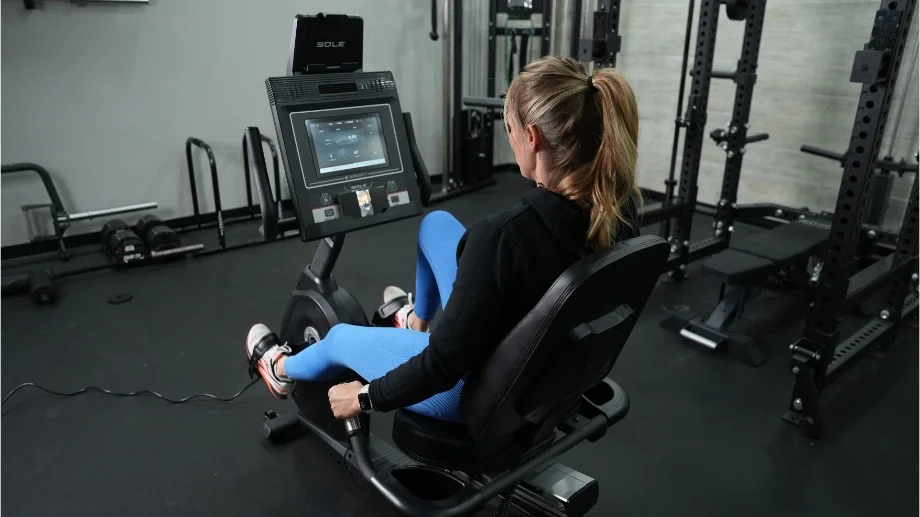
Unlike an upright bike with the pedals directly under the hips, the recumbent’s pedals are out in front of the seat, making the pedaling movement entirely different because your legs will be in front of you. This position will require a significant amount of hip flexion and knee bend, placing the focus of this type of exercise bike almost entirely on the lower body.
What is a Recumbent Bike Good For?
The recumbent bike can be a good choice for you if you want to put less stress on the knee and hip joints or struggle with mobility issues.
While a traditional upright bike involves, well, sitting upright and leaning forward to grip handlebars for support, a recumbent bike has a more relaxed posture. They feature a back support that allows the user to lean back, as well as smaller handlebars on the side.
Because of this riding position, getting in and out of a recumbent bike is often much easier. Not to mention, the seat often feels more like a traditional chair, so those who don’t want to sit on a bike saddle may find them to be more comfortable.
“The recumbent bike can be a good choice for older adults, or if you’re someone who struggles with balance,” explains Nicole Davis, CPT, PN1-NC. “Beyond the added back support, the recumbent bike is lower to the ground and doesn’t require you to mount the riding saddle.”
What Muscles Does a Recumbent Bike Work?
When using a recumbent bike, your upper body is fully supported, so there’s no need to use your arms or core muscles for support. Because of this, you’ll primarily be working the quads, hamstrings, hip flexors, and glutes, which are the largest muscle groups in your legs.
On the other hand, a traditional upright bike doesn’t offer back support, so users need to use the muscles in their core and arms a bit more, along with the lower body muscles.
Overall, both upright bikes and recumbent bikes train the muscles in the legs, but recumbent bikes remove the upper body musculature from the equation.
3 Recumbent Bikes We Recommend
Our product testers have ridden dozens of exercise bikes and researched plenty more. Here’s what we’d recommend for recumbent bikes:
Sole LCR Exercise Bike
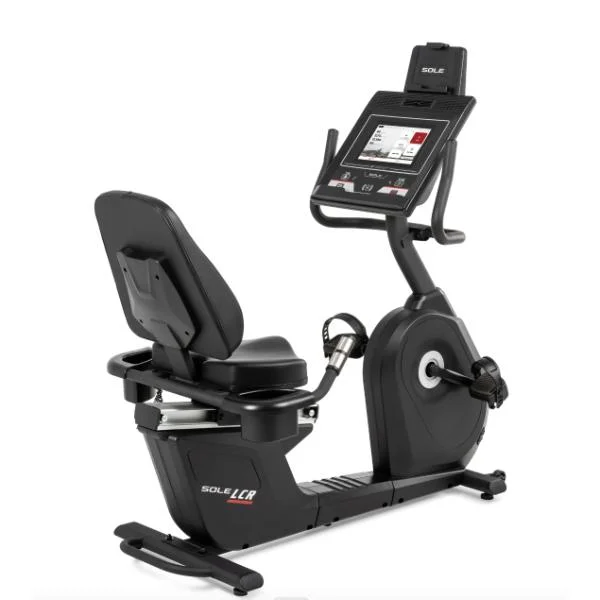









The Sole Light Commercial Recumbent Bike is a durable and high-value recumbent bike that our testers liked for its challenging resistance, comfortable seat and backrest, and great warranty.
If you’re looking for a great recumbent bike, the Sole LCR is one of our top picks. Not only is it very comfortable to use, but the wide, cushioned seat supports users up to 350 pounds, which means a lot of people will be able to use this bike.
The bike features 40 resistance levels and a built-in touchscreen with media streaming capabilities. There’s no Wi-Fi, but you can mirror your phone or tablet to watch your favorite streamable media, or simply use the built-in device holder.
With a price tag of roughly $2,000 at the time of writing, this bike isn’t cheap, but it’s one of the most comfortable recumbent bikes we’ve used and a great choice for those looking for a reclined riding position.
Read our Sole LCR Recumbent Bike review for more information.
YOSUDA Recumbent Exercise Bike
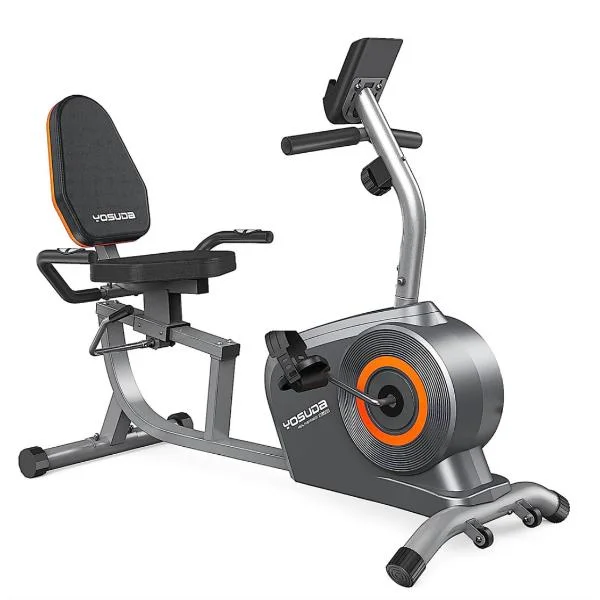




The YOSUDA Recumbent Bike is a lightweight and affordable recumbent bike that’s perfect for seniors or those with lower-body injuries who are trying to remain active.
For a more affordable choice, we recommend the YOSUDA Recumbent Exercise Bike. It costs less than $300, making it one of the most affordable exercise bikes on the market. Don’t let the low price tag fool you, though; while it’s not the fanciest bike we’ve ever used, it offers a surprising amount of value for such a low cost.
The bike only weighs 65 pounds, making it easy to move around, but it still offers a 350-pound weight capacity. The seat is pretty comfortable, too, although the built-in display is small and only shows basic workout metrics.
Sunny Health & Fitness Essential Recumbent Exercise Bike
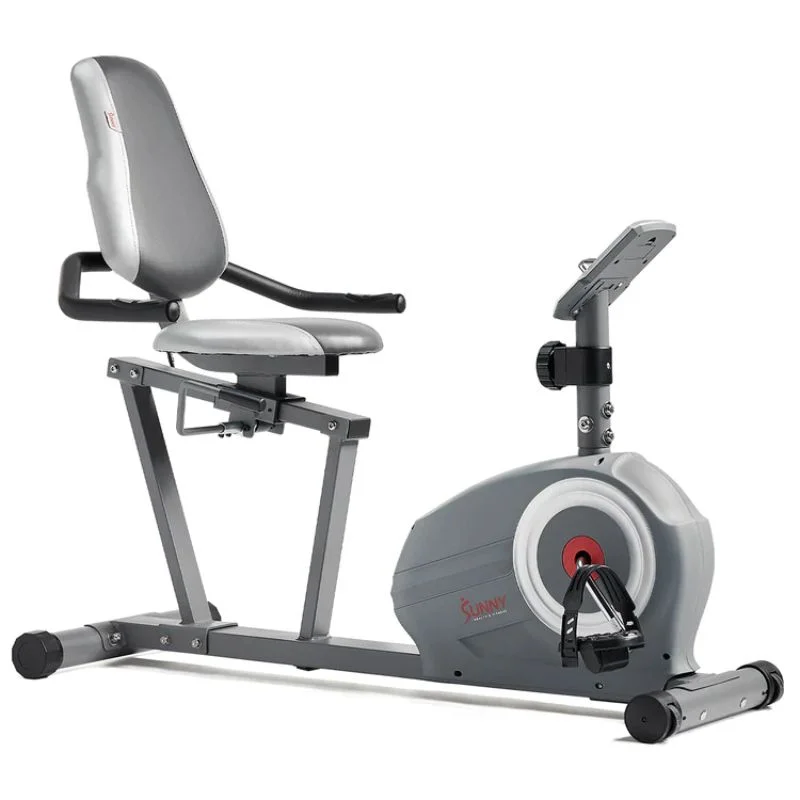

For under $300, the Sunny Health and Fitness Essential Recumbent Exercise Bike is an excellent option for beginners on a budget.
For another budget-friendly option, the Sunny Health & Fitness Essential Recumbent Exercise Bike is worthy of your consideration. It’s another lightweight option that still offers solid durability with a 300-pound weight capacity.
We also found it to be very stable during our testing with no wobbling or shaking thanks to the built-in self-leveling floor stabilizers. The small LCD display is very basic, but there’s a media shelf to hold your own phone if you want, and at this price point, we wouldn’t expect a fancy display screen, anyways.
The only drawback is the limited resistance, as the bike features eight resistance levels that aren’t too challenging. This can be a good choice for beginners or those looking for a gentler workout, but advanced fitness enthusiasts and cyclists may need to choose something that offers more resistance.
What Is An Upright Bike?
An upright bike requires riders to sit in an upright position and pedal. Pedals are located under the hips in an upright bike versus in a legs-forward position on a recumbent bike. Upright bicycles can offer a wide variety of options to fit any budget and technology preference. They’re suitable for beginners, too, so don’t worry about your fitness level.
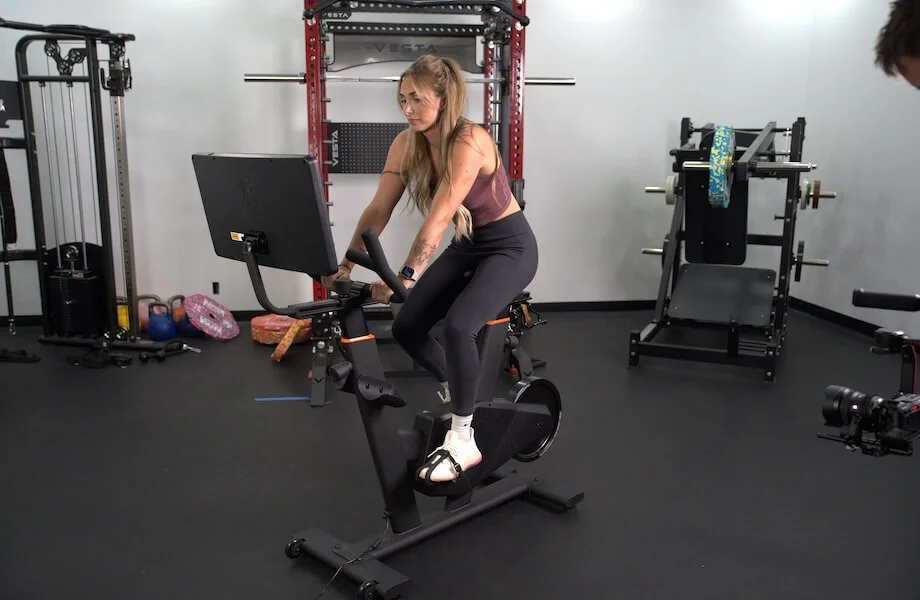
There are different types of exercise bikes that fall under the upright bike category:
Stationary Bike
An upright stationary bike offers a tall upright seat more comparable to a beach cruiser bicycle and features pedals directly under the hips.
Air Bikes
Air bikes are stationary bikes that sit upright and use a fan blade to create resistance. Most air bikes, like the Rogue Echo Bike, feature handlebars that also attach to the fan blade, which means your arms and legs can both be in motion for a unique full-body biking experience. The use of a fan to create resistance means that the faster you pedal and work your arms, the more resistance you’ll work against.
Studio Cycle Bikes
Studio cycle bikes are the type of bike you’ll find in an indoor cycling class where the instructor has riders change the resistance via a knob. Resistance can be friction-based or magnetic-based. Magnetic resistance tends to produce a smoother ride—and requires less maintenance—but is more expensive than a friction resistance system.
Between the rising popularity of cycling classes and Peloton’s dominance in this arena, this type of bike is more popular than ever. They can get pricey, though. The good news is that there are alternatives to pricey Peloton equipment and subscriptions.
What is an Upright Bike Best For?
Upright bikes offer the closet simulation to outdoor riding, making them a great choice for cyclists. Whether you’re looking to recreate an outdoor race or an indoor spin class, upright bikes bring the traditional cycling experience to the comfort of your home.
They also use a saddle, and users will be in a more upright position, which can increase the challenge. Not to mention, getting on and off the saddle can be uncomfortable for those new to biking, or those with balance issues.
Overall, we think upright bikes are better for cyclists, anyone looking for a greater challenge than recumbent bikes, and users without any mobility or balance issues.
What Muscles Does an Upright Bike Work?
With an upright bike, your legs are the primary muscles doing the pedaling, so your quads, hamstrings, hip flexors, and glutes will be getting a workout. Depending on your setup, you’ll also engage the core, arm, and shoulder muscles to various extents as you lean forward to brace yourself on the handrails.
It’s still primarily going to be a lower-body exercise, but your upper body will work a lot more compared to using a recumbent bike with a back support.
3 Upright Bikes We Recommend
We know our exercise bikes, and our expert product testers have a few favorites:
NordicTrack X24 Bike
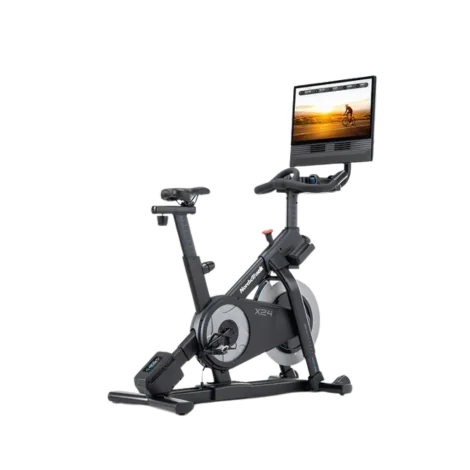
The X24 Bike is NordicTrack’s latest exercise bike offering an impressive incline range between -10% and 20% alongside iFIT compatibility for engaging on-demand workout programming. This all-new stationary bike also comes with two 3-pound dumbbells, which are ideal for taking part in iFIT’s library of non-cycling modules as well.
If you’re looking for a commercial-grade bike that brings a virtual workout studio to your home, we love the NordicTrack X24. This bike is far from cheap, but we think it’s well worth the investment given the impressive features it offers.
The 24-inch HD touchscreen is compatible with iFIT, which unlocks a library of over 10,000 on-demand workouts, including scenic rides, virtual classes, and more. This is also one of the few exercise bikes we’ve tested that offers both incline and decline capabilities, allowing you to truly simulate the feeling of riding outdoors.
It costs $2,799 at the time of writing, but it’s one of the best upright bikes on the market. To learn more, read our full NordicTrack X24 review.
Rogue Echo Bike
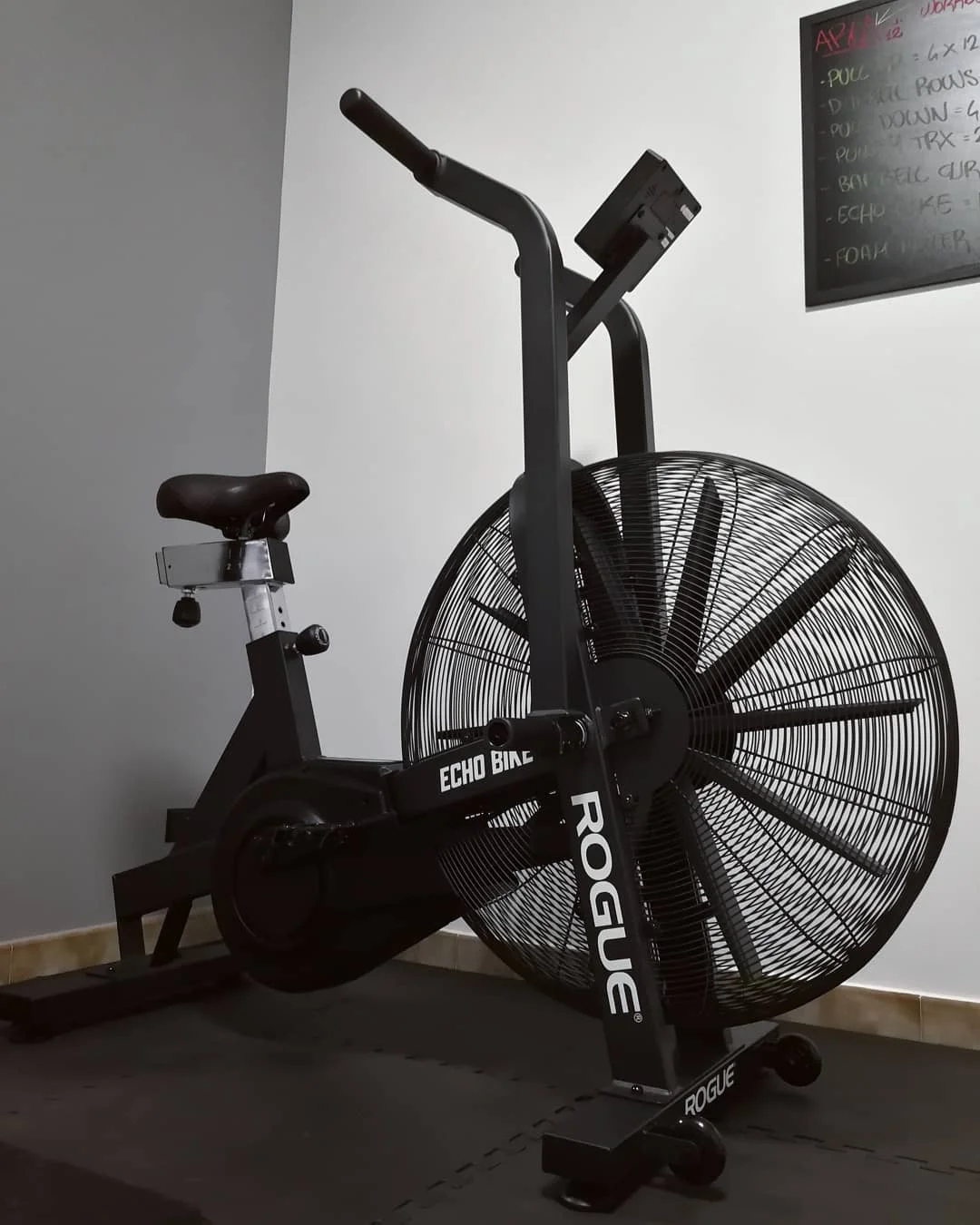
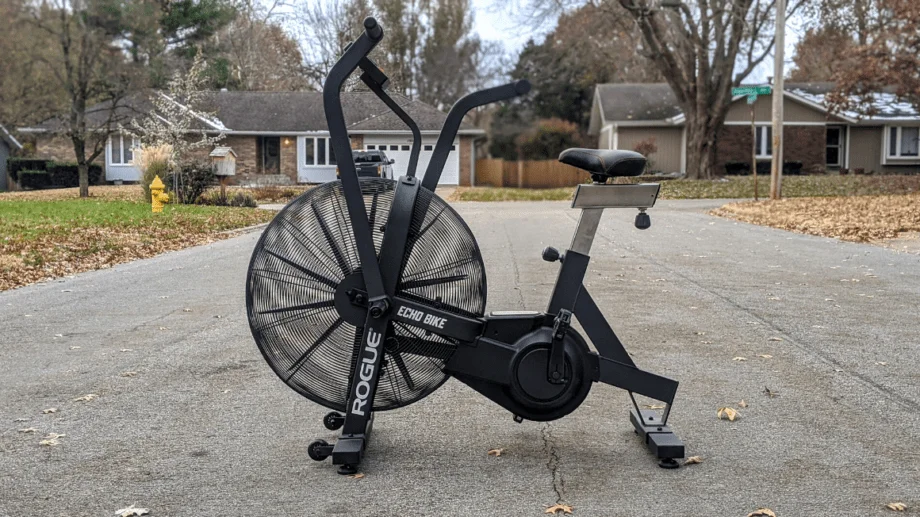
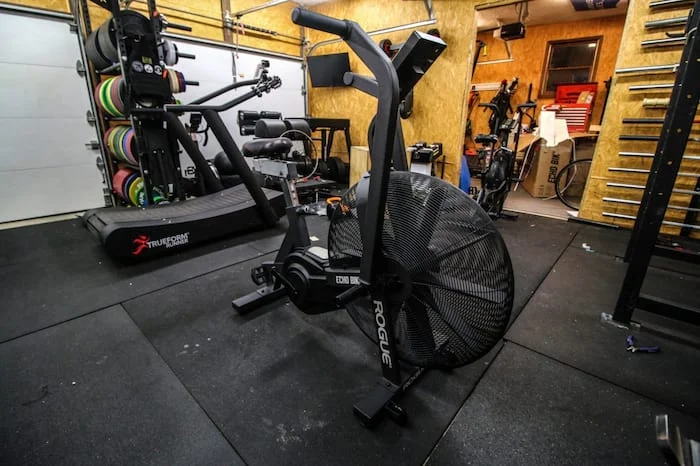
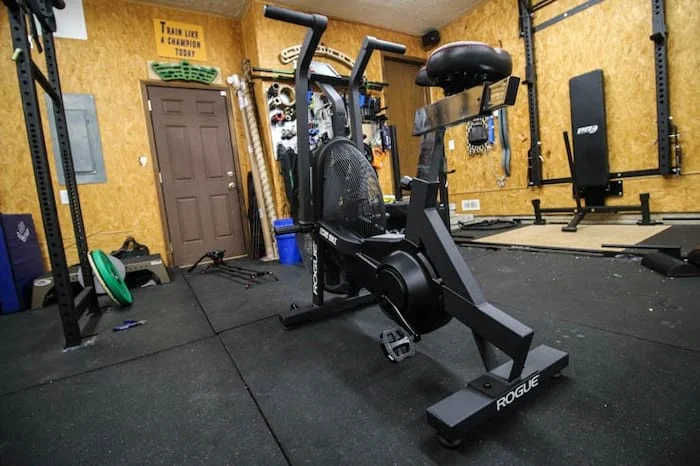
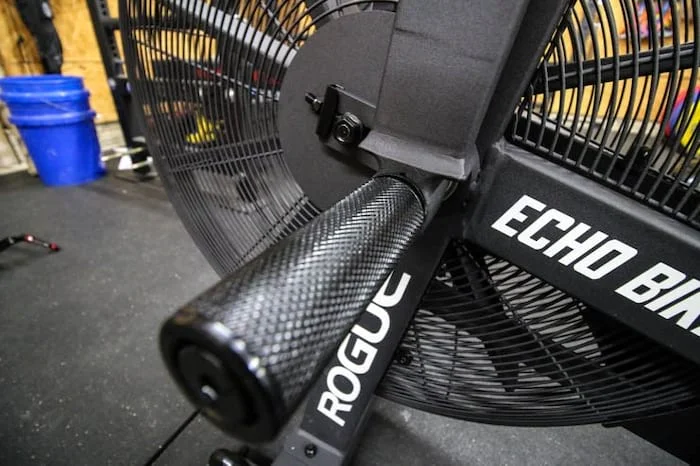
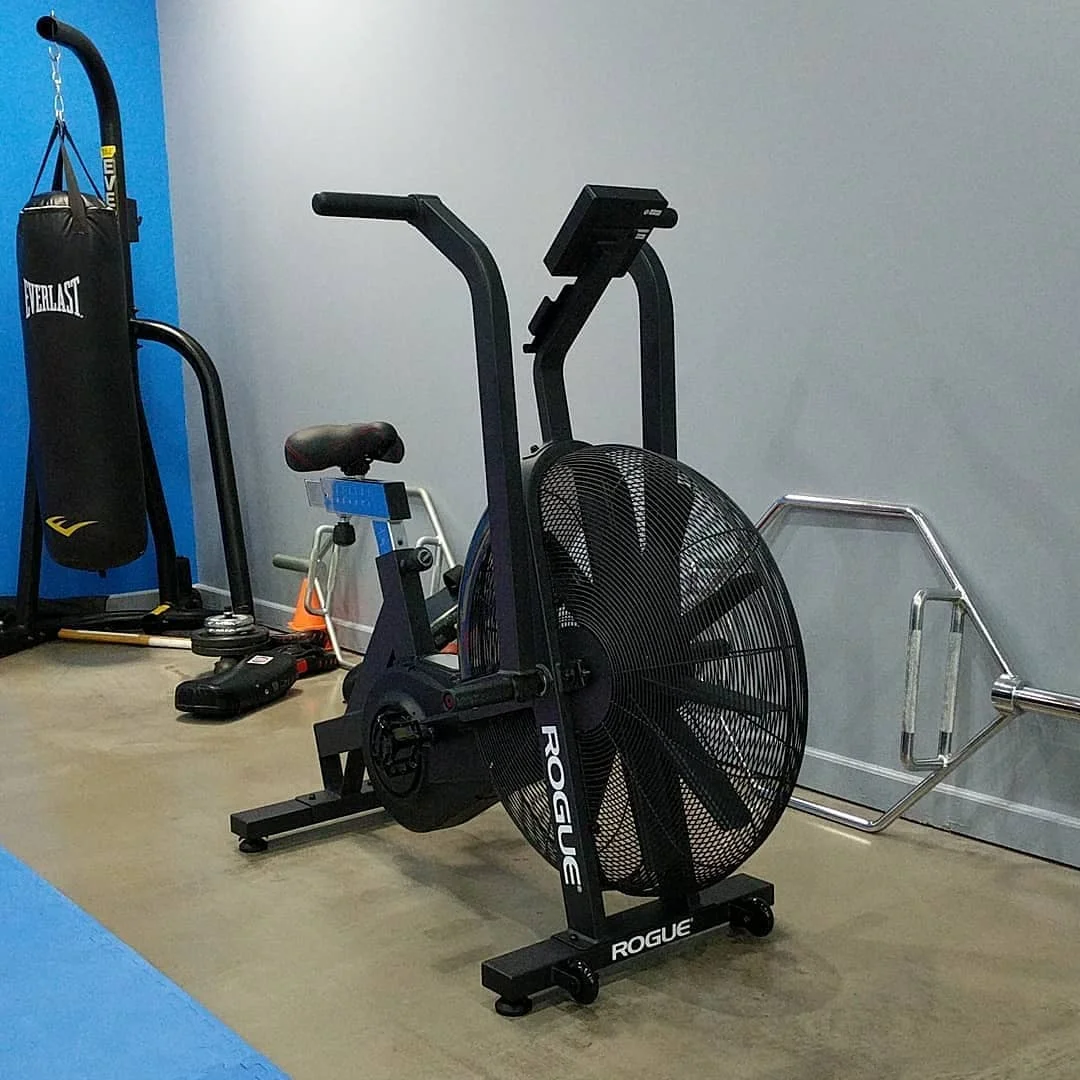



We’ve tested just about every air bike on the market, and the Echo combines many of our favorite features into one. The belt drive is much more durable and requires less maintenance than a chain drive. The size and weight make it extremely stable, and the price is much less than we’d expect for such a quality piece of equipment.
What our tester says:
“Call it beginner’s luck, but Rogue Fitness did a great job with their first-ever conditioning machine. This is a piece of equipment that will give people of all fitness levels a hardcore full-body workout, look great in their home gym, and last for many years.”
If you’re not into virtual studio classes, another great option is an air bike, which offers motor-free resistance that can be used anywhere. Serving as our pick for best air bike, the Rogue Echo has a low-maintenance belt drive system, heavy duty steel construction, and is simple to assemble.
Compared to a classic exercise bikes, air bikes can offer a bit more resistance. The faster you pedal, the greater the challenge, which makes air bikes a fantastic choice for interval training.
Rogue’s air bike is extremely durable, portable, and provides a fantastic challenge. The display is basic, but most people will use air bikes for short-duration sprints, rather than extended rides where you’d want to have streamable media readily available.
Read our full review of the Rogue Echo Bike for more.
Sunny Health & Fitness Indoor Cycle SF-B1002 Bike
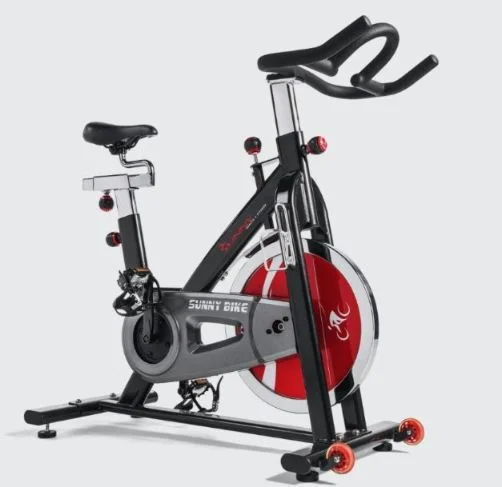
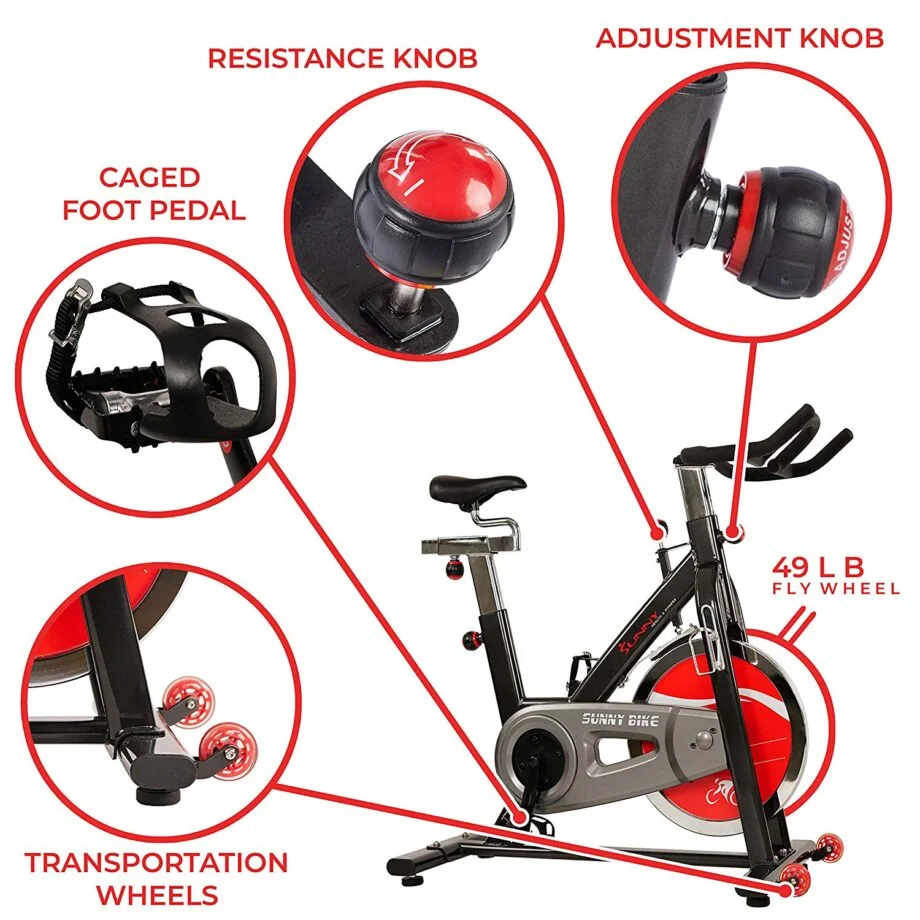

This is a a budget-friendly exercise bike that provides a good amount of bang for not too much buck.
If you’re shopping on a budget, look no further than the Sunny Health & Fitness Indoor Cycle SF-B1002 Bike, which is one of the most affordable upright bikes we’ve tried.
At this price point, don’t expect all the bells and whistles you’d see on a high-end bike, but it certainly does a fine job without breaking the bank. It’s surprisingly durable for the cost while also featuring a lightweight body that makes it easy to move around, as needed.
There’s no built-in display, either, but again, this is an affordable option, so it’s not going to be the most high-tech bike on the market. However, if you’re trying to find the best budget-friendly bike, this can be a strong contender.
Recumbent Bike Vs Upright Bike: Which Is Better?
When comparing the upright vs recumbent bike, determining which bike is better will be a highly individualized choice depending on your fitness goals. Both options offer a low-impact cardio workout that also strengthens the knee and hip joints. Ultimately, it’s up to you as to which riding position you prefer—for comfort, needs, and performance goals. After all, the best piece of equipment is the one you want to use!
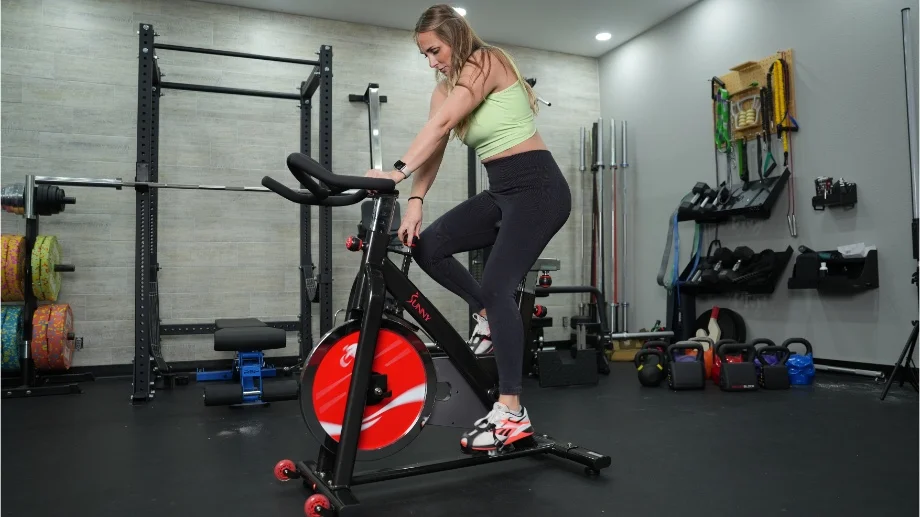
Also, we recommend talking to your physician before purchasing or using an exercise bike to gauge the best course of action for you as an individual. Every human body is different, and the best piece of equipment for you is highly individualized.
RELATED: Recumbent Bike Workout
Which Bike Burns More Calories?
While indoor cycling has been shown1 to improve body composition, overall, when it comes to upright bike vs recumbent bike and calorie burn, the upright bike has the upper hand—if we’re talking about the same amount of time in the saddle at the same intensity level. That said, it’s hard to maintain the same intensity on a recumbent bike as you would on an upright bike.
If all other factors are the same, though, the upright bike does require more muscle recruitment, specifically the core muscles. “The more muscle stimulus your body undergoes, the harder the exercise becomes, and this leads to overall greater caloric expenditure,” Nicole explains.
FAQs About Recumbent Bike vs Upright Bike
Is an upright bike better than a recumbent bike?
In a debate between the recumbent bike vs upright bike, neither is objectively better or worse. The best bike for you will depend on what you’re looking to gain from an exercise bike.
For example, if you’re planning to train for road biking, you will want an exercise bike that most accurately represents your position on that road bike. If you suffer from injuries, like back pain, or need a very low-impact option, a recumbent bike could be the better choice.
Is a recumbent bike good for weight loss?
A recumbent bike is not inherently good or bad for weight loss. And, if you’re looking to an exercise bike to lose weight, also ensure that you’re focused on what you eat, as well.
While exercise is an important part of the equation and can help burn calories, nutrition plays an even bigger role. If you aren’t consuming a proper diet for your goals, a recumbent bike won’t make or break your weight loss progress. It can certainly support it, though, with the right food choices.
Can I get a good workout on a recumbent bike?
Yes. With your glutes, core, and back fully supported, you’re left with an efficient way to target the leg muscles. The quadriceps and hamstrings are the largest group of muscles in the legs, so adjusting the resistance level or your speed to challenge yourself can provide a great workout.
Which bike is better for people with knee pain?
The good news is that both the upright bike and the recumbent bike offer low-impact training solutions for the joint relief. As far as cardiovascular exercise equipment is concerned, either option will be a safe solution if you need a piece of cardio equipment for bad knees. If you experience chronic knee pain, speak with your primary care provider to help develop a plan to rehabilitate the aching joint.
References
- Chavarrias, M., Carlos-Vivas, J., Collado-Mateo, D., & Pérez-Gómez, J. (2019). Health benefits of Indoor Cycling: A Systematic Review. Medicina, 55(8), 452. https://pmc.ncbi.nlm.nih.gov/articles/PMC6722762/