




I love biking, but even the best exercise bikes can be a literal pain in the butt—not to mention the back and legs, too. The Pelotons of the world were built for performance over comfort; made to help you get a heart-pounding cardio workout.
If you’re looking for something a little cozier, then allow us to show you our picks for the best recumbent exercise bikes. We break these models down by several factors, including their tech capabilities, adjustability, and price range, so read on to see which one fits your goals.
GGR Gold Pick — Best Recumbent Exercise Bikes
The 4.3-star-rated NordicTrack 10 Recumbent Bike lands at the top of our list thanks to its adjustable seat with lumbar support, 26 silent magnetic resistance levels, and exceptional tech features.
Best Recumbent Exercise Bikes
- Best Overall Recumbent Exercise Bike – NordicTrack 10 Recumbent Bike
- Best Recumbent Bike with Classes – Sole LCR Exercise Bike
- Best Value Recumbent Exercise Bike – YOSUDA Recumbent Exercise Bike
- Best Adjustable Recumbent Exercise Bike – Sunny Health And Fitness Essential Recumbent Exercise Bike
Current Top Deals
- YOSUDA Recumbent Exercise Bike – Up to 35% off select cardio equipment
- Sole LCR Exercise Bike – Beat the Heat Sale – Save $300
How We Selected the Best Recumbent Bikes
We examine vertical and horizontal seat adjustments, handlebar adjustments, screen angles, pedal angles, and more to determine a score in this category. We give a 3-out-of-5 rating or higher to bikes with padded seats, adjustable handlebars, and additional seating positions for added comfort.
To earn at least a 3 in this category, bikes should not shake or wobble during use, even when pedaling hard, and should have a user weight capacity of at least 275 pounds. Lower weight capacities and creaking, wobbling, or other signs of instability can lower a bike’s score.
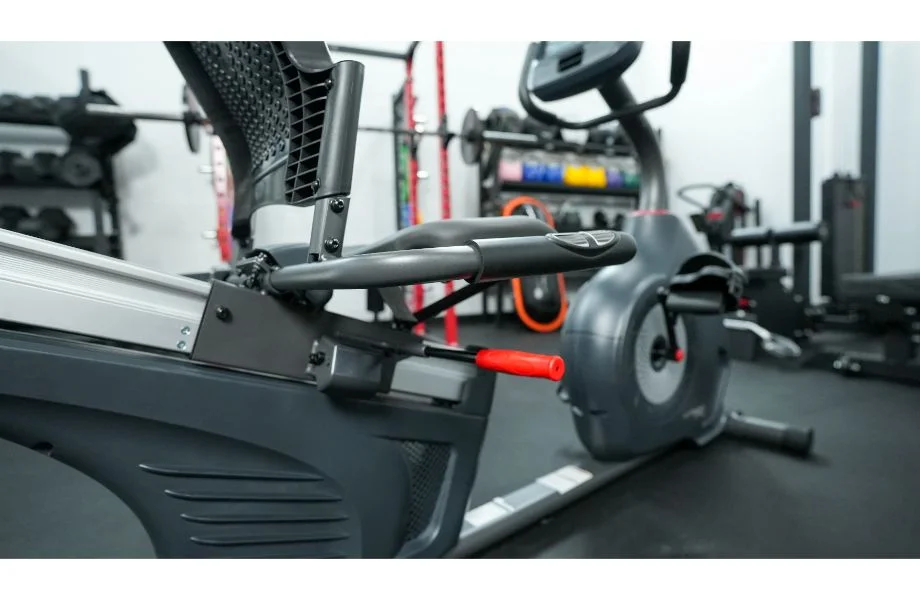
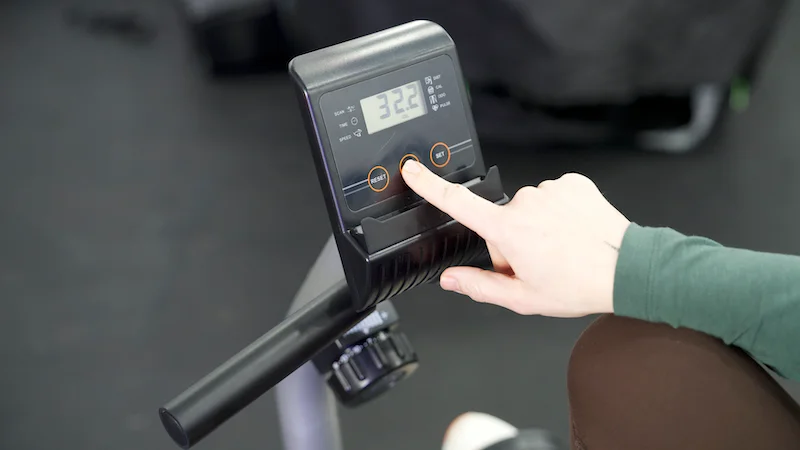
To earn a 3 out of 5 for tech capabilities, bikes must have a built-in console to show time, distance, and resistance levels, along with a visual progress meter on the display and heart rate/pulse monitoring through contact sensors. Bluetooth connectivity, onboard workouts, and app integration can increase scores.
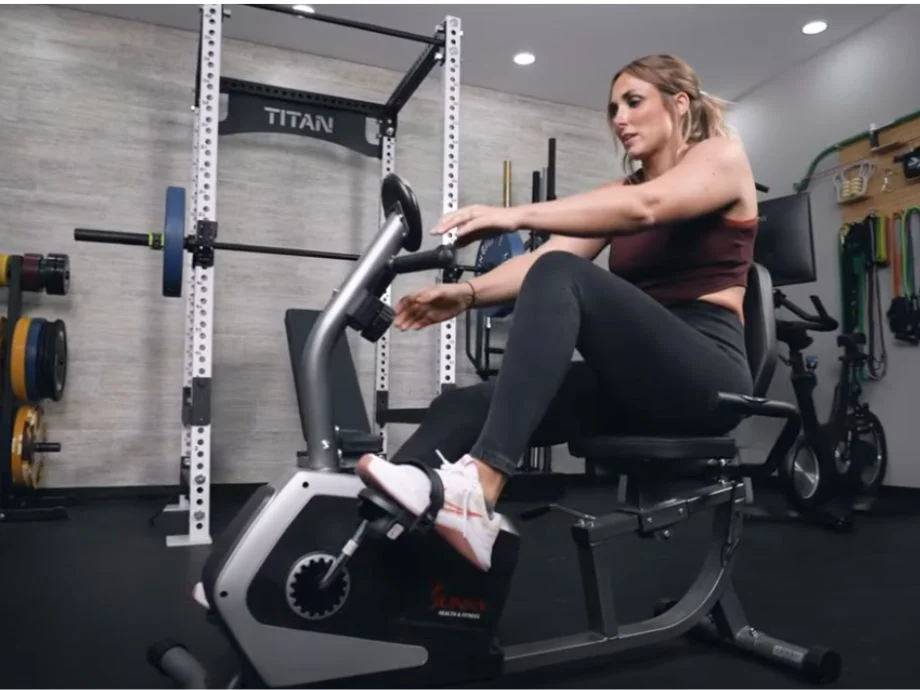
The GGR team has tested more than 25 exercise bikes over the years because we know that home gym owners have different budgets, training goals, and preferences when it comes to recumbent bikes. What’s good for one person may not be good for everyone. That’s why we analyze each model based on the 12 categories found in our exercise bike testing methodology.
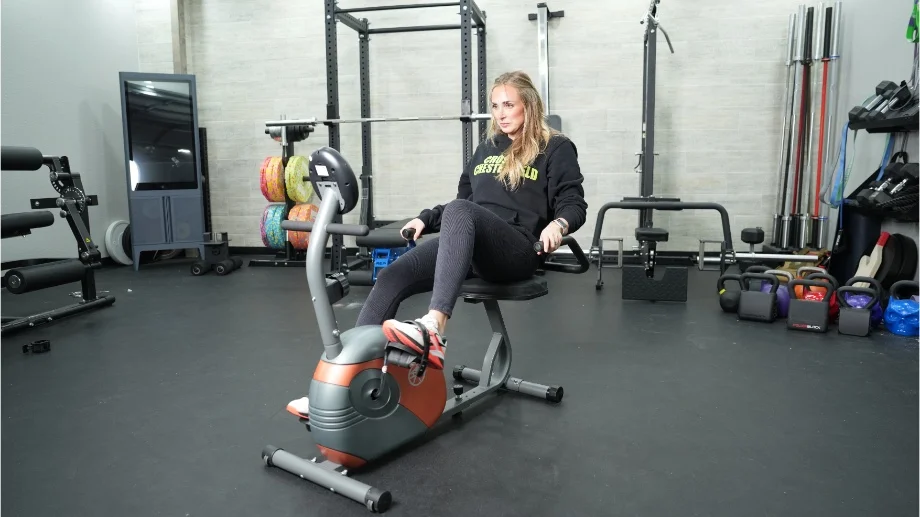
Our group of certified personal trainers, competitive weightlifters, former college athletes, and CrossFit L-1 coaches helped more than 3,100 readers find the right exercise bike for their needs in 2025, and we’re positive we can help you, too. To further ensure the accuracy of our content, we also talked to experts Chris Mohr, PhD, RD, and Dr. Raj Dasgupta, MD, FACP, FCCP, FAASM, about the benefits of aerobic exercise and how it can improve your overall fitness.
Latest Updates
In July 2026, we updated this guide to include the NordicTrack 10 recumbent bike as our best overall after testing the updated model.
Best Recumbent Bikes Video Review
Best Overall Recumbent Exercise Bike: NordicTrack 10 Recumbent Bike
Updated by: Cory Kessler, NASM-CPT, NASM-CNC
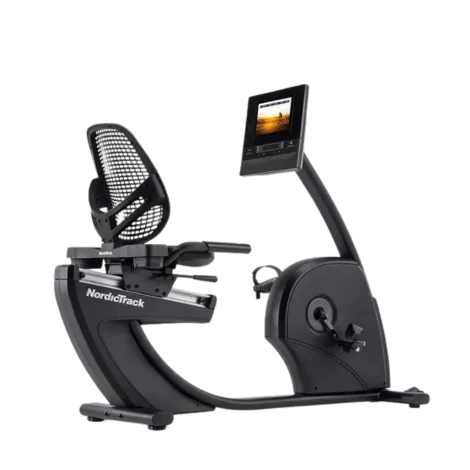










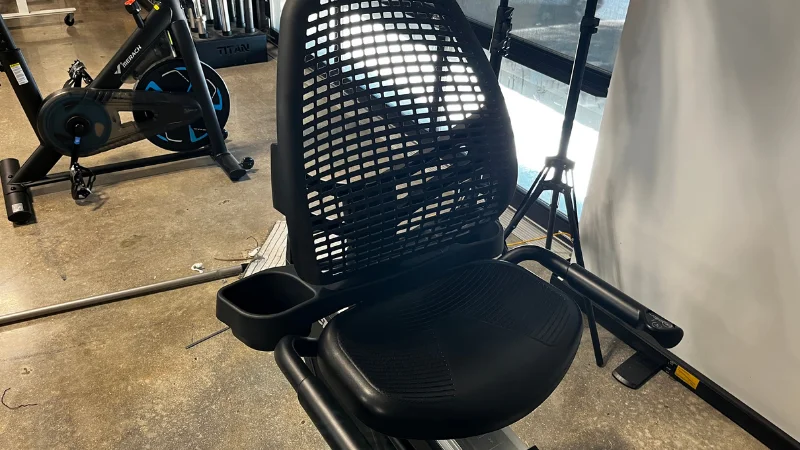
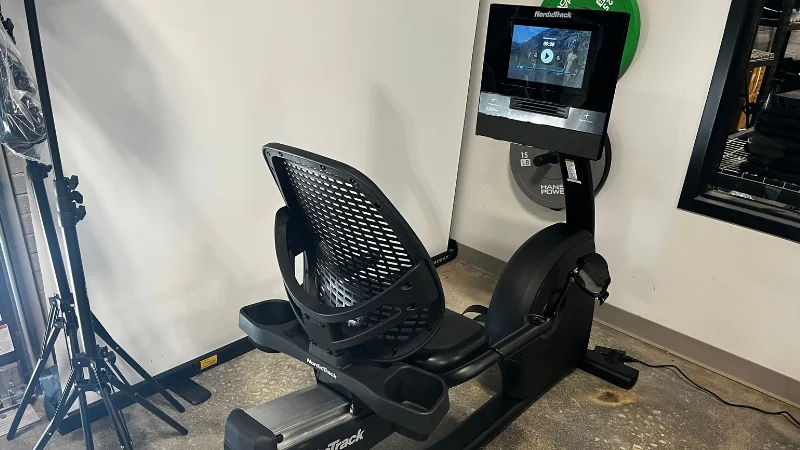
The NordicTrack 10 Recumbent Bike features a comfortable, adjustable seat with added lumbar support for cozy, effective pedaling. Plus, the iFIT programming unlocks over 10,000 on-demand workouts across a range of disciplines, including yoga, HIIT, strength, and (of course) cycling.
At a Glance
- Silent magnetic resistance system
- Handlebar controls for ergonomic convenience
- Built-in touchscreen
- iFIT compatibility
Between its comfortable design, built-in touchscreen with iFIT compatibility, and 26 levels of silent magnetic resistance, the NordicTrack 10 is our pick for the best overall recumbent bike. Our tester rated his overall experience a 5 out of 5, saying, “The bike feels smooth and operates at a whisper, and I really liked the positioning of the handlebars, which are at the perfect height.”
Ergonomics: 4/5
Dynamic Programming: 5/5

Value: 4/5
Why We Like the NordicTrack 10 Recumbent Bike
According to our tester, the magnetic resistance on the NordTrack 10 is very quiet yet still provides a challenging workout experience. “The resistance range goes from 4 to 26, and the highest level is like pedaling through cement,” he said. “It’s definitely high enough for experienced cyclists.” Accordingly, he awarded the 10 Recumbent Bike a perfect 5 out of 5 for customizations.
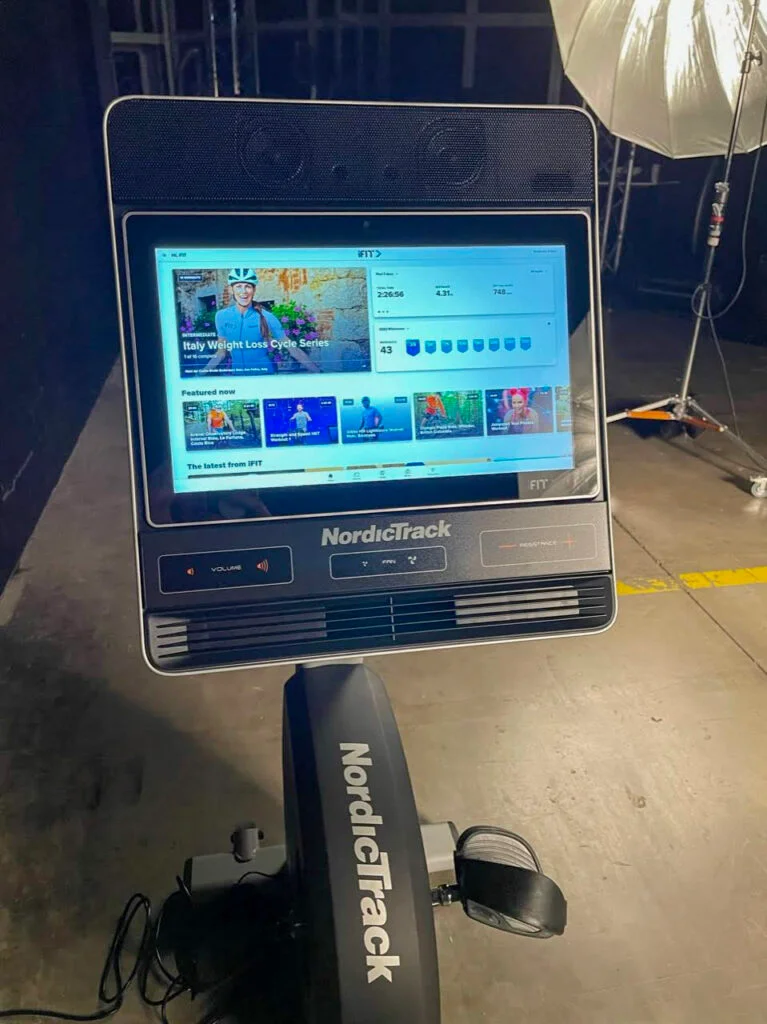
The touchscreen is another standout feature on the NordicTrack 10. Our tester says, “The touchscreen is intuitive with very little lag. There’s no heart rate monitor that I could see, but there is Wi-Fi, which allows you to download and stream different entertainment apps.” The bike is also Bluetooth-enabled with two speakers to stream music from your device. Overall, our tester gave the NordicTrack 10 a 5 out of 5 for tech capabilities.
The NordicTrack 10 Recumbent Bike scored another perfect 5 out of 5 for dynamic programming thanks to the iFIT compatibility you’ll find on all NordicTrack machines. iFIT is one of the best programming apps on the market, in our opinion, and this bike includes a one-month free trial with your purchase ($39 per month after the trial).
No shaking and no vibration on this bike. No matter how hard I pedaled, the thing still felt rock solid.
Our Expert Product Tester
Alternatives
Despite the high-level performance and features of the NordicTrack 10, we should call out the bulkiness that makes it difficult to move (despite the built-in transport wheels). This bike weighs almost 70 pounds more than the average recumbent bike we tested. If you’re tight on space and need a machine you can move out of the way with ease, this is not the option for you.
Additionally, while we maintain the value score of 4 out of 5, the $1,800 price tag is a bit higher than the average recumbent bike. However, you can often find this bike on sale, and it’s eligible for HSA/FSA reimbursement.
If this bike is too bulky or too expensive for your budget, we recommend you check out the Sunny Health & Fitness Essential Recumbent Exercise Bike. The Sunny Health bike is less than $300 and only weighs 59 pounds. You’ll lose a majority of the tech capabilities, but it’s a great option if you don’t need all of the bells and whistles.
Testing Breakdown
The NordicTrack 10 recumbent bike earned perfect 5s in multiple categories, but here is how it performed in the rest of our testing.
Vs. The Average
The NordicTrack 10 Recumbent Bike is about $550 more expensive than average, but it justifies the price with solid features and top-notch performance.
| NordicTrack 10 Recumbent Bike | Average Recumbent Bike | |
| Price | $1,799.99 | $1,237.25 |
| Screen Size | 10” | 9.7” |
| Product Weight | 186 lbs | 117 lbs |
| Levels of Resistance | 26 | 24 |
| Weight Capacity | 350 lbs | 338 lbs |
Best Recumbent Bike with Classes: Sole LCR Exercise Bike
Updated by: Amanda Capritto, CPT, CES, CF-L1, CNC, CSNC
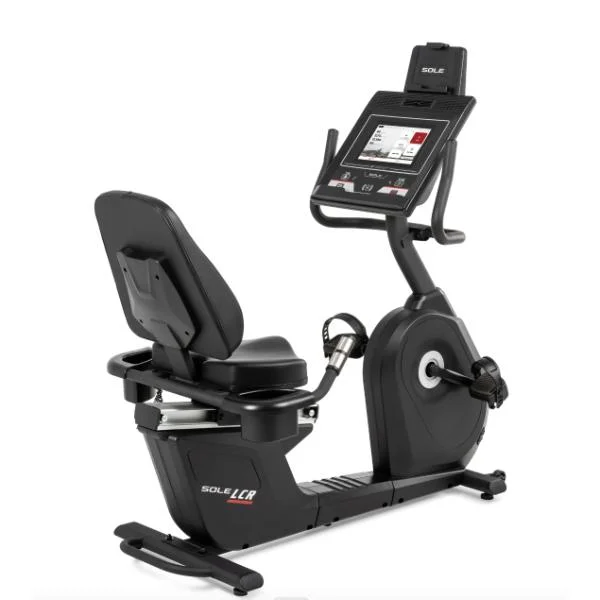




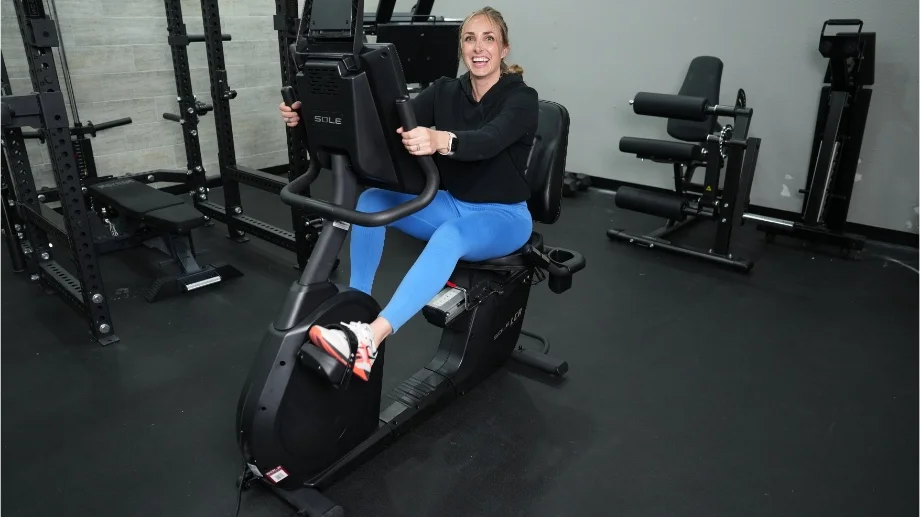
The Sole Light Commercial Recumbent Bike is a durable and high-value recumbent bike that our testers liked for its challenging resistance, comfortable seat and backrest, and great warranty.
At a Glance
- 40 resistance levels
- Step-through frame
- Lifetime frame warranty
- Built-in touchscreen
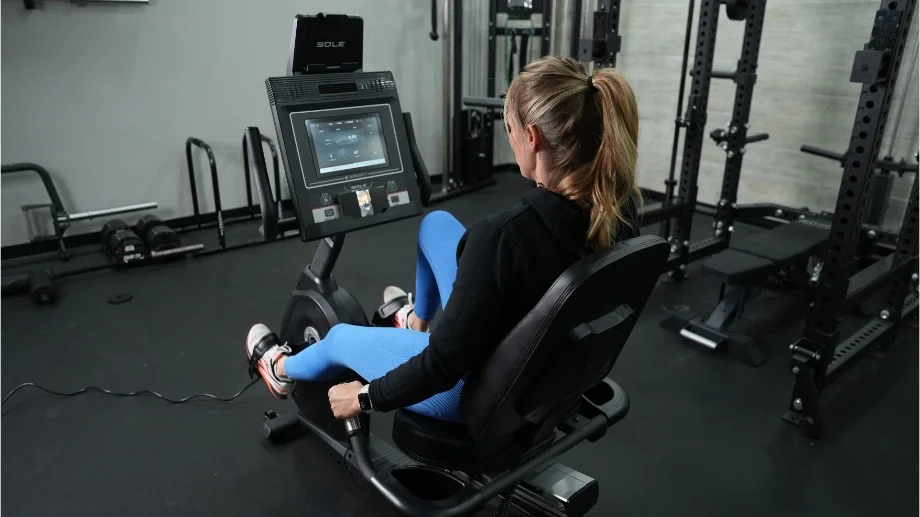
Between its comfortable design, beautiful touchscreen, and 40 levels of magnetic resistance, the Sole LCR Exercise Bike is our choice for the best overall recumbent bike. Certified personal trainer and cardio equipment expert Lindsay Scheele says it has “one of the most comfortable seats” she’s ever used, earning a 5 out of 5 for ergonomics. All features—and its fair pricing—considered, the Sole LCR was a shoo-in for the top overall spot.
Customizations: 5/5
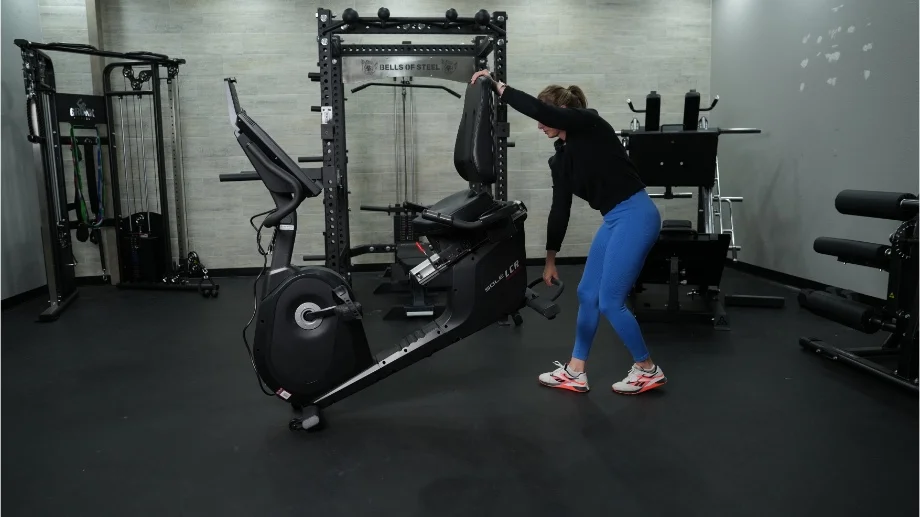
Footprint & Portability: 4/5
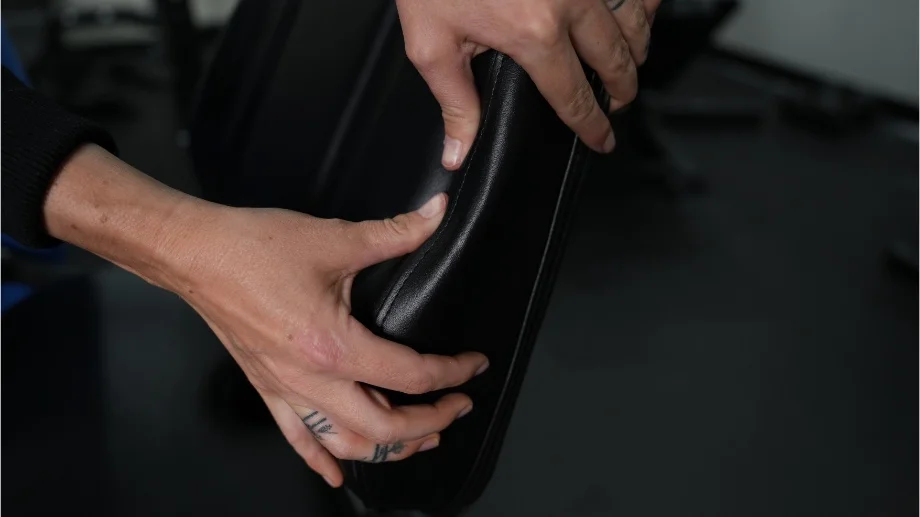
Durability: 4.5/5
Why We Like the Sole LCR Exercise Bike
Lindsay calls out that the touchscreen—a rare feature in recumbent bikes—is responsive and easy to navigate regardless of your technology literacy, earning a 4.5 out of 5 for tech capabilities. “There’s not a lot of scrolling that you have to do,” she says. “I think my six-year-old would be able to use it without much difficulty.” There’s also a tablet holder where you can place your smartphone or media device if you want to catch up on some Netflix binges during your ride.
This Sole LCR recumbent bike also comes mostly preassembled, a huge plus for people who don’t want to fiddle around with parts and hardware. Lindsay rates it a 4.5 out of 5 for delivery and setup, noting that she was able to complete the process in about a half-hour. If the 173-pound box weight feels intimidating, you can pay $199 for room-of-choice delivery, or $350 for professional assembly.
From a workout perspective, Lindsay says the LCR is “no walk in the park” despite it being a recumbent bike. It has a 31-pound flywheel as well as 40 levels of magnetic resistance, and you can feel it get harder as you increase the intensity. “You can absolutely tell the difference,” she says in reference to the varied training levels.
This is super-cushioned. It’s a bigger seat, and I can see a lot of people being able to use and enjoy this.
Lindsay Scheele, CPT, CNC
Alternatives
We maintain that the Sole LCR is the best recumbent bike overall, but you’ll definitely pay up for its high-quality build. “You’re approaching $2,000, which is a massive price tag for a recumbent bike,” Lindsay says. She’s right—most fall well under $1,000, but then again, most don’t have a built-in touchscreen and all of the adjustments that the Sole bike offers.
All things considered, we still rate it a 4 out of 5 for value, but recognize that it’s not in range for everyone. Sole does offer financing, though, and the bike may be eligible for HSA/FSA reimbursement.
Also note that a decent amount of real estate is required to comfortably fit this machine. Recumbent bikes, by nature, take up a greater portion of your flooring than a traditional upright exercise bike, and the LCR is one of the larger options.
If the Sole LCR isn’t in your budget, consider our best value pick—the YOSUDA Recumbent Exercise Bike, which goes for under $300.
Testing Breakdown
With 4s and 5s across the board, the Sole LCR is one of the highest-scoring recumbent bikes we’ve ever tested.
Vs. The Average
More expensive than the average recumbent bike, the Sole LCR justifies its price with a larger display, sturdy flywheel, and impressive 40 levels of resistance.
| Sole LCR Exercise Bike | Average Recumbent Bike | |
| Price | $1,999.99 | $1,237.25 |
| Screen Size | 10.1” | 9.7” |
| Product Weight | 152 lbs | 117 lbs |
| Levels of Resistance | 40 | 24 |
| Weight Capacity | 350 lbs | 338 lbs |
Read our full Sole LCR Recumbent Bike review for full details.
Best Value Recumbent Exercise Bike: YOSUDA Recumbent Exercise Bike
Updated by: Amanda Capritto, CPT, CES, CF-L1, CNC, CSNC
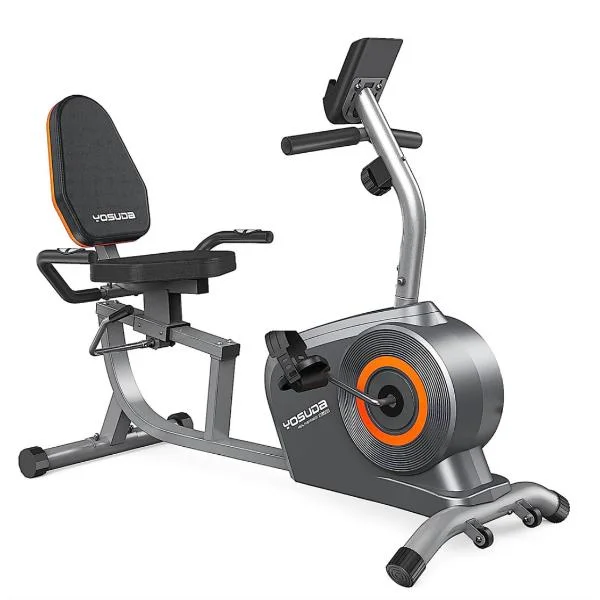



The YOSUDA Recumbent Bike is a lightweight and affordable recumbent bike that’s perfect for seniors or those with lower-body injuries who are trying to remain active.
At a Glance
- Small LCD display
- No preprogrammed workouts
- Quiet flywheel
- 350-lb weight capacity
If you’re looking to snag top-tier functionality without blowing your budget, the YOSUDA Magnetic Recumbent Exercise Bike truly earns its title as the best value recumbent bike. Priced around the $250 mark, this model offers features that often cost twice as much in the recumbent category. Despite its low entry cost, you get a magnetic resistance system with 16 resistance levels to scale workouts from beginner to more advanced, as well as a generous 350-pound weight capacity to accommodate most users.
RELATED: Best Budget Exercise Bikes
Ergonomics: 4/5
Footprint & Portability: 5/5
Durability: 4/5
Why We Like YOSUDA Recumbent Exercise Bike
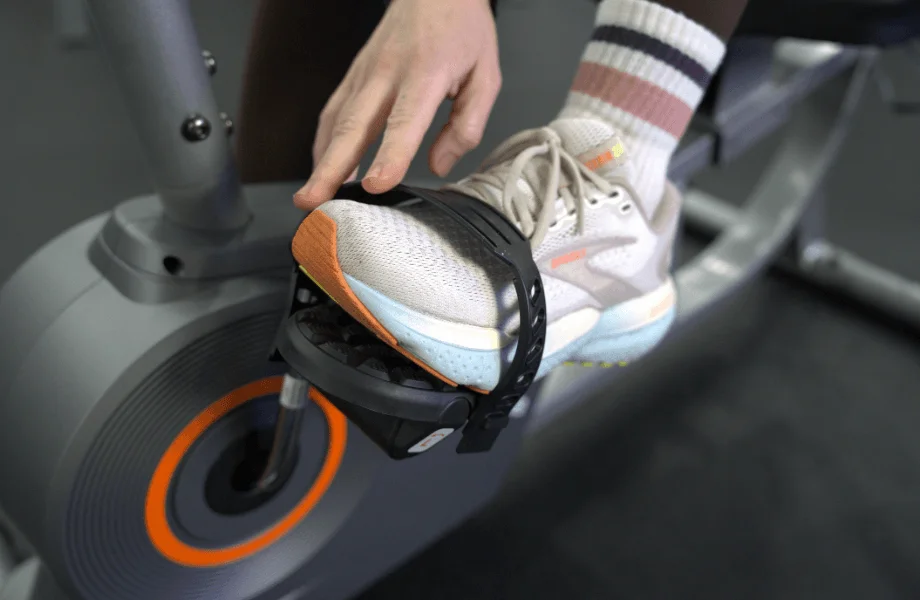
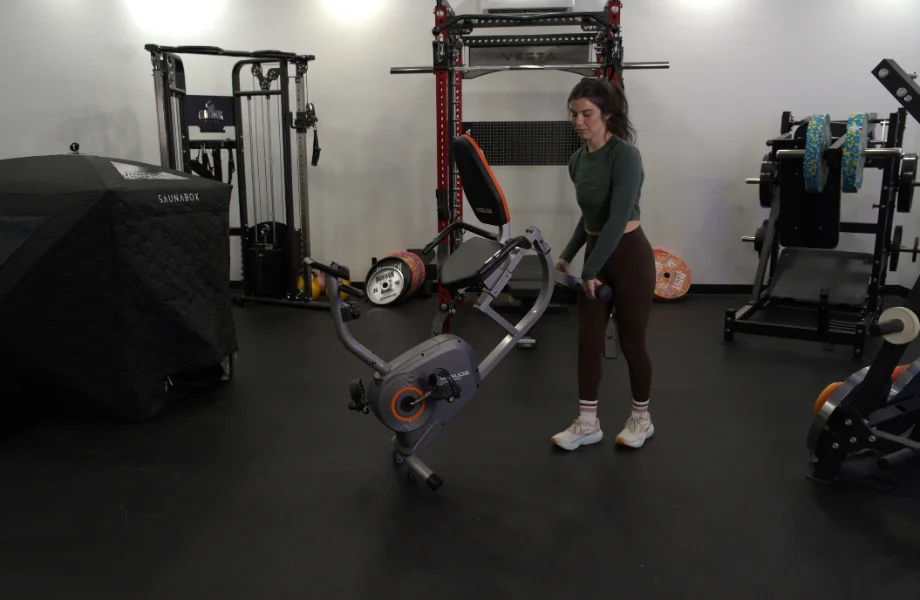
The YOSUDA Recumbent Exercise Bike may not be the fanciest exercise bike out there, but it offers all of the essentials at a great price—and in a small package, to boot. Our tester, Max Holmes, former collegiate athlete, says, “The best thing about this bike is its compact size and frame that allowed me to move it easily.” Accordingly, he gives it a 5 out of 5 for portability.
Max also appreciates its “light yet solid construction” and that he didn’t feel any uncomfortable wobbling or shaking, nor did he notice any unusual noise during use. He rates the durability of the machine a 4 out of 5, noting a slight hitch in the rotation of the cranks at resistance levels 13 through 16.
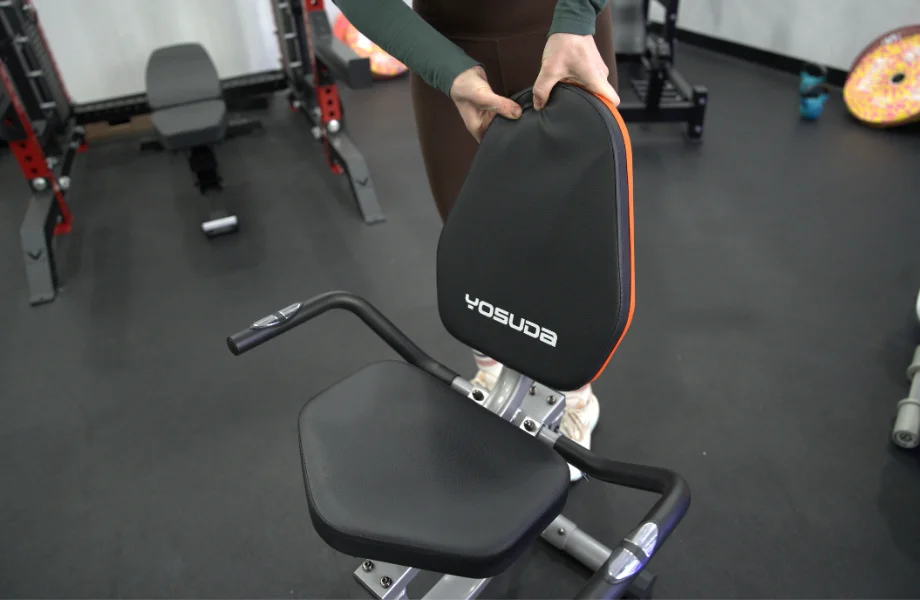
This bike also scores highly for ergonomics. “It has a comfortable seat, which made the workout feel better; I was able to put all my focus on my straining legs with each pedal,” Max tells me in reference to his 4-out-of-5 ergonomics rating. “The seat is the only adjustable component, but it still allows for enough range for me to fit comfortably, even as a 6-foot-tall male.”
It’s not a typical machine I would choose to use, though I did get a nice leg burn during my workout. The lack of options in the display let me down a bit during the workout.
Max Holmes, GGR product tester and former collegiate athlete
Alternatives
Don’t expect a suite of high-tech features at this price point. While YOSUDA may not skimp out on durability or comfort, the display is certainly bare-bones. Max rates the tech capabilities at 3 out of 5, saying, “It has a very basic, small digital display. It’s relatively intuitive; there are not many options to scan through, but you only have to use one button.”
Max admits he probably won’t continue to use the YOSUDA Recumbent Bike, largely due to the lack of tech (as well as some awkward handle placement that can be uncomfortable for certain users). “It has a great, lightweight frame and you can get a decent workout, but the plain digital display that only shows distance and estimated calories, distance, etc., doesn’t quite do it for me. It’s not a great place to keep track of metrics,” he says.
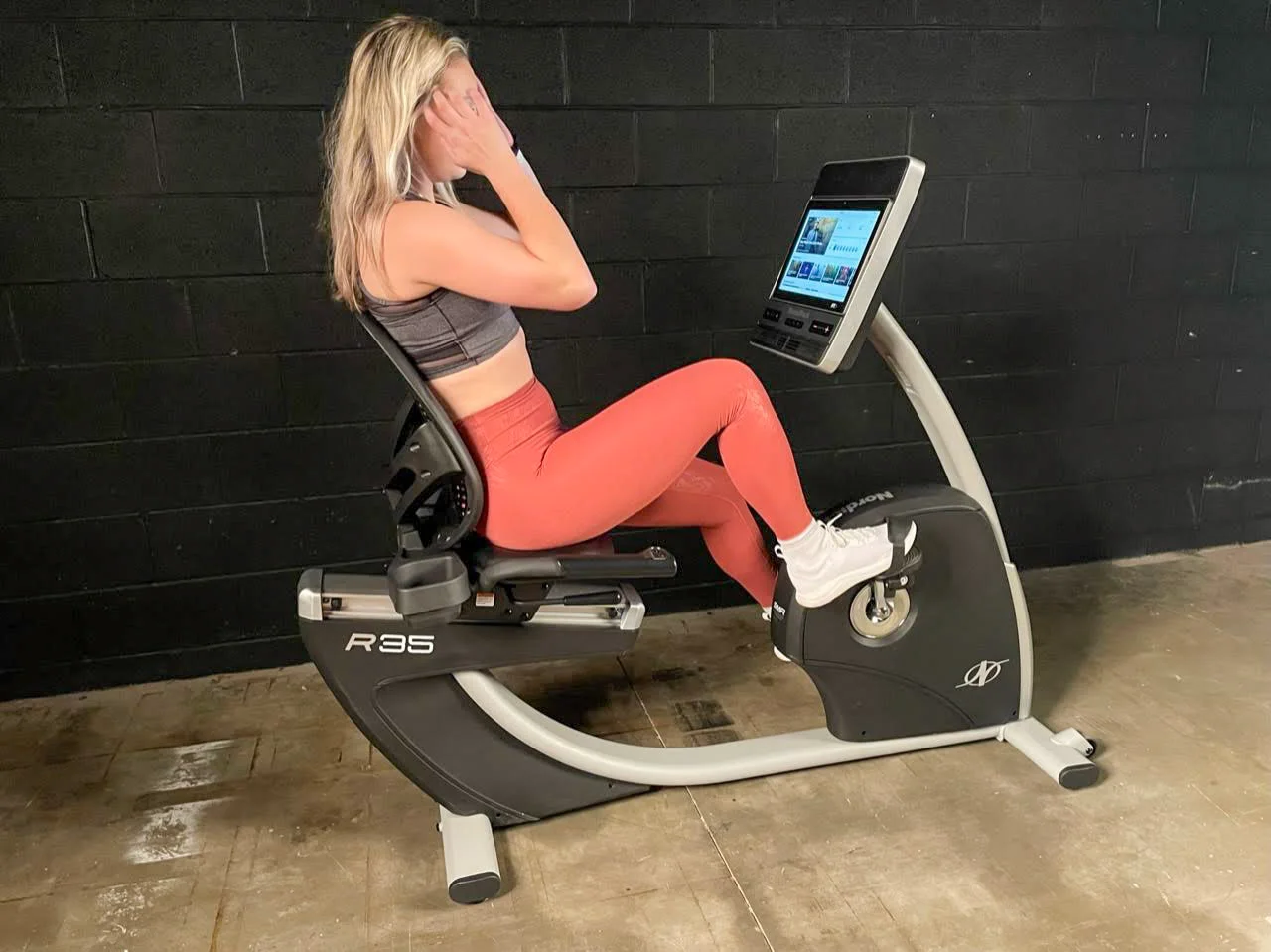
If a touchscreen display and studio-style cycling classes are more your speed, check out the NordicTrack Commercial R35 Recumbent Bike—our top pick for the best recumbent bike with classes.
Testing Breakdown
With a perfect score for footprint and portability, as well as value, the YOSUDA Recumbent Exercise Bike won’t let you down if you’re looking for a good buy at a low price.
Vs. The Average
With pricing much cheaper than the average machine, this recumbent bike can be an excellent pick for beginners who care less about high-tech specs and just want an effective indoor cycling bike with a comfortable seat.
| YOSUDA Recumbent Exercise Bike | Average Recumbent Bike | |
| Price | $250 | $1,237.25 |
| Screen Size | 3.45” | 9.7” |
| Product Weight | 65 lbs | 117 lbs |
| Levels of Resistance | 16 | 24 |
| Weight Capacity | 350 lbs | 338 lbs |
Best Adjustable Recumbent Exercise Bike: Sunny Health & Fitness Essential Recumbent Exercise Bike
Updated by: Amanda Capritto, CPT, CES, CF-L1, CNC, CSNC
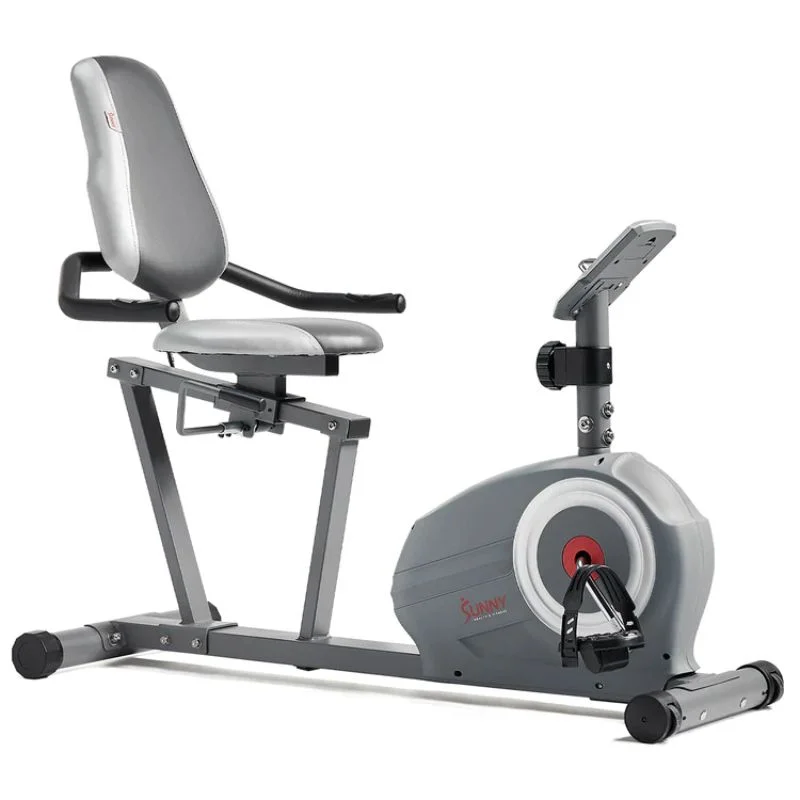
For under $300, the Sunny Health and Fitness Essential Recumbent Exercise Bike is an excellent option for beginners on a budget.
At a Glance
- Very lightweight at just 59 lbs
- 8 levels of magnetic resistance
- No touchscreen, but a media shelf
- Pulse sensors on handles
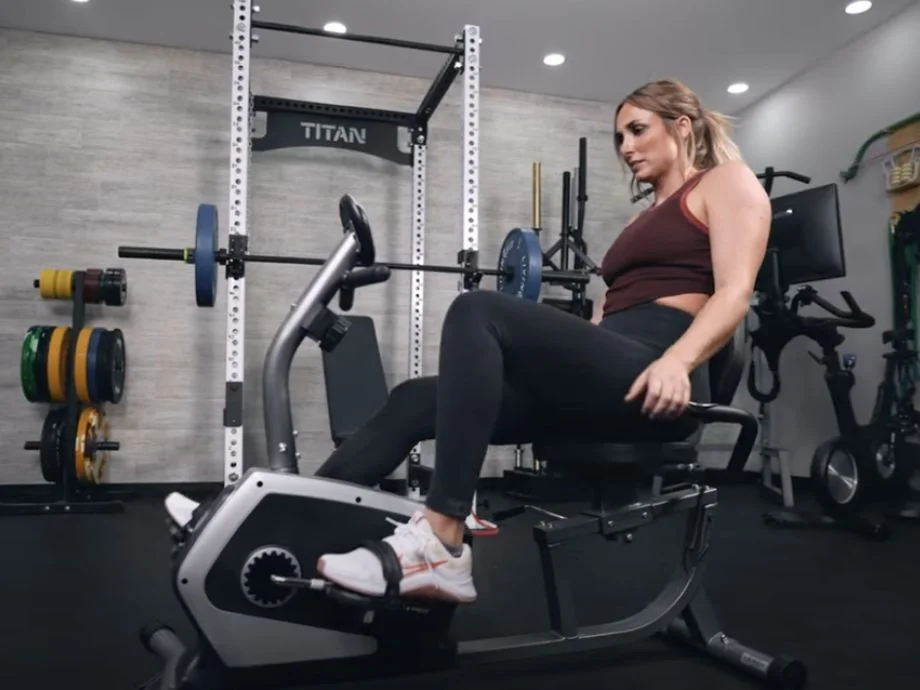
Besides having the industry standard 300-pound user weight capacity, which is fantastic for a bike that itself only weighs 59 pounds, the reason we picked the Sunny Health and Fitness Essential Recumbent Exercise Bike as the best adjustable option is its inseam options. Inseam here refers to the distance between the seat and the pedals—or how much “leg room” it has. This bike has an adjustable inseam that starts at 29 inches and goes up to 38, earning a 4-out-of-5-star rating for adjustability and ergonomics.
Footprint & Portability: 5/5
Tech Capabilities: 3/5
Ergonomics: 4/5
Why We Like the Sunny Health & Fitness Essential Recumbent Exercise Bike
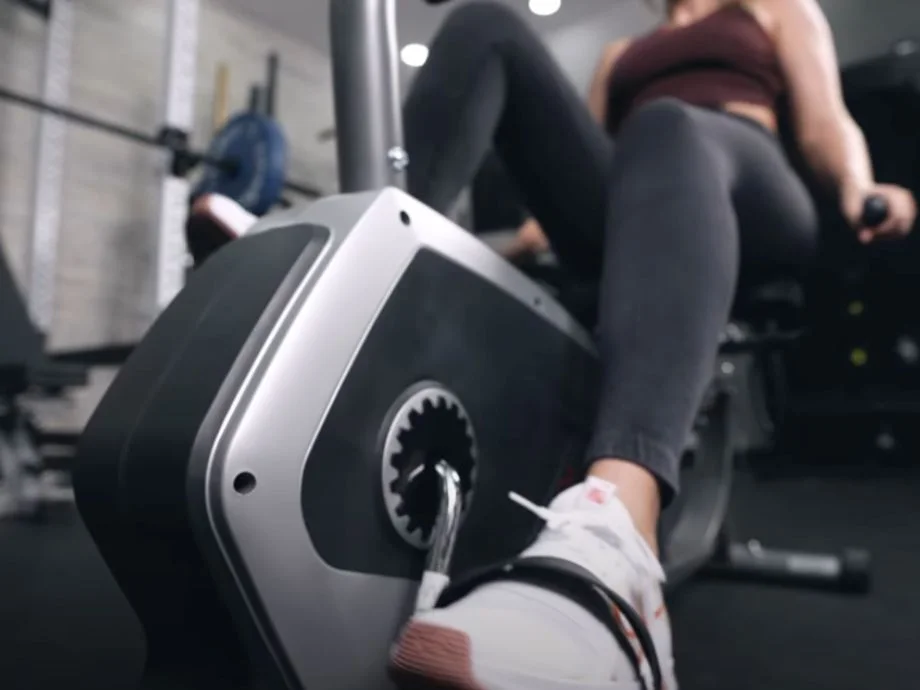
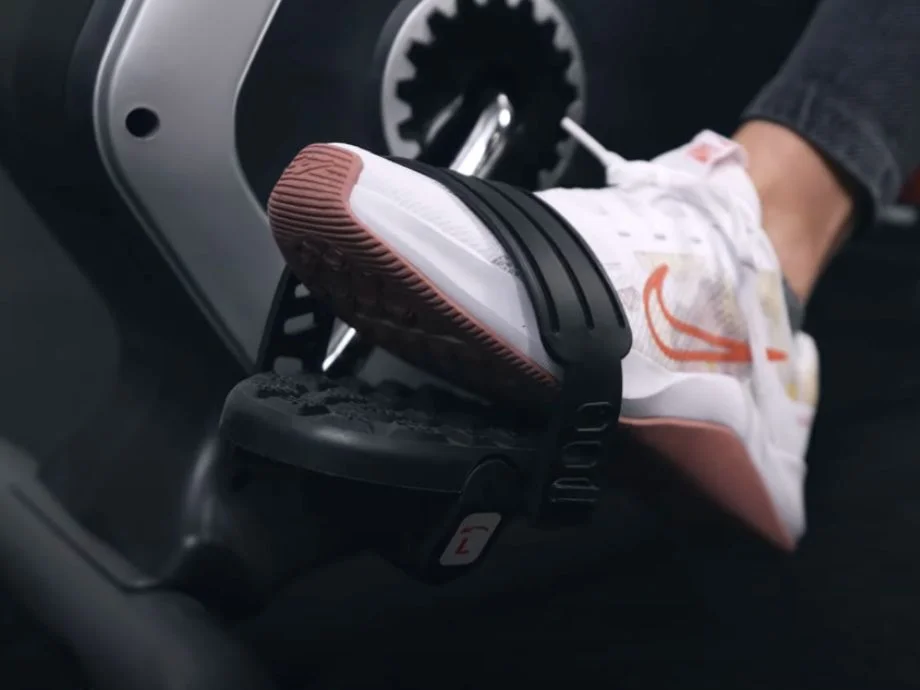
“It’s lightweight, low-impact, and doesn’t take up a ton of space,” certified personal trainer Lindsay Scheele says. Overall, the bike earns a 5 out of 5 for footprint and portability, as we feel most athletes would be able to maneuver this machine from one end of their home gym to the next. The seat is another big plus, measuring at 14.5 inches wide by 11 inches long, and the adjustable foot strap means you can fit virtually any size shoe into the pedal.
Lindsay was impressed by how sturdy this Essential recumbent bike feels—especially considering its budget-friendly price tag. She notes, “Even though the frame is fairly light, it’s still rated to hold up to 300 pounds.” For context, our team typically looks for a minimum 275-pound weight capacity when evaluating exercise bikes.
Lindsay also reported that the bike stayed steady throughout her rides. The built-in self-leveling floor stabilizers prevented any noticeable wobbling or movement while she pedaled. Even so, she ultimately scored the Sunny Health & Fitness model at 4 out of 5 stars. The one-point deduction comes from the brand’s limited transparency around the flywheel—there’s no published weight.
This is an affordable and great option for beginners and older adults, but since it has only eight resistance levels, I wouldn’t recommend it for people who are advanced with cardio.
Lindsay Scheele, CPT, CNC
Alternatives
Being a budget bike, you’re only getting eight magnetic resistance levels—no water bottle holder or storage compartments, and the front handlebars are pretty short. Those might not matter to people who just want to move their legs, but it’s something to keep in mind if you’re looking to use this daily.
The tech specs could be better, as well, with this bike model earning a 3 out of 5. There’s a small LCD screen that reads out time, distance, calories, odometer, speed, scan, RPM, and pulse (which is determined via the built-in sensors on the handles). It’s not much, but there’s also a device holder where you can place your phone to stream workouts from the SunnyFit app, which has a substantial selection of cycling sessions.
RELATED: Best Cycling Apps
Need more features, like a built-in touchscreen display? Our best overall pick, the Sole LCR recumbent bike, has the works.
Testing Breakdown
With great scores for portability, setup, durability, and more, the Sunny Health & Fitness recumbent bike is a steal at its price point.
Vs. The Average
The Sunny Health and Fitness recumbent bike is comparatively very affordable, and it’s very lightweight. That makes it a great choice for anyone who anticipates needing to move the bike around often.
| Sunny Health & Fitness Essential Recumbent Exercise Bike | Average Recumbent Bike | |
| Price | $499.99 | $1,237.25 |
| Screen Size | Not disclosed | 9.7” |
| Product Weight | 58.7 lbs | 117 lbs |
| Levels of Resistance | 12 | 24 |
| Weight Capacity | 300 lbs | 338 lbs |
Read our full Sunny Health and Fitness Essential Recumbent Bike review for more info.
Other Recumbent Bikes We Researched
Here are a few bikes that get an honorable mention from our expert product testers. While they weren’t selected for this recumbent bike roundup, we still feel they could be worthwhile selections for the right individual:
- Horizon Fitness 5.0 Recumbent Bike: We’ve yet to test this high-quality bike, but the machine does intrigue us with its on-paper specs. It features a three-speed fan, water bottle holder, and a very impressive 100 levels of resistance.
- Marcy Magnetic Recumbent Bike: Another budget-friendly choice, we appreciate the Marcy bike’s affordability, but feel it lacks in the durability department—even for its price point.
- Exerpeutic 400XL: This low-cost recumbent bike scored well in our testing, but it’s since been discontinued, so we removed it from this guide.
How We Picked and Tested the Best Recumbent Bikes
We use a multi-point testing methodology to objectively analyze recumbent bikes and other best cardio machines. During hands-on testing, we evaluate criteria like:
- Adjustability and Ergonomics: We evaluate how customizable each bike is by examining seat and handlebar adjustments (both vertical and horizontal), screen and pedal positioning, and overall comfort. A mid-range score of 3 out of 5 is given to models with a padded seat and adjustable handlebars and seat height.
- Durability: To achieve an average score of 3, a bike must remain steady and free of excessive shaking or wobbling—even during intense pedaling—and support at least 275 pounds. Any instability, creaking noises, or lower weight limits result in a reduced rating.
- Footprint and Portability: We record each bike’s dimensions and assess its ease of movement based on design features such as transport wheels or a foldable frame. Bikes that can be easily moved by one or two people typically earn a 3 out of 5 in this area.
- Customizations: A 3-point benchmark is awarded to bikes offering at least 12 resistance levels and adjustable parts like the seat and handlebars. Higher scores are reserved for models with added features, such as a broader resistance range, incline or decline options, and digital resistance controls.
- Tech Capabilities: To meet the baseline 3-point standard, a bike should include a console displaying key workout metrics like time, distance, and resistance level, plus a visual progress tracker and built-in heart rate sensors. Extra features—such as Bluetooth, integrated training programs, or streaming options—contribute to higher scores.
- Dynamic Programming: We evaluate bikes based on the quality of their built-in workouts, the smoothness of their resistance, and how well they adjust to changes in cadence or simulated terrain. To earn at least 3 points, a bike should offer a few built-in workouts, even if using them requires a companion app.
- Conveniences: We rate bikes on features that improve everyday use, such as water bottle holders, device trays, cooling fans, and easy-to-read displays. To score 3 points, a bike should include at least one bottle holder, a media shelf suitable for viewing a phone or tablet, operate quietly, and have a safety stop button.
- Customer Service: We test responsiveness and helpfulness of the company, since that’s a big part of the customer journey. A score of 3 requires replies within 24 business hours and efficient issue resolution. Higher scores go to companies offering multiple contact options, like email, phone, and live chat.
RELATED: Best Budget Recumbent Bikes
Benefits of Recumbent Bikes
Still wondering if a recumbent bike is the best type of cardio equipment for you? Here are the big benefits.
Aerobic Exercise
Like traditional upright exercise bikes, recumbent bikes provide an opportunity to perform aerobic exercise at home. According to Chris Mohr, PhD, RD, “Cardio, also called aerobic exercise, involves any activity that elevates your heart rate and breathing for a sustained period, supporting heart and lung health.”
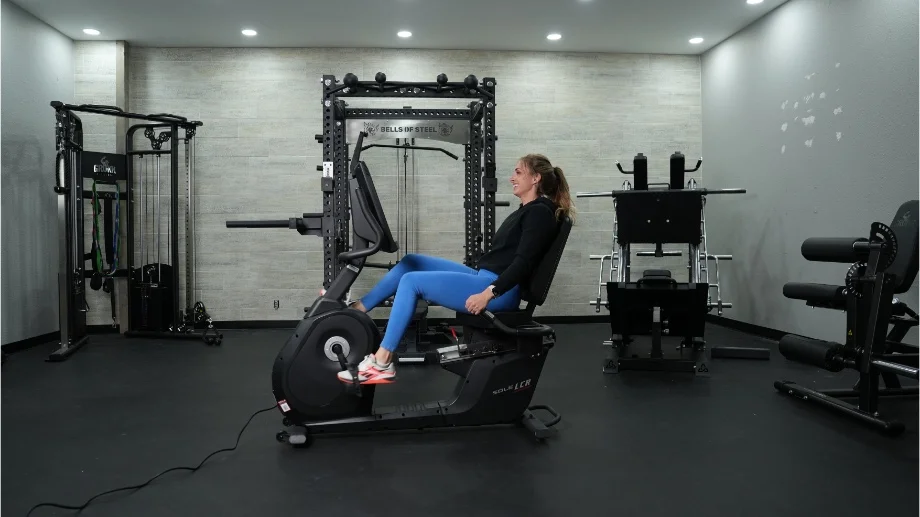
For an activity to count as cardio, Mohr says it should raise your heart rate to roughly 60–80% of its maximum (estimated as 220 minus your age) and maintain that level for at least 10–20 minutes.
Cycling is a common example, but any movement you enjoy that gets your heart pumping can be effective. “The most important factor isn’t the type of exercise—it’s choosing one you like and will stick with consistently,” Mohr says.
Low-Impact
Stationary bikes, in general, are more of a low-impact piece of equipment than treadmills because they don’t require your feet hitting the ground. Recumbent bikes are even more joint-friendly, however, because they place the user’s feet in front of them, thereby putting less strain on the lower-body muscles than an upright bike where your feet are below your posterior chain.
This makes them especially beneficial for older adults or anyone with balance issues, says Nicole Davis, CPT, PN1-NC. “Because of their stable, seated design, recumbent bikes reduce the likelihood of falls or strain. Also, the ergonomic positioning and low-impact movement make recumbent bikes a great option for those new to exercise or undergoing physical therapy after injury or surgery.”
Comfort
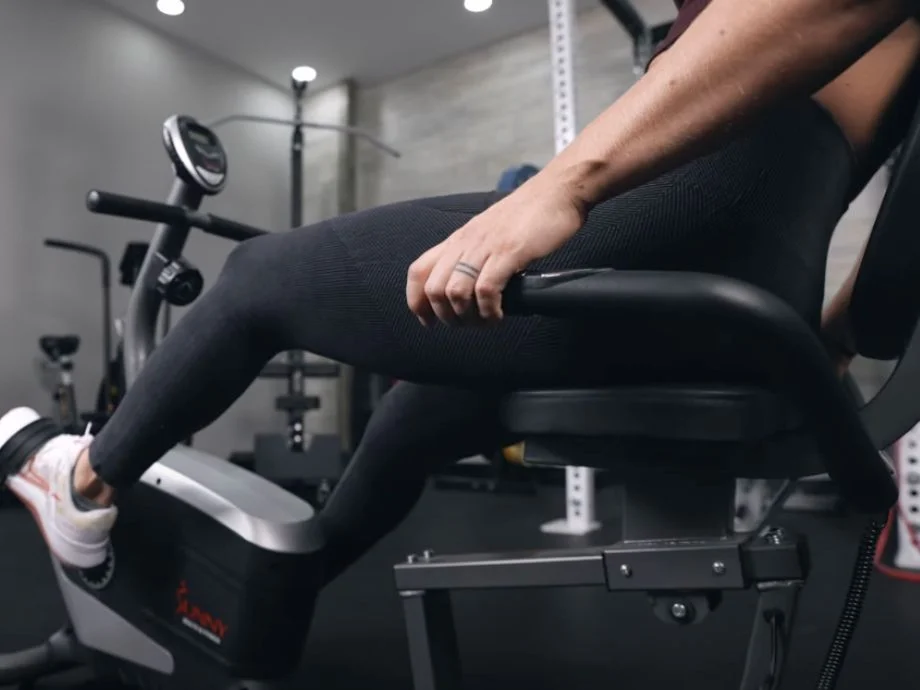
Compared to upright bikes, recumbent bikes have larger seats and backrests, which can provide better lumbar support and distribute body weight more evenly. “This helps reduce pressure on the lower back and tailbone,” says Nicole, “Which makes longer workouts more comfortable. In turn, you can achieve more minutes of exercise per week with less stress on your body.”
Less Cardiovascular Stress
According to a German study1, biking in a recumbent or reclined position puts less of a strain on your cardiovascular system than biking upright, making recumbent bikes a great choice for those with cardiovascular issues. Again, this makes recumbent bikes a great choice for those who struggle to meet the minimum exercise recommendations put forth by the Centers for Disease Control (CDC)2. Those guidelines stipulate 150 minutes (2.5 hours, which comes out to 30 minutes per weekday) of moderate-intensity cardio exercise per week.
Good Workout
Just because recumbent bikes put less stress on the body doesn’t mean they don’t offer a good workout, Nicole says. “Despite being gentler in a lot of ways, recumbent bikes still provide a solid cardio workout that improves heart health, stamina, and circulation. Plus, pedaling works the quadriceps, hamstrings, calves, and glutes, helping build and maintain leg strength.”
Buying Guide: What to Look for in Recumbent Bikes
Make sure to consider the following things before purchasing a recumbent bike for your home gym.
Size
It should go without saying, but check the footprint of any recumbent exercise bike you’re considering to make sure it can fit in your home gym or apartment. You should also make sure you’re able to move it, if necessary. Features like transport wheels and folding frames are ideal for those who plan to store the bike away when not in use.
Seat and Backrest
Check to see if the bike’s seat is padded and if the backrest is ventilated. A ventilated backrest can help limit sweat from accumulating on your back during more intense workouts. A wide, padded seat is more comfortable than a narrow, unpadded one, too.
Display
Most recumbent bikes will come with a basic LCD console that displays your workout metrics (calories burned, time, heart rate, etc.), but there are some that offer smart touchscreens for more informed viewing and onboard streaming. This comes down to a personal preference and the workout experience you’re looking for. If you want to stream workouts but don’t want to fork up the cash for a smart bike, look for one with a media shelf that allows you to set up a tablet or smartphone for viewing workouts or entertainment.
RELATED: Best Peloton Alternatives
Resistance
You’re probably never going to feel like you’re biking the Tour de France on a recumbent exercise bike, but you should still find one that has enough resistance settings to challenge yourself. Also, be sure to look for magnetic resistance where you can, as this drive train is quieter and more low-maintenance than friction-based resistance. Friction resistance will require replacing brake pads every few years to keep the bike functional, and it can create a noticeable grinding noise during use.
Price
Most recumbent bikes cost under $1,000, unless you’re getting one with a touchscreen, in which case the price can be higher. Most companies offer financing options to help you split your payment into monthly installments. Ideally, look for 0% APR financing over 30 or more months.
Adjustability
Recumbent bikes should have, at minimum, a few levels of vertical and horizontal adjustment for the seat and handlebars. You may also want to consider a backrest that has adjustable positions for fine-tuning your in-ride comfort.
Warranty
Check to see what the warranty is on each bike, and pay close attention to the different coverage periods for hardware versus things like monitors and other technology. We like to see at least five years of warranty on the frame, plus a minimum of two on parts and one on labor. Generally, the more expensive the bike, the better the warranty.
RELATED: Best Commercial Exercise Bikes
Tech
Most recumbent exercise bikes won’t have high-tech features. Most will have an LCD screen and limited pre-programmed workouts, but some, like the NordicTrack R35, have integrated touchscreen displays and programming options via some of the best workout apps.
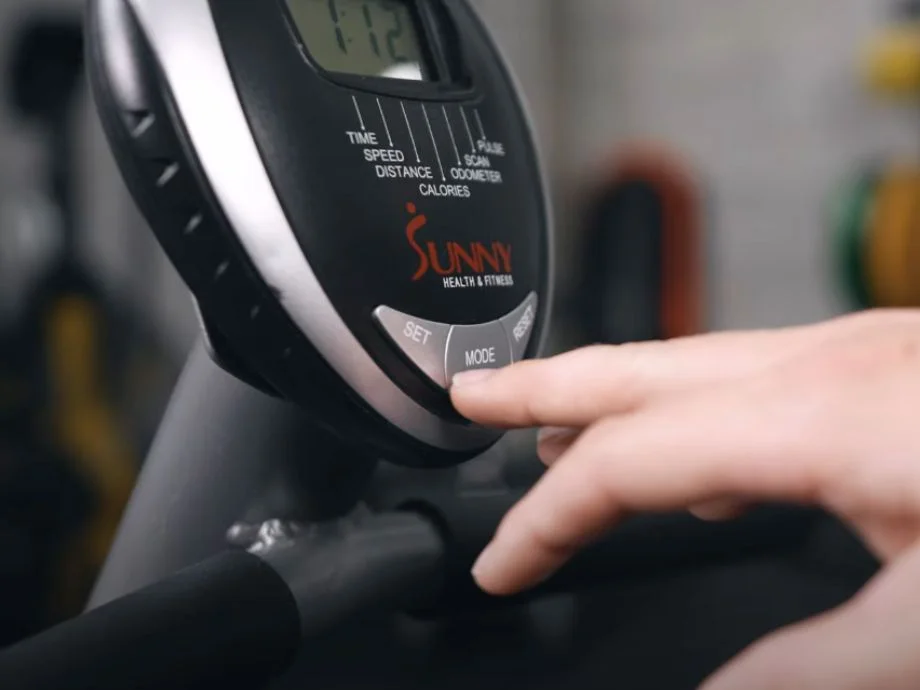
We recommend looking for a display that at least tracks time, distance, and estimated calories burned, plus a few onboard workouts. Bluetooth connectivity and a media shelf are helpful if you want to use a third-party app to stream and track workouts, as well.
Best Recumbent Bike FAQs
What are the disadvantages of a recumbent exercise bike?
The main disadvantages of a recumbent exercise bike are that it provides less of a full-body workout and takes up more space than other bikes. Because you sit in a reclined position, your core and upper body are less engaged, and the workout intensity can be lower than on an upright bike. Recumbent bikes also have a larger footprint, can be harder to move or store, and may not feel comfortable for all users. While they’re great for joint support and comfort, they’re not ideal if you want high-intensity or total-body training.
Is a recumbent bike good for belly fat?
Yes, a recumbent bike can help reduce belly fat as part of a consistent workout and healthy diet plan. “Eating a variety of foods, including fruits, vegetables, whole grains, lean proteins, and healthy fats, helps you get essential nutrients and maintain a healthy weight,” says Dr. Raj Dasgupta, GGR’s chief medical advisor. “Different foods provide the vitamins and minerals your body needs.”
Like other forms of cardio, pedaling on a recumbent bike burns calories and helps lower overall body fat, including fat around the midsection. However, you can’t target belly fat directly—where fat loss occurs first is largely determined by genetics. For best results, combine regular recumbent bike workouts with strength training and balanced nutrition to support overall fat loss and muscle tone.
How do I choose a recumbent exercise bike?
To choose the right recumbent exercise bike, look for a model that fits your body, goals, and space. Prioritize comfort and adjustability. A padded seat, lumbar support, and adjustable pedals and handlebars can help prevent strain. Check the resistance system (magnetic resistance is smooth and quiet) and the number of resistance levels for workout variety. If tech features matter to you, look for a console that tracks time, distance, calories, and heart rate, plus Bluetooth or app connectivity. Finally, consider weight capacity, warranty, and size to ensure it fits your home setup.
References
- Albarrati, A. (2017). Effect of Body Posture on Cardiovascular Performance and Recovery during Cycling Exercise. In Physikalische Medizin, Rehabilitationsmedizin, Kurortmedizin (Vol. 27, Issue 01, pp. 53–57). Georg Thieme Verlag KG. https://doi.org/10.1055/s-0042-122145
- Centers for Disease Control. Adult Activity: An Overview.