



Working remotely has plenty of perks.
You don’t have to waste time (or gas money) commuting to an office.
You don’t have to worry about dressing to impress.
And in some cases, you don’t have to stick to a strict schedule like a typical “on the clock” employee.
However, as someone who’s worked from home almost exclusively since 2020, I’ll be the first to admit that it’s easy to abandon healthy habits when you’re secluded from the rest of the world. But just because you’re #lockedin on a project or trying to get something done on deadline doesn’t mean you should neglect your physical and mental well-being.
In fact, you should take the opposite approach.
When you work from home, you have the power to prioritize what’s truly important to you. And if you want to keep crushing it at your job and in the gym, you need a game plan that supports both endeavors.
After years of experimenting with different strategies, I’ve come up with a list of seven realistic ways to stay healthy while working from home. Because everyone operates differently, I’ve also asked some of my GGR teammates to provide practical advice and a few product recommendations that can help set you up for sustained success.
So, whether you’re starting from scratch or simply looking to enhance your current WFH routine, here’s a seven-step plan your brain and body will appreciate over the long haul.
1. Optimize Your Workspace Ergonomics
Just like we evaluate a machine’s ergonomics as part of our treadmill testing methodology, you should set up a dedicated workspace that’s comfortable and conducive to productivity. After all, if you’re struggling to sit for more than 30 minutes because your desk chair lacks lumbar support, you likely won’t be able to maintain the focus needed to get your assignments done.
First, I highly recommend an adjustable standing desk. Not only does this allow you to switch positions throughout the day, but it also paves the way for you to use an under-desk treadmill to rack up some easy steps. Plus, even standing upright for some time can provide much-needed relief for your spinal erectors and glutes, which tend to suffer the consequences of too much sitting.
Next, try out a bunch of office chairs so you can get a good feel for what fits your body type best. Some people prefer a mesh design for enhanced breathability. Others may want a plush, cushioned model. You also need to consider whether the arms are adjustable (my preference), and whether there are built-in support elements for your lower back and neck.
Once you’ve decided on a desk and chair, set up your workspace for optimal ergonomics. That means putting your monitor at the correct height and positioning your keyboard and mouse accordingly. All of these may seem simple, but considering you may spend 40+ hours at this exact spot, you want to do everything possible to make your workspace comfortable.
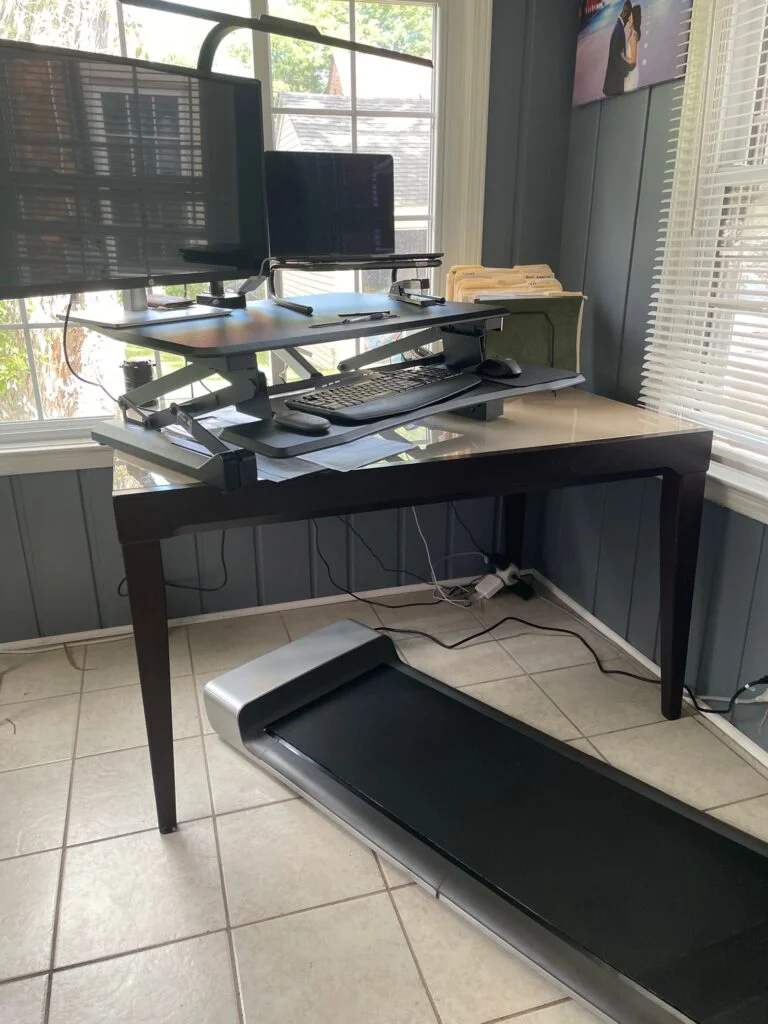
All of this talk about ergonomics relates back to good posture—something that’s vastly underrated but incredibly important. From enhancing your core strength to supporting optimal spine and neck health, proper posture pays big dividends, but a poorly setup workspace can quickly derail that.
RELATED: 6 Benefits of Good Posture
Switch Up Your Seating
GGR writer Cory Kessler, NASM-CPT, NASM-CNC, is a busy father, husband, and fitness enthusiast who’s learned to pivot positions—literally—to stay fresh. One of his work-from-home hacks includes swapping out his desk chair for a yoga ball during the day.
“This keeps my posture from getting too bad, and I should probably use it even more,” he says.
2. Make Meal Prepping a Priority
“Failure to prepare is preparing to fail” is a line I heard so many times during my rugby playing days, and it applies to the workplace, too.
It’s no secret that nutrition plays a pivotal role in your energy levels, recovery, and performance, so why jeopardize any of those when you have a prime opportunity to bolster them?
Although I practice daily intermittent fasting, many people follow a more standard three-meals-a-day eating plan (often with a few snacks in between). If you fall more into that category, then you should absolutely make meal prepping a priority.

On one hand, cooking your own food gives you complete ownership over what you put into your body. Ordering out eliminates that key element of control, as you’re at the mercy of whoever’s running the kitchen.
Moreover, spending part of your Sunday (and perhaps again in the middle of the week) to create nutritious dishes that can cover at least a few lunches and dinners will save you valuable time during the workday. Instead of having to prepare ingredients, cook everything, and clean up a bunch of dishes, all you have to do is re-heat whatever you made and get to eating.
That doesn’t mean you need to make a week’s worth of meals in one sitting. Even making enough for two or three days can be a game-changer, especially if you have a busy life outside of work.
GGR Managing Editor Amanda Dvorak, CPT, CNC, is a big proponent of meal prepping, as she follows a similar routine that she did when she worked in a traditional office setting.
“It’s easy to assume you’ll have plenty of time to make fresh meals when you work from home, but a busy job can pull you in a dozen different directions,” she says. “Before you know it, you’re reaching for something quick or cobbling together random foods that aren’t exactly filling or nutritious. Having meals ready to reheat or batches of cooked protein on hand to throw on a salad makes eating well so much easier.”
No Cooking? No Problem
If you’re not particularly handy in the kitchen, you could also consider a prepared meal delivery service like Factor or ICON Meals, which will provide similar time-saving benefits. There are plenty of meal plans and options available that cater to different dietary preferences, so you still have ample flexibility to build a menu that’ll satisfy your taste buds.
However, if you like flexing your culinary muscles, put aside some time at least twice a week to craft your own meals that prioritizes protein, minimizes sugar, and maximizes micronutrients.
3. Create a Simple Stretching and Mobility Routine
You’ve got your workspace set up. You’ve got your meals prepped (or ordered).
Now we need to start thinking about movement.
After all, far too many of us spend far too much time sitting.
A typical 9-to-5 schedule means you could spend hours upon end stuck in one position—unless you proactively do something about it. And that’s exactly why you need to create a simple routine that encourages you to get up, restore mobility in your joints, and stretch out various muscles that can get locked up from staying sedentary.

“Combining isometric holds with stretching is known as isometric stretching and may increase flexibility and range of motion while also building strength and stability when muscles are fully extended,” says GGR expert contributor Chris Mohr, PhD, RD.
Where should you begin? Some of my favorite at-work stretches include:
- Neck circles: Helpful when you’re staring at a monitor or smartphone all day
- Seated trap stretch: Your trapezius is a key muscle for postural support1
- Cross-body shoulder stretch: Relieves tension in the upper back and shoulders from prolonged typing and desk work
- Wrist circles: Gives your wrists a break from typing and controlling a mouse
- Couch stretch: Loosens hip flexor muscles that get short and tight from sitting
While that’s by no means an exhaustive list of stretches, that should be a good starting point.
However, that’s just one half of the equation.
In addition to stretching, you should incorporate mobility exercises to assist with range of motion and overall joint health. In particular, I’m a big fan of thoracic (T-spine) exercises, as this affects lumbar stability.
Here are a few you can pencil into your routine:
- Cat Cow: This common yoga pose relieves tension in the neck, shoulders, and torso from a tabletop position.
- Deep Squat Hold With Thoracic Reach: A simple, but effective exercise that opens up your hips and upper back simultaneously.
- Samson Lunge: This lunge variation is a Godsend for desk workers dealing with tight hip flexors (me included!).
Again, this is just a starting point that can help you feel a bit more spry. Build your routine around stretches and mobility exercises that address areas that affect you most.
“When you’re making lunch, coffee, or whatever, use those few minutes of waiting to touch your toes, twist your spine, or do a quad stretch instead of doomscrolling,” says GGR editor Amanda Capritto, CPT, CES, CNC, CF-L1, CSNC.
Trainer’s Tip
I also recommend investing in a high-quality foam roller, a set of resistance bands (these will become your best friend) and a massage ball to dig into tight problem areas. These compact, low-cost muscle recovery tools can pay huge dividends for your mobility.
RELATED: Office Workout: 16 Trainer-Approved Desk-Friendly Exercises
4. Take a Daily Mental Reset
Exercise and mental health go hand-in-hand. When I’m stressed, few things provide as much relief as going to the gym and pumping some iron. Now, I’m not saying that you have to go work out every time you need a break, but the overarching point is that you should step away from your desk and do something to reset.
As a writer, I’ll run into the dreaded “writer’s block” from time to time where it feels impossible to string even a few words together. And if you work from home, you’ve probably faced a similarly frustrating moment where it feels like you can’t get anything done.
And that’s okay.
Rather than beating yourself up about it, find a positive, productive way to channel that energy.
- Get lost in a novel for a little and let your brain decompress.
- Knock out a HIIT cardio workout in your home gym.
- Take out your journal, pick up a pen, and let it flow.
- Lay down, put your headphones on, and follow The Breathing App (or another meditation app) for some guided breathing exercises.
- Grab some colored pencils and doodle (it doesn’t have to be good!) or color in a coloring book.
Any of these mindfulness practices (or a combination of several) can help manage stress and provide some much-needed relief for your busy mind. Even taking 5 or 10 minutes for this type of reset can put you in a better headspace to finish your day on a strong note.
When In Doubt, Go Out
GGR writer Cory Kessler, NASM-CPT, NASM-CNC, is no stranger to trying to get an assignment done while you’re stressed and ready to throw in the towel. If you’re feeling overwhelmed, that’s not the time to push harder. Instead, follow his approach:
“I have a 7-minute walking route outside my home. If I get stuck on something or the dog is driving me nuts, I go take a lap and reset.”
GGR senior director of content Nicole Davis, CPT, PN1-NC echoes this sentiment.
“I second taking a lap/short walk if you need a reset, or taking a stretch break, but sans phone or any stimuli,” she explains. “I am guilty of just automatically putting on a podcast or music when I step away from my desk but sometimes having that quiet to reset and think through something is key.”
5. Put 10-Minute Walks on Your Calendar
This leads perfectly into my next strategy for staying healthy while working from home: Get your steps in.
No, I’m not talking about firing up the Peloton App for a dance cardio class (though that’s not a bad idea).
Instead, I’m talking about good old-fashioned walking.

As a certified personal trainer and lifelong athlete, I can confidently say that this is a criminally underrated physical activity when it comes to your health and fitness. Obviously, many people know about the benefits of walking for weight loss, but you don’t even need to be concerned about the number on the scale to make walking a more prominent part of your daily routine.
For those of us who work from home, it’s easy to get wrapped up in an assignment and realize you’ve barely left your desk.
It’s time to put that to a stop.
An easy fix is to schedule 10-minute walks throughout the day. If you start your day at 9 a.m., consider going for a walk at 11 a.m., then again at 1 p.m. (walking after you eat is also beneficial for digestion2), and one more at 3 p.m. before you wrap up your day.
Not only is this a great way to increase your daily step count, but it also gives you a chance to get some fresh air and soak up some vitamin D. You could also use these walks to listen to a podcast or catch up with a friend or family member (as long as your mom doesn’t keep you on the line for too long).
GGR editor Amanda Capritto is a new mom who has years of experience working remotely. One practice she always turns to is something she now gets to do with her daughter: walking.
Here’s her advice on how to get some steps in:
- Take short walks multiple times per day instead of one long walk per day, if you can. “This helps free me from all-or-nothing thinking and gets me moving more than if I just went out for one longer walk,” Amands says.
- Get a walking pad and a standing desk combo for days when the weather is bad.
- Take walking meetings (weather permitting) any time you don’t have to speak or engage, such as a company all-hands call.
RELATED: Do You Need 10,000 Steps a Day?
GGR Recommends: Best Under-Desk Treadmill
Looking for a low-cost way to get your steps in during the workday? The WalkingPad P1 Classic Folding Treadmill is our top-rated under-desk treadmill thanks to its foldable design, excellent ergonomics, and convenient plug-and-play setup.
Check out our full WalkingPad review for more details on our team’s experience.
6. Keep Water (and Electrolytes) on Hand
It seems obvious, but staying hydrated is a surefire way to set yourself up for a productive day in your home office and in the gym. Unfortunately, many people (myself included) neglect this by downing cups of coffee to stay “fueled” and failing to keep their water bottle filled.
Admittedly, I can do a better job of drinking H₂O throughout the day, and if you’re in the same boat, it might be helpful to set reminders on your Apple Watch or fitness tracker so you don’t fall behind.
However, don’t make the mistake of thinking drinking water is the only thing you need to do to stay hydrated.
Maintaining proper electrolyte balance is critical for performance, and those who train regularly need to be even more mindful of their intake. After all, you lose sodium, potassium, magnesium, and other key elements when you sweat.

Adding an electrolyte powder like Swolverine INTRA to your water bottle in the morning is a great first step. You can sip on that throughout the day and replenish further post-workout. Keep in mind that your hydration needs will be greater if you train intensely and sweat profusely.
GGR Recommends: Best Sugar-Free Electrolyte Powder
Whether you’re a keto dieter or you’re simply trying to steer clear of sugar, there are several high-quality electrolyte powders that align with these restrictions. After testing more than a dozen options, our team puts Transparent Labs Hydrate at the top of our list thanks to its clean formulation and budget-friendly price tag. Check out our other picks for the best sugar-free electrolyte powders for more thirst-quenching options that can help quell dehydration.
7. Set Boundaries and Unplug
Last—but certainly not least—you have to learn how to set boundaries.
Working from home can be a double-edged sword. When you’re focused, you may forget time exists entirely. When you’re facing pressure to get something done, you may abandon other priorities or people.
That’s not a healthy way to live.
One of the keys to making this lifestyle work is understanding the importance of setting boundaries and adhering to them.
If you have dinner plans with family at 6 p.m., don’t skip it just because you didn’t finish an assignment.
If you have a group workout class every Wednesday at a certain time, build your schedule around that instead of letting that go by the wayside for work.

Detaching and unplugging—figuratively and literally—is absolutely necessary for your mental health. That doesn’t mean you have an excuse to be lazy or forgo responsibilities, but it does mean you need to keep that all-important healthy work-life balance at the forefront.
In all honesty, this last piece of advice applies to everyone, not just those who work remotely.
At the end of the day, your job doesn’t define you. And what good does it do to make money if it means you’re sacrificing health and relationships?
My Teammates’ Tips
Just like there are different methods to build muscle, there are different ways you can structure your workday. What may work for one person may not be feasible for another. Conversely, there are some strategies that are universally applicable.
Because I’m just one part of the squad, I want to give my GGR teammates a chance to share some of their WFH tips that help them stay healthy and happy throughout the week.
Dress to Impress (Even if No One Sees)
Self-care isn’t something you should de-prioritize just because you don’t work in a normal office environment. In fact, GGR editor Amanda Capritto firmly believes you should take pride in looking the part even if you don’t have any face-to-face meetings (on camera, of course) scheduled.

“Get dressed every day,” she advises. “I have fully taken advantage of working from home and rolled out of bed at the last minute and stayed in my pajamas many days, but I’m always more productive and motivated when I actually get up and get dressed.”
Amanda isn’t the only one with this mindset.
“I second getting dressed every day,” says GGR senior director of content Nicole Davis. “You gotta show up for yourself if you need to show up for others at your job! It helps tremendously with my perspective and productivity.”
Stay Connected (With Other Humans)
While a digital disconnect is absolutely necessary, don’t take that same approach with your co-workers. One of the disadvantages of working remotely is you don’t get in-person interactions that can help break up the monotony and stress of the workday.
However, you shouldn’t let the fact you’re working from different locations stop you from reaching out to your teammates.
“Obviously, being in back-to-back meetings isn’t ideal, but if you go multiple days without talking to anyone from your team, it can be weird for your mental health,” Nicole says. “Finding those moments to connect with people 1-on-1 and chat about non-work-related things first can be a great way to connect.”
Stock Up on Snacks (Healthy Ones)
I touched upon meal prepping, but senior writer Matt Dustin, CSCS, PN1-NC, also highlights the importance of having a plethora of healthy, nutrient-dense options available when you want something lighter.
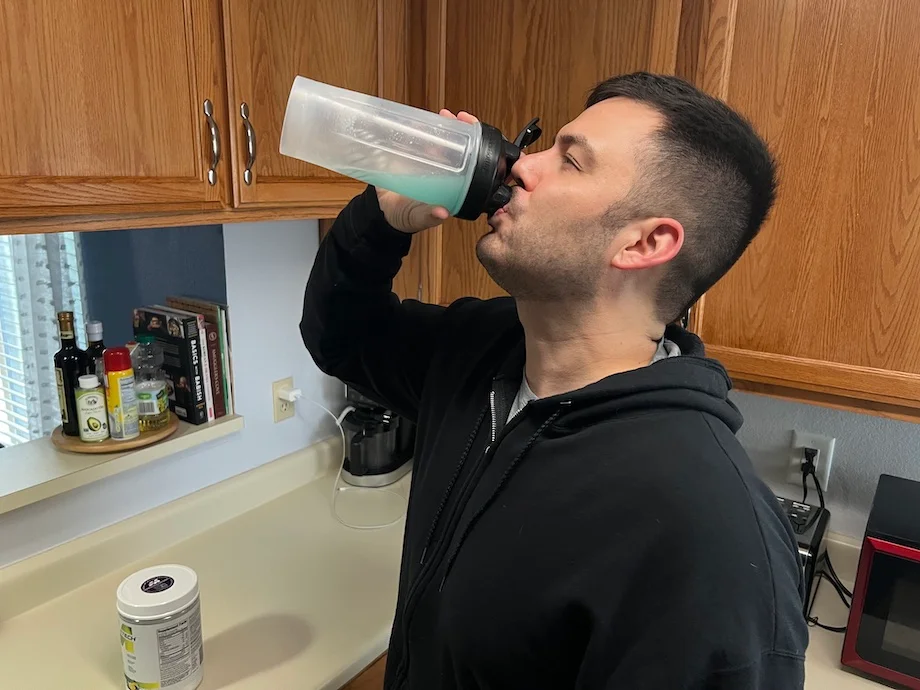
“I feel much better physically and mentally when I’m putting healthy foods in my body, so I set up my home environment to make that as easy as possible,” he explains. “If I take a break and go scavenging for food in my kitchen, I don’t want to find a cabinet full of chips, cookies, etc… or I’ll be snacking on them all day long, which probably won’t make me feel very good.”
To keep himself on the right track, Matt stocks up on healthy snacks like Greek yogurt, fresh fruit, protein bars, and ready-to-drink protein shakes, so his only food options available for that mid-day pick-me-up are ones that align with his current nutrition goals.
RELATED: Best Protein Shakes
The Last Word on Working From Home
After working from home for about six years straight, I can say that it’s a privilege that can make life much more enjoyable. At the same time, you have to be keenly aware of your habits and behaviors so you don’t adopt bad practices that jeopardize your physical and mental health.
My teammates and I may not have the perfect formula (no one truly does), but we do have decades of combined experience that have allowed us to learn what works and what doesn’t.
If you want to be the healthiest version of yourself in all aspects, I encourage you to tailor this seven-step process based on your situation so you can thrive at home on a daily basis.
References
- Ourieff J, Scheckel B, Agarwal A. Anatomy, Back, Trapezius. [Updated 2023 Mar 11]. In: StatPearls [Internet]. Treasure Island (FL): StatPearls Publishing; 2023 Jan-. Available from: https://www.ncbi.nlm.nih.gov/books/NBK518994/
- Hijikata, Y., & Yamada, S. (2011). Walking just after a meal seems to be more effective for weight loss than waiting for one hour to walk after a meal. International journal of general medicine, 4, 447–450. https://doi.org/10.2147/IJGM.S18837