



For regular exercisers, you know that challenging workouts can leave you stiff and sore the next day. Even for those who don’t exercise, our daily activities can often lead to chronic aches and muscle pains with similar debilitating sensations.
Massage therapy can be a beneficial tool for kneading away those strains, and the best muscle recovery tools, including massage guns, compression boots, and—the subject of this buyer’s guide—massage balls, can help provide immediate relief when these strains rear their heads.
For those who don’t want to break the bank on high-tech boots, massage guns, or a massage therapist, massage balls offer an affordable, effective alternative.
Whether you’re looking to unwind after a long day or prepare your body for a challenging workout, the best massage balls can be valuable tools in your recovery arsenal. There are many types of massage balls, though, which can make finding the right one for your specific needs difficult. Thankfully, we’re here to help—our team of experts has tested the most popular options on the market, and in this guide, I’ll share our top six picks.
Best Massage Balls
- Best Overall Massage Ball: LifePro Agility 4-Speed Vibrating Massage Ball
- Best Massage Ball for Plantar Fasciitis: Therabody Wave Solo
- Best Vibrating Massage Ball: Hyperice Hypersphere
- Best Massage Ball for Back Pain: Yoga Tune Up Therapy Balls
- Best Budget Massage Ball: Blonyx Lacrosse Ball
- Best Massage Ball Set: Tumaz Massage Ball and Foot Roller 3-in-1 Set
Best Overall Massage Ball: LifePro Agility 4-Speed Vibrating Massage Ball
Good for: Those looking for a versatile massage ball that won’t break the bank
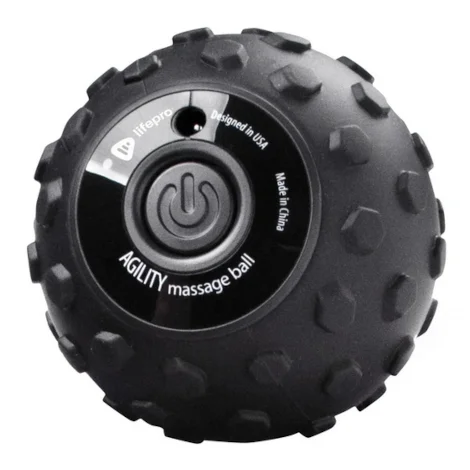









For those looking for the best massage ball on the market, we think it’s hard to beat the LifePro Agility 4-Speed Vibrating Massage Ball. It’s durable, packed with features, and priced very fairly compared to similar competitors.
While there’s nothing wrong with using simple tools like lacrosse balls or foam rollers for recovery protocols, LifePro has added vibration therapy to this profile, similar to what you’d experience with a massage gun. When it comes to versatility, the combination of rolling and vibration can be an excellent, comforting one-two punch.
Although LifePro has four available vibration speeds, the agility ball remains more affordable than most competitors, priced at only $49.99. Caine Wilkes, OLY, CNC, USAW-L1, notes that LifePro didn’t cut corners to reach this low price, though, giving this massage ball a 4 out of 5 for the materials.
However, he docked a point for the weight capacity, which is only 220 pounds and may be too low for larger users who want to put their entire bodyweight on the ball.
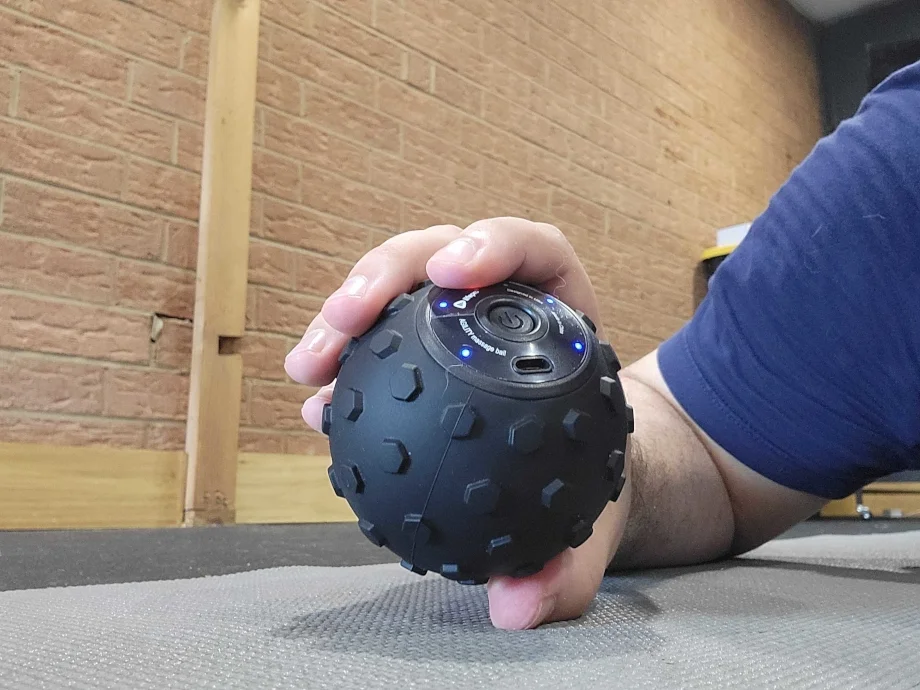
Caine also gave this massage ball 4 out of 5 for the texture, but had mixed feelings about the ridges, especially when compared to LifePro’s smaller massage ball, the Agility Mini, which he’s also used.
“The LifePro massage ball has short hexagonal ridges that protrude from the ball, but they’re minimal and spread out, so I don’t feel like they’re aiding in getting a deeper massage or hitting specific pressure points,” Caine explains. “I actually preferred the Agility Mini’s ridges more, as they’re triangular ridges and, at least, feel like they’re more aggressive and effective. Both vibrate, too, which helps get specific points well.”
However, some users may not like ridges that protrude too much, so don’t let this scare you away from the Agility 4-Speed massage ball. Overall, we think this is the best option on the market, especially given the affordable price.
If you don’t want the vibrating functionality and prefer a more affordable set of recovery tools, the Tumaz Massage Ball and Foot Roller 3-in-1 Set is another great option to consider.
| Price | $49.99 |
| Dimensions | 4.7” diameter |
| Texture | Hexagonal ridges |
| Extra features | 4 vibration speeds |
Best Massage Ball for Plantar Fasciitis: Therabody Wave Solo
Good for: Foot-pain sufferers looking for pain relief
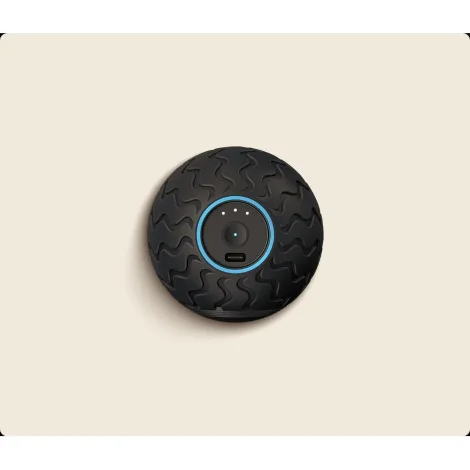




Suffer from sore feet? Whether it’s plantar fasciitis or simply general discomfort from a long day of standing, the Therabody Wave Solo can be an excellent tool for relaxing foot massages.
While this massage ball can technically be used anywhere, we think it’s a great choice for foot pain in particular, thanks to its grippy surface, sturdy design, and built-in vibration therapy. This massage ball syncs with your phone via Bluetooth, allowing you to choose from three vibration speeds. Accordingly, we give this 5 out of 5 for technology and features.
Our tester for this recovery tool was Kristen Geil, a certified personal trainer and seasoned runner who knows a thing or two about foot pain and sore muscles. Kristen gave the Wave Solo’s design 5 out of 5 stars, noting that it worked very well for rolling out her feet.
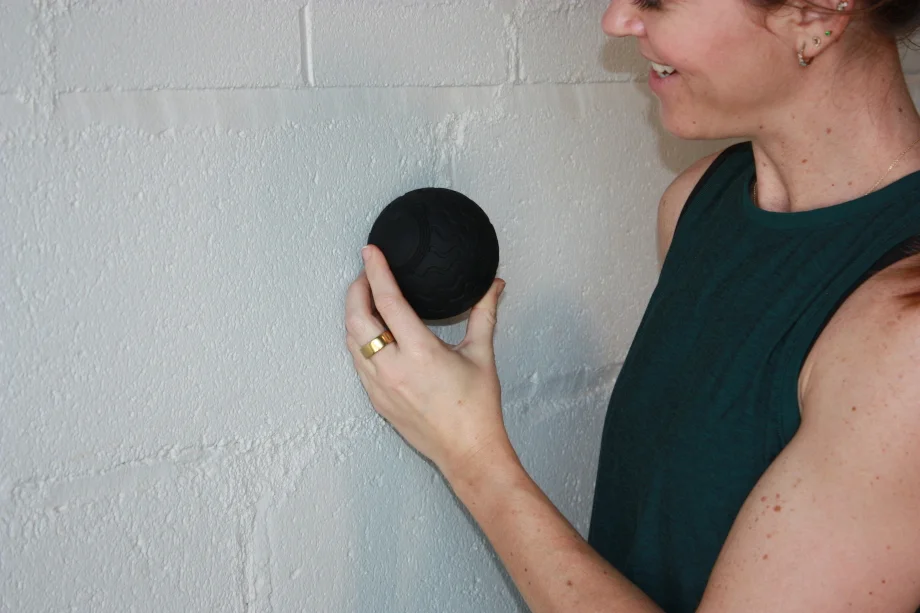
“The Therabody Wave Solo is a MAJOR upgrade over your standard massage ball,” Kristen notes. “The ball has a grippy, rubberized outer shell with a wave design etched in, which adds a bit of traction and a different dimension of pressure. This was my favorite feature, as lacrosse balls have a habit of rolling away easily on a floor or against a wall; the Wave Solo never slipped out of place. I found this especially helpful when rolling out the arches of my feet.”
RELATED: 9 Best Foot Massagers
Kristen’s only callout was the power of the vibration, which she rated at 3 out of 5 stars. She explains, “My only complaint is that the depth/amplitude doesn’t go as deep as a true massage gun. Even at varying speeds, the intensity doesn’t feel that strong.”
However, for those with plantar fasciitis, which can be very painful and tender, a gentler massage may be beneficial.
The Wave Solo is a little expensive at just under $100, but Kristen says the high quality is well worth the cost for those upgrading from a standard lacrosse ball.
For those looking for a more affordable vibrating massage ball, the LifePro Agility 4-Speed Vibrating Massage Ball can be another worthwhile option, priced about half as much.
| Price | $99 |
| Dimensions | 3.4” diameter |
| Texture | Silicon cover with wave patterns |
| Extra features | Bluetooth compatibility, three massage speeds |
Best Vibrating Massage Ball: Hyperice Hypersphere
Good for: Those who want the best vibrating massage ball we tested
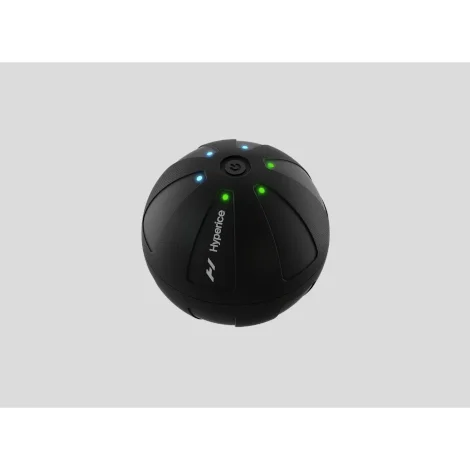

While the Therabody was our top pick for relieving foot pain, we think the Hyperice Hypersphere is the best vibrating massage ball to work on any part of your body.
We’ll start with the tech features, which earn 4 out of 5 stars from our tester, Amanda Dvorak, ISSA-CPT, ISSA-CNC. Amanda states, “It has 3 different speed settings and a 30-watt motor, which can provide a pretty intense massage! There are also lights on it to indicate which setting you’re on, which is kind of fun.”
For reference, our pick for the best overall massage ball—the LifePro agility ball—only has a 15-watt motor, so the Hypersphere is twice as powerful, making it an excellent choice for targeting deeper muscle aches and pain points.
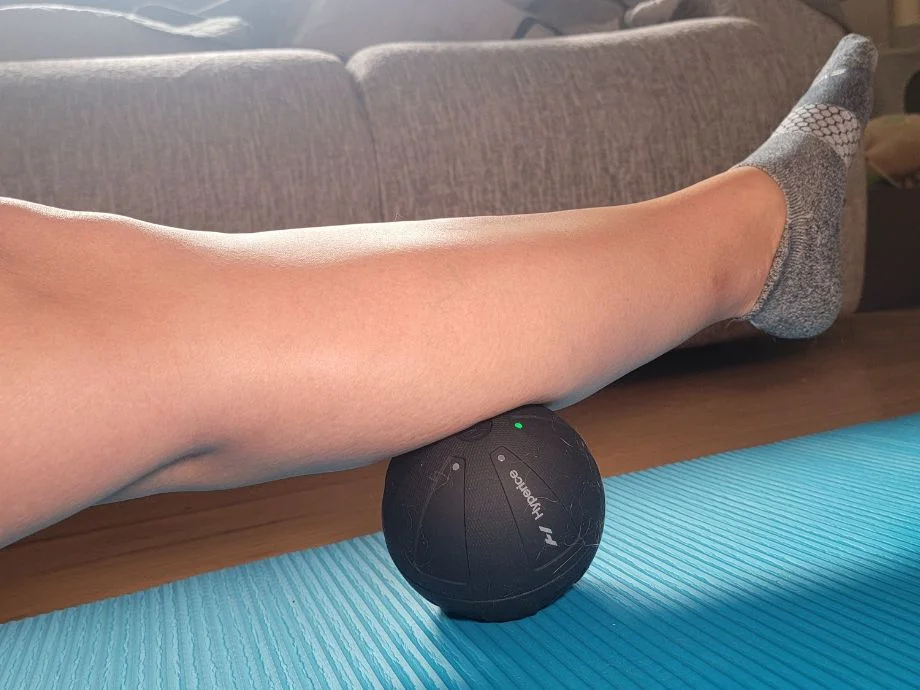
Amanda also gave the Hypersphere 4 out of 5 stars for both the materials and texture.
“There are some ridges on the ball, but they’re not super deep,” says Amanda. “However, because it’s a hard ball, it still puts a decent amount of pressure on the muscles. It also has a hard outer shell that feels pretty durable, but since there are electric parts in it, I still wouldn’t want to drop it.”
Our biggest callout is the price. At $149, this massage ball isn’t cheap and only earns 2.5 out of 5 stars in the value category. We think it’s a great tool, but it’s also a clear example of “get what you pay for,” which may not align with every budget..
Overall, the Hyperice Hypersphere is the best vibrating massage ball on the market—if you don’t mind the high cost. For a more budget-friendly option, you may want to consider the LifePro Agility 4-Speed Vibrating Massage Ball.
| Price | $149 |
| Dimensions | 5” diameter |
| Texture | Hard shell with raised ridges |
| Extra features | Three massage settings with indicator lights |
Best Massage Ball for Back Pain: Yoga Tune Up Therapy Balls
Good for: Those looking for a budget-friendly option to loosen up a stiff back
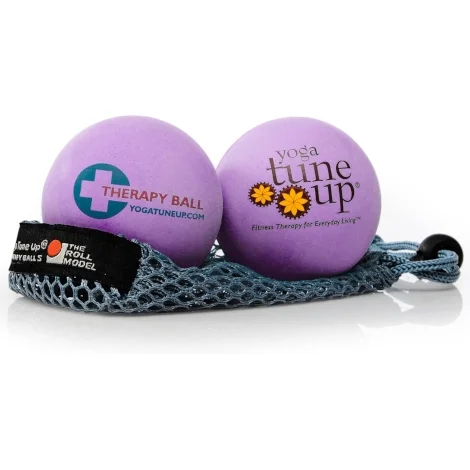





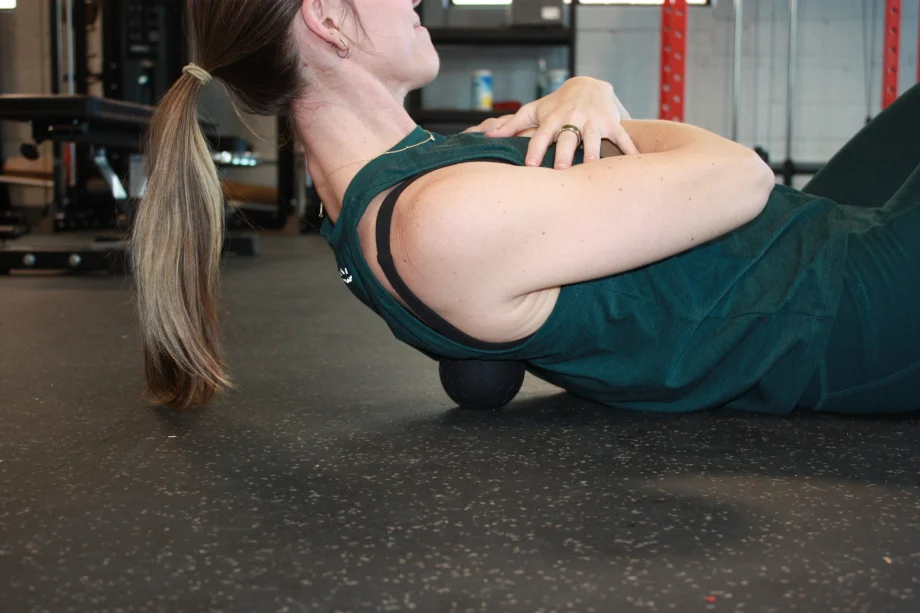
Despite their smaller stature, massage balls can still be effective tools for relieving back pain. For athletes interested in massage therapy without expensive vibrating features, we feel the Yoga Tune Up Therapy Balls can be perfect for kneading away nagging knots and strains.
If you’ve never used two massage balls at once, you can place them together in something like a sock or, in this case, the included mesh carrying bag. This can allow you to create a gap between the spheres, which is perfect for massaging around tender points or aligning them to create pressure on either side of the spine.
Our tester, Matt Shickling, thoroughly examined these affordable massage tools and was happy with his experience.
We’ll start with the materials, which earned 4 out of 5 stars during trials. “They’re made with a natural latex rubber with what feels like a hollow, compressible core,” Matt explains. “The balls do seem solidly made, and I’d expect them to hold up for a while. It honestly reminds me of a classic Pinky ball, except the rubber is higher quality, and the ball won’t bounce 12 feet into the air if you drop it.”
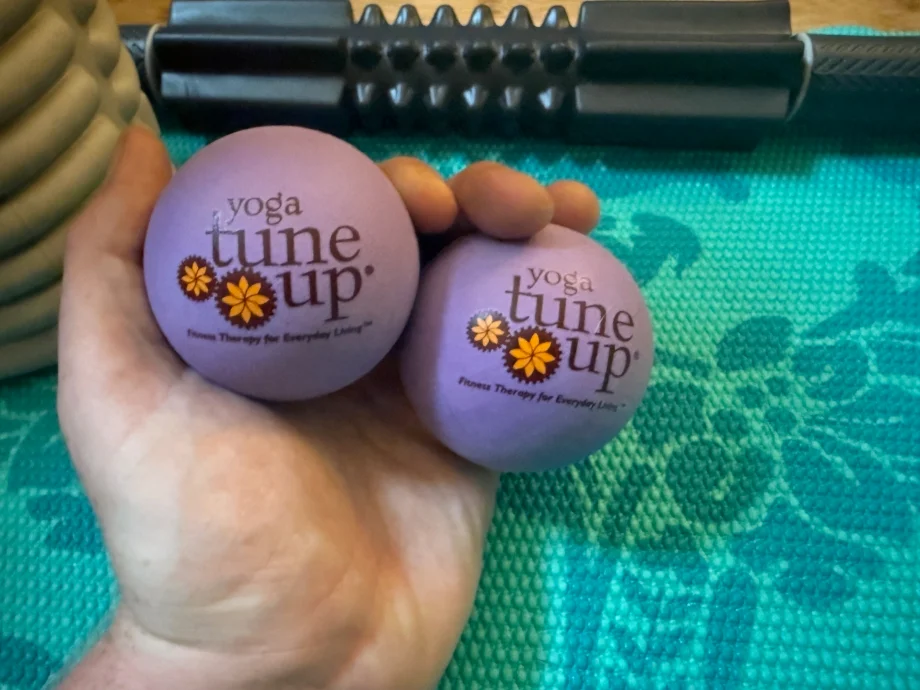
The hollow core means the balls can compress, unlike a stiff lacrosse ball, which can be painful on tender areas of the back. This compression relieves some of the pressure, making these more accessible to those new to massage balls or those with particularly tender areas.
Matt also gave the Tune Up Therapy Balls a 4 out of 5 for the texture.
“The texture is smooth with just a slight amount of friction, so it will stay in place against a wall or on a mat,” he explains. “It kind of ‘grabs’ your skin, if that makes sense, due to the somewhat porous material. It’s not rock-solid like a lacrosse ball and it has some rubbery give, but it still provides enough resistance to really work your muscles.”
While these massage balls only earn a 2-out-of-5 rating for extra features, Matt was happy that they come with a mesh carrying bag, which allowed him to place them side-by-side to give a “unique divot-style pressure point between the two balls.” This also helps with transportation and storage, ensuring you don’t lose one of the balls.
The Yoga Tune Up Therapy Balls are also extremely affordable, earning a 5 out of 5 for value. However, if you prefer something with more features, you may want to consider a vibrating massage ball like the Therabody Wave Solo.
| Price | $18.99 |
| Dimensions | 2.5” diameter |
| Texture | Smooth rubber |
| Extra features | Mesh carrying bag |
Best Budget Massage Ball: Blonyx Lacrosse Ball
Good for: Anyone who wants an affordable, durable massage ball
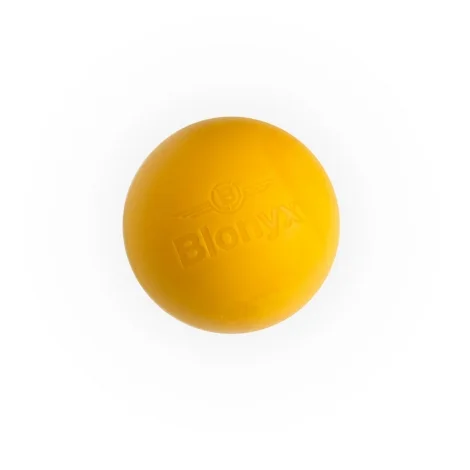

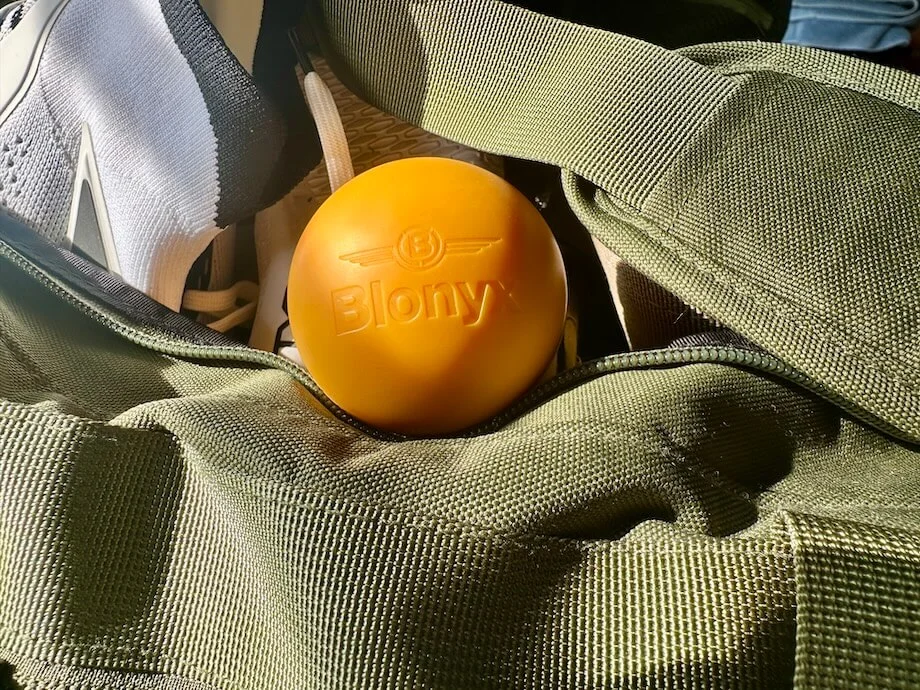
If you’re looking for targeted pain relief on a budget, you can’t go wrong with a classic lacrosse ball, and the Blonyx Lacrosse Ball can be a top-notch choice. If you don’t need fancy textures, ridges, or motorized vibration, this simple tool can be all you need.
Senior staff writer and expert product tester Ben Emminger, NASM-CNC, NASM-CSNC, trialed the Blonyx Lacrosse Ball and gave it a 4.5 out of 5 for the materials used.
“This lacrosse ball is constructed from 100% natural rubber, making for a resilient recovery tool that won’t damage easily,” Ben explains. “I rate the materials at less than perfect, though, since you can feel the middle seam where the two halves were bonded together during manufacturing.”
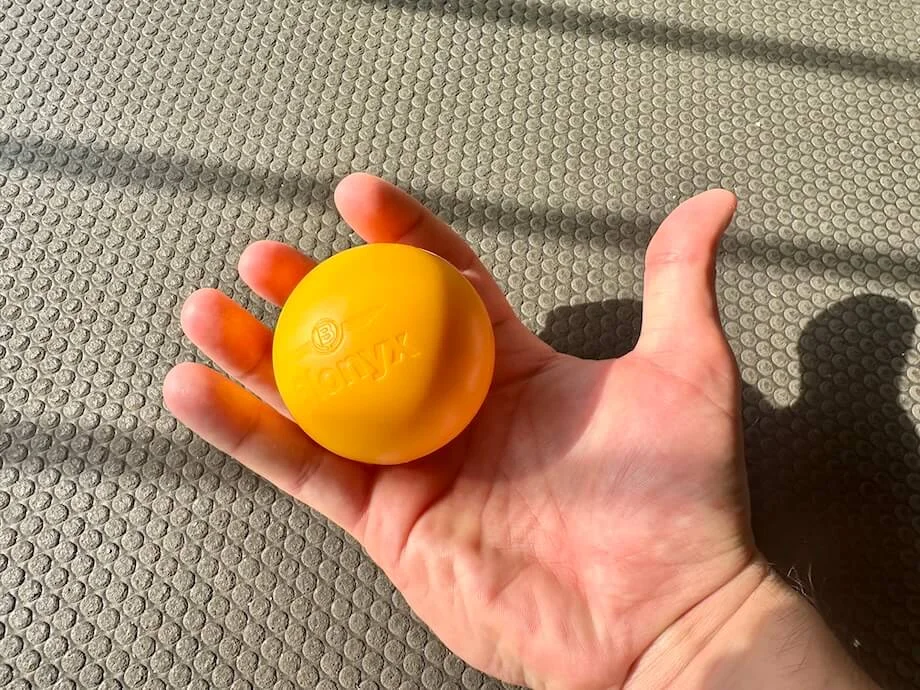
While the seam shouldn’t bother most users, Ben pointed out that if you’re rolling over sensitive areas, like injuries or acne, it may create some painful friction. Ben also found that the seam would occasionally grab and pull the hair on his legs, which is as unpleasant as it sounds.
However, he still gave it 3.75 out of 5 stars for texture, noting that despite the lack of ridges or spikes, the dimensions of the ball allow you to target specific muscles.
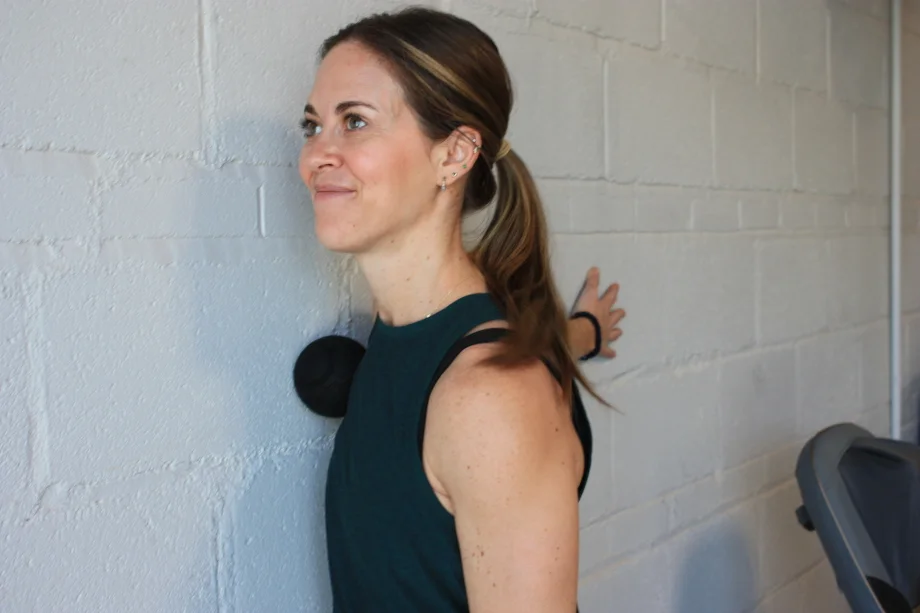
“The weight and size of the ball allow for pinpoint treatment,” says Ben. “I really enjoy pinning the lacrosse ball against a nearby wall and targeting my shoulders post-game or training.”
This isn’t the fanciest massage ball on the market, but it’ll get the job done at an unbeatable price, and as Ben says, “A bargain is a bargain.” If you’re looking for something with a bit more texture and variety, the Tumaz Massage Ball and Foot Roller 3-in-1 Set is also a versatile, budget-friendly kit worthy of consideration.
| Price | $10 |
| Dimensions | 2.5” diameter |
| Texture | Rubber |
| Extra features | None |
Best Massage Ball Set: Tumaz Massage Ball and Foot Roller 3-in-1 Set
Good for: Those who want a versatile, portable massage kit
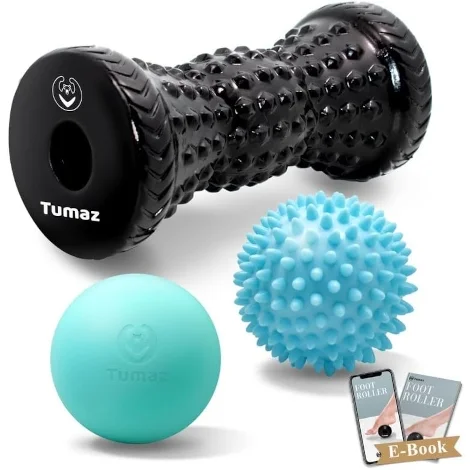

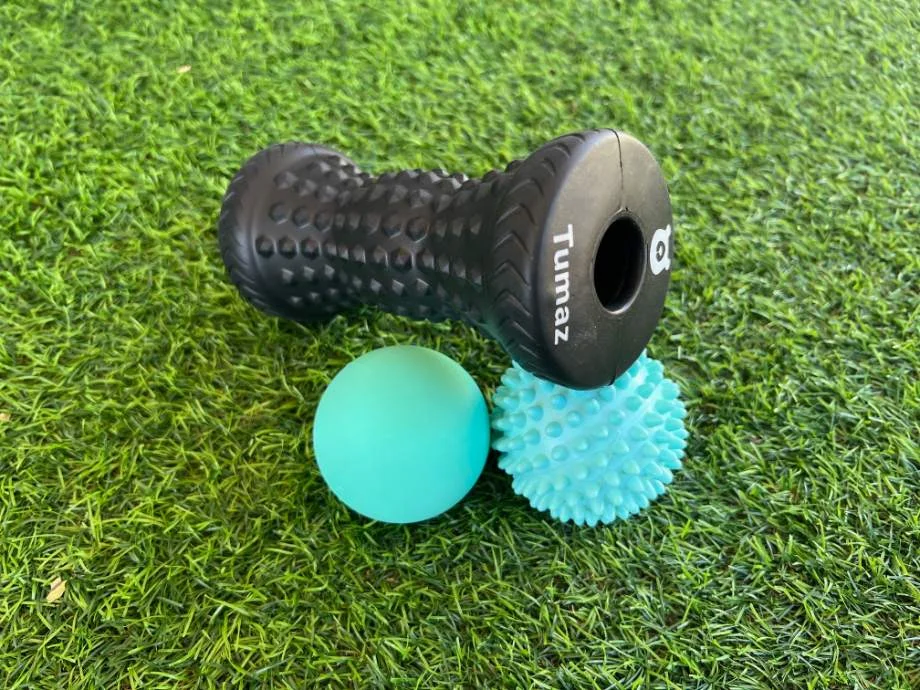
While this guide has focused entirely on massage balls, for those who want a little more versatility, the Tumaz Massage Ball and Foot Roller 3-in-1 Set is another budget-friendly option that’ll get the job done.
As the name implies, this kit includes three massage tools: a standard lacrosse ball, a massage ball with plastic spikes, and a textured foot roller. I’ve had this kit on my desk for two months and regularly use it during work breaks. I’m impressed with each tool’s performance, especially when you consider the bundle’s sub-$20 price.
The materials are good, not great, though I think they’re very worthwhile for the low cost. Overall, I give the materials 4 out of 5 stars. The lacrosse ball feels very durable, but both the spiky ball and foot roller feel very light and hollow. I don’t have any real durability concerns, as I’m not putting my full bodyweight on the spikes anytime soon, but I could see either the roller or spikes breaking at some point.
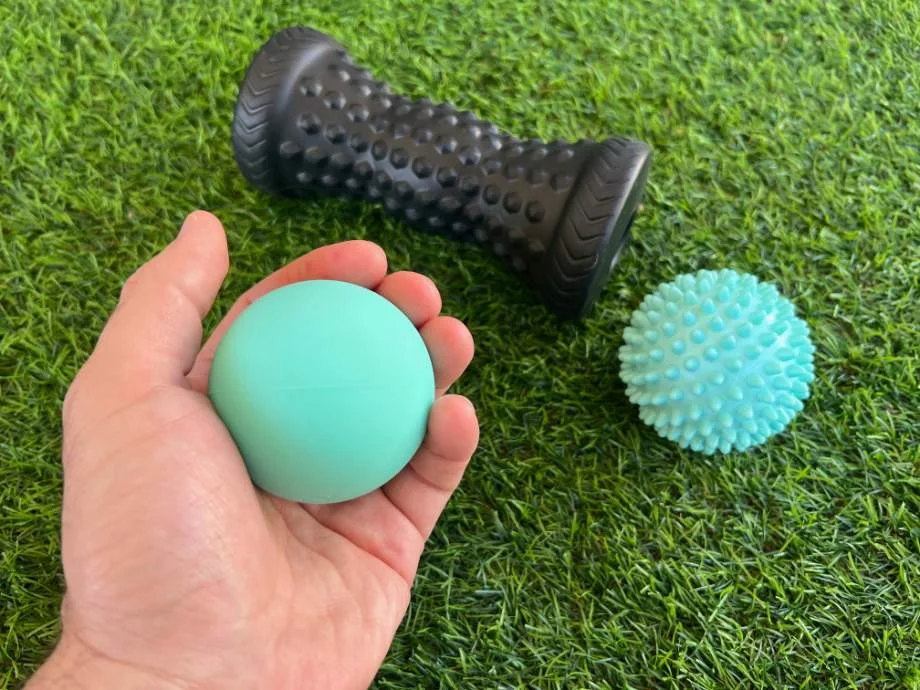
I also give this set a 4 out of 5 for the texture. I love the lacrosse ball and foot roller, and while the spiky ball is a bit uncomfortable, I know some people enjoy the aggressive nature of spiked massages and would likely appreciate this included layout.
It would be great, though, to see an included carrying case, as the lacrosse ball and spiky ball often roll away. I don’t mind, and they can easily be stored in a gym bag or drawer, but I’d love to see Tumaz include a carrying case.
Overall, this is an easy 5 out of 5 for value. You’re getting three different massage tools for under $20, so even if they don’t have any fancy tech features, I think this price is very hard to beat.
If you’re looking for something more durable or with vibration, I recommend the LifePro Agility 4-Speed Vibrating Massage Ball.
| Price | $19.99 |
| Dimensions | 3.15” x 6.3” foot roller, 2.5” diameter lacrosse ball, 2.8” diameter spiky ball |
| Texture | Rubber and plastic |
| Extra features | Three-in-one massage kit |
Other Massage Balls We Researched
We chose the best six massage balls we tested, but here are a few more we also tried and enjoyed that didn’t quite make the list.
- Lululemon Release and Recover Ball Set: This is a sleek massage ball kit, but it doesn’t offer as much versatility as the Tumaz 3-in-1 kit or others in this guide.
- Rogue Supernova 2.0: We love Rogue products, and this is a great massage ball, but it’s quite expensive for what you’re getting, and there are more affordable options.
How We Picked and Tested the Best Massage Ball
When assembling this list, we made sure to test each product carefully. As with all of our reviews, our team of expert testers spent extensive time with each product.
After our testing was complete, we used our equipment testing methodology to calculate a final review score. This helps us calculate a rating between one and five for the most important categories, providing a final, unbiased product review for each massage ball.
Here are the most important categories we considered when rating these products.
- Cost: An average massage ball costs between $40 and $50, depending on the features. More basic tools, like lacrosse balls, can often be found significantly cheaper, while high-end, vibrating massage balls can cost upwards of $150. One tester, Matt Shickling, also noted that many massage balls can oftentimes be found on Amazon at lower costs, and may include free shipping.
- Materials: Plastic is the most common material used in massage balls. We also see foam from time to time, which isn’t very durable, as well as rubber, which is quite durable and often feels better than plastic on the skin.
- Texture: Some massage balls have various textures, such as spikes or ridges, to provide the sensation of a deep tissue massage. While some may not enjoy the feeling of spikes, we tested each product with texture to see if we could feel the raised areas designed to reach the deep muscle tissue.
- Tech/Extra Features: To receive the lowest score for this category, a massage ball would have to be a simple, smooth tool, like a lacrosse ball, though this certainly doesn’t mean they aren’t useful or worth purchasing. Higher scores were given to products that had additional features, like textured surfaces or built-in vibration.
Benefits of Massage Balls
If you’re not sold on the idea of digging a lacrosse ball into a tender muscle, which isn’t always the best feeling, here are some of the research-backed benefits of using a massage ball for soft tissue therapy.
Pain Relief
If you’ve ever massaged a sore, tight muscle, you know that the pressure can bring significant pain relief. Since most of us can’t afford daily massages, a massage ball allows you to enjoy the same benefits, specifically when it comes to targeting smaller, hard-to-reach areas of the body.
A 2018 study1 examined the benefits of myofascial trigger point therapy using an inflatable ball, which is similar to using a massage ball to target knots and tight areas in muscle tissue. Fascia is a thin layer of connective tissue surrounding the muscles in your body, and myofascial release is meant to break up tight, restrictive areas in your fascia.
The trigger point therapy significantly reduced pain and improved physical function in those with chronic lower back pain. However, before digging a firm massage ball into your lower back, we recommend seeing a physical therapist to help you identify sore spots and for more detailed instruction on how to properly use the tool. Rolling directly over portions of your lower back can be painful, so a physical therapy clinic can help you find the right spots.
Improved Mobility
Many of us experience stiff muscles due to our daily work, which often involves long periods of standing, physical labor, or sitting in front of a computer for 8+ hours each day. One of the more common areas where people experience pain is in the shoulders, neck, and upper back.
This 2023 study2 examined nurses experiencing chronic muscle soreness in the neck, shoulder, and back, which made performing everyday duties difficult and painful. Regular self-massage with a tennis ball was shown to relieve muscle tension and improve the comfort of performing daily activities. As such, a massage ball can be a useful tool for those who experience aches and pains.
RELATED: 5 Best Massage Chairs
Increased Flexibility and Muscular Power
Soft tissue work performed with a foam roller or massage ball is often used before a workout to improve mobility, blood flow, and boost athletic performance. Research shows that this is a useful practice.
RELATED: 9 Foam Roller Exercises
A 2023 study3 found that using soft-tissue release tools before a workout improved muscle response, force production, and flexibility. Unlike static stretching before a workout, which can reduce the elasticity of muscles and decrease force production, soft tissue tools showed positive improvements in athletic performance. While there are many protocols you can try, this study had participants work on each target muscle group for at least 90 seconds.
Buying Guide: What to Look for in Massage Balls
If you’re having a hard time deciding which massage ball to use, or you’re shopping for options that aren’t on our list, here are three of the most important considerations that should be a part of your buying decision.
Portability
Is your massage ball going to stay at your house, or will you be transporting it to the gym? While most massage balls are easy to store and carry, some kits may be more portable than others. If you’re using a bundled set, for example, or you want to have a few lacrosse balls at the ready, keep in mind that they may roll away or get lost in a gym bag.
If you’re going with a set, we recommend choosing one that includes a carrying case. Or, make sure you have one of the best gym bags with plenty of compartments to keep things organized.
Versatility
For versatility, consider the body parts you’ll be using your massage ball for and whether it’s suitable for the job. As a strength and conditioning specialist, I’ve had many clients use a lacrosse ball to roll out their hamstrings or glutes, and some of the vibrating massage balls may have a weight capacity you’ll also need to consider—this rating may limit their use across areas where you need to press your full bodyweight across the ball for adequate massage depth.
Others have ridges and features, and speaking from personal experience, a spiky massage ball isn’t always comfortable to use on all parts of the body. If you’re only going to have one massage ball, I’d suggest choosing a silhouette that’s versatile enough for a full-body treatment.
Vibration Therapy
For those who own massage guns, you may not need a vibrating massage ball—or you may love the vibration, and prefer a ball with motorized movement. We recommend carefully considering whether or not you’ll use the vibration feature, as this can significantly increase the cost while decreasing the durability and longevity.
RELATED: Do Massage Guns Work?
Durability
Durability is another key concern to consider, especially if you’ll be using the massage ball on a regular basis. While foam balls made of the same high-density materials used in foam rollers are available, they don’t last as long as rubberized profiles.
On the other hand, massage balls made from durable rubber or hard plastic should last significantly longer, helping you avoid having to replace them every few years.
Experts Who Contributed To This Article
FAQs About the Best Massage Balls
Do massage balls really work?
Yes, massage balls can help you apply targeted pressure to specific areas of the body, especially if you have muscle knots and tight areas. Unlike a foam massage roller, a massage ball provides a smaller point of contact, allowing you to be very precise with your self-massage.
Is a tennis ball or a lacrosse ball better for massage?
Both can be valuable tools, though tennis balls are much softer due to their ability to compress. Ideally, you may want to have both. Tennis balls can be great for beginners, or particularly tight areas, while lacrosse balls can provide firmer, more direct pressure across tight muscles.
What’s the best deep tissue massage ball?
There are plenty of great brands and options to consider, and all of the ones we’ve tested can work well for the right needs. From budget-friendly lacrosse balls to high-end massage balls from Therabody or Hyperice, there’s an option to fit nearly every need and budget.
References
- Oh, S., Kim, M., Lee, M., Kim, T., Lee, D., & Yoon, B. (2018). Effect of myofascial trigger point therapy with an inflatable ball in elderlies with chronic non-specific low back pain. Journal of back and musculoskeletal rehabilitation, 31(1), 119–126. https://doi.org/10.3233/BMR-169696
- Hung, Y. M., & Chen, S. W. (2023). Tennis ball massage therapy in clinical nurses: effect on relieving musculoskeletal disorders and enhancing self-efficacy. The journal of nursing, 70(2), 34–44. https://doi.org/10.6224/JN.202304_70(2).06
- França, M. E. D., Amorim, M. D. S., Sinhorim, L., Santos, G. M., & do Nascimento, I. B. (2023). Myofascial release strategies and technique recommendations for athletic performance: A systematic review. Journal of bodywork and movement therapies, 36, 30–37. https://doi.org/10.1016/j.jbmt.2023.04.085