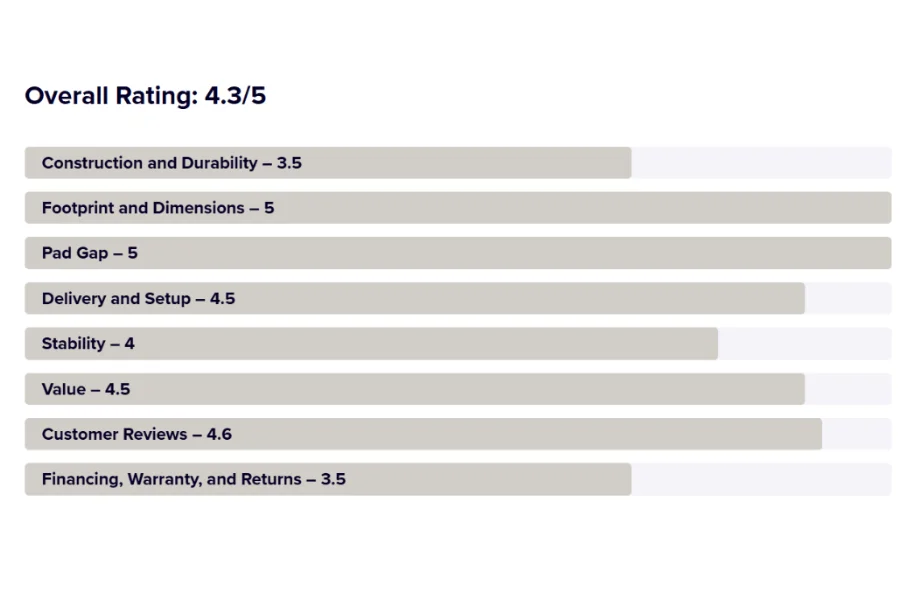

Since 2014, the team at Garage Gym Reviews has extensively tested top fitness equipment for the home gym scene: barbells, treadmills, adjustable dumbbells, and, of course, the best weight benches.
To determine which flat and adjustable weight benches can sit atop our best-of lists, we not only work out on them, but we also subject them to a stress test by pushing the limits of their weight capacities and features. Our expert product testers even use quantitative tests, such as determining a bench’s felt weight (the weight a bench feels when lifting from one end), to aid in our testing and scoring.
After rating each weight bench through exhaustive testing, we provide informed and honest feedback as to which bench is best for different situations and needs.
Our team of experts—including certified personal trainers, strength and conditioning coaches, competitive athletes, and lifelong fitness enthusiasts—has personally used and tested over 50 weight benches of varying adjustability from some of the category’s top brands and more. We helped more than 13,000 people find the right weight bench for their garage gym in 2024 and 2025, so read on to find out how we can help you make the right decision, too.
Our Values
The foundation of our product testing is built upon expertise and honesty. Our product testers aren’t just avid fitness enthusiasts (although we certainly are that, as well). We have combined decades of experience in the fitness industry, with certified personal trainers, lifting coaches, and past and present gym owners lending a voice to our trials and research.
In addition to extensive testing by professionals, we also consult with experts outside of the GGR team, including USA Weightlifting coaches, strength and conditioning coaches, and physical therapists. No matter who’s involved with our testing process, we provide honest feedback on each piece of equipment using the latest findings in strength-training research, all to help determine how a weight bench can stack up (or store vertically).
Our Process
We love strength equipment at Garage Gym Reviews—adjustable dumbbells, weight plates, and more—and with several brands continuing to innovate weight benches, we’re constantly bringing in new profiles to our headquarters to test out in accordance with our multi-step testing methodology.
We’ll rate each weight bench in select categories from 1 to 5, with a 1 reflecting a poor score and 5 being excellent. Our reviewers use the industry standards reflected in our research to help determine these metrics, as well as our learned experience with so many benches over the years.
After extensively testing each weight bench, we’ll average out its individual scores to determine an overall rating that helps us choose our best-of lists. With benches often being upgraded and innovated each year, we are constantly evaluating our lists and testing out new benches to ensure we have the latest information on the best weight benches.
Below are the major aspects of weight benches we look at, along with the industry averages we’ve determined through years of research and testing.
| Category | Average Weight Bench We Test |
| Price | $307 |
| Weight | 62 lbs |
| Weight Capacity | 949 lbs |
| Dimensions | 48” L x 20” W x 17.7” H |
| Pad Dimensions | 42” L x 11” W |
| Warranty | 3 years (frame), 90 days (upholstery and sewn items) |
Weight Bench Performance Testing
While comparing each weight bench to industry standards is important, it’s not the only evaluation we hold while testing weight benches. We also have testers try out each weight bench through multiple workouts and draw from our personal experiences to get a sense of the bench’s performance in real-world use. Below is a look at each category we test for with weight benches and how we rate them.
Construction
Here, we’ll look at the materials used that make up the weight bench’s composition. We favor thicker steel for strength equipment like weight benches and squat racks, usually 11- or 12-gauge steel, as it’s been shown to hold up better than thinner compounds—especially when recommending equipment for stronger powerlifters.
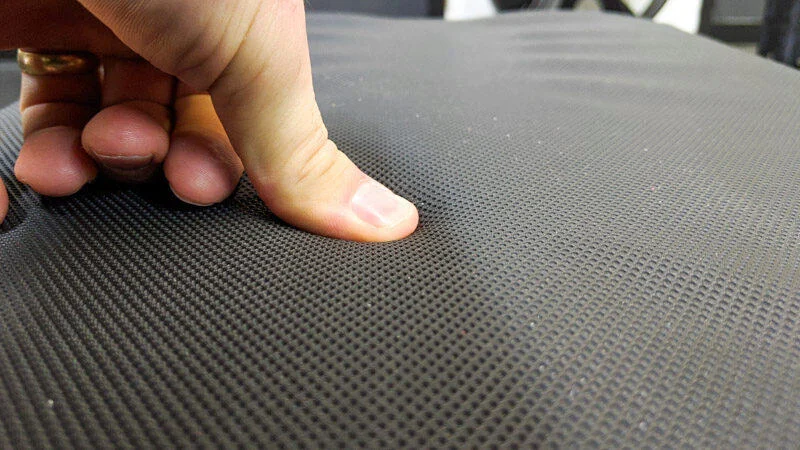
Our testers will also examine the stitching and overall feel of the bench pad to make sure it’s using quality materials and has been assembled with attention to detail. To earn at least a 3 out of 5, a weight bench should feature a mostly metal construction that can handle regular use, although the padding may be thin and vinyl covers may not have the best grip or feel. Obviously, better vinyl and denser padding will earn a higher score.
Durability
Going hand-in-hand with the construction of the bench, our testers rate the durability by taking the weight bench through several barbell and dumbbell workouts and seeing how the materials hold up. Any premature tears or fraying that occurs on the bench pad are noted, as well as instability with the frame.
Most weight benches are given a weight capacity rating, and our testers push the boundaries of the rated capacity to ensure the weight bench can hold hundreds of pounds like it claims it does. A weight bench that securely holds around 500 pounds of weight or more will earn at least a 3 out of 5, while solid benches with sturdy materials and high weight capacities will earn top marks here.
Adjustability
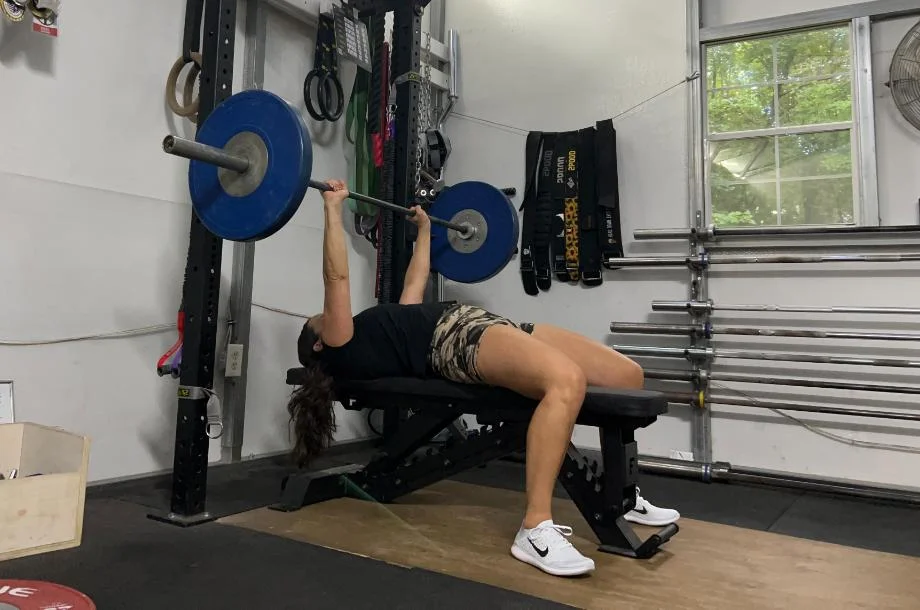
Adjustable weight benches can have a back and seat pad that adjusts from flat to multiple incline angles and, in some cases, decline angles. Typically, an adjustable bench with a simple pin or ladder system with at least five incline settings is good enough to earn a 3 out of 5, but we’ll look at other aspects that can factor into the score, as well. Features like available decline settings or gapless pads can score well in this section. We also (naturally) do not rate flat weight benches in this category since, well, they’re built at a fixed, flat angle.
Portability
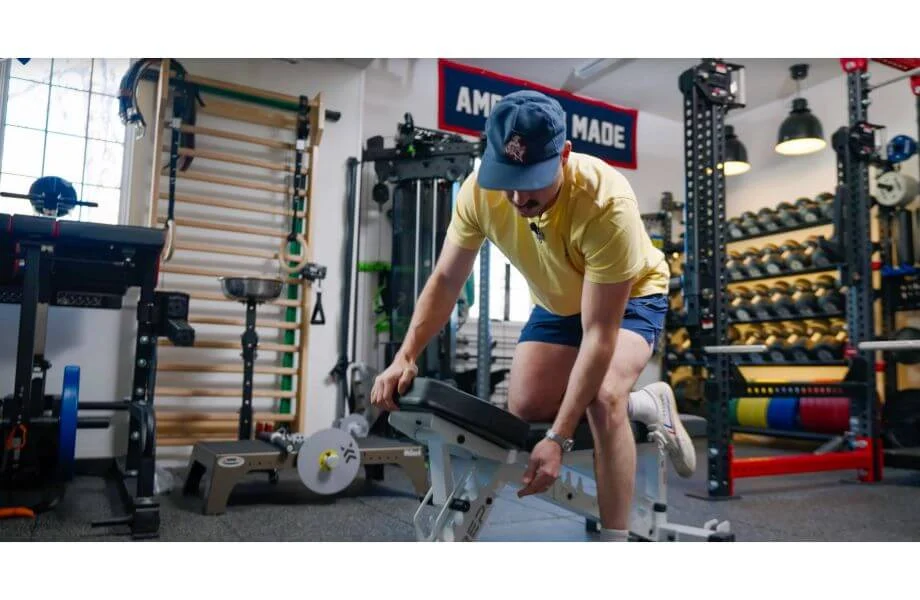
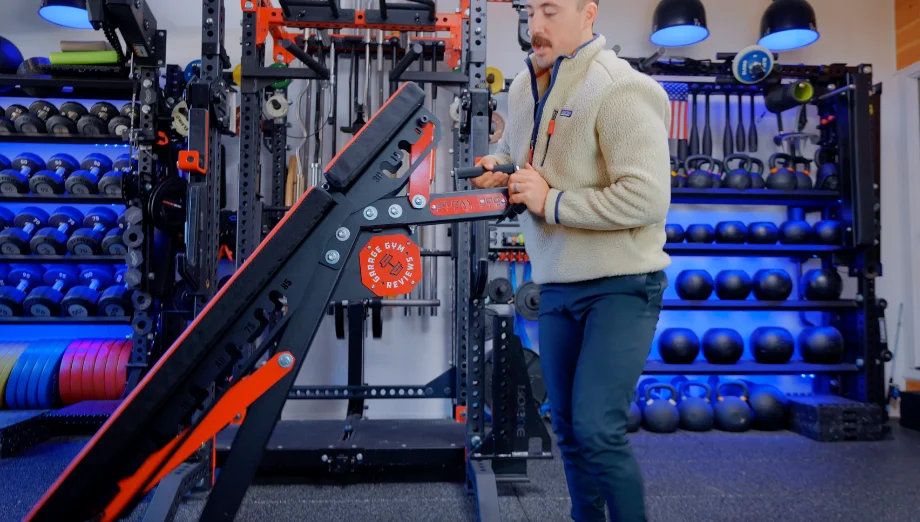
Benches can vary in weight, from less than 50 pounds to 150 pounds or more. Heavier benches won’t move as easily, so manufacturers will often add features to aid in portability such as caster wheels on one end and a handle on the other. Our testers will also look at storage options to see if the bench can store vertically to save room in your home gym space.
Lightweight benches under 60 pounds typically score well here, but any weight bench that has wheels and a handle will score at least a 3 out of 5. Weight benches designed for upright storage will score higher, as well.
Stability and Size
In our performance testing, our testers will note how the bench feels in use, particularly its stability and the size of the weight bench. Benches should have little wobble during any exercise, whether it be bench press, step-ups, or one-arm rows. Accordingly, our testers will note any instability they feel during their workouts.
The dimensions of a bench are important, as well, particularly the bench height and pad width and length. The IPF (International Powerlifting Federation) standard for a weight bench is a height between 16.5 and 17.5 inches, and a bench pad that is 45 to 50 inches long and 11.5 to 12 inches wide. While not every home gym owner is a powerlifter needing these exact dimensions, they are often considered an optimal size range for bench press and other exercises.
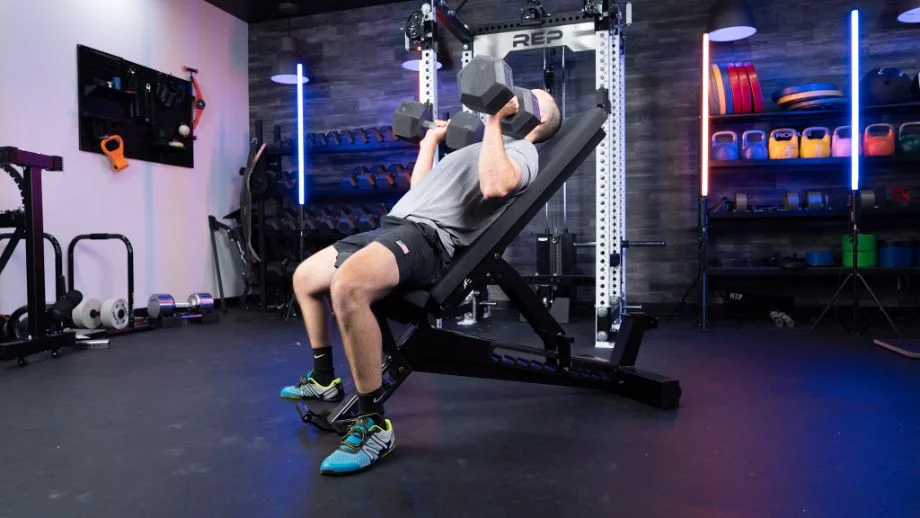
To earn a 3 out of 5, a weight bench should be stable enough for traditional bench exercises, although the exact dimensions may fall slightly outside of the IPF standard. Heavy-duty benches with little or no wobble and well within the IPF standard dimensions will earn top scores.
Customer Experience Testing
When we say we test products thoroughly, we mean it. That’s why we go through the entire purchasing process—just like the average customer would—to get the whole customer experience from ordering to delivery and assembly.
Delivery and Setup
Here, we consider any hiccups we had in the delivery process, as well as the assembly process associated with the weight bench. Delivery will depend on the weight of the bench, as some larger, heavier weight benches may be delivered on a pallet or crate.
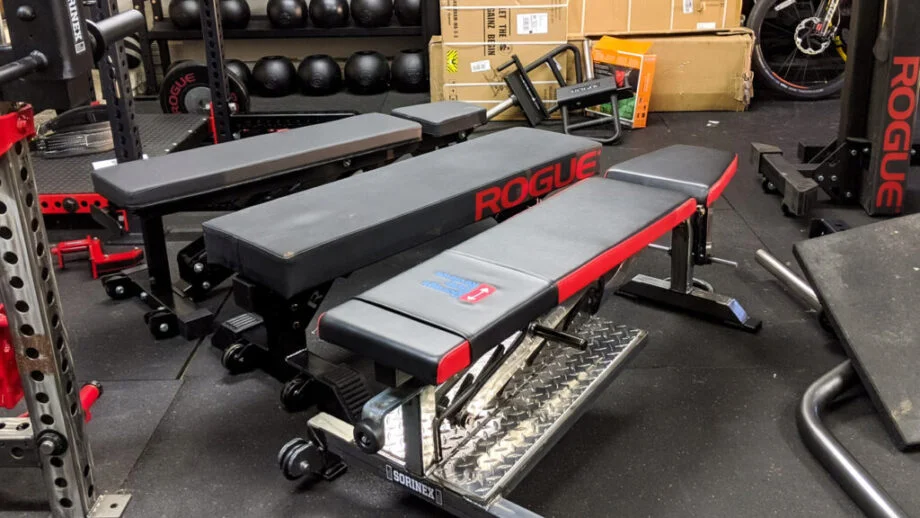
Weight benches can be pretty straightforward in their setup and assembly, but some adjustable weight benches can have a more complicated adjustment system that may take a bit more time to build out. From our experience, a weight bench that can be built in under 90 minutes with one or two people is about the industry standard and earns a 3 out of 5, according to our methodology.
Still, any problems during delivery or complicated assemblies may impact the score negatively. We should note, however, that we’re looking at delivery times and interior packaging mostly with deliveries, as some shipment issues are due to the parcel carrier; it’s simply out of the company’s hands at that point.
Value
Weight benches vary wildly in price with some under $50, while other high-end options can approach $800 or more. Flat benches are typically less expensive than adjustable benches, too, since there are fewer moving parts.
We evaluate the value of each weight bench by determining if its price is within the industry average, and then note if its durability, portability, or extra features increase or decrease the overall worth of the weight bench. A 3 out of 5 means that a weight bench is priced fairly, but doesn’t have much to separate it from the competition. Higher scores go to benches that are priced competitively or are packed with high-quality features.
Customer Experience (Warranty, Returns, Financing, Customer Service)
Here, we’ll deep-dive into the brand’s policies for its weight bench (and other products). First, we look to see how easily you can reach customer service. A myriad of options—phone, email, contact forms, and online chat—will score well here. We’ll also contact customer service to see how responsive and knowledgeable they are about their products.
Our team also researches policies, such as warranties, returns, and financing options. Warranties for benches typically last multiple years for the frame (up to a lifetime warranty), although the upholstery can be covered for as little as 30 days. We also look for 30-day returns, at least, and 0% financing options.
A 3 out of 5 in customer experience indicates that a brand has solid policies in all but one area—such as a one-year warranty on a bench frame. Likewise, the policies all around could be lackluster, such as a return having a restocking fee.
Customer Reviews
Probably the most straightforward rating we use, this is drawn directly from the brand’s website or from online retailers like Amazon. We use the average customer review to reflect the community’s thoughts on the product, and we also read the reviews to create a more holistic view of people’s experience with the weight bench—not just our testing team’s experience.
Overall Score
After rating each factor, we’ll average these out to determine an overall score for each weight bench—an integral part in helping determine our roundup lists. Our best-of lists will favor benches with a score of 4 or higher, but we still may include an item with a lesser score if it shines in a specific category, such as value or portability.