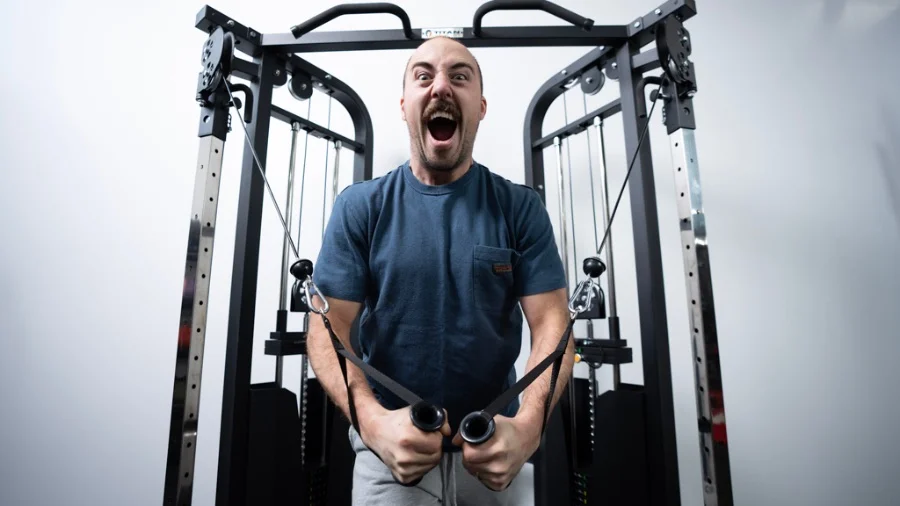
At Garage Gym Reviews, we take equipment testing as seriously as our workout routines. Our team is staffed by fitness experts from all walks of life, including Olympic-level weightlifters, endurance athletes, trainers, and general gym rats. That means when we put our stamp of approval on a piece of equipment, we mean it.
We’re in the trenches with the equipment we test, getting hands-on with every bolt, screw, and pulley to make sure it meets the GGR standards. To evaluate functional trainers and cable machines, we literally put them together, take them apart, and break a serious sweat to provide the most accurate, impartial reviews for consumers.
If we haven’t had the chance to personally use a specific machine, we only recommend it if we’ve had experience with very similar products from that brand, or we’ve interviewed experts who can vouch for the product itself based on specs.
Our team’s intricate, multi-point testing methodology is what sets GGR apart from so many other fitness review sites. We’re independent journalists, and we have high standards to determine what earns a spot on our best-in-class lists and what we think consumers should avoid.
The GGR team has tested more than 30 functional trainers and cable machines over the years. We helped nearly 1,700 people find the right model in 2024 and over 2,300 in 2025, so we’re certain we can help you, too.
Our Values
At GGR, we value our journalistic integrity and independence; it’s the lifeblood of what we do. Our writers and testers have years of experience in the fitness industry, and many of us are certified in training and nutrition. For everything we write, we also consult with a team of experts, including personal trainers, physical therapists, and medical doctors.
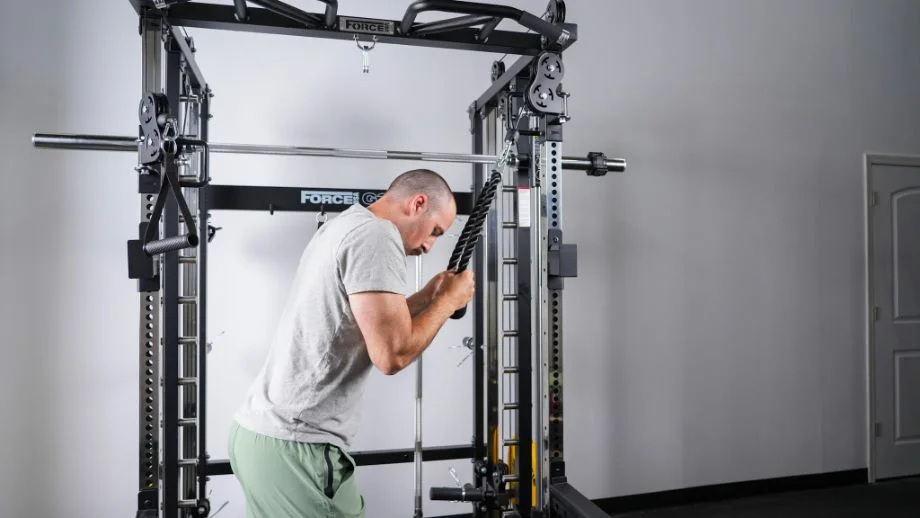
None of that would matter if we didn’t actually get hands-on with the equipment, though. Our testers put every piece of fitness equipment through the GGR wringer, measuring specs, timing how long it takes to set up, and testing its durability. Oh, and we also work out on the equipment just like a user would. All of those testing notes are then pored over and scrutinized by both our editorial team and network of experts for accuracy. If it wasn’t already clear, we get deep in the weeds on these bad boys.
Our Process
When looking at functional trainers and cable machines, this is how we go about finding our favorites:
- We compile a list of all the functional trainers and cable machines that a consumer may encounter while shopping.
- We axe the ones we know won’t meet our standards, including models with cheaper materials and out-of-date profiles that are no longer available.
- From there, we obtain products for testing, either from the brands themselves or by purchasing them outright. (Even though brands sometimes send us certain products for free, that doesn’t affect our ratings.)
- We utilize our equipment testing methodology to examine each and every machine from top to bottom.
- Once all of the machines are tested, we decide on a finalized best-in-class list based on our personal experience and the guidance of our experts.
Though a lot goes into our testing, our foundation is to measure a product’s specs against the industry average, which you can see below:
| Category | Average Functional Trainer We Test | Average Cable Machine We Test |
| Manufacturer Price | $2,659 | $2,266 |
| Weight Capacity | Weight stacks: 209 lbs Plate-loaded: 1,233 lbs | 252 pounds |
| Included Attachments | 5 | 2 |
| Dimensions | 39″ L x 53″ W x 72″ H | 25.6” L x 31.8” W x 49.4” H |
We also reevaluate our product picks every few months as new models are released and as brands upgrade their existing machines.
Functional Trainer Performance Testing
To get uniform testing for functional trainers and cable machines, we’ve broken down our testing methodology across the following categories:
Construction and Durability
We don’t go gentle on the workout equipment we test—our team puts each machine through the same rigorous tests you’d expect from any fitness enthusiast. That’s why we pay special attention to the build of every functional trainer and cable machine we examine. We look for durable materials—aluminum cables over nylon, for example—and sniff out any plastic components that may wear down over time.
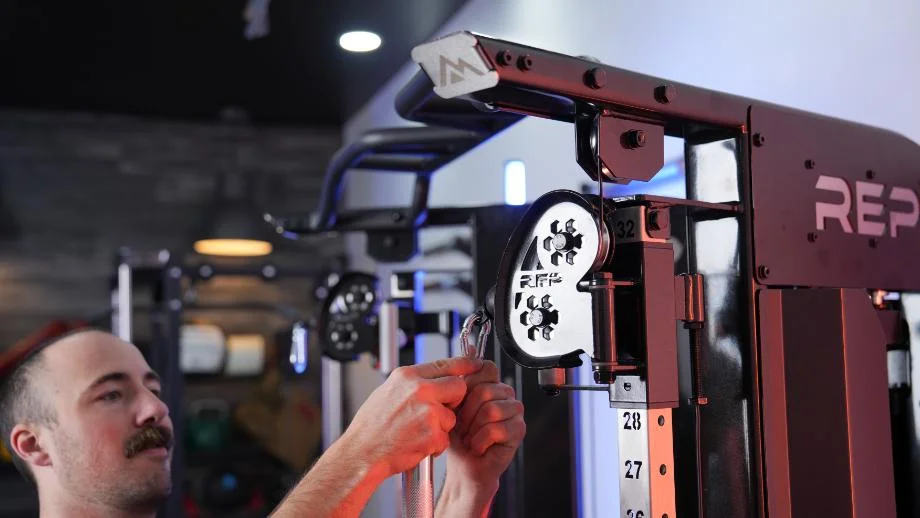
Machines will earn a 3 out of 5 if they use some plastic and nylon components, but also feature steel parts where it counts. Little to no plastic, heavy-duty steel uprights, and aluminum pulleys will earn a rating of 4 or higher in this category.
Footprint and Portability
Before spending upward of $2,500 on a functional trainer or cable machine, you should really find out if it’ll, you know, fit in your home gym. We break down the dimensions of every machine and stack them up against the industry standard of 39″ L x 53″ W x 72″ H for functional trainers and 25.6” L x 31.8” W x 49.4” H for cable machines.
To get at least a 3 out of 5, the machine’s height should accommodate most gyms, and two to three people should be able to move it, if necessary.
Versatility and Weight Stack
Workout routines change over time, so you don’t want to invest in a machine that locks you into just one training path. Ideally, a functional trainer or cable machine should offer versatility and customization options, including a heavy weight stack that accommodates leg workouts, space for attachments, and enough breathing room to utilize accessories like flat benches.
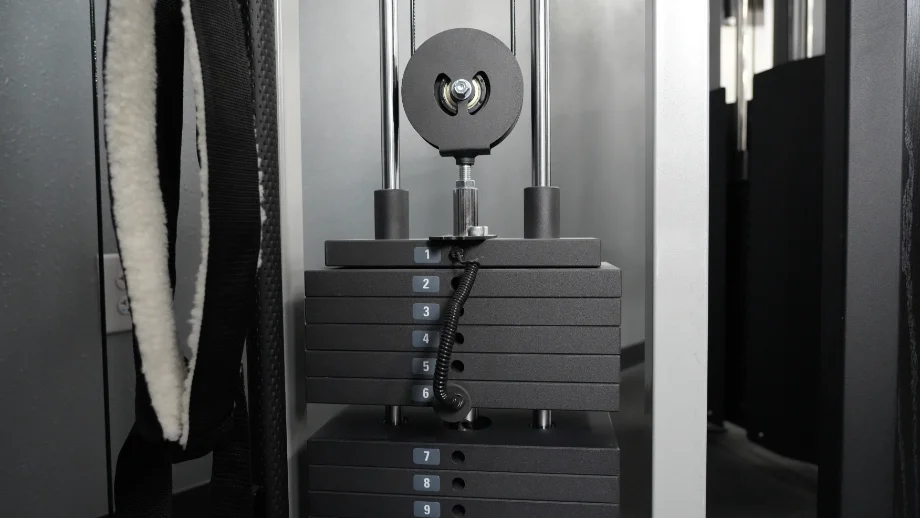
A 3-out-of-5 machine will have staple accessories like a pull-up bar and a moderate weight stack for some lower-body work. The heavier the weights go, the higher the score goes.
Pulleys and Overall Stability
Perhaps the most important category on this list, the pulleys on a functional trainer or cable machine need to be top-tier for us to recommend a product. With smooth, stable pulleys, you’ll be able to execute picture-perfect curls, rows, and stiff-leg deadlifts like a future Mr. or Ms. Olympia. It’s also important that the pulleys offer a range of heights and angles, allowing you to perform precise isolation exercises.
We give machines a 3 out of 5 if they have pulleys that offer little feedback or stickiness. These machines may also wobble a touch during heavier movements but nothing too concerning. Higher scores are awarded to machines with a smoother overall experience.
Accessories
Functional trainers and cable machines live and die with their accessories. You’ve got ropes for pushdowns, straight bars for front raises, handles for curls, etc. We give ratings in this category based on what accessories each machine comes with and how much extra cash you’ll have to shell out to get the most out of the equipment.
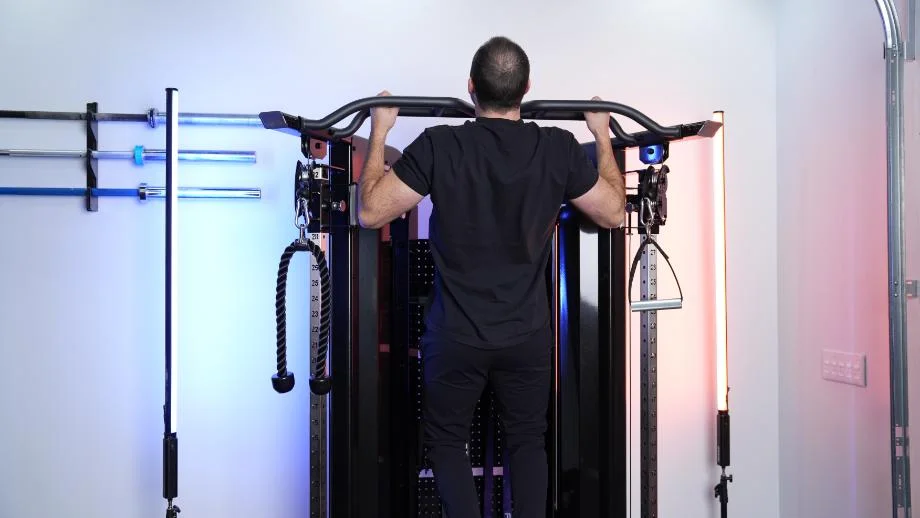
Machines that come with nothing more than a D-handle are likely looking at a 1 out of 5 in this category. The more bits and bobs, the better. If a machine is fully decked out with ropes, handles, ankle straps, a curl bar, and a pull-up bar, it could get a perfect 5 out of 5 for accessories.
Price and Value
Cost is, of course, subjective, but we grade functional trainers and cable machines against the average cost found across the industry. Machines that cost over $4,000 will likely get a 1 out of 5, while models between $2,000 and $2,999 will range from a 4 to a 5 out of 5.
Customer Experience Testing
There’s more to buying an exercise machine than just working out on it. You also need to get it delivered and built, which may involve some calls to customer support. That’s why we also rate functional trainers and cable machines based on the customer experience in the following categories:
Delivery and Setup
Having a machine that weighs hundreds of pounds delivered to your home is no easy feat. It only gets more complicated when you have to put the whole thing together. We rate each machine on how easy the delivery service is, how complex it is to put together, and what the company offers to make the whole ordeal more manageable.
We give machines a 3 out of 5 if some of the assembly directions are unclear and if it takes a few days to get in touch with customer service. Easier assembly gets a better score, especially if the company offers to perform the assembly themselves.
Financing, Warranty, and Returns
With machines this expensive, it makes sense for a company to offer financing options. But how many options are there, and what are the rates? We ask similar questions about the length of the warranty and the return policy for each machine.
To get a 3 out of 5, we like to see a warranty policy of at least three to five years, at least one financing provider, and at least a 30-day return window.
Customer Service
We mentioned this above, but getting in touch with customer service is key to any exercise equipment purchase. They can help troubleshoot hardware issues, explain your refund options, and more. The key, though, is that they have to be attentive.
We’ll award at least a 4-out-of-5 rating in this category if the company is easy to contact, responds quickly, and offers personalized solutions to problems. After all, no one should spend thousands on a cable machine only to wait weeks for a few assembly questions to be answered.
Customer Reviews
While we stand by our writers, editors, and testers, we also want to hear from actual customers. That’s why we take customer reviews from the brand’s official website (or Amazon) into account when providing a customer review score.
Overall Score
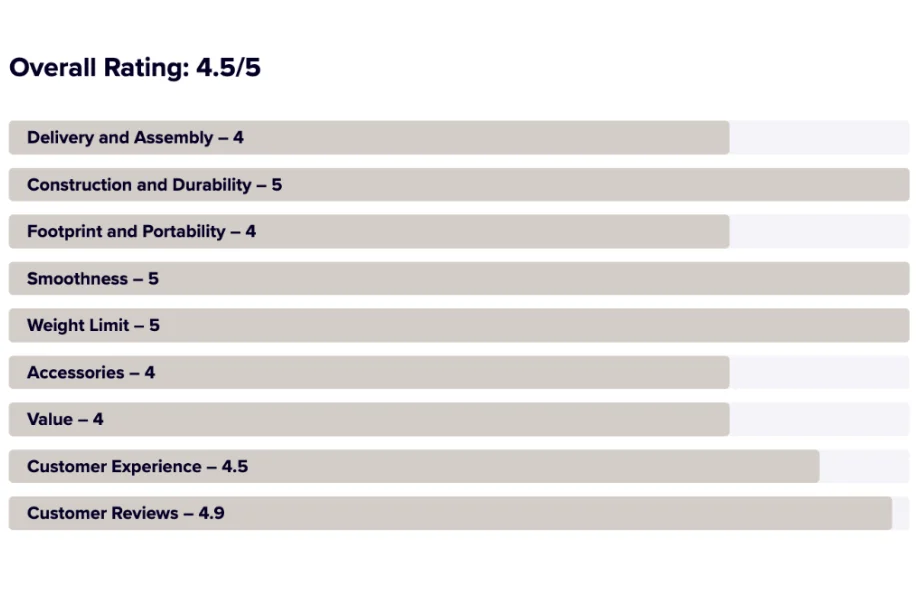
Once all of those scores are in, we take everything into account to come up with an overall rating that gives a complete view of the functional trainer and cable machine we are reviewing.