



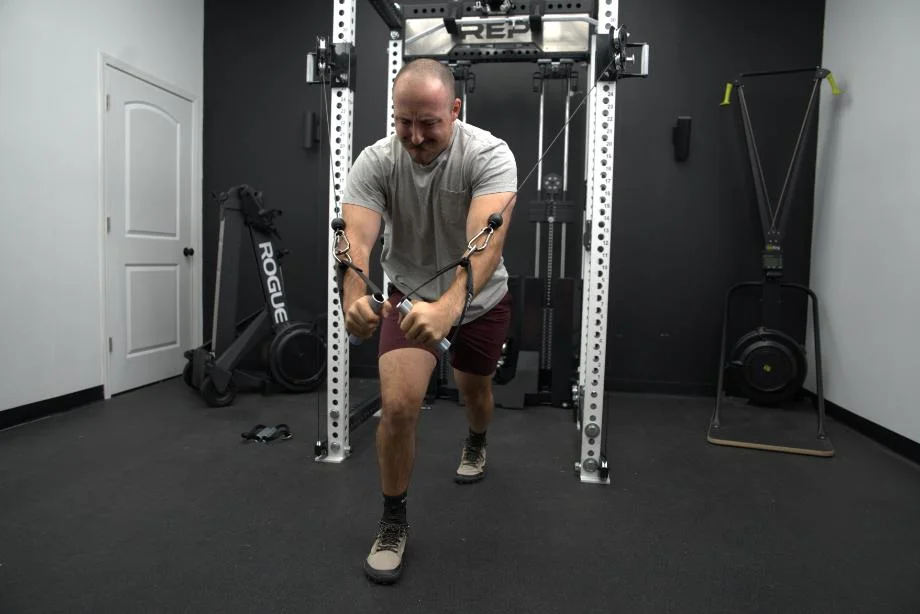
The best cable machine for a home gym is the one that fits your training needs, space, and budget. Our group of certified personal trainers, weightlifting coaches, and home gym equipment experts has tested more than 30 cable machines, from the type you’d find in a commercial gym to portable options and more.
We also consulted with Mike Masi, DPT, about some of the strength-training benefits of cable training and how a cable machine can boost your at-home workouts. After that, we had the content medically reviewed by Dr. Bilal Ahsan, a resident physician in Physical Medicine and Rehabilitation (PM&R) who specializes in musculoskeletal, neurological, and sports-related conditions. Dr. Ahsan helped ensure accuracy throughout the article.
In 2025, we helped 1,787 people find their cable machine, so we’re certain we can help you, too.
GGR Gold Pick — Best Cable Machine
We crowned the 4.5-star-rated REP Ares 2.0 as the best cable machine for home gyms. Constructed with premium materials and featuring an innovative design, this cable machine provides tons of versatility with quality cable travel while hardly adding to your power rack’s overall footprint.
8 Best Cable Machines for Home Gyms
- Best Overall Cable Machine – REP Fitness Ares 2.0
- Best Functional Trainer Cable Machine – Bells of Steel Functional Trainer
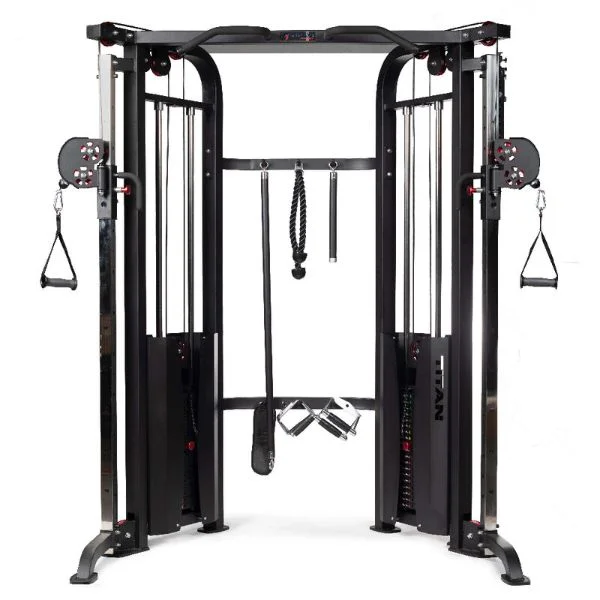
- Best Home Cable Crossover Machine – Titan Fitness Functional Trainer
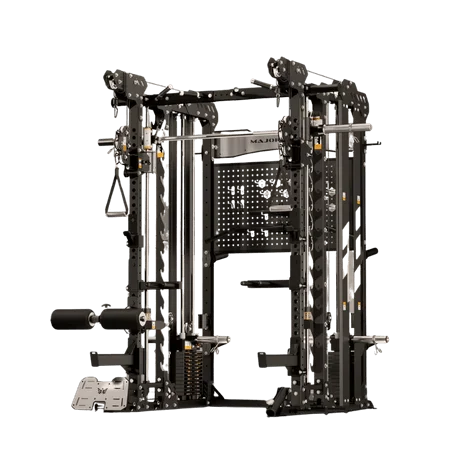
- Best All-in-One Cable Machine – Major Fitness Heritage Series B17 Flying Fortress All-In-One Functional Trainer with Smith Machine
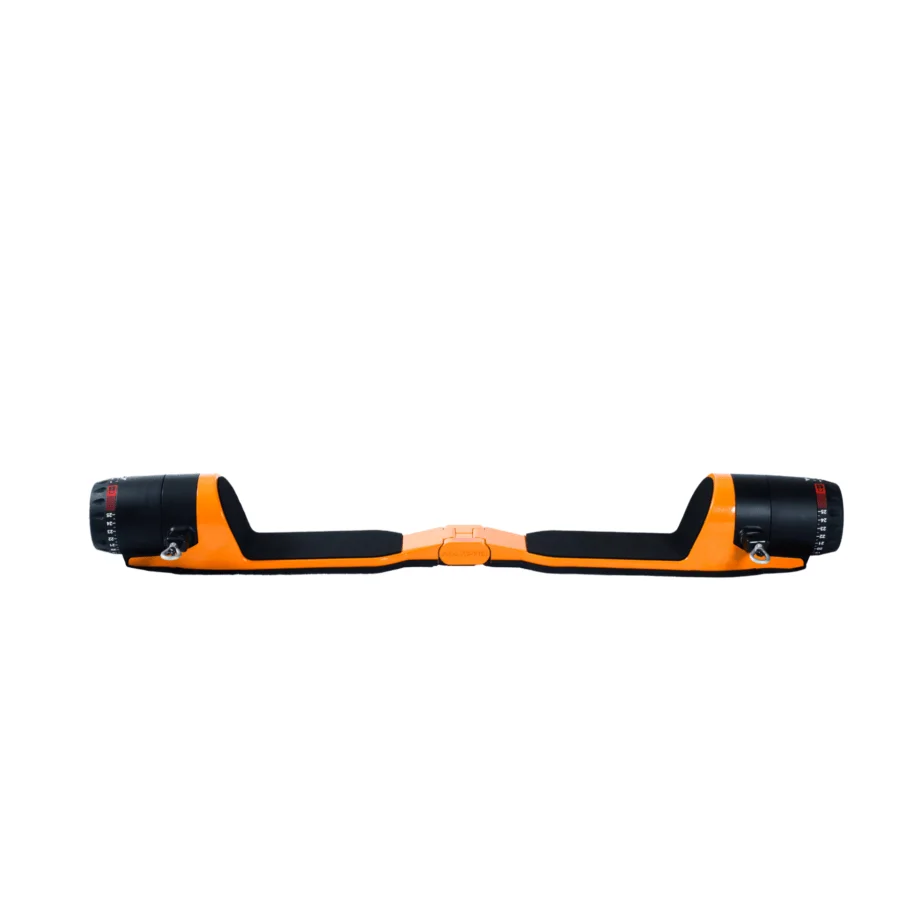
- Most Versatile Cable Machine – Beyond Power Voltra I
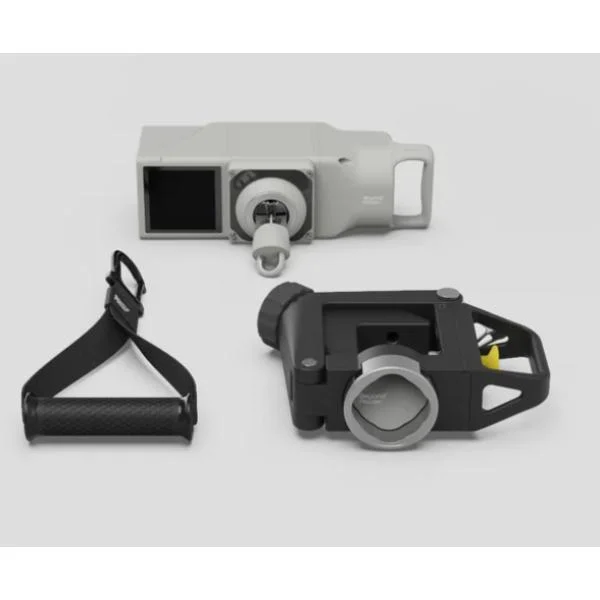
- Best Portable Cable Machine – MaxPRO SmartConnect Portable Cable Machine
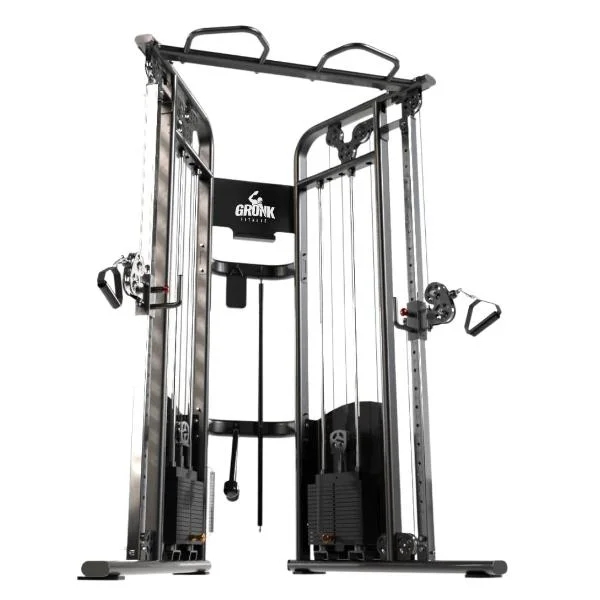
- Best Cable Machine for Small Home Gyms – Gronk Fitness Functional Trainer
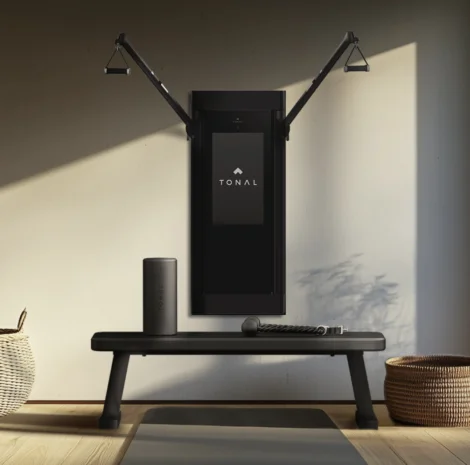
- Best Smart Cable Machine – Tonal 2 Smart Home Gym
Current Top Deals
- REP Fitness Ares 2.0 – Free shipping on all orders
- Bells of Steel Functional Trainer – Up to 44% off select products
- Titan Fitness Functional Trainer – Up to 65% off + free shipping on every order
- MaxPRO SmartConnect Portable Cable Machine – Save $250 and receive free shipping
- Gronk Fitness Functional Trainer – Save $300
How We Selected the Best Cable Machines for Home Gyms
Our durability score is based on the components of the cable machine, including the pulleys, handles, and more. Machines will earn a 3 out of 5 if they use some plastic and nylon components, but also feature steel parts where it counts. Little to no plastic, heavy-duty steel uprights, and aluminum pulleys will earn a rating of 4 or higher in this category.
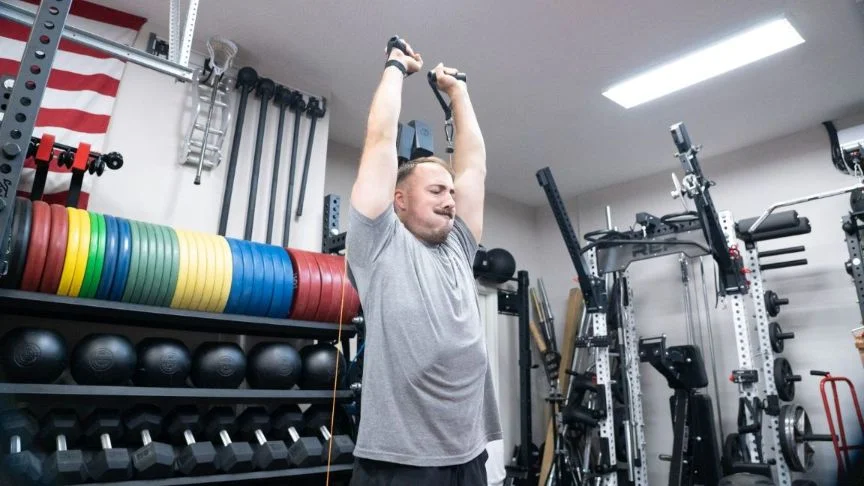
Since most home gym owners have limited space, we need to carefully rate the footprint and portability of each cable machine. For reference, the industry standard for cable machines is 25.6 inches long by 31.8 inches wide by 49.4 inches tall.
To get at least a 3 out of 5, the machine’s height should accommodate most gyms, and two to three people should be able to move the rig, if necessary, without too much challenge.
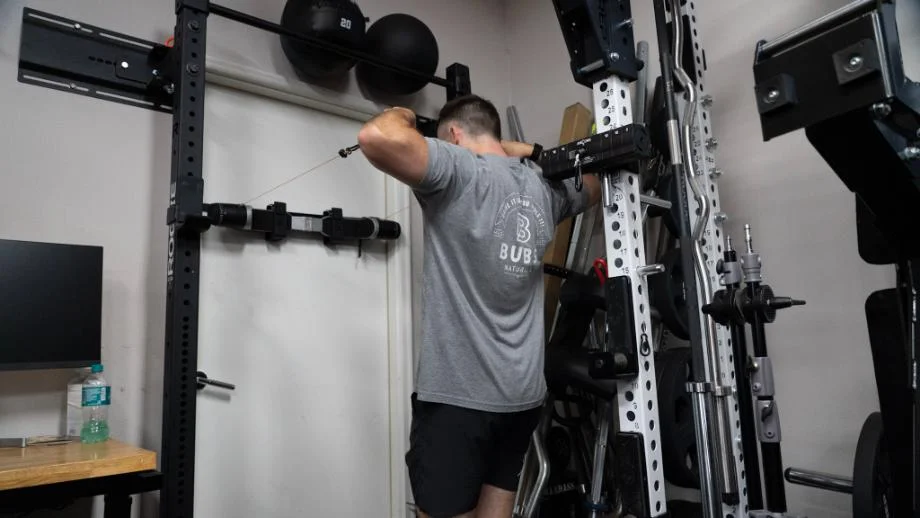
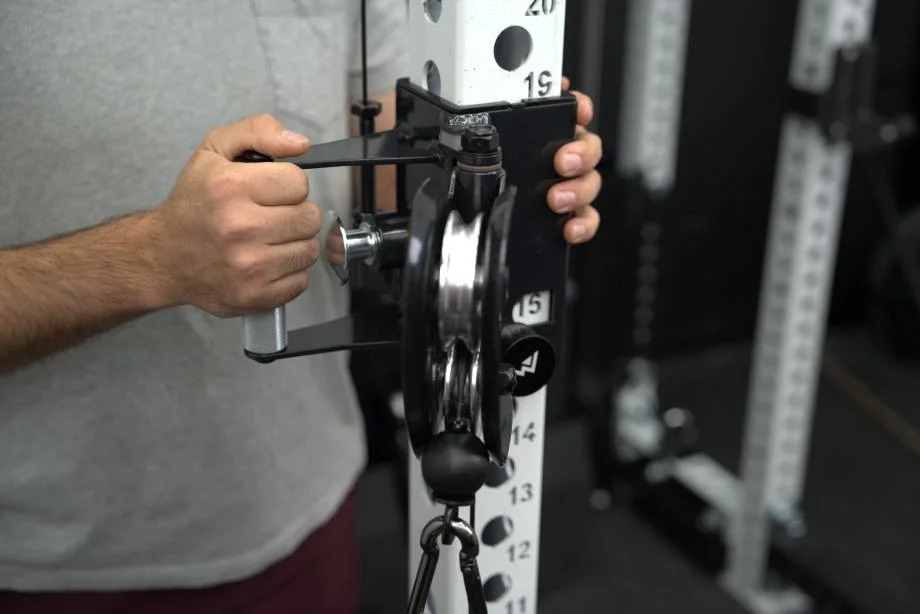
The pulleys on a cable machine need to be top-tier for us to recommend a product. With smooth, stable pulleys, you’ll be able to execute picture-perfect curls, rows, and stiff-leg deadlifts, with no jerking or unsteady movements. We give machines a 3 out of 5 if they have pulleys that offer little feedback or stickiness, but may wobble slightly in use.
The accurately score each machine, we personally take them through a variety of workouts and exercises. We’ve personally tested more than 30 of the most popular cable machines, and continue to test as many as possible.
After testing, we score each machine using our functional trainer testing methodology, which rates a variety of categories on a scale of 1-5. This includes factors such as versatility, durability, accessories, value, and more.
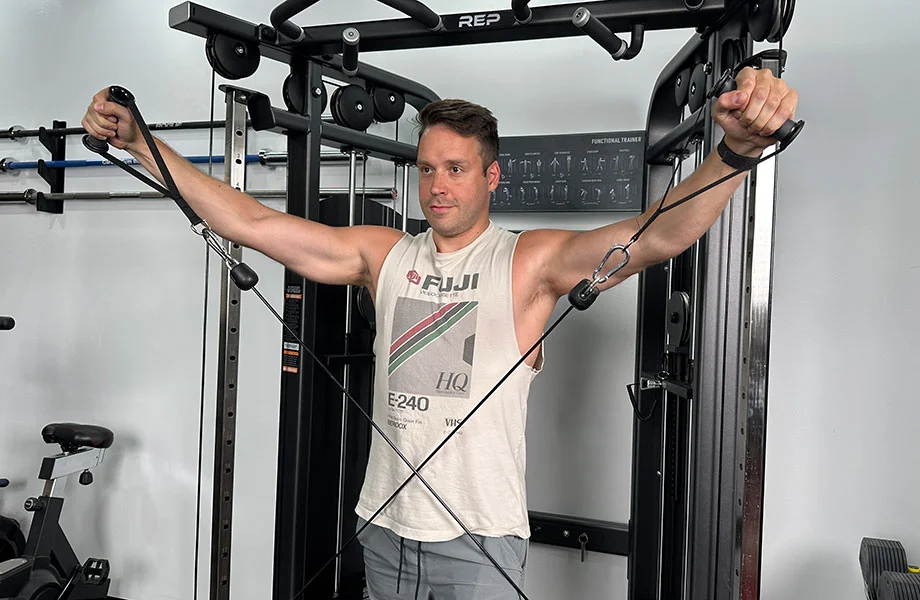
The GGR team of testers includes certified personal trainers, strength coaches, triathletes, CrossFit enthusiasts, gym owners, and more. In addition to our own testing, we consulted with Mike Masi, DPT, about some of the benefits of using a cable machine in training. We also had this content medically reviewed by Dr. Bilal Ahsan, a resident physician in Physical Medicine and Rehabilitation (PM&R) who specializes in musculoskeletal, neurological, and sports-related conditions.
Latest Updates
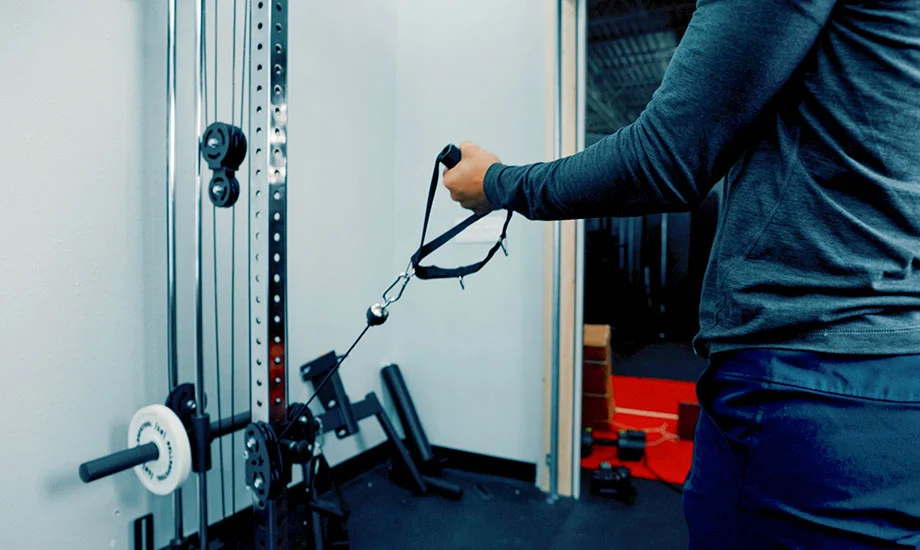
In July 2026, we re-evaluated all of the cable machines on our best-of list to ensure we’re still showcasing the best of the best. While the REP Fitness Ares 2.0 remains in the top spot, we swapped in the Bells of Steel Functional trainer as the best functional trainer cable machine for its high-value design, impressive weight capacity, and compact dimensions.
Compare Side-By-Side
 |  |  |  |  |  |  |  | |
| REP Fitness Ares 2.0 | Bells of Steel Functional Trainer | Titan Fitness Functional Trainer | Major Fitness Heritage Series B17 Flying Fortress All-In-One Functional Trainer with Smith Machine | Beyond Power Voltra I | MaxPRO SmartConnect Portable Cable Machine | Gronk Fitness Functional Trainer | Tonal 2 Smart Home Gym | |
Rating | ||||||||
| Type | Functional trainer & lat pulldown/low row | Functional trainer | Functional trainer | Functional trainer | Portable cable machine | Functional trainer | Smart gym | |
| Footprint | 80”-93” H x 57.6” W x 16″-41″ D | 30″ L x 53″ W x 81″ H | 44” L x 64” W x 82” H | 68.1” L x 78.7” W x 88.1” H | 16″ L x 10″ W x 4″ H | 41″ L x 61″ W x 83″ H | 21.5″ L x 5.25″ W x 50.9” H | |
| Resistance | Weight stack (max 260 lbs) | Weight stacks (160 lbs each side) | Weight stack (max 200 lbs) | 130 lbs (expandable up to 260 lbs with weight plates) | 200 lbs max | Digital resistance (max 300 lbs) | Weight stack (max 200 lbs) | (max Up to 250 lbs) |
| Subscription? | — | — | — | — | — | — | — | |
| Accessories | Lat pulldown bar, knurled D-handles | N/A | Short bar, long bar, ankle strap, dual stirrup handles, tricep rope handles, single and double D-handles | Lat pulldown bar, straight bar, stirrup handles, Heritage Series J-hooks, reinforced spotter arms, premium leg holder, telescoping foot plate and dip bars | Sliding rack mount, basic handle | Quick connect long bar, workout handles, ankle/wrist straps, door brackets, door mount kit | Multi-grip pull-up bar, storage hooks, D handles, straight bar, triceps bar | Smart handles, smart bar, control module, rope, bench, workout mat, roller |
| Warranty | Lifetime warranty | Limited lifetime | 1-year warranty included | 1-year warranty | 1-year manufacturer warranty | 2-year limited warranty | Lifetime frame/parts | 2-year limited warranty |
Best Overall Cable Machine: REP Fitness Ares 2.0 Cable Attachment
Updated by: Caine Wilkes, OLY, CNC, USAW-L1








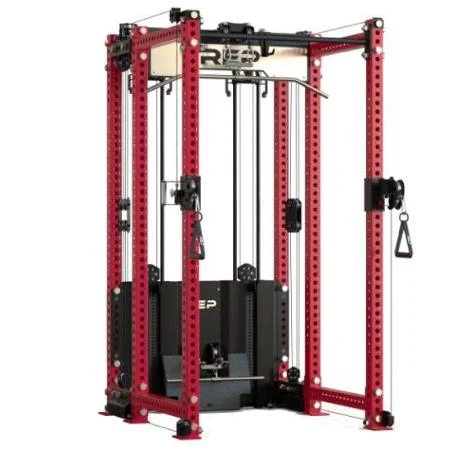
The REP Ares 2.0 is an upgrade of the original REP Fitness Ares Cable Attachment. This functional trainer integration features improvements such as a raised low row attachment point, as well as a deeper set weight stack, to allow for more space within the power rack. The Ares 2.0 comes with dual 260-pound weight stacks, with an option to make them 310 pounds.
What our tester says:
“Although the original Ares was nice, the REP Ares 2.0 keeps the level of quality high, using premium cables and pulleys. The cable travel is very smooth, and the rack stays solid.”
Editor’s note: This cable crossover attachment only works with REP Fitness PR-4000 and PR-5000 series racks, which are high-quality racks that we’ve recommended in other roundups. If you don’t have a REP Fitness rack, this crossover attachment will probably not work.
Most home gym owners have some sort of squat rack, as these can be a versatile piece of equipment with the addition of power rack attachments. If you have a power rack, particularly from REP Fitness, and you want a cable machine that won’t take up too much of your gym space, the REP Ares 2.0 Cable Attachment is a perfect choice for your home. With a 5-out-of-5 score for its durability and construction, this is a premium product with a quality build.
Smoothness: 5/5
Accessories: 4/5
Construction & Durability: 5/5
Why We Like The REP Ares 2.0
An upgrade from the original REP Ares Cable Attachment, the REP Ares 2.0 attaches around your PR-4000 or PR-5000 rack, only adding a few inches in height, width, and depth to your power rack. That keeps this cable attachment fairly compact for your gym space, earning the Ares 2.0 a 4 out of 5 for its footprint.
You can feel the quality with how sturdy the REP Ares attachment is. Our tester, GGR founder Coop Mitchell, told me, “The durability gets top marks from me. This feels solid, and the cables were smooth and quiet. I didn’t notice any catching during my pull or release.” The smoothness gets a 5 out of 5, as the aluminum pulleys make for an incredibly smooth feel during your workouts.
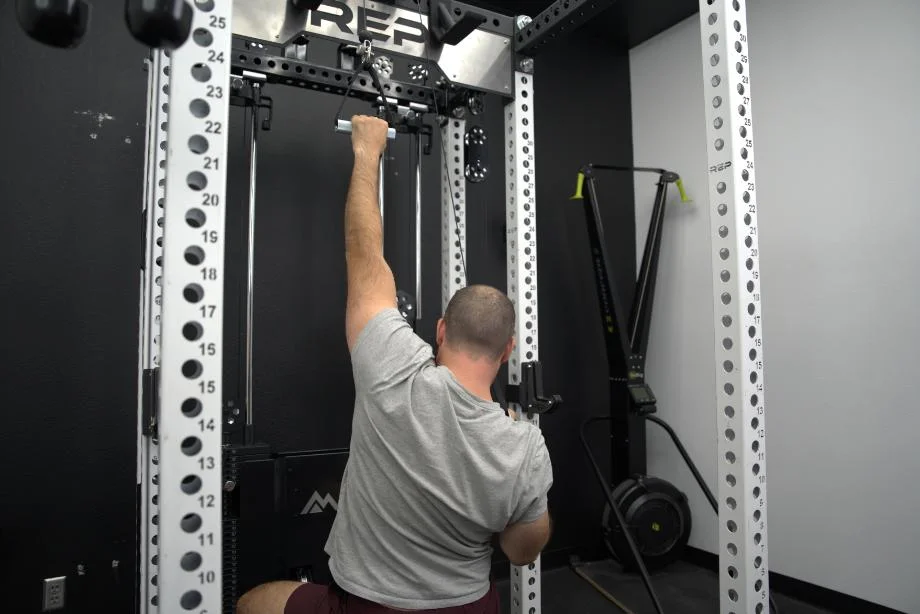
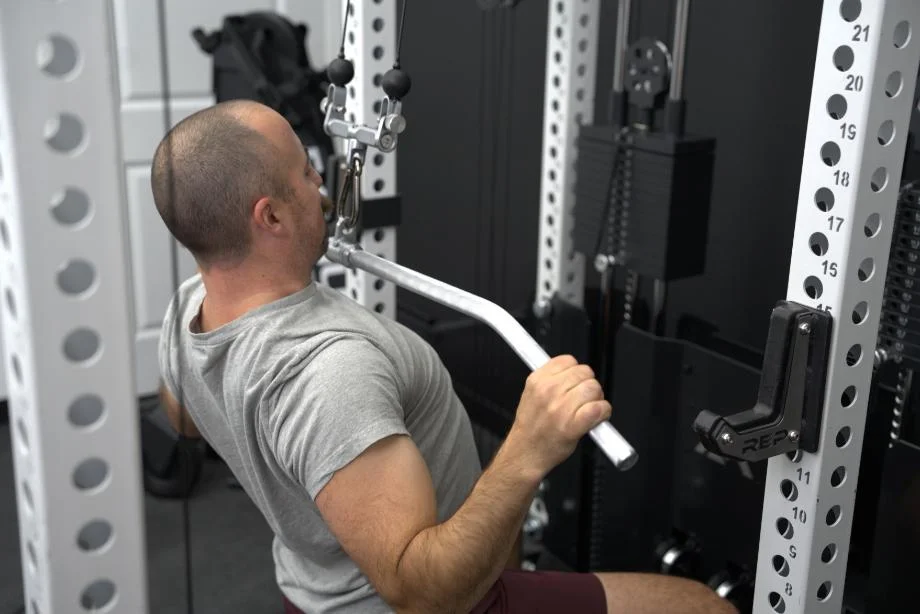
Boasting six terminals for cable attachments and dual 260-pound weight stacks, the REP Ares 2.0 grants tons of versatility. The narrower rack profile means you don’t get quite as good of a stretch from a chest fly when compared to a functional trainer, but outside of that, the cable attachment shines, with the lat pulldown really being its shining achievement. You can use a banana hook to attach the knurled lat pulldown bar to both weight stacks, allowing for heavy weights on pulldowns and low rows.
The original REP Ares had wide low pulleys, and the connector was a long, straight bar, which was a little awkward. The Ares 2.0 feels much better, although the pulleys could still be a bit higher.
Coop Mitchell, GGR founder and product expert
What We Don’t Like About the REP Ares 2.0
While it’s a well-engineered piece of gym equipment, building out the Ares around your rack can be pricey. The cable attachment starts at around $3,000, and can increase due to the size and build of your power rack. If you don’t have a REP power rack already, you’ll have to buy one with it, as well, which will get expensive, fast.
The dual weight stacks also take up a bit of the inside of the rack space, so you may be a little cramped using the inside of a four-post power rack for squats. With a six-post rack, you’ll still have plenty of room inside the cage. “If you squat on the outside of your rack, it’ll be a non-issue, too,” Coop let me know.
If you prefer American-made products, be sure to check out the Rogue FM-6 Functional Trainer, the company’s take on a rack-integrated cable system. Although the pulleys are imported, the rest of the machine is made in the United States.
Testing Breakdown
It’s a bit expensive, but the Ares 2.0 rated well in many factors we tested. Here’s how it scored.
Vs. The Average
Although it’s a bit pricier than the average cable machine, the REP Ares 2.0 has a minimal footprint, adding only a few inches to the footprint of your current REP power rack.
| REP Ares 2.0 | Average Cable Machine | |
| Price | Starts at $2,999.99 | $2,265 |
| Type of machine | Power rack attachment | Varies by profile |
| Footprint | Adds 6” D x 5.2” W x 0.9” or 2.1” H to power rack dimensions | 25.6” L x 31.8” W x 49.4” H |
| Resistance type | Weight stack | Weight stack |
| Max resistance | Dual 260-lb stacks (can be upgraded to 310 lbs) | 250 lbs |
| Pulley material | Aluminum | Nylon |
| Cable ratio | 2:1 | 2:1 |
| Warranty | Lifetime | Multi-year (2 or more) |
You can check out our thoughts on this updated cable machine in our REP Ares 2.0 review.
Best Functional Trainer Cable Machine: Bells of Steel Functional Trainer
Updated by: Cory Kessler, CPT, CNC





This is a relatively inexpensive functional trainer that’s easy and straightforward to assemble.
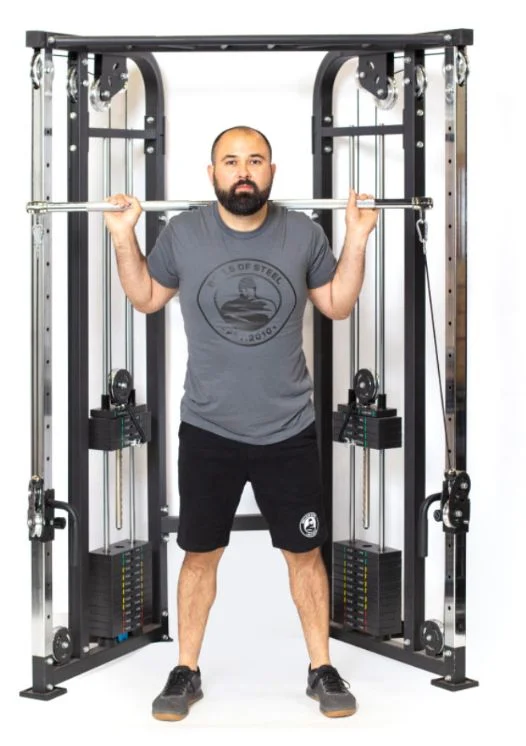
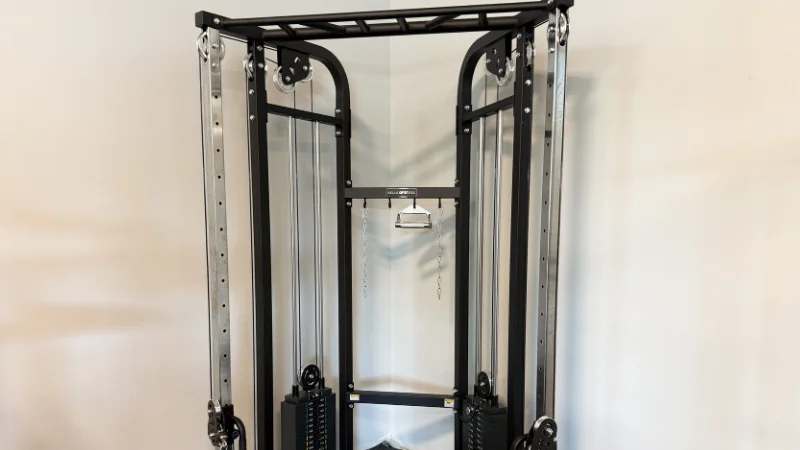
The Bells of Steel Functional Trainer is a versatile system with adjustable cable settings, dual 160-poundweight stacks (if you choose the weight stack option), a built-in multi-grip pull-up bar, and other features you’d typically find on more expensive systems. We dub this the best functional cable machine, however, because you get all of this functionality for as little as $1,200 (when you opt for the plate-loaded setup).
Our expert tester rated his overall experience with this functional trainer a 4 out of 5, saying, “For a corner cable machine, it offers everything you need from the angles and weights.”
Value: 5/5
Durability: 4/5
Weight Limit: 4/5
Why We Like the Bells of Steel Functional Trainer
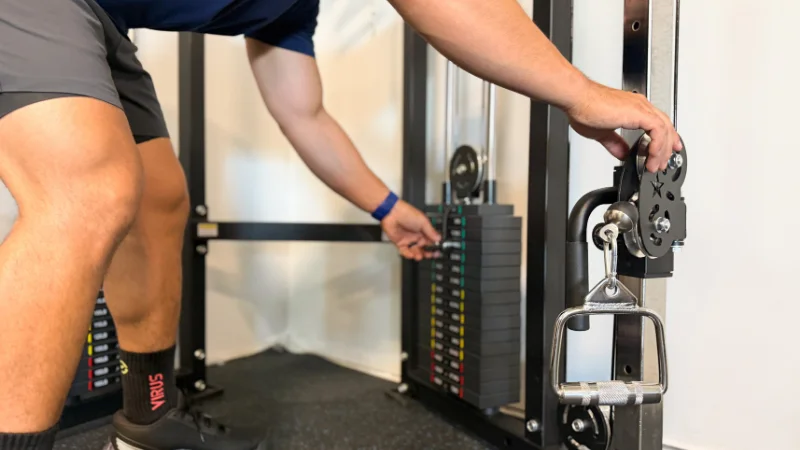
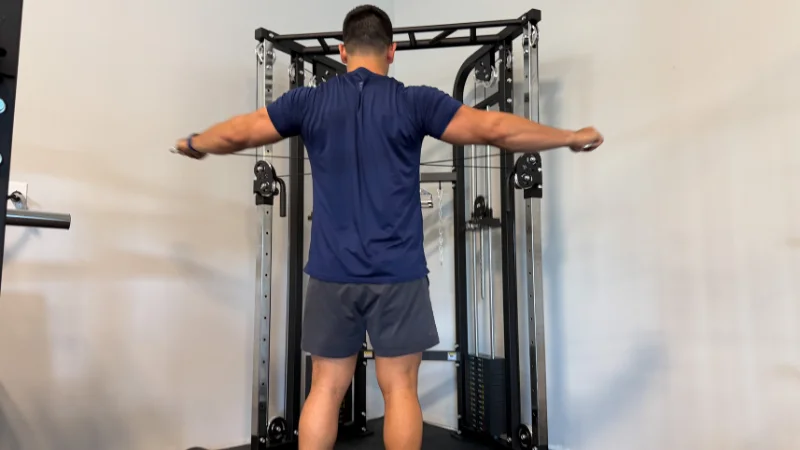
The bottom line on the Bells of Steel Functional Trainer is versatility. You get dual 160-pound weight stacks at a 2:1 pulley ratio (meaning a maximum 80 pounds of resistance), which should be heavy enough for the majority of home gym owners. The pulleys are smooth, per our tester, and the built-in pull-up bar has multiple grip options for you to further challenge yourself in training.
However, if you need greater resistance and have weight plates at home, you can opt for the plate-loaded model of this functional trainer. This model is about $1,000 cheaper, and the cables have a max capacity of 400 pounds. This versatility earns this BoS profile a 4 out of 5 for our weight limit category.
While additional attachments are available for an extra cost, our tester says the machine already has most of what you need. “You can buy attachments,” he said, “But it already comes with individual handles that actually rotate, so your grip is not stuck, and a couple of small chains to extend if you need more space.” While we appreciate the built-in versatility, the lack of any additional attachments (without an extra cost) hurt the accessories score.
There is enough versatility for the height and weight options in this cable machine, and it does not take much space as long as it sits at the corner. It gets the job done!
GGR Expert Tester
What We Don’t Like About the Bells of Steel Functional Trainer
Our primary callout for the Bells of Steel functional trainer is the 14-gauge steel construction. We’re not particularly worried about the quality or durability here, but this is a thinner metal than most functional trainers and could lead to some stability issues. “The machine was pretty stable during cable exercises,” our tester told me, “But once you do pull-ups there is some noticeable movement.”
We gave this machine a 4 out of 5 for construction and durability, but want to point out the stability concerns for heavier lifters (or those unable to bolt this machine to their training room floor).
Additionally, while our tester was pleased with the included D-ring handles, there are other options on the market with more robust accessories bundles baked into the base model. If you’re looking for a cable machine with at least a few more attachments (without an extra purchase), it may be best to continue your search.
If you’re willing to spend a little more for a higher weight capacity and greater overall stability, we’d recommend the REP Arcadia Functional Trainer—one of our favorite functional trainers as of late.
Testing Breakdown
The Bells of Steel Functional Trainer impressed us with its versatility and construction. Here’s how we scored it in all of our testing categories:
Vs. The Average
The Bells of Steel Functional Trainer has a lower weight capacity than the average cable machine, but it’s a cheaper, more versatile piece of equipment with a lifetime warranty.
| Bells of Steel Functional Trainer | Average Cable Machine | |
| Price | $2,144.99 | $2,265 |
| Type of machine | Functional trainer | Varies by profile |
| Footprint | 30″ L x 53″ W x 81″ H | 25.6” L x 31.8” W x 49.4” H |
| Resistance type | Plate-loaded or weight stack | Weight stack |
| Max resistance | 160 lbs (each side) | 275 lbs |
| Pulley material | Aluminum | Nylon |
| Cable ratio | 2:1 | 2:1 |
| Warranty | Limited lifetime (frame), 90 days (cables and pulleys) | Multi-year (2 or more) |
Best Home Cable Crossover Machine: Titan Fitness Functional Trainer
Updated by: Caine Wilkes, OLY, CNC, USAW-L1

The Titan Fitness Functional Trainer is much like the functional trainer you’d find in a commercial gym, in that it uses commercial-grade materials, but comes in a home gym footprint.
What our tester says:
“While there’s more affordable options out there, I think paying the extra money is worth it for a more high-quality machine.”
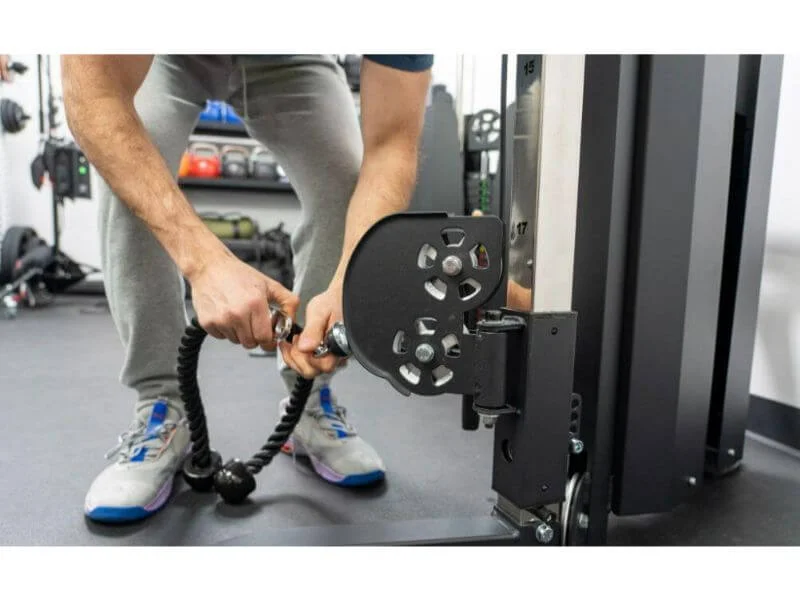
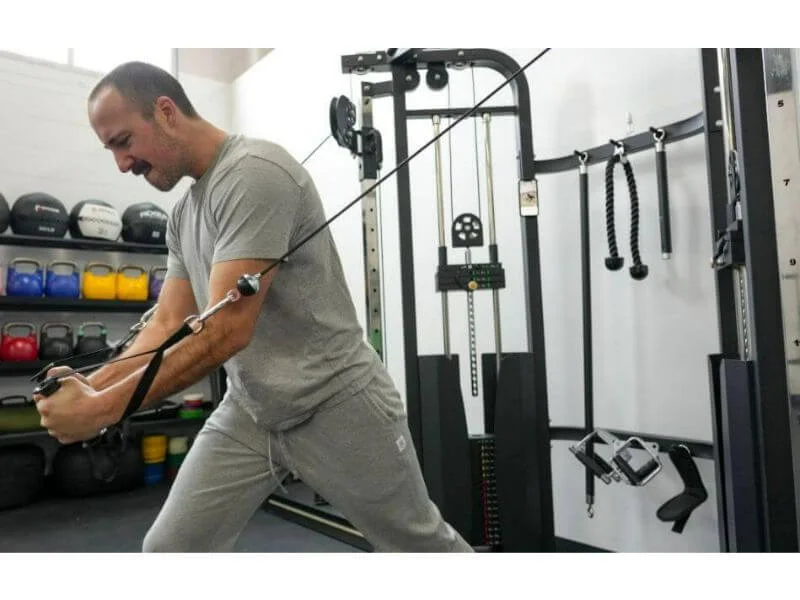
The Titan Fitness Functional Trainer is just like the cable machine at your local commercial gym, just without having to wait for other people to finish their working sets on it. The real star is its versatility and weight stacks, which got a 4 out of 5. There are more than 1,000 adjustable positions, dual 200-pound weight stacks with a 2:1 ratio (20 pounds feels like 10), swiveling pulleys, and six accessory hooks. The sky’s the limit for what you can do with this machine.
Accessories: 4/5
Construction & Durability: 4/5
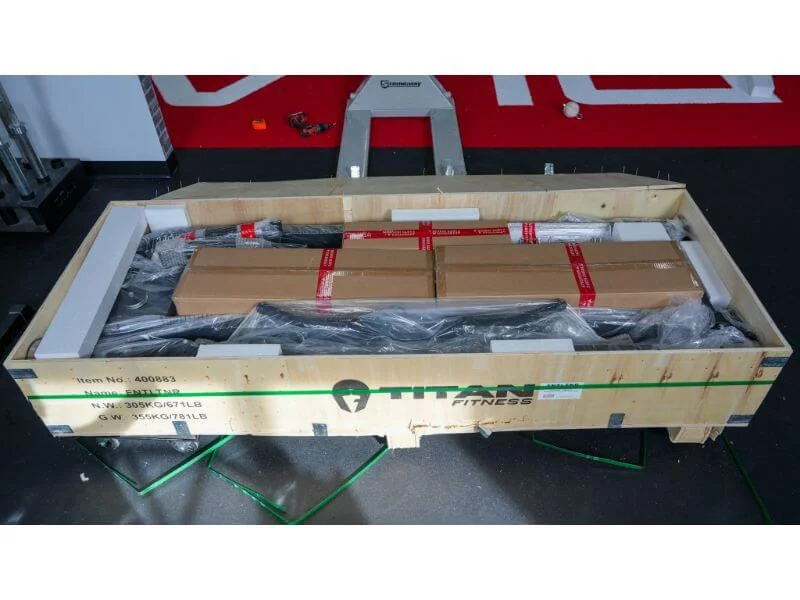
Delivery & Assembly: 3.5/5
Why We Like the Titan Fitness Functional Trainer
We like the Titan Fitness Functional Trainer for its build and quality. The dual weight stacks provide a decent weight range that should be able to give beginners and home gym veterans alike a decent challenge on most movements. “I wouldn’t expect to see people, in most training instances, maxing out the stacks,” GGR founder Coop Mitchell said when I asked him about the weight limit. “I think the weight that’s here is good for most people.”
The aluminum guide rods needed to be lubricated, though once they were, the smoothness earned a 4 out of 5. The red anodized aluminum pulleys add to the smoothness—and they make for a sharp look on the functional trainer.
The Titan Functional Trainer comes with a short bar, long bar, ankle strap, dual stirrup handles, rope handles, and single and double D-handles so you can do countless strength-based movements. I asked Coop for his thoughts on the attachments and he replied, “The quality isn’t anything to write home about, but that’s a lot to be included with the machine.” He rated the accessories at 4 out of 5.
It’s very smooth and stable in use, and it should be at nearly 700 pounds.
Coop Mitchell, Garage Gym Reviews founder
What We Don’t Like About the Titan Fitness Functional Trainer
Functional trainers can take up a lot of space in a home gym, and the Titan Fitness Functional Trainer is no different. It is one of the more compact traditional trainers (the 64-inch width is narrower than the industry standard 72 inches for double-stack cable machines), but you’ll still need a good amount of dedicated space for it. At 672 pounds, it’s not moving once you build it, either. We rate the footprint at 3.5 out of 5.
The shorter 82-inch height also means that taller people won’t be able to do pull-ups well on it, which is a shame because the trainer comes with a multi-grip pull-up bar that has a nice-feeling powder coat that provides excellent grip.
For a more compact solution, check out the Torque Anker 7, a wall-mounted functional trainer that sits just a few inches off the wall.
Testing Breakdown
The Titan Fitness Functional Trainer scored pretty well in most categories, although its footprint and assembly dropped its score slightly. Below is the full breakdown.
Vs. The Average
Although it’s a pricier cable machine, as a functional trainer, this machine is probably priced mid-range. Additionally, the footprint is compact for a functional trainer, but well above the average cable machine’s dimensions.
| Titan Fitness Functional Trainer | Average Cable Machine | |
| Price | $2,999.99 | $2,265 |
| Type of machine | Functional trainer | Varies by profile |
| Footprint | 44” D x 64” W x 82” H | 25.6” L x 31.8” W x 49.4” H |
| Resistance type | Weight stack | Weight stack |
| Max resistance | Dual 200-lb stacks | 275 lbs |
| Pulley material | Aluminum | Nylon |
| Cable ratio | 2:1 | 2:1 |
| Warranty | 1 year | Multi-year (2 or more) |
For more, check out our in-depth Titan Fitness Functional Trainer review.
Best All-in-One Cable Machine: Major Fitness Heritage Series B17 Flying Fortress All-In-One Functional Trainer with Smith Machine
Updated by: Stephen Sheehan, CPT, CNC




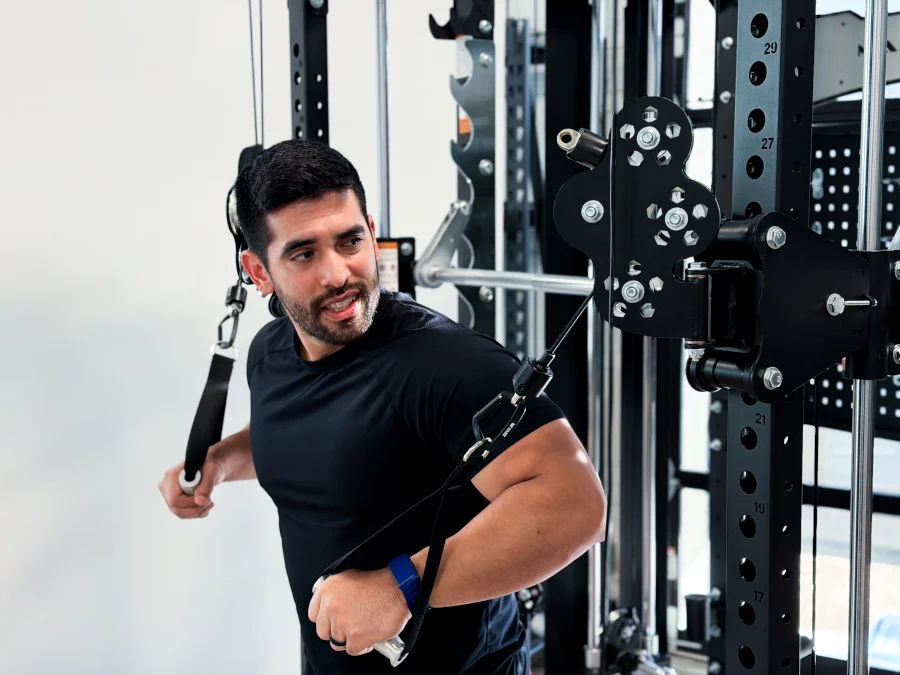
If you value versatility, you’ll be hard-pressed to find a better option than the Major Fitness B17 All-In-One Functional Trainer with Smith Machine. Combining five strength training systems into one well-built package, this is the ultimate Swiss Army knife for home gym owners who aren’t afraid to splurge on their setup.
I put the B17 through the paces for a video review on our Garage Gym Reviews Everything YouTube channel and was highly impressed by its smooth-moving pulleys, thoughtful design elements, and overall performance. Offering far more functionality than a typical cable machine (or functional trainer), this premium-priced Major Fitness product earned an impressive overall score of 4.2 out of 5.
Footprint: 4/5
Accessories: 5/5
Warranty: 3.5/5
Why We Like the Major Fitness Heritage Series B17 Flying Fortress All-In-One Functional Trainer with Smith Machine
One of the unique elements about the B17 that separates it from other cable machines is its interchangeable cable pulley ratio. While most competitors only offer a 2:1 ratio, Major Fitness designed this model to be able to go from 2:1 to 1:1 resistance on the fly.
This is particularly beneficial for users who want heavier resistance for strength-focused movements like lat pulldowns, rows, or low rows. Meanwhile, the 2:1 setting works great for smaller incremental jumps when you’re doing isolation exercises like tricep pushdowns, cable curls, and face pulls. This cuts the effective resistance in half, giving you more control and more consistent tension.
Outfitted with dual 130-pound weight stacks, the B17 offers plenty of room for progressive overload. The weight stacks have an external selector rod that allows you to load up to 130 pounds of weight plates. As a result, we give this unit a perfect score for versatility.
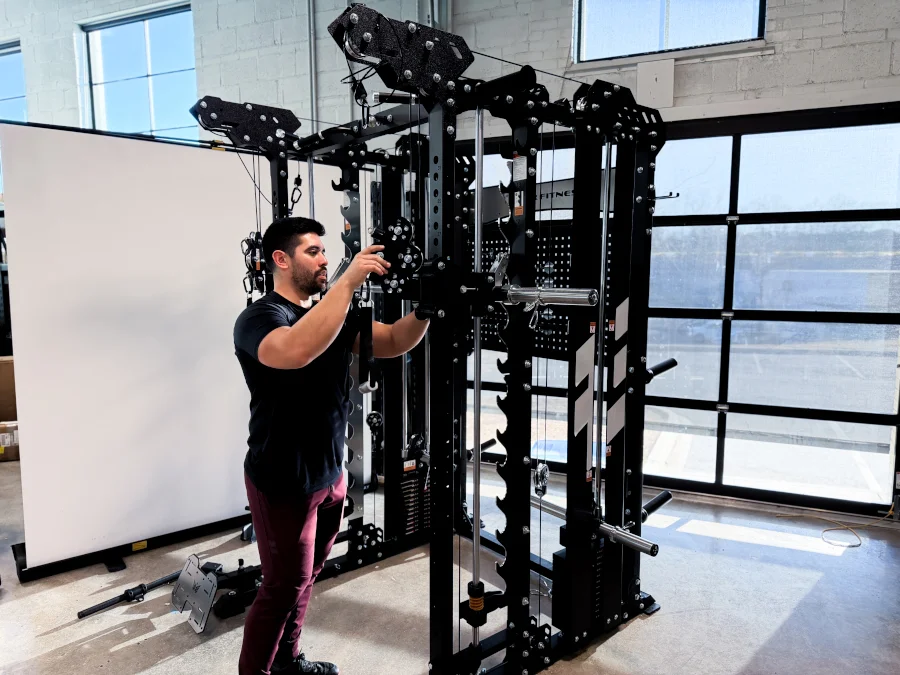
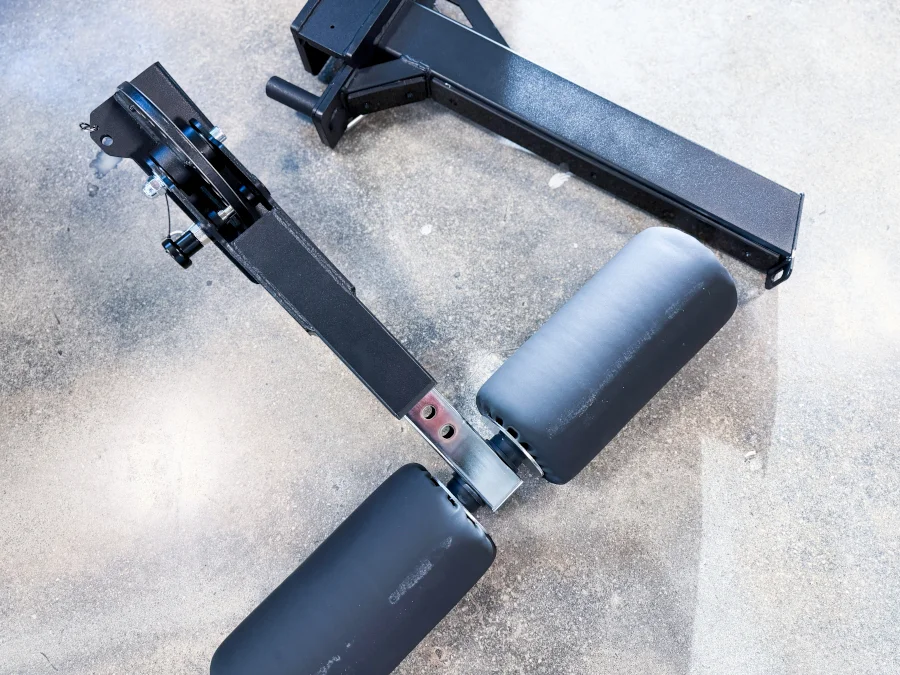
The B17 is compatible with a wide array of accessories from Major Fitness, such as a rack-mounted leg extension and multi-functional handle bar. So, you can go from knocking out lunges on the Smith Machine to setting the trolleys up for flyes to loading a barbell on the J-hooks for overhead presses. This helps the B17 earn a 5 out of 5 for its accessories.
If you have the money (and space) for an all-in-one functional trainer like the B17, I definitely recommend pursuing that purchase. The versatility is practically unmatched, and you’re easily able to transfer your commercial gym workout routine to an at-home setup. Again, it’s a hefty investment, but for home gym owners looking to set themselves up for success, this can be a great foundation to build from.
GGR Editor Ben Emminger, NASM-CNC, NASM-CSNC
What We Don’t Like About the Major Fitness Heritage Series B17 Flying Fortress All-In-One Functional Trainer with Smith Machine
While the B17 checks many important boxes, I have to point out a few drawbacks. First, let’s address the proverbial elephant in the room: the price. Listed for $4,199.99, it’s nearly double the cost of the average cable machine. Granted, you’re getting much more functionality, but there’s no doubt the price tag may put the B17 out of range for some home gym owners.
Compounding that is the fact that Major Fitness only provides a one-year warranty. While we appreciate that the company offers financing options and a 35-day, no-reason return policy, we had to dock a few points off the customer experience score due to the lackluster warranty. As a result, we rate it a 3.5 out of 5 in this category.
Finally, this all-in-one unit commands quite a bit of room—especially compared to traditional cable machines. So, if you have limited space in your garage or training area, this is not an ideal option.
If you like the B17 but its price tag is too steep, take a look at the Major Fitness B52 Pro. You’ll have to sacrifice some features—including the interchangeable cable pulley ratio—but this all-in-one unit is much more affordable at a list price of $2,700.
Testing Breakdown
The Major Fitness B17 earned at least a 4 in every category except customer experience, which stems from the lackluster one-year warranty. Here’s a complete scoring breakdown:
Vs. The Average
The B17 is significantly larger and more expensive than the average cable machine, but it offers excellent versatility, especially with its interchangeable cable pulley ratio. However, we’re disappointed that it comes with a one-year warranty.
| Major Fitness B17 | Average Cable Machine | |
| Price | $4,199.99 | $2,265 |
| Type of machine | Functional trainer with Smith machine | Varies by profile |
| Footprint | 68.1” L x 78.7” W x 88.1” H | 25.6” L x 31.8” W x 49.4” H |
| Resistance type | Weight stack | Weight stack |
| Max resistance | 130 lbs (expandable up to 260 lbs with weight plates) | 275 lbs |
| Pulley material | Aluminum | Nylon |
| Cable ratio | Interchangeable 1:1 or 2:1 cable pulley ratio | 2:1 |
| Warranty | 1-year warranty | Multi-year (2 or more) |
Learn more in our in-depth Major Fitness B17 review.
Most Versatile Cable Machine: Beyond Power Voltra I
Updated by: Caine Wilkes, OLY, CNC, USAW-L1
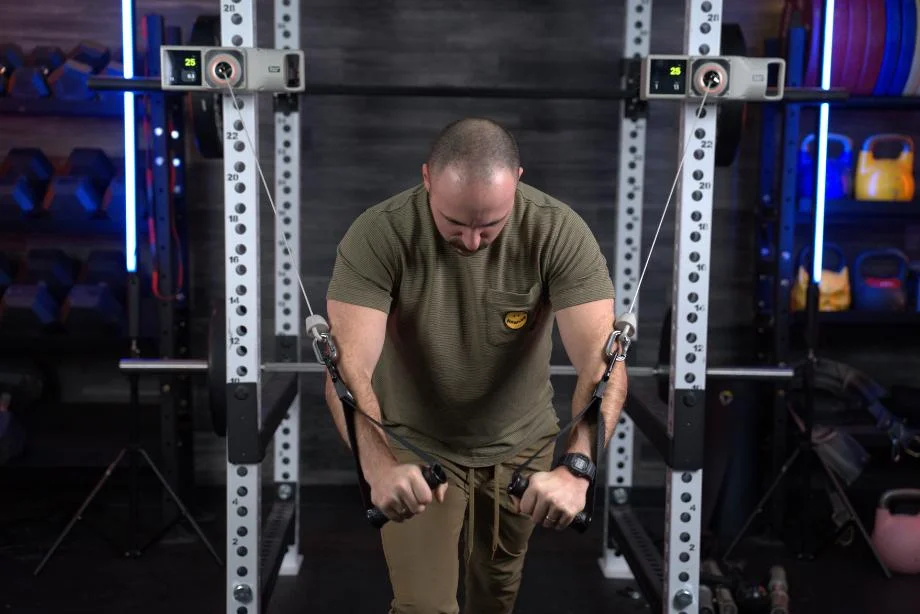
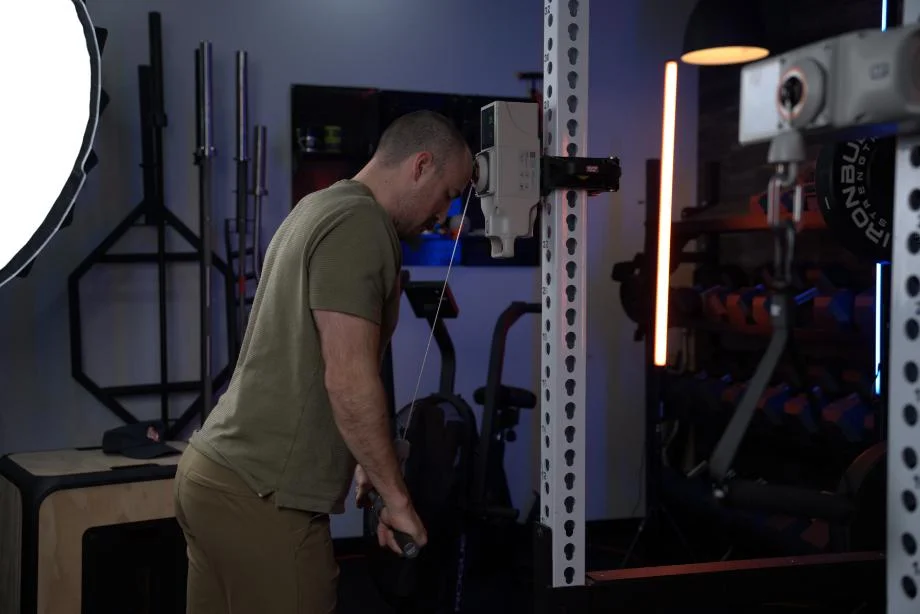
The Beyond Power Voltra I packs all the benefits of a cable machine into a portable design, though it comes with a high price tag.
What our tester says:
“In my dream minamalist setup, I would have a squat rack, bar and weight plates, a bench, adjustable dumbbells, and the Voltra I.”
The Beyond Power Voltra I’s standout feature is that it’s portable and can attach to just about any squat rack, but we love it because of its versatility, which earns 5 out of 5 stars. GGR founder Coop Mitchell has been using it for cable machine workouts every day for several months and told me, “I’ve done deadlifts, lateral raises, Nordic curls, lat pulldowns, and just about every other move included in my regular personal training sessions, all on this machine.”
Versatility: 5/5
Footprint: 5/5
Value: 3/5
Why We Like the Beyond Power Voltra I
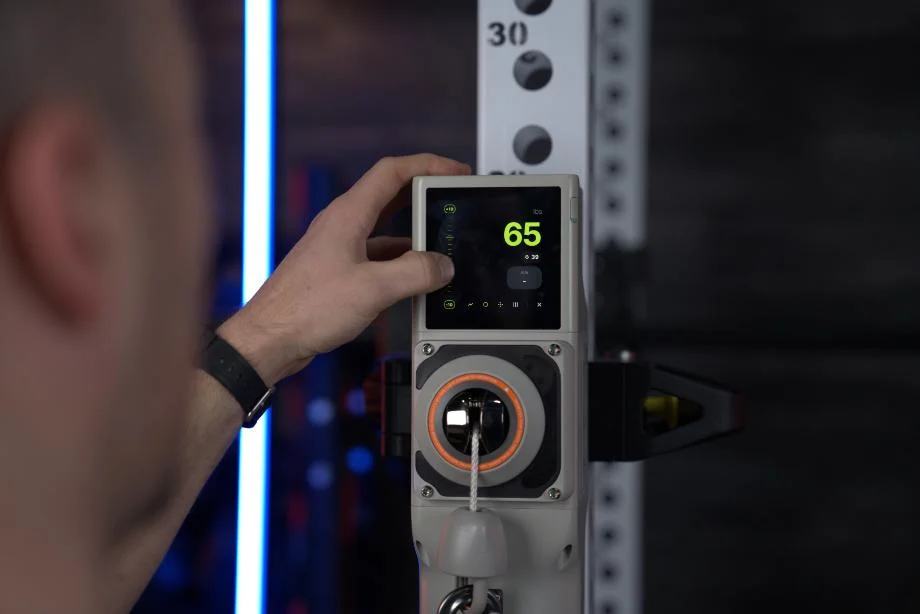
“I’m considering simplifying my home gym setup and using the Voltra to replace a few machines,” Coop continued to tell me after I asked him about the versatility of the Beyond Power Voltra I. It creates up to 200 pounds of resistance, and the motor allows for smooth movement every time. As such, it gets a 4.5 out of 5 for its resistance.
Another thing that makes it versatile are the three modes that can be accessed on the screen—weight training, resistance band, and damper. Coop mostly stuck with weight training, which allows you to change the eccentric and concentric weight (think the down and up movements of a back squat) and adapts based on your range of motion. It also has a “chain” feature to simulate heavier weight during lockout, similar to using a chain on a barbell.
Although typically mounted onto a power rack, there are multiple mounting devices available, including a floor mount you can stand on for deadlifts, and adding to its portability.
Even better, Coop rates the durability of the cable machine at 5 out of 5, being very impressed with the quality of the build. I asked Coop which aspect stood out to him and he told me, “The cable that comes with it is very sturdy, too. It’s a synthetic cable that’s supposed to be stronger than steel.”
Lots of smart cable trainers aren’t quick to make weight adjustments, but that’s not the case with the Voltra I. It’s so quick to make adjustments on the fly.
Coop Mitchell, GGR founder and fitness equipment expert
What We Don’t Like About the Beyond Power Voltra I
You might be tempted to buy two of these machines for even further versatility, though I advise against that. Just one Voltra is pricey at over $2,000, even before ordering your mounting device. The value gets a middle-of-the-road 3 out of 5 from us. Two trainers would be costly, plus Coop told me that it’s hard to sync the machines together, making two-handed movements feel awkward and clunky.
Looking for a compact cable solution that’s (quite) a bit cheaper? Try out the Spud Inc. Pulley System, which is a simple pulley cable strapped onto a rack. Though it’s small, it can still hold up to 550 pounds of weights.
Testing Breakdown
Although highly versatile, we felt the Beyond Power Voltra I is a tad overpriced, and possesses a lackluster warranty. Here’s how it scored.
Vs. The Average
With a price comparable to your average cable machine, this trainer shines with its compactness and lightweight design.
| Beyond Power Voltra I | Average Cable Machine | |
| Price | $2,199 | $2,265 |
| Type of machine | Portable cable trainer | Varies by profile |
| Footprint | 12.71” L x 5.49” W x 3.94” H | 25.6” L x 31.8” W x 49.4” H |
| Resistance type | Digital | Weight stack |
| Max resistance | 200 lbs (eccentric and concentric) | 275 lbs |
| Pulley material | N/A | Nylon |
| Cable ratio | N/A | 2:1 |
| Warranty | 1 year (can extend to 3 years at an additional cost) | Multi-year (2 or more) |
Learn more in our in-depth Beyond Power Voltra review.
Best Portable Cable Machine: MAXPRO Smart Connect Cable Machine
Updated by: Caine Wilkes, OLY, CNC, USAW-L1
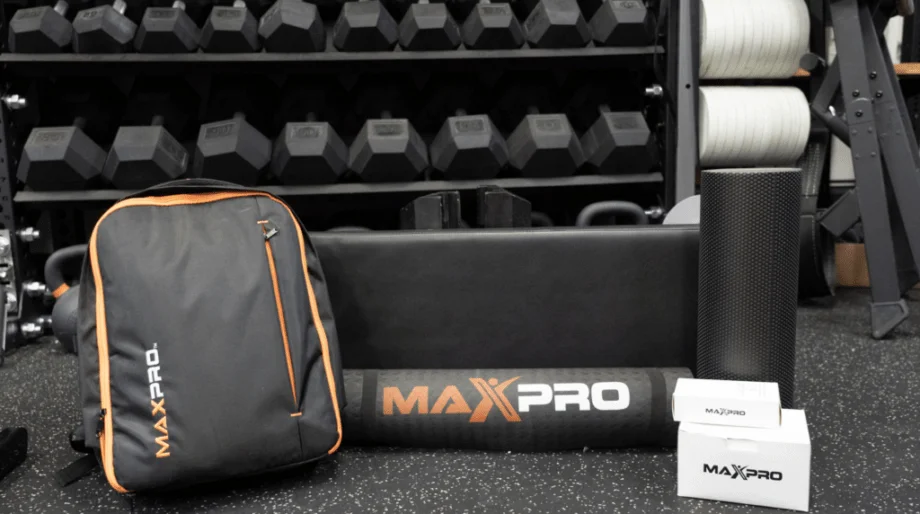
The MaxPRO SmartConnect Portable Cable Machine is a lightweight and portable full body machine, which offers up to 300 pounds of resistance. This makes it an extremely versatile piece of portable equipment with a small footprint.
What our tester says:
“At first, the cables weren’t quite as smooth as I would have liked, but they simply needed a break-in period.”
The MAXPRO Smart Connect Cable Machine is great for people on the go, or even those in small apartments who want the benefits of a cable machine. GGR founder and fitness equipment guru Coop Mitchell has personally used this machine countless times and gave it a perfect 5 out of 5 for its portability. “It’s essentially a gym membership in a backpack,” he told me. “I’d definitely recommend it for frequent travelers.”
Portability: 5/5
Versatility: 4.5/5
Value: 3.5/5
Why We Like the MAXPRO Smart Connect Cable Machine
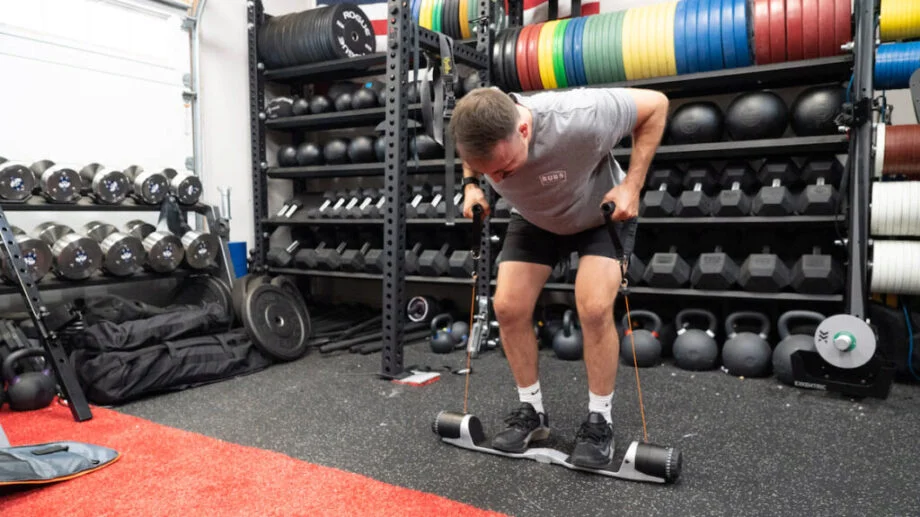
At 16 inches long and 7 inches in width while folded, and weighing only 9 pounds, it’s easy to bring the MAXPRO Smart Connect with you wherever you want to workout. And even though it’s small, this machine is capable of going up to 300 pounds in resistance with just a turn of a dial. Trust me, you’ll be feeling the burn on this one. That’s plenty of weight for most users, earning this machine a 4.5 out of 5 for versatility.
There’s quite a bit you can do with just the MAXPRO Smart Connect, but you’ll need a wall mount or certain accessories that aren’t included in the base purchase price for some lower body and upper body movements.
I asked Coop how the machine was built, and he told me it was solid, rating the construction and durability at 4 out of 5. He adds, “The cables do have a break-in period, but once you’ve used the machine for a while, you’ll see that they move so, so smoothly.”
I have a confession to make: I use the SmartConnect way more than I expected to. Although I still wish it did have both concentric and eccentric capabilities, I still enjoy using this cable machine.
Coop Mitchell, founder of Garage Gym Reviews
What We Don’t Like About the MAXPRO Smart Connect Cable Machine
I’m a fan of smart home gym equipment like anyone else. And though it’s great you can sync the MAXPRO via Bluetooth to an app that tracks your workouts, Coop found himself not using it too much. “The app was pretty clunky to use, and sometimes it didn’t connect to my machine,” he explained to me. The app does come with a free workout library, but as stated before, some of the movements are dependent on purchasing accessories not included with the basic machine.
If you’d rather use free weights instead of cables with your smart home gym, take a look at Tempo Studio, a workout mirror that focuses on resistance training with dumbbells, barbells, and other free weights.
Testing Breakdown
The MAXPRO scored best in its footprint and portability, being great for people on a literal fitness journey. Here’s a breakdown of our testing scores.
Vs. The Average
While it’s much cheaper than your average cable machine, the MAXPRO Smart Connect Cable Machine is still a pricier machine at nearly $750. Its compact footprint and above-average resistance may make the price worth it for some, though.
| MAXPRO Smart Connect Cable Machine | Average Cable Machine | |
| Price | $749 | $2,265 |
| Type of machine | Portable cable trainer | Varies by profile |
| Footprint | 32.3” L” x 3.6” W x 4.11” H (unfolded) | 25.6” L x 31.8” W x 49.4” H |
| Resistance type | Digital | Weight stack |
| Max resistance | 300 lbs | 275 lbs |
| Pulley material | N/A | Nylon |
| Cable ratio | N/A | 2:1 |
| Warranty | 2 years | Multi-year (2 or more) |
Read our full MaxPro Smart Connect Cable Machine review to learn more.
Best Cable Machine for Small Home Gyms: Gronk Fitness Functional Trainer
Updated by: Stephen Sheehan, CPT, CNC
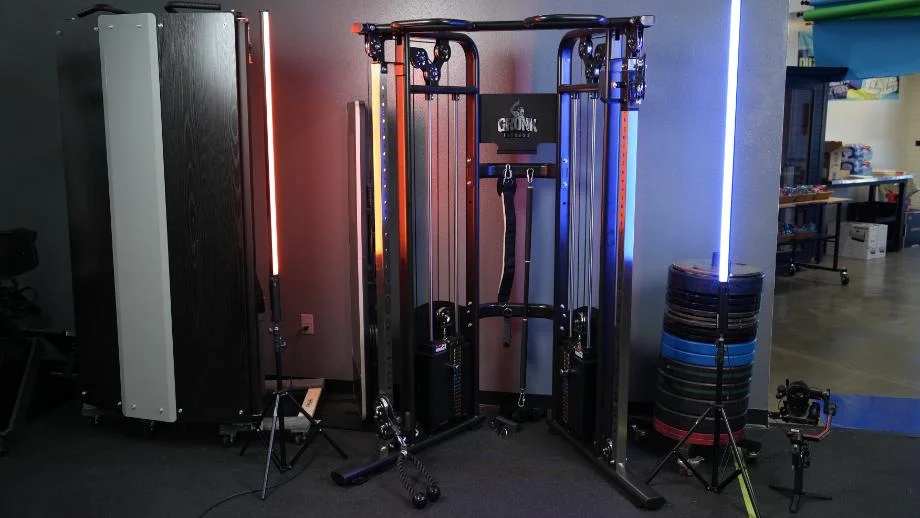
The Gronk Fitness Functional Trainer surprised our product testers with smooth cable pulleys, a stable foundation, and quality attachments.
What our tester says:
“The components and ends of the cables are better than cheaper models that have the cable end with the glass balls. This has a feel similar to the Life Fitness Dual Adjustable Pulley, which is a higher-end pulley.”
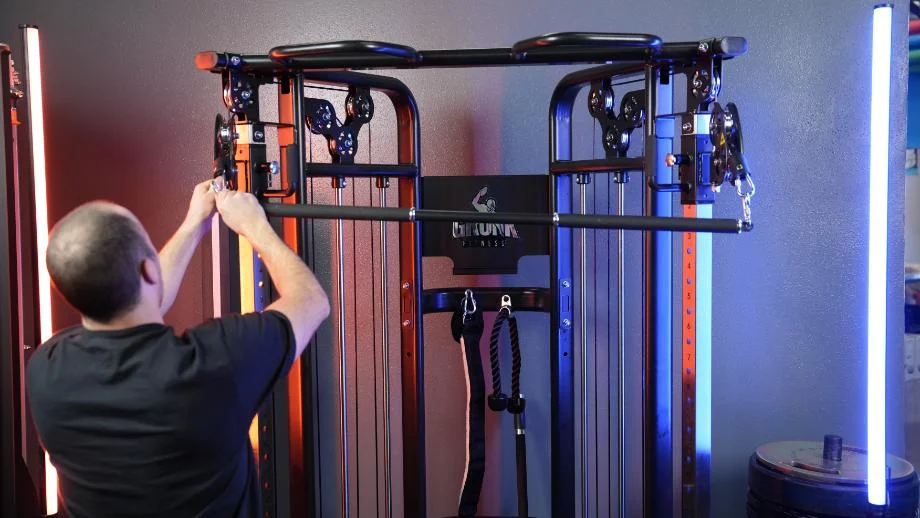
The Super Bowl champ (and Tom Brady BFF) Rob Gronkowski scored a touchdown with the Gronk Fitness Functional Trainer due to its excellent versatility, multiple attachments, and solid price point. While it isn’t the smallest cable machine on the market, it’s one of the best options for maximizing training variety without needing multiple standalone stations. Its relatively compact footprint is especially impressive considering it combines a dual pulley system, pull-up station, low row, and optional half rack into one unit.
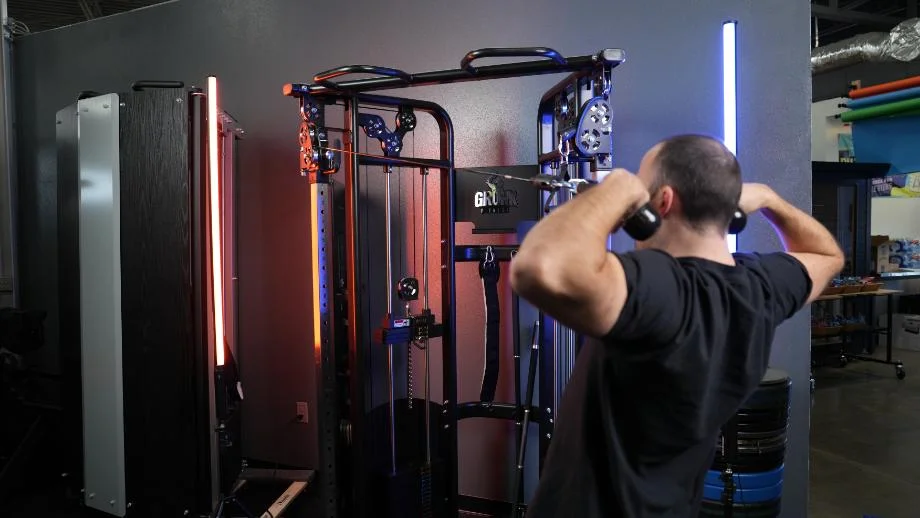
“It reminds me of the high-end cable pulley systems from Life Fitness that you commonly see in commercial and hotel gyms,” GGR founder Coop Mitchell told me while testing the Gronk Functional Trainer. What really won us over, though, was the aluminum pulleys that scored a 5 out of 5 on the smoothness rating (plus the trainer’s swiveling handles).
Smoothness: 5/5
Accessories: 4.5/5
Footprint: 4/5
Why We Like the Gronk Fitness Functional Trainer
I asked Coop about the durability of the Gronk Functional Trainer, and he replied, “Commercial-grade machines are designed to handle a lot of use from trainees, who, let’s face it, don’t care for the equipment. It says a lot that I can compare the Gronk Trainer to them.” He rates the construction and durability at 4 out of 5.
The 61-inch-by-41-inch footprint means it’ll take up quite a bit of space in your home gym, but it can be converted into a half-rack with J-cups and safety arms to act as a second (or primary) squat rack if needed. To be honest, I’d recommend a squat rack with functional trainer capabilities over a trainer with squat rack capabilities, as the former will be a sturdier solution, but this will still get the job done.
There’s also a low-row foot plate, lat pulldown seat, and multi-grip pull-up bar, among other attachments, so it has plenty of versatility, earning a 4.5 out of 5 for the accessories.
This feels nearly identical to the high-end cable machines I’ve used in gyms over the years. It’s very impressive how smooth the cables feel.
Matt Dustin, CSCS, GGR Staff Writer
What We Don’t Like About the Gronk Fitness Functional Trainer
While we like the value of the Gronk Fitness Functional Trainer, its listed price of $3,299 is a steep cost. It’s commonly marked down for less, a common sales tactic with gym equipment, but even at a few hundred dollars cheaper, it’ll still be out of some folks’ budgets.
Another callout Coop had to tell me was that the multi-grip pull-up bar wasn’t the best he’s worked with due to the thin and smooth powder coat that fails to provide any real grip.
For a more compact functional trainer, check out the REP Arcadia Functional Trainer with its smaller footprint and shorter height.
Testing Breakdown
There’s not a lot to dislike about the Gronk Fitness Functional Trainer, and our scoring below reflected that.
Vs. The Average
With a higher cost and larger footprint than your average cable machine, we still think there’s value in this piece from Gronk Fitness, particularly due to the aluminum pulleys and smooth travel.
| Gronk Fitness Functional Trainer | Average Cable Machine | |
| Price | $3,299 | $2,265 |
| Type of machine | Functional Trainer | Varies by profile |
| Footprint | 41” D x 61” W x 83” H | 25.6” L x 31.8” W x 49.4” H |
| Resistance type | Weight stack | Weight stack |
| Max resistance | 200-lb dual stacks | 275 lbs |
| Pulley material | Aluminum | Nylon |
| Cable ratio | 2:1 | 2:1 |
| Warranty | Lifetime frame and parts | Multi-year (2 or more) |
To learn more, check out our full Gronk Fitness Functional Trainer review.
Best Smart Cable Machine: Tonal 2 Smart Home Gym
Updated by: Caine Wilkes, OLY, CNC, USAW-L1
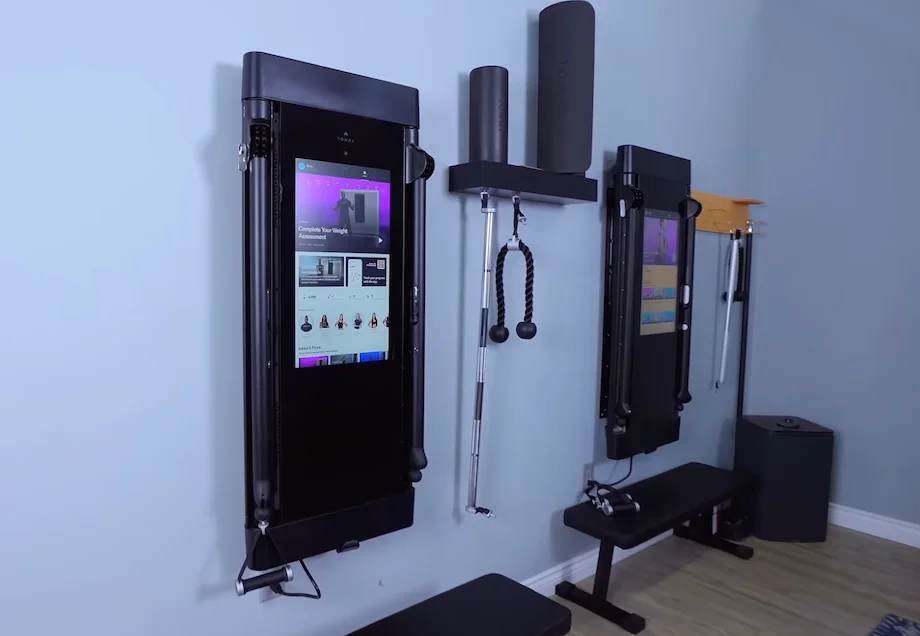
The Tonal 2 is a complete smart home gym that offers versatility in a compact piece of equipment, but at a high price.
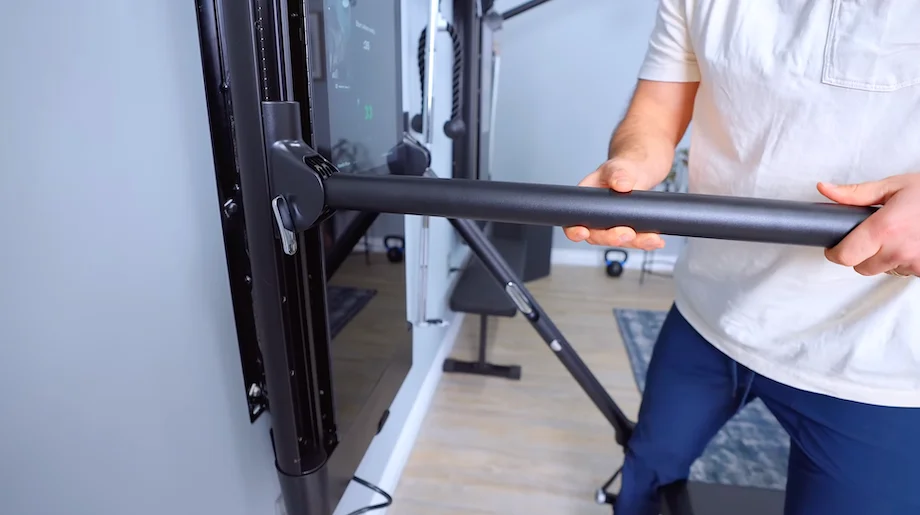
The Tonal 2 isn’t what most people think of when they hear “cable machine,” but if you’re looking for a piece of smart equipment that can do it all, you can’t do much better than this. We have personally used Tonal for years and recently tested out the upgraded Tonal 2. We’ve enjoyed almost every aspect of it. It gets a perfect 5-out-of-5 score on its smart features, and it’s built well—especially when you compare it to the original model.
RELATED: Tonal Coupons and Discounts
Construction: 4.5/5
Footprint: 4.5/5
Smart Features: 5/5
Why We Like the Tonal 2
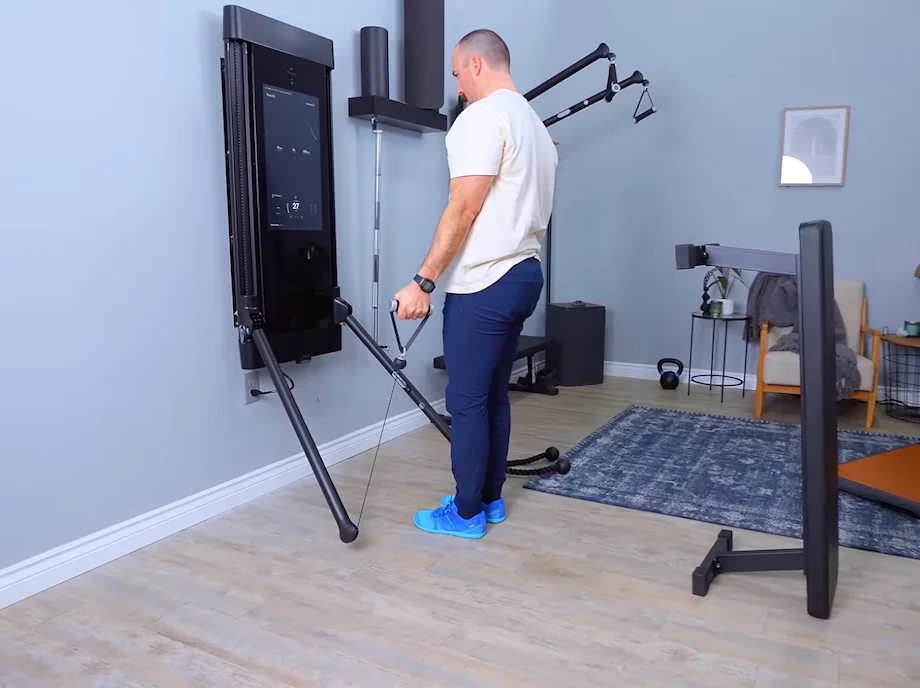
The versatility of the Tonal 2 is quite impressive, which we rate at 4 out of 5. “It’s basically made to be an all-in-one home gym,” Coop Mitchell, GGR founder, told me. “You pretty much wouldn’t need anything else.” The cable arms, attached to a wall-mounted touchscreen, can be adjusted to work out just about any muscle group, and the digital resistance offers a unique stimulus that causes some lifelong trainees to quiver halfway through their set—even with the modest 250 pounds of maximum resistance.
Don’t stress too much about the weight, though. One of Tonal’s best features is the auto-powered weight suggestions, which are done through a full-body assessment you take when setting up your machine. This is great because it takes a lot of the guesswork out of resistance training, and customizes the experience to each user. This feature can be disabled, though, if you want to enter your own data.
The customization doesn’t end there, as you can choose from different workout styles from strength training to kickboxing, and even yoga and meditation classes. An on-screen personal trainer will guide you through each workout and show you how moves are supposed to be performed.
The construction earns a 4.5 out of 5 from us, as well, as the cables—previously an issue—have been replaced with a more durable material. Tonal switched the pulleys to nylon, too, to help reduce the wear and tear on the cables. “Although aluminum pulleys are a smoother, more premium component, the nylon won’t wear the cables down as much,” Coop explained when I asked, “So it seems like a smart move to me.”
The faster processor helps make weight adjustments faster, which makes a big difference that I can feel while using the Tonal 2.
Coop Mitchell, GGR founder and expert product tester
What We Don’t Like About the Tonal 2
At close to $4,300, on top of a $59 monthly class membership fee, the Tonal 2 isn’t a piece of budget home gym equipment. Professional installation is required, as well, which is an additional charge. We still think there’s good value here, scoring it at a 4 out of 5 for the category, but Tonal 2 won’t fit everyone’s budget.
Also, keep in mind you need a good amount of space—at least 7 feet deep and 7 feet wide around your machine—so depending on your home gym setup, this may require more space than you have available.
Don’t want your smart home gymon the wall? Try out the Vitruvian Trainer+, a smart cable machine that rests on your floor and also provides up to 440 pounds of resistance.
Testing Breakdown
While the Tonal 2 does have customer reviews, there’s no rating for them, so we didn’t include it in the score. Here’s how the smart gym equipment fared in our testing.
Vs. The Average
Using smart features like digital resistance as opposed to traditional weight stacks or plate-loaded machines, the Tonal 2 is expensive compared to your average cable machines.
| Tonal 2 | Average Cable Machine | |
| Price | $4,295 | $2,265 |
| Type of machine | Smart home gym | Varies by profile |
| Footprint | 5.25” D x 21.5” W x 50.9” H | 25.6” L x 31.8” W x 49.4” H |
| Resistance type | Digital | Weight stack |
| Max resistance | 250 lbs (125 lbs each arm) | 275 lbs |
| Pulley material | Nylon | Nylon |
| Cable ratio | N/A | 2:1 |
| Warranty | 2 years parts and labor, 1 year accessories | Multi-year (2 or more) |
To learn more about the original model, read our Tonal Smart Home Gym review.
Other Cable Machines We Researched and Tested
We’ve only been able to try out some of these home gym cable machines, but they just didn’t beat out our top picks.
- Bodysolid Powerline Cable Crossover Machine PCCO90X: This cable crossover station is highly recommended by many, but nobody on our team has been able to try it out yet.
- Titan Plate Loaded Lat Pulldown: This is a great machine that uses standard Olympic plates to provide the resistance, and it comes with a low row handle and lat pulldown bar. But other than that, you can’t do much with this machine, though it is great for heavy lifters looking for a challenge.
- Inspire Fitness FTX: The FTX is a smaller version of the Inspire Fitness FT2 Functional Trainer, but it’s still built with the same construction and quality. That said, the max pulley height may not allow for taller users to get a full range of motion on some movements.
- Vitruvian Trainer+: This smart cable machine is compact and great for small spaces. Despite its smaller stature, it can also add magnetic resistance of up to 440 pounds. Still, as discussed in our Vitruvian Trainer+ review, it’s one of the pricier options out there at nearly $3,000.
- OYO NOVA Gym: This is a tiny functional trainer that can provide up to 40 pounds of resistance and perform 200 exercises. The technology behind it is inspired by the way NASA astronauts train in space, but our reviewer, Amanda Capritto, CPT, CES, CNC, CF-L1, CSNC, says it lacks durability and is more geared toward beginners due to its low level of resistance.
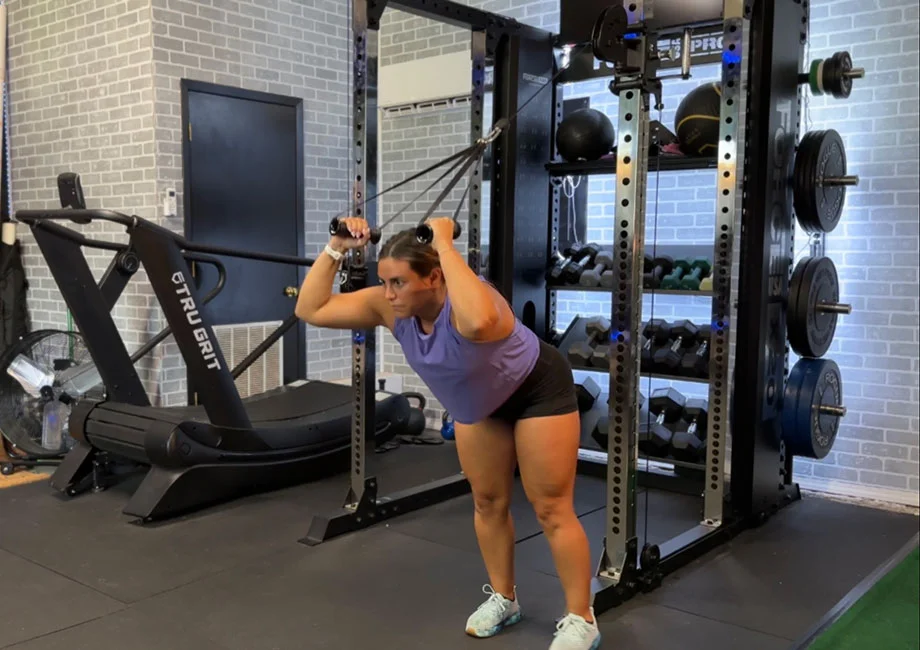
How We Picked and Tested the Best Cable Machines for Home Gyms
Besides workout experience and price, we looked at a variety of factors when constructing our best cable machines list.
Weight Stacks
We wanted to make sure the cable machines we recommended were light enough for isolation exercises, but challenging enough for any compound movements you wish to do with them. Similarly, we looked at whether the weight capacity could work for people of all fitness levels. To earn a score of 3 out of 5, the cable machine should support at least 200-pound weight stacks at a 2:1 ratio (meaning the max resistance is 100 pounds).
Construction and Durability
Like most pieces of home gym equipment, we favor steel and metal equipment over a lot of plastic material. That said, plastic components make sense for some smaller, lightweight machines, so we also test the machines to see how durable they are in use, checking for early signs of wear and tear.
Scores of 4 or more were given to solidly-made machines with primarily steel construction, commercial-grade cables, and high-quality pulleys (typically aluminum).
Versatility
A cable machine should perform a variety of exercises, allowing you to target upper body and lower body muscles. There are some, though, that only target one specific muscle group until you buy additional equipment, like a low pulley for lower body movements. Others double their functionality with a built-in squat rack or Smith machine.
Smoothness
Perhaps the most important facet of any cable machine is its pulley system and how smoothly it operates. We loaded machines as heavy as they can get to assess how they operate under tension. Top scores went to cable machines with aluminum pulleys with buttery-smooth travel.
Adjustments
For adjustments, I’m not only referring to changing the weight between sets, but also the number of height positions the machine has and if it can work for multiple users. Too low of a height can impact taller users, for example.
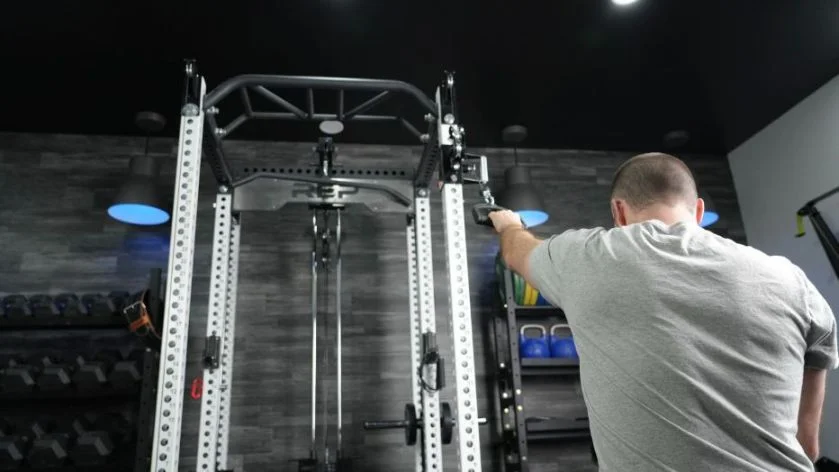
Best Cable Machine Attachments
Some cable machines may only come with a standard handle, while others may come with every attachment you can think of. It’s nice to have a variety of different handle attachments if you can swing it, as one 2016 study1 suggests that different handles and grips can activate different muscles in the forearms, allowing for varied muscle activation while training.
If you’re looking for a cable attachment package that has options for multiple grips, we recommend the REP Fitness Pro Series Package. We love this series because it comes with five high-quality attachments capable of targeting most of your muscle groups. It’s also a great value at $280.
Looking to buy à la carte? These are some extra attachments that can expand the range of exercises available to you; we’d recommend getting them with, or shortly after, buying your cable machine.
- Triceps Rope: Despite its name, a triceps rope can be used for more than just your triceps pushdowns. It’s also capable of performing biceps, shoulder, back, and abs exercises.
- Lat Pulldown Bar: Not all cable machines can be used to do lat pulldowns, but for those that can, a lat pulldown is a necessary investment.
- Ankle Strap: This is simply a strap you attach to your ankle so you can perform moves like leg extensions with your cable machine.
- Double D-row Handle: Also known as a V-handle, these are great for seated rows, and can also be used with barbells and dumbbells to target different areas of the biceps and back.
- Multi-grip Curl Bar: Enhance your biceps curls with this attachment. A multi-grip curl bar allows you to target different areas of your chest, triceps, and biceps all with one handle.
Benefits of Cable Machines
“Beginners can often avoid cable machines, because it’s intimidating,” says Amanda Capritto, CPT, CES, CNC, CF-L1. She adds that, on the contrary, “They’re very simple to use, and everyone can benefit from their use—beginning or advanced lifters.”
Because cable machines come in all shapes and sizes, we’re instead going to concentrate on the benefits of using cables. And unlike your television habits, there’s a lot of reasons why you should never cut the cord.
Faster Muscle Fatigue
Unlike free weights or even resistance bands, cables work your muscles at all times during the lift providing consistent tension during all portions of the exercise. This means your muscles will remain under tension for longer, although the muscles used are typically more isolated than the muscles recruited for free weight exercises, according to a 2023 meta-analysis2.
Another study3 showed that a slow leg press—descending 6 seconds during the eccentric portion of the movement—resulted in greater protein synthesis up to 24 hours after the workout, implying that the greater time under tension provided by cable machines could have a similar benefit.
Safer Exercise
Dexter Jackson, one of the greatest bodybuilders of all time, has credited cable machines as part of the reason why he was able to compete past 50 years of age. Cables don’t put as much stress on your joints and stabilizer muscles, and while nothing in life is risk-free, it’s much harder to hurt yourself with them than with a barbell or dumbbell.
Of note, however, a study from 20104 examining weight-training injuries found that while the majority of reported injuries involved free weights, the most common mechanism was weights dropping on a person rather than injuries caused by the free-weight exercise itself. That said, cable machines may be safer for beginners due to their increased stability and ease of use compared to dumbbells, which require more coordination and carry a higher risk of improper technique or injury.
Versatile Equipment
We’ve talked about the fact that cable machines can hit all muscle groups, but you can also hit those areas from angles that are more difficult to reach using free weights. “Free weight resistance provides a force vector straight down toward the ground,” personal trainer and strength and sports doctor Mike Masi says. “If you want a different angle to hit a different body part, you’ll have to manipulate your body around that force vector. But with a cable machine you can just slide the handle higher or lower to get the desired effect.”
He adds, “All in all, cable machines are not necessary but provide more flexibility and variety that can keep your gym routine from getting stale.”
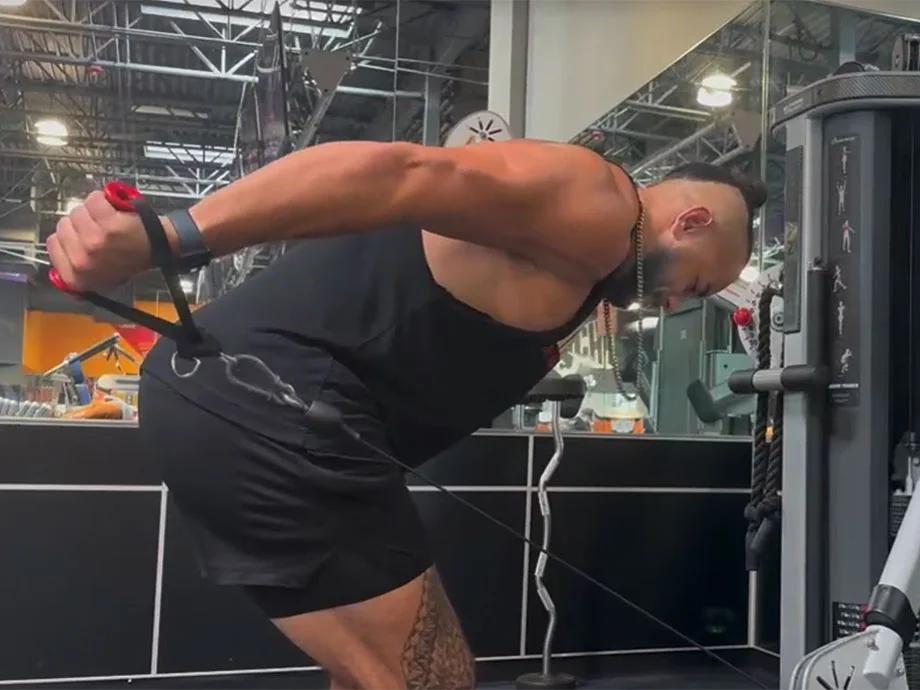
What to Look for in a Cable Machine
Ready to find the best cable machine for your home gym and fitness goals? Here are a few things to keep in mind.
Footprint
A cable machine is probably going to be one of the largest purchases you make for your home gym in terms of space, next to a power rack. “Some cable machine options can be big and bulky,” adds Amanda Capritto, certified personal trainer, “but there are plenty of compact solutions, too, that take up less space than free weights.”
You can certainly get a good cable machine that won’t take up much space, but if you’re looking for the best of the best you’ll want to make sure you have a good amount of space to dedicate to it.
A good guide would be to have at least 7 feet of vertical space and 6 feet of horizontal space dedicated to your cable machine. This will ensure you can get enough range of motion during each exercise, even with a small portable cable trainer. There are some space-saving ones that are mountable, or come with just one weight stack.
Adjustments
One of the benefits of cable machines is the multiple pulley positions that allow you to get a full-body workout with just one piece of equipment. But some machines have more adjustment positions than others, either due to their size or construction.
Although not technically an adjustment, you’ll also want to try to get a pulley machine that can swivel so you can engage more muscle groups in different lifts.
Weight Stack vs. Plate-Loaded
The debate between weight stack and plate-loaded cable machines isn’t going away anytime soon, so it’s important to understand the benefits of each.
Weight stack models come with the weights built into the machine; all you have to do is adjust the total with a pin, and you’re good to go. This is typically what you’ll see at most commercial gyms. Plate-loaded machines, on the other hand, require you to manually load traditional weight plates to your desired total.
That’s the high-level difference between the two types, but there’s a lot more to it than that. First, plate-loaded models tend to be less expensive, since you’re responsible for buying your own weights. This is a solid option for budget-minded folks who already have some plates lying around. The downside is that you’ll have to load and unload the weights every time you want to change the working total, making it a bit more time-consuming and less ideal for dropsets or quick circuit training.
It’s also important to note that plate-loaded machines tend to have higher weight capacities and allow for more exact totals, provided you have enough plates in different combinations. Weight stack machines go up in fixed increments and typically top out at around 250 pounds, unless the brand offers an upgradable expansion set.
When it comes to ease of use, the win goes to weight stack cable machines. You can change loads in a second, and you won’t need to worry about needing extra storage space for a fleet of plates. You’ll pay more up front, but the convenience might be worthwhile for some.
Cable Handle Attachments
Most cable machines will come with single handles, which you can do flyes and other moves with. Still, if you’re looking to increase the machine’s versatility, you might want to invest in a curl bar or triceps rope at the very least.
Some cable machines come with pegs to hang and store your attachments. If not, you’ll need to figure out another way to keep them secure when they’re not in use.
RELATED: Best Home Gym Storage
Price Point
This factor’s pretty self-explanatory, but we’ll also add that it might be worth spending a little more for a higher-quality machine rather than saving by buying a cheaper one—in terms of price and craftsmanship.
Some basic cable machines, like cable towers, may cost just a few hundred dollars, while huge commercial systems will be upward of thousands of dollars. Consider what you have available in your budget to figure out what price range works best for you.
Durability
We found that the average cable machine costs $2,265. For that type of investment, you’ll want to make sure the machine you’re buying is built with high-grade materials that can withstand the rigors of a strength-training program.
To start, know that most cable pulleys are made of nylon. While this is fine more often than not, you might want to spring for a model with aluminum pulleys for some added durability. From there, make sure the product is made of heavy-duty steel—think 11-gauge over 14-gauge.
Additionally, while some plastic parts are inevitable, it is best to keep these components to a minimum on your cable machine of choice. Plastic won’t be as sturdy as steel or aluminum, and could be more likely to fail after excessive use.
Versatility
Cable machines offer a wide range of exercise options, but not all models deliver the same level of functionality. If you want your machine to serve as the centerpiece of your home gym, choose one that offers the most bang for your buck.
Look for machines with fully adjustable pulleys that go beyond just high and low positions. More height options can help you attack muscles from different angles, as well, which can be especially useful for anyone primarily performing bodybuilding workouts.
You’ll also want to check out which attachments the company offers and how those can help you meet your fitness goals. Though most brands will have a wealth of attachments for upper body exercises, pay close attention to those that offer lower-body add-ons, too, as this can vastly expand your training options. Some go a step further by incorporating a Smith machine into their setup, offering even more workout versatility.
The right cable machine should accommodate most, if not all, of your strength training needs and wants. You just need to do a little research beforehand to avoid getting shortchanged by the wrong model.
Best Cable Machine for Home Gym: FAQs
What are the best cable machines?
With compact solutions and DIY machines to large functional trainers and rack attachments, the best cable machine will vary from person to person and depend on your fitness goals, budget, and home gym space.
That said, we recommend the REP Ares 2.0 cable attachment for most people—especially if you already have a REP PR-4000 or PR-5000 power rack. For a more compact solution, you may want to check out the Beyond Power Voltra I.
Are cable machine workouts effective?
Yes, cable machines can be just as effective as free weight exercises. When it comes to muscle adaptations from resistance training, studies2 repeatedly show that there’s little to no difference in muscle growth and hypertrophy between free weight and machine-based exercise. Cable machines do allow for consistent resistance and therefore more time under tension, which has been shown3 to have a positive outcome in muscle protein synthesis, resulting in muscle-building.
Is a 1:1 or a 2:1 pulley ratio better?
Both pulley ratios have pros and cons. A 1:1 pulley ratio means the weight on the cable is the weight you’ll feel—100 pounds feels like 100 pounds. However, the cable length won’t be able to travel as far in this setup, limiting the ability to do longer exercises, like cable crossovers.
A 2:1 ratio, on the other hand, will have twice the cable length and allow for more movements, but the felt weight on the cables will be half of the actual resistance (100 pounds will feel like 50 pounds). Most cable machines go with a 2:1 cable ratio as it balances both decent weights and solid cable length, but you’ll need to determine which ratio is best for your fitness goals.
References
- Rendos, N. K., Heredia Vargas, H. M., Alipio, T. C., Regis, R. C., Romero, M. A., & Signorile, J. F. (2016). Differences in Muscle Activity During Cable Resistance Training Are Influenced by Variations in Handle Types. Journal of strength and conditioning research, 30(7), 2001–2009. https://doi.org/10.1519/JSC.0000000000001293
- Haugen, M. E., Vårvik, F. T., Larsen, S., Haugen, A. S., van den Tillaar, R., & Bjørnsen, T. (2023). Effect of free-weight vs. machine-based strength training on maximal strength, hypertrophy and jump performance – a systematic review and meta-analysis. BMC sports science, medicine & rehabilitation, 15(1), 103. https://doi.org/10.1186/s13102-023-00713-4
- Burd, N. A., Andrews, R. J., West, D. W., Little, J. P., Cochran, A. J., Hector, A. J., Cashaback, J. G., Gibala, M. J., Potvin, J. R., Baker, S. K., & Phillips, S. M. (2012). Muscle time under tension during resistance exercise stimulates differential muscle protein sub-fractional synthetic responses in men. The Journal of Physiology, 590(2), 351–362. https://doi.org/10.1113/jphysiol.2011.221200
- Kerr, Z. Y., Collins, C. L., & Comstock, R. D. (2010). Epidemiology of weight training-related injuries presenting to United States emergency departments, 1990 to 2007. The American journal of sports medicine, 38(4), 765–771. https://doi.org/10.1177/0363546509351560