



Resistance bands are useful pieces of equipment that anyone with or without a home gym can benefit from. They can be added to different bodyweight exercises like squats or push-ups to add a little spice, or they can help you with other training goals, like achieving a pull-up. Plus, a full set is typically small enough to fit in your gym bag (especially if they come with a carrying bag), which means you won’t be sacrificing much space, either.
However, there are countless options to choose from, which can make it difficult to find the right bands for your specific needs. A wide variety of shapes and materials are available, and you don’t want to choose a set of resistance bands that doesn’t fit your preferences.
In this guide to the best resistance bands, we’ll share our top picks for any goals you may have. We’ve tested more than 25 popular options on our quest to find you the best resistance bands for your needs, scoring them using our equipment testing methodology. In 2025, we helped 725 athletes find their ideal set of resistance bands, and we’re here to help you, too.
GGR Gold Pick — Best Resistance Band
The Living.Fit Resistance Bands are our pick for the best resistance bands on the market. They earn 4.5 out of 5 stars overall, and received high scores for categories like durability and value. Our tester was also impressed by the lifetime warranty, which isn’t common when it comes to resistance bands.
Best Resistance Bands
- Best Resistance Bands Overall – Living.Fit Resistance Bands
- Best Heavy Resistance Bands – Titan Fitness Heavy Resistance Bands
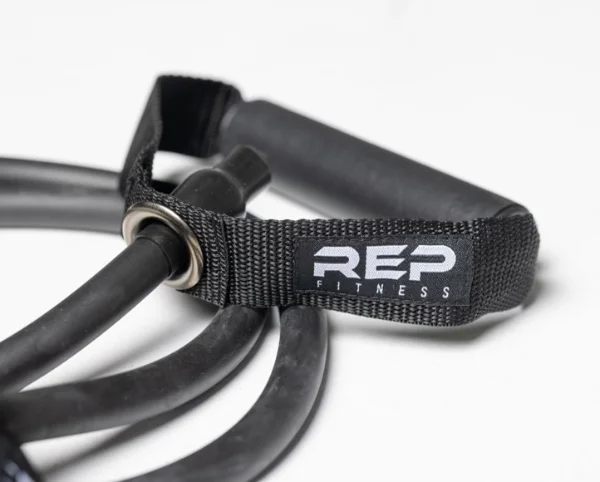
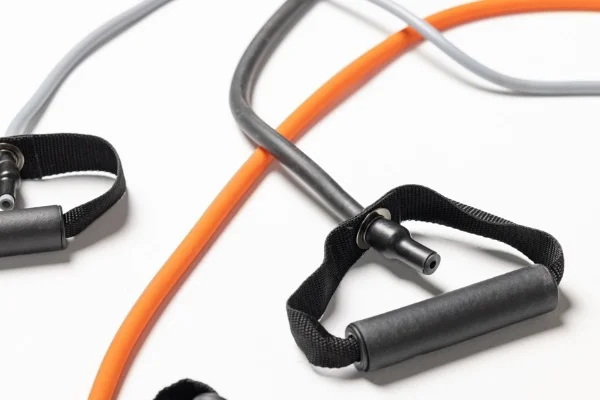
- Best Resistance Bands with Handles – REP Fitness Tube Resistance Bands (Full Set)
- Best Premium Resistance Bands for Pull-Ups – Rogue Monster Bands
- Best Resistance Bands for Pull-Ups – Major Fitness Pull-Up Assist Bands
- Best Resistance Bands for Glutes – Mark Bell Sling Shot Hip Circle
- Best Mini-Loop Resistance Bands – Iron Bull Strength Mini Bands
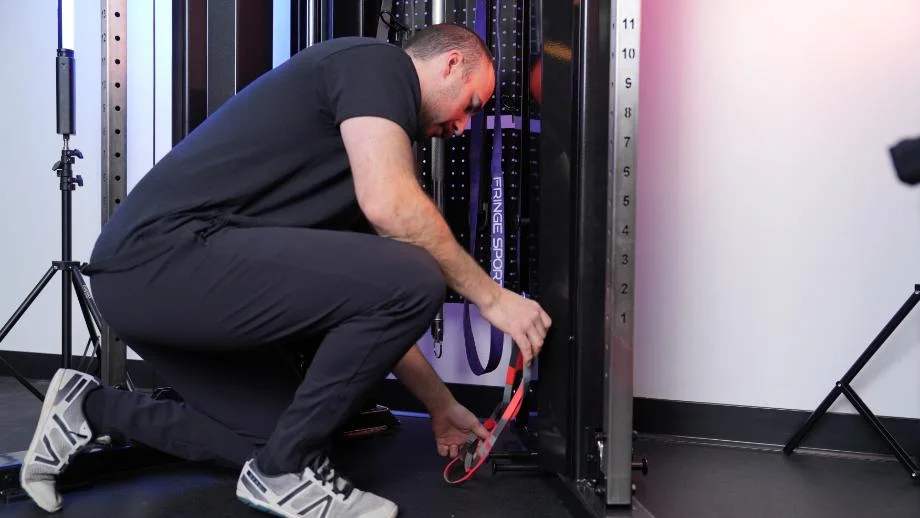
- Best Resistance Bands for Beginners – Fringe Sport Latex-Free Strength Bands
- Best Fabric Resistance Bands – Bells of Steel Fabric Non-Slip Resistance Bands
Current Top Deals
- REP Fitness Tube Resistance Bands (Full Set) – Free shipping on all orders
- Titan Fitness Heavy Resistance Bands – Limited time offer | 14% off MSRP
- Fringe Sport Latex-Free Strength Bands – Free shipping to lower 48 states
How We Selected the Best Resistance Bands
Since resistance bands have a stretch component, most are going to have wear and tear over time as the bands begin to lose their elasticity. Because of this, durability and construction may be the most important testing category we consider. To earn 3 out of 5, bands should be thick enough for regular use and appear to maintain their elasticity over time, but we suspect they may weaken with continued use.
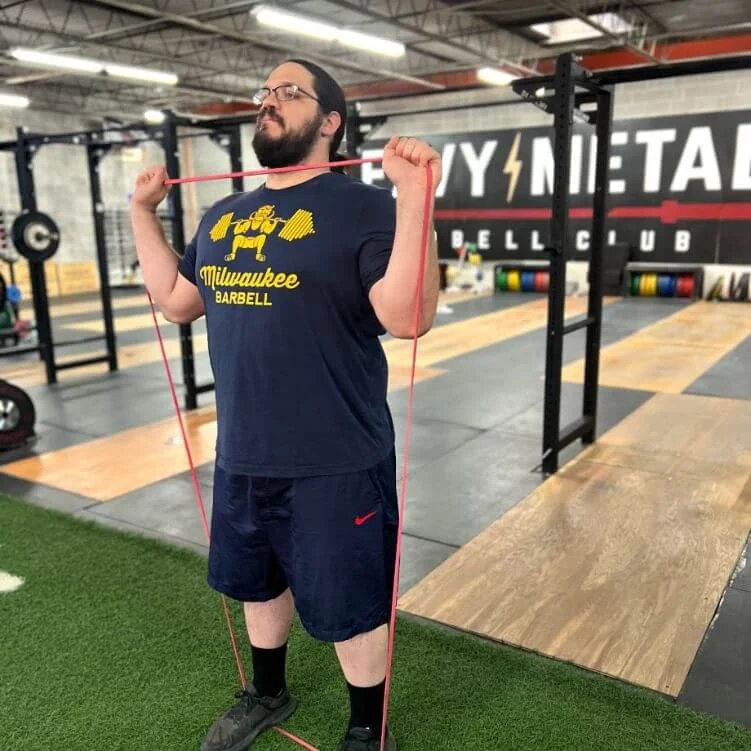
Most bands use latex, rubber, fabric, or some combination of the three. This can affect not only the performance, but how the bands feel in-use. For a 3 out of 5, the materials seem fine for the intended workout, but the bands may bunch and fold, particularly when stretched over clothing. If the bands contain latex, we expect this to be clearly disclosed on the sales page, as well.
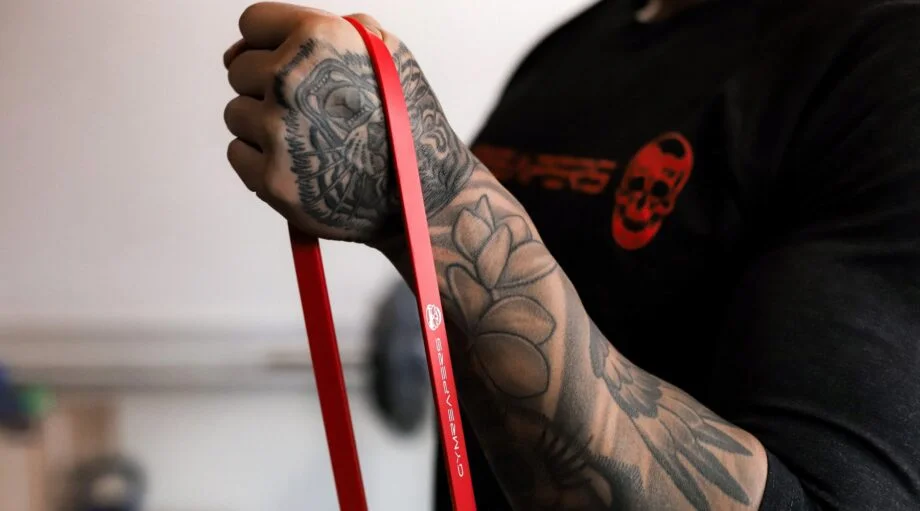
Some bands work for nearly any type of exercise, while others are really only intended for a few specific activities. To earn at least 3 out of 5 stars here, a set of resistance bands should be suitable for both lower-body and upper-body exercises, but certain movements, like glute exercises or assisted pull-ups, may not be possible.
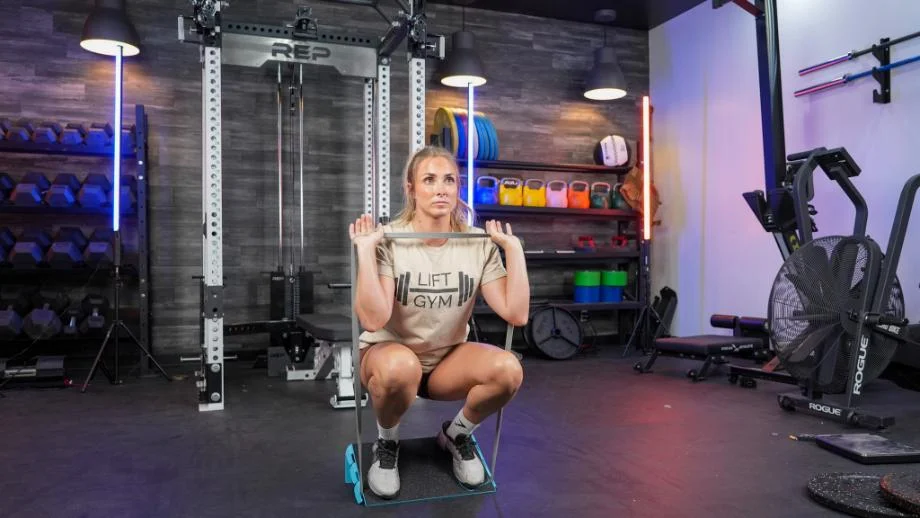
To accurately score resistance bands for this guide, our testers used each set of bands multiple times over for a period of at least a few weeks. We used them for a variety of workouts to get a feel for how well the bands held up to multiple training sessions. After trials, we used our testing methodology to score each band in key categories, including materials, value, customer experience, and more.
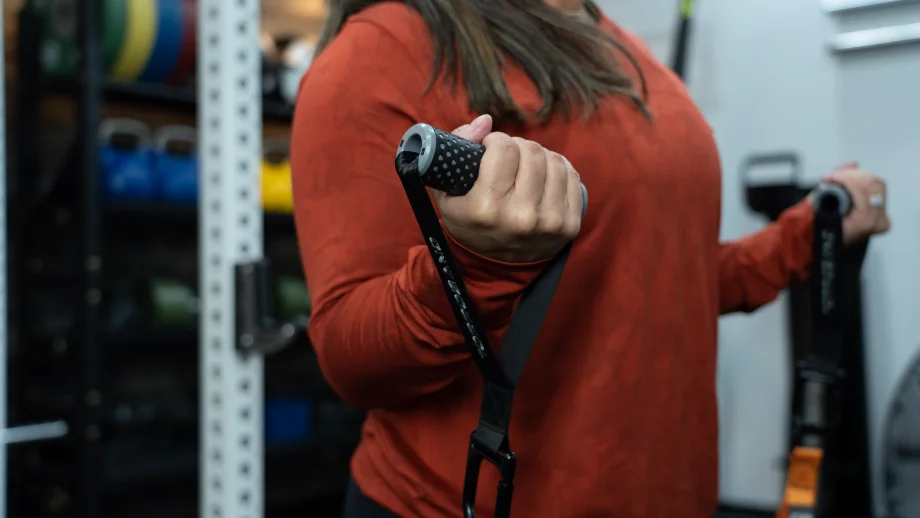
The GGR team of testers includes certified personal trainers, runners, CrossFit enthusiasts, garage gym owners, and more. We’re gym equipment experts, to say the least; our team has tested over 25 resistance bands, and in 2025, we helped more than 725 athletes find their ideal option.
For this guide, we also consulted with physical therapist Lori Diamos, PT, MS, FAFS to get her expert insight on the benefits of resistance bands.

Latest Updates
In April 2026, we reviewed our list of the best resistance bands and made a few changes based on our latest testing. The Living.Fit Resistance Bands still earn our top recommendation, but we swapped out picks that didn’t hold up in durability, materials, and value. New additions—like the REP Fitness Tube Resistance Bands and Major Fitness Pull-Up Assist Bands—stood out for their high scores in these categories.
Best Resistance Bands Overall: Living.Fit Resistance Bands
Updated by: Matt Dustin, CSCS, PN1-NC









At a Glance
- Seven resistance levels ranging from 6-250 lbs
- Lifetime warranty protection
- Versatile enough for nearly any type of exercise
- Very affordable compared to other options
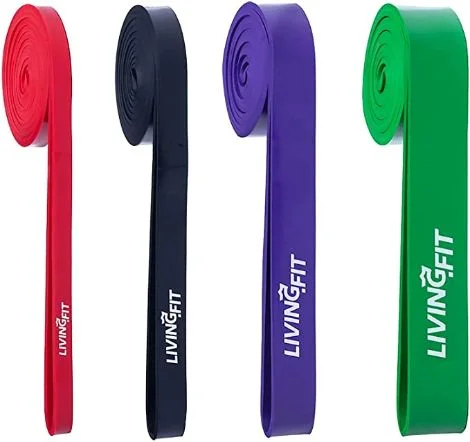
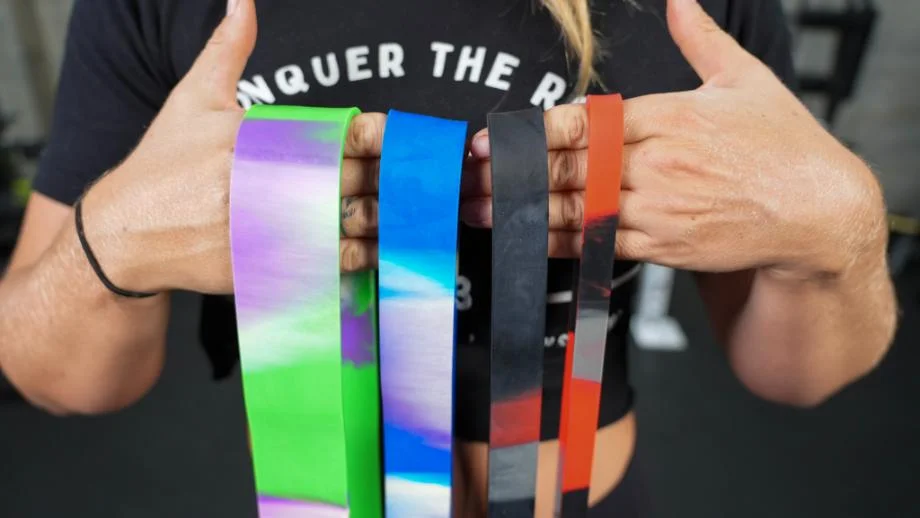
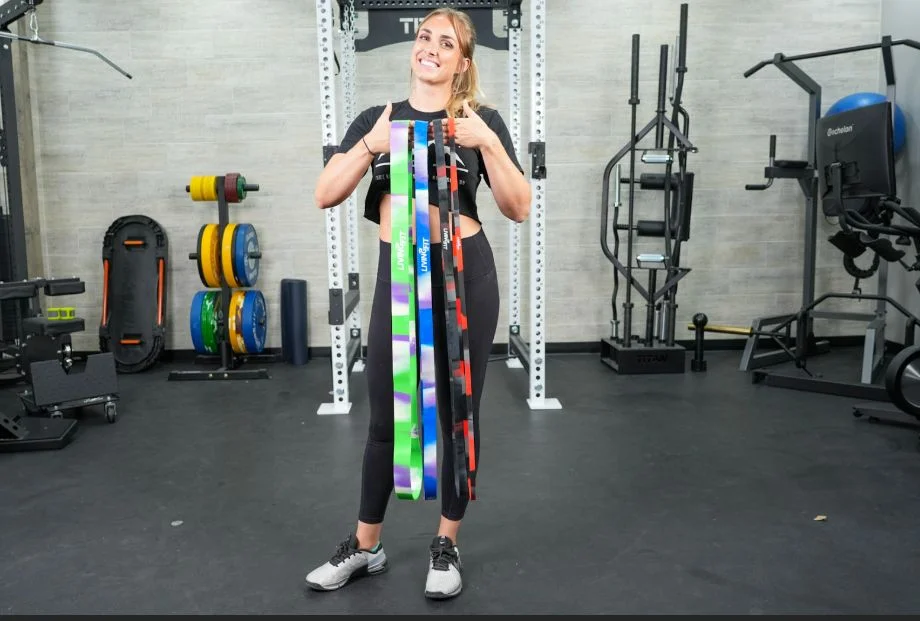
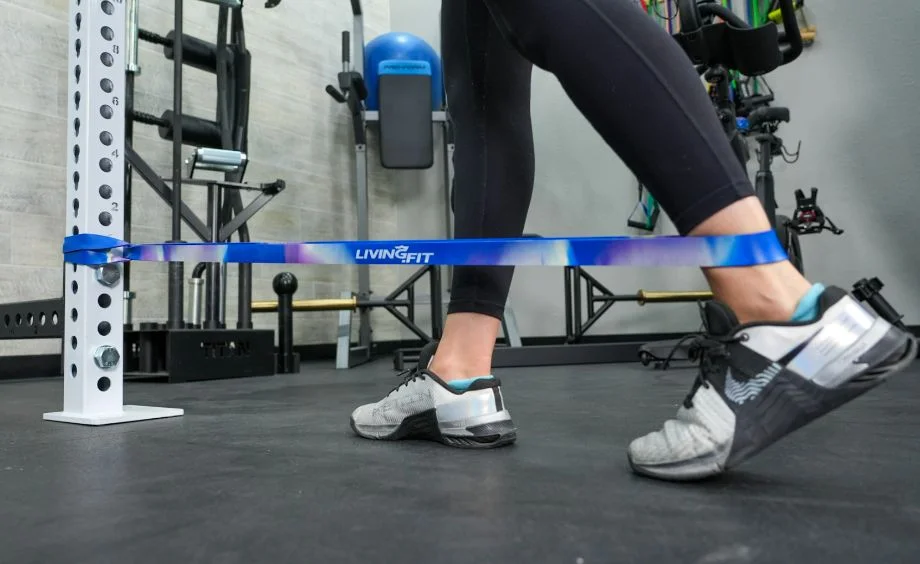
If you’re looking for high-quality bands that are built to last, we highly recommend the Living.Fit Resistance Bands. Available in seven color-coded weights, these are the best bands we’ve tested for most uses, and earn 5 out of 5 stars for both materials and resistance range. Not to mention, they’re one of the few bands on the market that offer a generous lifetime warranty.
Durability: 4/5
Materials: 5/5
Versatility: 5/5
Why We Like Living.Fit Resistance Bands
Despite the affordable cost, these bands are built to last and earn 4 out of 5 stars for durability.
“I feel safe using them,” says Lindsay Scheele, CPT, CNC. “I did a variety of stretches and workouts with them, and at no point did I feel like they would snap on me.”
Living.Fit offers a lifetime warranty, too, which isn’t common with resistance bands. If a band ever snaps, they’ll replace it free of charge. We typically see warranties in the one- to two-year range with resistance bands, so we love this level of purchase protection, especially since resistance bands are prone to snapping with extended use.
Despite the impressive brand backing, they’re still very fairly priced and earn 4 out of 5 stars for value. Lindsay explains, “These are about half the cost of other resistance bands out there when you buy the package, which is a good price, especially when you buy the set.”
They’re not as chalky as other resistance bands I’ve tried, like Rogue Monster Bands, You can definitely tell they’re high quality.
Kate Meier, NASM-CPT, USAW-L1, CF-L1
What We Don’t Like About Living.Fit Resistance Bands
With impressive construction and materials, these bands offer plenty of resistance. However, it may be too much for beginners, says Lindsay. “This might be something people like,” she explains, “However, for me, I felt like they were just a touch too restrictive for some resistance band workouts, even with the lightest band.”
Lindsay also mentions that she has concerns about the longevity of the lighter bands, noting, “I do feel like the lightest resistance one will be prone to stretching overtime, but that is just from using many similar resistance bands in the past that have stretched too much.”
We love these bands, but if you have a latex allergy, you’ll want to avoid these. Instead, we’d recommend the Fringe Sports Latex-Free Strength Bands for safer, more irritant-free training.
Testing Breakdown
These bands received above-average ratings in each of our testing categories, which is why they’re our top overall pick.
Vs. The Average
Living.Fit Resistance Bands offer a significantly better warranty than most competitors while having a more affordable cost, as well.
| Living.Fit Resistance Bands | Average Resistance Band | |
| Price (For a Package) | Starting at $128.94 | $103 |
| Material | Natural latex | Latex |
| Length (In Inches) | 41” | 41” |
| Resistance Range | 6-250 lbs | 10-175 lbs |
| Warranty | Lifetime | 2 years |
For more, be sure to check out our in-depth Living.Fit Resistance Bands review.
Best Heavy Resistance Bands: Titan Fitness Heavy Resistance Bands
Updated by: Matt Dustin, CSCS, PN1-NC



At a Glance
- Only sold in a set of 4; no individual bands
- Very durable construction
- Above-average versatility
- Wide range of resistance levels
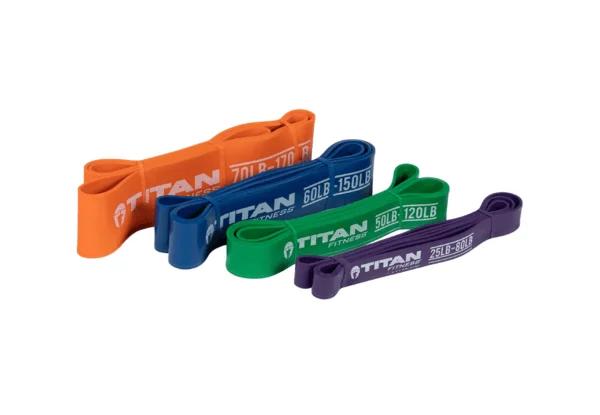
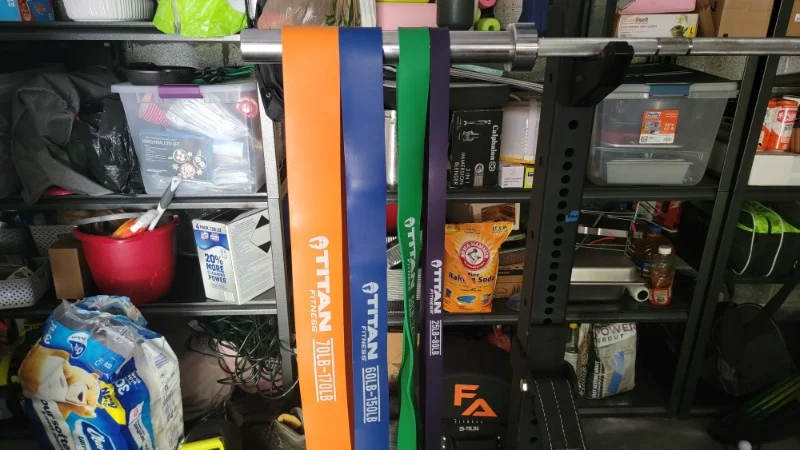
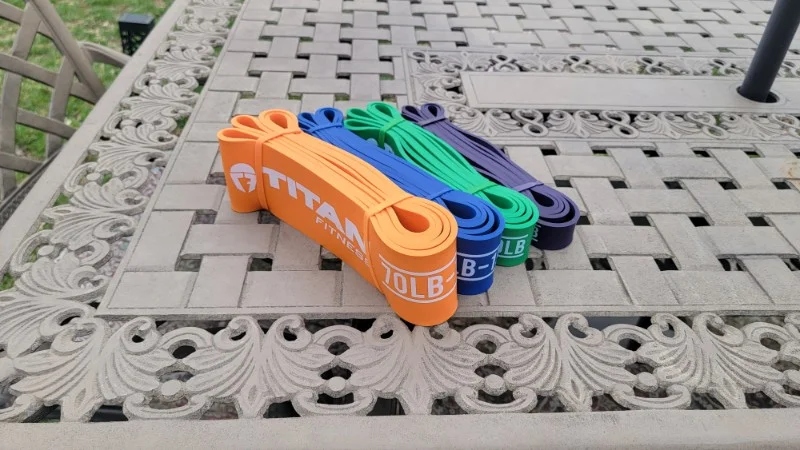
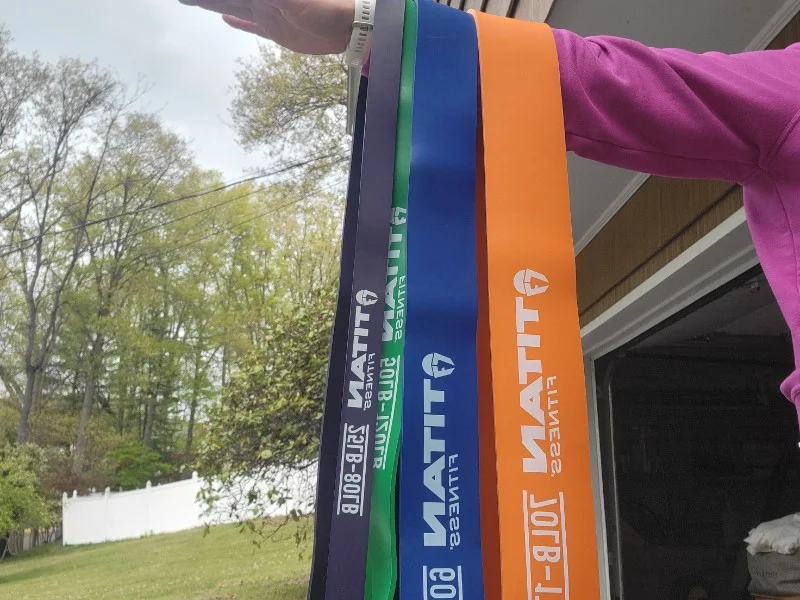
If you’re looking for a set of heavy-duty bands that offer plenty of resistance, we’re big fans of the Titan Fitness Heavy Resistance Bands. They’re versatile, tough, and available in a wide range of resistance levels, which we appreciate. The latex feels very durable, and we give these bands 5 out of 5 stars for materials. “These feel high-quality and durable, and I honestly don’t feel like they’ll get stretched out anytime soon,” says Amanda Dvorak, ISSA-CPT, ISSA-CNC, our expert tester.
Durability: 4.5/5
Materials: 5/5
Versatility: 5/5
Why We Like Titan Fitness Heavy Resistance Bands
If you’re looking for heavy resistance bands, you want something that’s tough, and built to last. Thankfully, these Titan Fitness bands fit the bill, according to Amanda, who gives these bands 4.5 out of 5 stars for durability.
“Although the width is a little narrower than the Major Fitness bands I tested,” she told me, “The actual material is thicker.”
Amanda also likes the materials, explaining, “The bands are nice and thick, and the material is smooth. They’re made from latex, which is clearly disclosed on Titan’s site.”
Since they’re closed-loop bands that lack a handle, these Titan resistance bands are quite versatile, as well. Amanda was able to use them for a wide variety of resistance band exercises without any issues, cementing these bands as versatile tools worth keeping in your gym bag.
You can do a lot with these. I’ve done assisted pull-ups, band pull-aparts, shoulder presses, bent-over rows, lateral band walks, face pulls, hip thrusts—I’ve even looped one around my pull-up bar then looped the other end around a PVC pipe to do a lat pulldown variation.
Amanda Dvorak, ISSA-CPT, ISSA-CNC
What We Don’t Like About Titan Fitness Heavy Resistance Bands
While we like these bands, the cost could be better, according to Amanda. As such, they earn 3 out of 5 stars for pricing.
“The original price of $105 seems a bit high,” she told me. “Plus, there’s no option to create your own bundle, buy the bands in singles, or mix and match bands from the lighter set that Titan offers.”
This is also why we docked a point for the resistance range. The bands offer plenty of resistance for most users, but we only gave them 4 out of 5 stars for the category as there’s no way to buy individual bands.
If you prefer a more lightweight option, you may want to consider the Iron Bull Strength Mini Bands instead.
Testing Breakdown
These bands received above-average marks in nearly every category, though the pricing could be a little better.
Vs. The Average
The Titan Fitness Heavy Resistance Bands are very close to average in nearly every category, although the included warranty is only one year of coverage.
| Titan Fitness Heavy Resistance Bands | Average Resistance Band | |
| Price (For a Package) | $104.99 | $103 |
| Material | Latex | Latex |
| Length (In Inches) | 41” | 41” |
| Resistance Range | 25-170 lbs | 10-175 lbs |
| Warranty | 1 year; extended warranties available for an additional cost | 2 years |
Best Resistance Bands with Handles: REP Fitness Tube Resistance Bands
Updated by: Matt Dustin, CSCS, PN1-NC



At a Glance
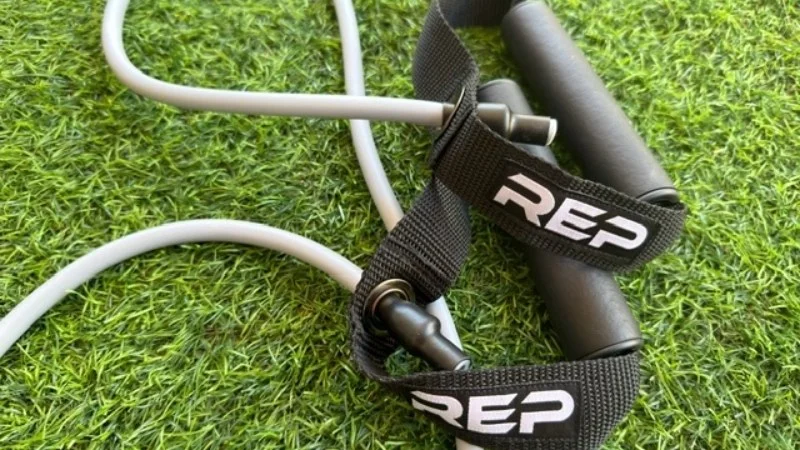
- Durable rubber with sturdy handles
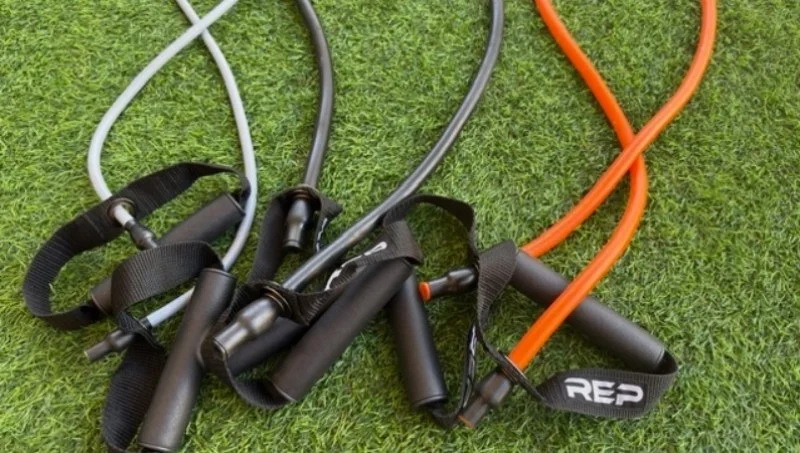
- Three weight options available
- Sold as a complete bundled set
- Basic resistance range of Light, Medium, and Heavy band options
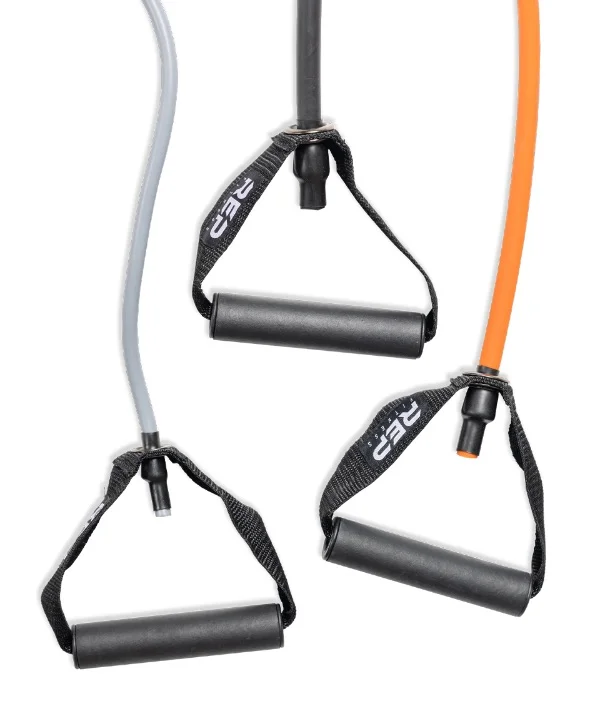
Resistance bands with built-in handles can be great tools for strength training, especially when it comes to upper-body workouts. While there are plenty to choose from, the REP Fitness Tube Resistance Bands are the best ones we’ve tested. Even though the weight range is limited, they’re well-made and earn 4 out of 5 stars for durability and construction.
Durability: 4/5
Materials: 4/5
Versatility: 3.5/5

Why We Like REP Fitness Tube Resistance Bands
I tested these bands myself, and as a personal trainer who’s owned multiple sets of resistance bands over the years, I was impressed with REP’s offerings here.
The first thing I noticed is the quality of the materials, which I rate at 4 out of 5 stars. I’ve used plenty of resistance bands in the past that feel a little flimsy, but these actually feel quite sturdy, offering plenty of resistance.
While I’m sure they’ll stretch out over time, they feel significantly more durable than the similar bands I’ve owned and used in the past. I’ve had handles snap off old bands while using them with clients, but I wouldn’t have any concerns about the construction of these bands.
Depending on your foot size, you may be able to use the handles as ankle straps, too, but it might be easier to slip on if you take your shoe off first. This can be a useful way to train your glutes without a loop band, especially if you can secure the other handle to something solid.
I also give these bands 4 out of 5 stars for their value. Individually, the pricing is slightly confusing and ranges from $19.99 to $21.99, going up $1 with each resistance level. That’s not great value, but you can get the set of three bands for $31.99, which is what I’d recommend for most people; it seems very fair for the quality you’re getting.
The color-coded makeup of these bands can be great for weight identification pre-training. That said, I do wish REP stamped the resistance range on the handle, too, just in case you forget which color goes with which tension.
Ben Emminger, NASM-CNC, NASM-CSNC
What We Don’t Like About REP Fitness Tube Resistance Bands
While they’re well-made, I only give these resistance bands a 3.5 out of 5 for versatility. They’re great for upper body exercises, but I find them to be way less versatile than looped bands. The handles can be a little bit awkward on things like band pull-aparts, since they swing around, and I can’t use these bands for assisted pull-ups since they don’t form a strong loop.
The weight range could also be better. They’re labeled as Light, Medium, and Heavy, but it’s unclear what the maximum resistance is. I wish more weight options were available, too.
If you prefer bands that don’t have handles, the Living.Fit Resistance Bands may be a better fit for your needs.
Testing Breakdown
While resistance bands with handles are always going to be a little less versatile, the REP Fitness bands still earn above-average scores in plenty of categories like materials, durability, and value.
Vs. The Average
These are quite affordable in comparison to the average resistance band, but the resistance range is lacking, somewhat, and the warranty coverage isn’t explicitly stated anywhere on the sales page.
| REP Fitness Tube Resistance Bands | Average Resistance Band | |
| Price (For a Package) | $31.99 | $103 |
| Material | Latex | Latex |
| Length (In Inches) | Not disclosed | 41” |
| Resistance Range | Light, Medium, Heavy | 10-175 lbs |
| Warranty | Not disclosed | 2 years |
Best Premium Resistance Bands for Pull-Ups: Rogue Monster Bands
Updated by: Matt Dustin, CSCS, PN1-NC

At a Glance
- Thick bands that are comfortable to use
- Versatile looped design
- Somewhat expensive
- Strong enough for nearly any type of training
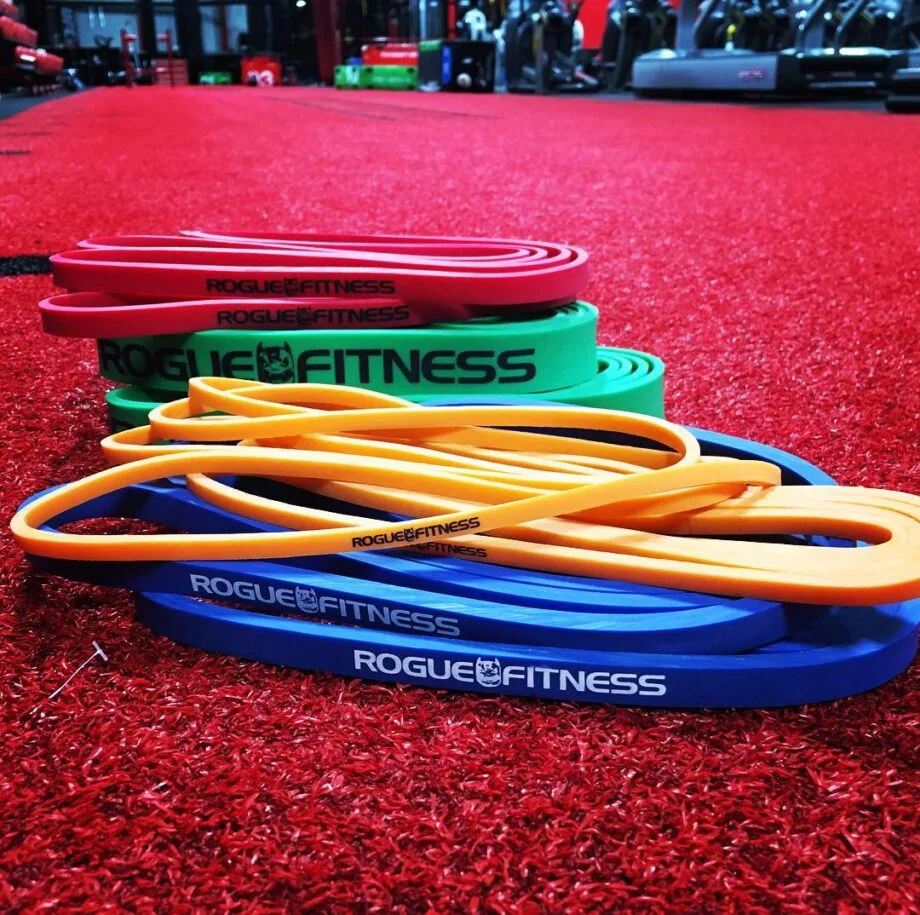
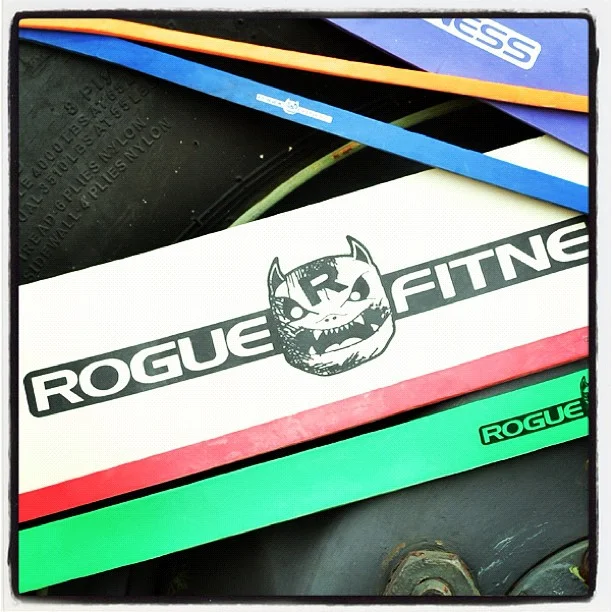
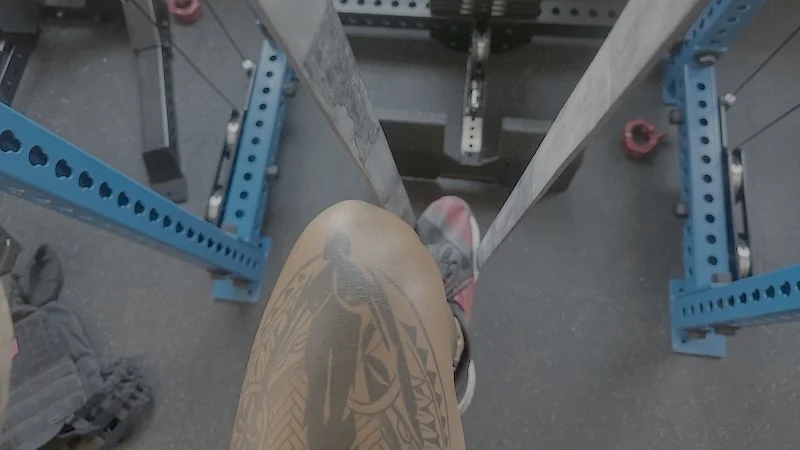
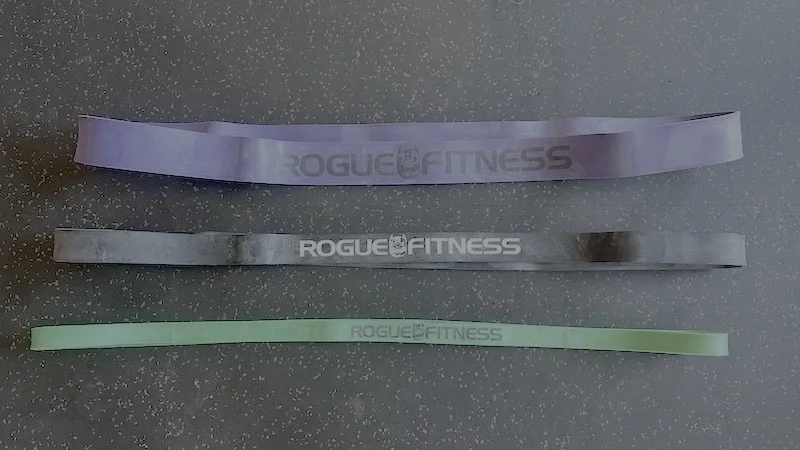
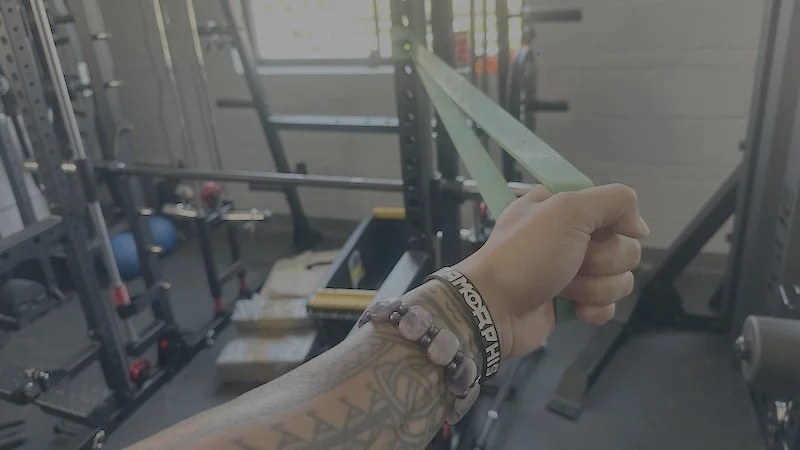
If you’re looking for a fantastic set of bands from a household name in the world of home fitness, the Rogue Monster Bands are among the most popular bands on the market. They’re durable, versatile, and available in seven different weight increments. We give them 5 out of 5 stars for durability and think they should withstand thousands of assisted pull-ups (along with nearly any other exercise you throw at them).
Durability: 5/5
Materials: 5/5
Versatility: 4.5/5
Why We Like Rogue Monster Bands
GGR Senior Staff Writer Stephen Sheehan, CPT, CNC, gave these bands 5 out of 5 for materials, and they feel great to use.
“They are thick, sturdy, and of the HIGHEST quality,” Stephen told me. “When I tell you these things are built to last, I am not overstating it.”
The Monster name isn’t an exaggeration—these are some of the strongest bands on the market. However, that doesn’t mean they can only be used for hardcore training. We’ve found that they can be used for just about anything, earning the Monster Bands 4.5 out of 5 stars for versatility.
“The expansive range means you have plenty of options depending on your intended use,” explains Stephen. “The 40- and 65-pound bands can work well for adding resistance to bench presses, squats, etc. I’ve also used them to help with my hip mobility: I’ll tie one around an upright, loop it around my thigh, and perform hip openers, adding resistance for stretching.”
If you’re looking for bands that can be used for nearly anything, thanks to their sturdy design and impressive range of resistance options, these are a great choice.
The lighter bands are great for warm-ups, pull-aparts, and shoulder mobility work. They’ll also work well for rehab exercises, or even adding resistance to other exercises. Plus, depending on your strength level, these are fantastic for assisted pull-ups.
Stephen Sheehan, CPT, CNC
What We Don’t Like About Rogue Monster Bands
While we love most features of the Rogue Monster Bands, they’re not perfect. To start, the looped design may not suit everyone’s needs. If you’re used to using bands with handles, these may feel a bit strange at first.
They’re also a little pricey, which tends to be the case with Rogue products–you can check our Rogue Fitness coupon page to learn how to save on your next order. Bands range from $18 to $65 for individual bands, and while discounted sets are available, they don’t include the two heaviest options. We think the price is great for the quality they deliver, and give these bands 4 out of 5 for value, but those on a budget should look elsewhere.
If you prefer resistance bands with handles, we suggest the REP Fitness Tube Resistance Bands instead, which offer similar durability, though the resistance is lighter.
Testing Breakdown
The Rogue Monster Bands received above-average marks in nearly every testing category, with notably high scores for construction and durability, materials, and resistance range.
Vs. The Average
While the set price is below-average, it doesn’t include the two heaviest resistance options, and individual bands can be a little pricey.
| Rogue Monster Bands | Average Resistance Band | |
| Price (For a Package) | Starting at $71 | $103 |
| Material | Natural latex rubber | Latex |
| Length (In Inches) | 41” | 41” |
| Resistance Range | 9-225 lbs | 10-175 lbs |
| Warranty | 1 year | 2 years |
To learn more, be sure to read our in-depth Rogue Resistance Bands Review.
Best Resistance Bands for Pull-Ups: Major Fitness Pull-Up Assist Bands
Updated by: Matt Dustin, CSCS, PN1-NC
At a Glance
- Affordably priced resistance band set
- 1-year warranty
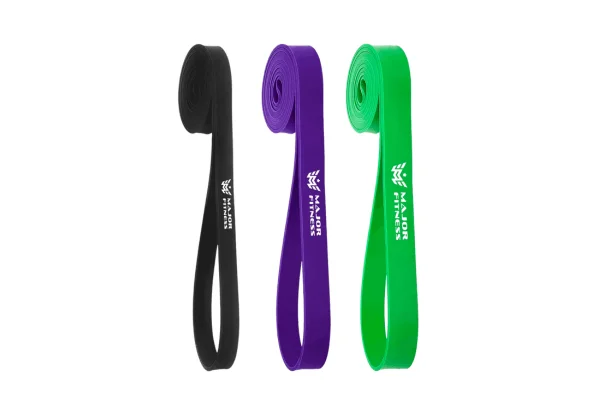
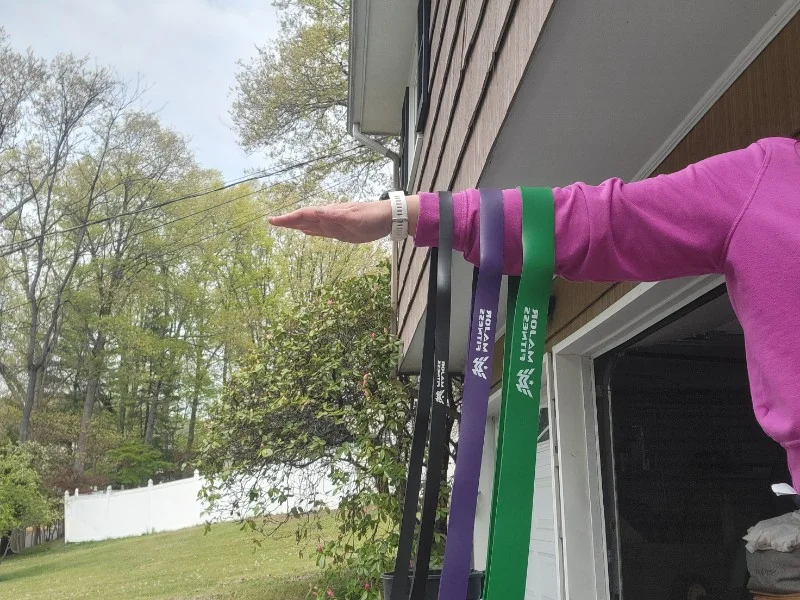
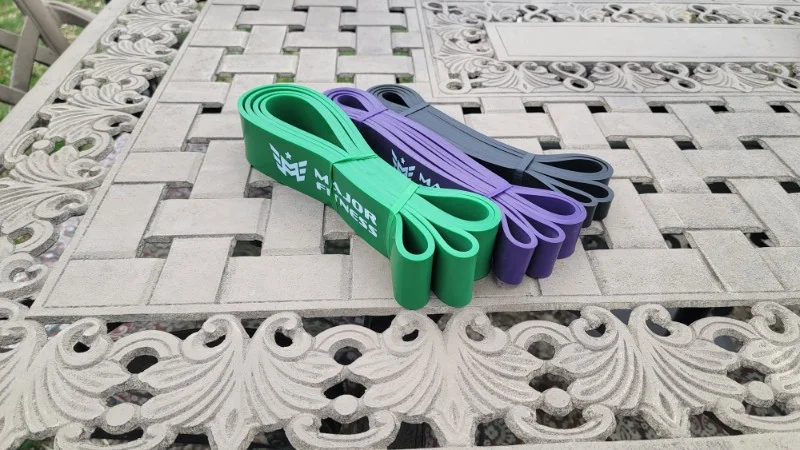
- Bands are color-coded for easier identification
- Three available resistance levels
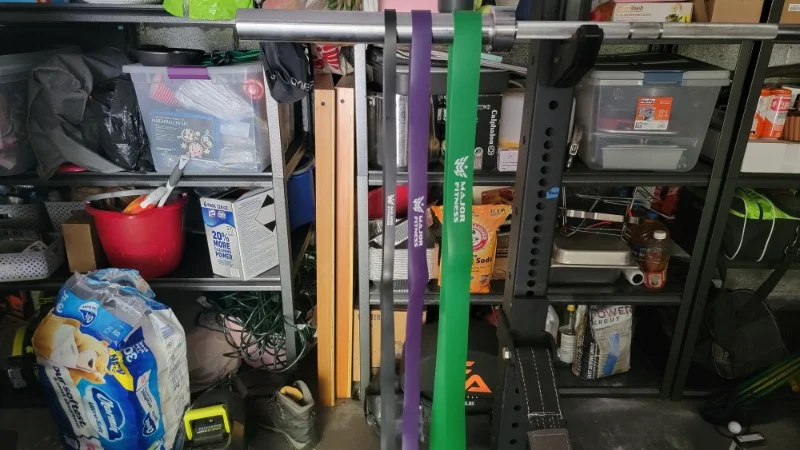
If you’re working on developing your pull-up strength, using resistance bands can be valuable tools. You can hook them over the bar and put your feet in the band, allowing the elasticity of the resistance band to help pull you back to the top position.
This sort of exercise requires a strong, durable band, and the Major Fitness Pull-Up Assist Bands fit the bill, earning 4.5 out of 5 stars for materials.
RELATED: 30-Day Pull-Up Progression Plan
Durability: 4/5
Materials: 4.5/5
Versatility: 4.5/5
Why We Like Major Fitness Pull-Up Assist Bands
Amanda Dvorak, ISSA-CPT, ISSA-CNC, has been testing these bands for about a month and gives them 4 out of 5 stars for durability. She explains, “I haven’t had these for very long, so I didn’t want to give them a perfect 5. From what I’ve experienced so far, though, they feel very high-quality and seem like they won’t break anytime soon.”
While we’ve chosen these as the best pull-up assist bands, in reality, they’re versatile enough to handle just about any exercise you can think of. They may have “pull-up” in the name, but we found they can be used for all kinds of stuff, as well.
“These are easy to use for so many exercises,” says Amanda, who gave them 5 out of 5 for versatility. “I use them a lot for assisted pull-ups, lateral band walks, and band pull-aparts. I’ve also tried things like bicep curls, bent-over rows, and shoulder presses with them. Sometimes I’ll loop the black or purple one around my pull-up bar and do a tricep pushdown variation or face pulls with them. I honestly don’t think there’s much you couldn’t use them for.”
Accordingly, if you’re looking for both durability and versatility in one set of bands, these can be a great choice.
I’ve used them twice a week for about a month for things like assisted pull-ups, band pull-aparts, Pallof presses, and lateral band walks, and they’re holding up just fine.
Amanda Dvorak, ISSA-CPT, ISSA-CNC
What We Don’t Like About Major Fitness Pull-Up Assist Bands
Even though we recommend these Major Fitness bands, they’re not ideal for every scenario. To start, the pricing is good, but not great; Amanda gave these bands 3 out of 5 stars for value. She told me, “I think the price is fair considering the quality of the bands, but from what I can tell, there are no other bundling options available, and you couldn’t buy a single band if you wanted to.”
We also wish the bands disclosed how much resistance they provide, as the resistance ranges aren’t clearly stamped on each band. We appreciate the color-coding to help choose the right option, but the bands aren’t labeled with the weight you’re using, so you’ll need to reference the sales page to check the precise resistance level.
If you want a set of premium pull-up bands that have a wider weight range and specify the provided tension, the Rogue Monster Bands can be another good choice.
Testing Breakdown
With the exception of value, the Major Fitness Pull-Up Assist Bands received high marks across the board.
Vs. The Average
These bands are significantly more affordable than the average set of resistance bands, without sacrificing anything when it comes to materials and durability.
| Major Fitness Pull-Up Assist Bands | Average Resistance Band | |
| Price (For a Package) | $55.99 | $103 |
| Material | Latex | Latex |
| Length (In Inches) | 41” | 41” |
| Resistance Range | 30-125 lbs | 10-175 lbs |
| Warranty | 1 year | 2 years |
Best Resistance Bands for Glutes: Mark Bell Sling Shot Hip Circle
Updated by: Matt Dustin, CSCS, PN1-NC



At a Glance
- Designed to train the hips and glutes
- Durable construction
- Not as versatile as other bands
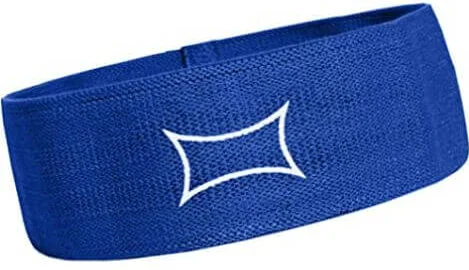
- Fabric exterior is gentle on the skin
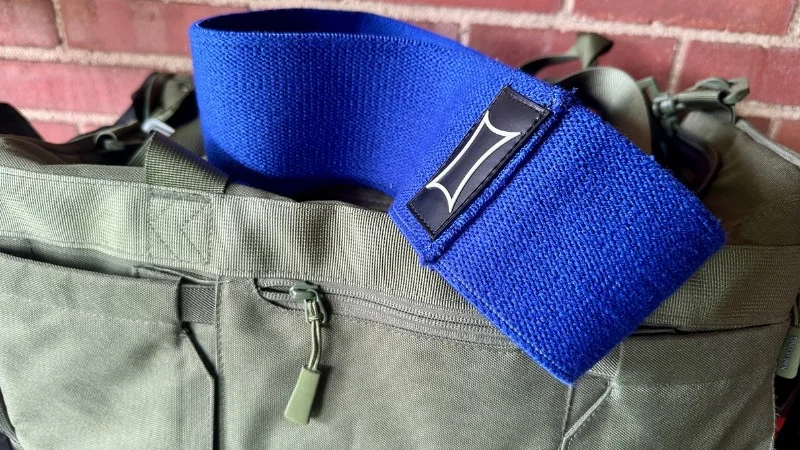
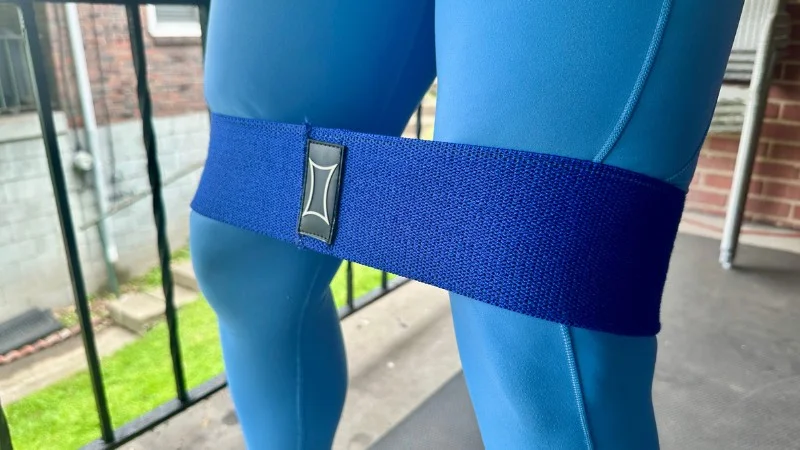
While most bands are quite long and designed to be used for a variety of exercises, we also love specialized bands with specific silhouettes, like the Mark Bell Sling Shot Hip Circle—one of the best options if you need resistance bands for glutes. This smaller looped band is designed to go around your legs and help you target your glutes. While it’s not as versatile as larger bands, it’s still a great tool to have in your gym bag and earns 4 out of 5 stars for value.
Durability: 5/5
Materials: 4/5
Versatility: 2/5
Why We Like the Mark Bell Sling Shot Hip Circle
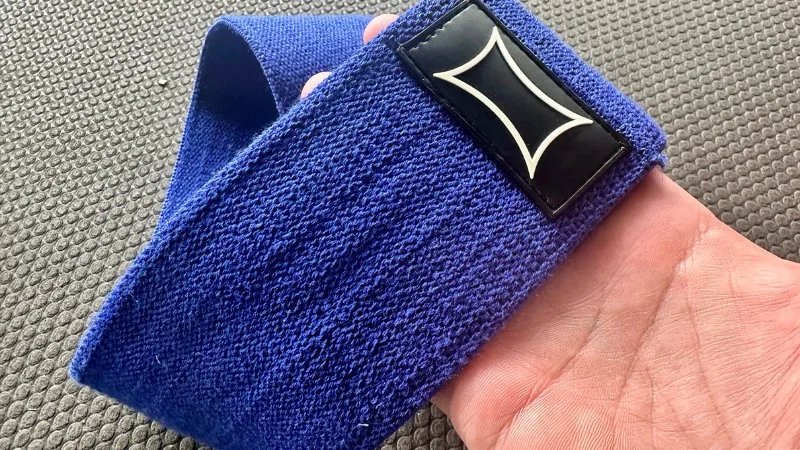
The Hip Circle earns 5 out of 5 for durability from expert product tester Ben Emminger, NASM-CNC, NASM-CSNC. “I’ve used Mark Bell products in the past and can attest to their durability,” he says. “The fabric is stellar with no visible fraying or rips, and the stitching seems excellent. I could easily see myself using this Hip Circle for plenty of warm-ups to come.”
Overall, Ben gave these bands 4 out of 5 stars for materials.
“I really like the fabric material of this Hip Circle band,” Ben adds. “It’s soft enough that it doesn’t shred my calves up when getting the band into position, and the textile doesn’t bunch or fold over shorts or joggers. There’s a little bit of grab when I’m wearing thicker bottoms (like sweats) but I attribute that more so to the band size—it stays pretty rigid unless stretched via lower-body muscles like the hips or quads.”
Finally, despite the excellent construction, the hip circle is also affordable. It only costs $20, which we think is a great deal for this much quality. Even though it’s only designed for a select handful of exercises, we think it’s well worth $20.
This has quickly become my go-to warm-up accessory, all for the low price of $20. I really appreciate the craftsmanship and durability, and I feel like you definitely get your money’s worth here.
Ben Emminger, NASM-CNC, NASM-CSNC
What We Don’t Like About the Mark Bell Sling Shot Hip Circle
This is one of the best bands we’ve tested specifically for glute activations, but it’s not necessarily the best resistance band for all lifters. To start, it earns 3 out of 5 for the resistance range, which is good, but not great.
“The Hip Circle is available in a Standard model along with a ‘Max’ variation for even more resistance,” says Ben. “These two bands are color-coded, so you can tell them apart more easily, but there aren’t any markers displaying precise resistance measurements. As a warm-up tool, it’s very tough to beat, but I doubt that many will utilize this band as a foundational piece of full-body workout equipment.”
It’s also a bit limited when it comes to versatility. Again, the Hip Circle is a specialized band really only designed for a small handful of exercises, so this isn’t a huge deal. However, it’s worth noting, in case you’re looking for something more versatile.
If you want another resistance band option that offers significantly more versatility, we suggest the Living.Fit Resistance Bands instead.
Testing Breakdown
While the Hip Circle isn’t the most versatile band, it still earned above-average ratings in most other categories.
Vs. The Average
The Hip Circle is significantly more affordable than the average set of resistance bands, although you’re only getting one band, and it’s a bit more limited in its versatility.
| Mark Bell Sling Shot Hip Circle | Average Resistance Band | |
| Price (For a Package) | $20 per band (no packages) | $103 |
| Material | Elastic fabric | Latex |
| Length (In Inches) | Not disclosed | 41” |
| Resistance Range | Standard, Max | 10-175 lbs |
| Warranty | 1 year | 2 years |
Best Mini-Loop Resistance Bands: Iron Bull Strength Mini Bands
Updated by: Matt Dustin, CSCS, PN1-NC
At a Glance
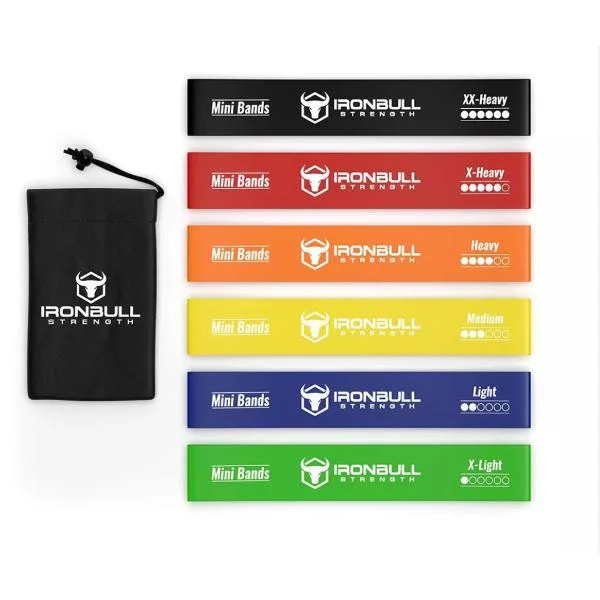
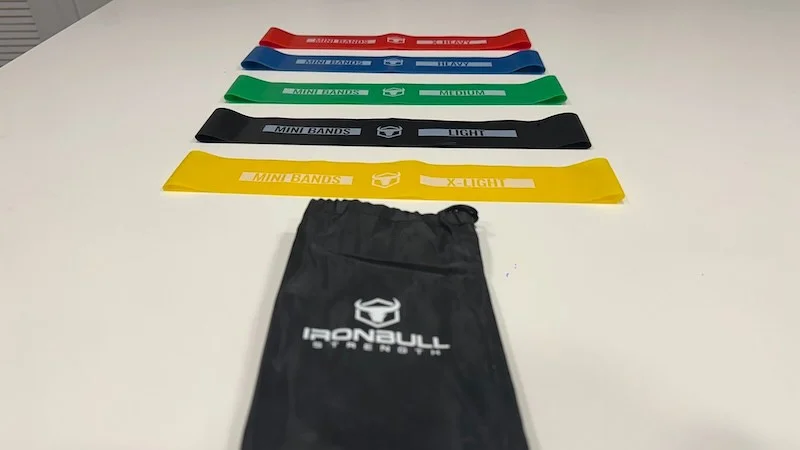
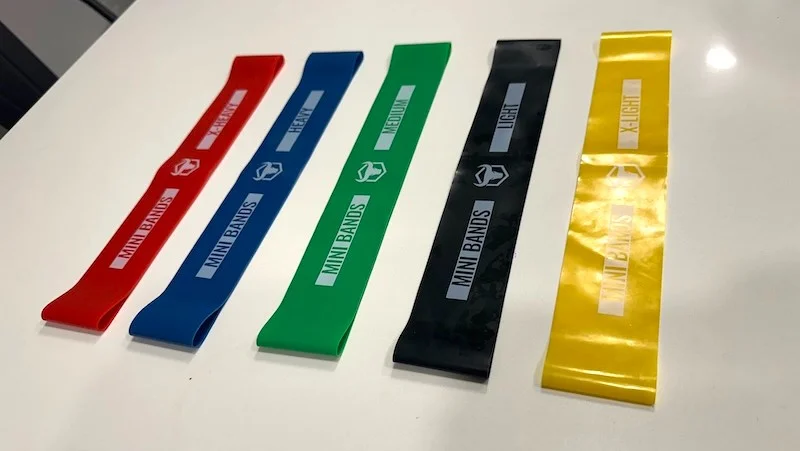
- Includes five resistance levels per bundle
- Bands come with carrying case
- Durability may be an issue long-term
- Versatility is good, but not great
If you want smaller bands that can be used to warm up the hips, glutes, and more, we recommend the Iron Bull Strength Mini Bands. While they’re not as thick or durable as fabric hip bands, they’re still very affordable, as a pack of five bands costs under $20 at the time of writing. Accordingly, we give these bands 4.5 out of 5 for value.
Durability: 3.5/5
Materials: 3.5/5

Versatility: 3/5
Why We Like Iron Bull Strength Mini Bands
GGR Senior Staff Writer and personal trainer Stephen Sheehan, CPT, gave these bands 3.5 out of 5 for durability, which is pretty good for small latex bands (especially at this price point). Depending on where you order them, you’ll be paying $3 to $4 per band, so we wouldn’t expect them to last forever.
“These are standard fare when it comes to construction, as they’re made from 100% natural latex,” Stephen explains. “I have a sense that these bands will likely lose their tension after long-term use, just because they don’t seem particularly thick or provide substantial resistance.”
The price really is the main selling point here. When the average set of resistance bands costs $103, this is a steal for under $20, even if they won’t last forever.
“It’s hard to argue with $20 for a set of five mini bands,” Stephen told me. “Plus, Iron Bull offers a ‘Buy More, Save More’ option on the brand’s website where you can save 10%, 15%, or 20% depending on how many sets you buy.”
RELATED: Iron Bull Strength Kettlebell Review
These mini bands are ideal for stretching, rehabilitation exercises, and mobility work. I like using them on a leg day to help warm up my hips and glutes by doing banded side walks, hip adductor and abductor openers, and ankle mobility work.
Stephen Sheehan, CPT
What We Don’t Like About Iron Bull Strength Mini Bands
While we think these bands are durable enough for this price point, they’re not going to last as long as thicker latex or fabric mini bands. Stephen gives them 3.5 out of 5 for materials, saying, “There’s nothing special here that stands out, and I expect these will stretch/wear down with consistent use over time”
The resistance range is also limited, and earns 3.5 out of 5.
“The set comes with five bands marked X Light, Light, Medium, Heavy, and X-Heavy, but to be honest, even the heaviest wasn’t particularly challenging for me,” says Stephen. “It’s important to remember that these aren’t designed for true strength training as much as rehab exercises, stretching, and injury prevention.”
If you want a single mini loop band that’s built to last, we recommend the Mark Bell Sling Shot Hip Circle instead.
Testing Breakdown
These bands received above-average scores in most categories, and even though the overall score isn’t the highest, remember that you’re getting five bands and a carrying case for under $20.
Vs. The Average
These bands are significantly more affordable than the average set of resistance bands, though they’re smaller and the warranty is pretty short.
| Iron Bull Strength Mini Bands | Average Resistance Band | |
| Price (For a Package) | $20 | $103 |
| Material | Latex | Latex |
| Length (In Inches) | 12” | 41” |
| Resistance Range | X-Light – X-Heavy | 10-175 lbs |
| Warranty | 90 days | 2 years |
Best Resistance Bands for Beginners: Fringe Sport Latex-Free Strength Bands
Updated by: Matt Dustin, CSCS, PN1-NC


At a Glance
- Allergen-friendly, latex-free bands
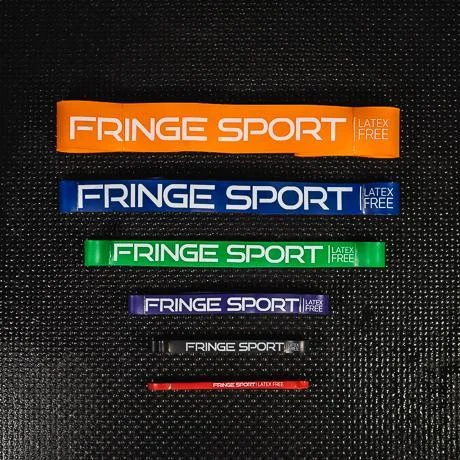
- Six resistance levels to choose from
- Above-average durability
- Sold individually or in sets
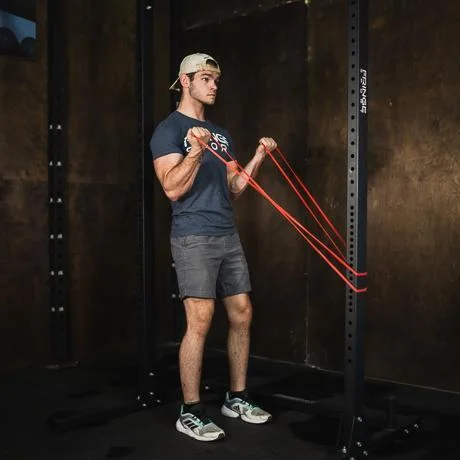
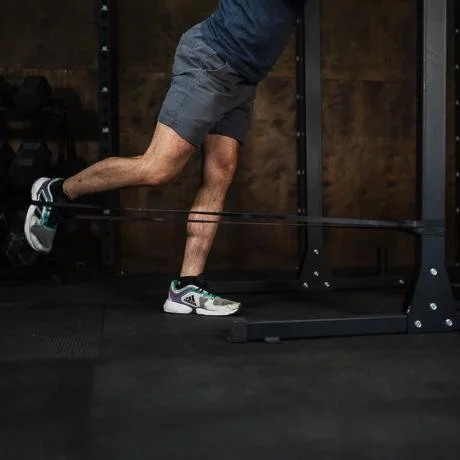
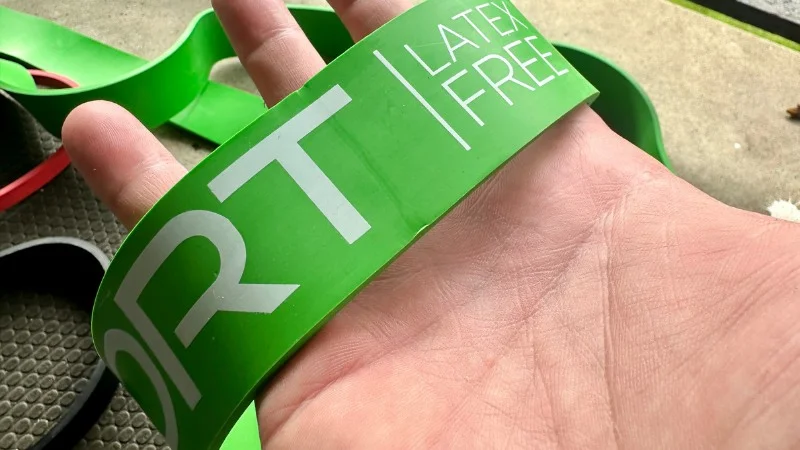
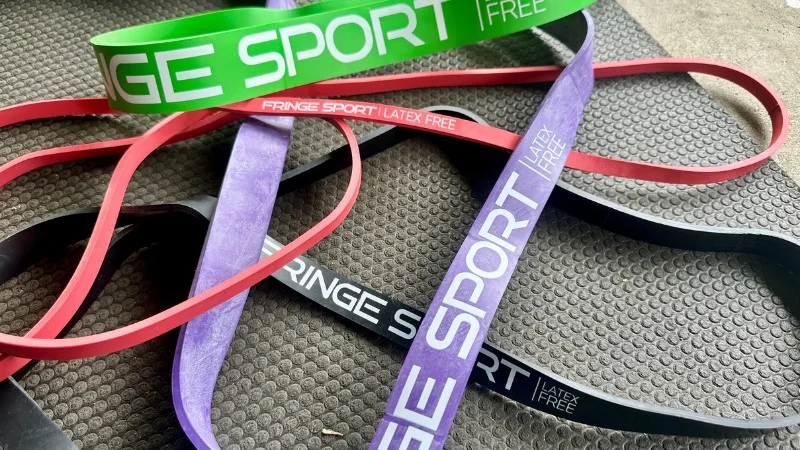
If you’re a beginner looking for a set of resistance bands that are built to last, or you’re someone who wants a great latex-free option, you can’t go wrong with the Fringe Sport Latex-Free Strength Bands. These durable workout bands earned impressively high marks in nearly every category, including 5 out of 5 stars for the resistance range. As such, beginners and advanced athletes alike should be able to find an appropriate resistance level for their needs.
Durability: 5/5
Materials: 4/5
Versatility: 4/5
Why We Like Fringe Sport Latex-Free Strength Bands
These Fringe Sport bands are well-made and earn an impressive 5-out-of-5-star rating for durability from GGR Editor Ben Emminger, NASM-CNC, NASM-CSNC.
“I’ve ordered these bands before and feel that they’re extremely durable for a range of different exercises and movements,” he explains. “I appreciate the 9/64-inch thickness that helps promote some resiliency, and I’ve had these unboxed for multiple weeks now and still feel that the elasticity is very much present.”
We also give the bands a 4 out of 5 for materials. For those with a latex allergy, the biomedical-grade synthetic rubber can be an excellent option, but the bands fall just short of a 5-star rating given their interior design.
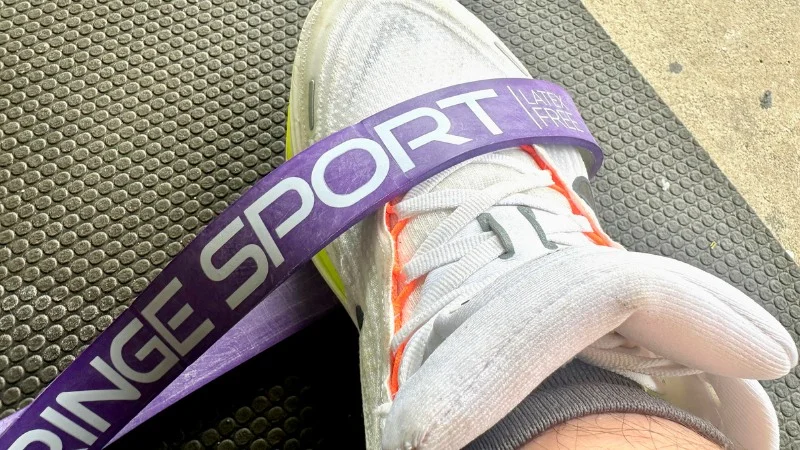
“The latex-free rubber is really nice and retains its elasticity,” says Ben. “I rate this as less than perfect, though, because there is a pronounced seam along the interior of each loop where the band ends were jointed in manufacturing. It’s noticeable, especially when you wrap that band area across your skin, but it’s not a terrible experience that can’t be alleviated with some readjustments.”
In addition to being well-built, these bands offer plenty of options, and earn 4 out of 5 stars for versatility. Ben notes that they work well for everything from light stretches to assisted pull-ups, and the looped design means they can support a wide variety of movements.
I’ve used these bands across a range of different exercises and have yet to see a drop-off in terms of tension. Each band is color-coded, too, for easy resistance identification (along with thicker profiles that can be easily identified as more resistance for exercises like pull-ups).
Ben Emminger, NASM-CNC, NASM-CSNC
What We Don’t Like About Fringe Sport Latex-Free Strength Bands
It’s hard to find much to complain about with these Fringe Sport bands, but we do have some minor callouts related to the materials and construction.
“It may be best to unwrap these and let them initially air out,” Ben told me. “The heavier bands in my bundle were kept in their rolled stance for a few days after unboxing, and the bends from packaging remained in the looped profile for an extended time. It’s not a detriment to the band’s durability, but it could make for easier storage if you let them air out and regain that looped silhouette.”
Ben also notes that you may need to wipe these bands down before use, as some of the bands included leftover powder residue from manufacturing. This isn’t a huge deal, but it can be slightly annoying and it’s something I’ve experienced myself with resistance bands.
If you want something a little more affordable and don’t need to avoid latex, the Titan Fitness Heavy Resistance Bands are another great choice worth considering.
Testing Breakdown
These bands earned above-average marks in every testing category, which helped them secure a place in this guide.
Vs. The Average
You can order different set options at different price points, but overall, the price is reasonably close to the average set, which we appreciate.
| Fringe Sport Latex-Free Strength Bands | Average Resistance Band | |
| Price (For a Package) | Starting at $76 | $103 |
| Material | Biomedical-grade synthetic rubber | Latex |
| Length (In Inches) | 40” | 41” |
| Resistance Range | 20-175 lbs | 10-175 lbs |
| Warranty | 1 year | 2 years |
Best Fabric Resistance Bands: Bells of Steel Fabric Non-Slip Bands
Updated by: Matt Dustin, CSCS, PN1-NC
At a Glance
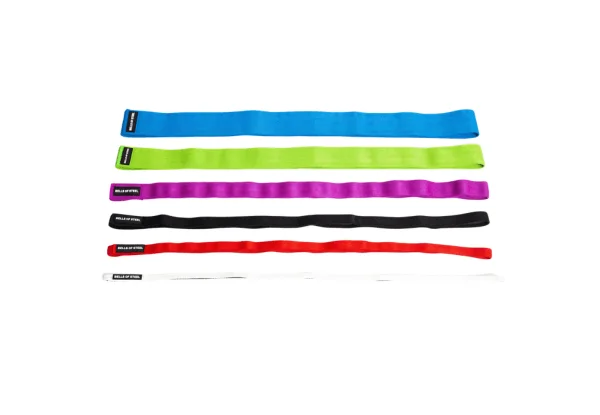
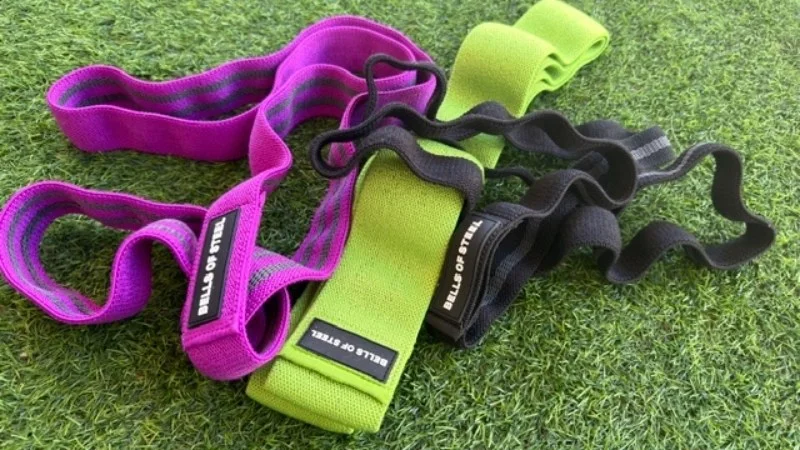
- Made of a durable elastic fabric
- Double-sided band with a grippy interior
- Color-coded for easier resistance identification
- Above-average cost
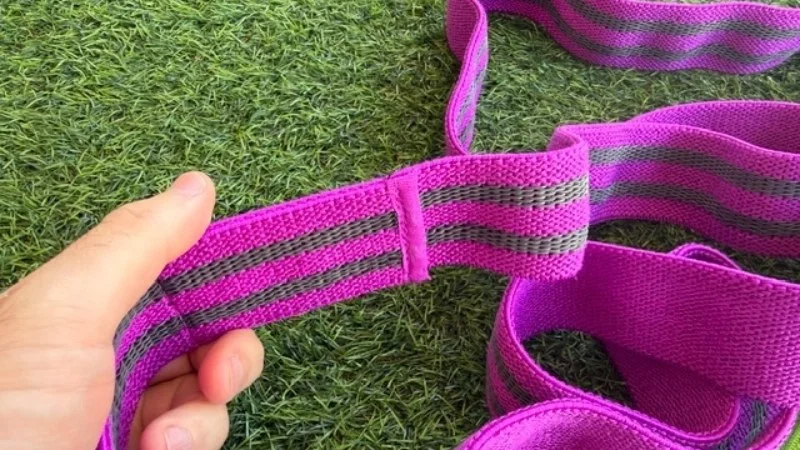
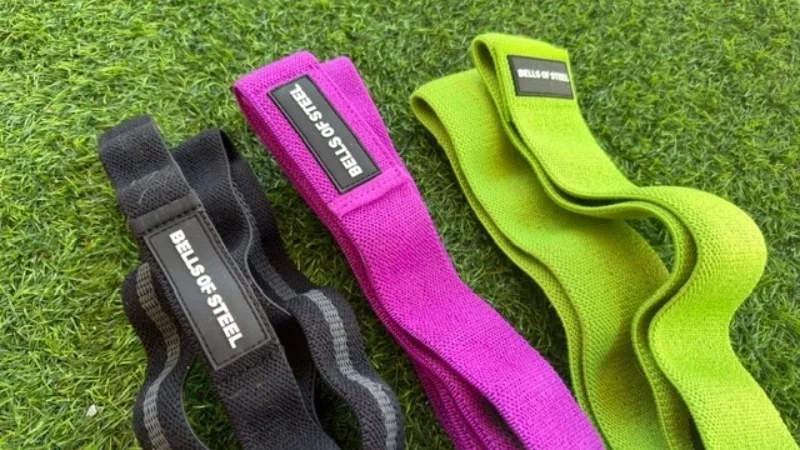
If you’re someone, like myself, who’s never loved the feeling of latex resistance bands, you’ll certainly appreciate these Bells of Steel Fabric bands. While they function in a similar manner to traditional looped bands, the fabric has a very nice feel to it without sacrificing any durability. They’re available in a wide range of color-coded resistance levels, too, and earn 5 out of 5 stars for the listed resistance range.
Durability: 5/5
Materials: 5/5
Versatility: 4.5/5
Why We Like Bells of Steel Fabric Non-Slip Bands
The first thing I noticed was the impressive, premium feel of these bands. I give them an easy 5 out of 5 stars for the materials, which is a nice upgrade from the Rogue Monster Bands I’ve had in my gym bag for the past few years.
There’s absolutely nothing wrong with latex bands, but I find they can pinch my skin at times, which I’ve yet to experience with these fabric bands from Bells of Steel.
Speaking of the fabric, it has a nice elastic component and comfortable stretch. It feels very similar to any of the heavy-duty latex bands I’ve used in the past. I ordered the pull-up set, which includes three resistance levels, and all feel equally durable. I haven’t used the heaviest two bands yet, but I’m quite impressed with the three I own.
I’ve only owned these for a few weeks, but they seem like they’ll last just as long, if not longer, than latex bands. As such, I give them 5 out of 5 for durability.
I particularly like these fabric bands for braced workouts where you need to tie off the bands across rigid structures like a squat rack upright or pull-up bar. It may just be in my head, but I’m more confident that the fabric will resist pinches and tears more so than a common latex material.
Ben Emminger, NASM-CNC, NASM-CSNC
What We Don’t Like About Bells of Steel Fabric Non-Slip Bands
While I’m very happy to have these bands in my gym bag, they’re not perfect for every warm-up session or full-fledged workout.
The first thing I noticed was the lack of a clear warranty policy. There’s a 30-day return window, but no information about the warranty itself, so I’m not sure if there’s any long-term coverage offered by Bells of Steel.
I also wish it was more clear as to how much resistance each band offers. They’re labeled Skinny, Mini, Slim, Light, Average, and Strong, and while Bells of Steel provides a chart explaining the resistance offered, it’s not very clear to read. The resistance for each band is listed for the minimum length, maximum length, and choked length, but that’s not the easiest to interpret.
If you prefer a heavy-duty set of traditional latex and want to avoid fabric bands, the Rogue Monster Bands are a great alternative.
Testing Breakdown
The Bells of Steel fabric bands earn high marks across the board and are a solid choice for anyone looking for a durable set of bands.
Vs. The Average
While these bands can be quite expensive based on which set you choose, the quality is impressive. A clear warranty would be nice, but that’s not an absolute deal-breaker.
| Bells of Steel Fabric Non-Slip Bands | Average Resistance Band | |
| Price (For a Package) | Starting at $104.99 | $103 |
| Material | Non-pinch latex and fabric blend | Latex |
| Length (In Inches) | 38” | 41” |
| Resistance Range | 4-95 lbs | 10-175 lbs |
| Warranty | Not disclosed | 2 years |
Our Testers

Stephen Sheehan, CPT, CNC
Stephen is a strength-training expert, former Rugby player, certified personal trainer, and a Senior Staff Writer for Garage Gym Reviews.

Matt Dustin, CSCS, PN1-NC
Matt has over a decade of experience as a personal trainer and strength coach, and is a GGR Senior Staff Writer.

Amanda Dvorak, ISSA-CPT, ISSA-CNC
Amanda is a CrossFit enthusiast and garage gym owner with years of experience writing about fitness gear.

Lindsay Scheele, CPT, CNC
Lindsay is a certified personal trainer and nutrition coach and the former lead reviewer for Garage Gym Reviews Everything.

Ben Emminger, NASM-CNC, NASM-CSNC
Ben is certified nutrition coach with a strong background in strength training, running, and apparel. He’s also GGR’s resident footwear expert.
Other Resistance Bands We Researched
While we narrowed down our list to our top nine picks, there are countless resistance bands on the market. Here are a few others we tested that didn’t quite make the cut.
- Fit Simplify Resistance Loop Exercise Bands: These bands are very affordable, but our tester found the durability and resistance range to be a bit underwhelming.
- Crossover Symmetry Shoulder System: These bands can be fantastic for shoulder training and upper-body work, but they’re not quite versatile enough to earn a spot amongst our top nine picks.
How We Picked and Tested the Best Resistance Bands
To accurately test and score each set of resistance bands, our testers spent plenty of time using each band profile. They took them through a variety of workouts—both at home and at the gym—to make sure we provided accurate ratings for each testing category.
After trials, our testers used our resistance band testing methodology to calculate a final score. Each of the following categories is rated on a scale of 1 to 5, and we calculate the average of all individual scores to arrive at a final overall total.
Durability and Construction
Since resistance bands typically have an elastic stretch component, it’s common to see them lose their elasticity, shape, and overall resistance with extended use. This category is scored based on our own testing experience and how we rate the overall longevity of a given resistance band. To earn 3 out of 5 stars, the resistance bands are thick enough for regular use and appear to retain their elasticity during our examinations, but we have concerns about repeatedly pushing them to their limits.
Materials
Resistance bands are typically constructed from latex, rubber, fabric, or a combination of materials. This can impact both the performance of the band, as well as how it feels in-use. For a 3 out of 5, the materials used feel fine for most exercises, but may cause some bunching around clothing items, leading to discomfort. If the band contains latex, it should be clearly disclosed on the sale page to caution those with known allergies or skin sensitivities.
Resistance Range
For this category, we’re rating the number of resistance levels available for a given set of bands. Some brands specify the exact resistance provided, while others simply use names like Light, Medium, or Heavy resistance. To earn at least 3 out of 5 stars, the bands are color-coded, but only labeled with generalized monikers. The resistance range may also be limited to just three varied tensions.
RELATED: How Effective are Resistance Bands?
Versatility
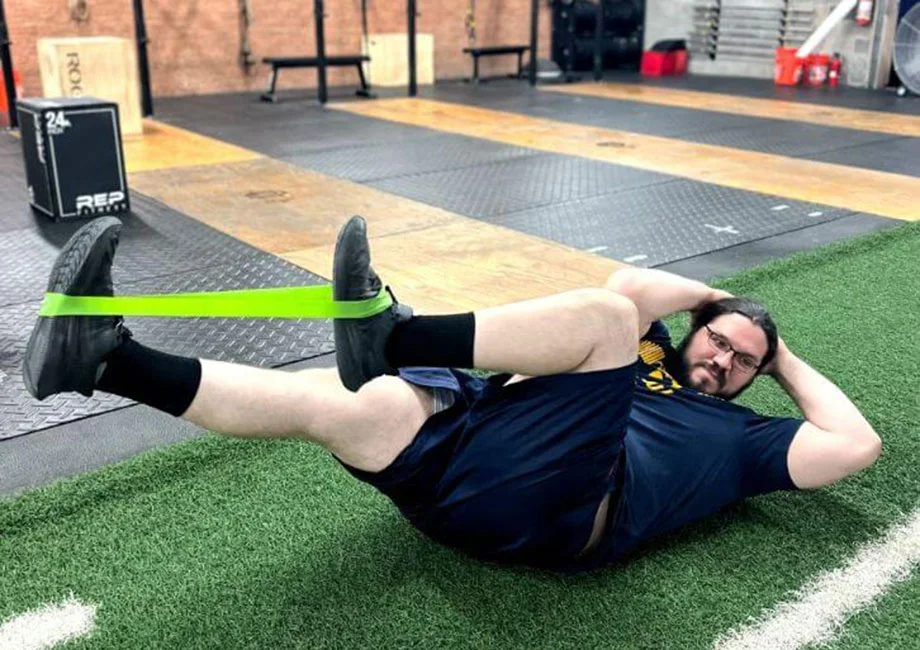
While most resistance bands can be used for multiple exercises, some are more focused for upper- or lower-body exercises and have limited usability. For our versatility rating, we give 3 out of 5 stars to bands that are suitable for a range of exercises, but they may not be suitable for certain movements like assisted pull-ups or glute-centric workouts.
Value
This rating is based not only on the price of the resistance bands, but whether or not we feel the cost is justified compared to other brands on the market. Most bands cost about $20, but pricing may be lower or higher, especially when it comes to bundled sets. For a 3 out of 5, the price seems fair for what you’re getting, and bundles are available but the savings aren’t very significant.
Customer Experience
This category is based on the overall purchasing experience, including customer support availability as well as any warranty and return policies. To earn 3 out of 5 stars, there’s a one-year warranty and a limited return policy may be offered, but the product must be unopened, and it may be hard to reach customer service.
Customer Reviews
This number is taken directly from the customer reviews on both the manufacturer website, as well as third-party retailers like Amazon. We include this score to help keep our reviews as unbiased as possible.
Benefits of Resistance Bands
If you’re on the fence about picking up a set of resistance bands, we think it’s well worth the investment. Here are a few resistance band benefits you can enjoy from a good set of bands.
Portability
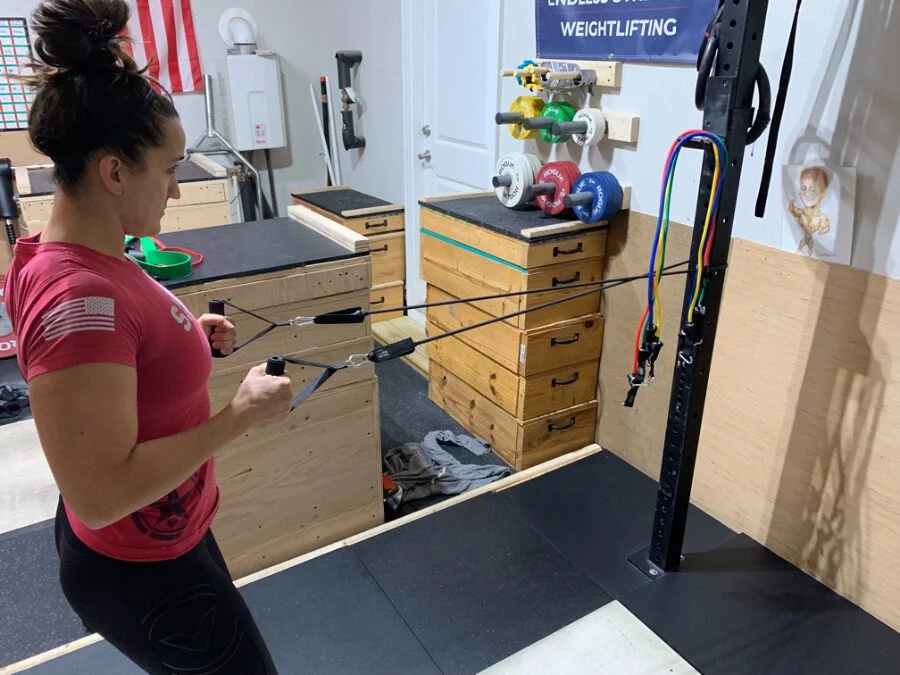
One of the biggest benefits of using resistance bands is the fact that they’re lightweight and very portable. For those who are traveling and want something they can bring with them, or someone living in a smaller space, resistance bands offer a convenient, space-saving way to enjoy some strength training.
“Resistance bands make strength training more accessible, especially for those who are newer to exercise and may find free weights more intimidating,” says Lori Diamos, PT, MS, FAFS. “Due to the smaller footprint of resistance bands, they are usually more portable, easier to store, and fit well into a busy lifestyle where consistency can be a challenge.”
RELATED: Best Resistance Bands for Seniors
Versatility
Another important benefit of using resistance bands is the versatility they offer. Lori adds, “They allow for a variety of movement angles and provide increasing resistance as the band lengthens, which can challenge control and strength through a full range of motion.”
Whether you’re looking to rehab your shoulders, work on your assisted pull-ups, train the glutes, or simply get a great workout without any heavy strength equipment, resistance bands have you covered. They can be useful in home gyms, physical therapy practices, and serve as downright great accessories to own outright.
On the surface, using bands may look easier than training with free weights, but research shows1 that training with resistance bands promotes similar strength gains as traditional resistance training, making them a valuable tool for anyone interested in strength training, too.
RELATED: Free Weights Vs Resistance Bands
Beginner-Friendly
For those who are new to home fitness equipment, or even new strength training, resistance band training can be a fantastic way to get started. All you need is a set of bands and a little floor space, and you can enjoy a full-body workout.
GGR Senior Staff Writer and strength coach Matt Dustin, CSCS, PN1-NC, says resistance bands can be a great tool for those who are just getting started with their fitness journey. “I used to train clients in a private gym or in their homes, and resistance bands were a valuable tool in my arsenal,” he explains. “For those who are just getting started with strength training, using resistance bands can make it very easy to adjust the intensity on the fly, and there’s very little risk of injury (when they’re used properly).”
Accommodating Resistance
Even if you’re not a beginner, we still think bands are a great tool. In addition to offering a quick, effective warm-up before your heavy lifts, bands can be used specifically to add resistance to certain barbell lifts, especially if your weight bench or squat rack has band pegs.
“Resistance bands can be securely fastened to the bottom of a rack or bench, and then looped around either end of a barbell,” says Matt. “You’ll feel the least amount of resistance at the bottom of the lift, and the tension increases as you lift the barbell, which stretches the band and changes the resistance curve of exercises like bench presses or deadlifts. For advanced lifters, this can be a valuable way to improve your strength and break through training plateaus.”
Not to mention, accommodating resistance has been shown2 to increase strength and power of the stabilizing muscle groups that are forced to work harder, which can increase maximum strength.
Buying Guide: What to Look for in Resistance Bands
Like picking anything to add to your home gym, it can feel daunting to decide which kind of resistance band to purchase. Should you get loop bands, or the tube option with handles? How about with or without latex? Below, our team breaks down what you should look for before deciding what to buy when in comes to resistance bands:
Price
Ah, the age old question: How much does this thing cost? If you’re just absolutely raking in the dough, you’re probably not too concerned about this because resistance bands can only be so expensive. However, if you’re on a pretty tight budget, be realistic with your expectations.
That cheap set you found online might be awesome for a year, but be aware that you generally pay for what you get. What I mean by that is that the cheaper the resistance band is, oftentimes the thinner the material and the less durability it has.
Materials
This is another thing to think about that can be either personal preference or sensitivity-related. The majority of resistance bands are made with some type of latex. However, there are latex-free options for those looking to avoid this compound due to an allergy or other reason.
Just be sure to carefully check the manufacturer specifications before ordering, as even fabric bands may include latex for added elasticity.
Resistance
Like with kettlebells or dumbbells, resistance bands have their own amount of tension (or weight) they can provide. Make sure you match up your strength level with the amount of tension you choose for your bands or, better yet, get a set of bands that offer multiple levels of resistance. This can allow you to use varying resistance throughout your workout to tailor your training experience to your individual needs.
Loop Bands Vs Handled Bands
There are multiple types of resistance bands, and it’s important to find the one that fits your needs.They’re typically either sold as loops, like giant rubber bands, or handled bands, which act as long tube bands with a handle on either side. Both have their uses, but they’re not quite the same thing, so it’s worth thinking about what you’ll be using them for. If you have space in your budget, you may even want to pick up a set of both.
“Loop bands are often more versatile for lower body work, mobility, and activation, while handled bands tend to feel more natural for upper body movements that mimic free weights or cable systems,” says Lori Diamos, PT, MS, FAFS. “Having access to both usually gives you the most flexibility.”
RELATED: How to Squat with Resistance Bands
FAQs About the Best Resistance Bands
Can you build muscle mass with resistance bands?
Yes, but you need to be applying enough resistance and progressively getting stronger over time, according to Lori Diamos, PT, MS, FAFS. She explains, “That can mean increasing band tension, combining bands, or increasing volume and control. The limitation is that higher strength levels can be harder to match without layering resistance.”
Do I need a door anchor to use resistance bands?
While helpful, a door anchor isn’t absolutely necessary when training with resistance bands. You can use resistance bands with your own bodyweight, or loop them around any secure object in your home or garage gym for a bracing point.
Are resistance bands good to add to your home gym?
Resistance bands are an easy and budget-friendly way to add some extra equipment to your home gym. Just like something like a jump rope, resistance bands have tons of versatility and don’t take up a lot of space.
Which brand is the best for resistance bands?
There are plenty of bands to choose from, and we had a hard time narrowing down our guide to only nine options. Some of the best brands we tested include Living.Fit, Titan Fitness, Rogue, and Bells of Steel, among others.
Are thick or thin resistance bands better?
Thicker bands tend to generate more resistance than thinner ones, but that doesn’t necessarily make them better. A thicker band also isn’t necessarily more durable than thinner options, as it depends on the type of latex or material that’s used across the entire construction.
References
- Lopes JSS, Machado AF, Micheletti JK, de Almeida AC, Cavina AP, Pastre CM. Effects of training with elastic resistance versus conventional resistance on muscular strength: A systematic review and meta-analysis. SAGE Open Med. 2019 Feb 19;7:2050312119831116. doi: 10.1177/2050312119831116. Erratum in: SAGE Open Med. 2020 Sep 9;8:2050312120961220. doi: 10.1177/2050312120961220. PMID: 30815258; PMCID: PMC6383082.
- Ataee J, Koozehchian MS, Kreider RB, Zuo L. Effectiveness of accommodation and constant resistance training on maximal strength and power in trained athletes. PeerJ. 2014 Jun 17;2:e441. doi: 10.7717/peerj.441. PMID: 25024910; PMCID: PMC4081144.