




Functional trainers, also called cable machines or home gyms (and not to be confused with power racks), can be an excellent way to get a full-body workout for everyone from beginners to advanced lifters. Often seen in hotels and commercial gyms, these beefy strength training systems are capable of working all muscle groups (with the right attachments).
The XMark Functional Trainer is one such example that scored highly during our testing (and earned the nod of approval from an Olympic weightlifter, no less), and we’re excited to share our results with you in this XMark Functional Trainer review.
Our XMark Functional Trainer Review, Summarized
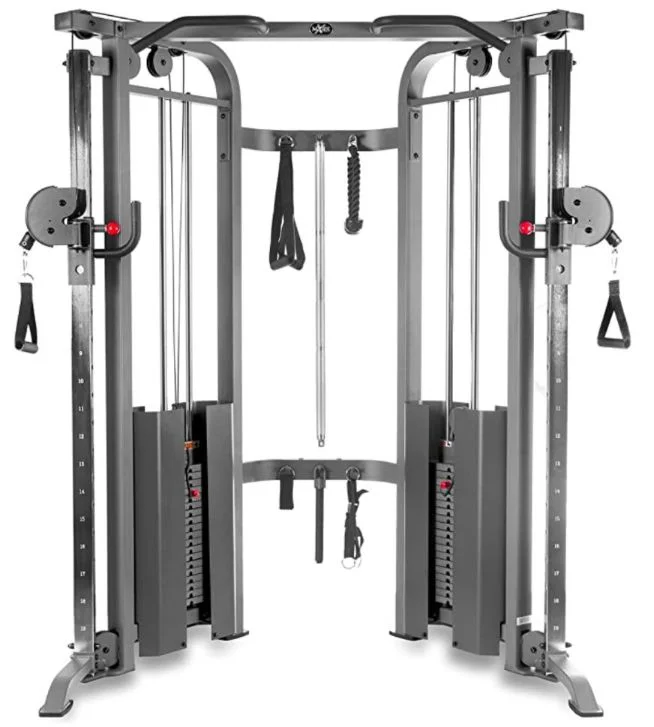
The XMark Functional Trainer is a heavy-duty, selectorized cable machine built for serious home gym owners who want commercial-grade performance without stepping into true commercial pricing. It features dual 230-pound weight stacks, which is more resistance than you’ll find on many competing models in this price range, though its 2:1 pulley ratio may leave a bit to be desired for advanced athletes on certain exercises.
How We Test Functional Trainers
While functional trainers generally have a large footprint, 4- and 5-out-of-5 scores go to models with built-in attachment storage, heights suitable for most home gyms, and builds that can be moved by two to three people, max.
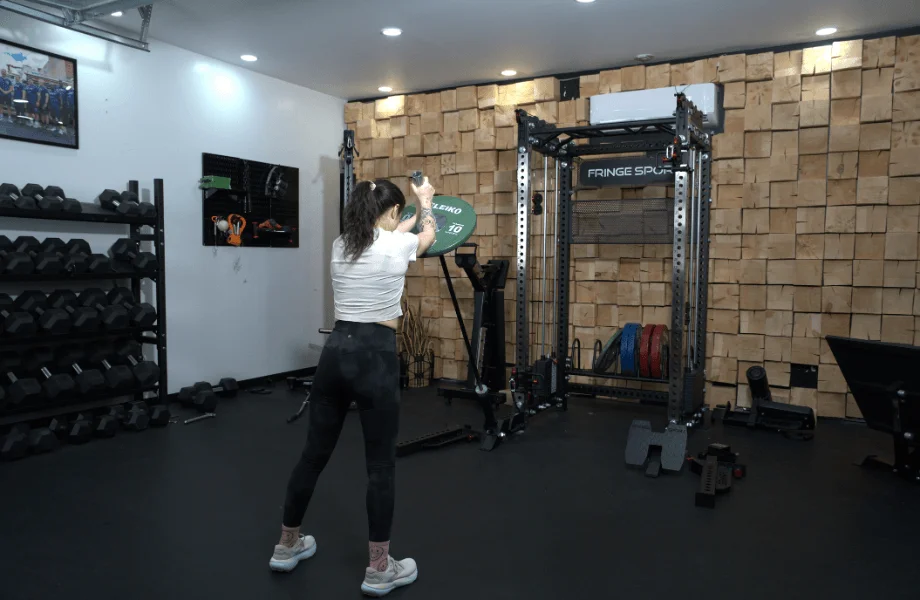
Does the machine remain steady during use? Minor movement is expected, but a 5-out-of-5 rating is reserved for units that stayed completely still during cable exercises and pull-ups (when applicable).
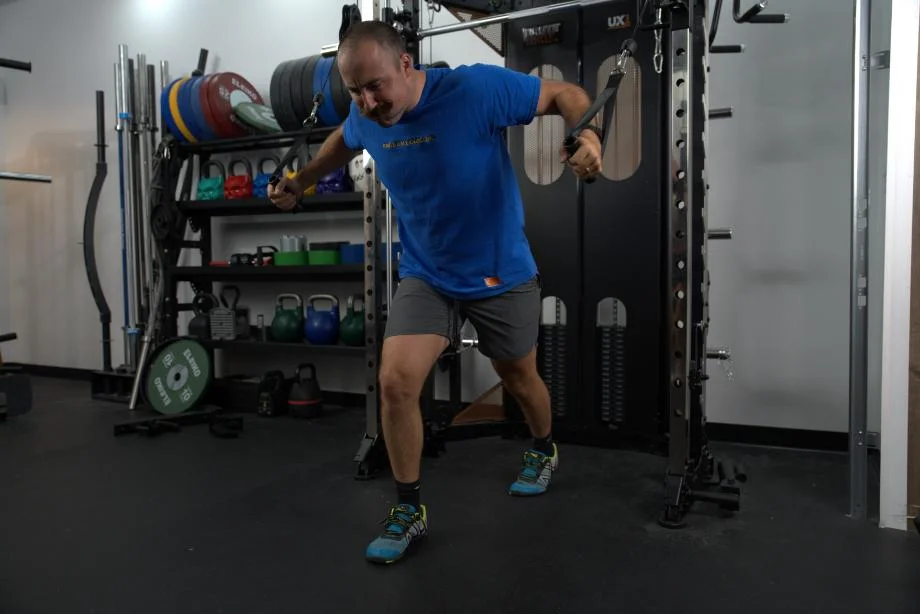
We evaluate both quality and variety, awarding 4- and 5-point scores to setups that include multiple high-quality accessories such as handles, ankle straps, and pull-down options without the need for additional purchases.
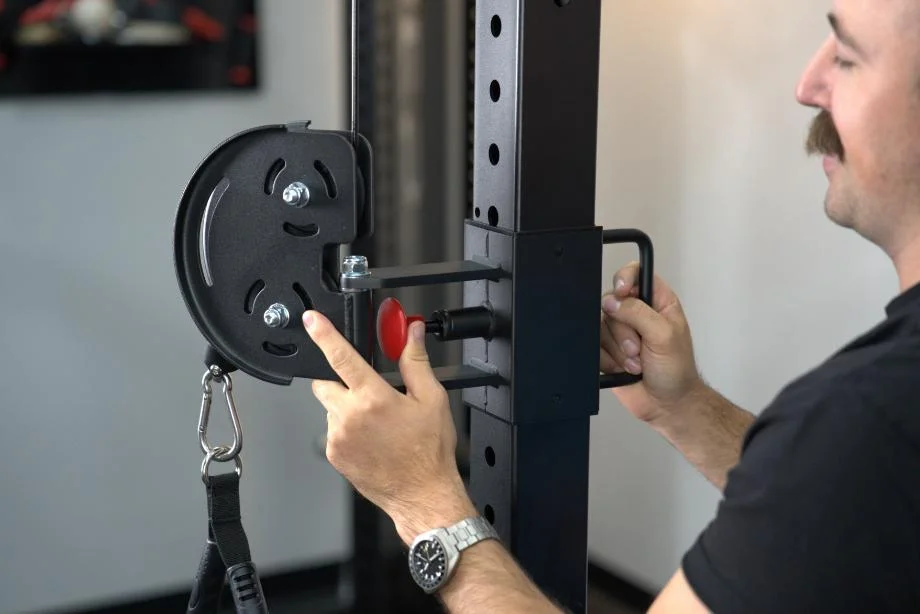
When we test functional trainers, we have athletes of various disciplines and backgrounds take them through the paces of a full workout, often multiple sessions over the course of weeks. We evaluate 11 points of performance according to a specific functional trainer testing methodology, using our expertise along with industry standards to guide our ratings. Some of the criteria we evaluate include durability, delivery and setup, versatility, and customer experience.
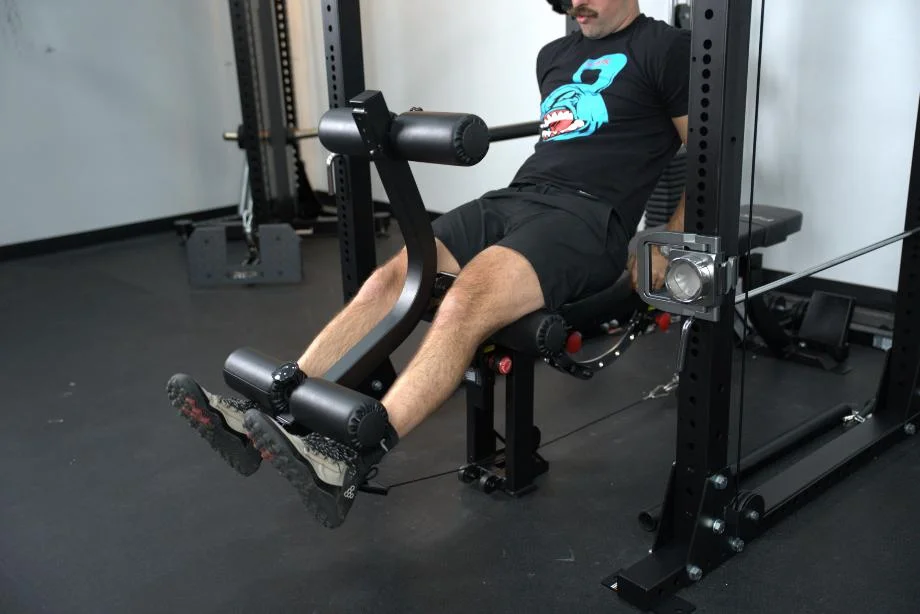
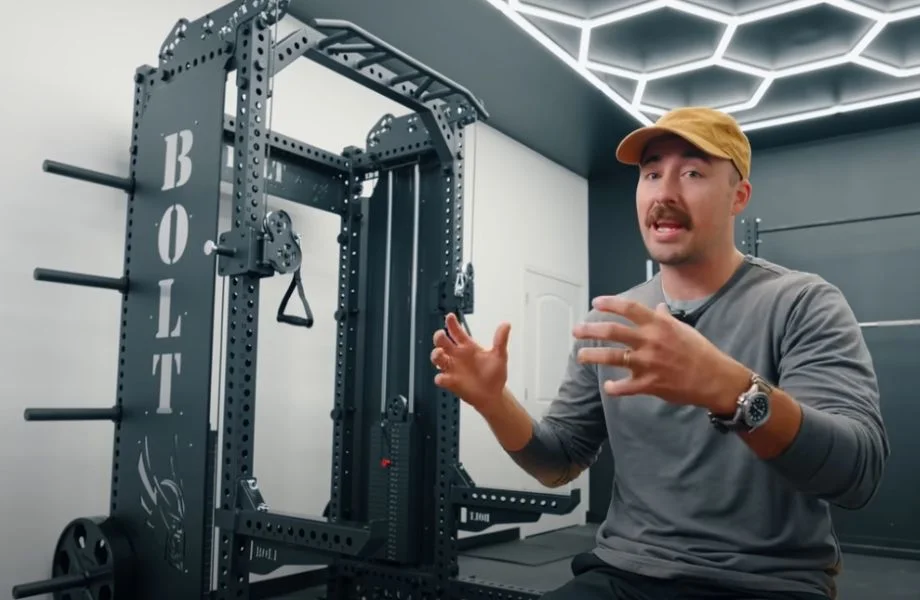
Our team of certified personal trainers, competitive lifters, and home gym specialists has assembled and tested dozens of functional trainers, logging thousands of reps to evaluate factors like pulley smoothness, attachment durability, and more. To date, we’ve helped more than 100,000 athletes find the right strength equipment, and we’re ready to help you do the same.








What to Know Before You Buy
- This piece of fitness equipment is 7.5 feet tall. Make sure you have enough overhead space for pull-ups before buying. We recommend ceiling heights of 9 feet or higher, though it can work with an 8-foot ceiling if needed.
- The included accessories are minimal, with just single handles for each weight stack. If you want a weight bench, long or short bar, pull-down bar, curl bar, triceps rope, or other accessories, you’ll need to budget for those separately.
- You will not want to move this functional trainer after assembling it. It weighs more than 1,000 pounds in the box, so be sure to set up where it will live for the long term (or, ideally, forever).
Is the XMark Functional Trainer Worth It?
In our opinion, the XMark Functional Trainer cable machine is worthwhile for home gym owners who want a robust, selectorized cable machine with plenty of resistance and a commercial-style feel. With dual 230-pound stacks, 21 points of adjustability, and a built-in pull-up bar, it’s a strong choice for athletes who want the functionality of a commercial piece of equipment in their home.
That said, it may not be the best fit for those needing compact exercise equipment or athletes on a tighter budget, as its size, weight, and price make it more of a permanent, high-cost addition to a home gym.
Still not sure if this is the right item for you? Here’s a look at some critical info to help you decide if the XMark Functional Trainer is a good fit for your training space.
XMark Functional Trainer: Key Features & Specs
| Price (Original MSRP) | $3,059 |
| Footprint | 90” H x 61.5” W x 33” D |
| Materials | Steel frame, polypropylene pulleys |
| Weight Stack or Plate Loaded | Weight stack |
| Weight Stack Weight | Dual 230-lb stacks |
| Pulley Ratio | 2:1 |
| Cable Travel Length | 87.5” |
| Number of Height Options | 21 |
| Accessories | Multi-grip pull-up bar, single handles |
| Warranty | Lifetime on frame; 2 years on all other parts |
Experience Using the XMark Functional Trainer
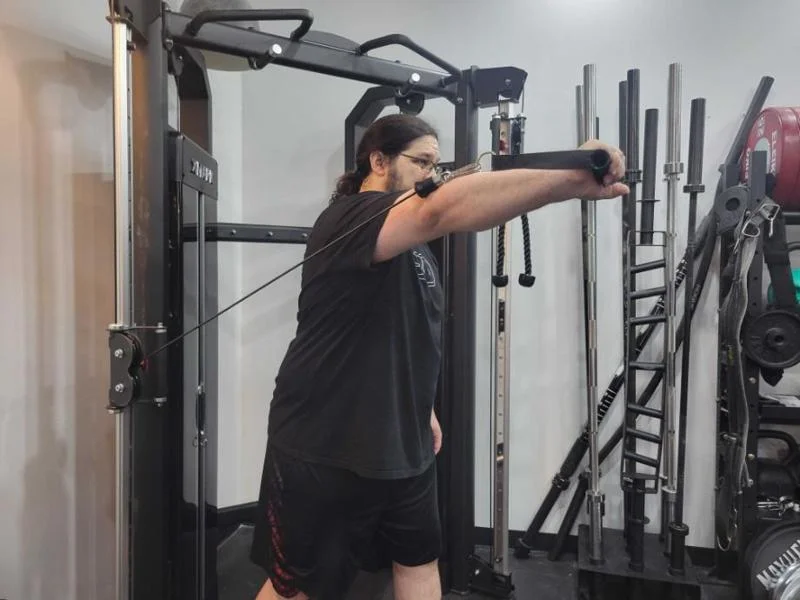
Training on the XMark Functional Trainer feels very much like using a commercial cable machine. Once assembled, day-to-day use is straightforward. Adjusting the pulleys is quick, the selector pins slide in effortlessly, and the carriage moves smoothly across its height range.
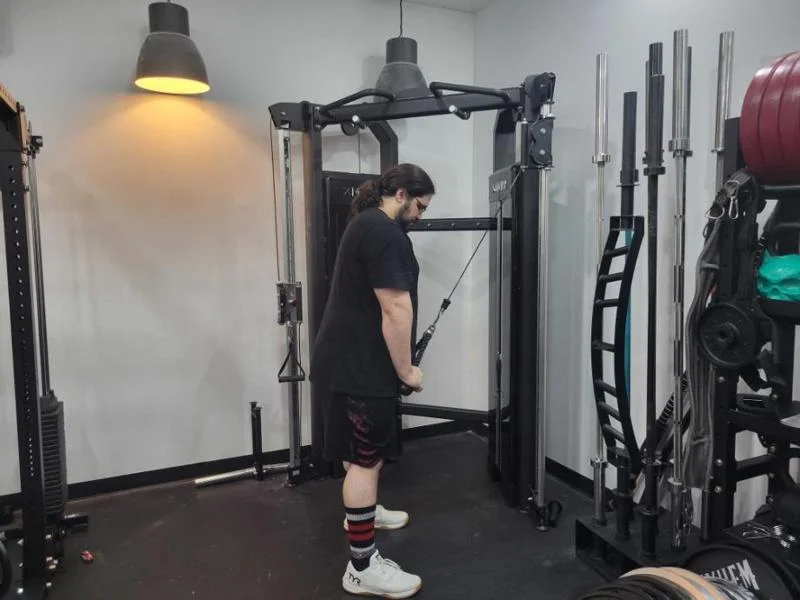
The dual 230-pound stacks offer plenty of resistance for most lifters, and the 2:1 ratio makes movements feel controlled, even at heavier loads. Whether we were running fly variations, rows, triceps work, or single-arm accessories, the cable travel stayed consistent through full ranges of motion.
A functional trainer is a great investment for a home gym because it unlocks so much versatility with your workouts. Cable pulley systems are fairly easy to operate, you can change your angle of attack, and you can use different attachments for targeted training. If you’re looking for a space-efficient way to train just about every muscle group, I’d put a functional trainer near the top of my home gym wish list.
Stephen Sheehan, CPT, CNC
XMark Functional Trainer Rating
Construction and Durability
The steel gauge is not disclosed in the Amazon listing, but based on our experience testing more than a dozen functional trainers, we estimate it to be 11-gauge steel. “It feels very solid in use and like it’ll last,” says Caine Wilkes, OLY, CNC, USAW-L1, giving it a 4 out of 5 for durability. He knocked one point off due to the plastic pulleys, since plastic is generally more susceptible to wear than other materials XMark could have used here, like aluminum.
RELATED: The 10 Best Full-Body Workout Machines
Footprint
The XMark Functional Trainer is a large, heavy machine that’s best treated as a permanent fixture once assembled. Delivery is via freight, and you’ll need to provide your cell phone number so the freight company can contact you to schedule the delivery. Though the unit comes mostly pre-assembled (including cable routing), it’s not something you’ll want to move often.
Caine notes that it doesn’t take up a lot of floor space—most of its size is vertical—but it’s still not ideal for small home gyms at 5 feet long by 3 feet deep.
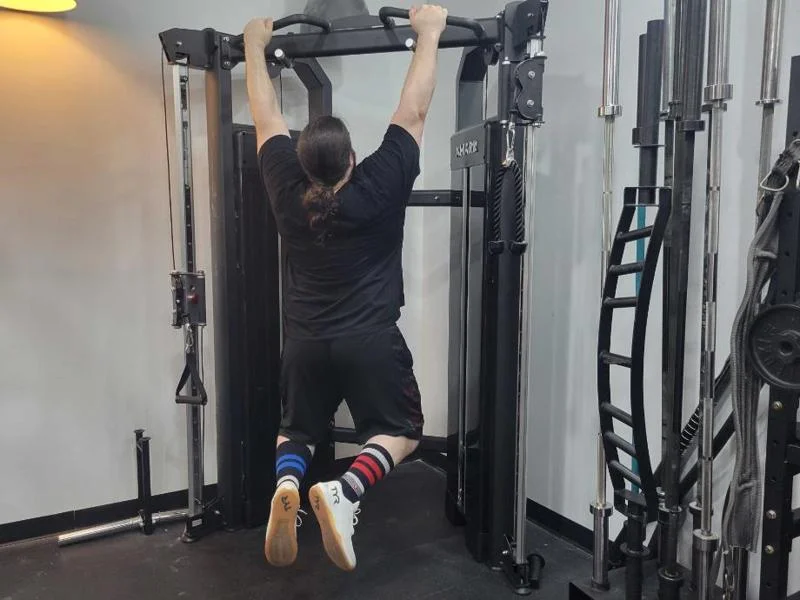
The sub-8-foot height (90 inches) should work for lower ceilings, though a 9-foot ceiling or higher is better to have more head space for pull-ups. Caine also notes, “I had to lift my legs up to hang for pull-ups; just a note for taller folks.” Overall, we rate the footprint at a conservative 3.5 out of 5.
Versatility
“With the dual 230-pound stacks and 2:1 ratio, the resistance is sufficient enough to challenge someone like me on flyes or crossovers,” Caine says. “It’s a little on the light side for low rows and lat pulldowns though.”
It’s worth noting, though, that Caine is a literal Olympic athlete who competes in weightlifting. In other words, much stronger than most of us! We think the resistance ratio will allow for plenty of progression for the vast majority of people and rate the versatility at 4 out of 5.
Caine also points out that the design grants plenty of space for upper and lower body exercises. He does note, though, that the 10-pound weight increments may make progression tough for certain exercises, like overhead triceps extensions or lateral raises.

Pulleys and Stability
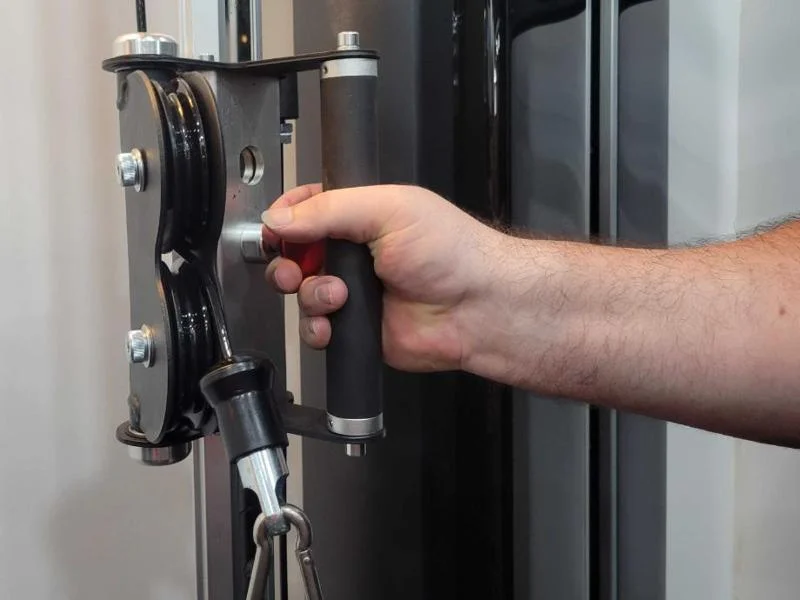
In use, the XMark trainer feels stable and smooth. The pulley system delivers consistent cable travel across movements, even for polypropylene pulleys, according to Caine.
“I didn’t notice any sticking throughout the movement, although the plastic pulleys aren’t as smooth as aluminum pulleys,” he says. “It was very stable, though. Like, very stable. We didn’t have it bolted down and I did a few pull-ups on the grips up top.”
“The machine didn’t budge at all, and I’m 300+ pounds,” Caine continues, rating the machine at 4.5 out of 5 for stability (minus the 0.5 for plastic versus aluminum pulleys).
Accessories
The attachments included with your original purchase are limited, Caine calls out, giving the machine a 3 out of 5 for this category. XMark only includes handles for each stack, but you can purchase the brand’s accessory pack separately if you need or want more options (which you most likely will). It does include a built-in multi-grip pull-up bar, though, that adds extra training value without requiring additional attachments.
Value
According to Caine, the combination of the stack weight, adjustability, and stability makes the XMark Functional Trainer a strong value, and he rates it a 4.5 out of 5 for the category. It’s still on the expensive side compared to some other top functional trainers, but we feel the price point is right for the build quality.
RELATED: Ultimate Home Gym Guide: Tips, Equipment, and Setup
Customer Experience
This functional trainer comes with a lifetime warranty on the frame and a two-year warranty on all other parts. Keep in mind this is for residential use only, and commercial use will void these terms.
This is a pretty standard policy for functional trainers, as is the return policy: XMark (via Amazon) offers 30-day returns, but shoppers are on the hook for a 15% restocking fee. If you need assistance with your purchase or a return, you’ll need to use the typical Amazon pathways through your Amazon account.
Customer Reviews
At the time of writing, the XMark Functional Trainer has a 4.8-star rating on Amazon out of nearly 900 reviews. This is overwhelmingly positive, and most reviews are aligned with our testing experience.
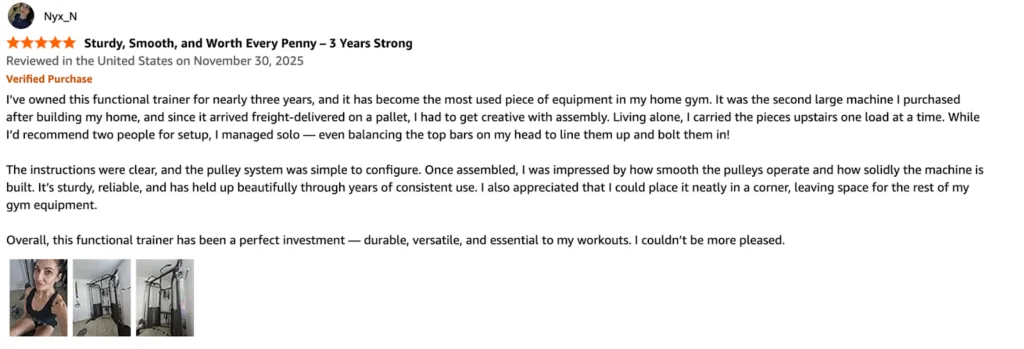
One buyer, who’s had the machine for three years, says, “The instructions were clear, and the pulley system was simple to configure. Once assembled, I was impressed by how smooth the pulleys operate and how solidly the machine is built. It’s sturdy, reliable, and has held up beautifully through years of consistent use. I also appreciated that I could place it neatly in a corner, leaving space for the rest of my gym equipment.”
The few negative reviews mention missing parts, and one person said they received a refurbished product when they ordered a new one. Complaints are very few and far between, though.
XMark Functional Trainer Vs
The REP Arcadia Functional Trainer is one of our top choices for the best overall functional trainers. Compared to the XMark, the Arcadia is more compact and a bit less expensive. It comes standard with dual 170-pound weight stacks (upgradable to 220 pounds, each) and boasts super smooth pulleys, a greater number of cable adjustment positions, and a lifetime frame warranty that make it feel premium for the price. The Arcadia fits well in smaller spaces and is very versatile, though its effective resistance is a bit lower (unless you opt for upgraded stacks).
The Bells of Steel Functional Trainer, one of our recommendations for budget-friendly garage gym equipment, is a more affordable cable machine that still delivers a great workout. It features dual 160-pound weight stacks at a 2:1 pulley ratio and 16 adjustable height positions, plus aluminum pulleys and built-in attachment storage. It’s slightly smaller in footprint and easier to set up, but it doesn’t match XMark’s total resistance or adjustability range.
| 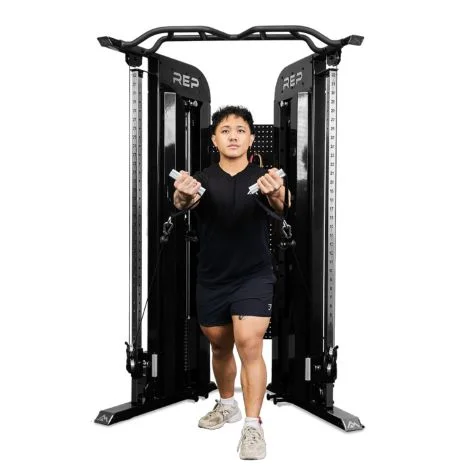 | 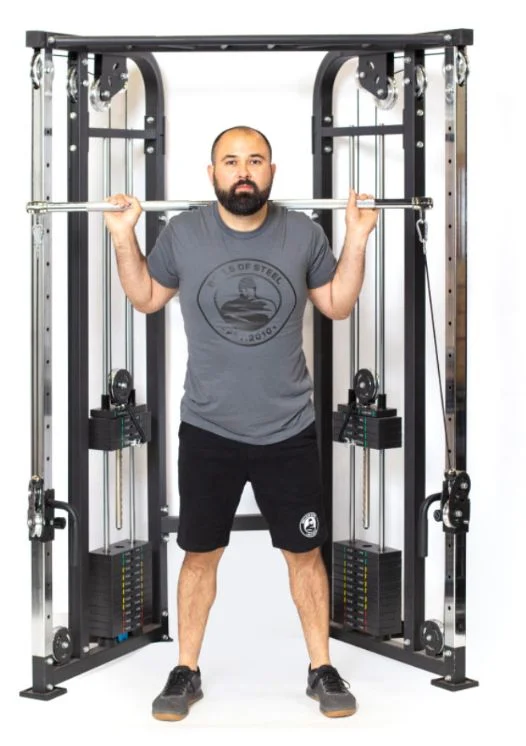 | |
| XMark Functional Trainer Cable Machine | REP Arcadia Functional Trainer | Bells of Steel Functional Trainer | |
Rating | |||
| Type | Functional Trainer | Functional trainer | Functional trainer |
| Footprint | 33” L x 61.5” W x 9” H | 35.8” L x 55.3” W x 80.8″ H | 30″ L x 53″ W x 81″ H |
| Resistance | Weight stack (230 lbs) | Weight stack (max 170 or 220 lbs) | Weight stack (max 160 lbs) |
| Subscription? | — | — | — |
| Accessories | Pair of d-handles | Built-in storage, double D-handles, multi-grip pull-up bar, band pegs | N/A |
| Warranty | Limited lifetime | ||
Final Verdict of Our XMark Functional Trainer Review
After testing, Caine gives the XMark Functional Trainer an Olympic-sized thumbs up, while calling out a few minor drawbacks like having to bend his knees for pull-ups and feeling limited by the lack of included accessories.
- The dual 230-pound weight stacks provide more than enough resistance for most people. If you’re an Olympian like Caine, you may feel a bit limited, but 460 pounds is on the high end for at-home functional trainers, regardless.
- 10-pound weight increments work for most everything, but may make progression tougher for certain movements like lateral and front raises.
- We wish XMark included more accessories with this model instead of having to buy them separately. That said, it does give you the option to purchase accessories from a different brand if you want.
XMark Functional Trainer Review: FAQs
Is XMark Fitness a good brand?
In our experience testing items from the brand (and as evidenced by a large number of positive Amazon customer reviews), XMark is a solid fitness equipment brand. Our testers have been pleased with items like the XMark Functional Trainer, confirming that its high-quality build and efficient design make it easy to train upper and lower body.
What is the best functional trainer on the market?
Some of the best functional trainers include the REP Fitness Arcadia, Bells of Steel Functional Trainer, Fringe Sport Dane 2.0, and Major Fitness All-In-One Home Gym.
Are functional trainers worth it?
It depends. If you want an all-in-one system that supports general fitness and strength training, yes, functional trainers can be worth it. They may not be worth the cost or investment, though, for athletes who primarily work out with free weights like barbells and kettlebells. And if you need to save space, something like adjustable dumbbells may be the better choice.
Can you do lat pulldowns on a functional trainer?
In most cases, yes, you can do lat pulldowns on a functional trainer. Depending on the model, you may have to sit on the floor or be in a kneeling position if there’s no lat pulldown bench integrated into the design.
References
- Bartolomei, S., Nigro, F., Malagoli Lanzoni, I., Masina, F., Di Michele, R., & Hoffman, J. R. (2021). A Comparison Between Total Body and Split Routine Resistance Training Programs in Trained Men. Journal of strength and conditioning research, 35(6), 1520–1526. https://doi.org/10.1519/JSC.0000000000003573
- Signorile, J. F., Rendos, N. K., Heredia Vargas, H. H., Alipio, T. C., Regis, R. C., Eltoukhy, M. M., Nargund, R. S., & Romero, M. A. (2017). Differences in Muscle Activation and Kinematics Between Cable-Based and Selectorized Weight Training. Journal of strength and conditioning research, 31(2), 313–322. https://doi.org/10.1519/JSC.0000000000001493