





When choosing equipment for your home gym, most home gym owners can build an amazing setup without having to purchase expensive, commercial-grade equipment. While we’re all about sticking to your budget and getting a great deal, a new treadmill is one piece of equipment that may be worth splurging on. Compared to a standard home treadmill, a commercial treadmill is generally defined as one that could withstand commercial use. They tend to have a more robust build quality and a stronger motor, with greater speed and incline ranges than typical home treadmills.
The best treadmills offer a fantastic way to enjoy a workout from the comfort of your home, regardless of the climate or time of day. While there are countless options on the market, choosing one of the best commercial treadmills can help you avoid the headache of having to replace major components every couple of years, managing unstable decks, or training around limited speeds and inclines.
We helped 13,891 people find their ideal treadmill in 2025, and we’re here to help you find yours, too.
GGR Gold Pick — Best Commercial Treadmill
The NordicTrack Commercial 2450 earned a rating of 4.4 out of 5 stars during our testing, cementing it as the best commercial treadmill overall. It offers an impressive decline/incline range (-3% to 12%), a 24-inch pivoting touchscreen, and an impressive 400-pound weight capacity.
Best Commercial Treadmills
- Best Commercial Treadmill Overall – NordicTrack Commercial 2450 Treadmill
- Best Commercial Treadmill for Streaming – Peloton Cross Training Tread+
- Best Manual Commercial Treadmill – TrueForm Runner
- Best Incline Commercial Treadmill – NordicTrack X24 Treadmill
- Best Folding Commercial Treadmill – Sole F80 Treadmill
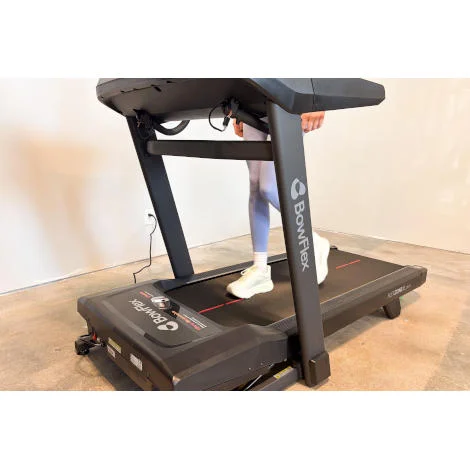
- Best Commercial Treadmill for Streaming – Bowflex T16 Treadmill
Current Top Deals
- Sole F80 Treadmill – Save up to $500 on treadmills
- Bowflex T16 Treadmill – $300 off
How We Selected the Best Commercial Treadmills
Our durability score assesses various components of the machine, particularly the motor, weight capacity, and overall stability provided by a given treadmill. To earn 3 out of 5 stars, we want to see a weight capacity of at least 275 pounds, a 2.5-CHP motor, and little to no shaking during our testing. We also take note of any excessive plastic components or pieces that feel too flimsy.
Most treadmills feature at least a few preset workouts built into the console, and many offer upgraded options like streamable studio workouts, interactive classes, scenic runs, and more. To earn 3 out of 5 stars, a treadmill should have at least a handful of built-in workouts you can access via the control panel. Higher scores are given to those with more advanced streaming options.
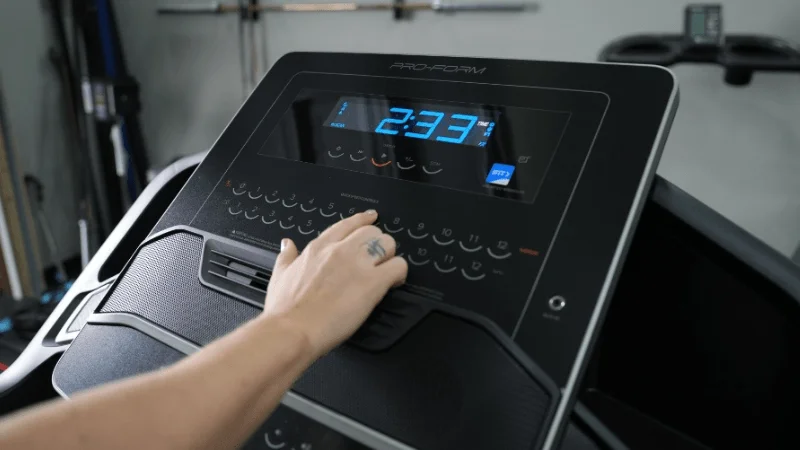
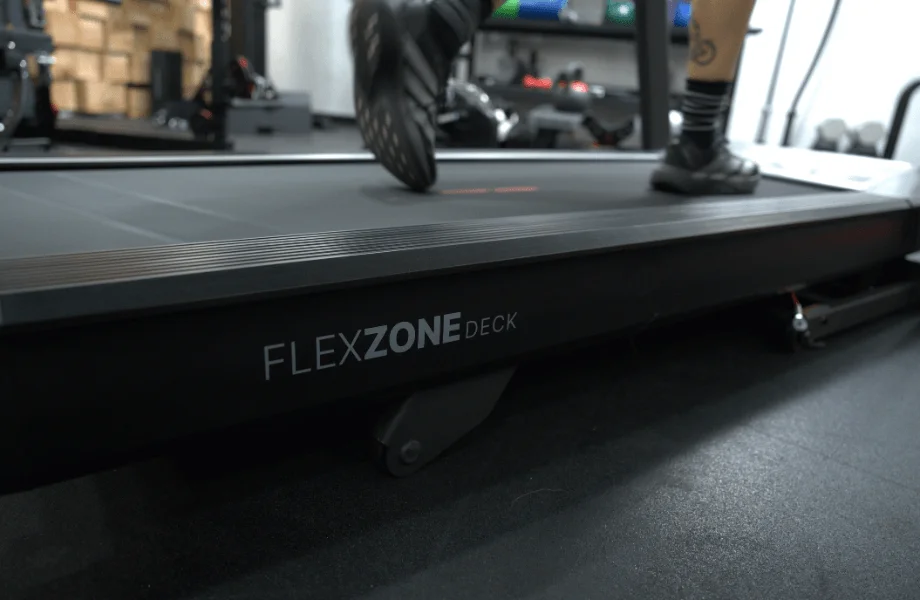
For ergonomics, we’re looking at how it feels to use a given treadmill, particularly the belt size and any underfoot cushioning. For a rating of 3 out of 5, we want to see a running deck that’s at least 55 inches long by 18 inches wide, a belt that’s 0.8 to 1.1 millimeters thick, and a deck that has at least some degree of cushioning. Higher scores go to treadmills with larger decks and above-average cushioning.
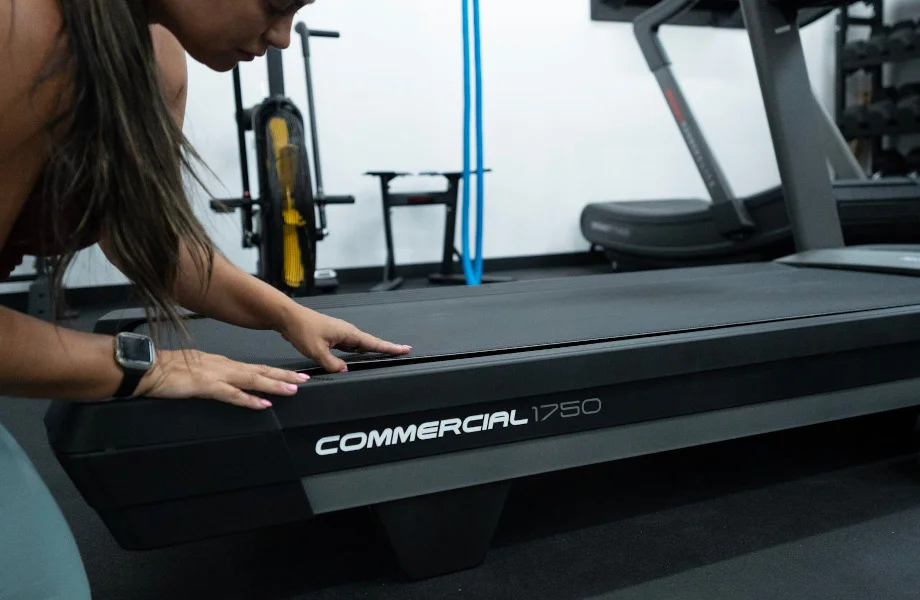
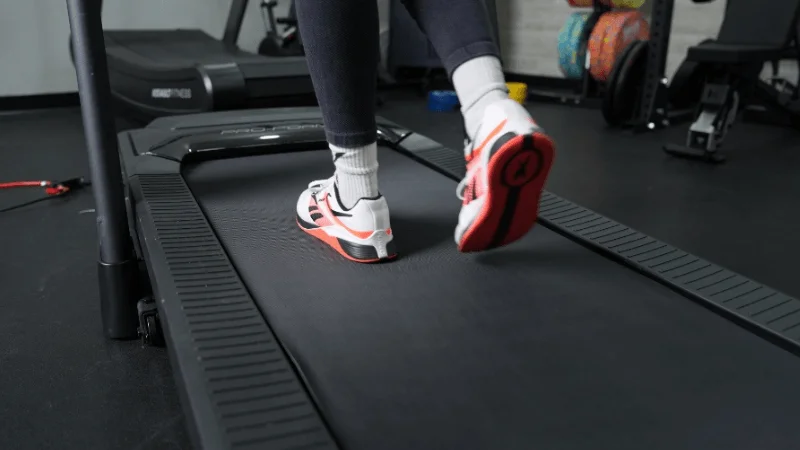
Before reviewing a given treadmill, we take it through a comprehensive testing protocol that includes walking, jogging, running, and sprinting workouts. To date, our team has tested over 50 treadmills, and we continually examine as many as possible throughout the year.
After testing, we score each machine using our in-depth treadmill testing methodology, which helps us rate treads on a scale of 1 to 5 in categories like footprint, customizations, conveniences, value, and more.
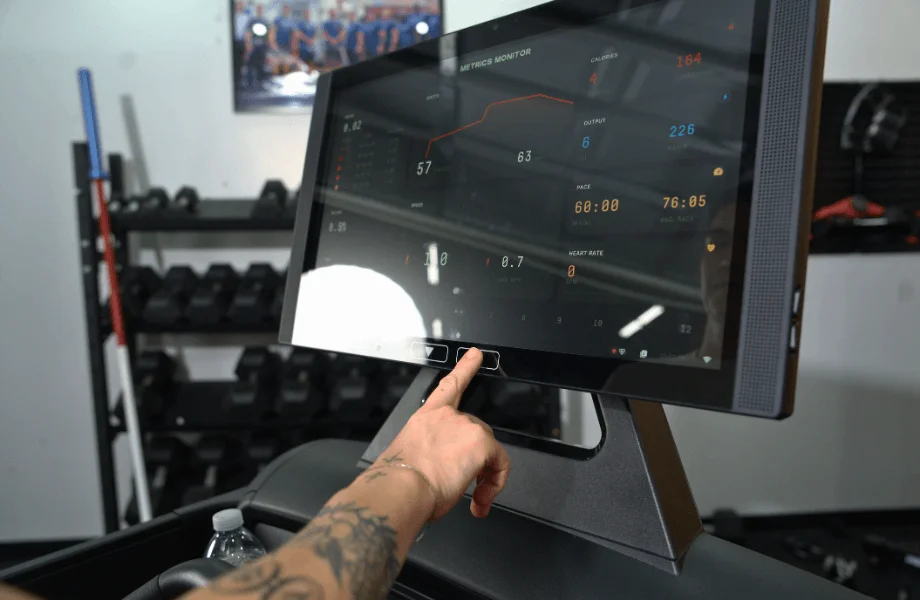
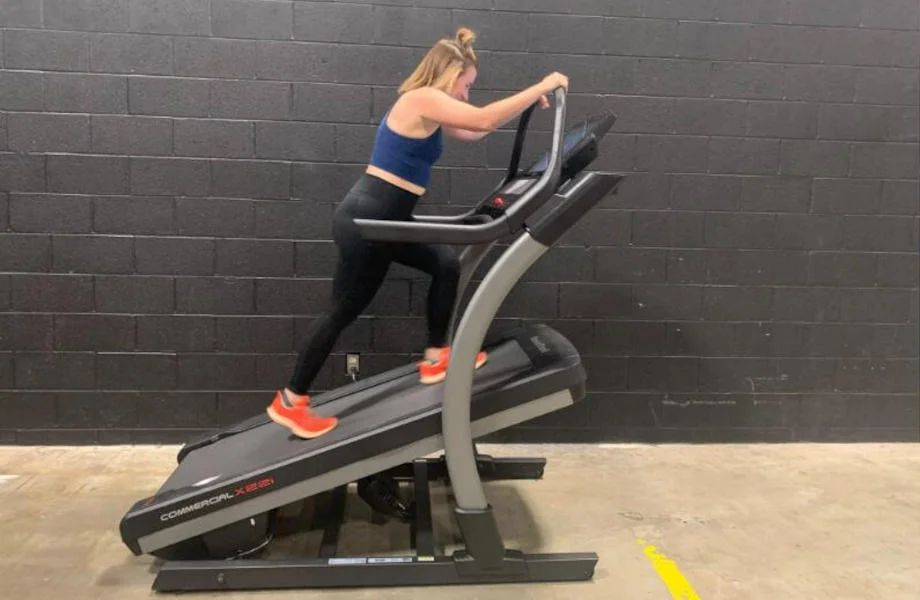
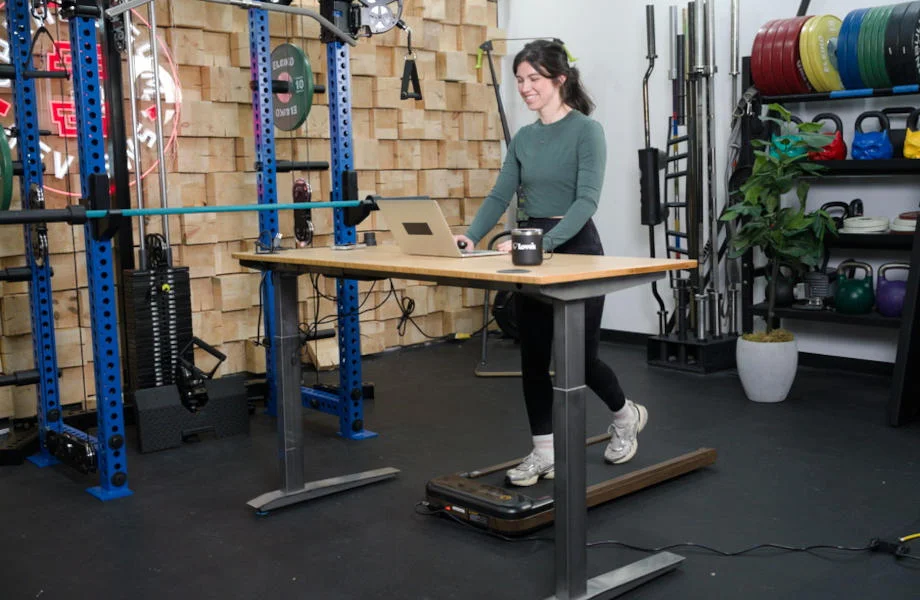
The GGR team of expert testers includes certified personal trainers, triathletes, runners, CrossFit enthusiasts, and more. We have extensive testing experience with treadmills, stationary bikes, strength machines, and everything in-between. In addition to our expert testers, we spoke to exercise physiologist Chris Mohr, PhD, RD, who shared his insight on the benefits of treadmills.


Latest Updates
In July 2026, we reviewed our list of the best commercial treadmills and made a few changes based on our latest testing. The NordicTrack Commercial 2450 still earns our top recommendation, but we swapped out picks that didn’t hold up in durability or customizations. New additions—like the Sole F80—stood out for their high scores in these categories.
Compare Side-by-Side
 |  |  |  |  |  | |
| NordicTrack Commercial 2450 Treadmill | Peloton Cross Training Tread+ | TrueForm Runner | NordicTrack X24 Treadmill | Sole F80 Treadmill | Bowflex T16 Treadmill | |
Rating | ||||||
| Speed Range | 0 – 14 mph | 0 – 12.5 mph | N/A (manual treadmill) | 0 to 12 mph | 0.5 – 12 mph | 0 – 12 MPH |
| Incline Range | -3% – 12% | 0% – 12.5% | N/A | -6% – 40% | 15 levels | 0-15% |
| Deck Size | 60″ L x 22″ W | 67″ L x 20″ W | 54″ L x 17″ W | 60″ L x 20″ W | 60″ L x 22″ W | 22″ W x 60″ L |
| Foldable? | — | — | — | — | ||
| Programs | iFIT | Peloton | N/A | iFIT | 10 preset workouts, 12 user-defined options | JRNY app |
| Display | 24″ pivoting touchscreen | 32″ HD touchscreen | Small LCD | 24″ pivoting touchscreen | 10.1″ touchscreen | 16″ HD touchscreen |
| Warranty | 10-year frame, 2-year parts, 1-year labor | 5-year frame, 3-year motor and belt, 12-month touchscreen and most original components | 20-year frame warranty | Lifetime treadmill motor warranty | Lifetime frame and motor | Lifetime frame & motor, 3-year mechanical parts, 1-year labor |
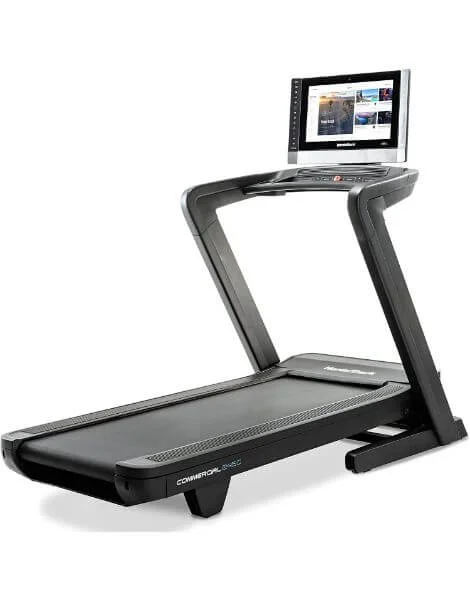
Best Commercial Treadmill Overall: NordicTrack Commercial 2450 Treadmill
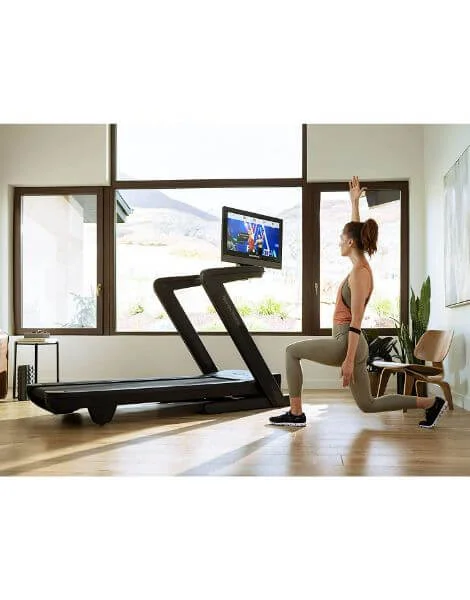
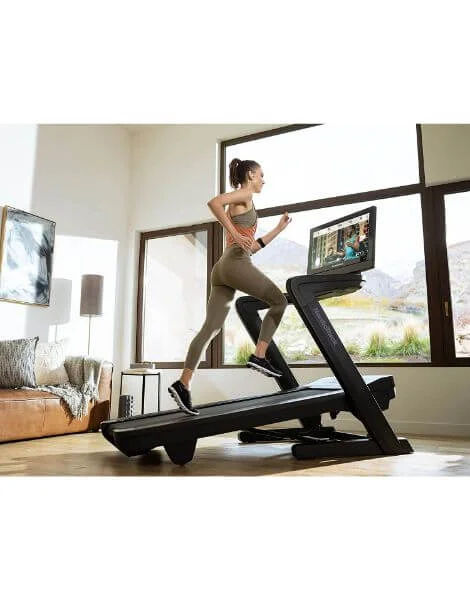









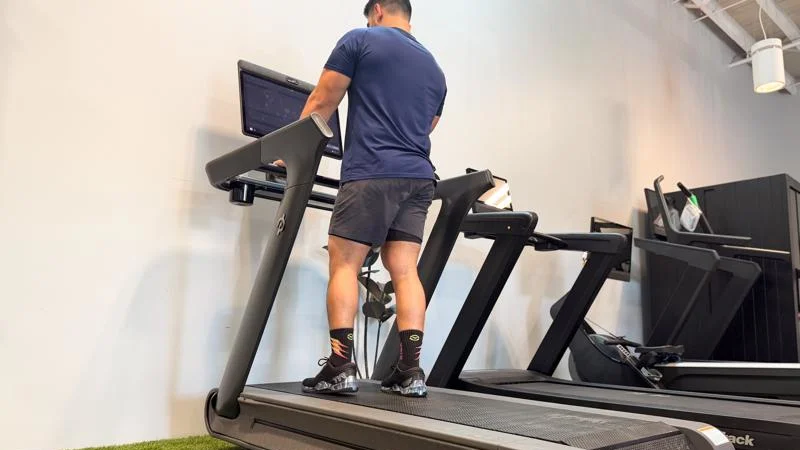
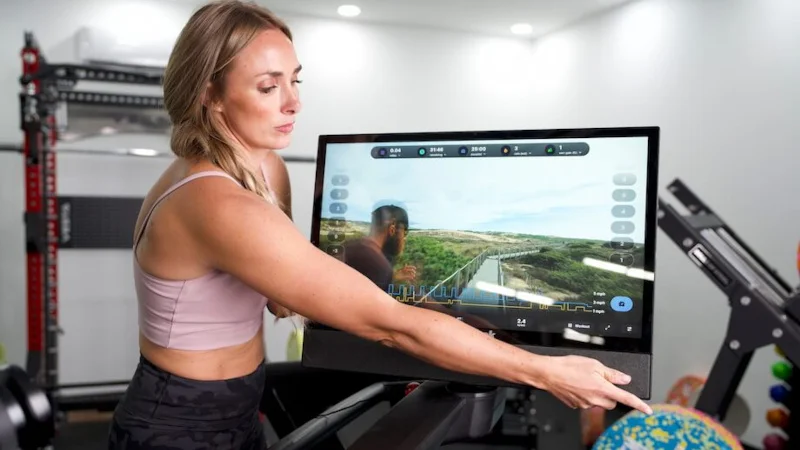
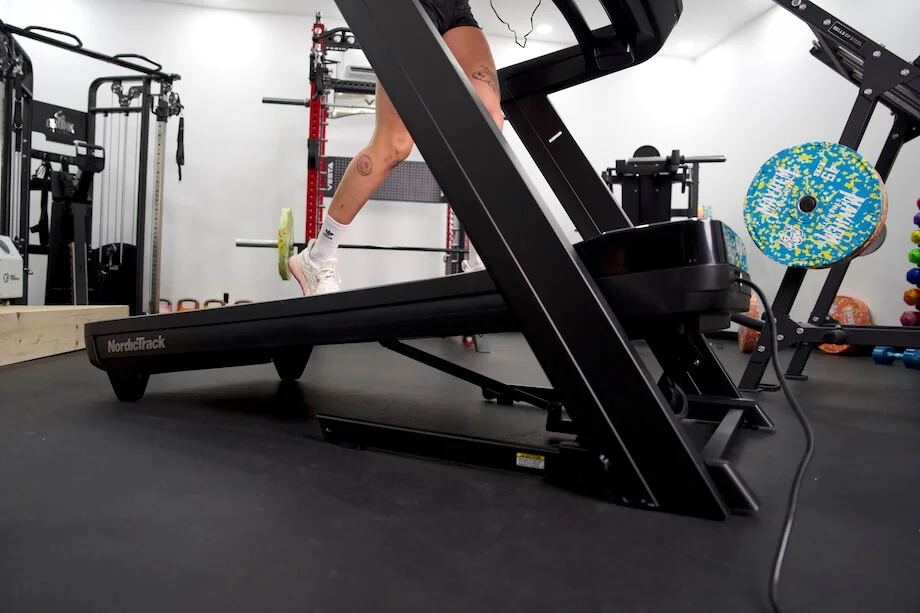
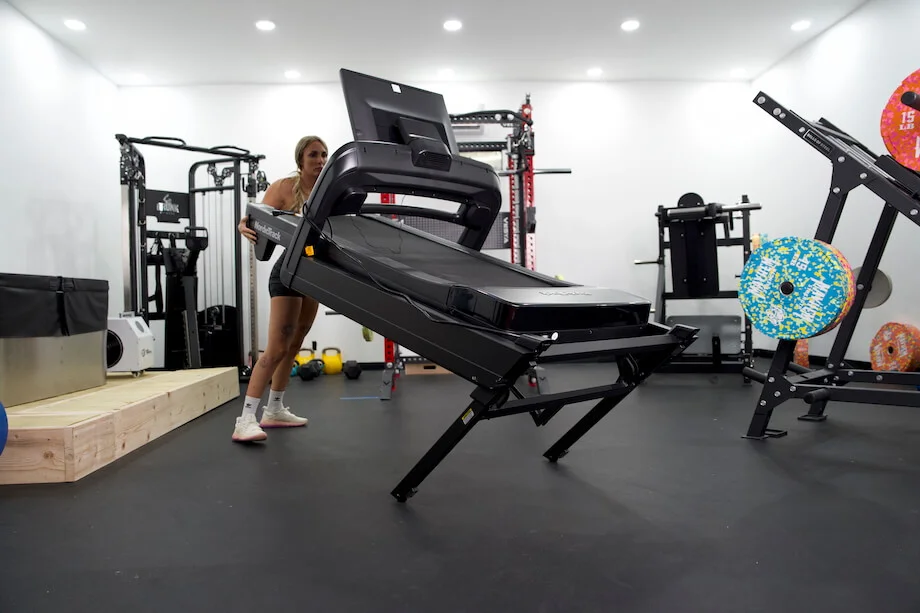
The NordicTrack Commercial 2450 treadmill has all the bells and whistles you might want and is easy to fold to save space when you are done using it.
What our tester says:
“I really enjoyed the cushioned deck of the 2450. For those who want to work out in comfort, this is a great choice.”
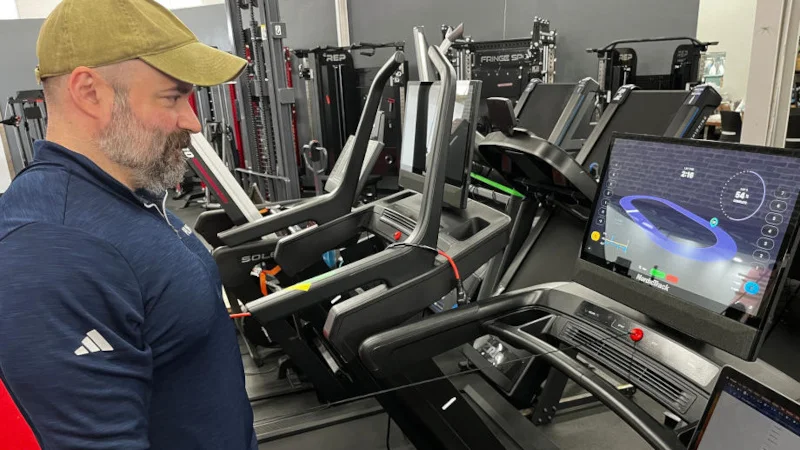
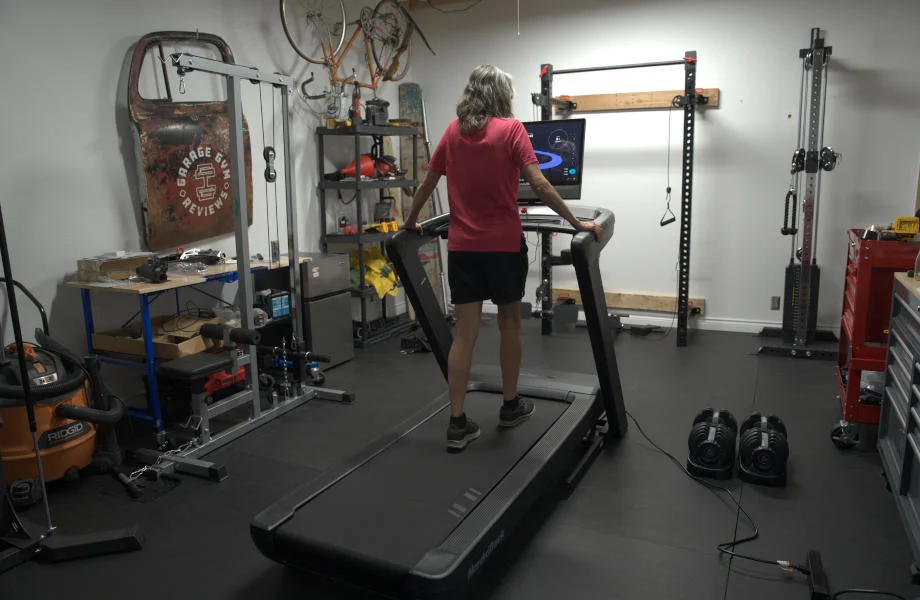
The NordicTrack Commercial 2450 treadmill has all the makings of an excellent cardio machine, whether you intend it for commercial or home use. The 22-inch-by-60-inch deck is spacious and above the industry standard, meaning it can accommodate a larger assortment of stride lengths. It also has an incline range of -3% to 12% incline, as well as speeds up to 14 MPH. This machine can support sprinting, walking, jogging, and running paces without any issues.
Our Experience Using the NordicTrack Commercial 2450
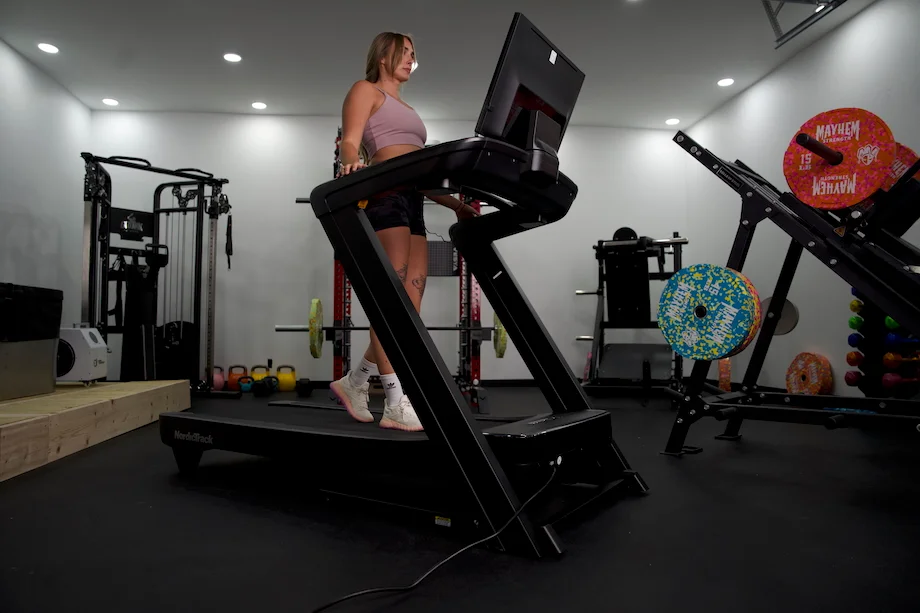
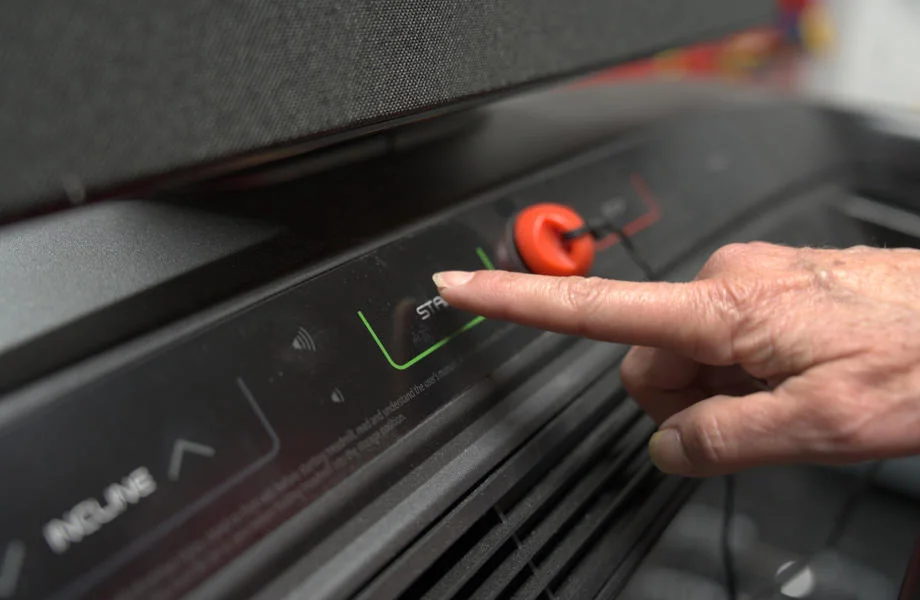
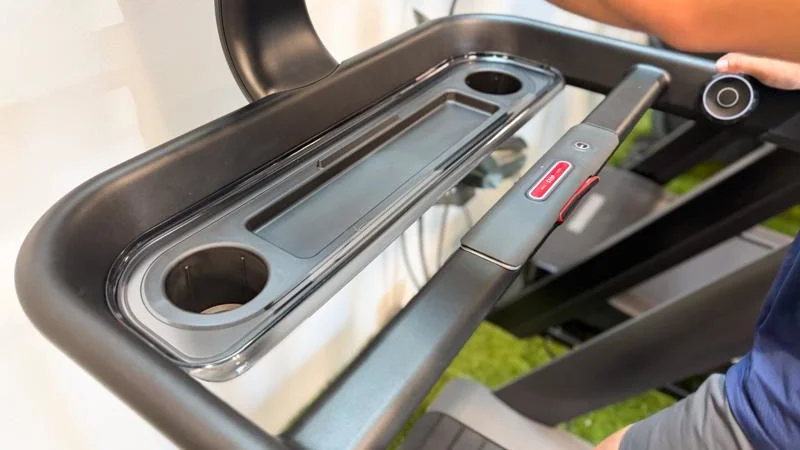
In addition to having a large running deck and plenty of speed and incline options to customize your workout, the 2450 features some great conveniences that can increase the comfort of your next training session. Such luxuries include two water bottle holders, a foldable running deck, a USB charging port, and a fan.
“I’m actually really impressed with this fan,” states Lindsay Scheele, CPT, CNC. “It has three different levels, and you can adjust it yourself or it will go up automatically with the intensity of your workout.”
Along with solid customizations and conveniences, NordicTrack also joined the streaming party in late 2024, allowing users with an iFIT Pro membership to view popular streaming services, as well as choose from 10,000+ workouts to follow along with.
Weighing more than 300 pounds, the 2450 is heavy. However, that’s on par with what you’d expect from any other high-quality treadmill with an impressive speed range and weight capacity. It’s also a large machine dimensionally, so you’ll need to be prepared with adequate space. The setup is also a bit involved. Lindsay told me, “There are a lot of parts, and it should take two people 1-2 hours. Even if you’ve assembled equipment before, this one is difficult.”
I really enjoyed running on this treadmill, and so many of our testers have come in and said this is one of their favorite treadmills that they have tested.
Lindsay Scheele, CPT, CNC
This commercial-grade machine has a high 400-pound weight capacity and powerful 4.25-CHP motor, making it suitable for a wide variety of users and training intensities. Plus, with iFIT integration, the Commercial 2450 grants you access to some of the best virtual workout programming on the market.
For more, check out our full NordicTrack Commercial 2450 review.
How the NordicTrack Commercial 2450 Compares
The NordicTrack 2450 costs more than the average treadmill, but it also offers a larger deck, incline and decline options, and a large, pivoting touchscreen that help justify the cost.
| NordicTrack Commercial 2450 | Average Treadmill | |
| Manufacturer Price | $2,999.99 | $1,900 |
| Top Incline | 12% | 12% |
| Top Speed | 12 MPH | 10 MPH |
| Running Belt | 60” L x 22” W | 55″ L x 18″ W |
| Weight Capacity | 400 lbs | 320 lbs |
| Warranty | Lifetime motor, 10-year frame, 2-year parts, 1-year tablet, 1-year labor and repairs | 10 years |
If you want another durable option that’s a bit lighter and easier to move, we recommend the Sole F80.
Best Commercial Treadmill for Streaming: Peloton Cross Training Tread+







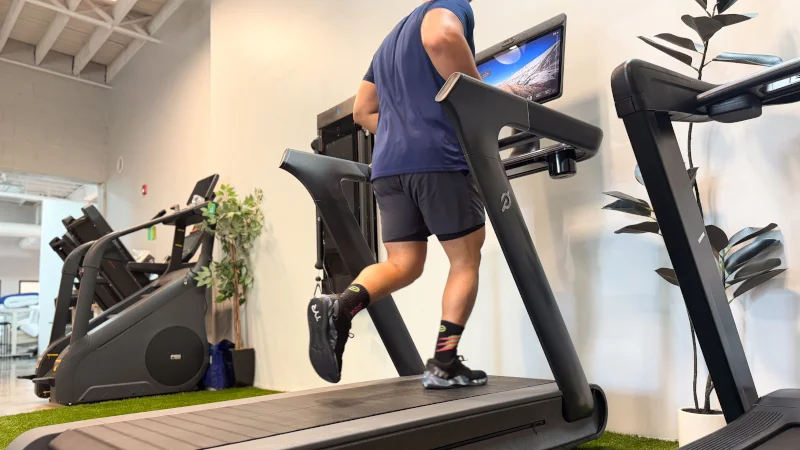
The Peloton Tread+ is a top-tier treadmill with premium construction, immersive training features, and advanced tech. While it’s one of the priciest options out there, it’s built for runners who want a commercial-grade machine and engaging workouts at home.
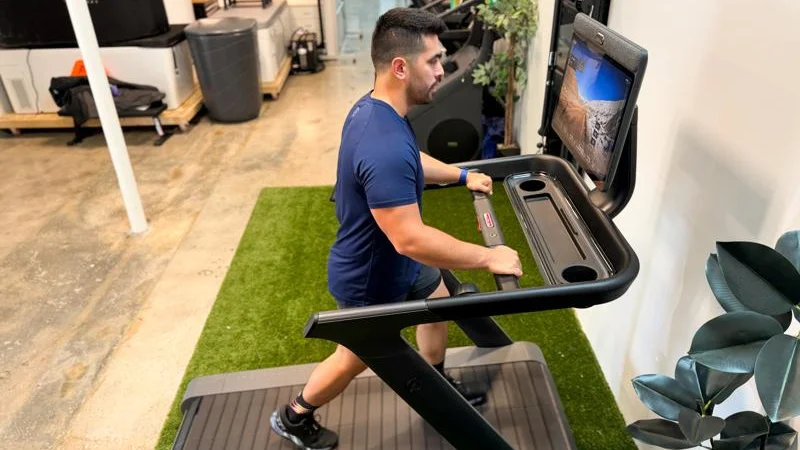
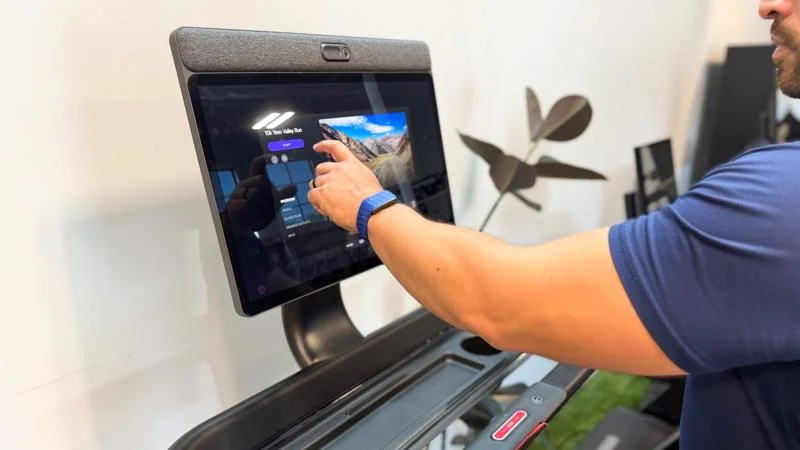
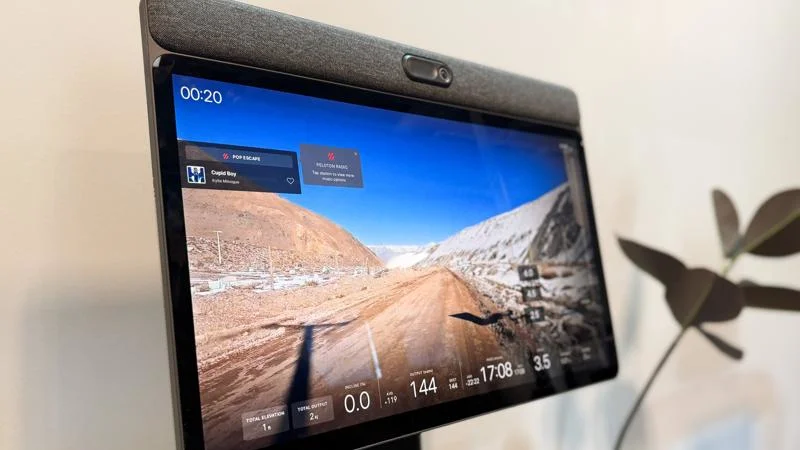
If you’re familiar with Peloton, you know the brand goes all-in on tech—so much so that our tester says the Peloton Cross Training Tread+ “is like a gigantic iPad that has a treadmill attached to it.” That giant HD screen is part of what makes this the best commercial treadmill for streaming.
Our Experience Using the Peloton Cross Training Tread+
The Peloton Cross Training Tread+ (formerly known as the Peloton Tread+) is a cult favorite, and for good reason. As with all Peloton machines (looking at you, Peloton Bike), the streamable workouts and large library of live and on-demand programs are some of the best in the industry. Plus, the oversized touchscreen allows you to enjoy their programming in a more immersive fashion. You can also access Netflix, HBO Max, and other streaming services on the display.
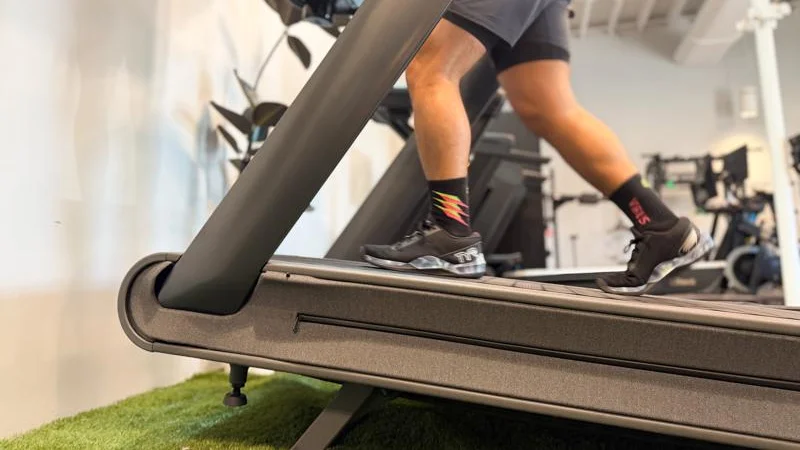
According to our tester, the Cross Training Tread+ felt very stable at high speeds and at the top of the incline range. “There was no concern about wobbling while moving. It has a very sturdy build, so quality is trustworthy,” they said.
This treadmill features a maximum 15% incline and a top speed of 12.5 MPH. Our tester says the transitions were smooth, with no jumps or jerks: It took about 20 seconds to go 0% to 15% incline, and another 20 seconds back down at a speed of 2-3 MPH.
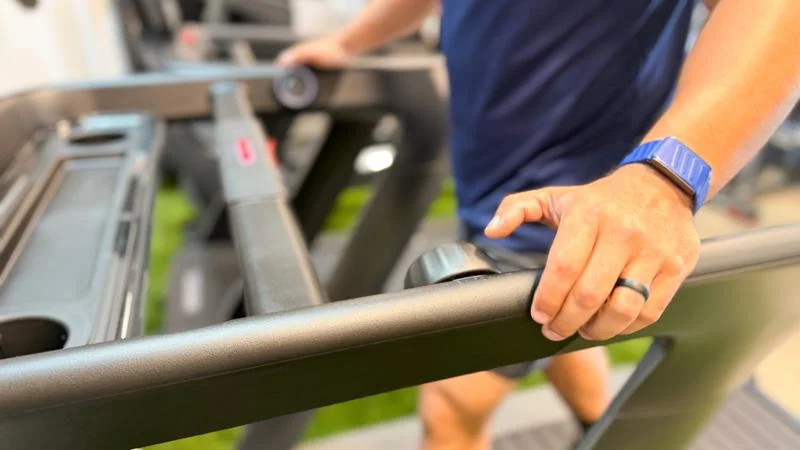
For all the good, we have to call out the bad, too. This is a very large, heavy treadmill, and it doesn’t fold. It has wheels, but you may still need assistance to move it. Peloton requires white-glove delivery for a fee of $299 when purchasing the Cross Training Tread+. We don’t love that you don’t have a choice, but due to its size and weight, we get it. Also, the warranty is short for such an expensive product with five years of coverage on the frame (compared to the industry standard of 10 years, and lifetime frame coverage on many commercial treads).
What stood out to me was how fun and immersive the treadmill’s scenic routes are. Peloton really made these routes entertaining, immersive, and well-recorded.
GGR expert product tester
The sleek design, high-tech features, and immersive programming make you feel like you’re in a boutique fitness studio. But if you just want to run on an exceptional treadmill, this does the trick, too. Our tester puts it best: “You don’t really need to use all the high-end tech; you can, but it can also be a simple treadmill.”
How the Peloton Cross Training Tread+ Compares
The Peloton Cross Training Tread+ is certainly much more expensive than the average treadmill, but you’re getting a much larger running surface than average, plus a higher top speed and incline (not to mention all of the tech features).
| Peloton Cross Training Tread+ | Average Treadmill | |
| Manufacturer Price | $6,695 | $1,900 |
| Top Incline | 15% | 12% |
| Top Speed | 12.5 MPH | 10 MPH |
| Running Belt | 67″ L x 20″ W | 55″ L x 18″ W |
| Weight Capacity | 300 lbs | 320 lbs |
| Warranty | 5 year frame, 3 year motor drive and belt, 1 year parts and display | 10 years |
If you’re not looking to spend quite so much dough, consider the NordicTrack X24, which has an impressive suite of tech features for a lower price.
Best Manual Commercial Treadmill: TrueForm Runner
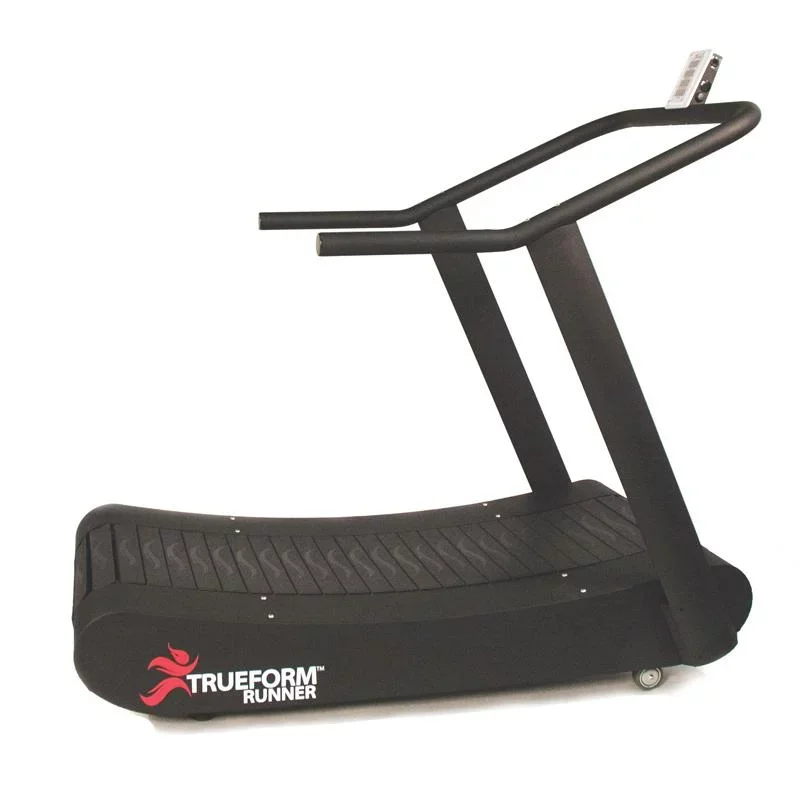
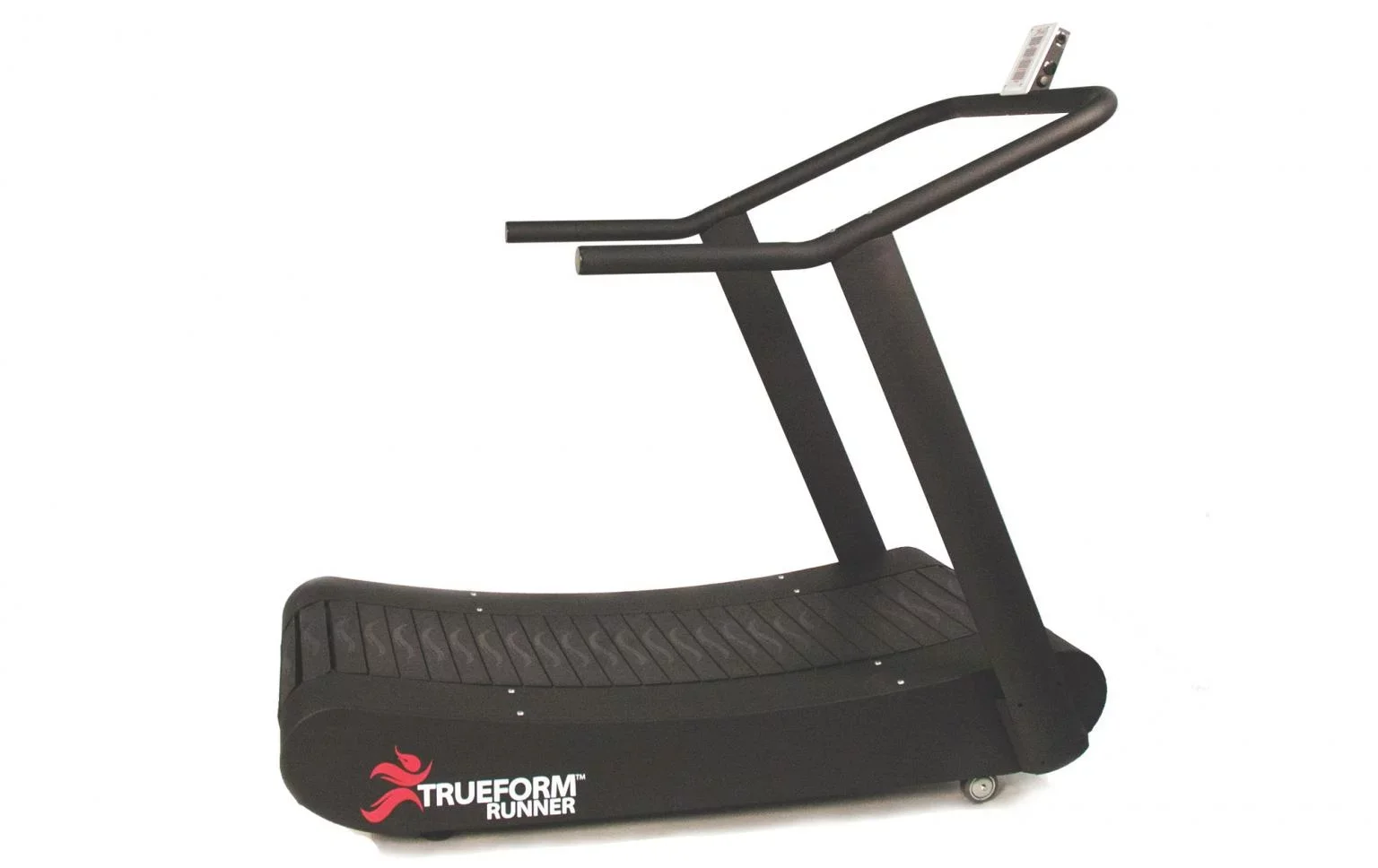
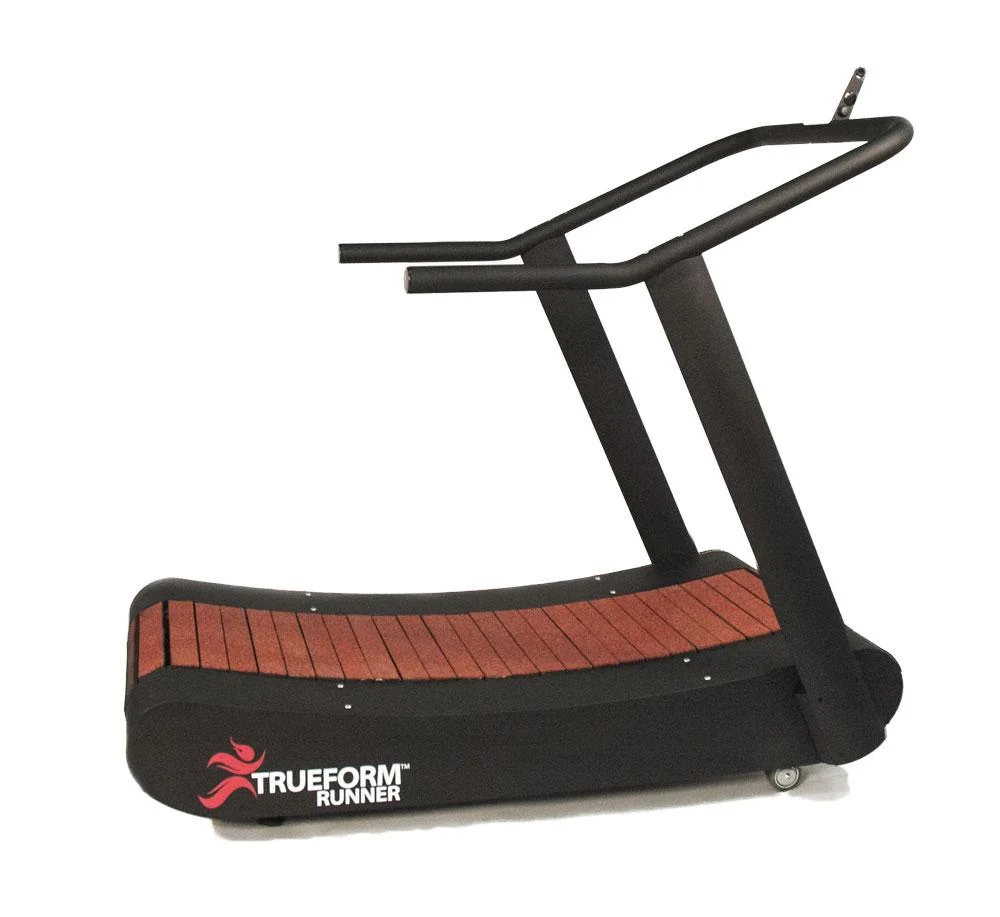
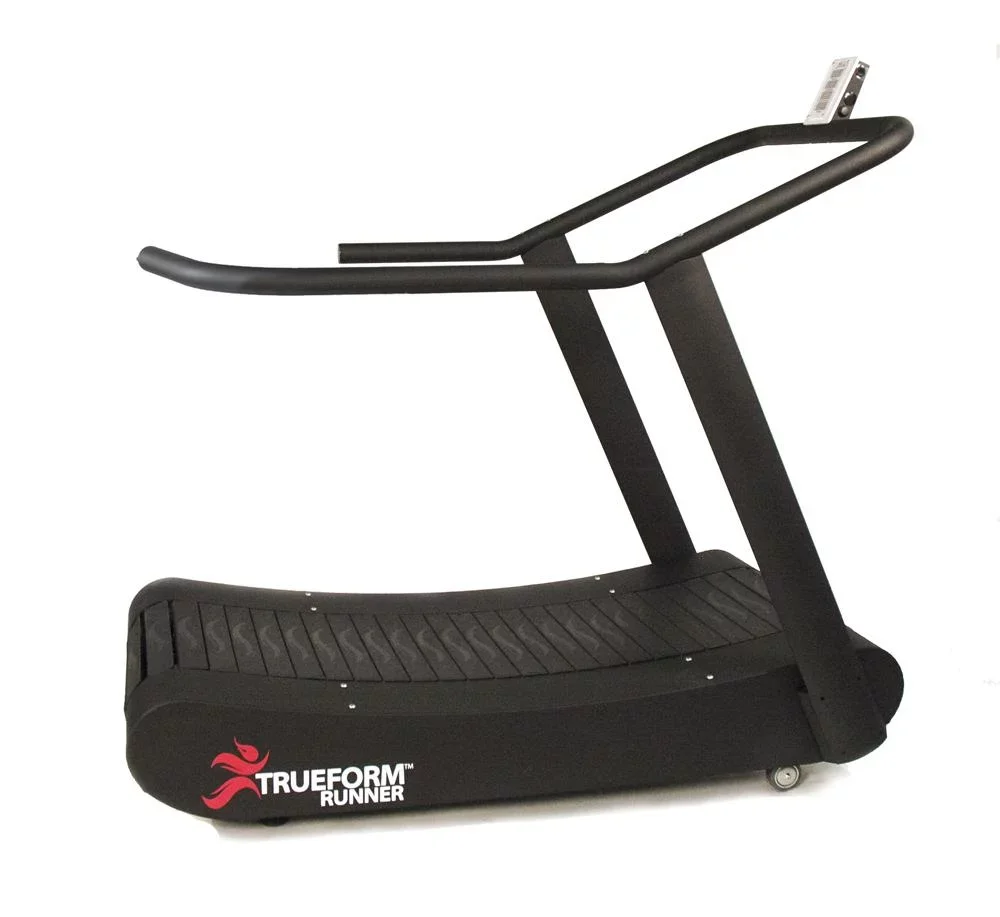
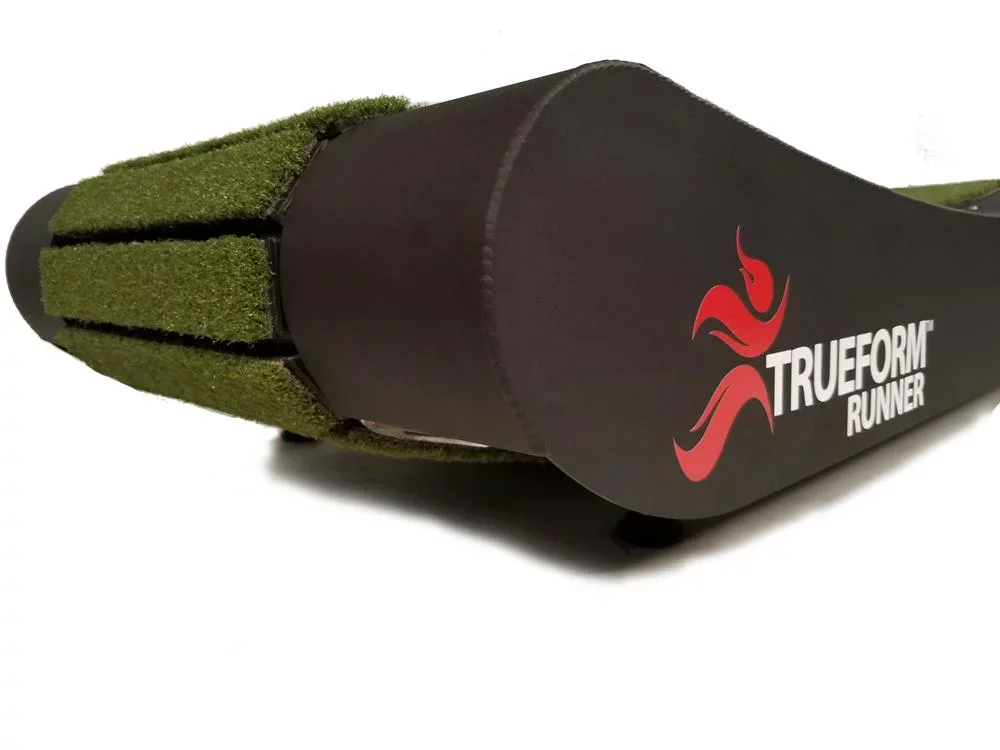
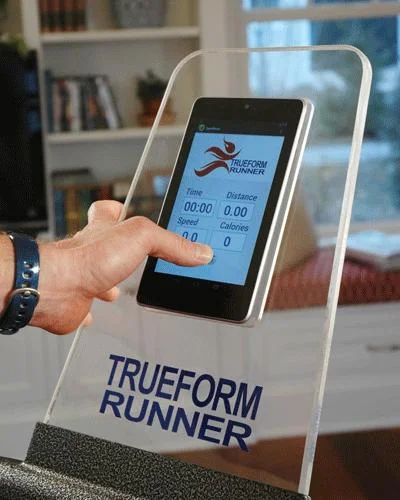

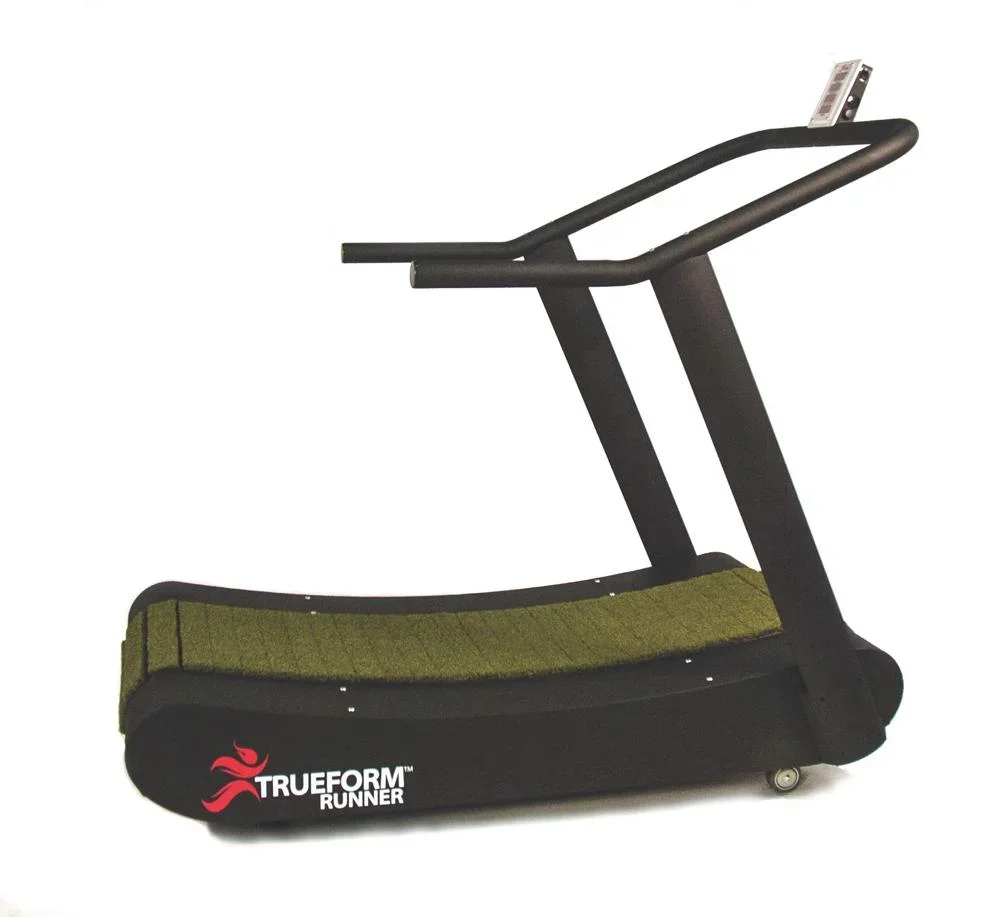
The TrueForm Runner is a unique treadmill designed to help runners improve their form.
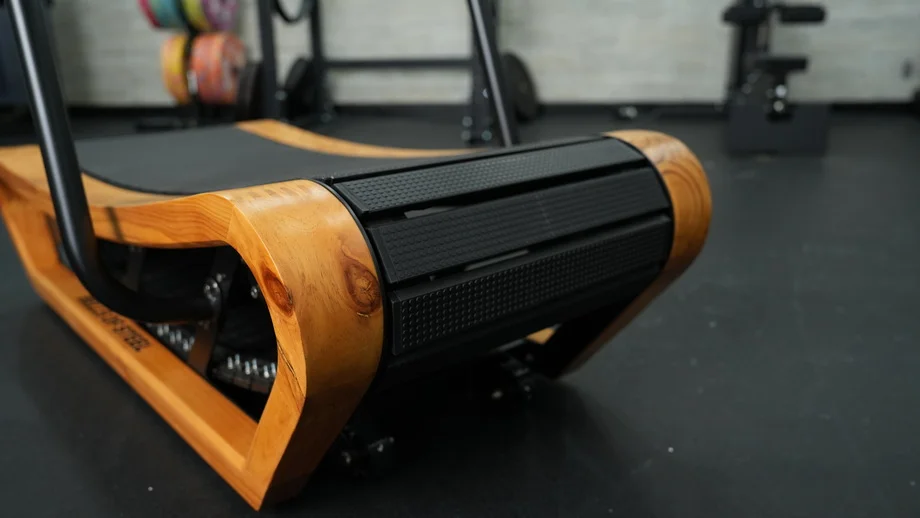
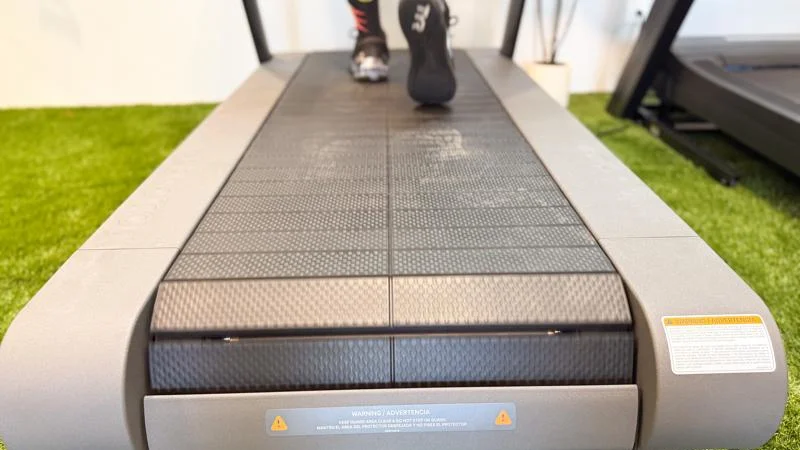
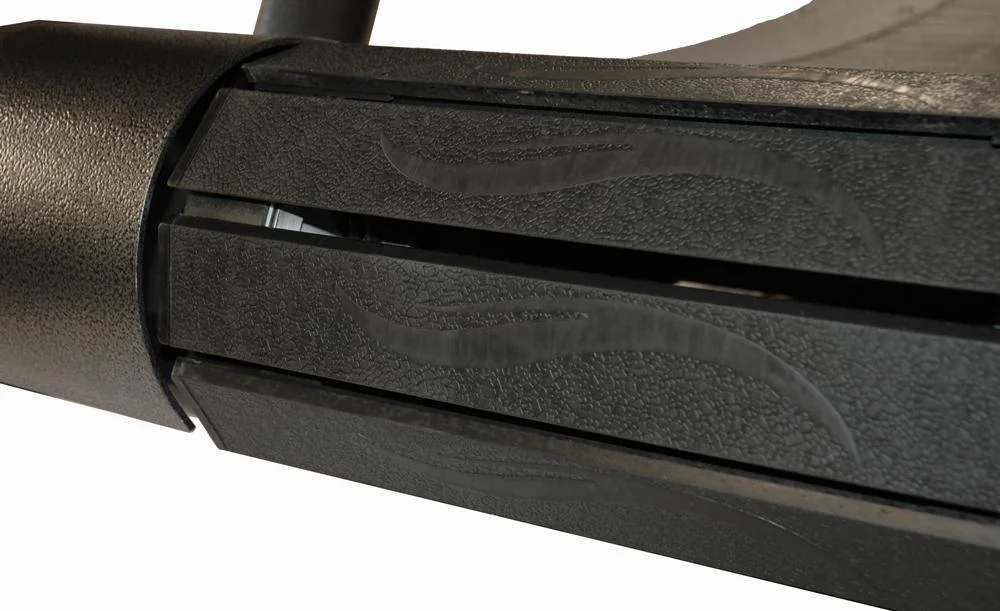
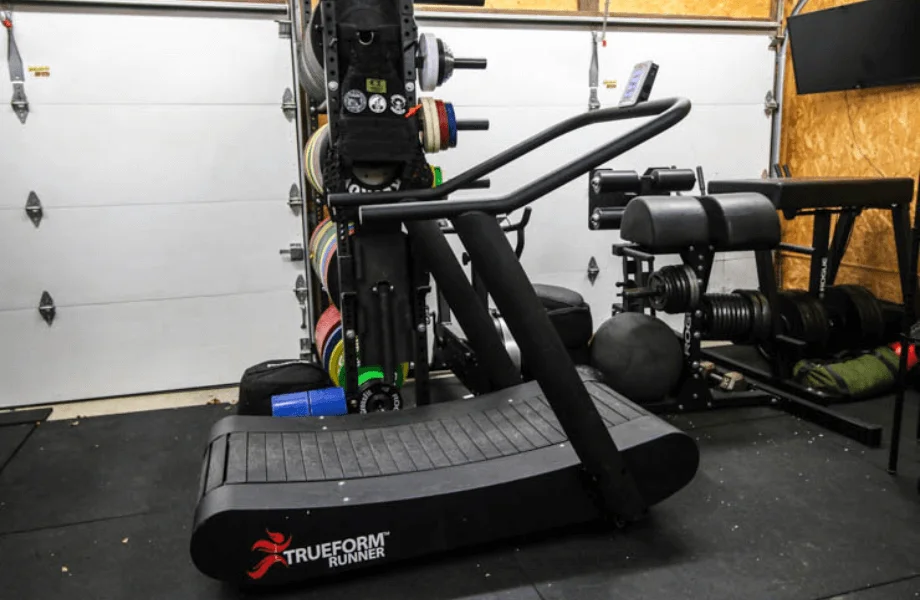
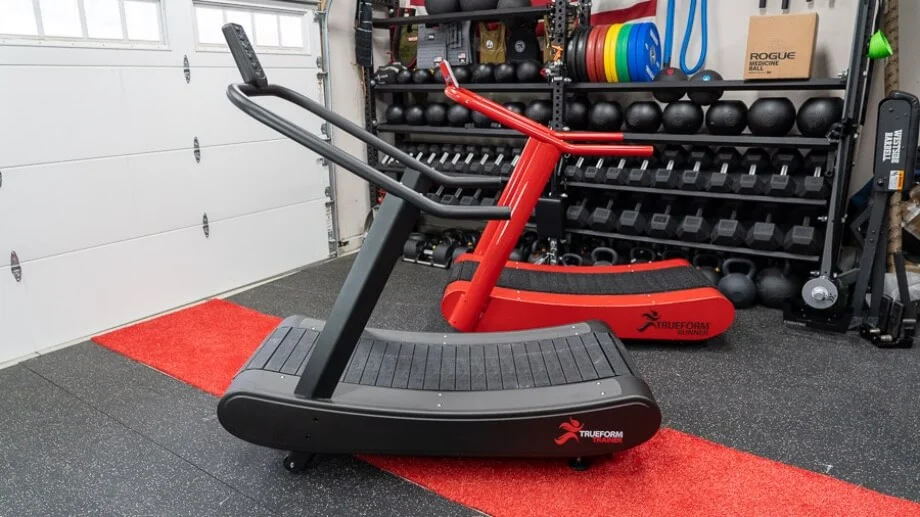
If you’ve ever been to a CrossFit box before, you’re probably pretty familiar with the TrueForm Runner. This curved, manual treadmill is built-to-last, and you get an impressive 20-year warranty on the frame. You won’t feel any shaking or wobbling on the Runner, either, as this machine is a tank and constructed out of heavy-duty steel. This treadmill is exclusively user-powered, which means you also won’t have to worry about the motor failing or not lasting (since there isn’t one).
Our Experience Using the TrueForm Runner
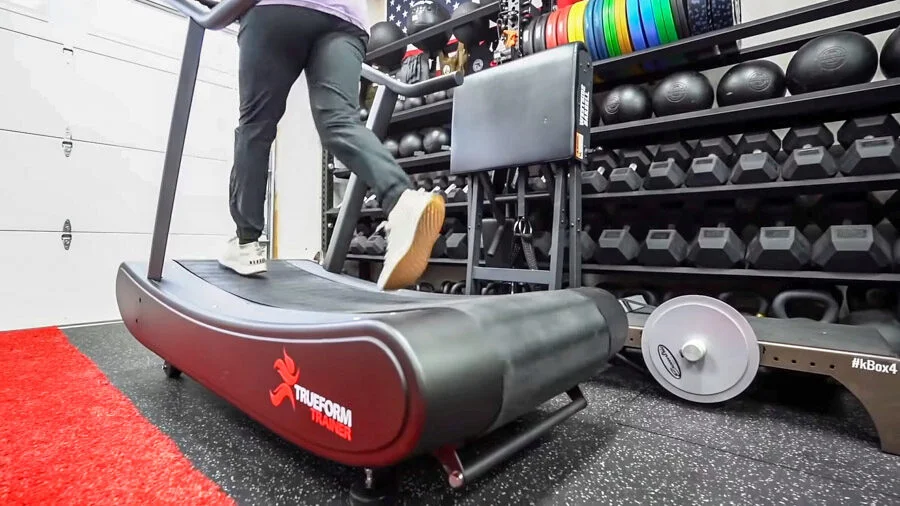
I’m a fan of the TrueForm Runner because I feel like it makes me run with better form due to the curvature of the deck. The ergonomics do pose a challenge, especially when first getting started, but it’s a welcomed experience that I routinely look forward to on cardio days.
GGR founder Cooper “Coop” Mitchell also appreciates the ergonomics, saying, “The curved treadmill is designed to improve running form, and you can go from sprinting to walking in just a few steps.”
The 700-pound user weight capacity is well above the treadmill industry standard of 300 pounds, which makes this an inclusive choice.
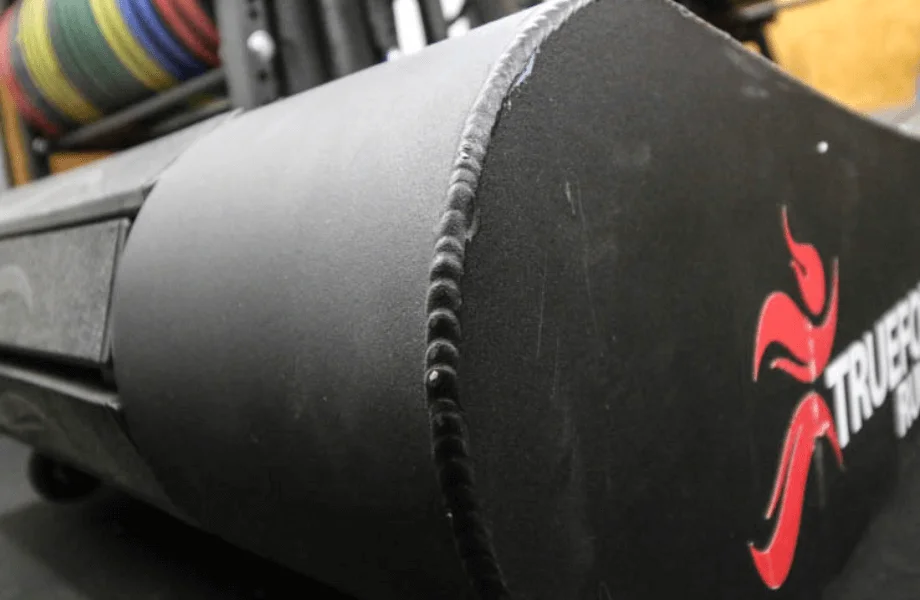
Coop was impressed with the construction, too, saying: “A metal frame that’s powder-coated. Stainless hardware. High-end bearings. Welded seams. Heavy-duty casters. Best of the best.”
For those who have never used a curved, manual treadmill, it can provide an excellent challenge, and often feels more difficult than a standard treadmill. Research backs this up, and a 2018 study1 found that running on a curved, non-motorized treadmill resulted in a higher heart rate and higher perceived exertion.
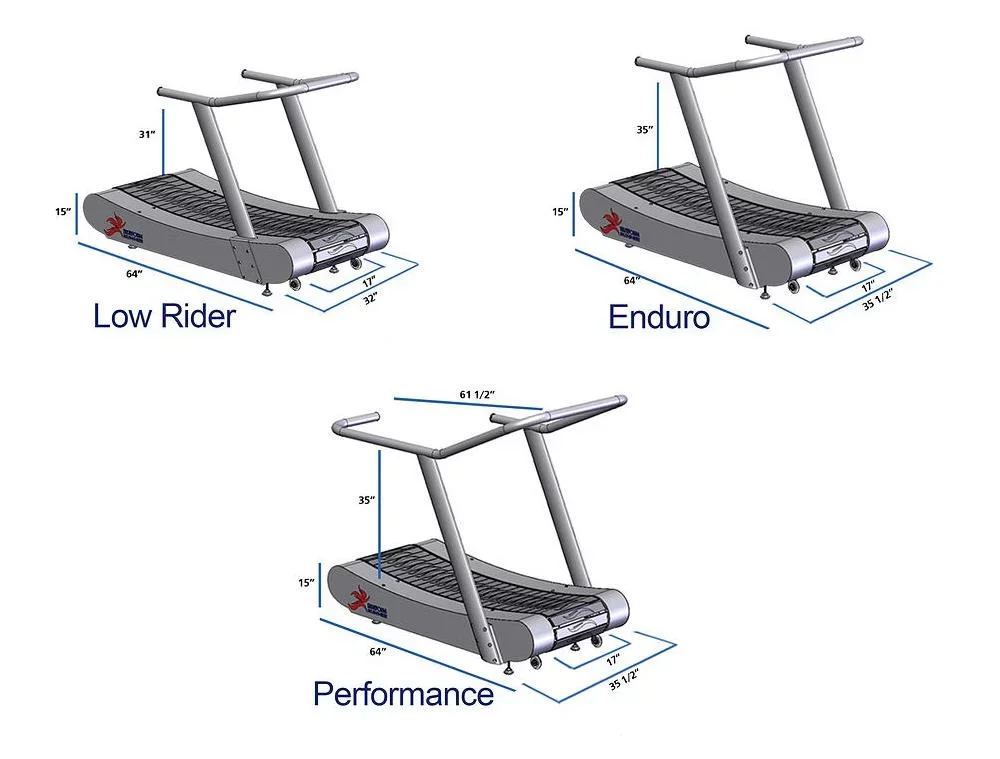
It’s worth noting that this machine cannot fold and has a sizable footprint. Luckily, you won’t be limited to where you can find an outlet since the machine doesn’t have to be plugged in for operation. You can roll the machine around on the included transport wheels, but you may have trouble lifting it up since it’s almost 350 pounds assembled. Accordingly, Coop gave the Runner 3.5 out of 5 stars for footprint and portability.
The TrueForm Runner is also quite expensive. It’s very well constructed, but its nearly $7,000 price tag is beyond the range of many budgets for residential treadmills.
It’s incredibly built, but also very expensive…but man do I love my Runner.
Cooper Mitchell, GGR founder and equipment expert
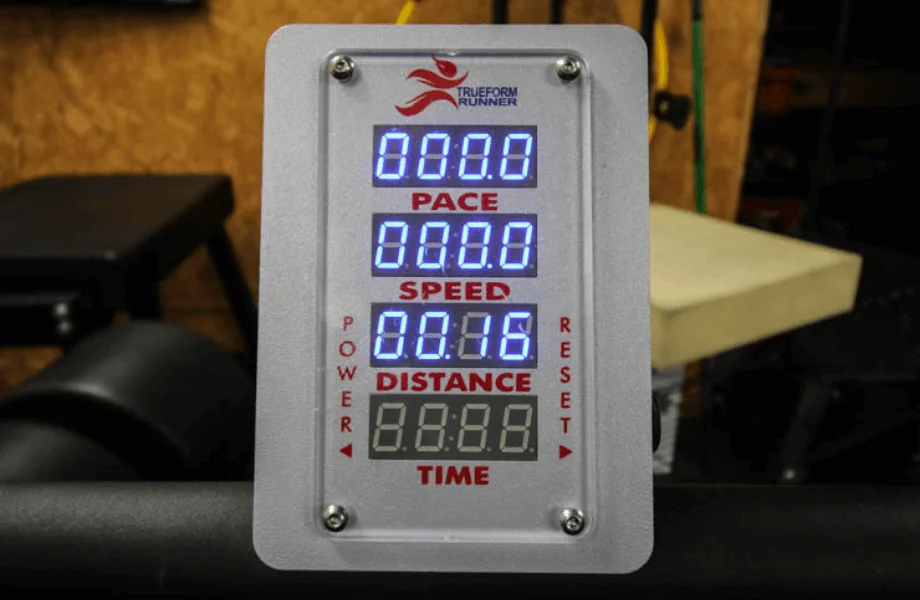
The TrueForm Runner is a best-in-class manual treadmill, and despite its high price tag, we think it delivers a great value to those who are specifically interested in a commercial-quality curved treadmill with a slat belt. This is especially true now that TrueForm has added the option for a smart display and various running belt surfaces, including turf and track.
For more on this popular manual treadmill, read our in-depth TrueForm Runner Treadmill review.
How the TrueForm Runner Compares
The TrueForm Runner is considerably more expensive than the average treadmill, but it offers a unique experience, incredible build quality, and an industry-best warranty.
| TrueForm Runner | Average Treadmill | |
| Manufacturer Price | $6,995 | $1,900 |
| Top Incline | N/A | 12% |
| Top Speed | N/A | 10 mph |
| Running Belt | 54” L x 17” W | 55″ L x 18″ W |
| Weight Capacity | 700 lbs | 320 lbs |
| Warranty | 20 years frame; 5 years tread surface; 5 years tread mechanism; 3 years LED display, 2 years labor | 10 years |
For an equally durable treadmill that has a motor and incline capabilities, consider the NordicTrack X24.
Best Incline Commercial Treadmill: NordicTrack X24


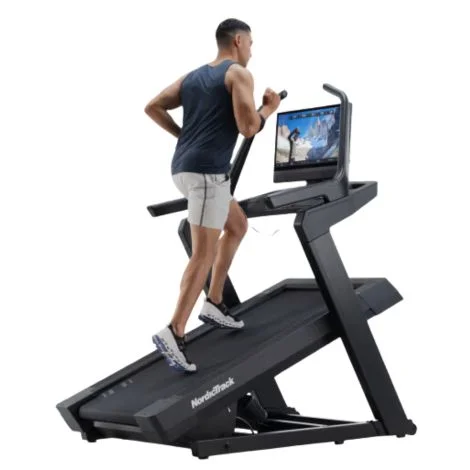
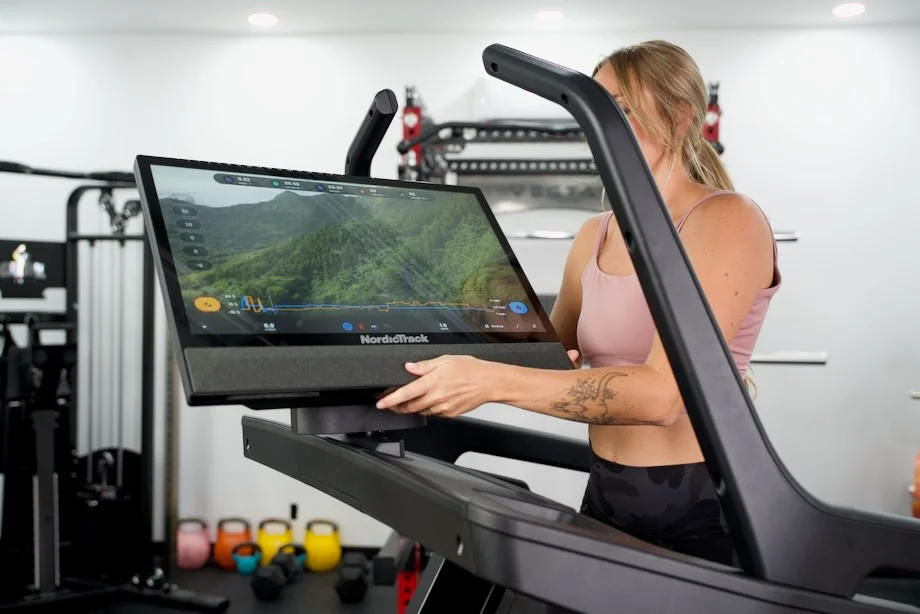
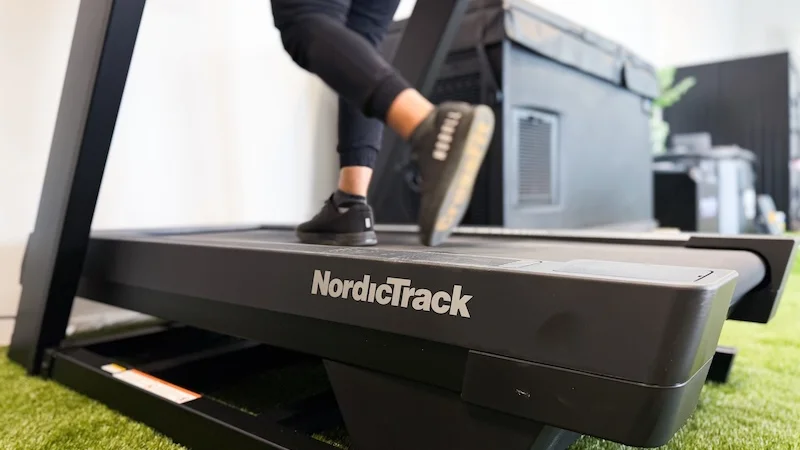
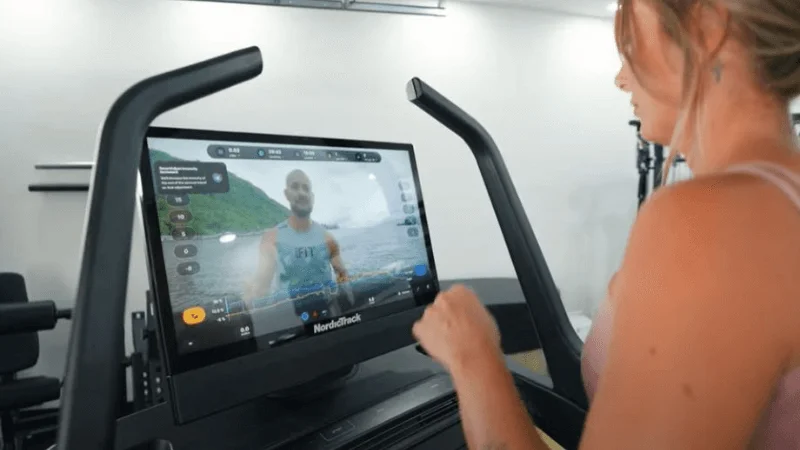
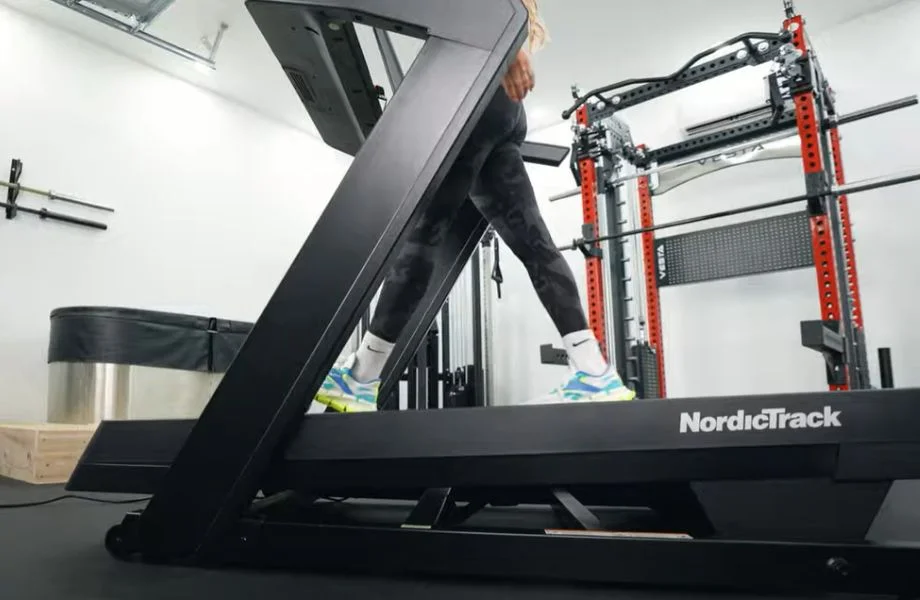
The new NordicTrack X24 Treadmill has an impressive incline/decline range of -6% to 40% and features an impressive 24-inch touchscreen monitor with high-quality speakers. It includes several conveniences, like water bottle holders and a cooling fan that adjusts automatically based on the intensity of your iFIT class. However, the price tag is steep, and this large, heavy treadmill could be difficult to move around.
What our tester says:
“I didn’t notice the screen wobbling or shaking even at high speeds.”
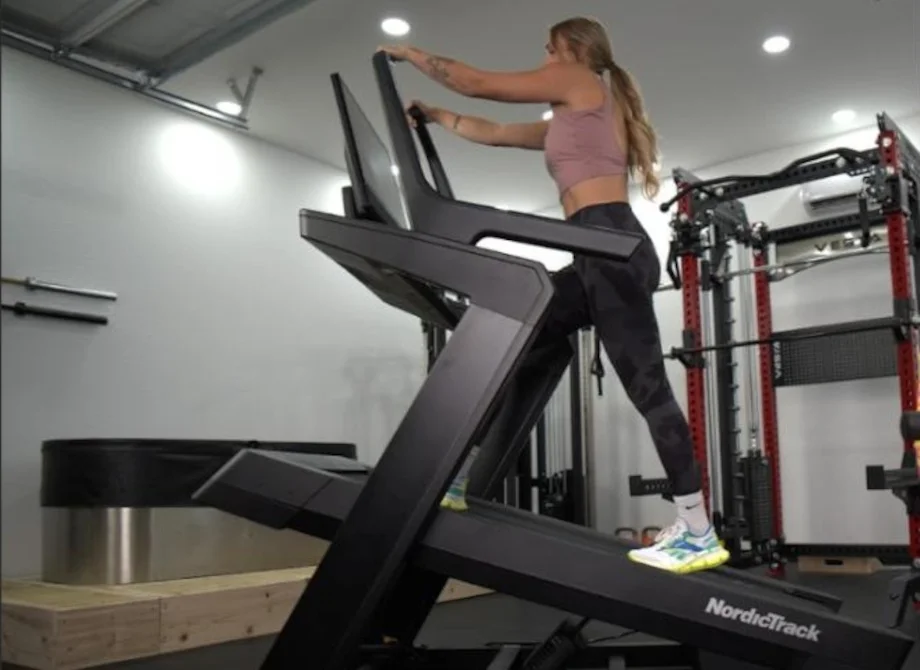
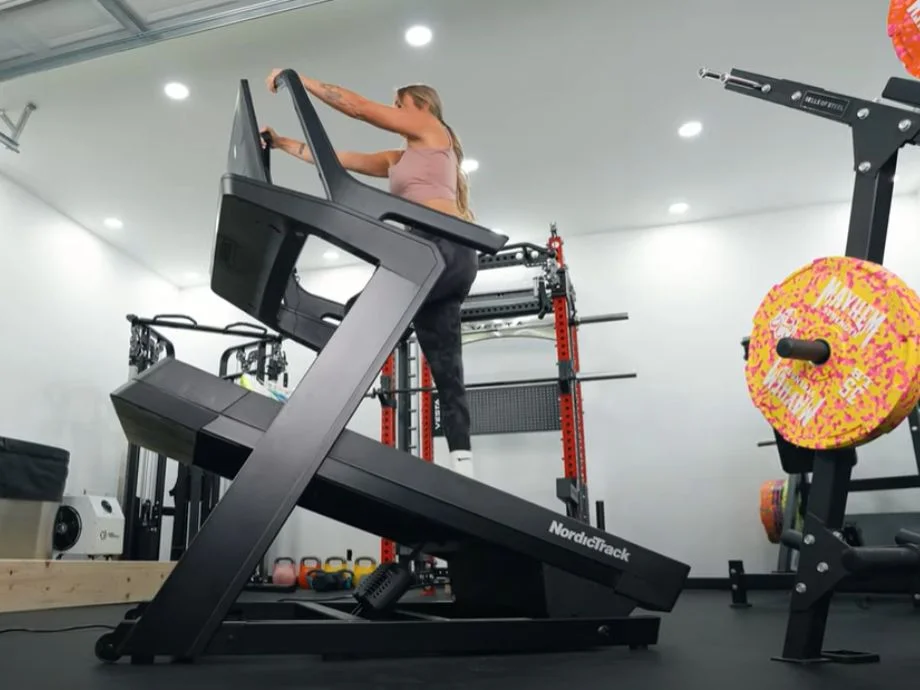
If you’re looking for a heavy-duty treadmill offering one of the highest inclines we’ve ever seen on a treadmill, look no further than the NordicTrack X24. In addition to offering decline training down to -6%, the X24 boasts an impressive max 40% incline setting; far beyond the average 12% we see on other home treadmills. It also features seamless integration with iFIT, which offers a large library of workout programs as well as AutoAdjust technology for focused, hands-free workouts.
Our Experience Using the NordicTrack X24 Treadmill
In addition to great customization options, the X24 treadmill features a beautiful 24” HD touchscreen that’s compatible with iFIT, earning 5 out of 5 stars for both tech capabilities and dynamic programming. Additionally, it offers both SmartAdjust and ActivePulse, which automatically toggle the speed and incline in accordance with your onscreen instructions and target heart rate zone.
“Considering how big and in-your-face the screen is, I was surprised that there was no jostling at all,” adds Lindsay Scheele, CPT, CNC in reference to her 5-out-of-5 durability rating. “ I also like that I can individually adjust the volume of the instructors or the music, which is something that isn’t possible on a lot of other treadmills.”
The two main callouts here are the size and cost. With so many incline options and a powerful motor, it’s no surprise that the X24 is very heavy, bulky, and difficult to move around..
“I recommend finding a dedicated spot for this treadmill in your home, because it’s not easy to move,” she explains. “There are wheels on the front, but there’s no handlebar on the back, so you have to kind of rely on your grip strength to lift it up and wheel it around.”
The NordicTrack X24 is also quite expensive, and while we think it offers a lot of features for the price, we know that many people simply don’t want to (or have the capacity to) spend nearly $4,300 on a single home gym essential.
The performance is there, and I appreciate the wide-ranging incline adjustments. That said, we understand that the near-$5,000 price tag isn’t right for every budget.
Lindsay Scheele, CPT, CNC
The large, bulky size means the X24 isn’t the best choice for people with small home gym spaces, and the initial setup can be challenging. That said, it’s a fantastic machine in every other category and is well worth the investment, according to our testers.
For more, read our full NordicTrack X24 Treadmill review.
How the NordicTrack X24 Treadmill Compares
The treadmill is far more expensive than the average machine, but in this case, you really do get what you pay for with impressive incline capabilities, a larger running deck, and a higher weight capacity.
| NordicTrack X24 Treadmill | Average Treadmill | |
| Manufacturer Price | $4,299.99 | $1,900 |
| Top Incline | 40% | 12% |
| Top Speed | 12 MPH | 10 MPH |
| Running Belt | 60” L x 22” W | 55″ L x 18″ W |
| Weight Capacity | 400 lbs | 320 lbs |
| Warranty | Lifetime motor, 10-year frame, 2-year parts, 1-year labor | 10 years |
If you don’t need 40% incline and want to save some money, we recommend the NordicTrack Commercial 2450 Treadmill, which is another great option for streaming classes and getting a great workout.
Best Folding Commercial Treadmill: Sole F80 Treadmill
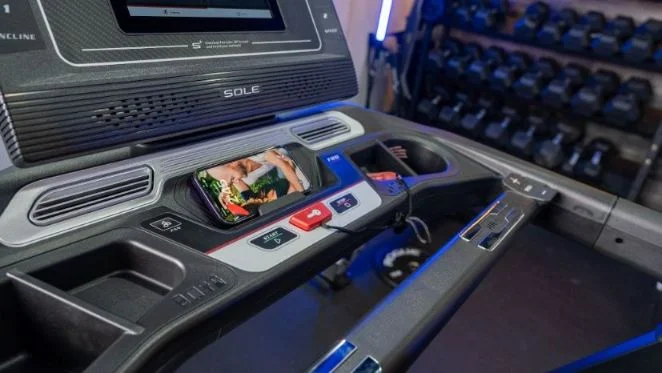
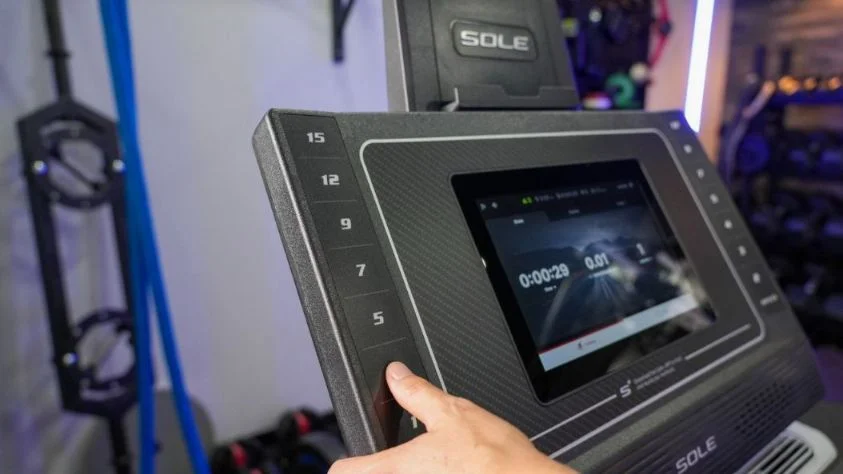

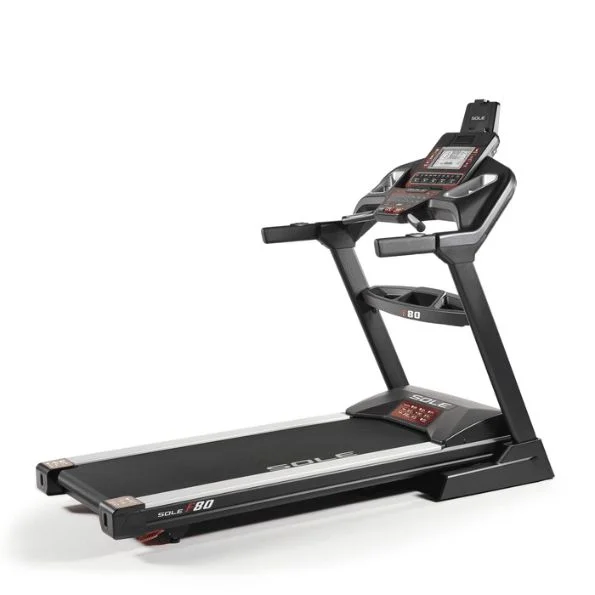
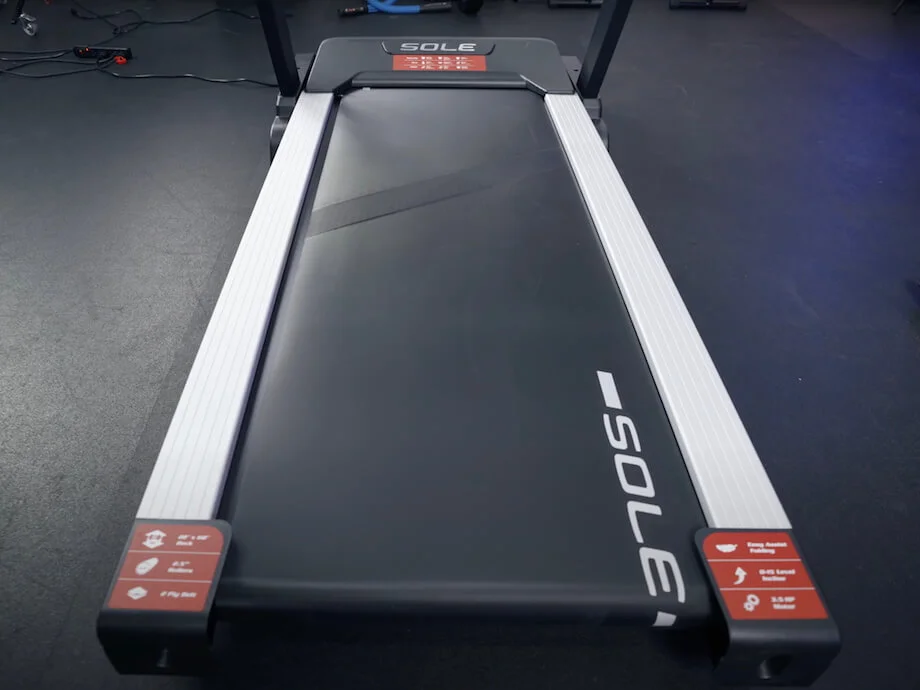
What the Sole F80 lacks in technology, it more than makes up for in durability and performance. With a 3.5 horsepower motor and a 60 inch long running deck, the Sole F80 is a great option for dedicated endurance athletes.
What our tester says:
“Off the top of my head, I can’t think of another motorized treadmill that has a weight capacity of 375 pounds. This is really unique and allows a lot of people to use it.”
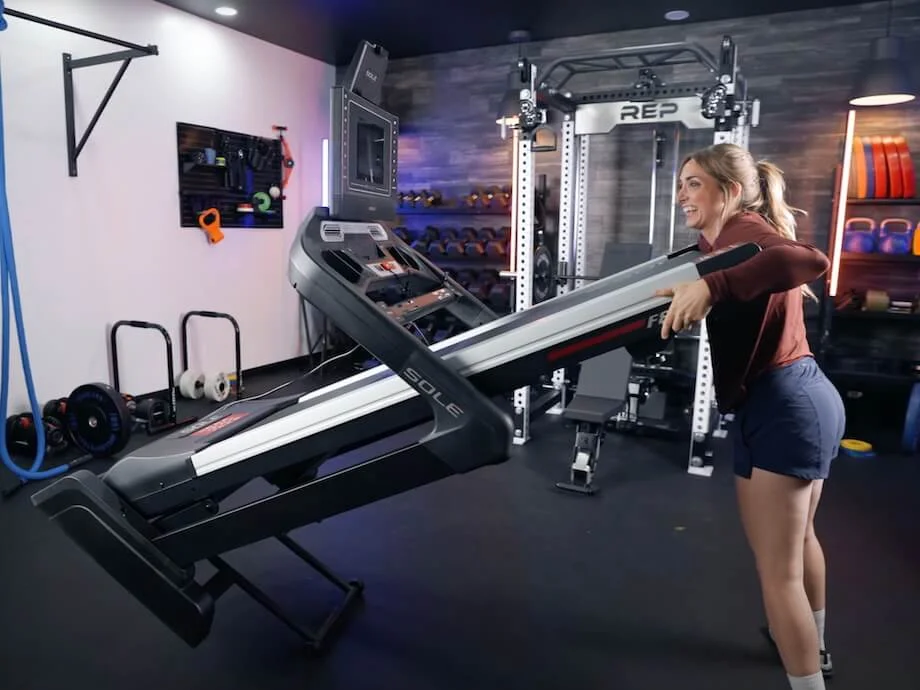
Many commercial treadmills don’t fold, which is a negative in terms of storage space but a positive in terms of build quality and longevity (fewer parts to break or wear down). The Sole F80 is an exception. If you’re looking for a commercial-grade treadmill with a powerful motor and a folding frame, look no further than the Sole F80. This machine has a 3.25-horsepower brushless treadmill motor, which can support any kind of movement you want to do on the machine. Plus, the F80 has a lifetime frame and motor warranty.
Our Experience Using the Sole F80
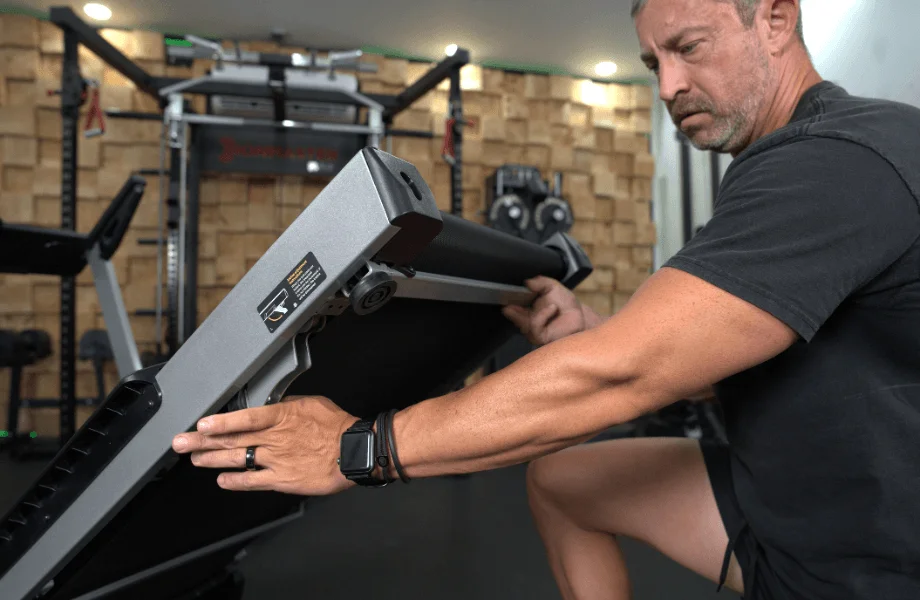
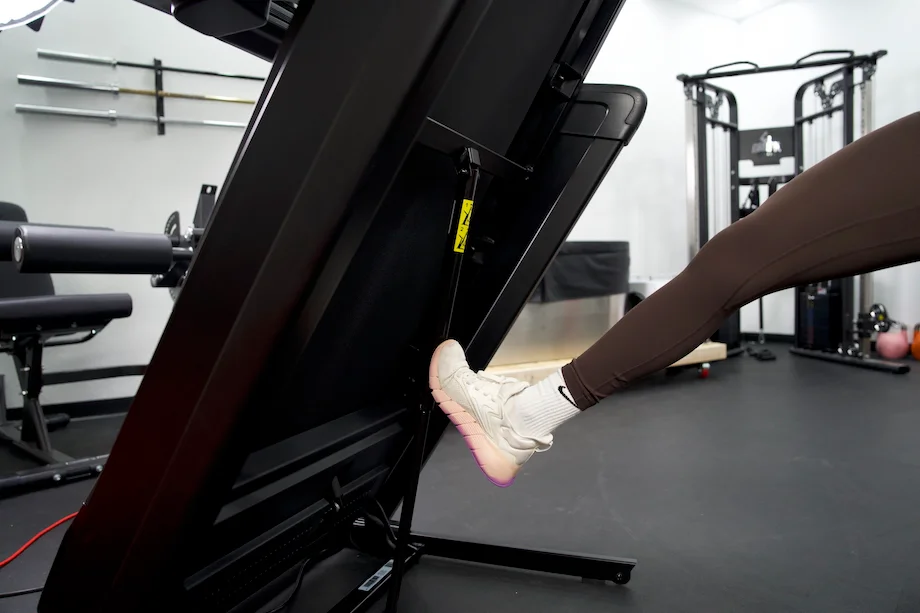
The Sole F80 features an easy lift-and-lock mechanism that secures the deck in place at an angle, although it doesn’t fold completely flat. That said, we’ve found that it does fold enough to save you some much-appreciated space in your home gym.
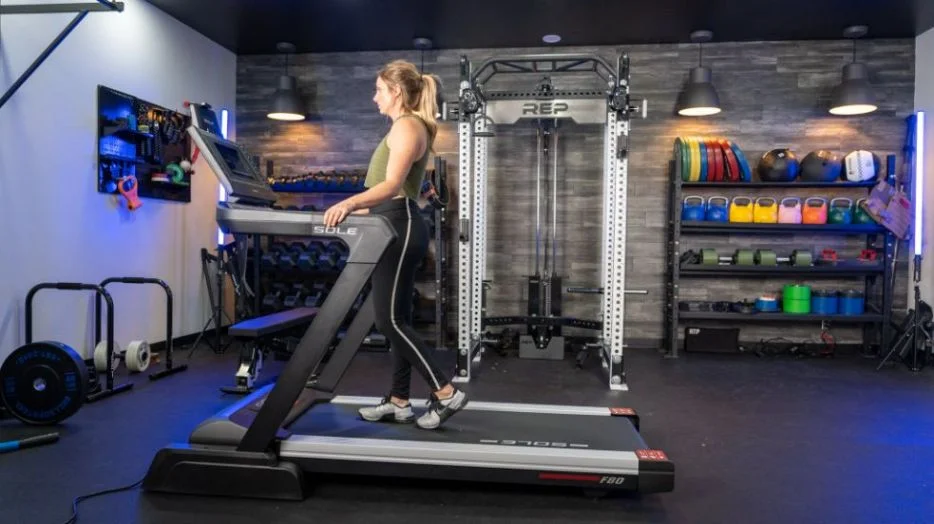
The combination of a spacious running surface and higher-than-average weight capacity (350 pounds) makes the Sole F80 a strong option for taller and heavier runners, and anyone who runs a high-volume training plan.
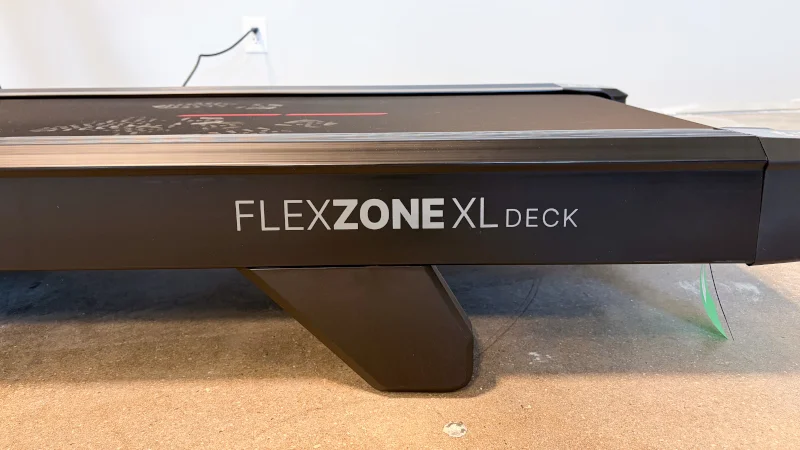
The standout feature, per tester Caroline Lubinsky, is the deck size. The Sole F80 offers a 22-inch-by-60-inch running surface, giving runners more lateral room than many comparable models, including the Sole F63. Those extra two inches can make a serious difference in how comfortable and stable you feel when running. No one wants to feel confined on their treadmill.
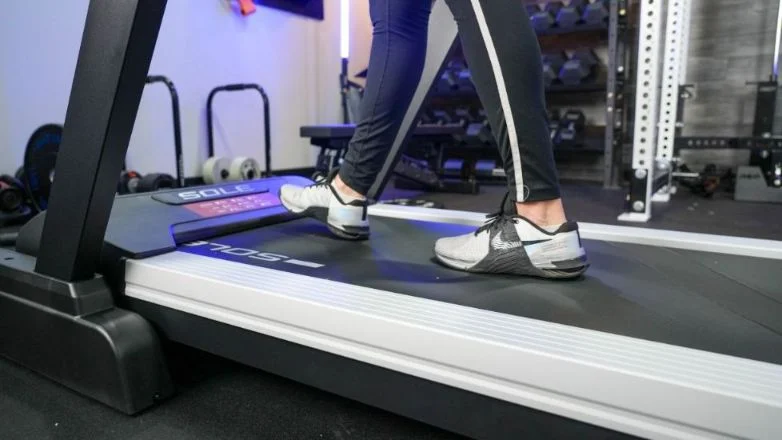
The F80 features an integrated cushioning system designed to reduce impact, though our other tester, Lindsay Scheele, CPT, CNC, didn’t find it to be exceptional. “It didn’t feel really jarring while running on it, but also I didn’t notice a huge difference,” she told me. “I’d say it’s somewhere in the middle between a really-cushioned treadmill and a non-cushioned treadmill.”
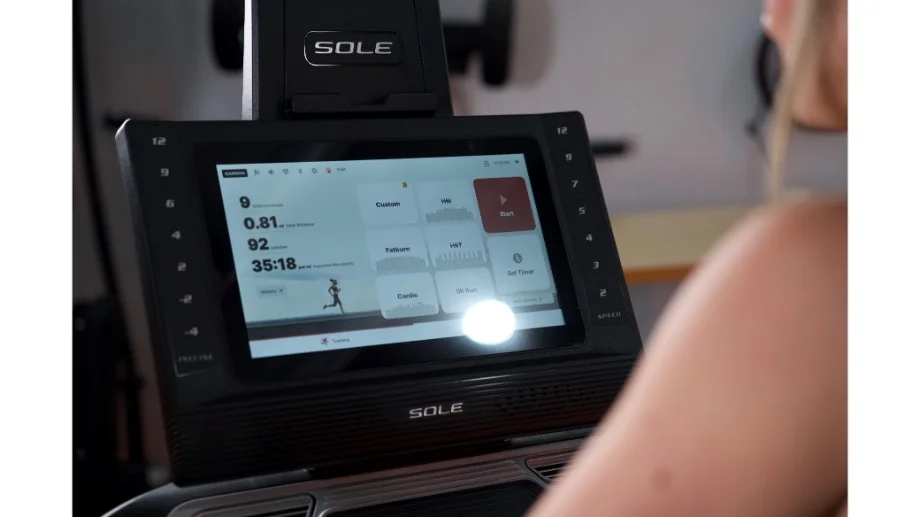
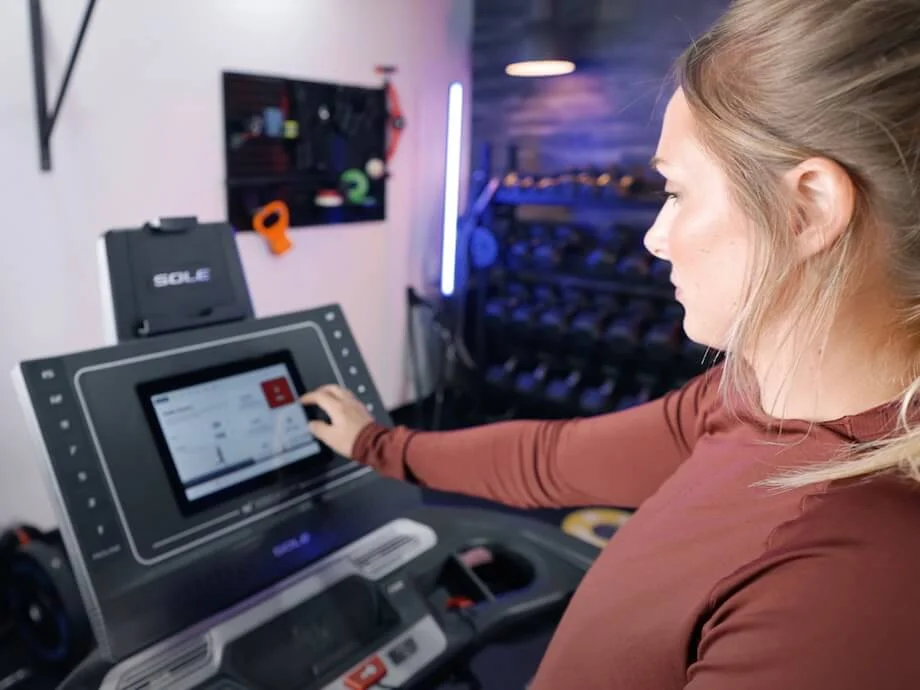
Finally, the built-in programs are good, but don’t compare them to options like iFIT (even with the free Sole+ app). Even with the 10-inch touchscreen display, you’re not getting the same immersive experience as you are on something like a NordicTrack treadmill.
“The Sole F80 can be a great choice for home gym owners, as it’s one of most durable treadmills we’ve tested and the residential warranty coverage is fantastic. You can store it in your garage without voiding the warranty, too, which isn’t the case with all manufacturers. This is an important detail for any garage gym owner in search of a high-quality cardio machine.”
Matt Dustin, CSCS, PN1-NC
All in all, the Sole F80 is a great pick for those who want the build quality and incline/speed ranges of a commercial treadmill, but without having to permanently dedicate a huge space to a machine.
Read our full Sole F80 treadmill review for more details.
How the Sole F80 Compares
The Sole F80 is about the same price as the average treadmill, but it has a faster top speed, higher top incline, a larger running deck, and a lifetime warranty on the motor and frame—talk about a deal.
| Sole F80 | Average Treadmill | |
| Manufacturer Price | $1,899.99 | $1,900 |
| Top Incline | 15% | 12% |
| Top Speed | 12 MPH | 10 MPH |
| Running Belt | 60” L x 22” W | 55″ L x 18″ W |
| Weight Capacity | 350 lbs | 320 lbs |
| Warranty | Lifetime frame and motor; 3 years deck and parts; 1 year labor | 10 years |
If you want better dynamic programming around the same price range, we recommend the NordicTrack Commercial 2450.
Best Commercial Treadmill Without a Subscription: Bowflex T16 Treadmill



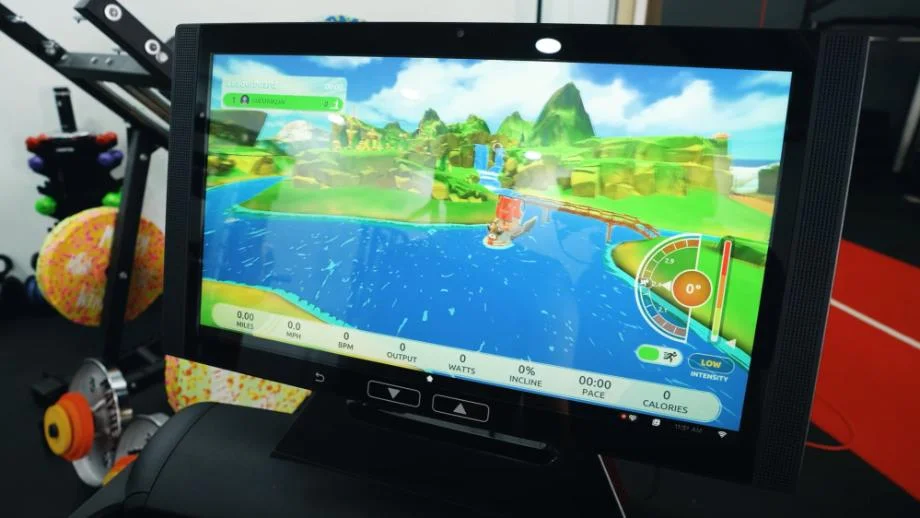
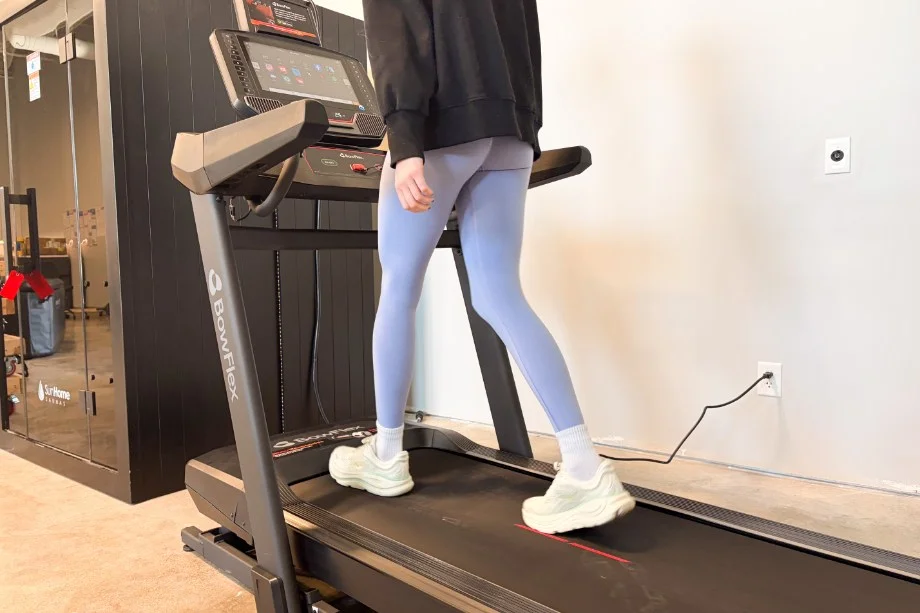
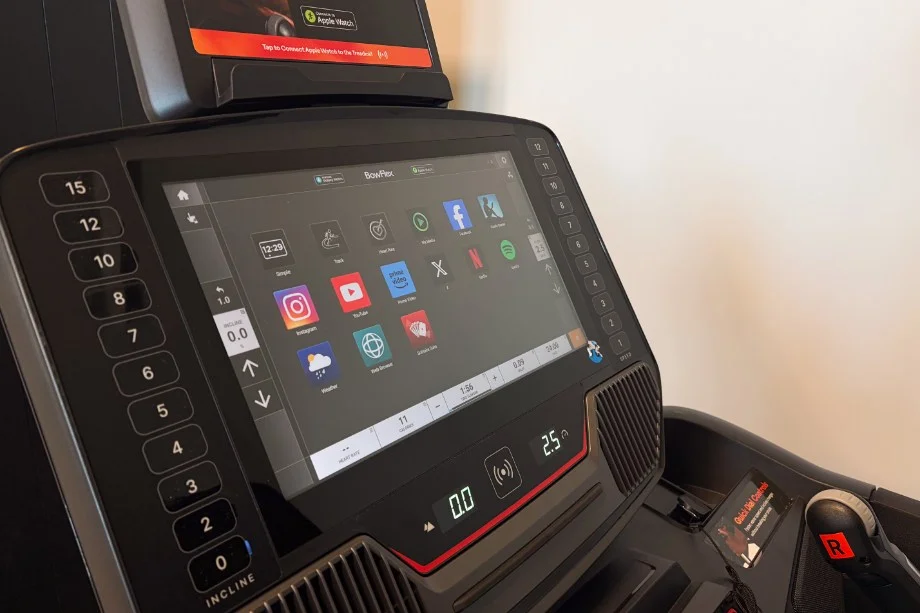
If you love taking advantage of streamable media and virtual classes to keep you entertained mid-training but don’t want to add another subscription fee to your budget, the Bowflex T16 is our pick when it comes to the best commercial treadmill without a subscription. It features a built-in 16-inch touchscreen on which you can freely browse the internet and stream through platforms you already pay for, like Netflix or Hulu. There’s also a convenient media shelf if you’d prefer to view programming through your own device (think: free YouTube running workouts!).
Our Experience Using the Bowflex T16
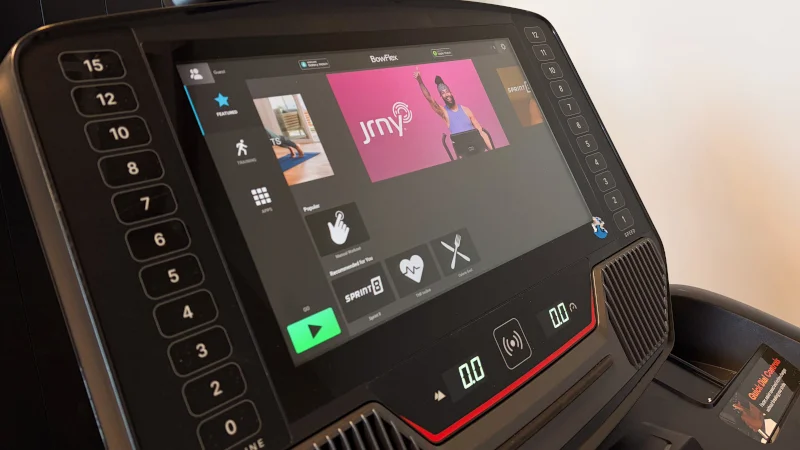
One reason we love the T16 is the built-in programming through the JRNY app, which our tester, Paige, a seasoned runner, found to be very enjoyable. She told me, “I enjoyed all of the workouts equally, but I was most impressed with the built-in programming and virtual classes.”
That said, if you don’t want to subscribe to a JRNY membership, you can also use Peloton or Zwift if you pair your phone or tablet. This versatility can be great for athletes already signed up for different services, without having to add something else to your monthly budget.
This treadmill also has higher-than-average incline capabilities, as it’s able to reach pitches of up to 15%. Our tester notes, too, that adjusting the settings is very simple.
“It was extremely easy to adjust the speed and incline with the QuickDial controls,” our tester told me. “I’ve never tried a treadmill with these toggles, and it might be my favorite! Whole-number and half-number adjustments were achieved with ease, and the dial is very responsive, unlike some buttons I’ve used in the past.”
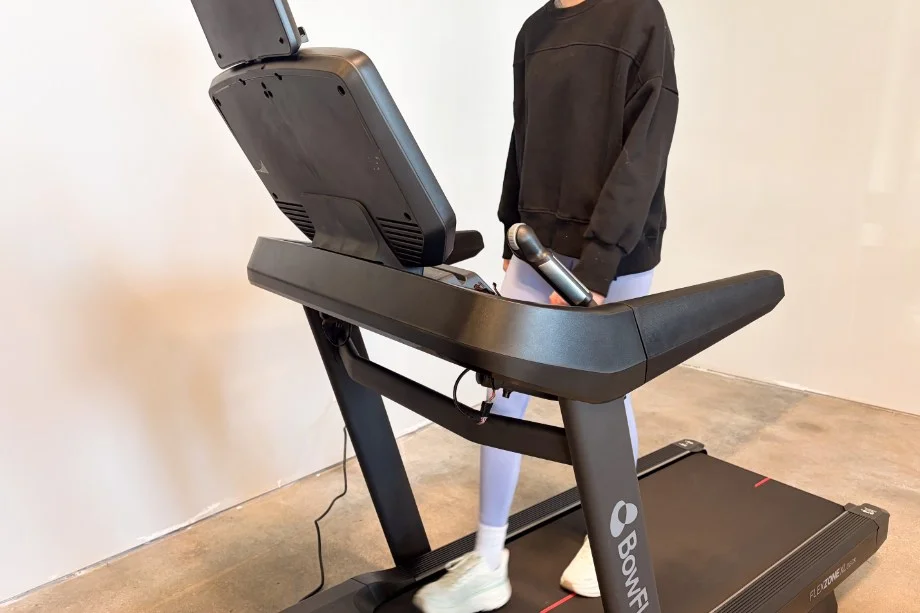
When it comes to footprint and portability, this Bowflex T16 treadmill is bulky. Paige says that she thinks it’s easier to move than some others due to the built-in transport wheels, but the treadmill still weighs nearly 300 pounds; you’ll need to put some effort in to get it from A to B.
I would recommend this treadmill for any hybrid runner that enjoys short distance, long distance, guided workouts, or incline walking. It really is a one-stop shop for any cardio workout.
Paige B., Bachelor of Nutrition Science and GGR Expert Product Tester
The Bowflex T16 is a great treadmill overall, with plenty of features to love. We particularly love that runners have the option to freely browse the web on the 16-inch touchscreen and utilize apps that they already subscribe to—or simply run without loading anything on the screen at all.
How the Bowflex T16 Compares
The Bowflex T16 offers some excellent features and a comprehensive warranty while only costing slightly more than the average commercial treadmill.
| Bowflex T16 | Average Treadmill | |
| Manufacturer Price | $2,299 | $1,900 |
| Top Incline | 15% | 12% |
| Top Speed | 12 MPH | 10 MPH |
| Running Belt | 60” L x 22” W | 55″ L x 18″ W |
| Weight Capacity | 375 lbs | 320 lbs |
| Warranty | Lifetime frame and motor; 3 years parts; 1 year labor | 10 years |
If you’re interested in streaming classes but want something with a larger screen, we recommend considering the NordicTrack Commercial 2450, which features a pivoting 24-inch HD touchscreen.
Our Testers

Caroline Lubinsky, CF-L1
Caroline is a former NCAA D1 soccer player and experienced fitness product tester.

Lindsay Scheele, CPT, CNC
Lindsay is a certified personal trainer and fitness enthusiast, as well as the former lead reviewer for GGR Everything.

Kate Meier, NASM-CPT, USAW-L1, CF-L1
Kate is a former gym owner, former director of content for GGR, and expert in fitness and home gym products.

Cooper Mitchell, GGR Founder
Coop is the founder of GGR and a fitness equipment expert.
Other Treadmills We Researched
If you’re not interested in a commercial-grade treadmill, here’s a list of our other buying guides for various categories that should help you find a better fit:
- Best smart treadmills
- Best folding treadmills
- Best treadmills with TV screens
- Best manual treadmills
- Best treadmill for tall runners
- Best treadmill for heavy people
- Best treadmills under $1,000
- Best treadmills under $500
GGR Commercial Treadmill Testing Results
When testing any fitness equipment (treadmills, included), we follow a set of protocols to rate and score each machine. This helps us provide an unbiased review by rating each treadmill according to the most important categories, including the construction, functionality, comfort, and more. Here are some of the most important factors we consider in our methodology, as well as how we score them.
Footprint and Portability
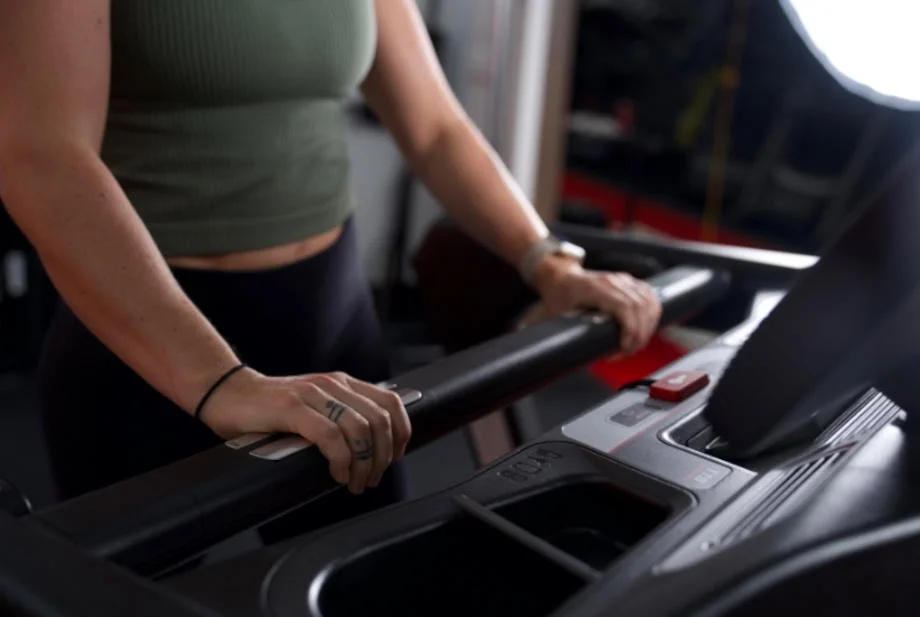
We use this category to rate the overall dimensions of the machine, as well as how easy it is to move around. This is particularly important when considering commercial treadmills, as they can be significantly larger than smaller, more compact models.
To earn 3 out of 5 stars in this category, we want to see a treadmill that’s around 6 feet long by 3 feet wide. Additionally, one or two people should be able to easily move the treadmill around a training space.
Higher scores are given to machines that have folding features or compact designs, like walking pads or under-desk treadmills, while particularly heavy or bulky treadmills receive lower scores.
The average footprint and portability rating across all treadmills we’ve tested is 3.6 out of 5. Here’s how the best commercial treadmills compare.
| NordicTrack Commercial 2450 | 4 |
| Peloton Cross-Training Tread+ | 3 |
| Trueform Runner | 3.5 |
| NordicTrack X24 | 1 |
| Sole F80 | 3.75 |
| Bowflex T16 | 4 |
Delivery and Setup
Because treadmills are large, heavy pieces of equipment, the delivery and assembly process can be quite cumbersome. Many brands offer multiple shipping options, such as curbside, threshold, or room-of-choice delivery, and some also provide professional assembly for an additional fee.
For our scoring, a treadmill must include threshold delivery (to your door) and require no more than about 90 minutes for two people to assemble in order to earn at least a 3 out of 5. That assembly benchmark is based on our team’s experience putting together dozens of treadmills.
The highest scores go to treadmills that require little to no assembly beyond unpacking, plugging them in, and completing any initial setup.
After testing 50+ treadmills, the average score in this category is 4 out of 5. Here’s how the best commercial treadmills compare.
| NordicTrack Commercial 2450 | 3 |
| Peloton Cross-Training Tread+ | 4.5 |
| Trueform Runner | 4 |
| NordicTrack X24 | 3 |
| Sole F80 | 4.5 |
| Bowflex T16 | 4 |
Durability
We can’t test a treadmill for the entirety of its lifespan, but our durability rating is used to give our best opinion of how well-built a treadmill is. To get at least a 3 in this area, we look for the following standards:
- Weight capacity: We look for a weight limit of at least 275 pounds.
- Motor size: We look for a 2.5-CHP motor or more.
- Stability: Our testers should experience little to no shaking or wobbliness when operating the treadmill at max speeds and inclines.
We also consider whether the treadmill has additional features like floor stabilizers to help improve stability, or excessive plastic that may break too soon.
Across all treadmills we’ve tested, the average durability score is 4 out of 5. Here’s how the best commercial treadmills compare.
| NordicTrack Commercial 2450 | 5 |
| Peloton Cross-Training Tread+ | 4 |
| Trueform Runner | 5 |
| NordicTrack X24 | 5 |
| Sole F80 | 5 |
| Bowflex T16 | 5 |
Customizations
For our ratings, customizations refer to how many speed and incline options are available to tailor the workout to your individual needs and preferences.
The average treadmill offers a max speed of 10 MPH and a max incline of 10%, which is what we use to justify an average 3-out-of-5 score.
Many treadmills, especially those meant for commercial gyms, have higher speed and incline capabilities, which may lead to higher scores for this category.
The average score from all of our testing is 4.1 out of 5. Here’s how the best commercial treadmills compare.
| NordicTrack Commercial 2450 | 4 |
| Peloton Cross-Training Tread+ | 5 |
| Trueform Runner | 5 |
| NordicTrack X24 | 5 |
| Sole F80 | 3.5 |
| Bowflex T16 | 5 |
Ergonomics
This category is used to determine how comfortable a treadmill is to use. Since treadmill users come in all shapes and sizes, we look for the following specs to award a 3-out-of-5 rating:
- Treadmill belt size: We look for a size that can accommodate runners with varying body types, which means the running deck should measure at least 55 inches long by 18 inches wide.
- Treadmill belt material: We prefer machines with, at least, a single-ply belt measuring 0.8 to 1.1 millimeters thick.
- Treadmill cushioning: We prefer machines to have at least some deck cushioning to take the stress off users’ joints.
We also take into consideration factors such as step-up height, how far the handrails are from the user, if the cushioned deck provides adequate shock absorption, and more.
Across the 50+ treadmills we’ve tested, the average ergonomics score is 3.9. Here’s how the best commercial treadmills compare.
| NordicTrack Commercial 2450 | 5 |
| Peloton Cross-Training Tread+ | 3 |
| Trueform Runner | 4.5 |
| NordicTrack X24 | 4 |
| Sole F80 | 4 |
| Bowflex T16 | 5 |
Tech Capabilities
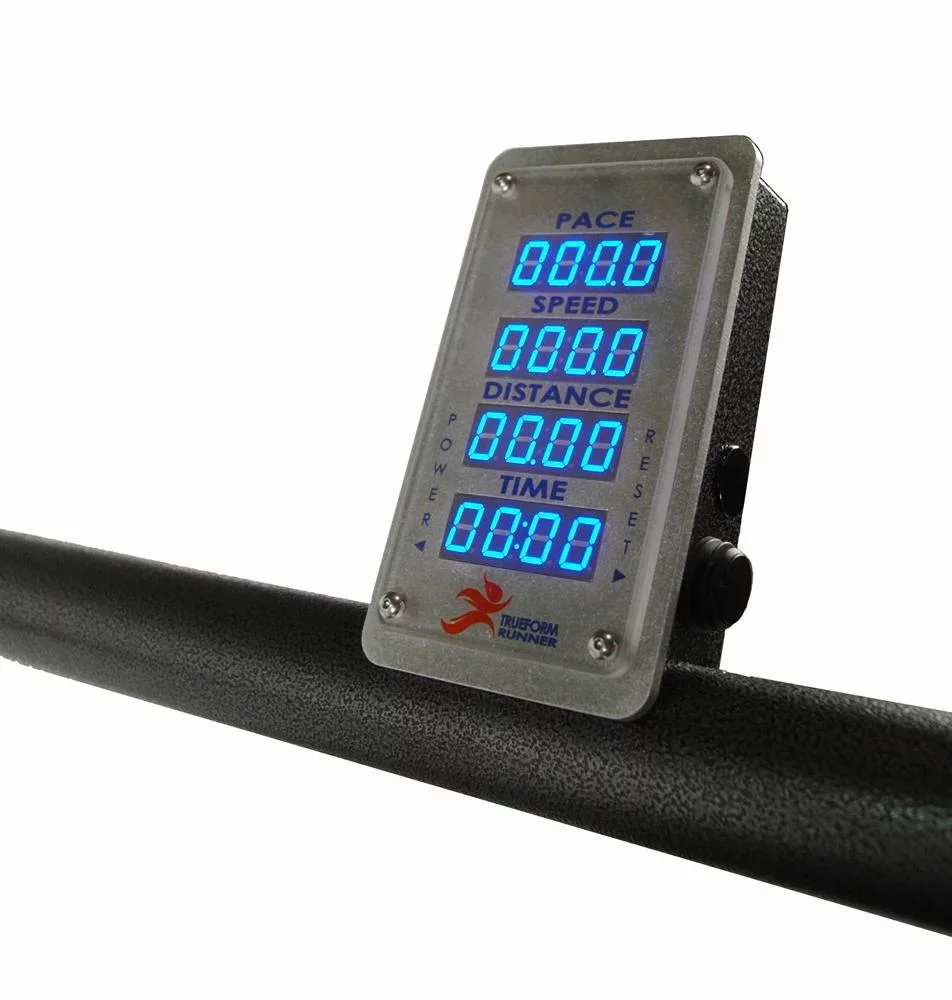
Technology is a core feature of modern treadmills: It’s what allows you to track workout data and stay engaged throughout their training sessions. At a minimum, a treadmill should make it easy to monitor key metrics like time, distance, speed, and pace while exercising.
When evaluating tech features, we look at the quality of the console, heart rate tracking, Bluetooth connectivity, and other digital capabilities. To receive a score of at least 3 out of 5 in this category, a treadmill must display essential workout metrics, include a basic visual interface or workout animation, and offer some form of heart rate monitoring.
Top-performing treadmills go well beyond these essentials with premium technology such as HD touchscreen displays, built-in Bluetooth speakers, app compatibility for fitness and entertainment platforms, wireless connectivity, and convenient features like USB charging ports.
The average score in this category is 3.7 out of 5. Here’s how the best commercial treadmills compare.
| NordicTrack Commercial 2450 | 5 |
| Peloton Cross-Training Tread+ | 5 |
| Trueform Runner | 2 |
| NordicTrack X24 | 5 |
| Sole F80 | 4 |
| Bowflex T16 | 4 |
Conveniences
Convenience features may not be the main reason you buy a treadmill, but they can make each workout more comfortable and enjoyable. Conveniences are things like easily reachable storage, simple controls, and built-in accessories like fans.
In our testing, a treadmill earns a baseline score of 3 out of 5 if it includes essentials such as a water bottle holder, a media shelf or device holder, and an emergency safety stop. Models that offer additional amenities, such as cooling fans, extra storage compartments, or multiple cup holders, receive higher scores for providing a more user-friendly workout experience.
The average convenience score across all treadmills we’ve tested is 3.2 out of 5. Here’s how the best commercial treadmills compare.
| NordicTrack Commercial 2450 | 5 |
| Peloton Cross-Training Tread+ | 4 |
| Trueform Runner | 3 |
| NordicTrack X24 | 5 |
| Sole F80 | 4 |
| Bowflex T16 | 4 |
Dynamic Programming
Guided workouts make treadmill training more enjoyable, and they remove the guesswork of training. These workouts may come preloaded on the console or be accessed through compatible fitness apps, like iFIT, that offer instructor-led classes, training plans, or virtual routes.
According to our testing methodology, a treadmill earns a score of at least 3 out of 5 if it includes a selection of built-in workouts that are easy to access through the console or a connected app. Higher scores go to machines that offer interactive coaching, live or on-demand classes, adaptive training that adjusts to your fitness level, or integration with popular fitness platforms.
The average score for dynamic programming across our testing of more than 50 treadmills is 3.7 out of 5. Here’s how the best commercial treadmills compare.
| NordicTrack Commercial 2450 | 5 |
| Peloton Cross-Training Tread+ | 5 |
| Trueform Runner | 1 |
| NordicTrack X24 | 5 |
| Sole F80 | 4 |
| Bowflex T16 | 5 |
Value
To assess value, we compare each treadmill’s cost to the average price of a treadmill (approximately $1,900) and weigh that against its performance in every other testing category. We also factor in any ongoing or additional expenses, such as subscription memberships, shipping charges, assembly costs, and warranty coverage.
The average value score is 3.5 out of 5. Here’s how the best commercial treadmills compare.
| NordicTrack Commercial 2450 | 4 |
| Peloton Cross-Training Tread+ | 3.5 |
| Trueform Runner | 3 |
| NordicTrack X24 | 4 |
| Sole F80 | 4 |
| Bowflex T16 | 4 |
Customer Experience
This category is based on the overall customer experience, which factors in aspects such as customer support, financing, ordering, returns, and the provided warranty.
Most treadmills offer some sort of financing, a frame warranty of around 15 years, and a 30-day return policy, which is what we look for to assign a 3-out-of-5 rating. Higher scores are awarded to brands that offer exceptional customer experience, such as lifetime warranties or more generous return policies.
In our testing of 50+ treadmills, we’ve found that the average customer experience score is 3.9. Here’s how the best commercial treadmills compare.
| NordicTrack Commercial 2450 | 4 |
| Peloton Cross-Training Tread+ | 2 |
| Trueform Runner | 4 |
| NordicTrack X24 | 5 |
| Sole F80 | 5 |
| Bowflex T16 | 5 |
Customer Reviews
This score is taken directly from real user reviews. In addition to checking the manufacturer’s website, we look at third-party retailers like Amazon and Walmart to take the average review score from as many sources as we can find.
Our testing puts the average customer review score for treadmills at 4.2 out of 5. Here’s how the best commercial treadmills compare.
| NordicTrack Commercial 2450 | 4 |
| Peloton Cross-Training Tread+ | 3.7 |
| Trueform Runner | 5 |
| NordicTrack X24 | 4.5 |
| Sole F80 | 4.3 |
| Bowflex T16 | 3.5 |
Benefits of Commercial Treadmills
Owning a commercial treadmill isn’t cheap, but there are a variety of benefits to having one. Here are some of the main reasons you may wish to consider investing in a commercial treadmill instead of your classic home treadmill.
Large Running Deck
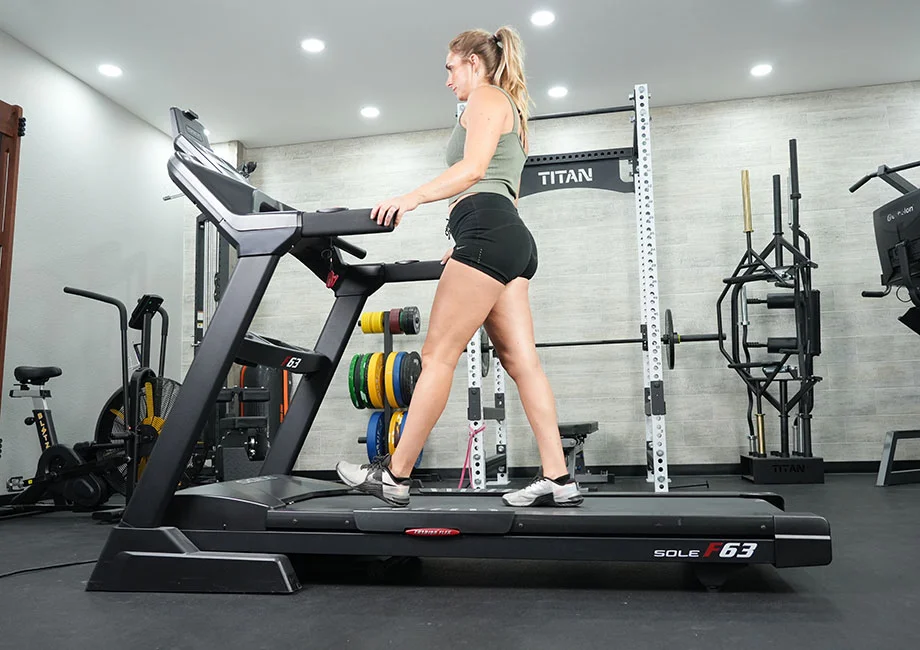
According to certified personal trainer and GGR product tester Lauren Strong, the larger running surface is one of the main reasons to consider a commercial treadmill.
“One of the biggest benefits I see from owning a commercial treadmill is the length of the running deck,” Lauren explains. “A commercial-sized deck doesn’t feel awkward or limit my natural gait. I also like the fact that commercial treadmills feel sturdy, durable, and are built to last.”
Better Durability
Since treadmills designed for commercial gyms are often intended to be used daily by a wide range of users and body types, they often have impressive constructions, high weight capacities, and good warranties.
GGR Senior Staff Writer Matt Dustin, CSCS, PN1-NC, has owned several treadmills, and knows that durability can vary greatly.
“I’ve owned a couple of cheap treadmills over the years, and they often feel very shaky and wobbly,” he says. “When I bought a commercial-grade one, I immediately noticed the difference, and it’s built like a tank. I think it’ll last a very long time with proper care.”
All-Weather Training
Seasoned runners know that nothing can derail your training session like cold weather, rain, snow, excessive humidity, and other extreme conditions.
With a commercial treadmill in your home gym, you can enjoy nearly any type of running workout from the comfort of your abode, regardless of climate.
“Mentally, the treadmill can feel harder than running outside because it lacks variation,” says Chris Mohr, Ph.D., RD, “But running outside can be more physically demanding because of wind resistance, terrain changes, and self-propulsion.”
If you live in an area that’s not always conducive to outdoor runs, a treadmill may be a great investment. Not to mention, research comparing2 outdoor running to treadmill running found that both options can improve physical fitness levels.
Streamable Workout Options
While not every treadmill on our list has the flashiest programming, most have solid built-in workout modules, and many are compatible with popular streaming services. Whether you’re looking for virtual workouts, outdoor trails, or you just want to watch your favorite show while you’re getting in your steps, most commercial treadmills offer a robust assortment of entertainment.
Senior Staff Writer Matt Dustin, CSCS, PN1-NC, who owns the Sole F63 treadmill, says, “A treadmill is a great way to increase your activity level and get in some cardiovascular fitness. Virtual workouts and classes remove the boredom, providing a fun, challenging workout experience for those who typically dislike cardio.”
If you struggle with consistency, this can be a great way to stay consistent as you’re working toward your fitness goals.
Buying Guide: What to Look for in Commercial Treadmills
A treadmill isn’t something you want to purchase frivolously or without doing your research. Below are some of the most important factors to consider; our complete treadmill buying guide covers these components and more in detail.
Footprint and Portability
You’ll want to carefully measure your space before making any decisions on a particular treadmill profile. In addition to the size of the treadmill, you should also plan for some extra space around the machine itself for easier on and off protocols, as you don’t want to slip and go flying into a wall.
We also suggest measuring your doorways to make sure the treadmill can fit during transport, and consider any steps or other obstacles that may make it difficult to get your treadmill delivered and set up.
Running Surface Size
Most commercial treadmills have a deck that hits or exceeds the industry standard of at least 55 inches for walking and 60 inches for running. However, some commercial treadmills have an even longer deck, which can be a positive for taller individuals. If you’re particularly tall or have a long stride, make sure to get a suitably sized deck for a more comfortable workout.
Workout Programming and Streaming Options
Built-in workout programming can make your training more engaging and effective, especially if you tend to get bored on the treadmill or struggle to know what exactly to do. Most treadmills include onboard preset workouts, but the best commercial treadmills typically rely on subscription-based fitness platforms that stream instructor-led classes and personalized training plans. Platforms like iFIT and JRNY require an additional monthly membership. Before buying, compare each treadmill’s programming features and be sure to factor the ongoing subscription cost into the total investment.
Incline, Decline, and Speeds
It’s important to choose a treadmill with features that match how you plan to train. If you enjoy interval workouts, hill repeats, or race-specific training, consider the machine’s speed and incline capabilities. Some treadmills also offer decline settings, which can better simulate outdoor terrain and add variety to your workouts.
If you’re preparing for a race with significant elevation changes, look for a treadmill with an incline range that closely reflects the course. Also check the max speed. Entry-level treadmills may top out around 10 MPH (roughly a 6-minute mile pace), while higher-end models can reach 12 MPH or higher.
Durability
The passage of time is the only true way to determine how well a treadmill holds up to wear and tear. However, there are some things you can look out for that will clue you in on the overall durability.
Check to see that the motor is at least 3.0 horsepower or higher. This lets you know that the treadmill should be able to support serious running intensities. You should also take a look at the materials used across the silhouette. Treadmills constructed with large amounts of plastic are not usually very durable, so keep your eyes peeled for machines made with steel or other resilient compounds.
Warranty
The industry standard for a treadmill frame warranty is at least 10 years. This is around what you should expect on most commercial machines, though many come with a lifetime frame warranty. I recommend reading each warranty carefully; some companies will void your coverage if you put any of their machines in the garage (or any non-climate-controlled area).
FAQs About the Best Commercial Treadmills
How much do commercial treadmills cost?
You’ll find commercial treadmill brands offering machines typically between $2,000 and $4,000. Depending on the model you purchase, you may pay upwards of $5,000 or more. I would establish your budget ahead of time or check for financing options. Commercial treadmills aren’t cheap, after all.
How long are commercial treadmill belts?
Generally speaking, I like to see at least 55 inches for a treadmill that someone plans to walk or jog on. Most commercial treadmills are at least that, if not 60 inches or more. This makes it simpler to take longer strides, or for taller people to be able to run and walk with ease.
Can a compact treadmill be a commercial treadmill?
Most commercial machines do not fold, which doesn’t make them a particularly compact option. If you’re looking for a treadmill that will fold in some capacity, buying a non-commercial machine may be the best choice for you.
What is the difference between commercial treadmills and regular treadmills?
A commercial treadmill is one that could withstand commercial use. That means you could put a commercial treadmill in gyms, have multiple people run on it every day, all year round, and it would still perform efficiently.
Conversely, treadmills specifically for home use may not offer these heavy use features because they may not need to. As a result, they can often be found at more affordable price points.
What is the best commercial treadmill brand?
While large gyms often feature pricey options like Life Fitness and Precor, we’ve found that many treadmills from brands like Sole, Horizon, ProForm, NordicTrack, and more offer similar features and durability at a significantly lower cost.
References
- Schoenmakers, P. P., & Reed, K. E. (2018). The physiological and perceptual demands of running on a curved non-motorised treadmill: Implications for self-paced training. Journal of Science and Medicine in Sport, 21(12), 1293-1297.
- Singh, G., Kushwah, G., Singh, T., Ramírez-Campillo, R., & Thapa, R. K. (2022). Effects of six weeks outdoor versus treadmill running on physical fitness and body composition in recreationally active young males: a pilot study. PeerJ, 10, e13791. https://doi.org/10.7717/peerj.13791