

You know how before you do anything awesome, like skydiving or paintballing, there’s always some bore rambling about safety procedures and stuff? What a buzzkill, am I right?
Wrong! Safety is very important and, when you’re at the gym doing some heavy weightlifting, it could be the difference between nailing PRs or being carted out of the gym on a gurney.
That’s why we put together this guide to barbell safety because, while crushing it at the gym totally rocks, you can get seriously hurt if you’re too lax on the precautions. These tips might save your skin, especially if your go-to weightlifting venue is your home gym where there’s not a soul in sight to spot or assist you if a situation develops.
Here’s what you need to know next time you hit the weights so that they won’t hit back. I’ll do my best not to be a total bore about it, too.
Why Barbell Safety Matters
Consistency is vital in exercise and resistance training; a 2021 study1 showed that participants who stuck to a consistent exercise schedule were able to hit moderate to vigorous physical activity more often over the year. I mean, principles of strength training like progressive overload and periodization work around the concept of consistent workout routines. Anything that breaks your routine up and makes you less consistent in the gym can lessen the strength or cardio gains you’re making from your training.
That’s why barbell safety matters. Being negligent in barbell training can, at the least, lead to a greater risk of injuries that’ll require rest and recovery. Those days out of the gym, or working around an injury, can slow down or even halt your progress for days, weeks, or even longer.
Arguably more important is that while barbells and barbell exercises are relatively safe, they can be dangerous if you don’t properly prepare yourself and your lifting space for your workout. Usually, we think about preventing a muscle strain or overuse injury, but a dropped weight onto you can cause bruised or broken bones. Even worse, there have been deaths from bench pressing where the barbell dropped and crushed a lifter’s neck (known as traumatic asphyxia2).
Just like playing sports, lifting weights presents some level of risk to injury, but your chance of serious injury drops significantly by taking a few precautions.
1. Ensure Your Area Is Clear of Clutter

First things first: Declutter your workout space. Anything around that doesn’t serve a functional purpose (like a squat rack) should be removed from the area so you’re free to move around uninhibited. If you’re lifting on a deadlift platform, make sure your bar and plates are the only things on it.
Smashing a PR on a back squat is epic, but smashing your head on a plate tree because you tripped over an ab roller while backing away from the rack is incredibly un-epic.
2. Double-Check Your Equipment Components

Before you slap on your weightlifting belt, put on your inspector hat and take a look at the fitness equipment you’re about to use. A barbell is a basic piece of equipment, but there are some specific things you want to keep an eye out for.
For one, look for rust. If it’s on the shaft of the bar, smooth to the touch, and doesn’t rub off on your hands, it’s called a “patina” and it’s totally normal. Rust on any part of the loadable sleeve length or the bolt at the end of the bar, on the other hand, is no bueno. This might indicate the inside has begun rusting and could be a problem. Sleeves that don’t spin easily (or at all) are also a sign of internal rust.
No worries, though—most Olympic barbells are easily disassembled and cleaned.
RELATED: How To Clean A Barbell: A Guide To Bringing Back That New Bar Shine
While you’re giving the bar the ol’ once-over, take a look at the barbell knurling, too. For those who aren’t “in the know,” that’s the crosshatch pattern on Olympic barbells that increases friction between your hands and the bar to support grip and control. The knurling will wear out over time and, once it does, the bar becomes more likely to slip from your hands mid-lift. This might not be problematic during a deadlift or high-bar squat, but it could be catastrophic during a snatch or overhead press.
Don’t focus all your attention on just the barbell, either. You want to take a look at your squat rack, too, and make sure everything is copacetic before you get to lifting.
Check the safety pins, safety bars, and all spotter arms to ensure they’re set properly and secure. If the rack features removable or adjustable J-hooks, you’ll want to double- and triple-check they’re in place, as setting a heavy barbell on a loose hook would certainly spell disaster.
You don’t have to perform a full-on OSHA inspection every time you lift, but you should be checking these things semi-regularly and addressing them as needed.
RELATED: A Comprehensive Guide To Squat Rack Safety
3. Use Barbell Collars

If you’re doing a slow lift like the deadlift, where the bar isn’t reaching higher than hip height, you may get away with keeping collars out of the equation.
However, it only takes a couple of seconds to fasten one to each end of the barbell, so it’s really egregious to go without them. Without collars, you risk spilling the weight off one end of the barbell and, while falling weight plates are dangerous enough already, the other end will fly toward the floor and propel you in that direction like you’re Wile E. Coyote from the Looney Tunes.
Seriously, just slap a pair of the best Olympic barbell collars on the sides of the bar. It’s worth the cumulative seconds of time you’ll spend.
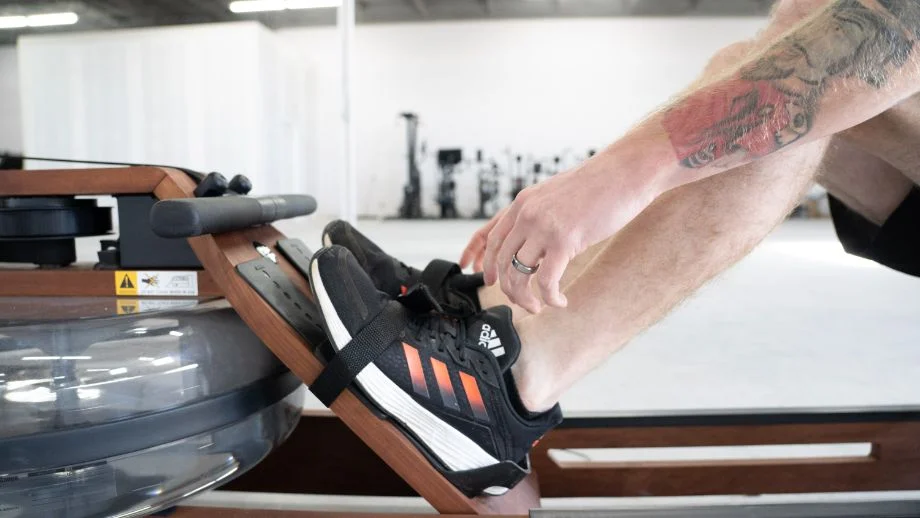
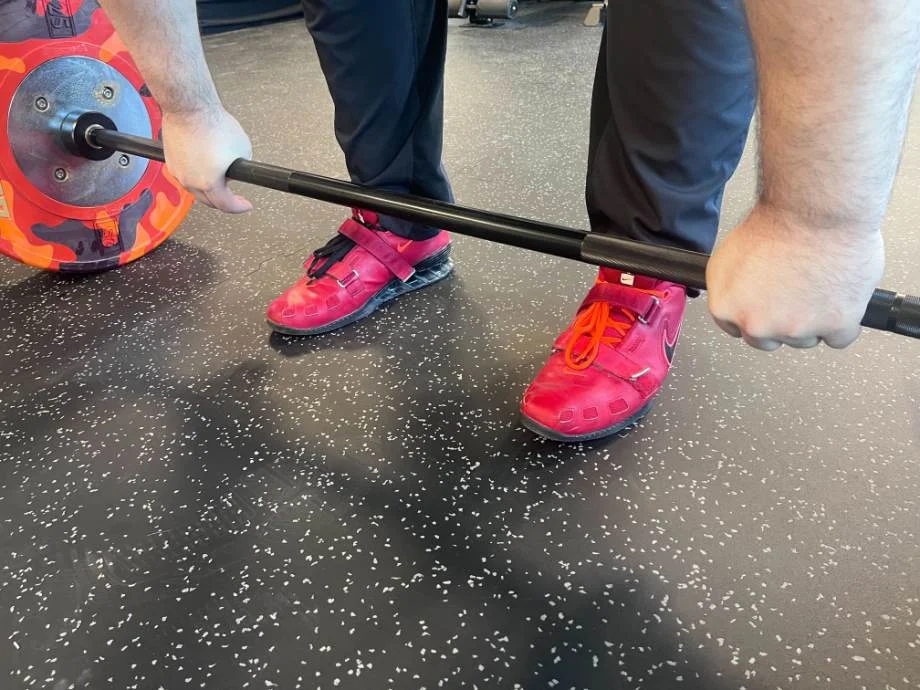
4. Wear Proper Lifting Shoes

Proper weightlifting shoes are more than just a stylish choice in the gym. They’re also one of the most overlooked pieces of equipment you could use to maximize the impact of your barbell training.
How do these specialized shoes really help translate to better, safer lifting? It’s all in the design and construction. For starters, many weightlifting shoes incorporate an elevated heel, which increases the range of motion of your ankle and allows for a deeper, more upright squat position. (The exception is a deadlift shoe, which has a flat heel to reduce the distance you have to pull a weight.)
In addition, the soles are thin, wide, and hard. This helps provide a stable base and minimal shock absorption, so when you drive from your heels to stand up from the bottom of the squat, you’re getting all that power and losing none from the sole of the shoe.
It’s a simple but effective way to improve your lifts. If you haven’t been wearing lifting shoes so far, try them out and thank me later. If you’re not doing the Olympic lifts or squats, instead focusing on exercises like lunges or upper-body isolation moves, you can also choose from a variety of cross-training shoes.
RELATED: The Ultimate Training Shoes Guide
5. Have a Spotter as Needed

Need a good reason to have a spotter nearby? I’ll give you three.
The first and most obvious reason is that they’re there to have your back if things go south. They’re there to grab the barbell if you bite off more than you can chew on a heavy set. They’re there to help you get through the sticking point of your squat, too.
A good spotter is there to help you push through when you’re so close but just not there yet, but they’re also there to offer fitness feedback. Even if you have a mirror in your workout space, you can’t focus on the lift and watch your form simultaneously. A spotter will be there to see what you’re doing during the lift and offer feedback to help you optimize your biomechanics and adjust to really nail the next try.
That’s two reasons, right there. The third and final reason—support! Sometimes, the difference between setting a new PR and getting psyched out and bailing out is having a personal cheerleader ringside for the action. A good friend and spotter can help give you confidence and fuel your victory with their encouragement.
You should always have a spotter for bench press and squats, but there are a couple of lifts where a spotter isn’t necessary and could be down-right dangerous. Those are typically lifts taken from the floor: Deadlifts, snatches, and the clean and jerk. If a deadlift is too heavy, you simply drop the weight back to the platform. In a similar vein, the Olympic lifts are too quick to properly spot, and a spotter would put themselves at risk of getting hit by a barbell during the explosive movement.
Is there any downside to a spotter when you need one? Well, I guess they might ask for a free scoop of pre-workout. That stuff is expensive, but it’s a small price to pay for safety, feedback, and support, though, isn’t it?
6. Don’t Lift More Than You Know You Can Lift

There’s a fine line between pushing yourself to set a new PR (personal record) and setting yourself up for injury. Consider how much you’re lifting during your standard working sets, how much you successfully lifted for your last personal best, and scale appropriately from there.
Big jumps are big risks that frequently don’t pay off. Try beating your best in smaller increments and, if you’re feeling good and strong, add just a little more.
If you’re not sure how much to tack on for each attempt, consult a certified personal trainer or coach. Always work smarter, not harder.
RELATED: Beginner Barbell Workout: Learn The Basics
7. Use Proper Technique for Each Lift

It’s time to give yourself some brutal honesty. Do you actually know and use the proper technique for each lift?
It’s not impossible to watch YouTube videos and craft a picture-perfect barbell back squat with practice and attention to detail, but Olympic lifts like the snatch won’t be as easy to just glance at a guide and give it a college try.
RELATED: Lifting with Proper Squat Form
We recommend working with a qualified personal trainer to learn the proper technique for compound exercises and more complicated lifts. As you build a strong foundation, it will be easier to implement proper technique when riding solo in your garage gym.
Practice makes perfect, but if you’re practicing poor form, you’ll only reinforce bad habits that are hard to break down the line and increase your risk of injury.
8. Reduce Distractions Around You

What one person finds distracting, another might not. That’s why action heroes in movies never turn around to look at the explosion behind them. They’re laser-focused, and that’s what you want to bring with you when you’re lifting.
When you pick up the barbell, put down the fidget spinner and get in the zone. Pause your Netflix series. Quit the chit chat. Make all nearby children and pets stand clear if you’re lifting in a home gym.
Distractions while lifting are like distractions while driving. All it takes is one moment of divided attention for things to go south in a hurry.
9. Use Safety Aids as Necessary

If you were a schoolyard rebel growing up, averse to bicycle helmets and seatbelts, congrats on (presumably) not suffering a significant injury leading up to your adulthood, but was it really worth the risk?
Life and livelihood are fragile, and it’s worth it to take steps to protect ourselves, especially when engaging in barbell training and heavy weightlifting. Lifting weights isn’t a terribly dangerous pastime, but it does carry some risk of injury with it.
That’s why there are innumerable safety aids available to make weightlifting safer. The most common safety aids can be found on a squat cage and include:
- Pin-pipe safeties
- Safety bars
- Spotter arms
- Safety straps
Regular lifters also use a variety of accessories and tools that can reduce risk of injury or assist them during certain lifts. These accessories include:
- Weightlifting belts
- Weightlifting gloves
- Weightlifting shoes
- Wrist wraps
- Lifting straps
- Knee sleeves
- Elbow sleeves
None of these accessories are absolutely mandatory, and some I wouldn’t recommend until heavier working sets. However, they can help on days when you may be a little fatigued. For example, lifting straps have been shown3 to help improve a lifter’s perceived grip strength and help their grip recover faster after a workout.
Not ready for a huge investment in workout gear to maximize your impact in the gym? No worries: Applying lifting chalk to your hands before a big lift can be a quick and inexpensive way to make barbell training just a touch safer. Chalk helps dry sweaty hands and increases your grip. To some powerlifters and bodybuilding enthusiasts, it’s absolutely essential.
If you’re not at a home gym, make sure to double-check your gym’s policies regarding chalk if you plan to bring it into a commercial setting. Some places completely prohibit chalk.
10. Get Cleared by a Doctor If You’re Injured

Whether you’re aggressively into powerlifting or casually lifting once or twice a week, it’s prudent to visit your doctor if you’re having aches and pains beyond general exercise-related soreness.
RELATED: The Best Powerlifting Barbells
Nagging injuries, especially those in your joints, might indicate more than just muscular microtears. It could mean you are medically unfit to continue training at the level you’re accustomed to.
Listen to your body and always check in with your doctor to make sure your plan won’t put you directly in harm’s way.
11. Learn Bailing Techniques

As they say, “If you haven’t failed, you haven’t tried.”
Setting PRs requires strength and courage because, let’s be real here, you are not going to successfully complete every lift you try. There’s nothing wrong with that, either. Failure is part of the process.
In the event you do happen to get stuck at the bottom of the squat or totally botch your next attempt at a heavy clean, it’s crucial to know how to bail out of the lift and let the barbell go so you live to train another day.
The technique will vary depending on the specific lift, as will where the bar winds up once you let go. If you’re lifting in a luxurious, comprehensive power rack with all the bells and whistles, you’ll be able to safely let the bar fall onto the safety bars alongside you in every direction.
RELATED: How to Bail Out of a Squat
If you’re lifting using a squat stand or something else low-profile, you’ll have to get comfortable with dropping the barbell to the floor. It takes a little practice, and we recommend learning and practicing with a qualified trainer or coach, but it’s very handy once you get the hang of it.
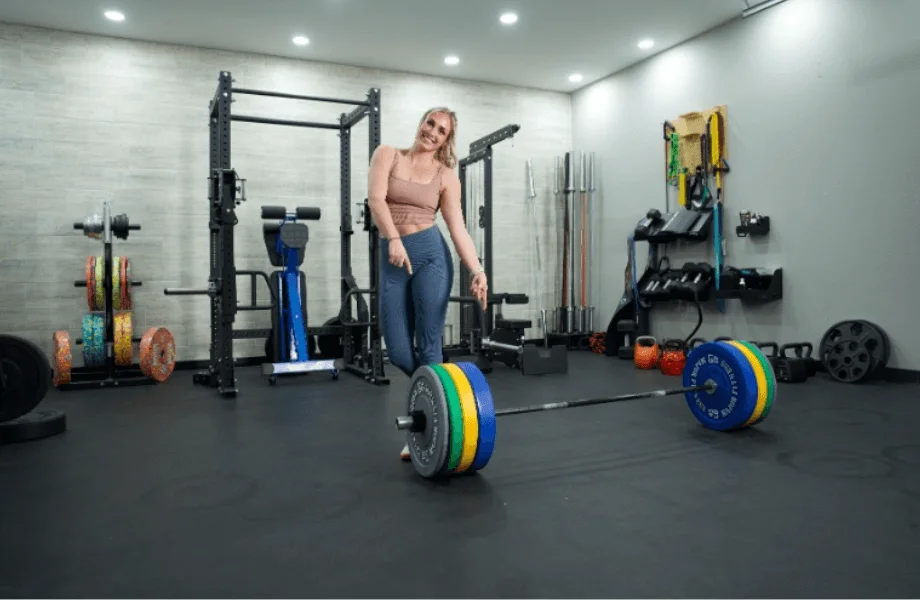
To save your precious flooring, we recommend using bumper plates. Whereas standard cast iron weight plates can seriously damage whatever you drop them on, bumper plates simply absorb that shock and bounce ever so slightly off the floor.
12. Load and Unload the Bar Evenly

Of course, you can’t place a plate on both sides of the barbell simultaneously. When loading the bar, however, you do want to make sure you’re loading and unloading it evenly by alternating what side you’re loading and using identical weight on each side.
Placing a 45-pound plate on the left? Okay, now put a 45 on the right. Adding 25s on the left next? Okay, put a 25 on the right. Alternate the sides when you remove the weight, too, or you’ll risk the barbell tumbling from the power rack’s J-hooks and possibly onto your toes.
It’s simple physics, but you’d be surprised how often this rudimentary safety measure is overlooked.
13. Don’t Ignore Your Body

Above all else, listen to your body before, during, and after each lift. If something feels off, stop.
Dedicated fitness enthusiasts and athletes often try to push past pain in pursuit of their training goals, but working through a potential injury will often exacerbate the issue and result in more training time lost in the long run.
If you feel like something is wrong, chances are you’re right. Don’t risk your health and well-being for a PR today if it potentially means weeks or months of recovery afterward.
Common Lifting Mistakes and How To Fix Them
Now that we’ve touched on several tips for barbell safety, let’s uncover a few general mistakes people can make during their workout and ways to avoid these issues.
Skipping Your Warm-Up
We’ve all been there: You’re in a rush and only have 30 minutes to get a workout in, so you skip the dynamic stretches that usually precede your working sets.
While it may not seem like a major issue at the time, warm-ups are a great primer for your specific workout each day and can be an excellent way to get the body properly prepped for your workout. The research is a little mixed4 on whether or not warm-ups help prevent injuries, but it can certainly help sore muscles ease into your workout.
Warm-ups can vary a lot, but they generally follow this progression:
- General conditioning: This can be a light jog, a few minutes on an exercise bike, or a bit of jumping rope. It’s really just whatever gets your heart rate up and blood pumping to start.
- Dynamic warm-up: Here, we’ll do some hops, dynamic stretches, and rotational exercise to begin priming the body for movement. Jumping jacks, arm circles, and trunk rotations are common here.
- Specific warm-up: Now, we’ll begin warming up for the specific exercises of the day. If you’re performing barbell squats, for example, do some air squats or squats with the empty bar.
- Cool-down: Make sure to cool-down, as well, as this can help kickstart your recovery. This is the ideal spot for some static stretches to work on flexibility while we let the heart rate lower back to resting.
Using Improper Form
Many injuries that occur during your exercise can stem from improper form. Before it gets to that, make sure proper form is the priority—especially when working out by yourself.
Here are some general guidelines for proper barbell form, although the specifics may change from exercise to exercise.
- Maintain a neutral spine during your lift, not letting your back round or overextend too much. Bracing your core properly (flexing your abdominal muscles and posterior chain) will help achieve this.
- Let the knees track over the toes during any squat, and avoid letting the knees cave in excessively.
- For upper body exercises like a bench press, try to keep the arms tucked, not letting the shoulders or elbows flare out.
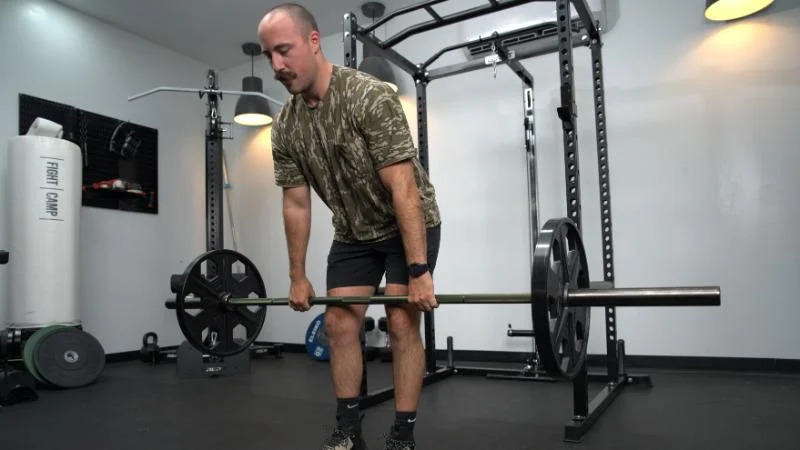
- Keep the bar close to you during deadlifts, as well as Olympic lifts like the snatch and clean pull. Leaving the bar too far forward can bring your weight forward and get you out of position.
Rushing Your Reps
Sometimes, we focus too much on the concentric portion of a lift—exploding out of a squat or powering through a bench press—that we forget to control the eccentric portion, as well. Rushing the eccentric portion of a lift can easily get us out of position during training, leading to a tougher rep or an increased risk of injury.
Fixing this is simple: Just slow down. For a squat, brace and control your descent so that you’re in the right position to drive out of the bottom. The same goes for your bench; a controlled rep pays off more than trying to rush or use momentum to your advantage.
Gripping the Bar Incorrectly

A false grip is a common grip amongst bodybuilders where your thumb is placed behind the barbell instead of over the barbell, leaving a partial grip on the bar. It helps isolate bodybuilding movements further, but there are certain situations where you shouldn’t ever use this grip pattern. Most notable is the bench press; a false grip makes it too easy for a bar to slip out of your hands, which will then crash onto your chest or neck causing serious damage. Instead, use a regular grip with the thumb over the barbell and other fingers.
Likewise, if you’re performing a snatch or clean and jerk, a hook grip is ideal. Instead of gripping the thumb over your fingers, a hook grip places the thumb underneath the fingers. It creates a far better grip ideal for the dynamic Olympic lifts, but be warned: It’ll be an uncomfortable style to learn, at first.
Lifting Too Heavy
We all want to get the most out of our strength training, so we try not to lift too light. However, that could lead us into training too heavy. Lifting more than we’re capable of easily sets us into bad positions and improper form, which increases our chance of suffering an injury. Always make sure you’re lifting within a weight range where you can maintain proper form, especially when you’re new to weight training.
Overtraining
Similarly, lifting too heavy or too often can lead to overtraining where your muscles can’t recover enough for the workload you’re trying to accomplish. A bit of muscle soreness is bound to happen, but if you’re feeling physically exhausted or mentally fatigued when walking into the gym, you might be overtraining.
If you find you’re unable to handle your workouts, decrease the volume or intensity a bit to allow for proper recovery. Also, make sure you’re incorporating a couple of rest days into your week. To avoid overtraining from the start, you can also try using an online workout program from an established personal trainer or coach. Programs are structured to account for recovery, minimizing your chances of overtraining.
Barbell Safety: Final Thoughts
As they say, “An ounce of prevention is worth a pound of cure.”
Working smarter rather than harder in the gym is always the best way to go. Taking measures to stay safe guarantees you’ll be in the gym day after day chasing those fitness goals and enjoying your best and healthiest life.
Good luck out there, and stay safe!
FAQs About Barbell Safety
Are dumbbells and kettlebells safer than barbells?
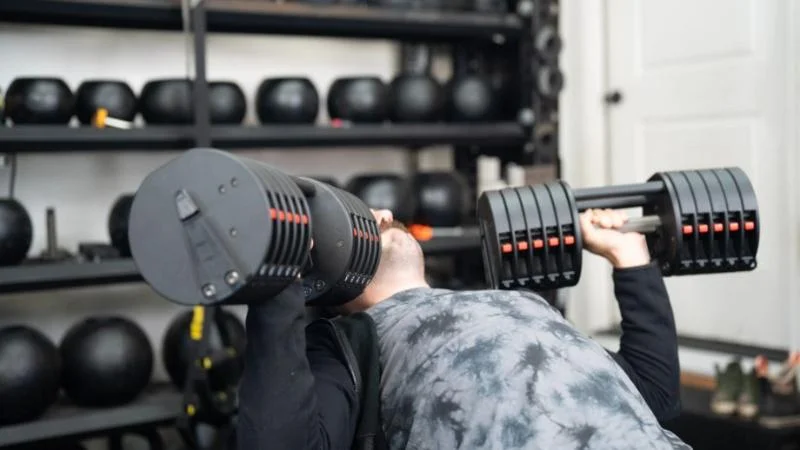
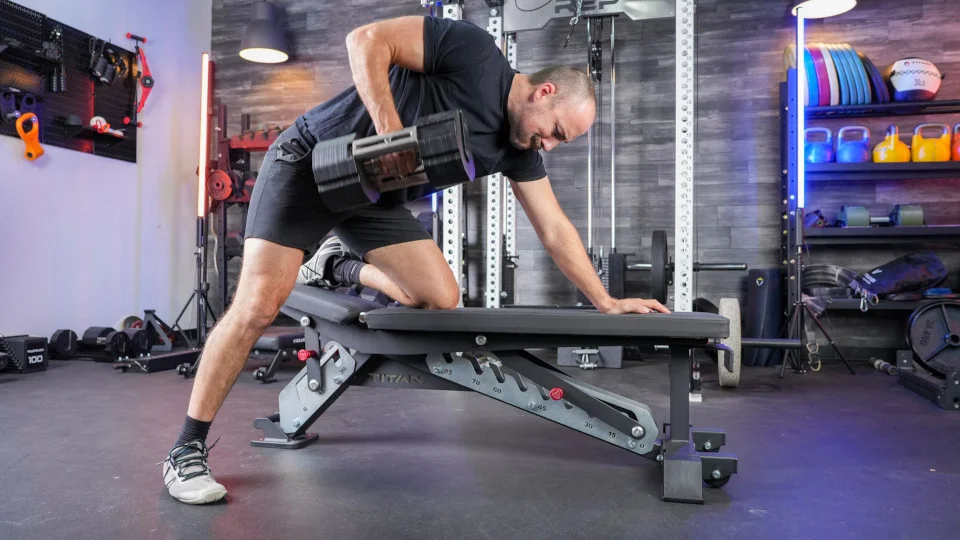
Dumbbells and kettlebells are safer than barbells in some aspects. For instance, there is little to no risk of being pinned underneath a dumbbell or kettlebell, whereas a barbell can certainly pin you.
On the other hand, barbells tend to bounce predictably when dropped, whereas dumbbells and kettlebells bounce and could crash into your poor ankles.
Each has inherent risks. Exercise caution when using free weights of any kind.
RELATED: Best Dumbbell Exercises
Are safety squat bars safer to use for squats than Olympic barbells?
There are many kinds of weightlifting bars on the market. The safety squat bar is a specialty bar with a camber on the ends and forward-facing hand grips.
In some ways, the safety squat bar is a safer alternative to the tried-and-true Olympic barbell when it comes to back squats and front squats. For starters, the safety squat bar allows the user to maintain a more upright position, which relieves tension on the lower back. Safety squat bars also incorporate forward hand grips, which help folks with limited shoulder mobility lift more safely.
For lifters with lower back issues and limited shoulder mobility, safety squat bars are an excellent alternative to the Olympic barbell.
Are there machines that offer a safe alternative to barbell training?
Generally speaking, you get more bang for your buck when working with free weights like barbells, dumbbells, and kettlebells. However, some machines do effectively simulate barbell training with greater safety measures incorporated.
Smith machines, for example, basically take a barbell and affix it to a vertical track, guaranteeing a straight bar path in each rep. They also use guards that will catch a falling barbell in the event you can’t complete the lift.
There are many machines available in most commercial gyms to provide alternatives to standard barbell training, but nothing beats the versatility of a good barbell and squat rack combo.
References
- Schumacher, L. M., Thomas, J. G., Wing, R. R., Raynor, H. A., Rhodes, R. E., & Bond, D. S. (2021). Sustaining Regular Exercise During Weight Loss Maintenance: The Role of Consistent Exercise Timing. Journal of physical activity & health, 18(10), 1253–1260. https://doi.org/10.1123/jpah.2021-0135
- Jumbelic M. I. (2007). Traumatic asphyxia in weightlifters. Journal of forensic sciences, 52(3), 702–705. https://doi.org/10.1111/j.1556-4029.2007.00429.x
- Jukic, I., García-Ramos, A., Baláš, J., Malecek, J., Omcirk, D., & Tufano, J. J. (2021). Ergogenic effects of lifting straps on movement velocity, grip strength, perceived exertion and grip security during the deadlift exercise. Physiology & behavior, 229, 113283. https://doi.org/10.1016/j.physbeh.2020.113283
- Afonso, J., Brito, J., Abade, E., Rendeiro-Pinho, G., Baptista, I., Figueiredo, P., & Nakamura, F. Y. (2024). Revisiting the ‘Whys’ and ‘Hows’ of the Warm-Up: Are We Asking the Right Questions?. Sports medicine (Auckland, N.Z.), 54(1), 23–30. https://doi.org/10.1007/s40279-023-01908-y