


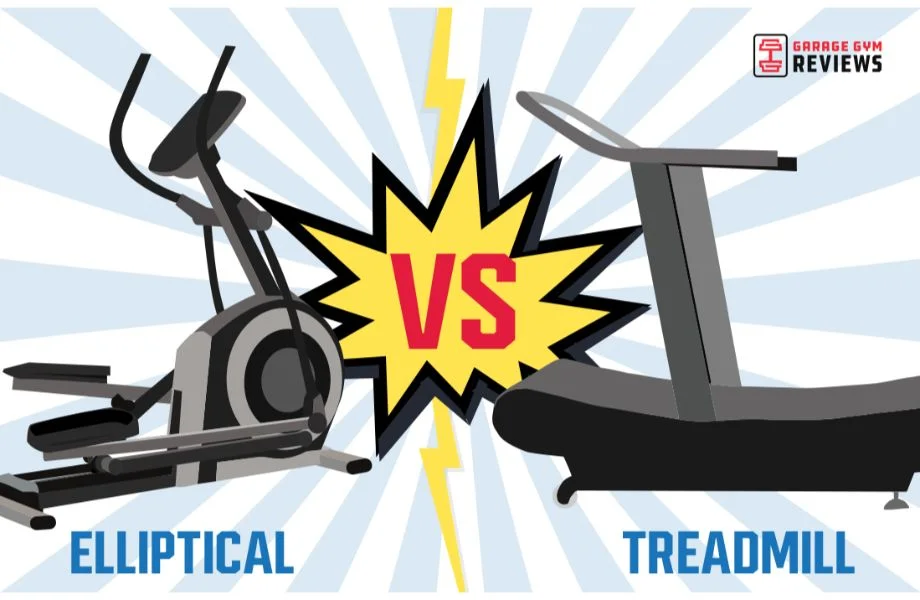
Adding a cardio machine to your home gym can help you take your workouts to the next level. Ellipticals and treadmills are two of the classics, both providing the opportunity for cardiovascular benefits like improved heart health1, an increased lifespan2, and aiding in weight loss3.
But which one should you choose? There’s so much to consider: Price, footprint, impact, safety level, and more. We’ll take you through all those considerations to the best of our ability in our elliptical vs treadmill guide.
Both ellipticals and treadmills are surefire cardio options. It’s all about what works best for your personal needs and your home gym setup. We’ll help you get to the bottom of it all, so you can get right to working up a sweat.
Elliptical vs Treadmill Video Review
What Are Ellipticals?
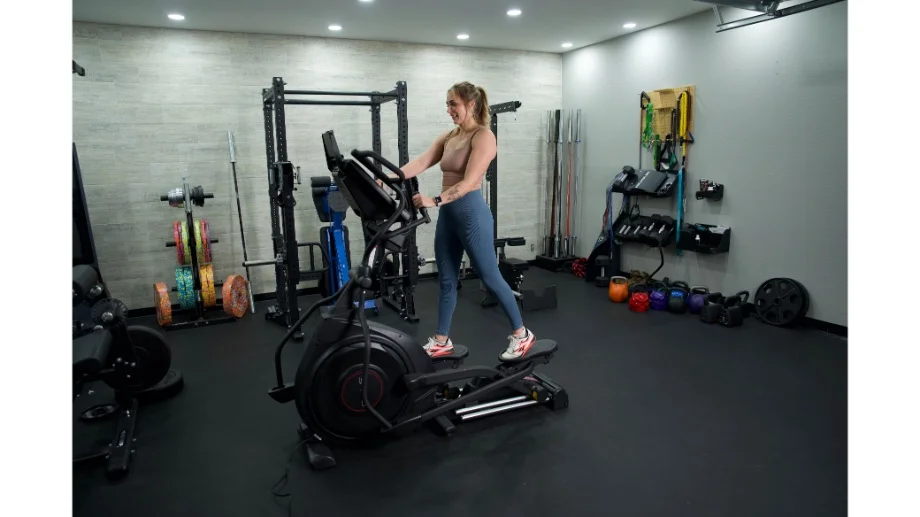
The elliptical is a low-impact cardio machine that provides a workout by simulating the movements of walking, running, and stair climbing. By moving the arm handles and foot pedals in tandem, both upper body (upper back, biceps) and lower body muscle groups (quads, calves, glutes, hamstrings) are activated simultaneously, providing a full-body workout.
The elliptical trainer was invented in the 1990s by Larry Miller, first designed with a lower-body focus but eventually evolving in the late 90s into the machine we recognize today.These days, it’s a staple in many home and commercial gyms.
The elliptical’s form of low-impact exercise makes it a great option for people of any fitness level, and some models even offer incline and resistance adjustments to mix up your workout.
Types of Ellipticals
There are several different types of elliptical machines you should be aware of. There are front-drive ellipticals, center-drive ellipticals, and rear-drive ellipticals. These names are derived from the location of the flywheel; front-drive models have the flywheel in the front, center-drive models have it in the center with the pedals on either side, and so on.
Recumbent ellipticals are a bit different in that you’re sitting down on the machine while you exercise. This type of elliptical can be great for those looking for an ultra-low-impact cardio workout. You can still get your entire body involved on a recumbent elliptical, but the pedaling motion will be longer than if you were standing up.
Pros of Ellipticals
One of the biggest benefits of an elliptical is that it’s a low-impact piece of fitness equipment, so you won’t put excessive pressure or strain on your joints during a workout. Your arms and legs will move in tandem with the machine, so they won’t be striking a surface the way they would on a treadmill. This makes it a good option for people who are already dealing with joint or muscle pain, or those who are otherwise recovering from injury.
The full-body element is another upside to using an elliptical. It’s certainly nice to activate both upper and lower body muscle groups at the same time, and this versatility is part of the reason I think elliptical workouts are such a great option.
Since ellipticals are so inherently intuitive, they’re great for any fitness level. All you have to do is get your arms and feet in place, follow the natural motion pattern of the machine, and you’ll be crushing your cardio in no time (while simultaneously feeling like you’re gliding through the air, which is pretty cool).
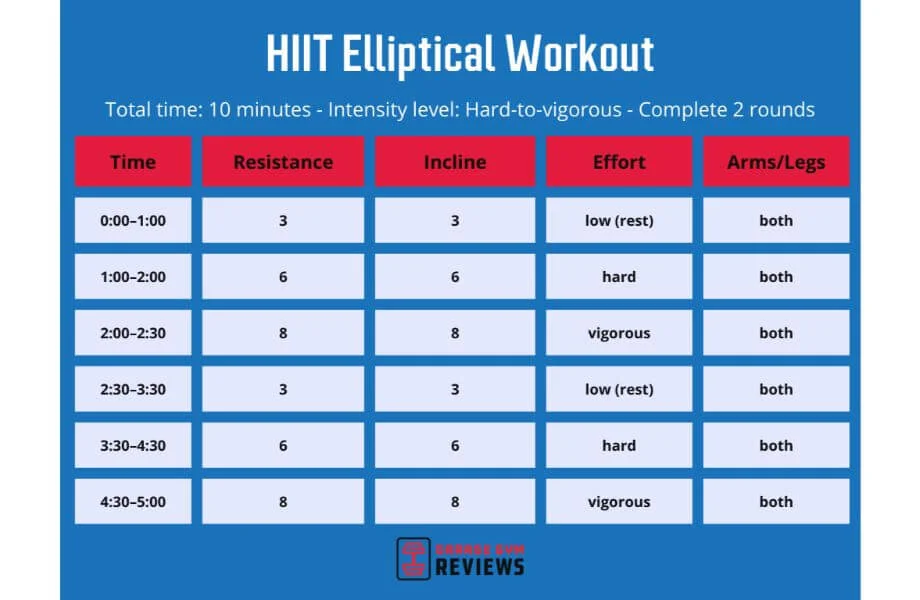
Additionally, elliptical machines offer the same benefits as any quality cardio machine, giving you the chance to increase cardiovascular endurance, burn calories, and strengthen your muscles through HIIT elliptical workouts or something more endurance-based.
Cons of Ellipticals
Unfortunately, ellipticals can have a large footprint, which can make them difficult to house in a home gym if you’re dealing with a space constraint. There are compact ellipticals available, but make sure you have an exact idea of your available space before making a purchase.
Also, ellipticals are essentially a one-size-fits-all machine. This means that there isn’t much leeway regarding adjustments for various heights and weights, so it’s possible the machine won’t fit you perfectly when you’re trying to use it if you’re especially tall or short.
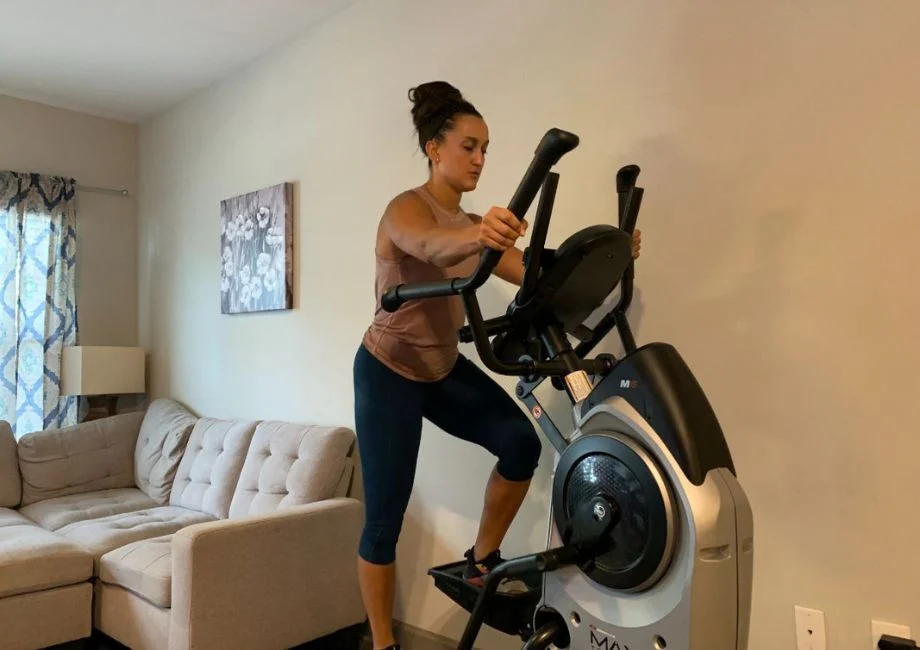
The cost of an elliptical can be another concern. Like treadmills, nicer models can set you back multiple thousands of dollars, although you can find quality budget options if you aren’t looking to spend as much.
RELATED: Best Budget Ellipticals
It’s worth noting, too, that in order to climb into a non-recumbent elliptical, you’ll have to step up into the pedals in some capacity. This could cause issues for people with stability/mobility constraints, so keep this in mind if you’re thinking of purchasing one for your home gym.
The elliptical also doesn’t reflect the natural movement of running as closely as the treadmill does. You’re more guided by the machine and its ovular movement pattern.
What are Treadmills?
A treadmill is a piece of cardio equipment whose users simulate running, walking, or jogging motions on a belt beneath their feet. The belt moves toward the back of the machine while you run forward, countering your motion so you run in place while using the machine.
The treadmill was invented across the pond in England in the early 19th century, originally designed as a device to rehabilitate prisoners. Eventually, it was repurposed for fitness use in the United States in 1916, and the rest is history. These days, you can find a treadmill in just about every commercial gym you’ll come across, and they make a great addition to any home gym.
Treadmills are available at all price points, including under $500, under $1,000, and high-end models that run into the multiple thousands of dollars.
RELATED: Best Treadmill Under $1,000
Types of Treadmills
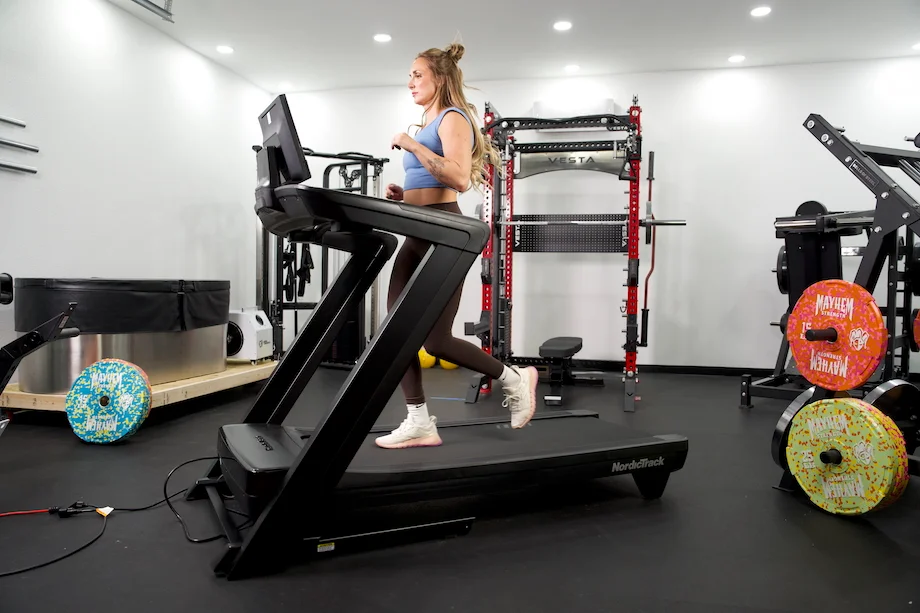
The type of treadmill you’re likely most familiar with is the motorized treadmill. These models feature a belt that’s powered by a motor, so you can adjust the speed and shift the intensity of your workout based on preset MPH increments (most treadmills go up to 12 or 14 MPH).
Manual treadmills are just the opposite. Your running pattern moves the belt on a manual model, so you can run as fast or as slow as you’d like with no maximum or minimum limits.
Curved treadmills are a type of manual treadmill featuring a concave belt. The belt shape is meant to facilitate a lower-impact type of stride that’s a little friendlier on your joints.
Pros of Treadmills
One thing a lot of motorized treadmill users like is that the belt can set the pace for you, so you’re automatically held accountable during your run and will have to manually change the settings if you want to slow down. However, it’s worth noting you’ll still be responsible for setting your own pace with manual treadmills.
Treadmills can provide a great lower body workout that reaches up into your core. The high-impact nature of running on a treadmill can strengthen your lower body muscle groups while also improving your cardiovascular fitness.
The customizable nature of treadmill settings also allows for a wide variety of aerobic workouts. You can easily start with a jog to warm up, increase your exercise intensity to do some sprints, then slow things down to a walking pace to cool down. The right pace can burn you more calories than an elliptical, as running at an 8-minute pace for 30 minutes burns, on average, 450 calories for a 155-pound person, over 125 calories more than elliptical training for the same time, according to Harvard Health Publishing4.
RELATED: Best Treadmill for Walking
A lot of treadmill models also offer incline adjustments, which can add another wrinkle to your workout. You can often run, walk, or jog uphill at just the push of a button.
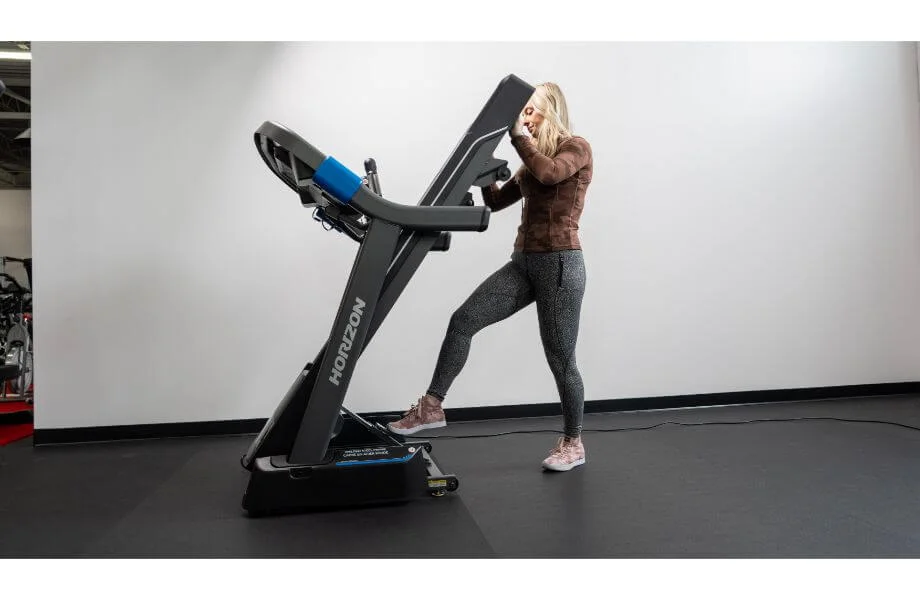
In terms of portability, there are also a number of great folding treadmill options that collapse for easy storage after you’re done using them.
RELATED: Treadmill Benefits
Cons of Treadmills
Treadmill running offers an inherently higher-impact form of exercise than ellipticals. This piece of equipment requires the user to pick their feet up and place them back on the belt during use, which can place stress on your knees and ankles. The high-impact nature of treadmill workouts can put you at risk for injury, specifically in your lower body.
RELATED: Best Treadmill For Bad Knees
Also, if you’re looking for a high-end model for your home gym, you might have to break the bank a little bit. A really nice treadmill model can run you well over $2,000 depending on what you’re looking for, though there are budget options available.
It’s also much harder to involve your upper body in your workout on a treadmill. There aren’t any arm handles you’re required to move like on an elliptical, meaning a treadmill will primarily focus on your lower body muscle groups like quads, hamstrings, calves, and glutes.
Elliptical vs. Treadmill: How to Decide Based on Fitness Goals
In this section we’ll walk you through a few of the factors we think you should consider when deciding whether to purchase a treadmill or an elliptical. We’ll get more in the weeds of the specifics, but here’s a general breakdown of which cardio machine might be better suited for you and your goals.
Ellipticals Are Great If…
- You want a low-impact cardio workout
- You have joint pain or are rehabbing an injury
- You want a full-body workout
- You have the footprint for a larger cardio machine
Treadmills Are Great If…
- You want a more customizable workout
- You need a more portable or compact option
- You want to burn more calories at higher intensities
- You’re training for a long-distance run
Safety
From a safety standpoint, the elliptical has an advantage in that your arms and legs are connected to the machine throughout, so there’s little risk of slipping and falling during use. This is different from a treadmill where your feet are leaving the deck frequently as you work out.
Also, with motorized treadmills, the moving belt can lead to the risk of injury during use. Be careful not to set your motorized treadmill at a pace too fast for you, and be aware of the location of the emergency stop function (usually a button or cord you can clip to your shirt).
Non-recumbent ellipticals do require you to step upward into the pedals, though, which can also be a safety concern for some. Make sure to do so carefully and move at your own pace to avoid injury.
Weight Loss
In the battle of elliptical vs treadmill for weight loss, it’s a draw, as both machines can help you burn calories to achieve a caloric deficit, which is the key for weight loss.
For example, 30 minutes of treadmill use at a 5 MPH setting can lead to burning anywhere from 240 to 360 calories, depending on how much you weigh. Similarly, a study from Harvard Health Publishing4 found that 30 minutes of moderate elliptical use can burn anywhere from 270 to 378 calories. It should be noted, however, that a faster pace on the treadmill will net you a higher caloric burn.
Essentially, you’ll have the opportunity to burn calories using a treadmill or elliptical machine. The amount you burn depends on your body weight and height, as well as the intensity and duration of your cardio workout.
Research has shown, too, that HIIT workouts—which are possible on both ellipticals and treadmills— are a great way to burn calories through cardio.
RELATED: HIIT Workouts for Beginners
Programming Options
Generally, treadmills are the more customizable of the two machines, offering adjustments in both speed and incline that allow you to change up your workout with ease. Most motorized treadmills have max speeds of around 10 to 14 MPH, giving you the chance for a high-intensity workout. Some elliptical machines have adjustable incline and resistance levels, as well, adding another wrinkle to your workout if you want.
Many treadmills and ellipticals also offer preset workouts that are already loaded onto the machine. If you want to do some cardio and get your heart rate up but don’t have an established workout routine, these preset options could be a good choice.
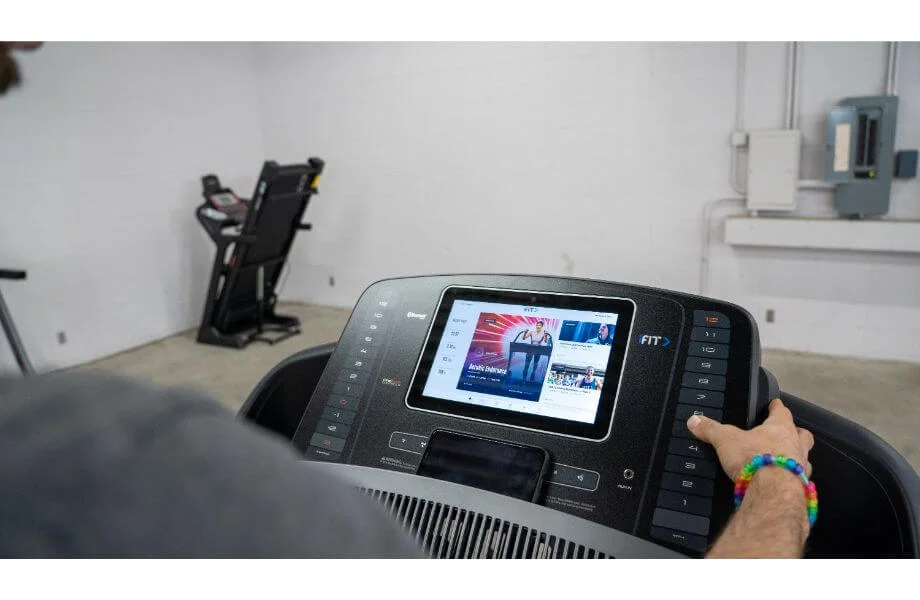
If downloadable workouts are part of your fitness regimen, there are plenty of treadmill and elliptical models that are compatible with some of the best workout apps, as well. Sometimes, your machine will have a touchscreen monitor you can use to access them, or you can download your workouts on your smartphone or tablet and connect to the machine via Bluetooth.
Low-Impact Workout
The elliptical takes the cake when looking for a low-impact form of cardio. The way the elliptical trainer is designed allows you to keep your arms and legs connected to the machine throughout training, moving in tandem with its natural pattern and thus relieving stress from your muscles and joints.
Even with the most ergonomically friendly treadmill models, you’ll still be picking your feet up and putting them back down during strides. This impact can cause stress on your ankles and knees, especially for frequent treadmill runners.
Budget
This is a tough comparison. There are budget options available for both treadmills and ellipticals, falling within the price range of around $150 to $500. Mid-range models go from around $500 to over $1,000, and high-end models can cost multiple thousands of dollars.
In both cases, the more you’re willing to pay, the higher quality piece of gym equipment you’ll get. You can find ultra-cheap models on the market, but they may not offer as many luxury features or perform the way a high-end model would.
Fitness Goals
This will obviously depend on what your fitness goals are, but generally, treadmills are better for specific performance-based fitness goals and ellipticals are good for general fitness goals. What we mean by that is someone who’s doing marathon training or wants to improve their running time would be better off with a treadmill.
If, however, your goal is simply to improve your cardiovascular fitness and strengthen your leg muscles, then you might be fine with the elliptical (if it fits your budget).
Final Verdict
Ellipticals and treadmills are two of the most popular exercise machines in the cardio fitness space for a reason. They’re tried and true pieces of exercise equipment that can give you a great cardio workout to complement your strength training regardless of your fitness level.
RELATED: Cardio vs. Strength TrainingHowever, the two machines are better suited for different types of people. If you struggle with joint pain or are recovering from injury, an elliptical might be your best choice. If your body can withstand a high-impact cardiovascular workout and want to focus on engaging your lower body and leg muscles, the treadmill is ideal for you.
As always, though, it comes down to personal preference. Consider your budget, fitness goals, and other needs before you buy, so you can snag the perfect cardio machine for your home gym.
RELATED: Rowing Machine vs Elliptical
Elliptical vs Treadmill FAQs
Which is better for weight loss—an elliptical or a treadmill?
Both ellipticals and treadmills are solid options for calorie burn, which can lead to weight loss when paired with a calorie deficit.
Is the elliptical better than a treadmill?
Neither machine is inherently “better” than the other. However, elliptical machines may be better suited for people recovering from injury due to the low-impact nature of the workout it provides.
Is the elliptical harder than the treadmill?
Both machines can offer high-intensity workout options. For treadmills, speed and incline adjustments can add a new challenge for your workout. For ellipticals, the faster you stride, the more intense your workout will be (some models also offer incline adjustments).
Is the elliptical good for belly fat?
While you can’t target belly fat with a specific exercise, you can burn calories by using the elliptical, which can lead to general weight and fat loss when paired with a calorie deficit.
References
- Nystoriak, M. A., & Bhatnagar, A. (2018). Cardiovascular Effects and Benefits of Exercise. Frontiers in cardiovascular medicine, 5, 135. https://doi.org/10.3389/fcvm.2018.00135
- Agarwal S. Cardiovascular benefits of exercise. Int J Gen Med. 2012;5:541-5. doi:10.2147/IJGM.S30113
- Donnelly, J. E., Honas, J. J., Smith, B. K., Mayo, M. S., Gibson, C. A., Sullivan, D. K., Lee, J., Herrmann, S. D., Lambourne, K., & Washburn, R. A. (2013). Aerobic exercise alone results in clinically significant weight loss for men and women: midwest exercise trial 2. Obesity (Silver Spring, Md.), 21(3), E219–E228. https://doi.org/10.1002/oby.20145
- Calories burned in 30 minutes for people of three different weights. (2021). Harvard Health Publishing. Accessed on October 14, 2024. https://www.health.harvard.edu/diet-and-weight-loss/calories-burned-in-30-minutes-for-people-of-three-different-weights