

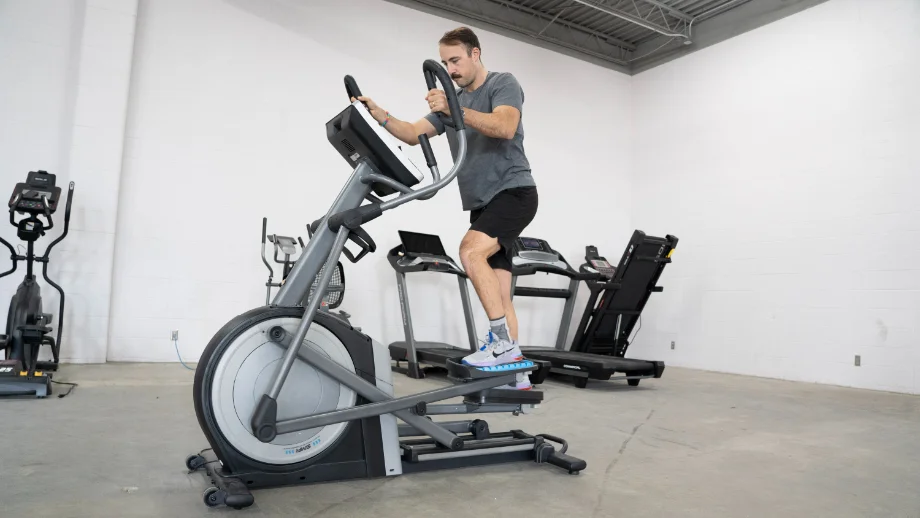
An elliptical HIIT workout is a low-impact, high-intensity cardio session that’s short and sweet and will leave you sweating. You work hard for a short time, then allow your body to recover, repeating this work-rest cycle several times. The bouts of high-intensity work coupled with periods of recovery can improve heart function1, burn calories2, and provide a fun and challenging workout.
As a certified personal trainer, I’ve coached many clients through HIIT workouts in different modalities. I believe in its benefits and will break it all down for you below.
So, fire up your trusty elliptical and get ready to reap the rewards of ramping up the intensity!
GGR Recommends – Best Elliptical Machine
With an overall score of 4.4 out of 5, the NordicTrack AirGlide 16 stands out as the best elliptical machine we’ve tested thanks to its best-in-class ergonomics, durable steel frame, incline and decline settings, and 26 resistance levels. Plus, iFIT programming paves the way for immersive, engaging workouts.
What Does HIIT Mean?
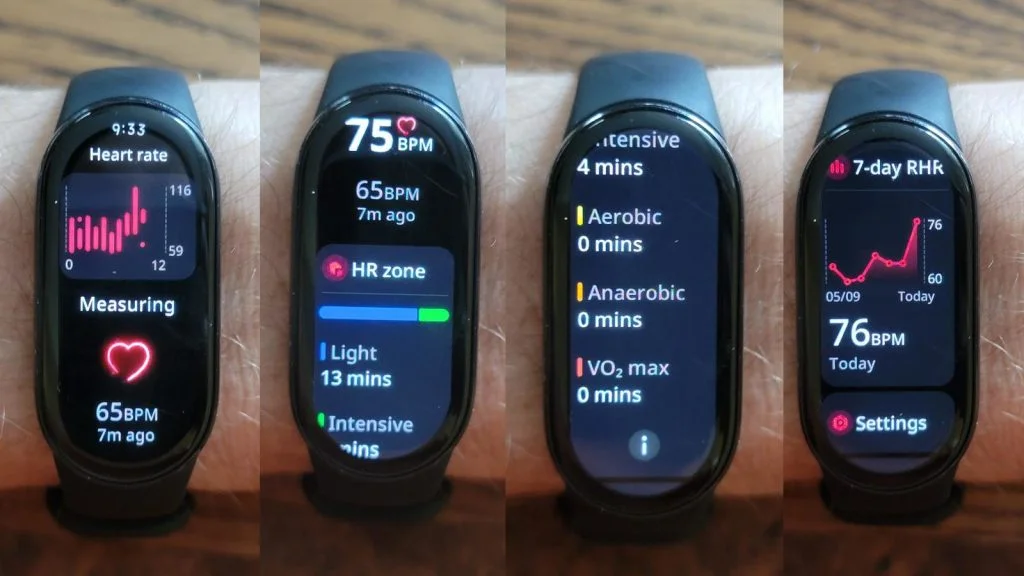
HIIT stands for high-intensity interval training and refers to a type of cardio workout in which you alternate short periods of maximum effort with recovery periods. During the high-intensity portion of a HIIT workout, you should be working at about 80 to 90% of maximum heart rate. During the recovery period, you should get back down to about 55 to 60% of your maximum.
Unlike steady-state cardio, where you work at a moderate intensity for an extended period of time, HIIT workouts elevate the heart rate quickly and to a greater degree, but for a much shorter period of time.
HIIT can be a useful type of workout for people of any fitness level and is often used by personal trainers as a complement to strength training programs. According to the International Journal of Environmental Research and Public Health3, interval training offers several benefits, including:
- Improved aerobic endurance
- Increased anaerobic capacity
- Increased metabolic rate
- Improved insulin sensitivity
Doing HIIT on an elliptical machine is a great way to get a low-impact, high-intensity workout and burn more calories in less time.
How Hard Should an Elliptical HIIT Workout Be?
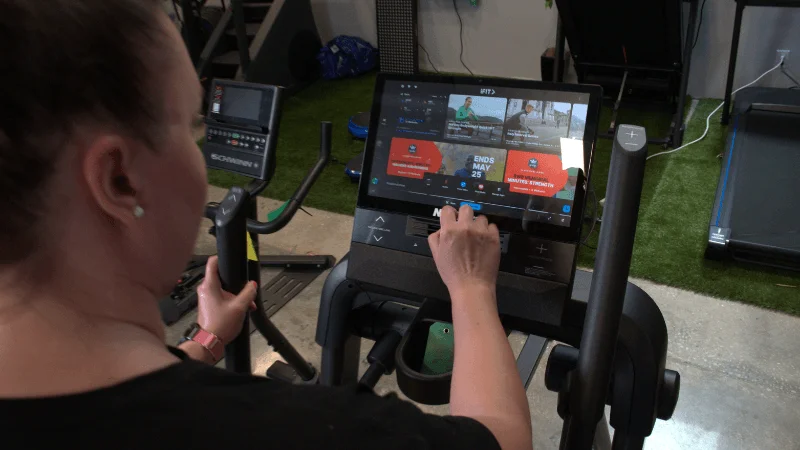
Determining how “hard” to go during a workout can be quite subjective. After all, that definition is different for everyone based on their body type, fitness level, and training goals.
However, there is a way to measure just how challenging something is on an individual basis.
A common term you’ll see in both strength and cardio training is rate of perceived exertion (RPE). We use this subjective numerical scale to measure how hard your body works during exercise. Here’s a general breakdown of how it looks:
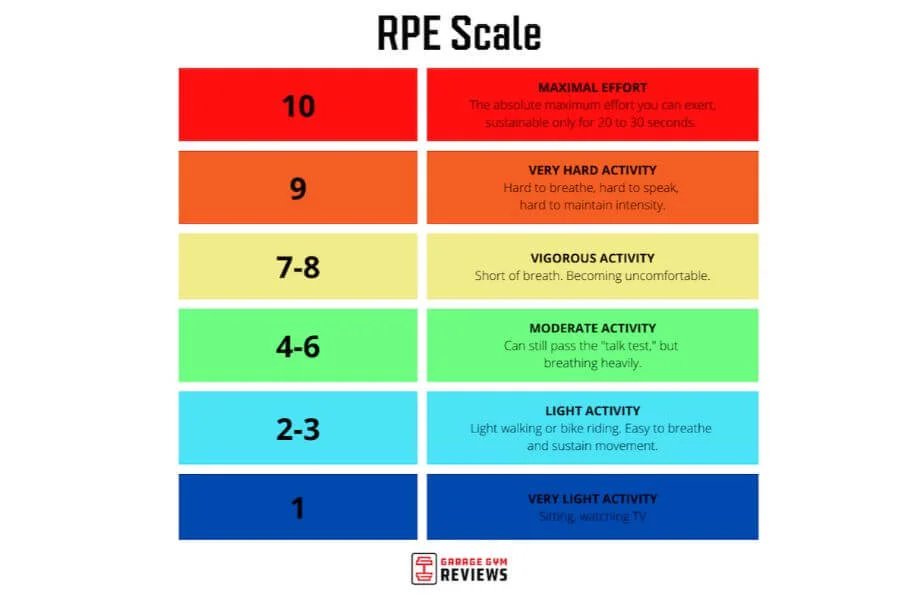
For an elliptical HIIT workout, you should aim for the upper end of that scale during your work periods. Then, you can use your rest periods to bring your heart rate back down before it’s time to go again.
RELATED: Benefits of HIIT
3 Elliptical HIIT Workouts
Below, I’ve created three HIIT routines to try: one for those short on time, one for beginners, and one for more advanced exercisers. But before we dive into the sessions themselves, we can’t skip the all-important first step.
Before Getting Started: Warm Up
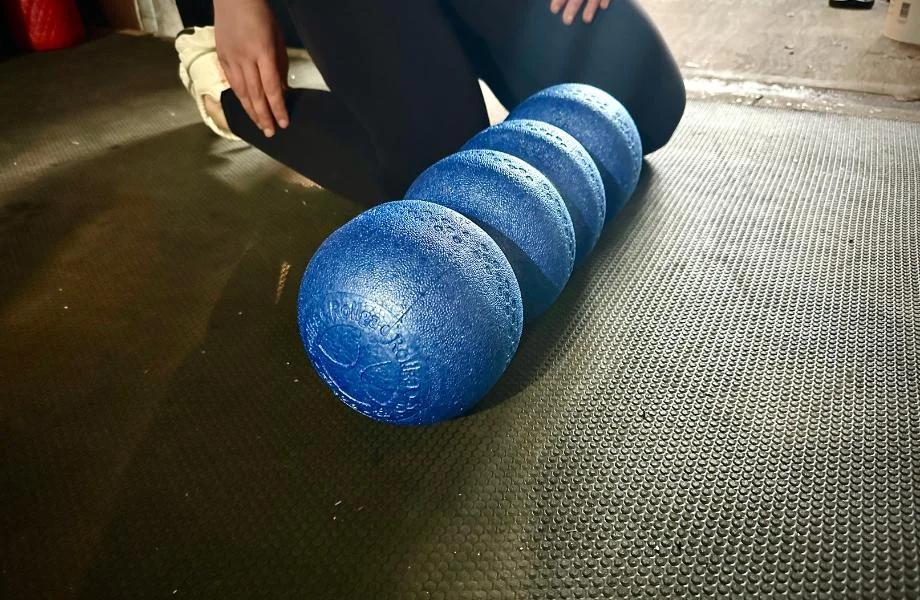
The intensity of a HIIT workout requires that you be physically and mentally prepared. A proper warm-up includes soft tissue work (i.e. foam rolling or using a massage gun), dynamic stretching, and gentle movement.
For a HIIT elliptical workout, the warm-up could look something like this:
- Foam roll hip flexors and quads (1 minute each leg)
- Dynamic hip flexor stretching (half kneeling position with slow pulses back and forth)
- Dynamic hamstring stretching (downward dog with foot pedaling)
- Hip circles (10 each leg)
- Walking lunges (10 each leg)
- Inchworms (10 each leg)
- Three to five minutes at low intensity on the elliptical trainer
RELATED: 10 Best Warm-Up Exercises
1. Elliptical HIIT Workout for Beginners
If you’re new to HIIT, it’s recommended that recovery intervals be significantly longer than work intervals. This may mean that your first attempt at a HIIT workout includes only one or two high-intensity intervals, followed by recovery.
While you can go by target heart rates, keeping track of those numbers during an intense session can be a bit cumbersome if you’re just getting started. My recommendation is to implement the RPE approach, which gives you a benchmark of how hard you should push yourself.
Sample Workout:
This beginner-friendly session keeps things fairly straightforward. You’ll change the resistance settings on the machine throughout the workout and alternate between high-RPE periods and active rest intervals.
| Time | Resistance | RPE (1-10) |
| 0:00-1:00 | 2 | 3 |
| 1:00-1:30 | 3 | 6 |
| 1:30-2:30 | 1 | 2 |
| 2:30-3:00 | 4 | 7 |
| 3:00-4:00 | 1 | 2 |
| 4:00-5:00 | 5 | 8 |
| 5:00-7:00 | 1 | 2 |
| 7:00-8:00 | 6 | 9 |
| 8:00-11:00 | 1 | 2 |
| 11:00-11:30 | 5 | 8 |
| 11:30-13:30 | 1 | 2 |
| 13:30-14:00 | 4 | 7 |
| 14:00-16:00 | 1 | 2 |
| 16:00-16:30 | 3 | 6 |
| 16:30-17:30 | 1 | 2 |
| 17:30-18:00 | 6 | 10 |
| 18:00-20:00 | 0 | 2 |
Training Tip: If you feel completely gassed after the first half, don’t feel obligated to finish the workout (at least not on your first attempt). One of the biggest keys to HIIT is adjusting the parameters based on your current fitness level.
2. 20-Minute Quick Elliptical HIIT Workout
Short on time but still want to get your sweat on? Complete this 20-minute elliptical HIIT workout to get that “glazed donut look” (as Peloton instructor Jess Sims says).
Sample workout:
The industry standard for resistance levels on an elliptical is around 12, but you may have more (or fewer) options depending on your machine. If your elliptical can support higher levels of resistance, feel free to make this workout even more challenging by upping the ante.
It’s also worth noting that not all elliptical machines have incline and decline capabilities. If your elliptical doesn’t have these options, don’t fret! You’ll still be able to get a killer workout with a little resistance and a lot of hard work.
| Time | Resistance | Incline | RPE (1-10) |
| 0:00-2:00 | 3 | 3% | 5 |
| 2:00-2:30 | 3 | 0% | 2 |
| 2:30-4:30 | 5 | 4% | 6 |
| 4:30-5:00 | 3 | 0% | 2 |
| 5:00-7:00 | 7 | 5% | 7 |
| 7:00-7:30 | 3 | 0% | 2 |
| 7:30-9:30 | 9 | 6% | 8 |
| 9:30-10:30 | 3 | 0% | 2 |
| 10:30-12:30 | 11 | 5% | 9 |
| 12:30-13:30 | 3 | 0% | 2 |
| 13:30-14:00 | 12 | 4% | 10 |
| 14:00-15:30 | 3 | 0% | 2 |
| 15:30-16:00 | 9 | 3% | 8 |
| 16:00-17:30 | 3 | 0% | 2 |
| 17:30-18:00 | 7 | 2% | 7 |
| 18:00-18:30 | 8 | 1% | 10 |
| 18:30-20:00 | 0 | 0% | 2 |
RELATED: Best Elliptical with Incline
3. Advanced 30-Minute Elliptical HIIT Workout
Once you’ve gotten the hang of HIIT, you can make it more challenging by increasing the intensity and lengthening the work intervals. This HIIT routine is great for people who have some experience with HIIT, are generally fit and healthy, and feel comfortable closely monitoring their heart rate.
Sample workout:
Now the power is in your hands. Choose a resistance and incline that allow you to reach the target RPE while maintaining good posture and smooth, controlled strides during this 30-minute advanced elliptical HIIT workout.
| Time | Effort | Target RPE |
| 0:00-3:00 | Easy warm-up | 3-4 |
| 3:00-5:00 | Gradually increase pace and resistance | 5-6 |
| 5:00-25:00 | Alternate 1 minute hard with 1 minute recovery for 10 rounds | Hard: 9; Recovery: 5-6 |
| 25:00-27:00 | Steady moderate pace | 6-7 |
| 27:00-30:00 | Gradually slow down and reduce resistance | 2-4 |
Training Tip: During the hard intervals, increase your speed, resistance, incline, or a combination of all three.
Post Workout: Cool Down
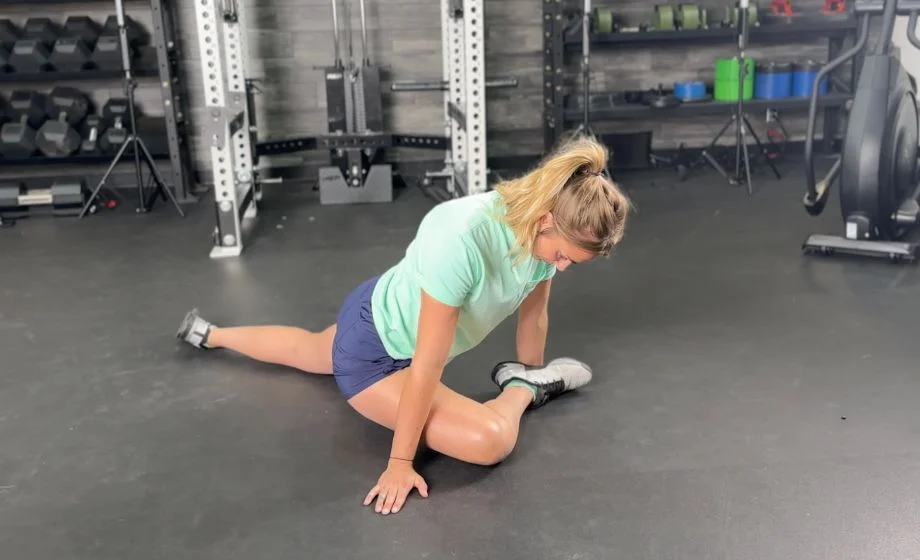
The cool down is equally important as the warm-up, especially after a high-intensity bout of exercise. Even though it seems simple, do not skip this part! Walk or jog slowly on the elliptical for about five minutes, allowing the heart rate to decrease.
Then lie down on your back, preferably with the feet elevated on a bench or chair. Breathe slowly and deeply for three to five minutes and allow your brain and body to come back to a resting state.
RELATED: Best Cool Down Exercises
Pros and Cons of Elliptical HIIT Workouts
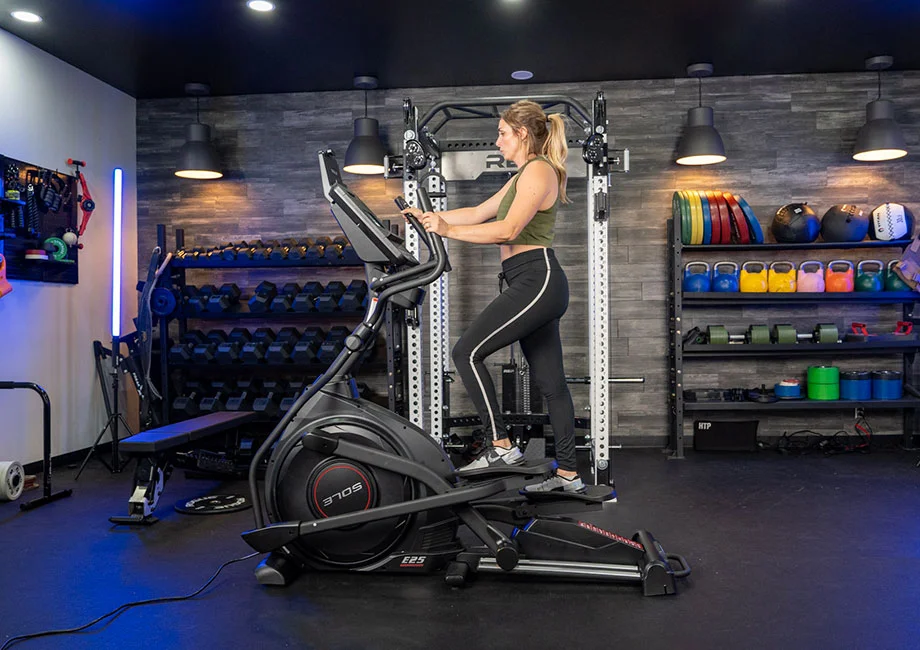
Let’s be clear: HIIT is not for everyone. After all, it’s a highly demanding form of exercise that isn’t suited for all people or situations. However, if you’re open to working at max effort for short bursts, this training style can be quite beneficial.
If you’re still on the fence, here’s a breakdown of the pros and cons of elliptical HIIT workouts that may convince you to give one a try.
RELATED: Elliptical vs Bike
Final Verdict on Elliptical HIIT Workouts
HIIT is an excellent form of cardiovascular exercise that has many benefits. Performing a HIIT workout on an elliptical is a great way to make the most out of your elliptical machine, burning more calories in less time compared to steady-state cardio and also keeping you engaged and focused throughout the workout. Most ellipticals come with pre-programmed intervals so it is easy to hop on and get an intense workout in a short amount of time.
Elliptical HIIT Workout FAQs
Is HIIT on an elliptical effective?
The short answer is yes. You can use this cardio machine to improve your conditioning while placing less stress on your joints than running on a treadmill. Alternating short bursts of high resistance or speed with easier recovery periods should provide a sufficient challenge.
Is 20 minutes on the elliptical a day enough?
Yes, 20 minutes on the elliptical each day can improve cardiovascular fitness and help you stay active, especially at a moderate-to-vigorous intensity. At that rate, you would total 140 minutes weekly, which is just shy of the American Heart Association’s recommended 150 minutes of moderate aerobic activity for adults.
Do ellipticals help burn belly fat?
While elliptical workouts can help you burn calories and improve your cardiovascular health, there’s no such thing as spot-targeting. Ultimately, you need to be in a calorie deficit to lose body fat. So, look at an elliptical as a tool to help increase your calorie expenditure.
References
- Karlsen, T., Aamot, I. L., Haykowsky, M., & Rognmo, Ø. (2017). High Intensity Interval Training for Maximizing Health Outcomes. Progress in cardiovascular diseases, 60(1), 67–77. https://doi.org/10.1016/j.pcad.2017.03.006
- Wewege, M., van den Berg, R., Ward, R. E., & Keech, A. (2017). The effects of high-intensity interval training vs. moderate-intensity continuous training on body composition in overweight and obese adults: a systematic review and meta-analysis. Obesity reviews : an official journal of the International Association for the Study of Obesity, 18(6), 635–646. https://doi.org/10.1111/obr.12532
- Atakan, M. M., Li, Y., Koşar, Ş. N., Turnagöl, H. H., & Yan, X. (2021). Evidence-Based Effects of High-Intensity Interval Training on Exercise Capacity and Health: A Review with Historical Perspective. International journal of environmental research and public health, 18(13), 7201. https://doi.org/10.3390/ijerph18137201