





If you enjoy squatting, but don’t enjoy squatting with a barbell on your back, a belt squat machine may be just what you need in your home gym. By moving the load from your back to your hips, belt squats allow you to squat deeply and train your quads, glutes, and hamstrings with significantly less spinal loading than a normal squat.
What was once considered a niche exercise among powerlifters and athletes has grown in popularity over the years, and now there are some great belt squat machines on the market. From commercial-grade, standalone units to compact power rack attachments, there’s a belt squat for everyone.
In this guide to the best belt squat machines, we’re sharing our top five picks to help you upgrade your leg routine. Whether you’re injured, still working on your back squat form, or simply don’t feel comfortable doing heavy squats without a spotter, we’ll help you find the best option for your home or garage gym.
Coop’s Pick – Best Best Belt Squat
I asked GGR founder Cooper Mitchell what his favorite belt squat is, and he picked the Rogue Monster Rhino Belt Squat, which we chose as the most durable belt squat. He says, “I really love the Rogue Rhino because of its ability to drop into a Rogue rack, and for the variety it can add to a home gym due to the floor-based cable.”
Best Belt Squat
- Best Belt Squat for Home Gyms – Bells of Steel Belt Squat Machine 2.0
- Best Belt Squat for Power Racks – Fringe Sport Mammoth Belt Squat
- Best Durable Belt Squat – Rogue Monster Rhino Belt Squat
- Best Belt Squat Attachment – PRx Profile Belt Squat
- Best Budget Belt Squat – GMWD Belt Squat Machine BS01
Current Top Deals
- GMWD Belt Squat Machine BS01 – Save 7% for Black Friday
How We Selected the Best Belt Squat
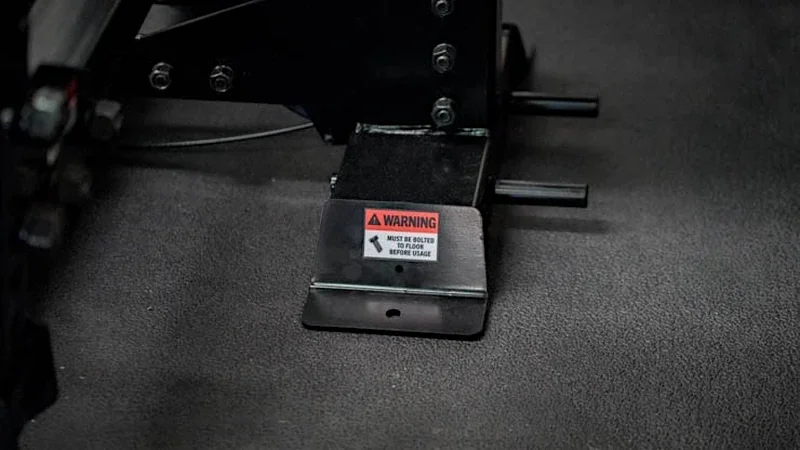
While standalone belt squat machines are typically very heavy-duty and stable, rack attachments are a bit different because they’re often designed to fold up and put away between uses.
For a 3 out of 5, the machine may wobble slightly, but we don’t feel particularly concerned for our safety. If it’s a rack attachment, it may feel a little loose even when attached as securely as possible, which is expected to some degree.
Higher scores are awarded to machines that feel extremely stable throughout the entire movement.
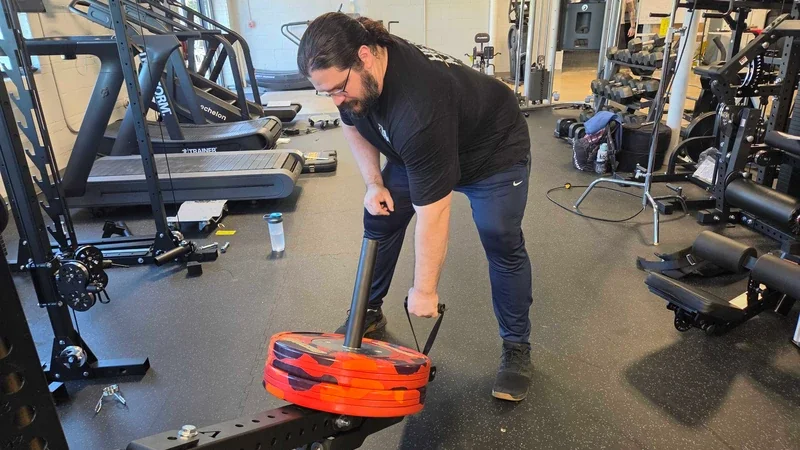
Most belt squat machines are specialized for one specific exercise, but when you’re putting something this big in your home gym, it’s important to consider whether or not you’ll be able to use it for a variety of exercises.
To earn a 3 out of 5, the belt squat machine may be somewhat limited in its versatility, but it allows for some variety. You may be able to perform a handful of other lower-body exercises and a small number of upper-body exercises. Higher scores go to machines that allow you to perform quite a few exercises, including upper body exercises, although you may need to use your own attachments.
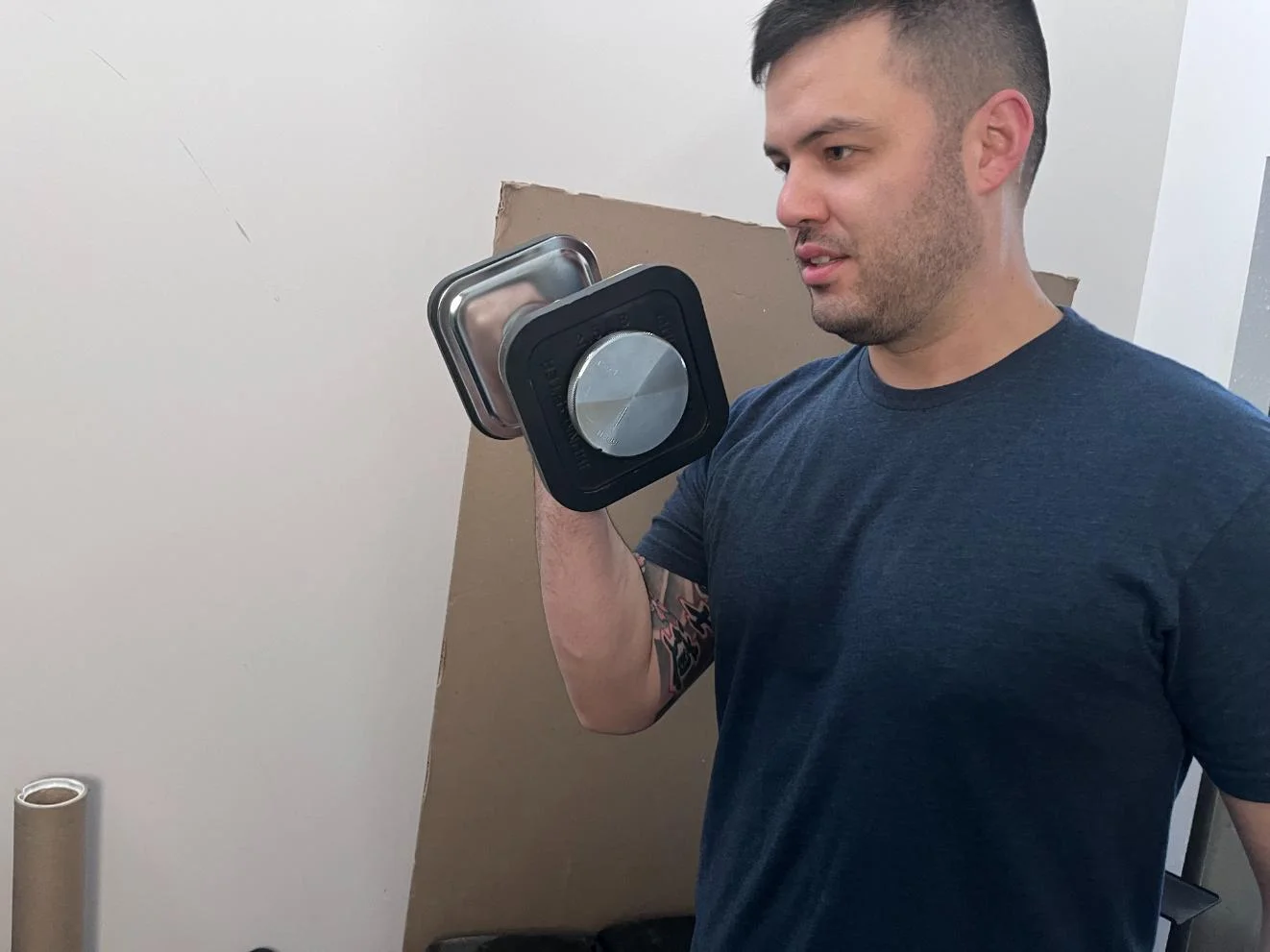
Since everybody has different mechanics and a different body structure, we want to make sure that a belt squat accommodates a wide variety of users and squat stances. For a 3-out-of-5-star rating, the machine allows for some adjustments, but lifters who are shorter or taller than average might not be able to use the machine comfortably. The belt may fit around an average-weight lifter, but it may not fit around individuals who carry extra weight in their hips.
To earn a higher rating, a belt squat should be very comfortable regardless of your stance, and we would like to see a belt that fits a variety of users and feels reasonably comfortable in use.

Before reviewing any piece of strength equipment, we test as many aspects of it as possible. We assess the durability and construction, take it through a workout with its intended movement, and load up plenty of weight to see if it feels any less stable as the load gets heavier. After testing, we use our equipment testing methodology to calculate a final review score by rating each machine on a 1-5 scale for a variety of important categories.

The Garage Gym Reviews team of expert testers is made up of strength athletes, certified personal trainers, strength coaches, gym owners, and more. Our team has tested countless pieces of equipment over the years, and many of us have our own home gyms where we are regularly adding and testing new equipment.
Best Belt Squat for Home Gyms: Bells of Steel Belt Squat 2.0
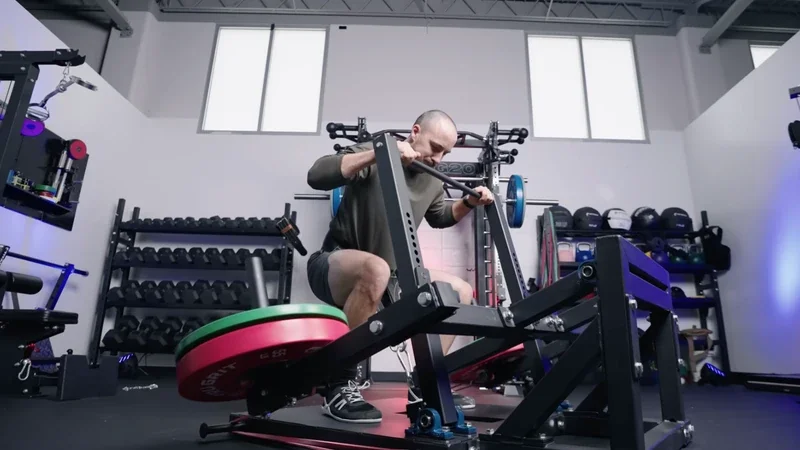










The Bells of Steel Belt Squat Machine 2.0 offers an appealing combination of loading capacity, exercise versatility, and a relatively space-efficient design. We especially like its adjustable starting positions and included accessories, although some lifters may need to elevate their stance to achieve their preferred squat depth.
At a Glance
For those who want a belt squat that’s easy to use, very durable, and affordably priced, it’s hard to beat the Bells of Steel Belt Squat. From its commercial-grade durability to thoughtful features like vertical weight horns and adjustable j-cups, we love the design and functionality.
As with most standalone belt squat machines, it’s a little bulky, and the assembly can be a little tricky. However, if you don’t mind committing some of your floor space to a belt squat, this one offers the best balance of quality and value.
| Price (Original MSRP) | $1,199 |
| Dimensions | 51” W x 81” L x 40” H |
| Product Weight | 264 lbs |
| Loaded Weight Capacity | 700 lbs |
| Materials | 11-gauge steel |
| Warranty | Limited lifetime warranty |
Our Experience Using the Bells of Steel Belt Squat 2.0
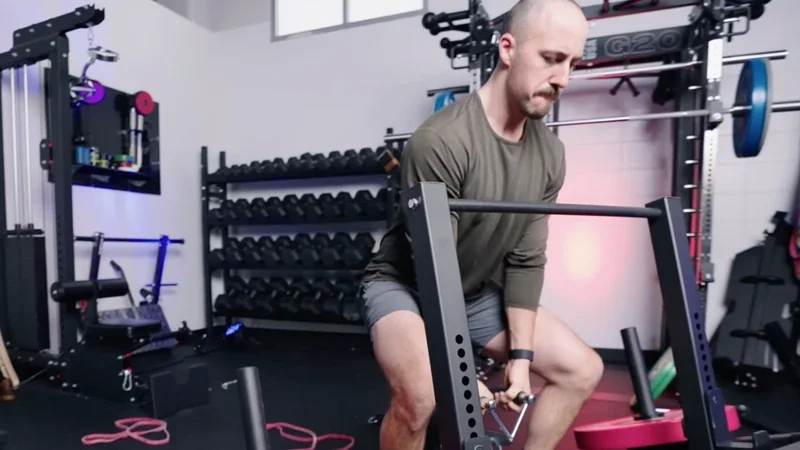
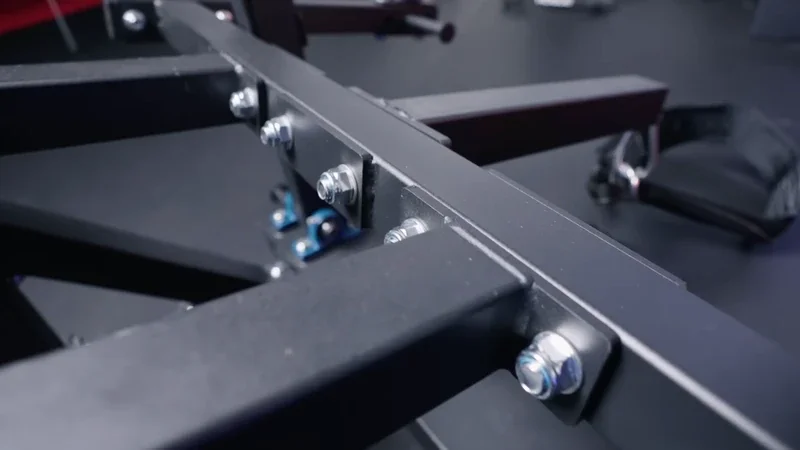
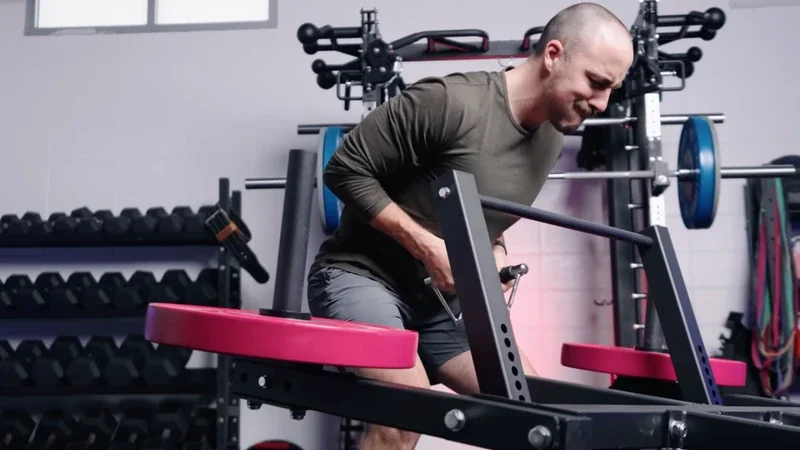
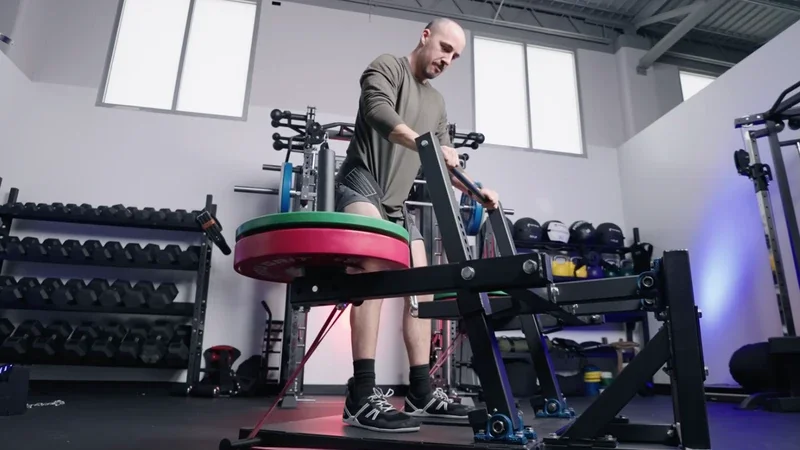
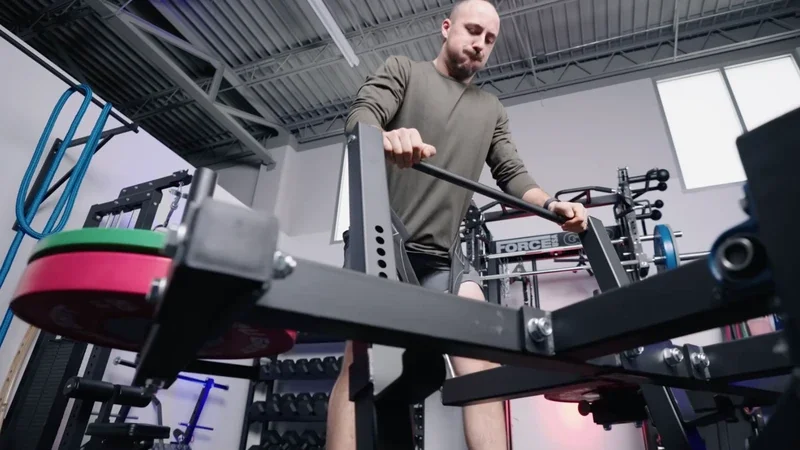
The first thing we noticed about this belt squat is the impressive construction and durability. It features commercial-grade bushings, and it’s made of 11-gauge steel, the same type of steel used in most high-end squat racks.
GGR founder Cooper Mitchell tested this belt squat and said, “This platform is solid. Like, this is a metal platform with a 3-millimeter-thick top. It’s fully welded. This thing is not moving.”
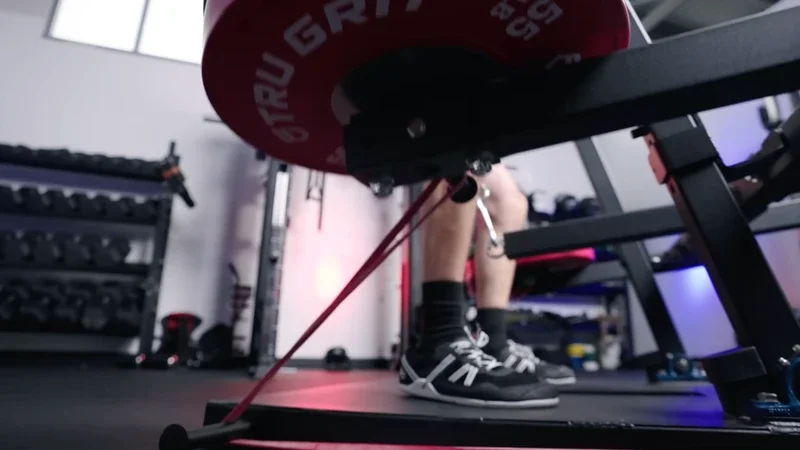
There are also a lot of thoughtful design components added. For example, the weight horns face upright, which means they won’t hit the ground and limit your range of motion. There are also adjustable j-hooks which allow you to change the starting height of the squat.
However, the initial setup process was quite confusing. Coop noted that while he thought it would be easy, it took him significantly longer than expected. He said, “About two and a half hours later, I was questioning my own sanity on if I should even be assembling products.”
He also added that the lever design of this belt squat is what makes it so affordable, but it may cause a bit more forward knee travel than you’d expect. That said, choosing a cable-based machine that allows you to drop straight down will be significantly more expensive, so he still recommends this one for those who prefer a more affordable cost, especially for such a specialized machine that’s not very versatile.
These bushings are designed for a lot of poundage and a lot of volume, more than you’ll ever really need or use. It’s easy to maneuver, easy to set up, and works for a variety of body types.
Cooper Mitchell, GGR Founder and Home Gym Expert
Overall, it’s hard to beat the construction, design, and value of this belt squat machine. Some may prefer rack attachments or cable machines, but if you’ve got the space for a standalone belt squat, this is our top recommendation for most home gym owners.
To see how this belt squat stacks up against the competition, be sure to check out our detailed scoring breakdown below.
How the Bells of Steel Belt Squat 2.0 Compares
The main thing to consider here is the lever design. The weight plates are going to be near your body, and the arms they rest on move with you. However, they don’t drop straight down, so there’s a bit more forward pull than you’d find on a cable-based belt squat like the Rogue Monster Rhino Belt Squat.
That’s really a matter of personal preference, but if you’re used to a belt squat that drops straight down, this may have a different feel.
We also love that Bells of Steel has added band pegs here. This allows you to attach a pair of resistance bands to create accommodating resistance, which means the exercise gets harder as you start to stand up, rather than having a fixed resistance throughout the entire exercise.
Who It’s Best For
If you’re still not sure if this is the right fit, here’s who we think should strongly consider the Bells of Steel Belt Squat, as well as who should avoid it.
Best Belt Squat for Power Racks: Fringe Sport Mammoth Belt Squat
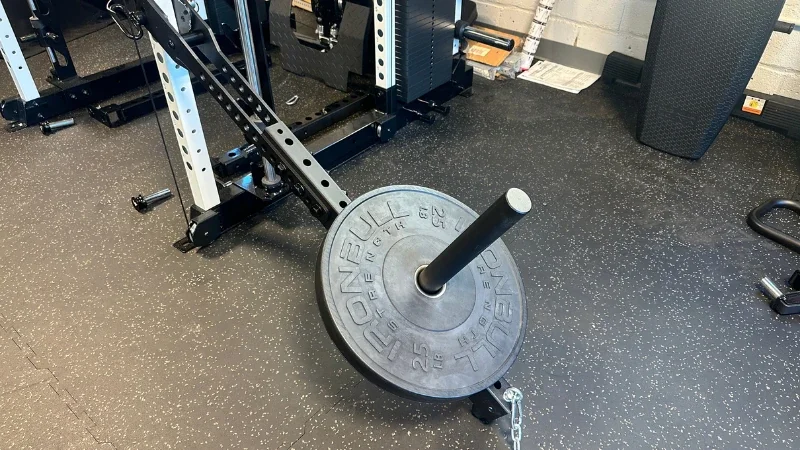
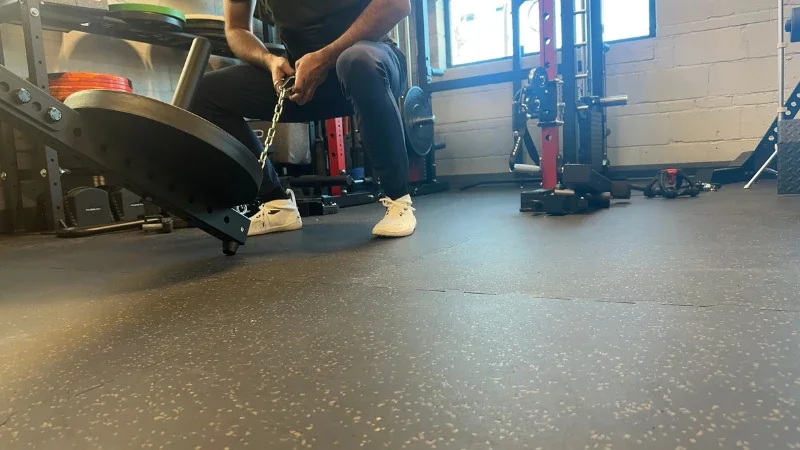
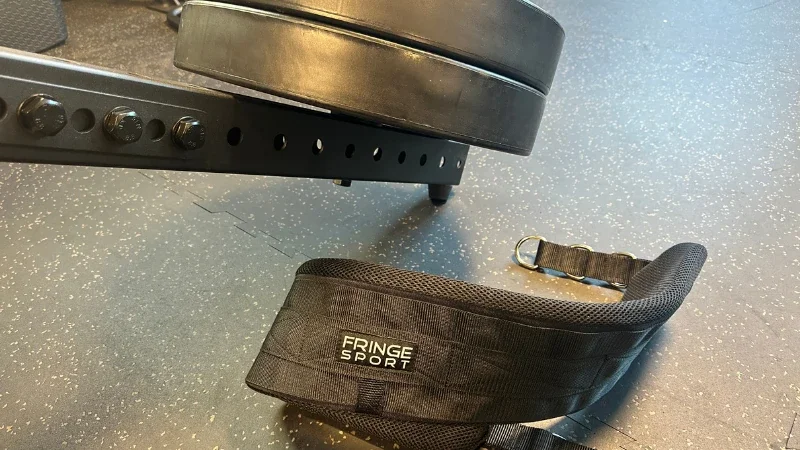




The Fringe Sport Mammoth Belt Squat is a practical way to add serious lower-body training to an existing power rack. Its 900-pound capacity, adjustable lever, and broad compatibility make it particularly attractive for home gym owners, although we'd consider budgeting for the optional kickstand to make heavy sets more convenient.
At a Glance
If the centerpiece of your home gym is a good squat rack, as it is for many of our readers, you may not need a separate belt squat machine. A rack attachment can deliver most of the functionality of a full-sized belt squat machine, often in a much smaller, more affordable footprint.
If you like the idea of a rack attachment, look no further than the Fringe Sport Mammoth Belt Squat. It scored very well in our testing, earning very high ratings for its footprint, versatility, and overall construction.
| Price (Original MSRP) | $418 |
| Dimensions | 39 to 48.75” L x 14” H |
| Product Weight | 32 lbs |
| Loaded Weight Capacity | 900 lbs |
| Materials | Black powder coat finish on the 11-gauge steel, Black Zinc finish on the hardware, UMHW on belt squat to protect your squat rack |
| Warranty | Lifetime lever warranty, 1-year belt warranty |
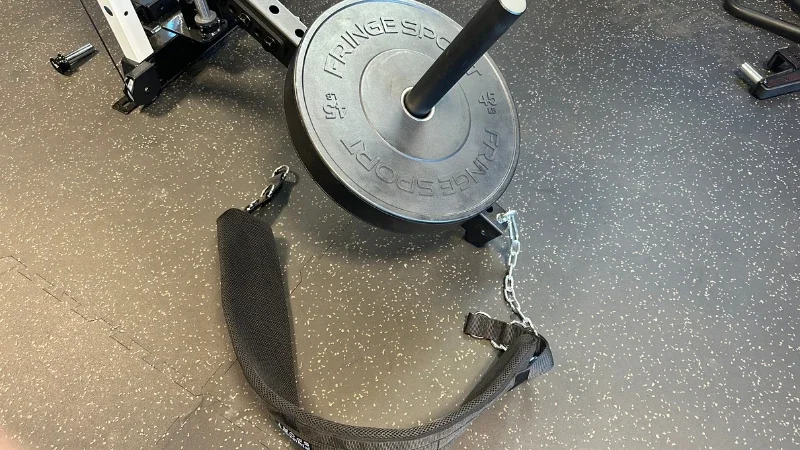
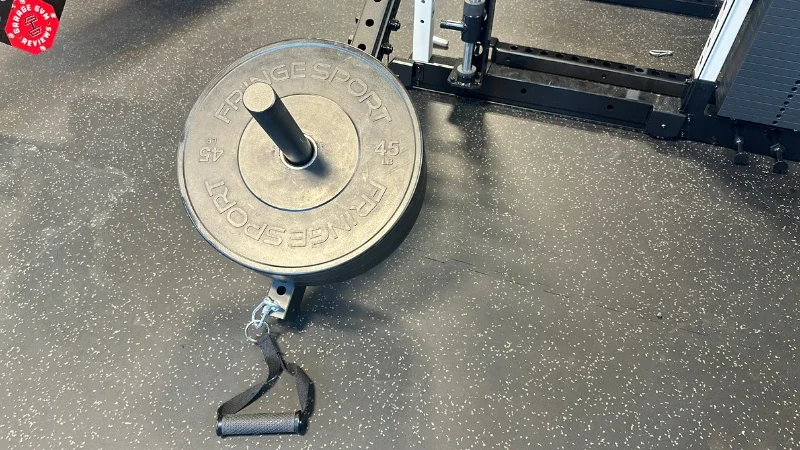
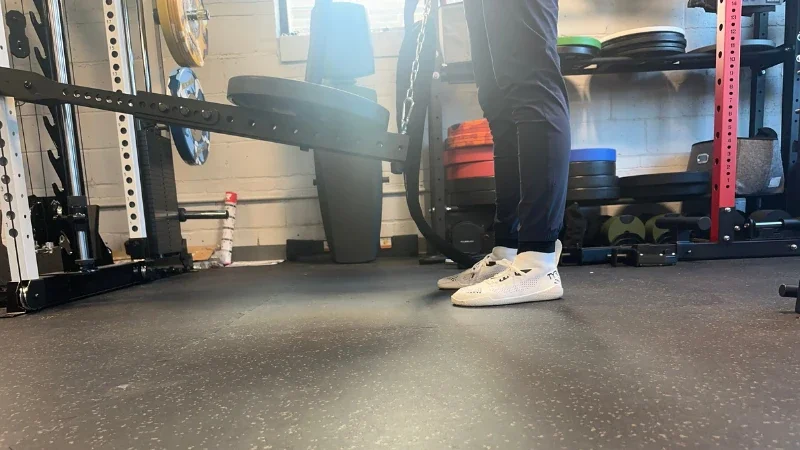
Our Experience Using the Fringe Sport Mammoth Belt Squat
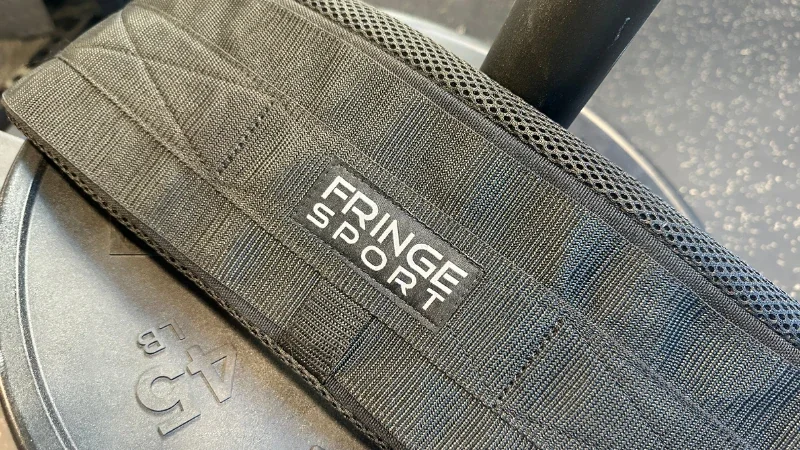
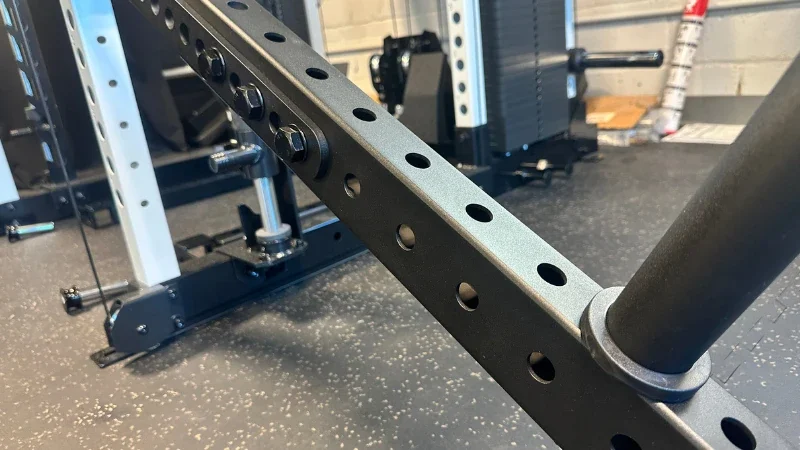
When it comes to rack belt squat attachments, the Fringe Sport Mammoth features some of the best design features we’ve seen. Not only is it quite versatile, but the construction and durability are excellent, according to product tester and GGR editor Ben Emminger, NASM-CNC, NASM-CSNC.
“It feels high-quality and plenty durable for repeated use,” Ben says. “The black powder coating is also worthwhile and hasn’t shown any signs of scuffs or scrapes. Perhaps the most noteworthy construction item across the Mammoth Belt Squat, though, is the UMHW pads that help protect your power rack’s exterior from excessive rubbing.”
It features a 900-pound weight capacity, but is still lightweight and compact. Ben says, “At its maximum length, the Mammoth Belt Squat measures in around 48 inches, and the attachment’s entire weight is 32 pounds, making it quite easy to handle and maneuver around your home gym.”
While we think the lever arm itself is very functional and easy to use, Ben strongly recommends adding the kickstand, which can be purchased separately for about $120, or ordered as part of a bundle. This allows you to start and finish each set from the top position, so you don’t have to drop the lever all the way to the ground between sets.
“I would highly advise that purchasers add the Kickstand to their bundle if they plan to max this machine out to its 900-pound capacity,” Ben advises. “As a taller individual, it was somewhat difficult to effectively drop the lever down to its bottom stopper after completing my full set. Having the kickstand added for a higher unload height would alleviate this issue without question.”
“If you’re looking for a compact and capable belt squat machine, I’d seriously consider investing in this profile from Fringe Sport.”
Ben Emminger, NASM-CNC, NASM-CSNC
The Fringe Sport belt squat is durable, compact, and easy to use. We know that some may prefer larger, standalone machines, but if you’re looking for an option that’s both compact and budget-friendly, we strongly recommend the Fringe Sport belt squat.
If you want to see how the Fringe Sport rack scored for each testing category, be sure to read our testing results breakdown later in this article.
How the Fringe Sport Mammoth Belt Squat Compares
Compared to standalone machines, the Fringe Sport belt squat is significantly more compact, which we appreciate. If you already have a rack, this is absolutely worth considering, especially if you’re starting to run out of floor space.
Speaking of racks, we love that Fringe says this will work with any size rack, and either ⅝-inch or 1-inch holes. Many rack attachments are only designed to work with a specific rack size, with 3-inch-by-3-inch uprights being the most common size, so we really appreciate the versatility this rack offers.
Who It’s Best For
If you’re still trying to decide which belt squat to go with, here’s a quick recap of who we think should go with Fringe Sport, and who may want to choose a different option.
Best Durable Belt Squat: Rogue Monster Rhino Belt Squat
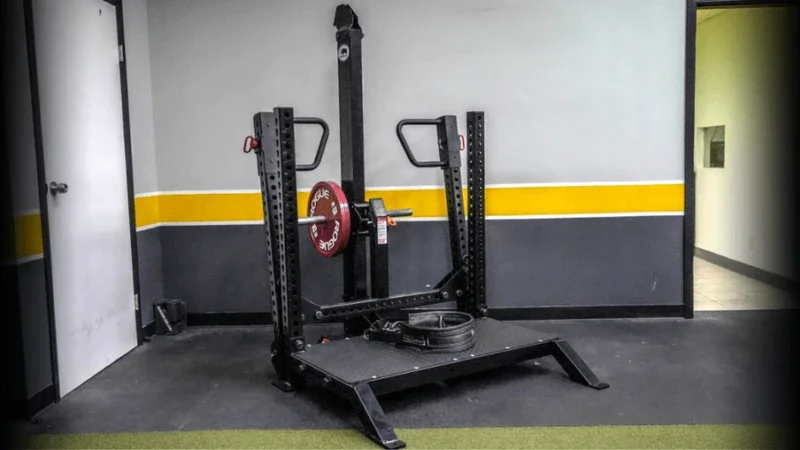
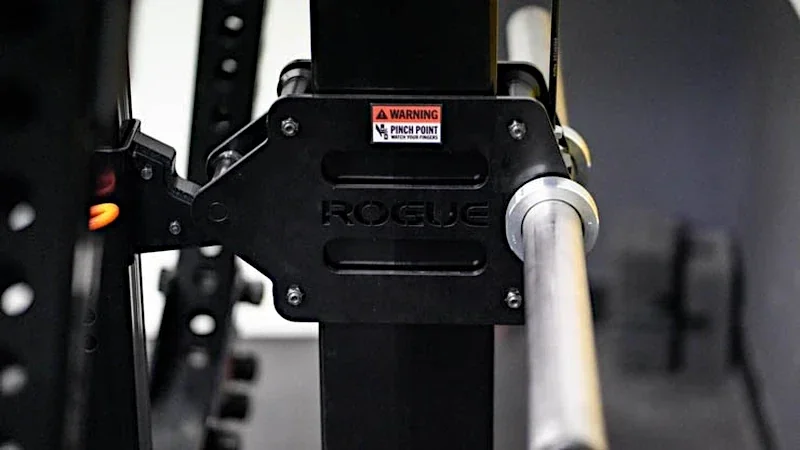


The Rogue Monster Rhino Belt Squat is a premium option for lifters who value durability, smooth resistance, and heavy-duty construction. Its robust frame and cable-driven trolley make it an attractive long-term investment, but the substantial price, assembly requirements, and mandatory floor anchoring won't work for every home gym.
At a Glance
If you want an extremely durable, versatile, and relatively compact belt squat machine, this is the best option for you. Available as both a standalone machine or a rack drop-in, it’s designed to work well in any space, and as is the case with most Rogue products, it’s extremely durable.
GGR founder Cooper “Coop” Mitchell told me this is his favorite belt squat machine, and he appreciated that it uses a cable, rather than a lever, which can tend to pull your hips a bit too far forward. It’s not cheap, but easily one of the best belt squat machines on the market.
| Price (Original MSRP) | $2,415 |
| Dimensions | 53″ L x 60.5″ W x 78.5” H (additional clearance needed for adding weight plates) |
| Product Weight | 530 lbs |
| Loaded Weight Capacity | 1,540 lbs |
| Materials | Not disclosed |
| Warranty | Limited lifetime frame warranty, 5-year cable warranty |
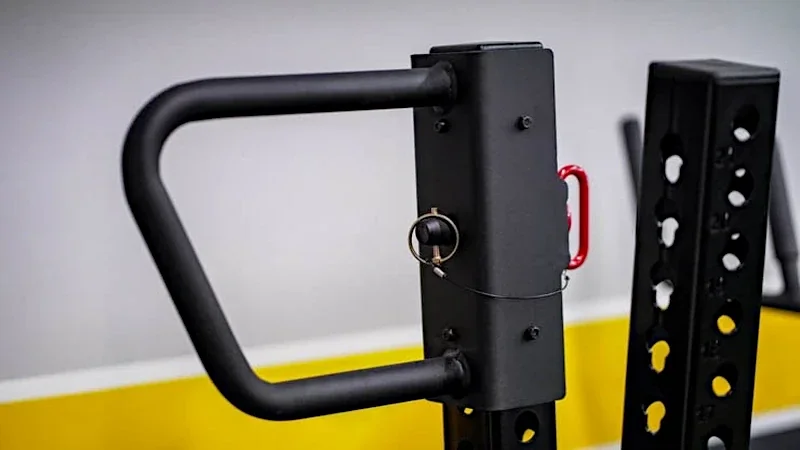
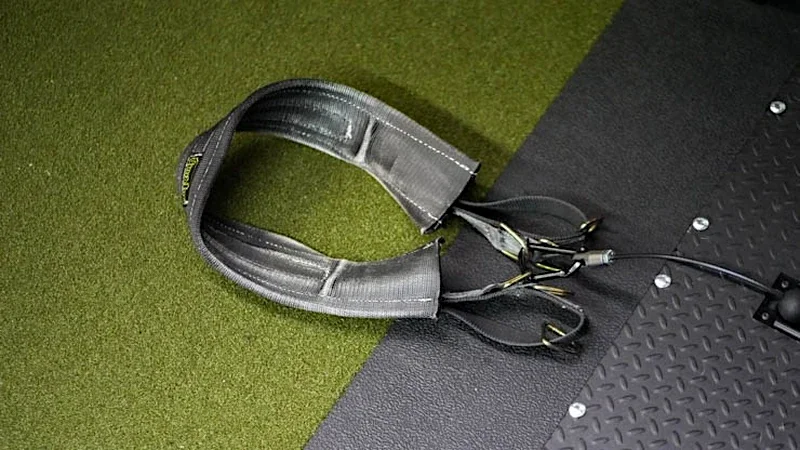
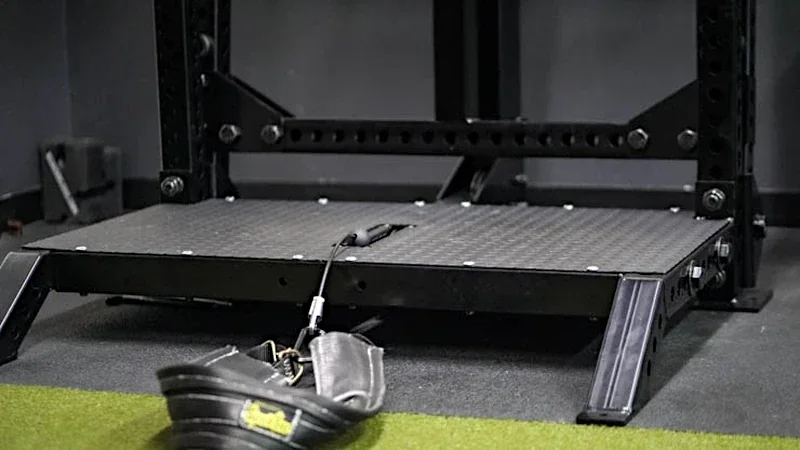
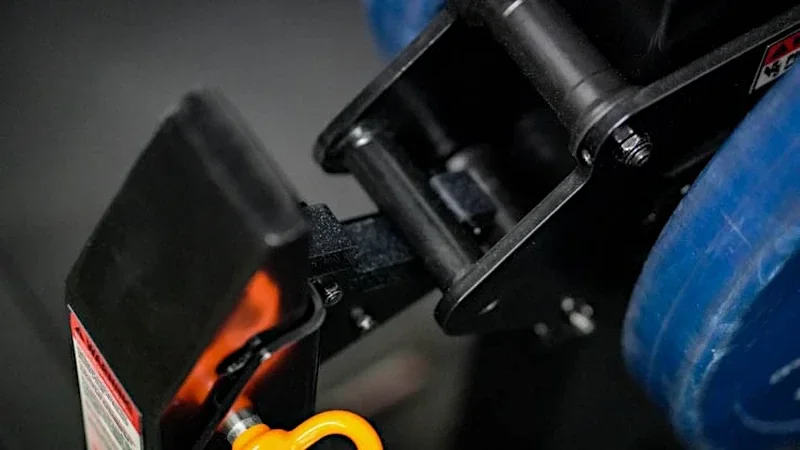
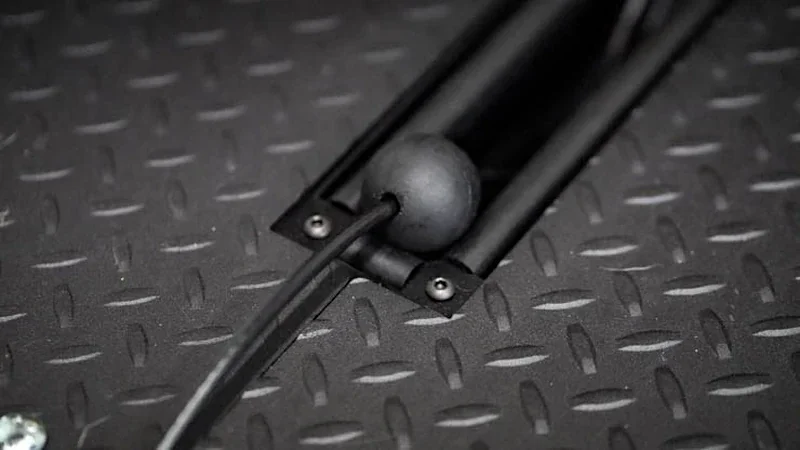
Our Experience Using the Rogue Monster Rhino Belt Squat
We have high expectations with most Rogue products due to the premium cost and high-quality materials used, and the Rhino Belt Squat delivers. Coop was very impressed with the versatility of this machine, particularly because you can order it as a standalone machine, or as a rack drop-in, where it can be installed inside your existing squat rack.
Because it’s cable-based, the resistance pulls you straight down, while lever-based machines can pull you slightly forward.
“The Rogue Rhino Belt Squat can be used for marching, jumping, rowing, curling, extending, and much more,” Coop explains. “This isn’t to say that other strength equipment can’t be used for this purpose, but it’s quite obvious that cable-based belt squats have plenty of options available.”
The main drawback is the size. It’s quite bulky and is going to take up quite a bit of floor space, so you may want to opt for the rack version if you already have a Rogue rack. According to the website, that version is only compatible with the Monster or Fortis Power Rack, which is now known as the Rogue R-4 Power Rack.
The website lists a two- to four- week shipping time, but in our experience, it may take up to six weeks to receive your machine.
Without a doubt, the Rhino Belt Squat is one of my favorite pieces of equipment Rogue has come out with. Yes, it’s expensive for a lot of home gym owners, but compare it to the other options and you’ll see that there are a ton of movements it can be used for.
Cooper Mitchell, GGR Founder
With a price tag of over $2,400 for the standalone machine, this certainly isn’t cheap. However, if you’re looking for the most durable option with great ergonomics and versatility, this is the belt squat to choose.
To learn more, be sure to read our in-depth Rogue Rhino Belt Squat review, and head to the scoring breakdown below to see how we rated it for each category.
How the Rogue Monster Rhino Belt Squat Compares
Aside from the cost, the main selling point with the Rogue belt squat is the cable-based resistance. The belt pulls straight down into the floor, which means there’s no unnatural forward angle at the bottom.
Not only does this make your squats more comfortable than something like a lever-based machine does, but it adds a ton of versatility. For example, you can hook up a straight lat pulldown bar attachment, and use the belt squat for Romanian deadlifts, getting much lower than you could with a barbell and plates.
If you’re only going to use it for belt squats, any of the other options we included will get the job done, but this one has the best versatility.
Who It’s Best For
With such a steep cost, you may be a bit hesitant to buy this machine, and we don’t blame you. That said, here’s who we think would enjoy it the most, and who may want a different option.
Best Belt Squat Attachment: PRx Profile Belt Squat
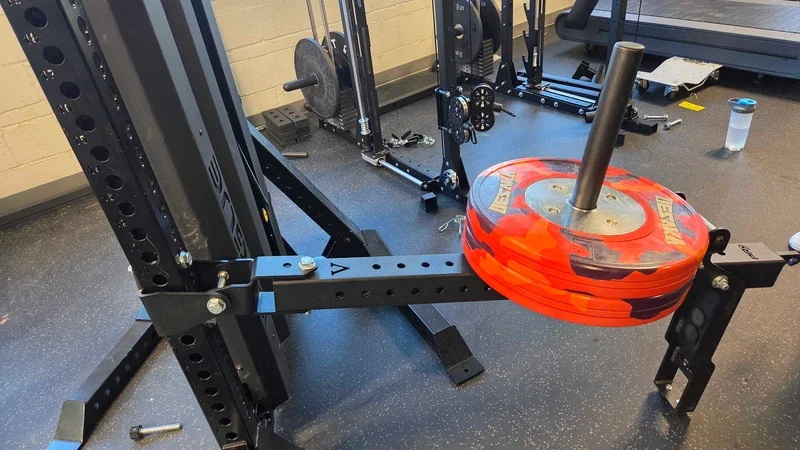
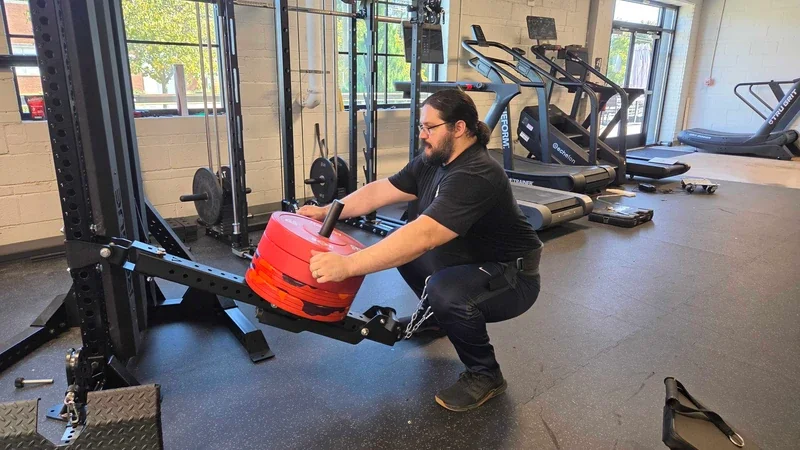




The PRx Profile Belt Squat is a clever solution for lifters who want a capable belt squat attachment without permanently sacrificing floor space. Its folding design, integrated kickstand, and lateral movement capabilities give it an edge in versatility, although you'll need to confirm your wall or rack can safely accommodate the installation.
At a Glance
If you’re looking for a compact attachment that works with most power racks, this is a fantastic option. It’s easy to attach, easy to set up, and despite being an attachment, it’s quite sturdy in-use according to our tester, Caine Wilkes, OLY, ISSA-SCC, CNC, USAW-L1.
“It feels very sturdy and stable in use,” he explains. “Due to the lateral hinges, there’s some ability to move side to side, but that just makes the movement feel more natural to me, and I wouldn’t call it unstable at all.”
It’s priced to fit most budgets, too, so if you have a compatible rack, this is a fantastic upgrade for your home gym.
| Price (Original MSRP) | $549.99 |
| Dimensions | 53” L x 8″ W x 8″ H (when stored) |
| Product Weight | 58 lbs |
| Loaded Weight Capacity | 440 lbs |
| Materials | 11-gauge steel |
| Warranty | Limited lifetime warranty |
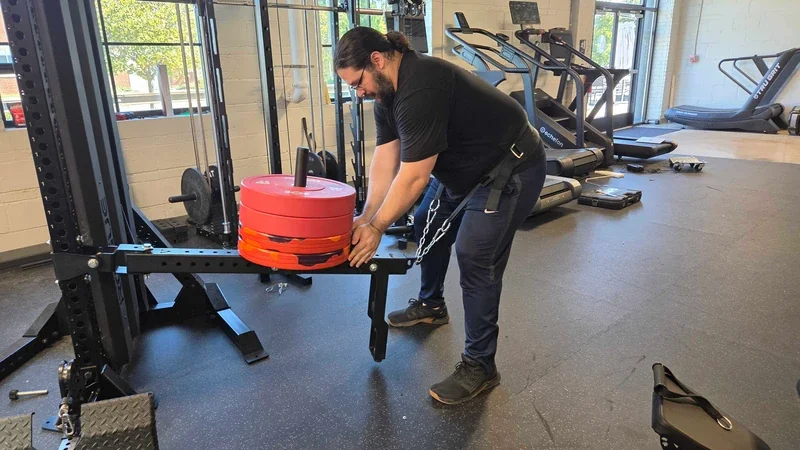
Our Experience Using the PRx Profile Belt Squat
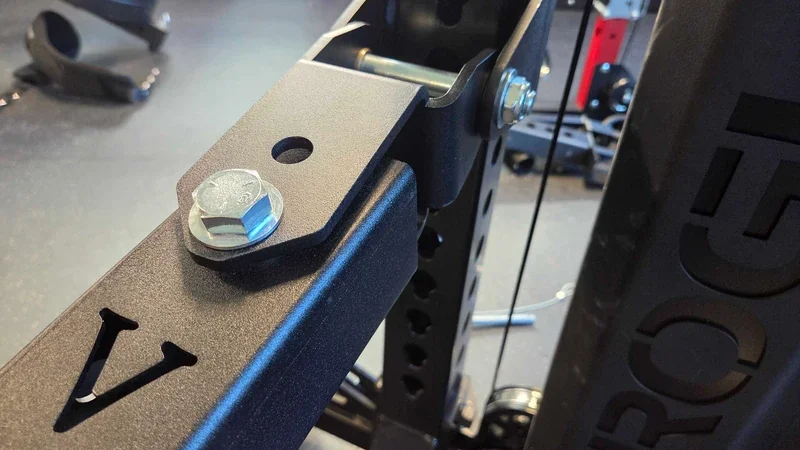
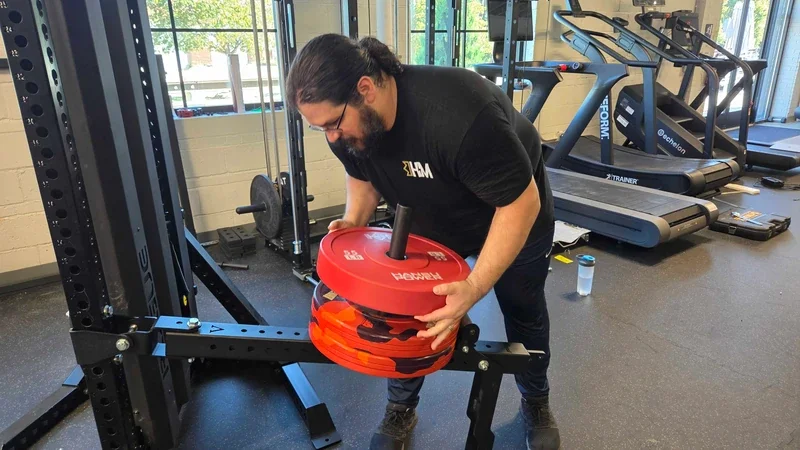
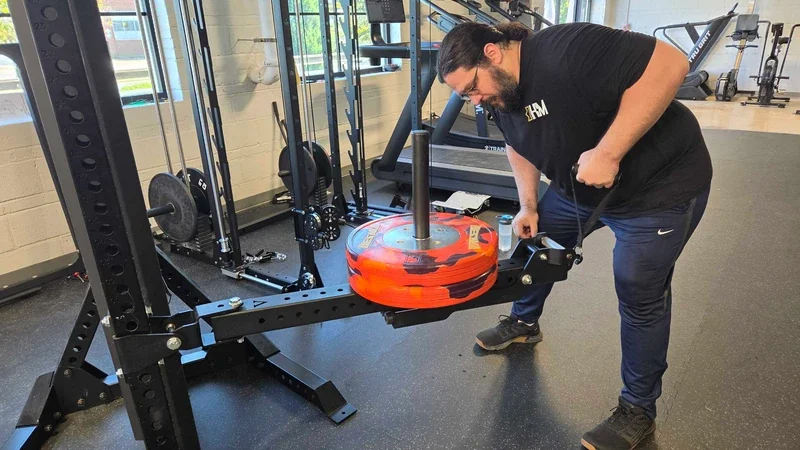
Despite being a rack attachment, Caine found the PRx belt squat to be very comfortable to use, and versatile, too. He told me, “Lateral lunges, squats, and rows all felt great. It doesn’t come with any extra attachments, but most pulling motions would feel great on this, if you had the right attachments.”
It’s also very durable and stable in-use, and Caine didn’t feel unsafe or unstable. However, this is due to the fact that it’s designed to be permanently attached to your rack, rather than something that’s meant to be taken on and off, or moved around. It’s compact, but not as portable as your typical attachment that you’d regularly be moving around.
While we love the convenience of a rack attachment, it’s important to make sure you have a sturdy rack, preferably a four-post rack that’s very heavy, or a rack that’s bolted into the ground.
“The one thing we noticed is that the point of attachment is on the outside of the rack, so that there’s room to fold the attachment when not in use,” Caine explains. “However, with the weight of the attachment, I could see this being a little less stable on a smaller rack that isn’t bolted down. Wall-mounted, though, this should be fine; on a rack, I’d make sure it’s bolted down just to be on the safe side.”
We should also point out that it’s only compatible with 3-inch-by-3-inch uprights. This is the most common size for power racks, but some of the more affordable racks may use thinner uprights, so be sure to double-check what you have before buying this.
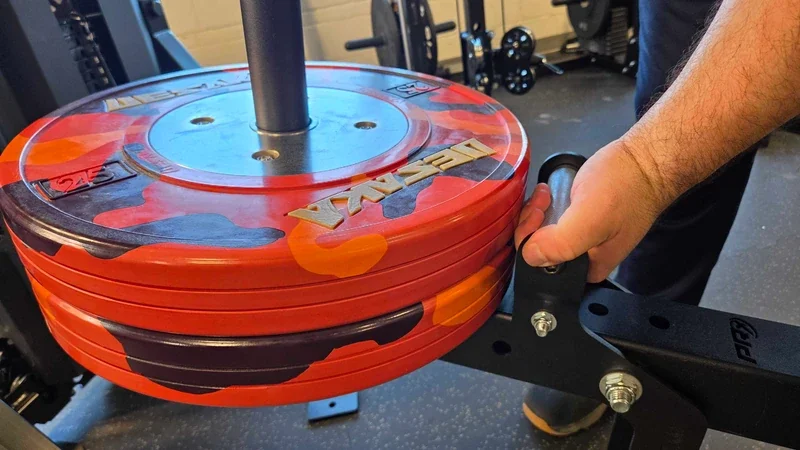
It folds away to fold back into the rack/wall, but stays very secure while in use. Because PRx includes the built-in kickstand, It’s very easy to prop up the lever arm and load or unload plates as needed.
Caine Wilkes, OLY, ISSA-SCC, CNC, USAW-L1
For an attachment that’s under $600, we were very impressed with this model. It’s not as portable as it seems at first glance: It looks like it needs to be permanently attached to your rack, but we didn’t mind that. As long as you’re not looking for something that can easily be removed and put away between uses, this is a great choice.
To learn more, be sure to read our detailed scoring breakdown later in this guide.
How the PRx Profile Belt Squat Compares
Compared to a standalone belt squat machine, this model is significantly more compact. It folds away between uses, so it won’t be in your way, but it’s worth emphasizing that once it’s attached to your rack, it’s not very easy to take off.
It’s more of a permanent attachment, which is why Caine recommends you have plenty of space and that you don’t mind giving up a portion of your rack for this. Because it’s a lever-based belt squat, you may also feel the weight is pulling you slightly forward at the bottom, which can bother some people. But again, the trade-off is the low cost and compact design compared to something like a belt squat machine that uses a cable.
Who It’s Best For
This is priced to fit most budgets, but that doesn’t mean it’s a must-have for everyone. Here’s who we think would love this attachment the most, and who may want to choose an alternative.
Best Budget Belt Squat: GMWD Belt Squat Machine BS01
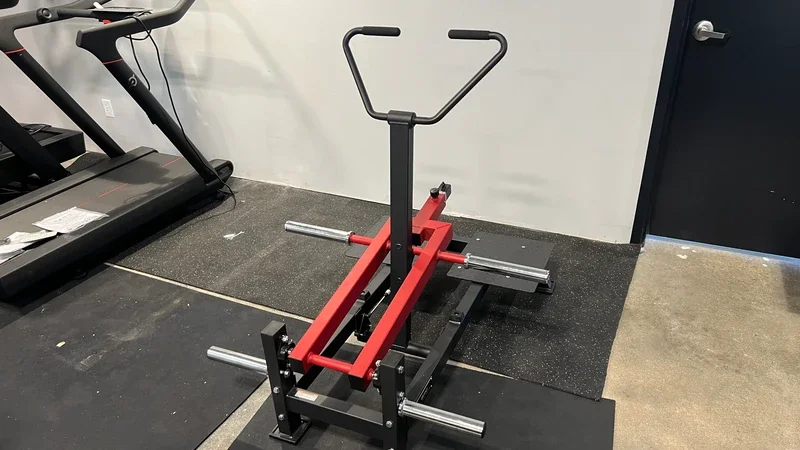
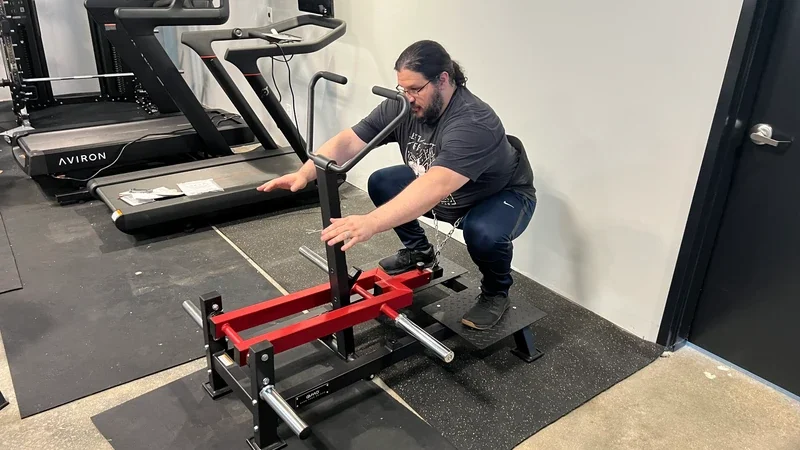
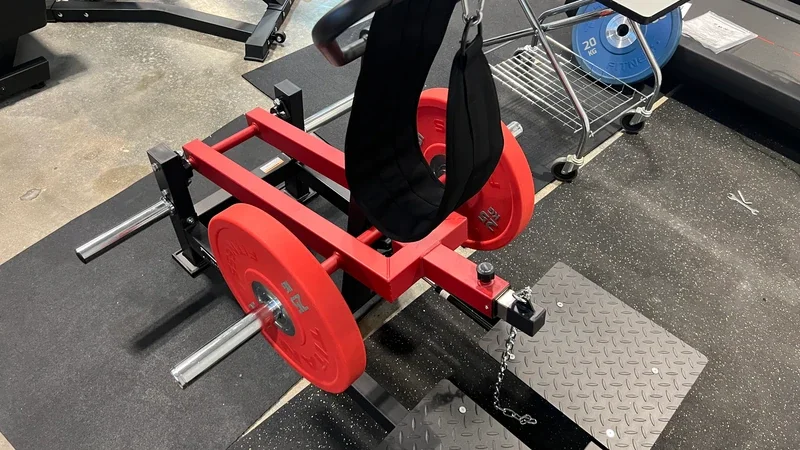



The GMWD Belt Squat Machine BS01 delivers impressive value for home gym owners who want a dedicated belt squat station on a tighter budget. Its 750-pound capacity, adjustable belt positioning, and included accessories are compelling features, though its smaller footplate and limited weight horn length may be drawbacks for some lifters.
At a Glance
If you’re looking for a budget-friendly yet still durable belt squat for your home gym, it’s hard to beat the GMWD Belt Squat Machine BS01. It’s priced to fit most budgets, and it’s a standalone machine, which means you don’t need to have a compatible power rack to install this. You’ll need your own weight plates, but if you already have those, this belt squat offers some of the best value on the market.
| Price (Original MSRP) | $699.99 |
| Dimensions | 42.5’’ L x 53.2’’ W x 49.2’’ H |
| Product Weight | 164.5 lbs |
| Loaded Weight Capacity | 750 lbs |
| Materials | Heavy-gauge steel |
| Warranty | Limited lifetime warranty |
*Editor’s note: We reached out to GMWD to verify the steel gauge used in construction, but the customer support team did not offer a specific gauge.
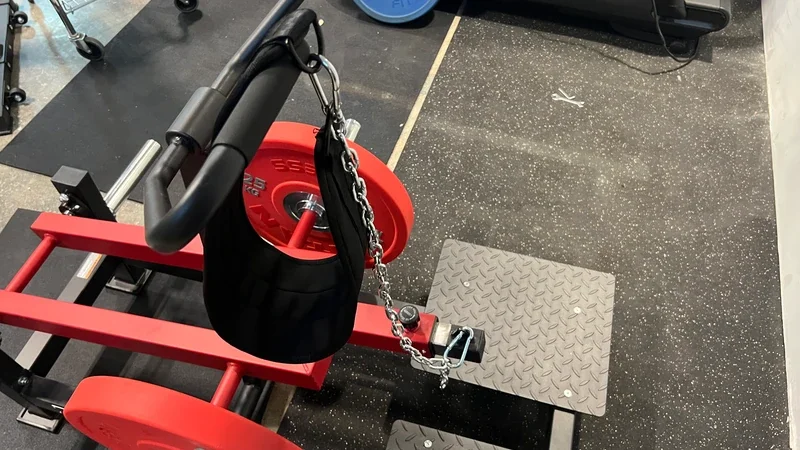
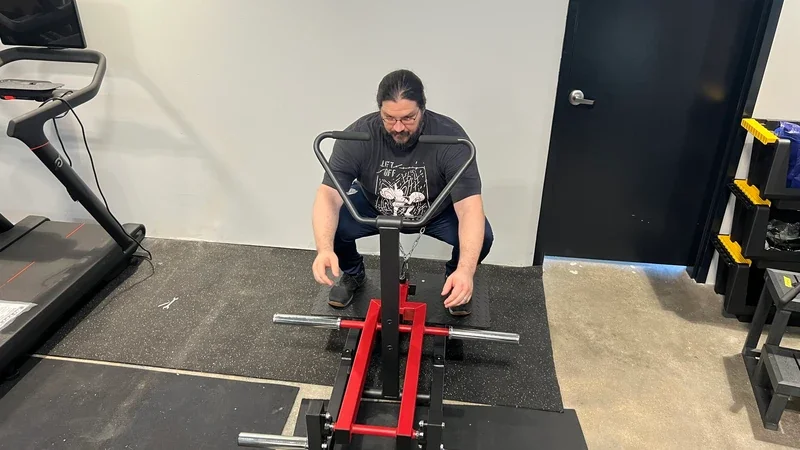
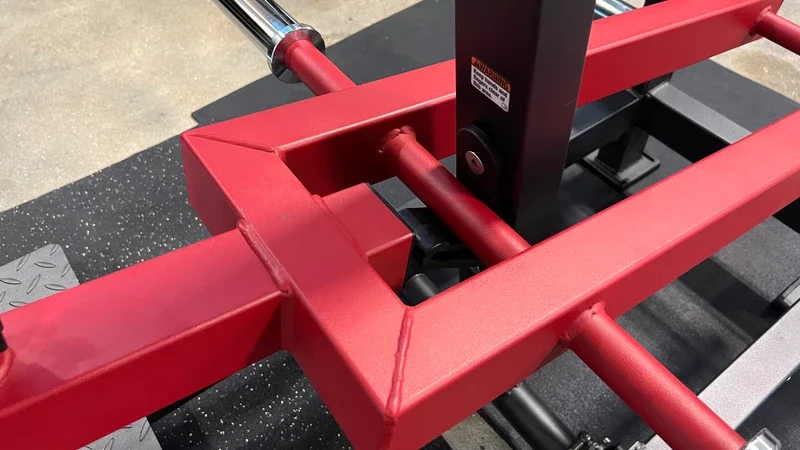
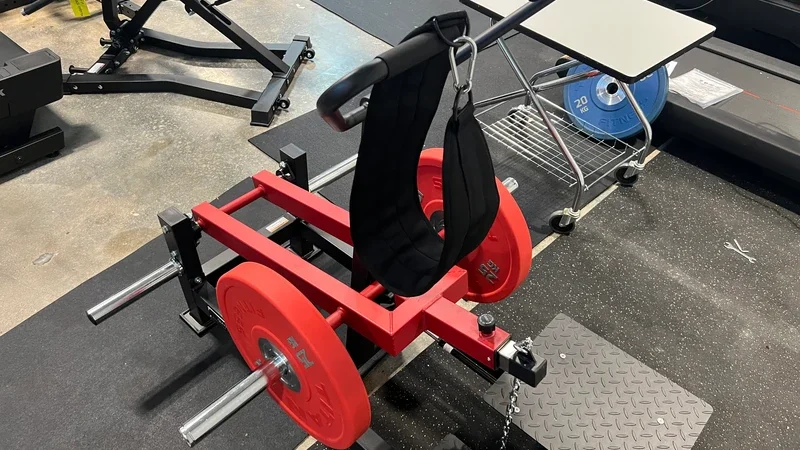
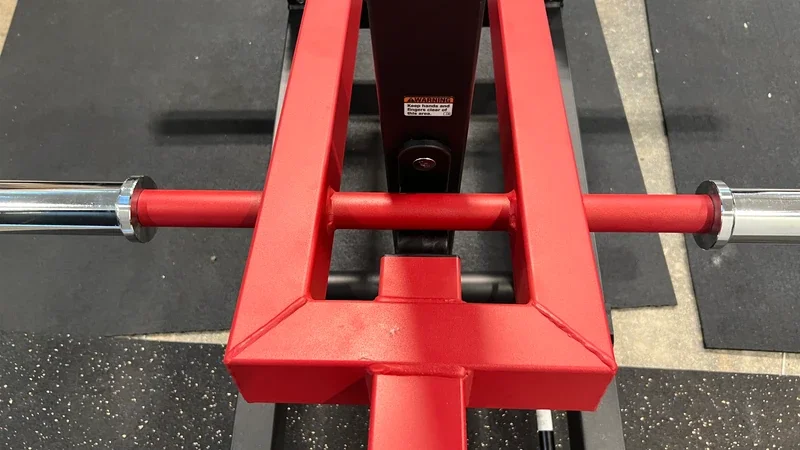
Our Experience Using the GMWD Belt Squat Machine BS01
The first thing that stood out to us was the durability. Despite the low cost, the BS01 belt squat is very well-made, according to expert product tester Cory Kessler, NASM-CPT, NASM-CNC.
“It’s an all-metal construction with a combination of welds and heavy bolts, creating a durable feel and look,” Cory says. “This is designed to be a compact belt squat model, but it still has a weight capacity of 750 pounds.”
It’s extremely stable in use and that 750-pound weight capacity is more than enough for most users. The belt itself is comfortable in use, too. Cory said it felt very smooth, and he didn’t notice any shakiness or instability.
Despite the high weight capacity, Cory pointed out one issue that’s worth flagging for home gym owners.
“The horns are a good size for most lifters with one caveat: bumper plates,” he told me. “If you use the wider bumper plates, you’ll be pressed to get more than two 45-pound plates on the weight pegs on either side. It’s compatible with 2-inch diameter holes (the standard weight plate size), so it’s versatile in that sense.”
Worth noting, the GMWD Belt Squat BS01 is not the most portable machine. If you want to change the location and move it around your gym, you’ll probably need an extra hand. That said, it’s smaller than most standalone units, and Cory said he was able to pick it up and swivel it around by himself.
It feels like a very durable, solid machine and it offers plenty of versatility with your squat positions and even a great range of motion for RDLs. Compared to other brands, it seems like a steal at this price point.
Cory Kessler, NASM-CPT, NASM-CNC
This belt squat is budget-friendly, durable, and very impressive for the price point. While there are a few minor issues we had, it still offers fantastic value, especially if you’re looking to upgrade your gym without breaking the bank on a specialized machine
To see exactly how we scored the GMWD belt squat, be sure to read our detailed testing results later in this article.
How the GMWD Belt Squat Machine BS01 Compares
While it’s a bit more compact than some of the larger machines on the market, we found the GMWD belt squat to be extremely durable. The construction is impressive, and it seems like it’ll last for many years.
However, it’s a lever design, and as we’ve pointed out with other models, it can feel a bit awkward as you get deep into the squat.
“The callout here is that the lever design hinders your body’s range of motion,” explains Cory.
I felt myself being pulled forward slightly at the lower points of the squat because of the lever’s plane of motion. I tried adjusting the belt/chain length to accommodate but it made the belt feel less secure.”
If you’ve never used a belt squat, you can probably get used to this, but the feeling is a bit strange if you’re used to a cable-based machine that pulls you straight down.
Who It’s Best For
Here’s who we feel is the best fit for the GMWD, as well as who should consider avoiding it.
Our Testers

Cooper Mitchell, GGR Founder
Coop is the founder of Garage Gym Reviews and a home fitness equipment expert

Ben Emminger, NASM-CNC, NASM-CSNC
Ben is an editor at GGR, certified nutrition coach, and strength training expert

Caine Wilkes, OLY, CNC, USAW-L1
Caine is a GGR performance editor and Olympian who competed in weightlifting at the 2020 Tokyo Olympics

Cory Kessler, NASM-CPT, NASM-CNC
Cory is a certified personal trainer, fitness expert, and GGR editorial team member
Other Belt Squats We Researched
There are plenty of belt squats to choose from, and we had a hard time narrowing down our list to the top five. Here are a few others we considered that didn’t quite make the cut.
- ATX Compact Belt Squat BSM-600: We like the look of this belt squat, but we weren’t able to order one for testing, as it’s currently out of stock.
- Revolt Belt Squat 2.0: We like this compact attachment for its affordable cost and versatility, but the PRx belt squat attachment received higher scores in our testing.
GGR Belt Squat Testing Results
Now we’ve covered each machine, let’s get into the detailed scoring categories. In the following section, I’ll break down our specific testing and scoring criteria and show you exactly how each belt squat scored according to our testing methodology.
Benefits of Belt Squats
Buying Guide: What to Look for in Belt Squats
If you’ve decided a belt squat is right for you, and you’re still having a hard time choosing one, we’ve got your back. Here are the most important things to consider when choosing the right setup for your home or garage gym.
Weight Capacity
One of the most important things to consider when choosing a belt squat machine is the weight capacity. You’ll want to figure out how much weight can be added to the machine or attachment, as well as the weight capacity of the machine.
Most standalone machines have a very high weight capacity and should be able to handle more than enough weight for your squatting needs. However, some attachments may be limited by how many plates can fit on the weight horn, which is worth considering.
Stronger individuals should make sure that the belt squat attachment or machine can hold enough weight plates to meet their training needs.
Footprint
This may not be a big deal if you’re using a belt squat attachment, but for standalone machines, the first thing to figure out is the footprint of the machine. We recommend leaving floor room around the unit too, so you have plenty of space to get around it to load and unload plates or make adjustments.
A belt squat machine is a great tool, but they can take up quite a bit of space and are typically difficult to move. Be sure to carefully measure your home gym, as well as the dimensions of the machine you’re considering. There’s no hard rule, but you’ll probably want at least 18-24 inches of additional space on all sides of the machine, leaving yourself plenty of room to navigate around it.
Plate Compatibility
Even if you already have weight plates at home to use, make sure they’re a good fit for your machine. The most obvious thing to check is the diameter of the weight horn to ensure it’s compatible with your plates. However, that’s not the only thing to consider.
Some lever-based belt squat machines load the plates onto the side, and you may find that they bump the floor before you squat to full depth and get in the way. This is particularly important to check when considering rack attachments, as you won’t be standing on an elevated platform that increases your range of motion.
Installation Requirements
If you’re considering a rack attachment, you’ll want to make sure that you have a compatible rack and plenty of floor space. While many racks are built with 3-inch-by-3-inch uprights, some may use small sizes. It’s important to make sure that whatever attachment you’re considering will work with the rack that you have at home, both in terms of the upright size as well as the hole diameter in your rack.
We tried to feature rack attachments that work with a variety of rack sizes, but with so many belt squat lever arms on the market, it’s always important to double-check that it’ll work with your existing setup.
If you’re using something like a half rack or folding squat rack, be sure that it’s stable enough to support a heavy lever arm without tipping over. You may want to have something bolted into the ground if you’re going to attach a belt squat to it.
Movement Type
Most home gym belt squats are rack-mounted belt squats that use a lever design, or standalone machines with a cable system to provide resistance.
With a cable, the weight pulls straight down, which can help you improve your squat depth without having to worry about balance. Lever belt squats work in a similar way, but they tend to pull you forward a bit more at the bottom, which can feel a bit unusual.
FAQs About the Best Belt Squats
Is the belt squat effective?
Yes, belt squats are very effective for building lower body strength. Research1 shows that compared to barbell squats, belt squats offer similar lower body muscle activation while reducing the strain on your lower back. This is a great way to focus on your lower-body hypertrophy development, even if your upper body is sore or tired.
Is a belt squat harder than a regular squat?
A belt squat feels different, but it’s not necessarily harder. The weight is generally pulling you down from your hips, so balance isn’t as much of a concern, and you may even be able to use more weight than a barbell squat. It targets the same muscles as a regular squat, but it’s a different type of movement.
What is the best belt squat on the market?
The best belt squat for you depends on your goals, preferences, and whether you prefer a standalone machine or a rack attachment. Some of our favorite belt squats come from Bells of Steel, Rogue Fitness, and PRx.
References
- Joseph, L., Reilly, J., Sweezey, K., Waugh, R., Carlson, L. A., & Lawrence, M. A. (2020). Activity of Trunk and Lower Extremity Musculature: Comparison Between Parallel Back Squats and Belt Squats. Journal of human kinetics, 72, 223–228. https://doi.org/10.2478/hukin-2019-0126
- Layer JS, Grenz C, Hinshaw TJ, Smith DT, Barrett SF, Dai B. Kinetic Analysis of Isometric Back Squats and Isometric Belt Squats. J Strength Cond Res. 2018 Dec;32(12):3301-3309. doi: 10.1519/JSC.0000000000002854. PMID: 30273281.


