


Want to pack on muscle but don’t know where to start? Whether you’re a beginner or just someone who thrives on structure, the best workout apps offer the type of tailored support that can help you achieve your fitness goals.
While some platforms pair you with a certified personal trainer, others rely on artificial intelligence to deliver customized programs, recovery recommendations, and other helpful tools and tips. Obviously, some people prefer working with an actual human coach, but that doesn’t mean you can’t obtain great results from an AI-based app.
If you’re open to this idea, you’ve got plenty of options at your disposal. In this Fitbod review, I’ll provide a thorough overview of a platform that earned a firm stamp of approval from our very own Olympian, Performance Editor Caine Wilkes, OLY, CNC, USAW-L1.
Though it’s by no means perfect (I’ll cover its strengths and weaknesses), Fitbod checks many important boxes we look for in the top workout apps. So, embrace the power of technology and get ready for a top-to-bottom breakdown that may just convince you it’s time to join the AI movement.
Our Fitbod Review, Summarized
Fitbod is an AI-based app that generates workouts based on your training goals, equipment access, and other preferences. It primarily focuses on strength training, meaning it’s not an ideal pick if you’re a cardio enthusiast. However, beginners and anyone who values structure will appreciate the easy setup process, user-friendly interface, and ample workout variety. At about $16 per month, Fitbod is also quite affordable, coming in at less than half the cost of the average workout app.
How We Test Workout Apps
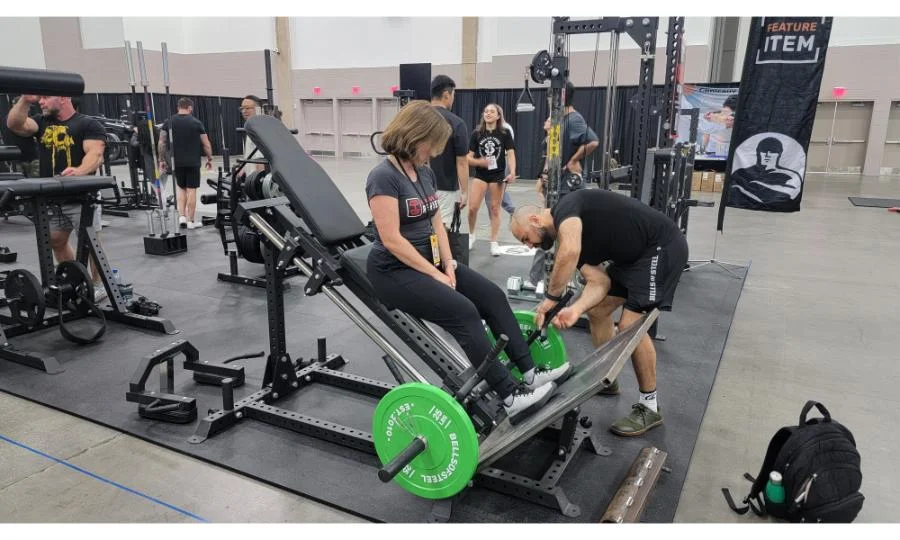
Does the app allow you to tailor your workouts based on what equipment you have? Are there options for bodyweight-only or minimal equipment sessions? We award a 3 out of 5 if an app offers ways to adjust your planned exercises in order to accommodate different equipment availability. Apps like Fitbod earn higher marks by offering tremendous flexibility with your equipment choices.
We aren’t just looking at the training plans themselves, but how much instruction the app provides for each exercise. To earn a 3 out of 5, we want to see both visual and audio cues, though there may not be much guidance in terms of how hard to push yourself or when to increase the weight you’re using. We award higher scores to apps that offer excellent audio and visual cues and detailed instructions that give you complete confidence.
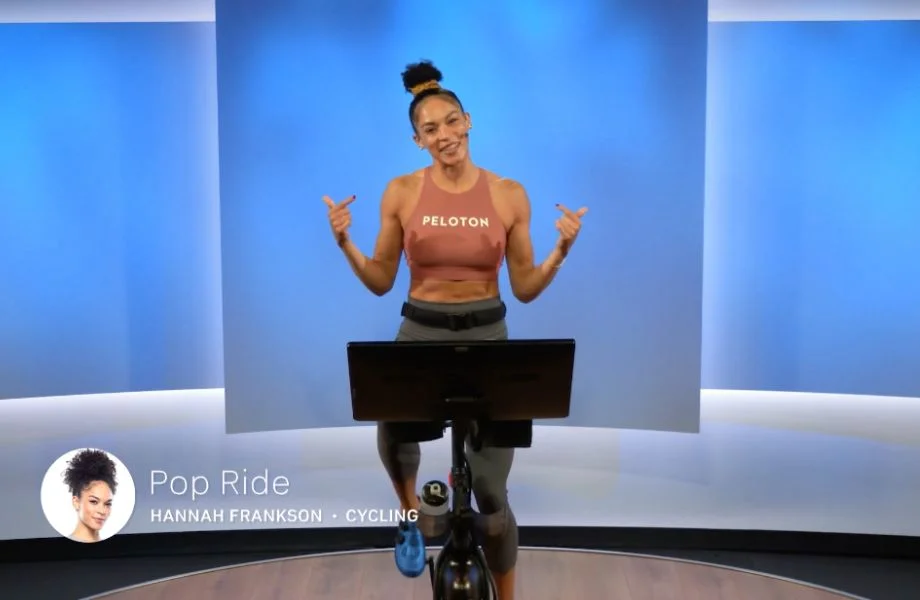
We use this category to assess how much variety there is for users, both in terms of training styles and actual workouts. To earn a 3 out of 5, there may be some repetition and similar workout formats, but it’s tolerable enough, and our testers could see themselves using this app consistently.
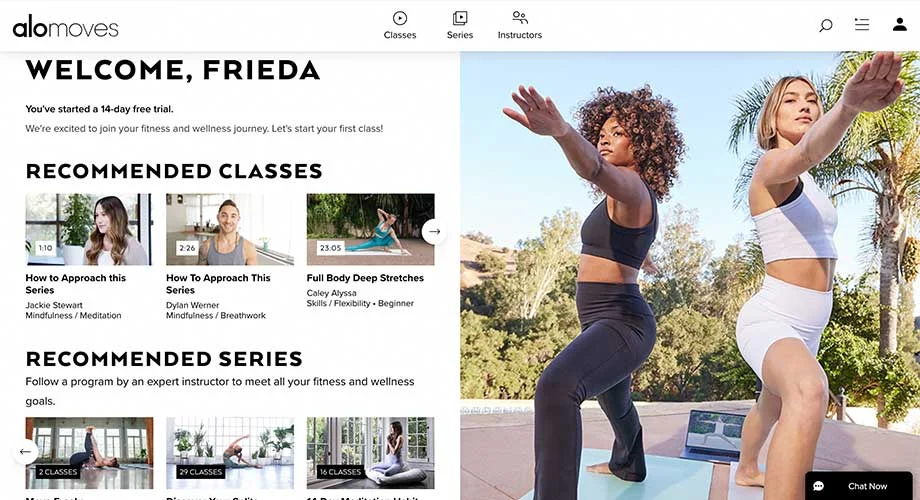
GGR Performance Editor Caine Wilkes put Fitbod through our in-depth fitness equipment testing methodology, assigning scores on a 1-5 scale. When testing workout apps, we examine key categories such as pricing, accountability, ease of use, progressive overload, workout variety, and more. This allows us to get a full scope of what a platform does well and where it falls short.
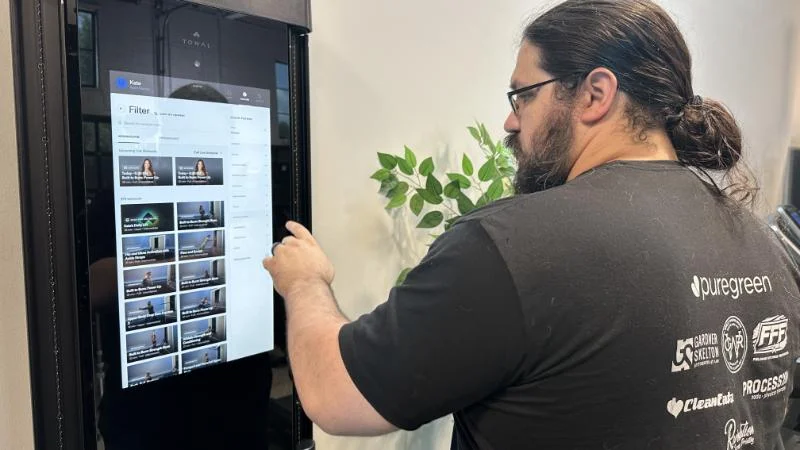
The Garage Gym Reviews team includes certified personal trainers, Olympic-level athletes, and dedicated lifters who have tested more than 70 workout apps (and counting). From high-end platforms with 1:1 human coaching to more basic self-guided programs, we’ve explored the broad spectrum of choices to determine which platforms are worth downloading and paying for.
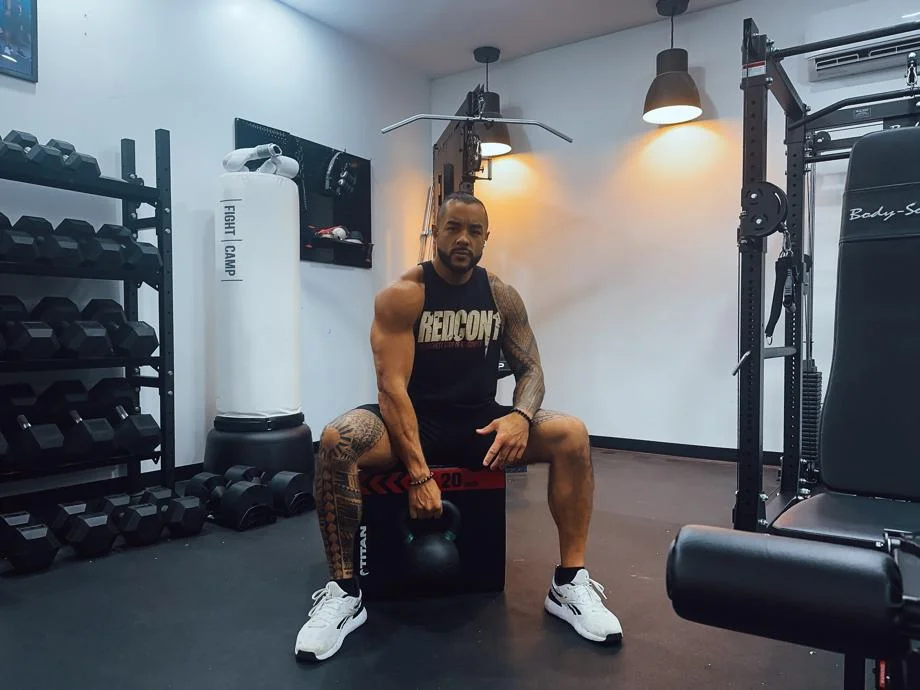











The Fitbod App is a high-tech AI-powered fitness platform that personalizes workouts and adapts them over time based on your progress. Although there is not a free version, the subscription is affordable and allows you to workout with whatever equipment you have.
What our tester says:
“There’s plenty of variety, and workouts are structured based off of the equipment you say you have available. The app pulls exercises from the database of available exercises based on what you have access to.”
What to Know Before You Buy
- While Fitbod offers some conditioning exercises, it is built around strength training. So, this is not the app to use if you need nutrition coaching or cardio-focused workouts.
- Unfortunately, there’s no fully free version of this app. However, Fitbod is priced competitively at $15.99 per month, or $95.99 for an annual subscription.
- The algorithm will personalize your workouts based on completed sets, reps, and weight, as well as recovery data. Accurately logging your sessions will help the AI make better recommendations.
Is Fitbod Worth It?
Considering it only costs about $16 per month, Fitbod is in a different category than something like Future—an expensive personal training app that involves 1:1 coaching. At that price point, it’s hard not to consider Fitbod a worthwhile investment, especially if you’re at the beginning of your strength training journey.
For people who are primarily focused on building muscle and reshaping their physique, this is a fairly low-cost option that takes away all the guesswork. The platform leverages the power of AI to help create customized routines, and there’s plenty of wriggle room to adapt your plan based on your available equipment, workout preferences, and other factors.
While it’s far from the most complete app we’ve tested (I’ll explain more later), it’s easy to use, highly customizable, and won’t take a big bite out of your budget.
Still deciding if this is the best fitness app for you? Check out some key features and specs that Fitbod offers.
Fitbod: Key Features & Specs
| Price | $15.99 per month or $95.99 annually |
| Free Trial Period | 7-day free trial with subscription |
| Type of Training | General Fitness, Strength Training, Muscle Tone, Bodybuilding, Powerlifting, Olympic Weightlifting |
| Type of Equipment Needed | Customized to your individual equipment access |
| Compatible With | iOS, Android |
Workout Experience With Fitbod
For this Fitbod app review, we asked our resident Olympian to put this strength-focused app through the paces. Caine Wilkes competed at the 2020 Tokyo Olympics, so nobody understands the weightlifting world quite like my fellow GGR team member.
As someone who trains specifically for his sport, Caine wanted to see whether the AI-generated workouts were well-devised (and effective). He also was eager to find out how easily you could customize your plans, as not everyone has a goal of snatching 400 pounds (props to him, though!).
Overall, Caine found Fitbod to be extremely user-friendly, which is one of the key factors that determines whether you’ll keep using an app or just let it take up precious space on your phone. However, as all of our expert product testers do, he pointed out a few shortcomings that may affect your decision to roll with Fitbod.
To paint a fair and balanced picture of what the app can and can’t do, I’ll break down each category Caine assessed and provide some extra commentary of my own.
While I’ll always say that hiring a real certified personal trainer is one of the best investments you can make in your health and fitness, apps like Fitbod are a solid alternative for the right folks. If hiring a trainer is out of your budget, something like Fitbod can offer structured workouts and training advice for a much lower cost.
Amanda Capritto, CPT, CES, CNC, CF-L1, CSNC
Fitbod Rating
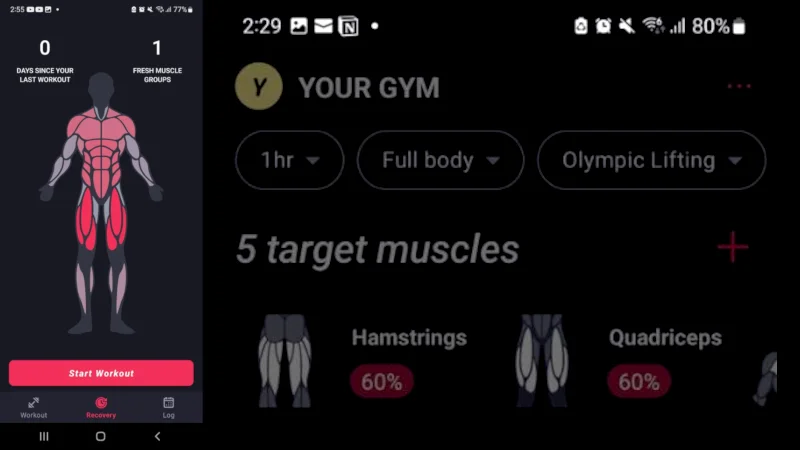
Trial
A trial period allows you to test an app’s capabilities before fully committing. Think of it as the “try it before you buy it” factor. After all, why pay for a subscription if you don’t know exactly what you’re getting for your money?
Fortunately, Fitbod gives you sufficient time to test out all of its features. While earlier versions only allowed three free workouts, you now get seven days to evaluate the platform. This falls in line with the average trial period for workout apps based on our research and testing data, resulting in a 3-out-of-5 rating.
You must choose a monthly or yearly subscription plan to start the trial. Just remember that it will automatically roll over into a paid subscription if you don’t cancel it before the trial period ends.
Pricing
Unfortunately, there’s no fully free version of Fitbod.
Fortunately, it’s one of the most affordable workout apps we’ve come across.
The pricing structure is straightforward: You can pay $15.99 per month or $95.99 for an annual plan. The latter works out to just $8 a month, which I consider a total steal.
For comparison, the average workout app costs $34 per month. So, at less than half the cost (and less than 25% of the average cost if you pay annually), we feel comfortable giving a 4-out-of-5 rating for price.
App Setup
Getting started can be half the battle. Luckily, Fitbod makes it easy to jumpstart your journey.
Caine rated the setup process a perfect 5 out of 5, which should ease any concerns about how quickly you’ll be able to get to lifting.
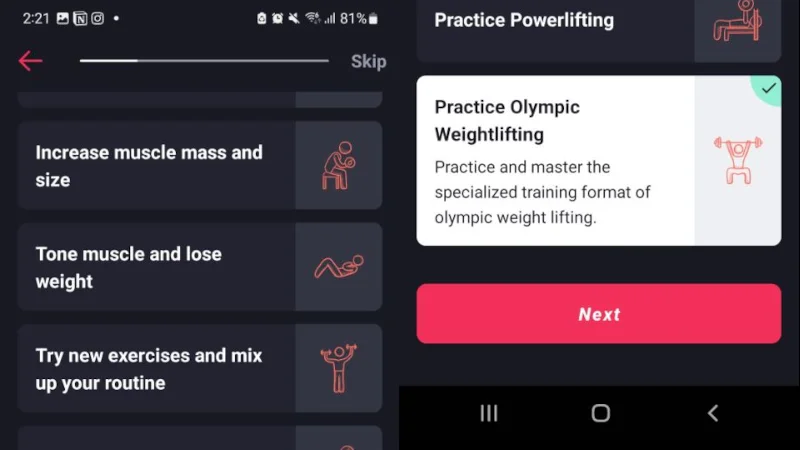
“There’s a quick questionnaire on your experience and goals,” he explains. “You can also add basic metrics and customize equipment available to help optimize the AI’s programming.”
Here’s a brief overview of what the onboarding questions look like that define your basic profile:
- Fitness Goal: Get stronger, build muscle, get lean, lose weight, etc.
- Experience Level: Beginner, intermediate, or advanced
- Equipment Access: Full gym, home gym, or minimal gear (even bodyweight)
- Preferred Training Split: Full-body, upper/lower, push/pull/legs, etc.
You can also select preferences for the session structure, including the workout duration, warm-up and cool-down periods, and whether you want to include supersets (one of my favorite muscle-building hacks).
One area Caine particularly appreciates is that there’s a quick tutorial on each new feature you look at. This can help you identify which built-in tools you want to use, and which ones you can breeze over.
Ease of Use
Once you’ve gone through the questionnaire and established your profile, you shouldn’t encounter any major roadblocks. Caine rated the app a 4 out of 5 for ease of use, which is another encouraging sign for long-term use.
“Using the app and logging my own workouts were very easy,” he says.
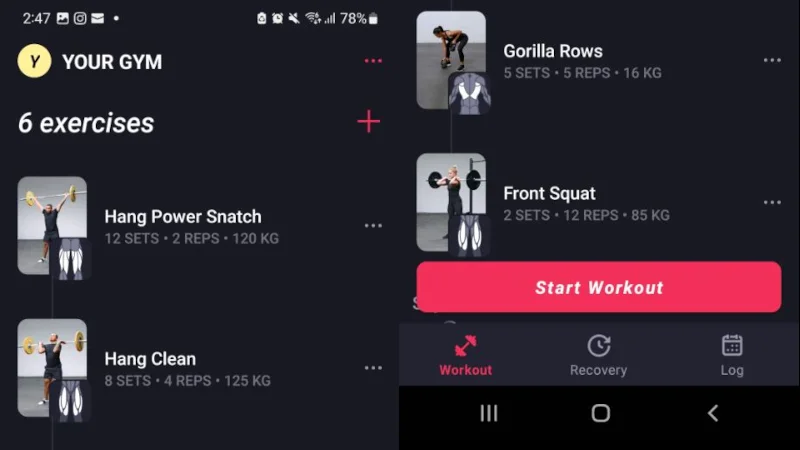
Navigating the app is straightforward, as the core tabs at the bottom of the screen include:
- Workout Tab: View your AI-generated exercises, check targeted muscle recovery states, swap exercises, and start your routine
- Log Tab: Review your past workouts and check exercise results
- My Plan Tab: This is where you can update your available equipment, set specific muscle group targets, and modify your fitness goals or experience level
Although the app itself is easy to use, Caine did have one major callout worth mentioning.
“Naturally, I chose Olympic lifting, but the weights and rep schemes seemed wildly off for a weightlifting program,” he explains. “I think a lot would be solved if you could put your max lifts in there. Otherwise, you’re still kind of guessing weights and programming for yourself.”
Obviously, the majority of users aren’t training to compete in Olympic lifting, so this may not be a dealbreaker for you.
“The other training methodologies seemed reasonable, so I’m only taking off 1 point here,” Caine says.
Accountability
One of the biggest advantages of working with a certified personal trainer is that you have an actual human who can get in your ear (even remotely) and motivate you to stick to your plan. Obviously, that’s not the case with Fitbod, which relies on AI rather than a real-life coach.
Still, not all hope is lost in terms of accountability. In fact, Caine still gave a very respectable 4-out-of-5 rating here.
“The app sends reminders of upcoming workouts and progress goals with the number of workouts per week, and you can opt to receive notifications of challenges,” he explains.
For some people, just getting reminders may be enough. However, if you struggle with motivation, I recommend having an accountability partner—whether it be a friend or family member on their own fitness journey—who you stay in contact with daily just in case you’re considering skipping a workout.
Instruction
Nothing’s worse than suffering an injury because you performed a movement incorrectly. So, safety should be at the top of your priority list every time you work out.
Workout apps typically do a good job of providing clear, detailed descriptions of each exercise, and many also include high-quality video demos that allow you to see how a movement should be executed.
Thankfully, Fitbod checks both of those boxes.
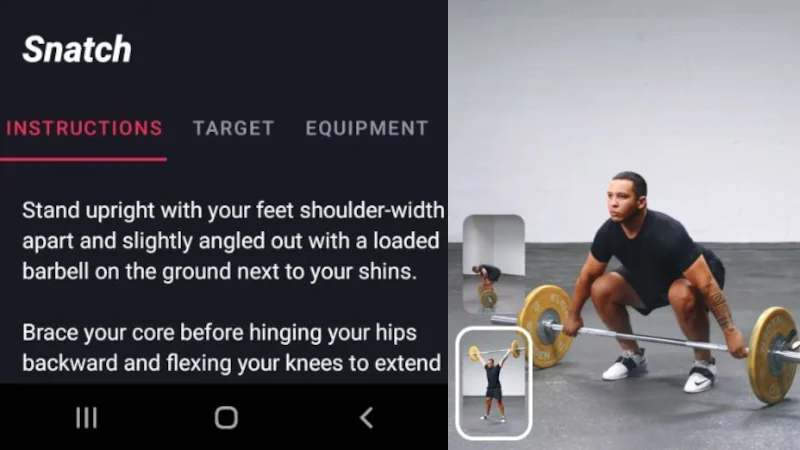
“There are great videos and instructions for each exercise,” Caine says.
There is a caveat, though, that forced us to stick with a solid-but-unspectacular score of 3 out of 5.
“The programs that the app makes only guess at weights, so you end up guessing the stimulus, percentages, and purpose of each part of the workout,” Caine explains.
RELATED: The Complete Guide to Barbell Safety
Workout Variety
Although we acknowledge Fitbod is first and foremost a strength training app, we have to give credit for the sheer amount of variety it offers. Caine awarded a perfect score in this key category, noting that the platform has a deep exercise library.
Fitbod actually has a built-in setting in your profile called Exercise Variability that allows you to choose between three distinct levels:
- More Consistent: Keeps 70-80% of the same exercises each week, which can be beneficial for tracking your strength progression and progressive overload.
- Balanced: This is the default setting. It provides a mix of consistency and rotation that helps keep your workouts engaging.
- More Variable: This setting introduces new exercises frequently to reduce repetition (and potential boredom).
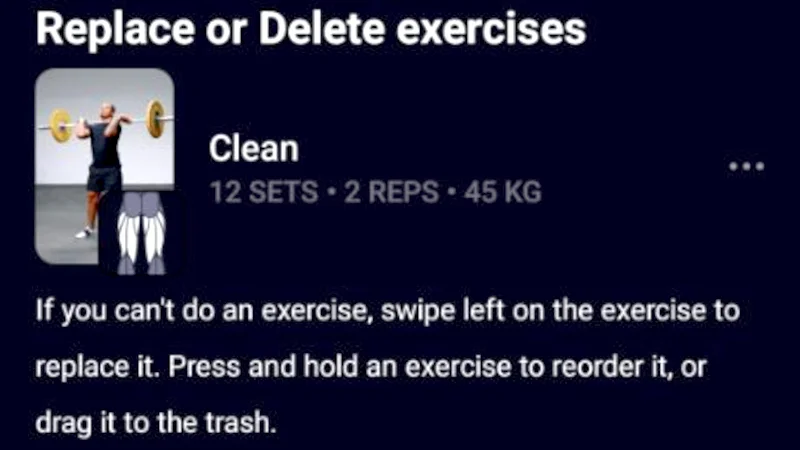
It’s also important to remember that the workouts and exercises will be tailored based on your fitness goal. Fitbod has six defined pillars from which you can choose, including:
- General Fitness
- Strength Training
- Muscle Tone
- Bodybuilding
- Powerlifting
- Olympic Weightlifting
Needless to say, if you’re keen on pumping iron, Fitbod’s got you covered.
RELATED: Bodybuilding Workouts
Progressive Overload
If you want to achieve long-term results, you have to change variables along the way. In the context of lifting weights, this is referred to as progressive overload, which research shows1 can help promote gains in strength and muscle hypertrophy in both young men and women in the early stages of training.
And as someone who’s been lifting for nearly two decades, I can tell you that changing the reps, weight, sets, or rest time can all make a huge difference in whether you make progress or stay stuck in the same spot.
According to Caine, the workouts are not necessarily part of a longer training cycle. However, we do like that the AI continuously updates your workouts and recommendations based on your performance.
So, even though Fitbod doesn’t necessarily create periodized workout plans, we still award a 3 out of 5 for progressive overload.
Equipment Demands
Similar to the SHRED App that I reviewed, Fitbod is built with flexibility in mind. The app easily earns a perfect score for equipment demands, as you can tailor your workouts based on what you have (or don’t have) available.
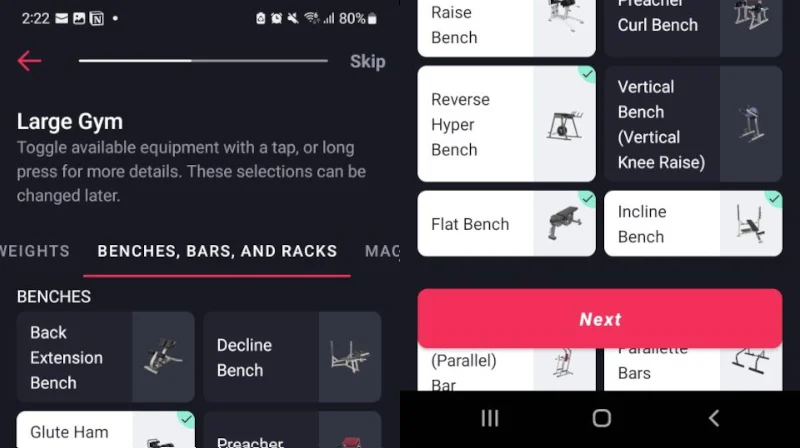
“Simply select the equipment you have, which can range from free weights and machines to just bodyweight exercises,” Caine says.
This is a huge plus if you’re just starting out, as you likely won’t have a full set of dumbbells at your disposal. So, if you’re building your home gym, you don’t have to feel pressured that you don’t have certain gym equipment on hand.
Interactive Features
Perhaps it’s fitting that an AI-powered platform doesn’t offer much in the way of interactive features. Caine awarded a 3 out of 5 in this category, which is about what we see with most apps.
“You can share your workouts on social media, and there appears to be a community on Facebook,” he says. “However, there are no interactive features on the app.”
That may be a downside for some, but for others, the lack of distractions may be a bonus. There’s absolutely nothing wrong with just using an app for programming and workout logging.
Value
While we awarded a 4-star rating for price, we went with a slightly lower score for value. It’s not because $16 a month is exorbitant. Rather, it stems from whether you’re getting a great return on your investment.
“In my experience, the AI-created workouts were less than stellar, so $16 a month for a fitness tracker seems a bit high for me,” Caine explains.
Remember, though, this is all about perspective. While Caine may be better suited for a different app given his Olympic weightlifting focus, the average user looking to make strength and muscle gains will likely find better value in Fitbod.
Customer Service
Fitbod comes in slightly below the average workout app for customer service, earning a 3.5-star rating in this category. Caine notes that there’s a FAQ section and a help center where you get more information on everything from the billing policies to how the app works.
He also mentions that it’s easy to sign up or unsubscribe via Google Play for Android users or the App Store for iOS users.
“You also get 10 days after the transaction for a full refund,” Caine notes. “However, after that time, there are no partial refunds.”
We do appreciate that Fitbod allows you to pause your subscription, though this is only offered to eligible subscribers and isn’t available on request. In fact, this only applies to Fitbod monthly subscriptions purchased directly through their website.
Customer Reviews
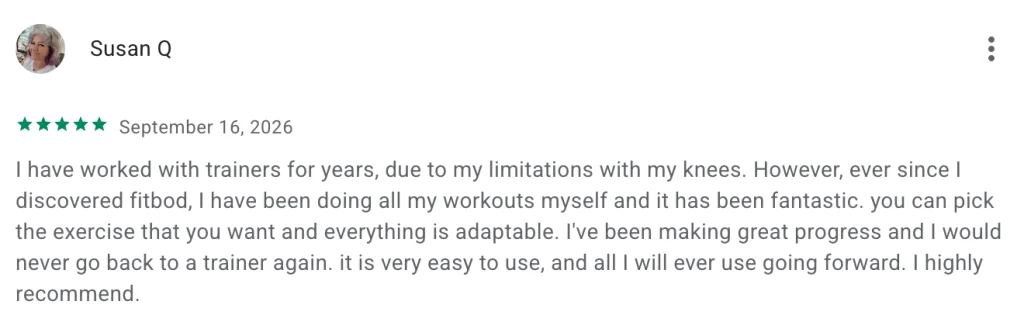
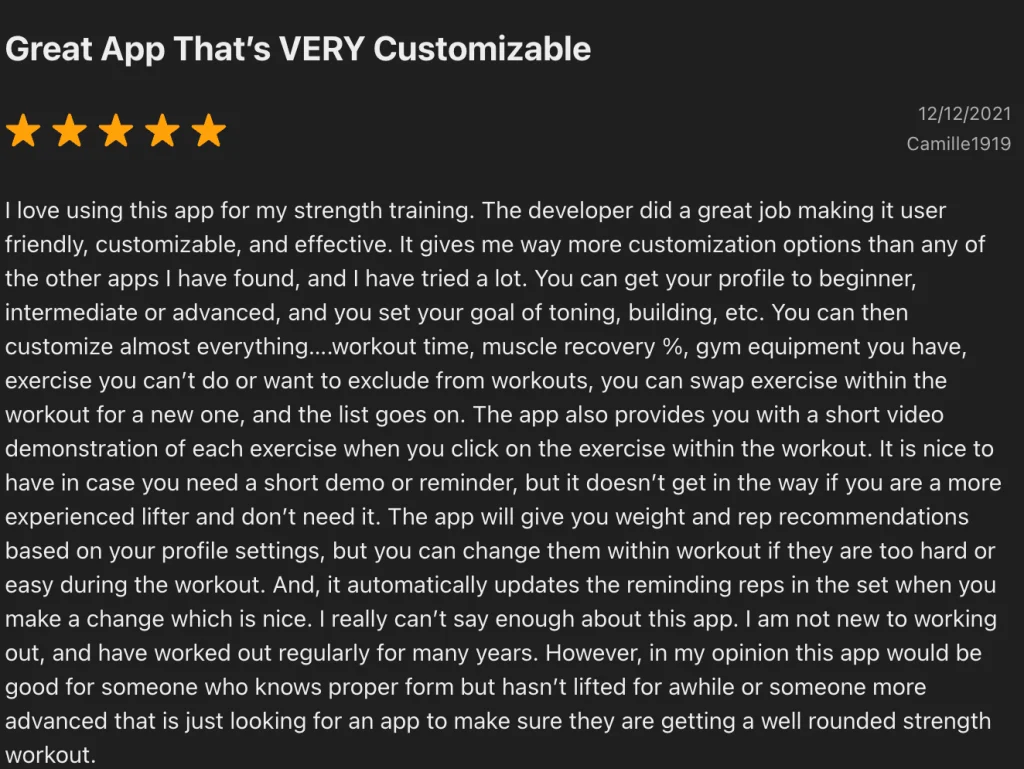
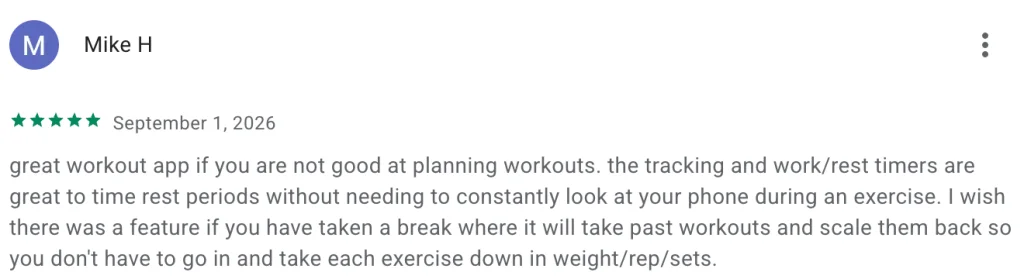
Fitbod has earned an average rating of 4.8 stars based on more than 285,000 ratings on the Apple App Store. Meanwhile, it’s accumulated a 4.5-star rating based on 31,200 reviews on Google Play. This speaks volumes about just how many people have found the app useful for supporting their fitness goals.
Here are some direct testimonials from Fitbod users:
Fitbod Vs
As time passes, you’ll find more AI fitness apps that take advantage of this powerful technology. While Fitbod is a worthy option, I’ll go over two other contenders that you may want to consider.
First, the SHRED App offers a wide variety of workout programs, plus on-demand, studio-style classes. It differs from Fitbod because it primarily focuses on circuit training (one of my favorite methods), which alternates between intense work periods and short rest periods.
This aptly named platform also offers a high degree of customization, including the ability to swap out exercises based on your available equipment. In addition to a written review, I also got a chance to break down the app in a video review for GGR Everything, which I encourage you to check out.
Someone like Caine may be better suited for JuggernautAI, which is based on powerlifting and powerbuilding programs. This AI-powered weightlifting app places a heavy focus on metrics like rate of perceived exertion (RPE) and reps in reserve (RIR). However, it’s worth pointing out that JuggernautAI costs $35 per month—much more than the more affordably priced Fitbod and SHRED App.
If you want to learn more, check out our complete Juggernaut AI review.
| Fitbod | SHRED App | JuggernautAI | |
| Trial | 7-day trial | 7-day trial with the annual plan | 2-week trial |
| Pricing | $15.99 per month or $95.99 annually | Free; $19.99/month or $119.99/year ($9.99/month) for the premium plan | $35/month for the monthly plan or $349.99/year ($29/month) for the annual plan |
| Equipment Demands | Customized to your equipment | Customized to your equipment | Barbell, dumbbells, bench, squat rack, kettlebells |
| Workout Variety | General Fitness, Strength Training, Muscle Tone, Bodybuilding, Powerlifting, Olympic Weightlifting | Strength, cardio, calisthenics | Powerlifting, powerbuilding |
| Compatible With | iOS, Android | iOS, Android | iOS, Android |
Final Verdict of Our Fitbod Review
Is Fitbod perfect? In all honesty, no platform is. However, if you want a fairly low-cost tool that helps create customized workout plans and offers detailed performance tracking, it’s definitely a viable option.
At the very least, you can take advantage of AI to help create more dynamic home workouts that can help you become strong and confident as you progress in your journey. And once you start getting deeper into your workout data, you may be inspired to start getting creative on your own, too.
- Fitbod’s seven-day free trial is a step up over the previous policy that only allowed three free workouts. Use this time to evaluate whether it has sufficient features for you to stick with it. (Remember to cancel before the trial is over, if you decide you don’t like it.)
- If you’re concerned about accountability and a lack of human interaction, consider something like Future or Caliber. However, keep in mind that these apps are more expensive.
- Fitbod now offers live heart rate tracking during your workout. Simply connect your compatible heart rate device (such as an Apple Watch or other fitness tracker) to see your heart rate in real time.
Fitbod Review: FAQs
How much does Fitbod cost?
Fitbod costs $15.99 per month or $95.99 for an annual subscription.
What are the pros and cons of Fitbod?
Fitbod offers personalized, adaptive workouts, extensive exercise options, and automatic progress tracking, but it requires a subscription and provides limited coaching and zero nutrition support.
Which is better: Fitbod or Caliber?
Fitbod is better for automated workout generation and exercise tracking, while Caliber is the stronger choice for 1:1 coaching, accountability, and nutrition guidance.
References
- Chaves, T. S., Scarpelli, M. C., Bergamasco, J. G. A., Silva, D. G. D., Medalha Junior, R. A., Dias, N. F., Bittencourt, D., Carello Filho, P. C., Angleri, V., Nóbrega, S. R., Roberts, M. D., Ugrinowitsch, C., & Libardi, C. A. (2024). Effects of Resistance Training Overload Progression Protocols on Strength and Muscle Mass. International journal of sports medicine, 45(7), 504–510. https://doi.org/10.1055/a-2256-5857