

OK, so you’ve decided to add one of the best exercise bikes to your home training space. Good for you! However, while it may be easy to ultimately land on this cardio machine silhouette as your go-to for at-home cardio, choosing the right exercise bike for your needs and preferences can be a bit more involved.
From choosing between different resistance types and seat orientations, to bikes with basic displays and complex touchscreens, the amount of available options can leave your head spinning. Thankfully, the GGR team of certified personal trainers, competitive athletes, strength coaches, and fitness professionals know a thing or two about indoor cycling. If you’re wondering how to choose an exercise bike, we have the experience and expertise to help you unlock the benefits that can come with these impressive home gym profiles.
As GGR Senior Staff Writer Amanda Capritto, CPT, CES, CNC, CF-L1, CSNC puts it, “Whether you’re an experienced rider or someone new to cycling, stationary bikes offer a wide range of benefits, from cardiovascular health to improved body composition1. Bringing the right bike home is the first step to taking advantage of those rewarding workouts and reaching your fitness goals.”
Different Types of Exercise Bikes
When shopping for a stationary bike, a great place to start is addressing your fitness goals. Are you looking to build strength and endurance? Pursuing weight loss? Rehabbing a lingering injury? Understanding your needs up front can help you better understand what to look for in a stationary bike when it comes to certain build qualities and features.
Once you have a grasp of your aspirations, the first place to start is in the type of exercise bike, itself. Let’s outline the four common exercise bike profiles you’re likely to see along your shopping journey.

Cycling Bike
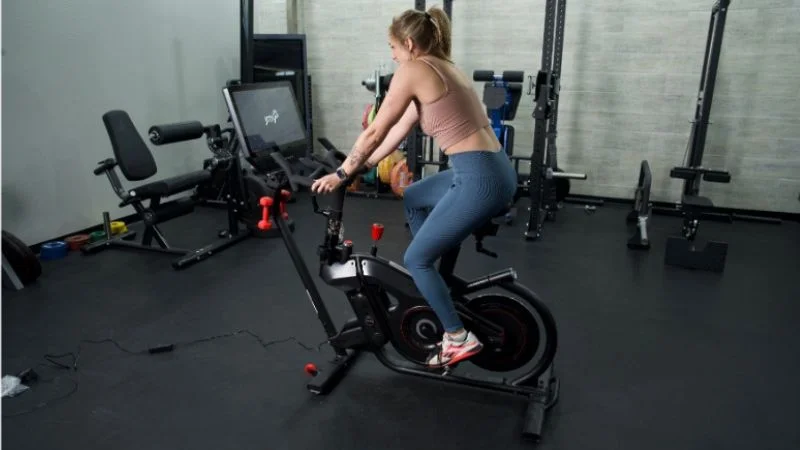
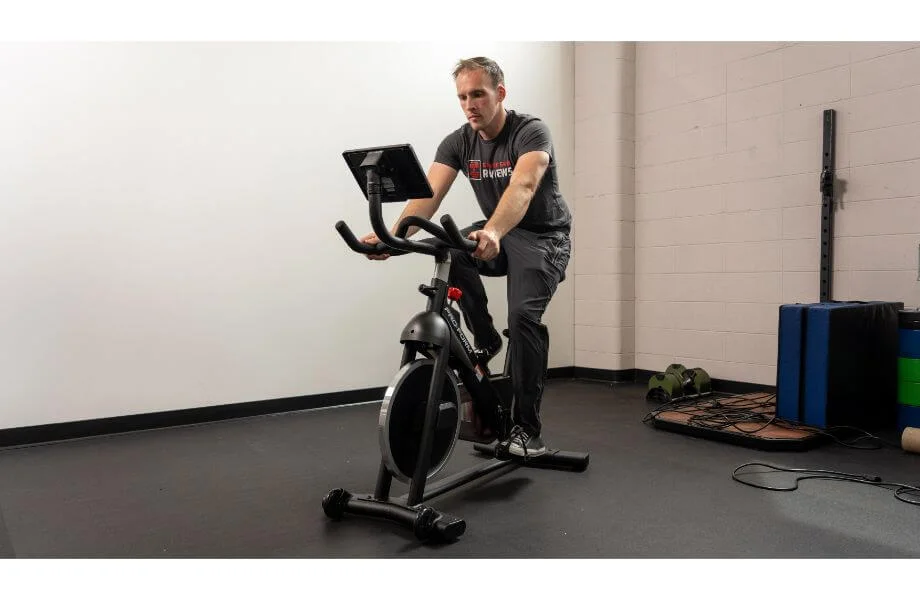
Cycling bikes—also known as “stationary” or “spin” bikes—are typically characterized by their exposed flywheel and their use of either magnetic or friction resistance to adjust the ride’s intensity. With friction resistance, felt or rubber pads press on the flywheel as you pedal to create friction (as the name suggests). This design often features a dial or knob that allows you to adjust the resistance on the wheel, and because the adjustments are continuous, your resistance options are virtually endless.
For example, if you want to simulate a big Missouri hill, crank the resistance knob to the right and feel the burn. Want to pretend you’re riding the flat streets of sunny Florida? Lighten the intensity by turning the knob to the left and cover that mileage.

Amanda Capritto, CPT, CES, CNC, CF-L1, CSNC explains that magnetic resistance bikes usually have a quieter and smoother ride when compared to friction resistance bikes. They are also more precise, as the resistance levels come pre-programmed and usually adjust with the click of a button. “This is something to consider if you prefer flexibility in your workout,” she says.
RELATED: Stationary Bike Workout for Beginners
There has been an increasing interest in indoor cycling bikes with the growing accessibility to technology, as well. Many cycling bikes have programmable features and the ability to pair with training subscriptions from the comfort of your living room.
Our Top Pick: NordicTrack X24 Bike
The X24 Bike is NordicTrack’s latest exercise bike offering an impressive incline range between -10% and 20% alongside iFIT compatibility for engaging on-demand workout programming. This all-new stationary bike also comes with two 3-pound dumbbells, which are ideal for taking part in iFIT’s library of non-cycling modules as well.
Recumbent Bike
Recumbent bikes are unique in that they position the cyclist lower to the ground in a semi-reclined position instead of in the upright orientation of more traditional bikes. With their larger seats and supportive positioning, many people are drawn to the low-intensity, low-impact ride offered across the best recumbent bikes.

Though recumbent bikes can work for most riders, they are especially great for older adults, riders with disabilities, and people recovering from injuries. Recumbent bikes offer more support for the back and spine, take pressure off the neck and knees, and are typically heavier than most upright bikes—a boon for intra-workout stability but a bust for transport and maneuverability. Some recumbent exercise bikes even have an elliptical built in for added training versatility.
Our Top Pick: Sole LCR Exercise Bike
The Sole Light Commercial Recumbent Bike is a durable and high-value recumbent bike that our testers liked for its challenging resistance, comfortable seat and backrest, and great warranty.
Air Bike
For those who are hopelessly devoted to their local CrossFit affiliate, you are probably quite familiar with air bikes and their air-driven workouts. Air bikes are powered by your legs and arms—the large fan at the front of the bike is the catalyst for the resistance the user feels when pedaling.

Unlike a traditional exercise bike, the harder the user pedals on the air bike, the more resistance they’ll create. These bikes usually have a simple LCD screen that tracks things like time elapsed or calories burned. If you’re looking for a bike with advanced programming, an air bike may not be your best bet. However, if you’re looking for a cardio machine that can provide you with an intense workout experience to get your heart rate going, you’ll love an air bike. There’s a reason these heavy-duty machines are commonplace in WODs and high-intensity workouts alike.
Our Top Pick: Rogue Echo Bike
We’ve tested just about every air bike on the market, and the Echo combines many of our favorite features into one. The belt drive is much more durable and requires less maintenance than a chain drive. The size and weight make it extremely stable, and the price is much less than we’d expect for such a quality piece of equipment.
What our tester says:
“Call it beginner’s luck, but Rogue Fitness did a great job with their first-ever conditioning machine. This is a piece of equipment that will give people of all fitness levels a hardcore full-body workout, look great in their home gym, and last for many years.”
Folding Exercise Bike
If you’re tight on space but still looking to log some miles on a stationary bike, a folding exercise bike might be just what you need. Folding bikes are becoming increasingly popular with people who need to be creative with their space. These bikes have a small footprint and can be stored away in a closet or underneath furniture when not in use. They are easily transported, too, and often more affordable than other bikes given their compact frame.

This budget-friendly pricing and space-saving profile can come with sacrifices in other areas, though. Foldable bikes are, essentially, simplified versions of traditional exercise bikes, meaning common bells and whistles are few and far between. Folding exercise bikes typically have an LCD screen that tracks time elapsed, distance traveled, and average calories burned, and they usually come with just a handful of preset resistance levels.
Still, even though they may not have the “wow factor” that other bikes boast, they have the basic mechanics necessary to give you a good sweat.
Our Top Pick: Marcy Fitness Upright Foldable Exercise Bike
This is a sturdy and affordable exercise bike that’s a great fit for home gyms of any sizes.
What our tester says:
“I was pleasantly surprised using the Marcy bike. It’s become the bike I use in warmups and cool-downs.”
Things to Consider when Choosing a Bike
Choosing an exercise bike can be an overwhelming task. With so many options and features on the market, it’s no wonder your head is spinning. Not to fear, though. Here are our top recommended factors worth pondering over as you search for your ideal cardio machine.
Price
A wide range of options comes with a wide range of price tags. That said, you don’t necessarily have to budget for the most expensive bike to be happy with your purchase.
You can expect to spend upwards of $2,000 or more for the crème de la crème of cycling bikes, such as the NordicTrack X24. That said, our testing experience—which includes researching and examining over 25 different bike profiles to date—has the average cost of a worthwhile exercise bike at roughly $1,409.
While this four-figure cost can net you plenty of convenient features and workout capabilities, we also want to stress that the best budget exercise bikes are more than capable of facilitating training—all for well under $1,000 (and even under $500 in certain profiles). Brands like Sunny Health and Fitness and Yosuda continuously put out wallet-friendly indoor cycles that are durable enough for regular use—just without tech-heavy setups or access to streaming platforms.

Of course, though, the best exercise bike for you will be the one that fits your budget best. Finding the sweet spot between cost and functionality is key to choosing the stationary bike that will bring the most to your home gym.
Flywheel
The flywheel is a weighted disc on a stationary bike that connects to the pedals by way of a chain or belt. It stores the rotational energy that is generated as you pedal. It’s an important factor to consider when choosing a stationary bike, as it’s one of the mechanisms that contribute to the bike’s overall stability.
You should ideally see a flywheel weight of at least 30 pounds. This weight can help improve the bike’s stability when in use, and can even be more efficient when trying to maintain certain speeds. Lighter flywheels also have a tendency to be loud in operation, which can be a negative for those trying to train alongside children or fellow housemates.
Saddle
The saddle is the position in where you sit when riding an exercise bike. Saddles often feature either a wider profile with added cushioning for comfort, or longer, thinner design for improved performance. Choosing one or the other can be up to personal preference, but be sure to find a seat that suits you. After all, you could be seated on this component for an extended period, so it’s best not to sacrifice comfort.
Learn more about bike seat height and how to adjust yours for the best fit.
Pedals
Exercise bikes have a few options when it comes to pedals. It may seem like a small part to consider, but they can make a big difference in your ride.
In general, there are three types of pedals: clipless style, toe clip or toe cage, and flat pedals. Some bikes come equipped with flat pedals, similar to those we had on our bikes as kids. They may seem the most comfortable at first, but they are not the most energy-efficient compared to clipless and cage pedals.
Where you gain momentum on the downstroke of the flat pedal, cages and clips include the upstroke as part of the total equation, increasing your advantage and efficiency. Clip-style pedals require you to wear shoes with cleats that can connect to the cleat bracket on the pedal.

Not interested in clipping in just yet? Toe cages can be a great way to incorporate the pulling motion of the upstroke. You place your shoe in the toe cage and pull the nylon strap snug around your foot to give your pedal stroke an efficient connection.
Another thing to consider is the ability to change the pedals if you so desire. Can you swap the pedals for a different option and if so, is it easy to do?
Warranty
The industry standard for exercise bike warranties is roughly 10 years for the frame and one year for parts. That said, we’ve seen indoor cycles covered with 15-year and lifetime support for the frame and multi-year part-and-labor packages, so there is some variance across the category.
“Obviously, if you purchase a $200 foldable exercise bike from Amazon, you wouldn’t expect this kind of warranty,” notes Amanda Capritto, CPT, CES, CNC, CF-L1, CSNC. “However, if you’re spending serious money on a bike, make sure you’re clear on the warranty ahead of time just in case your machine has issues in the future.”
Many companies will require that you register your bike on the website with the serial number once you receive it in order to cash in on any part of your warranty, so make that a priority to protect yourself down the line.
Resistance
Some bikes have 10 resistance levels, some have 30, and some have 100. Since companies create and measure the magnetic resistance differently, how do we decide if the bikes we’re considering have the levels we need?

“Generally speaking, you want to look for at least 12 levels of resistance to give yourself some room for variability in your workout,” Amanda explains. “Any additional levels allow you to adjust resistance in smaller increments and further individualize your workout.”
RELATED: HIIT Bike Workout
Display
There are a few common display setups in the market. Some high-end programmable bikes have HD touchscreens that can make you feel like you’re in the cycling studio with the app’s instructors. Other bikes have a simple LED screen or a more primitive LCD setup. It really just boils down to how you want your bike to display your workout settings and progress.

Interactive Programming
With more people working out at home, interactive programming continues to grow in popularity. Not too long ago, people were flocking to the gym to join local cycling classes. Now, you can join people from around the world in a virtual spin class right from the comfort of your own living room.
These engaging workout programs usually have a monthly subscription and can be streamed straight to the bike’s display or your own smart device. Examples of these programs include memberships with Peloton, iFIT, Echelon, and others.
Adjustability
Exercise bikes are adaptable for people of all builds because they allow riders to adjust their settings to better fit their stature. Most bikes have adjustable seats and adjustable handlebars that let you change their height and depth. The better your fit on the bike, the better your form and comfort. Be sure to look for an exercise bike profile offering some adjustment levels across the saddle and handlebars.
Safety
Lastly, consider where you intend on putting your exercise bike. You’ll want to make sure you have adequate clearance around the bike so you can get on and off freely without obstacles.
You’ll also want to make sure it fits in a room that doesn’t get too cold in the winter or too warm in the summer. Cycling in uncomfortable temperatures isn’t ideal for a safe workout expereince. Also, some companies will void a warranty if the equipment isn’t stored in a temperature-controlled area—another thing to check your warranty on.
Other Extra Features
Once you figure out the big stuff, you can always look at extra features that add a little luxury to your ride. Things like USB ports, cooling fans, water bottle holders, Bluetooth connectivity, and device holders might really kick your training up a notch.
How To Buy An Exercise Bike
Once you decide what type of exercise bike you want, you’ll have a few options to purchase:
- Purchase directly from the manufacturer, like Peloton or NordicTrack.
- Purchase from a large retailer like Amazon or DICK’S Sporting Goods.
- Purchase secondhand from someone locally, such as on Facebook Marketplace.
If you buy the bike online, check for any listed shipping charges and assembly fees. If you purchase directly from the manufacturer or even some large retailers, you may have financing options available, too. “Services like NordicTrack financing can help shoppers purchase the equipment that will help them reach their goals without such a huge upfront investment,” says Amanda Capritto, CPT, CES, CNC, CF-L1, CSNC. “Look for ‘gold standard’ financing, which is 0% APR for at least 24 months.”
How to Choose an Exercise Bike: Final Thoughts
Choosing an exercise bike can be an exciting step toward building your ideal home gym. There are an abundance of options out there, so you’re smart to do your research before buying. Know what your goals are for your time on the bike and:
- Pick the type of bike that best suits those goals
- Set your budget
- Prioritize which features you need most to rock your workouts
- Add to cart and go for it!
How to Choose an Exercise Bike FAQs
Are exercise bikes worth it?
Yes, exercise bikes are definitely worth checking out. Stationary bike benefits include improved cardiovascular health and endurance, plus they’re low-impact and accessible to many people. Whatever gets you excited to workout is worth it.
How much should I spend on an exercise bike?
Before deciding how much you want to spend on an exercise bike, I’d recommend determining which of the four types you want to purchase. After deciding that, you’ll be able to get a more accurate picture of the amount you’ll need to spend to get a good machine.
For example, the amount you should spend in order to get a good folding exercise bike versus a feature-filled cycling bike are completely different. For a folding exercise bike, under $500 will be just fine. For a cycling bike, expect to spend as much as $2,000 if you want interactive programming and a touchscreen.
Which is better, a treadmill or an exercise bike?
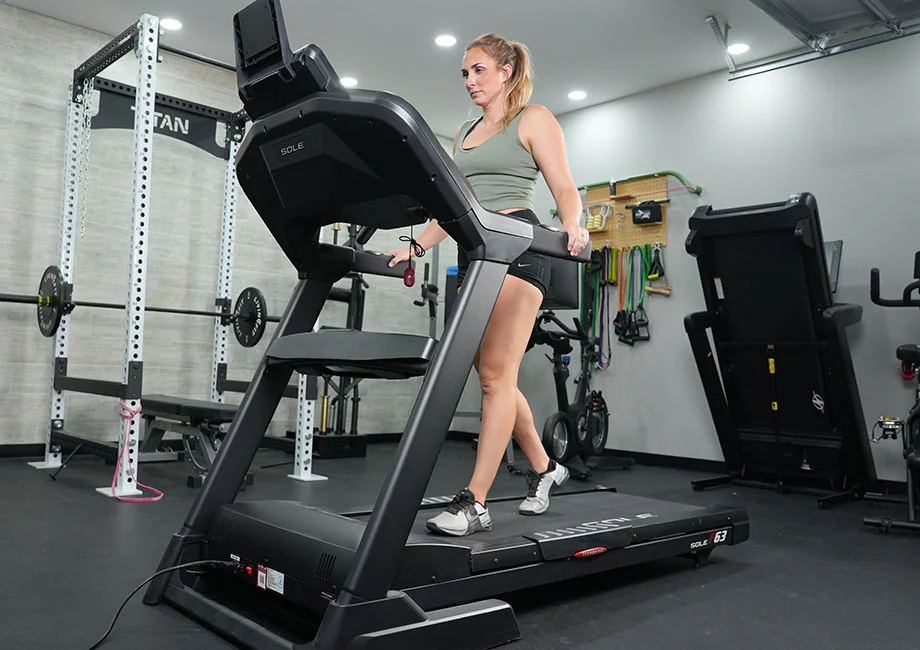
Deciding between an exercise bike vs treadmill is definitely a personal choice. Both can deliver a solid cardio workout, but they aren’t exactly the cheapest things you could add to your home gym. Consider which form of exercise you enjoy more—walking/running or riding—and what kind of space you have available, then go from there.
References
- Chavarrias, M., Carlos-Vivas, J., Collado-Mateo, D., & Pérez-Gómez, J. (2019). Health benefits of Indoor Cycling: A Systematic Review. Medicina, 55(8), 452. https://pubmed.ncbi.nlm.nih.gov/31443139/