

The future of weigh-ins is here: Smart scales for your home are equipped with bioelectrical impedance analysis and pulse wave velocity technology to provide more than a simple body weight reading.
Whether you’re on a mission to lose or gain weight, either goal requires commitment and resources. In addition to some of the best home gym equipment and one of the expert-approved protein powders, you’ll also need a scale to track your progress.
That’s where your friends at Garage Gym Reviews come in. We tested, scored, and reviewed some of the best smart scales on the market. We’re a group of fitness industry experts—including Olympic-level athletes, certified personal trainers, and certified nutrition coaches—here to help you make the best investment in your health and fitness. Let us do the research so you don’t have to waste your money on faulty products or items that don’t fit your needs.
Best Smart Scales
- Best Smart Scale Overall: Eufy Smart Scale P2
- Best Budget Smart Scale: Renpho Smart Scale
- Best Smart Scale for App Connectivity: Withings Body Smart Scale
- Best Smart Scale for Fitbit Users: Fitbit Aria Air
- Best Smart Scale for Garmin Users: Garmin Index S2
- Best Smart Scale for Unlimited Users: Wyze Smart Scale
Best Smart Scale Overall: Eufy Smart Scale P2
Good for: Folks looking for high levels of accuracy and a wide variety of body composition data
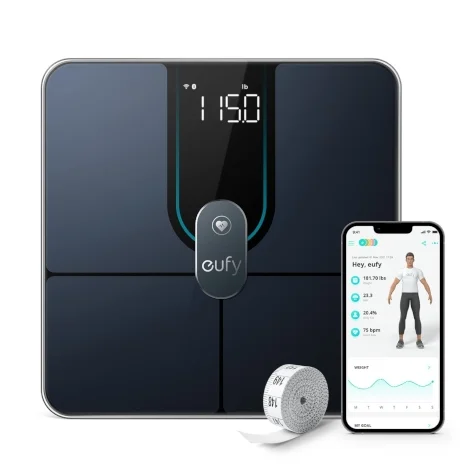









The Eufy Smart Scale is an affordable smart scale option. It tracks 15 different measurements which are sent to your phone.
What our tester says:
“The scale works fine, and measures a lot, although I don’t think every metric is accurate. BW and body fat seem fairly accurate, though.”
The Eufy Smart Scale P2 was one of our top-scoring scales during our testing and analyzing process because it was easy to set up, you can create unlimited profiles, and it has both Bluetooth and WiFi connectivity. Eufy is a tech brand with tons of smart home devices from baby monitors to security cameras to robot vacuum cleaners.
Based on the high-tech brand, we were not surprised that the Eufy Smart Scale can measure and track quite a few body composition metrics, including: Body weight, body fat, heart rate, body mass index (BMI), muscle mass, bone mass, water, protein, basal metabolic rate (BMR), visceral fat, body fat mass, lean body mass, body age, body type, skeletal muscle mass, and subcutaneous fat.
GGR Expert Tester and Senior Staff Writer Caine Wilkes says the scale works well and measures a lot of metrics, but he’s unsure if all metrics are accurate. From his experience, body weight and body fat percentage were pretty accurate based on other scales and body scans he has done.
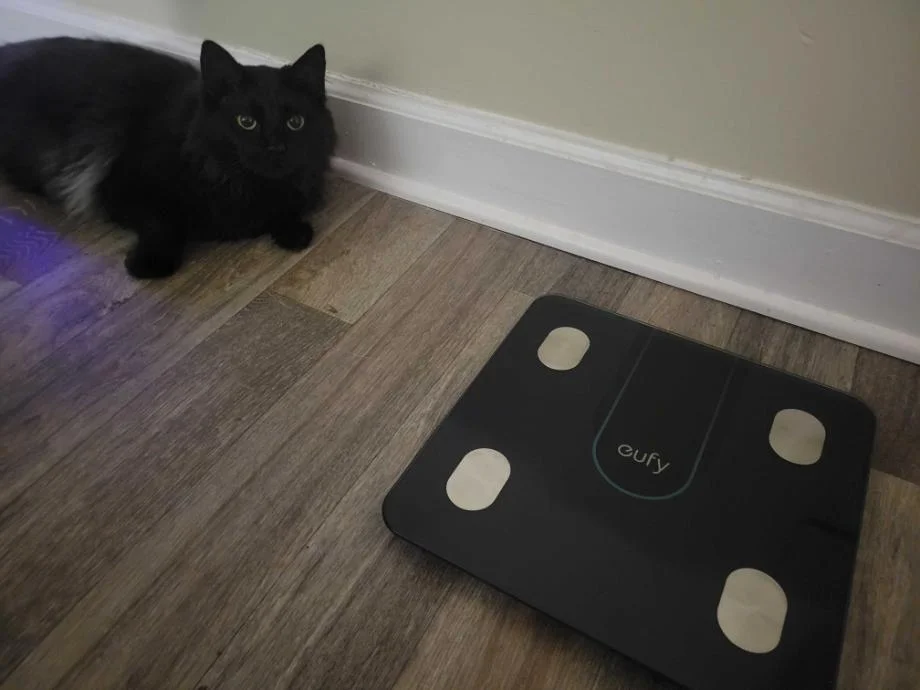
However, Caine scored accuracy at 4 out of 5 stars. He docked a point for accuracy because other metrics were a bit off base. “The scale said my bones weighed 11 pounds. While the skeleton is lighter than you’d expect, the average weight is about 15% of your body weight. Based on that, I know my skeleton is heavier than 11 pounds,” says Caine.
The Eufy Smart Scale P2 uses bioelectrical impedance analysis (BIA) and manganese (a trace mineral) to perform body readings. In a recent BMJ Nutrition, Prevention, and Health1 study, researchers compared BIA devices with dual-energy X-ray absorptiometry (DXA) to measure fat-free mass and body fat percentage. The study found that BIA systems were within 3% accuracy to the DXA systems, meaning that BIA can be a relatively accurate reading of one’s body composition.
Caine gives the Eufy scale 5 out of 5 stars for the setup process. He had to download the EufyLife app, but it only took a few minutes to register and connect the app to the scale. It comes with four AAA batteries and a measuring tape for additional health data.
Our only callout is the potentially slow shipping time if you order directly from Eufy, according to Caine.
“The main gripe I had was the mail time,” says Caine. “I got this one month after purchasing (through the website), and had no warning of a delay. For a good bit I thought I’d been scammed. Amazon has Prime delivery, so that might be the way to purchase this.”
RELATED: Protein Shakes for Weight Loss
If you’re looking for a more affordable option, we recommend the Wyze Smart Scale.
| Price | $49.99 |
| Weight capacity | 397 lbs |
| Metrics | Weight, body fat, heart rate, BMI, muscle mass, bone mass, water, protein, basal metabolic rate, visceral fat, body fat mass, lean body mass, body age, body type, skeletal muscle mass, subcutaneous fat |
| Connectivity | Bluetooth and WiFi; Eufy app and third-party apps |
Best Budget Smart Scale: Renpho Smart Scale
Good for: Folks who want a quality scale at a budget-friendly price
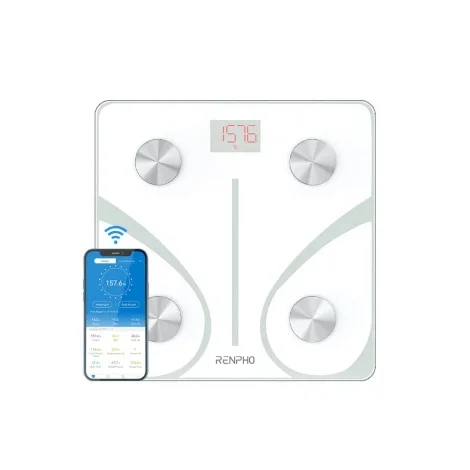
The Renpho Elis Smart Scale is an affordable option with Bluetooth connectivity. It tracks 13 metrics, although customers found that the body fat measurements were inaccurate. There were also customers that noted issues with losing connectivity.
What our tester says:
“It’s super simple to use. I own another smart scale, and the interfaces for the apps are very similar. Super intuitive.”
The Renpho Smart Scale is our top pick for best budget option. It retails for $49.99, but when our tester, Kate Meier, CPT and GGR director of content, purchased the smart scale it was on sale for $29.99.
“It’s not only really affordable, it’s also easy to use the Renpho Health app,” says Kate. She scored the setup process 5 out of 5 stars. “I have another smart scale and the user interface is similar and both are super intuitive.
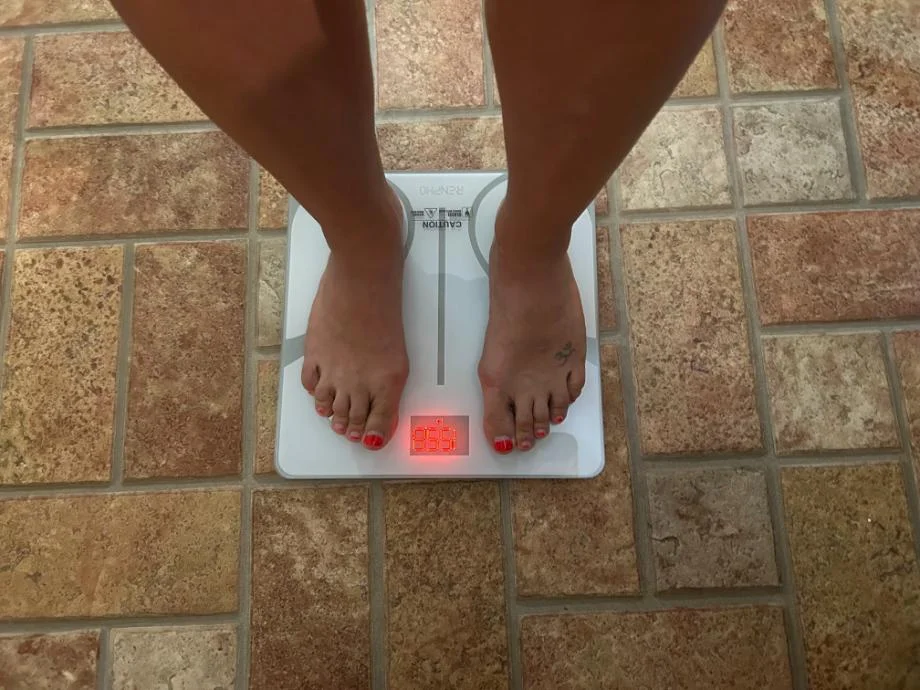
“You can have unlimited profiles and each profile is super easy to set up and use. I plan to keep this scale in my gym for my competitive weightlifters to check their weight and set up their own profiles,” she says. Kate is not only a certified personal trainer, but a USAW-L1 coach and trains competitive athletes out of her garage gym.
In addition to syncing with the Renpho Health app, the smart scale can also sync with your preferred third-party fitness apps like Apple Health, Samsung Health, Google Fit, and Fitbit. For compatibility, she gave the Renpho Smart Scale a 5-star rating.
The Renpho earns another 5-star rating when it comes to accuracy. She compared her body weight to other scales and weighed a dumbbell. “I put a 10-pound dumbbell on this scale and it measured it as 4.55 kilograms, which is 10.01 pounds, meaning this is incredibly accurate,” says Kate.
RELATED: Best Dumbbells for Home Gyms
This is a great scale, but if you’re looking for something that tracks a few more data points and is a bit more tech-focused, check out the Withings Body Smart Scale.
| Price | $49.99 |
| Weight capacity | 396 lbs |
| Metrics | Weight, body fat, BMI, subcutaneous body fat, fat-free body weight, visceral fat, body water, skeletal muscle, muscle mass |
| Connectivity | Bluetooth; Renpho Health app, Apple Health, Google Fit, and Fitbit |
Best Smart Scale for App Connectivity: Withings Body Smart Scale
Good for: People on the search for a smart scale that can connect with third-party apps and wearables
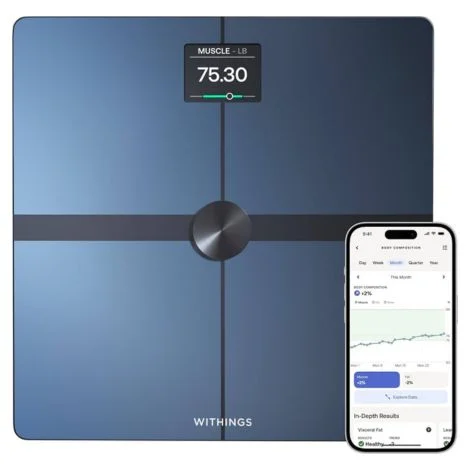
The Withings Body Smart scale not only tracks your weight on the scale and in the app, it can provide bone density, muscle fat, body fat, and heart rate readings.
What our tester says:
“I like the scale, but it’s very sensitive to floor positioning. I’ve weighed myself a few times in a row, moving it slightly each time, and the weight was different each time.”
If you’re on the hunt for a WiFi scale with tons of app connectivity, the Withings Body Smart Scale is an ideal option. Withings has its own app, but you can also sync with other fitness trackers, smartwatches, and third-party apps like Fitbit, Apple Watch, Apple Health, Google Fit, and MyFitnessPal. For this reason, the scale earns a 5-out-of-5-star rating for app compatibility.
GGR Expert Tester and Staff Writer Matt Dustin used the Withings Health Mate app and reports it was a pretty quick and easy process. “You’ll need to download the Withings app and register, but then it will walk you through the process of pairing the scale,” says Matt.
While the initial set-up went well for Matt, when his girlfriend also downloaded the app, the process to get her set up as a new user (the device can recognize up to eight users) was a headache. He scored the overall setup at 3.5 out of 5 stars. “Getting her added took us a long time. And then once she was set, her health metrics took about 20 minutes to sync to the app,” says Matt.
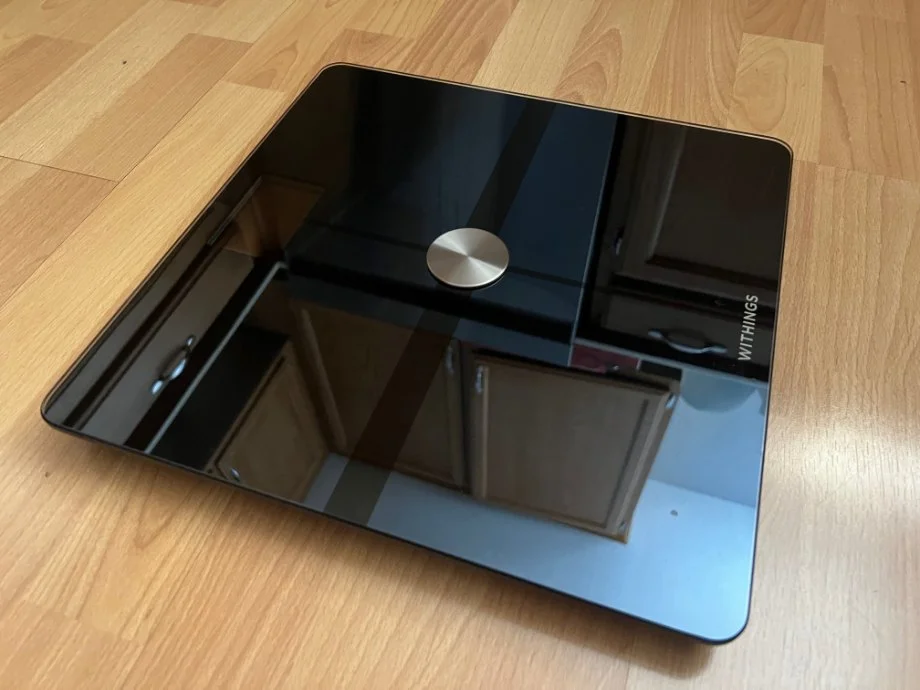
While adding new users was frustrating for Matt’s household, he appreciates the number of different metrics you can track with this scale. The Withings scale can measure body weight, BMI, BMR, and visceral fat along with muscle, water, and fat percentage. You can also track your standing heart rate.
When it comes to accuracy on these measurements, Matt scored the Withings scale 4 out of 5 stars. “This scale is super sensitive to floor positioning,” says Matt. “I’ve weighed myself a few times in a row, moving it slightly each time, and the weight was different each time. My older, much cheaper scale was pretty much the exact same in every location,” he explains.
Matt noticed the weight measurement inaccuracy when he put the scale away between uses. “I decided to find a floor space where I can keep it permanently to make sure it’s accurate between weigh-ins,” he says.
If you’re purchasing the Withings scale on Amazon, be aware there are different models. Matt tested the Withings Body Smart. Other models include Body Scan, Body Comp, and Body Cardio and can track additional metrics like vascular age, electrodermal activity, and body composition.
RELATED: Best Budget Home Gym Equipment on Amazon
If you want to save some money without sacrificing any quality, we recommend the Eufy Smart Scale P2, our pick for the best smart scale overall.
| Price | $99 |
| Weight capacity | 440 lbs |
| Metrics | Muscle percentage, water percentage, fat percentage, visceral fat, heart rate, body weight, BMI, BMR |
| Connectivity | WiFi and Bluetooth; Withings app, Apple Health, Google Fit, Apple Watch, Fitbit, etc. |
Best Smart Scale for Fitbit Users: Fitbit Aria Air
Good for: Folks who use Fitbit devices and want to add weight measurements to fitness tracking
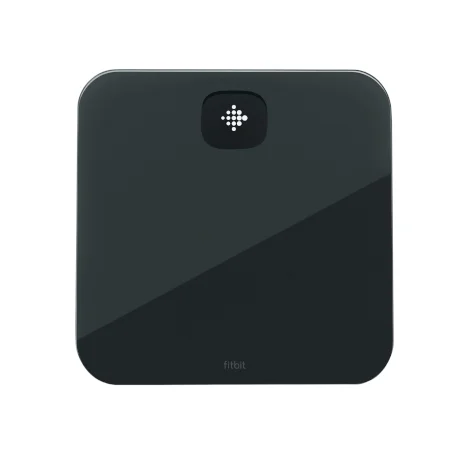
Fitbit Aria Air is a smart scale that wirelessly sends data from the scale to the FitBit app. It allows up to eight different users. It does require the FitBit app and account, so if you’re not already using Fitbit products, you may want to look elsewhere. Some customers did find the connectivity to be inconsistent.
What our tester says:
“The Fitbit scale doesn’t offer much as far as body composition measurements. It’s really just a bathroom scale that can connect to the Fitbit app.”
If you’re a Fitbit user, the Fitbit Aria Air smart scale is an excellent addition to your fitness technology collection. GGR Head of Content Nicole Davis, CPT, PN1-NC, says the Fitbit smart scale is user-friendly and the set-up process is super easy, earning 5 out of 5 stars.
The Fitbit Aria Air scale can track your weight and BMI. Nicole notes there should be a way to measure body fat percentage, but she hasn’t been able to figure that out. For data tracking capabilities, Nicole gave the Fitbit Aria Air a 3-out-of-5-star rating. “The Fitbit scale doesn’t offer much as far as body composition measurements. It’s really just a bathroom scale that can connect to the Fitbit app.”
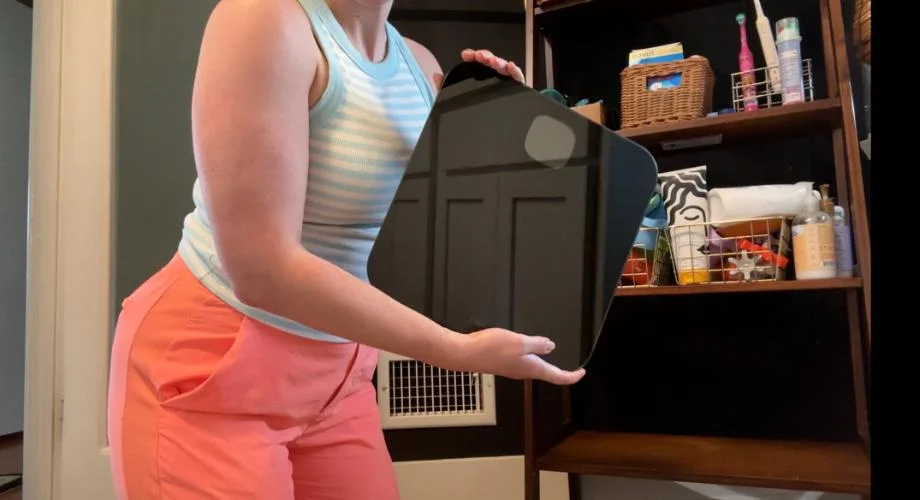
For Fitbit users, this might be enough. You’ll be able to set goals, log workouts, and track weight all in one app (or on your Fitbit device). “I like the scale, but it works for me because I’m already in the Fitbit ecosystem with my Fitbit Sense 2 smartwatch and already use the Fitbit app,” says Nicole.
The set-up process was super simple for Nicole (as a pre-existing Fitbit app user) and she was able to start tracking weight right away. As long as you have the Fitbit app, you can have unlimited users. Nicole scored the setup process 5 out of 5 stars.
Based on her experience, she’s not sure it’s worth the $49.95 if you’re not an existing Fitbit user. Plus, the scale is not compatible with other apps, it only syncs with the Fitbit app. We have more details about Nicole’s experience in our Fitbit Aria Air review.
If you want a smart scale that has a similar price point but works with more apps, check out the Renpho Smart Scale.
| Price | $49.95 |
| Weight capacity | 400 lbs |
| Metrics | Weight, BMI, body fat percentage |
| App connectivity | Bluetooth; Fitbit app |
Best Smart Scale for Garmin Users: Garmin Index S2
Good for: Folks who use Garmin products and want to start tracking weight
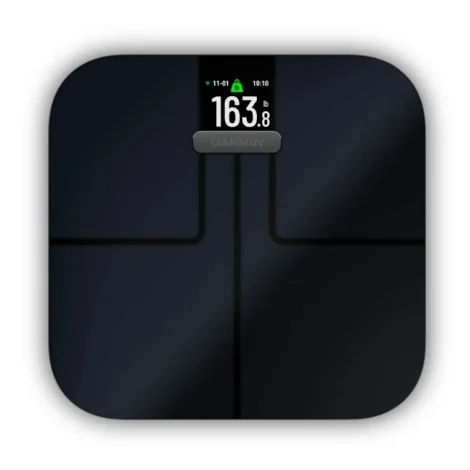


The Garmin Index S2 Smart scale is one of the more expensive smart scale options available. It is very customizable, allowing you to select which stats appear on the display and even allowing you to disable all non-weight metrics. So if you’re already in the Garmin ecosystem, it may be worth the higher price tag.
What our tester says:
“Using this scale is kind of frustrating. Sometimes it goes on right away when I step on it, other times I have to step on 4 or 5 times to get it to go on. You also have to make sure you can store it flat – Garmin says storing it vertically will make it less accurate.”
If you’re a Garmin user, the Garmin Index S2 smart scale is an ideal addition to your fitness tracking. The scale has both ANT+ and WiFi capabilities and can sync with your Garmin Connect app in addition to other popular apps like Apple Health and Google Fit.
Amanda Dvorak, CPT and GGR senior editor, tested the Garmin Index S2 and was surprised how frustrating the setup process was for her, rating it 2.5 out of 5 stars. She owns and frequently uses the Garmin Forerunner 956 smartwatch—which had a smooth onboarding process—and was surprised a smart scale would be any more difficult.
“This was kind of a pain to set up,” says Amanda, “Which surprised me because the Garmin watch I use now and the one I had before were really easy to set up. It took quite a few minutes to get the scale to sync to the app.”
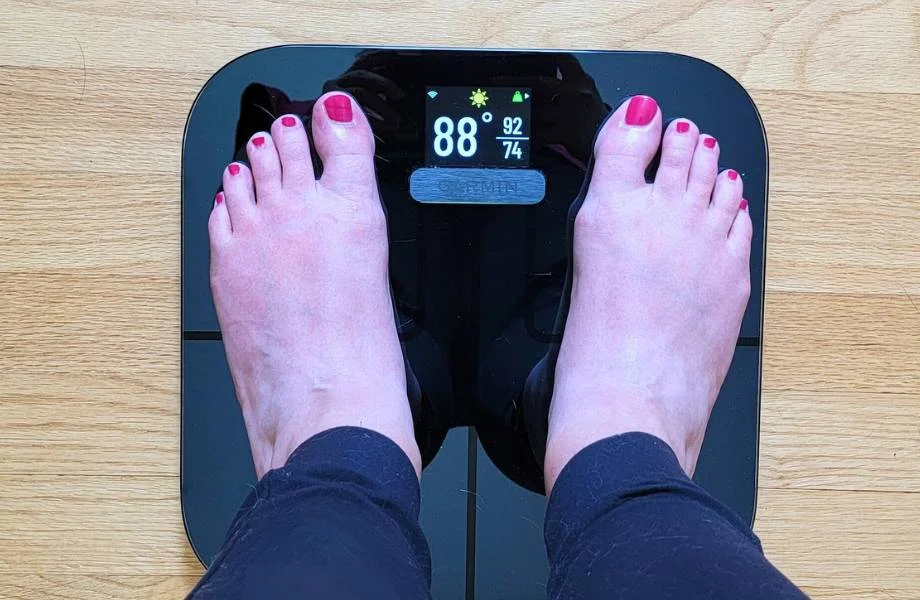
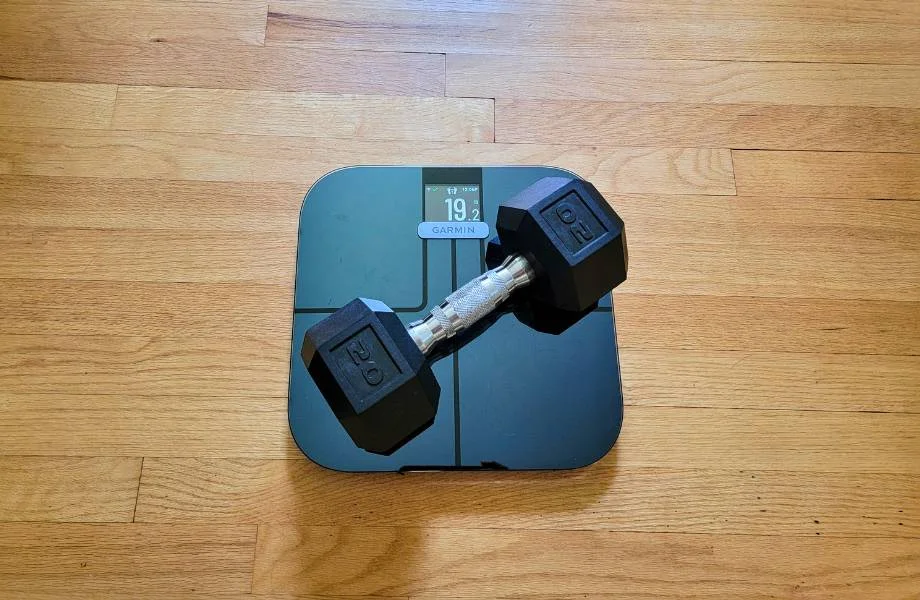
Once it was up and running, Amanda was able to start tracking body weight, BMI, body fat percentage, weight trends, skeletal muscle mass, bone mass, and body water percentage. During her testing process, she compared her body weight on the Garmin Index to her basic bathroom scale in addition to weighing a 20-pound dumbbell on both scales.
The Garmin Index S2 earns a 4.5-star rating for accuracy. It was fairly consistent with her bathroom scale after she made one adjustment: She had to stop storing it upright in her bathroom closet. “I read on the Garmin site that storing the scale vertically can cause some inaccuracies. We started storing it flat and it’s much more consistent now,” says Amanda.
RELATED: Best Garmin Fitness Trackers
Garmin users may love this scale, but if you want a more affordable option that has a much smoother setup, the Fitbit Aria Air earned 5 out of 5 stars for the setup process.
| Price | $149.99 |
| Weight capacity | 400 lbs |
| Metrics | Body weight, BMI, body fat percentage, weight trends, skeletal muscle mass, bone mass, and body water percentage |
| Connectivity | WiFi and ANT+ connectivity; Garmin Connect app, Apple Health, Google Fit |
Best Smart Scale for Unlimited Users: Wyze Smart Scale
Good for: Large households or teams looking to perform weigh-ins with multiple people

The Garmin Index S2 Smart scale is one of the more expensive smart scale options available. It is very customizable, allowing you to select which stats appear on the display and even allowing you to disable all non-weight metrics. So if you’re already in the Garmin ecosystem, it may be worth the higher price tag.
What our tester says:
“It’s pretty easy to use and I like that the scale’s display shows both your weight and body fat percentage. I don’t like that you have to use the app to test your heart rate separately by stepping off and back on the scale, but it’s not the biggest deal.”
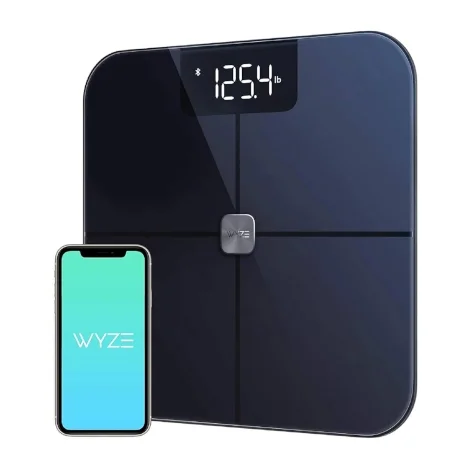
The Wyze Smart Scale is an excellent option for teams, large households, or folks who need to keep track of multiple users. GGR Editor and Expert Tester Frieda Johnson tested the Wyze Smart Scale in her home.
“The scale can automatically recognize up to eight people and has a ‘guest mode’ so anyone can step on the scale,” says Frieda. “It’s also easy to use and displays both your body weight and body fat percentage on the scale.”
Frieda was able to set up the Wyze app seamlessly to access fitness metrics, graphs, and trends. However, it took several attempts to get the scale to sync with multiple users, and she gives the overall setup process 3 out of 5 stars.
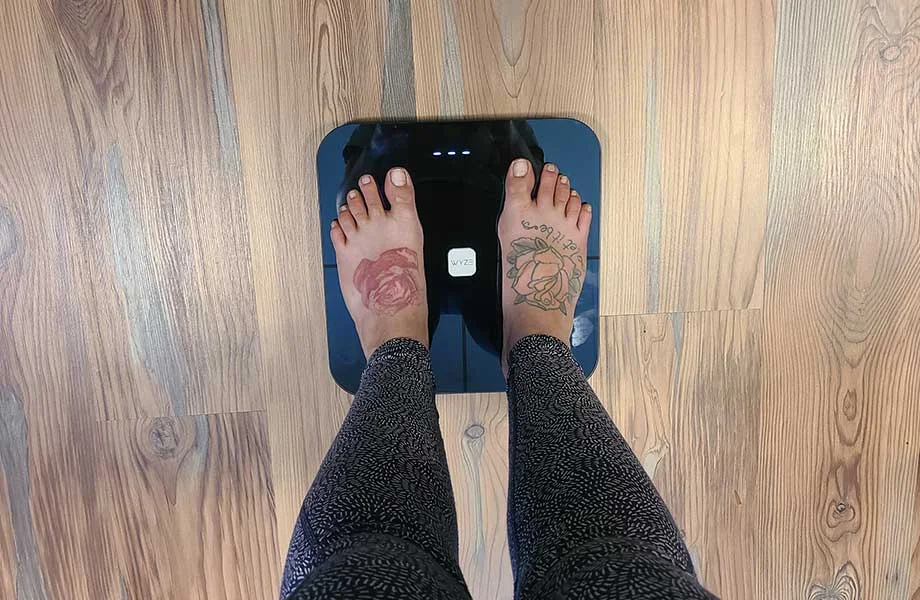
“To have multiple users on the Wyze scale, you can either add someone as a user on your app—which gives them their own profile—or you can share the app, which emails them a link to download the app separately,” says Frieda.
Frieda notes that you can track other metrics in the Wyze app—like bone mass and muscle mass—but she thought it was interesting that the scale can also track heart rate, although it needs to be done separately from the standard weigh-in. To measure your standing heart rate, you’ll have to have your app handy and step off and back on the scale, which Frieda thought was odd but not a dealbreaker.
When Frieda tested for accuracy, she scored the Wyze Smart Scale 4.5 out of 5 stars. She compared Wyze to her non-smart scale and was within a half-pound difference. She also compared her standing heart rate to her Fitbit, and it was about 2 to 3 beats per minute within her Fitbit fitness tracker reading.
She also gave the tech features 4 out of 5 stars, noting that the scale can sync with a variety of health apps.
RELATED: Fitbit Charge 4 Review
This scale has plenty of great features and is very affordable, but if you’re considering other options, check out the Eufy Smart Scale P2, our choice for the best smart scale overall.
| Price | About $30 on Amazon |
| Weight capacity | 400 lbs |
| Metrics | Weight, body fat, muscle mass, body water, lean body mass, bone mass, protein, visceral fat, BMR, and metabolic age |
| App connectivity | Has its own app, plus syncs to Apple Health, Google Fit, and Fitbit |
Other Smart Scales We Tested
I personally tested the Xiaomi Mi Body Composition Scale and it didn’t go well. I couldn’t connect with the app, the button to set up the Bluetooth connection didn’t exist, and the scale measures in kilograms and can’t be changed to pounds unless you can access the settings in the app. Needless to say, this Xiaomi scale functions as an ordinary bathroom scale in my house.
How We Picked and Tested
At Garage Gym Reviews, our expert testers have developed in-depth testing methodologies for every type of product we assess. Whether we’re testing the best home treadmill or the best weight loss app, you can be sure we thought through the most important aspects of each type of product to help answer the most pressing consumer-focused questions.
Our experts use our methodologies to score a variety of categories on a scale of 1 to 5 stars. Here are the categories we addressed when testing smart scales:
- Price and value: Our testers consider the typical range of smart scales from $50 to $150 and score from 1 to 5 stars based on where the scale falls and how much the scale can do.
- Setup process: Each of our testers assessed the user manual, setup process, and downloading of any apps. The process should not take more than a few minutes to earn a high score.
- Available data: Testers reserved high scores for smart scales with the ability to measure more than just weight and BMI. Acceptable measurements may have included body fat percentage, body water percentage, muscle mass, or bone mass.
- Weight capacity: If a scale’s weight capacity was under 300 pounds, the scale received low scores from our testers. If the weight capacity was over 400 pounds, it received our highest score.
- Accuracy: To earn our highest score, the smart scale could only be off by 1 or 2 pounds. Our testers compared their body weight on the smart scales to other scales in addition to weighing objects like dumbbells, kettlebells, or weight plates.
- App compatibility: Low scores were given to smart scales that were not compatible with third-party apps, only the scale’s branded app.
- Customer service: Our testers considered the warranty policy, return timeline, and ability to reach customer service.
- Customer reviews: We pay attention to common complaints among customer reviews and compare them to our own testing experience.
Benefits of Smart Scales
The main benefit of a smart scale is the ability to measure more than just your body weight and the ability to track and store that data alongside other health data points like sleep, water intake, and step count. Stepping on a scale and checking in with your body weight on a daily, weekly, or monthly basis can be a valuable tool in reaching your health and fitness goals.
However, there can be a downside to this type of data tracking, especially when it becomes obsessive. If you struggle with body image, body dysmorphia, have a history of disordered eating, or are recovering from an eating disorder, we recommend speaking with a trusted healthcare provider about owning a smart scale and if it’s a healthy choice for you.
What to Look for in Smart Scale
In addition to our testing guidelines, here are some things we think you should consider before purchasing a smart scale:
- Number of users: Does the scale allow for more than one user to track and sync their data? This may not be important to all folks, but if you want other members of your household to have access, consider how many profiles you can create.
- Compatibility: Make sure your preferred health apps are compatible with your smart scale. Some smart scales we tested don’t sync with third-party apps and only track data with the branded app corresponding to the product.
- Weight limit: Be aware of the scale’s weight limit and if it will work for everyone in your household.
- Household safety: Consider if the scale has settings to make it safe for pregnancy, children, and pets. You may also need to consider if your internal devices like pacemakers can be used on the scale due to electrical currents that may be used to take measurements.
Best Smart Scales: FAQs
Are smart scales worth it?
Smart scales can be a helpful tool to track your progress (whether that be weight gain, loss, or maintenance). Our testers found that body weight measurements are relatively accurate in addition to body fat percentage. Our findings are consistent with a 2022 study published by BMJ Nutrition, Prevention, and Health1 about the accuracy of bioelectrical impedance analysis (BIA) readings for both weight and body fat.
What scales are most accurate?
Our testers scored the Renpho 5 out of 5 stars for accuracy with the Fitbit Aria Air, Garmin Index S2, and Wyze Smart Scale not far behind at 4.5 out of 5 stars. Withings and Eufy scales scored 4 out 5 stars mostly due to potential inaccuracies of metrics beyond weight and body fat.
What is the best home device for measuring body fat?
All of the smart scales we tested for this roundup can measure body fat percentage with the exception of the Fitbit Aria Air, which our tester couldn’t figure out how to get those measurements on. That said, we picked the Eufy Smart Scale P2 for our top pick because we think it will offer the most accurate reading for both body weight and body fat percentage.
References
- Potter AW, Nindl LJ, Soto LD, et al. High precision but systematic offset in a standing bioelectrical impedance analysis (BIA) compared with dual-energy X-ray absorptiometry (DXA). BMJ Nutr Prev Health. 2022;5(2):254-262. Published 2022 Nov 1.