

When it comes to improving your health and fitness, we know that regular cardiovascular training is important to keep your heart and lungs healthy. Even strength athletes shouldn’t neglect cardio, as it’s important for health, longevity, and your performance in the gym.
A lot of people associate cardio with challenging activities like running, cycling, and swimming, designed to challenge you and improve your VO2 Max. While these are great, you don’t need to sign up for a 10k race to improve your health. Adding low-intensity cardio, like zone 2 training, to your fitness routine will provide powerful health benefits without interfering with your strength training or causing you to lose hard-earned muscle.
RELATED: 10 Best Cardio Machines
In this article, I’ll break down the powerful benefits of zone 2 cardio, and why it’s worth adding to your weekly schedule. I’m a certified strength and conditioning specialist who’s seen the benefits of regular cardio firsthand, in both my clients and in my own training.
I also spoke with exercise physiologist Dr. Mark Kovacs, PhD, FACSM, CSCS, to get his take on the benefits of zone 2 training. He’s a former Sport Science & Health director for the NBA, a former director at the Gatorade Sport Science Institute, and the current CEO of Kovacs Institute, meaning he’s more than qualified to speak on the topic.
What is Zone 2 Cardio?
Cardiovascular training is typically broken down into different heart rate zones, often labeled zones 1-5. Zone 2 is typically categorized as 60-70% of your maximum heart rate1, which is often considered the fat-burning zone, as it’s low enough in intensity that fat is still the main fuel sourcde.

Zone 2 is an easy form of cardio that slightly elevates your heart rate, but not so much that you can’t sustain it. It’s typically used for building aerobic capacity, and is challenging enough to improve your cardiovascular fitness, but easy enough that it won’t cause excessive fatigue, or slow down recovery from strength training sessions.
You can use one of the best heart rate monitors to see if you’re in zone 2, or you can use the talk test. If you were having a conversation with someone while doing zone 2, you’d need to occasionally pause to catch a breath, but you’d still be able to talk back and forth.
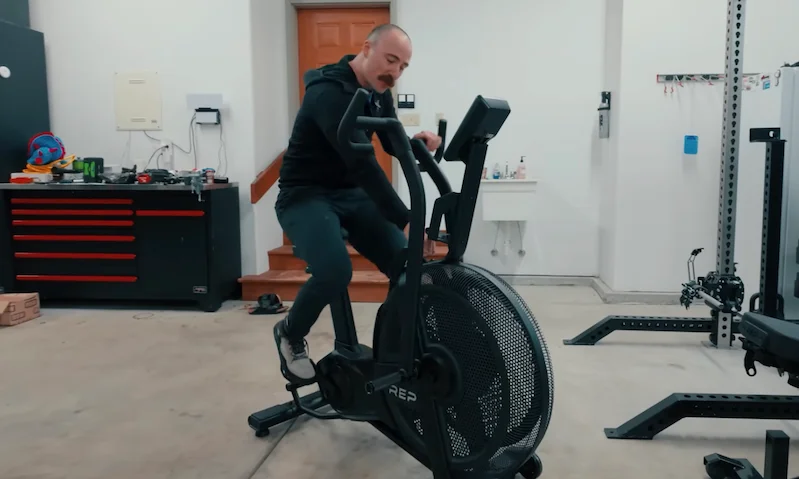
It feels easy, but that’s the point. You can get some powerful health benefits from adding enough zone 2 to your weekly health, regardless of your fitness goal, and it’s accessible to anyone. A brisk walk is plenty for most, or you can use one of the best exercise bikes, my personal favorite choice.
Health Benefits of Zone 2 Cardio
Doing such a low-impact, easy form of cardio may not seem worth the time, but it’s well worth adding to your fitness routine.
“Zone 2 cardio is one of the highest-return investments people can make for long-term health,” says Dr. Mark Kovacs, Dr. Mark Kovacs, PhD, FACSM, CSCS. “While strength training is essential for maintaining muscle, bone density and metabolic health, your cardiovascular system and aerobic capacity are equally important predictors of healthy aging and longevity.”
If you’re still not sold, here are some of the most powerful research-backed benefits of regular zone 2 cardio.
Improves Mitochondrial Health

As most of us remember, mitochondria are the powerhouses of the cell. They use nutrients and oxygen to produce the energy your muscles need. Research suggests2 that regular aerobic training can increase both mitochondrial quantity and function, which may improve endurance, aerobic capacity, fat oxidation, and your ability to recover between bouts of exercise.
Zone 2 is a great tool to improve the amount of mitochondria you have, since it’s low enough in intensity that you can add plenty of cardio without interfering with recovery from other activities. You’ll enjoy better endurance, and for lifters, faster recovery during your workouts. Many people, including myself, report that they recover much faster between heavy sets, so you can do more work in less time.
The National Institutes of Health (NIH) also notes3 that maintaining healthy mitochondria may help protect brain function as we age, which could reduce the risk of age-related cognitive decline and neurodegenerative disease.
Improves Your Body’s Ability to Burn Fat

Weight loss and/or changing your body composition isn’t necessarily everyone’s goal, nor should it be. For any goal, moderate-intensity cardio, like zone 2 training, can improve fat oxidation4 which is your body’s ability to use fat as fuel during exercise.
Most activities are fueled by fat or glucose from carbohydrates, and zone 2 makes you better at burning fat for energy.
This doesn’t necessarily mean you’ll lose fat; you still need to be in a calorie deficit to lose weight, and any type of physical activity can help you achieve that. Zone 2 isn’t going to magically melt the fat away, though it certainly can’t hurt.
While improving fat oxidation doesn’t necessarily mean you’ll lose more body fat, it does make your body more efficient at using fat as a fuel source during moderate-intensity exercise. This helps preserve carbohydrate and glycogen stores for higher-intensity training, which may improve both exercise endurance and metabolic health.
Builds Aerobic Endurance

One of the main reasons to include zone 2 is that it builds your aerobic endurance and work capacity5 without being too taxing. If your primary goal is strength training, for example, a hard run can leave your legs very fatigued, which negatively impacts your next leg day. Zone 2, on the other hand, is much easier to recover from while still helping you build a bigger aerobic base.
This carries over to lifting, too, for those who focus on strength and power sports, or other athletic endeavors. Better aerobic endurance may help you get a few more reps on high-rep exercises, and you’ll probably recover faster between lifts, too.
From personal experience, my rest times in the gym are much shorter, with no strength loss, and regular zone 2 is what allowed me to finally get through multiple back-to-back rounds of Brazilian jiu-jitsu, without having to skip every other round, lying on a floor in the corner trying to catch my breath.
Improves Cardiovascular Health

One of the main reasons to include cardio is for your health, and if you’re not interested in running, swimming, or high-intensity interval training (HIIT), zone 2 still delivers plenty of benefits without having to push yourself so hard.
Regular aerobic exercise helps strengthen your heart and blood vessels6, which helps improve blood flow to move oxygen and nutrients through your body. Over time, this can lower your risk of conditions like higher blood pressure and heart disease, lower your resting heart rate, and reduce your blood pressure.
If nothing else has sold you on regular aerobic exercise, the powerful health benefits alone make it well worth fitting into your schedule.
Reduced Fatigue and Joint Impact

Traditional, high-intensity cardio can absolutely interfere with your strength training. Hybrid athletes who compete in both strength and endurance sports need to carefully manage their weekly training to allow for adequate recovery and avoid overtraining, and for the average person, it can feel a bit complicated.
However, because zone 2 is so easy, it’s unlikely to have much interference effect, according to Dr. Mark Kovacs, PhD, FACSM, CSCS.
“The ‘interference effect’ is often overstated,” he told me. “Research suggests that meaningful interference typically occurs only when large volumes of high-intensity endurance training are performed alongside heavy resistance training, particularly if they’re done in the same session without adequate recovery. Moderate amounts of zone 2 cardio have little impact on muscle growth or strength for most people, and may actually support better overall performance and health.”
We don’t recommend doing a long bike ride right before your next squat workout, but you can likely add zone 2 just about anywhere else you want in the week without any real issues.
How Do You Know If You’re Doing Zone 2?
When it comes to zone 2, the science says you should work at 60-70% of your maximum heart rate, which is true.
In technical terms, zone 2 is the zone that’s right below your body’s first blood lactate accumulation threshold, but since you can’t measure this without training in a lab, the talk test is a much simpler method, or you can monitor your heart rate as you train.

If you regularly use a fitness tracker with a display screen, it should be relatively easy to keep an eye on your heart rate as you train. The most accurate way to find your maximum heart rate is to have testing done in an exercise lab, but if you don’t want to do all of that, you can use the simplified formula of 220 minus your age.
For example, if you’re 40 years old, your estimated maximum heart rate would be 220 minus 40, or 180 beats per minute (bpm). Sixty to70% would give you a target of 108 to 126 bpm.
However, there’s an easier method–the talk test.
Your breathing should be slightly elevated while doing zone 2, which means that if you were to carry on a conversation, you should be able to speak in complete sentences, though you may need to pause for a breath a bit more often than usual. You’d be able to talk for a while, but the other person would be able to tell you’re exercising.
However, if you can only get out a few words without having to stop and catch your breath, you’re probably pushing it a bit too hard.
Zone 2 should be easy to sustain for just about anyone, so if you’re going at a pace you can’t stay comfortable at for 30-45 minutes (or more), you may want to dial back the intensity.
Best Exercises for Zone 2 Cardio
The great thing about zone 2 is that it’s simple. Find a modality you enjoy, find an intensity that’s slightly challenging, and you’re all set. This could be a hike, a long walk, a bike ride, or a session on an elliptical–there’s no shortage of options here.
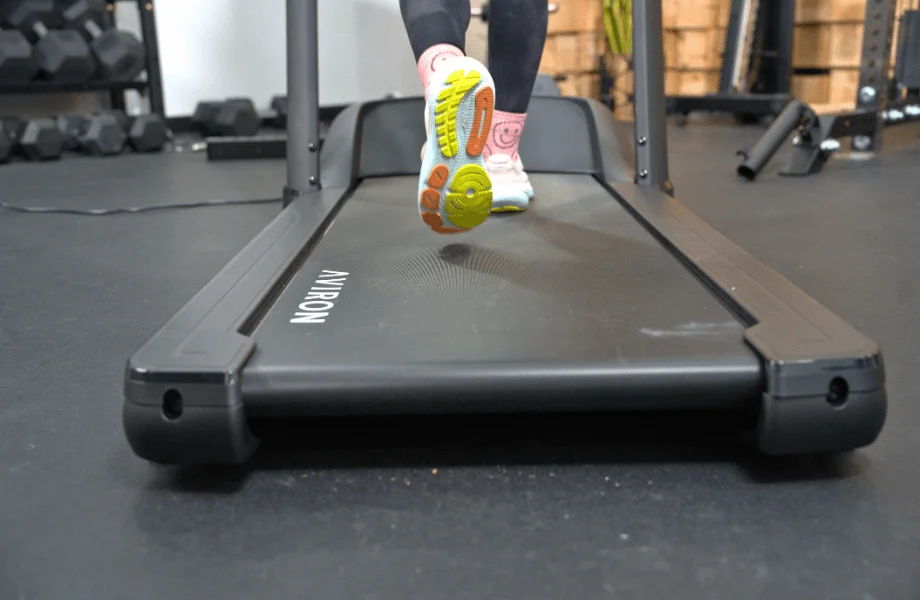
Brisk walking on a treadmill is a great option, as it’s easy to maintain a steady speed, or add a little incline if needed.

My personal recommendation is to use an exercise bike with a screen, and watch your favorite show. I’ve worked my way through a few Netflix shows by only watching them on the bike, which helps me pass the time, and helps me stay motivated to keep doing my cardio sessions.
That said, you can use any type of cardio you want, as long as you can sustain it comfortably.
RELATED: The Best Joint-Friendly, Low-Impact Cardio Exercises
To avoid interfering with your lifting, running, hiking, or other high-intensity activities, it’s best to schedule zone 2 sessions away from other training. If you like to workout in the morning, you could hop on a bike and do your zone 2 in the evening, or simply do your zone 2 sessions on days where you’re not doing any sort of lifting.
If you’re particularly sore in the days following a tough workout, zone 2 can be a great form of active recovery to help improve blood flow and flush out the toxins and metabolic byproducts that can lead to delayed-onset muscle soreness, or DOMS.
Benefits of Zone 2 Cardio: Final Thoughts
For those who despise traditional cardio, zone 2 is well worth adding to your workout routine. It’s a great form of low-intensity training that delivers powerful health benefits, and while it can be time consuming, it’s not going to interfere with your other activities the way higher-intensity cardio can.
It can increase your aerobic capacity, improve your cardiovascular health, and so much more. Best of all, anyone can do it, regardless of your current fitness level. For you, zone 2 may be hiking a nearby trail, an easy jog around your neighborhood, or even a brisk walk if you’re newer to exercise.
Whether you’re an endurance athlete looking for better capacity, a strength athlete looking for better performance in the gym, or you’re simply focused on weight management as part of your health and fitness journey, zone 2 is worth the effort.
Benefits of Zone 2 Cardio: FAQs
Is zone 2 actually effective?
Yes. Zone 2 cardio is an effective way to improve your aerobic fitness levels, build endurance, improve fat oxidation, and improve your cardiovascular health5. It’s not the only form of cardio, but many people enjoy it as it’s low-impact, and doesn’t cause anywhere near as much fatigue as other forms of cardio.
Research has consistently shown that regular endurance training improves VO₂ max, exercise economy, and your body’s ability to sustain exercise for longer periods. It also supports heart health and healthy blood vessel function.
How long should I be in zone 2?
There’s no hard rule here, but 30 to 60 minutes per session is a good general rule. The American Heart Association recommends that adults get at least 150 minutes of moderate-intensity aerobic activity per week7, and zone 2 cardio is a great way to hit this goal.
Is 20 minutes of zone 2 enough?
Yes, especially for beginners. Over time, working to get in more time per session may be beneficial, but 20 minutes is a great starting point.
Longer sessions can produce greater aerobic adaptations, but 20 minutes is certainly a good starting point.
How often should you do zone 2 cardio?
For general health, starting with 2 to 4 days is a great place to start, according to Dr. Mark Kovacs, PhD, FACSM, CSCS.
He says, “Just 2-4 sessions per week of 30-60 minutes at a comfortable, conversational pace can significantly improve cardiovascular fitness, mitochondrial function, metabolic flexibility, and your body’s ability to utilize fat as a fuel source.”
References
- Exercise Heart Rate Zones Explained. (2021, May 12). Health Essentials from Cleveland Clinic. https://health.clevelandclinic.org/exercise-heart-rate-zones-explained
- Granata, C., Jamnick, N. A., & Bishop, D. J. (2018). Training-Induced Changes in Mitochondrial Content and Respiratory Function in Human Skeletal Muscle. Sports medicine (Auckland, N.Z.), 48(8), 1809–1828. https://doi.org/10.1007/s40279-018-0936-y.
- National Institutes of Health. (2025, July 22). Mitochondria and health. https://www.nih.gov/news-events/nih-research-matters/mitochondria-health
- Achten, J., & Jeukendrup, A. E. (2004). Optimizing fat oxidation through exercise and diet. Nutrition (Burbank, Los Angeles County, Calif.), 20(7-8), 716–727. https://doi.org/10.1016/j.nut.2004.04.005
- Jones, A. M., & Carter, H. (2000). The effect of endurance training on parameters of aerobic fitness. Sports medicine (Auckland, N.Z.), 29(6), 373–386. https://doi.org/10.2165/00007256-200029060-00001
- Tao, X., Chen, Y., Zhen, K., Ren, S., Lv, Y., & Yu, L. (2023). Effect of continuous aerobic exercise on endothelial function: A systematic review and meta-analysis of randomized controlled trials. Frontiers in physiology, 14, 1043108. https://doi.org/10.3389/fphys.2023.1043108
- American Heart Association. (2024, January 19). American Heart Association recommendations for physical activity in adults and kids. https://www.heart.org/en/healthy-living/exercise-and-physical-activity/fitness-basics/aha-recs-for-physical-activity-in-adults