


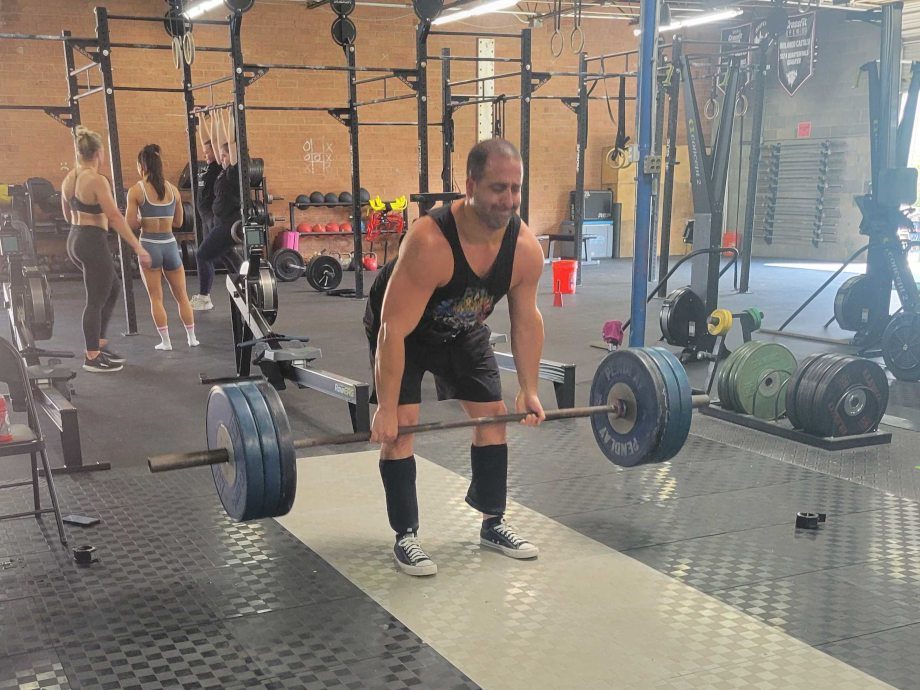
Deadlift platforms are for garage gym lifters needing something beyond a concrete floor—or even the best home gym flooring—to share the load of heavy barbells. These platforms are made with durable materials to provide a solid foundation as well as help protect your gym equipment and flooring while repping out some seriously heavy lifts.
The ideal lifting platform for you will depend on your needs and goals, but it can be difficult to tell which surface will suit those needs best.
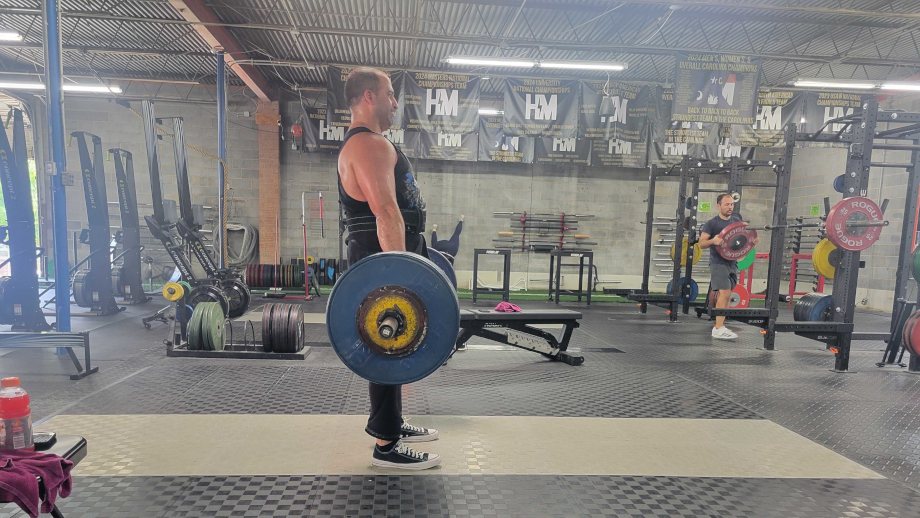
Fear not, though—our team did a lot of the heavy lifting (literally) to find the best deadlift platforms on the scene today. As a competitive Olympic weightlifter for over 25 years, myself, I’ve pulled tons from many deadlift and weightlifting platforms over my career including DIY options and competition-ready platforms alike.
I also talked with Coop Mitchell, founder of Garage Gym Reviews, to get his opinion on some of the best platforms from his experience. He’s tested top home gym and commercial gym equipment for over a decade now, so you could say he’s dabbled in some deadlifts before. Now, let’s get into the top picks for your next deadlift platform.
Best Deadlift Platforms
- Best Overall Deadlift Platform: Rogue Deadlift Platform
- Best Budget Deadlift Platform: Titan Deadlift Platform
- Best Deadlift Platform for Olympic Lifting: Valor Fitness Olympic Platform
- Best DIY Deadlift Platform: Tractor Supply ¾” Rubber Stall Mats
- Best Customizable Deadlift Platform: UESAKA Puzzle Platform
Best Overall Deadlift Platform: Rogue Deadlift Platform
Good for: People who favor American-made platforms for heavy deadlifts and banded training
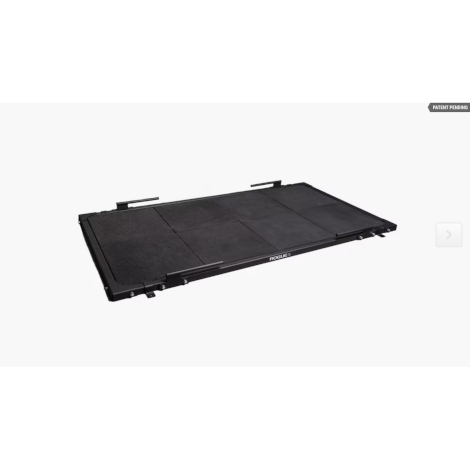








Topping our picks for deadlift platforms is the Rogue Deadlift Platform, which probably won’t surprise anyone who’s familiar with Rogue Fitness. GGR founder and fitness equipment expert Coop Mitchell adds, “It’s classic Rogue; the frame hardly flexes, the powdercoat is fantastic, and it’s a solid platform for heavy lifts.” Having used this platform and other Rogue products, Coop easily rates the durability at 5 out of 5.
Rogue Fitness hasn’t updated this platform’s design in roughly 10 years, but as the saying goes, “If it ain’t broke…don’t fix it.” The platform starts with the frame but has add-on options to meet people’s needs, especially if they prefer a different material than the standard 1.5-inch-thick rubber tiling. “I recommend getting the rubber tiles with the frame, but put your own double-plywood center for a more rigid center while pulling,” mentions Coop.
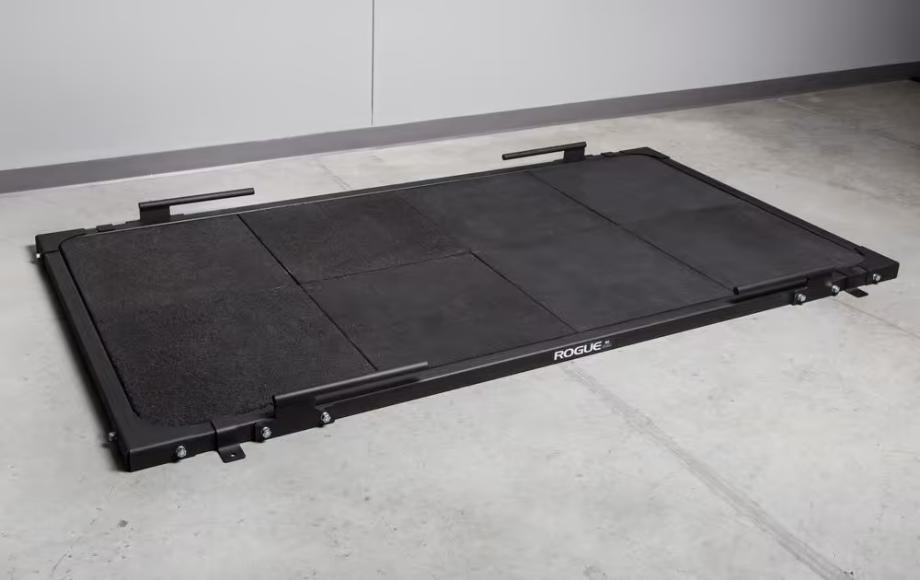
The entire frame is made with 11-gauge steel and has optional floor plates to prevent the platform from flexing. If you don’t spend the extra $100 on the plates, you’ll have to bolt down the platform to keep it from flexing or bowing. Nevertheless, the materials are top-tier—the common norm amongst Rogue products—so the platform earns a 5 out of 5 for its construction.
Another addition to the high-quality frame is a set of four band pegs, which is great for powerlifting aficionados who use banded training in their deadlifts. “The pegs are easy to place resistance bands on and can hold any amount of tension you need,” adds Coop.
The footprint of just over 8 feet long and 4 feet wide can be easier to fit into most home gyms, but won’t offer the versatility of a larger Olympic lifting platform (which can allow you to perform split jerks or chase a weight if you catch a snatch off-balance). Because of this, the Rogue Deadlift Platform gets a 3.5 out of 5 for its versatility, specializing in standard and banded deadlifts.
Check out the Rogue 8’ x 8’ Oly Platform if you’re looking for a larger platform that can allow for a wider range of strength training exercises.
| Price | Starting at $495 |
| Dimensions | 8’ 4” L x 4’ 4” W |
| Platform thickness | 2” |
| Weight | Not disclosed |
| Material | 2” x 2” 11-gauge steel, powdercoated (optional rubber tiles) |
| Warranty | Lifetime frame warranty |
Best Budget Deadlift Platform: Titan Deadlift Platform
Good for: Powerlifters on a budget
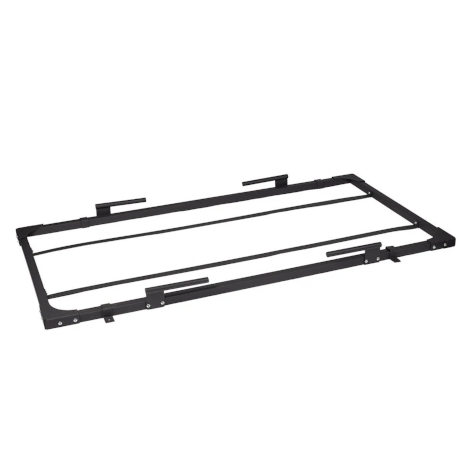




Purchasing a solid deadlift platform can be a pricey endeavor. After adding rubber flooring or wood inserts into your platform frame, it’s easy for a lifting platform to reach $1,000 or more. For those trying to fit within a specific budget, you can rely on the Titan Deadlift platform. The frame alone is under $400, but you can purchase the full platform—with 1.6-inch-thick rubber tiles included—for $739, which gives the platform a 5 out of 5 for its price and value.
“The Titan Deadlift Platform essentially has the same functionality as Rogue’s platform,” adds Coop Mitchell, founder of Garage Gym Reviews. “The main difference is that the steel used is imported instead of American-made.” Titan Fitness, who used to have issues with quality consistency in their power racks and frames, has certainly upped their quality with cleaner cuts and welds. Accordingly, we rate the materials and construction at 5 out of 5.
RELATED: Titan Squat Rack Reviews
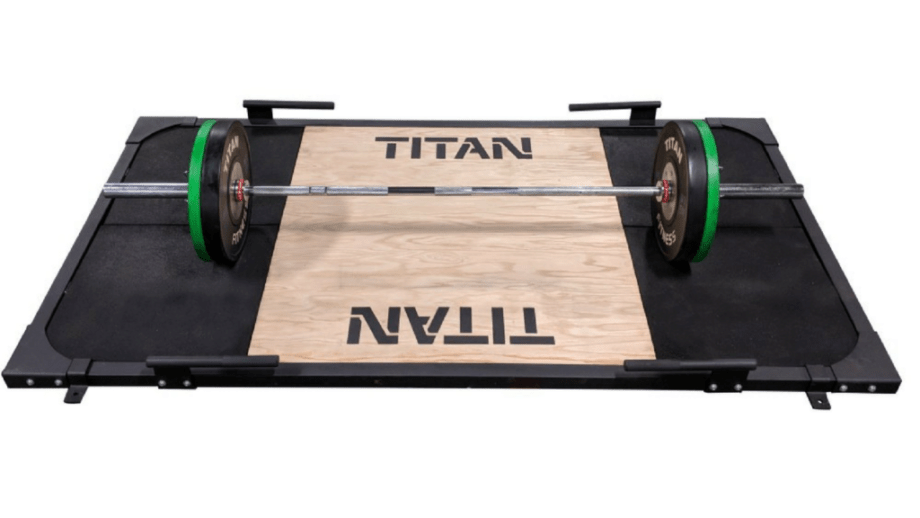
Coop also notes the floor plates run lengthwise—parallel to the bar’s position—instead of perpendicular like the Rogue platform. “In practice, there’s not a big difference between each platform’s flex while in use with bands,” he mentions, although someone with a heavier maximum deadlift may start to notice a bit more bowing.
With added band pegs, the Titan Deadlift Platform can allow for deadlifts and deadlift variations, but the 4-foot width may not be the most optimal for Olympic lifting. You’d need a width of at least 6 feet for safe Olympic lifting. Therefore, we rate the versatility of the platform at 3.5 out of 5.
The imported steel from Titan has proven to be pretty durable in our trials. Still, if you prefer steel frames made in the United States, you can pay a bit extra for the Rogue Deadlift Platform, which also has a lifetime warranty (substantially longer than Titan’s 1-year warranty).
| Price | Starting at $374.99 |
| Dimensions | 99” L x 59.5” W |
| Platform thickness | 2” |
| Weight | 110 lbs |
| Material | 2” x 2” 11-gauge steel, powdercoated (optional rubber tiles) |
| Warranty | 1 year |
Best Deadlift Platform for Olympic Lifting: Valor Fitness Olympic Platform
Good for: Home gym owners who want a dedicated platform for heavy pulls and Olympic lifting
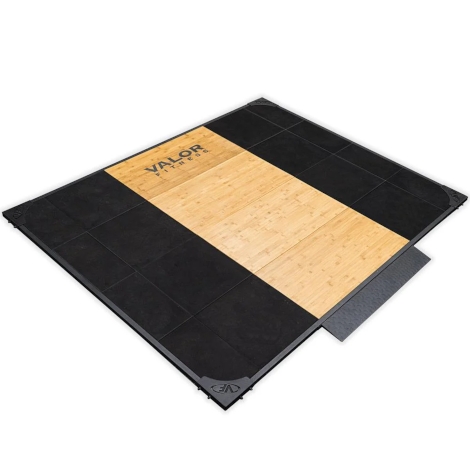



Not everyone is wanting—or needing—a dedicated setup for banded deadlifts or heavy pulls. If you’re wanting a bit more versatility in a raised platform, consider the Valor Fitness Olympic Platform. This weightlifting platform is over 8 feet long and nearly 7 feet wide, leaving plenty of room for deadlifts, but also snatches, clean and jerks, and more. For lifting platforms, it earns a 4.5 out of 5 for versatility.
While we haven’t tested out this platform yet, I’ve personally lifted on similar platforms framed with 1.25-inch thick steel in the past, and I’m fairly impressed by the materials used in this offering from Valor Fitness. The platform uses rubber tiling to line the sides of the platform, and there are four interlocking wood inserts that create a stable center to pull from.
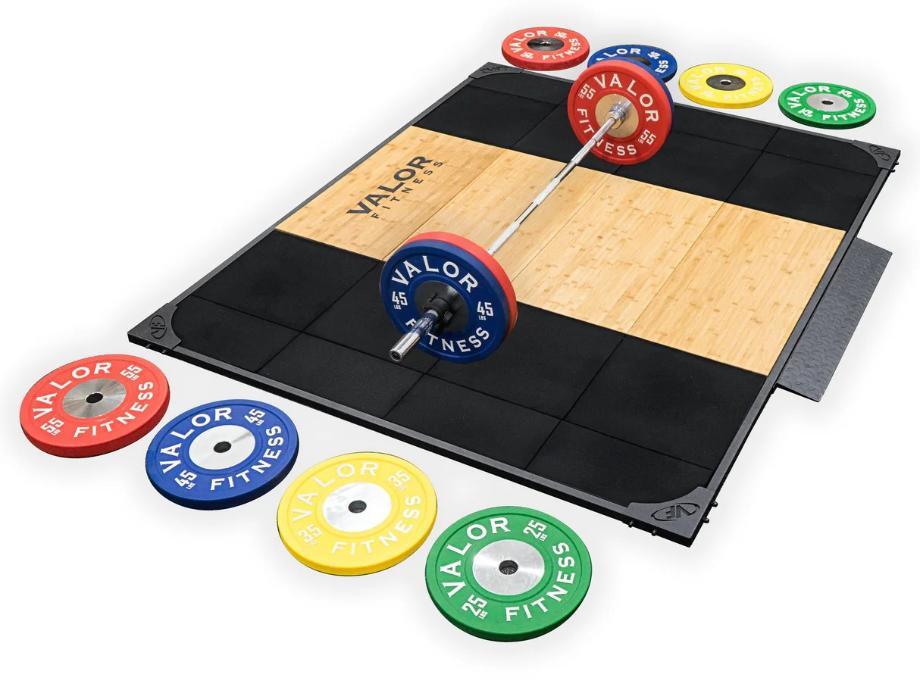
Additionally, the platform comes with a transition plate that connects to the front. This slanted steel plating allows you to roll bumper plates up onto the platform smoothly without lifting them or hitting the side of the platform—like a loading ramp for your next lift. I award the platform a 4 out of 5 for the materials, though, as the smooth wooden inserts can wear down and become slick over time, in my experience.
At nearly $1,500, the Valor Fitness Olympic Platform is one of the more expensive options available, but this price also includes all the required flooring components you’ll need for a proper setup. Because you can make a similarly-sized platform with plywood and rubber mats for far less, I rate the price and value at 3.5 out of 5. However, for people that prefer a ready-to-assemble profile, it can definitely be worth the extra cost.
Because of its size, this Valor Fitness platform may not be the ideal solution for a smaller garage gym space. If you’re tight on space, a smaller platform like the Titan Deadlift Platform may be a better option, although it won’t allow for safe, effective Olympic lifting.
| Price | $1,499 |
| Dimensions | 101” L x 81.5” W |
| Platform thickness | 1.25” |
| Weight | Not disclosed |
| Material | High-impact rubber tiles, bamboo-lined boards, steel frame |
| Warranty | 1 year |
Best DIY Deadlift Platform: Tractor Supply ¾” Rubber Stall Mats
Good for: People looking to build their own durable deadlift platform
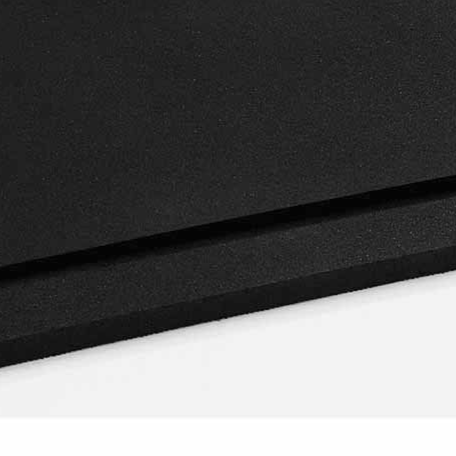
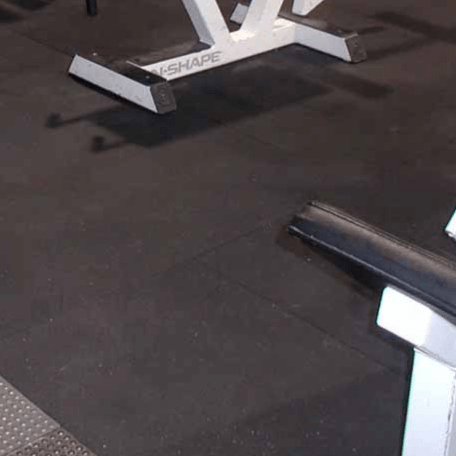
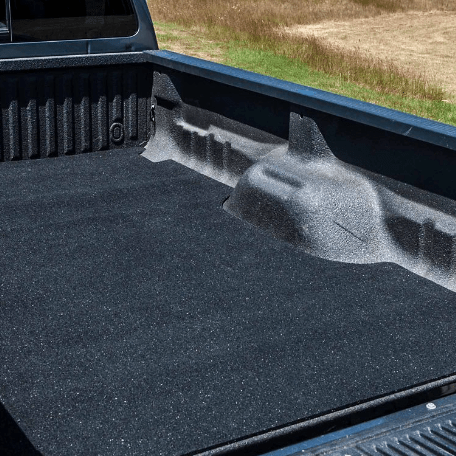



These horse stall mats from Tractor Supply use recycled rubber, are 3/4″ thick, 4 ‘x 6’ in size, and weigh upwards of 100 pounds. You can find horse stall mats at other farm supply stores, and they will be similar in dimensions. The thickness makes this flooring sound-absorbent.
Are you a fan of DIY gym equipment? If you prefer to build out your own space and equipment, then a DIY deadlift platform might be right up your alley. In my experience, a solid two-layer platform often works best, with a bottom layer of plywood, and the top layer constructed from a combination of plywood and rubber stall mats.
The horse stall mat I most recommend to people (as does GGR founder Coop Mitchell, and other members of the GGR team) is the Tractor Supply ¾” Rubber Stall Mat. “They’re incredibly durable and cheap. Plus, they help protect your equipment and home,” adds Coop. These mats earn a 5-out-of-5 rating for their value, coming in at around $50 per sheet.
“There’s an ongoing joke in the home gym community,” says Coop, “that whenever someone says they have a problem in their gym, the answer is always to buy more horse stall mats.” I can see why, as they’re incredibly durable and made of vulcanized rubber, which can naturally help reduce noise and impact against weights and your flooring. As such, they easily earn a 5 out of 5 for their durability.
RELATED: DIY Weightlifting Platform with Squat Stand
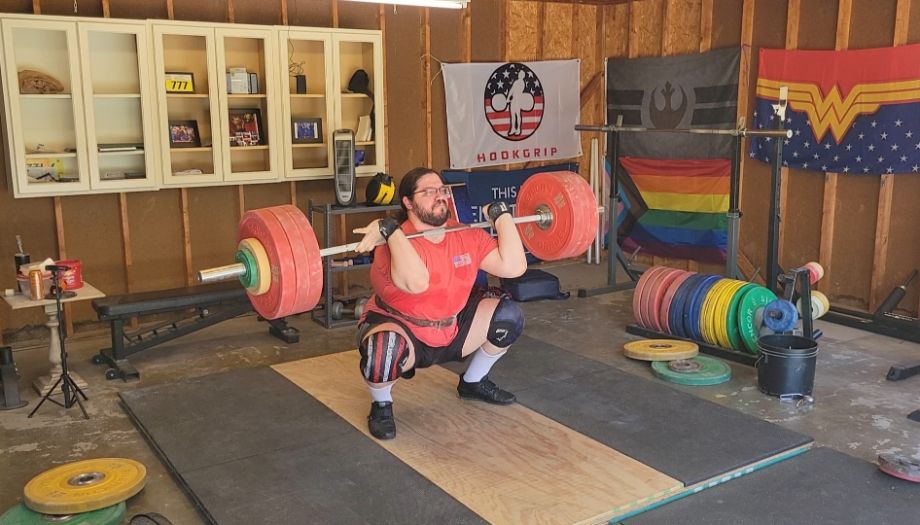
Many folks will use horse stall mats to line their entire garage gym, but you can also build a raised platform with them and some plywood. Because each sheet is roughly 4 feet wide and 6 feet long, you’ll probably need to trim the rubber to fit your platform’s dimensions, especially if you’re going for traditional 4-feet-by-8-feet dimensions.
These mats are also a beast to move around, with each sheet weighing around 100 pounds. That said, we rate the assembly and installation at 3 out of 5. (The added plus is that you’ll only need a sheet or two for a traditional deadlift platform, depending on if you’re using plywood as well for the top layer.)
Another thing to note: If you’re keeping your stall mat directly on concrete, make sure that the concrete slabs are reinforced, which uses the tensile strength of steel (in the form of bars or mesh usually) to help strengthen the floor. “I’ve had horse stall mats in three gyms now, including my own now, and never cracked the concrete slabs underneath,” adds GGR senior director of content Kate Meier, NASM-CPT, USAW-L1, CF-L1.
The only time Kate (or I) have cracked concrete has been when the slabs weren’t reinforced. If you’re unsure if your garage floor is reinforced, it’d be best to build a two- or three-layer platform with some added plywood to help absorb the shock from dropped weights.
For an easier, albeit pricier, installation, I’d recommend the UESAKA Puzzle Platform, which uses interlocking tiles and doesn’t require screws, bolts, or tools.

| Price | $58.99 per sheet |
| Dimensions | 6’ L x 4’ W |
| Platform thickness | ¾” |
| Weight | 100 lbs per sheet |
| Material | 100% recycled vulcanized rubber |
| Warranty | 5-year limited |
Best Customizable Deadlift Platform: UESAKA Puzzle Platform
Good for: Garage gym owners who want a durable platform with an adjustable footprint
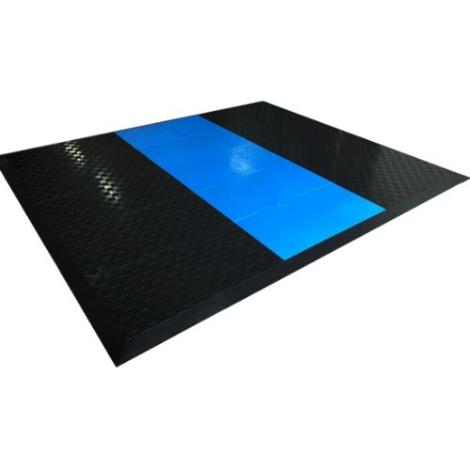



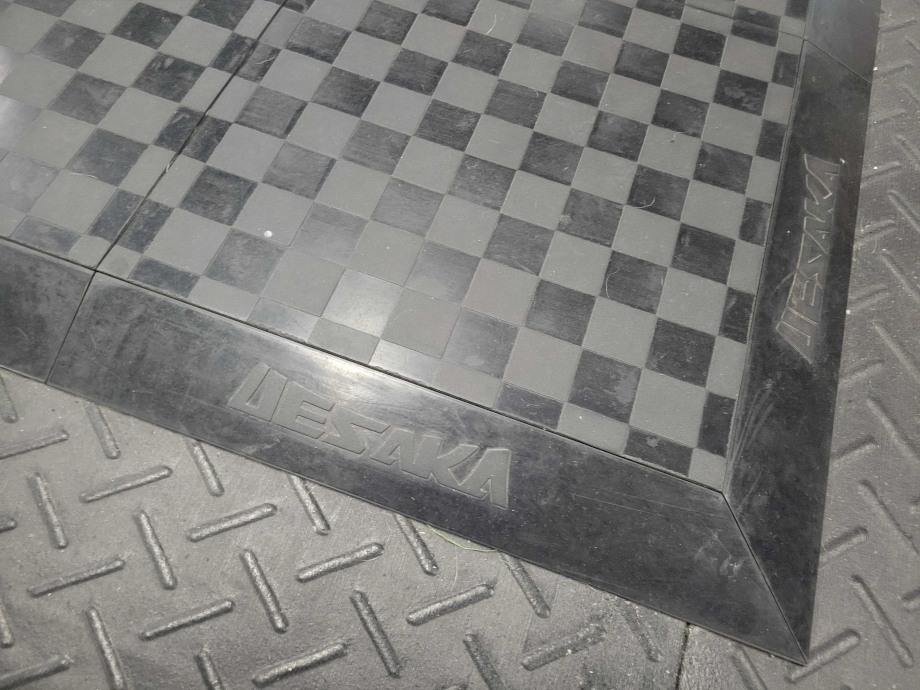
When it comes to fitness equipment in home gyms, one size doesn’t always fit all. The same can be said for deadlift platforms, since some may be too big or too small for your specific needs or space. For a bit of customization, I recommend the UESAKA Puzzle Platform, a durable and unique interlocking rubber tiling system that can be fitted to be as small (or big) as you need in your home gym space.
The UESAKA Puzzle Platform comes in a training platform size of 3 meters long by 2.5 meters wide—roughly 10 feet long and 8 feet wide. However, individual tiles can be purchased to expand your platform; likewise, you can remove tiles to reduce the platform’s overall dimensions.
I’ve used the UESAKA Puzzle Platform at the gym I coach at, where we’ve expanded it to an IWF competition-compliant 4-meters-by-4-meters profile. We’ve actually hosted meets on these platforms, where the platform has held up remarkably well over the years. Its unique rubber material and build gives it a 5-out-of-5 rating for its durability.
UESAKA’s tiling has two different durometer ratings—a score of the rubber’s firmness, where a higher number means a firmer rubber. The top layer has a high durometer rating of 90, ideal for a firm and solid lifting base. However, the bottom layer has a lower rating, which allows the platform to absorb shock and impact more effectively, reducing noise and protecting your equipment in the process. It makes a difference from the general sound of barbell to rubber and plywood, so I rate the sound dampening of the platform a 5 out of 5.
Installation and assembly is quite easy, too, since you’re simply sliding pieces together (like a puzzle, as the name suggests). That said, these rubber pieces can be heavy: The assembled training platform weighs about 295 kilograms (650 pounds). There’s a good chance you’ll get a workout in while laying out these tiles, so I rate the assembly at 4 out of 5.
If there’s a drawback to this puzzle platform, it’s the price. At $1,954 for the training platform, and with individual tiles costing $58 apiece, it’s not the ideal choice for those on a budget. Also, using iron weight plates on the platform (not bumpers) can void the warranty. Still, it’s a premium option that’s durable and can last for years with minimal care and maintenance.
For a more budget-friendly option, I’d recommend the Titan Deadlift Platform, which will come in under $1,000 with the full platform. Additionally, you can opt for a DIY deadlifting platform constructed with plywood and Tractor Supply ¾” Rubber Stall Mats.
| Price | $1,954 (individual tiles for sale as well) |
| Dimensions | 3 m x 2.5 m |
| Platform thickness | 30 mm |
| Weight | 295 kg (~650 lbs) |
| Material | Interlocking heavy-duty rubber tiles |
| Warranty | 2 years |
Other Deadlift Platforms We Researched and Tested
With plenty of horse stall mats, rubber tiles, plywood, steel frames, and DIY options available, there’s plenty of flooring and platform options available for home gym lifters. Here are a few more options I’ve tried out worthy of an honorable mention:
- Rogue 8’ x 8’ Oly Platform: I’ve lifted on the Rogue Oly Platform many times throughout the years, both in training camps and training halls. It’s a solid, durable platform for versatile lifting, but if you’re just focusing on deadlifts, the Rogue Deadlift Platform is the better option with a more compact footprint and the ability to implement banded workouts.
- Eleiko SVR Deadlift Platform: The Eleiko SVR Deadlift Platform uses sound reduction technology to reduce noise and absorb shock from dropped lifts. Compared to other raised platforms out there, it’s remarkably effective. I’ve dropped over 450 pounds from overhead on this platform and noticed a major difference in the impact. However, you’ll have to request a quote from Eleiko; expect a premium price for this premium product.
How We Picked and Tested the Best Deadlift Platforms
For the best deadlift platforms, our team of certified personal trainers, lifting coaches, and competitive athletes largely drew from our past training experiences. With many of us having spent countless hours in the gym, we’ve already had noteworthy interactions with many lifting platforms. Using our observations and expertise, we decided which platforms best suited deadlifts or other lifting disciplines, eventually leading to us testing our suggested top picks.
For each deadlift platform tested, we gave a rating between 1 and 5 to score it in various categories, including:
- Materials and construction: We looked for high-quality materials such as 11-gauge steel, solid rubber, and heavy-duty wood. This score was a culmination of the quality of the materials used as well as how well the platform was built.
- Durability: Here, we noted how well the platform held up against repeated use. Since these are deadlift platforms, we (naturally) dropped weights onto them—a lot of weight. Top scores were given to platforms that we felt would last even after years of daily use.
- Versatility: As the name implies, deadlift platforms are mostly used for, well, deadlifts. However, people who want a raised platform for more exercises—like Olympic lifts—might prefer a platform with adequate space for multiple workouts.
- Installation and assembly: How easy is it to put together each platform? Top scores were given to profiles with minimal assembly, while difficult installations were marked in our examining notes.
- Price and value: Pricing can vary with home gym flooring and platforms, primarily due to the size of the platform and the materials used. We wanted to make sure that each product was priced fairly, even competitively, so this score reflects that sentiment.
After testing these deadlift platforms, we averaged them out to find overall scores, which led to our list of top choices you now see before you.
Benefits of Deadlift Platforms
Deadlifts can be an essential compound exercise for almost anyone’s strength training routine, as the movement can help strengthen and work multiple muscle groups at once. There are many deadlift benefits, but the benefits to a deadlift platform might not be as obvious.
If you’re wondering how a deadlift platform could be a boon to your home gym, let me explain:
Provides a Stable Foundation
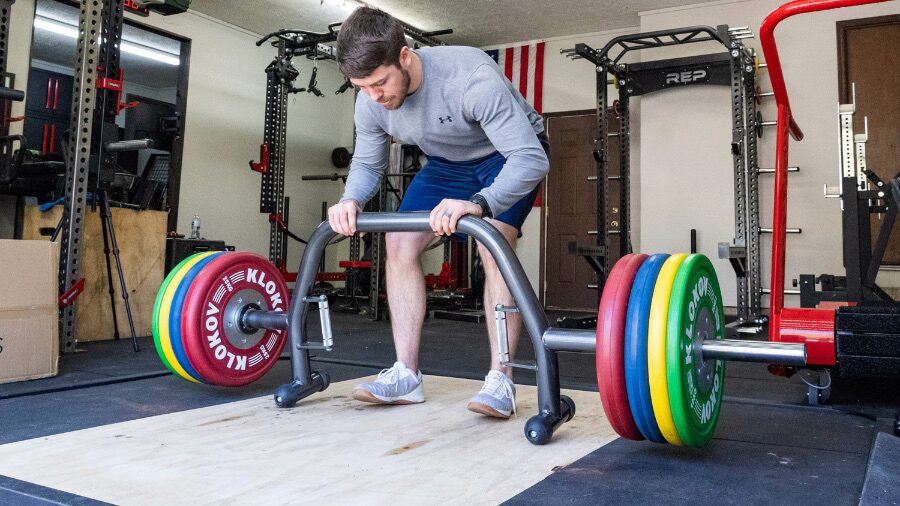
Stability in deadlifts is prime, as seen in a 2010 study1 where deadlift training was accessed on both stable and unstable surfaces, like a Bosu ball. After performing five reps on each type of surface, the study found that testers produced more force and muscle activity on a stable surface instead of an unstable surface.
Deadlift platforms provide exactly that: a solid, stable surface for pulling. Whether it’s durable rubber or solid plywood, a deadlift platform can ensure you have a stable base for your training sessions, leading to better muscle activation during your workouts—espcially if you’re pairing a stable platform to a stable shoe for deadlifting.
Protects Your Flooring and Equipment
The durable materials used in deadlift platforms—rubber tiling, sheets of plywood, rubber mats, etc.—can all be useful in protecting your flooring as well as your gym equipment, weight plates, and Olympic barbell.
Rubber, although pretty solid, does feature some slight give, allowing it to absorb some of the impact behind a dropper bar and plates. Absorbing the shock helps reduce the impact on your weights, as well as the flooring underneath your deadlift platform.
Many platforms also use multiple layers of rubber or plywood to better protect your flooring. If you’re nervous about damaging your floor, use a deadlift platform with at least two layers of plywood and or rubber (usually between 1.5 and 2 inches thick).
Makes Workouts Safer
Most deadlift platforms come with a non-slip surface, either with rubber mats or a solid wood surface. Having a slip-resistant surface on your lifting platform can make lifting a safer action, especially if you’re using the platform for dynamic movements, too, like split jerks or lunges.
Buying Guide: What to Look for in Deadlift Platforms
If you’re still figuring out the best type of platform for you, here are a few things to consider:
Footprint
How much space do you have in your gym for a platform? This will probably be the biggest factor when determining the dimensions you want for your deadlift platform. However, the type of training you’ll be performing can also determine the size of the raised platform.
While exact measurements may vary, lifting platforms are typically 8 feet long to leave enough space for the length of the barbell. The width can vary from 4 to 8 feet. A 4-foot-wide platform can be great for focused deadlift training, but if you’re planning on doing some Olympic lifts that’ll require some forward-and-back movement, you may want a 6- or 8-foot-wide platform to accommodate the dynamic movements.

Materials
Consider the materials used in the deadlift platform you’re looking at. Higher-quality materials can indicate a more solid, stable base to lift from, while noise-dampening rubber can protect your gym equipment. Additionally, some deadlift platforms sell rubber tiles as an optional alternative base or build component. If you’d rather have a more solid center to push from, you can order a few tiles but line the center with a couple sheets of cut-down plywood.
Cost
The price of platforms can vary, mostly from how much the brand is providing. The cheapest options leave a bit of DIY demands with empty steel frames; you’ll have to place your own plywood or rubber into the platform to build it out. Along with that, you can simply build your own platform entirely out of horse stall mats and plywood.
Some platforms provide everything and you just have to put it all together. Naturally, these will be more expensive options, but for people who are less handy, they may be a more ideal solution.
Experts Who Contributed To This Article
FAQs About the Best Deadlift Platforms
What type of deadlift is most effective?
A lot of gym-goers will argue over the utility between the sumo deadlift and the conventional deadlift, but I’m here to tell you: The best deadlift variation is the one you’ll practice safely and consistently to get the most results.
Neither sumo nor conventional deadlifts are more effective than the other, but they can emphasize certain muscle groups given their varied setups. For example, a recent study2 determined that conventional deadlifts targeted the posterior chain (glutes and hamstrings) more than the sumo deadlift. On the other hand, the sumo deadlift provided more involvement with the frontal plane, particularly the hips and knees.
Determining which muscle groups you’re aiming to target, as well as your training goals, can help determine which deadlift form is best for your workout routine.
What is the best floor for deadlifts?
Durable, solid flooring is ideal for deadlifts. Thick, compact rubber mats or tiles can be great for receiving a dropped bar, while rubber or wood can be optimal for athletes to push from.
What is a deadlift platform?
A deadlift platform is a raised platform used for lifting—primarily (as the name suggests) for deadlifts. Usually framed with steel tubing, these platforms are often a combination of rubber tiling and plywood to provide a solid base for the deadlift exercise. The rubber also helps reduce noise and absorb impact when dropping your deadlift, thus protecting your equipment and flooring.
References
- Chulvi-Medrano, I., García-Massó, X., Colado, J. C., Pablos, C., de Moraes, J. A., & Fuster, M. A. (2010). Deadlift muscle force and activation under stable and unstable conditions. Journal of strength and conditioning research, 24(10), 2723–2730. https://doi.org/10.1519/JSC.0b013e3181f0a8b9
- Hanen, N. C., Ben Mansour, K., Ertel, G. N., Duchene, Y., & Gauchard, G. C. (2025). Biomechanical analysis of conventional and sumo deadlift. Frontiers in bioengineering and biotechnology, 13, 1597209. https://doi.org/10.3389/fbioe.2025.1597209