

Thinking about buying one of the best exercise bikes for your home gym setup? Before you do, it is important to understand the different types of exercise bikes out on the market. This page will help you navigate and learn more about the variety of bikes, what we like about them, and how each silhouette can best serve your training regimen.
Types of Exercise Bikes
There are five general categories of exercise bikes: Recumbent bikes, upright bikes, indoor cycling bikes, air bikes, and folding bikes. These types of exercise bikes can each serve as a positive foundation for at-home training, but let’s get into the particulars so you can unlock stationary bike benefits with the machine most suited to your needs and wants.
| Bike Type | Best For | Impact | Body Focus | Typical Use |
| Indoor Cycling Bike | Athletic performance, classes | Low to moderate (due to body positioning) | Lower body + core | HIIT, climbs, sprint workouts, endurance training |
| Recumbent Bike | Rehab, beginners, joint pain | Very low | Lower body | Long, comfortable cardio sessions |
| Upright Bike | General fitness, weight loss | Low | Lower body + core | Steady-state cardio, intervals |
| Air Bike | HIIT, conditioning, CrossFit | Low (but very intense) | Full body | Short, high-intensity workouts |
| Foldable Bike | Small spaces, beginners, casual users | Low | Lower body | Light cardio, daily movement, recovery rides |
Indoor Cycling Bikes
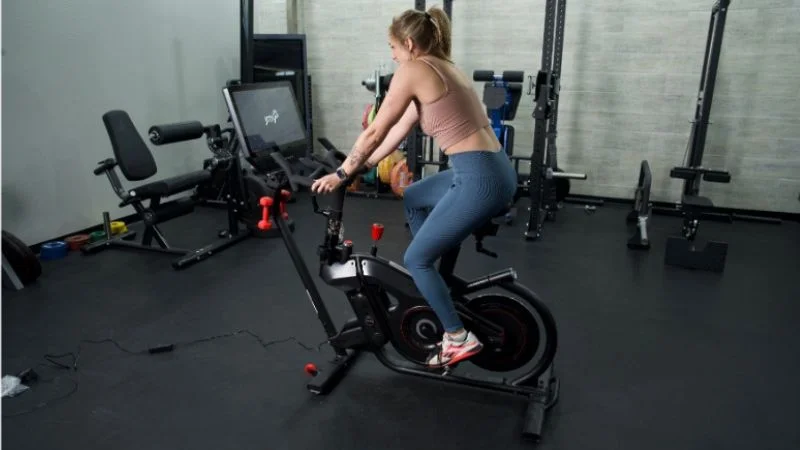
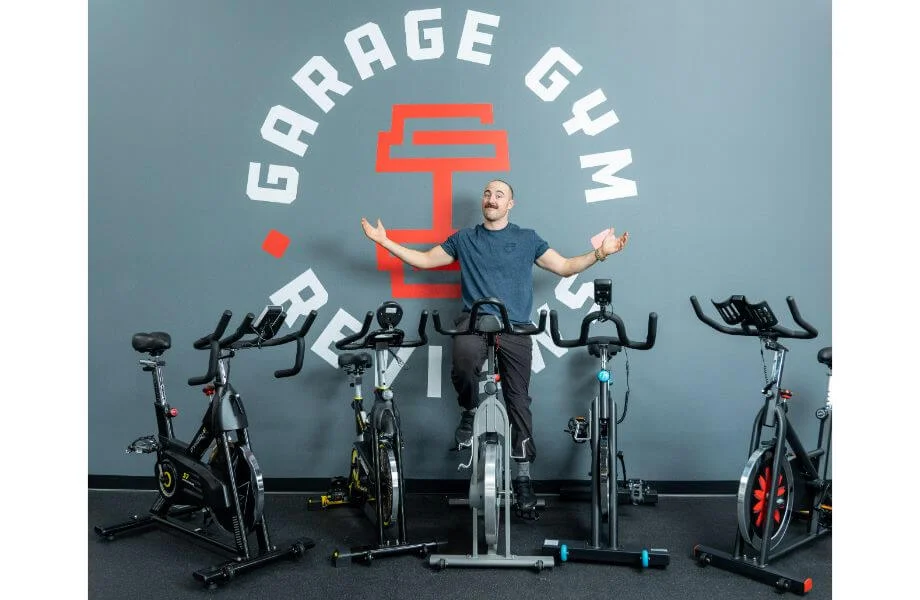
An indoor cycling bike is perhaps the most common (and most recognizable) type of stationary bike. The Peloton may be the most well-known example of an indoor cycling bike, but Peloton alternatives such as the Aviron Fit Bike, NordicTrack X24, and Bowflex VeloCore are also worthwhile cardio machines.

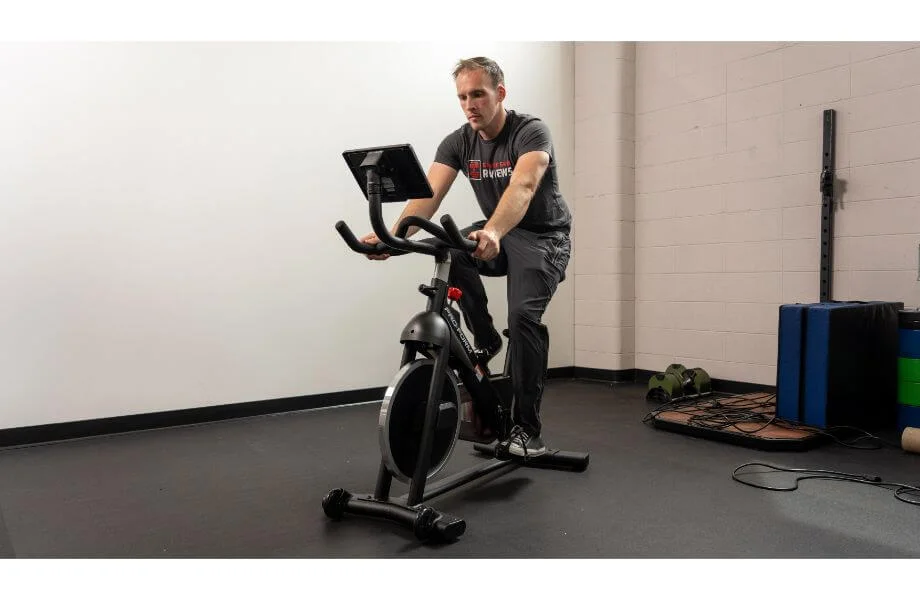
This type of exercise bike will look and feel the most similar to a traditional road bike. The handlebars are out in front of you, which causes you to lean slightly forward. As you exercise, you can move from a seated position into a standing position.
The pedals are located directly below your feet. Some bikes come with caged pedals, which work with most gym shoes, while some come with clipless pedals that require special cycling footwear. You can expect a small, narrow seat on an indoor cycle bike, though you can purchase a larger, more comfortable saddle if you prefer.
What makes a cycling bike unique among exercise bikes is its exposed flywheel, which often uses friction or magnetic resistance to create different levels of intensity. Typically, you control the resistance levels with a knob that you can turn to raise or lower the friction level. Some high-end bikes even allow for digital resistance adjustments through built-in toggles.
When it comes to price, we’ve determined that the average indoor cycling bike can cost around $1,400, but cheaper and more expensive options are available, as well.
What Riding an Indoor Cycling Bike Feels Like
Indoor cycling bikes place you in an aggressive, forward-leaning position similar to road cycling. Resistance is is adjusted manually via a dial or buttons, and many workouts involve standing climbs, sprints, and heavy resistance efforts.
Best For
These bikes are best for experienced riders, performance-focused athletes, and individuals who enjoy instructor-led or class-based workouts.
RELATED: Best Exercise Bike with Screen
Indoor Cycling Bike Workout Examples
- HIIT ride: 30-second sprint, 90-second recovery for 20 minutes
- Climbing workout: Increase resistance every 3 minutes for 30 minutes
- Studio ride: Follow a 45-minute guided cycling class via a platform like iFIT or Peloton
Indoor Cycling Bike Pros and Cons
Recumbent Bikes
If I told you to close your eyes and think about what a bike looks like, odds are that you wouldn’t conjure up images of the best recumbent bikes. This indoor cycling profile is unique because it places the rider closer to the ground with the pedals out in front of the body instead of directly underneath. Because the pedals are out in front, this is generally regarded as the lowest-impact style of bike.
Recumbent bike seats also feature a built-in backrest, which can help put the rider in an almost-reclined position in comparison to other exercise bikes. Having the back on the seat also bolsters back support, which makes this a great choice for people who would otherwise experience pain on a traditional exercise bike. As such, the recumbent bike’s accessible design makes it ideal for people who may be recovering from injury, senior athletes, or those with mobility concerns.
RELATED: Best Exercise Bikes for Seniors
Something to consider is that the recumbent bike likely won’t give you the heart-pounding workout like you’d potentially experience with another type of exercise bike. Part of that reason is because on other bikes, you have the ability to ride from a standing position or use movable handles to work the upper body.

What Riding a Recumbent Bike Feels Like
Recumbent bikes feature a reclined seat with back support and pedals positioned in front of the body. This setup can reduce strain on the lower back and joints, creating a more relaxed and comfortable riding experience.
Best For
Recumbent bikes are best for beginners, older adults, and anyone recovering from injury or dealing with joint pain. They’re also a great option for longer, low-intensity cardio sessions.
Recumbent Bike Workout Examples
- Rehab ride: 15-20 minutes at light resistance
- Endurance ride: 40 minutes at a steady, easy-to-moderate pace
- Cadence focus: Alternate fast pedals and slow pedals every 5 minutes
Recumbent Bike Pros and Cons
Upright Bikes
The term “upright bike” is often confused or even misinterpreted as any bike that puts you in an upright position. However, a true upright bike is slightly different from, say, an indoor cycle bike.
The upright bike does have you sitting up straight with the pedals almost directly beneath you, similar to a traditional road bike. That said, the handles tend to be positioned much closer to your body, keeping you in that upright position the entire time, as opposed to the forward lean you get on an indoor cycling bike. This closeness between seat and handlebars translates to a more compact footprint than other types of bikes.
The seat on an upright bike is smaller than the seat on a recumbent bike, but tends to be bigger than a small cycling bike seat. As such, this can be a “goldilocks” seating setup for those looking for added comfort—not too little, not too much, but just right.
What Riding an Upright Bike Feels Like
Riding an upright bike closely resembles cycling outdoors. You sit tall with your hips stacked over the pedals, hands resting on handlebars in front of you. This position engages your core for stability and places most of the workload on your quads, glutes, and calves, with minimal upper-body involvement. However, the ride position is not quite as aggressive as a road or mountain bike, because the frame design doesn’t force you to bend at the hips and lower your chest toward the handlebars.
Best For
Upright bikes can be ideal for general fitness, weight loss, and people who want a traditional cycling feel without the intensity of a forward-leaning workout. They’re also a good choice for home gyms with limited space, as their footprint tends to be relatively compact. The upright frame design is also an ideal option for those who have some range of motion limitations or back pain, but not enough to warrant a recumbent bike.
Upright Bike Workout Examples
- Beginner ride: 20 minutes at a conversational pace
- Interval workout: 1 minute hard, 2 minutes easy for 30 minutes (10 rounds)
- Endurance ride: 45-60 minutes at moderate resistance
Upright Bike Pros and Cons
Air Bikes
If you have ever been to a CrossFit gym, chances are that you have seen an air bike before. While an indoor cycle bike uses a flywheel, an air bike is marked by its fan, which acts as a front “wheel” and is how the bike generates resistance. The faster you pedal, the more resistance you create. Unfortunately, this fan is also known for being noisy, so this isn’t the best choice for people who need a quiet workout option.

The pedals on an air bike are located below your feet, just like on an indoor cycling bike. When it comes to the seat, size and cushioning varies from one model to the next (we think the Rogue Echo Bike has the most comfortable seat of any air bike).
A big benefit to air bikes is that they nearly always have movable handles, which can engage your upper body in training. This works a little like the arms of the best ellipticals in that you can move your arms to help your legs do the work.
If you have ever used air bike, you know that these machines can give you quite the workout, which makes them perfect for interval training or HIIT workouts. However, they can still be incredibly low-impact, making for an ideal solution for people dealing with nagging injuries or post-surgery recovery protocols.
What Riding an Air Bike Feels Like
Air bikes use a fan for resistance, meaning the harder you pedal and push the handlebars, the harder the workout becomes. Both the upper and lower body are fully involved, making the ride feel intense and fast-paced.
Best For
Air bikes are best for HIIT, CrossFit-style workouts, conditioning, and athletes who want maximum output in minimal time. They’re also ideal for those who want a full-body cardio workout without excessive joint impact.
Air Bike Workout Examples
- Sprint intervals: 10 rounds of 15 seconds all-out, 45-second rest (easy spinning)
- Calorie challenge: Log 50-100 calories burned as fast as possible
- EMOM: 12 calories every minute, on the minute, for 10 minutes
Air Bike Pros and Cons
Folding Bikes
A folding bike is perfect for anybody who is looking to conserve space. These bikes are not always built out of the most sturdy materials but come in many different variations. Similar to the indoor cycling bike, the handles are in front of you and the pedals are located below your feet.

If you are looking for a bike that will allow you to have an intense cardio workout, this may not be the bike for you. Many of these bikes can feel unstable when used at high intensity, since they are made to be folded and put away, resulting in a smaller footprint and less baked-in stability.
Because of their compact size, folding bikes rarely have a lot of the bells and whistles you’re likely to find on other indoor cycling bikes. Most have basic monitors, and few have the “extras” like a water bottle holder or media shelf. We like the Marcy Fitness Foldable Upright Bike as one of the best options on the market due to its durability and available resistance levels.
What Riding a Folding Bike Feels Like
Riding a foldable exercise bike feels similar to a simplified upright bike, but with a more compact, lighter-duty build. Most models place you in an upright seated position, though some offer semi-recumbent options, as well. Resistance is typically modest, making the ride more akin to a warm-up or cool-down for advanced athletes, and an approachable option for beginners.
Best For
Foldable bikes are best for people with limited space, beginners easing into cardio, and anyone looking for light daily movement rather than intense training. They’re also a practical option for small apartments or people who need to store their equipment between workouts.
Folding Bike Workout Examples
- Beginner ride: 20-30 minutes at an easy, steady pace
- Low-impact intervals: 3 minutes fast, 3 minutes slow for 30 minutes (5 rounds)
- Active recovery: 15 minutes of very easy pedaling after a strength or HIIT workout
Foldable Exercise Bike Pros and Cons
Benefits of Using an Exercise Bike
There are many reasons you might choose to use an exercise bike over other types of cardio machines:
Improved Health
There are multiple stationary bike benefits for your health, according to studies1, including improved body composition, cardiovascular wellness, a stronger lower body, and more. When exercising on a bike, you often elevate your heart rate, too, which burns calories and makes this activity a positive habit to support weight loss. There are also numerous studies2 that support that link between exercise and mental health.
Quick, Convenient Workout
Whether you are pinched for time or just not in the mood for a lengthy workout, having a stationary bike at home is key to a quick, convenient training session. If your bike comes with technology, you can do one of the built-in workouts to get in a quick sweat. We also have several HIIT bike workouts that get your heart pumping in under 20 minutes.

Low-Impact Workout
Any bike that you choose will lend itself to a low-impact workout. This is because riding a bike takes your weight off your feet, unlike running on a treadmill where your joints are constantly exposed to impact.
RELATED: Exercise Bike vs. Treadmill
Strengthen the Body
Build muscle and burn calories on any exercise bike! While you may think you are only getting a lower body workout, a bike workout can target your core, as well. On bikes like an air bike, you can get a great arm workout going, too! Any time you use your muscles, you have an opportunity to build them.

Build Cardiovascular Endurance
Riding an exercise bike can help improve cardiovascular strength. With consistency, you can find a reduced risk of heart disease risk and blood pressure1. Your heart is one of the most important muscles in your body, so you want to make sure to keep it in shape!
RELATED: Benefits of Indoor Cycling
Types of Exercise Bikes: Final Thoughts
Overall, an exercise bike can be helpful for your general health. Riding a stationary bike can offer benefits for beginners or people who’s glutes and hamstrings have never met a cycling class they couldn’t handle. Before you purchase a bike, make sure you understand the different kinds out there and which type would best suit your fitness goals.
Types of Exercise Bikes: FAQs
What is the best type of exercise bike?
With so many choices to choose from, there is no direct answer to this question! The best kind of exercise bike for you will be the one that fits your needs. Take into account your budget, your fitness goals, if you want built-in or streamable programming, and any extras you might want.
What should I look for when buying an exercise bike?
When choosing an exercise bike, it is important to consider your personal fitness priorities. For example, if you are looking for a bike that works out your arms as well as your lower body, you may want to consider an air bike over a recumbent exercise bike. Other factors worth thinking through include:
Price: What is your budget?
Warranty: Is the bike built to last?
Ergonomics: Is there an adjustable seat? A comfortable seat?
Programming: Do you need suggestions for what to do on the bike?
What is a stationary bike?
A stationary bike is a bike that stays in place even when the pedals and wheels are moving. There are a variety of different stationary bikes that can best suit what works for you!
References
- Chavarrias, M., Carlos-Vivas, J., Collado-Mateo, D., & Pérez-Gómez, J. (2019). Health benefits of Indoor Cycling: A Systematic Review. Medicina, 55(8), 452. https://pmc.ncbi.nlm.nih.gov/articles/PMC6722762/
- Mosser, N., Norcliffe, G., & Kruse, A. (2025). The impact of cycling on the physical and mental health, and quality of life of people with disabilities: A scoping review. Frontiers in Sports and Active Living, 6. https://pmc.ncbi.nlm.nih.gov/articles/PMC11743510/