


As someone who loves training hard in the gym, I know that pushing your body as hard as possible can feel good. It feels good to give 100% effort, and for many, taking every set to complete failure can make you feel like you’re really earning your gains.
However, there’s a problem with this mindset. Regularly training to failure can actually slow down your progress, even if it feels productive.
If you’re like me, and have watched countless videos of old-school bodybuilders and powerlifters leaving it all on the gym floor, taking a more intentional approach to your training may not seem very fun. It certainly doesn’t feel very tough to re-rack a barbell while your training partner is yelling “one more rep” in your ear, while you know that you do, in fact, have at least one more rep in you.
I’m a certified strength and conditioning specialist who loves to nerd out over exercise science, and in this article, I’m going to break down exactly what the research says. I’ll cover how lifters typically rate training intensity in a given workout, and explain why intentionally leaving a couple of reps in the tank may be the most beneficial training change you can make.
What Does “Training to Failure” Actually Mean?
Before we dive in, let’s quickly cover what training to failure really means. For our purposes, I’m talking about absolute failure, technically called momentary muscular failure, which is the point where your muscles can’t perform another rep, even if the form isn’t perfect. Your muscles simply can’t go anymore, even if you adjust your form or technique a bit.
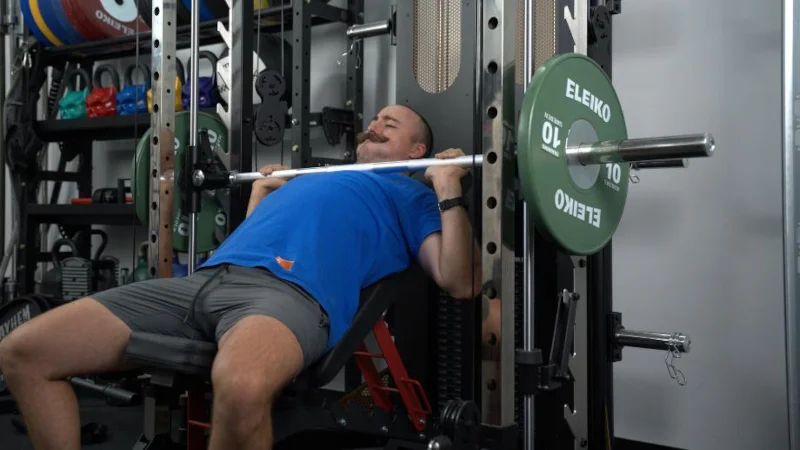
We’ll take everyone’s favorite lift, the barbell bench press. Once you reach the point where the bar is trembling, one side is going up faster than the other, and you have to lift your hips off the bench to finish the rep (or have your spotter grab the bar so you don’t pin yourself to the bench), you’ve reached muscular failure.
Sure, you could do more reps if you took some weight off the bar, but you’ve reached failure with that particular weight. That’s what we’re talking about when we discuss lifting to failure.
Before we dive in, we also need to define reps in reserve (RIR) and rate of perceived exertion (RPE), two terms that are commonly used in strength training programs and scientific research.
RIR refers to how many reps are left in the tank. If you stop your set two reps short of failure, that would typically be written as “2-RIR”. RPE is often used in strength-focused programs, like powerlifting, and is quite similar, although it’s meant to measure your perceived effort level, which is a bit harder to determine than how many reps are left.
RELATED: How Many Reps to Build Muscle?
A 10 RPE means you gave the set 100% effort, which is essentially training to failure. Typically, a 9 RPE means you stopped one rep short of failure, and 8 RPE means you stopped two reps short of failure, and so on.
This means that functionally, an 8 RPE and 2 RIR are the same thing, even though the technical terms are a bit different, and some lifters will use measures like 8.5 RPE.
Alright, we’ve covered the technical jargon; now let’s dive in.
The Hidden Cost of Training to Failure
As I mentioned earlier, we all know that training to failure can feel great. It’s tough, but finishing a set knowing you gave it everything you have can feel satisfying and rewarding.
It may seem like this type of intensity is the key to reaching your highest potential in the gym and breaking through your plateaus, but here are the downsides that may not seem obvious at first.
Greater Muscular Fatigue
The first thing to note is that training to failure can significantly increase your discomfort and fatigue, according to this 2023 study1.
The researchers had participants perform six sets of the barbell bench press. One group trained to failure, one group trained to 1-RIR, and one group trained to 3-RIR. As you may expect, the train-to-failure group not only experienced a decrease in barbell velocity between sets (meaning, they were moving the weight more slowly), but they felt notably worse, too.
The authors stated that “ratings of perceived discomfort, exertion, and muscle soreness increased, general feelings worsened, and perceived recovery decreased.”
This doesn’t show that training to failure is necessarily bad, but it certainly makes the workout far more uncomfortable and fatiguing compared to intentionally stopping short of failure. Not to mention, if your muscles are too fatigued between sets, it can be very difficult to maintain proper form on technical, skill-based lifts.
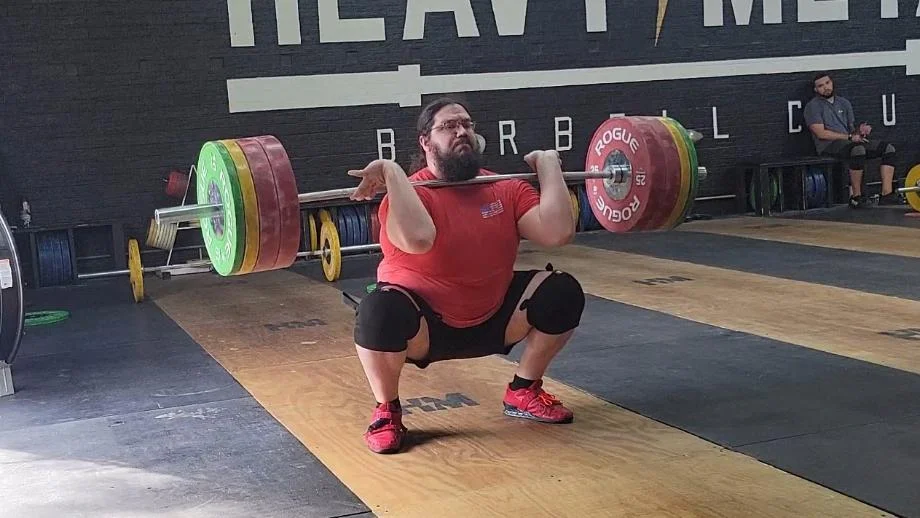
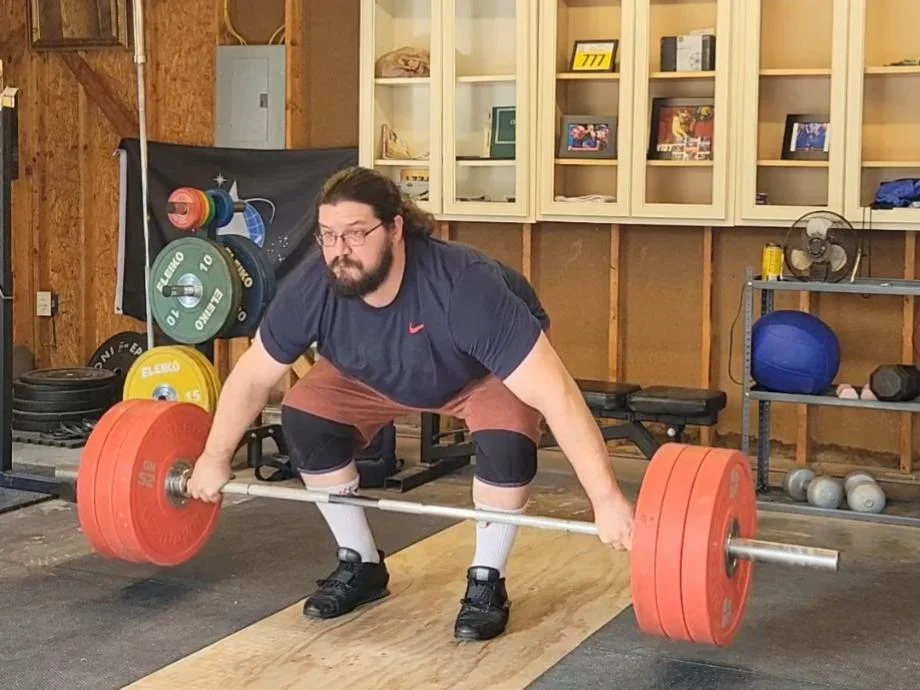
Caine Wilkes, OLY, CNC, USAW-L1, a weightlifter who competed at the 2020 Tokyo Olympics, says he avoids training to failure most of the time.
“A lot of my training for Olympic weightlifting is percentage-based, with most days sitting between 75% and 90% of my personal bests,” he told me. “Because of how technical the lifts are, I wouldn’t recommend training to failure [for the Olympic lifts], as fatigue can easily get you out of position during your lifts, which can increase your risk of injury and encourage bad technique.”
RELATED: Best Barbell Exercises
Slower Recovery Between Sessions
As you may expect, since training to failure substantially increases soreness and discomfort, it also decreases recovery between sessions, too.
Since many of us like to lift multiple times per week, this is a pretty big deal. If you’re entering your second upper-body workout of the week and still don’t feel fully recovered from the last session, your performance is going to suffer.
RELATED: How Often Should You Work Out?
A 2017 study2 found that resistance training to failure significantly increased the measurable biomarkers of fatigue, causing recovery to be impaired for 24 to 48 hours after a session. This means that if you train the same muscle group multiple times per week, it may not recover properly between sessions.
“Resistance training leading to failure considerably increases the time needed for the recovery of neuromuscular function and metabolic and hormonal homeostasis,” the authors concluded. “Avoiding failure would allow athletes to be in a better neuromuscular condition to undertake a new training session or competition in a shorter period of time.”
Compounding Mental Fatigue
In addition to the daily strain on your body, consistently training to failure has been shown to cause more physical and mental discomfort, and this compounds over time. For those who struggle with consistency, you probably don’t want to follow a workout plan that leaves you feeling beat up and tired after the first month.
A 2025 study3 found that “resistance training to momentary muscular failure results in slightly greater perceived discomfort, exertion, and worsened general feelings compared to terminating sets with 1- to 2-repetitions in reserve (RIR).”
This discomfort and fatigue compounds over time, and the authors concluded that stopping one to two reps short of failure may improve long-term training adherence.
Is the Volume Tradeoff Worth It?
Experienced lifters who regularly track their progress probably have one concern here, which is the fact that cutting your sets a little short may reduce the total work you’re doing in a given workout. It sounds like this will cost you muscle size and interfere with your ability to build strength over time.
After all, if you can do 10 squats with a given weight, why would you stop at eight?
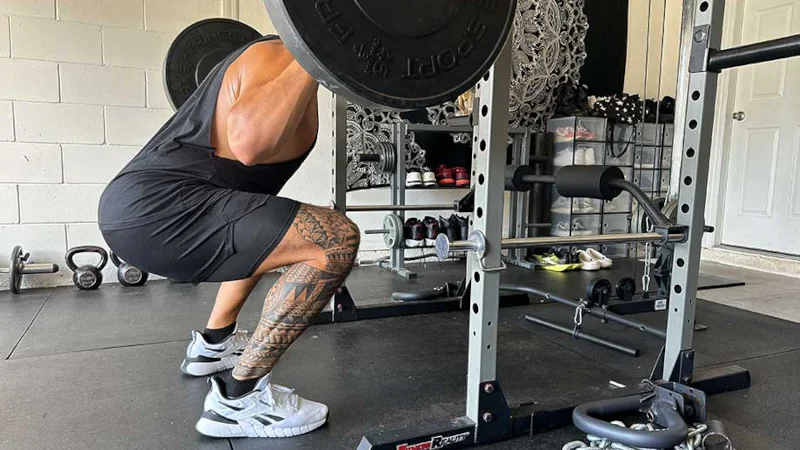
Finishing those last two reps, if they take you to muscular failure, is not only going to decrease the performance of your next set, but it’ll slow your recovery for a few days, and you may not be fully recovered before your next training session.
Training to failure may give you a great first and second set, but your performance is going to drop off very quickly. By stopping short of failure, you’re getting less work per set, but more quality sets overall, which is a new win.
RELATED: How Many Sets Per Muscle Group?
Not to mention, a 2020 study4 in the Journal of Strength and Conditioning Research found that training to failure didn’t produce significantly more muscle growth than stopping with a few reps in reserve, and didn’t cost any strength gains, either. That said, it’s worth noting that this study was on untrained individuals, and may not apply to intermediate to advanced lifters.
In other words, you’re not missing out on anything by leaving a few reps in reserve, and in fact, this may be the key to building muscle strength and lifting heavier loads over time.
Training to Failure: Practical Takeaways
If you’ve spent your whole lifting career going all-out on every set, leaving nothing left in the tank, adjusting your training may take a bit of practice. Based on the current research, here’s what we recommend.
- For most exercises, aim for 1-2 RIR, which is an 8-9 RPE. In other words, stop 1-2 reps short of failure, especially on your compound lifts (squats, deadlifts, bench presses, rows, etc…), where strength matters the most.
- If you really like training to failure, it should be saved for isolation movements toward the end of your workout—think training your biceps and triceps to failure at the end of your upper-body day.
- Tracking both your progress and recovery throughout the week can help ensure you’re actually getting stronger in the gym, and recovering properly between sessions. If either suffers, you may be pushing too hard.
This sort of controlled training may not seem very fun, but it’s used at the highest levels of strength sports, including powerlifting, bodybuilding, and weightlifting, even for Olympians like Caine Wilkes, OLY, CNC, USAW-L1.
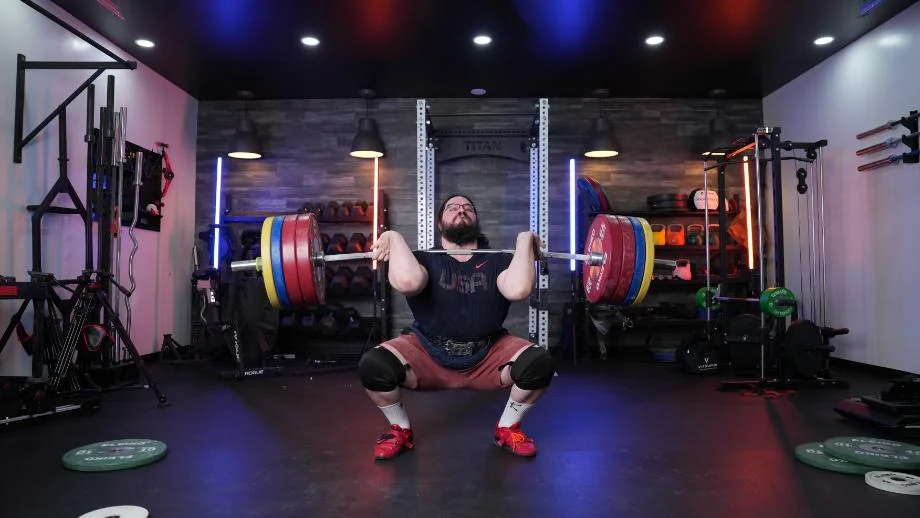
“While I sometimes train to failure, I tend not to use it for Olympic lifts,” Caine told me. “You can use higher reps and sets to failure in a hypertrophy phase on certain accessory exercises. Generally speaking, I’m more of a fan of leaving a little bit in the tank to aid with recovery.”
Should You Train to Failure: Final Thoughts
Training until you’re shaking and trembling in the gym can feel great, and knowing you left it all on the gym floor can be very rewarding. Many old-school lifters trained with 100% intensity in every session, but that doesn’t mean it’s the best approach for you.
Research shows that this can cause your performance to drop throughout the workout, reduce your ability to recover, and overall, leave you feeling more beat up over time. Not only can this fatigue increase your injury risk, but it can also lead to burnout, too, especially as training to failure is mentally draining and taxing on your nervous system.
Instead, taking a more strategic approach, like intentionally stopping one to three reps short of failure on most sets, may be the best way to improve your performance, recovery, and long-term progress. It takes a bit of self-control, but it’s well worth the effort for nearly every lifter.
Should You Train to Failure: FAQs
Is training to failure overtraining?
For many people, yes. Taking every set of your workout to failure can quickly cause your performance to drop, and it can interfere with your recovery between workout sessions. It’s not going to cause issues doing it every now and then, but regularly training to failure can cause fatigue to compound week to week, eventually leading to overtraining.
Can I build muscle if I don’t train to failure?
Absolutely! The research4 is quite clear that you can stop a few reps short of failure, without losing any progress. It’s okay to train to failure on smaller isolation movements, like bicep curls and calf raises, but most of the time, it’s best to leave a few reps in the tank.
Is training to failure a bad idea?
While it’s not the worst idea to implement from time to time, it’s in your best interest to avoid training to complete failure too often. Most people will do well leaving one to three reps in the tank on most exercises, and only train to failure for small muscle groups at the end of your workout.
References
- Refalo, M. C., Helms, E. R., Hamilton, D. L., & Fyfe, J. J. (2023). Influence of resistance training proximity-to-failure, determined by repetitions-in-reserve, on neuromuscular fatigue in resistance-trained males and females. Sports Medicine – Open, 9(1), Article 10. https://doi.org/10.1186/s40798-023-00554-y
- Morán-Navarro, R., Pérez, C. E., Mora-Rodríguez, R., de la Cruz-Sánchez, E., González-Badillo, J. J., Sánchez-Medina, L., & Pallarés, J. G. (2017). Time course of recovery following resistance training leading or not to failure. European Journal of Applied Physiology, 117(12), 2387–2399. https://doi.org/10.1007/s00421-017-3725-7
- Refalo, M. C., Helms, E. R., Hamilton, D. L., & Fyfe, J. J. (2025). The effect of proximity-to-failure on perceptual responses during resistance training: A longitudinal intervention. European Journal of Sport Science, 25(1), e12266. https://doi.org/10.1002/ejsc.12266
- Lacerda, L. T., Marra-Lopes, R. O., Diniz, R. C. R., Lima, F. V., Rodrigues, S. A., Martins-Costa, H. C., Bemben, M. G., & Chagas, M. H. (2020). Is Performing Repetitions to Failure Less Important Than Volume for Muscle Hypertrophy and Strength?. Journal of strength and conditioning research, 34(5), 1237–1248. https://doi.org/10.1519/JSC.0000000000003438