


For those who wish to work in the fitness industry and train clients in a gym, the first thing you need to do is get one of the best personal training certifications. Being a personal trainer can be a great way to help people get better results1 than they’d reap from working out alone or as part of a group.
As you may expect, though, there are quite a few programs to choose from, and there are certainly some we think are better than others. One such example that’s recently caught our attention is the International Personal Training Academy, or IPTA.
As one of the newer credentials launched in 2023, we had one of our staff members complete the entire course to test the course’s merits. In this IPTA CPT Certification review, I’ll share a detailed look at this credential, including all of the pros and cons, to help you decide if it’s the right choice for you.
Our IPTA CPT Certification Review, Summarized
The IPTA CPT Certification is a thorough, NCCA-accredited certification that’s good enough to get you a job in most gyms, and the program offers a lot of value for the price. If you try to follow the fastest study path, you may feel a bit rushed, but if you take your time, this is one of our favorite certifications currently on the market.
How We Test CPT Certifications
For course length, we’re looking at the total time it takes to become certified, as some courses are open-ended, while others have stricter deadlines for you to complete guided study plans and take your final exam. To earn 3 out of 5 stars, you should be able to complete the course and earn your certification within six to eight months.

Study options can vary greatly, from a basic textbook and study guide to practice exams, flashcards, videos, audio guides, and even in-person study halls. Ideally, we want to see a variety of tools available for those with different learning styles and preferences. For a 3-out-of-5-star rating, the course is fully online and self-paced but doesn’t have any in-person guidance. Higher scores are given to programs with additional study tools and options.

If a final exam is too easy, or there is no examination at all, it can make the credential feel less valuable and rewarding. However, a final exam that’s too challenging may also scare away potential students, so we want to see a good balance in this category. For a 3 out of 5, there is a final exam, but it’s open-book or can be taken at home without supervision. For a 5 out of 5, we want to see a proctored (supervised) exam, which is typically necessary for an accredited certification.
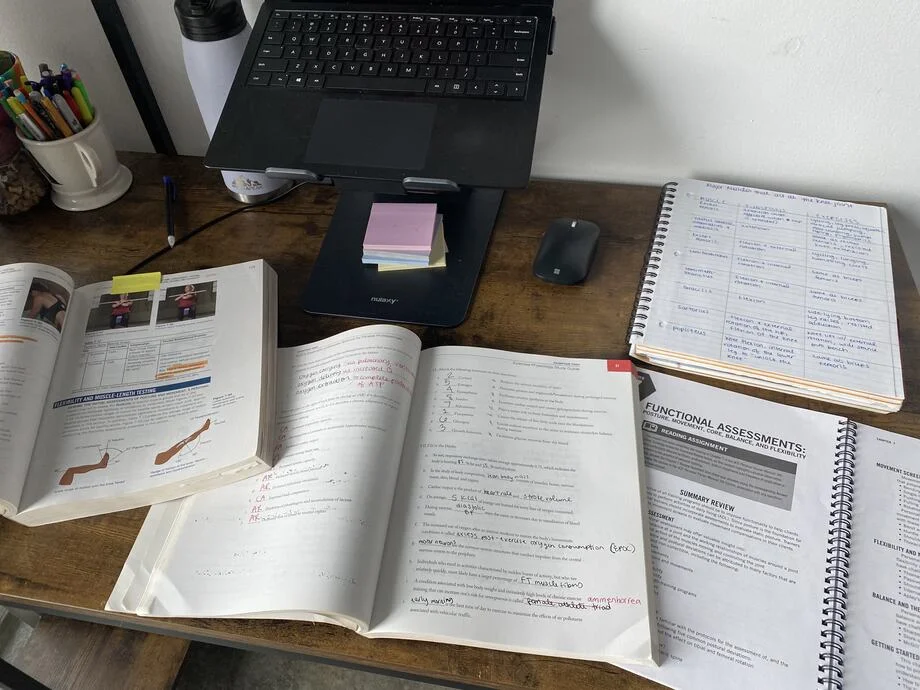
Before reviewing any CPT program, we have at least one of our staff members complete the entire course and accompanying final exam.This allows us to get the full experience and provide an honest rating on the program. After going through the course, we use our certification testing methodology to calculate a final score, which assess categories like price, continuing education units (CEUs), and course length.
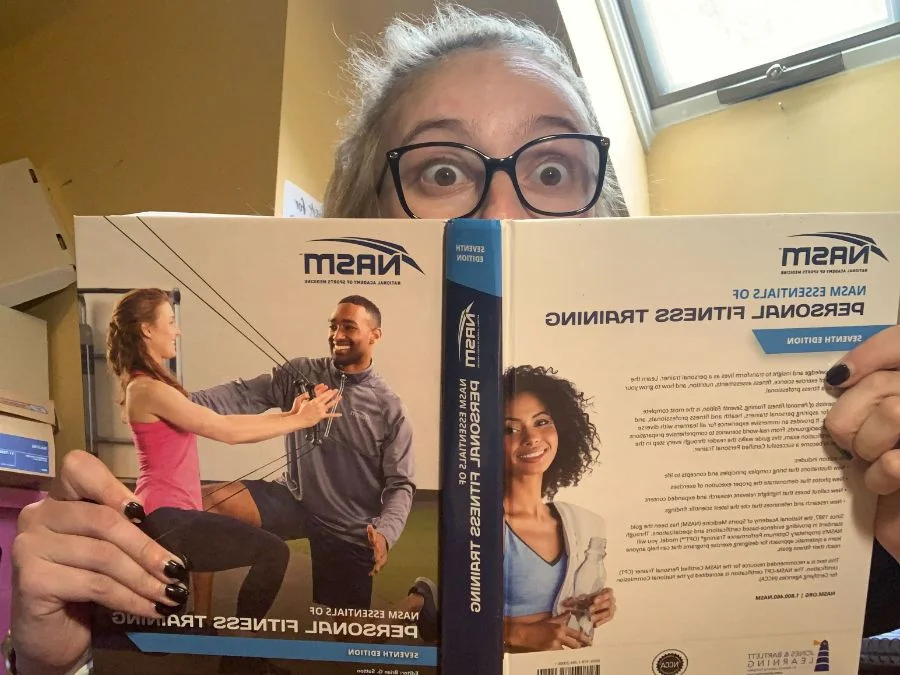
The GGR team of expert testers includes certified personal trainers, nutrition coaches, strength coaches, gym owners, and even an Olympian. Between us, we’ve gone through more than 20 of the most popular CPT and other continuing education programs on the market, and many of us have multiple certifications and credentials we’ve earned over the years.
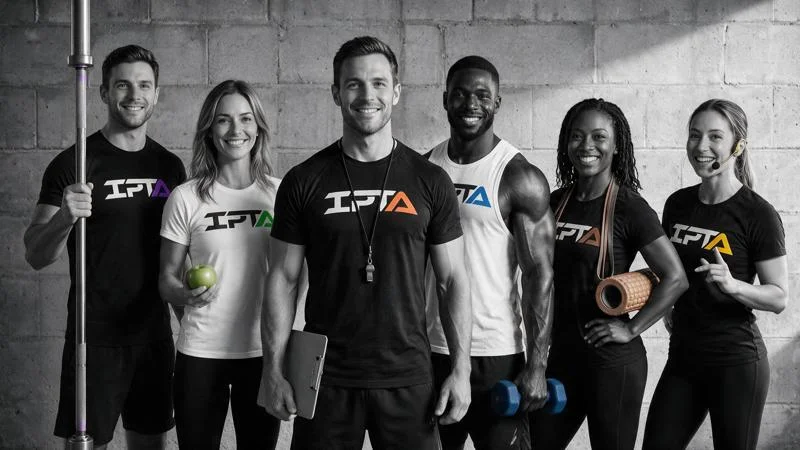
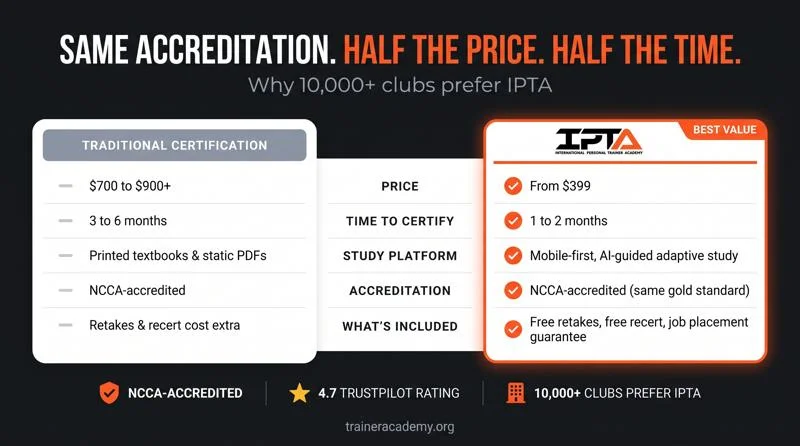
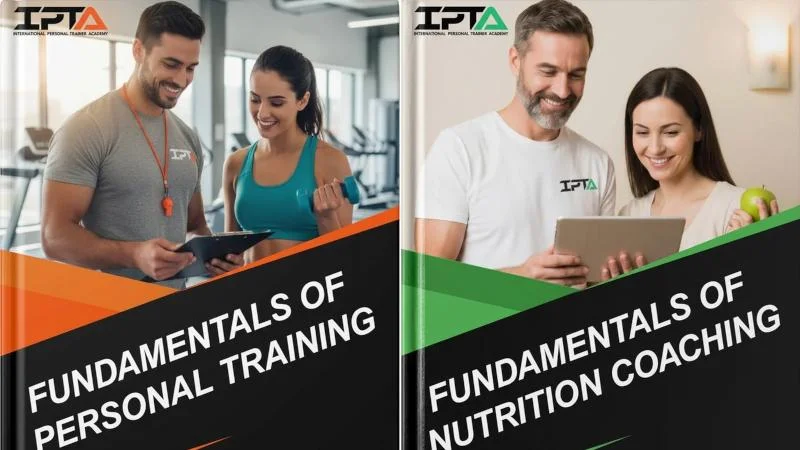









The IPTA CPT gives aspiring personal trainers an NCCA-accredited path into the industry, with flexible testing options and plenty of available study resources. We especially like the unlimited retakes offered with course completion, though candidates still need to meet age, education, and CPR/AED requirements before earning the credential.
What to Know Before You Buy
- The IPTA CPT Certification is a self-paced course, but there are guided study plans available for one, two, four, or eight months.
- The final exam can be taken from home, but you’ll need a virtual proctor supervising you if you don’t want to go to an in-person testing center.
- All materials are delivered online, and you’ll need to pay extra for a physical copy of the textbook.
Is the IPTA CPT Certification Worth It?
With multiple study options available, the cost ranges from $399 to $799, which is on par with many of the other personal training certifications available. You’ll learn program design, client assessment methods, exercise technique, and everything else you’d need to become a successful personal trainer. There are plenty of resources available to help you, as well, especially at the higher price tiers, but that doesn’t mean this is the best choice for everyone.
Here’s who we think should consider the IPTA program, as well as who should avoid it.
If you think the IPTA CPT certification might be a good fit, keep reading as we get deeper into the key features, specs, and our detailed testing scores and notes.
IPTA CPT Certification: Key Features & Specs
| Price (Original MSRP) | $399-$799 |
| Accreditation | National Commission for Certifying Agencies (NCCA) |
| Prerequisites | 18 years old, high school diploma (or equivalent), and a current CPR/AED certification |
| Course length | Lifetime access |
| Expected hours per week | Varies by study plan; expect 4-6 hours per week for the fastest pace |
| Learning platform | Online |
| Study materials | Online textbook, flashcards, study guide, and practice exams |
| Exam format | In-person or online, both must be proctored |
| Recertification requirements | 24 continuing education credits every 2 years |
Experience With the IPTA CPT Certification
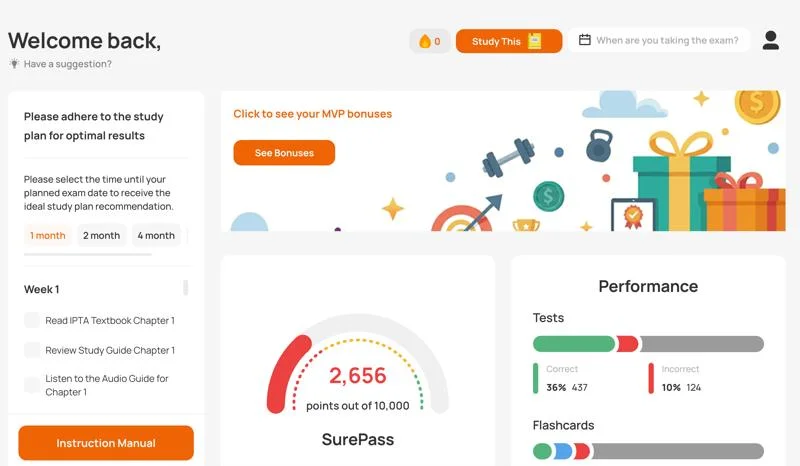
For this review, our expert tester has been involved with CrossFit for nine years, but wasn’t a certified personal trainer prior to going through the IPTA CPT program. While there’s no expiration date or deadline to take your exam, she chose the one-month plan, and ended up finishing the course in about five weeks.
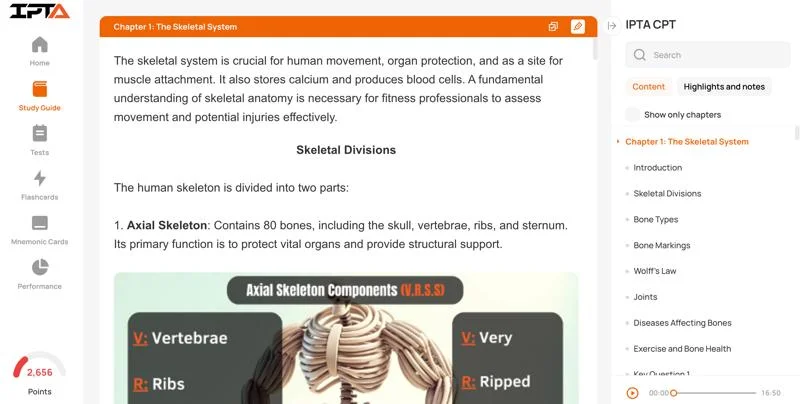
Overall, she was very impressed with the program, especially the online study platform. “The online portal was fantastic,” she told me. “It was laid out in a very clear and concise manner, and it was easy to navigate between the different areas. I’m a big fan of this.”
Her biggest issue was that one month felt a bit too fast for someone who hasn’t gone through other certifications, so if this is your first CPT credential, you may want to go a bit slower.
“Unless you are already well-versed in much of the material, the amount of time I had to study did not feel adequate,” she explains. “I passed the test, but I would not feel comfortable starting work as a CPT…maybe as an intern or apprentice.”
This doesn’t mean the material isn’t useful, however; just know that if you rush the program, it may feel a bit tough. As such, we recommend taking your time if this is your first credential. As someone who’s held multiple personal training certifications over the years, I can vouch for the fact that your first one is often the hardest, and the more time you spend working as a trainer and keeping up with CEUs, the easier future credentials feel.
RELATED: Best Strength and Conditioning Certifications
We recommend the IPTA certification for anyone looking to become a personal trainer, but before you make your decision, keep reading to see our detailed testing and scoring notes.
While we haven’t tested these yet, it’s worth noting that IPTA also offers detailed study guides for certifications from other organizations, including NSCA, NASM, ACE, ISSA, and more. These all include an exam pass guarantee, which covers a full refund and the cost of retaking your chosen exam.
“Earning a personal training certificate isn’t just a simple prerequisite for entering the fitness workforce. Completing the course and getting your credentials can immediately give you credibility in the space, showing your future clients that you know what you’re doing as you work and guide them through varying goals and aspirations.”
—Ben Emminger, NASM-CNC, NASM-CSNC
IPTA CPT Certification Rating
Price
For this category, we’re looking at the total price of the certification, and we think the IPTA CPT program is a great deal, earning 5 out of 5 stars.
You can choose the Rookie Tier for $399 or the MVP Tier for $799. The Rookie Tier includes the certification, virtual textbook, study guide, exam simulator, and flashcard system, while the MVP unlocks the full suite of features, like job assurance guarantee, unlimited exam retakes, study gamification, and more.
For example, while the CPT Rookie level only provides the textbook, study guide, exam simulator, and flash cards, higher tiers unlock things like job assurance guarantee, eight trainer stack business courses, SurePass AI, and access to Stride—IPTA’s personal trainer software.
Regardless of your tier selection, all result in an NCCA-accredited personal trainer certification upon completion.
Course Length
For the course length, IPT earns 4.5 out of 5 stars, as you have lifetime access to the materials with no deadline to take the final exam. A lot of other CPT certification programs on the market give you a deadline to take your final test, so we think this is a generous policy.
There are guided programs with an exam date tracker to keep you on the right study pace, but we docked a point as the guided plans felt a bit too fast. Our expert tester chose the one-month study plan, which felt very tough to keep up with.
RELATED: ISSA Nutrition Certification
“They have training guidelines for one, two, four, and eight months that you can select,” she told me. “It does a good job of outlining how much you need to cover, but it was more time than I had available. To do it in the time frame that I had, you needed to cover 10 chapters each week for three weeks, and then use the final weeks for mock exams and review.”
That said, there’s still no hard-and-fast deadline, so you can take as long as you need; just know that choosing a pre-made study plan may push the pace faster than you’d like.
Accreditation
The CPT certification is accredited by the National Commission for Certifying Agencies (NCCA), which is the gold standard for accreditation across various industries (including health and fitness).
This ensures rigorous testing standards, and as a former personal trainer and fitness manager, many of the commercial gyms I worked in required an NCCA-accredited certification for liability and insurance purposes. Even if the IPTA name isn’t quite as big as others (yet), it has the highest accreditation out there and should be more than enough for most gyms, which is why it earns 5 out of 5 stars for accreditation.
Continuing Education (CEUs)
This category looks at continuing education requirements, which are mandatory for most accredited certifications. CEU requirements help ensure that certified personal trainers are staying up to date with their own education, as exercise science regularly changes with emerging research.
IPTA requires 24 hours of continuing education; and have now added a directory page that lists all of the available CEUs that can be used to keep your certification up to date. All of the listed CEUs are provided directly by IPTA, though third-party CEUs may be approved as well, according to the chat agent.
While there’s no official list of approved CEUs, we were informed that courses related to the personal training certification that provide a certificate of completion may be reviewed and approved.
Additionally, you can simply retake the CPT exam instead of submitting continuing education.
RELATED: Best Continuing Education Courses for Personal Trainers
Prerequisites
For this category, we’re looking at the required prerequisites to take the certification in the first place, and IPTA earns 3 out of 5 stars—our average score.
You need to be at least 18 years old, have a high school diploma (or equivalent), and have a valid CPR/AED certification, though the MVP tier includes CPR/AED certification. These requirements are what you’re going to see with most personal training certifications, and we have no issues with this, but it’s definitely an entry-level certification that can be obtained by virtually any adult who’s willing to put in the study time.
If you’re wondering how a certification would earn 5 stars, some of them require a bachelor’s degree in a related field to sit for the exam, making them a bit harder to get. This limits the amount of people who can get these advanced credentials, but it means they carry slightly more weight and may help you get paid slightly more.
For example, I’m a Certified Strength and Conditioning Specialist through the National Strength and Conditioning Association (NSCA-CSCS), which required a bachelor’s degree in Exercise Science, Kinesiology, or a related field when I first sat for the exam. This doesn’t mean I’m a better trainer, but it helped me get paid at a higher session rate than other CPTs at several commercial gyms.
Studying Options
For studying options, we give IPTA 4 out of 5 stars, especially if you get the MVP plan, which is what our teser used. The lower tiers only offer the free textbook and a study guide, but higher tiers unlock all sorts of useful features.
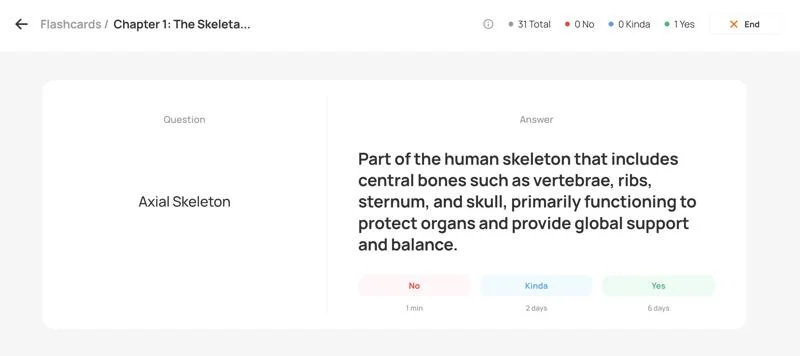
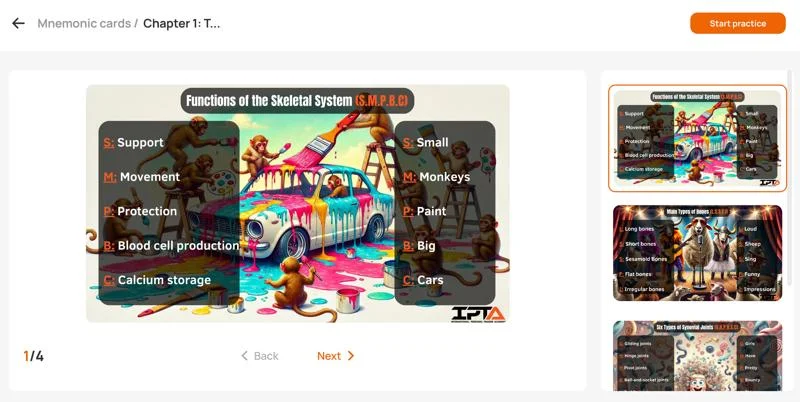
The MVP tier includes an exam simulator, flash cards, an audio study guide, study gamification, weak point training, tailored study plans, magic mnemonics to help you remember key terms, and what IPTA calls the “essential cheat sheet.”
RELATED: Best Health Coaching Programs
Our expert tester also felt the exam simulator didn’t do a good job of preparing her for the final exam, so we docked a point, as well.
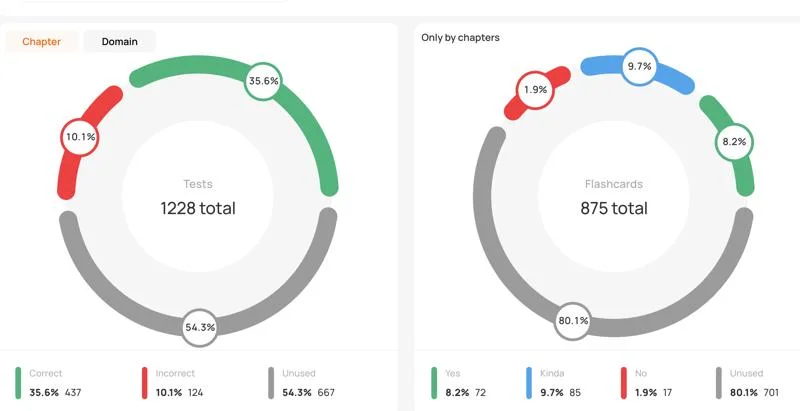
“I took at least 3 dozen practice exams, some based on chapters, some on domains (multiple chapters), and some on the study guide as a whole,” she explained. “However, when I took the actual exam, there were many questions on topics that hadn’t appeared on any of the practice exams, and, again, I took dozens. The difference between the practice exam and the actual exam is my biggest complaint.”
Final Exam
The IPTA final exam earns 5 out of 5 stars, and we appreciate that it’s a difficult exam that must be taken in a supervised environment. This makes the certification harder to get, which is part of why it’s NCCA-accredited.
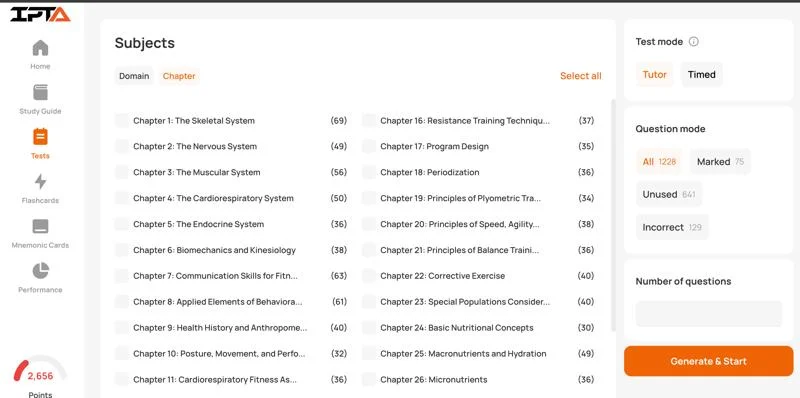
Our tester found the proctored exam to be a bit challenging, and again, she emphasized the practice exams didn’t cover all of the topics on the final exam. Still, our testing methodology specifies that a 5-star rating goes to accredited, proctored exams, so we still give this a strong score for its exam.
RELATED: ISSA CPT Review
IPTA CPT Certification Vs
If you’re still not sure about IPTA, here’s how it compares to a few other popular options.
The first one we’ll look at is from the National Academy of Sports Medicine (NASM), one of the most well-known CPT credentials in the fitness industry. Both programs offer similar features—like varying price plans, self-study options, and the option to order a physical textbook—though NASM ships a hard copy with their more expensive price tier.
The main difference is that NASM is a bit more expensive, and you only have six months from the time of enrollment to take your exam. There’s no similar expiration date for the IPTA exam.
If you like the idea of having a guided study program similar to IPTA’s, but want even more hands-on learning, you may want to consider the National Personal Training Institute (NPTI). NPTI is partnered with NASM, so you’ll earn a NASM-CPT credential along with your NPTI diploma.
For more, be sure to read our full NASM review.
While most CPT study programs take place at home, NPTI is a hybrid program that requires 200 hours of hands-on training with classmates and instructors in one of its 354 partner gyms, in addition to studying the materials. If you’ve never coached anyone in-person, this is a great way to make sure you’re comfortable teaching proper exercise form, which is essential to keep your clients safe.
“Maintaining correct form is important for avoiding injuries and maximizing the effectiveness of your workouts,” says Chris Mohr, PhD, RD. “Beginners might benefit from working with a personal trainer initially or taking a beginner class to learn proper techniques.”
You also receive 50 hours of ongoing mentorship post-graduation, and NPTI claims to be the only nationally recognized credential licensed by the Department of Education.
The price isn’t disclosed anywhere, though, so it may be quite expensive compared to the other two certifications. However, it’s a good choice for those who want plenty of hands-on training without having to study exercise science in college.
| IPTA CPT Certification | NASM Personal Training Certification Course | National Personal Training Institute | |
| Price (Original MSRP) | Starting at $399 | Starting at $999 | Not disclosed |
| Accreditation | National Commission for Certifying Agencies (NCCA) | National Commission for Certifying Agencies (NCCA) | Department of Education |
| Prerequisites | 18 years old, high school diploma (or equivalent), and a current CPR/AED certification | Be at least 18 years old, hold a high school diploma or equivalent, and hold a current and valid CPR/AED certification | High school diploma, GED, or equivalent, 17 or 18 years old depending on the location, and CPR/AED |
| Course length | Lifetime access | Up to 6 months | 6-12 months; ongoing support |
| Expected hours per week | Varies by study plan; expect 4-6 hours per week for the fastest pace | As many as you need | 16-20 hours for the 6-month track, 8-10 hours for the 12-month track |
| Learning platform | Online | Online | In-person |
| Study materials | Online textbook, flashcards, study guide, and practice exams | Textbook, instructional videos, quizzes, and practice exams | Textbook, study guides |
| Exam format | In-person or online, both must be proctored | Proctored, on a computer in a testing center or at home, not proctored | No single test; you must complete the 500-hour program to receive a diploma |
| Recertification requirements | 24 continuing education credits | 1.9 CEUs plus CPR/AED renewal every two years | NPTI diploma is valid for life, but the NASM-CPT will require renewal every two years |
Final Verdict of Our IPTA CPT Certification Review
If you’re looking for a comprehensive online course to become a certified personal trainer, the International Personal Trainer Academy is a great choice. It’s NCCA-accredited, which makes it good for most gyms out there, and the highest tier offers plenty of studying materials to help you pass the final exam.
We wish the lower tiers offered a bit more to help with the studying, and our tester noted that the practice exam felt quite different from the real exam. However, there’s a lot included with the price, so the value remains high. As such, this is a solid program for anyone looking for an entry-level personal training credential.
- While there’s no deadline to take the exam, IPTA offers several study paths to keep you on pace, and it’s possible to pass the exam in only one month.
- There are plenty of study materials included with the MVP tier, but some of them, like the mnemonic devices, may not be everyone’s cup of tea.
- The MVP tier costs $799 and is a great deal for how much value it provides, especially compared to other accredited CPT certifications.
IPTA CPT Certification: FAQs
How do I get a CPT certification?
To become a certified personal trainer, you’ll need to go through a personal training certification course and pass a final exam. These can range from open-book exams to proctored exams in a testing center, so it’s important to do your research before choosing a program.
Is it hard to get a CPT certification?
Depending on the program and your current health and fitness knowledge, it can be. Some courses are online, self-study programs with open-book exams, while others require hundreds of hours of in-person experience. The difficulty depends on your existing knowledge of topics like anatomy, physiology, biomechanics, basic nutrition principles, and more.
How long is the IPTA CPT certification?
There’s no deadline to take the IPTA CPT exam, but IPTA offers several guided study paths, which range from one to eight months. The one-month program felt a bit rushed, in our experience, so it’s probably best to plan on taking about two or three months to complete the certification.
References
- Lu, Y., Leng, X., Yuan, H., Jin, C., Wang, Q., & Song, Z. (2024). Comparing the impact of personal trainer guidance to exercising with others: Determining the optimal approach. Heliyon, 10(2), e24625. https://doi.org/10.1016/j.heliyon.2024.e24625