
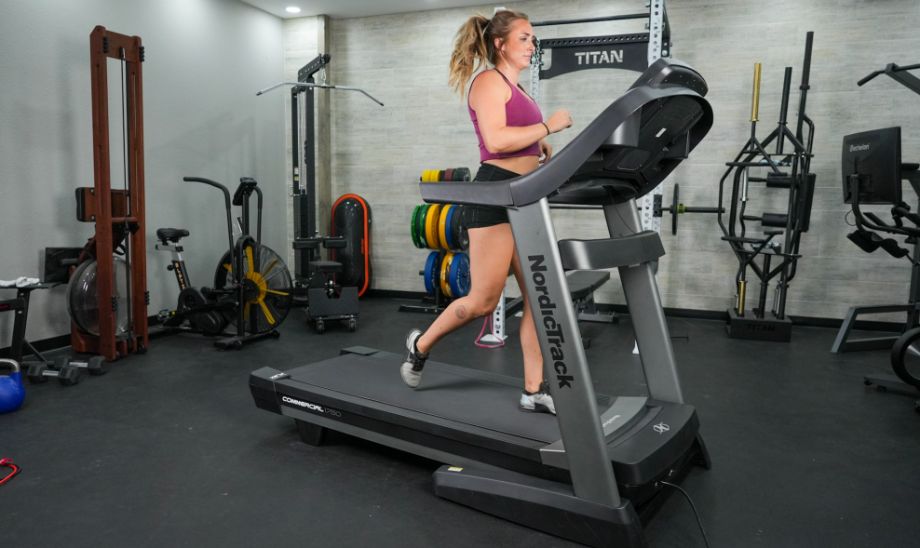
If you’re investing your time and energy into training on a treadmill, you likely want to make every second (and every step) count. Rather than aimlessly jogging or trying to guestimate the right speed, you can dial in more precise workouts using our treadmill pace chart.
RELATED: 5 Best Treadmill Workouts For All Fitness Levels
Whether you’re a beginner or a battle-tested runner, this resource will help you maximize the returns on your cardio sessions. In addition to speed conversions (don’t worry, we did the math for you) and training tips, I’ve also provided a few sample treadmill workouts that you can utilize for inspiration. Now, lace up your favorite running shoes, and let’s get started.
What Is Treadmill Pace?
Typically measured in miles per hour (MPH) or kilometers per hour (KPH), treadmill pace refers to the speed at which you run on a treadmill. Minutes per mile (Min/Mile) is another common metric used to measure treadmill pace, indicating the time it takes to cover one mile at a specific speed.
Unlike outdoor running—where factors like terrain and weather conditions can affect your performance—treadmill running occurs on a consistent surface without those external variables. The lack of wind resistance means that you may find running at the same pace on a treadmill easier than running outdoors. However, adjusting the treadmill’s incline settings can help mimic the resistance of outdoor terrain.
RELATED: Running Pace Calculator & Chart
What Is a Treadmill Pace Chart?
A treadmill pace chart is a valuable tool that can help runners correlate treadmill speeds with outdoor running paces. By using a treadmill pace chart, runners can determine the equivalent pace for various treadmill speeds, allowing for seamless transitions between indoor and outdoor workouts.
RELATED: Treadmill vs. Outside Running
For example, a treadmill speed of 6.0 MPH corresponds to a 10-minute mile. If you need to adhere to a particular pace, the chart can quickly answer which MPH setting you must utilize to stay on track (pun intended).
Benefits of Using a Treadmill Pace Chart
Using a treadmill pace chart offers several key benefits that can significantly enhance your running experience and training effectiveness:
Adds Precision to Your Training
Knowing exactly which speed corresponds to your desired pace eliminates all the guesswork. A treadmill pace chart provides accurate speed conversions between treadmill MPH settings and outdoor running paces, allowing you to train at the correct intensity. This precision can be particularly useful for runners following a specific full marathon or half marathon training plan, where hitting target paces is crucial for crossing the finish line as quickly as possible.
Adaptable to Different Goals
Whether you want to improve your mile pace, prepare for a race, or simply stay fit, a treadmill pace chart can allow you to tailor your workouts to your specific goals. It helps you choose the correct treadmill speed settings for various types of runs such as intervals, tempo runs, or long-distance training.
RELATED: 11 Tips For Running Long Distance
Improves Race Preparation
If you’re training for a competition, using a treadmill pace chart can simulate race-day conditions more accurately. By matching your treadmill speed to your target race pace, you can better prepare your body for the rigors of the actual event.
Maintains Consistency Across Running Workouts
By using a treadmill pace chart, you can maintain consistency in your workouts—regardless of whether you’re running indoors or outdoors. This consistency can help you track your progress as your body adapts steadily to the training load.
RELATED: 4 Guided Treadmill Workouts For Beginners
Treadmill Pace Chart: Speed Conversions and Equivalents
Using the treadmill pace conversion chart is simple. Let’s say you want to run a roughly 7-minute mile pace, for example. Look for 7:00 in the “Running Pace” column, and you’ll find that it corresponds to a treadmill speed of about 8.6 MPH. While you can find several versions of this chart online, we utilized one from Hill Runner as a guide.
Note: Most treadmills only reach max speeds of 10 to 12 MPH, though you may find some models that can hit speeds of up to 15 MPH.
| Treadmill MPH | Running Pace (Min/Mile) | Treadmill MPH | Running Pace (Min/Mile) | Treadmill MPH | Running Pace (Min/Mile) | Treadmill MPH | Running Pace (Min/Mile) | Treadmill MPH | Running Pace (Min/Mile) | Treadmill MPH | Running Pace (Min/Mile) |
| 1.0 | 60:00 | 3.1 | 19:21 | 5.2 | 11:32 | 7.3 | 8:13 | 9.4 | 6:23 | 11.5 | 5:13 |
| 1.1 | 54:32 | 3.2 | 18:45 | 5.3 | 11:19 | 7.4 | 8:06 | 9.5 | 6:19 | 11.6 | 5:10 |
| 1.2 | 50:00 | 3.3 | 18:11 | 5.4 | 11:06 | 7.5 | 8:00 | 9.6 | 6:15 | 11.7 | 5:08 |
| 1.3 | 46:09 | 3.4 | 17:38 | 5.5 | 10:55 | 7.6 | 7:54 | 9.7 | 6:11 | 11.8 | 5:05 |
| 1.4 | 42:51 | 3.5 | 17:08 | 5.6 | 10:43 | 7.7 | 7:47 | 9.8 | 6:07 | 11.9 | 5:03 |
| 1.5 | 40:00 | 3.6 | 16:40 | 5.7 | 10:32 | 7.8 | 7:41 | 9.9 | 6:04 | 12.0 | 5:00 |
| 1.6 | 37:30 | 3.7 | 16:13 | 5.8 | 10:21 | 7.9 | 7:36 | 10.0 | 6:00 | 12.1 | 4:58 |
| 1.7 | 35:18 | 3.8 | 15:47 | 5.9 | 10:10 | 8.0 | 7:30 | 10.1 | 5:56 | 12.2 | 4:55 |
| 1.8 | 33:20 | 3.9 | 15:23 | 6.0 | 10:00 | 8.1 | 7:25 | 10.2 | 5:53 | 12.3 | 4:52 |
| 1.9 | 31:35 | 4.0 | 15:00 | 6.1 | 9:50 | 8.2 | 7:19 | 10.3 | 5:50 | 12.4 | 4:50 |
| 2.0 | 30:00 | 4.1 | 14:38 | 6.2 | 9:41 | 8.3 | 7:14 | 10.4 | 5:46 | 12.5 | 4:48 |
| 2.1 | 28:34 | 4.2 | 14:17 | 6.3 | 9:31 | 8.4 | 7:09 | 10.5 | 5:43 | 12.6 | 4:46 |
| 2.2 | 27:16 | 4.3 | 13:57 | 6.4 | 9:22 | 8.5 | 7:03 | 10.6 | 5:40 | 12.7 | 4:43 |
| 2.3 | 26:05 | 4.4 | 13:38 | 6.5 | 9:14 | 8.6 | 6:59 | 10.7 | 5:37 | 12.8 | 4:40 |
| 2.4 | 25:00 | 4.5 | 13:20 | 6.6 | 9:05 | 8.7 | 6:54 | 10.8 | 5:34 | 12.9 | 4:39 |
| 2.5 | 24:00 | 4.6 | 13:02 | 6.7 | 8:57 | 8.8 | 6:49 | 10.9 | 5:30 | 13.0 | 4:36 |
| 2.6 | 23:04 | 4.7 | 12:45 | 6.8 | 8:49 | 8.9 | 6:44 | 11.0 | 5:27 | 13.1 | 4:34 |
| 2.7 | 22:13 | 4.8 | 12:30 | 6.9 | 8:42 | 9.0 | 6:40 | 11.1 | 5:24 | 13.2 | 4:32 |
| 2.8 | 21:26 | 4.9 | 12:14 | 7.0 | 8:34 | 9.1 | 6:36 | 11.2 | 5:21 | 13.3 | 4:30 |
| 2.9 | 20:41 | 5.0 | 12:00 | 7.1 | 8:27 | 9.2 | 6:31 | 11.3 | 5:18 | 13.4 | 4:29 |
| 3.0 | 20:00 | 5.1 | 11:46 | 7.2 | 8:20 | 9.3 | 6:27 | 11.4 | 5:15 | 13.5 | 4:27 |
Treadmill Training Tips and Strategies
Optimizing your treadmill workouts can significantly boost your running performance and keep you engaged during cardio sessions. Here are some effective ways to help you get the most out of your time on the treadmill.
Don’t Neglect Your Warm-Up (Or Cool Down)
Always start your workout with a proper warm-up to prepare your mind and body for what lies ahead. Performing a structured routine that includes functional movements like lunges, bodyweight squats, and dynamic stretches can help get your blood pumping, raise your heart rate, and activate your muscles.
RELATED: 3 Treadmill Warmup Ideas for Your Pre-Workout Routine
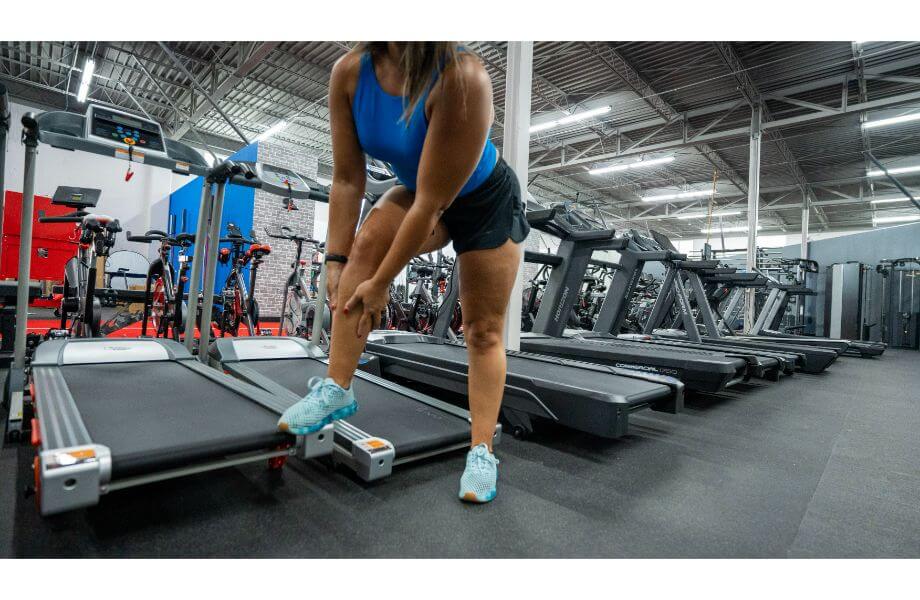
Once you’ve finished your run, conclude your workout with a cool-down period in which you let your heart rate gradually return to baseline. You can use this time to stretch and work on any mobility issues with a set of resistance bands or a foam roller.
Focus On Your Form
Maintaining good running form is critical for preventing injuries and maximizing efficiency. Keep an upright posture, engage your core, and avoid over-striding—where your feet land too far in front of your body and ahead of your center of gravity. Regularly check your form to ensure you’re running efficiently, especially as fatigue begins to set in. If you feel your form is becoming compromised mid-workout, slow your pace slightly and regain your composure.
Incorporate Interval Training
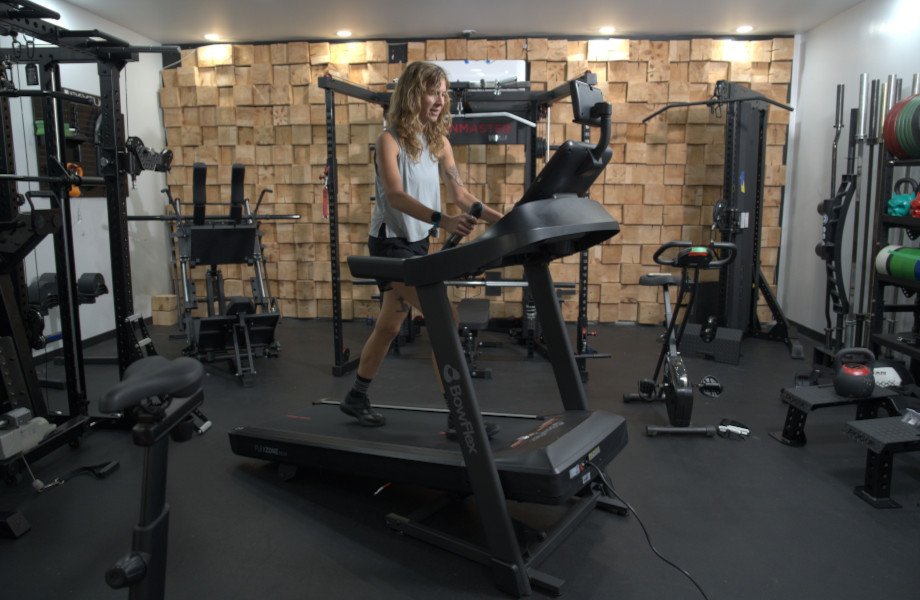
Interval training involves alternating between high-intensity and low-intensity running circuits. This method can offer several advantages, including improved maximal oxygen uptake, aerobic endurance, and anaerobic capacity1.
RELATED: How To Use a Treadmill For Interval Training
Set Realistic Goals
Setting achievable goals can keep you motivated and focused. Whether increasing your treadmill speed, extending your running duration, or preparing for a race, having clear objectives helps measure progress. Break down large goals into smaller, manageable milestones to stay on track.
Include Outdoor Running In Your Routine
While treadmill running offers many benefits, the unique challenges and experiences of outdoor running can still be boons to your performance. Incorporating outdoor runs into your training regimen can improve your overall fitness and prepare you for race day, especially for marathon training where long-distance outdoor runs are essential.
RELATED: Increase Running Speed and Strength With Hill Training
Track Your Heart Rate
A heart rate monitor can help you stay within your target heart rate zone, ensuring you’re working at the right intensity. This is particularly useful for structured training plans where maintaining specific intensity levels is important.
Luckily, there are plenty of devices that offer this useful feature. Whether you have an Apple Watch, Garmin fitness tracker, or a standalone heart rate monitor, you can take advantage of the tracking technology. Plus, most running apps provide tracking capabilities, with some platforms even offering specific treadmill modes.
Use The Treadmill Incline Feature
Adjusting the treadmill incline can simulate outdoor terrain and increases the intensity of your workout. Running on an incline engages different muscle groups and helps improve strength and endurance.
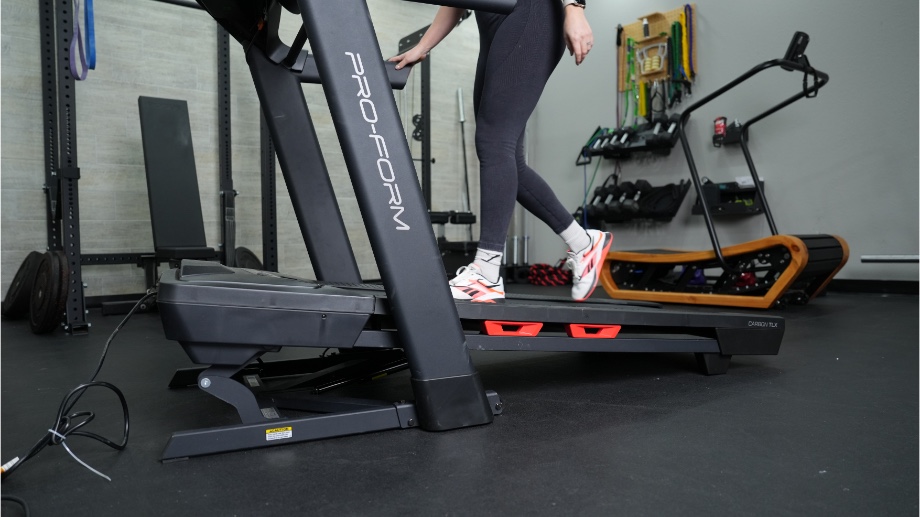
Adding a slight incline (1% to 2%) can mimic the resistance of outdoor terrain and help improve your overall running strength. Start with a low incline treadmill workout and gradually increase the running deck’s pitch as you build stamina.
Vary Up Your Workouts
Variety is the key to preventing workout boredom and plateaus. Alternate between different types of runs, such as tempo runs, long-distance runs, and sprints. This can keep your body (and brain) stimulated by challenging you to adjust to the demands of each training session.
Tips for Beginners (And Common Mistakes to Avoid)
While experienced runners and cardio enthusiasts can probably operate a treadmill with their eyes closed (we don’t recommend that), beginners are often unaware of common mistakes that can quickly derail their training experience. Here’s a quick overview of what can go wrong—and how to avoid those issues altogether.
- Start slower than you think you need to: Many beginners go too fast, too soon. Start with run-walk intervals and gradually increase the time or speed as you improve your cardiovascular fitness.
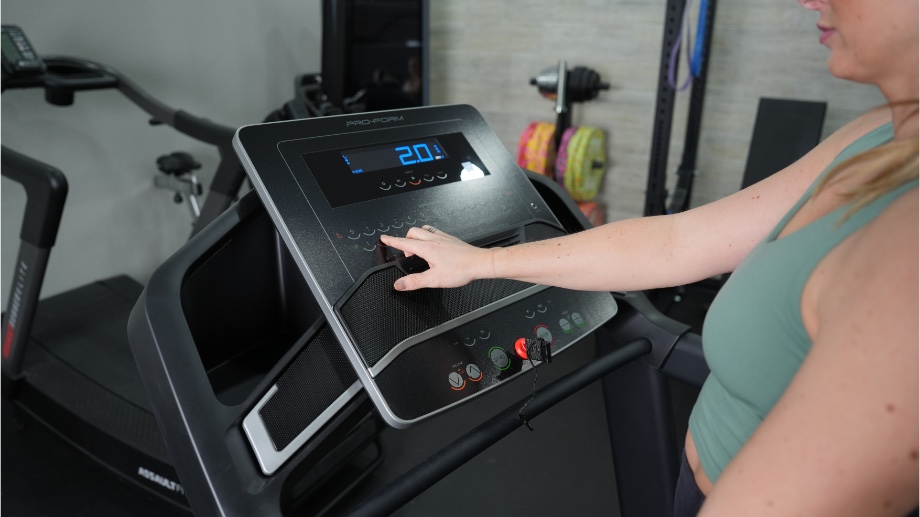
- Use the safety key and practice the controls first: New treadmill users may struggle to use the speed and incline buttons correctly during a workout. To avoid this, clip on the safety key and do a quick “button check” at an easy walking pace so you can adjust the settings with confidence.
- Don’t hold the handrails: Hanging onto the handrails changes your body positioning and may reduce the effectiveness of your workouts or encourage poor postural habits. If you feel like you need the rails, lower the speed or incline settings until you can move comfortably hands-free.
- Be aware of your foot placement: Many beginners run close to the front console, which can shorten your stride and increase the chance of missteps and injury. Rather, try to stay centered on the belt and let your arms swing naturally.
- Hydrate more than you think: Treadmill training can feel deceptively “easier” than running outside, but you can still work up quite a sweat and burn through precious resources. Keep a running water bottle on hand, and for longer sessions, consider adding electrolytes to prevent headaches and fatigue.
Sample Treadmill Workouts
Need some inspiration for your next treadmill training session? Here are three workouts you can try that can make this cardio machine the star of the show. I designed each program so you can focus on specific goals, including improving your metabolic conditioning, expanding your aerobic capacity, and building sufficient stamina for long runs.
HIIT Running Workout
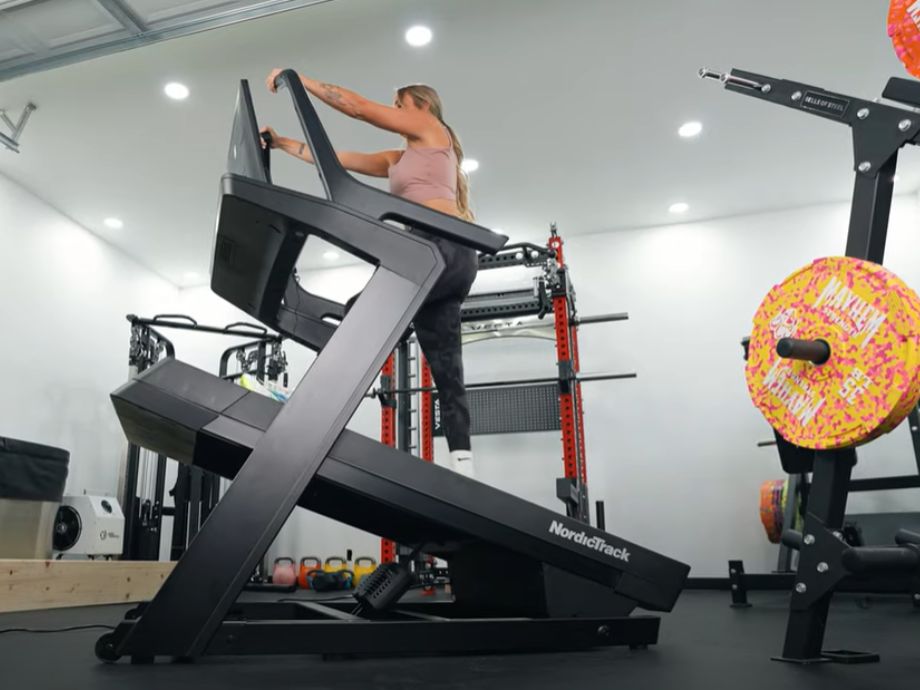
This HIIT-style workout challenges you to run at a fast pace, recover quickly, and go again. While I’ve provided recommended speed settings, feel free to make adjustments based on your fitness level.
- Warm-up: 5 minutes at 3.5 MPH
- High-intensity interval: 1 minute at 7.5 MPH (a run, but not a full sprint)
- Low-intensity interval: 2 minutes at 3.5 MPH
- Repeat intervals: Alternate between high- and low-intensity intervals for 20 minutes
- Cool-down: 5 minutes at 3.0 MPH
RELATED: 6 HIIT Treadmill Workouts
Hill Workout
Ramp up the difficulty by taking advantage of the treadmill’s incline feature (if available). Hill running has been positively associated with greater aerobic capacity2, and this workout simulates those conditions by alternating between incline and flat ground intervals.
- Warm-up: 5 minutes at 3.0 MPH with 0% incline
- Incline interval: 2 minutes at 6.0 MPH with 5% incline
- Flat-round interval: 2 minutes at 3.5 MPH with 0% incline
- Repeat intervals: Alternate for 20 minutes
- Cool-down: 5 minutes at 3.0 MPH with 0% incline
Progressive Long Run Workout
This workout can help you develop the physical and mental fortitude for longer-duration runs. If you’re not quite ready for the recommended speed or time settings, adjust accordingly and build up your stamina until you can complete the entire workout.
- Warm-up: 5 minutes at 3.0 MPH
- Main workout: Start at 5.5 MPH for the first 20 minutes
- Increase speed: Gradually increase the speed by 0.5 MPH every 10 minutes until you reach 7.0 MPH
- Maintain last speed: Run at the final 7.0 MPH speed for the last 15 minutes
- Cool-down: 5 minutes at 3.0 MPH
RELATED: Running on a Treadmill Tips
Treadmill Pace Chart: Final Thoughts
While it’s important to take things at your own pace in the beginning, it’s also important to know what pace you need to maintain if you’re training for a competition or specific fitness goal. Between implementing my running tips and leaning on the pace chart for guidance, you can put yourself on a path to more efficient and enjoyable treadmill workouts.
Treadmill Pace Chart: FAQs
What is a good pace on a treadmill?
A good pace on a treadmill depends on your fitness level and the type of workout you’re doing. For beginners, anywhere between 3 to 5 MPH is considered a good pace for distance runs. Meanwhile, intermediate and advanced runners should aim for 6 to 9 MPH.
What is 7.0 on a treadmill?
Setting your treadmill to 7.0 corresponds to a speed of 7 MPH. This equates to a per-mile pace of approximately 8 minutes and 34 seconds.
What is a 7-minute mile on a treadmill?
A 7-minute mile pace on a treadmill equates to a speed setting of approximately 8.6 MPH.
What are the benefits of using a treadmill pace chart?
Using a treadmill pace chart can allow you to dial in more precise cardio sessions, as you can quickly convert treadmill speeds to approximate outdoor running paces. This can be particularly useful when you’re preparing for a race or have specific performance benchmarks you want to achieve.
Does incline change pace equivalence?
Yes—running uphill is more challenging, so even if you’re working just as hard, your actual pace will be slower than it would be on flat ground. That’s why “equivalent pace” needs to account for incline and is often shown as “grade-adjusted pace.”
References
- Atakan, M. M., Li, Y., Koşar, Ş. N., Turnagöl, H. H., & Yan, X. (2021). Evidence-Based Effects of High-Intensity Interval Training on Exercise Capacity and Health: A Review with Historical Perspective. International journal of environmental research and public health, 18(13), 7201. https://doi.org/10.3390/ijerph18137201
- Lember, L. M., Di Virgilio, T. G., Brown, E. M., & Rodriguez-Sanchez, N. (2021). Hill Runner’s Physiology, Performance and Nutrition: A Descriptive Study. Frontiers in sports and active living, 3, 676212. https://doi.org/10.3389/fspor.2021.676212