


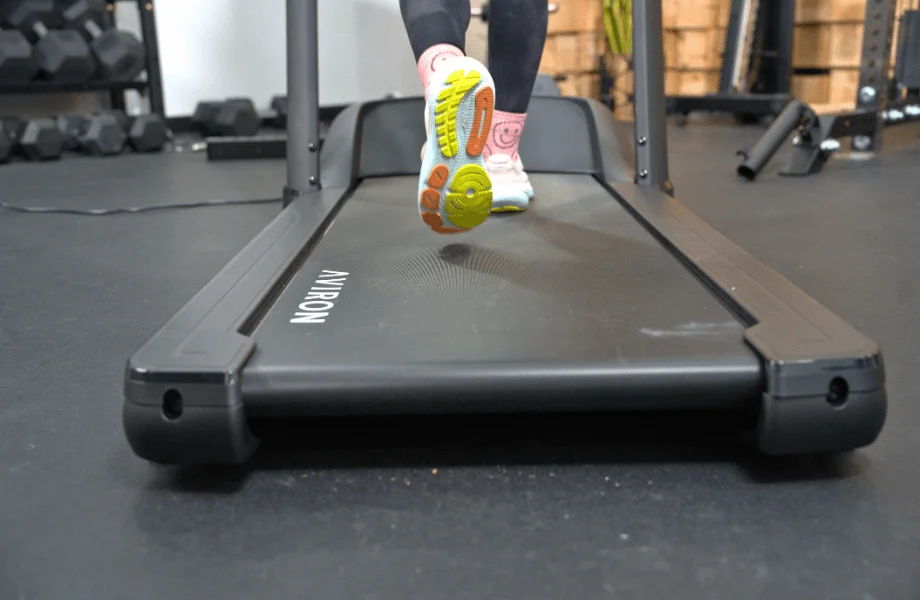
Many people dislike the almighty treadmill, but is it just misunderstood? After all, with the right approach, it can be one of the most effective tools for improving your cardiovascular fitness and overall health. And when you consider all the benefits of running on a treadmill, you should be inspired to learn to work with the machine—not against it.
The Garage Gym Reviews team is here to help you foster a better relationship with this machine by sharing seven running on a treadmill tips to make your next cardio workout as pleasant, secure, and successful as possible. As a former NCAA Division I athlete, I’ve logged countless miles on some of the best treadmills out there, so I know exactly what works—and what doesn’t—when it comes to making every step count.
1. Make Time to Warm Up (and Cool Down)
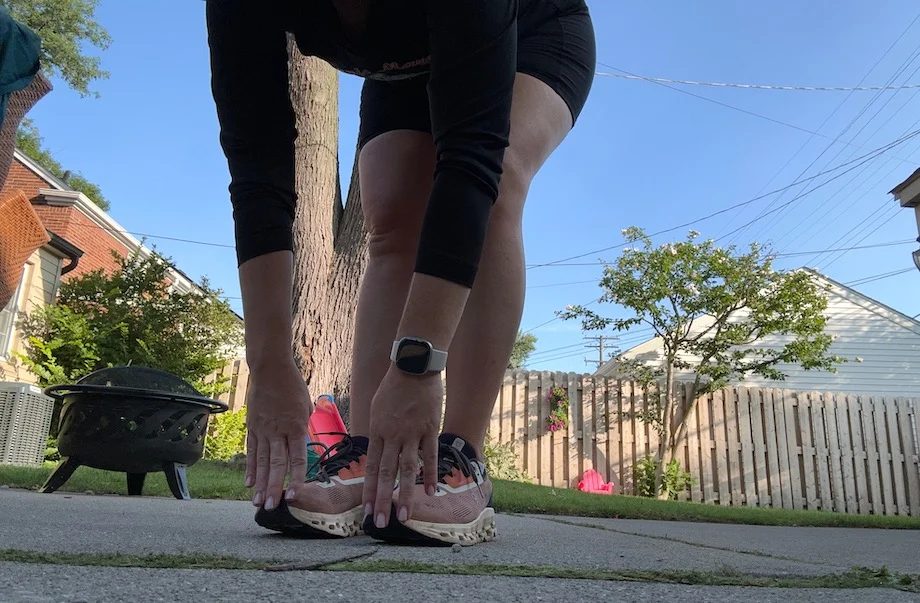
I know it can be tempting to hop on the treadmill without warming up, but you’re missing out on a better run. A recent study1 showed that a treadmill warmup up before running can “improve RE (running economy) in healthy adults.” Running economy refers to how efficiently your body uses energy relative to oxygen consumption.
In layman’s terms, you may be a more efficient runner if you complete a proper warmup ahead of getting your sweat on. Here’s a protocol you can follow to get your blood pumping:
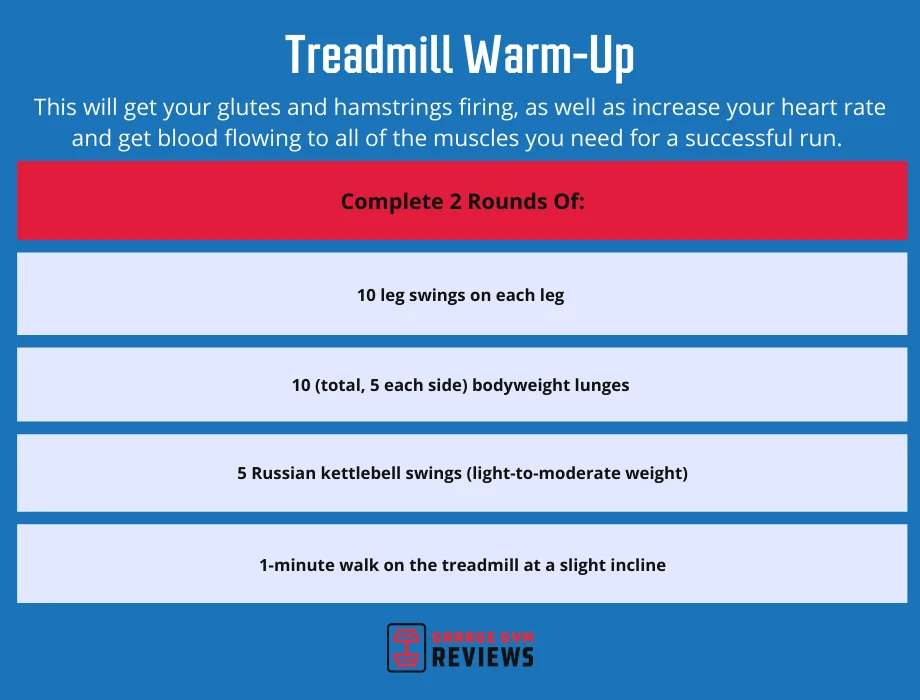
Cooling down is important, too—give your body time to return to its resting state by transitioning from a run to a walk before hopping off completely. Make sure to stretch, foam roll, or take a massage gun for a spin on your legs afterward, as well.
RELATED: Cool Down Exercises
2. Know Your Treadmill Features
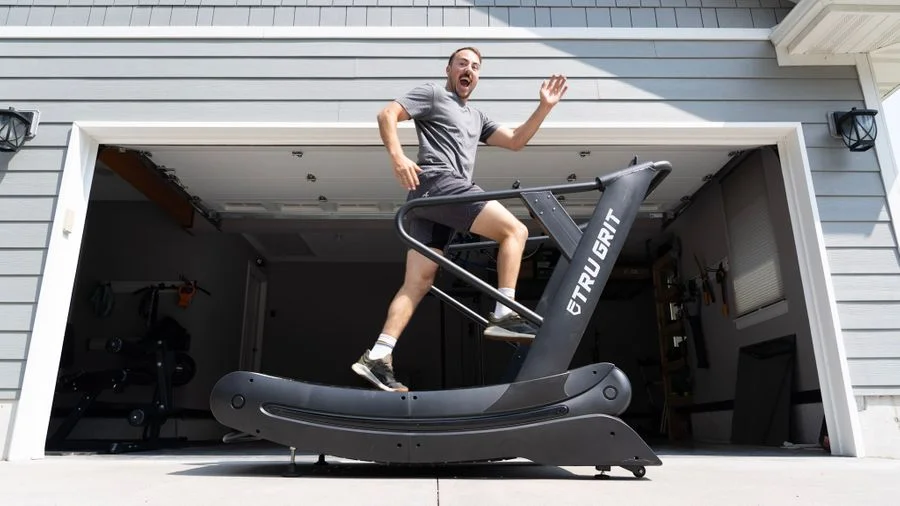
Depending on the type of treadmill you’re using, there might be a variety of features you’re underutilizing (or not even using, at all). Here are some fun extras to check for:
- Preset programs: Tired of trying to figure out your own treadmill workout? Some treadmills come equipped with excellent preset programs for the user to just click and go. I’ve commonly seen HIIT, calorie burn, heart rate-focused, and hill workouts on a variety of budget, mid-range, and higher-end treadmills.
- Heart rate monitors: Some of the best treadmills come with chest strap heart rate monitors, so don’t forget to check! Even those that don’t come with a free heart rate monitor may come with pulse monitors on the inner set of handlebars. However, I wouldn’t put too much stock into what they say, because they are known to be a bit inaccurate. That said, it can still be interesting to see an estimate.
- Bluetooth connectivity: Even some treadmills that don’t have a touchscreen may have Bluetooth connectivity. You may be able to sync your smartphone to the treadmill and play your music over the machine’s speakers.
- Cooling fans: Make sure to utilize your cooling fan (if your treadmill has one). It can be an excellent way to dry sweat from your forehead or neck after a particularly hard interval.
- Adjustable cushioning: Some treadmills feature adjustable deck cushioning that can allow you to switch between a harder or softer surface. This can be particularly helpful for runners who want to simulate outdoor running conditions.
RELATED: How to Use a Treadmill
3. Stay Hydrated
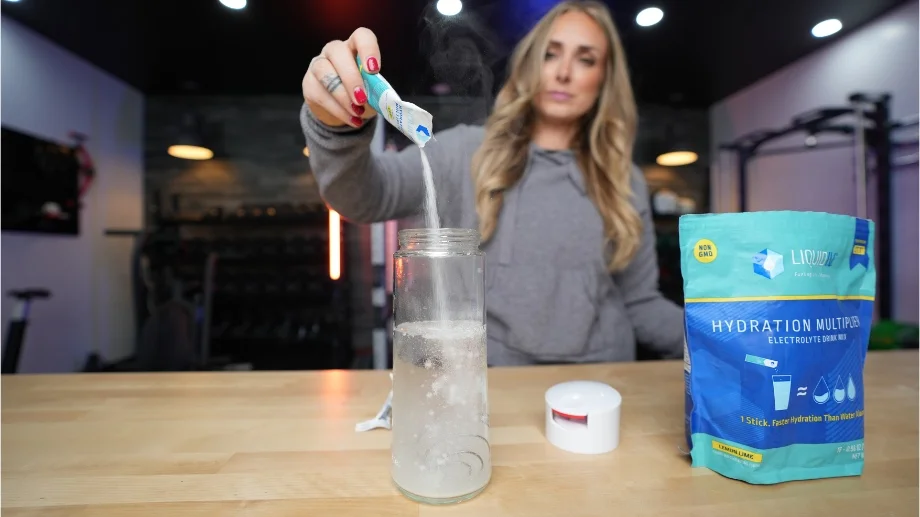
Whether you’re prepping for a half-marathon or just another interval workout, hydration is key to feeling and performing your best. Think of your body as a car; if you don’t put gas in it, your car won’t work. The same goes for your body. Without the needed hydration (and nutrition, for that matter), you’ll have trouble throughout your run.
My personal trick for staying well-hydrated is to have a massive water bottle on hand at all times. I’m talking 64 ounces of water in my giant YETI that I refill multiple times a day like a psycho. My friends even call it my “emotional support water bottle.” As such, my advice is to get yourself an emotional support water bottle of your own, so there won’t be any doubt you’re prepped and ready for race day (or just another Tuesday run). And for good measure, throw some electrolytes in there to replace what you’ll inevitably lose during your session.
RELATED: Best Electrolyte Powders
4. Practice Good Running Form
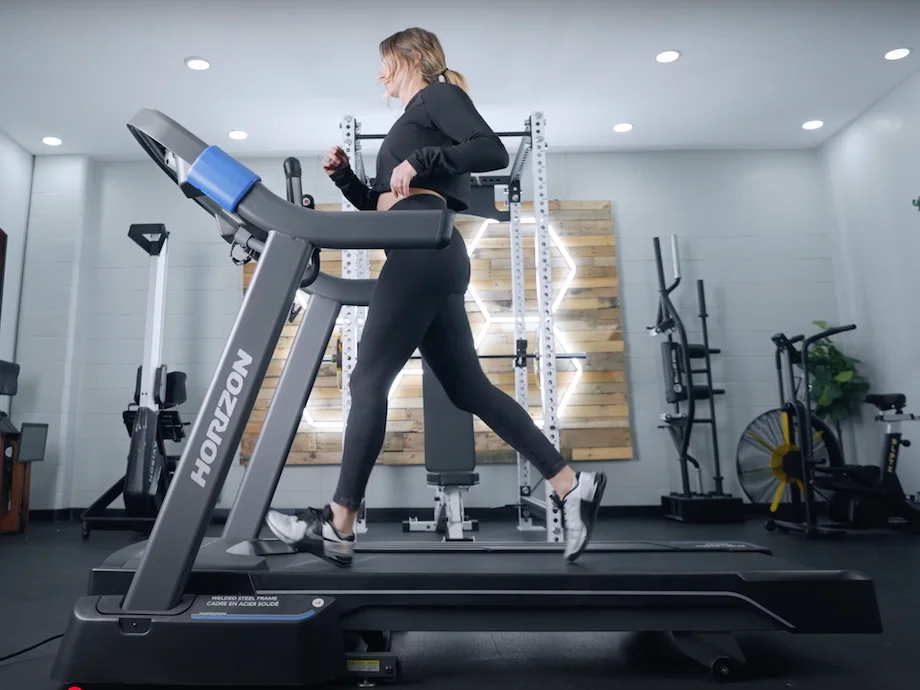
When running on the treadmill, it is important to practice good form. I routinely see people hunched over the machine with their hands gripping the handrails. No wonder people have so much back pain!
My tips: Stand up straight, don’t look down, and activate your upper body by swinging your arms through your shoulders to propel yourself throughout your run. People naturally want to swing their arms from side to side when running, but you’re actually making it harder for yourself.
RELATED: Good Running Form For Beginners
Not sure if you’re striking your foot properly during your run? Consult with a running coach (either virtually or in-person) for a professional opinion. This knowledge can set you up for many years of safe running.
5. Listen to Music
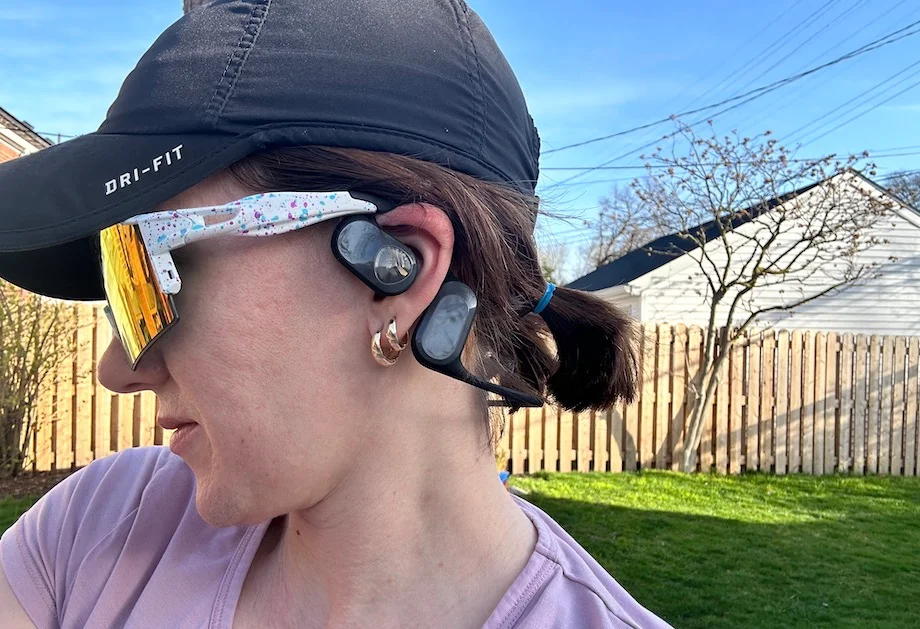
Studies have shown that listening to music while you work out2 can actually make you want to exercise for a longer period of time. Not sure what music to listen to? Check out the best workout playlist on Spotify to find your new favorite tunes.
It can be tempting to revel in the silence (especially if it’s the first time you’ve been alone today), but you’ll likely push yourself more on the treadmill if you’re listening to upbeat music.
Not really into music? Consider checking out the latest episode of your favorite podcast, or a new audiobook that’s been sitting in your digital library. Although there aren’t studies saying these have the same effect as listening to music, it can be nice for your mind to have something else to focus on other than the “dreadmill.”
RELATED: Best Running Headphones
6. Mix it Up
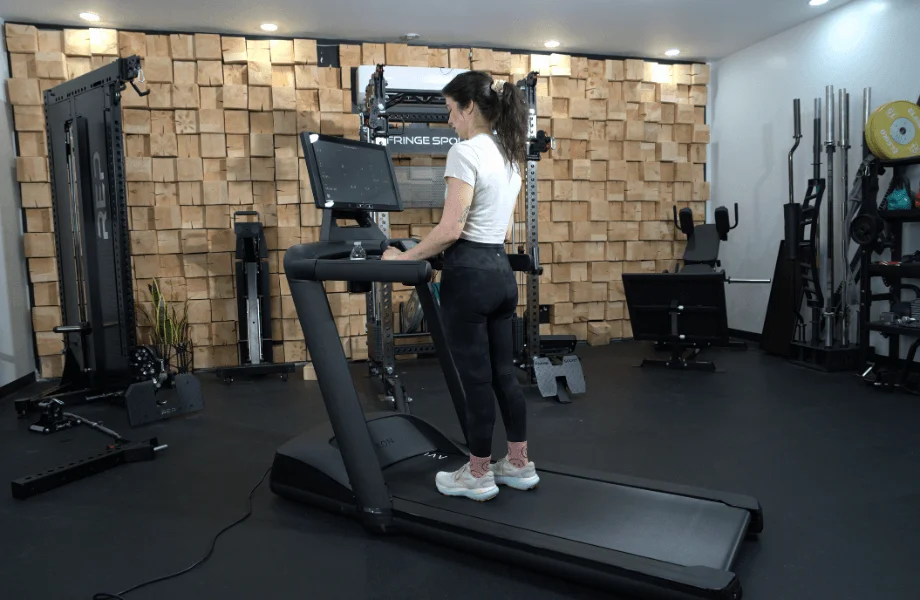
Some treadmill workouts can feel monotonous, which is why it’s important to switch things up every now and again. An easy pace for 45 minutes might be the ticket one day, and the best option the next could be a 20-minute interval-training session.
Mixing it up is important to prevent burnout and overuse injuries. Certified personal trainer and former GGR editor Anthony O’Reilly agrees, noting, “Working the same muscle group every day can increase your risk of injury. You don’t need to run on the treadmill each day to see results. In fact, incorporating regular strength training (and rest days) into your workout routine is still very important, even for people who consider themselves primarily runners.”
RELATED: How to Make Treadmill Running Fun
7. Utilize the Incline
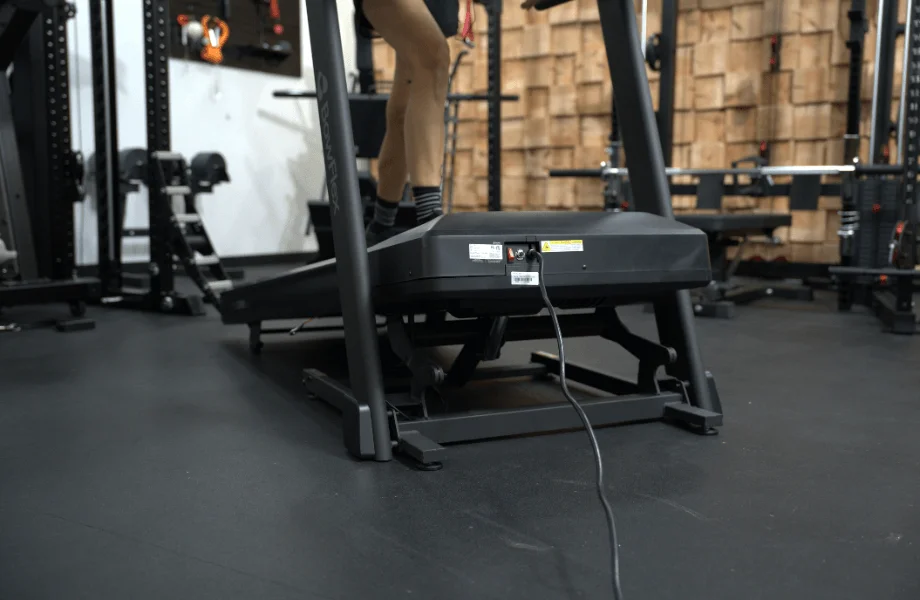
To simulate running outdoors, add one to two levels of incline to your treadmill run. This can better account for the wind resistance you’d experience outside.
Adding more incline can also be a great way to push yourself and increase lower-body activation. The popular 12-3-30 workout is also an excellent way to get the benefits of incline training without running (if walking is feeling like the right move today).
RELATED: Best Incline Treadmills
Now, Try This Treadmill Workout
Now that you’re armed with the knowledge, it’s time to put these seven tips into action. If you’re ready for a high-intensity session, give this 30-minute treadmill workout a try. Your heart rate will increase in just the first few minutes, so be sure to take advantage of your recovery intervals.
Pro tip: If the intensity intervals are too much during your treadmill run, decrease the speed or incline to a more comfortable setting.
| Time | Speed | Incline | Pace |
| 0-3 minutes | 3.5-5.0 MPH | 1% | Warm-up |
| 3-6 minutes | 5.0-7.0 MPH | 6% | Moderate |
| 6-9 minutes | 4.5 MPH | 2% | Recovery |
| 9-12 minutes | 5.5-7.5 MPH | 8% | Intense |
| 12-15 minutes | 4.5 MPH | 3% | Recovery |
| 15-18 minutes | 5.5-7.5 MPH | 10% | Intense |
| 18-21 minutes | 4.0 MPH | 3% | Recovery |
| 21-24 minutes | 6.0-7.5 | 12% | Intense |
| 24-27 minutes | 5.0-6.0 MPH | 6% | Moderate |
| 27-30 minutes | 3.5 MPH | 1% | Recovery |
RELATED: HIIT Treadmill Workouts
Running On a Treadmill Tips FAQs
How can I get better at running on a treadmill?
Just like anything else, the more you do something, the better you get at it. Running on a treadmill is no different––continue to show up and focus on your form.
Is running on the treadmill for 30 minutes good?
This all depends on your personal goals. If you are a beginner who is just starting out, running on a treadmill for 30 minutes can be excellent. For a more experienced runner, this may not be enough. Evaluate your own fitness level and find a pace, time, and incline that works for you.
What should beginner runners know about running to become a better runner?
Practice makes progress! Be consistent, but be smart about your personal limits, as well. You don’t need to kill yourself every single time you step onto a treadmill. Start slow, and work your way up. This is the best way to avoid potential burnout and avoidable frustration.
References
- Wei, C., Yu, L., Duncan, B., & Renfree, A. (2020). A Plyometric Warm-Up Protocol Improves Running Economy in Recreational Endurance Athletes. Frontiers in physiology, 11, 197. https://doi.org/10.3389/fphys.2020.00197
- Thakare, A. E., Mehrotra, R., & Singh, A. (2017). Effect of music tempo on exercise performance and heart rate among young adults. International journal of physiology, pathophysiology and pharmacology, 9(2), 35–39.