


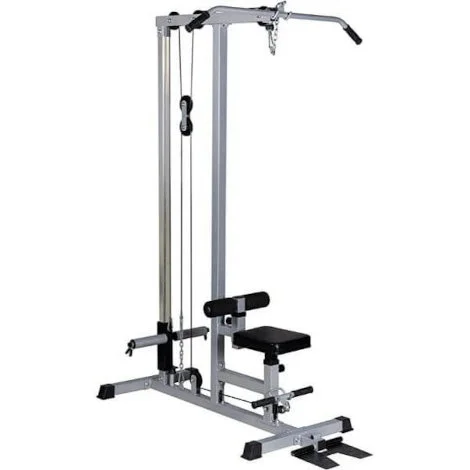
The best lat pulldown machines can be great tools to have at your disposal, unlocking the ability to perform a variety of upper-body cable exercises without a growing assortment of free weights. However, they can be quite expensive, which is why we get excited when we’re able to test affordable options like the GDLF Lat Pulldown Machine—a standalone piece of equipment offering plate-loaded resistance across high- and low-row stations.
We’ve spent plenty of time putting this GDLF offering through a variety of exercises, carefully examining every aspect to determine the pros and cons. In this GDLF Lat Pulldown review, I’ll help you decide whether this budget-friendly piece is worthy of a place in your home gym, or if you’re better off saving up for something a little more robust.
Our GDLF Lat Pulldown Review, Summarized
The GDLF Lat Pulldown is a lightweight cable machine that includes both high and low pulley stations. It’s a little wobbly in use, but the pulleys are surprisingly smooth. For those on a budget, this can be a great option to expand your home gym, as long as you’re not expecting an ultra-premium feel. It’s plate-loaded, as well, so if you don’t already own weight plates, those will be an additional cost.
How We Test Lat Pulldowns
Machines can take up quite a bit of space, so we carefully score each profile for its footprint and portability, in the event that you need to re-arrange your gym at some point in the future. To get at least 3 out of 5 stars, the machine’s height should fit in most gyms, and two to three people should be able to move it.
Taking both safety and comfort into consideration, it’s important to assess a lat pulldown’s overall stability as we test the machine with various loads and exercises. For a 3 out of 5, the machine may wobble a little with heavier weight totals, but it never feels unsafe. Higher scores are given to machines with little to no movement, even when loaded to maximum capacities.
The amount of cable height settings, as well as available weight options, determines how many exercises can be performed on a given functional trainer or lat pulldown station. To earn 3 out of 5 stars in this category, a machine should have a moderate weight stack (or weight capacity for plate-loaded machines), and allow users to perform various exercises like pushdowns or lat pulldowns, though lower body training may be difficult.
After using each lat pulldown machine, we carefully rate the profile using our functional trainer testing methodology, which helps us determine a final score. We assign a rating of 1 to 5 for a variety of testing categories, including construction and durability, accessories, value, and more.
The Garage Gym Reviews team is made up of gym owners, fitness enthusiasts, certified personal trainers, strength and conditioning coaches, nutritionists, and more. We love testing and reviewing fitness equipment, and and we’re excited to help you find your next big purchase.








What to Know Before You Buy
- This is one of the most affordable lat pulldowns on the market, making it a great option for those shopping on a budget.
- It’s a little wobbly and probably can’t support the 500-pound weight plate capacity it claims, but it should be good enough for most home gym owners.
- For the cost, the pulleys are quite smooth, although it doesn’t feel like the most durable lat pulldown we’ve ever used.
Is the GDLF Lat Pulldown Worth It?
This is one of the cheapest lat pulldowns we’ve ever seen, but before you order one for your home gym, you’ll want to make sure it’s a good fit for your needs.
It’s built well for the price, although it can feel a little wobbly under heavy loads. However, we never felt unsafe while testing it, and if you don’t need a commercial-grade lat pulldown, this can be a good choice.
If you think this lat pulldown might be the right choice for you, keep reading to learn about the key features, specs, and our honest testing feedback.
GDLF Lat Pulldown: Key Features & Specs
| Price (Original MSRP) | $162.99 |
| Footprint | 59″ L x 26″ W x 77″ H |
| Materials | Alloy steel, foam padding |
| Weight Stack or Plate-Loaded | Plate-loaded |
| Weight Capacity | 500 lbs |
| Pulley Ratio | Not disclosed |
| Accessories | Lat pulldown attachment, curl bar attachment |
| Cable Travel Length | Not disclosed |
| Number of Height Options | N/A |
| Warranty | Not disclosed |
Experience Using the GDLF Lat Pulldown
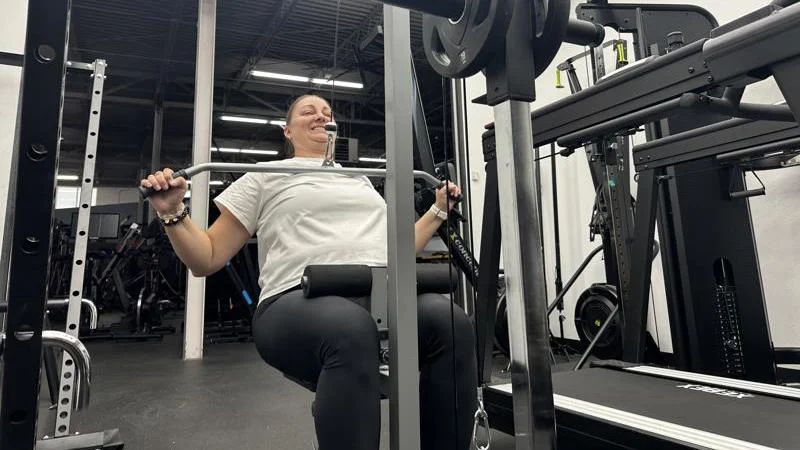
For this review, our product tester was GGR Managing Editor Amanda Dvorak, ISSA-CPT, ISSA-CNC, who’s used countless pieces of strength training equipment over the years. She was able to use this machine in our testing headquarters, trying it out with a variety of exercises and weights.
Overall, she was impressed by this lat pulldown station, especially given its affordable price point. It’s not the nicest lat pulldown we’ve ever used, but we wouldn’t expect that at such a low cost.
It’s strong in some areas, like the pulley system, while weaker in others, including overall stability and durability. Still, a sub-$200 lat pulldown is very rare, and if you’re working with a tight budget, you really can’t go wrong here.
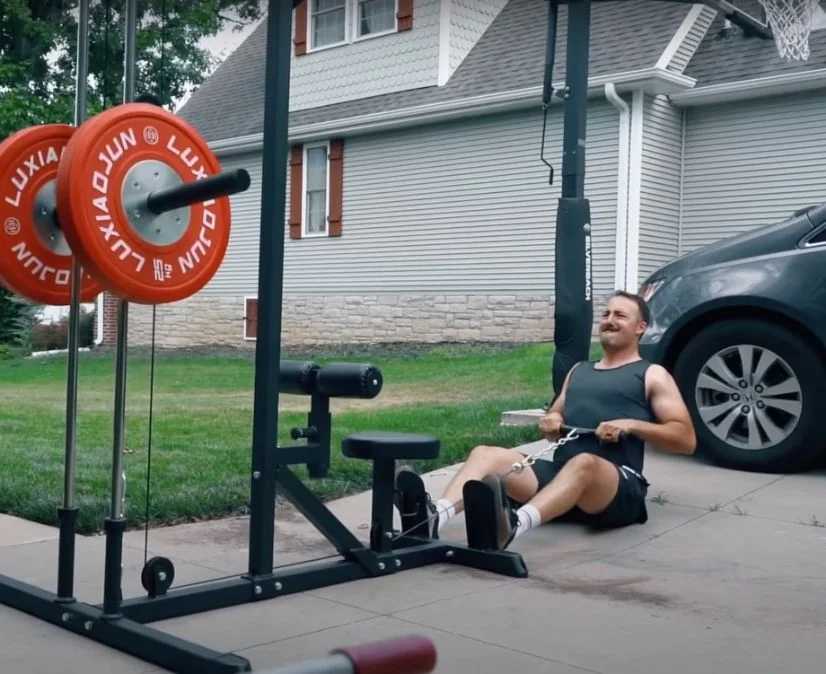
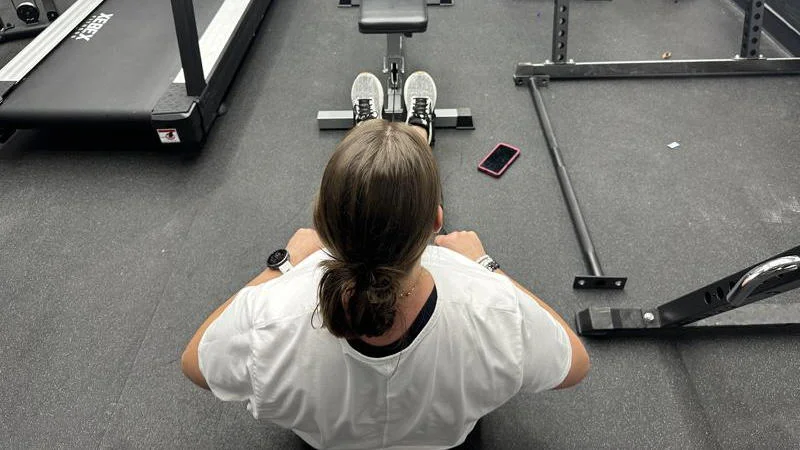
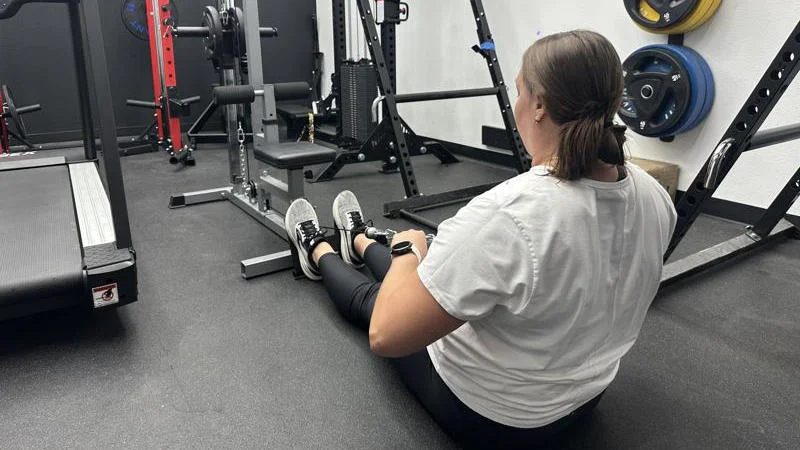
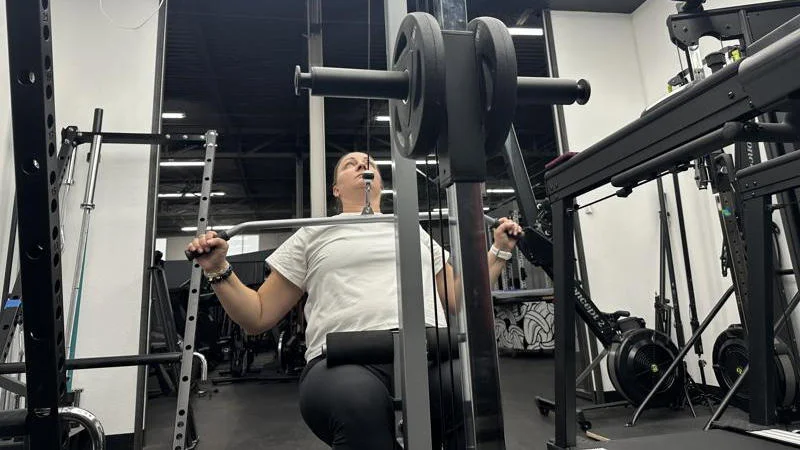
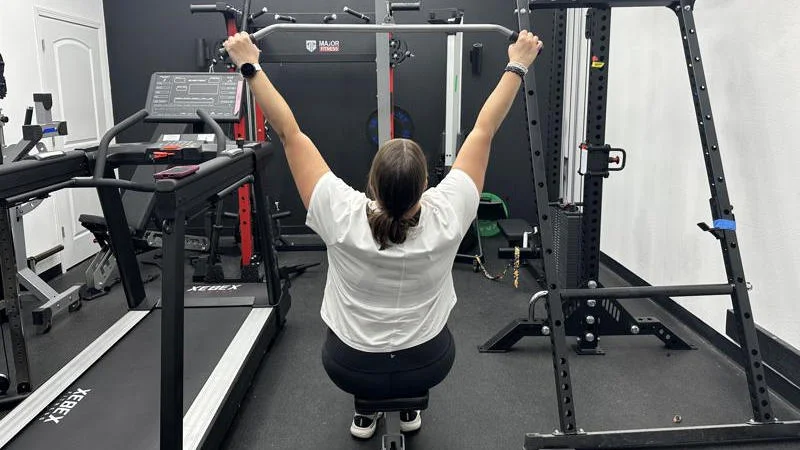
The GDLF Lat Pulldown is also pretty versatile, as the low pulley stations allow you to perform exercises like low rows and biceps curls through a full range of motion, while the high pulleys help you focus on upper body strength with pulldowns and triceps pushdowns. We wish there was a dedicated footplate like you’d see on a low-row machine, but that’s not an absolute deal-breaker.
The GDLF Lat Pulldown is a great choice for home gym owners on a budget, especially those who are looking for their first lat pulldown. The lightweight frame makes it easy to move around your space, so it’s a good option for those who are still adding to their gym and may need to rearrange things later on.
Ben Emminger, NASM-CNC, NASM-CSNC
GDLF Lat Pulldown Rating
Construction and Durability
For construction and durability, the GDLF Lat Pulldown earns 3 out of 5 stars. At this price point, we wouldn’t expect the highest quality, and in this case, you get what you pay for.
“It uses alloy steel and because it’s so lightweight, it’s not very stable,” explains expert tester Amanda Dvorak, ISSA-CPT, ISSA-CNC. “Putting weights on it does help, but even then, it felt pretty wobbly.”
We also use this category to rate the cables on functional trainers and lat pulldowns, and Amanda said they’re pretty good. “I wasn’t able to find exact measurements for the nylon cables, but they do feel pretty thick and durable,” she explains.
Footprint
For the overall footprint, we give this lat pulldown a solid 4-out-of-5-star rating. Sitting 59 inches long by 26 inches wide by 77 inches tall, it’s pretty small in comparison to other units, and it’s not overly heavy at 72 pounds.
“It’s pretty compact, and since it’s lightweight, two people can easily move it around, if needed,” says Amanda. “I think even one fit person could be able to drag it around by themselves if necessary.”
While we wouldn’t suggest moving tall, heavy equipment alone, it’s nice to know that this machine isn’t going to be stuck in one place forever once you set it up.
Versatility and Weight Stack
When it comes to versatility, this GDLF profile is pretty good for a lat pulldown, but it doesn’t really compare to a full functional trainer. We give it 3 out of 5 stars, overall, for this category.
There are four positions to adjust the leg pads, and the seat height can be toggled up or down, but that’s about it. You have the high pulley and low pulley, but nothing in between. You could use the high pulley for triceps exercises and the low pulley for biceps curls, but you’ll probably need your own attachments. There’s no good way to train your chest, legs, or shoulders, either, so this setup is less ideal for full-body workouts.
RELATED: 10 Lat Pulldown Alternatives
While there’s no weight stack, this plate-loaded lat pulldown claims to have a max weight capacity of 500 pounds. However, our testers don’t think this is factual, as it starts to feel wobbly as you use heavier weights. We still think it can handle more than enough for most users, but the 500-pound weight capacity is likely exaggerated.
Pulleys and Overall Stability
Despite its low cost, Amanda was impressed by the pulleys on this lat pulldown and gave it 4 out of 5 stars for pulleys and stability. “I don’t have a ton of experience with lat pulldown machines, but given this one’s price point and overall construction, I was pleasantly surprised at how smooth it felt,” she adds.
The pulleys feel pretty efficient as you go through your pulling motion, but this machine doesn’t feel very stable in use, overall, especially when compared to other high-end options.
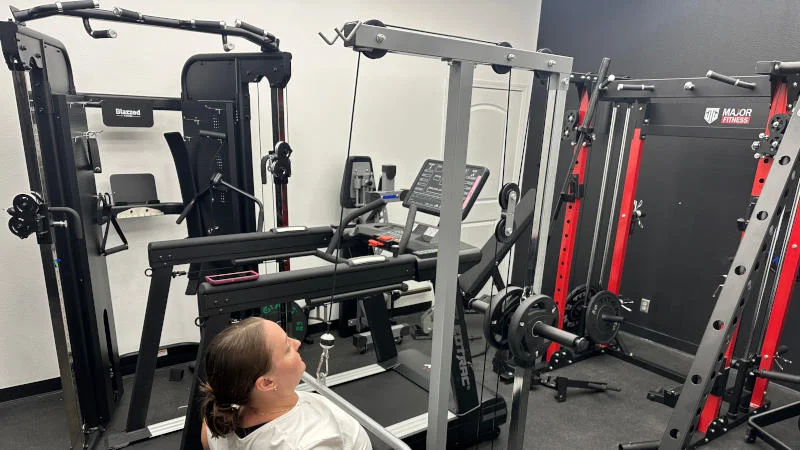
“This machine is kind of wobbly,” Amanda notes. “I think anyone who buys it should just be aware of its limitations and know not to push the weight on it too much; it’s definitely not capable of holding 500 pounds.”
Accessories
The GDLF Lat Pulldown earns 3 out of 5 stars for accessories. It comes with a standard lat pulldown bar, as well as a shorter low row bar that’s designed to be used with the low pulleys.
Research shows1 that using different attachments and handles can change muscle activation when performing cable exercises, so we would like to see as many included handle options as possible with lat pulldowns and functional trainers.
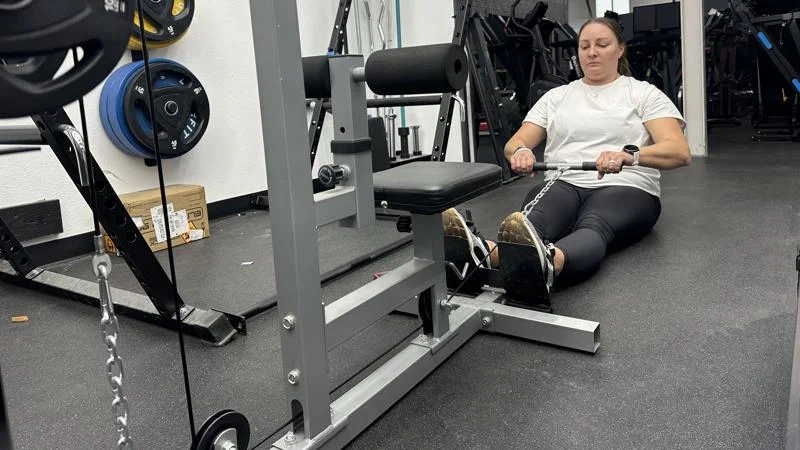
You can certainly buy your own cable attachments if you want to try other grips and angles, and we wouldn’t necessarily expect a budget pulldown to include a wide variety of attachments. Just know that you’re only getting the basics with the GDLF Lat Pulldown.
Price and Value
For overall value, we give this 4 out of 5 stars. Sure, it’s not the best lat pulldown on the market, but it’s also extremely affordable and surprisingly smooth in-use. In fact, it’s one of our favorite lat pulldowns we’ve had in testing.
Eventually, you may want to upgrade to something a bit more premium. However, if it’s not going to be a staple in your workout routine, it can certainly be a great way to trial a lat pulldown in your home gym. Amanda adds, “I can see this being a viable option if you need something really budget-friendly.”
RELATED: DIY Lat Pulldown
Customer Experience
We give the customer experience 3 out of 5 stars, meaning it hits our benchmarks for a middle-of-the-road purchase journey.
There’s a 30-day return period, and the brand can be reached via email or a contact form on the website. That said, we were unable to find any information on warranty coverage.
You can also order this lat pulldown directly from Amazon, which can be an ideal option for Prime members who should receive fast, free shipping at checkout.
Customer Reviews
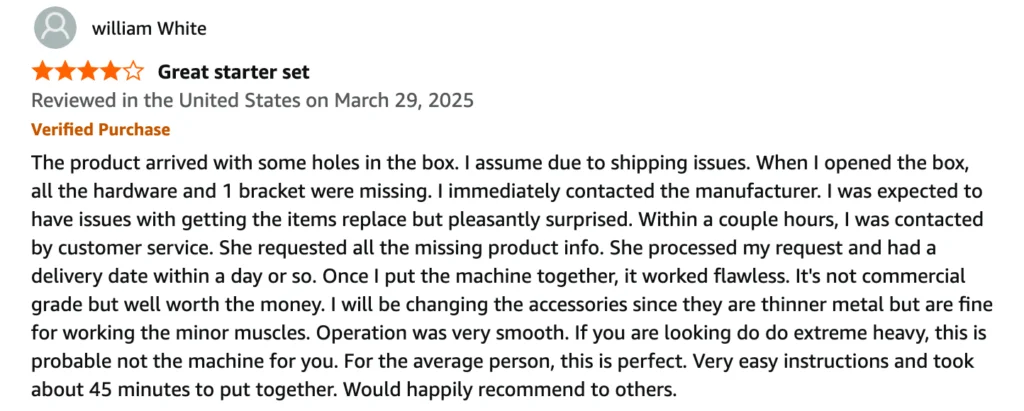
To get the most unbiased customer reviews, we looked at Amazon (where we recommend buying the GDLF Lat Pulldown). At the time of writing, the machine has an average score of 4.5 based on 1,805 customer testimonials.
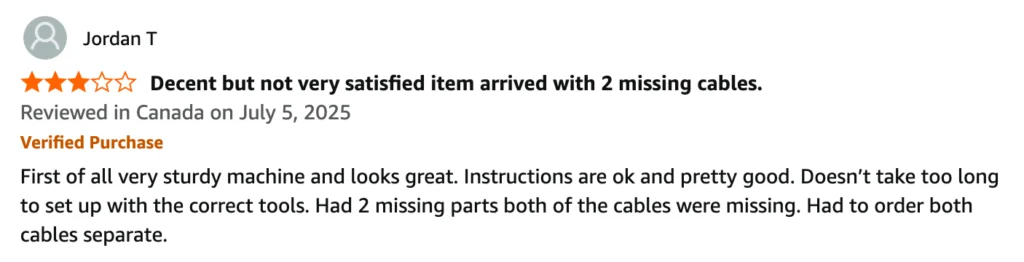
Most reviewers seem happy with their purchase, especially for the price, though several negative reviews mention they were missing parts, though customer service was helpful and quick to resolve the mishaps.
GDLF Lat Pulldown Vs
While the GDLF Lat Pulldown is one of the most affordable options we’ve seen, it’s not the perfect choice for everyone. If you have more room in your budget, here are some other options to consider.
If you like plate-loaded machines, the Titan Fitness Plate Loadable Lat Tower V2 is worth considering. Similar to GDLF, it’s not a perfect profile yet still relatively affordable, as far as lat pulldowns go. It’s made of 11-gauge steel, and feels a bit more stable than the GDLF pulldown.
You can read more in our Titan Plate-Loaded Lat Pulldown review.
If you’re a stronger individual, or buying this for a community gym, we recommend a more durable option like the Rogue LP-2. With a price tag over $3,600, it’s going to cost quite a bit more, but you’re getting a commercial-grade machine with a knurled stainless steel lat bar and 300-pound weight stack in return.
| 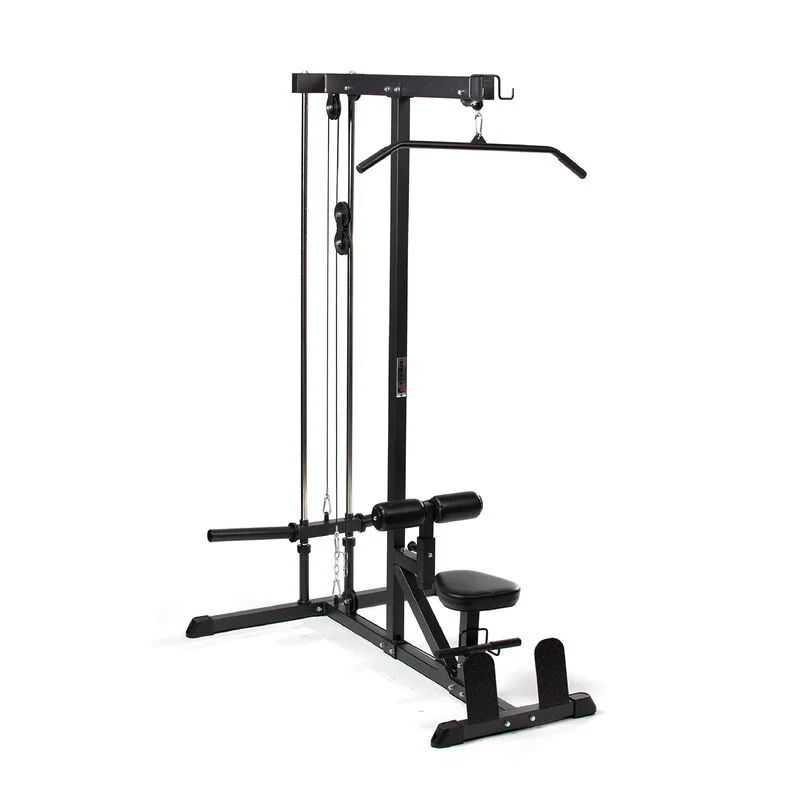 | 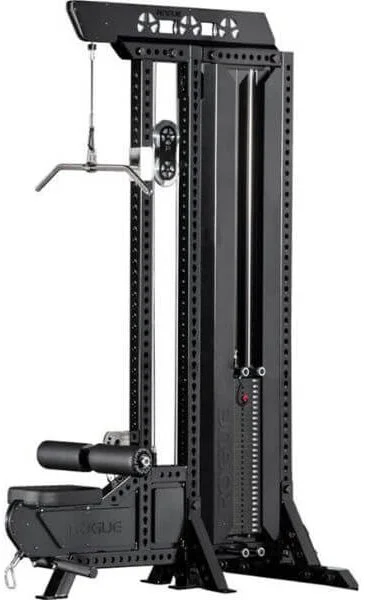 | |
| GDLF Lat Pulldown Machine | Titan Plate Loadable Lat Tower V2 | Rogue LP-2 | |
Rating | |||
| Type | |||
| Footprint | 59” L x 26” W x 77” H | 57” L x 47” W x 85” H | 83” x 42” |
| Resistance | |||
| Subscription? | — | — | — |
| Accessories | |||
| Warranty | 1-year manufacturer warranty | Rogue Limited Lifetime Frame Warranty | |
Final Verdict of Our GDLF Lat Pulldown Review
Overall, we think the GDLF Lat Pulldown is a good option for the right gym owner, but it’s not for everyone. If you’re only going to be using lat pulldowns on occasion, you’re not buying this for a commercial gym, and you’re okay with a machine that feels a little wobbly at higher weights, you’re probably not going to find a better option at this price point.
However, those building out a commercial gym, or people who want the most durable, high-quality lat pulldown station will probably want to look elsewhere.
- The GDLF Lat Pulldown has a listed weight capacity of 500 pounds, but you’ll need your own plates, and we’re not convinced it would support that much resistance.
- Even though it feels a little wobbly and shaky, it never actually felt unsafe or dangerous in any way, per our tester, so we would feel comfortable using this on occasion.
- At this price point, this affordable piece of equipment offers great value for lifters who want to expand their home gym equipment selection without breaking the bank.
GDLF Lat Pulldown Review: FAQs
Who makes the best lat pulldown machine?
There are plenty of manufacturers on the market, and it depends on whether you want a standalone machine or something to install in your existing squat rack. Some of our favorite manufacturers include XMark, Titan Fitness, Bells of Steel, and more, while budget-friendly choices like GDLF can get the job done at a low cost.
Do lat pulldowns actually work?
Yes. Similar to pull-ups, lat pulldowns can be an effective exercise to strengthen your latissimus dorsi (lats) and bicep muscles, and can also serve as a great alternative for those who struggle to perform pull-ups with correct form. It’s also typically easier to use various grips and attachments with lat pulldowns, making them a versatile exercise, overall.
How much does a good lat pulldown cost?
We’ve found that the average lat pulldown costs about $1,640, though they can be purchased for under $200 or upwards of $3,600. Generally speaking, the more you pay, the higher the quality, but we’ve tested plenty of options we like that cost right around the average price.
References
- Rendos, N. K., Heredia Vargas, H. M., Alipio, T. C., Regis, R. C., Romero, M. A., & Signorile, J. F. (2016). Differences in Muscle Activity During Cable Resistance Training Are Influenced by Variations in Handle Types. Journal of strength and conditioning research, 30(7), 2001–2009. https://doi.org/10.1519/JSC.0000000000001293