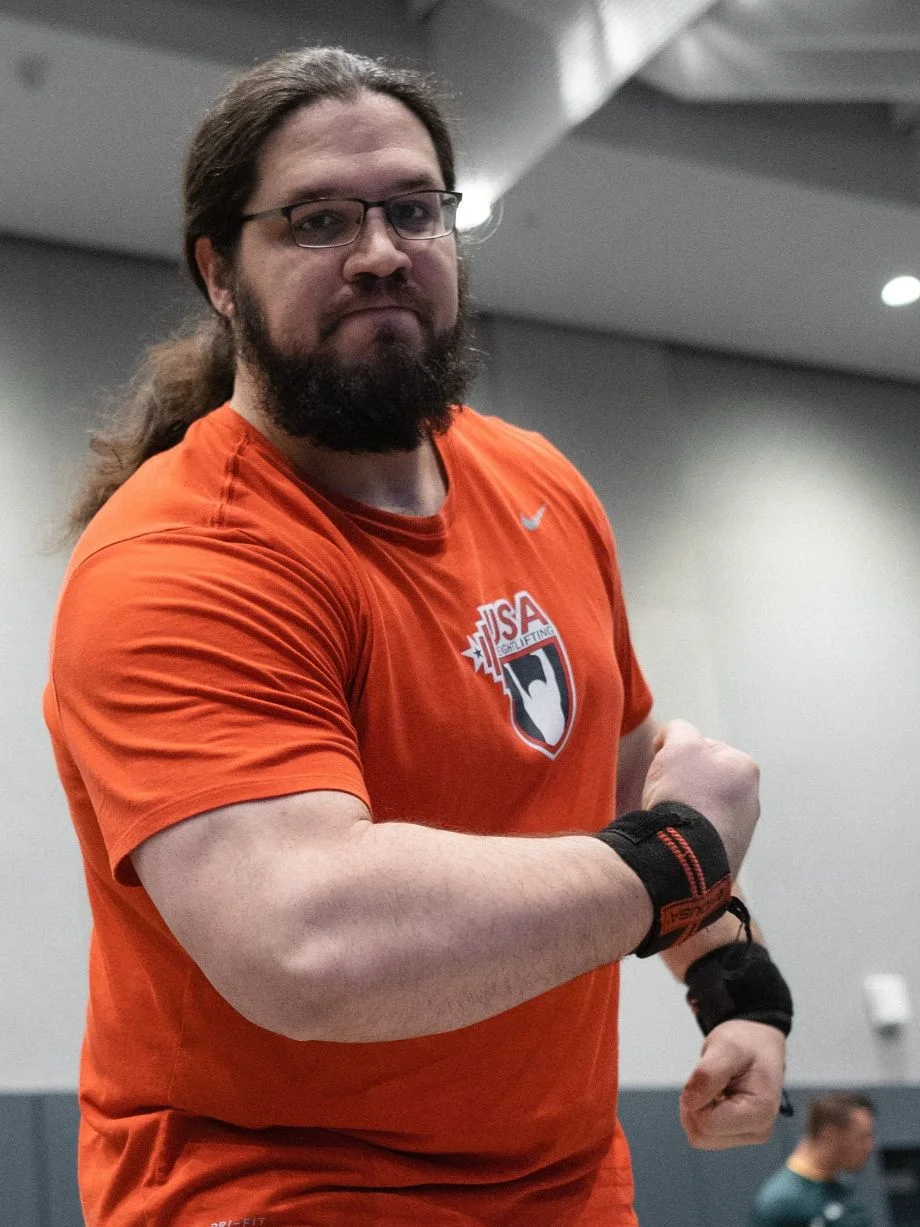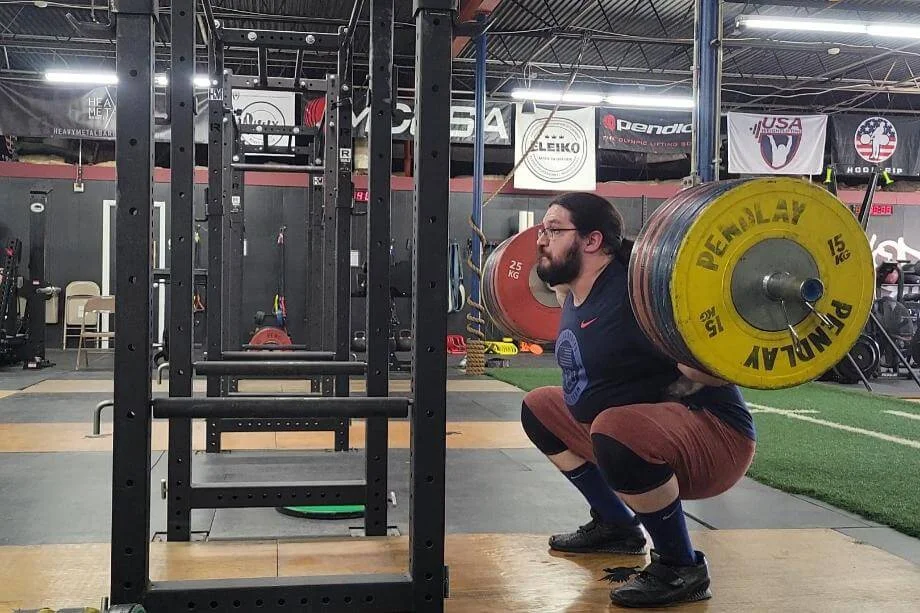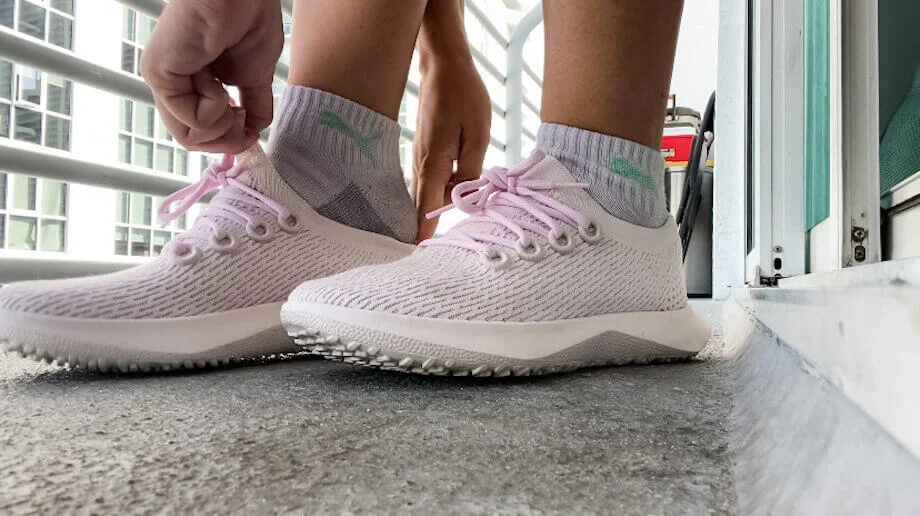



There are so many things you can do in a gym—and so many shoes to do those things in. As such, the decision-making process on which shoe is best suited for the job can be exhausting. You want comfort, but you also want functionality. As a competitive weightlifter, I want something solid that lets me lift heavy weight overhead, but what if you’d prefer to jog on the treadmill, instead?
With so many gym workouts to consider and a wide variety of gym shoes for men on the market, finding the best choice for you can be stressful, to say the least. Should you get a sneaker, or maybe a lifting shoe or running shoe? Perhaps some cross-training shoes? You can exhale a sigh of relief, though the Garage Gym Reviews team tested out dozens of shoes across multiple brands to bring you our picks for the best gym shoes for men. Read on to see which pair best suits your needs.
Note: We intend the term “men”to include all men, including trans men. However, we recognize that almost all research on this topic has focused on cis men (i.e., men who are not trans). For that reason, when we reference gender-based research and nutritional recommendations, we will clarify by saying “cis men.” We encourage trans and nonbinary people of all genders to check in with a trans-competent nutritionist regarding their supplements and training needs.
GGR Gold Pick – Best Gym Shoes for Men
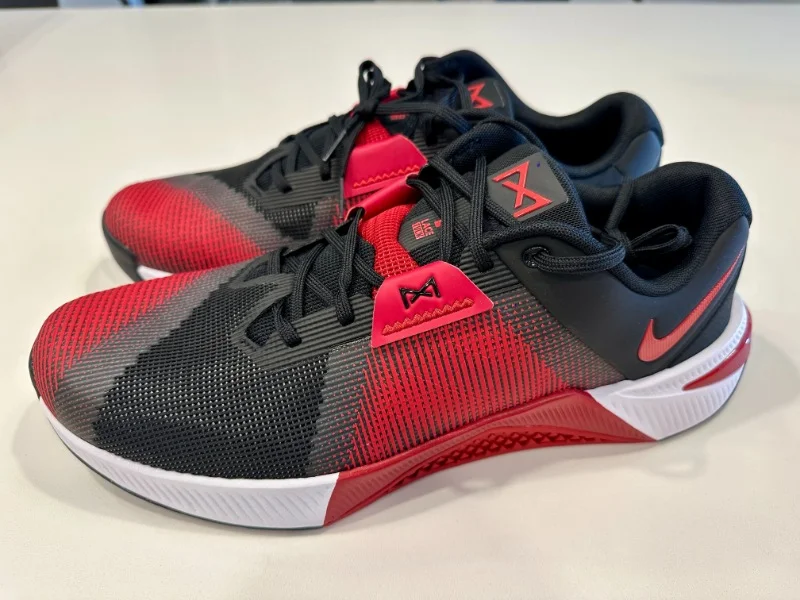
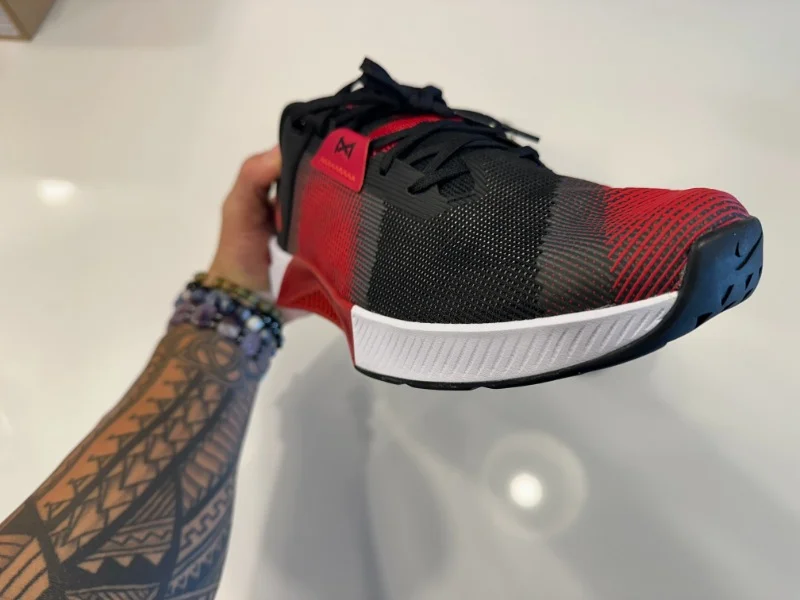
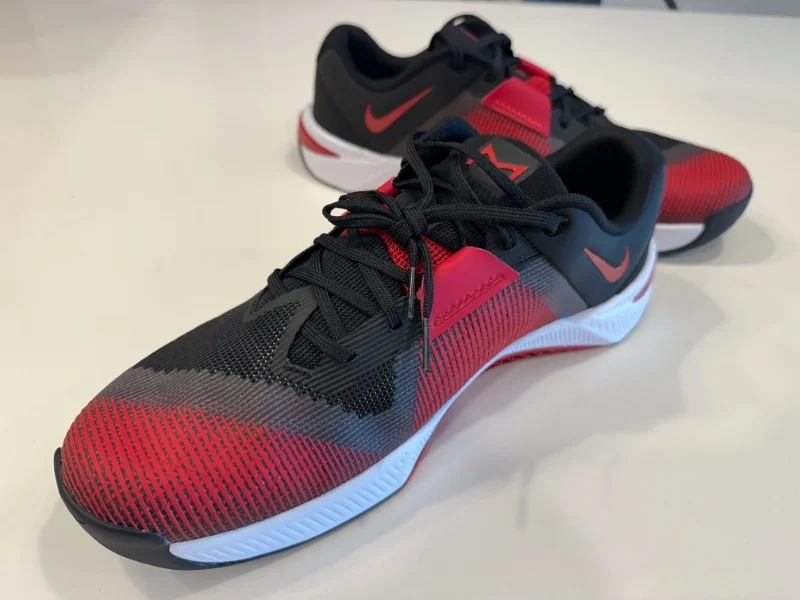
Our pick for the best gym shoe for men is the Nike Metcon 10. Whether you’re lifting weights, hitting the machines, or working on your plyometrics, these Metcons can do nearly anything in the gym and earned 4.3 out of 5 stars, overall, in testing.
Best Gym Shoes for Men
- Best Overall Gym Shoes for Men – Nike Metcon 10
- Best Barefoot Gym Shoes for Men – Xero Shoes HFS II
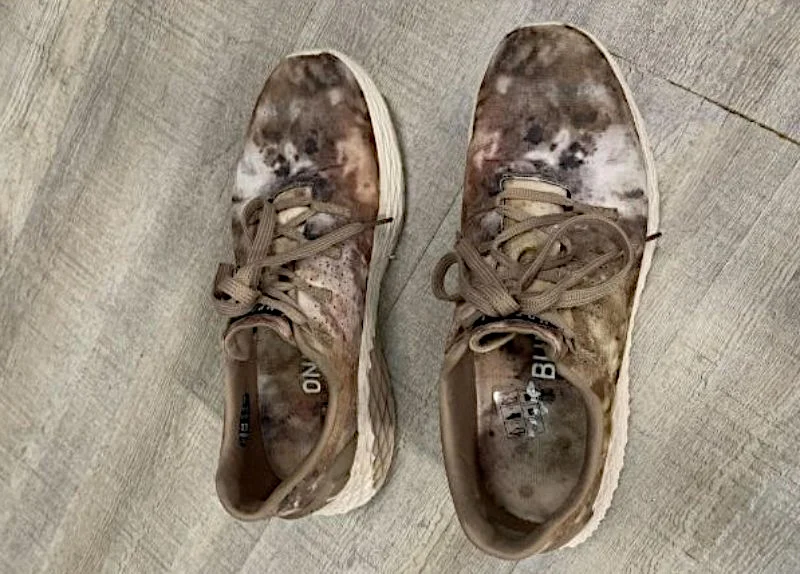
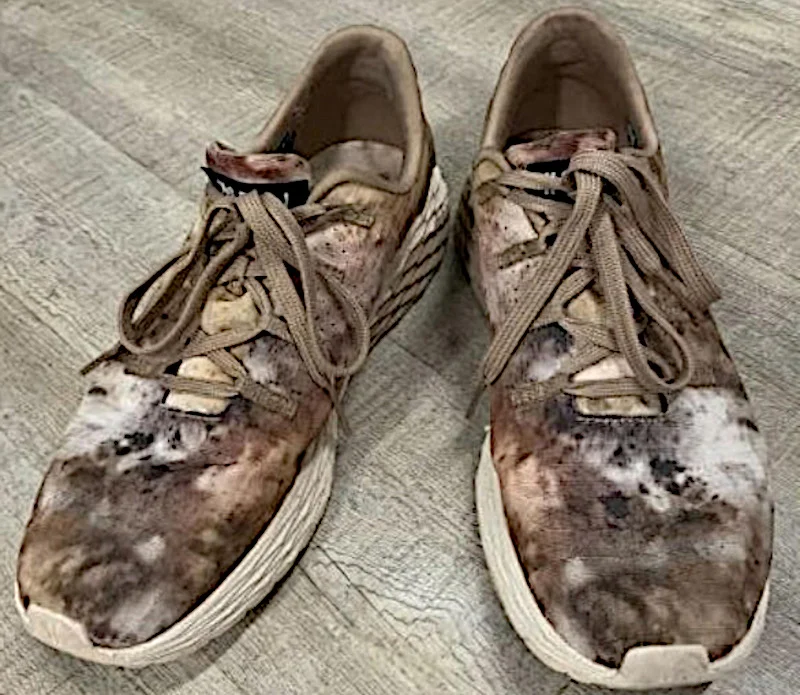
- Best Gym Shoes for Everyday Wear – NOBULL Allday Ripstop
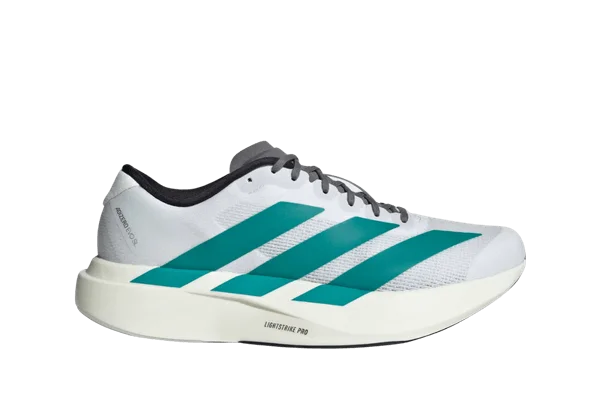
- Best Running Gym Shoes for Men – Adidas Adizero EVO SL
- Best Gym Shoes for CrossFit – Reebok Nano X5 Edge
- Best Gym Shoes for Weightlifting – Adidas Adipower III
- Best Budget Gym Shoes for Men – Feiyue FE LO 1920
- Best Cross-Training Shoes for Men – TYR CXT-3
Current Top Deals
- Reebok Nano X5 Edge – Save up to $30 with code BMSM
- NOBULL AllDay Ripstop – Get 30% off your first order with code WELCOME30
- Adidas Adizero EVO SL – Use code SPRING to get an additional 25% off full price and sale styles for
How We Selected the Best Gym Shoes for Men
Whether you’re lifting weights, running on a treadmill, or pushing a weight sled on some turf, your gym shoes are going to take a beating. Accordingly, we carefully assess the durability of each pair. To receive 3 out of 5 stars, we feel the construction of a given shoe aligns with the intended use, but long-term durability may be questionable.
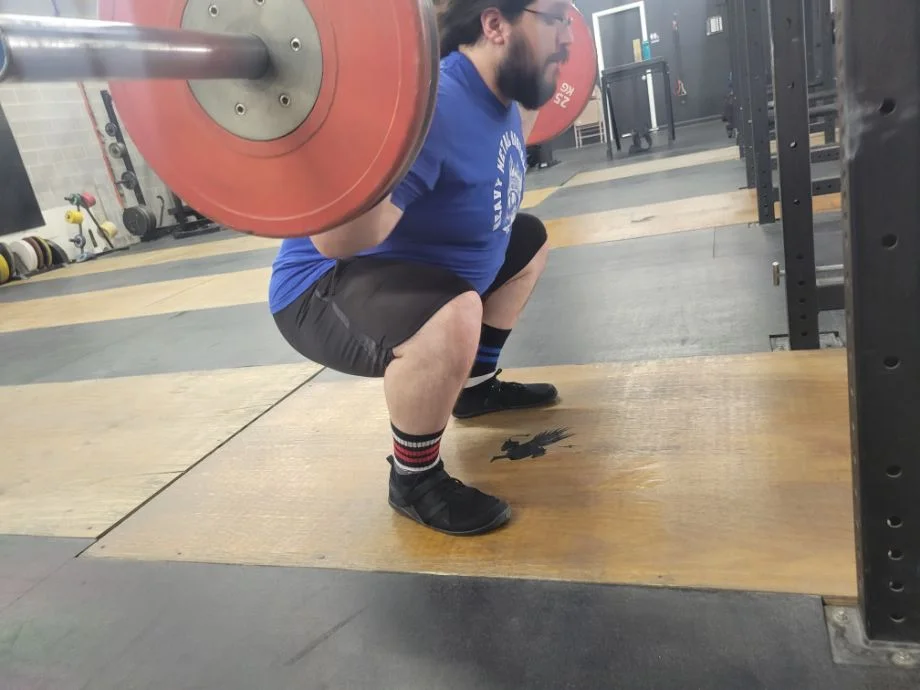
For stability, we see how well the shoe keeps you supported through its intended activity, though some shoes will always be more stable than others (think dedicated weightlifting shoes). To earn 3 out of 5 stars, the sneaker provides moderate stability throughout the intended activity, though the security may be slightly lacking in certain areas.
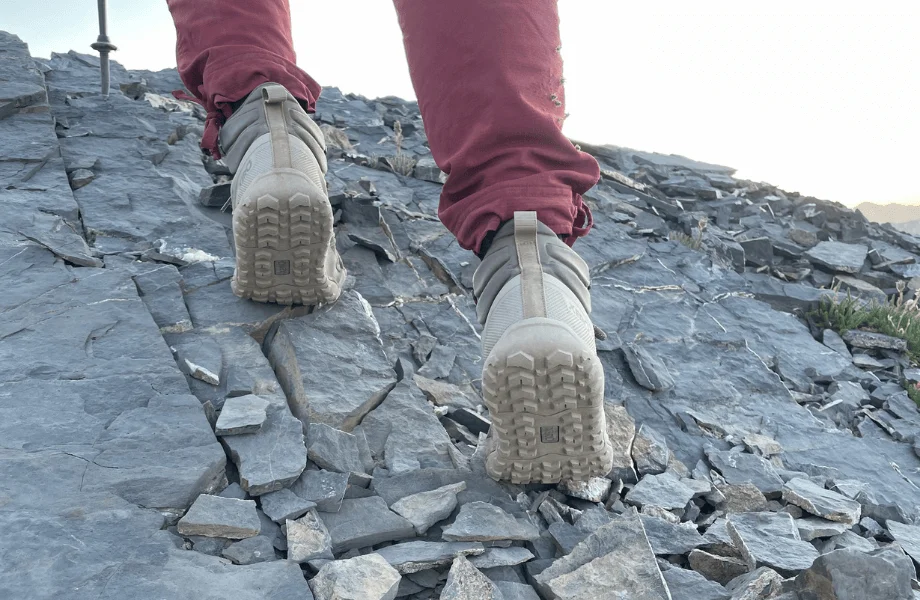
This category is based on whether or not we feel a particular men’s shoe is worthy of its cost, especially when compared to competitors that share similar features. For a 3 out of 5, a shoe offers middle-of-the-road pricing and quality when compared to others on the market.
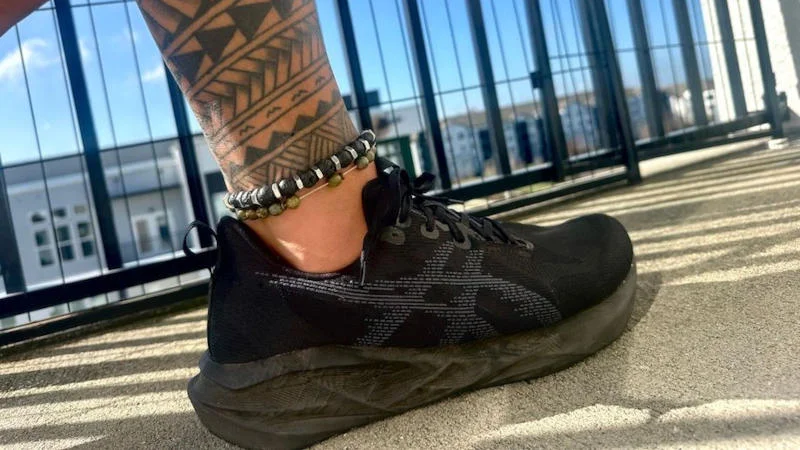
We carefully test every pair of shoes we review, wearing them for multiple workouts and trying as many different types of exercises as possible. After we have a feel for a shoe, we use our GGR equipment testing methodology to help us calculate a final product score based on a 1-5 scoring scale in key categories.
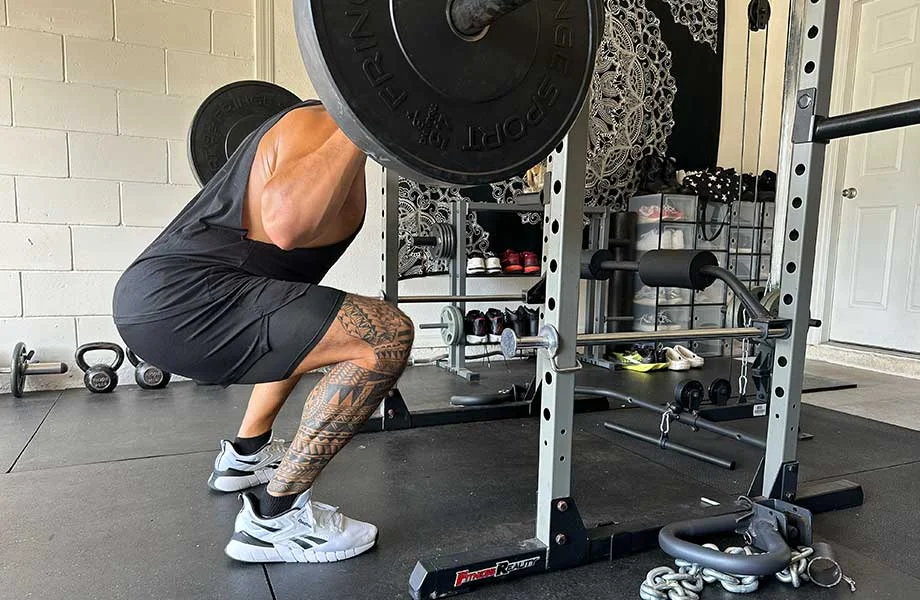
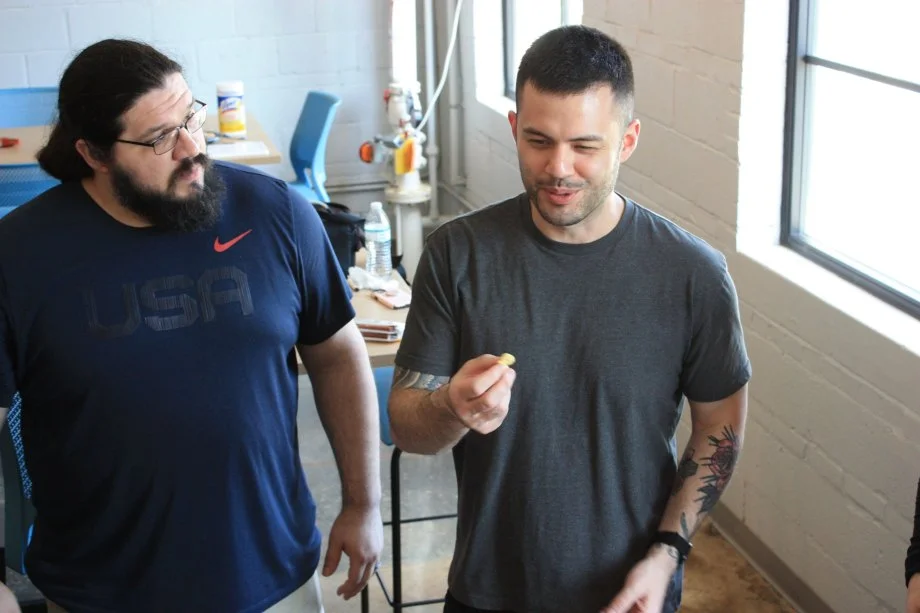
The Garage Gym Reviews team of testers is a group of fitness experts, including certified personal trainers, CrossFit coaches, triathletes, and more. We’ve tested and worn countless pairs of the shoes over the years, and many of us regularly use multiple pairs in our weekly rotations. In 2025, we helped 1,652 find the best strength equipment for their needs, including different types of gym shoes.
Latest Updates
In March 2026, we reviewed our list of the best gym shoes for men and made a few changes based on our latest testing. The Nike Metcon 10 still earns our top recommendation, but we swapped out picks that didn’t hold up in durability and versatility. New additions—like the adidas Adizero EVO SL and Reebok Nano X5 Edge—stood out for their high scores in these categories.
Best Overall Gym Shoes for Men: Nike Metcon 10
Updated by: Matt Dustin, CSCS, PN1-NC









At a Glance
- The tough sole and raised heel are suitable for most lifts
- Versatile enough to use for plyometrics
- Underfoot cushioning can be uncomfortable for extended wear
- Over 12 available colorways
Whether you’re a seasoned lifter looking for your next pair of training shoes or a beginner who’s just getting started, the Metcon 10s are some of the best gym shoes to have on hand. They’re suitable for a wide range of activities, and earn 4 out of 5 stars for versatility.
While they lack the cushion required for long-distance running, they can handle nearly any other type of in-gym exercise and are built to last, too.
Construction: 5/5
Stability: 5/5
Versatility: 4/5
Why We Like the Nike Metcon 10
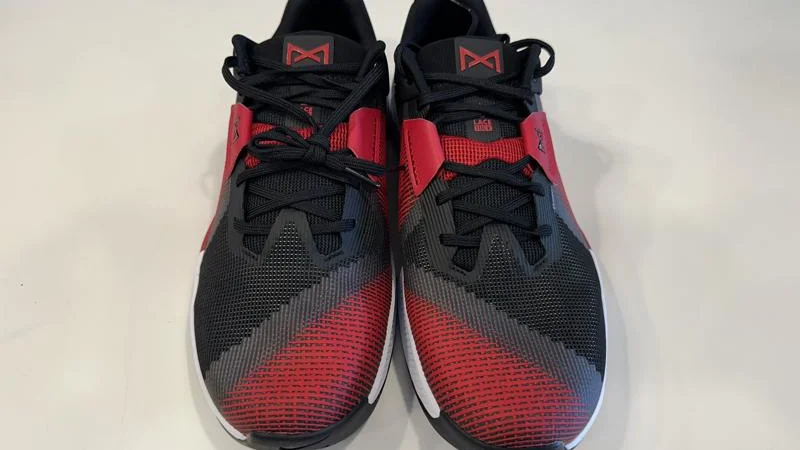
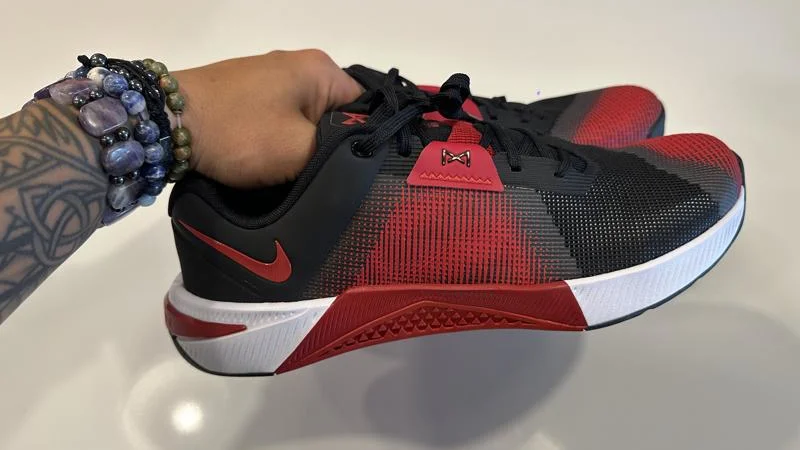
When you think about gym shoes, the functionality is one of the most important aspects. That said, the looks are important, too. If a great pair of shoes looks ugly on your feet, you’re likely not going to want to wear them often. Thankfully, the Metcon 10s are as stylish as they are functional.
Our product tester was GGR Senior Staff Writer Stephen Sheehan, CPT, CNC, a certified personal trainer who awards these shoes 5 out of 5 stars for appearance and design.
“The colorways are typical for workout shoes with a variety of brightly colored options as well as a few simple ones,” says Stephen. “I chose the Black/White/Varsity Red colorway and absolutely love it. They are perfect for that athleisure aesthetic where they look like a performance shoe but still have that ‘swag’ to them.”
As far as gym shoes go, the Metcon 10s are also extremely stable and earn 5 out of 5 stars for the category. For athletic movements, bodybuilding, weightlifting, and everything in-between, these shoes can keep your feet securely in place. Compared to the Nike Free Metcons, another popular silhouette from the brand, these offer much more stability for weightlifting.
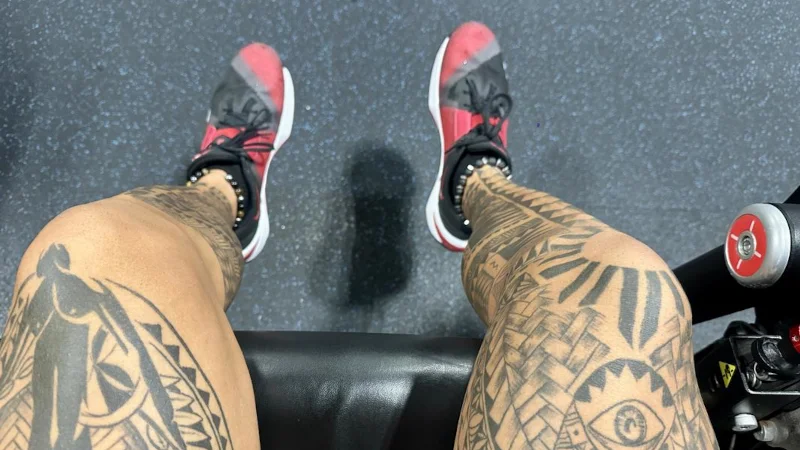
Stephen adds, “I’ve used them for HIIT-style workouts (tire flips, clean and press, box jumps) as well as traditional lifts (squats, RDLs, leg press) and have felt stable throughout.”
RELATED: Training Shoes Guide
As someone who owned the Nike Metcon 9s for two years, I appreciate that the Metcon 10s feature a lighter profile and more flexible sole. It’s still not the most cushioned training shoe, but it’s a nice upgrade from the previous iteration, which (admittedly) could be quite uncomfortable to wear due to the stiff forefoot and heel.
I’ve always been a huge fan of Metcons and these do not disappoint. They have a premium look and feel, and they perform well.
Stephen Sheehan, CPT, CNC
Alternatives
If you’re coming from a pair of the best running shoes and are new to strength training shoes, you may be in for a bit of a shock. Metcons are designed to provide stability and support rather than excessive cushioning, and you’ll definitely notice the difference. Honestly, we wouldn’t even recommend using these as walking shoes, either, as they can be a little uncomfortable after a while.
“I have not used them for a long-duration run, but have done a few sprints and cardio workouts on the treadmill/stairmaster,” says Stephen, who gave them 3 out of 5 stars for comfort. “In my experience, I think these work OK, but they’re not ideal for running due to the lack of cushioning.”
They’re also somewhat expensive, costing roughly $155 at the time of writing. We feel it’s well worth it for those who need a versatile gym shoe, but they’re still not exactly cheap.
For another multi-purpose lifting shoe that’s a bit more comfortable, we suggest considering the Reebok Nano X5 Edge.
Testing Breakdown
The Metcon 10s received high scores in nearly every testing category, which is why it’s one of the best gym shoes for men regardless of your training style. If you don’t expect a plush running shoe experience, you shouldn’t be disappointed with the Metcon 10s.
Vs. The Average
These shoes aren’t exactly cheap, but we still feel they’re well worth the investment, especially since they can be worn for nearly any type of strength training.
| Nike Metcon 10 | Average Gym Shoe | |
| Price | $155 | $145 |
| Weight Per Shoe | 12 oz | 11.3 oz |
| Heel-to-Toe Drop | 4 mm | 7.3 mm |
| Size Range | 3.5-15 | 5-16 |
| Trial Period | 60 days | 34 days |
We haven’t completed our full Metcon 10 review yet, but we have an in-depth Nike Metcon 9 review if you want to read more.
Best Barefoot Gym Shoes for Men: Xero HFS II
Updated by: Matt Dustin, CSCS, PN1-NC

At a Glance
- Minimalist profile allows natural foot movement
- Accommodating design with a wide toe box
- Above-average warranty
- Good for most types of strength training
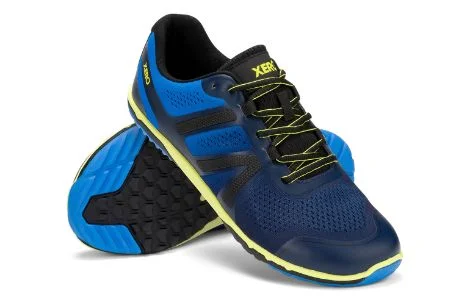
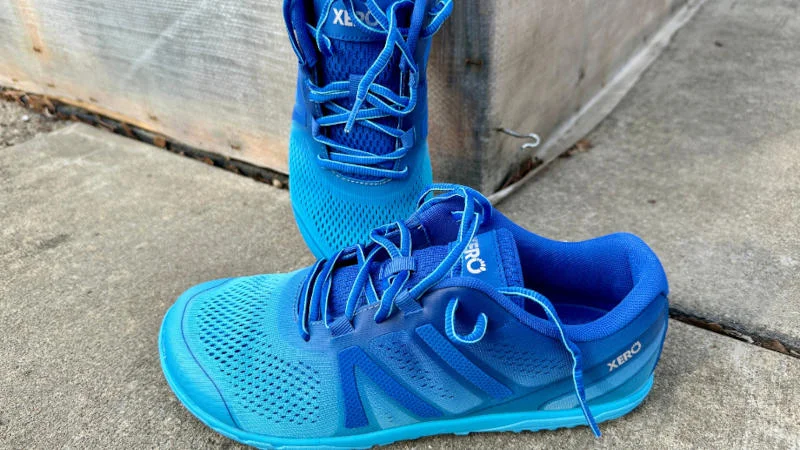
When it comes to proper footwear for strength training, it’s best to use something with a sturdy sole, as excessive cushioning can create an unstable surface for your feet. Some prefer weightlifting shoes with an elevated heel, while others prefer the natural feel of a minimalist shoe, like the Xero HFS IIs.
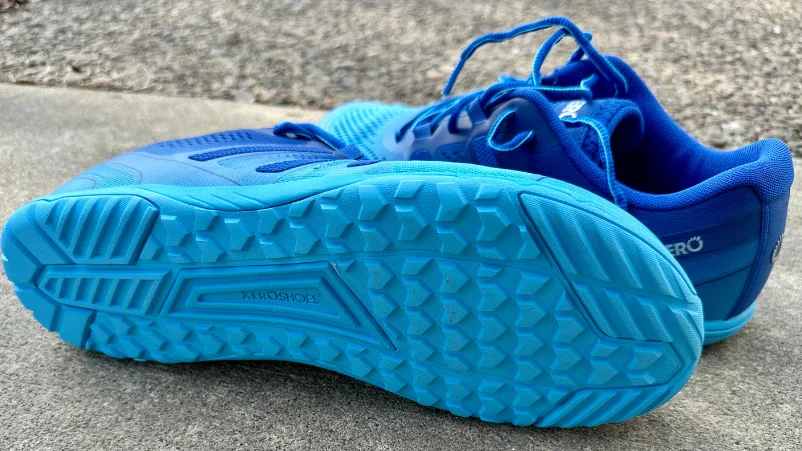
This barefoot-style shoe can allow you to truly feel the ground below your feet without interference, but the thin sole still provides a welcomed sense of durability and protection. Our tester, Ben Emminger, CNC, CSNC, didn’t have any concerns about the longevity of these shoes, giving them 4 out of 5 stars for construction and durability.
Construction: 4/5
Stability: 3.5/5
Versatility: 4.5/5
Why We Like the Xero HFS II
For fitness enthusiasts who primarily focus their efforts on strength training, barefoot shoes can allow you to keep your entire foot securely planted on the ground. Traditional weightlifting shoes offer similar features, but barefoot shoes don’t have a heel lift, which some may not enjoy.
Even though there’s an intentional lack of midsole cushioning, these shoes can still work well for plenty of exercises. Ben gives them 4.5 out of 5 stars for versatility, and states, “You can certainly run or walk in them (provided you’re accustomed to barefoot training) and the flat base also provides an excellent sense of grounding in the gym.”
If you’re not sure why you’d want to choose a shoe with no cushioning, regularly training in barefoot shoes has been shown1 to help improve foot muscle function and neuromuscular control. For exercises like deadlifts, the lack of a heel lift can make it easier to drive through your heels as you pull toward the top end of a rep.
Even though this is a barefoot-style shoe, it still earns 3.5 out of 5 stars for stability and performance, as well.
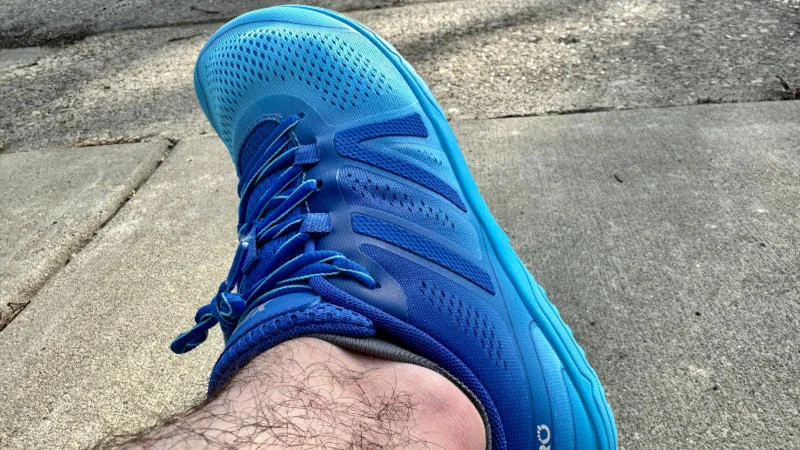
“The HFS II employs a somewhat natural geometry that features a more rounded toe box designed to help promote easier toe splaying,” Ben explains. “It definitely accomplishes this and helps me maintain a sense of stability during runs and lifts.”
The lack of a midsole actually plays in favor of the HFS II’s versatility. I’ve worn these for a handful of in-gym sessions and do appreciate how stable I can get before a heavy deadlift.
Ben Emminger, CNC, CSNC
Alternatives
The main drawback with these shoes is (naturally) the lack of cushioning. Barefoot running enthusiasts will likely love these, but if you’re not used to this style of shoe, it can feel a bit jarring at first; we suggest easing into them over time, which can give your feet time to adjust.
“I’m not going to lie, these are not for the comfort-seeking athlete,” says Ben, who gave them 3.5 out of 5 stars for comfort. “There’s very little between your soles and your running pavement, meaning you’re bound to feel some impact across your feet and joints.”
With a price tag of around $130, the HFS IIs are also a little expensive. We think they’re still worth it for barefoot enthusiasts, but if you’ve never tried barefoot shoes, that’s an expensive price tag for something you may not enjoy.
For another minimalist, zero-drop shoe that’s significantly more affordable, the Feiyue FE LO 1920s can be a good option to consider.
Testing Breakdown
Even though the Xero HFS IIs didn’t receive the highest marks for comfort and stability, they still earned high scores in other categories that matter, like versatility, durability, and value.
Vs. The Average
The Xero HFS IIs are more affordable than the average gym shoe, which is impressive to see given their above-average warranty coverage.
| Xero HFS II | Average Gym Shoe | |
| Price | $129.99 | $145 |
| Weight Per Shoe | 8.3 oz | 11.3 oz |
| Heel-to-Toe Drop | 0 mm | 7.3 mm |
| Size Range | 5-15 | 5-16 |
| Trial Period | 30 days | 34 days |
For more, be sure to read our in-depth Xero HFS II review.
Best Gym Shoes for Everyday Wear: NOBULL Allday Ripstop
Updated by: Matt Dustin, CSCS, PN1-NC
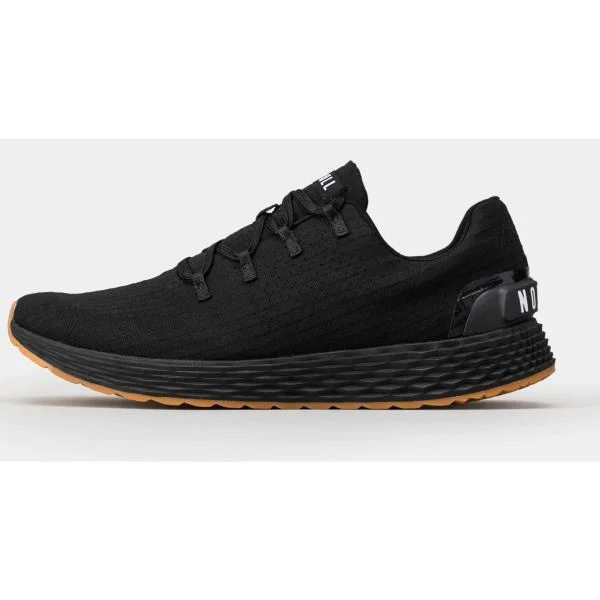


NOBULL AllDay Ripstop shoes are a versatile and durable shoe that’s meant to be worn all day long, both in and out of the gym. It has a minimal appearance and is very durable, though it may not be as firm as pure lifting shoes.
At a Glance
- Looks good both in and out of the gym
- Versatile enough for most types of exercise
- A good hybrid between lifting and running shoes
- Not the best choice for heavy leg days
For those who don’t want to change in and out of specialized shoes for your workout, the NOBULL ALLDAY Ripstops are a versatile shoe that, like the name implies, can be worn all day long. It’s a jack-of-all-trades shoe that looks good both in and out of the gym, and a solid choice for those who want one pair of sneakers that can handle just about everything.
It’s not as firm as a pure lifting shoe, nor as cushioned as a running shoe, but it feels good enough to wear all day and can work well for most lifts, earning the kicks 4 out of 5 stars for stability and performance.
Construction: 4/5
Stability: 4/5
Versatility: 4/5
Why We Like the NOBULL ALLDAY Ripstop
While there’s nothing wrong with changing your shoes before and after a workout, it can be tedious, especially for those who don’t want to carry a large gym bag (or leave extra shoes in their garage). The ALLDAY Ripstops provide enough comfort and aesthetic appeal to be worn all day long, and earn 4.5 out of 5 stars for appearance and design from our tester, Caroline Lubinsky, CF-L1.
“I love the look of these,” Caroline says. “They have a ton of colors and patterns available, so I feel like almost anyone can find one they like. Obviously, the appearance of anything is super subjective, but I’m a big fan—otherwise, I wouldn’t have spent my own money on them.”
RELATED: Best Running Shoes for Beginners
Caroline also gives them 4 out of 5 stars for adjustments and comfort, saying, “They are rather lightweight, which I appreciate, and the heel-to-toe drop is 10 millimeters.”
Even if you wear these shoes throughout your entire day, we don’t think you’ll have any issues with longevity, and these shoes earn 4 out of 5 stars for construction and durability, “The material seems durable, and the back of the shoe on my right foot has held up well to my ankle brace rubbing while I run.”
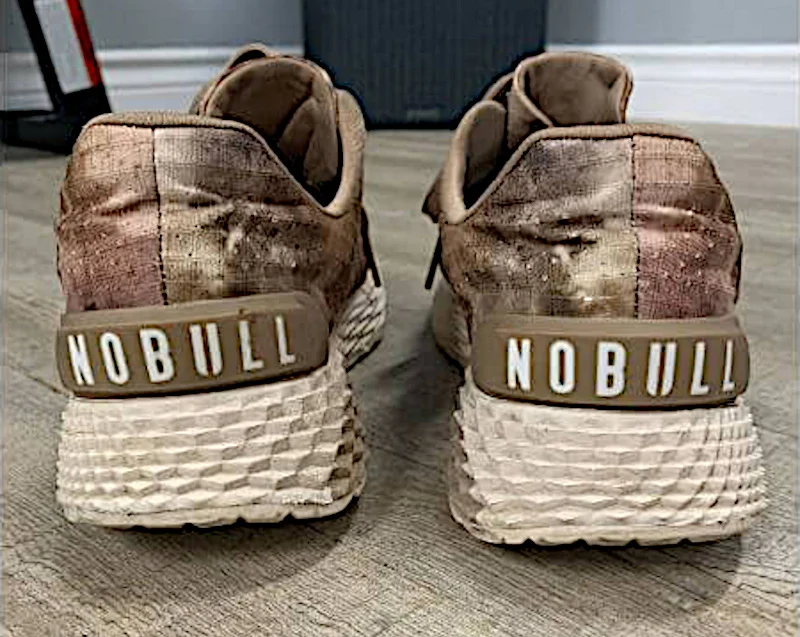
If there’s one thing I’ve come to admire about NOBULL Allday’s, it’s the durable ripstop upper material. This textile holds up to plenty of scrapes and scuffs, which is a plus if you’re trying to preserve the appealing aesthetics.
Ben Emminger, NASM-CNC, NASM-CSNC
Alternatives
The main issue with these shoes is the fact that they’re a generalist shoe designed for all-day wear. They’re not as specialized as a dedicated lifting shoe, and may be a little unstable on certain lower-body exercises. So, if you’re regularly placing a barbell on your back, these probably aren’t your best options.
They’re also a little expensive, and Caroline gives them 3 out of 5 stars for value. “They cost around $150 and probably will last you a year at the most, unless you’re just wearing them casually versus working out in them.”
If you want another shoe that can easily be worn all day but can work better for lifting purposes, we recommend Reebok Nano X5 Edge.
Testing Breakdown
These shoes earned high scores in nearly every category. They’re a little expensive, but you can use them for far more than the gym, so we think they’re worth the investment.
Vs. The Average
Compared to the average gym shoe, the ALLDAY Ripstops cost a bit more, but we feel they’re worthwhile for those who want a shoe that can be worn both in and out of the gym.
| NOBULL ALLDAY Ripstop | Average Gym Shoe | |
| Price | $150 | $145 |
| Weight Per Shoe | 10.3 oz | 11.3 oz |
| Heel-to-Toe Drop | 10 mm | 7.3 mm |
| Size Range | 5-16 | 5-16 |
| Trial Period | 30 days | 34 days |
To read more about NOBULL running shoes, be sure to read our in-depth NOBULL Runner Review.
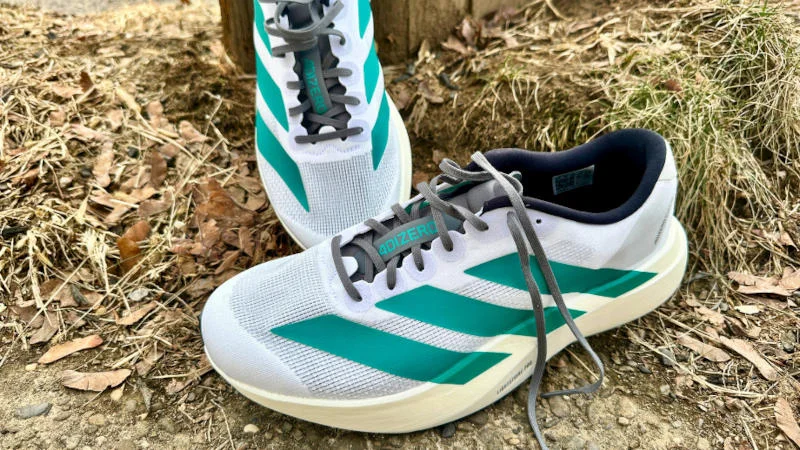
Best Running Gym Shoes for Men: adidas Adizero EVO SL
Updated by: Matt Dustin, CSCS, PN1-NC
At a Glance
- Built for all types of running
- Good for both indoor and outdoor runs
- Sleek and stylish profile
- Above-average durability
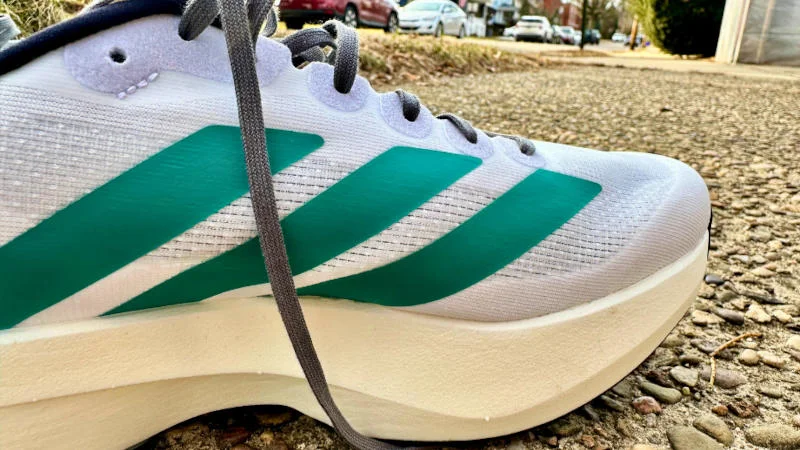
If you’re looking for an excellent pair of running shoes that can do a great job on the road, the track, or one of the best treadmills, we highly recommend the adidas Adizero EVO SLs. As with all running shoes, they’re probably not the best choice for lower-body strength training due to their midsole cushioning, but runners of all levels will likely appreciate these sneakers.
They’re built to handle nearly any type of terrain, and Ben Emminger, CNC, CSNC, our resident footwear expert, gives them 4 out of 5 stars for stability and performance.
Construction: 4.5/5
Stability: 4/5
Versatility: 3/5
Why We Like the adidas Adizero EVO SL
Runners know that shoes need to be replaced on a fairly regular basis as they lose traction and support, but we found the Adizero EVO SLs to offer impressive durability, even with regular outdoor use. Ben scored these shoes at 4.5 out of 5 for construction and durability—an impressive score for a running shoe.
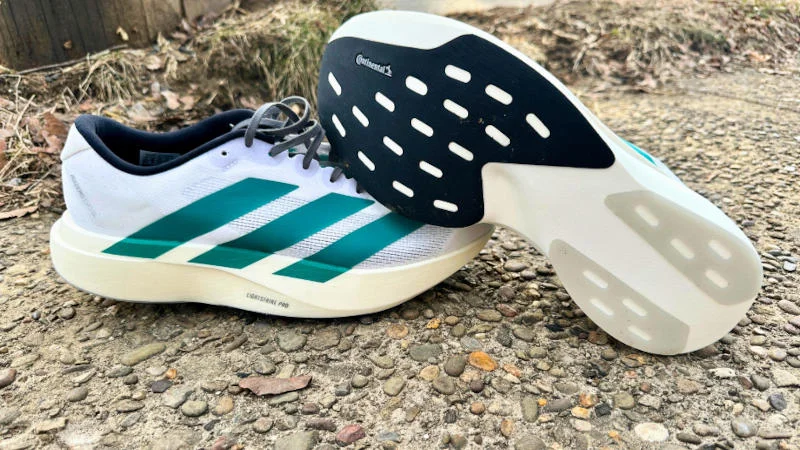
“The foam midsole is well-cushioned yet energetic enough for high-intensity sprint intervals, and I really appreciate the flexibility at play with the engineered mesh upper,” he explains. “There’s no question that these are road running sneakers given the thinner Continental rubber outsole. I’ve been leery of this given my Pittsburgh environment and oftentimes rougher terrain, but I’ve yet to see any premature wear and tear.”
We also love the aesthetics of this sneaker, and give it 4 out of 5 stars for its appearance and design. This isn’t the most important aspect of an effective gym shoe, but we always appreciate a stylish look.
“To me, this is one of the sharpest designs adidas has put out in a while,” Ben told me. “I really enjoy the simple yet exaggerated three stripes along the lateral (outer) side of the shoe, and they have a clean geometry that, overall, matches my footprint well.”
At $150, they aren’t cheap, but we feel these shoes are well worth the cost and give them a strong 5 out of 5 for value.
The $150 price tag has become pretty foundational (somewhat budget-friendly, even) for high-quality running shoes. I feel you definitely get your money’s worth with the EVO SLs, and I’d be happy to keep these in my rotation for seasons to come.
Ben Emminger, CNC, CSNC
Alternatives
If you’re a runner, the Adizero EVO SLs can be a solid choice, but for those who prefer strength training, they’re not the best option. Running shoes offer plenty of shock absorption and underfoot cushioning, but when performing heavy lower-body exercises like back squats or lunges, your feet can feel a little too wobbly.
We don’t recommend these for lifting, unless it’s upper-body day and you don’t need to have your feet anchored to the ground.
Additionally, even though we rate the value a perfect 5-out-of-5, we know that $150 isn’t cheap for a pair of shoes. Accordingly, this may be out of some people’s price range.
If you want another shoe that’s suitable for running but offers a bit less cushioning for a more stable lifting experience, the NOBULL ALLDAY Ripstops may be a better fit.
Testing Breakdown
The adidas Adizero EVO SL is one of the highest-rated shoes on our list, with above-average scores in every testing category.
Vs. The Average
Despite the relatively high cost, the Adizero EVO SL is one of our favorite running shoes and we feel they’re well worth the price tag.
| Adidas Adizero EVO SL | Average Gym Shoe | |
| Price | $150 | $145 |
| Weight Per Shoe | 7.9 oz | 11.3 oz |
| Heel-to-Toe Drop | 6 mm | 7.3 mm |
| Size Range | 6.5-18 | 5-16 |
| Trial Period | 30 days | 34 days |
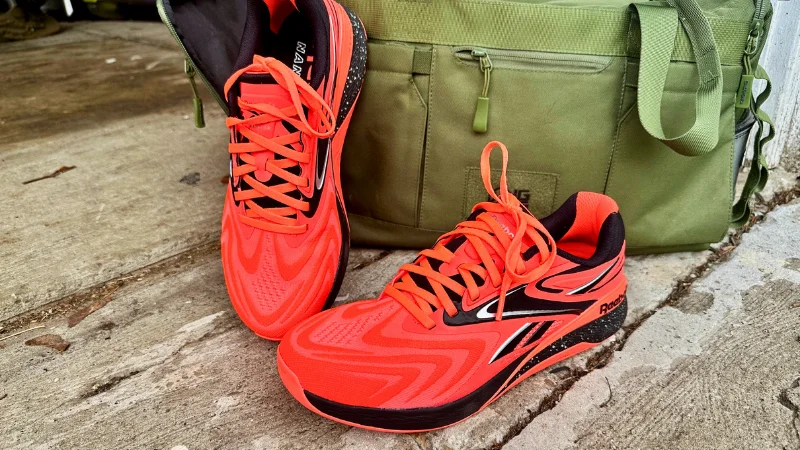
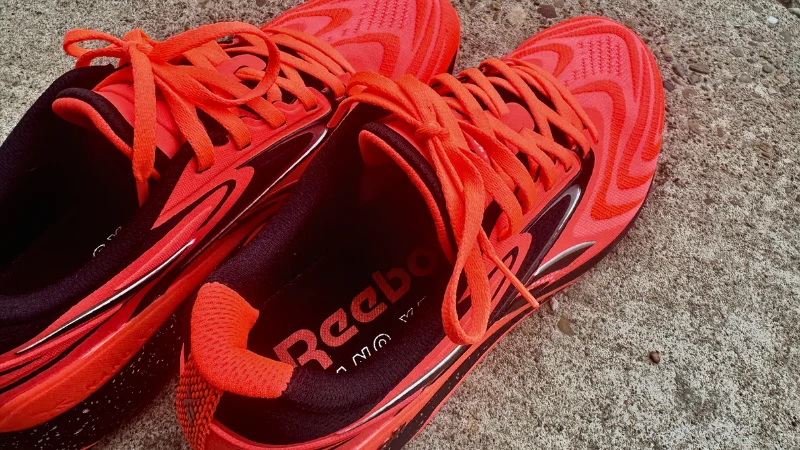
Best Gym Shoes for CrossFit: Reebok Nano X5 Edge
Updated by: Matt Dustin, CSCS, PN1-NC

At a Glance
- Easy to wear in and out of the gym
- Suitable for lifting, jumping, plyometrics, and more
- Quite comfortable for a cross-training shoe
- Not a good fit for long-distance running
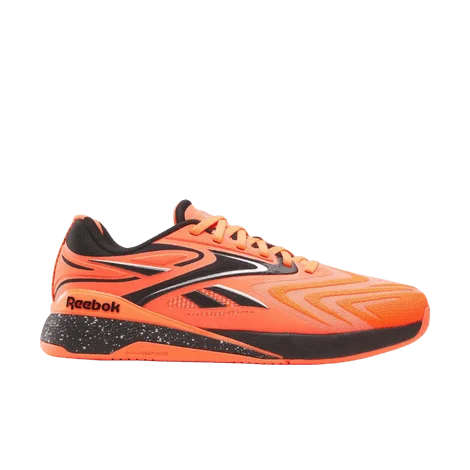
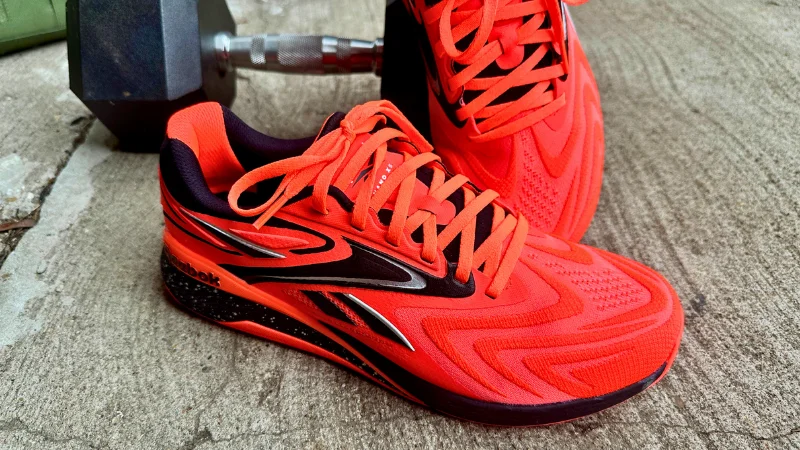
If you’re a CrossFitter, or anyone who regularly performs a variety of weightlifting and plyometric activities, the Reebok Nano X5 Edge can be an excellent choice. They’re designed to be used for a variety of activities, including short-duration cardio sessions, making them one of the more versatile shoe options on our list. Since CrossFit workouts typically contain an unpredictable variety of activities, you need a shoe that can handle anything you throw at it, and the Nano X5 Edge does an excellent job.
Compared to pure weightlifting shoes or minimalist shoes with a sturdy sole, it can also be more comfortable to wear both in and out of the gym, earning 4 out of 5 stars for adjustments and comfort. If you’re looking for an all-in-one shoe that’s suitable for most of your gym activities, this may be the shoe for you.
Construction: 4.5/5
Stability: 3.5/5
Versatility: 4/5
Why We Like the Reebok Nano X5 Edge
While we think this is the best shoe for CrossFit athletes, we really think it’s a solid choice for just about anyone. Since they’re made for a hybrid training approach, the Nano X5 Edges can handle most types of training, including weightlifting, powerlifting, rope climbs, box jumps, and more.
With so many uses, the Nano X5 Edges earn 4 out of 5 stars for versatility from product tester Ben Emminger, CNC, CSNC.
“The Nano X5 Edge does everything it should in a gym setting,” he explains. “You can achieve a stable positioning for a range of lifts, and the DualResponse midsole is even capable of handling some running-oriented sessions, too.”
RELATED: Best CrossFit Shoes
While they don’t have the stiff, elevated heel of a true weightlifting shoe, we think that’s a good thing in this instance. For those who aren’t competitive weightlifters yet still need a lifting-oriented shoe, the Nano X5 Edges are going to be significantly more comfortable to wear throughout the day.
Not to mention, they’re stylish enough to wear in quite a few settings and earn 4 out of 5 stars for appearance and design. They look athletic, no doubt, but the aesthetic is a bit more subtle than a barefoot shoe or squat shoe.
“Reebok traditionally offers a good mix of subdued and vibrant colorways, too, and I’m happy to see that trend continue with these cross-trainers,” Ben told me. “I’ve long held the belief that Nanos were the more ‘street-ready’ cross-training shoes from a design perspective, and I could see myself wearing these sneakers out for a regular errands.”
At $150, this shoe offers excellent value and earns 4 out of 5 stars for the category. They’re somewhat expensive, but you’re really getting a multipurpose shoe that can handle most of your daily workouts (and they’re built to last).
The Nano X5 Edge plays the hits in all the right ways. The Flexweave upper is durable enough for regular workouts yet breathable for keeping toes cozy. The flat rubber outsole is grippy across multiple gym floor types and allows for a stable setup in key lifts like squats and deadlifts.
Ben Emminger, CNC, CSNC
Alternatives
If you’re a pure runner, you’re probably going to want to choose a pair of dedicated running shoes to change into. The Nano X5 Edges can handle shorter runs, but they’re not as cushioned as your classic running sneaker, and won’t be as comfortable.
The X5 Edges also feature a lower heel-toe-toe drop than a pure squat shoe, so Olympic weightlifters who want the steeper setup may need to choose something else.
Finally, for Nano fans who have owned previous models, Ben also notes that the shoe has a slightly different fit. The midfoot feels more narrow than previous Nano iterations, so those with wide feet may need to size up to get a comfortable fit.
Any regular gym-goer should love these shoes, but if you spend most of your time running, we recommend the adidas Adizero EVO SLs, instead.
Testing Breakdown
Even though they’re not quite as supportive in the midfoot as previous Nanos, we still give this X5 Edge model high marks across the board, and feel they’re a great choice for most lifters.
Vs. The Average
While they cost a little more than the average lifting shoe, we feel the Nano X5 Edges are well worth the investment given the quality and versatility at play.
| Reebok Nano X5 Edge | Average Gym Shoe | |
| Price | $150 | $145 |
| Weight Per Shoe | 11.8 oz | 11.3 oz |
| Heel-to-Toe Drop | 7 mm | 7.3 mm |
| Size Range | 4.5-14 | 5-16 |
| Trial Period | 30 days | 34 days |
Best Gym Shoes for Weightlifting: adidas Adipower III
Updated by: Matt Dustin, CSCS, PN1-NC
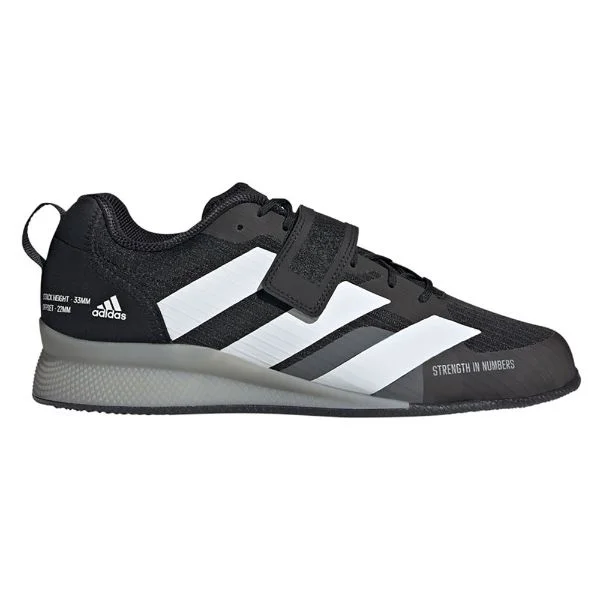
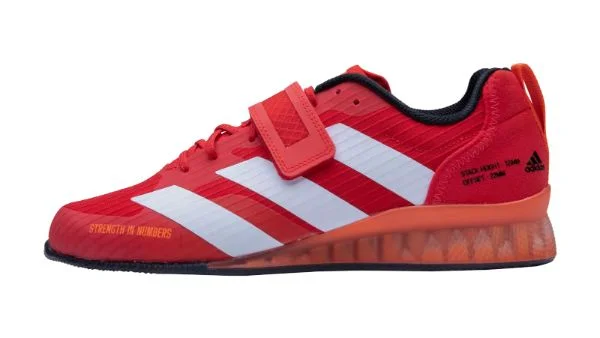
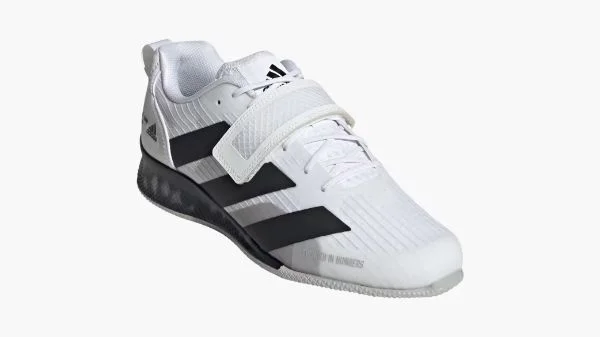
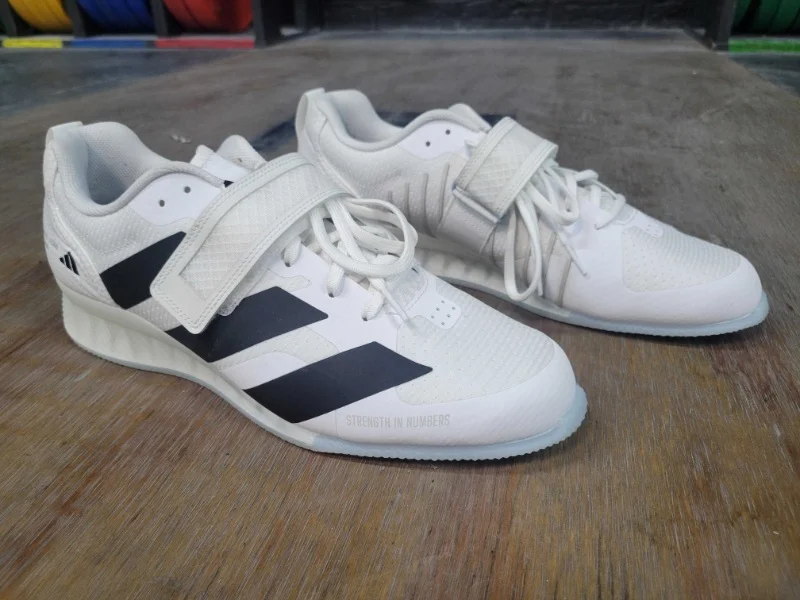
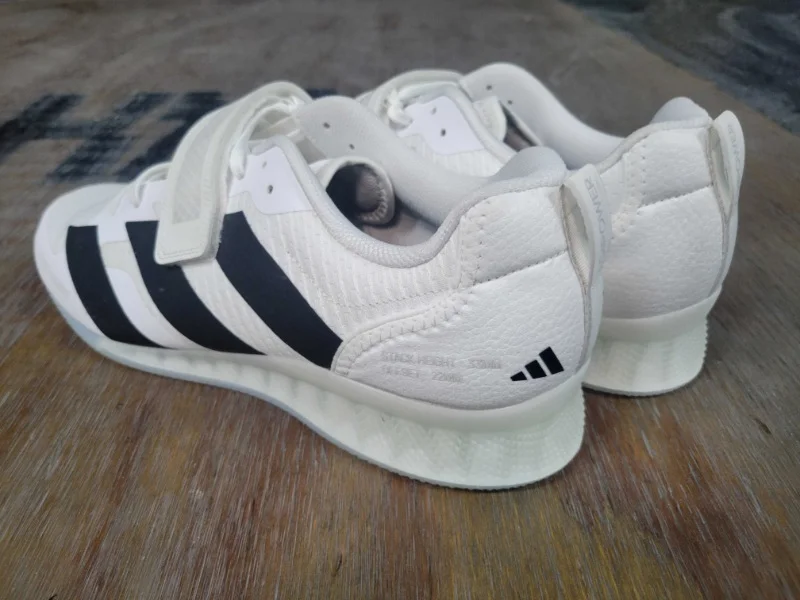
The Adidas Adipower III is the latest iteration of this weightlifting shoe that features a high heel, sturdy midsole, and great feedback.
What our tester says:
“Personally I love the look of the Adipower III. It looks modern, but still has that classic, simple three-stripe look.”
At a Glance
- Not as stiff as other weightlifting shoes
- Durable sole for extended wear
- Above-average heel-to-toe drop
- Fairly expensive
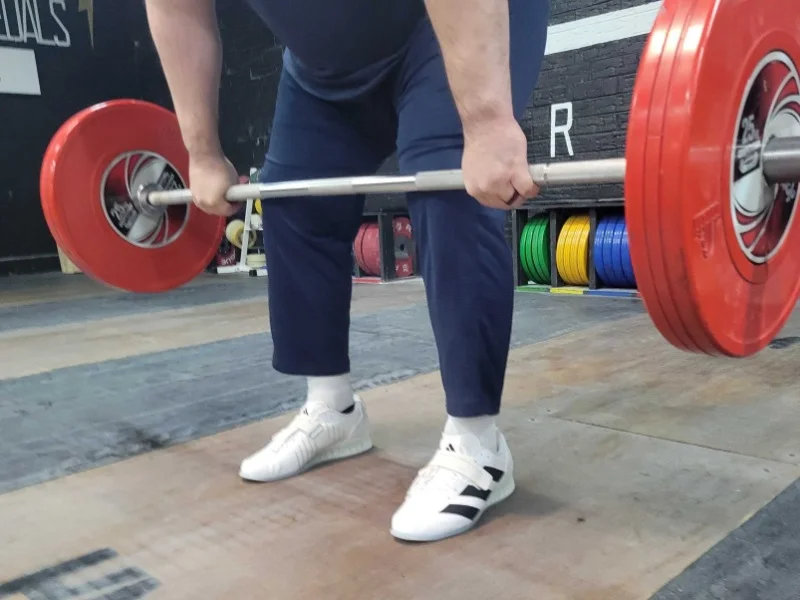
For athletes and lifters, like myself, who often struggle with proper squat depth, a weightlifting shoe with an elevated heel can be a game-changer, and the adidas Adipower 3s are our pick for the best weightlifting shoes.
The Adipower 3s offer more flexibility than other weightlifting shoes we’ve tested, which makes them a more versatile choice. That doesn’t mean they’re cheaply made, however, and they still earn a strong 5-out-of-5-star rating for construction and durability.
Construction: 5/5
Stability: 4/5
Versatility: 2/5
Why We Like the adidas Adipower III
Our tester for this shoe was Caine Wilkes, OLY, CNC, USAW-L1, a weightlifter who competed at the 2020 Tokyo Olympics and knows a thing or two about proper lifting shoes.
The first thing Caine noticed was the flexibility of the sole, as the Adipower IIIs offer a bit more give than similar models. This can allow you to comfortably execute more exercises like lunges or split squats, but it can also slightly reduce the stability. Accordingly, he docked a point and gave these shoes 4 out of 5 stars for stability and performance.
“Because of the flexibility, these aren’t the most stable lifters I’ve used,” Caine told me. “Many lifting shoes use two straps, and the one strap makes me feel a little less secure while lifting or doing split jerks. I still squatted in them fine, though.”
In addition to their great performance, we love the sleek aesthetics and give the Adipower IIIs 5 out of 5 stars for their appearance and design.
“There are six colorways that are mostly neutral with bright highlights, but the three stripes of the adidas logo really stand out on the side of the shoe,” says Caine. “It’s a sharp-looking shoe and most colorways will match athletic wear fine, but I’d never wear lifting shoes out and about.”
These are made to have a bit more flex and give than your typical lifting shoe. It’s not a running shoe or cross-training shoe really, but I could see myself doing lifts paired with some plyometric exercises, like box jumps, between sets.
Caine Wilkes, OLY, CNC, USAW-L1
Alternatives
If you’re going to be lifting on classic deadlift platforms, you’ll want to pay close attention to the soles of your shoes. Caine noted that the outsole feels a little slippery, which may be an issue depending on your training surface.
“After a week of heavy lifting, I didn’t notice any issues, but the rubber outsole already seems slick out of the box,” says Caine. “That makes me worry about how soon the tread may wear off. Still, it’s built well.”
These are also some of the most expensive lifting shoes on the market, with a price tag of roughly $230. As such, the Adipower IIIs only earn 3.5 out of 5 stars for value. That’s not to say they’re a poor investment, but they’re certainly not cheap.
If you don’t need this much of a heel lift, we recommend the Nike Metcon 10s, instead. They’re more affordable, still offer a raised heel for squatting, and are much more versatile, too.
Testing Breakdown
Lifting shoes aren’t meant to be versatile or comfortable, and the Adipower IIIs are no different, receiving below-average marks for those categories. However, they excel in most other aspects, and we still think they can be a great choice for lifters.
Vs. The Average
These adidas shoes are very expensive, but you’re also paying for a high-end weightlifting silhouette, which often costs more than most other gym shoes.
| adidas Adipower III | Average Gym Shoe | |
| Price | $230 | $145 |
| Weight Per Shoe | 16.4 oz | 11.3 oz |
| Heel-to-Toe Drop | 22 mm | 7.3 mm |
| Size Range | 3.5-16 | 5-16 |
| Trial Period | 30 | 34 days |
To read more about these Olympic weightlifting shoes, check out our full adidas Adipower III review.
Best Budget Gym Shoes for Men: Feiyue FE LO 1920
Updated by: Matt Dustin, CSCS, PN1-NC
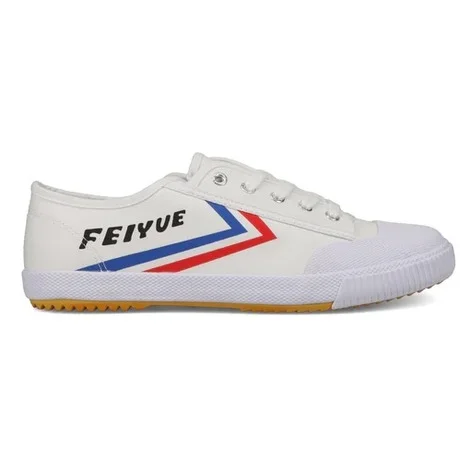
A super-cheap pair of cross-training shoes that’s been trusted by Shaolin monks and international Martial Arts masters for decades. These shoes are very flexible and great for recreational athletes and gym-goers.
What our tester says:
“There’s only a little cushioning on these shoes, not as much as in a running shoe, but a little more than you’d get with a barefoot minimalist shoe.”
At a Glance
- Surprisingly good for the price
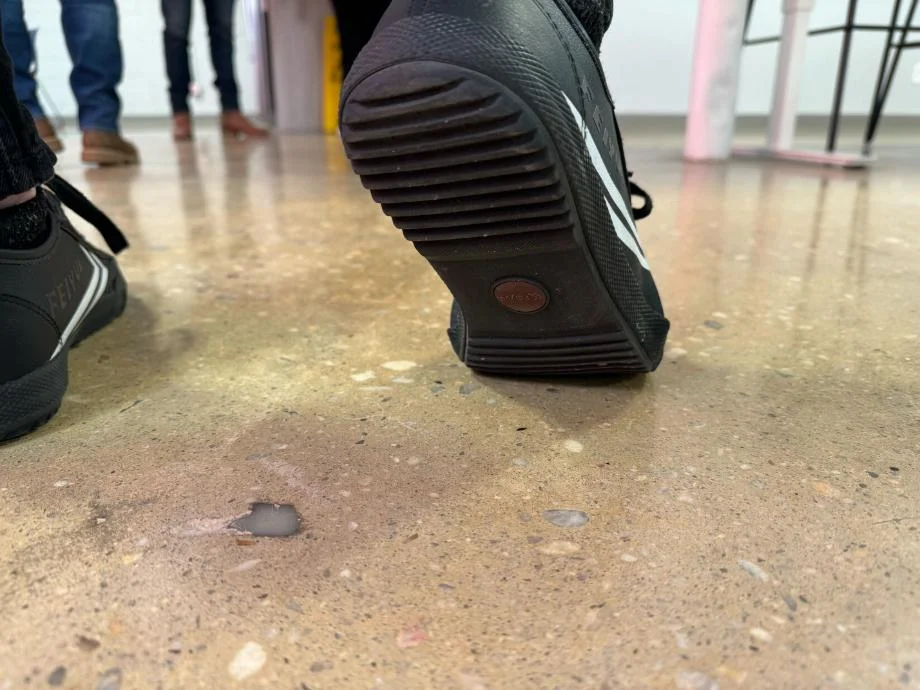
- Flexible sole provides mobility and traction
- No real cushion for runners
- Versatile enough to wear all day long
If you’re shopping on a budget and want a pair of gym shoes that are suitable for lifting, look no further than the Feiyue FE LO 1920s. For those who’ve always gone to the gym in running shoes and are ready for the next step, these can be a fantastic starting point that’s priced to fit nearly any budget.
RELATED: Best Budget Home Gym Equipment
Sure, they’re not as fancy as a pair of high-end running or weightlifting shoes, but they’re a great choice for just about anything but running. We give them 4 out of 5 stars for versatility, especially given how easy they are to wear in nearly any situation (even outside of the gym).
Construction: 3/5
Stability: 4/5
Versatility: 4/5
Why We Like the Feiyue FE LO 1920
There’s a lot to love with the Feiyue FE LO 1920s, and honestly, I wouldn’t have any problems buying a pair for everyday use, even if they weren’t going to be my primary gym shoes. We’ll start with the cost, which is only $35 at the time of the writing. That’s an easy 5 out of 5 for value.
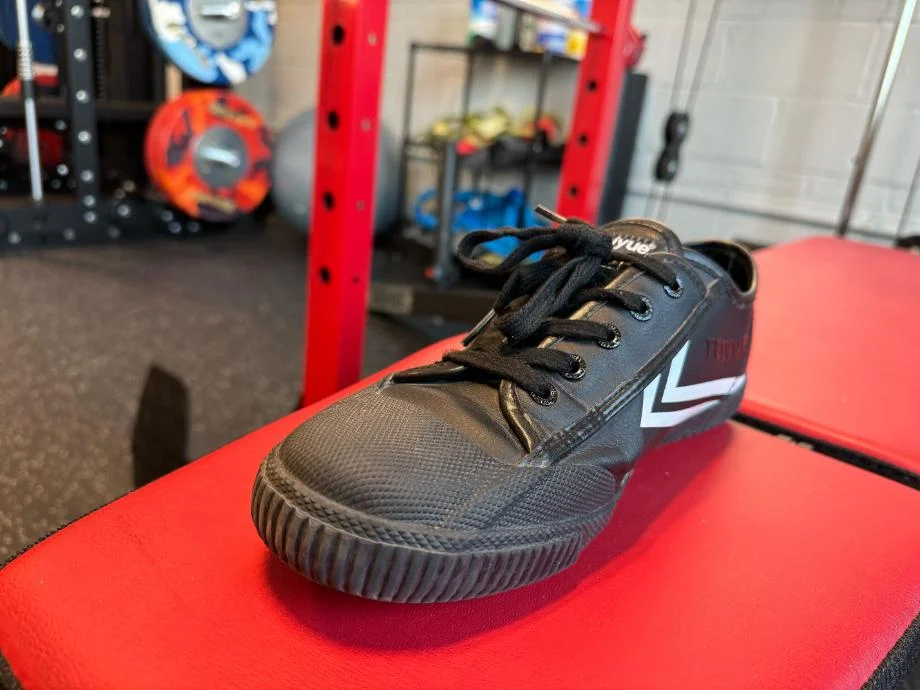
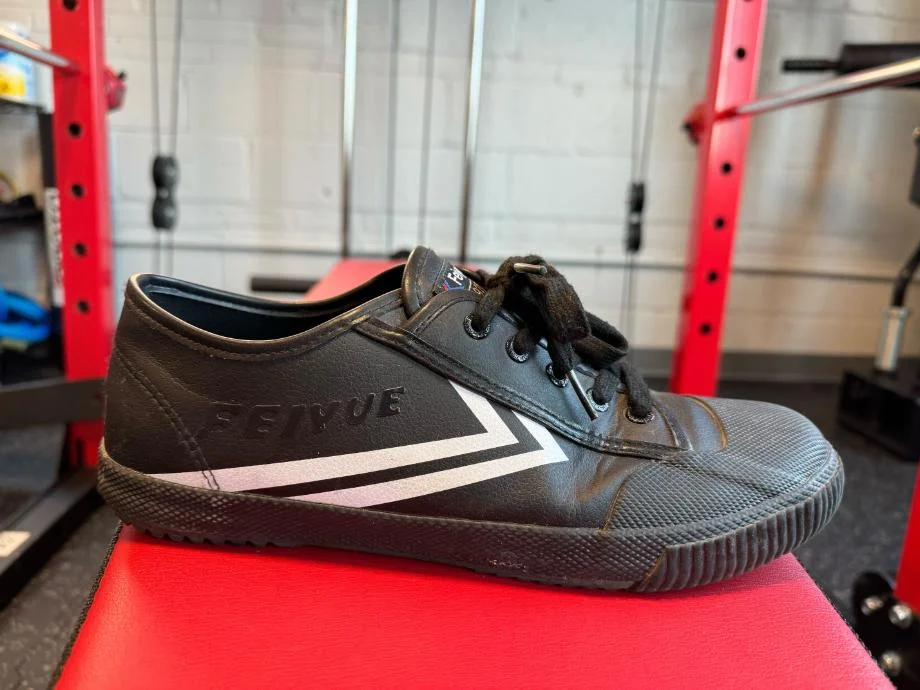
Due to their budget-friendly nature and materials, the canvas upper isn’t going to last forever, but we still give them 3 out of 5 stars for durability and construction. They’re similar to Vans or Chuck Taylors, but with a more flexible sole that’s better for athletic movements, as well as a low profile that doesn’t restrict ankle mobility.
GGR founder Cooper “Coop” Mitchell agrees that they won’t last forever, and notes, “The sole wears out over time and the rubber can detach from the canvas in spots, but it’s very durable for the price.”
We also appreciate the look of these shoes. The minimalist canvas style can easily be worn in a variety of settings, and there are 17 colorways to choose from. As such, we give them 4 out of 5 stars for appearance and design.
Finally, the lightweight design and thin sole makes these a good choice for strength training, as the lack of cushioning can allow you to drive your foot directly into the ground. You’ll have no issues feeling the ground below your feet, according to Coop.
“These were designed to teach your feet how to move naturally, instead of depending on the shoe to do the work for you,” he says. “Trust me, you’re going to feel just about everything under your feet while wearing these.”
I’ve had white, black, and a red pair. I liked them so much that I bought them for my kids. I absolutely love these shoes, especially for the price. I’ve had so many friends buy them and enjoy them after my recommendation. For $35, I think they’re a steal.
Cooper Mitchell, GGR Founder
Alternatives
While we think these are quite versatile, especially for the price, they’re not the best choice for runners due to the lack of midsole cushioning. They also don’t have an elevated heel, and if you’re used to squatting with a heel lift, you might not like that aspect.
“The shoe has virtually no heel-to-toe drop and is as close to a barefoot-style shoe as you can get without actually going there,” says Coop. “That means it’s fine for deadlifts and high-volume strength training, but not so much for people who squat frequently and prefer a heel lift.”
The durability is also a bit lacking, and only earns 3 out of 5 stars. However, you could buy three or four pairs of Feiyues for less than the cost of one pair of expensive gym shoes, so don’t let that be a deal-breaker.
If you want to stick with the barefoot-style training approach but want a bit more durability, the Xero HFS IIs can be a good alternative.
Testing Breakdown
Even though they only received an average rating for durability, the Feiyue FE LO 1920s received high scores in most other testing categories.
Vs. The Average
The Feiyue FE LO is significantly more affordable than the average gym shoe, which is why we think it’s an excellent choice for most people, even if it’s not the most durable shoe.
| Feiyue FE LO 1920 | Average Gym Shoe | |
| Price | $35 | $145 |
| Weight Per Shoe | 11.5 oz | 11.3 oz |
| Heel-to-Toe Drop | 0 mm | 7.3 mm |
| Size Range | 4-14 | 5-16 |
| Trial Period | 30 days | 34 days |
For more on this budget-friendly gym shoe, read our full Feiyue FE LO 1920 review.
Best Cross-Training Shoes for Men: TYR CXT-3
Updated by: Matt Dustin, CSCS, PN1-NC

At a Glance
- Durable, versatile shoe
- Designed for both lifting and conditioning
- Sleek, clean design
- Somewhat expensive
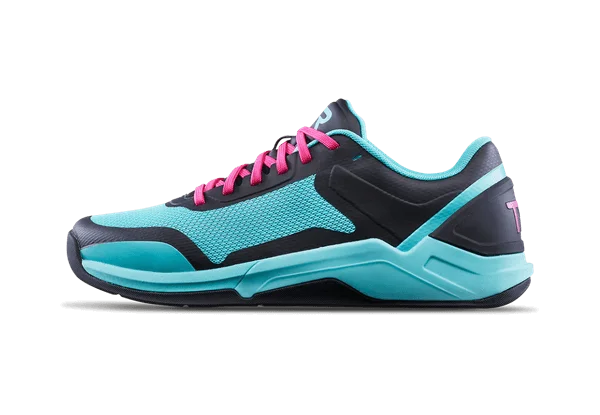
A cross-training shoe is specifically designed to be used for a variety of training styles, including strength training, weightlifting, athletic training, conditioning, and more. If you want one pair of shoes that can handle nearly anything you throw at them, we highly recommend the TYR CXT-3s.
They’re expensive, but built to last through countless workouts, and we give them 4.5 out of 5 stars for durability and construction. Good quality isn’t always cheap, after all, and we think you’re getting a great deal for your money with the CXT-3s.
Construction: 4.5/5
Stability: 4.5/5
Versatility: 4/5
Why We Like the TYR CXT-3
Gym shoes that are meant for cross-training should perform well through a variety of lifts, and the CXT-3s don’t disappoint. Ben Emminger, CNC, CSNC, gives them 4.5 out of 5 for stability and performance.
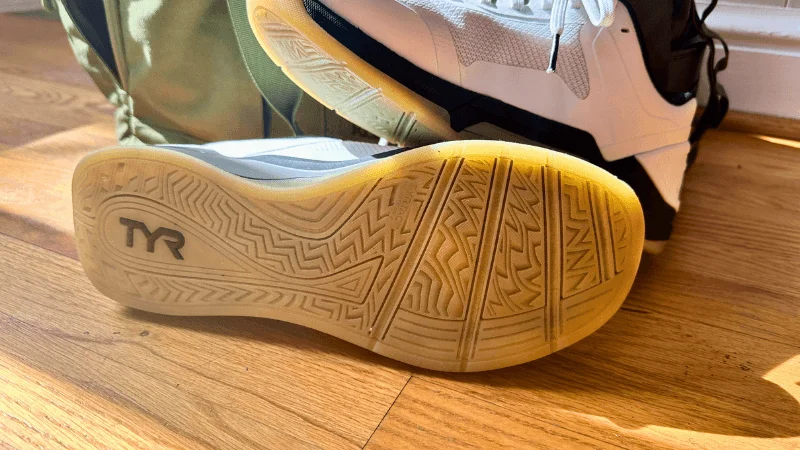
“The CXT-3s serve as a return to form for TYR, and I’m happy to say that the stability is definitely felt underfoot,” says Ben. “The SURGENRG foam is supportive enough for my heaviest lifts, and I like the pronounced sidewalls that come up and help prevent any side-to-side movement. Plus, the flat outsole design gives you that ‘grounded’ sense, almost as if your planted feet aren’t ever leaving the platform when you get into your reps.”
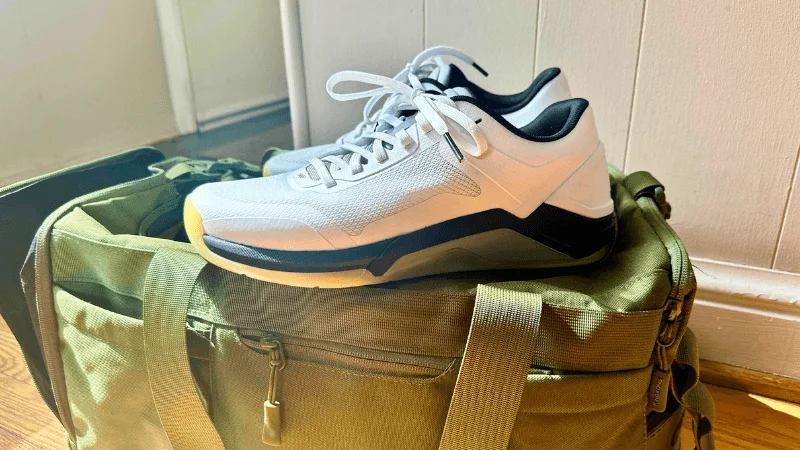
We also think they’re quite stylish, too, and easy to wear both in and out of the gym. If you want a pair of shoes that looks and feels good enough to wear throughout the day, these can be a solid choice, and they earn 4.5 out of 5 stars for their appearance and design.
“TYR does a good job of offering both subdued and vibrant colorways; the brand literally has an option dubbed ‘Acid Bath’,” says Ben. “Additionally, I feel this style translates well to non-training attire, especially if you’re more of an ‘athleisure’ type of individual.”
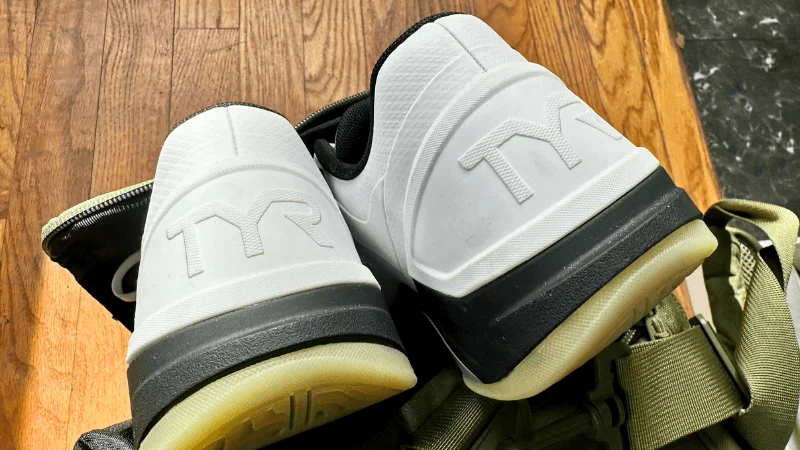
As noted earlier, TYR uses high-quality materials in the CXT-3s, and we have no concerns about their durability or longevity.
“The mesh upper has a thicker feel to it, which I appreciate for enhanced durability,” says Ben. “At the same time, though, I don’t feel as if breathability is compromised. The synthetic overlays in key areas, as well as an extended rubber outsole that creeps into the midfoot, help further the notion that these should last a good while.”
Next to my DZ-1s (also from TYR) these CXT-3s are my favorite sneakers for in-gym days. The flat outsole is perfect for achieving that stable stance for squats and deadlifts, and the TYRTAC rubber is plenty grippy for keeping that position throughout my reps and sets.
Ben Emminger, CNC, CSNC
Alternatives
While the shoes feel comfortable most of the time, Ben noticed that certain types of socks can cause the ankle collar to slip in-use, which is why we docked half a point for stability.
As all-purpose gym shoes, they’re also not the best choice for runners. They’ll certainly work better than weightlifting shoes, but we still suggest traditional running shoes for any type of extended mileage.
“The only area where I feel less confident in the CXT-3s is (naturally) running,” Ben explains. “The weight of these sneakers really comes to the forefront during treadmill sessions, and I certainly have better suited kicks at the ready for days where I know I have some mileage on the docket.”
If you’re a runner looking to upgrade your shoes, we highly recommend the adidas Adizero EVO SLs.
Testing Breakdown
We gave these shoes above-average scores in every testing category, which is why they’re our top pick for the best cross-training shoes for men.
Vs. The Average
Even though they’re expensive, we feel the quality and versatility of the CXT-3s are well worth the cost.
| TYR CXT-3 | Average Gym Shoe | |
| Price | $160 | $145 |
| Weight Per Shoe | 12.5 oz | 11.3 oz |
| Heel-to-Toe Drop | 9 mm | 7.3 mm |
| Size Range | 5-14 | 5-16 |
| Trial Period | 30 days | 34 days |
Our Testers
Stephen Sheehan, CPT, CNC
Stephen is a certified personal trainer and nutrition coach with years of experience in strength and physique training.

Ben Emminger, NASM-CNC, NASM-CSNC
Ben is certified nutrition coach with extensive experience in strength training, running, and apparel. He’s also GGR’s resident footwear expert.

Cooper Mitchell, GGR Founder
Cooper, or “Coop,” is a home gym owner, equipment expert, and the founder of Garage Gym Reviews.

Caroline Lubinsky, CF-L1
Caroline is a former NCAA D1 soccer player, running enthusiast, and CrossFit coach.

Caine Wilkes, OLY, CNC, USAW-L1
Caine is an Olympic weightlifter who competed at the 2020 Tokyo Olympics, a weightlifting coach, and former gym owner.
Other Gym Shoes We Researched
With so many gym shoes on the market, we had a hard time narrowing down our list to the top eight. Here are a few other noteworthy shoes we recommend that didn’t quite make the cut:
- Nike Romaleos 4: These are one of the most popular weightlifting shoes, and some of the best on the market. However, we felt the Adipower IIIs offered slightly more versatility due to the more flexible sole.
- Brooks Adrenaline GTS 25: If you want a bit more support than the adidas Adizero EVO SLs, this is our go-to recommendation, especially for overpronators.
- Converse Chuck Taylor All-Star: This is one of the most iconic pieces of footwear in the shoe industry and a popular choice amongst powerlifters. They can be an excellent lifting shoe, but we feel the Feiyue FE LO 1920s offer a bit more versatility due to their flexible midsole.
How We Picked and Tested the Best Gym Shoes for Men
To compile our list of the best gym shoes for men, we researched dozens of gym shoes for different workout disciplines, and made a short list of our favorites. For most of these shoes, our fitness testers were sent a pair to try out, both in leisurely activities as well as different workout situations; everything from walking, running, squatting, deadlifts, and CrossFit workouts were done in these shoes.
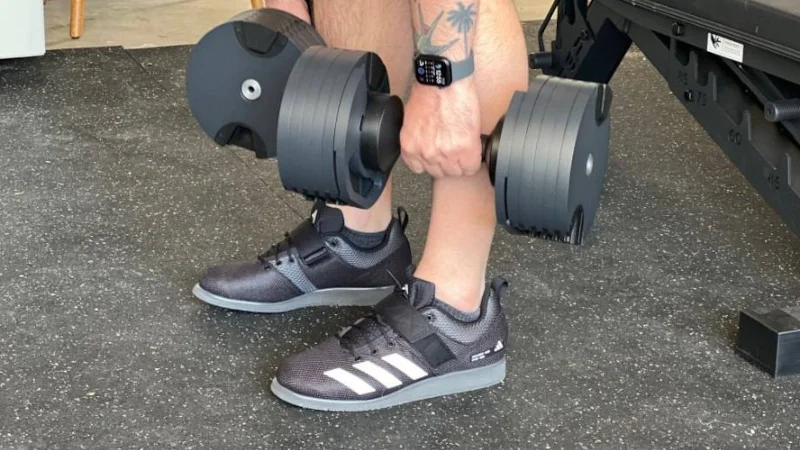
While testing these sneakers, we took notes on the most important aspects of each shoe, each of which was ranked on a scale of 1 to 5 according to our testing methodology. These ratings allowed us to calculate a final, unbiased review score based on the following categories:
Appearance and Design
A good pair of gym shoes doesn’t have to be the most stylish footwear in your closet, but we understand that nobody wants an ugly pair of kicks. In our opinion, function is the most important aspect of a shoe, but most people still want to look and feel good, too.
To earn a 3 out of 5, the shoes might not be something you’d regularly wear while going about your day, but you have no problem wearing them to the gym.
Construction and Durability
For this category, we’re looking at the outer sole, upper materials, any hook-and-look straps, and more, examining any areas of the shoe that we suspect may wear down a little too fast. Shoes won’t last forever, but you also don’t want to be replacing yours every other month.
To earn 3 out of 5 stars for this category, the construction aligns with the shoe’s intended use, but long-term durability may be a concern.
Price and Value
The price of a good gym shoe can range from as little as $35 to more than $200, so this category is based on whether we feel the price is justified for what you’re getting. We compare the shoe to similar options on the market to get a fair score for price and value.
For a 3 out of 5, the shoe offers middle-of-the-road value. It’s not the cheapest or most expensive option, but the price seems fair when compared to competitors.
Versatility
Most, but not all, gym shoes should offer a pretty good amount of versatility. Weightlifting shoes are best for weightlifting, while running shoes are best for running, but most other options on our list can be used for a variety of training modalities.
For a 3 out of 5, the shoe has one main purpose, but there are a few other activities you can use it for, as well. Something like the Nike Metcon or Reebok Nano, which are meant for a variety of activities, should receive higher versatility scores than a squat shoe, but that’s not necessarily a bad thing.
Adjustments and Comfort
Most people want to feel comfortable in the gym, and while not all footwear should be worn for maximum comfort (unless you’re running or walking), you don’t want to walk around in shoes that feel like bricks strapped to your feet.
RELATED: Best Recovery Shoes
To earn 3 out of 5 stars in this category, the shoes are comfortable enough to wear throughout your workout, fit true to size (with whole- and half-sizes available), and feature traditional laces. Higher scores are given to footwear with above-average comfort.
Stability and Performance
For gym shoes, the stability depends on the intended use. We wouldn’t expect running shoes to offer top-notch stability for leg days, nor would we recommend weightlifting shoes that feel unsafe or unsteady in use. This category is tricky, but we do our best to score each pair of shoes based on their intended activity.
For a 3 out of 5, the shoes offer moderate stability for their intended use, though they may be lacking in some areas. We award higher ratings to shoes offering above-average stability and performance, meaning your feet feel plenty secure regardless of your planned workout movements.
Customer Experience
This category rates the overall shopping experience with a given shoe manufacturer. We consider the ordering process, including financing options, as well as warranties, shipping and return policies, and the general helpfulness and availability of the customer support team.
We assign 3-out-of-5-star ratings to companies with average policies, such as free shipping and 30-day returns. Higher scores are given to brands with above-average policies, like extended warranties and free return shipping.
Customer Reviews
We take this score directly from the manufacturer, as well as third-party retailers like Amazon and DICK’S Sporting Goods (where applicable). This allows us to include the average customer feedback in our ratings, rather than relying entirely on our own testing experience.
Benefits of Gym Shoes
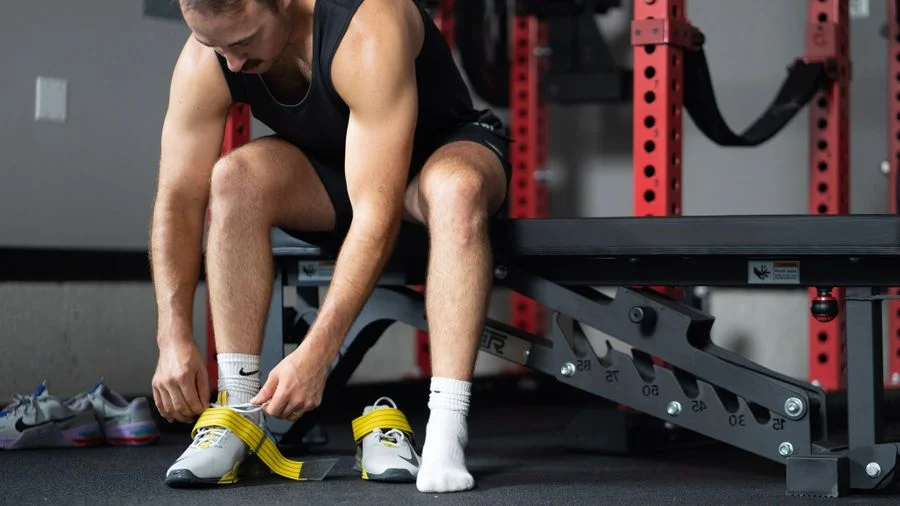
A good pair of gym shoes can help you get the most out of each workout. A solid, stable shoe while lifting can make or break a good lift. Long runs require a good running shoe with enough cushioning and support to help you last and stay comfortable during your session. If you are looking for something to do both activities decently, you’ll likely need a good cross-training shoe.
RELATED: How to Choose Running Shoes
Plus, gym shoes can look cool and be pretty stylish. It’s obvious that you want to prioritize functionality over the look of a shoe, but truth be told, nothing gets me fired up quite like a stylish pair of gym shoes.
Looks aside, here are some of the main benefits that can come from getting proper gym shoes for your workouts:
Traction
Athletic shoes are almost always going to provide better traction than regular sneakers, flip-flops, or training in your socks and bare feet. For those who train on a slick surface, like a wooden lifting platform or cement garage floor, proper footwear can improve the safety of your workout.
“There’s nothing worse than training in shoes that don’t have proper traction,” says GGR Senior Staff Writer Matt Dustin, CSCS, PN1-NC. “You don’t want to be trying to brace your foot and have it slip around, and proper gym shoes keep your feet securely anchored in place, whether you’re squatting, lunging, or using a leg press.”
Improved Performance
Whether you’re looking to increase your squat depth, properly plant your feet for a heavy deadlift, or keep you foot comfortable for a long treadmill session, proper footwear can directly improve your performance in the gym.
“An analogy I like to use when recommending shoes for certain activities is to think of them like you would the tires on your car,” notes Ben Emminger, NASM-CNC, NASM-CSNC. “If your environment sees a lot of snowy forecasts, you’re likely going to be better off with a specialized pair of winter tires. Along those same lines, if your training involves a lot of lifting and weight training, you’re likely going to be better served with a dedicated pair of cross-training shoes.”
You don’t have to wear training-specific footwear, but they can certainly make a significant difference in your daily workout experience.
Comfort
Even if you train in a commercial gym and spend most of your time using machines instead of free weights, you’ll still want to be comfortable while walking around the gym. Your gym shoes, whether that’s cross-training shoes or dedicated running shoes, are often going to be more comfortable than wearing stiff-soled lifting shoes throughout your entire workout.
Not to mention, some of them can even be worn outside of the gym, too, thanks to their aesthetic designs.
“Cross-training shoes are far more comfortable, at least for me, than dedicated powerlifting or squat shoes,” says Stephen Sheehan, CPT, CNC. “Plus, depending on the brand, you can find some really badass-looking kicks that add aesthetic appeal.”
Safety
While you don’t need to wear steel-toed boots to protect yourself in the gym, proper footwear can certainly create a safer environment.
“I used to work in a semi-private sports performance facility, and a lot of athletes wanted to train in their socks on the turf and our lifting platforms,” says Matt Dustin, CSCS, PN1-NC. “I get the appeal, but I saw plenty of people stub their toes and slip around on the platforms, creating an unsafe training experience.”
You may be training in the comfort of your garage, but we still recommend proper footwear for your workouts, even if that’s a pair of minimalist shoes that simulate barefoot training.
RELATED: Is Running on a Treadmill Barefoot Safe?
Buying Guide: What to Look for in Gym Shoes for Men
There are a lot of options to consider when purchasing a pair of gym shoes—enough to make your head spin. One solution is to do what us fitness aficionados tend to do: Purchase three of every type of workout shoe imaginable to where you can’t see the bottom of your closet floor anymore. If you want to take a more sane approach and are looking to make only one purchase of a shoe (for now), here are some things to consider that can help you pick the best workout shoe for your needs.
Midsole Cushioning
The midsole can have a varying amount of cushioning depending on the shoes’ main purpose. Running shoes tend to have more of a thicker midsole to help absorb impact over long distances, although some minimalist shoes have less cushion underfoot to let your feet move and splay more naturally.
Weightlifting shoes, on the other hand, tend to have very little midsole cushioning, as well as a very tough outsole to provide a stable base for strength training. Cross-trainers usually have a midsole in between the two extremes.
Once you know what sort of shoe you want, remember that a thicker midsole typically means more cushioning in the shoe. Still, be on the lookout on the product page for words describing the type of cushion and midsole to help in your decision-making.
Outsole
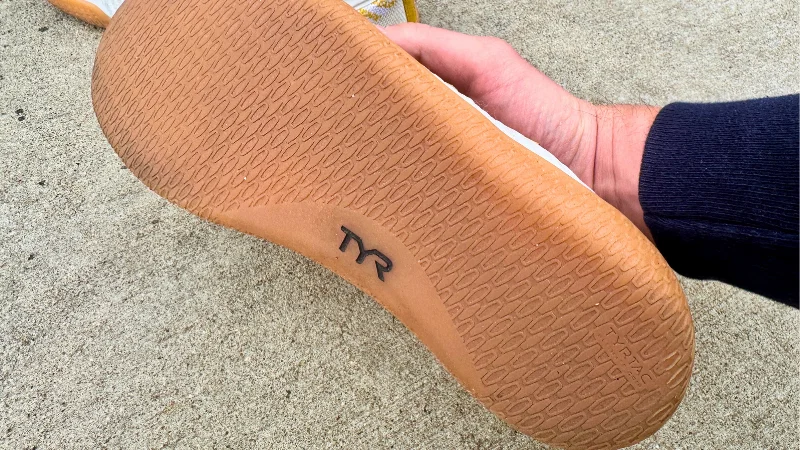
Generally speaking, you’ll want good grip and traction from your gym shoes. Even for a lifting shoe, we don’t want to be sliding on the platform. However, you’ll want more traction on the outsole of a shoe if you are taking your shoes out on a trail run or hike. If that’s the case, choose a shoe with rubber lugs that can make for a grippy experience across rougher terrain.
RELATED: Best Trail Running Shoes
Heel-to-Toe Drop
If you’re looking for a good gym shoe for running and cardio, as well, the heel-to-toe drop is going to be based on preference. As a rule of thumb, a higher heel-toe drop can be best for runners who typically land heel first. A lower heel-toe drop—under 7 millimeters—is best for runners who land on the front or midfoot in their gait.
In lifting, a higher heel can be great for squats2, but powerlifters often prefer a minimalist shoe for deadlifting with little to no heel-toe drop, ensuring they are as low and connected to the ground as possible.
Upper
For a gym shoe, we want something breathable, as you will most likely be moving around a bit with them. Accordingly, many gym shoes are made with a mesh upper to allow for a light, breathable fit. If you plan on going outdoors with them, though, you might want your shoes to be made of a bit more durable material.
Ankle Support
It’s important while running, jumping, squatting, and lifting in the gym that your shoes have some ankle support. This doesn’t mean you should only go with high-top sneakers (although I do love a nice high-top Chuck Taylor). Good ankle support can be found in a low-top shoe in the form of cradles, which help support the lower ankle.
Aesthetics
Look, it’s probably the least important aspect of a good gym shoe, but it also isn’t: You need a shoe you won’t mind being seen in public in. There are plenty of colorful options—and some more reserved ones—to help you select a shoe that suits your style. You’re going to want a functional shoe, but if it’s ugly, you probably won’t want to wear it.
FAQs About the Best Gym Shoes for Men
What kind of gym shoesare best for men?
While there isn’t really a difference between gym shoes for men and women other than sizing (and maybe a couple color options), the best workout shoes for men would depend on what you are looking to get out of your shoes, and the type of training you will be doing in or out of the gym.
Some great options include the Nike Metcon 10s, Reebok Nano X5 Edges, and Feiyue FE LO 1920s.
What to look for when buying gym shoes?
There are a lot of things to consider when buying gym shoes, but the main thing is to find a shoe best suited for the type of training you will be doing. Generally speaking, you’ll want a durable rubber outsole with good grip for running or lifting.
If you see yourself doing a good amount of running, a good shoe will have cushioning to disperse the impact. At the same time, less cushioning can be ideal for heavy lifting, so you might have to find a balance in a cross-training shoe if you’re looking for a sneaker to do both.
For weightlifting purposes, you’ll want something that’s very snug and stable to keep your foot anchored to the ground, so you’re probably not going to have much cushioning in a weightlifting shoe.
Do shoes matter in the gym?
The type of shoe you wear in the gym absolutely matters. For heavy lifting, a solid base and raised heel can mean the difference between a make and a miss. When running over a set distance, you’ll want something comfortable and cushiony that won’t cause blisters after one session. Finally, if you are looking to do some cross-training, you’ll want a shoe that is somewhere in between. A good pair of shoes in the gym can help you get the most out of your workouts.
References
- Rodríguez-Longobardo, C., Gómez-Ruano, M. Á., & Canosa-Carro, L. (2025).Effects of Barefoot and Minimalist Footwear Strength-Oriented Training on Foot Structure and Function in Athletic Populations: A Systematic Review. Journal of clinical medicine, 14(21), 7629. https://doi.org/10.3390/jcm14217629
- Pangan, Aaron Michael, and Matthew Leineweber. “Footwear and Elevated Heel Influence on Barbell Back Squat: A Review.” Journal of biomechanical engineering vol. 143,9 (2021): 090801. doi:10.1115/1.4050820