Garage Gym Reviews collaborated with Jacob Penner, USA Weightlifting Level 1 Coach, NSCA-Certified personal trainer, and CrossFit Level 1 Trainer to give expert advice on this topic.
Hey, everyone—Coop here from Garage Gym Reviews here to cover a question that many of us home gym enthusiasts still haven’t fully figured out, and that is:
“How do I create at-home workout programs for my fitness goals?”
It’s no secret that exercise plays a big role in overall health. Decades of scientific research show us that physical activity is key to warding off chronic diseases, maintaining healthy body weight, and keeping your muscles and bones strong as you age. It sounds simple really–you take care of yourself and take care of your body and it will yield results.
But here’s the catch: While most people know their fitness goals and make the effort to hit the gym to reach them, a lot of folks don’t actually know how to create a training program catered to those goals. Instead of logging onto YouTube or Instagram and cherry-picking workouts from your favorite influencer, take it from the pros (or in this case, Jacob): “Random exercise yields random results.”
The truth is, in order to achieve your fitness goals, you have to have a road map to get there. My good friend Jacob Penner, a USA Weightlifting coach, CrossFit Level One coach, and NSCA-certified personal trainer says trying out random workout sequences without intention isn’t the most effective approach. Instead, the ultimate goal is to head to the gym knowing what you want to accomplish and how you are going to get there.
If you’re going after a specific goal, you need to get granular with your workout plan. In this guide, Jacob and I show you how to do that.
Building Muscle
When it comes to common fitness goals in our home gym community as well as in commercial gym and studio communities, muscle gain spans the gamut. We all want gains. But you could have all the latest squat racks and bench presses and it wouldn’t matter if you didn’t know how and when to effectively use them. Which brings us to the ultimate question: How do you tailor your workouts to gain more muscle?
“Training for muscle growth is all about carefully manipulating your training volume and rep schemes,” Jacob says. According to the American Council on Exercise, the best rep range for weightlifting to build muscle is eight to 15 reps, with rest intervals of 45 to 90 seconds between sets.
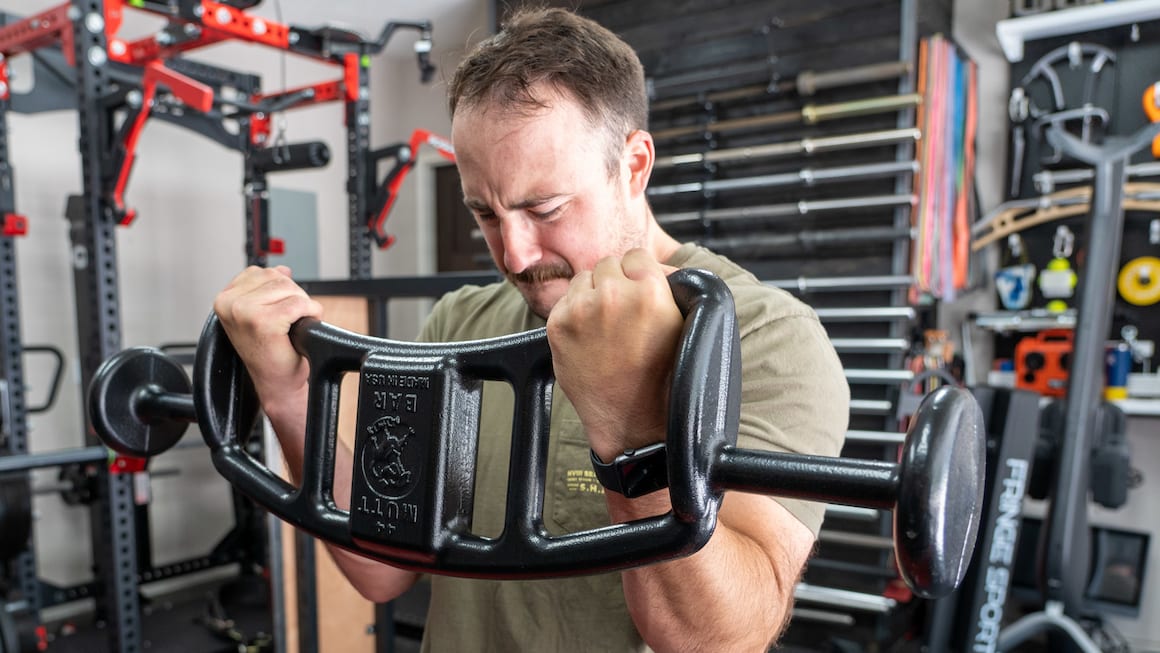
How to Build Muscle
“More important than rep schemes and angles is the principle of progressive overload,” says Jacob. This foundational concept in fitness training is often forgotten or unknown by the average person, but it’s something I’ve definitely realized in my own training.
While the term itself sounds like a workout, the principle of progressive overload is just a fancy way of saying that your body adapts to the demands of your workouts. If you never increase your weight, your muscles won’t have a reason to grow.
Here’s an example of progressive overload:
You begin a six-week deadlift program and during your first week, you perform three sets of 10 deadlifts at 150 pounds. The next week, you should attempt to overload in one of a few ways:
- Increase the reps: Perform three sets of 12 reps at 150 pounds
- Increase the weight: Perform three sets of 10 reps at 155-160 pounds
- Decrease the rest: Cut your rest interval from 90 seconds to 60 seconds (keeping same weight and reps)
Just remember, muscle growth is a slow process. It might feel tempting to pivot and trash your workout plan if you don’t see results quickly, but you’ll only further delay your hypertrophy progress,
Oh, and don’t be thrown off by the word “hypertrophy.” It’s just the scientific term for muscle growth.
Best Fitness Equipment for Building Muscle
Weights, weights, and more weights! If you want to build muscle, you must–and there is no exception–challenge your muscles in new ways, whether that means lifting heavier weights or moving through more reps.
So make sure you have enough weights and make sure you have different types of weights to target your muscles from different angles:
- Barbell. Use a barbell for the major compound lifts, like squats, bench, and deadlifts.
- Iron or bumper plates. Make sure you have enough to accommodate your strength level–at least enough to max out on your heaviest lift.
- Kettlebells.Use these for accessory work, especially unilateral (single-side) exercises like single-leg deadlifts and single-arm bent-over rows.
- Dumbbells. In contrast to barbell work, dumbbell work engages more total muscle fibers thanks to the fact that you have to work harder to stabilize the weight.
- Cable machine and cable attachments. Cables can help you target muscles from different angles and fully develop the shape and density of the muscle. This isn’t a necessity, but a huge help for those who are serious about gaining mass.
Tools for Your Weightlifting Routine
If you need help staying motivated and developing a weightlifting routine you should also consider looking into a workout-tracking app. There are a ton of great ones out there that offer different functions. One of my personal favorites is HEVY, because it allows you to create custom workout plans, track your progress over time, and it gives you the option to share workouts with other users. I also love the Jefit exercise database that lets you explore different exercise options based on the muscle group you want to target. There are plenty of apps and tools out there so I would encourage you to find one that works for you.
Getting Stronger
This may come as a surprise to you (as it does for many people), but building muscle and gaining strength are not, in fact, the same thing.
Getting stronger does require you to pack on more muscle, but it also requires you to prioritize the stuff that no one ever feels like working on — like technique, form, tempo, and, yes, rest. We’ve all seen muscled-up gym junkies who, when it comes down to it, are out-lifted by the guy who’s scrawny, but has great form.
To get stronger, you must frequently train your muscles with weights near the max amount you can lift
As Jacob points out, strength training is a lot about implementing short intervals of hard effort, and then resting until you can repeat. This is the tactic I use in my own training.
With strength training, it’s really important to stay focused, because training multiple energy systems (like the one that powers strength training and the one that powers distance running) can have an interference-effect.
That is, your efforts might start to cancel each other out. Yes, you can do cardio even if you’re chasing strength, but you have to be careful about the types and intensity of cardio you do. If I plan to max out my five-rep squat on Tuesday, I’m not going to go run a 10K on Monday, for instance.
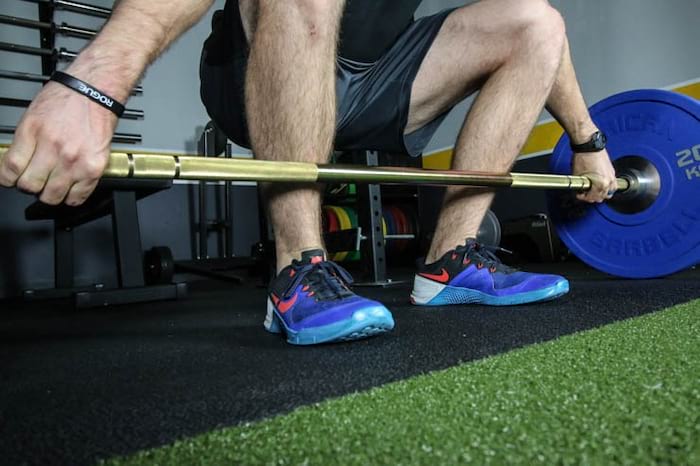
Workouts for Gaining Strength
There are two main things you’ll want to focus on if you’re trying to build strength: compound movements and time under tension. Consider these two components your new best friends.
Compound movements are also known as multi-joint movements, meaning your body moves at more than one point. Take the squat versus the leg extension for example: During a squat, you move at the ankles, knees, and hips, whereas during a leg extension, you move only at the knees.
Time under tension (TUT) refers to the amount of time a muscle is under the strain of an exercise, Jacob explains. You can (and should) extend your TUT in compound lifts if you’re trying to gain strength.
Unlike the high rep ranges ideal for building muscle, the best rep range for building strength is anywhere from one to five reps per set, according to the American Council on Exercise. The six to eight range blurs the line between muscle-building and strength-building, and is beneficial for both goals.
- A strength-building workout should follow a template similar to this:Choose two to three compound lifts
- Perform each one in isolation (no supersets or intervals)
- Do three to five sets of one to five reps of each exercise
- The lower the rep count, the heavier the weight. Lifting heavy weights at low rep counts is essential for building strength.
- Extend TUT by slowing down the eccentric (lowering) parts of your lifts. For instance, count to three as you descend into a squat.
- Rest two to three minutes between sets
- Save accessory work, such as resistance band exercises or bodyweight training, until after the compound lifts
Both powerlifting (back squat, deadlift, bench press) and Olympic lifting (cleans, jerks, snatches) can be used in strength training sessions. Accessory lifts, including overhead press and front squats, should also be sprinkled in.
Best Fitness Equipment for Gaining Strength
Your equipment list for strength workouts should look the same as the list for muscle-building workouts. At the very least, you should have a barbell and enough weight plates to max out your major compound lifts, including squats, deadlifts, bench press, and shoulder press.
Dumbbells and kettlebells can also help you gain strength but shouldn’t be at the center of your routine if your goal is to increase the weight you can lift in the squat, deadlift, bench press, or other major lift. Same with resistance bands–they’re great for accessory work, but shouldn’t be the focus of a strength training workout program.
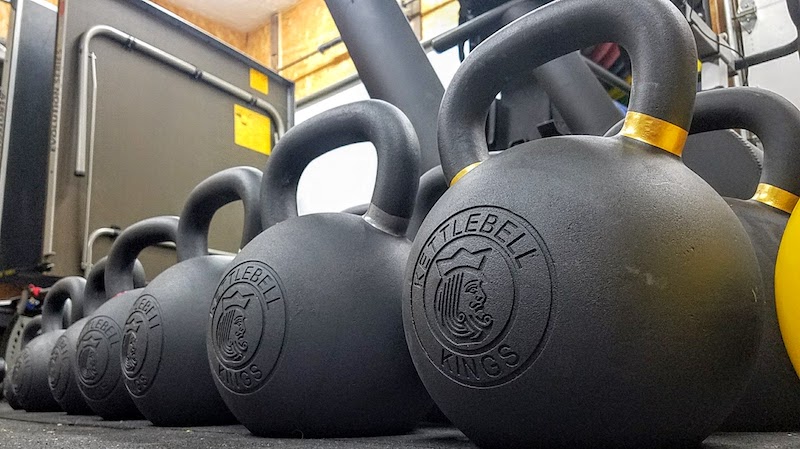
Increasing Flexibility and Mobility
Flexibility and mobility are not the same. Flexibility is the ability of a muscle to lengthen without damage–think touching your toes. Mobility, on the other hand, is the ability of a joint to move through its full range of motion without pain, impingement, or damage–think ass-to-grass squats. (Raise your hand if you can touch your toes but can’t drop into a full squat. It’s more common than you might think).
“You don’t necessarily need to be mobile to be flexible, but flexibility is a prerequisite for mobility,” Jacob explains.
Ways to Increase Flexibility and Mobility
The best way to improve both flexibility and mobility is to put your joints through functional ranges of motion, ideally with loads if you can (but starting with no loads if you can’t). By pushing your joints to their end ranges, you’ll naturally stretch the attached muscles at the same time.
The primary difference in training the two is whether you perform static or dynamic movements. Static stretching caters more to flexibility, while dynamic movements cater more to mobility. Isolated stretching (stretching one muscle or muscle group at a time) also caters more to flexibility than mobility.
Workouts for Increasing Mobility
You can perform full workouts dedicated to flexibility and mobility, sure. Yoga flows are a great way to do that. However, for people who also have other fitness goals, such as getting yoked or winning a bodybuilding competition, the best way to go about mobility and flexibility training is to sprinkle a few exercises in your daily warmup and cool-down. This has worked best in my own pursuit of perfect weightlifting form.
Point blank: Most people don’t know how to effectively warm-up or cool down. How about instead of flapping your arms and doing 30 seconds of high-knees, you actually slow down to focus on beneficial exercises that A) get your blood flowing and B) actually make you a better athlete?
Use these best practices for increasing flexibility and mobility:
- Pre-workout: Choose two to four dynamic mobility exercises to complement the workout you’re about to do. For instance, if you plan to work out legs, do some Samson lunges, Cossack squats, and banded ankle dorsiflexion. Do two sets of 10 reps of each move, slow, controlled, and intentional.
- Post-workout: Choose two to four static stretches to wrap up the workout you just did. If you worked out legs, do a seated toe-touch, couch stretch, and figure-four stretch. Hold each stretch for 30 seconds, three times.
- If you do full-body workouts, choose one or two upper body exercises and one or two lower body exercises for both your warmup and cool-down.
Best Fitness Equipment for Increasing Mobility
Since the best way to increase mobility and flexibility is to move your body through its full ranges of motion under loads, it makes sense to have basic gym equipment that can help you do that: a barbell and plates, dumbbells, and kettlebells are all options.
Resistance bands will come in handy for mobility exercises, especially as a form of assistance to help you achieve deeper stretches. Finally, recovery tools like foam rollers, lacrosse balls (for mashing muscle knots), and mobility sticks can help loosen tight muscles.
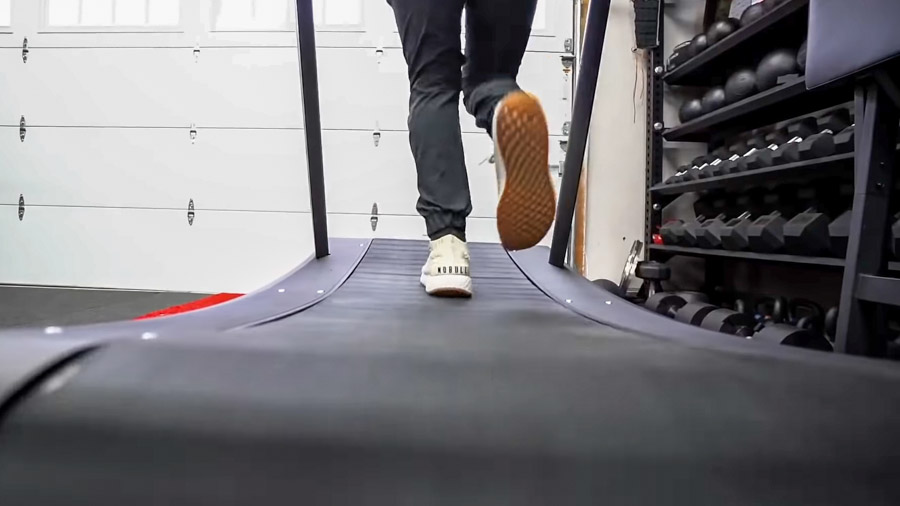
Improving EnduranceFor those who want to run, bike, swim, hike, or walk for longer distances, aerobic training is key.. Anaerobic cardio training also plays a role and is especially important for people who want to get faster at running or other aerobic activities.
Jacob’s Take on Improving Endurance
“A lot of people think endurance means how far you can run. But in reality, endurance is about how your cardiovascular system holds up under physical stress and how your muscular system continues to work through prolonged activity.”
Workouts for Improving Endurance
A quick primer from Jacob: Aerobic training is what most people know as “cardio.” Performed for long periods of time at submaximal intensities (AKA, you’re not sputtering for air), aerobic exercise trains your body to maintain a higher heart rate for longer periods and effectively produce muscle-powering energy for a long time. Anaerobic exercise, on the other hand, involves short spurts of high-intensity exercise. Think HIIT: Work for 30 seconds, rest for 30 seconds, or something along those lines. This type of training doesn’t directly improve endurance, but it does improve speed, power, and your ability to regulate your heart rate and breathing, all of which contribute to better stamina.Aerobic endurance workouts can look like:
- A 30-minute easy run with stride (fast, but not sprinting) intervals sprinkled in every two minutes.A 20-minute circuit workout that includes bodyweight lunges, burpees, box jumps (or step-ups), and jumping rope.A 45-minute power walk or hikeTwo 15-minute rowing sessions at 70 percent of your max heart rate, separated by a five-minute active rest period of walking.
Anaerobic cardio workouts might include:
- A 20-minute run with a 1:1 interval format: one minute hard, one minute easy.30 seconds of max box jumps followed by one minute of rest, for five rounds.Every minute on the minute (EMOM) for 12 minutes, perform five heavy barbell squats (80 percent of your one-rep max or higher)
Finally, there’s muscular endurance, which refers to how long your muscles can sustain repeated contractions under a given load. “Load” in this case can refer to your own bodyweight or free weights. Jacob says that training muscular endurance means suffering through sets of 15 reps or more with minimal rest. Ouch.
Best Fitness Equipment for Improving Endurance
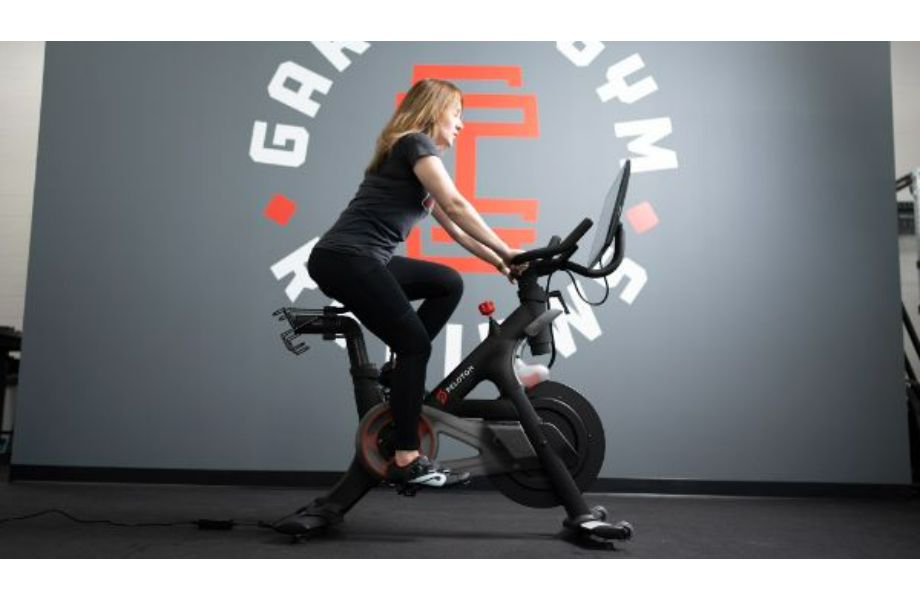
The beauty of endurance training is that you don’t need much. If you have access to the pavement, you can effectively train for increased endurance. However, having some equipment is helpful. Cardio equipment, like rowers, ski ergs, exercise bikes, or the best treadmills for home use provide a way to work out no matter what the weather is like. Resistance training equipment can also help improve endurance. The best pieces of equipment for endurance-specific training will enable you to complete high-volume workouts at submaximal loads. Go for things like:
Losing Body Fat
Losing body fat is indisputably one of the most common fitness goals, Jacob says. It’s not a bad goal to have, although Jacob wants people to know that losing body fat is a natural byproduct of pursuing other fitness goals, such as building muscle or improving endurance. Still, you can cater your workout routine to the sole goal of decreasing your body fat percentage.
Jacob’s Take on Losing Body Fat
Weight-loss workouts are typically structured more around developing aerobic capacity (long, slow, distance efforts) for a month or two, then moving toward high-intensity interval training for a month or two. Then repeat. These workouts are almost always accompanied by some strength work specific to the movements they need to stay well-rounded (squat, hinge, push, pull, carry, twist).
Workouts for Losing Body Fat
The best kind of workout program for losing body fat includes elements of strength training, aerobic training, and anaerobic training. You don’t need to smush all of those elements into a single workout, but you definitely need to prioritize them all throughout the course of a week or month, Jacob says.
Here’s a sample weekly workout plan catered to body recomposition (losing fat and gaining muscle):
- Sunday: Rest
- Monday:20 minutes of steady-state cardio (walking, stair-stepping, jogging, cycling) at 70 percent of max heart rate, plus 20 minutes of high-volume bodyweight or light weight training
- Tuesday:45 minutes of moderate-volume weight training (sets of eight to 12 reps at 60 to 80 percent effort)
- Wednesday:Rest
- Thursday:20 minutes of steady-state cardio (walking, stair-stepping, jogging, cycling) at 70 percent of max heart rate, plus 20 minutes of high-volume bodyweight or light weight training
- Friday:45 minutes of moderate-volume weight training (sets of eight to 12 reps at 60 to 80 percent effort)
- Saturday: 60 minutes of low-intensity (50 percent max heart rate) steady-state cardio, such as walking, swimming, or cycling
The specifics will vary from person to person, depending on the home gym equipment you have and your current fitness level. Jacob offers a cautionary tale: Many people who want to lose body fat make the mistake of thinking more is better. In reality, doing too much exercise, especially high-intensity exercise, can overload your system and lead to excessive stress. This, in turn, can mess with appetite- and metabolism-regulating hormones. More isn’t always better, and more definitely isn’t better if you don’t get enough sleep, water, or calories.
Best Fitness Equipment for Losing Body Fat
The best home gym for weight loss-oriented efforts would ideally contain equipment in both the strength and conditioning categories. Cardio equipment, such as a rower or treadmill, will allow you to get your aerobic training done even when the weather sucks. With a barbell and weight plates, you can perform all of the major compound exercises to supplement cardio training and start reducing your body fat percentage.
Improving Athletic Performance
Improving athletic performance is as much about skills-based training as it is about general fitness training, Jacob says.
Jacob’s Take on Improving Athletic Performance
“Athletic performance means different things to different people. Some people want to ‘peak’ a certain skill or achieve a very specific goal, like qualifying for the Boston Marathon.”
“Many others just want to feel like a well-rounded athlete. They want to be able to play with their kids, go for a run, and lift heavy things. However, they don’t want to be in the pain necessary to be the best at a particular sport.”
Workouts for Improving Athletic Performance
If you’re most people (i.e., not an elite athlete or aspiring elite athlete), improving athletic performance involves following a varied program, Jacob says. You’ll dedicate about 40 percent of your training time to strength work, another 40 percent to energy system development (cardio/intervals), and 20 percent to plyometrics and other athletic, explosive movements such as sprinting, change of direction, and side shuffling.
“A well-rounded athlete can move forward, sidewards, backward, up and down, and rotate, all with ease,” Jacob says. “I try to make sure everybody I work with takes this multiplanar approach with everybody regardless of goals.”
Calisthenic movements like pull-ups and chin-ups, push-ups, triceps dips, and ab exercises are good for building body awareness and strict strength.
Best Fitness Equipment for Improving Athletic Performance
To be a well-rounded athlete, you need a well-rounded ecosystem of equipment. The people who are serious about being good at everything will have, well… everything. (Or close to it).
Definitely secure the basics: barbell and plates, dumbbells, kettlebells, resistance bands. Use these to train strength and muscular endurance. Slam balls, medicine balls, plyo boxes, and battle ropes will help you train explosiveness, power, and rotational strength.
Finally, odd objects such as tires, sandbags and axle bars are great for honing athletic skills you can’t always mimic with basic equipment.
Coop’s Final Words
Reaching fitness goals is a matter of clearly defining your aspirations and then prioritizing the types of training that are important to you.
Jacob tells me that no matter what you do, if you are consistently “red-lining” or training to the point of failure in any modality, it will be tough to make progress in other areas.
Concurrent training — trying to become a well-rounded athlete or jack of all trades — is all about staying conservative and doing what you can on a day-to-day basis. That’s something I’ve found to be true in my own training, too.
Finally, while it’s 100 percent possible to learn how to program your own workouts for your home gym, working with a fitness professional or following an online workout program will indisputably get you to your goals more efficiently and effectively. At the very least, if you’re just starting out, make sure to watch videos of proper exercise form and techniques online.
References
- Krzysztofik M, Wilk M, Wojdała G, Gołaś A. Maximizing Muscle Hypertrophy: A Systematic Review of Advanced Resistance Training Techniques and Methods. Int J Environ Res Public Health. 2019;16(24):4897. Published 2019 Dec 4. doi:10.3390/ijerph16244897
- Schoenfeld BJ, Contreras B, Krieger J, et al. Resistance Training Volume Enhances Muscle Hypertrophy but Not Strength in Trained Men. Med Sci Sports Exerc. 2019;51(1):94-103. doi:10.1249/MSS.0000000000001764
- Mangine GT, Hoffman JR, Gonzalez AM, et al. The effect of training volume and intensity on improvements in muscular strength and size in resistance-trained men. Physiol Rep. 2015;3(8):e12472. doi:10.14814/phy2.12472
- Thomas MH, Burns SP. Increasing Lean Mass and Strength: A Comparison of High Frequency Strength Training to Lower Frequency Strength Training. Int J Exerc Sci. 2016;9(2):159-167. Published 2016 Apr 1.
- Hughes DC, Ellefsen S, Baar K. Adaptations to Endurance and Strength Training. Cold Spring Harb Perspect Med. 2018;8(6):a029769. Published 2018 Jun 1. doi:10.1101/cshperspect.a029769
- Gäbler M, Prieske O, Hortobágyi T, Granacher U. The Effects of Concurrent Strength and Endurance Training on Physical Fitness and Athletic Performance in Youth: A Systematic Review and Meta-Analysis. Front Physiol. 2018;9:1057. Published 2018 Aug 7. doi:10.3389/fphys.2018.01057
- Bloomquist K, Langberg H, Karlsen S, Madsgaard S, Boesen M, Raastad T. Effect of range of motion in heavy load squatting on muscle and tendon adaptations.Eur J Appl Physiol. 2013;113(8):2133-2142. doi:10.1007/s00421-013-2642-7
- Benito PJ, López-Plaza B, Bermejo LM, et al. Strength plus Endurance Training and Individualized Diet Reduce Fat Mass in Overweight Subjects: A Randomized Clinical Trial. Int J Environ Res Public Health. 2020;17(7):2596. Published 2020 Apr 10. doi:10.3390/ijerph17072596
- Westerterp KR. Exercise for weight loss. Am J Clin Nutr. 2019;110(3):540-541. doi:10.1093/ajcn/nqz070