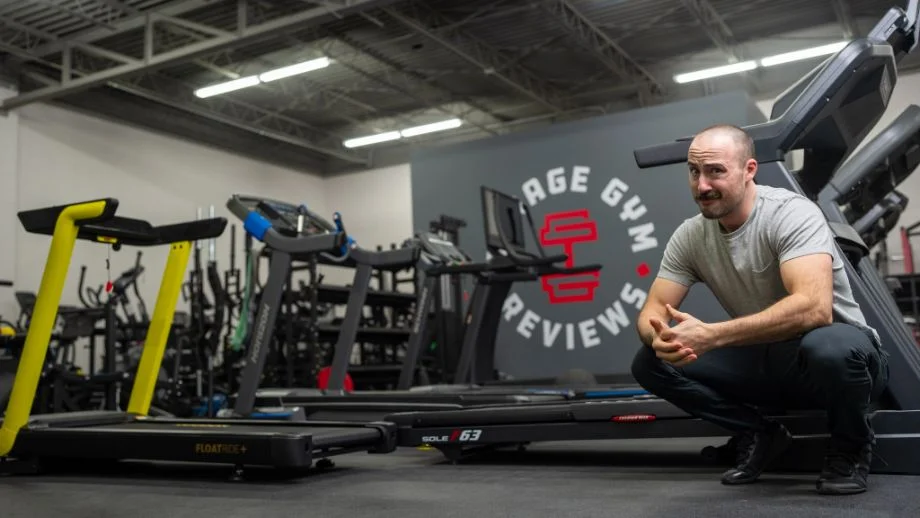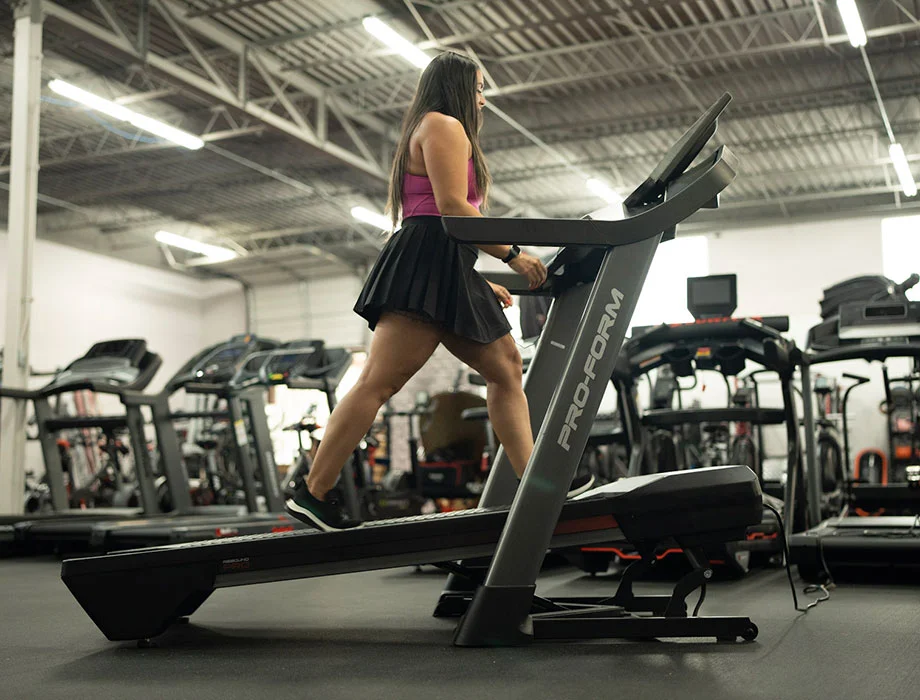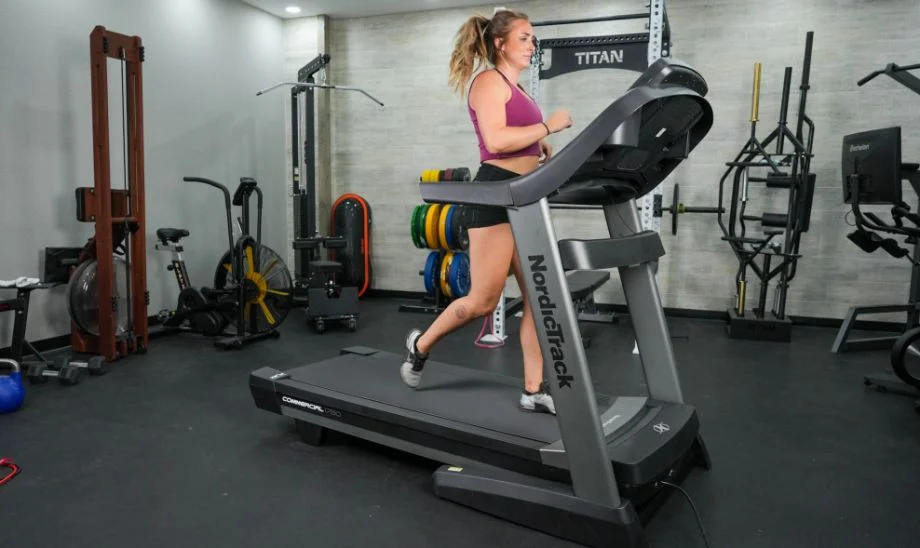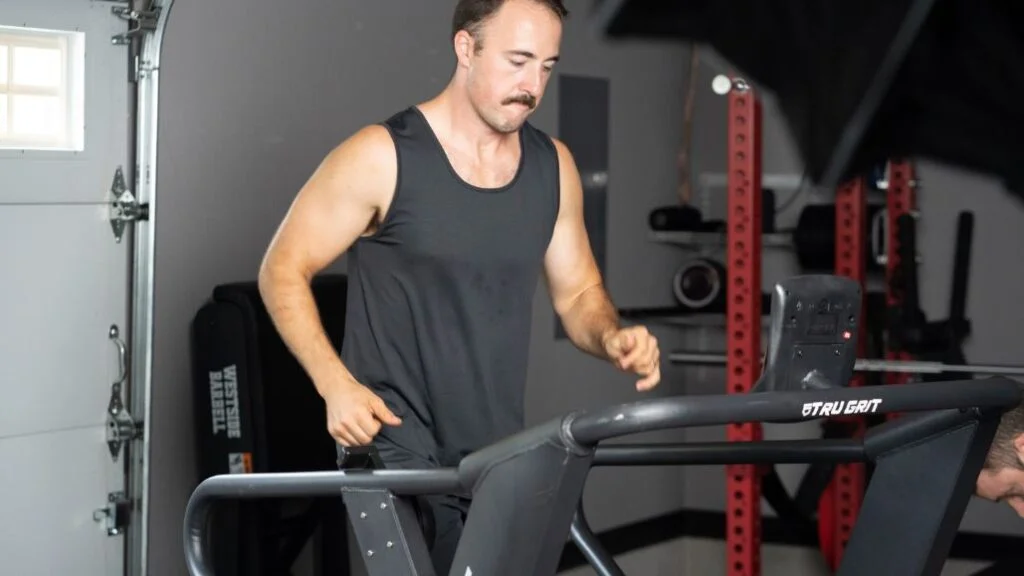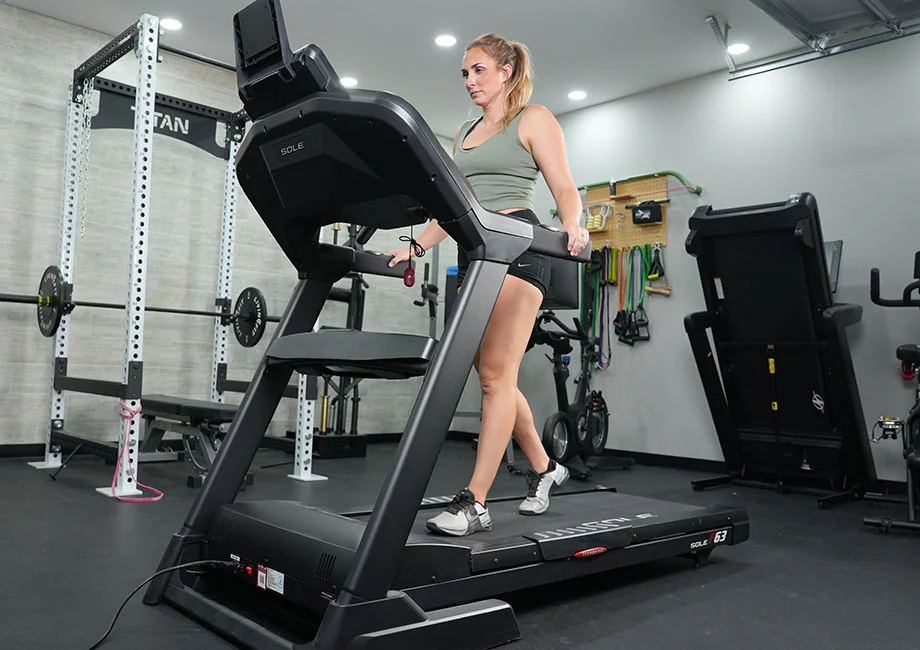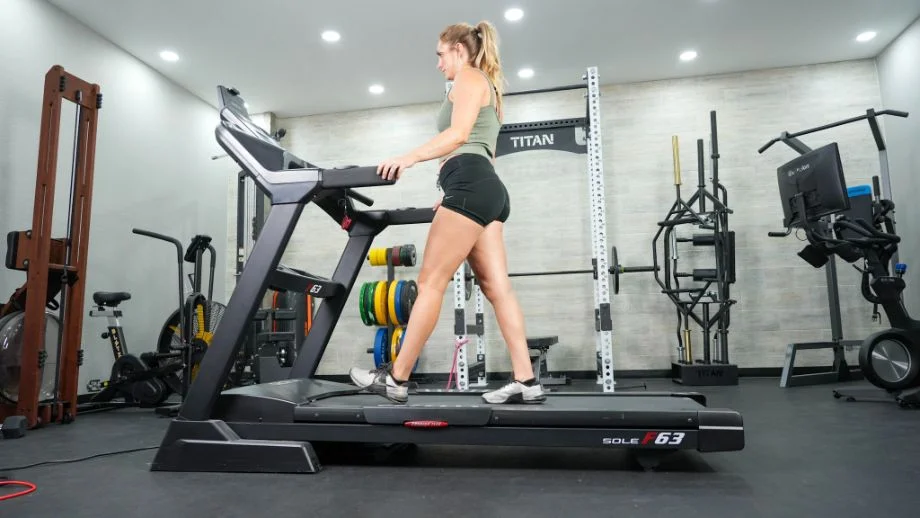
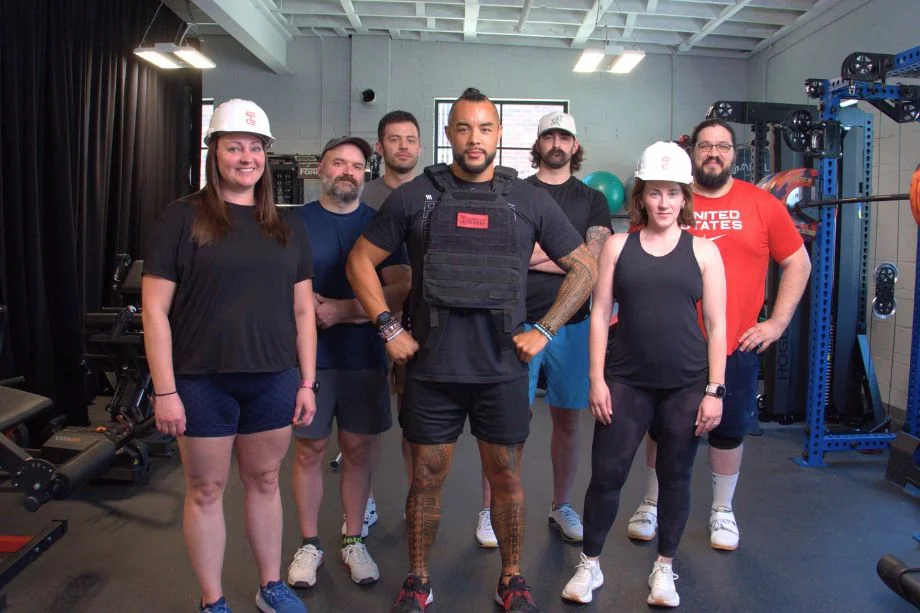


For more than a decade, our team at Garage Gym Reviews has been putting treadmills through the literal paces. We walk, jog, and sprint on them to assess just how good they are.
Our testing doesn’t stop there, though. We don’t want to simply know how a treadmill performs during a workout (though that is very important); we want to know how they stack up against other treadmills on the market. We assemble them, fold them, and move them around to get a full scope of the ownership experience. Our testers even verify manufacturer specs through quantitative tests—everything from using radar guns to measure actual speeds, protractors to determine incline angles, and more.
At the end of our exhaustive testing, we provide informed insight as to who the treadmill would be great for and who might want to look for a different product.
Our product testers—which includes marathoners, triathletes, and recreational runners—have personally tested more than 50 treadmills from top brands (and even brands you may have never heard of). Last year alone, we helped more than 7,000 people find the right treadmill for their home gyms. If you’re looking for a machine, read on to find out how we can help you make the right decision.
Our Values
In order to fully vet a treadmill, we rely on expertise. Not only do our product testers, writers, and editors have decades of combined experience working in fitness, but we are also certified personal trainers, weightlifting coaches, and gym owners.
We also consult with experts outside Garage Gym Reviews, such as USA Track and Field-certified coaches and certified strength and conditioning professionals. Our reviewers use the latest research on factors like incline training, the impact of treadmill training on your joints, and more in order to provide a holistic view of how a treadmill performs (or falls short).

Our Process
At GGR, we welcome any and all products to our testing center. Our goal is to make sure that if a consumer is researching a treadmill, we are able to give them answers on how it performs. We have vetted machines from top brands like Peloton, NordicTrack, and Horizon Fitness, among others. Our team also researches lesser-known manufacturers to get a range of budget-friendly treadmills, walking treadmills, and curved treadmills into our facility.
We have a comprehensive 12-point treadmill testing methodology to rate a number of factors on a scale of 1 (well below average) to 5 (well above average). Our reviewers use research-backed industry standards to inform where a machine may fall on that scale.
We then take all those scores and average them to determine a treadmill’s GGR score. This rating is key to determining which machines make our best-of lists and which we wouldn’t recommend. In most cases, we only recommend machines that score a 4 or higher after our testing, though even treadmills that have scores above 3 are still considered above-average. We are constantly evaluating these lists and updating them to make sure we are giving an honest, accurate opinion on what the best treadmills truly are.
Below is a look at each area we evaluate for treadmills as well as the industry benchmarks we’ve determined through years of testing and research.
| Category | Average Treadmill We Test |
| Footprint | 70” L x 30” W |
| Assembly | 45 minutes to 1 hour |
| Weight Capacity | 320 lbs |
| Top Incline | 12% |
| Top Speed | 10 MPH |
| Running Deck Size | 55″ L x 18″ W |
| Treadmill Belt Thickness | 1.6 mm |
| Warranty | 10 years on frame and motor |
Treadmill Performance Testing
Evaluating a treadmill includes taking an objective look at its specifics and measuring those against what we have deemed to be the standard. We balance that with our subjective user experience to create a holistic rating of the product. Below is an in-depth look at each category we test and how we rate these machines.

Footprint and Portability
Treadmills typically have some decent size to them, averaging roughly 6 feet long and 3 feet wide. Machines that are much bigger than this would rate lower on our footprint scale, and smaller machines like under-desk treadmills would score higher. We also assess portability as part of this rating, because a machine’s size seems less problematic if you’re able to move it (or, in some cases, fold it) without much strain.
To get a rating of at least a 3 in this area, we require that one or two people are able to easily move the treadmill around. We rate compact machines higher if they take up less space or can fold, while larger, heavier machines that are difficult to move receive scores under 3.

Durability
There are several factors we consider when assessing the durability of a treadmill. To get at least a 3 in this area, the machine must meet the following requirements:
- Weight capacity: We look for at least 275 pounds
- Motor size: We look for a 2.5 CHP motor
- Shaking: Our testers hit top speeds and inclines and look for little to no shaking from the machine
We take into consideration some additional factors, like whether the treadmill comes with floor stabilizers, which can reduce shaking and accommodate uneven floor surfaces that would otherwise stress the machine. Our testers also evaluate the materials; too much plastic on a treadmill or a very thin treadmill belt could mean you’ll be in need of repairs sooner rather than later.
Customizations
We use the term “customizations” to refer to how much you can customize your workout on a treadmill using speed and incline. Through our testing and research, we have found that the average treadmill offers speed of up to 10 mph and inclines of up to 10%. We rate treadmills higher when they offer bigger speed ranges and/or a variety of inclines, and some even provide decline training.

Ergonomics
The ergonomics of a treadmill comes down to three main aspects:
- Treadmill belt size: We look for a size that can accommodate runners with all body types, which means it should have at least a 55-inches-long-by-18-inches-wide running deck.
- Treadmill belt material: We prefer machines with, at least, a single-ply belt measuring 0.8 to 1.1 millimeters thick.
- Treadmill cushioning: We prefer machines to have at least some deck cushioning to take the stress off users’ joints.
If a treadmill hits the minimum on the above points, it will score a 3 out of 5. We give bonus points to bigger treadmill decks, flexible cushioning options, and thick treadmill belts. Additionally, we look for ergonomic touches like handlebars and low step-up heights.

Tech Capabilities
Tech integration with treadmills is typically a key component on even the most basic of machines, because what good is a treadmill if you can’t see how far, long, or fast you have run?
We evaluate a few aspects of technology on treadmills, including the console, heart rate monitoring, and Bluetooth capabilities. To earn at least a 3 in our tech capabilities testing, a treadmill must display time, distance, and other basic workout metrics. It should also provide some type of animation along with the display, and it must provide heart rate monitoring.
High-end treadmills typically score very well in this category because they have add-ons, like Bluetooth speakers, touchscreen consoles, the ability to sync with other workout or entertainment apps, and USB charging ports.
Conveniences
It’s the little things, isn’t it? The water bottle holder, the quick-change dials, the fans—it all can make your workout just a little easier.
When we rate a treadmill on its conveniences, we give an average score of 3 out of 5 to machines that provide at least one water bottle holder, a media shelf for your phone or device, and a safety stop button. Treadmills with extras like fans and additional cup holders score higher.

Dynamic Programming
It’s great to shut off your brain during a workout and just do what someone tells you to do. Treadmills today typically offer either built-in workouts via buttons on the console, or they can sync with an app like Strava or iFIT to stream exercises from a device or touchscreen.
Treadmills earn a 3 in dynamic programming when they have at least a handful of built-in workouts you can easily access from the console or an app. We rate machines higher when they provide interactive programming, sync with an app that has studio or live classes, or can learn your fitness level and start catering your programming to your needs. Typically, this type of programming requires a subscription, which we take into account when determining the machine’s value.
Value
Assessing the value of a machine is perhaps one of the trickiest aspects of rating treadmills, because we aim to determine if the price is worth it for most people. In other words, there are some people who may not blink an eye at spending $3,500 on a cardio machine, but many of us would view that price tag as much too high, even if the machine is excellent.
To assign a value score, we take a look at the price tag against the average cost of a treadmill (which is about $1,900) and then take a look at how the machine scores across other categories. We take into account additional fees that may be associated with the treadmill, including monthly subscriptions, shipping, and even warranties. From there, our team uses our years of treadmill testing to assign a value score from 1 to 5.

Customer Experience Testing
Our testing experience is comprehensive, so we do everything that you, the customer, might do in order to get a sense of what it’s like to purchase a treadmill from start to finish.
Delivery and Setup
Treadmills are typically large and can weigh hundreds of pounds. Many manufacturers give you options for delivery and setup that include curbside delivery, threshold delivery (at your door), or a room-of-your-choice delivery. They may also offer assembly, though we have found that this service averages between $200 and $300.
To give a score at least a 3 out of 5 here, we require that the brand provides threshold delivery and that assembling the treadmill would take two people no longer than 1.5 hours, which is a benchmark we have pulled after assembling more than 50 machines ourselves. We rate machines higher when assembly is offered at an affordable rate, or the machine takes less than 1.5 hours to put together.
Treadmills can earn perfect scores in this area when assembly is essentially just taking the machine out of the box, plugging it in, and starting it up. As such, many under-desk treadmills score well in this area.

Policies (Financing, Warranty, Returns, etc.)
Most treadmill brands have set policies around financing, warranty, and returns. We have collected data on nearly 100 machines to determine industry standards and outliers for these three areas:
- Financing: Many companies provide some type of financing through third-party vendors. The best deals include 0% offers for set timeframes.
- Warranty: The best warranties are typically 15 years to life on the frame, at least two years on parts and one year on labor.
- Returns: The industry standard is 30 days from date of delivery to be eligible for a refund. Only a few companies refund shipping and won’t charge a restocking fee, so those would be the 5-star ratings.
Customer Reviews
We recognize that our readers want to know what other users think. This is perhaps one of the most straightforward ways we rate a machine; we look up its customer review ratings on the brand site as well as third-party sellers like Amazon, Best Buy, and WalMart, and we average those ratings into one score.
Customer Service
Our testers personally reach out to brands to troubleshoot issues or ask questions about the treadmill. We assess how quickly a brand responds, how helpful they are, and what avenues they provide to get in touch. We then score the brand based on how those interactions go, with a 3 indicating that the conversation was satisfactory, and a 5 meaning the representative went above and beyond to help us with our issue.
Overall Score
In order to arrive at an overall score for a treadmill, we average each of the 12 scores above. We use these overall scores to determine which machines may make it on our best-of lists, and which should be left off. We prioritize machines that have overall scores of 4.0 or higher, though on occasion, we may include a treadmill that has an above-average score of 3.0 to 3.9 if it tested very well in a particular area.