

While a common piece of gym equipment in commercial gyms around the world, Smith machines are quite divisive with most fitness enthusiasts either loving or hating them. Some love the stability offered by a fixed bar path, while others feel that only Olympic barbells and free weights should be used.
Regardless of your opinion, there’s no denying that, in recent years, Smith machines have become a popular piece of home gym equipment, so we’ve been busy testing as many as we can get our hands on.
If you’re here to hate on Smith machines, I’m not here to change your mind. But if you’re looking for the best Smith machine for your home gym, I’ve got you covered.
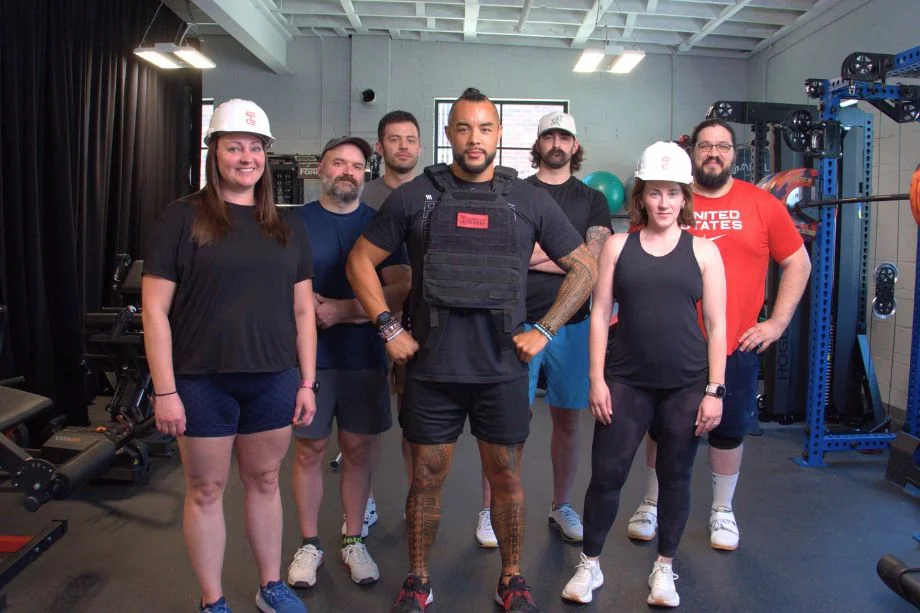
Our team of expert product testers and researchers has compiled our picks for the best Smith machines on the market today, using our equipment testing methodology to guide our testing efforts across dozens of high-quality rigs and racks. This methodology rates the most important aspects of a Smith machine, including:
- Durability: We gave scores of 3 out of 5 or higher to Smith machines that feel strong enough to withstand regular use in home gyms, though the steel may be lighter than you’d see in a typical squat rack.
- Balance and Movement: For this category, we consider any counter balance added to the machine, as well as how smoothly the bar moves. To earn a 3 out of 5, the bar moves pretty well, but it may or may not be counterbalanced to reduce the weight.
- Stability: Is the machine stable when using heavy loads, or does it feel wobbly? To get a 3 out of 5, a machine must feel fairly durable, though it might still move slightly when loading plates, or it might need to be bolted into the ground.
We also spoke to Dr. Chris Mohr, PhD, RD, to provide further insight on the benefits of Smith machine training and resistance-based workouts. Then, we had the article medically reviewed by Raj Panchal, D.O., who specializes in Interventional Pain Management and Physical Medicine and Rehabilitation, to ensure accuracy.
To date, we’ve helped over 3,800 gym owners find their ideal strength equipment, and we’re here to help you, too.
The 7 Best Smith Machines of 2025
- Best Smith Machine Overall – Titan Smith Machine
- Best Budget Smith Machine – RitFit Multifunctional Smith Machine with Lat Pulldown and Low Row
- Best Smith Machine With a Power Rack – Major Fitness All-In-One Home Gym Smith Machine SML07
- Best All-In-One Smith Machine – Force USA G3
- Best Smith Machine for Small Spaces – Bolt Fitness Storm Series Stinger Smith Machine Attachment
- Best Smith Machine Attachment – Bells of Steel Smith Machine Attachment
- Best 2:1 Pulley Ratio Smith Machine – Vesta Fitness Pro Series 3-in-1 Ultimate Rack With Smith Machine
Best Black Friday and Cyber Monday Deals (2025)
- Titan Smith Machine – Black Friday VIP Pass: Up to 65% off + free shipping on every order
- Force USA G3 – Get a free Olympic barbell with your purchase | Use GGR5 for add’l 5% off
- Vesta Fitness Pro Series 3-in-1 Ultimate Rack With Smith Machine – 20% off everything at checkout
- Major Fitness All-In-One Home Gym Smith Machine SML07 – $300 off for Cyber Monday
Editor’s Note
At Garage Gym Reviews, we constantly test the newest Smith machines and update this page with our top finds. Our team of certified personal trainers, elite athletes, and home gym experts has tested over a dozen Smith machines and utilized them in various commercial gyms. In October 2025, we updated this guide with our most up-to-date picks and added comparison tables to each product to show how it stacks up against the average Smith machine.
Best Smith Machine Overall: Titan Fitness Smith Machine
Updated by: Matt Dustin, CSCS, PN1-NC
_
What our tester says:
__I’ve used Smith machines before, and they often aren’t very smooth or balanced. That’s not the case with the Titan Fitness Smith Machine._
Best Budget Smith Machine: RitFit Smith Machine with Lat-Pulldown and Low Row
Updated by: Matt Dustin, CSCS, PN1-NC
_
What our tester says:
__I can say a lot of bad things about this machine, but a low price covers so many sins._
Best Smith Machine With a Power Rack: Major Fitness All-In-One Home Gym Smith Machine
Updated by: Matt Dustin, CSCS, PN1-NC
Best All-In-One Smith Machine: Force USA G3
Updated by: Matt Dustin, CSCS, PN1-NC
The Force USA G3 is an all-in-one home gym machine. It functions as a functional trainer with two pulleys, a smith machine, and a squat rack. It’s worth noting that the design of the G3 will have you barbell training on the outside of the rack, not within the rack. However, it comes with J-cups and spotter arms so you can squat and bench safely at home.
What our tester says:
“The G3 is the most interesting piece of equipment made by Force USA because the value it brings is the highest. There’s a lot that you get with this rack that a lot of similar racks don’t even have.”
Best Smith Machine for Small Spaces: Bolt Fitness Supply Storm Series Stinger Smith Machine Attachment
Updated by: Matt Dustin, CSCS, PN1-NC
_
What our tester says:
__There’s fit and finish upgrades that could help the quality of this machine, but overall, I’m a big fan._
Best Smith Machine Attachment: Bells of Steel Smith Machine Attachment
Updated by: Matt Dustin, CSCS, PN1-NC
Best 2:1 Pulley Ratio Smith Machine: Vesta Fitness Pro Series 3-in-1 Ultimate Rack With Smith Machine
Updated by: Matt Dustin, CSCS, PN1-NC
Other Smith Machines We Researched
Here are a couple of other Smith machines we’ve tested and liked, but they still didn’t quite make the list for one reason or another.
- Force USA G20: This is a beefed-up version of the Force USA G3, but it still uses similar materials to the G3 and costs $5,999. For that reason, we prefer the G3 for its higher value.
- Sunny Health and Fitness Premium Smith Machine Power Rack: We like the small footprint here, but feel this rack is a little expensive for what you’re getting.
How We Picked and Tested the Best Smith Machines
It’s rare when there is strength equipment that Garage Gym Reviews hasn’t done a deep dive into, but that’s the case with Smith machines. Although we’ve reviewed some functional trainers and power racks with Smith machine capabilities over the years, it hasn’t been a huge focus because there hasn’t been a huge demand in the home gym community.
That’s changing, however, which is leading us to make that dive into Smith machines—much like we did with saunas and cold plunge tubs. We’ve taken them through upper-body and leg workouts, determining how effective these machines are in use.
We score each machine using our testing methodology, which rates each machine on the most important categories we test. Here are some of the categories we examine:
Construction and Durability
Because Smith machines for home use are still a relatively new market (with many brands working on releasing their own version), the quality of construction can vary significantly, especially with the Smith machine bar. Budget materials are acceptable as long as the price accurately reflects their quality.

To get an average score, which is 3 out of 5, the rack is built with a thinner steel, 12-gauge or higher, but it feels durable enough for home use.
Footprint and Portability
The footprint of Smith machines can vary. Some are standalone units, and some are add-ons that can be installed in your existing squat rack. We know that many home gym owners often need to rearrange things, so we also consider how difficult it is to move the machine if needed.
For a 3 out of 5 rating, the Smith machine has a decent footprint, but it may be a bit heavy and require multiple people to move it.
RELATED: Best Compact Exercise Equipment
Balance and Movement
With Smith machines, the quality of the bar path can vary greatly. Some can feel sticky and awkward, while others move very smoothly. We also consider whether the bar is counter-balanced, which would make it feel lighter.
Many commercial machines are designed so the bar itself feels incredibly light, making them a good choice for beginners, while others don’t have any counterbalance, so the bar feels quite heavy.
To earn an average score, a machine needs to feel smooth, though it may or may not be counterbalanced. Higher scores were awarded to machines with exceptionally smooth movement or good counterbalance.
Stability
Does the machine feel sturdy? Does it need to be bolted down, or is it heavy enough to stabilize itself?
In addition to these factors, we test whether the machine feels wobbly or shaky with heavy loads.

We gave average scores to machines that feel mostly stable with heavy loads, but may have a little bit of movement when loading or removing plates. Machines that didn’t move at all received our highest 5-out-of-5-star ratings.
Benefits of Smith Machines
Although there’s been a lot of hate on Smith machines from functional fitness loyalists who prefer free weights and think the fixed bar path is cheating, there are a lot of great reasons to train with one. We’re not denying free weights have their place, but so do Smith machines.
For anyone who loves resistance training and isn’t quite sold on the idea of a Smith machine, here are a few reasons to consider one for your home gym.
Isolation Exercises
Isolation exercises focus on one specific muscle during their execution, like how a hammer curl isolates the biceps muscle. While they shouldn’t be your only mode of training, isolation exercises complement compound exercises by intentionally training specific muscle groups.
And although each type of training—compound and isolation—has its role, studies show that isolation exercises can be just as effective as functional compound movements. Specifically, a 2015 study1 compared single-joint (isolation) exercises with multi-joint (compound) exercises in untrained young men. After 10 weeks, both groups saw significant increases in the torque output of the elbow flexors (the biceps brachii, brachialis, and brachioradialis), as well as overall muscle thickness in the upper body.
Because a Smith machine has its bar guided on rails, it travels on only one plane of movement. This helps isolate muscles by avoiding having to use smaller muscles to stabilize the weight. When you do a shoulder press on the Smith machine, it’s almost entirely training only your shoulders and delts.
Versatility
Although Smith machines are usually thought of as leg machines, you can do a variety of upper- and lower-body exercises with them. Along with squats, deadlifts, and leg presses, you can perform bench presses, shoulder presses, and upright or bent-over rows. Smith machines can add a lot of versatility to your home gym space.
RELATED: Smith Machine Leg Workouts
Safety
Beginners might lean toward a Smith machine instead of free weights because a Smith machine has safety features incorporated into it that may decrease their risk of injury. For example, keeping the barbell on guide rails enables newer lifters to concentrate on leg drive, rather than balancing and coordinating the movement simultaneously.
Along with that, Smith machines usually have safety stops if a lifter has to bail out from a lift, and you can easily rack the bar by rotating your wrist.
Stability
While some lifters may not enjoy the fixed bar path, it’s a benefit for some, especially bodybuilders and physique athletes who don’t want to work their stabilizer muscles continually. Barbells and dumbbells are great, but Smith machines have their place in your fitness journey, too.
Matt Dustin, CSCS, PN1-NC, a certified strength and conditioning specialist, is a big fan of using Smith machines in his own training and regularly uses them with his clients, too.
“Smith machines are awesome for bodybuilding, especially exercises like the incline chest press,” explains Matt. “You can put all of your focus on contracting the target muscle with proper form, rather than worrying about stability and balancing the bar.”
Matt added that this is also useful if you’re using a Smith machine near the end of your workout, when you may be fatigued and don’t want to risk dropping a weight on yourself.
If you’re worried that using a machine is hurting your gains because you’re not recruiting the smaller stabilizer muscles, don’t be. A 2020 study2 in the Journal of Strength and Conditioning Research found that training with both free weights and machines (including Smith machines) resulted in similar strength and muscle gains.
Improved Body Composition
According to Christopher Mohr, Ph.D, RD, strength training is excellent for body composition, and a Smith machine allows users to enjoy a variety of strength training exercises safely.
“Strength training helps in burning fat and managing weight by building muscle,” says Dr. Mohr. “Muscle is a metabolically active organ that is really the organ of longevity. It increases your resting metabolic rate, which means you burn more calories even when at rest.”
Buying Guide: What to Look for in Smith Machines
Looking for just the right Smith machine for your home gym? Here are some things to consider.

Materials
Depending on your strength levels, you may need a Smith machine with a higher weight capacity. Smith bars can range from a capacity of 200 pounds to up to 700 pounds or more. Ensure the quality of materials and construction meets your needs.
Also, Smith barbells are often underwhelming, with passive knurling and lackluster steel. If you need a heavy-duty barbell, make sure to do some research before making your purchase for a quality bar with a high weight limit.
Guiding Rod Angles
The rails that guide a Smith machine are typically either vertical or at a slight angle. The slight angle is usually a slightly more natural position for Smith machine squats, as it lets you move in a more natural squatting position. However, with that angle comes more of a footprint. A vertical Smith machine can still be used for squatting, and it can save you some space.
Footprint
Smith machines are versatile pieces of equipment, but they also have a large footprint. To combat this, you can look for a home Smith machine attachment for a power rack, or you can buy an all-in-one trainer that has a built-in Smith machine—all to maximize the versatility in your machine’s footprint.
Counterbalance
If you’re a newer lifter, you’ll want to choose a machine that has a good counterbalance. This reduces the weight of the bar and can make a standard 45-pound barbell feel nearly weightless.

Stronger individuals may not need to worry about this, but if you think you’ll ever want to perform a lift with less than 45 pounds, you’ll want to choose a machine that’s counterbalanced to some extent.
Budget
Smith machines and home gyms that include Smith machines can vary in price, from as little as $600 to as much as $6,000. Either way, it’s a chunk of change, so make sure that the machine fits your budget. You can also research financing options to see if that’s a viable option for you.
FAQs About the Best Smith Machines
Can you build muscle with a Smith machine?
Yes, you can build muscle with a Smith machine. Resistance training provides a stressor for muscles that requires adaptation, leading to building muscle and strength. Free weights, machines, or even resistance bands can help build muscle.
Is a Smith machine harder than free weights?
A Smith machine may seem harder than free weights if you’re new to using one, but in reality, a Smith machine is often a little easier. This is because Smith machines have guide rails, which help stabilize the barbell. With free weights, you’re left to stabilize the weight yourself.
What is the best Smith machine for a home gym setup?
The best Smith machine for your home gym will depend on the space you have available, as well as the versatility and functionality you want from your machine. Reputable brands we recommend include Force USA, Vesta, and Bells of Steel, but there are plenty of others.
References
- Gentil, P., Soares, S., & Bottaro, M. (2015). Single vs. Multi-Joint Resistance Exercises: Effects on Muscle Strength and Hypertrophy. Asian journal of sports medicine, 6(2), e24057. https://doi.org/10.5812/asjsm.24057
- Schwanbeck, S. R., Cornish, S. M., Barss, T., & Chilibeck, P. D. (2020). Effects of Training With Free Weights Versus Machines on Muscle Mass, Strength, Free Testosterone, and Free Cortisol Levels. Journal of strength and conditioning research, 34(7), 1851–1859. https://doi.org/10.1519/JSC.0000000000003349