

Speed is a key factor in determining the best treadmill for your needs, and when shopping for home treadmills, speeds can vary significantly between models. If you’re only searching for a worthwhile treadmill for walking, you can get by with a slower (and more budget-friendly) machine. But if you plan on doing faster cardio, like sprints, pinning down the top speed is going to be paramount.
So, how fast do treadmills go? The answer is that it can vary. Here, we’ll take a closer look into understanding treadmill speeds and provide you with an in-depth pace breakdown chart.
Speed on Budget Treadmills
A budget-friendly treadmill can be ideal for burning calories and squeezing in a convenient workout at home as train toward your fitness goals. But how fast can these machines to go? Well, you can expect to see some similarities in affordable treadmills once you break them into two groups: under $500 and under $1,000.
RELATED: How Much Does a Treadmill Cost?
In treadmills under $500, which are often compact under-desk treadmills, top speeds typically max out around 8 or 10 miles per hour (MPH). A speed of 8 MPH is equivalent to a 7:30 mile, and 10 MPH can equate to paces around a 6-minute mile. An example of a treadmill in this range is the Sunny Health & Fitness SF-T4400, which is around $500 and goes up to 9 MPH.
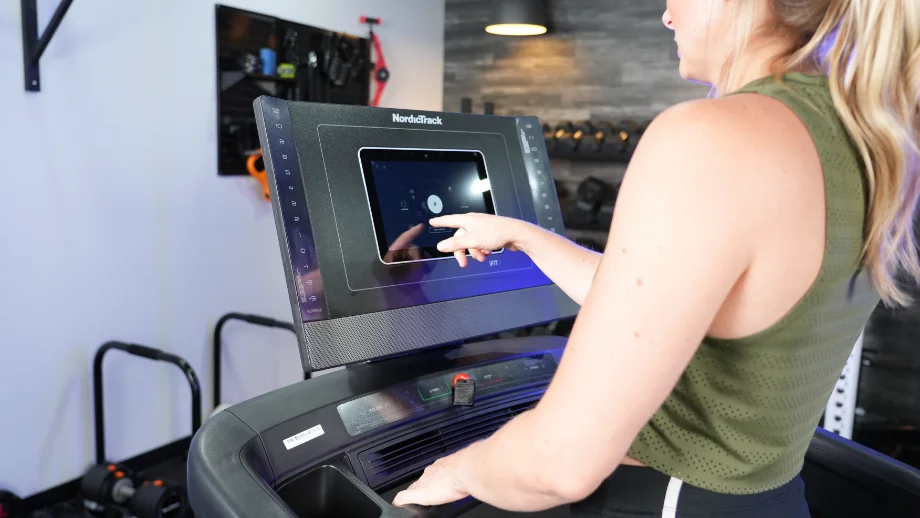
A major reason these treadmills come in at such lower costs can be traced to their oftentimes smaller motors. On the aforementioned SF-T-4400, for example, the treadmill motor is 2.2 continuous horsepower (CHP), which usually cannot sustain heavy running. As such, these machines are generally reserved for walking and home use as opposed to commercial traffic.
If you bump your budget to treadmills under $1,000, you can begin to see some speed and horsepower increase.s Top speeds regularly hit 12 MPH (equivalent to a 5-minute mile), and motors are usually around 3.0 CHP. A motor of 3.0 CHP can be better suited for people who want to run instead of simply walk through their daily step counts.
Speed on Mid-Range Treadmills
A mid-range treadmill can usually cost between $1,000 and $2,000. Here, you’ll often see stronger motors and higher speed ranges ideal for treadmill running.
RELATED: Best Home Treadmill for Running
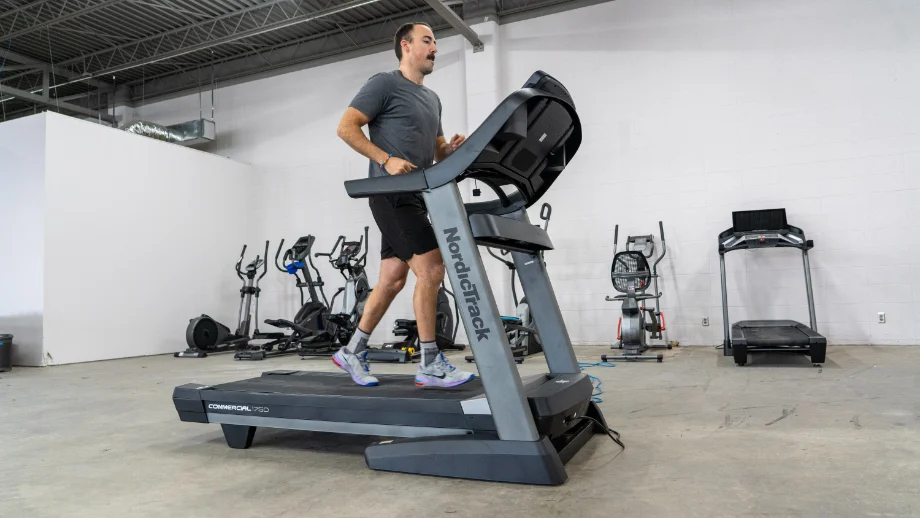
On average, mid-range treadmills, such as the NordicTrack Commercial 1750, are equipped with average speeds up to 12 MPH. At 12 MPH, you can run a 5-minute mile, or a 15:30 5K. You’ll also see stronger motors averaging 3.25 to 3.5 CHP. Motors in this range can be great for high-frequency running.
Speed on High-End Treadmills
How fast do high-end treadmills go? With higher motor quality and CHP, these home treadmills can cost $3,000 or more and are equipped with a lot of added features such as Bluetooth, decline running capabilities, touchscreen displays, and heart rate monitoring.
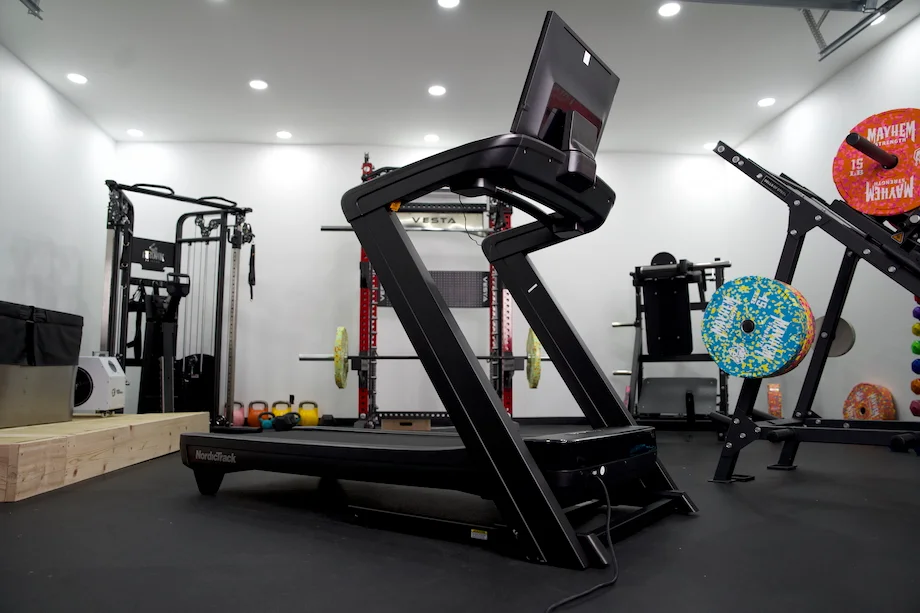
In this range, you’ll find some of the fastest treadmills with top speeds of 12 to 14 MPH. For context, 14 MPH is the equivalent of a 4:17 mile. The horsepower on these, which are often commercial treadmills ideal for gym settings, tends to be 3.5 CHP or higher. This can support high-frequency use, such as multiple people stepping on the machine throughout the day, and can handle nearly any type of treadmill workout.
GGR’s CHP Cheat Sheet
Since the speed of a given treadmill is determined by it’s continuous horsepower, or CHP, we recommend carefully checking the CHP of any treadmill you’re considering to make sure it can support your training needs.
To help you get started, here’s a table breaking down exactly what to look for:
| CHP Power | Max Speed | Best For | Example Models | Price Range |
| 1.5-2.0 | 10 MPH | Walking, light jogging | Sunny Health and Fitness Walkstation Slim Flat Treadmill | $300-$700 |
| 2.5-3 | 12 MPH | Walking, jogging, running | Horizon Fitness T101 | $700-$2,000 |
| 3.5-4+ | 14 MPH | Running, incline running | NordicTrack Commercial 2450 | $2,000-$3,000; can be significantly more |
Manual Treadmills
A manual treadmill is user-powered, so it goes as fast as you can go, essentially. Your feet are what makes the belt turn, not a motor. As such, you set the pace for your warm up, jog, or high-intensity interval training (HIIT).
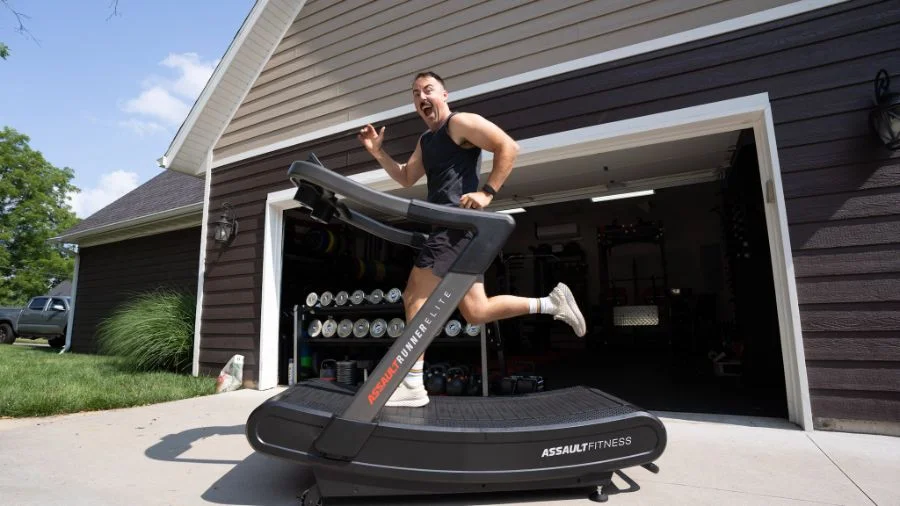
It’s not easy to pin down the average high speed of manual treadmills, because some are small, compact machines with construction that is intended just for walking. On the other end of the spectrum, there are incredibly sturdy machines like the AssaultRunner Pro, which can handle speeds of up to 20 MPH. Beyond that, there have been speeds of up to 24 MPH recorded on manual treadmills—that’s almost as fast as Usain Bolt’s top speed of 27.7 MPH!
Manual Treadmills Vs Motorized Treadmills
Both manual and motorized treadmills have their place in garage gyms, and we’re big fans of both. Since most people only need one treadmill in their home, though, here’s a quick table to help you determine which kind is best for your needs.
| Key Benefits | Best For | Not For | Average Price | Examples | |
| Manual Treadmills | -No power requirements -Curved deck can promote better running form -Challenging workout | Athletes, runners, interval workouts | Small spaces, budget shoppers, streamable workout services | $2,800 | TrueForm Trainer, AssaultRunner Classic |
| Motorized Treadmills | -Steady speeds -Incline settings -Preset workout programs | Steady paces, incline training, preset workout programs | People who want instant speed changes | $1,900 | NordicTrack Commercial 1750, Peloton Tread |
RELATED: Manual vs Electric Treadmill
Understanding Speed on Treadmills
When you step on a treadmill and power up the display, you’ll see a number starting at 0.0 for the speed. On most models, that number increases in one-tenth increments as you toggle toward your preferred training speed. If your machine is set to the imperial system, this number denotes miles per hour. On the metric system, it will display kilometers per hour.
Everyone has a different pace for what they consider a good workout, but in general, we can assume:
- Walking speeds range from 2 to 3.5 MPH
- A light jog is around 4 to 5 MPH
- Running speeds are often 6+ MPH
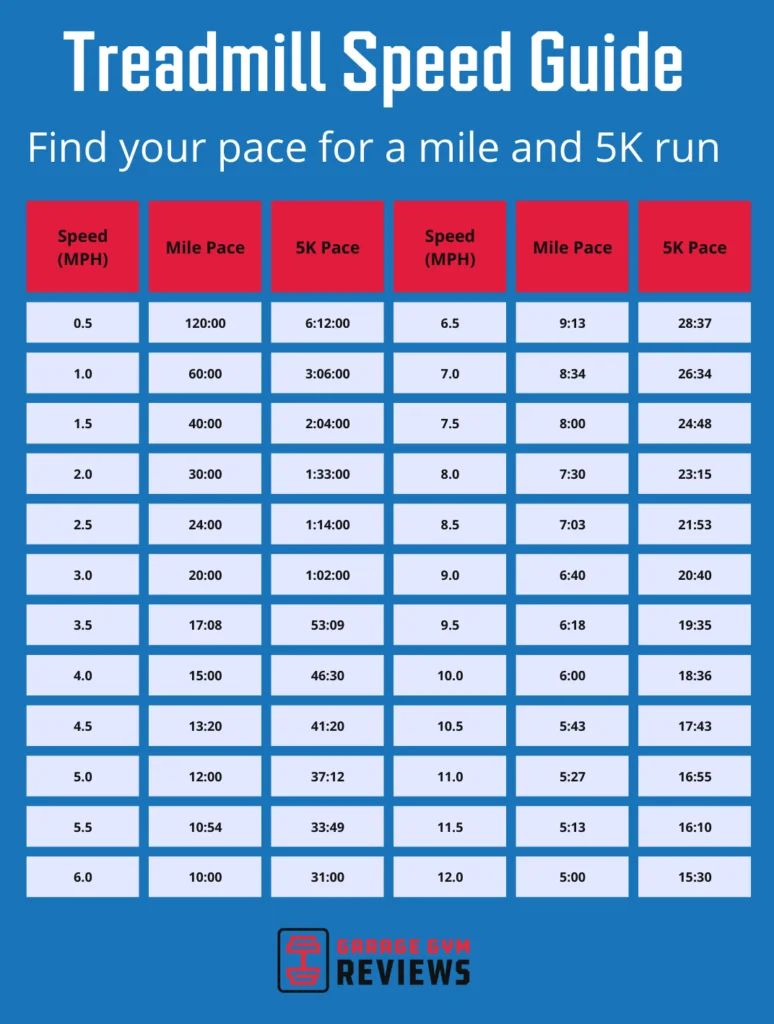
Understanding your pace can be a little tricky, because you have to do backward math to find your per-mile time. The equation to do this is 60 divided by your pace to equal your per-mile time. So, if the belt is moving at 10.0 speed, you do 60 divided by 10 to get a 6-minute mile.
Unfortunately, the math is rarely that clean. That’s where this pace chart can come in handy:
How Fast Do Treadmills Go? Final Thoughts
Overall, the answer to the question “How fast do treadmills go?” is based on which category your treadmill needs fall into. There are automatic treadmills that can propel the belt for you and have preset maximum speeds, which is usually 12 MPH or less, and then there are manual treadmills that have essentially no maximum speed, meaning your effort determines how quick of pace you train at.
You should consider your personal fitness goals as well as your own limits and workout space before purchasing a treadmill, so you can find the one that’s best suited to you!
RELATED: History of Treadmills
How Fast Do Treadmills Go? FAQs
What is the max speed of a treadmill?
The industry standard for maximum speed on a treadmill is about 10 MPH. However, there are some models of treadmills in lower price ranges that may only reach 8 to 9 MPH, and some high-end treadmills can reach up to 14 or 15 MPH.
How fast is 10 on a treadmill?
The numbers on a treadmill can refer to either speed or incline. In this case, 10 refers to the speed broken down into miles per hour (MPH). A 10 MPH pace is the equivalent to a 6-minute mile time.
How fast is 7.0 on the treadmill?
A 7.0 on an automatic treadmill means the belt is moving at a 7.0 MPH pace. This means someone running could finish a mile in approximately 8 minutes and 34 seconds.