
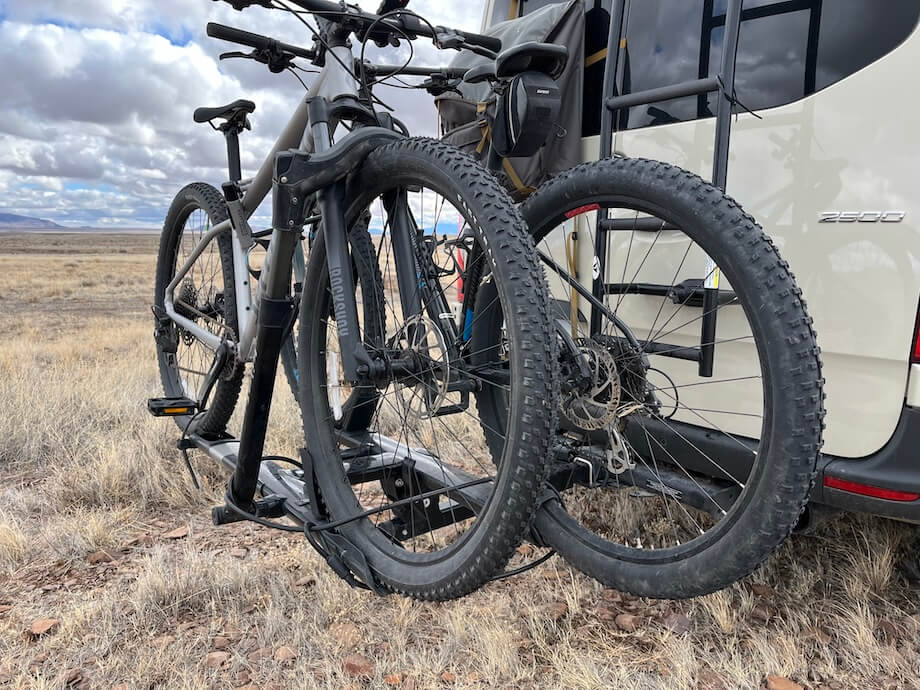
Biking can be a wonderful way to support your health: It’s associated with a lower risk of cardiovascular disease and type 2 diabetes, and research1 has shown a positive correlation between cycling and mental health. Do your cycling out in nature, like in local parks and trail systems, and those benefits can amplify. Studies show that getting outside reduces the stress hormone cortisol2 and elicits greater mental health benefits3 than exercising indoors.
OK, so you’ve got your best mountain bike ready to explore the wild. But how are you going to get it to the trail to reap all those aforementioned benefits? Unless you’ve got a pickup truck, a spacious hatchback, or immediate access to the hills from your backyard, you’ll likely need a bike rack for your vehicle. There are plenty to choose from across categories like hitch racks, trunk racks, and platform racks, and we’ve got the expert scoop on which ones are the best bike racks. I’ve personally tested many of the following profiles across my years of cycling and mountain biking, and pinged multiple expert sources from the industry to compile this guide.
RELATED: Best Trail Mountain Bikes
The 8 Best Bike Racks of 2026
- Best Overall Bike Rack: Kuat Sherpa 2.0
- Best Hitch Bike Rack: Jambo Designs Bike Rack
- Best 4-Bike Hitch Rack: Thule Apex XT
- Best Bike Rack With Storage: Yakima EXO System With Double-Up Bike Rack
- Best Bike Rack for Electric Bikes: Thule T2 Pro XTR
- Best Truck Bed Bike Rack: Fox Racing Tailgate Cover
- Best Budget Bike Rack: Swagman XTC2 Hitch Mount Bike Rack
- Best Trunk Bike Rack: Saris Bones 2-Bike Trunk Rack
Best Overall Bike Rack: Kuat Sherpa 2.0
Good for: Securely transporting two standard bikes on virtually any vehicle with a hitch receiver
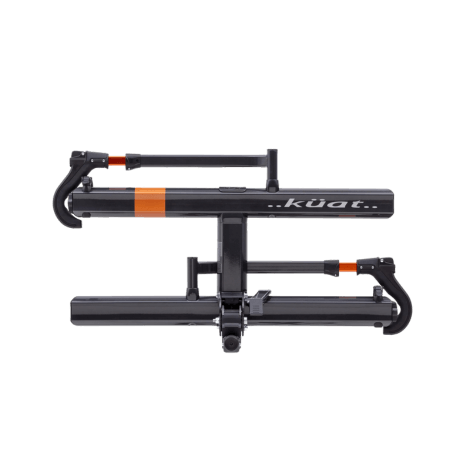









The Kuat Sherpa 2.0 combines sleek design with practical features like a tilting, tool-free setup and a solid build. It’s not the best option for heavier bikes, but it’s a premium choice for everyday use.
The Kuat Sherpa 2.0 stands out as the best overall for most riders, especially those who want a lightweight, platform-style rack that can support standard mountain bikes, road bikes, and gravel bikes.
Weighing just 32 pounds for the 2-inch hitch version, it’s incredibly easy to install and remove without needing a second set of hands. Kuat also makes a 1.25-inch version of the Sherpa, so those who have smaller SUVs or sedans with hitch receivers can use it, too. I was able to use the 2-inch Sherpa sans problems on my Subaru Outback and Winnebago Revel campervan, so it’s clearly suitable for a wide range of vehicles. It earns a score of 5 out of 5 for vehicle compatibility.
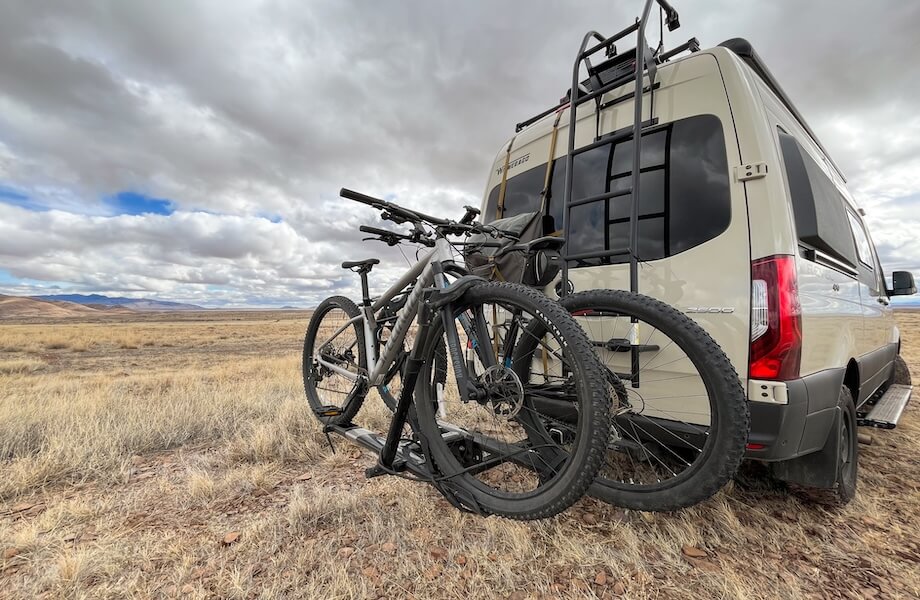
As for bike compatibility, the Sherpa 2.0 doesn’t support e-bikes or fat bikes. Bikes can’t exceed 40 pounds each, nor can tires exceed 3 inches in width, so it earns 3 out of 5 stars for bike compatibility. However, if you stick to standard bikes, you’ll love it, in my opinion. I’ve transported various mountain bikes, road bikes, and a triathlon race bike on the Sherpa 2.0, and I never had doubts about my equipment’s security during transport.
What I appreciate most about the Sherpa, though, is how user-friendly it is. Loading bikes takes just two to three minutes thanks to the front-wheel clamp and rear tire strap. It secures bikes without touching the frame, which is a must if you have carbon bikes or fancy paint jobs. And thanks to the automatic cam system, there is minimal wobble or rattling (even with a clamped hitch extender), earning the Sherpa a 5-out-of-5 rating for stability in transit.
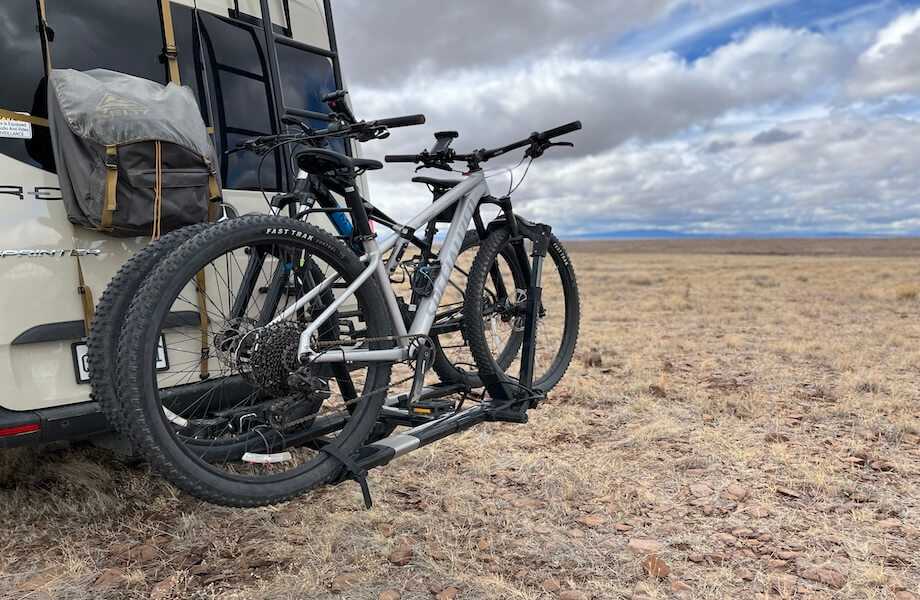
The tilt-down lever is intuitive and smooth—no wrestling with awkward mechanisms to access the trunk. And, honestly, it just looks nice. The powder-coated finish and clean lines make it one of the few racks that doesn’t feel like a clunky afterthought on your vehicle. It features a built-in cable lock system, too, though I do recommend getting heavier-duty bike locks if you’ll need to leave them unattended.
For those without an available hitch receiver, the Saris Bones 2 can be a worthwhile consideration when trying to make the most of your trunk space.
| Price | $759 |
| Rack Weight | 35 lbs (1.25” hitch); 32 lbs (2” hitch) |
| Rack Type | Hitch, platform |
| Receiver Size Needed | 2” or 1.25” |
| Bike Capacity | 2 |
| Bike Weight Capacity | 40 lbs each |
| Max Wheelbase | 47” (50” extension available) |
| Wheel Size | 20–29” |
| Max Tire Size | 3” |
Best Hitch Bike Rack: Jambo Designs Bike Rack
Good for: Vertical loading of up to 4 bikes with wheel-only contact and swing-out function
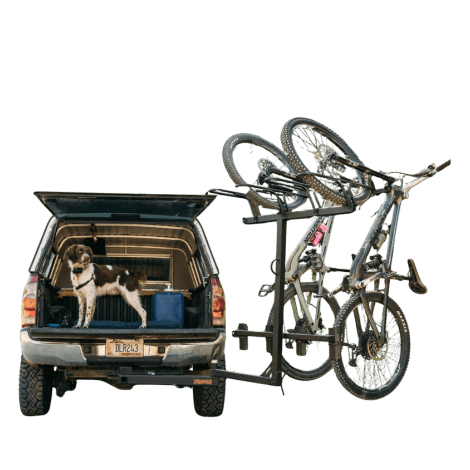





The Jambo Designs Bike Rack is a rugged and secure option for riders with heavier bikes or off-road needs. It’s not the lightest, but the build quality and features justify the weight.
Handmade in Big Sky, Montana, mountain bikers and other off-road enthusiasts—looking at you, gravel riders and long-course cross-country athletes—are singing the praises of the Jambo Designs bike rack.
Recommended to GGR by mountain biker and founder of Curious Creatures MTB apparel Natasha Woodworth, the Jambo Designs rack fits mid- and full-size vehicles with 2-inch hitch receivers that have a minimum depth of 3.75 inches. That makes it compatible with a lot of cars and trucks, but sedans and small SUVs are out for the count, resulting in a score of 3.5 out of 5 for vehicle compatibility.
According to Woodworth, ”This is a heavy-duty vertical carry rack made to withstand the test of time.” One of the greatest features, she adds, is the swing-away arm, which means you can easily get in and out of your vehicle even with the rack fully loaded up with bikes.
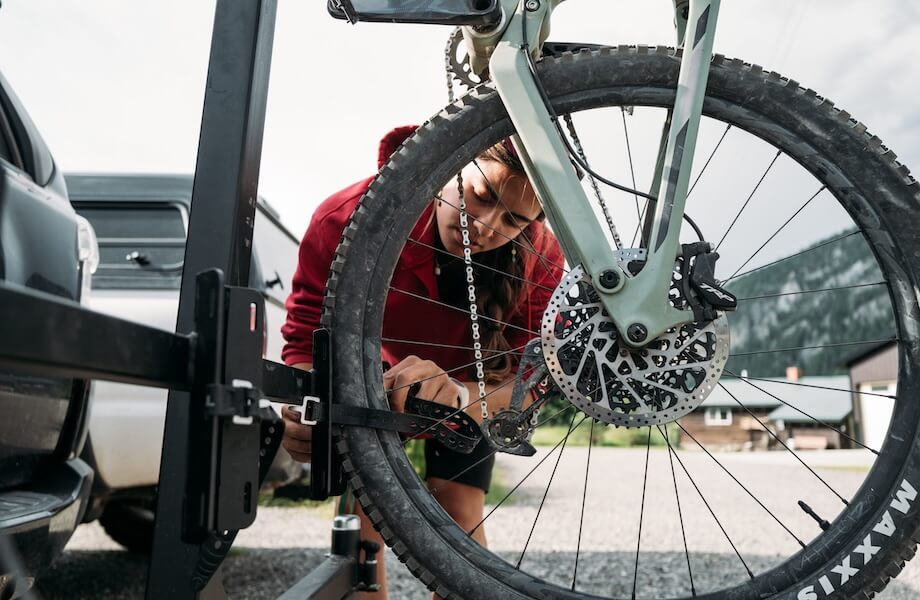
Also, let’s hear it for the hand-welding process done domestically. “Gotta love stuff made by hand right in the USA,” Woodworth says. Each rack is fully welded, and the design enables secure carrying without any frame contact—score! Also, there’s plenty of space between bikes, so they won’t bump into one another or require fine-tuning of pedal orientation.
RELATED: Does Cycling Build Muscle?
It’s slightly limited in terms of wheel size (it supports wheels between 24 and 29 inches, as opposed to the standard 20- to 29-inch range) but it should still fit most kids’ bikes. It’s also designed primarily for mountain bikes—a caveat worth considering prior to purchase. While road and gravel bikes can fit, you’ll need extra parts, sold separately, to make the fitment feasible. Because of this, the Jambo Designs rack earns 3 out of 5 stars for bike compatibility.
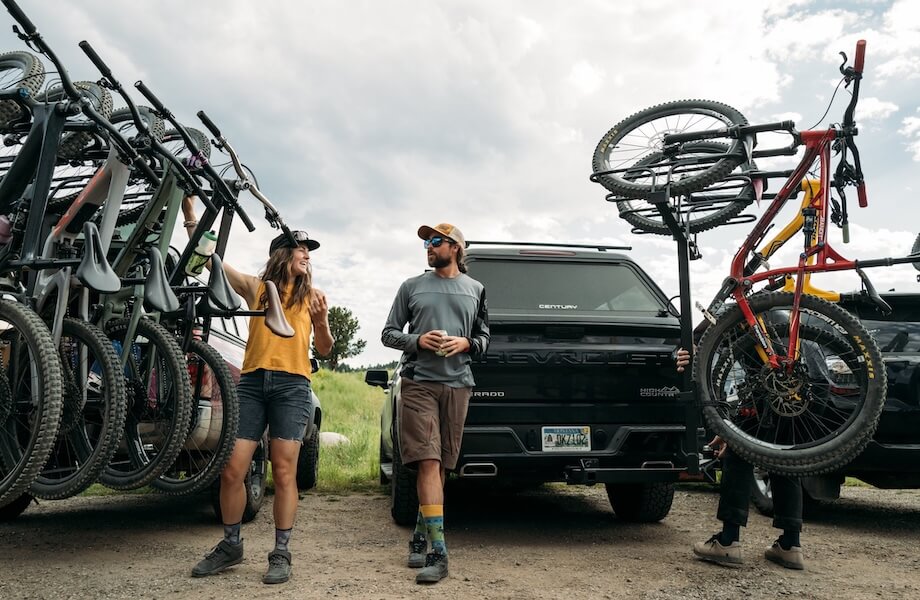
While this rack might be overkill for casual riders who don’t get off pavement often, it can be an excellent choice for those who love to hit the dirt and spend entire weekends out in the wilderness. Suitable for off-road use, the Jambo Designs rack earns 5 out of 5 points for bike security—those bad boys aren’t going anywhere. “It’s the perfect rack for us, as we often take our truck camper on bike trips, and it’s so nice to get in and out of the sleeping spot with ease,” Woodworth says.
Only need accommodations for two bikes? Consider the smaller, more affordable Kuat Sherpa 2.0.
| Price | $1,600 |
| Rack Weight | 83 lbs |
| Rack Type | Hitch, vertical |
| Receiver Size Needed | 2” |
| Bike Capacity | 4 |
| Bike Weight Capacity | 45 lbs each |
| Max Wheelbase | TK |
| Wheel Size | 24–29” |
| Max Tire Size | Not listed online |
Best 4-Bike Hitch Rack: Thule Apex XT
Good for: Frame-contact, vertical loading of up to four bikes
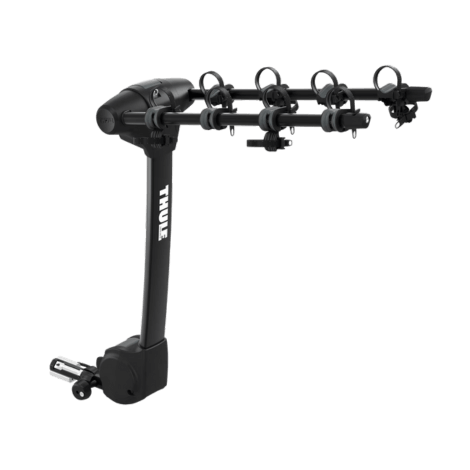


The Thule Apex XT is built for riders who need to haul multiple bikes with security and ease. It’s heavier than other racks, but its capacity and functionality make up for it.
Best Bike Rack With Storage: Yakima EXO System With Double-Up Bike Rack
Good for: Transporting two bikes along with a cargo box or tray for other items
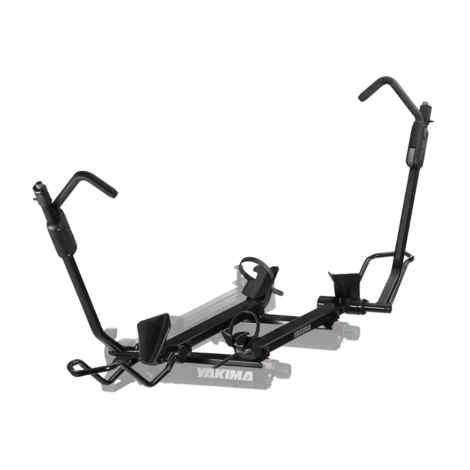

The Yakima EXO System With Double-Up Bike Rack is a modular powerhouse ideal for travelers who want both bike transport and extra storage. It’s an investment, but it delivers major versatility.
If you’ve got a 2-inch trailer hitch receiver and lots of gear to carry, you need to check out the Yakima EXO System. This modular bike rack and cargo carrying setup goes above and beyond the standard of versatility—you can carry two bikes along with a gear locker, gear tray, or even a camp galley for road trips to the backcountry. For versatility and modularity, it easily earns 5 out of 5 stars.
RELATED: Bike Seat Height
I got the Yakima EXO system with the gear locker and two-bike platform rack to replace my Kuat Sherpa when I wanted exterior storage on my campervan. It was a game-changer as a full-time traveler.
I can’t lie, though. This setup does not come cheap. You’ll need four distinct parts:
- EXO SwingBase, $899.99
- EXO TopShelf, $675.99
- EXO GearLocker, $819.99
- EXO DoubleUp, $699.99
That brings your grand total to nearly $3,100 before taxes, and you will likely have to visit a Yakima retailer for pickup and installation. I had mine shipped, and installation wasn’t too bad, but I would have preferred to have a professional take the reins. There are a lot of small parts to deal with and the configuration can be confusing, at first. Plus, dealing with the aftermath of packaging from such large parts means you’ll almost definitely overflow your recycling and trash bins. So, for installation and removal, I can only rate the EXO at 2 out of 5.
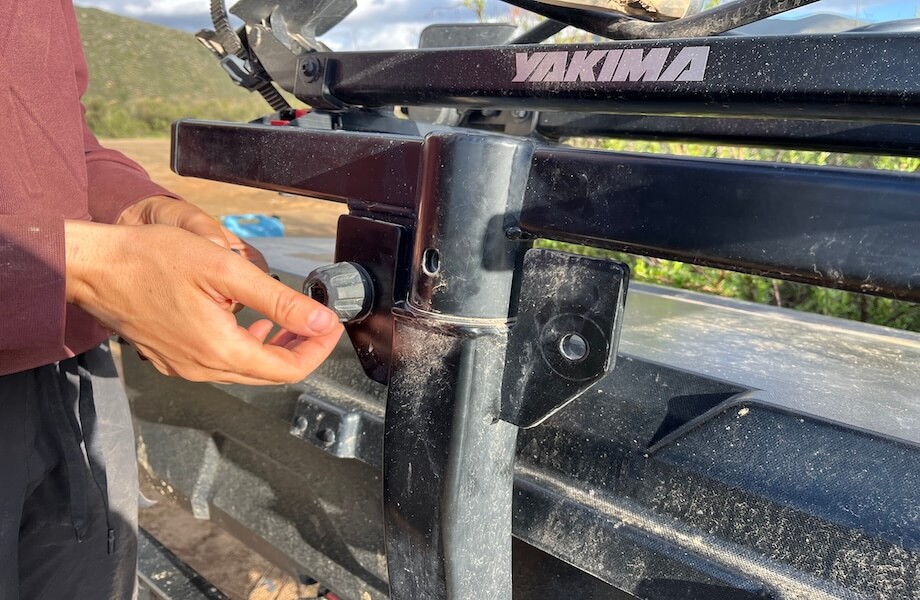
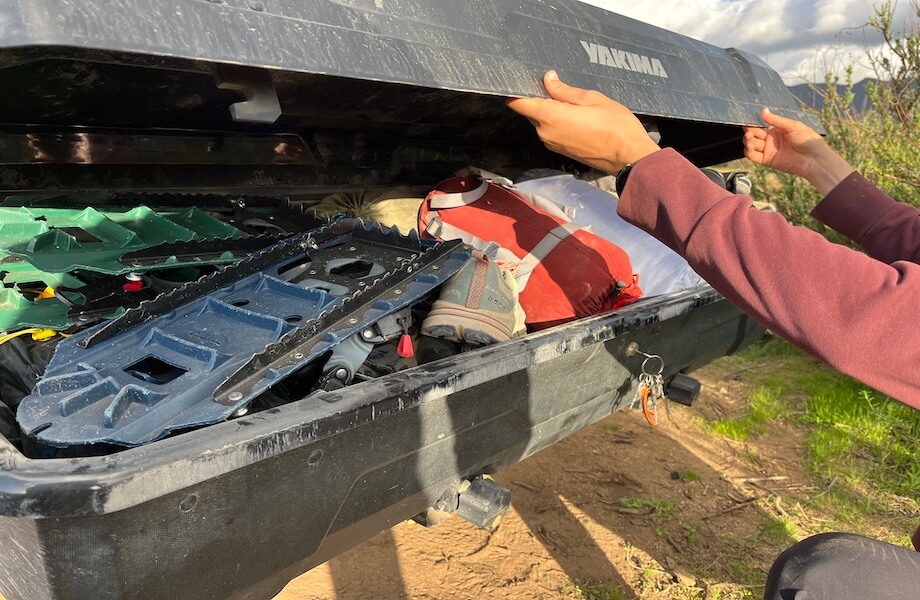
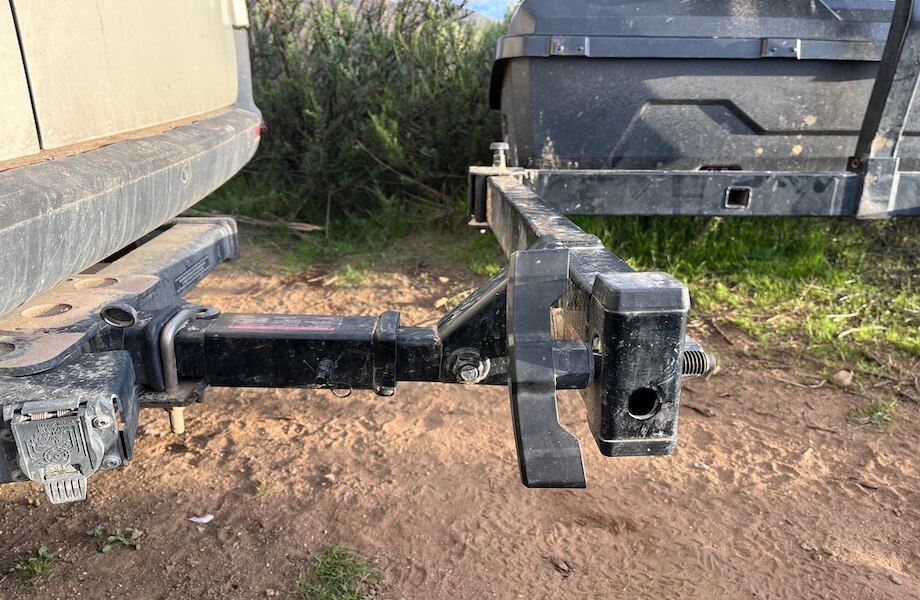
All that said, this rack setup is worth it for the right person (who probably plans to keep it on their vehicle almost indefinitely). Aside from the cargo carrying capacity, the EXO also has an abundance of features that make trunk access simple despite its sheer bulk. The swing-away base means you can open your trunk or, if you have a van like mine, your rear doors. The process is a bit cumbersome, involving a few integrated locks and bolts, but valuable nonetheless, earning 3 out of 5 stars for ease of use.
The Kuat Sherpa 2.0 is also capable of holding two bikes at once, but the sub-$800 price tag can be far more approachable than the expensive build of this EXO System.
| Price | $3,095 |
| Rack Weight | 37.15 lbs (DoubleUp only) |
| Rack Type | Hitch, tray |
| Receiver Size Needed | 2” |
| Bike Capacity | 2 |
| Bike Weight Capacity | Up to 50 lbs each |
| Max Wheelbase | 48” |
| Wheel Size | 20–29” |
| Max Tire Size | 4.8” |
Best Bike Rack for Electric Bikes: Thule T2 Pro XTR
Good for: Individuals looking for a more convenient transport solution for their larger e-bikes
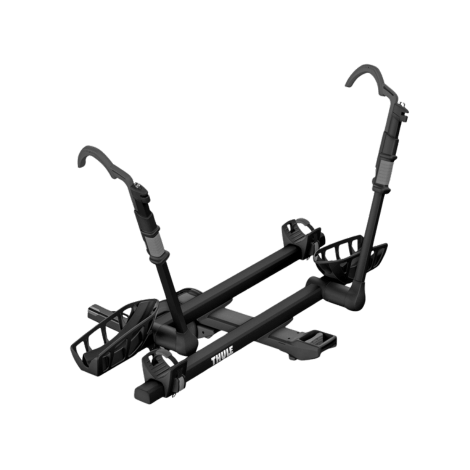



The Thule T2 Pro XTR is a premium rack for serious cyclists and e-bike riders. Its features are worth the cost for those who need power, security, and convenience in one system.
Best Truck Bed Bike Rack: Fox Racing Tailgate Cover
Good for: Securely transporting up to six bikes in a truck bed
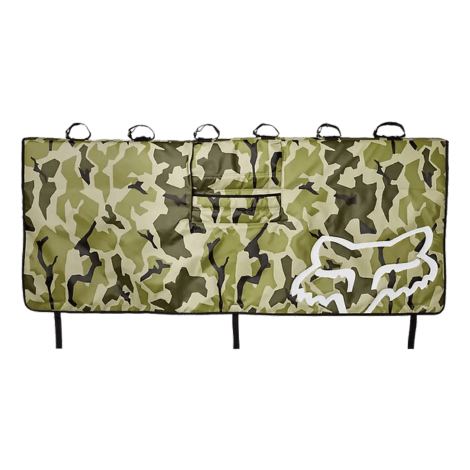

The Fox Racing Tailgate Cover is a no-fuss bike rack for truck owners. It doesn’t lock bikes in place like other racks, but excels in simplicity and capacity.
Best Budget Bike Rack: Swagman XTC2 Hitch Mount Bike Rack
Good for: Carrying up to two bikes on any car with a hitch, while spending less than $300
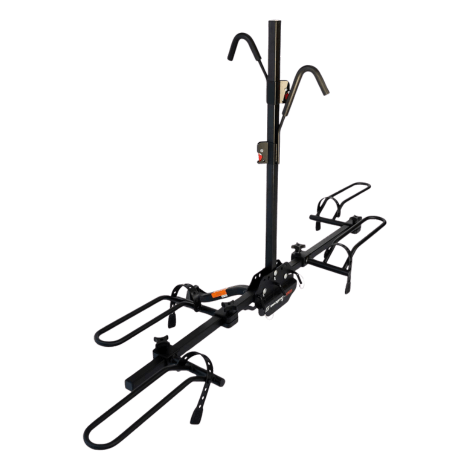


If you’re looking for a no-frills rack that gets the job done, the Swagman XTC2 is a solid pick. It doesn’t have high-end features but delivers excellent value for budget-conscious cyclists.
Best Trunk Bike Rack: Saris Bones 2-Bike Trunk Rack
Good for: Transporting up to 3 bikes without having to install a hitch receiver
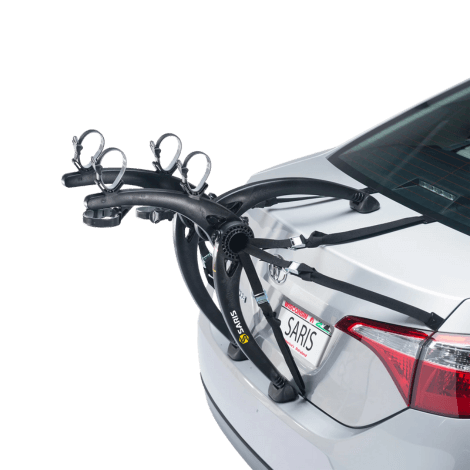


The Saris Bones is one of the most user-friendly trunk racks on the market. It’s light, easy to use, and fits most vehicles—but it’s best for short trips and lighter bikes.
Other Bike Racks We Researched
Our own experience, input from our expert network, and extensive research resulted in our lineup of the best bike racks. Here are some others we considered that just missed the cut.
- Kuat NV 2.0: The bigger sibling to the Kuat Sherpa 2.0, the NV 2.0 features a more robust build that’s capable of carrying two bikes up to 60 pounds each. It’s an excellent rack with tons of features, but we think the Sherpa is more suitable (and far less expensive) for riders with standard bikes.
- Thule Gateway Pro 3: Recommended by Chris Cartier, executive director of sales operations at the Outdoor Gear Exchange, the Gateway Pro 3 is a reliable hanging hitch rack from a top brand.
- Kuat Piston Pro: This Kuat platform rack makes us drool with its good looks and pneumatic tire arms, but it’s honestly a bit overkill for most cyclists and MTBers.
- Yakima Stage Two: We like the features of the Yakima StageTwo, especially its impressive weight capacity of 70 pounds per bike and its RV compatibility (making it one of the most vehicle-compatible options). However, it’s quite heavy itself at 63 pounds, and expensive for a two-bike rack at $1,200.
- RockyMounts MonoRail: Reasonably priced at $500 and containing all of the necessary basic features we like to see in a bike rack, the MonoRail is certainly worth a look.
- 1Up Heavy Duty: These popular racks can handle up to 65 pounds per bike tray and, unlike most bike racks, are made from aluminum instead of steel.
Different Types of Bike Racks
Bike racks come in a variety of styles, each with its own pros and cons depending on your vehicle type, how often you ride, and how many bikes you need to carry. Here’s what to know.
Hitch Racks
Hitch racks are one of the most popular options for cyclists. They attach to your vehicle’s hitch receiver and are easy to load and unload.
Tray Hitch Racks
These hold bikes by the wheels, keeping them secure and separated. They can be great for protecting carbon frames or unique geometries. Most platform racks are compatible with a range of bike sizes and are quick to load.
Hanging Hitch Racks
These support bikes by the frame and hang them from horizontal arms. They’re often lighter and less expensive than tray-style racks, but may not be ideal for full-suspension mountain bikes or bikes with non-standard frames.
Swing-Out Hitch Racks
A variation of tray racks, these pivot away from your vehicle, giving full, easy access to the trunk or hatch even when bikes are loaded. They’re convenient but heavier and more expensive.
Roof Racks
Roof racks mount to your car’s roof crossbars and keep the rear of your vehicle accessible.
“Don’t get a roof rack unless you are 100% certain that you will never forget you have your bikes on your roof,” says Richard Campbell, founder of 10Adventures. “It sounds obvious—who would forget they have bikes on their roof?—but it happens quite often. If you forget you have bikes on your roof, when you pull into your garage you will have one heck of a problem.”
Fork Mount
Fork-mounted racks require removing the front wheel of your bike, which gives you a super stable hold and a low profile. They’re best for road bikes or race bikes.
Upright Mount
These hold the entire bike with both wheels on. They’re more convenient but can add height and wind resistance.
Trunk Racks
Trunk racks strap onto the rear of sedans, hatchbacks, and some SUVs. They’re budget-friendly and don’t require a hitch, but can be less stable and may block rear access or damage your car’s paint if not secured properly.
Truck Bed Racks
These are designed specifically for pickup trucks and keep bikes secure in the bed.
Tailgate Pad
A padded cover that drapes over the tailgate, this is a quick, simple solution for shuttling multiple bikes from your garage to the trailhead.
Fork Mount
This rack style bolts into the truck bed and holds bikes by the front fork. It’s more secure than a tailgate pad and protects bikes from rubbing against one another but takes more effort to install and remove.
Which Bike Rack for Your Car Type?
- Pickup trucks: Hitch rack or truck bed pad/tailgate cover
- SUVs: Hitch rack, hanging or platform, or roof rack
- Sedans: 1.25-inch hitch rack or trunk rack
- Cargo/campervans: Swing-out hitch platform rack
How We Picked and Tested the Best Bike Racks
Here’s a rundown of all of the features and components we considered to find the best bike racks, and advice on how to choose one yourself.
Style of Rack
The first decision you’ll make is what style of rack to buy: hitch (platform or hanging), roof, trunk, or truck bed. Broadly, platform hitch racks are considered the most secure and the least likely to damage your bikes, but other types can and do work in many scenarios.
Vehicle Compatibility
Check the fit with your vehicle before purchasing. This is extra important for roof and trunk racks. For hitch racks, compatibility more or less refers to the hitch receiver size, which should be clearly labeled in the product description. You may need to do more work for trunk and roof racks, as compatibility is not always clear.
Bike Compatibility
Definitely don’t buy a bike rack unless you know it will work with your bikes, including the number of bikes you plan to carry. Below are some basic factors to remember when considering your rack of choice’s bike compatibility.
Type of Bikes
Make sure the rack style is suitable for your bike. Be mindful of factors like frame contact, suspension location (if you have a full-suspension mountain bike), width between bikes, wheel size, tire width, and wheelbase dimensions.
Carrying Capacity
Some bike racks come in one, two, three, and four-bike versions or have add-ons you can buy to expand their carrying capacity. This may sound obvious, but choose a setup that has enough bike accommodations for your personal fleet.
Weight Capacity
Don’t just look at the rack’s total loading capacity. Check the per-bike capacity, as well. If you have one ultra-light road bike and one e-bike, for instance, you may not be able to carry them both even if, together, they do not exceed the total weight capacity.
Bike Components and Frame
“Aside from weight, some things to consider include the configuration of the frame, wheelbase, and whether or not the bike has fenders,” says Chris Barnes, owner and manager at Rack N Road. Also, consider the width of the handlebars and whether or not the bike has panniers.
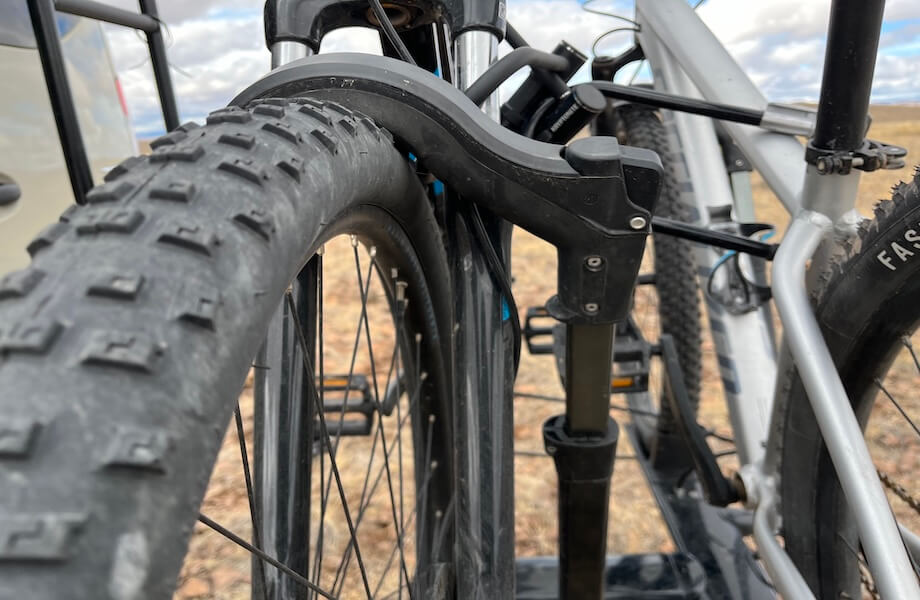
“One of the reasons why the platform racks tend to be the most popular is they usually are the most forgiving for a variety of different bike styles and sizes,” Barnes notes.
Trunk Access
If you need to access your vehicle’s cargo area, look for a bike rack with a swing-away or fold-down feature—or go for a roof rack. Trunk racks aren’t a good fit for those who need access to the cargo area while the rack is in place.
Bike Point of Contact
Matt Peterson, Bicycle Product Manager at American Kenda Rubber Industrial, says the ideal point of contact is the tire. “Tires are built to withstand abrasion and direct loading, while bike frames and other components are not,” he notes.
This doesn’t mean frame-contact racks can’t work—there are plenty out there that do—but you do need to consider paint damage, or worse, when choosing what’s best for you.
Installation and Removal
Most bike racks can be assembled at home, taking roughly 15 to 45 minutes from start to finish. For the most part, “If the customer follows the assembly and installation directions, step by step, they should be able to build it,” says Chris Barnes, owner and manager at Rack N Road. In some cases, it may take two people to get everything lined up across your vehicle, he adds.
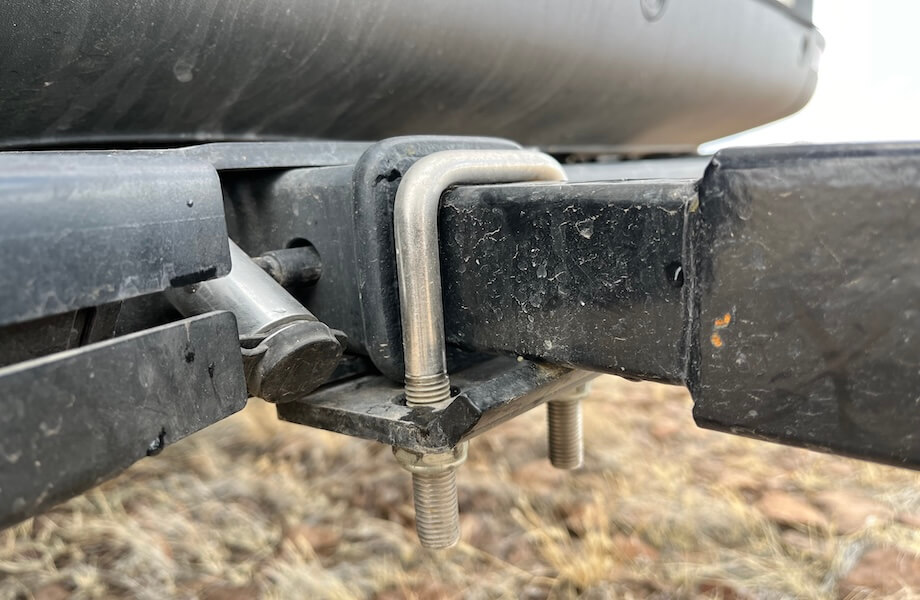
“Some racks are heavier than others, or maybe a little larger, so removing the racks and storing them can be an issue,” Barnes notes. “Understanding this in advance can allow the consumer to make the best decision for themselves.”
Ease of Loading and Unloading
One of the most important shopping considerations—and often one of the most overlooked—is ease of use, says Chris Barnes, owner and manager at Rack N Road. It’s critical, he notes, “That the rack is easy to use and [buyers] are comfortable with all aspects of loading, carrying and unloading their bikes. If the rack is not easy to use, it likely won’t get used as often.”
Bike Security
For the most secure fit, look for bike racks with metal ratcheting mechanisms or clamps, says Matt Peterson, Bicycle Product Manager at American Kenda Rubber Industrial. “With a lockdown mechanism that contacts the tire, ensure that the tire has adequate air pressure (riding pressure is okay),” he advises. This is important so that the tire does not become too compressed and the ratchet does not contact the valve around the rim.
Stability In Transit
Hitch racks will generally be the most stable during transit. Look for products with a tightening cam system to minimize wobble in the hitch receiver. For trunk racks, ensuring vehicle and bike compatibility is the best way to ensure stability during transport.
Durability and Materials
The major parts of most bike racks (hitch, platform, arms) are made from powder-coated steel or stainless steel, though there are some aluminum options, too. Aluminum weighs less but is not as strong as steel. Steel, however, is susceptible to rust, unless the powder coating never chips. Wheel cradles, tire straps, and other components are likely to be made of a hard, thick plastic. Watch out for flimsy plastic components and metal parts that seem like they could easily warp.
Storage
If you plan to take the bike rack off of your car when you’re not using it, you’ll want it to be easy to store. Bike racks are big, bulky products by nature, but many offer folding arms to minimize storage space.
Versatility and Modularity
Chris Barnes, owner and manager at Rack N Road, encourages customers to think about not just what they want right now, but what they might plan to do with their bikes or other outdoor gear in the future. You may only want to carry two bikes now, but do you plan to have kids? Interested in taking extended camping trips? Looking for a new vehicle? Answering some of these questions can help you decide if you should invest in a bike rack that has add-on capabilities, accessories, and elevated bike and vehicle compatibility.
Benefits of Bike Racks
The benefit of having a bike rack is that it means you can more easily transport your bike. Bikes, no matter what kind, are inherently large and bulky. To fit them inside of a vehicle, you’ll need to disassemble them (at least partially), which can be a hassle no one wants to deal with before each ride. Even with an SUV, transporting a bike (let alone multiple bikes) inside the vehicle can be cumbersome. With a sedan, it’s pretty much impossible. That’s where bike racks come in. With a pickup truck, you can toss bikes into the truck bed, but a tailgate pad or cover can help better protect both the bed and the bikes.
Experts Who Contributed To This Article
- Ben Emminger, NASM-CNC, NASM-CSNC
- Chris Barnes, owner and manager at Rack N Road
- Richard Campbell, founder of 10Adventures and custom bike adventure curator
- Matt Peterson, Bicycle Product Manager at American Kenda Rubber Industrial
- Chris Cartier, Executive Director of Sales Operations at the Outdoor Gear Exchange
- Natasha Woodworth, founder of Curious Creatures mountain bike apparel
FAQs About the Best Bike Racks
Is a platform or hanging bike rack better?
It depends on the type of bike you have and your concerns. Platform racks are generally more secure and minimize or eliminate frame contact. Hanging racks require frame contact and can produce more sway than platform racks, but they tend to be less expensive.
What is the best bike rack brand?
The best bike rack brands include Kuat, Yakima, Thule, Saris, RockyMounts, and 1UP, among others.
Should I leave my bike rack on my car?
To completely prevent theft, remove your bike rack from your car after use. If you have a hitch lock, it’s highly unlikely someone will steal the rack itself, but motivated thieves can easily get through heavy-duty bike locks in a relatively short time. You should always remove trunk and roof racks when not in use to prevent damage to the car. Hitch racks can generally stay in the hitch for long periods of time, but you might want to remove it periodically to clean and grease the receiver.
Do bike racks affect gas mileage?
It depends on the type of rack. For rear-mounted racks, not much. They don’t typically interfere with wind resistance, so the impact can be minimal. They do add weight to your car, which can affect gas mileage, but again, very minimally. A fully loaded two-bike rack, even with heavy e-bikes, won’t weigh more than most full-grown men. Roof racks do interfere with wind resistance and may have a bigger impact on gas mileage.
References
- Logan G, Somers C, Baker G, et al. Benefits, risks, barriers, and facilitators to cycling: a narrative review. Front Sports Act Living. 2023;5:1168357. Published 2023 Sep 19. doi:10.3389/fspor.2023.1168357
- Li Q, Kobayashi M, Inagaki H, et al. A day trip to a forest park increases human natural killer activity and the expression of anti-cancer proteins in male subjects. J Biol Regul Homeost Agents. 2010;24(2):157-165.
- Boere, K., Lloyd, K., Binsted, G. et al. Exercising is good for the brain but exercising outside is potentially better. Sci Rep 13, 1140 (2023). https://doi.org/10.1038/s41598-022-26093-2