
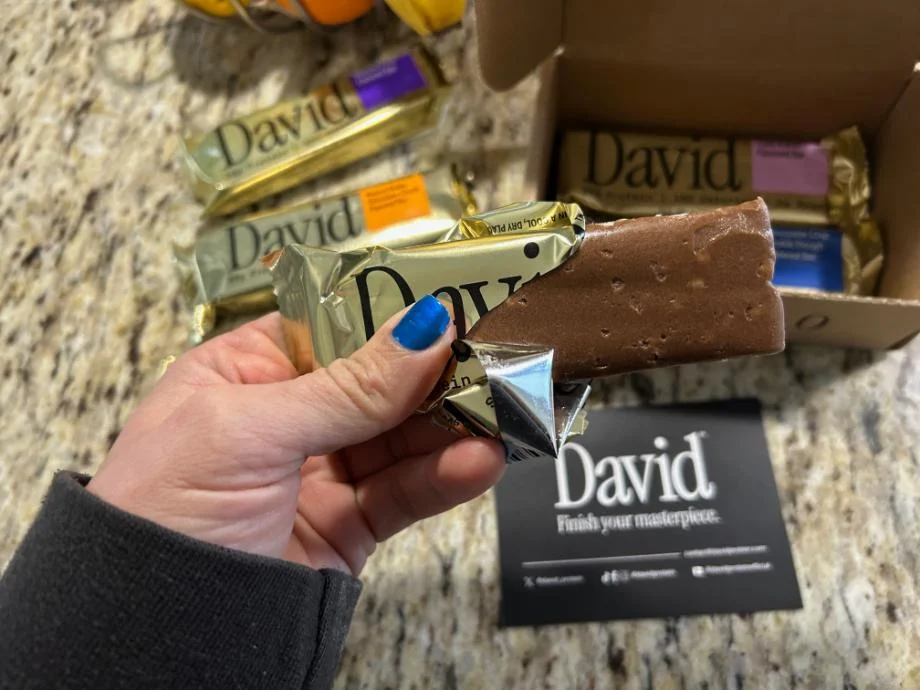
150 calories. 28 grams of protein. 0 grams of sugar. With numbers like that, you’d expect three ounces of plain chicken breast or a hefty scoop of whey protein isolate—not a Chocolate Chip Cookie Dough protein bar.
Yet somehow, David pulled it off—delivering one of the leanest, if not the leanest, protein bars on the market. It’s high protein in a portable wrapper, without the risk of spoiled chicken or that dreaded stench of a post-workout shake left behind in your gym bag. (Happens to the best of us, #amirite?)
With Dr. Andrew Huberman and Dr. Peter Attia investing in the brand, you might expect perfection. But a formula this lean has to come with trade-offs, right? Right. In this David Protein Bar review, our testing team breaks down the hype vs. the bite.
Medical disclaimer: This article is intended for educational and informational purposes only. It is not intended as a substitute for medical advice. For health advice, contact a licensed healthcare provider. GGR also recommends choosing a product that has been third-party tested for quality.
Raising the [Protein] Bar on Testing
GGR’s expert team of registered dietitians, nutrition coaches, certified personal trainers, and strength specialists has tested dozens of protein bars firsthand. From chalky textures to overwhelming sweeteners, we’ve chewed our way through it all.
Each product is scored using our GGR supplement testing methodology, which evaluates key factors such as:
- Formulation: We look for high-quality protein sources (like whey isolate or whole-food proteins) with minimal fillers. Bars rich in artificial ingredients and preservatives score lower in this category.
- Macronutrient Breakdown: Protein should be the star of the bar, with carbs and fats varying by formula. Bars with 20+ grams of clean protein earn top marks, while those with under 10 grams of protein or imbalanced macros score lower.
- Taste: We know flavor is personal, so we combine our testers’ feedback with customer reviews to get the full picture on taste, aftertaste, and how each bar stacks up to the competition. Bonus points go to brands with multiple flavor options—because if one isn’t your favorite, another might be your go-to.
- Texture: Does it feel like you’re biting into cardboard or a chewy (or crunchy) candy bar? While texture can be subjective, lower scores indicate an unpleasant mouthfeel, and higher scores go to products with a satisfying, enjoyable texture.
- Side Effects: It’s not just about the initial taste test—it’s also about what happens afterward, for better or worse. Products that cause unwanted effects, like digestive discomfort, earn lower ratings, while those with little to no reported side effects score higher.
- Value: Price per serving can range anywhere from about $1.60 on the low end to over $4 on the high end, with scores adjusted accordingly. That said, we also factor in overall value, such as if the product’s formulation truly justifies a higher price tag.
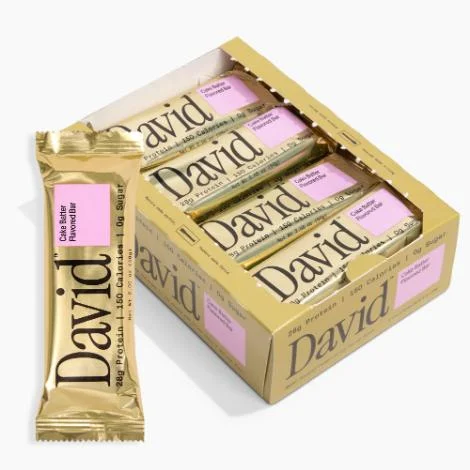
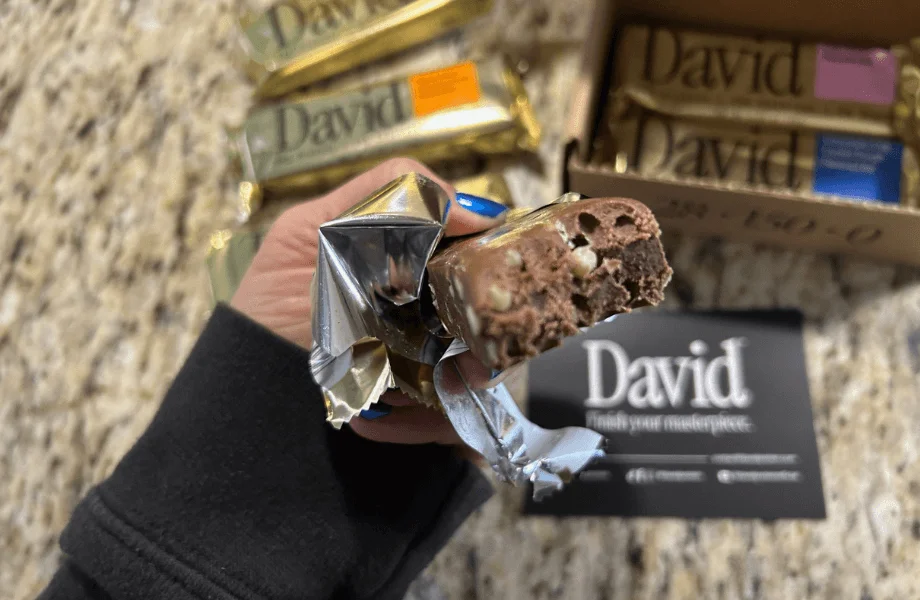
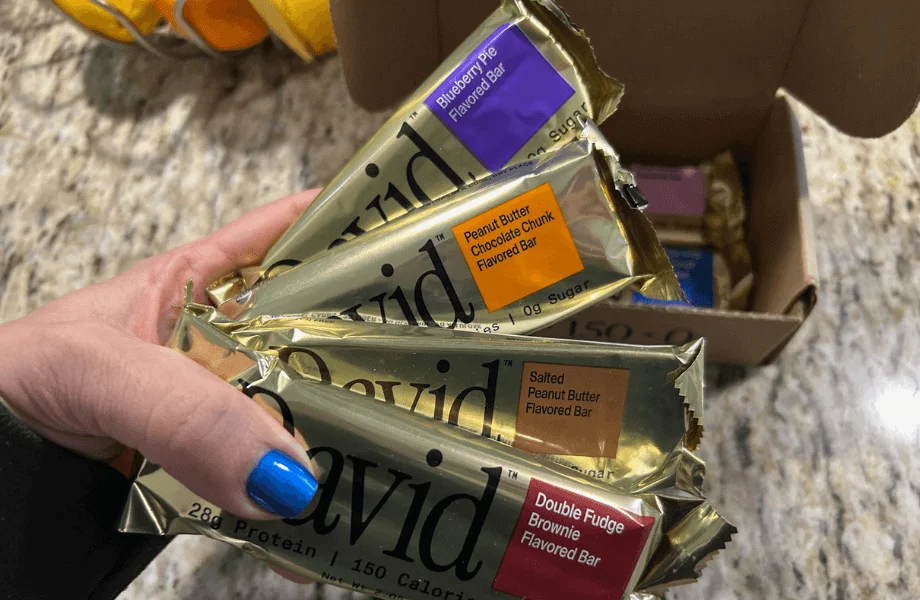
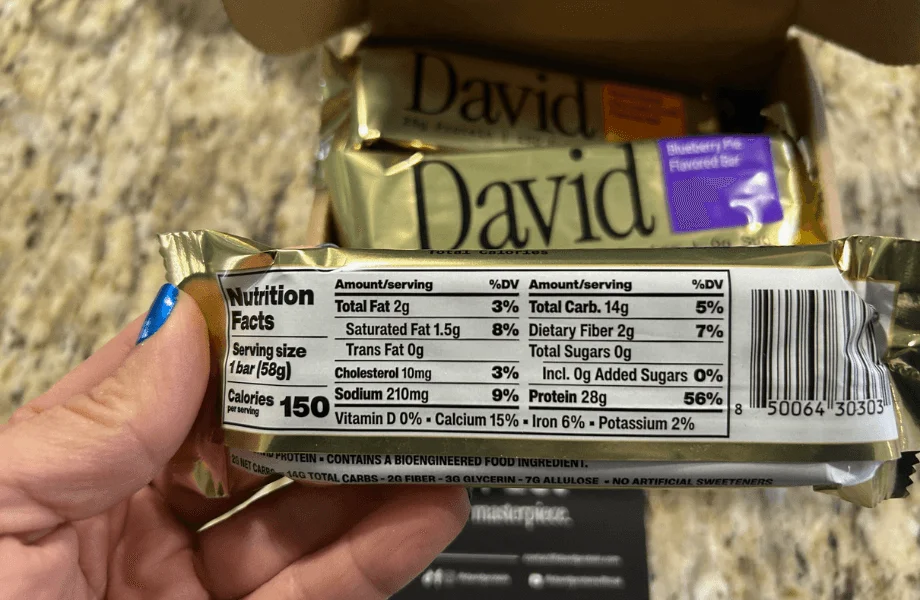
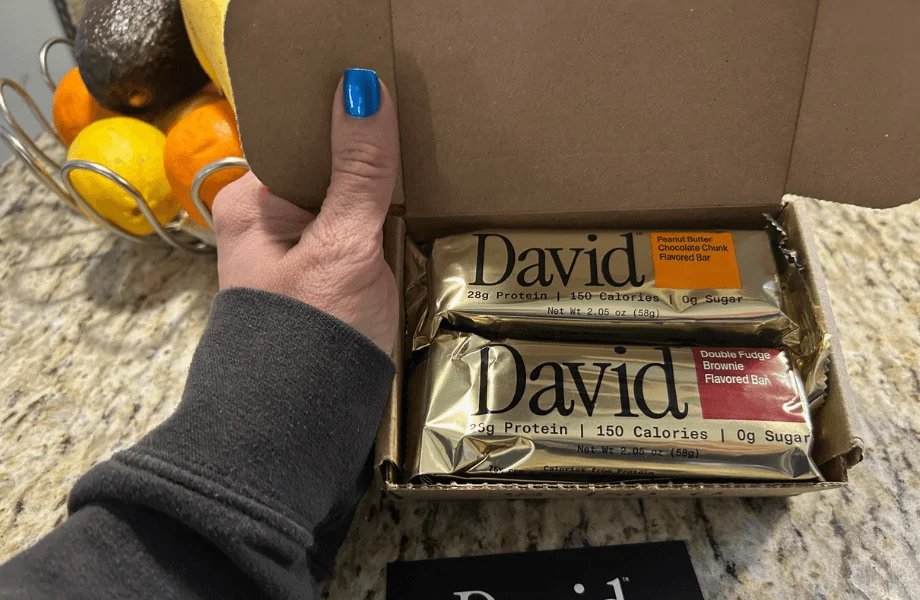
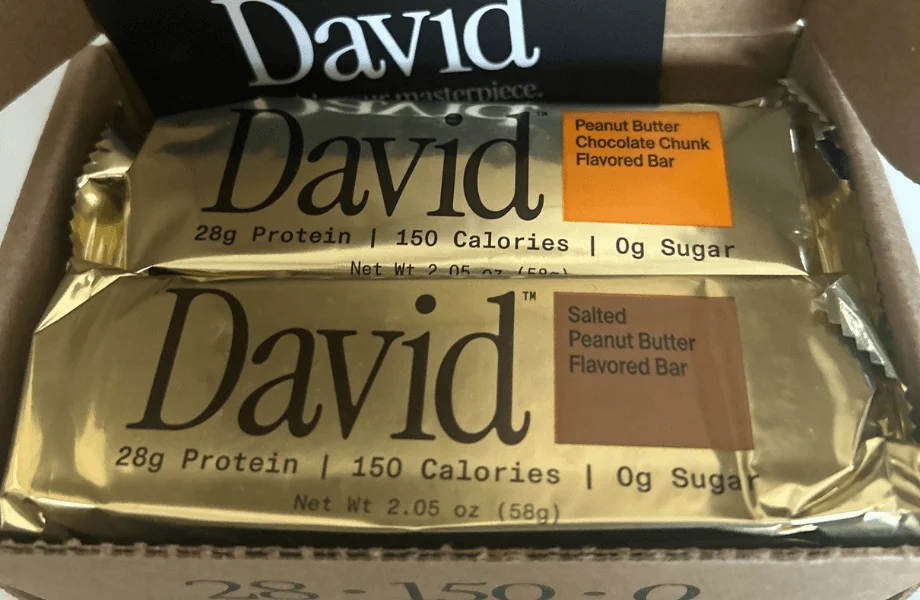







David Protein Bars claim to be the most protein-dense bars on the market, packing 28 grams of protein into a bar with only 150 calories and no sugars. While a somewhat cleaner protein bar, there are some sugar alcohols and modified plant oils that some may wish to avoid.
What our tester says:
“In general, these are really good and very true to the listed flavor names.”
A Quick Look at David Protein Bars
Despite the name, David Protein wasn’t founded by a David but rather Peter Rahal, co-founder of RXBar. After selling RXBar to Kellogg’s for $600 million, Rahal teamed up with Zach Ranen—founder of Raize, a keto cookie brand that’s since crumbled—to launch David Protein: a company crafting high-protein, low-calorie foods touted as blood-sugar–friendly and craveable.
The brand’s signature bars deliver 28 grams of protein in just 150 calories, boasting an impressive 75% CFP ratio (Calories from Protein divided by Total Calories) without added sugars. While that makes David Protein Bars a lean choice for many—whether your goal is to build muscle, lose weight, or simply support overall wellness—there are still a few things to consider before you buy.
Before You Buy
- At the time of writing, all flavors are sold out on the David website—but they are available at other retailers, including Amazon and The Vitamin Shoppe.
- The formulation details can be confusing, as the website’s product copy and Nutrition Facts panel list slightly different ingredients, particularly around artificial sweeteners and flavors.
Are David Protein Bars Worth It?
At $3.25 per bar, David Protein Bars sit on the pricier side—especially compared to several of the best protein bars on the market. Our expert tester, Kate Meier, NASM-CPT, USAW-L1, CF-L1, enjoyed these David bars but admitted, “For the time being, I have other favorites that are more affordable—like Barebells and Quest.”
Still, don’t count them out just yet. Frequent sell-outs speak to their popularity, and they might be the perfect protein companion for your needs.
Great for:
- Anyone seeking a high-protein bar that’s lower in calories, fat, and carbs
- Those who appreciate flavor variety
- Individuals wanting a bar to support various fitness goals, including muscle-building and weight loss
Not recommended for:
- Anyone avoiding artificial ingredients
- Individuals with allergies or sensitivities to milk, egg, soy, peanut, sesame, or tree nuts
- Budget-conscious buyers
David Protein Bars Specs
| Price per serving | $3.25 per bar |
| Protein source | Milk protein isolate, collagen, whey protein isolate, egg white |
| Protein per bar | 28 g |
| Carbohydrates per bar | 12 g |
| Fat per bar | 2-2.5 g, depending on flavor |
| Calories per bar | 150 cals |
| Sweeteners used | Sucralose and acesulfame potassium or stevia and monkfruit extract (please see “Formulation” section for details) |
| Available flavors | Blueberry Pie, Cake Batter, Chocolate Chip Cookie Dough, Cinnamon Roll, Fudge Brownie, Peanut Butter Chocolate Chunk, Red Velvet, Salted Peanut Butter |
| Third-party testing | Yes |
Experience Using David Protein Bars
Kate was our tester for this David Protein Bar Review—and she’s the perfect fit for the job. As she notes, “I’ve tried maybe 40 to 50 brands and flavors of protein bars over the years. I personally eat a protein bar just about every day to supplement my protein intake.”
Her experience with David Protein Bars was largely positive, particularly in taste and texture. That said, Kate and I spotted some quirks and points of confusion. Here’s a closer look at what’s inside—and outside—the wrapper.
Price Per Serving
At $39.00 for a box of 12, David Protein Bars break down to about $3.25 per bar. That price places them in the mid-range when compared to other protein bars, earning a 3 out of 5 for price per serving.
Formulation
I won’t sugarcoat it: there’s a bit to unpack here… Let’s break it down, starting with Kate’s impression: “I love how the nutrition label breaks the ingredients down into protein systems, binding systems, fat systems, and flavor systems.” Agreed, Kate.
Formulations can vary slightly across flavors, mostly within the flavor system, but here’s what the Chocolate Chip Cookie Dough bar contains:
- Protein System: A whopping 75% of calories come from protein—specifically milk protein isolate, collagen, whey protein concentrate, and egg white—to form a complete protein that provides all essential and branched-chain amino acids. But as Kate points out, the amount of collagen1, an incomplete protein, isn’t listed, which lowers the overall amino acid quality.
- Binding System: Maltitol, glycerin, allulose, tapioca starch, and soy lecithin help hold the bar together. Some binders, like allulose, also enhance sweetness.
- Flavor System: A mix of unsweetened chocolate, natural and artificial flavors, salt, cocoa powder, sucralose (a sugar alcohol), and acesulfame potassium (an artificial sweetener) improves the bar’s taste and palatability.
- Fat System: Modified plant fat (for texture with fewer calories), coconut oil, and, in some flavors, palm kernel oil provide richness and mouthfeel.
Kate continues, “I’m hesitant to list this as a ‘clean’ protein bar given the presence of ‘modified plant fat’ along with polydextrose, soy lecithin, and other compounds.”
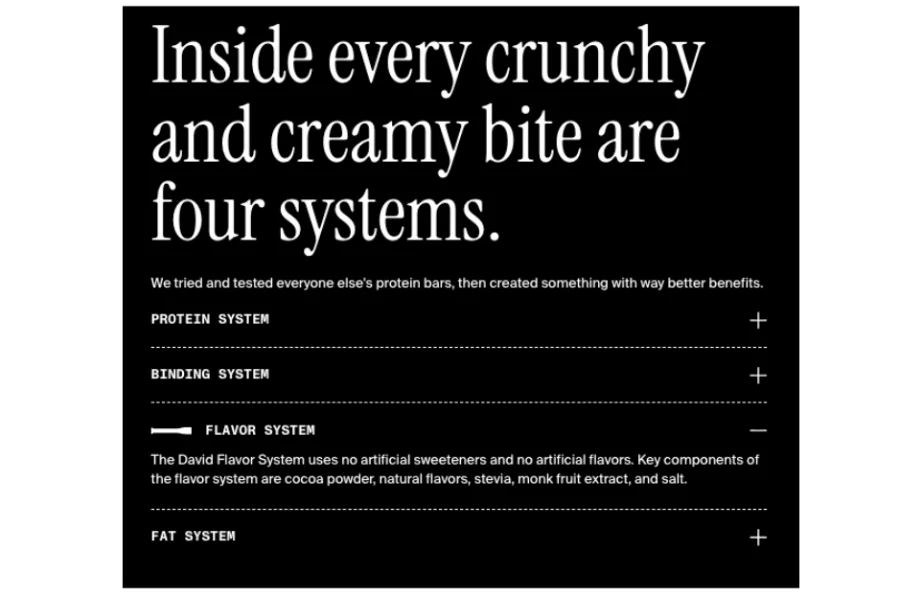
I share that hesitation, especially given a layer of confusion on the company’s website. David claims on some pages, “The David Flavor System uses no artificial sweeteners and no artificial flavors. Key components of the flavor system are cocoa powder, natural flavors, stevia, monk fruit extract, and salt.”
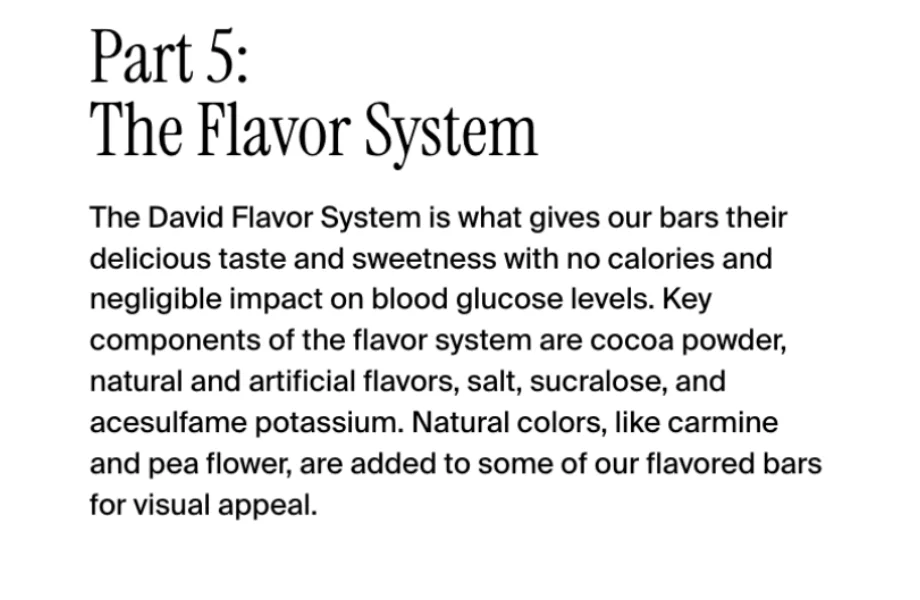
Yet, the ingredients list on the same site, and other pages, includes artificial flavors and sweeteners. This may reflect a recent formula change that hasn’t been fully updated, but it’s unclear.
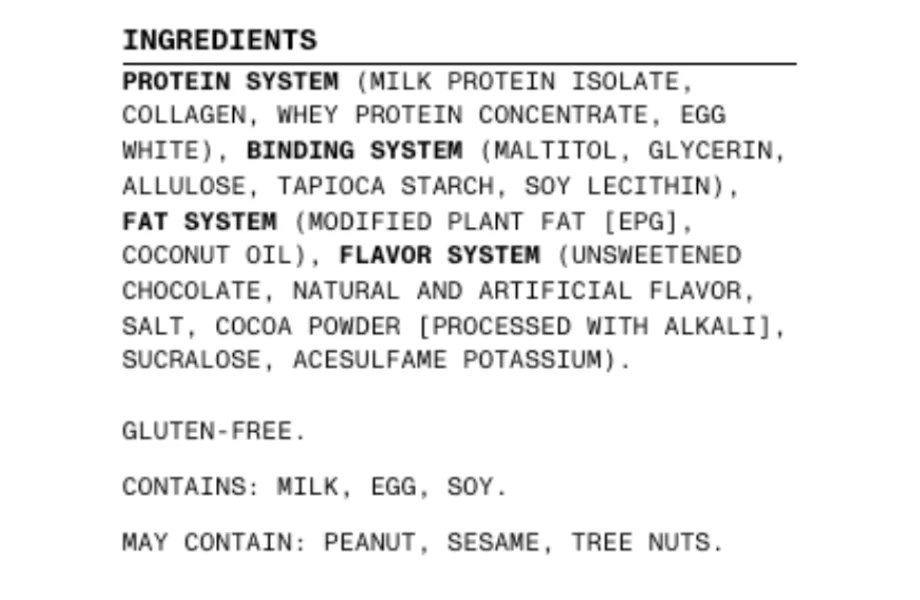
Confusion aside, the bar still delivers 28 grams of high-quality protein, just 12 grams of carbs, and up to 2.5 grams of fat, depending on the flavor. Like Kate, though, I’d like more transparency and consistency around the formulation—leading to an overall rating of 3.5 out of 5 in this category.
Taste and Texture
Kate rated the taste of David Protein Bars a solid 4 out of 5, noting, “In general, these are really good and very true to the listed flavor names.” Like many protein bars, they do carry that slightly chalky, “protein-y” aftertaste—but as Kate puts it, “the whopping 28 grams of protein per bar is impressive enough for me to overlook this taste callout.”
Her personal favorites? Chocolate Chip Cookie Dough and Double Fudge Brownie (no surprise, given her love of chocolate), with the peanut butter flavors also ranking high.
When it came to texture, Kate scored them an impressive 4.5 out of 5, praising their chewy, candy-bar-like consistency. They can be a little sticky—similar to the nougat in a Snickers or Three Musketeers—but for Kate, that’s “a welcomed perk, indeed.”
Side Effects
Kate rated the bars a positive 4.5 out of 5 for side effects, but it’s worth noting individual responses can vary.
Anyone with dairy allergies should avoid these bars—and those with lactose intolerances should rethink them—as they contain milk-based ingredients and may not be suitable for sensitive individuals. They’re also processed in a facility that handles soy, peanuts, sesame, and tree nuts, posing a potential cross-contamination risk.
Third-Party Testing
Protein bars aren’t commonly third-party tested since they’re classified as food rather than a supplement—hence the Nutrition Facts label instead of a Supplement Facts label like you see on protein powders.
However, Light Labs independently tests David Protein Bars to verify protein content and screen for glyphosate, heavy metals, bisphenols, and phthalates. Its Certificate of Analysis (COA) is also available on the brand’s website. Accordingly, we score this David offering at 4 out of 5 for the category.
David Protein Bars vs Quest Nutrition Protein Bars
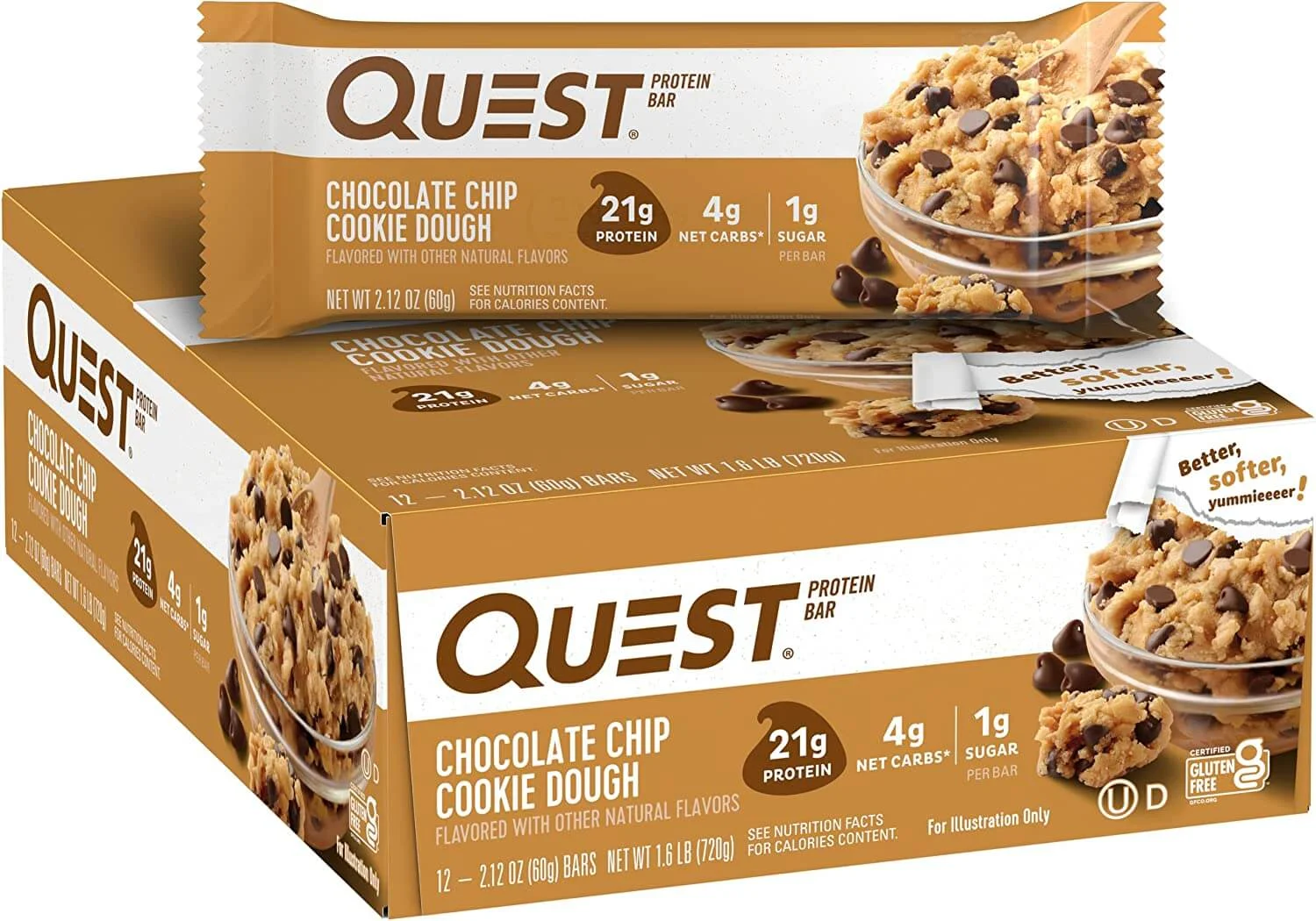
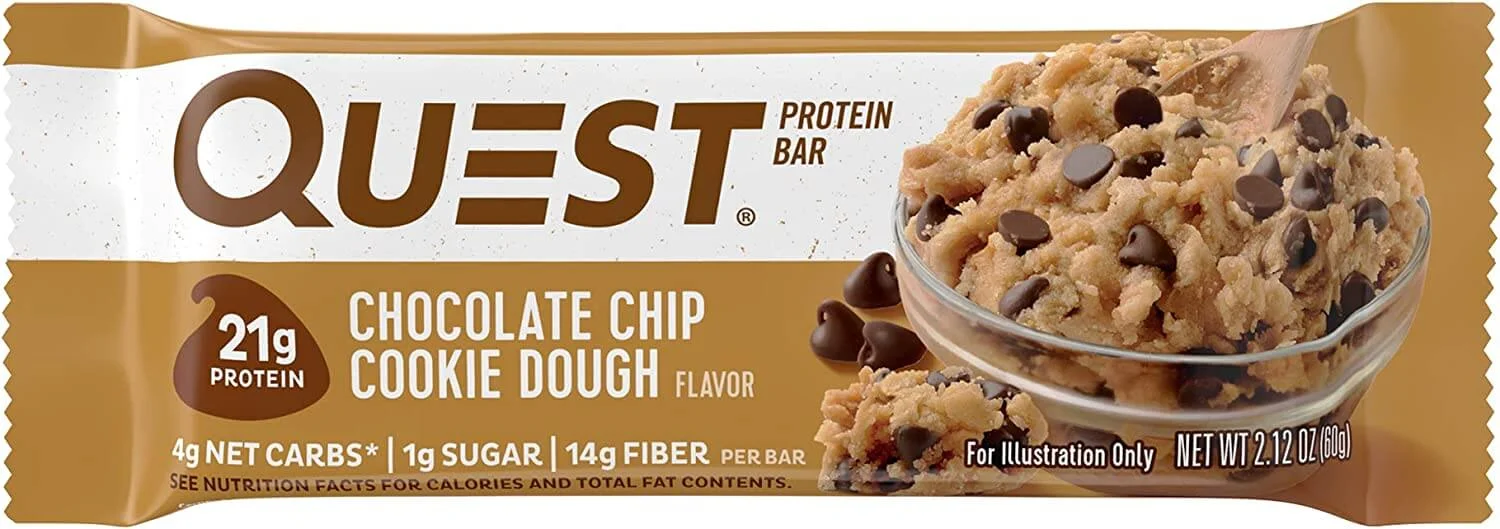
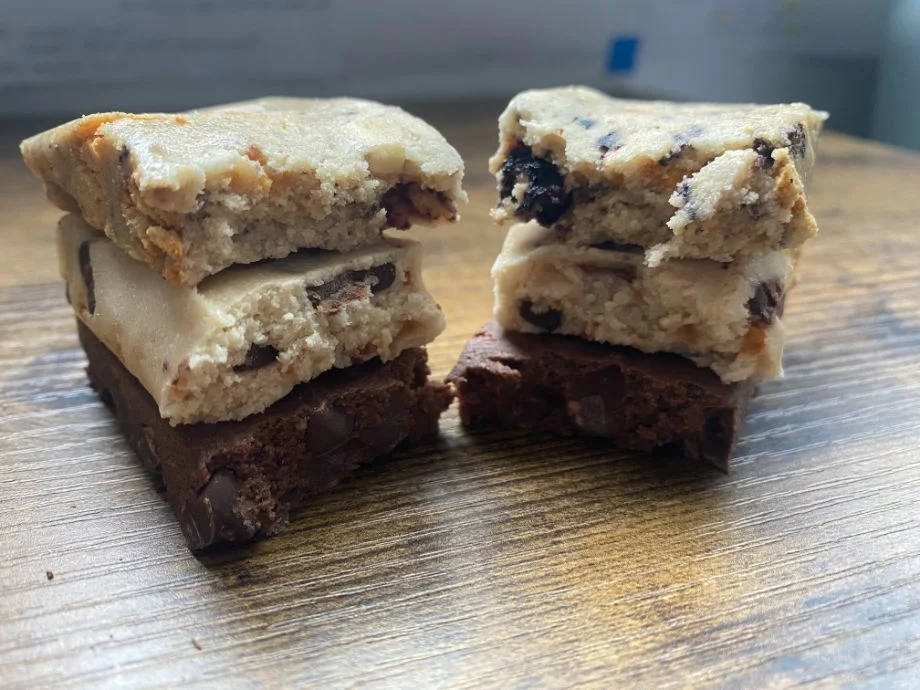
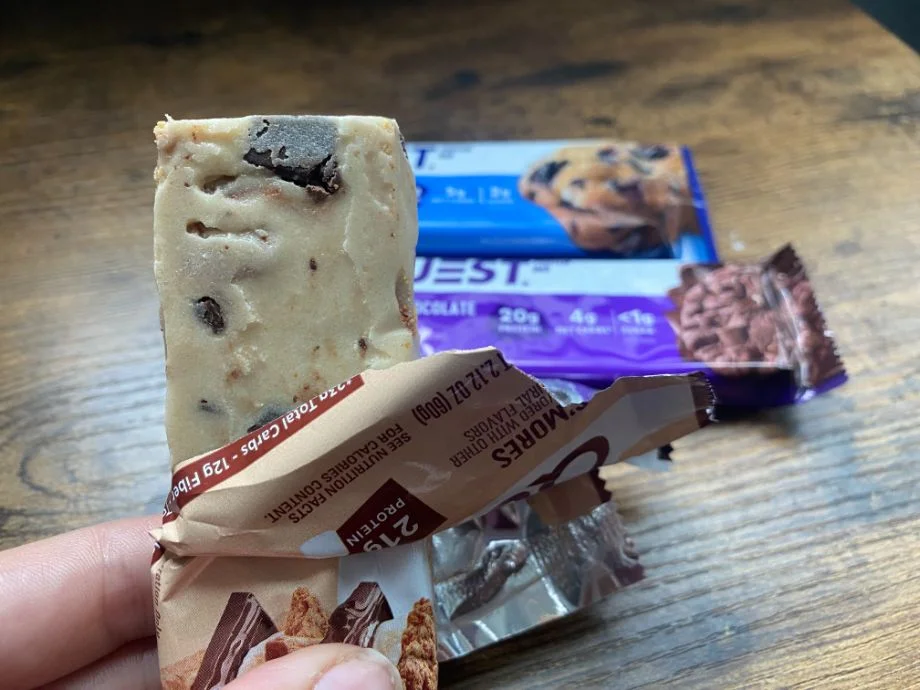
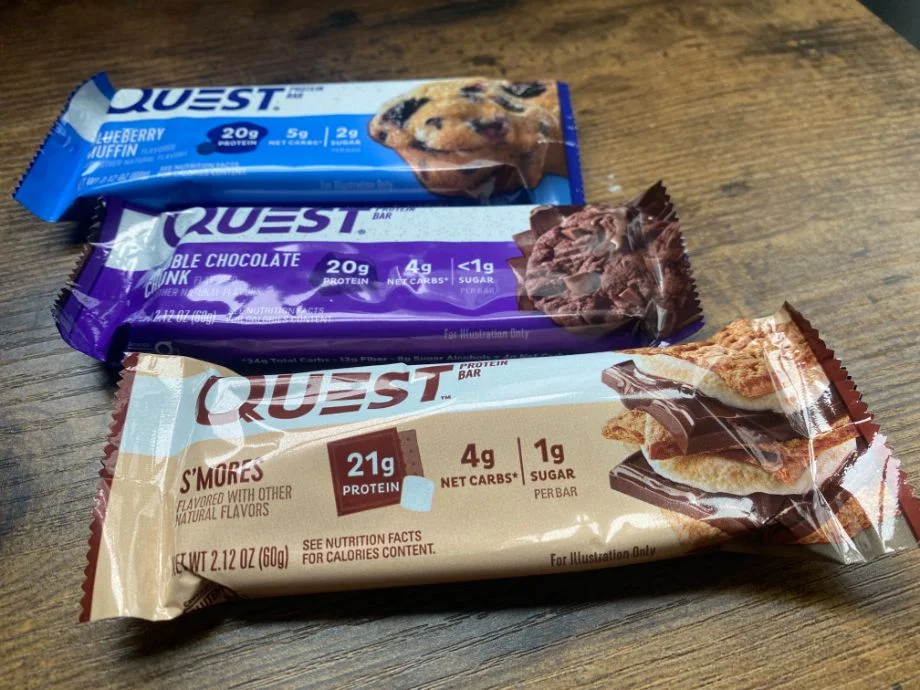
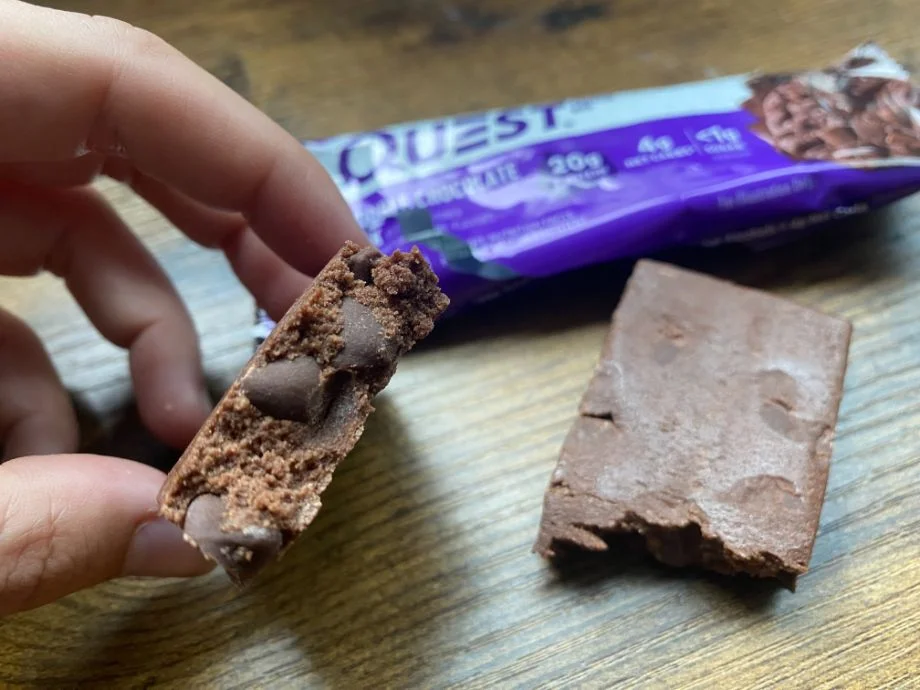
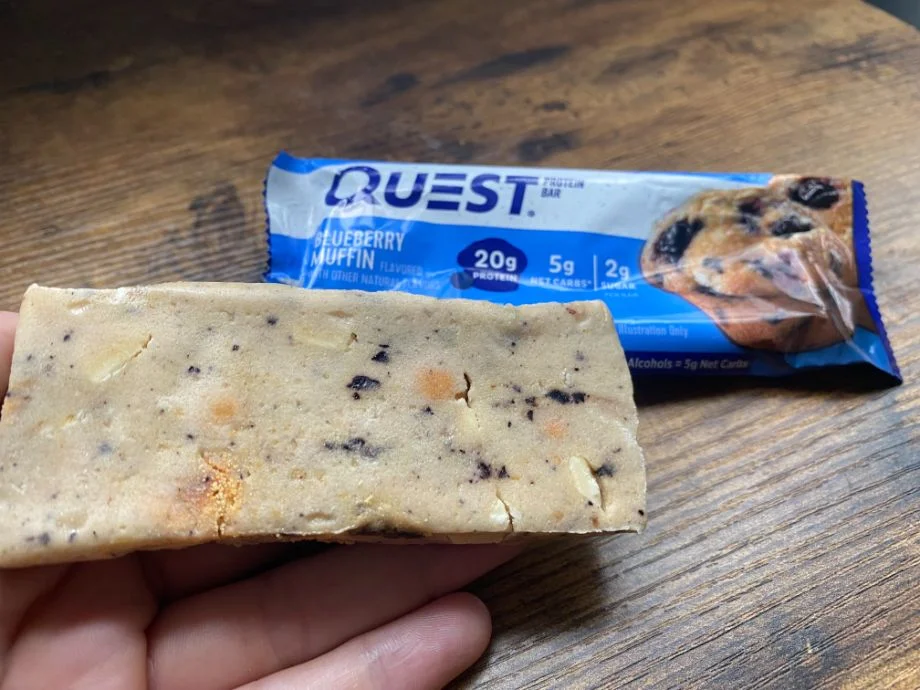



Quest Nutrition has been serving the health and protein market since 2010 and they continue to give people high-quality products. They offer some unique flavors in their bars not seen by competitors such as White Chocolate Raspberry, Chocolate Sprinkled Donut, and Lemon Cake.
What our tester says:
“I don’t experience any negative effects from eating one Quest Bar every now and then, but people who are sensitive to sugar alcohols may want to avoid these.”
Like David Protein Bars, Quest Nutrition Protein Bars are a convenient, higher-protein snack for active lifestyles. Both are chewy and lower in sugar than traditional candy bars, but key differences can help you choose the right one:
- Protein content and sources: Quest Bars provide 17 to 21 grams of protein per bar from a milk and whey protein blend. David Bars offer 28 grams sourced from milk protein isolate, whey, collagen, and egg white.
- Calories and macros: David Bars are lower in calories (150), carbs (12 g), and fat (22.5 g) than Quest, which contains up to 200 calories, 24 to 25 grams of carbs, and 6 to 9 grams of fat per bar.
- Sweeteners: David Bars’ sweeteners are unclear, with monkfruit, stevia, sucralose, and acesulfame potassium all listed. Quest Bars use erythritol, a sugar alcohol, and stevia, a natural sweetener.
- Flavors: David offers 8 flavors; Quest comes in 13.
- Third-party testing: David Bars are tested through Light Labs for protein content and contaminants, with a Certificate of Analysis available online. Quest Bars do not appear to undergo third-party testing.
- Price and value: David Bars cost about $3.25 per serving, slightly higher than Quest’s $2.99.
Still deciding which to chew into? Check out the comparison table below and our Quest Protein Bar review for more details.
| David Protein Bars | Quest Nutrition Protein Bars | |
| Price per serving | $3.25 per bar | $2.99 per bar |
| Protein source | Milk protein isolate, collagen, whey protein isolate, egg white | Protein blend (milk isolate protein, whey isolate protein) |
| Protein per bar | 28 g | 17-21 g, depending on flavor |
| Carbohydrates per bar | 12 g | 24-25 g, depending on flavor |
| Fat per bar | 2-2.5 g, depending on flavor | 6-9 g, depending on flavor |
| Calories per bar | 150 cals | 180-200 cals, depending on flavor |
| Sweeteners used | Sucralose and acesulfame potassium or stevia and monkfruit extract (please see “Formulation” section for details) | Erythritol, stevia |
| Available flavors | Blueberry Pie, Cake Batter, Chocolate Chip Cookie Dough, Cinnamon Roll, Fudge Brownie, Peanut Butter Chocolate Chunk, Red Velvet, Salted Peanut Butter | Dipped Cookies & Cream, Chocolate Chip Cookie Dough, Oatmeal Chocolate Chip, Chocolate Peanut Butter, S’mores, Caramel Chocolate Chunk, Lemon Cake, Chocolate Brownie, Chocolate Sprinkled Doughnut, Mint Chocolate Chunk, Birthday Cake, Blueberry Muffin, Double Chocolate Chunk |
| Third-party testing | Yes | No |
Customer Experience
Overall, David Protein earns a 4 out of 5 for customer service due to its customer support options and fair return policy. However, shipping exclusions and minimums—particularly for subscriptions—deduct a point. Here are the details:
- Customer Support: Available via email, phone and chatbot throughout weekday business hours, and an FAQ page.
- Shipping: Ships to the U.S. and Canada, including P.O. Boxes and APO/FPO/DPO addresses. Free shipping applies to first orders in the contiguous U.S., orders over $70 for returning U.S. customers, and $140 or more for Canadian orders.
- Returns: Refunds or returns can be requested within 30 days via email. Returns are reviewed by the company, and prepaid labels are provided if required.
- Subscriptions: Offered every two, four, or eight weeks with 10% off. Free shipping applies only to the first order, and subsequent orders require a minimum purchase of $70 to qualify.
Ordering David Protein Bars
I’ve never run into problems ordering supplements from a company website—until now. At the time of writing, every protein bar on the David Protein site is sold out. When they’re back in stock, the David Protein offers a subscription for 10% off and accepts major credit and debit cards, as well as digital wallets like Apple Pay, Google Pay, Shop Pay, and PayPal.
In the meantime, you can order David Protein Bars through other retailers, including Amazon and The Vitamin Shoppe. David Protein also offers a store locator on its website, so you may be able to find them in-store depending on your area.
Customer Reviews
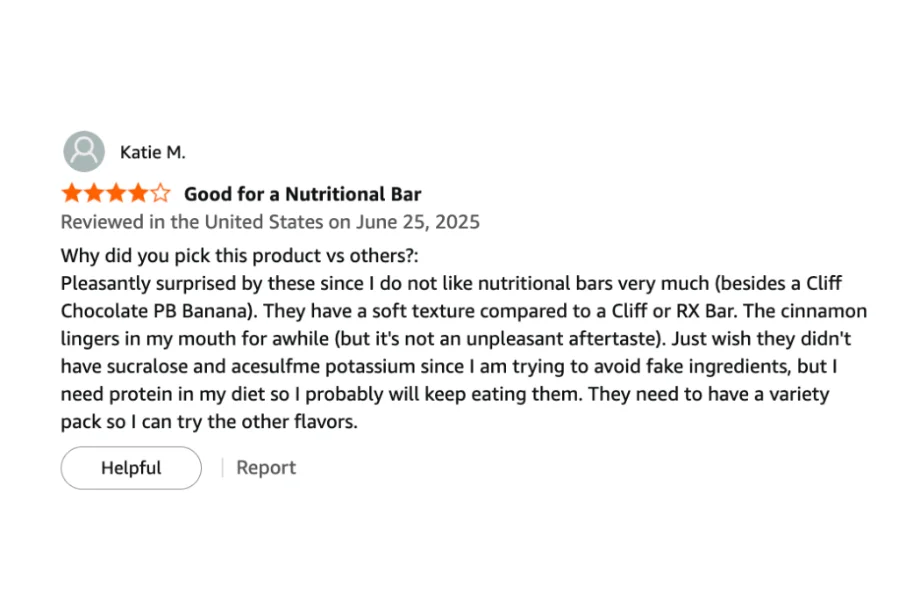
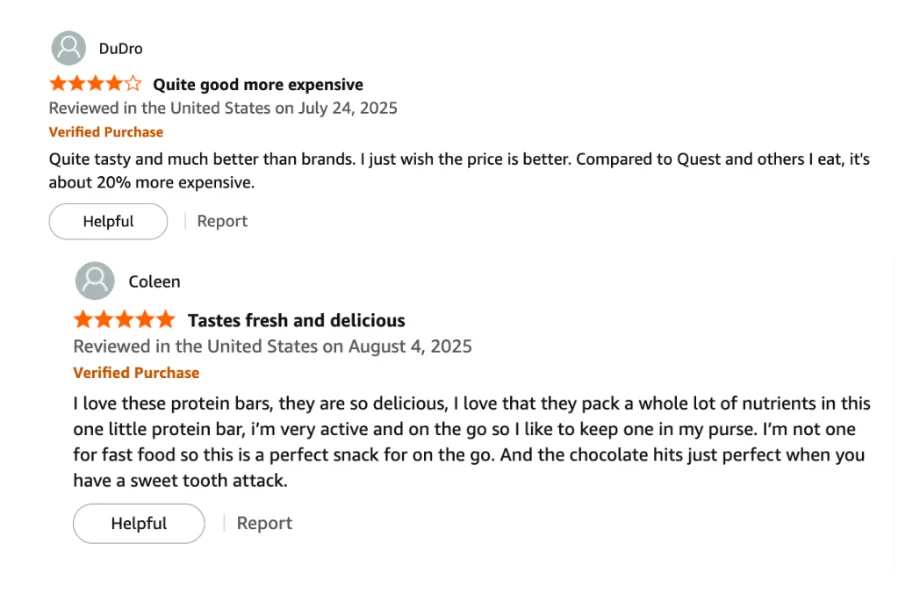
Amazon reviewers are divided on David Protein Bars, with ratings swinging widely by flavor—from 3.8 out of 5 for Salted Peanut Butter to a perfect 5 out of 5 for Salted Peanut Butter and Fudge Brownie. Peanut Butter Chocolate Chunk is the most popular, earning 4 out of 5 stars across more than 700 reviews.
Most customers praise the macros of the high-protein, zero-sugar formula and their convenience. The Peanut Butter Chocolate Chunk flavor is often described as soft with crunchy chocolate pieces, and many enjoy the texture and taste of most flavors. However, opinions are mixed on the bar’s ingredient quality and value—some people think nutrition is worth the cost, while others feel they’re overpriced.
Final Verdict of Our David Protein Bar Review
David Protein Bars are a convenient, high-protein option that can fit into many diets and lifestyles. Before tossing this treat into your best gym bag, though, consider these final takeaways:
- Lean macros: 28 grams for just 150 calories, 12 grams of carbs, and up to 2.5 grams of fat per bar.
- Protein source: Contains milk protein isolate, collagen, whey protein concentrate, and egg white, making the bars a great source of complete protein—though they are not suitable for those who avoid these ingredients, whether due to an allergy, intolerance, or preferences.
- Texture and flavor: Soft, chewy bars—with some offering a crunchy texture—available in multiple flavors.
- Formulation discrepancy: Ingredient listings can be confusing—the David Protein website claims the bars contain no artificial ingredients on some pages, yet the Nutrition Facts label and other site pages list artificial sweeteners and flavors.
- Third-party tested: Independently tested through Light Labs for protein content and contaminants.
- Price point: About $3.25 per bar—slightly higher than some competitors, but reasonable for the protein-to-calorie ratio.
David Protein Bars
David Protein Bars claim to be the most protein-dense bars on the market, packing 28 grams of protein into a bar with only 150 calories and no sugars. While a somewhat cleaner protein bar, there are some sugar alcohols and modified plant oils that some may wish to avoid.
Product Brand: David
Product Currency: USD
Product Price: 26.00
Product In-Stock: InStock
4.09
David Protein Bar: FAQs
Why are David protein bars so expensive?
According to David Protein, the higher price comes down to value. The brand claims its bars “deliver exceptional value to our customers by offering the highest protein-to-calorie ratio on the market.” As they put it, “We are less expensive and more convenient than our closest competitor—boiled cod.”
What kind of protein is in David protein bars?
David Protein Bars combine milk protein isolate, collagen, whey protein isolate, and egg whites to deliver 28 grams of protein per bar.
Are David protein bars healthy?
David Protein Bars pack 28 grams of protein into just 150 calories, making them one of the leanest options on the market. Still, ingredient inconsistencies and the possible use of artificial ingredients raise transparency concerns, so they may not be the cleanest choice.
These statements have not been evaluated by the Food and Drug Administration. This product is not intended to diagnose, treat, cure, or prevent any diseases.
References
- Paul, C., Leser, S., & Oesser, S. (2019). Significant Amounts of Functional Collagen Peptides Can Be Incorporated in the Diet While Maintaining Indispensable Amino Acid Balance. Nutrients, 11(5), 1079. https://doi.org/10.3390/nu11051079