


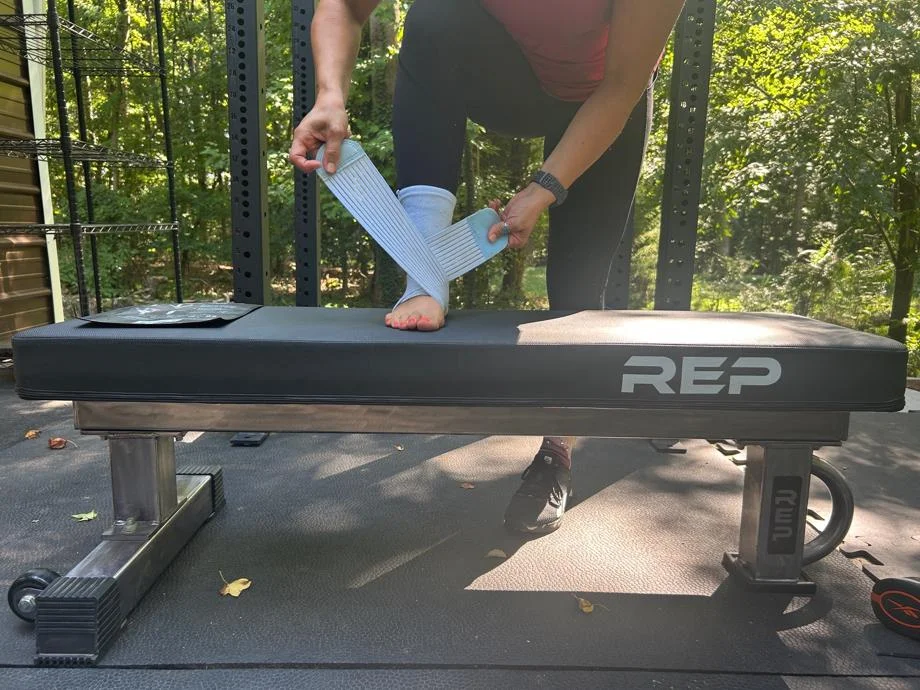
As a certified personal trainer, former rugby player, and longtime lifter, I’ll be the first to tell you that keeping your joints healthy and happy is one of the keys to sustained success. Unfortunately, whether it’s from poor squat form, mistiming a jump, or even wearing the wrong footwear, you can quickly go from being fully functional to sidelined by an ankle injury.
Just like the best wrist wraps and knee sleeves can help keep your joints protected, the best ankle braces can provide extra support, help with injury prevention, and may give you added peace of mind, as well. Of course, you have plenty of options that range from low-profile ankle sleeves to rigid ankle braces with figure-8 straps for maximum support. To help you find the right fit for your foot, the Garage Gym Reviews team researched and tested a variety of braces, using our fitness equipment testing methodology to rate and examine each profile in categories such as:
- Materials
- Sizing
- Adjustability
- Ergonomics
- Maintenance and upkeep
- Value
So, if you’re ready to put ankle pain in the past, kick back, relax, and read on to see which brace is best for you.
Medical disclaimer: Ankle pain isn’t something to brush off—especially if it’s new or getting worse. A doctor or physical therapist can help pinpoint the cause, assess its severity, and recommend a safe recovery plan that won’t risk further injury. Once you know what’s going on, you can choose the appropriate ankle brace that offers the right level of protection and support for your needs.
The 5 Best Ankle Braces
- Best Ankle Brace Overall: McDavid Ankle Brace Ultra Light
- Best Budget Ankle Brace: Sleeve Stars Ankle Brace
- Best Ankle Brace for Sprains: Aircast AirSport Ankle Support Brace
- Best Ankle Brace to Prevent Rolling: Med Spec Aso Ankle Stabilizer
- Best Ankle Brace for Recovery: TheraICE Ankle Ice Pack Wrap
Best Ankle Brace Overall: McDavid Ankle Brace Ultra Light
Good for: Athletes and active individuals looking for lightweight but high-level support
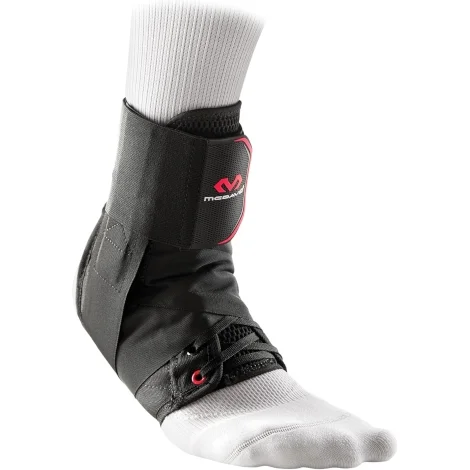







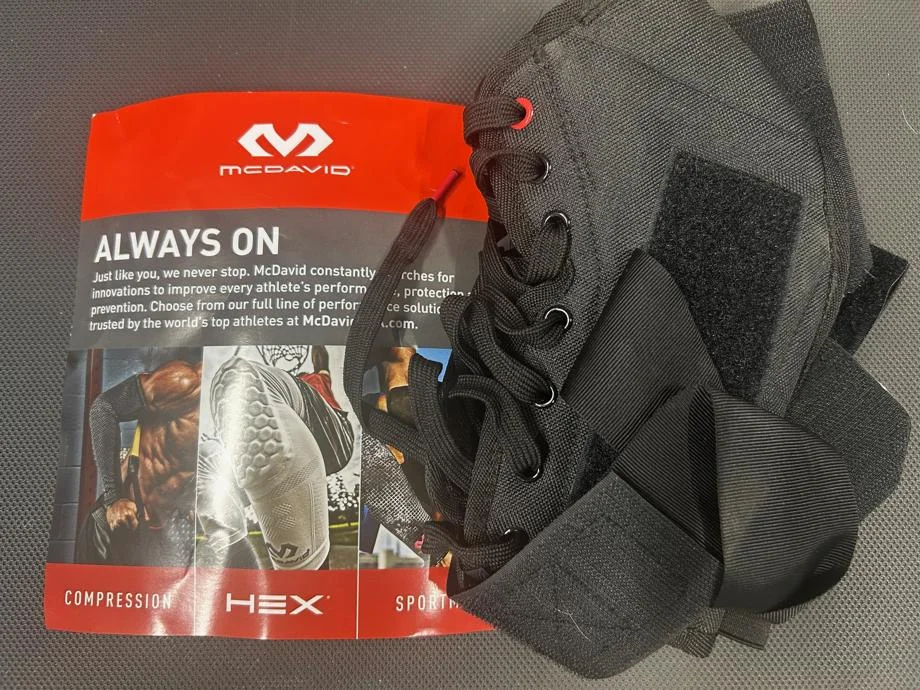
The McDavid Ankle Brace Ultra Light earned our nod for best overall for several reasons. Available for roughly $43 on Amazon, this lace-up style profile can offer rock-solid value, earning a 4-out-of-5 rating in this category. Plus, you get a lightweight brace with hook-and-loop straps on both sides, meaning you can use it on your left or right foot. “The materials feel durable, and it’s pretty intuitive and easy to put on,” says senior director of content Kate Meier, NASM-CPT, USAW-L1, CF-L1.
Kate wore the Ultra Light on several short runs, as well as during some high-intensity interval training (HIIT). Other than some slight pilling on the velcro (which is to be expected over an extended period), she was happy to report no major issues, rating the materials at 4 out of 5.
RELATED: Ankle Stability Exercises
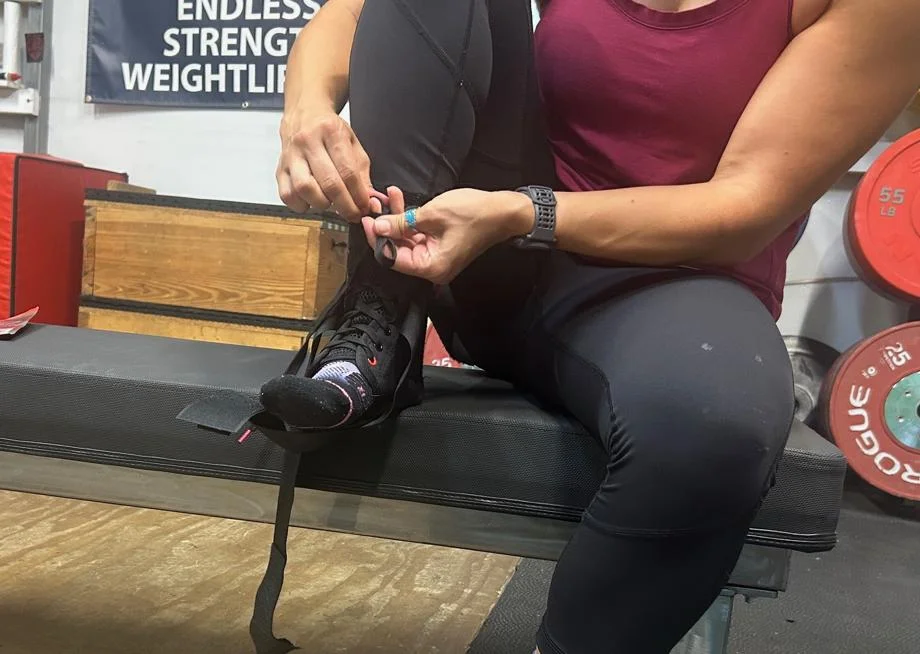
Available in five sizes, you can adjust this fully-laced brace using two non-stretch straps that pull over the ankle from each side. There are also two top elastic straps that you can use to further adjust the tightness at the top of the brace.
“I love a brace with laces because you can accommodate swelling, soreness, and tightness throughout the ankle,” Kate explains, rating the adjustability at a perfect 5 out of 5. “Plus, you can wear it throughout different phases of recovery or performance.”
One piece of advice from our tester: Wear a full, tall sock under the Ultra Light, or even two socks. “If you don’t, you’ll have a lot of chafing at the top and bottom of the brace,” Kate warns. “If I wore just one sock, I experienced discomfort from the edges of the brace digging into my skin.”
If you’re on a tight budget, the Sleeve Stars Ankle Brace is an affordable alternative that should still get the job done.
| Type of ankle brace | Lace-up ankle brace |
| Best for | Moderate to major ankle instability, post-injury recovery, high-impact sports (basketball, football, volleyball) |
| Support mechanism | Mechanical stabilization via laces and reinforced figure-6 strap system |
| Materials | Single-layer polyester with padded lining; ventilated tongue for breathability |
| Sizes | X-small, small, medium, large, X-large |
Best Budget Ankle Brace: Sleeve Stars Ankle Brace
Good for: Budget-conscious athletes who need adjustable compression and support during daily or sport-specific activities
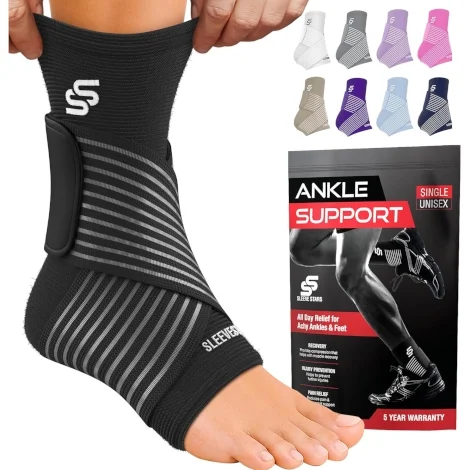


Luckily, ankle braces typically cost less than $50, making them a fairly inexpensive investment to support recovery protocols. However, if you’re tight on funds, you can opt for something like the Sleeve Stars Ankle Brace—our pick for the best budget ankle brace. Listed on Amazon for roughly $30, you can often find it for around half that price on sale. Although it earned a 4 out of 5 for value, says Kate Meier, NASM-CPT, USAW-L1, CF-L1, “The quality reflects the price.”
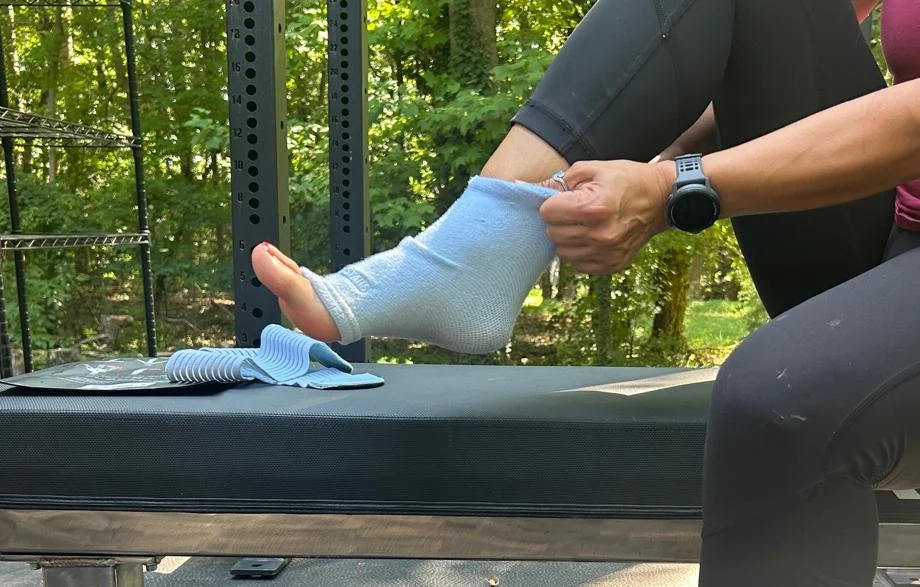
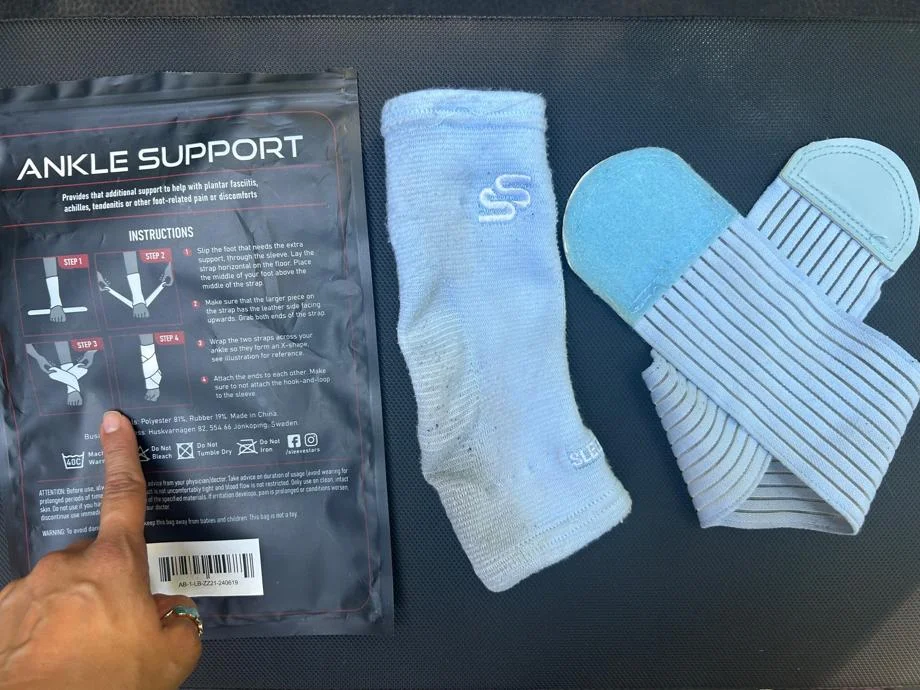
Made from mostly nylon, this brace features a sock and a Velcro strap you wrap around it. Kate and her son each used this Sleeve Stars product for various activities, including basketball, walking, running, and weightlifting.
RELATED: DIY Ankle Weights
“There’s some slight wear on the bottom of the sock itself from us using it, but also just from putting miles and miles on it,” Kate notes, rating the materials at 4 out of 5. “However, the wear hasn’t affected the brace’s performance in any way.”
While this brace earned a perfect 5-out-of-5 score for adjustability, it’s important to note that it’s only available in three sizes (small, medium, and large). That’s not exactly the most accommodating, which is why we rated the sizing at 2.5 out of 5.
Thankfully, though, this brace is incredibly comfortable based on our tester’s findings. As one of only three models to earn a perfect score for ergonomics, Kate had quite the statement regarding Sleeve Stars.
“This has been my favorite of all the braces I’ve used over the last 30 years because it’s simple, effective, and comfortable,” she commends.
Need more sizing options? The Med Spec ASO Ankle Stabilizer comes in eight sizes ranging from XX-small to 3XL.
| Type of ankle brace | Compression sleeve with removable adjustable wrap strap |
| Best for | Mild sprains, plantar fasciitis, Achilles tendonitis, swelling, daily support |
| Support mechanism | Compression, plus adjustable strap for light lateral stability |
| Materials | Polyester & elastic rubber (sweat‑wicking, breathable, latex‑free, OEKO‑TEX certified) |
| Sizes | Small, medium, large |
Best Ankle Brace for Sprains: Aircast AirSport Ankle Support Brace
Good for: Supporting and stabilizing your ankle while recovering from sprains, especially as you return to activity post-injury
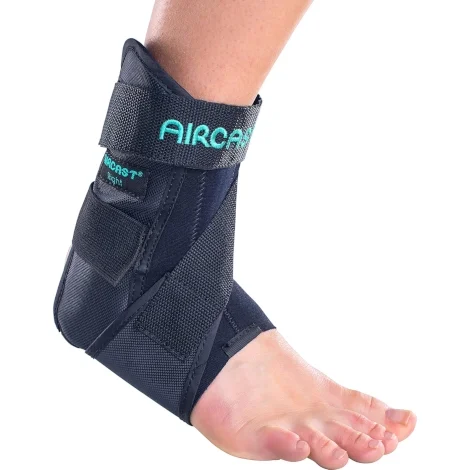

If you’re looking for maximum support, look no further than the Aircast AirSport. Ideal for athletes and active individuals recovering from ankle sprains, this high-quality brace costs roughly $40 online. “This provides great stabilization for those seeking really rigid protection,” says Kate Meier, NASM-CPT, USAW-L1, CF-L1,, rating the value at 4 out of 5.
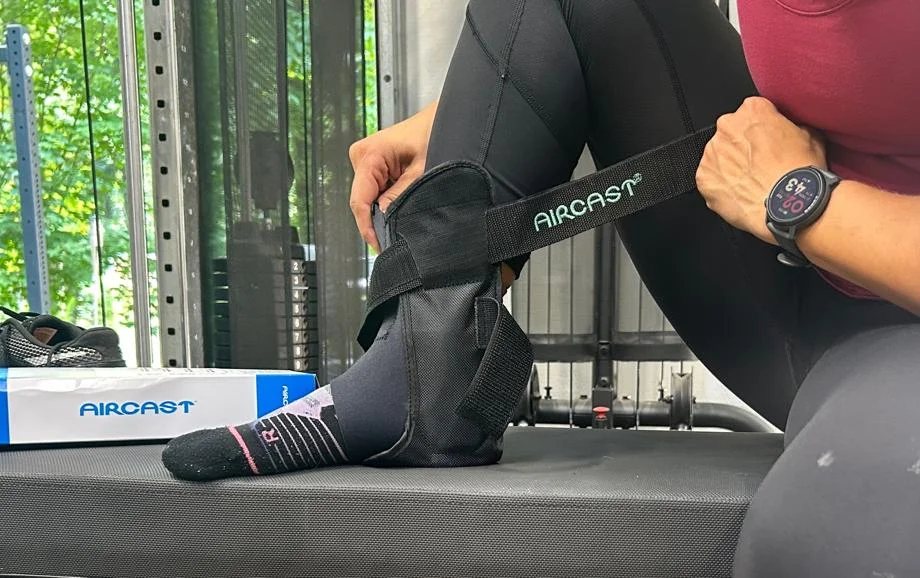
While you get what you pay for with our budget-friendly selection, the Aircast AirSport performs well above its price tag with high-quality materials and elevated comfort.. In addition to a rigid shell with foam-filled air cells on each side, this brace has a strap that wraps around to keep everything comfortably in place. There are also integrated forefoot and shin wraps for added compression and stability.
RELATED: Best Compression Boots
“The stitching on the product looks fantastic, as well, but the thin fabric on the inside of the shell feels like it could succumb to wear and tear over time,” Kate says, scoring the materials at 4 out of 5.
One differentiator between the AirSport and many other ankle braces is that it’s available in both left- and right-foot models. Why does this matter? As Kate points out, “The direction you wrap a bum ankle matters,” so you want to be able to use anterior talofibular straps—which support the front and outer ankle where most sprains happen—correctly to protect it.
Because it’s so rigid, we wouldn’t recommend using this brace for running endeavors. However, it can work well for heavy lifts, walking around the house, and other everyday activities.
“I’ve had countless ankle sprains, rolls, and strings over the years, and this is the brace I’d wear in the immediate aftermath before transitioning to a wrap,” Kate explains, giving the ergonomics a score of 4 out of 5. “For example, I had a Grade III sprain a year ago and I wished I had this at the time!”
The McDavid Ankle Brace Ultra Light would also work well if you’re dealing with a sprain. Our best overall ankle brace is built and priced similarly to the AirSport.
| Type of ankle brace | Semi-rigid stirrup-style ankle brace |
| Best for | Active individuals or athletes recovering from Grade I–III ankle sprains, managing chronic instability, or preventative support during sports/exercise |
| Support mechanism | Inversion and eversion control via semi-rigid shell; foam‑filled Aircell technology for cushioning; ATF (anterior talofibular) cross‑strap, plus integrated forefoot and shin wraps for compression and stability |
| Materials | Coated fabric with foam‑filled aircells encased in plastic shell overlays; latex‑free nylon/polyester blends in some regions |
| Sizes | X-small, small, medium, large, x-large |
Best Ankle Brace to Prevent Rolling: Med Spec ASO Ankle Stabilizer
Good for: Preventing ankle rolling by mimicking athletic taping with a figure-eight strap design
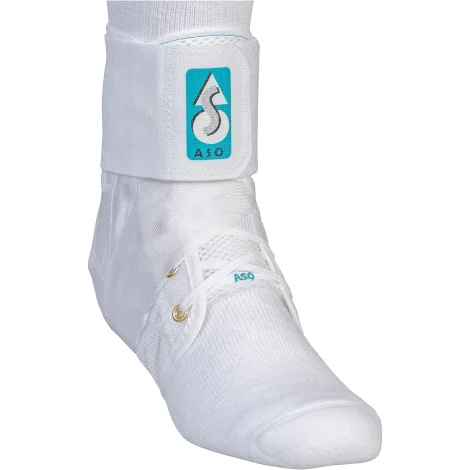
If you’ve played sports at any point in your lifetime, chances are you’ve experienced that instant, sharp pain from rolling an ankle. If you want to keep that problem at bay, we recommend wearing the Med Spec ASO Ankle Stabilizer. Available for about $32, we feel it’s well-priced for what you get, earning a 4 out of 5 for value. You can also opt for a stabilizer and brace combo, which increases the cost yet elevates your potential protection.
This lace-up ankle stabilizer features figure-8 straps—supportive bands that wrap around your ankle to provide lateral stability. This emulates what athletic trainers and physical therapists do when taping an athlete’s ankle to prevent rolling or sprains. Kate Meier, NASM-CPT, USAW-L1, CF-L1 gave this brace perfect 5-out-of-5 scores for both adjustability and ergonomics.
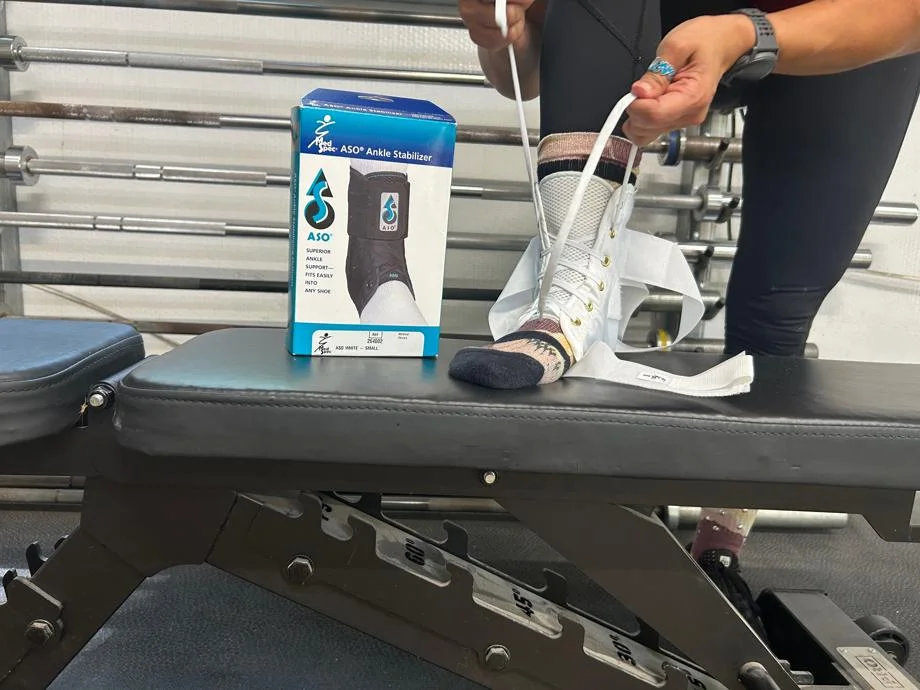
“You can adjust the lacing to get the right fit throughout the entire area,” she explains. “Braces like this are great if you’re using them from post-sprain through recovery, or if you want just one product for bracing, stability, and support.”
While Kate acknowledges that the more expensive brace and stabilizer option may be more rigid and uncomfortable, she found the stabilizer quite accommodating.
“With a tall sock and the correct adjustments, you can’t really tell this is even on—other than feeling some increased stability,” she says.
We gave this brace a 5-out-of-5 rating for in-use experience, too, as the ASO Ankle Stabilizer strikes the right balance of adjustability and support. Kate recommends using it if you have minor ankle issues and want something to wear during activity. This makes it one of the best ankle braces for basketball and soccer players who are concerned about rolling their joints during competition or practice.
Unlike some of the other options on this list, the ASO Ankle Stabilizer comes in just about every size imaginable. You have eight choices ranging from xx-small to 3XL. “The laces also allow for more adjustability and range in sizing,” Kate adds.
Athletes and active individuals can also consider the AirCast AirSport a viable option. This stirrup-style ankle brace provides excellent preventative support.
| Type of ankle brace | Lace‑up ankle stabilizer |
| Best for | Acute and chronic ankle sprain support, athletic use across many sports (running, tennis, basketball, soccer), and daily preventive use |
| Support mechanism | Mechanical stabilization via angled figure‑8 straps |
| Materials | Durable ballistic nylon boot, spacer-mesh fabric in tongue and Achilles area |
| Sizes | XX-small, X-small, small, medium, large, XL, 2XL, 3XL |
Best Ankle Brace for Recovery: TheraICE Ankle Ice Pack Wrap
Good for: Providing 360-degree compression and cold therapy while recovering from injury or intense activity
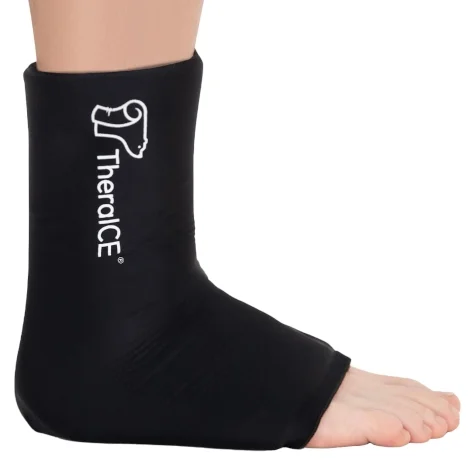



Although it’s not the same as going into your best cold plunge tub, you can experience some of the benefits of hydrotherapy by investing in the TheraICE Ankle Ice Pack Wrap. Our pick for the top ankle brace for recovery combines elements of compression as well as thermal- and cryotherapy to help you get back to full strength as quickly as possible.
Listed for $50 on Therabody’s retail page, you can often find it on sale for roughly $40. Despite its higher-than-average price tag, Kate Meier, NASM-CPT, USAW-L1, CF-L1 still scores it at 4 out of 5 for value.
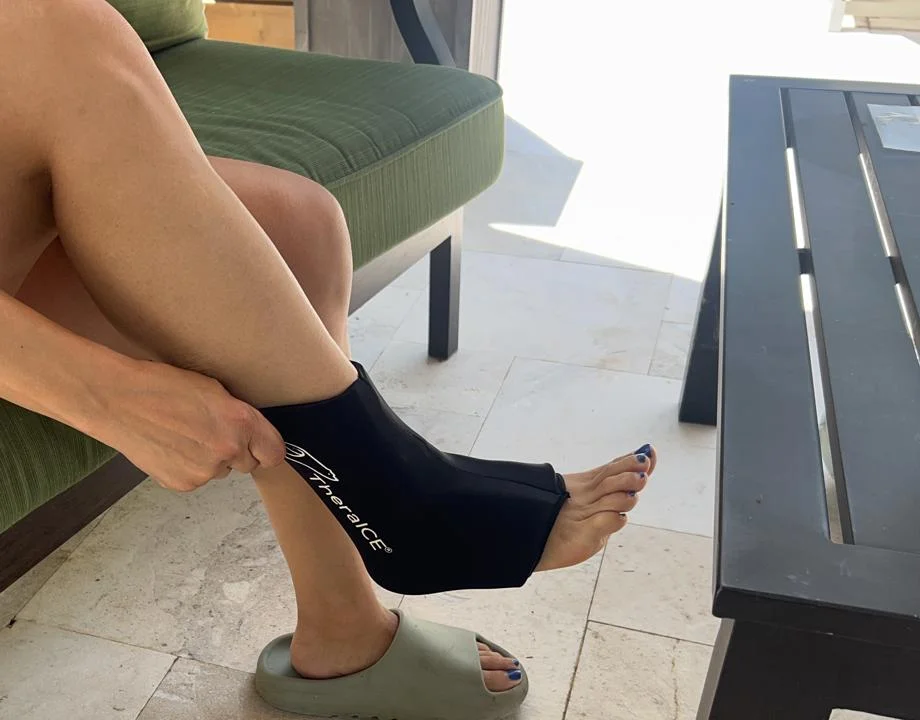
“This isn’t the cheapest thing in the world, but if you’re like me and you have constant ankle issues, this is AMAZING!” she states. “This is so simple and absolutely worth every penny.”
This type of brace is actually just a nylon cover over a gel pack. As Kate points out, it’s not meant for walking around in, as the materials are designed for comfort rather than performance.
Although Kate rated the sizing a perfect 5 out of 5, she did have some callouts regarding TheraICE’s descriptions on the company website. When you go to select a size, it says small and medium fit most women and large fits most men. In other words: Not exactly the most helpful advice.
“Can you please equate that to shoe sizes?” Kate requests.
Thankfully, the product feels and works great. Earning a 5-out-of-5 rating for ergonomics, Kate aptly describes the experience as, “Like you’re enveloping your ankle in recovery.”
Although it doesn’t have an integrated gel pack, the Sleeve Stars Ankle Brace is a decent fallback option that offers compression and comfort in a budget-friendly package.
| Type of ankle brace | Slip-on compression wrap with integrated gel pack designed for cold and hot therapy |
| Best for | Ideal for sprains, ankle swelling, plantar fasciitis, Achilles tendonitis, post-workout recovery, and general inflammation relief |
| Support mechanism | Combines compression and gel-based cold/hot therapy to reduce inflammation and deliver full-ankle coverage without rigid support |
| Materials | Stretchable fabric infused with expert-grade gel inserts; latex-free and soft on skin |
| Sizes | X-small, small/medium, large, x-large |
Other Ankle Braces We Researched
While five ankle braces made our guide’s final cut, here are a few other options we considered when whittling down the list to the best of the best:
- Zenith Ankle Brace: While we like the figure-eight strap system, this brace is only available in three sizes.
- BioSkin TriLok Ankle Brace: Engineered for chronic and acute ankle pain, the BioSkin TriLok Ankle Brace offers many of the features we look for. However, its $70 price tag is too steep for our liking.
- Bodyprox Ankle Support Brace: Although it only costs about $10 on Amazon, this brace only comes in one size. For about $10 more, you can get the Sleeve Stars Ankle Brace, which comes in small, medium, or large.
- ACE Deluxe Ankle Stabilizer: This hook-and-loop style brace got mixed reviews about the level of support and value. Still, it’s not a bad option if you’re on a tight budget.
How We Picked and Tested the Best Ankle Braces
Just like you’d choose a best muscle recovery tool based on your needs, you should wear the appropriate ankle brace for your type of injury, activity level, and desired level of support. Since the home gym community spans from casual exercise enthusiasts to hardcore CrossFit competitors, we wanted to find options that cater to a wide range of users.
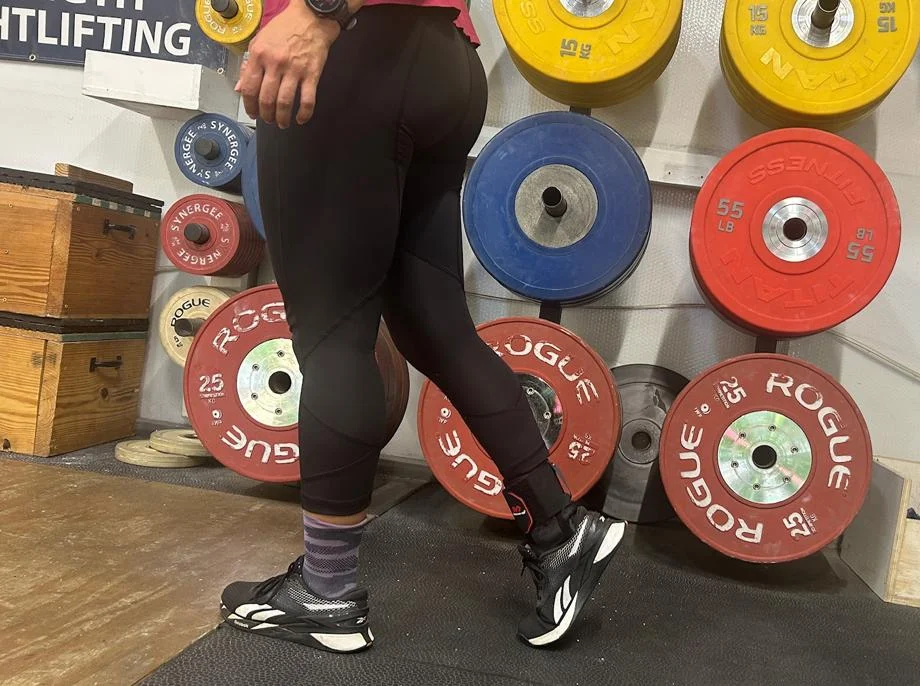
While they may seem simple on the surface, small design nuances can separate the best ankle braces from the rest of the crowded pack. In fact, there are quite a few factors we evaluate when picking and testing them, rating each tested profile on a scale of 1 (lowest) to 5 (highest) for easier clarification. Here’s a complete breakdown of how we assessed the best ankle braces:
- Value: Does the build quality and level of support justify the price? In our experience, you should be able to find a reliable ankle brace for around $30 or $40. However, specialized models with advanced support features may cost a bit more.
- Materials: Premium braces often use ballistic nylon, neoprene, or polyester for sweat-wicking qualities and enhanced durability. We also evaluated the breathability of the fabric, as some braces can cause skin irritation during long workouts or excessive wear.
- Sizing: Does the brace fit comfortably without overly restricting your range of motion? Does the manufacturer offer an inclusive size range with accurate sizing information?
- Adjustability: Whether it’s laces, figure-8 straps, or some other mechanism, we took note of how easy it was to get a secure fit with each brace. Braces that earned low adjustability scores typically cut off circulation or failed to stay in place during activity.
- Ergonomics: A well-designed ankle brace conforms to the natural shape of your ankle and provides support without making you feel like you’re lumbering around in a walking boot. Manufacturers can achieve this by using low-profile builds, contoured padding, and other design elements that strike the optimal balance between comfort and performance. We made sure to account for such features during our trials.
- Maintenance and Upkeep: How easy is it to clean the brace? Can you throw it in the washing machine, or do you have to wash it by hand? We also noted whether any Velcro or plastic components showed signs of wear and tear, especially after extended use.
- Experience: Does the brace prevent rolling or re-injury? Are there any issues with Velcro straps detaching or laces coming undone in the middle of your workout? We made a point to examine the actual experience of each ankle brace to give you a better picture of what each silhouette can bring to the table.
RELATED: Best Ankle Weights
Benefits of Ankle Braces
During my 12-year rugby career, I suffered multiple high-ankle sprains as well as stress fractures in each of my feet. So, I understand the physical and mental toll ankle and foot injuries can have on anyone who follows an active lifestyle.
Ankle braces offer a potential solution to prevent rolling or re-injury, and they can help with recovery and pain relief, as well. Let’s dive into some of the benefits of donning a brace for regular activity.
Reduces Risk of Ankle Sprains
This shouldn’t come as a surprise, but ankle braces (along with taping) can be effective at reducing the risk of ankle sprains. According to a 2018 systematic review1 and meta-analyses published in Sports Medicine, ankle bracing is effective for, “Primary and secondary prevention of acute ankle injuries among athletes.” Furthermore, a 2016 study2 from the Journal of Isakos concluded that taping and bracing have a, “Preventative effect on ankle sprains during sports,” while having minimal impact on sport-specific performance.
Improves Ankle Stability
Chronic ankle instability can cause plenty of frustration and prevent you from performing at your best. One way to finally get over the hump? Wearing an ankle brace. A 2021 study3 in the Journal of Foot and Ankle Research found that a semi-rigid ankle brace allowed people with ankle instability to keep ankle inversion angles in a comparable range to healthy individuals. Interestingly, however, a soft elastic brace did not significantly influence ankle joint stability.
Can Help Provide Pain Relief
Lateral ankle sprains are one of the most common injuries you’ll see across all age groups. Depending on the severity, you can experience mild discomfort to debilitating pain. Part of your recovery protocol should include wearing an ankle brace, as research shows4 this can significantly reduce pain and help in the recovery process of grades I and II (mild and moderate) lateral ankle sprains.
May Reduce Fear of Reinjury
Sometimes, suffering an injury can have more of an impact on your psyche than the actual body part affected. Research on individuals with chronic ankle instability shows that they report higher levels of injury-related fear5 compared to those who fully recover after their ankle sprain or to those without a history of one. Wearing a brace can help ease that anxiety by providing sensory cues and a heightened sense of confidence as you become active again.
Buying Guide: What to Look for in Ankle Braces
Whether you’re on the mend from an ankle injury or looking to prevent one, choosing the right ankle brace can make a massive difference in keeping you safe and stable. Here are some key factors to consider when shopping for the best option.
Type of Support
Not all ankle braces are built the same. Some are designed to prevent injury during sports or intense activities. Others are made for recovery and rehabilitation. While preventive braces are typically lighter and more flexible, post-injury options like the McDavid Ankle Brace Ultra Light (our top overall pick) can offer more rigid support to stabilize the affected joint.
Level of Compression and Stability
Compression can help reduce swelling and enhance blood flow—two key components to hastening the healing process. Meanwhile, a brace with good stability can help keep your joints protected by limiting excessive movement. If you have a history of ankle sprains or chronic ankle instability, we recommend buying a brace with reinforced sides or lace-up designs.
Fit and Adjustability
A good rule of thumb is that an ankle brace should fit snugly without cutting off circulation. Models like the AirCast AirSport have adjustable laces and straps that allow for a customized fit. You should also make sure that the brace can accommodate whatever footwear you choose.
Material and Breathability
Aim for breathable, moisture-wicking materials like neoprene or mesh, especially if you plan to wear the brace for sports or long workouts. These types of well-ventilated materials can prevent skin irritation or excessive heat buildup during prolonged use.
Price and Value
Ankle braces range in price from about $10 to more than $50. Although you may be tempted to go for the cheapest option, consider how often you’ll use the brace and the level of protection you need. Investing in a higher-end brace can provide superior durability, comfort, and injury prevention—ultimately saving you money (and headaches) in the long run.
Experts Who Contributed To This Article
FAQs About the Best Ankle Braces
What is the difference between an ankle support and an ankle stabilizer?
While an ankle support provides mild compression to help reduce swelling and enhance circulation, an ankle stabilizer offers more structured support via straps or other rigid components. An ankle stabilizer can also limit excessive ankle movement and is typically used to manage moderate to severe injuries.
Is it better to wear an ankle brace or a wrap?
Choosing a brace versus a wrap depends on your needs. Ankle braces can offer superior stability and injury prevention during use, especially if you’re dealing with a sprained ankle. Wraps, on the other hand, can provide lighter compression and are best suited for minor swelling, soreness, or post-activity recovery.
What are the disadvantages of ankle braces?
Although braces can come in handy, they restrict your ankle joint mobility and range of motion and may cause discomfort or skin irritation (depending on the materials). Furthermore, prolonged use could weaken your ankle ligaments and surrounding muscles, which is why it’s important to incorporate ankle stability exercises in your workout routine.
References
- Barelds, I., van den Broek, A.G. & Huisstede, B.M.A. Ankle Bracing is Effective for Primary and Secondary Prevention of Acute Ankle Injuries in Athletes: A Systematic Review and Meta-Analyses. Sports Med 48, 2775–2784 (2018). https://doi.org/10.1007/s40279-018-0993-2
- Zwiers, R., Vuurberg, G., Blankevoort, L., & Kerkhoffs, G. M. M. J. (2016). Taping and bracing in the prevention of ankle sprains: current concepts. Journal of ISAKOS Joint Disorders & Orthopaedic Sports Medicine, 1(6), 304–310. https://doi.org/10.1136/jisakos-2016-000104
- Fuerst, P., Gollhofer, A., Wenning, M., & Gehring, D. (2021). People with chronic ankle instability benefit from brace application in highly dynamic change of direction movements. Journal of foot and ankle research, 14(1), 13. https://doi.org/10.1186/s13047-021-00452-0
- Megalaa, T., Le, P. L., Yan, A. F., Beckenkamp, P. R., & Hiller, C. E. (2024). Do ankle braces affect functional performance? A randomised double-blinded cross-over trial. JSAMS Plus, 4, 100061. https://doi.org/10.1016/j.jsampl.2024.100061
- Suttmiller, A. M. B. (n.d.). Injury-Related Fear in Individuals with Chronic Ankle Instability. ODU Digital Commons. https://digitalcommons.odu.edu/pt_etds/7/