Some would call a garage gym incomplete without one of the best squat racks sitting as the centerpiece of their home gym layout. Just as a good power rack can bring pride and joy to a home gym owner’s face, the team at Garage Gym Reviews also takes pride in testing out these durable rigs, having tested dozens of racks, stands, and cages over the past decade—with more constantly coming in and out of our testing facility and abodes.
To give an honest and informed opinion on the home gym essentials we test, our experts follow an in-depth testing methodology to determine an unbiased score for each piece of equipment. The same goes for squat racks; we test out the durability, versatility, and accessories of each rack that comes through our doors.
The team at Garage Gym Reviews has tested more than 40 squat racks from top fitness brands, as well as lesser-known gems currently on the market. In 2025 alone, we helped connect nearly 11,000 fitness lovers to their ideal squat rack or power rack, so we’re confident that we can help you find your next rack, too.
Our Values
At GGR, we have a team of experts always ready to test the latest and greatest in squat racks and more. The team includes the likes of certified personal trainers, strength and conditioning coaches, and competitive and Olympic-level athletes. We make sure our testers have the experience needed to give informative feedback on each squat rack tested.
Along with having experts on staff, we also talk to experts outside of our team, like exercise physiologist Chris Mohr, Ph.D., R.D., to give further insight into equipment and ensure our picks and recommendations are in accordance with best health practices as well as the latest research and studies.
Our Process
There are plenty of different squat racks available on the market, including squat stands, half racks, power cages, wall-mounted racks, and more. Our team welcomes and tests each kind of rack from top brands thoroughly, since each rack has its own pros and cons for different home gym spaces and needs.
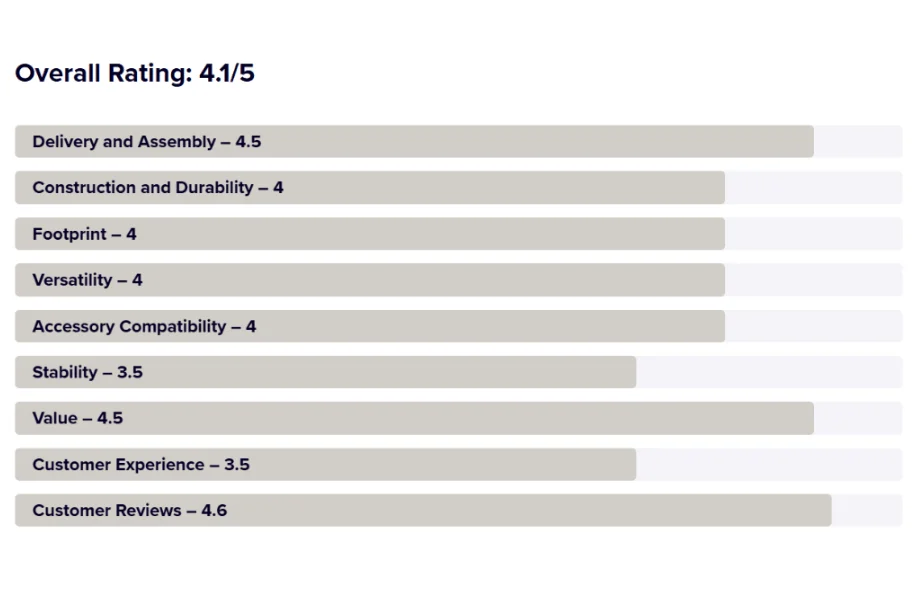
In our testing and research, we follow a multi-step testing methodology for squat racks, giving scores from 1 to 5 in categories such as construction, versatility, and stability. A 3-out-of-5 for any feature means that the squat rack meets industry standards or our set benchmarks, determined through our research and experience.
Once rigorously tested, we average each score to determine an overall rating for each squat rack. Our GGR scores impact our picks for each best-of list we compile, as we strive to showcase the best of the best on the market with each published roundup or review. We constantly revisit these panels, as well, adding newly tested models and products as we come across them and updating current findings to ensure they match our ratings scales.
Here are some of the major features we look at when testing out squat racks, along with the industry averages our team has determined through years of testing and research.
| Category | Average Squat Rack We Test |
| Price | $708 |
| Footprint | 46.5” D x 51.8” W x 87.5” H |
| Weight capacity | 1,000 lbs |
| Upright size | 3” x 3” 11-gauge |
| Hole size | 5/8″ |
| Pull-up bar? | Yes, straight bar |
| Warranty | Limited lifetime |
Squat Rack Performance Testing
In addition to sizing up each squat rack to industry standards, we want to see how they perform in use. A good portion of our testing focuses on performance, where we drag these squat racks through multiple workouts, pushing the limits of their construction, weight capacities, and attachments. Here, we’ll get a better understanding of how they’d fare in your typical garage gym setting.
Below are the categories we observe and rate in our performance testing.
Construction and Durability
All squat racks should have a steel construction, although the quality and thickness of the steel may vary. Heavy-duty racks are typically made with 11-gauge steel, which is often rated to hold 1,000 pounds or more. More budget-friendly racks may feature a thinner 12- or 14-gauge steel, and are usually rated for around 700 pounds.
Another factor to consider here is the finish of the squat rack. Indoor racks are typically finished with a powder coating, but outdoor racks may use a more durable or thicker coating to better defend against the elements.
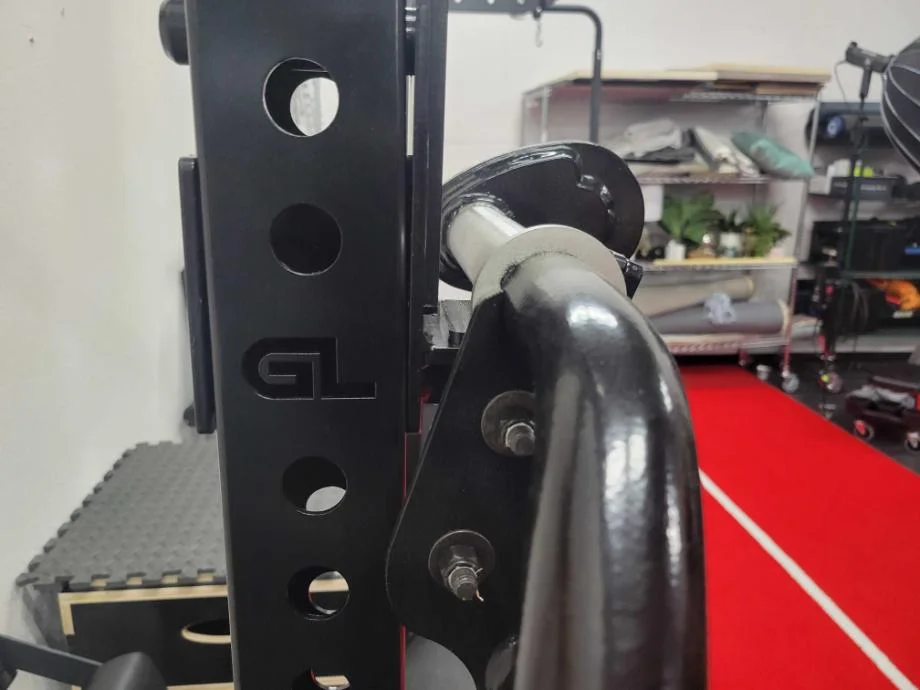
Typically, we rate budget racks using a thinner steel at 3 out of 5, but they may score higher if the rack is built solidly and uses triangle joints to create more rigidity across the rack structure. We also examine the durability of each squat rack, loading the profile with heavy weights approaching the rated weight capacity to see how it holds. Any premature scratching of finishes against attachments, weights, or bars can also negatively impact our rating.
Footprint and Portability
Generally, a squat rack will be about 4 feet wide to properly support and hold an Olympic barbell, but it can vary much more in its depth and height. Large power cages can be 4 four feet deep and well over 7 feet tall, making them fairly large—and not portable—additions to a home gym. These options are typically rated at 3 out of 5. Bulkier options that don’t offer much added versatility with the added footprint will often score lower, as well.
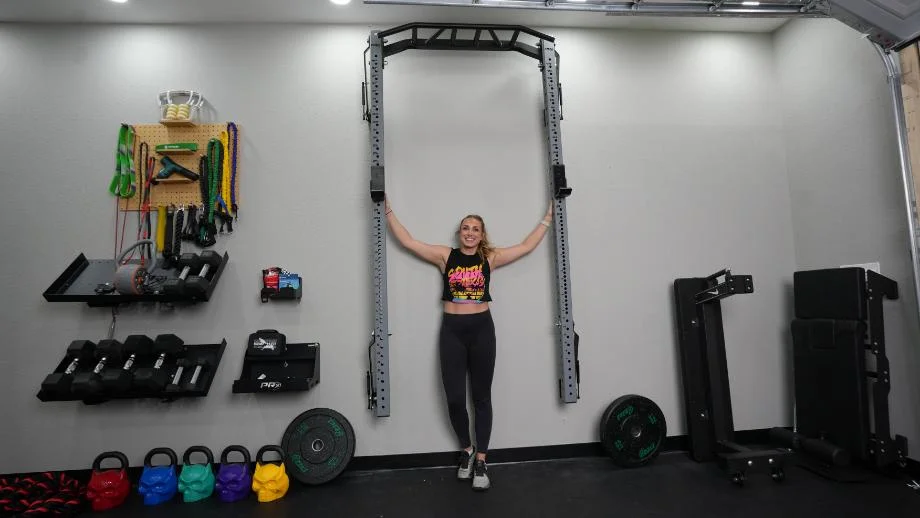
For a smaller home gym, there are compact solutions available, such as half racks (as the name implies, they take up about half the space of a typical power rack), portable and lightweight squat stands, or even wall-mounted folding racks, which hardly take up any space when not in use.
These compact and portable options will typically score higher in this category. That said, if folding a squat rack is overly complicated in our testing, it may affect the score.
Versatility
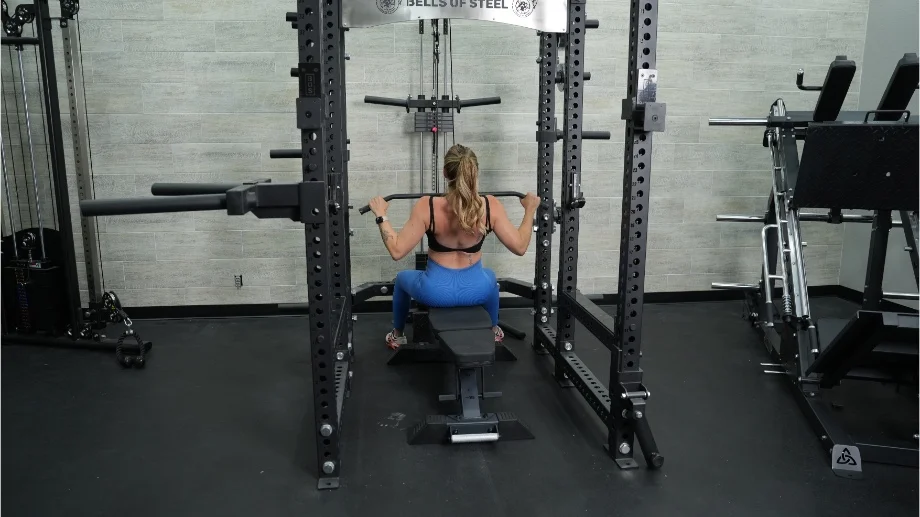
Squat racks are often the centerpiece of a home gym because they can support a large number of exercises. Most racks allow for a variety of barbell exercises, but the best squat racks can host a plethora of power rack attachments, which greatly improve a rack’s versatility. This is by no means an exhaustive list, but some common attachments can include:
- J-hooks
- Spotter arms or safety bars
- Dip bar
- Pull-up bar
- Lat-pulldown and low row machine
- Seal row pad
- Landmine attachment
- Weight horns for free weight storage
We also favor Westside spacing on racks, which is 1-inch hole spacing along the bench zone of the uprights (the area on the uprights where you’d place the bar prior to a bench press). This can allow for a more accurate and comfortable placement of J-hooks during a bench workout. The quality of available attachments can also impact the score here. If a squat rack is durable and high-quality, we’d like to see that same level of quality in the attachments…and that’s (unfortunately) not always the case.
Squat racks with a pull-up bar and a somewhat limited attachment ecosystem can earn a score of 3 out of 5. Racks with Westside spacing and more attachment options from the brand will score higher, as the versatility of these racks is elevated and can be customized to support the customer’s fitness goals and needs.
Accessory Compatibility
This is a score largely based on a squat rack’s upright dimensions and the hole sizing. In this category, our testers can determine if the squat rack is compatible with attachments available outside of the brand. A high-scoring rack here would have a standard rack and hole size, which means there would be a myriad of attachments outside the company that could work for the machine.
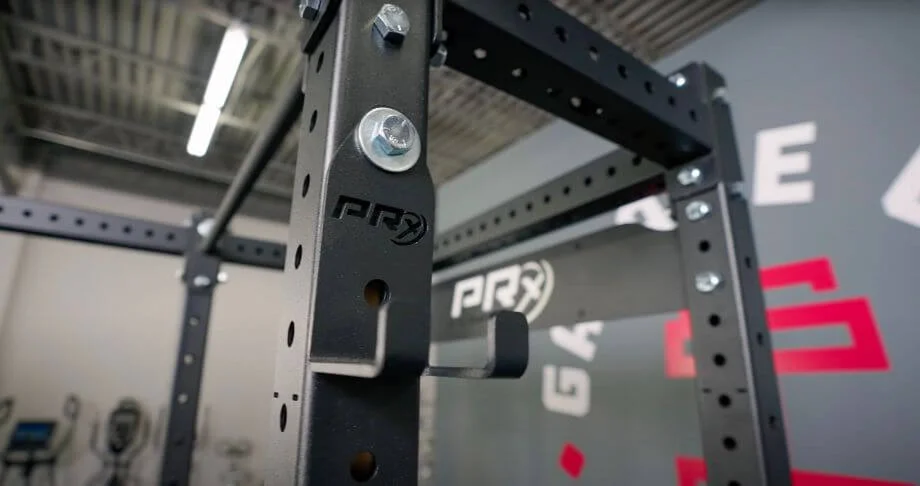
The most common upright rack size is 3 inches by 3 inches, with 2-inch-by-3-inch upright tubing coming in a close second. Common hole sizing can be either 5/8-inch or 1-inch. A squat rack boasting proprietary upright or hole sizing will earn a 3 out of 5, so long as the brand still offers a decent ecosystem of attachments.
Stability
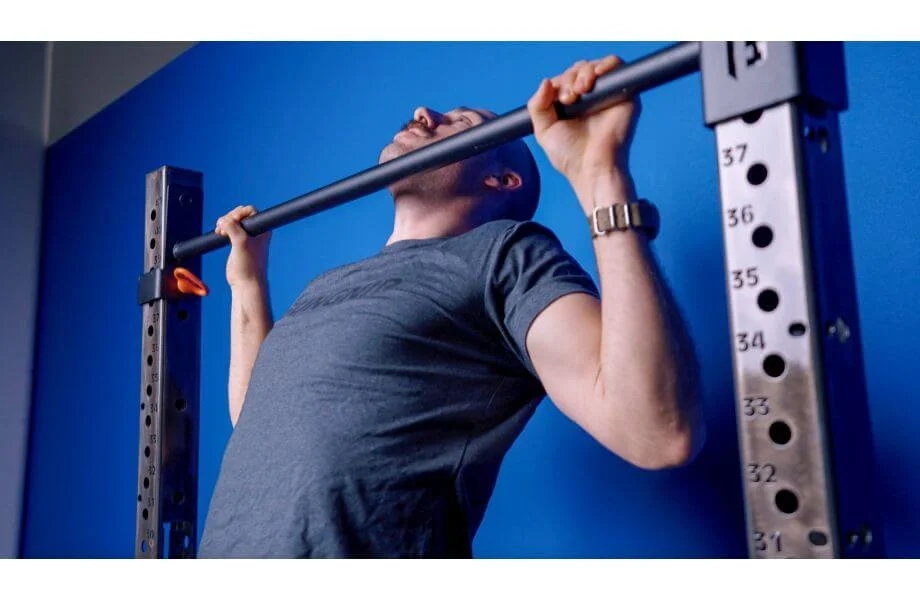
How sturdy is the rack in use? Our testers perform a variety of exercises beyond just racking a barbell after a heavy back squat or bench press. Along with testing the rack against heavy loads, our testers try out pull-ups and other exercises with attachments to see how the rack handles more dynamic movements (like kipping pull-ups).
We’ll also take a look at available safety features included with the power rack, such as safety bars, straps, or pipes. If you need to bail on a squat, these bars can catch the weight without tipping the rack, which can lead to damage to your home gym flooring (or yourself).
To earn at least a 3 out of 5, a squat rack should remain pretty stable with heavy weights on it, although there may be a little wobble during pull-ups or while using some attachments. The most stable racks may require bolting down but should hardly budge, no matter the weight or movement thrown at it.
Customer Experience Testing
Along with the performance of each squat rack, our team also analyzes the customer experience, from ordering to assembly and all the policies in between.
Delivery and Assembly
For this rating, our team will examine our experience with receiving the squat rack as well as the overall assembly process. We’ll also browse customer reviews to get a consensus of how others view the assembly process—or if there were common issues with delivery, such as missing pieces or damaged components.
The assembly process for a squat rack can vary depending on the size of the rack and the complexity of attachments. For example, a simple squat stand shouldn’t take very long to assemble with one person, but an all-in-one home gym machine might take two or three people several hours. As a rule of thumb, find a friend to help you and space out about two or three hours to properly build your unit.
To earn a 3 out of 5, the delivery process was fairly straightforward, but the assembly process might be more drawn out than it should be. Instructions might be bad or hardware might not be provided, for example. Top scores go to racks that have a painless delivery and assembly, meaning the instructions are clear and the process goes smoothly with two people.
Value
Squat racks can vary dramatically in price, with some basic squat stands costing as little as $300 and premium power cages costing well over $2,000. To determine a rack’s overall value, we look at the cost of the squat rack and compare it to the industry averages to determine whether or not the rack’s features make the price worth it.
A squat rack earns a 3-out-of-5 rating if it is priced fairly, but doesn’t have features that similar racks do—or it’s a tad overpriced compared to the competition. Top scores go to squat racks that are competitively priced and still manage to bring a lot of features to the table in terms of versatility, durability, and construction.
Customer Experience
Here, we look at company policies—warranties, returns, financing, etc.—as well as how accessible and helpful the brand’s customer service department is. Our team will note how long it takes for customer service to respond if they’re contacted, and we’ll also research the number of methods they can be reached via, such as phone, email, or an online chat plug-in.
A few notes on squat rack policies:
- Warranties can range from one year to lifetime coverage, and lifetime warranties are more commonly offered with high-quality racks.
- The common period for returns is 30 days, and most companies will ask that the rack be unused and in its original packaging to receive a full refund. Some companies will also charge a restocking fee on returns.
- Due to the higher price of some squat racks, financing options are pretty normal, although most times you’ll need to pre-qualify with a credit check.
If one policy is severely lacking, such as a 1-year warranty, we’ll still award these racks and companies a 3 out of 5. However, a 5-out-of-5 score goes to a company with knowledgeable and helpful customer service, and the squat rack is backed by a lifetime warranty, 30-day returns with no restocking fees, and financing options.
Customer Reviews
Our score for customer reviews is one of the simpler scores we’ll give, since you can draw it straight from the brand’s website or an online retailer like Amazon.
Nevertheless, we’ll also read customer reviews to investigate any common talking points or issues, as well as commonalities in the things people loved about a product. If we notice something that we didn’t experience in our testing, we’ll make sure to mention it in our reviews and testing, too.
Overall Score
Once we’ve finished testing and rating each aspect of a squat rack, we average out the scores to establish an overall rating. This overall score is integral in determining our best-of lists. Typically, we prioritize squat racks with a score of 4 out of 5 or higher—but we may showcase a rack with a lower score if it scores exceptionally well in a specific category or need, like footprint or versatility.