
Best Black Friday Fitness Equipment Deals See Deals
Best Black Friday Treadmill Deals See Deals
Best Black Friday Rowing Machine Deals See Deals
  • Best-in-Class Equipment
    • See All Roundups
    • Best Adjustable Dumbbells
    • Best Budget Home Gym Equipment
    • Best Cross-Training Shoes
    • Best Dumbbells
    • Best Exercise Bikes
    • Best Home Gym Machines
    • Best Kettlebells
    • Best Olympic Barbells
    • Best Rowing Machines
    • Best Squat Racks
    • Best Supplements
      • Best BCAA
      • Best Creatine
      • Best Greens Powder
      • Best Pre-Workout
      • Best Protein Powder
    • Best Treadmills
    • Best Weighted Vests
    • Best Weightlifting Shoes
    • Best Weight Benches
  • Reviews
    • See All Reviews
    • Barbells
    • Bodyweight
    • Certification Courses
    • Conditioning
    • Gym Accessories
    • Nutrition
    • Recovery
    • Rigs and Racks
    • Shoes
    • Strength Equipment
    • Support Gear
    • Technology
    • Training Programs
    • Weight Plates
  • Comparisons
    • See All Comparisons
    • Best Peloton Alternatives
    • Home Gym vs Gym Membership
    • Peloton Bike vs Bike Plus
    • PowerBlock vs Bowflex
    • Rogue Echo Bike vs Assault Air Bike
    • Rogue Ohio Power Bar vs Texas Power Bar
    • Tonal vs Tempo
  • Black Friday Deals
    • See All Black Friday Deals
    • Best Black Friday Supplement Sales (2025)
    • Peloton Black Friday Deals (2025)
    • Best Black Friday Sauna Deals (2025)
    • Best Black Friday Treadmill Deals (2025)
    • Best Black Friday Rowing Machine Deals (2025)
    • Best Black Friday Dumbbell Deals (2025)
    • Best Black Friday Elliptical Deals (2025)
    • Best Black Friday Exercise Bike Deals (2025)
    • The Best Massage Gun Black Friday Deals (2025)
    • Best Black Friday Deals for Runners (2025)
  • Coupons
    • Holiday Sales
    • Military Discounts
    • See All Coupons
      • Bells of Steel Coupons
      • REP Fitness Coupons
      • Rogue Fitness Coupons
      • Titan Fitness Coupons
      • Concept2 Coupons
      • Plunge Coupons
  • Equipment
    • Browse Gym Equipment
    • See All Equipment
    • Apparel
      • Shoes
        • Running Shoes
        • Training Shoes
        • Weightlifting Shoes
    • Strength Equipment
      • Barbells
      • Benches
      • Dumbbells
      • Glute Ham Developers (GHD)
      • Kettlebells
      • Rigs and Racks
      • Strength Machines
      • Weight Plates
    • Conditioning
      • Core and Stability
      • Endurance
        • Air Bikes
        • Ellipticals
        • Exercise Bikes
        • Rowing Machines
        • Treadmills
      • Jump Ropes
      • Strength Conditioning
    • Bodyweight
      • Climbing Ropes
      • Grip
      • Gymnastics
      • Pull-Up Systems
      • Training Equipment
    • Support Gear
      • Belts
      • Hand Protection
      • Mobility & Recovery
      • Straps & Wraps
      • Training Apparel
    • Gym Accessories
      • Flooring
      • Storage
    • Supplements
    • Technology
    • Training Programs
  • Home Gym Resources
    • See All Home Gym Resources
    • Calculators
    • DIY Guides
    • Equipment Guides
    • Gym Tours
    • Spotlight
    • Workout Guides
  • About Us
    • Meet Our Experts
    • GGR Fitness Equipment Testing Methodology
      • How We Test Ellipticals
      • How We Test Smart Home Gym Equipment
      • How We Test Smith Machines
      • How We Test Dumbbells and Adjustable Dumbbells
      • How We Test Barbells
      • How We Test Weight Benches
      • How We Test Treadmills
      • How We Test Saunas
      • How We Test Kettlebells and Adjustable Kettlebells 
      • How We Test Exercise Bikes
      • How We Test Cold Plunges
      • How We Test Massage Chairs 
      • How We Test Functional Trainers
    • GGR Supplement Testing Methodology
      • How We Test Pre-Workout Supplements
      • How We Test Creatine
  • Facebook
  • Instagram
  • YouTube

Search

Sign Up

Log In

  • Best-in-Class Equipment
    • See All Roundups
    • Best Adjustable Dumbbells
    • Best Budget Home Gym Equipment
    • Best Cross-Training Shoes
    • Best Dumbbells
    • Best Exercise Bikes
    • Best Home Gym Machines
    • Best Kettlebells
    • Best Olympic Barbells
    • Best Rowing Machines
    • Best Squat Racks
    • Best Supplements
      • Best BCAA
      • Best Creatine
      • Best Greens Powder
      • Best Pre-Workout
      • Best Protein Powder
    • Best Treadmills
    • Best Weighted Vests
    • Best Weightlifting Shoes
    • Best Weight Benches
  • Reviews
    • See All Reviews
    • Barbells
    • Bodyweight
    • Certification Courses
    • Conditioning
    • Gym Accessories
    • Nutrition
    • Recovery
    • Rigs and Racks
    • Shoes
    • Strength Equipment
    • Support Gear
    • Technology
    • Training Programs
    • Weight Plates
  • Comparisons
    • See All Comparisons
    • Best Peloton Alternatives
    • Home Gym vs Gym Membership
    • Peloton Bike vs Bike Plus
    • PowerBlock vs Bowflex
    • Rogue Echo Bike vs Assault Air Bike
    • Rogue Ohio Power Bar vs Texas Power Bar
    • Tonal vs Tempo
  • Black Friday Deals
    • See All Black Friday Deals
    • Best Black Friday Supplement Sales (2025)
    • Peloton Black Friday Deals (2025)
    • Best Black Friday Sauna Deals (2025)
    • Best Black Friday Treadmill Deals (2025)
    • Best Black Friday Rowing Machine Deals (2025)
    • Best Black Friday Dumbbell Deals (2025)
    • Best Black Friday Elliptical Deals (2025)
    • Best Black Friday Exercise Bike Deals (2025)
    • The Best Massage Gun Black Friday Deals (2025)
    • Best Black Friday Deals for Runners (2025)
  • Coupons
    • Holiday Sales
    • Military Discounts
    • See All Coupons
      • Bells of Steel Coupons
      • REP Fitness Coupons
      • Rogue Fitness Coupons
      • Titan Fitness Coupons
      • Concept2 Coupons
      • Plunge Coupons
  • Equipment
    • Browse Gym Equipment
    • See All Equipment
    • Apparel
      • Shoes
        • Running Shoes
        • Training Shoes
        • Weightlifting Shoes
    • Strength Equipment
      • Barbells
      • Benches
      • Dumbbells
      • Glute Ham Developers (GHD)
      • Kettlebells
      • Rigs and Racks
      • Strength Machines
      • Weight Plates
    • Conditioning
      • Core and Stability
      • Endurance
        • Air Bikes
        • Ellipticals
        • Exercise Bikes
        • Rowing Machines
        • Treadmills
      • Jump Ropes
      • Strength Conditioning
    • Bodyweight
      • Climbing Ropes
      • Grip
      • Gymnastics
      • Pull-Up Systems
      • Training Equipment
    • Support Gear
      • Belts
      • Hand Protection
      • Mobility & Recovery
      • Straps & Wraps
      • Training Apparel
    • Gym Accessories
      • Flooring
      • Storage
    • Supplements
    • Technology
    • Training Programs
  • Home Gym Resources
    • See All Home Gym Resources
    • Calculators
    • DIY Guides
    • Equipment Guides
    • Gym Tours
    • Spotlight
    • Workout Guides
  • About Us
    • Meet Our Experts
    • GGR Fitness Equipment Testing Methodology
      • How We Test Ellipticals
      • How We Test Smart Home Gym Equipment
      • How We Test Smith Machines
      • How We Test Dumbbells and Adjustable Dumbbells
      • How We Test Barbells
      • How We Test Weight Benches
      • How We Test Treadmills
      • How We Test Saunas
      • How We Test Kettlebells and Adjustable Kettlebells 
      • How We Test Exercise Bikes
      • How We Test Cold Plunges
      • How We Test Massage Chairs 
      • How We Test Functional Trainers
    • GGR Supplement Testing Methodology
      • How We Test Pre-Workout Supplements
      • How We Test Creatine

Home » Resources » The Upright Row: How To Do It, Technique Tips, and Equipment Needed

The Upright Row: How To Do It, Technique Tips, and Equipment Needed

8661
Written by Christopher Covello
8661
Christopher Covello

Christopher Covello is a professional freelancer and published author. He writes copy, content, and SEO-focused material in various niches with a heavy focus on fitness and nutrition. Christopher’s personal fitness and nutrition journey began in 2009 when he was working as a short order cook and came to recognize that his habits were unhealthy and unsustainable. He educated himself on mindful eating and balanced nutrition and has prioritized healthy living ever since. Today, Christopher writes in the fitness and nutrition niche, and is often found running, hiking, rock climbing, Spartan Racing, training at his CrossFit box, or practicing yoga.

View Profile
Updated on December 11, 2023

We test and review fitness products based on an independent, multi-point methodology. If you use our links to purchase something, we may earn a commission. Read our disclosures

upright-barbell-row-cover

The upright row is integral to any upper body strength training program. It’s a simple movement —making it super accessible to beginners and seasoned lifters—and targets muscle groups in the upper back, shoulders, and upper arms to build muscle size, strength, and endurance. It’s also adaptable for whatever equipment you have on hand, whether you’re doing a barbell, dumbbell, or upper-body kettlebell workout at home or in the gym. 

Kate Meier, NASM-CPT, USAW-L1, CF-L1, and GGR head of content, breaks down this classic back and shoulder exercise, giving you step-by-step instructions, trainer tips, mistakes to avoid, and variations that’ll keep your upper body workout routine varied and fresh!

RELATED: Best Shoulder Exercises

How to Do The Upright Row

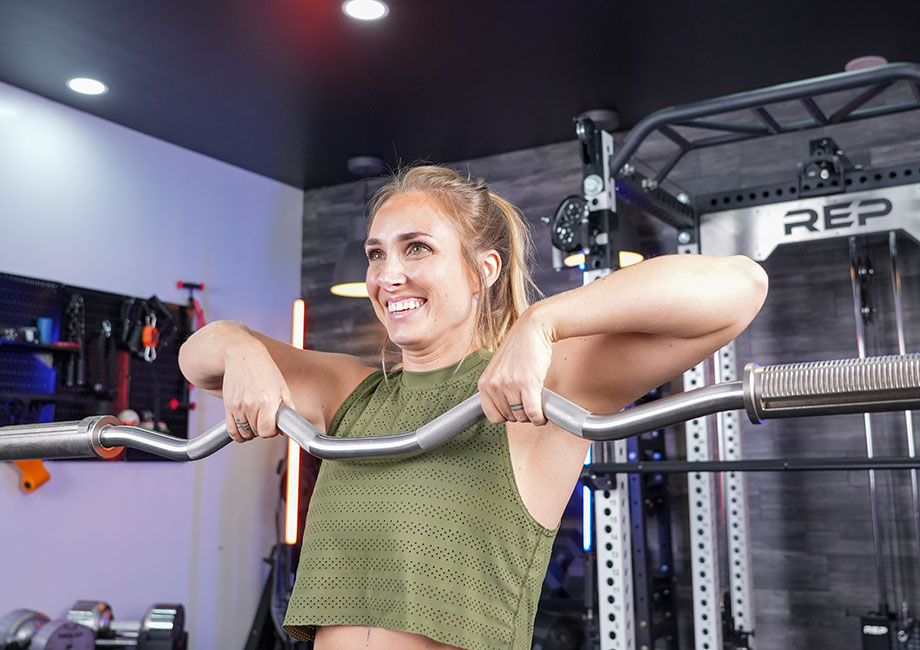
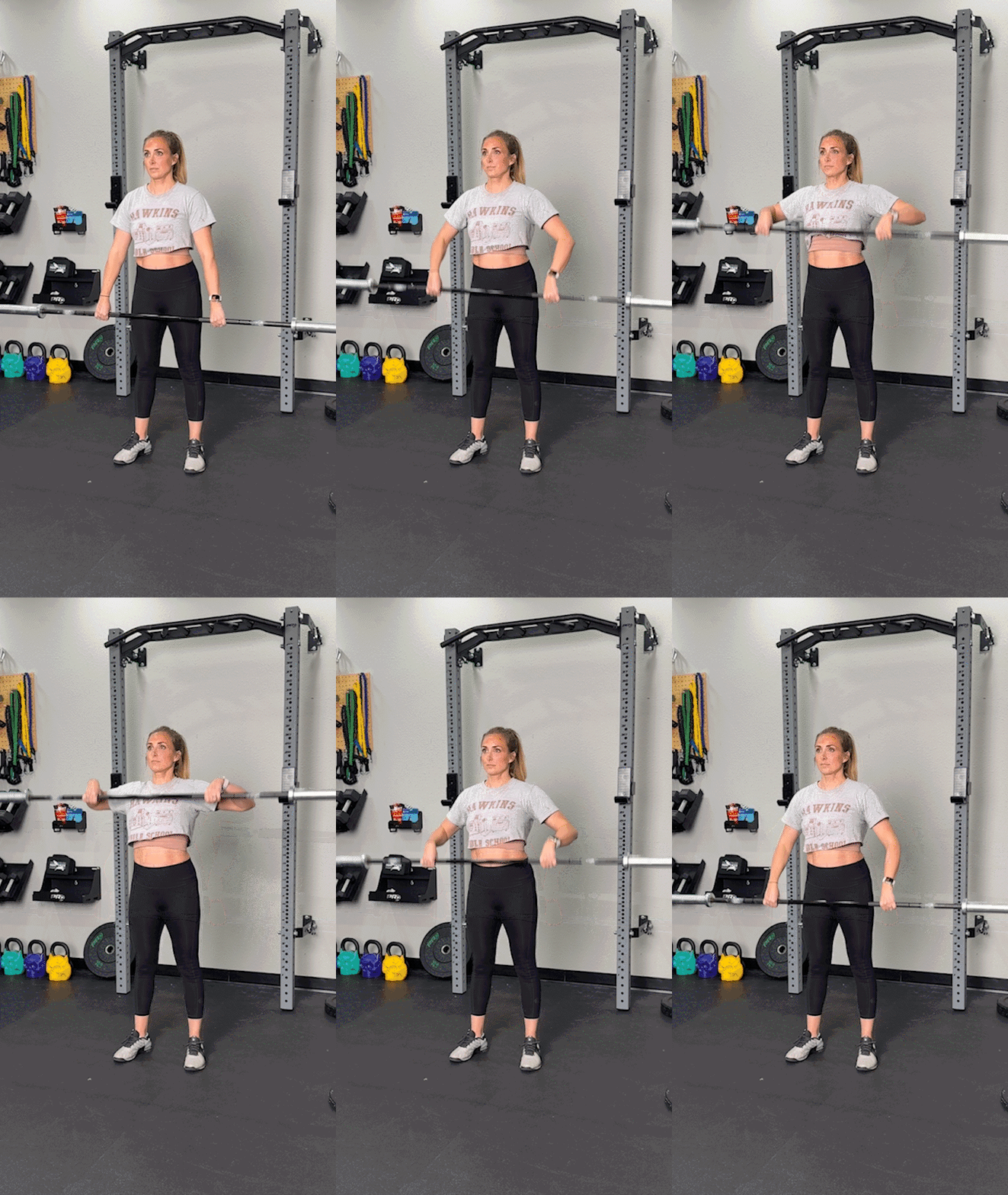
  1. Stand with your feet shoulder-width apart.
  2. Hold a barbell in front of your body using an overhand grip.
  3. Take a deep breath, brace your core, and exhale as you pull the barbell upwards.
  4. Squeeze your deltoids and trapezius muscles at the top.
  5. Slowly return the barbell to the starting position, controlling its descent.

Note: The barbell upright row is described above, but you can also perform the same motion with a pair of dumbbells, a kettlebell, a cable machine, or a resistance band. 
barbell-upright-row

Trainer Tips for Form

The upright row is simple enough, but there are a few cues to keep in mind if you’re trying to nail the form. Here are Kate Meier’s top trainer tips for proper upright row form.

Keep the Bar Close

The most efficient and effective way of performing the upright row features a perfectly straight bar path. Keeping the bar close ensures there’s no arc in the bar path and guarantees that the correct muscles, namely the deltoids and trapezius, are receiving the lion’s share of muscle activation.

RELATED: Trap Exercises

“Keeping the bar close to the body allows us to generate the most power during our lift,” says Kate Meier, CPT, USAW-L1, CF-L1. “It also reduces our risk of injury by limiting the amount of sheer force placed on our wrists and elbows throughout the exercise’s range of motion.”

So, focus on pulling the bar straight up during the concentric phase, letting your elbows flare out to the sides as the bar rises to shoulder height. Then, slowly guide the bar back to the starting position, again ensuring a completely straight bar path that allows the barbell to stay nice and tight into the body.

Soft Bend in the Knees

Your upper body joints aren’t the only ones susceptible to injury during the upright row. Your knees are put in an increasingly precarious position as you progress to heavier and heavier weights. To compensate for that increased resistance, you’re going to want to keep a soft bend in your knees to avoid hyperextension and reduce the stress on the knee joint during this lift.

“The bend should be very slight,” says Kate. “Overly bent knees take the knees and hips out of alignment, contribute to poor posture, and have other negative effects on the lift as well. Use a very slight bend to protect your knees and, when in doubt, consult a certified personal trainer to determine if your form looks correct.” 

Control the Range of Motion

Some exercises benefit from a little momentum, including kettlebell swings, box jumps, and Olympic weightlifting moves like the snatch, clean, and jerk. Using momentum during the upright row essentially turns the movement into a high pull, a full-body exercise that builds explosive power and strength in the shoulders, back, arms, hips, and core.
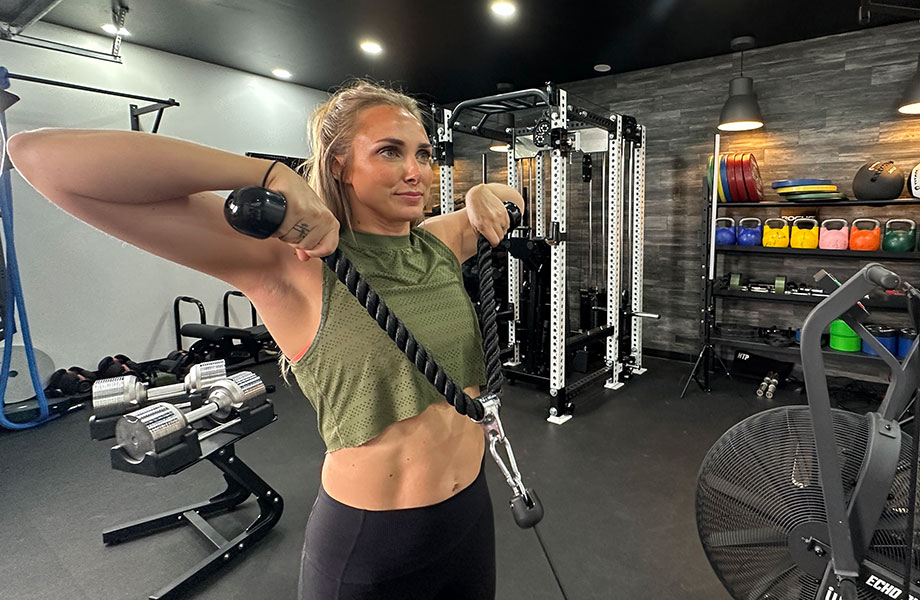
woman-doing-a-cable-upright-row

RELATED: Explosive Workouts

“High pulls are great, but it doesn’t serve the same purpose as the upright row,” says Kate. “Upright rows require control to keep the emphasis on the target muscle groups so you can build strength and muscle mass. Using momentum to ‘cheat’ the movement reduces that muscle activation, making the exercise less effective overall.”

So, for building your back and shoulder muscles most effectively, it’s crucial to control the barbell throughout the full range of motion, pulling it upward with your muscles during the concentric phase and guiding its controlled descent during the eccentric phase.

RELATED: How to Build Muscle

You also want to stay within a safe range of motion, specifically by not going too high. According to the Journal of Strength and Conditioning Research1, lifting the weights too high places strain on the rotator cuffs and may contribute to, cause, or aggravate existing shoulder impingement syndrome in affected individuals. To avoid, bring the weights to chest or shoulder height, allow the elbows to flare out to accommodate the motion, then bring it back down.

Common Upright Row Mistakes

Once you’re well-acquainted with the movement mechanics of the upright row, you can start progressing the heavier and heavier weights to fuel those gains. Here are some common mistakes to avoid as you scale up.

Using the Hips for Momentum

The goal of the barbell upright row is to pull a heavy weight upward, primarily using your delts, traps, and triceps. Using your hips to thrust the barbell into the air converts your upright row into a high pull. While that movement is a great tool for improving your conditioning, endurance, and power, it’s not going to give you as much muscle-building activation as the upright row.

RELATED: Conditioning Workouts

“Initiate the movement using your upper body muscles only,” says Kate Meier, CPT, USAW-L1, CF-L1. “Use those same muscles to control the bar’s descent and, if necessary, pause at the starting position before beginning the next repetition. The goal is to avoid bouncing the barbell at the bottom and inadvertently using our hips to assist the next rep. The movement should start and end using the upper body muscles only.”

Grip Too Narrow or Too Wide

Not to sound like Goldilocks here, but you must get that grip “just right” when performing the upright row. Going too wide diminishes the amount of power you’re capable of employing to move the weight while going too narrow increases the stress on your wrist joint.

RELATED: Best Wrist Wraps
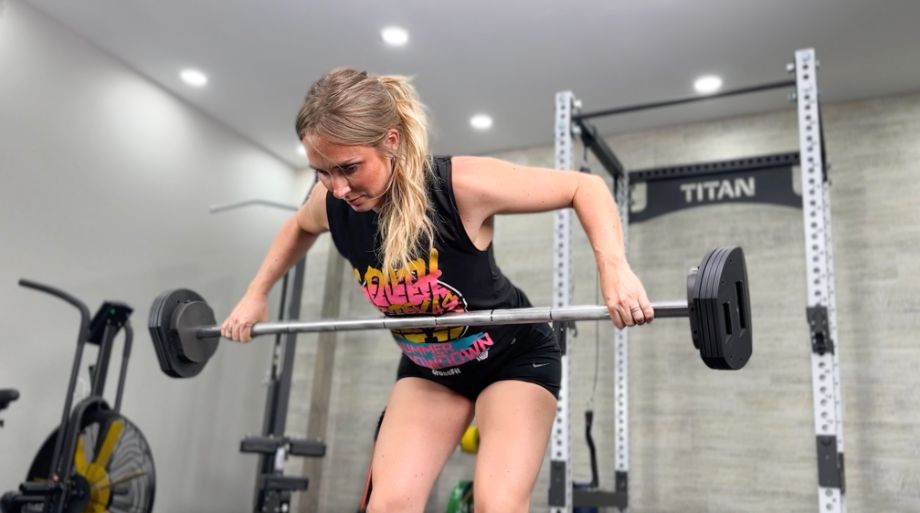
woman performing a wide grip bent over row as one of the best deltoid exercises

According to a 2013 study2 in the Journal of Strength and Conditioning Research, your grip width can determine where you receive the most muscle activation. The study determined that a wider grip, slightly wider than shoulder-width, increases activation in the deltoids and trapezius, while a more narrow grip offered reduced activity in these muscle groups but added assistance from the adjacent biceps brachii.

“Comfort is going to be crucial here, so try to find a grip width that feels comfortable for you and doesn’t put a strain on your wrists,” says Kate, “but keep in mind, you’ll get increased activation in the target muscle groups if you use a wide grip during the upright row.”

Uncontrolled Descent

Mustering enough strength to execute a perfect lift is invigorating. We muscle the bar through the concentric phase of the exercise, squeeze the contraction, and prematurely celebrate as we let the bar plummet through the eccentric phase, depriving ourselves of all that juicy muscle activation.

According to the British Journal of Sports Medicine3, “total strength and eccentric strength [increases] more significantly” during eccentric muscle contractions versus concentric muscle contractions.

“Exercising control during both the concentric and eccentric phase of the upright row is recommended,” says Kate, “but controlling the bar’s descent  maximizes your muscle’s time under tension and overall increases the exercise’s effect on strength gain and hypertrophy.”

RELATED: Eccentric Training

Plus, letting a heavy barbell fall back down from shoulder height adds to your risk of injury, as a falling barbell that you need to stop will often pull your body forward, taking your spine out of alignment, or could slip from your grip and crash down onto your toes. Ouch!

Upright Row Variations

The barbell upright row is a beast for upper body, back, and shoulder workouts, but it’s not the only way to get in your reps. Here are some variations to keep your routine muy picante!

Dumbbell Upright Row

The movement pattern for barbell and dumbbell upright rows are basically identical, but there are some advantages to using dumbbells over barbells.

Most importantly, dumbbells allow for more flexibility with your positioning, alleviating stress on your wrist and shoulder joints and making for an overall  more comfortable experience. 

Using dumbbells enables you to convert the exercise into a unilateral movement, rowing one arm at a time to correct muscle imbalances and bilateral deficits.

To perform a dumbbell upright row, simply: 

  1. Start with two dumbbells, held with your palms facing your body.
  2. Take a deep breath, brace your core, and exhale as you pull the barbell upwards.
  3. Squeeze your deltoids and trapezius muscles at the top.
  4. Slowly return the dumbbells to the starting position, controlling their descent.

RELATED: Best Dumbbells
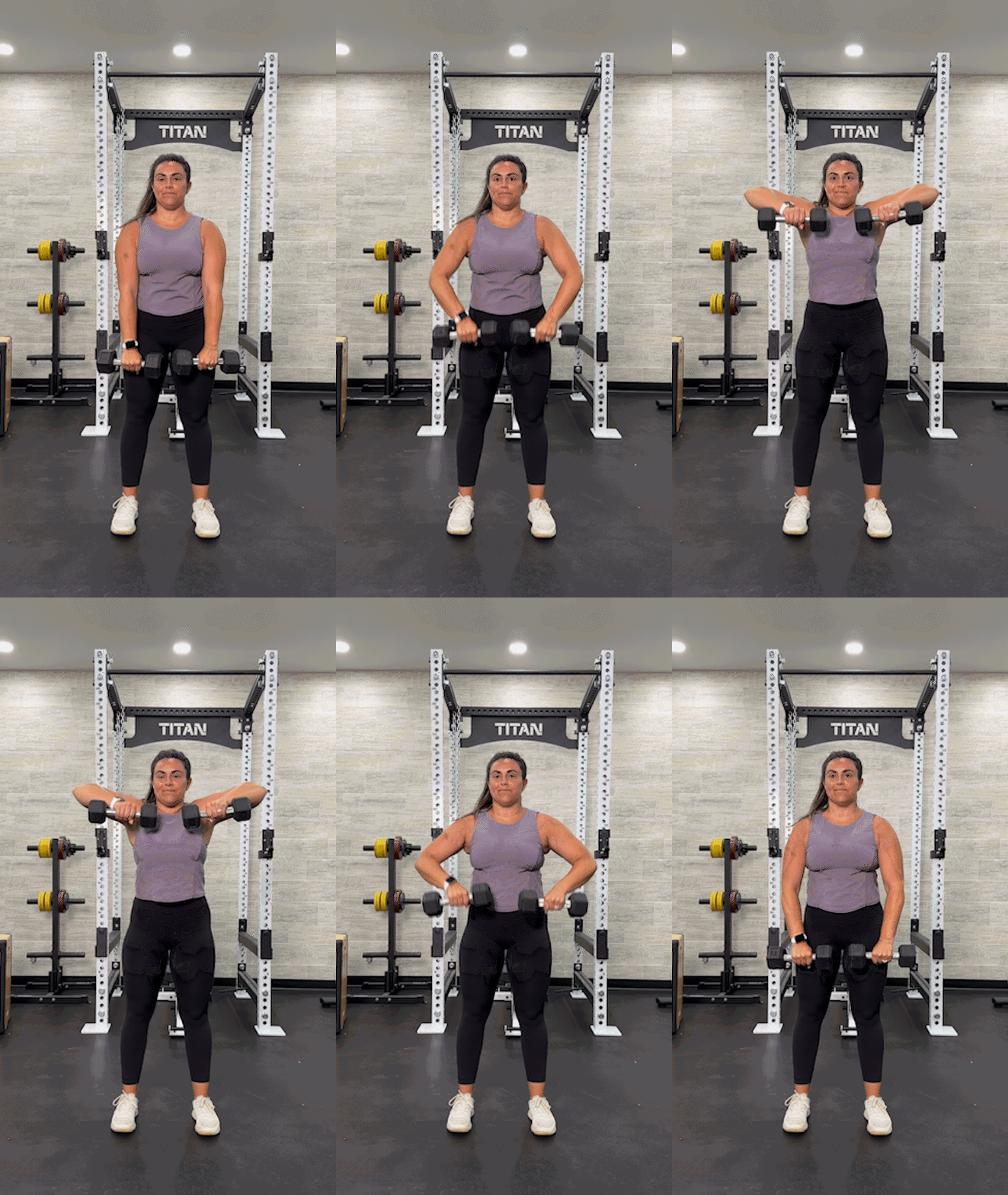
woman doing a dumbbell upright row

Cable Upright Row

How to do it:

  1. Set the pulley to the lowest position and fasten the attachment of your choice.
  2. Step back into position, facing the machine.
  3. Pull the attachment to your chin, squeezing your traps and delts at the top of the movement.
  4. Slowly lower attachment back down to the starting position.
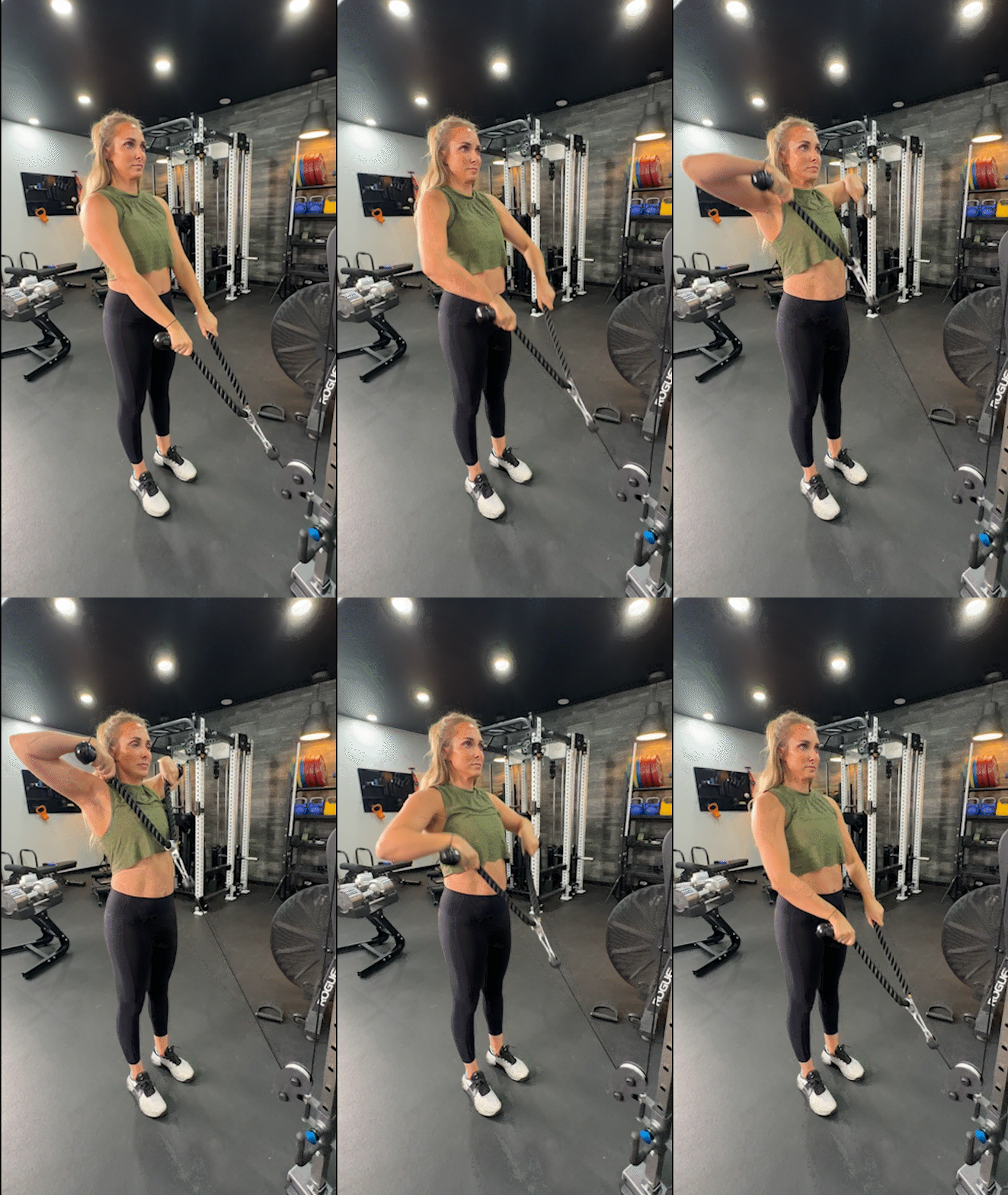
cable-upright-row

Single-Arm Upright Row

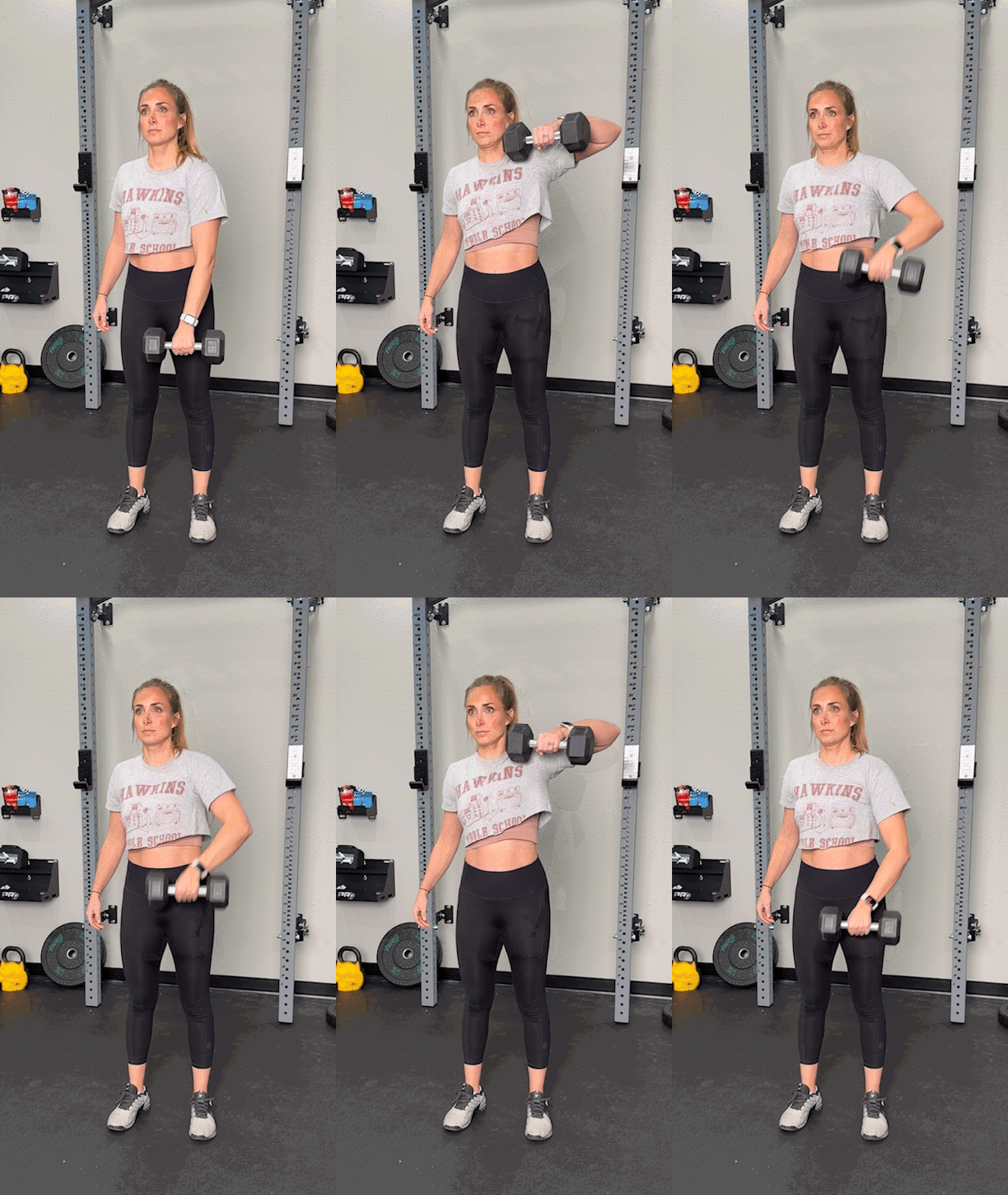
Single-arm upright rows involve performing the upright row with one arm at a time to focus all your attention and energy on one side before moving to the next. It’s great for fully maximizing the impact of each rep, correcting muscle imbalances, and eliminating bilateral deficits.

Dumbbells are a great choice for single-arm upright rows, but kettlebells, resistance bands, and even cable machines are possible to use for this unilateral exercise. For resistance band and cable upright rows, make sure to set that anchor point low.

RELATED: DIY Pulley System
single-arm-upright-row

Sumo Deadlift High Pull

The sumo deadlift high pull seems like a name straight out of Mad Libs, but this compound exercise combines two tried-and-true movements to create a full-body exercise that hits muscle groups from head to toe.

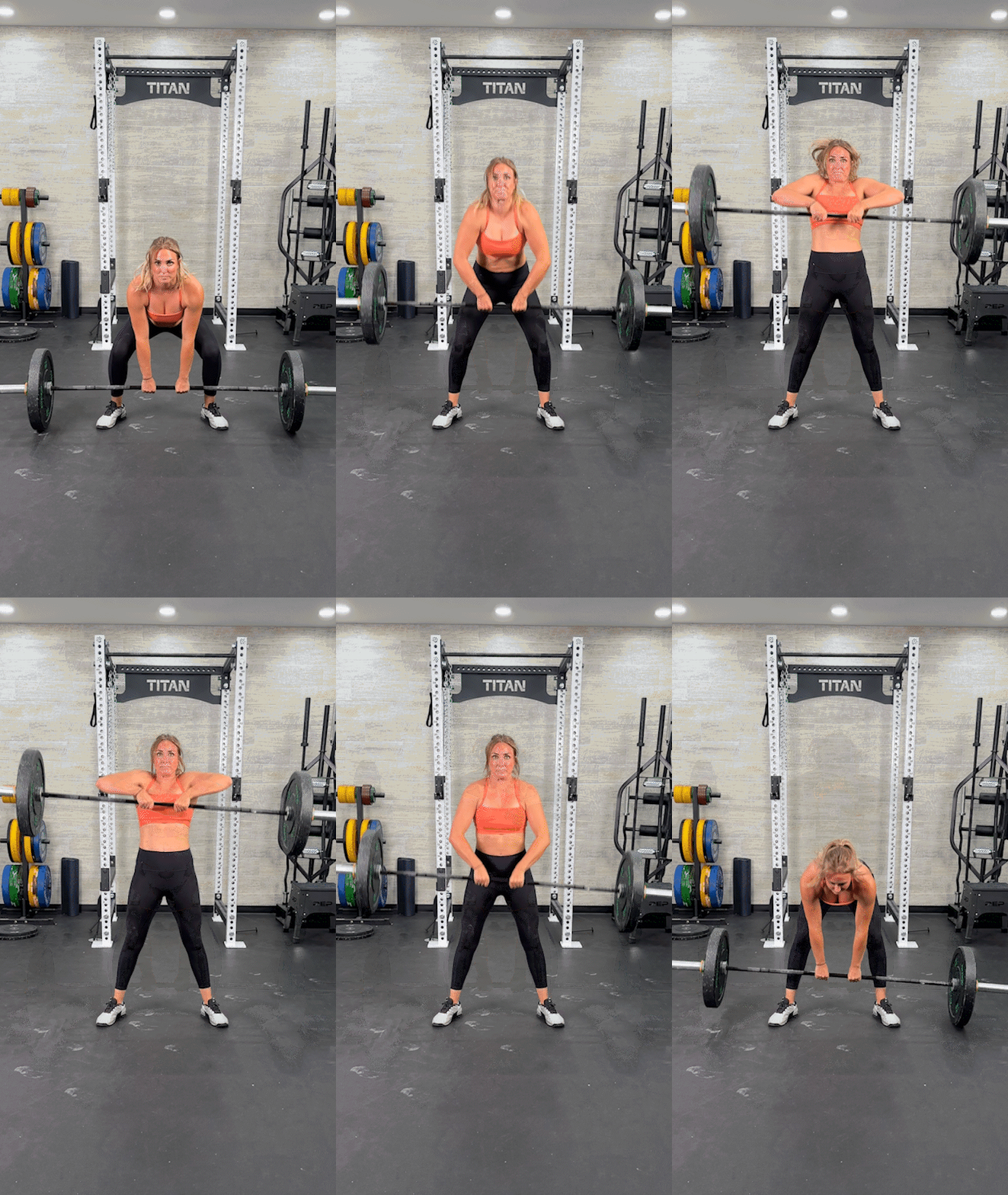
The movement starts with the sumo deadlift, which involves deadlifting a loaded barbell with your feet wider than shoulder-width. Where the standard deadlift movement pattern terminates at approximately hip height, the sumo deadlift high pull transitions into a high pull, which involves pulling the barbell upward towards your chin until it reaches chest or shoulder height.

“Upright rows are a strict movement, but high pulls use momentum,” says Kate Meier, CPT, USAW-L1, CF-L1. “During the sumo deadlift high pull, you want to deadlift with intensity and use your hips to transfer that energy into the pull portion. Strict reps are possible, but you’ll struggle to get through high-rep sets if you don’t take advantage of this energy transfer and practice good economy of motion.”

How to do it:

  1. Take a wider stance than a standard deadlift with your toes pointing outward.
  2. Keeping your arms inside of your legs, take hold of the bar with an overhand grip.
  3. Lift the bar off the ground by pushing through your feet. 
  4. Pull the bar to your chin, squeezing your traps at the top..
  5. Lower the bar with control, then hinge at your hips to place it back in the starting position.
sumo-deadlift-high-pull

Upright Row: FAQs

What muscle does upright row work?

Upright rows hit mostly the same muscles as lateral raises, including the deltoids, trapezius, rhomboids, teres minor, triceps, biceps, and core.

RELATED: Best Deltoid Exercises

Is the upright row better than the shoulder press?

“Both the upright row and shoulder press are great moves for building upper body strength, but they target slightly different muscles,” says Kate Meier, CPT, USAW-L1, CF-L1, and GGR head of content. “The shoulder press provides more activation to the arms and rear delts, whereas the upright row hits the front and side delts to a greater degree.”

Because of this, the upright row functions more as an isolation exercise, while the shoulder or overhead press is classified as a compound movement. For bigger, badder shoulders, the upright row can’t be beat, but for overall strength, the shoulder press may reign supreme.

Is an upright row better than a bent-over row?

You might think you could easily compare the upright row to the bent-over barbell row. After all, they’re both called a “row,” both involve pulling, and both target upper body muscles—surely they’re similar, right? 

Well, not exactly.

The bent-over row predominantly targets the back muscles, namely the latissimus dorsi, middle and lower trapezius, rhomboids, and posterior deltoids. Likewise, the upright row targets the anterior and lateral deltoids, upper trapezius, rhomboids, and teres minor.

Due to the bent-over positioning of the barbell row, you’re also going to get more activation from your lower body muscles, including the lower back, hips, glutes, and hamstrings. The positioning also allows for the lifter to generally move more weight than is possible for the upright row, making it a better strength-building exercise.

“Both the upright row and bent-over row have a place in strength and bodybuilding workouts,” says Kate Meier, CPT, USAW-L1, CF-L1, “but which works best for your purposes depends entirely on your goals. For the best results, try incorporating both exercises into your weekly routine.”

References

1. Kolber MJ, Cheatham SW, Salamh PA, Hanney WJ. Characteristics of shoulder impingement in the recreational weight-training population. J Strength Cond Res. 2014;28(4):1081-1089. doi:10.1519/JSC.0000000000000250

2. McAllister MJ, Schilling BK, Hammond KG, Weiss LW, Farney TM. Effect of grip width on electromyographic activity during the upright row. J Strength Cond Res. 2013;27(1):181-187. doi:10.1519/JSC.0b013e31824f23ad
3. Roig M, O’Brien K, Kirk G, et al. The effects of eccentric versus concentric resistance training on muscle strength and mass in healthy adults: a systematic review with meta-analysis. Br J Sports Med. 2009;43(8):556-568. doi:10.1136/bjsm.2008.051417
Further Reading

Romanian Deadlift vs Deadlift: Which Best Serves Your Goals?

Romanian Deadlift vs Deadlift: Which Best Serves Your Goals?

The Romanian deadlift and conventional deadlift are both renowned strength-building exercises. A fitness expert helps you choose Romanian deadlift vs deadlift.
Read More
Powertec Workbench Multisystem Review (2025): Press, Pull, Squat, and More with Lever Power

Powertec Workbench Multisystem Review (2025): Press, Pull, Squat, and More with Lever Power

Looking for an all-in-one home gym for full-body workouts? Our Powertec Workbench Multisystem review will give you all the details on this versatile machine.
Read More
Marathon Training Plan: Your Guide to Completing the Coveted 26.2

Marathon Training Plan: Your Guide to Completing the Coveted 26.2

Whether you’re a first-timer or looking to get faster, our marathon training plans and guide from avid runners can help you reach your running goals.
Read More
Steady-State Cardio vs HIIT: Which You Should Do, And Why

Steady-State Cardio vs HIIT: Which You Should Do, And Why

If you’re weighing steady-state cardio vs HIIT workouts, here is everything you need to know.
Read More

On This Page

How to Do The Upright Row
Trainer Tips for Form
Common Upright Row Mistakes
Upright Row Variations
Upright Row: FAQs
References

Connect With Your Community

  • Facebook
  • Instagram
  • YouTube
  • https://www.google.com

Get the Latest Reviews & Updates

  • About
  • Careers
  • Privacy Policy
  • Terms of Service
  • Expert Panel
  • Affiliate Disclosure
  • Contact
  • Do Not Sell My Info
Reviews
  • MERACH T12 Foldable Walking Treadmill Review (2025): A Compact and Affordable Option

  • Evolve Plant-Based Protein Shake Review (2025): Is This Low-Calorie Pea Protein Worth the Price?

  • Huel Ready-to-Drink Review (2025): Can This RTD Really Replace A Meal?

  • C4 Ultimate Shred Review (2025): Is This Fat-Burning Pre-Workout Worth It?

  • Almost Heaven Morgan Barrel Review (2025): A Sleek Barrel Sauna Built for Four

Equipment
  • Best Recumbent Exercise Bikes (2025): Top Picks from Certified Personal Trainers

  • Best Folding Exercise Bikes (2025): Compact and Lightweight Bikes for Small Spaces

  • After Testing More Than 50, We Found The 10 Best Folding Treadmills for Your Home (2025)

  • Best Quiet Treadmills (2025): 7 Peaceful Options for Keeping the Right Pace

  • Best Dumbbells of 2025: Top Picks From Fitness Experts After Thousands of Curls and Presses

Guides
  • Infrared Saunas Buyer’s Guide: Everything You Need to Know to Break a Sweat With Confidence

  • The Ultimate Sauna Guide: Expert Tips on Benefits, How to Use, and More

  • What Foods Have Probiotics? Colon-Ize Your Plate with Help From a Dietitian

  • Home Gym Con 2025 Recap: The New Equipment We’re Most Excited About

  • Tariffs Affecting Gym Equipment Prices (2025)

DIY
  • Your Expert Guide to Making Budget-Friendly DIY Ankle Weights  

  • Homemade Protein Powder: The Right Whey to Do Home-Cooked Protein

  • Building a DIY Rowing Machine: How to, Why, and Should You?

  • Try These DIY Cold Plunge Ideas To Jump-Start Your Recovery 

  • DIY Mass Gainer: You Make the Shake, and Your Body Makes the Muscle

The Most Trusted Voice in Fitness

© Garage Gym Reviews 2023 | All Rights Reserved.

GGR

  • About
  • Careers
  • Privacy Policy
  • Terms of Service
  • Expert Panel
  • Affiliate Disclosure
  • Contact
  • Do Not Sell My Info

The Most Trusted Voice in Fitness

© Garage Gym Reviews 2025 | All Rights Reserved.

Reviews
  • MERACH T12 Foldable Walking Treadmill Review (2025): A Compact and Affordable Option
  • Evolve Plant-Based Protein Shake Review (2025): Is This Low-Calorie Pea Protein Worth the Price?
  • Huel Ready-to-Drink Review (2025): Can This RTD Really Replace A Meal?
  • C4 Ultimate Shred Review (2025): Is This Fat-Burning Pre-Workout Worth It?
  • Almost Heaven Morgan Barrel Review (2025): A Sleek Barrel Sauna Built for Four
Equipment
  • Best Recumbent Exercise Bikes (2025): Top Picks from Certified Personal Trainers
  • Best Folding Exercise Bikes (2025): Compact and Lightweight Bikes for Small Spaces
  • After Testing More Than 50, We Found The 10 Best Folding Treadmills for Your Home (2025)
  • Best Quiet Treadmills (2025): 7 Peaceful Options for Keeping the Right Pace
  • Best Dumbbells of 2025: Top Picks From Fitness Experts After Thousands of Curls and Presses
Guides
  • Infrared Saunas Buyer’s Guide: Everything You Need to Know to Break a Sweat With Confidence
  • The Ultimate Sauna Guide: Expert Tips on Benefits, How to Use, and More
  • What Foods Have Probiotics? Colon-Ize Your Plate with Help From a Dietitian
  • Home Gym Con 2025 Recap: The New Equipment We’re Most Excited About
  • Tariffs Affecting Gym Equipment Prices (2025)
DIY
  • Your Expert Guide to Making Budget-Friendly DIY Ankle Weights  
  • Homemade Protein Powder: The Right Whey to Do Home-Cooked Protein
  • Building a DIY Rowing Machine: How to, Why, and Should You?
  • Try These DIY Cold Plunge Ideas To Jump-Start Your Recovery 
  • DIY Mass Gainer: You Make the Shake, and Your Body Makes the Muscle