
Best Black Friday Fitness Equipment Deals See Deals
Best Black Friday Treadmill Deals See Deals
Best Black Friday Rowing Machine Deals See Deals
  • Best-in-Class Equipment
    • See All Roundups
    • Best Adjustable Dumbbells
    • Best Budget Home Gym Equipment
    • Best Cross-Training Shoes
    • Best Dumbbells
    • Best Exercise Bikes
    • Best Home Gym Machines
    • Best Kettlebells
    • Best Olympic Barbells
    • Best Rowing Machines
    • Best Squat Racks
    • Best Supplements
      • Best BCAA
      • Best Creatine
      • Best Greens Powder
      • Best Pre-Workout
      • Best Protein Powder
    • Best Treadmills
    • Best Weighted Vests
    • Best Weightlifting Shoes
    • Best Weight Benches
  • Reviews
    • See All Reviews
    • Barbells
    • Bodyweight
    • Certification Courses
    • Conditioning
    • Gym Accessories
    • Nutrition
    • Recovery
    • Rigs and Racks
    • Shoes
    • Strength Equipment
    • Support Gear
    • Technology
    • Training Programs
    • Weight Plates
  • Comparisons
    • See All Comparisons
    • Best Peloton Alternatives
    • Home Gym vs Gym Membership
    • Peloton Bike vs Bike Plus
    • PowerBlock vs Bowflex
    • Rogue Echo Bike vs Assault Air Bike
    • Rogue Ohio Power Bar vs Texas Power Bar
    • Tonal vs Tempo
  • Black Friday Deals
    • See All Black Friday Deals
    • Best Black Friday Supplement Sales (2025)
    • Peloton Black Friday Deals (2025)
    • Best Black Friday Sauna Deals (2025)
    • Best Black Friday Treadmill Deals (2025)
    • Best Black Friday Rowing Machine Deals (2025)
    • Best Black Friday Dumbbell Deals (2025)
    • Best Black Friday Elliptical Deals (2025)
    • Best Black Friday Exercise Bike Deals (2025)
    • The Best Massage Gun Black Friday Deals (2025)
    • Best Black Friday Deals for Runners (2025)
  • Coupons
    • Holiday Sales
    • Military Discounts
    • See All Coupons
      • Bells of Steel Coupons
      • REP Fitness Coupons
      • Rogue Fitness Coupons
      • Titan Fitness Coupons
      • Concept2 Coupons
      • Plunge Coupons
  • Equipment
    • Browse Gym Equipment
    • See All Equipment
    • Apparel
      • Shoes
        • Running Shoes
        • Training Shoes
        • Weightlifting Shoes
    • Strength Equipment
      • Barbells
      • Benches
      • Dumbbells
      • Glute Ham Developers (GHD)
      • Kettlebells
      • Rigs and Racks
      • Strength Machines
      • Weight Plates
    • Conditioning
      • Core and Stability
      • Endurance
        • Air Bikes
        • Ellipticals
        • Exercise Bikes
        • Rowing Machines
        • Treadmills
      • Jump Ropes
      • Strength Conditioning
    • Bodyweight
      • Climbing Ropes
      • Grip
      • Gymnastics
      • Pull-Up Systems
      • Training Equipment
    • Support Gear
      • Belts
      • Hand Protection
      • Mobility & Recovery
      • Straps & Wraps
      • Training Apparel
    • Gym Accessories
      • Flooring
      • Storage
    • Supplements
    • Technology
    • Training Programs
  • Home Gym Resources
    • See All Home Gym Resources
    • Calculators
    • DIY Guides
    • Equipment Guides
    • Gym Tours
    • Spotlight
    • Workout Guides
  • About Us
    • Meet Our Experts
    • GGR Fitness Equipment Testing Methodology
      • How We Test Ellipticals
      • How We Test Smart Home Gym Equipment
      • How We Test Smith Machines
      • How We Test Dumbbells and Adjustable Dumbbells
      • How We Test Barbells
      • How We Test Weight Benches
      • How We Test Treadmills
      • How We Test Saunas
      • How We Test Kettlebells and Adjustable Kettlebells 
      • How We Test Exercise Bikes
      • How We Test Cold Plunges
      • How We Test Massage Chairs 
      • How We Test Functional Trainers
    • GGR Supplement Testing Methodology
      • How We Test Pre-Workout Supplements
      • How We Test Creatine
  • Facebook
  • Instagram
  • YouTube

Search

Sign Up

Log In

  • Best-in-Class Equipment
    • See All Roundups
    • Best Adjustable Dumbbells
    • Best Budget Home Gym Equipment
    • Best Cross-Training Shoes
    • Best Dumbbells
    • Best Exercise Bikes
    • Best Home Gym Machines
    • Best Kettlebells
    • Best Olympic Barbells
    • Best Rowing Machines
    • Best Squat Racks
    • Best Supplements
      • Best BCAA
      • Best Creatine
      • Best Greens Powder
      • Best Pre-Workout
      • Best Protein Powder
    • Best Treadmills
    • Best Weighted Vests
    • Best Weightlifting Shoes
    • Best Weight Benches
  • Reviews
    • See All Reviews
    • Barbells
    • Bodyweight
    • Certification Courses
    • Conditioning
    • Gym Accessories
    • Nutrition
    • Recovery
    • Rigs and Racks
    • Shoes
    • Strength Equipment
    • Support Gear
    • Technology
    • Training Programs
    • Weight Plates
  • Comparisons
    • See All Comparisons
    • Best Peloton Alternatives
    • Home Gym vs Gym Membership
    • Peloton Bike vs Bike Plus
    • PowerBlock vs Bowflex
    • Rogue Echo Bike vs Assault Air Bike
    • Rogue Ohio Power Bar vs Texas Power Bar
    • Tonal vs Tempo
  • Black Friday Deals
    • See All Black Friday Deals
    • Best Black Friday Supplement Sales (2025)
    • Peloton Black Friday Deals (2025)
    • Best Black Friday Sauna Deals (2025)
    • Best Black Friday Treadmill Deals (2025)
    • Best Black Friday Rowing Machine Deals (2025)
    • Best Black Friday Dumbbell Deals (2025)
    • Best Black Friday Elliptical Deals (2025)
    • Best Black Friday Exercise Bike Deals (2025)
    • The Best Massage Gun Black Friday Deals (2025)
    • Best Black Friday Deals for Runners (2025)
  • Coupons
    • Holiday Sales
    • Military Discounts
    • See All Coupons
      • Bells of Steel Coupons
      • REP Fitness Coupons
      • Rogue Fitness Coupons
      • Titan Fitness Coupons
      • Concept2 Coupons
      • Plunge Coupons
  • Equipment
    • Browse Gym Equipment
    • See All Equipment
    • Apparel
      • Shoes
        • Running Shoes
        • Training Shoes
        • Weightlifting Shoes
    • Strength Equipment
      • Barbells
      • Benches
      • Dumbbells
      • Glute Ham Developers (GHD)
      • Kettlebells
      • Rigs and Racks
      • Strength Machines
      • Weight Plates
    • Conditioning
      • Core and Stability
      • Endurance
        • Air Bikes
        • Ellipticals
        • Exercise Bikes
        • Rowing Machines
        • Treadmills
      • Jump Ropes
      • Strength Conditioning
    • Bodyweight
      • Climbing Ropes
      • Grip
      • Gymnastics
      • Pull-Up Systems
      • Training Equipment
    • Support Gear
      • Belts
      • Hand Protection
      • Mobility & Recovery
      • Straps & Wraps
      • Training Apparel
    • Gym Accessories
      • Flooring
      • Storage
    • Supplements
    • Technology
    • Training Programs
  • Home Gym Resources
    • See All Home Gym Resources
    • Calculators
    • DIY Guides
    • Equipment Guides
    • Gym Tours
    • Spotlight
    • Workout Guides
  • About Us
    • Meet Our Experts
    • GGR Fitness Equipment Testing Methodology
      • How We Test Ellipticals
      • How We Test Smart Home Gym Equipment
      • How We Test Smith Machines
      • How We Test Dumbbells and Adjustable Dumbbells
      • How We Test Barbells
      • How We Test Weight Benches
      • How We Test Treadmills
      • How We Test Saunas
      • How We Test Kettlebells and Adjustable Kettlebells 
      • How We Test Exercise Bikes
      • How We Test Cold Plunges
      • How We Test Massage Chairs 
      • How We Test Functional Trainers
    • GGR Supplement Testing Methodology
      • How We Test Pre-Workout Supplements
      • How We Test Creatine

Home » Comparison » Foam Roller vs. Massage Gun: Which Is the Best Muscle-Mashing Device?

Foam Roller vs. Massage Gun: Which Is the Best Muscle-Mashing Device?

8597
Written by Lindsay Boyers, CN
8597
Lindsay Boyers, CN

Lindsay Boyers is a functional nutritionist, writer, and editor with over a decade of experience in online media. She’s written 14 books and hundreds of articles on fitness, wellness, nutrition, and lifestyle. Lindsay holds certifications in holistic nutrition, functional nutrition, and professional food safety, as well as a B.S. in food in nutrition.

View Profile
Updated on July 26, 2023

We test and review fitness products based on an independent, multi-point methodology. If you use our links to purchase something, we may earn a commission. Read our disclosures

Foam roller vs massage gun

Experts Explain Whether Or Not One Is Superior

In a perfect world, you’d hit the spa for a sports massage every week (major props to you if you actually do). In this world, though, it’s more likely that you’re relying on workout recovery tools like foam rollers and/or massage guns to help loosen up your tight muscles and alleviate muscle pain. 

But what’s the difference between a massage gun and a foam roller? And is one better than the other?

Both types of tools have their benefits and their drawbacks, and we’re here to break those down for you. We’ll dig into the similarities and the differences—and ultimately help you decide which type of tool is best for you.

Medical disclaimer: This article is for informational and educational purposes only and is not intended as a substitute for medical advice. For health concerns, contact an appropriate medical provider. 

Foam Rollers: The Classic Muscle Recovery Method
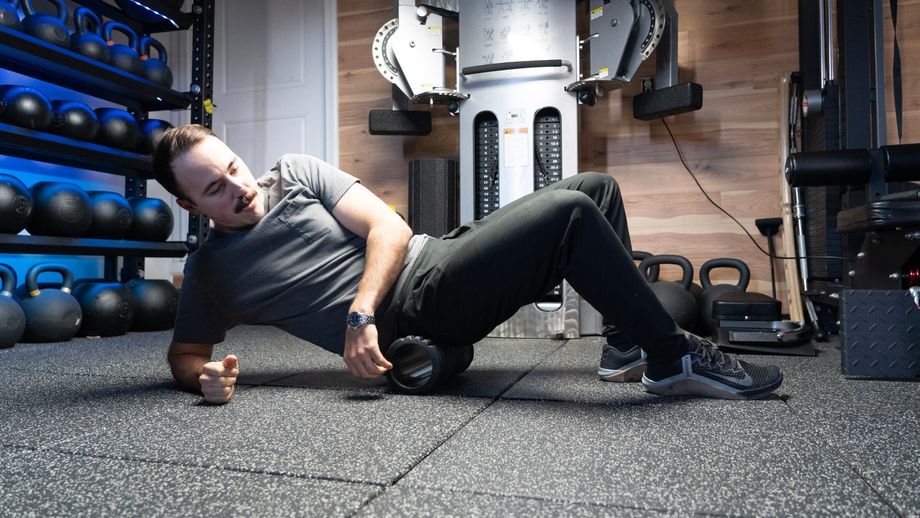
Coop in a gym using a foam roller

Foam rollers are the OG of workout recovery tools. There isn’t a consensus on who invented foam rolling or when, but most sources and experts agree that foam rolling started as a physical therapy technique and that it’s been around for at least a few decades. 

More recently, foam rolling was pulled into mainstream fitness circles thanks to mentions of its importance by leaders in the recovery space, like Kelly Starrett of The Ready State (previously MobilityWOD), who swears that most people’s chronic pain is actually myofascial pain—pain relating to the fascia and muscles. 

On that note, to understand how foam rollers (and massage guns) work, it’s helpful to have a little background on fascia and myofascial release.

Your muscles are surrounded and supported by connective tissue called fascia, which is part of a “webbing” that helps hold the body together, explains Joy Puleo, M.A., PMA-CPT, and Balanced Body Education Program Manager. 

When the fascia becomes rigid or tight, it can impede hydration, blood flow, circulation, and the delivery of important nutrients, which can cause muscle pain, muscle tension, stiffness, and limited range of motion in the muscles.

That’s where self-myofascial release (SMR) comes in. In simple terms, SMR is a type of soft tissue self massage that can help alleviate myofascial pain by improving blood flow and releasing adhesions, trigger points, and knots in the fascia and muscles. 

Since you’re doing it without the helping hand(s) of a massage therapist, this soft tissue manipulation usually involves using tools (read: a foam roller and/or a massage gun). The concept of myofascial release was coined by Robert Ward, an osteopath, and John Barnes, a physical therapist, in the 1960s, but SMR was really made popular in the mid-2010s, largely due to the rise in interest around Crossfit and other similar workout styles.

Research shows that SMR can increase flexibility and reduce muscle soreness without having a negative effect on athletic performance: It’s quite the opposite, actually. Committing to using recovery tools, like foam rollers and massage guns, can have huge benefits in terms of pain relief and mobility.

How Do Foam Rollers Work?

Foam rollers are cylindrical tubes that are made of dense, usually textured, foam. Foam rolling is a specific type of SMR, and an active way to break up tightness in your muscles and fascia. 

“By applying the weight of the body onto the roller, we have an opportunity to impact the soft tissues of the body,” says Lina Midla, NASM-certified personal trainer and Athletics Manager at Impact Biosystems. 

“This type of applied pressure has the potential to break up stagnation in the fascia, reduce adhesions, and break down scar tissue,” she continues. “The act of rolling [also] draws blood to the foam-rolled tissues resulting in fascial hydration that can alleviate stiffness in the tissues.”
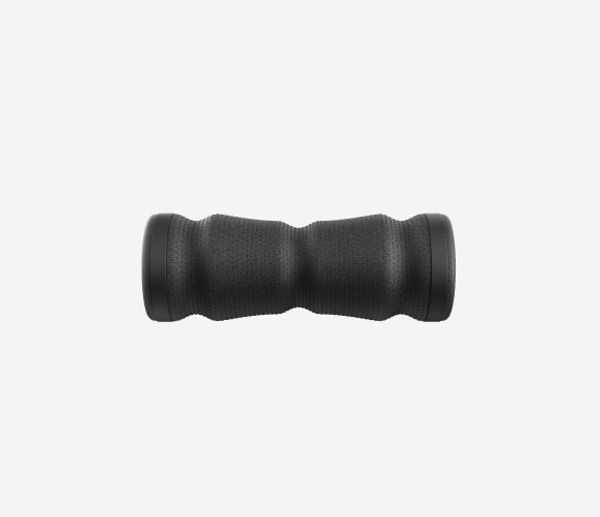
Hyperice Vyper GO vibrating foam roller

In one study published in Frontiers in Physiology in 2014, researchers wanted to gauge the impact of foam rolling following high-intensity interval training (HIIT). They had participants engage in HIIT exercise and then immediately foam roll one leg, but not the other. 

Muscle soreness was measured directly after the massage and then again 24 and 48 hours later. They found that foam rolling decreased delayed onset muscle soreness (DOMS)—the soreness you usually feel a couple days after a workout—30% more than skipping the recovery session. Foam rolling also increased range of motion in the hip by 4.2%. 

When to Use a Foam Roller

There are plenty of great times to use a foam roller. In general, foam rolling is gentler on muscles than percussive therapy, so you might want to reach for a roller on particularly sore days. 

Foam rollers also cover more surface area than other recovery tools, like lacrosse balls or massage guns, so if you’re trying to maximize your time and address a larger area of your body, foam rolling is a good option.

Midla breaks it down even further by explaining how to use a foam roller before, after, and between training sessions.

Before Training

Foam rolling as part of your warm-up is a great way to bring heat into the tissues and increase circulation prior to a workout. 

“The increase in temperature and improved circulation helps to potentiate the tissues for other movement prep work prior to training,” she says. “It’s also best done before any static stretching as it helps to make tissues more pliable and receptive to stretching.” And, according to a 2019 study published in Frontiers in Physiology, foam rolling pre-workout can help cut down on recovery time and potentially improve athletic performance.

After Training

Foam rolling is also a great option after a workout to help flush metabolic waste from the tissues and aid in recovery. 

“The theory here is that by helping the body to flush out the waste created from training, we can reduce or even eliminate DOMS. This is done through increased blood flow to the rolled area,” she says. “More blood flow also means an increase in oxygen to the site which, in turn, increases ATP production and other processes that help with the muscle’s ability to perform again.” 

(ATP, or adenosine triphosphate, is an energy-carrying molecule that drives muscle contraction.)

Between Training Sessions

Midla calls recovery and down-time between training sessions the “often overlooked secret sauce of injury prevention and long-term health,” so don’t skip your rest days. “In fact, we don’t actually get stronger while training, we get stronger when recovering from the session, and fascia needs roughly 48 to 72 hours to repair itself after a hard training session,” she says.

Massage Guns: Tech-Infused Muscle Recovery
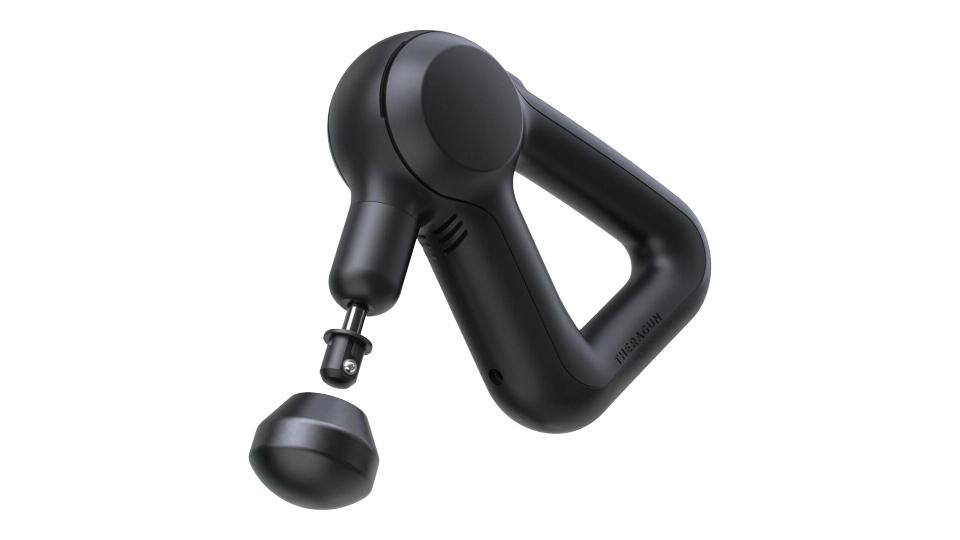
Product photo of the Theragun Prime on a white background

Massage guns, AKA percussive therapy devices, are the new-age recovery tools. They haven’t been around as long as foam rolling, but they work in a similar way. While the mechanisms are different, massage guns are another type of SMR that can help loosen up adhesions in fascia and muscle tissue.

How Do Massage Guns Work?

Massage guns rely on two types of massage therapy—percussive therapy and vibration  massage. Scientists haven’t conducted as many studies on massage guns as foam rollers, largely because the technology is newer, but there’s enough evidence to describe the basic mechanisms behind how they work. 

Like foam rolling, percussive therapy is a type of soft tissue manipulation that can help reduce soreness and pain, as well as assist with muscle recovery. Massage guns work by pumping out short bursts of pressure on the muscles at a high frequency, similar to the mechanisms of a jackhammer. 

“In addition to increasing blood flow and assisting with the removal of post-training metabolites, this action may also create a short-term pain relief effect (as evidenced by gate control theory) by stimulating the tissues through rapid percussion,” says Midla.

Muscle recovery and mobility are the most well-studied benefits of massage guns. 

In a 2014 study published in the Journal of Clinical and Diagnostic Research, researchers compared the effects of 15 minutes of regular massage therapy and five minutes of vibration therapy. When compared to the control group, both groups had significant improvements in range of motion two and three days after exercise. They also reported less muscle soreness on those days.
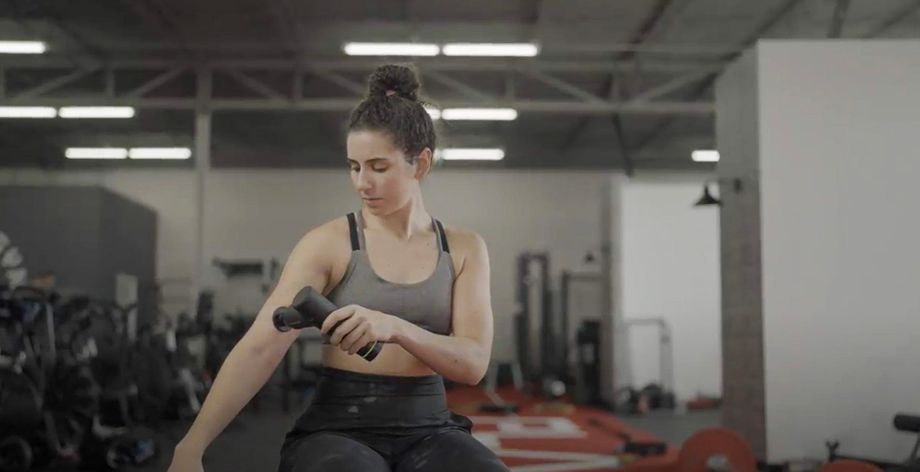
Using the Hypervolt Go

When to Use a Massage Gun

The best time to use a massage gun is when you’re looking for deeper pressure or you have specific areas that need some extra TLC. Just like a foam roller, massage guns can be used before, after, and in between workouts. You can also use them outside of your exercise routine as a way to increase mobility and relieve chronic pain.

Before Training

“Like the use of a foam roller, a percussive massager can be used before training in much the same way—to raise the temperature of the tissues, increase blood flow, and break up any stagnation or stiffness,” says Midla.

After Training

Using a massage gun post-workout is a great opportunity to help flush the metabolic waste, like lactic acid, generated during the training session and increase blood flow, which can decrease DOMS. 

In the 2014 study mentioned above, researchers found that the vibration therapy group also had lower levels of lactic acid dehydrogenase (LDH) and creatine kinase (CK), two enzymes that contribute to post-workout soreness. “Essentially, [a massage gun] is an opportunity to speed up the natural recovery process,” says Midla.

A major benefit to massage guns is that they allow for more customizable treatment than foam rolling. Since they’re smaller, they can target specific areas and may be better suited to working around injuries. They’re also easier to grab and use for a few minutes during the day. In between meetings, you can use a massage gun to alleviate the aches and pains that come with excessive sitting and/or stress.

For details on how to get the most out of your percussion massager, read our guide: How to Use a Massage Gun.

When and Where NOT to Use a Foam Roller or Massage Gun

While massage tools can be a helpful aid in workout recovery and muscle repair, it’s not always in your best interest to use one. In some cases, you shouldn’t use a massage. Examples include: 

  • On any injuries, including muscle strains, sprains, bruises, cuts and scrapes, scabs, or open wounds.
  • To treat a medical condition or injury without express instructions from your healthcare provider 
  • On bony protrusions
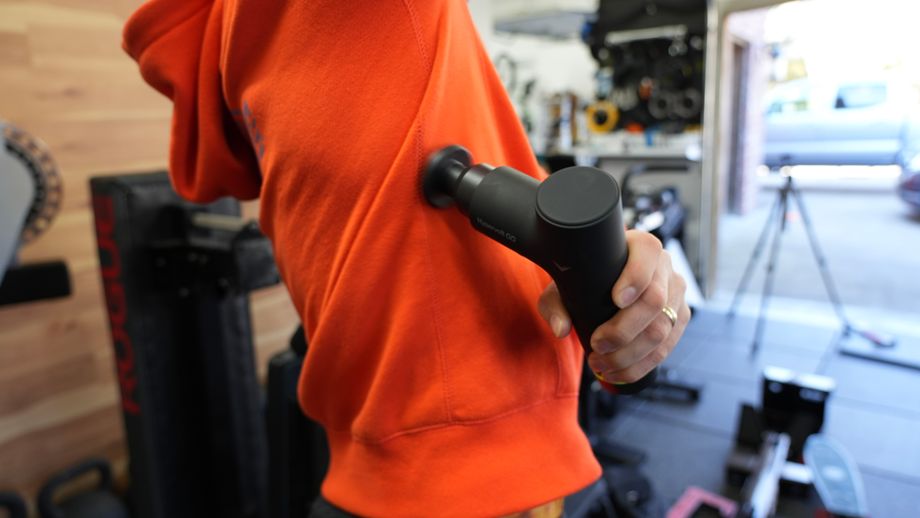
Coop using Hypervolt GO massage gun on lats

Foam Roller vs. Massage Gun: Key Similarities and Differences

Foam rollers and massage guns are two types of recovery tools that allow for self-myofascial release. They both increase blood flow and break up adhesions and trigger points, which can help with muscle pain, soreness, mobility, and athletic performance. Both tools can really be used at any time—before and after workouts, or on rest days—with similar effects.

The biggest difference between a foam roller and a massage gun is in the application. When using a foam roller, you lean into it with your body weight to help “roll” out adhesions and trigger points in your muscles. Massage guns are handheld devices that use percussive and/or vibration therapy to break up adhesions, similar to a deep tissue massage.

Since foam rollers are bigger than massage guns, they can cover larger muscle groups, like the quads and hamstrings, more quickly. On the flip side, massage guns are smaller, so they’re a better option for targeting specific, harder-to-reach areas of the body. 
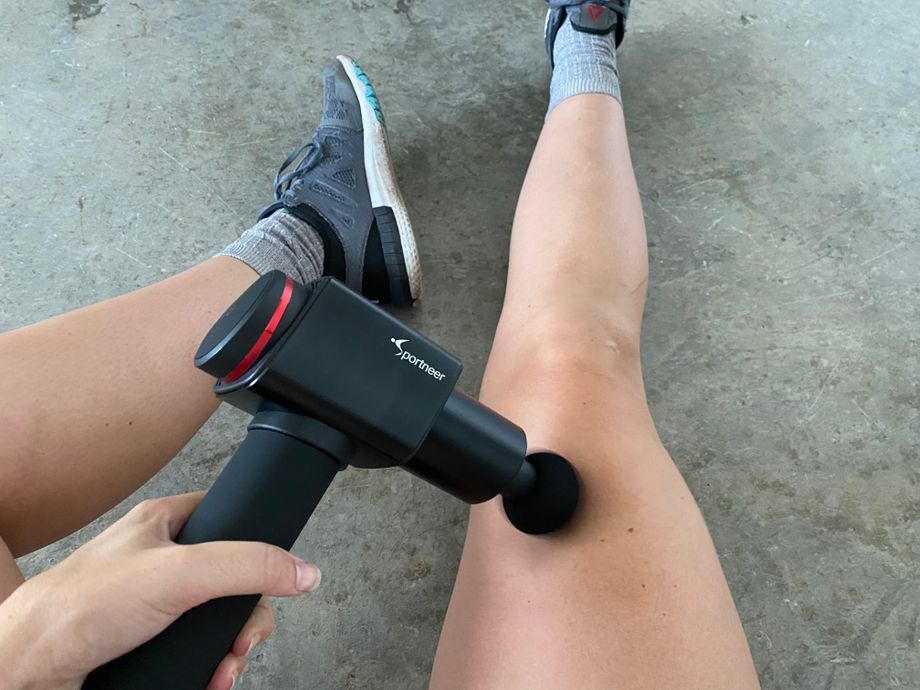
Using the Sportneer Elite D9 massage gun on quads

“The nice thing about the massage gun is the ease of use, depth of action, and pain desensitization due to the rapid percussion, which makes it a great option for harder-to-roll areas like the chest, biceps, lower back, and feet,” says Midla. 

Percussive massage guns can also get deeper into the tissue, giving a more intense massage than foam rollers. 

“With a roller, it’s easier to pin a tight or tender spot and then stretch the tissues around it in different directions. Because the massager is always in motion and percussing to depth, we don’t actually want to stay in one spot for too long,” according to Midla.

To break it down a little bit more, here are some key points to be aware of when making your buying decision: 

  • Price: Massage guns cost more than foam rollers by quite a large margin. It’s tough to find a high-quality massage gun under $100, while it’s rare to find a foam roller that costs more than $50. 
  • Efficiency: Depending on your definition of efficiency, one tool may make more sense for you than another. Foam rollers can reach a larger surface area than massage guns can, but massage guns penetrate deeper into the muscle tissue than a foam roller ever will. 

Noise: Foam rollers are silent while massage guns make noise due to the motor. Some massage guns are pretty quiet, while others, like Theraguns, can be quite loud.

Foam Roller vs. Massage Gun: The Verdict

Foam rollers and massage guns are both worthwhile recovery tools. Foam rollers are the better option for a lighter touch and larger muscle groups, while massage guns can target muscles and smaller areas with a deeper massage. This makes them more useful for specific pain points.

Everything else aside, it all comes down to consistency. 

“The best way to make a long-term positive impact on your tissues is with consistent use over time,” says Midla. “It takes fascial tissue and the collagen within it about two years to fully turnover…to really reap the benefits you have to do it consistently over a long period of time—make it part of your lifestyle.” 

FAQs

Which is better: massage gun or foam roller?

There’s no cut-and-dry answer here since both tools can help with muscle recovery and pain relief. It really depends on what you’re looking for. 

A foam roller covers a greater surface area and doesn’t get as deep into the muscle, which can be especially helpful on those really sore days. 

On the flip side, a massage gun allows you to target smaller areas and get deep into muscles, so it’s more helpful if you have a specific area that you want to pay attention to.

Do foam rollers and massage guns do the same thing?

Foam rollers and massage guns are both recovery tools that can help with self-myofascial release, but the applications are slightly different. Both tools can help shorten recovery time, improve range of motion, and alleviate muscle soreness and pain following a workout.

Do massage guns really work?

Yes, massage guns do work. They might not be the answer for everything that ails you, but massage guns can reduce delayed-onset muscle soreness (DOMS) and aid in muscle recovery by boosting blood circulation. Not all massage guns are the same though. If you need help choosing one, check out our roundup of the best massage guns. 

Lindsay Boyers, CN

Lindsay Boyers, CN

Functional nutritionist and writer

About Author

Lindsay Boyers is a functional nutritionist, writer, and editor with over a decade of experience in online media. She’s written 14 books and hundreds of articles on fitness, wellness, nutrition, and lifestyle. Lindsay holds certifications in holistic nutrition, functional nutrition, and professional food safety, as well as a B.S. in food in nutrition.

Further Reading

What Is Active Recovery? How It Works and Who Should Do It

What Is Active Recovery? How It Works and Who Should Do It

Giving your body time to rest is an important part of fitness, but what is active recovery, and should you be doing it? We break it down here.
Read More
5-Minute Arm Workout: Squeeze in a Quick Arm Session

5-Minute Arm Workout: Squeeze in a Quick Arm Session

Do you have five minutes? Good, then you can do our 5-minute arm workout and make some progress on your fitness even when you can’t make more time!
Read More
The Biggest Trap Bar Benefits

The Biggest Trap Bar Benefits

The Trap Bar is one of the most popular specialty bars on the market. Most commercial gyms in the country have one and a majority of home and garage gyms should have one. In order to help you decide whether it would benefit your training, we have come up with seven reasons and benefits for the trap bar including our most popular recommendations.
Read More
Oura Ring vs Apple Watch (2025): We Tested Both Wearable Fitness Trackers

Oura Ring vs Apple Watch (2025): We Tested Both Wearable Fitness Trackers

A CPT lays out the differences and similarities between a fitness ring and a fitness watch in our Oura Ring vs Apple Watch comparison.
Read More

On This Page

Foam Rollers: The Classic Muscle Recovery Method
How Do Foam Rollers Work?
When to Use a Foam Roller
Massage Guns: Tech-Infused Muscle Recovery
Foam Roller vs. Massage Gun: The Verdict
FAQs

Connect With Your Community

  • Facebook
  • Instagram
  • YouTube
  • https://www.google.com

Get the Latest Reviews & Updates

  • About
  • Careers
  • Privacy Policy
  • Terms of Service
  • Expert Panel
  • Affiliate Disclosure
  • Contact
  • Do Not Sell My Info
Reviews
  • Nike Grind Bumper Plates Review (2025): Are These Plates Worthy of a Spot in Your Garage Gym?

  • MERACH T12 Foldable Walking Treadmill Review (2025): A Compact and Affordable Option

  • Evolve Plant-Based Protein Shake Review (2025): Is This Low-Calorie Pea Protein Worth the Price?

  • Huel Ready-to-Drink Review (2025): Can This RTD Really Replace A Meal?

  • C4 Ultimate Shred Review (2025): Is This Fat-Burning Pre-Workout Worth It?

Equipment
  • The 12 Best Rowing Machines For Your Home Gym: Expert-Tested and Favorited (2025)

  • The Best Adjustable Kettlebells to Take for a Swing in Your Home Gym (2025)

  • Best Recumbent Exercise Bikes (2025): Top Picks from Certified Personal Trainers

  • Best Folding Exercise Bikes (2025): Compact and Lightweight Bikes for Small Spaces

  • The 10 Best Adjustable Dumbbells for Home of 2025, Tested by Fitness Experts, Athletes, and Coaches

Guides
  • Infrared Saunas Buyer’s Guide: Everything You Need to Know to Break a Sweat With Confidence

  • The Ultimate Sauna Guide: Expert Tips on Benefits, How to Use, and More

  • What Foods Have Probiotics? Colon-Ize Your Plate with Help From a Dietitian

  • Home Gym Con 2025 Recap: The New Equipment We’re Most Excited About

  • Tariffs Affecting Gym Equipment Prices (2025)

DIY
  • Your Expert Guide to Making Budget-Friendly DIY Ankle Weights  

  • Homemade Protein Powder: The Right Whey to Do Home-Cooked Protein

  • Building a DIY Rowing Machine: How to, Why, and Should You?

  • Try These DIY Cold Plunge Ideas To Jump-Start Your Recovery 

  • DIY Mass Gainer: You Make the Shake, and Your Body Makes the Muscle

The Most Trusted Voice in Fitness

© Garage Gym Reviews 2023 | All Rights Reserved.

GGR

  • About
  • Careers
  • Privacy Policy
  • Terms of Service
  • Expert Panel
  • Affiliate Disclosure
  • Contact
  • Do Not Sell My Info

The Most Trusted Voice in Fitness

© Garage Gym Reviews 2025 | All Rights Reserved.

Reviews
  • Nike Grind Bumper Plates Review (2025): Are These Plates Worthy of a Spot in Your Garage Gym?
  • MERACH T12 Foldable Walking Treadmill Review (2025): A Compact and Affordable Option
  • Evolve Plant-Based Protein Shake Review (2025): Is This Low-Calorie Pea Protein Worth the Price?
  • Huel Ready-to-Drink Review (2025): Can This RTD Really Replace A Meal?
  • C4 Ultimate Shred Review (2025): Is This Fat-Burning Pre-Workout Worth It?
Equipment
  • The 12 Best Rowing Machines For Your Home Gym: Expert-Tested and Favorited (2025)
  • The Best Adjustable Kettlebells to Take for a Swing in Your Home Gym (2025)
  • Best Recumbent Exercise Bikes (2025): Top Picks from Certified Personal Trainers
  • Best Folding Exercise Bikes (2025): Compact and Lightweight Bikes for Small Spaces
  • The 10 Best Adjustable Dumbbells for Home of 2025, Tested by Fitness Experts, Athletes, and Coaches
Guides
  • Infrared Saunas Buyer’s Guide: Everything You Need to Know to Break a Sweat With Confidence
  • The Ultimate Sauna Guide: Expert Tips on Benefits, How to Use, and More
  • What Foods Have Probiotics? Colon-Ize Your Plate with Help From a Dietitian
  • Home Gym Con 2025 Recap: The New Equipment We’re Most Excited About
  • Tariffs Affecting Gym Equipment Prices (2025)
DIY
  • Your Expert Guide to Making Budget-Friendly DIY Ankle Weights  
  • Homemade Protein Powder: The Right Whey to Do Home-Cooked Protein
  • Building a DIY Rowing Machine: How to, Why, and Should You?
  • Try These DIY Cold Plunge Ideas To Jump-Start Your Recovery 
  • DIY Mass Gainer: You Make the Shake, and Your Body Makes the Muscle