
Best Black Friday Fitness Equipment Deals See Deals
Best Black Friday Treadmill Deals See Deals
Best Black Friday Rowing Machine Deals See Deals
  • Best-in-Class Equipment
    • See All Roundups
    • Best Adjustable Dumbbells
    • Best Budget Home Gym Equipment
    • Best Cross-Training Shoes
    • Best Dumbbells
    • Best Exercise Bikes
    • Best Home Gym Machines
    • Best Kettlebells
    • Best Olympic Barbells
    • Best Rowing Machines
    • Best Squat Racks
    • Best Supplements
      • Best BCAA
      • Best Creatine
      • Best Greens Powder
      • Best Pre-Workout
      • Best Protein Powder
    • Best Treadmills
    • Best Weighted Vests
    • Best Weightlifting Shoes
    • Best Weight Benches
  • Reviews
    • See All Reviews
    • Barbells
    • Bodyweight
    • Certification Courses
    • Conditioning
    • Gym Accessories
    • Nutrition
    • Recovery
    • Rigs and Racks
    • Shoes
    • Strength Equipment
    • Support Gear
    • Technology
    • Training Programs
    • Weight Plates
  • Comparisons
    • See All Comparisons
    • Best Peloton Alternatives
    • Home Gym vs Gym Membership
    • Peloton Bike vs Bike Plus
    • PowerBlock vs Bowflex
    • Rogue Echo Bike vs Assault Air Bike
    • Rogue Ohio Power Bar vs Texas Power Bar
    • Tonal vs Tempo
  • Black Friday Deals
    • See All Black Friday Deals
    • Best Black Friday Supplement Sales (2025)
    • Peloton Black Friday Deals (2025)
    • Best Black Friday Sauna Deals (2025)
    • Best Black Friday Treadmill Deals (2025)
    • Best Black Friday Rowing Machine Deals (2025)
    • Best Black Friday Dumbbell Deals (2025)
    • Best Black Friday Elliptical Deals (2025)
    • Best Black Friday Exercise Bike Deals (2025)
    • The Best Massage Gun Black Friday Deals (2025)
    • Best Black Friday Deals for Runners (2025)
  • Coupons
    • Holiday Sales
    • Military Discounts
    • See All Coupons
      • Bells of Steel Coupons
      • REP Fitness Coupons
      • Rogue Fitness Coupons
      • Titan Fitness Coupons
      • Concept2 Coupons
      • Plunge Coupons
  • Equipment
    • Browse Gym Equipment
    • See All Equipment
    • Apparel
      • Shoes
        • Running Shoes
        • Training Shoes
        • Weightlifting Shoes
    • Strength Equipment
      • Barbells
      • Benches
      • Dumbbells
      • Glute Ham Developers (GHD)
      • Kettlebells
      • Rigs and Racks
      • Strength Machines
      • Weight Plates
    • Conditioning
      • Core and Stability
      • Endurance
        • Air Bikes
        • Ellipticals
        • Exercise Bikes
        • Rowing Machines
        • Treadmills
      • Jump Ropes
      • Strength Conditioning
    • Bodyweight
      • Climbing Ropes
      • Grip
      • Gymnastics
      • Pull-Up Systems
      • Training Equipment
    • Support Gear
      • Belts
      • Hand Protection
      • Mobility & Recovery
      • Straps & Wraps
      • Training Apparel
    • Gym Accessories
      • Flooring
      • Storage
    • Supplements
    • Technology
    • Training Programs
  • Home Gym Resources
    • See All Home Gym Resources
    • Calculators
    • DIY Guides
    • Equipment Guides
    • Gym Tours
    • Spotlight
    • Workout Guides
  • About Us
    • Meet Our Experts
    • GGR Fitness Equipment Testing Methodology
      • How We Test Ellipticals
      • How We Test Smart Home Gym Equipment
      • How We Test Smith Machines
      • How We Test Dumbbells and Adjustable Dumbbells
      • How We Test Barbells
      • How We Test Weight Benches
      • How We Test Treadmills
      • How We Test Saunas
      • How We Test Kettlebells and Adjustable Kettlebells 
      • How We Test Exercise Bikes
      • How We Test Cold Plunges
      • How We Test Massage Chairs 
      • How We Test Functional Trainers
    • GGR Supplement Testing Methodology
      • How We Test Pre-Workout Supplements
      • How We Test Creatine
  • Facebook
  • Instagram
  • YouTube

Search

Sign Up

Log In

  • Best-in-Class Equipment
    • See All Roundups
    • Best Adjustable Dumbbells
    • Best Budget Home Gym Equipment
    • Best Cross-Training Shoes
    • Best Dumbbells
    • Best Exercise Bikes
    • Best Home Gym Machines
    • Best Kettlebells
    • Best Olympic Barbells
    • Best Rowing Machines
    • Best Squat Racks
    • Best Supplements
      • Best BCAA
      • Best Creatine
      • Best Greens Powder
      • Best Pre-Workout
      • Best Protein Powder
    • Best Treadmills
    • Best Weighted Vests
    • Best Weightlifting Shoes
    • Best Weight Benches
  • Reviews
    • See All Reviews
    • Barbells
    • Bodyweight
    • Certification Courses
    • Conditioning
    • Gym Accessories
    • Nutrition
    • Recovery
    • Rigs and Racks
    • Shoes
    • Strength Equipment
    • Support Gear
    • Technology
    • Training Programs
    • Weight Plates
  • Comparisons
    • See All Comparisons
    • Best Peloton Alternatives
    • Home Gym vs Gym Membership
    • Peloton Bike vs Bike Plus
    • PowerBlock vs Bowflex
    • Rogue Echo Bike vs Assault Air Bike
    • Rogue Ohio Power Bar vs Texas Power Bar
    • Tonal vs Tempo
  • Black Friday Deals
    • See All Black Friday Deals
    • Best Black Friday Supplement Sales (2025)
    • Peloton Black Friday Deals (2025)
    • Best Black Friday Sauna Deals (2025)
    • Best Black Friday Treadmill Deals (2025)
    • Best Black Friday Rowing Machine Deals (2025)
    • Best Black Friday Dumbbell Deals (2025)
    • Best Black Friday Elliptical Deals (2025)
    • Best Black Friday Exercise Bike Deals (2025)
    • The Best Massage Gun Black Friday Deals (2025)
    • Best Black Friday Deals for Runners (2025)
  • Coupons
    • Holiday Sales
    • Military Discounts
    • See All Coupons
      • Bells of Steel Coupons
      • REP Fitness Coupons
      • Rogue Fitness Coupons
      • Titan Fitness Coupons
      • Concept2 Coupons
      • Plunge Coupons
  • Equipment
    • Browse Gym Equipment
    • See All Equipment
    • Apparel
      • Shoes
        • Running Shoes
        • Training Shoes
        • Weightlifting Shoes
    • Strength Equipment
      • Barbells
      • Benches
      • Dumbbells
      • Glute Ham Developers (GHD)
      • Kettlebells
      • Rigs and Racks
      • Strength Machines
      • Weight Plates
    • Conditioning
      • Core and Stability
      • Endurance
        • Air Bikes
        • Ellipticals
        • Exercise Bikes
        • Rowing Machines
        • Treadmills
      • Jump Ropes
      • Strength Conditioning
    • Bodyweight
      • Climbing Ropes
      • Grip
      • Gymnastics
      • Pull-Up Systems
      • Training Equipment
    • Support Gear
      • Belts
      • Hand Protection
      • Mobility & Recovery
      • Straps & Wraps
      • Training Apparel
    • Gym Accessories
      • Flooring
      • Storage
    • Supplements
    • Technology
    • Training Programs
  • Home Gym Resources
    • See All Home Gym Resources
    • Calculators
    • DIY Guides
    • Equipment Guides
    • Gym Tours
    • Spotlight
    • Workout Guides
  • About Us
    • Meet Our Experts
    • GGR Fitness Equipment Testing Methodology
      • How We Test Ellipticals
      • How We Test Smart Home Gym Equipment
      • How We Test Smith Machines
      • How We Test Dumbbells and Adjustable Dumbbells
      • How We Test Barbells
      • How We Test Weight Benches
      • How We Test Treadmills
      • How We Test Saunas
      • How We Test Kettlebells and Adjustable Kettlebells 
      • How We Test Exercise Bikes
      • How We Test Cold Plunges
      • How We Test Massage Chairs 
      • How We Test Functional Trainers
    • GGR Supplement Testing Methodology
      • How We Test Pre-Workout Supplements
      • How We Test Creatine

Home » Resources » How Do You Find the Right Running Cadence? Expert Tips

How Do You Find the Right Running Cadence? Expert Tips

8656
Written by Jessica Thomas
8656
Jessica Thomas

Jessica is a public health professional, health & wellness writer, and entrepreneur. She enjoys learning about and educating others on healthy living and helping business owners achieve more while doing less.

View Profile
Updated on January 25, 2024

We test and review fitness products based on an independent, multi-point methodology. If you use our links to purchase something, we may earn a commission. Read our disclosures

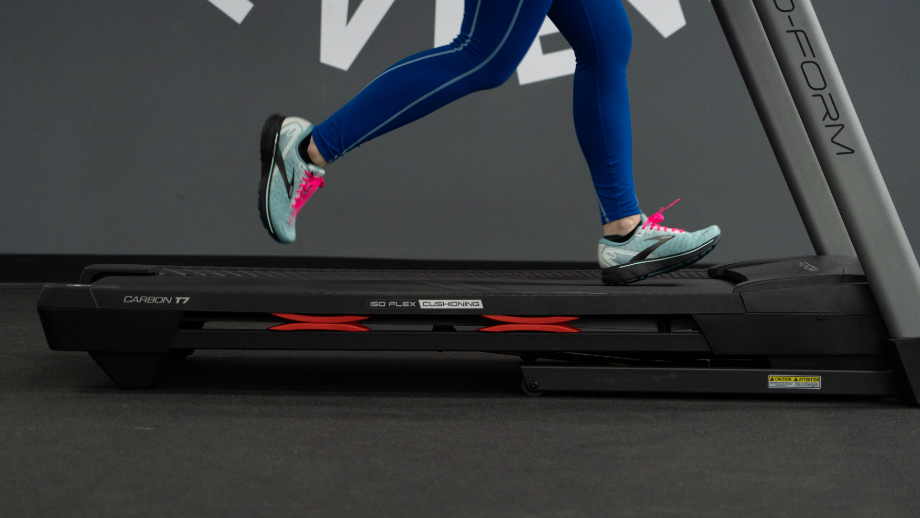
Nicole running on treadmill

Whether you’ve recently started running or have been doing so for a while, you’re probably trying to figure out how you can run faster and farther. You may hear advice like, “Just run more often,” “Make sure you always stretch,” or “Improve your eating habits.” Some may even say to incorporate some HIIT and strength-training workouts. 

While all those things are important, another way to become a better runner is to learn about running cadence. 

Here, we’ll explore what a running cadence is, why it matters, and how it can help you boost your speed and reduce your risk of injury. Recreational runners, elite runners, and everyone in between stand to benefit from learning what a good running cadence is.

RELATED: Post-Run Stretches
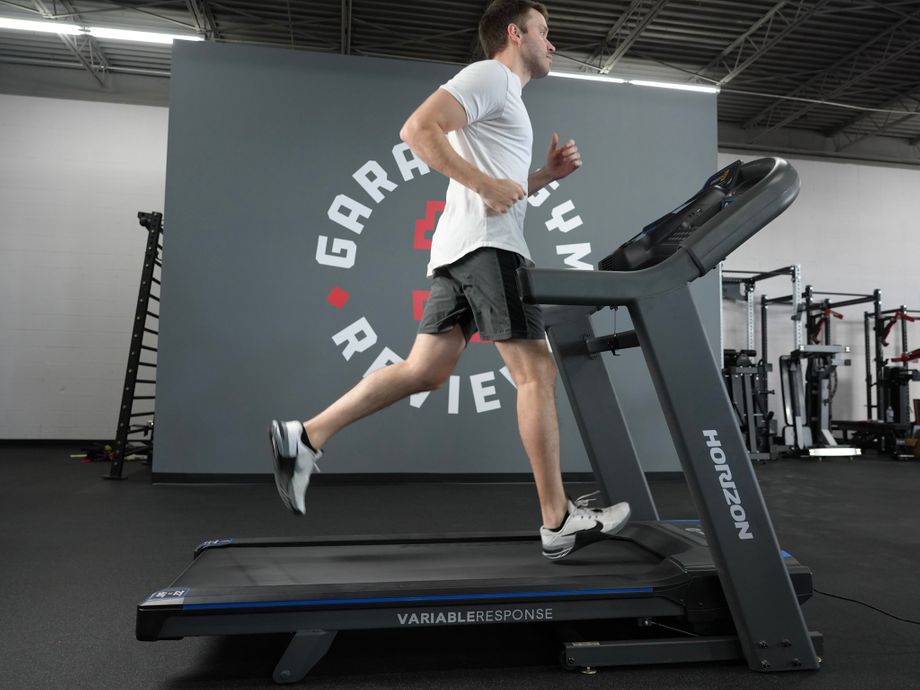
Man running on Horizon 7.4 Studio Tread

What Is Running Cadence, And How Do You Calculate It?

You’ll be glad to know that running cadence is one of those simple concepts that’s easy to understand. In fact, it’s possible that you already know what it is. Sometimes running coaches or other athletes refer to it by different names. 

For instance, if you’ve heard the terms foot turnover, step frequency, or stride frequency, those are all other names used for running cadence.

“No matter what you call it, by definition, running cadence refers to the number of steps you take per minute,” says Jacob Penner, former competitive track athlete and current personal trainer. 

Simple right? Yet, where did this idea even come from? 

Running cadence was made popular around the 1980s. At the time, running coach Jack Daniels recognized that the step rate for runners during the 1984 Olympics was approximately 180 steps per minute (SPM). He documented this finding in his book, “Running Formula1,” and from there, 180 SPM became the benchmark for athletes. 

Many believed that learning to run at that cadence would one day establish them as a part of the crème de la crème of runners. They also assessed that running fewer steps per minute was responsible for most running injuries. 

“When you take fewer than 180 steps per minute, you stay in the air longer,” Jacob explains, “causing you to bear more body weight and hit the ground harder when you land.” 

A 2021 study2 actually evaluated this concept and found that increasing cadence may decrease impact forces and result in fewer injuries.
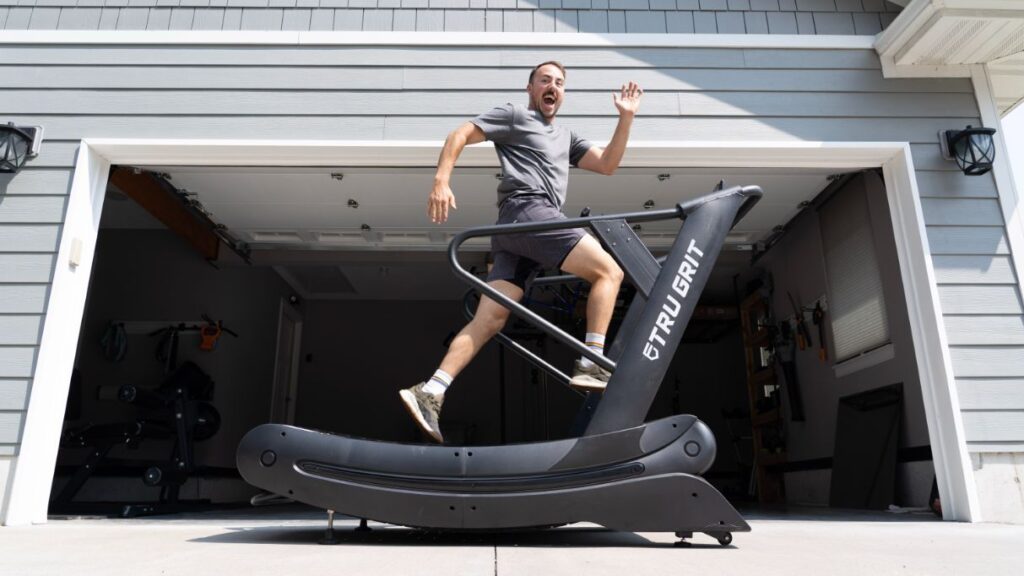
Coop running on the Tru Grit treadmill.

Figuring Out Your Own Running Cadence

So, now that you know what it is, how do you go about finding out yours? Doing so is easy, especially if you have a running watch. Some Garmin watches will tell you what your cadence is, but it’s no big deal if you don’t have that. The old-school methods will work fine too. However, you’ll need a timer for both. 

With this method, you’ll set your timer for 60 seconds. However, you don’t want to start the timer until you find your desired running pace. Once your preferred pace has been established, start the timer and count every time your foot lands on the ground. When the 60 seconds is up, stop running. Your running cadence will be the total number of steps you took within that 60-second timeframe. 

Another approach to finding your cadence, and one that might be easier, is to count how many times your right foot hits the ground in 30 seconds. Then, take whatever number that is and multiply it by two so you can establish how many steps you likely would’ve taken in 60 seconds on your right foot. After that, double the last number to achieve the total number of steps for both feet. The result will give you your running cadence. 

For both methods, I recommend running several times to measure your cadence. Three different running sessions should be enough to calculate your average speed per minute. 

Stride Length x Cadence = Speed

If you really want to improve your speed, you’ll have to increase your cadence or stride length. There’s an equation out there that many people follow in the sports biomechanics space. That formula3 is that cadence multiplied by your stride length produces your running speed. 

For clarity, stride length is the total distance covered between the area where one foot touches the ground and the next time that same foot touches the ground again.
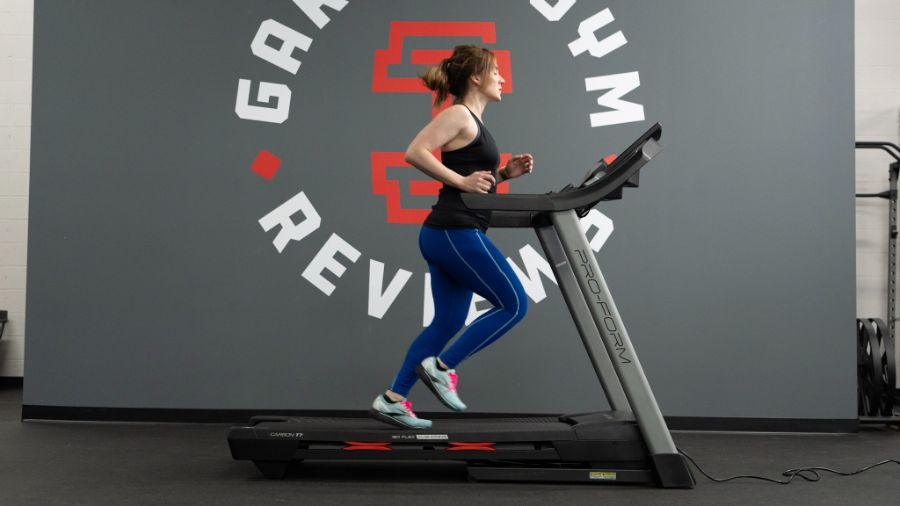
An image of a woman running on a treadmill

“Increasing your cadence can often garner better results than widening your stride length,” Jacob says. 

When you increase your cadence, you experience shorter ground contact and reduced horizontal braking forces. It also produces a better running economy3 and fewer running injuries. 

But why is that? Well, it’s said that those with a slower cadence, like 160 SPM or less, tend to overstride. Overstriding4 happens when your front leg goes too far in front of your body when you take a step. Unfortunately, this movement has a lot of impact on the hips and knees, which is what you want to avoid. 

Interestingly, runners with a higher cadence actually have shorter, more powerful strides. This is because they’ve learned to increase the force they exert against the ground to better propel their upper body forward. It might be difficult to notice while it’s happening, but shorter strides also grant you more air time, which decreases the impact of your foot strike when it touches the ground.    

However, lengthening your stride is better in certain situations, like when distance running. Longer steps can help you go faster and cover ground more quickly. In addition, a longer stride length may require less oxygen and takes up less energy, which helps you better maintain your running pace. 

“Overstriding and lengthening your stride are not the same,” Jacob warns. “Many recreational runners get confused by this.” 

Overstriding occurs when you go beyond your optimal stride length, he says. Your optimal stride length is based on your best running technique and the strength you exert when executing the actions associated with your technique. 

Why Cadence Matters

Cadence is often overlooked, but it matters big time. As mentioned before, it affects your ground contact. The more ground contact you experience when running, the more pressure you place on your joints and muscles. As you might imagine, more impact is not a great method for injury prevention. Therefore, aiming to reach a higher cadence is necessary if you want to stay in the game. 

In addition, when you increase your cadence, you change the position of where your foot lands when it touches the ground. For example, a lower cadence will cause your foot to land in front of your hips. However, a higher cadence will place your foot right underneath you and decrease your stride length. This technique increases your speed. 

Overall, finding your optimal cadence is crucial because it allows your body to move more efficiently. As a result, you’ll run faster yet softer at the same time, so you’re getting the most out of your run.
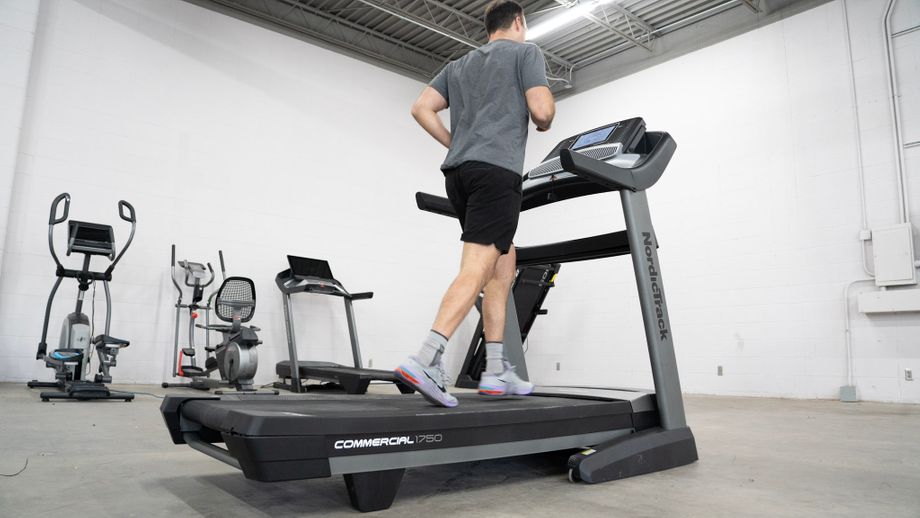
Coop running on the NordicTrack Commercial 1750 treadmill

Factors That Affect Your Running Cadence

Books, blogs, and magazines have been urging runners to aim for 180 SPM or higher if they want to be the best of the best. However, this one-size-fits-all method adopted in the 1980s may not be practical or necessary for everyone. In fact, a 2019 study5 evaluated 20 runners at the 100K World Championships and their steps per minute varied quite a bit. One elite runner had an average cadence of 155 SPM, which is far from 180. However, the highest cadence by an elite runner at that race was 203 SPM, so it definitely varies. 

Naturally, when you see significant differences like that, you question, why is that? There are different factors that can affect your running cadence, such as: 

  • The terrain: If you’re running uphill, downhill, or encounter obstacles, you won’t be able to achieve your typical cadence. 
  • Your height: Shorter runners tend to have a higher cadence, while taller runners often have a lower cadence. Taller runners naturally have a longer stride length. 
  • Your biomechanics: Nuances in your running form based on your anatomy and other factors can affect your cadence. 
  • Type of run (speed): If you’re sprinting, you’ll likely have a higher cadence than if you go distance running. 

How to Improve Your Cadence

Now that you know all about cadence, how in the world can you improve it? The first thing you want to decide is how many steps per minute are you trying to achieve. Is it 160? 170? 180 or more? After you determine your goal, start to experiment by increasing your cadence by 5 to 10%. You’ll have a new cadence in no time! But here are a few other things you can do too: 
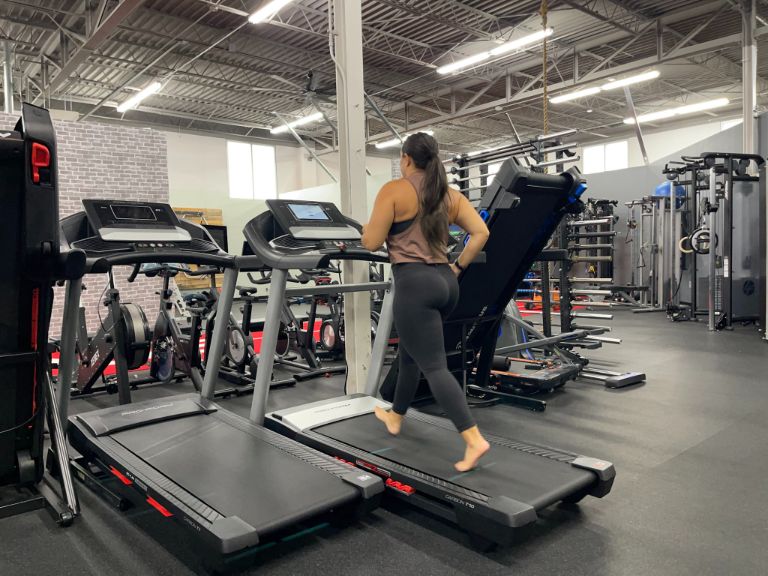
Woman running barefoot on a treadmill

Use a Metronome

I recommend running to a beat using a metronome device or app. It will create a set number of beats per minute (BPM), and with each beat, you should be taking a step. 

Find a Running Cadence Playlist 

Did you know songs like “Lose Yourself” by Eminem has a 180 BPM rhythm? It’s true, and you can find them on different Spotify playlists. There are playlists out there with tons of cadence-running music. All you have to do is search around for playlists that include songs with your preferred cadence and try them out on your next run. 

Speaking of music, a 2015 study6 found that music tempo could positively affect running cadence. So if you ask me, it’s definitely worth a try! 

Get on the Treadmill

Use a treadmill to practice taking smaller steps. It’s easier on a treadmill because you can set your preferred pace. From there, work on increasing your step rate instead of just trying to run faster. Your cadence will increase over time as you get comfortable.

Incorporate Other Workouts

One of the first solutions to improving your cadence is to run more, but you should do other workouts too. Try high-intensity interval exercises and strength training techniques. Those will help you strengthen the muscles you need to run faster and for more extended periods of time. HIIT specifically requires you to do explosive movements, which may help you make more efficient steps while running.

Running Cadence: Q&A

What is a good cadence while running?

Remember, there’s no one-size-fits-all approach when it comes to running cadence, as there are many factors to consider. However, 170-180 steps per minute are typical among elite athletes. 

Is a 150 running cadence good?

A cadence of 150 strides per minute is typical among novice runners, but many people aim to improve this rate. It’s said that those running below 160 are probably overstriding. Therefore, it’s important to assess if you might be doing that.

Is 160 a good running cadence?

Recreational runners often run 160 to 165 steps per minute, so we’d consider a 160 cadence average. However, many factors influence cadence, such as height, weight, and stride length. Therefore, it may be suitable for one person but not for another.

Is 140 Cadence good?

If your current cadence is 140, you may have a bit of work to do, especially if you want to increase speed and decrease injury. Although cadence varies for everyone, this is still considered very low.

References

  1. Daniels J. Daniels’ Running Formula. Human Kinetics; 2023. 
  2. Musgjerd T, Anason J, Rutherford D, Kernozek TW. Effect of Increasing Running Cadence on Peak Impact Force in an Outdoor Environment. Int J Sports Phys Ther. 2021;16(4):1076-1083. Published 2021 Aug 1. doi:10.26603/001c.25166
  3. van Oeveren BT, de Ruiter CJ, Beek PJ, van Dieën JH. Optimal stride frequencies in running at different speeds. PLoS One. 2017;12(10):e0184273. Published 2017 Oct 23. doi:10.1371/journal.pone.0184273
  4. Schubert AG, Kempf J, Heiderscheit BC. Influence of stride frequency and length on running mechanics: a systematic review. Sports Health. 2014;6(3):210-217. doi:10.1177/1941738113508544
  5. Burns GT, Zendler JM, Zernicke RF. Step frequency patterns of elite ultramarathon runners during a 100-km road race. J Appl Physiol (1985). 2019;126(2):462-468. doi:10.1152/japplphysiol.00374.2018
  6. Van Dyck E, Moens B, Buhmann J, et al. Spontaneous Entrainment of Running Cadence to Music Tempo [published correction appears in Sports Med Open. 2015 Dec;1(1):30]. Sports Med Open. 2015;1(1):15. doi:10.1186/s40798-015-0025-9

Jessica Thomas

Jessica Thomas

Freelance health and fitness writer

About Author

Jessica is a public health professional, health & wellness writer, and entrepreneur. She enjoys learning about and educating others on healthy living and helping business owners achieve more while doing less.

Further Reading

MERACH 950 Rower Review (2025): Home Gym Machine Without a Subscription 

MERACH 950 Rower Review (2025): Home Gym Machine Without a Subscription 

We tested our first rowing machine with both water and magnetic resistance. See what we think in our MERACH 950 Rower review.
Read More
How Long Does It Take for Creatine to Work?

How Long Does It Take for Creatine to Work?

How long does it take for creatine to work? Do you have to go through a loading phase? And what happens when you stop taking creatine? A sports dietitian answers all of these common questions and more.
Read More
The Best Sandbag Exercises for a Full-Body Workout

The Best Sandbag Exercises for a Full-Body Workout

We break down various exercises to deliver the best sandbag workouts to target every muscle group.
Read More
PowerBlock Coupon Code and Other Ways to Save (2025)

PowerBlock Coupon Code and Other Ways to Save (2025)

Find ways to save on some of our favorite adjustable dumbbells, kettlebells and more Our Garage Gym Reviews team has used and loved PowerBlock products for years. The brand makes great space-saving adjustable dumbbells as well as kettlebells and accessories. If you’re looking for a PowerBlock coupon, we have ideas on how you can save.  Save on Black Friday Save 15% sitewide, plus spend more save more during the 2024 Black Friday sale.  » Read more about: PowerBlock Coupon Code and Other Ways to Save (2025)  »
Read More

On This Page

What Is Running Cadence, And How Do You Calculate It?
Stride Length x Cadence = Speed
Why Cadence Matters
Factors That Affect Your Running Cadence
How to Improve Your Cadence
Running Cadence: Q&A
References

Connect With Your Community

  • Facebook
  • Instagram
  • YouTube
  • https://www.google.com

Get the Latest Reviews & Updates

  • About
  • Careers
  • Privacy Policy
  • Terms of Service
  • Expert Panel
  • Affiliate Disclosure
  • Contact
  • Do Not Sell My Info
Reviews
  • MERACH T12 Foldable Walking Treadmill Review (2025): A Compact and Affordable Option

  • Evolve Plant-Based Protein Shake Review (2025): Is This Low-Calorie Pea Protein Worth the Price?

  • Huel Ready-to-Drink Review (2025): Can This RTD Really Replace A Meal?

  • C4 Ultimate Shred Review (2025): Is This Fat-Burning Pre-Workout Worth It?

  • Almost Heaven Morgan Barrel Review (2025): A Sleek Barrel Sauna Built for Four

Equipment
  • Best Recumbent Exercise Bikes (2025): Top Picks from Certified Personal Trainers

  • Best Folding Exercise Bikes (2025): Compact and Lightweight Bikes for Small Spaces

  • After Testing More Than 50, We Found The 10 Best Folding Treadmills for Your Home (2025)

  • Best Quiet Treadmills (2025): 7 Peaceful Options for Keeping the Right Pace

  • Best Dumbbells of 2025: Top Picks From Fitness Experts After Thousands of Curls and Presses

Guides
  • Infrared Saunas Buyer’s Guide: Everything You Need to Know to Break a Sweat With Confidence

  • The Ultimate Sauna Guide: Expert Tips on Benefits, How to Use, and More

  • What Foods Have Probiotics? Colon-Ize Your Plate with Help From a Dietitian

  • Home Gym Con 2025 Recap: The New Equipment We’re Most Excited About

  • Tariffs Affecting Gym Equipment Prices (2025)

DIY
  • Your Expert Guide to Making Budget-Friendly DIY Ankle Weights  

  • Homemade Protein Powder: The Right Whey to Do Home-Cooked Protein

  • Building a DIY Rowing Machine: How to, Why, and Should You?

  • Try These DIY Cold Plunge Ideas To Jump-Start Your Recovery 

  • DIY Mass Gainer: You Make the Shake, and Your Body Makes the Muscle

The Most Trusted Voice in Fitness

© Garage Gym Reviews 2023 | All Rights Reserved.

GGR

  • About
  • Careers
  • Privacy Policy
  • Terms of Service
  • Expert Panel
  • Affiliate Disclosure
  • Contact
  • Do Not Sell My Info

The Most Trusted Voice in Fitness

© Garage Gym Reviews 2025 | All Rights Reserved.

Reviews
  • MERACH T12 Foldable Walking Treadmill Review (2025): A Compact and Affordable Option
  • Evolve Plant-Based Protein Shake Review (2025): Is This Low-Calorie Pea Protein Worth the Price?
  • Huel Ready-to-Drink Review (2025): Can This RTD Really Replace A Meal?
  • C4 Ultimate Shred Review (2025): Is This Fat-Burning Pre-Workout Worth It?
  • Almost Heaven Morgan Barrel Review (2025): A Sleek Barrel Sauna Built for Four
Equipment
  • Best Recumbent Exercise Bikes (2025): Top Picks from Certified Personal Trainers
  • Best Folding Exercise Bikes (2025): Compact and Lightweight Bikes for Small Spaces
  • After Testing More Than 50, We Found The 10 Best Folding Treadmills for Your Home (2025)
  • Best Quiet Treadmills (2025): 7 Peaceful Options for Keeping the Right Pace
  • Best Dumbbells of 2025: Top Picks From Fitness Experts After Thousands of Curls and Presses
Guides
  • Infrared Saunas Buyer’s Guide: Everything You Need to Know to Break a Sweat With Confidence
  • The Ultimate Sauna Guide: Expert Tips on Benefits, How to Use, and More
  • What Foods Have Probiotics? Colon-Ize Your Plate with Help From a Dietitian
  • Home Gym Con 2025 Recap: The New Equipment We’re Most Excited About
  • Tariffs Affecting Gym Equipment Prices (2025)
DIY
  • Your Expert Guide to Making Budget-Friendly DIY Ankle Weights  
  • Homemade Protein Powder: The Right Whey to Do Home-Cooked Protein
  • Building a DIY Rowing Machine: How to, Why, and Should You?
  • Try These DIY Cold Plunge Ideas To Jump-Start Your Recovery 
  • DIY Mass Gainer: You Make the Shake, and Your Body Makes the Muscle