

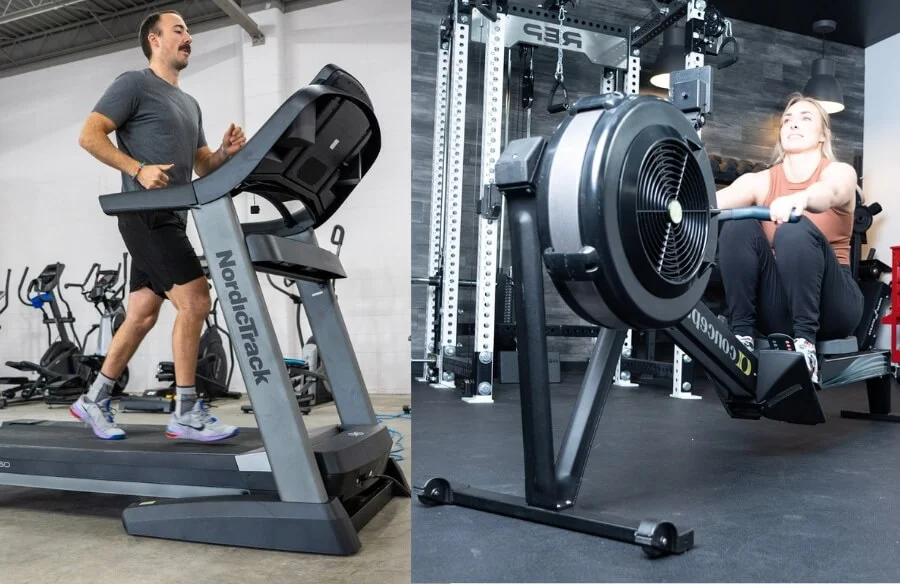
To run or to row—the ultimate question for conditioning fanatics. These two staples of home gym equipment—treadmills and rowing machines—work the body differently, but both can put your cardiovascular system to the test. For an avid runner or rower, the answer is simple, but for those looking for an effective workout, the debate between the two is a little more complex.
Running on one of the best treadmills or rowing on an indoor rower can certainly be a worthwhile home training experience, but your preference for one or the other can come down to such items as which muscles you want to target, how much space you have to spare, and how much you’re willing to spend on a new cardio machine.
In this treadmill vs rowing machine guide, we’ll compare the two options to examine their similarities, differences, strengths, weaknesses, and identify the type of person who might benefit most from each silhouette.
Treadmill Vs Rowing Machine Comparison Chart
Comparing treadmills to rowing machines can seem like apples to oranges, but there are actually more similarities across the two fitness equipment profiles than you may perceive. Below, we’ve charted the average metrics for both treadmills and rowing machines, along with some key specs related to their intended use.
| Treadmill | Rowing Machine | |
| Average Dimensions | 75.2″ L x 34.6″ W x 61.75″ H | 86” L x 23.3” W x 43.3” H |
| Product Weight | 252 lbs | 96.13 lbs |
| Weight Capacity | 322 lbs | 352 lbs |
| Noise Level | 3-4 horsepower motors can be quite quiet, though foot noise can be an issue | Magnetic and water rowers tend to be quiet, while air rowers can be noisy |
| Price | $1,900 | $1,502 |
| Interactive Programming | Available with some models | Available with some models |
| Foldable? | Yes | Yes |
| Joint Impact | Low to high, depending on the speed | Low |
| Muscles Targeted | Lower body | Lower body, upper body, core |
| Best For | Runners, walkers, or those looking for maximum calorie-burning potential | Anyone with joint pain, or individuals who prefer a full-body workout |
Quick Look: Treadmill Vs Rowing Machine
The cardiovascular results that can stem from using the best treadmills or rowing machines can be fairly similar, but the road to achieving those results looks (and feels) very different. Make sure to compare specs like dimensions, maximum weight limit, portability, and price range when choosing between the two profiles. Additionally, think about your workout style, medical/injury history, and the kind of cardio workout that can offer you the most long-term motivation.
| Who Should Buy a Treadmill | Who Should Buy a Rowing Machine |
| People who want to maximize caloric burn to support weight loss goals | People with knee problems |
| Beginners and those who just want to hop on a machine and go | People who want a full-body workout experience |
| People who have back problems | Beginners willing to work on proper form |
| People who have limited upper-body mobility | People who compare a treadmill to a hamster wheel |
| People with more available space for home fitness equipment | People who want a lightweight cardio machine that can be easier to store and transport |
RELATED: Rowing Machine Workouts
GGR Recommends — Concept2 RowErg and NordicTrack Commercial 1750
If you are looking for the best of the best, we recommend the Concept2 RowErg as the best rowing machine, as well as the NordicTrack Commercial 1750 as the best treadmill.
The RowErg is considered the gold standard for rowing machines thanks to its durable build, smooth air resistance, and highly accurate performance tracking through the PM5 monitor. Our testers appreciate its low-maintenance design, easy setup, and ability to deliver challenging full-body workouts for everyone from beginners to competitive athletes. Our Concept2 RowErg review has the full scoop.
Meanwhile, the NordicTrack Commercial 1750 continues to impress our testers with its powerful motor, spacious running deck, and immersive iFIT integration that makes workouts feel engaging and dynamic. Learn more in our full NordicTrack Commercial 1750 review.
Key Differences and Similarities Between Treadmills and Rowing Machines
Rowing machines and treadmills can both deliver excellent cardio workouts, but they challenge your body in very different ways. Here are some of the biggest differences and similarities between the two popular home gym cardio staples:
| Differences | Similarities |
| Treadmills can place a higher-impact (lower for walking) across your joints and muscles | Can provide a solid cardio workout experience |
| Rowing machines activate the full body, while treadmills primarily focus on lower-body training | Similarly priced, more often than not |
| Treadmills can offer more diverse workout options | High-end models can feature built-in screens and streaming capabilities |
| Rowing machines often weigh less than treadmills, but can have a higher maximum weight capacity | Easy to use, even for beginners |
| Walking or running on a treadmill is intuitive for most people, whereas rowing requires more technical skill | Often come with storage conveniences like foldable frames or front transport wheels |
RELATED: Best Treadmill Workouts
Workout Feel
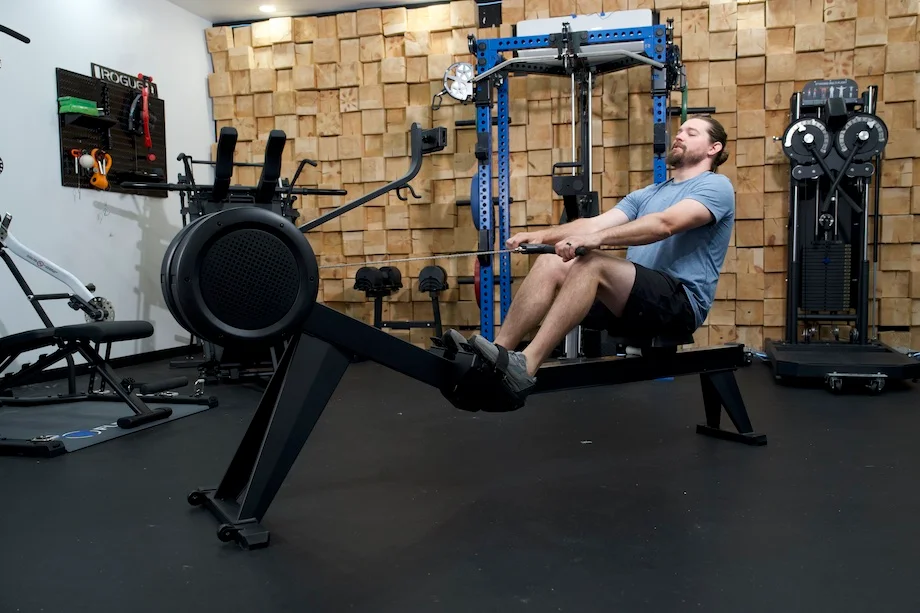
While these two machines can both offer an intense cardio workout, the movements and felt experiences are quite different when comparing rowing vs running. The moving belt of a treadmill mimics walking or running outside, which primarily stimulates lower-body movement. True, your arms move and pump with each stride, but you generally feel a treadmill workout in your glutes, hamstrings, quads, and calves.
A treadmill workout is a high-impact exercise where the joints, especially the knees, absorb the shock of each footstep. A treadmill’s running surface, called the running deck, may have some shock absorption, but there will be a moderate amount of stress placed across the feet, ankles, knees, and hips.
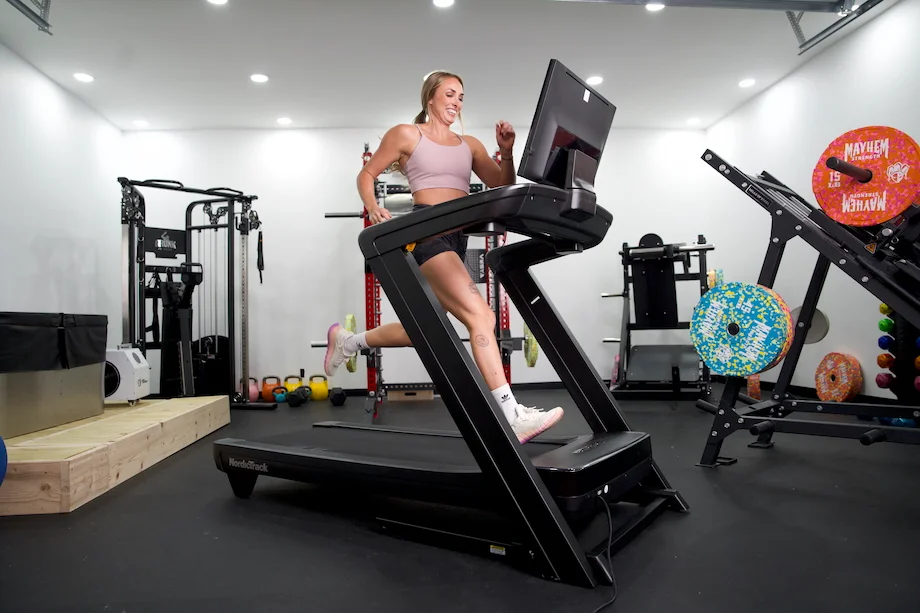
A rowing workout feels completely different because a rowing machine mimics the movements associated with rowing a boat through water. The rowing stroke activates the upper and lower body as you push and pull at the same time—an immersive engagement not typically found during treadmill walks or runs. Plus, the nature of the rowing movement activates the whole body without stressing the knees as much, according to a 2013 study¹ published in the Journal of Engineering in Medicine.
Before you strap your feet into a shiny new rowing machine, though, consider that there’s a small learning curve when understanding how to use a rowing machine. Some people find that rowing machines strain the lower back, even when they use correct form.
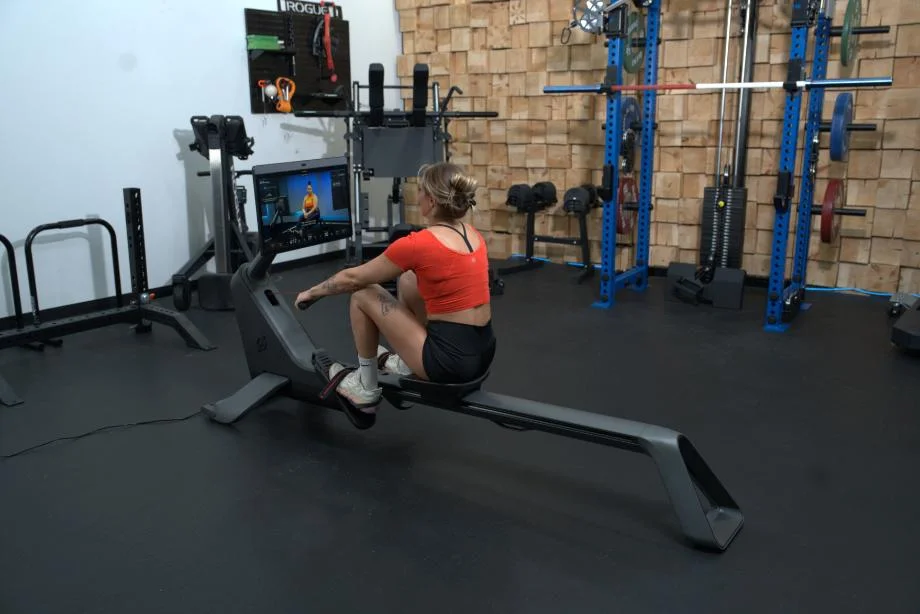
Those looking for a cardio machine to help burn calories may want to consider a treadmill, though both machines will increase your energy expenditure. According to a 2019 study² published in the International Journal of Research in Exercise Physiology, users typically burn 7.6 calories per minute on a rowing machine compared to 9.3 calories per minute on a treadmill.
You’ll have to consider that workouts aren’t just about calorie burn, as well. One of the many benefits of rowing is that you can build muscle and burn calories, unlike on a treadmill, where you might build strength in your legs, but you’re primarily burning calories while improving your cardiovascular health.
RELATED: Does Rowing Build Muscle?
Technology Comparison
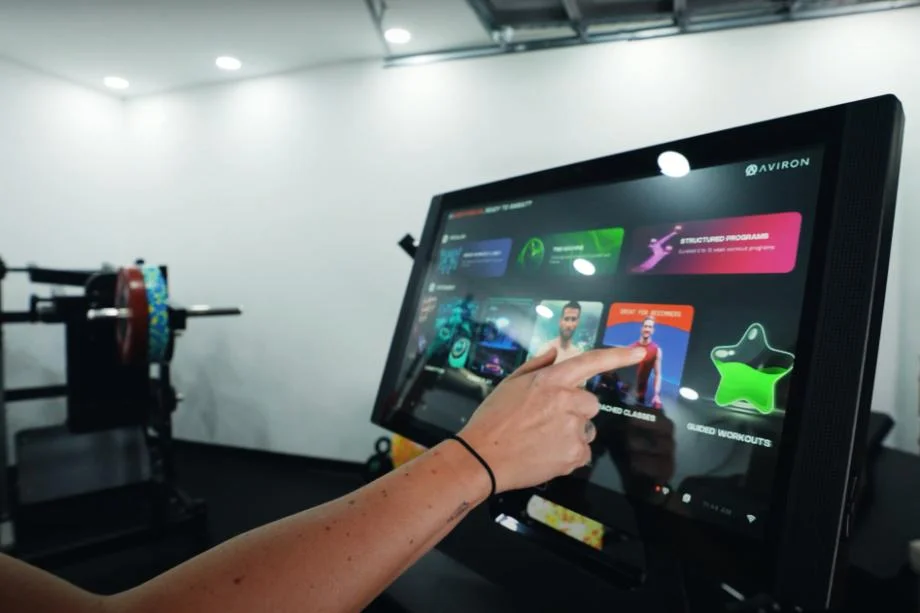
The more advanced rowing machines and treadmills have some very similar tech setups. For example, high-end treadmills and rowing machines may feature a large touchscreen for watching integrated programming or streaming entertainment platforms.
These models typically require a monthly subscription to a workout app, which can grant you access to hundreds and thousands of on-demand training modules led by fitness professionals. Some treadmills and rowing machines may include technology that allows instructors to automatically adjust speed, incline, and resistance settings for an even more focused workout experience—no need to fuss with toggles to match your on-screen instructions.
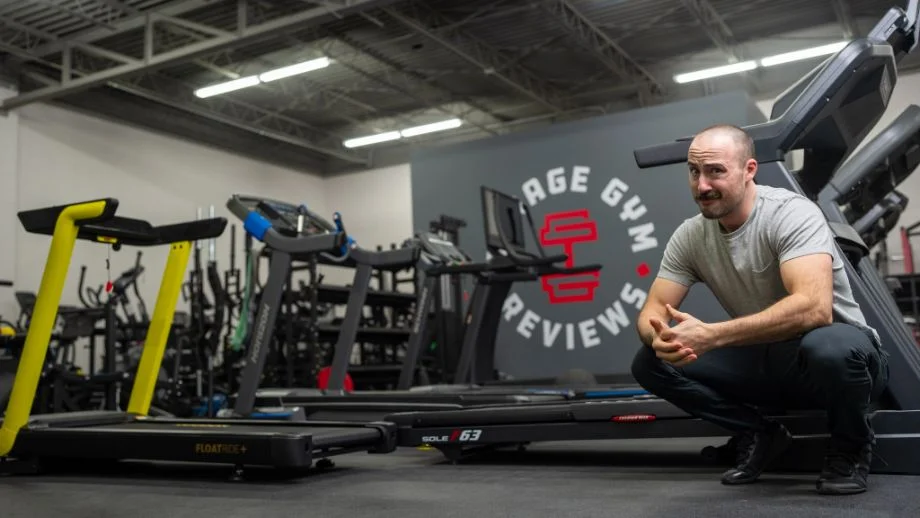
While the two are comparable, there are far more advanced treadmills currently available with access to thousands of integrated workouts than there are rowing machines on the market. Rowing machines are more likely to have a simple LCD display with readouts for common metrics such as distance, watts, and time. This isn’t to say you can’t find a rower with streamable programming or an immersive touchscreen, but your chances of such a setup are greater in the treadmill category.
Indoor rowers with built-in screens often feature a more gamified workout experience that feels more like a trip to the arcade. Popular profiles include the Ergatta Lite and Aviron Strong Series Rower. That said, the most common (and affordable) rowers still have minimal tech features compared to many treadmills on the market.
GGR Recommends — Aviron Victory Treadmill
Our testers are big fans of the Aviron Victory Treadmill thanks to its gamified programming that makes running feel fun instead of repetitive. As for the machine, itself, we like its sturdy build, low step-up height, and cushioned deck—all, of which, make the treadmill feel approachable and comfortable for a wide range of walkers and runners. The interactive games and streaming integrations help keep motivations high, especially for people who normally get bored with cardio.
Read our full Aviron Victory Treadmill review for more details.
Construction and Design Differences
Most of today’s treadmills have motors ranging from 2.5 to 4.0 horsepower, with more powerful models offering faster speeds and the ability to continuously run for longer distances. You can also find manual treadmills that forgo an integrated motor for less electrical requirements and a heightened sense of workout challenge—the literal human equivalent to a hamster wheel.
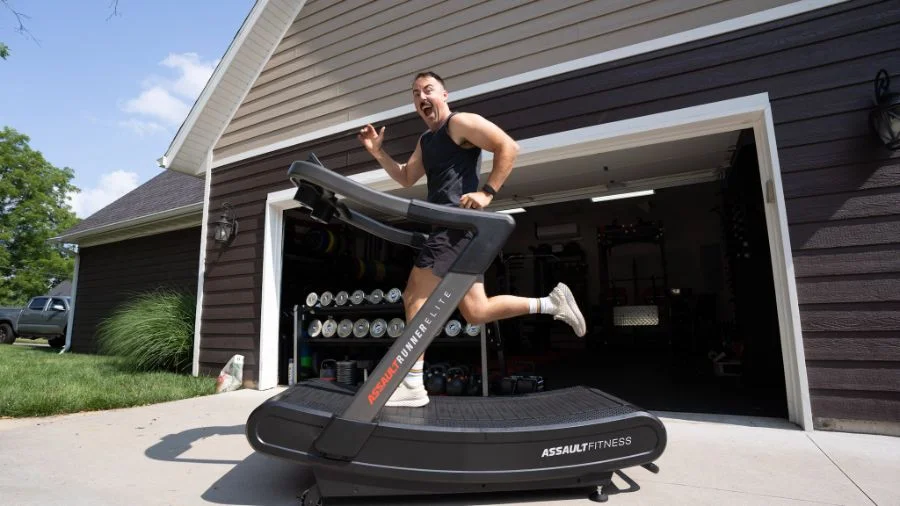
There’s a huge variety of price ranges, running surface sizes, and maximum weight capacities among treadmills, as well. Entry-level models may only accommodate users up to 200 pounds walking at a maximum speed of 2.5 to 3.0 MPH. Heavy-duty profiles, on the other hand, can reach max speeds of 12 MPH or higher and can often accommodate users up to 400 pounds.
Both treadmills and rowing machines come in stationary or folding designs. The deck of a folding treadmill typically folds toward the console. While it doesn’t make a huge difference in the footprint, it can make them more convenient for smaller spaces. These treadmills may have transport wheels under the console, too, so you can push them out of the way with greater ease.
Rowing machines often have a folding design that allows the rail and seat to fold toward the console. It makes for a tall but relatively thin piece of equipment. Considering that most rowing machines weigh less than a treadmill, they’re generally more portable.
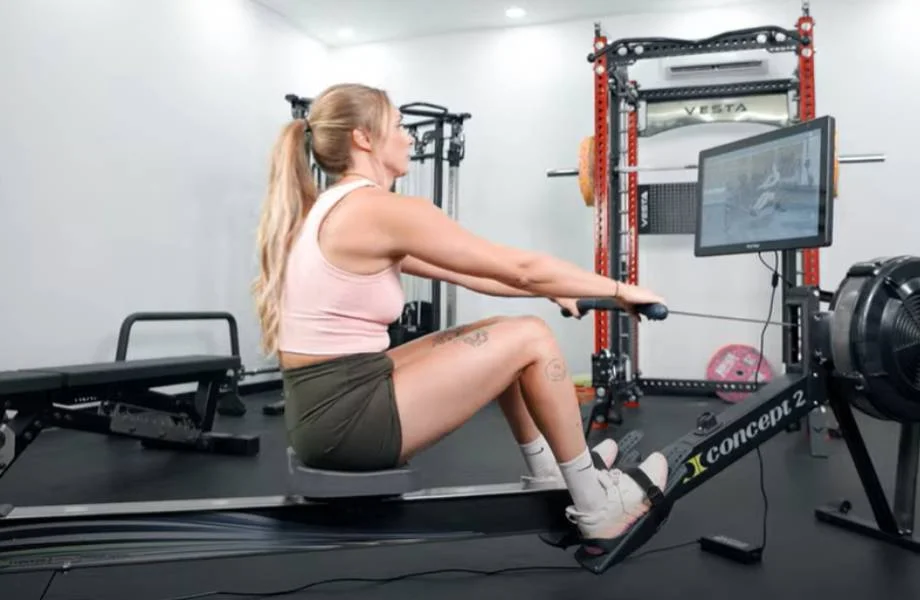
Rowing machines can be incredibly lightweight at around 60 pounds. These models may have a maximum weight capacity of around 250 pounds. More durable models can weigh around 200 pounds but accommodate users up to 500 pounds, which is higher than any residential-grade treadmill.
There’s also more variety in the rowing machine construction and design, and they’re divided into four basic types based on their resistance:
- Water
- Air
- Magnetic
- Hydraulic
These four types function similarly, but differ in ways that can make one a better fit than the others. For example, a water rowing machine feels (and sounds) more like rowing on open water. Competitive rowers often like them for the realistic experience. Air rowing machines use a fan blade and flywheel to create resistance, increasing intensity as you pull more vigorously through each rep. Air rowers tend to be noisy, though they do create a nice breeze while you work out.
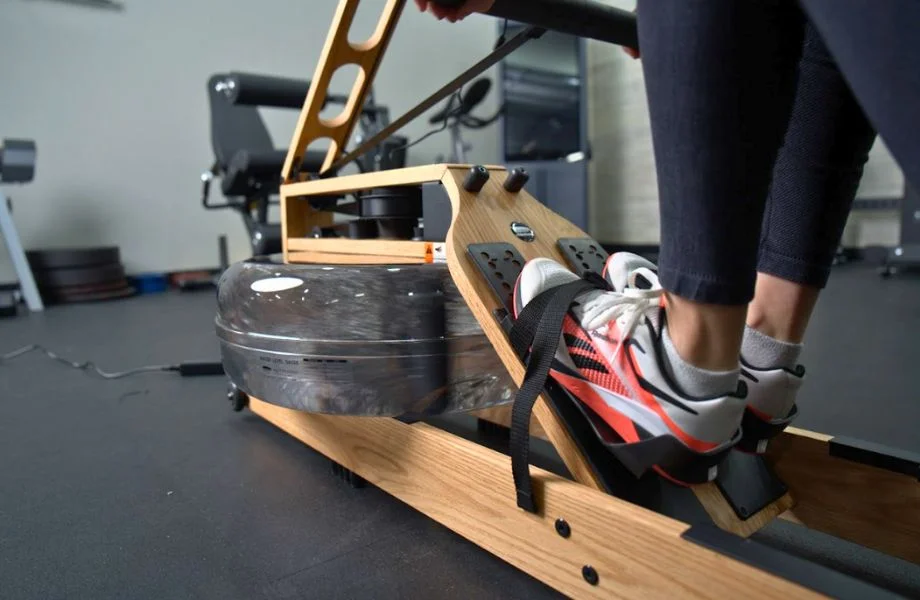
Magnetic rowing machines use magnetic eddy-current resistance to increase or decrease the force on a metal flywheel. The resistance is adjusted using a button or dial, offering a wider range of workout options than some other rowing machines. These models can also be quieter than air- or water-powered rowing machines.
Hydraulic rowing machines don’t have a flywheel, fan, or water. They can offer a great upper body workout, but do very little for the lower body. That said, they’re quiet, compact, and lightweight, making them easy to store.
GGR Recommends — Rogue Echo Rower
After testing the Rogue Echo Rower, we came away impressed by its extremely durable construction, smooth rowing stroke, and thoughtful design details geared toward CrossFit-style training. We especially liked features such as the oversized transport wheels and quick-release foot straps, which made transitions and storage easier than what we’ve experienced on many competing rowers. Based on our trials, the machine feels extremely stable during hard intervals and delivers performance that rivals the industry-standard Concept2 RowErg.
Read our full Rogue Echo Rower review for further insight.
Which One Is Right For You?
Take a good look at your fitness goals and workout style. Treadmills can offer a greater variety of workouts because you can use them to do high-intensity interval workouts (HIIT), hills, or heart rate workouts. Plus, you can walk or run at different speeds, inclines, or declines. Treadmills are also likely to have a media shelf on which you can watch content via a tablet or smartphone. Rowing machines don’t typically feature media shelves, which means you’ll need something else to keep you entertained.
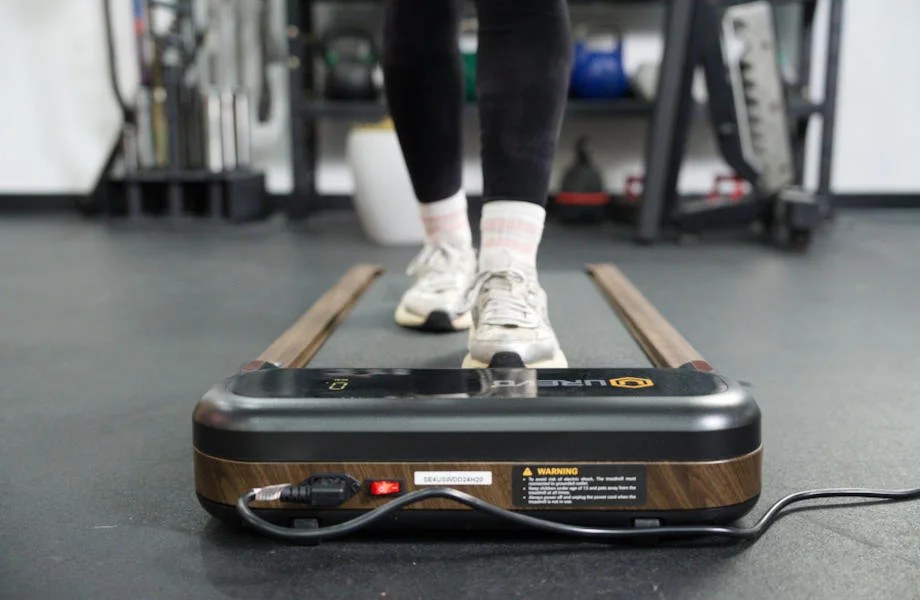
That said, if you have bad knees or joint pain in your lower body, an indoor rower may be a more comfortable fit. Some of the more expensive machines can connect to a fitness app, as well, that can grant access to large libraries of engaging, entertaining workout modules. Rowing machines can also be a more suitable solution for athletes needing compact exercise equipment, since the profiles are commonly lighter and more easily stored than larger, more cumbersome treadmills.
Treadmill Vs Rowing Machine: Final Thoughts
Both treadmills and rowing machines can offer incredible cardio workouts that you can adjust to your fitness level. If you love to run and need variety in your workouts, a treadmill can be an excellent choice. They’re easy to use, but they’re less portable and can be hard on your knees and joints.
Rowing machines aren’t difficult to use, either, but it might take a little work to develop your stroke. You’ll get a solid full-body workout, though there’s a little less variety and the potential to strain your lower back.
Either one is a great choice for a home gym, as long as you like it enough to use it regularly. Check your budget and available space, and put some serious thought into which machine will complement your workout style and goals best.
Treadmill Vs Rowing Machine: FAQs
Is rowing better than a treadmill?
Rowing is better for your knees than a treadmill, but as far as the cardio workout goes, it all depends on the strength of your stroke or how fast you run as to whether or not one offers a better experience for you. Both disciplines can offer excellent fitness benefits, so it ultimately comes down to your personal preference.
Which is better for weight loss, a rowing machine or a treadmill?
Whichever machine you will use most consistently is the best one for your weight loss journey. Treadmills and rowing machines are close enough in caloric burn that it’s more about which one you’ll use more regularly than one being better than the other. Your goals factor in, as well. For example, rowing machines can build strength while simultaneously improving cardio, but a treadmill will burn more calories per minute.
Can you lose belly fat on a rowing machine?
You can lose fat while using a rowing machine. You can also lose fat while using a treadmill. What you can’t do, however, is target where you lose fat. When you lose weight, you’re in a caloric deficit. Your body will get the energy it needs from fat throughout your body; not just in your belly. However, if you’re losing fat and using a rowing machine, which does require abdominal strength, you may notice more muscle definition as there’s less fat covering the muscles.
Is running or rowing better for fat loss?
Both running and rowing can be good solutions for fat loss. The goal is to burn more calories than you consume, and both equipment options have proven track records for supporting caloric burn in training. A better question might be—can you be more consistent with running or rowing? Regular exercise—coupled with a healthy, nutritious diet—is the fastest way to fat loss.
Can you build cardio with a rower only?
Absolutely! Any activity that keeps your heart rate elevated for an extended period can improve your cardiovascular endurance. This can be done on a treadmill, rower, stationary bike, or elliptical, or with tools like battle ropes and sleds. You can also improve your cardio without machines if you prefer activities like walking, running, hiking, or swimming.
References
- Fregly, B. J., Patil, S., & Steklov, N. Knee joint forces: prediction, measurement, and significance. Proceedings of the Institution of Mechanical Engineers. Part H, Journal of Engineering in Medicine. 2013; 226(2): 95. doi: 10.1177/0954411911433372
- Jensen, M., et al. A comparison of energy expenditure when exercising on 10 indoor exercise machines. International Journal of Research in Exercise Physiology. 2019; 14(2): 84-94.