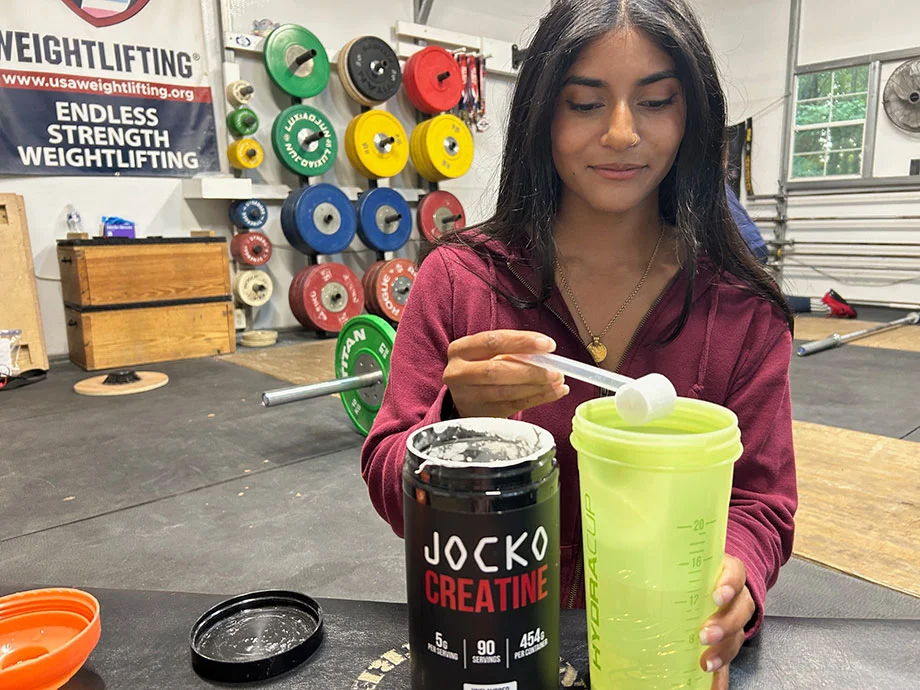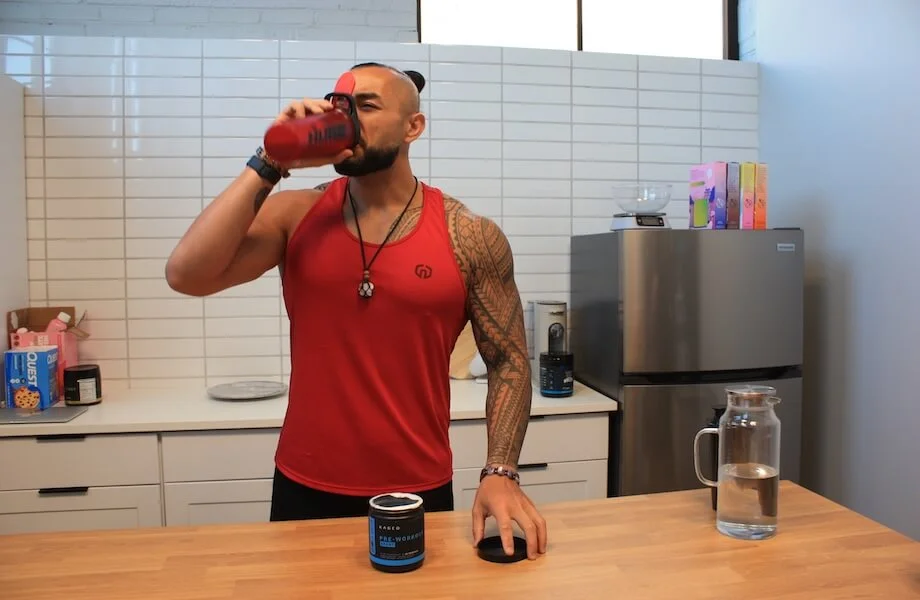



Here at Garage Gym Reviews, each product we review is based on extensive hands-on testing from our team members. We carefully test as many products as possible, and our testing methodologies allow us to calculate an unbiased score for each product.
By thoroughly testing every creatine product with our methodology, we’re able to find the best creatine supplements on the market and provide honest reviews. This, in turn, helps our readers find the best option for their goals, preferences, and budget.
For our supplement reviews, we have several testing locations where we can carefully analyze each product as we put it through our testing process. Many of our editorial members also have creatine products shipped to their homes, allowing them to use these profiles for several weeks at a time to test for any extended benefits, side effects, or other noteworthy callouts.
Our team of personal trainers, strength coaches, registered dietitians, certified nutrition coaches, and fitness enthusiasts has tested over 50 creatine products, searching for the best pick for strength gains, budget shoppers, mental clarity, and more. To date, we’ve helped over 5,799 people find the best creatine supplement for their goals and nutritional needs.
Our Values
Each supplement testing methodology has been carefully constructed by a team of experts, based on the most current scientific evidence we can find. We’re not just giving our own personal opinions here—we’re basing our review scores on the direct advice of professionals.
We have direct access to physicians, registered dietitians, and sports nutritionists who are able to help ensure we’re using the most up-to-date guidelines. Our editorial team members are also credentialed. Our roster includes the likes of certified personal trainers, certified strength and conditioning specialists, certified sports nutrition coaches, and more.
Our Process
For each buyer’s guide we create, we carefully review our database of products we’ve tested and scored, looking for those that ranked highly in the most important categories. If a product has any significant flaws or callouts, we’ll make a note of that in our reviews where appropriate.
We also carefully compare each product against the average formulation in the marketplace, ensuring we only recommend supplements our team would personally use and enjoy. Finally, we regularly review each product list, adding new formulas if we find ones that are a better fit, or removing products that no longer meet our testing standards.
In our product guides, we also compare each individual profile against the industry averages, which you can see in the table below:
| Category | Average Creatine We Test |
| Price per serving | $0.88 |
| Creatine per serving | 4.1 g |
| Type of creatine | Creatine monohydrate |
| Servings per container | 62 |
| Third-party tested? | Yes, but not by a major lab or organization |
Creatine Performance Testing
For those curious about how we test and score each creatine product, we’ve got you covered. Here’s a transparent look at the exact methodology we use to calculate each creatine review score. For each category, products are assigned a score of 1 to 5, allowing us to calculate an overall rating.

Price Per Serving
One of the first things to assess is the price per serving, which shows you a more refined cost of each product rather than the price per container. Creatine supplements often come in a variety of sizes, so rather than simply looking at the container price, we calculate the exact price per serving.
The average creatine we test costs $0.88 per serving, and we assign a 3-out-of-5 rating for this category to any creatine that costs between $0.50 and $1.00 per dose. Our highest price per serving scores are saved for any products that cost less than $0.50 per serving.

Ingredients and Formulation
With any supplement, the ingredients and formulation are some of the most important categories to score. This helps us determine whether the included ingredients have been proven to work and, more importantly, if they’re included in clinically-effective dosages.
If we find beneficial ingredients that have been added to creatine that may have been underdosed, we’ll make a note of this.

For creatine supplements, we want to see at least 3 grams per serving, the minimum recommended daily serving size reported by multiple scientific journals, for a product to earn 3 out of 5 stars. The most common and effective form is creatine monohydrate, but we may see other types of creatine, as well, though they haven’t been shown to be any more effective than monohydrate.
Many products contain a single ingredient—creatine monohydrate—with 5 grams per scoop, which is an ideal dose.
Some creatine formulations may include other ingredients, and if they do, we consider the efficacy of those additional compounds, as well as the respective dosing.
RELATED: What is Creatine?
Taste
While creatine is mostly flavorless when consumed on its own, many users prefer to mix it with something else, like juice or a protein powder, so we want to make sure the taste isn’t overpowering or off-putting. For any creatine product, whether flavored or unflavored, we also test it with plain water to get an accurate taste rating.
To get a 3 out of 5, we consider the creatine fine, but nothing special. Our testers are also instructed to save 5-out-of-5 scores for products they’d truly consider among the best they’ve ever tasted.
For creatine gummies, we rate the overall taste of the gummy, including any flavors that may be used.
Solubility and Swallowability
One of the most common concerns with creatine is its solubility, as it can be a little gritty. We test solubility by thoroughly mixing creatine in the suggested amount of water, looking for any floating residue or graininess while examining the overall consistency.

To get a 3 out of 5, there may be a few floating particles, or the product may separate after a few minutes and need a quick shake or stir. A few creatine supplements dissolve completely with no floaters or separation, earning 5-out-of-5-star ratings.
RELATED: Can You Mix Creatine with Protein Powder?
Since we use this methodology to rate creatine gummies, too, swallowability looks at the experience of chewing a gummy. We consider factors such as texture, ease of chewing, and the likelihood of it getting stuck in your teeth, among others.
Side Effects
If a supplement causes any unpleasant side effects, you’re not going to keep taking it, so this is an important category we test with every supplement. Creatine can cause water retention and cramping, as well as minor stomach upset, so we have our testers pay attention to how they feel.
However, we also use this category to assess a product for positive effects, like improved strength and energy in the gym.
To get a 3 out of 5, a creatine supplement may cause a few minor, but tolerable effects. 5-out-of-5 scores are awarded to products with zero negative side effects.

Transparency and Third-Party Testing
When we discuss transparency, we primarily focus on labeling practices. A good supplement should include the exact dosage of every active ingredient, allowing you to see exactly what you’re taking without question. If you see a proprietary blend on a supplement, the company is likely hiding the amount of each ingredient included, so we recommend avoiding these blends.
Third-party testing is also used to verify that a product contains exactly what is listed on the label, with no additional ingredients or contaminants. The FDA doesn’t strictly regulate supplements, so third-party testing is a way to verify that a given product is safe for use and accurately labeled.
To get a 3 out of 5 rating, the company seems transparent and uses clear labeling, but may not be certified by a major organization like NSF, Informed Choice/Sport, or Banned Substance Control Group (BSCG). If a product is tested by one of these major organizations, we’ll give it a higher score for third-party testing.
Customer Experience Testing
While testing the product itself is important, we also take the customer experience into account when evaluating our overall product score. If you have issues with a supplement, we want to know how accessible the company is to help you out. We also consider the feedback of real customers who have purchased a product, instead of relying solely on our own opinion.
Customer Service
For supplements, we primarily consider return policies and customer support. Many dietary supplements can’t be returned due to food safety concerns, but we also want to know how easy or difficult it is to reach someone if you need assistance.
To get a 3 out of 5, a company is relatively easy to reach via phone, email, or live chat options, and may allow returns on unopened products. For a 5-out-of-5 rating, a company should be very easy to contact, and they should offer free returns, even on opened products.
Customer Reviews
This number is pulled directly from the company’s website, Amazon, or other third-party retailers. We look at the average customer review score, which is then factored into our final product rating.
Overall Score
After carefully assigning a score to each category, we can then calculate our final score. The rating is based on the performance of a given creatine in each category, and we take the average of each score to calculate an overall product score, as shown below: