


Searching for the best healthy meal delivery services? Daily Harvest and Sakara Life are two popular plant-based choices, each offering distinct approaches—from frozen, mix-and-match options to fully prepared weekly meal plans.
For this Daily Harvest vs. Sakara review, I, a registered dietitian nutritionist, teamed up with expert testers to break down how each service compares, using our detailed methodology to provide assessments and ratings across categories such as ingredient quality, taste, meal prep, customization, and more.
So, ready to find out which service best suits your lifestyle and goals? Let’s unbox our findings!









Daily Harvest is a flexible and clean plant-based meal service for busy people. It’s suitable for anyone who wants convenient, nutrient-packed meals with zero hassle. The meals arrive frozen and take just a few minutes to reheat or blend. However, they may not be substantial enough for athletes or individuals who have higher calorie needs.




Sakara is the gold standard in luxury meal delivery—offering convenience, clean ingredients, and next-level presentation. But it comes at a steep price and may not fit high-protein diets.
What our tester says:
“The food is really good, especially for being gluten free and dairy free. The baked goods especially impressed me, but the dairy-free parfaits were really good, too. I was less impressed with the ‘metabolism latte’ coffee susbtitute drinks, but they were OK.”
Comparison Chart
| Daily Harvest | Sakara | |
| Price per meal | $5.99 to $11.99 | $26 to $33.50 |
| Minimum meals | $50 minimum | 6 |
| Subscription options | Choose and adjust selections each week | 2 to 3 days per week with 2 to 3 meals per day |
| Delivery cadence | Weekly | Weekly |
| Fresh or frozen | Frozen | Fresh |
| Diet options | Vegetarian, Keto, Plant-Based, Paleo, Organic, Low-Calorie, Whole 30 | Vegetarian, Vegan, Gluten-Free, Dairy-Free, Plant-Based, Organic |
| Delivery area | Most of the continental U.S., excluding Alaska and Hawaii | Contiguous U.S. |
Quick Look: Daily Harvest vs Sakara
When comparing these meal services, think about how much control you want over your meals—whether you prefer choosing from frozen options or receiving fresh, fully prepared dishes from a set weekly menu. Your wellness goals, budget, openness to new flavors, and desired variety are also important factors to consider.
Who Should Buy Daily Harvest
- Individuals who prefer selecting their own meals.
- Those who don’t mind frozen meals and snacks—such as breakfast bowls, high-protein smoothies, pastas, and grain bowls.
- Those who do minimal meal prep with a blender, microwave, and/or stovetop.
- Those tracking their macros for weight loss, muscle gain, or other fitness goals, as nutritional information is readily available.
Who Should Buy Sakara
- Those with a flexible budget.
- Individuals who prefer a structured weekly menu.
- Adventurous eaters open to trying new flavors and ingredients.
- People who desire fully prepared meals with little to no cook time.
- Those focused on building healthier eating habits rather than tracking macros, as nutritional details aren’t emphasized.

Key Similarities Between Daily Harvest and Sakara
- Both are plant-based meal delivery services.
- Both emphasize nutrient-dense, whole food ingredients and organic meals.
- Both tend to have smaller portion sizes, based on our testers’ experiences.
- Both primarily offer meals as individual servings.
Important Differences Between Daily Harvest and Sakara
- Sakara is the premium option with a higher price tag, while Daily Harvest is more budget-friendly.
- Daily Harvest provides detailed nutrition information, while Sakara is much less transparent.
- Daily Harvest lets you pick your meals each week, while Sakara follows a structured, pre-set plan.
- Sakara rotates a weekly menu for variety, whereas Daily Harvest uses a static a la carte menu with several options.
- Daily Harvest sells protein powder while Sakara leans into supplements like fiber, protein bars, and gummies.
Cost
The million-dollar question: Are these meal subscriptions worth the price? Budgets vary, so it’s helpful to compare each option to what you typically spend at the grocery store or on takeout, while also considering what you’ll pay for the convenience of meal delivery.
Daily Harvest: Meals typically cost around $10 each, though price points vary depending on the number of meals and items ordered per box. Our tester, Amanda Dvorak, ISSA-CPT, ISSA-CNC, rated the cost a 3 out of 5, noting that the portions are small and, “$10 feels like a lot for what you get and the level of satiety that follows.”

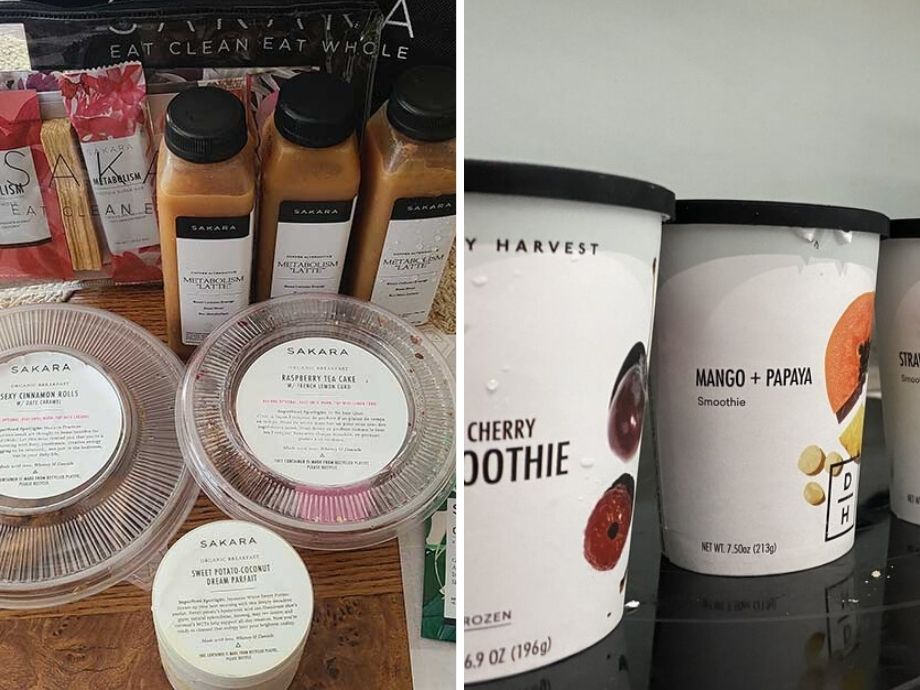
Sakara: Sakara comes with a premium price tag, with meals starting around $27 depending on the plan—how many days per week and how many meals per day you choose. Our tester Frieda Johnson, NASM-CNC, ISSA-SET also mentioned her box included non-meal items like an insulated tote bag, a “metabolism” snack bar, and a stick of palo santo incense, which she didn’t feel added much value. Overall, Sakara earned a 1 out of 5 for cost, though the high-quality ingredients may still make it worthwhile for some.
If budget is your main concern, check out our guide to the cheapest meal delivery services, including options like Purple Carrot and HelloFresh, which also offer vegan meals.
Ingredient Quality
Both services focus on whole, plant-based, organic ingredients, but Sakara’s fresh-food approach gives it the edge over Daily Harvest’s frozen meals.
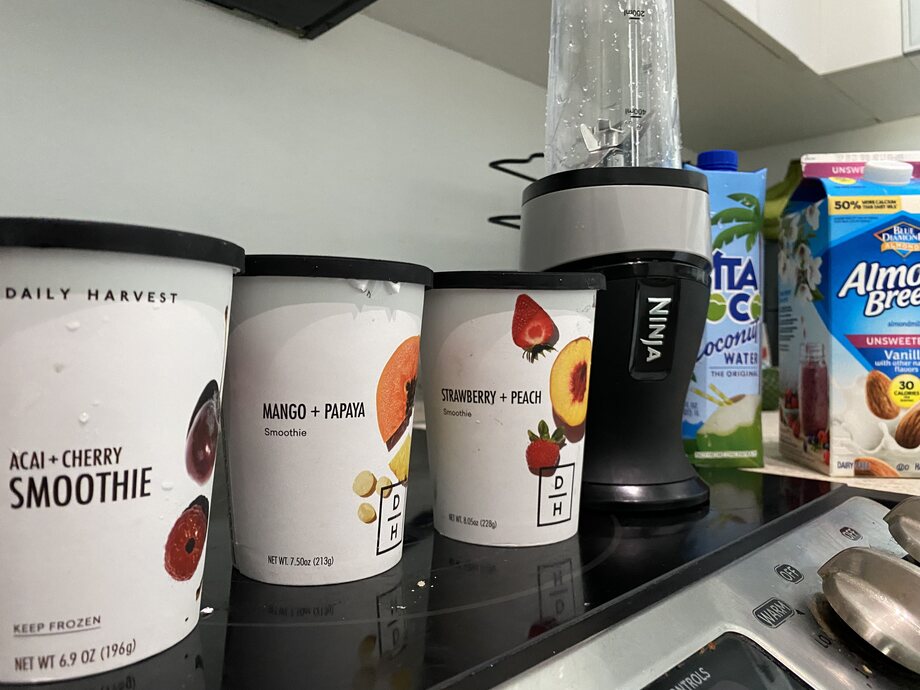
Daily Harvest: Amanda found the ingredients to be decent but not exceptional. The smoothies stood out for their quality, while flatbreads were “limp and sad,” skillet meals needed extra seasoning or toppings, and microwavable oat bowls tended to get mushy. Overall, “everything felt and tasted just OK,” earning Daily Harvest a 3 out of 5 for ingredient quality.
Sakara: Although specific sourcing details couldn’t be verified, Sakara highlights that its “freshest and highest quality ingredients” are sourced from non-GMO, organic, and regenerative farms. Frieda adds that the meals are plant-rich, gluten- and dairy-free, and made without refined sugar. “I was impressed by how fresh the food seemed,” she shares, awarding Sakara a strong 4.5 out of 5 in this category.
Taste
While Daily Harvest had a few standout items—especially the smoothies—Sakara’s meals offered a more reliable balance of fresh, flavorful options.
Daily Harvest: Amanda had fond memories of Daily Harvest from when she first tried their smoothies, and she was excited to explore the expanded menu, including soups, oat bowls, flatbreads, and skillet meals. “Unfortunately,” she shares, “I was disappointed with the taste of pretty much all of the items I tried. The smoothies are still yummy, and one flavor of oats (Mulberry Dragon Fruit) that I got was pretty good.” She found most other options—like the flatbreads and rice bowls—fell short in flavor and required her to add her own seasonings. Ultimately, she rated the taste a 3 out of 5.
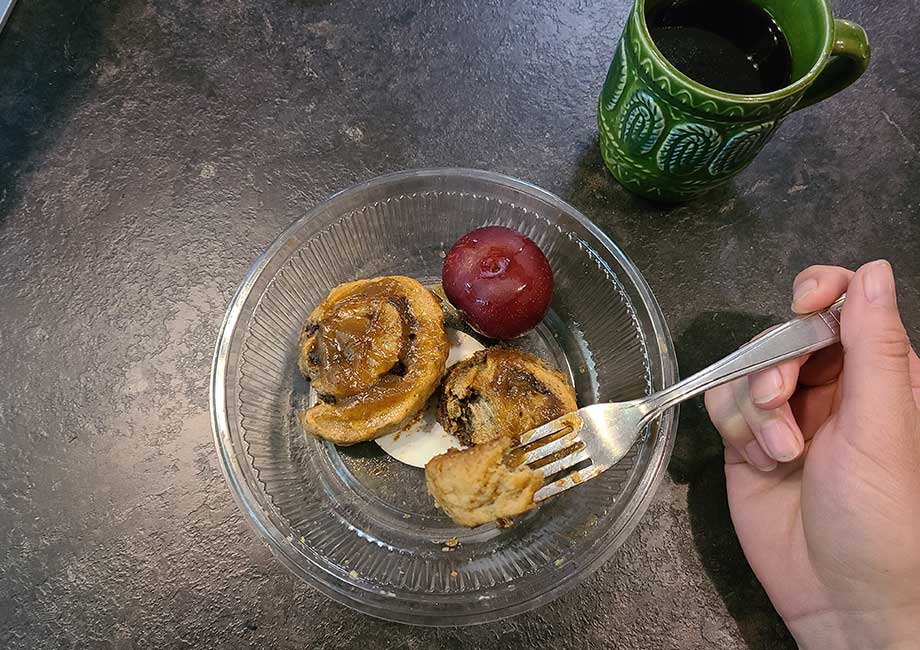
Sakara: Even though the food is gluten- and dairy-free, which isn’t everyone’s preferences, Frieda noted that the food is “really good.” She adds, “The baked goods especially impressed me, but the dairy-free parfaits were really good, too. I was less impressed with the ‘metabolism latte’ coffee substitute drinks, but they were OK.” With many more hits than misses, she ultimately rated Sakara’s taste a glowing 5 out of 5.
Ordering
The ordering process should be seamless and transparent, meaning you can see what you’re getting before committing to a subscription plan. Luckily, both Sakara and Daily Harvest earn perfect 5 out of 5 ratings in this category, as they make ordering simple and straightforward without strings attached.
Daily Harvest: Amanda notes, it’s “very easy to sign up and order: just create an account and start adding things to your box.” One thing to keep in mind is that your order must total at least $50.
Sakara: With Sakara’s signature program, you can pick a three- or five-day program, choose two or three meals per day, and include up to six add-on drinks and two add-on proteins. Frieda recalls that the process was easy, and there’s an option to place a one-time order, so you don’t have to worry about canceling a subscription.
Sustainability
Both services take steps toward eco-conscious practices, but Daily Harvest stands out as the more sustainable option.
Daily Harvest: Amanda rated Daily Harvest’s sustainability a perfect 5 out of 5, highlighting the brand’s detailed recycling guide, which “tells you what is and isn’t recyclable and how to best dispose of each item.” Meals arrive packed with dry ice, reducing waste compared to traditional ice packs.
She adds, “Everything came packaged well and arrived cold, remained cold with dry ice, which is absolutely clutch for me as someone who lives in a condo building and dealing with ice pack disposal/recycling is annoying. I was very glad to not have to shove more ice packs that I will never use into my not-giant freezer.”

Sakara: Sakara uses 100% BPA-free containers made from recycled PET plastic, with boxes and liners also made from recycled materials. Ice packs are non-toxic, water-soluble, and recyclable with instructions for safe disposal. Sakara also encourages compostable practices—like keeping a compost bin under your sink and donating to your local community—on its website.
However, shipping in two separate boxes each week doubles packaging and shipping resources, limiting the overall eco-friendliness. Still, Frieda appreciated the reliability, noting, “They also included five ice packs in each box I received, which was actually effective at keeping the food cold even though I live in a very rural area and shipping is not always reliable. I had no issues at all; the boxes both arrived when expected and the food was fresh and cold.” Overall, she rated Sakara’s sustainability efforts a 3 out of 5.
Customer Reviews
Daily Harvest reviews focus on individual products, which generally score well, but provide limited insight into the overall customer experience. In contrast, Sakara mostly receives praise for its flavorful, vegetable-packed meals, yet many customers report delivery problems and difficulties with customer service.
Daily Harvest: Reviews primarily focus on individual products rather than the service as a whole, with most items scoring 4 stars or higher and none falling below a 3 out of 5. The Butternut Squash + Cauliflower Mac n’ Cheeze is one of the least-loved savory meals, with some reviewers noting it lacks a cheesy flavor, though others enjoy it enough to reorder. Similar patterns appear in certain smoothie reviews, where a few found flavors bland or the fruit underripe, while chocolate options and smoothies mixed with milk receive the most praise.
It’s worth noting that these reviews are hosted on Daily Harvest’s site, which may introduce bias and does not reflect the company’s overall service, including customer support.

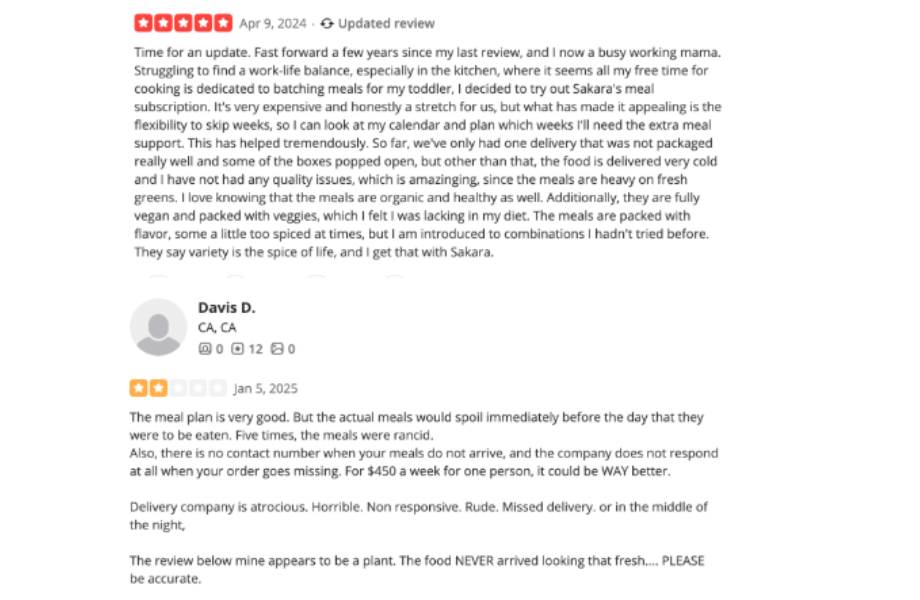
Sakara: Sakara currently has 344 Yelp reviews, averaging a score of 3.6. Reviews are mixed, with positives highlighting the organic, vegan meals that are packed with vegetables and flavor. However, a number of customers have reported problems with delivery, including spoiled or missing meals, and unresponsive customer service, which has negatively impacted the overall experience for several users.
Company Policies
When it comes to company policies, Daily Harvest offers multiple contact options and a detailed FAQ, though return and refund information isn’t clear. Sakara, on the other hand, has stricter refund rules and mixed customer service experiences.
Daily Harvest: Amanda notes that Daily Harvest offers multiple ways to get in touch, along with a robust FAQ section, making it easy to find answers or get help. However, the site provides no clear information on returns or refunds, which brings its rating down to a still solid 4 out of 5.
Sakara: Frieda didn’t personally interact with Sakara’s customer service, but she observed negative reviews from others reporting poor experiences. The site also states that refunds are only issued under extenuating circumstances due to the perishable nature of the meals. These limitations contribute to a lower score, giving Sakara a 3 out of 5 in this category.
Meal Plans & Customizations
Daily Harvest lets you mix and match its offerings with dietary filters, while Sakara’s pre-selected weekly meals and extras offer less flexibility. Which works best depends on your dietary needs and preferences.
Daily Harvest: Daily Harvest doesn’t have set meal plans, and rather lets you mix and match smoothies, oat bowls, flatbreads, and other offerings as long as your order totals at least $50. You can also filter meals based on dietary preferences—such as gluten-free and keto diets—though those with severe food allergies should note that the facility also processes dairy, nuts, soy, and gluten. This combination of flexibility and dietary filters earned Daily Harvest a 4-out-of-5 rating.
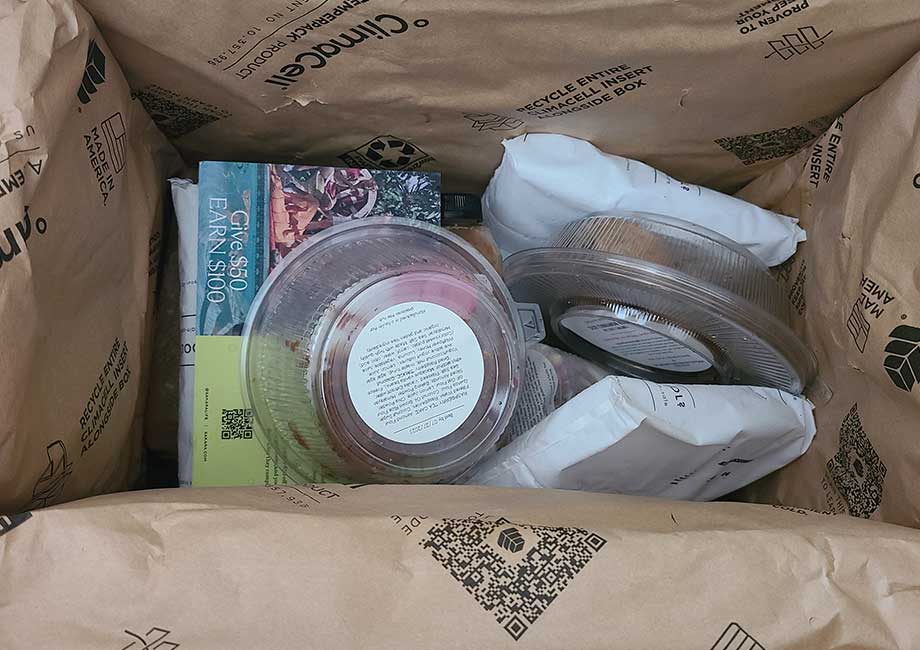
Sakara: Frieda found Sakara’s programs unconventional, sharing, “These are a bit odd because the ‘programs’ mostly seem to include additional things besides meals. For example, with my order of the basic meal plan—the Signature Nutrition Program—in addition to the meals, I received Detox Tea and a packet of probiotics.”
Sakara also offers its ‘Level II: Detox’ program, which features five days of curated meals (breakfast, lunch, dinner), daily hydration touchpoints with tonics and drinks, precision-formulated supplements, body gua sha for lymphatic support, and a digital guide with a daily checklist.
Regardless of the program, customization is limited, meals are pre-selected each week, and dietary filters aren’t available. This makes Sakara less ideal for those with allergies or specific dietary restrictions, and the lack of full nutritional transparency earns it a 3 out of 5 in this category.
Variety of Meals
Variety helps keep meals enjoyable and sustainable, but how much it matters is a personal preference. Sakara offers a rotating weekly menu with plenty of options, although some meal types—especially lunch salads—repeat. Daily Harvest, on the other hand, offers a variety of quick-prep freezer meals, which some may find convenient; however, the flavors and menu may become repetitive over time.
Daily Harvest: Amanda found Daily Harvest practical but not particularly exciting, saying, “I think Daily Harvest has great offerings for people who eat because they need to survive and not because they really enjoy a culinary experience.” While there are many options, the quick-prep style and repetitive menu may not satisfy those seeking a more adventurous or flavorful experience, resulting in a 3 out of 5 for variety.
Sakara: “The menu changes every week,” notes Frieda, “so there is lots of variety.” However, she docked a point in the overall rating, landing on a 4 out of 5, and explained that “two of my five meals were parfaits and it looks like every single lunch is a salad.” Overall, Sakara provides plenty of rotating options, though some meal types repeat.
Meal Prep
Daily Harvest meals require a bit more hands-on prep depending on the type, while Sakara’s options are mostly ready-to-eat with minimal effort.
Daily Harvest: Amanda notes that prep varies by meal type. While she appreciates that all the fruit and ingredients are pre-chopped, she points out, “Smoothies, by nature, are annoying to make and clean up. You still have to use a blender, obviously.” Most meals are simple to prepare. “Oven meals, like the flatbreads, are simple: You just have to wait for the oven to preheat and then bake, so you still have to account for and plan for the time element,” she says.

Amanda found the easiest meals to prepare were the Harvest bowls, soups, and forager bowls. “All you do is add water, milk, or broth depending on the meal and microwave it,” she said, adding that she likes that you can microwave them in the bowls they come in. Grains meals are larger with multiple servings but still straightforward: “Just dump the bag into a hot skillet with cooking liquid and you are good to go.” Overall, while prep is far less than traditional meal kits like HelloFresh, some is needed, resulting in a 3.75-out-of-5 rating in this category.
Sakara: Frieda found Sakara extremely convenient, stating, “Since I chose breakfast meals, I didn’t even need to heat them up… I just opened the container and ate it (although heating was optional for things like the cinnamon rolls and tea cake).” Lunches are all salads with no prep required, and while some dinners need heating, the minimal effort earned Sakara a perfect 5-out-of-5 score for meal prep.
Portion Sizes
Hunger and appetite aren’t one-size-fits-all, so experiences can vary from person to person. In general, our testers found Sakara’s meals to be very small, while Daily Harvest offers slightly larger portions that may be more filling, though some meals may still leave you wanting more.

Daily Harvest: Amanda noted that portions were minimal and often not filling. “I see these items, particularly the oat bowls and smoothies, as more of a snack than a meal,” she said. “The flatbreads could fill you up depending on how hungry you are. The skillet meals have multiple servings according to the label, but when I made mine, I ended up eating almost the entire bag. That was after a long training session so this won’t be the case for everyone, probably.”
Sakara: Frieda found the portions to be tiny. “I definitely had second breakfast on the days I ate these!” she said. “I would consider them to be good snacks, but not a complete breakfast. I can’t speak to how large the lunches and dinners are, but the images online aren’t very promising.”
Final Thoughts
When it comes to choosing between Daily Harvest and Sakara Life, it ultimately depends on your priorities and lifestyle.
Daily Harvest is ideal for those who value meal customization, prefer frozen options, want clear nutritional information, and are comfortable with minimal preparation.
Sakara Life, on the other hand, is better suited for individuals seeking a premium, structured meal plan with fully prepared meals and additional wellness support to promote overall well-being, provided you’re open to the higher price point.
Daily Harvest vs. Sakara: FAQs
Is Daily Harvest actually healthy?
Yes, Daily Harvest meals can be considered healthy food. They use mostly organic fruits and veggies, and while these ingredients are frozen, research1 shows that frozen produce often retains just as many nutrients as fresh, and sometimes even more2—especially compared to produce that’s been sitting in the fridge for several days.
What is the healthiest meal subscription service?
There’s no single “healthiest” meal subscription service, as the best choice depends on your goals, dietary needs, and preferences. For example, Hungryroot is ideal for those with dietary restrictions or food allergies, offering groceries and recipes free from common allergens. Green Chef is a great option if organic ingredients are a priority, while Daily Harvest and Sakara are strong choices for those seeking plant-based meals.
Why am I not losing weight with Sakara?
While Sakara offers healthy meals, weight loss ultimately comes down to maintaining a calorie deficit. Since Sakara doesn’t provide calorie or macro counts, it’s hard to know if you’re truly in a deficit—and on days you’re not eating Sakara, your other food choices may also be impacting progress.
References
- Li, L., Pegg, R. B., Eitenmiller, R. R., Chun, J.-Y., & Kerrihard, A. L. (2017). Selected nutrient analyses of fresh, fresh-stored, and frozen fruits and vegetables. Journal of Food Composition and Analysis, 59(59), 8–17. https://doi.org/10.1016/j.jfca.2017.02.002
- Bouzari, A., Holstege, D., & Barrett, D. M. (2015). Vitamin retention in eight fruits and vegetables: a comparison of refrigerated and frozen storage. Journal of Agricultural and Food Chemistry, 63(3), 957–962. https://doi.org/10.1021/jf5058793