

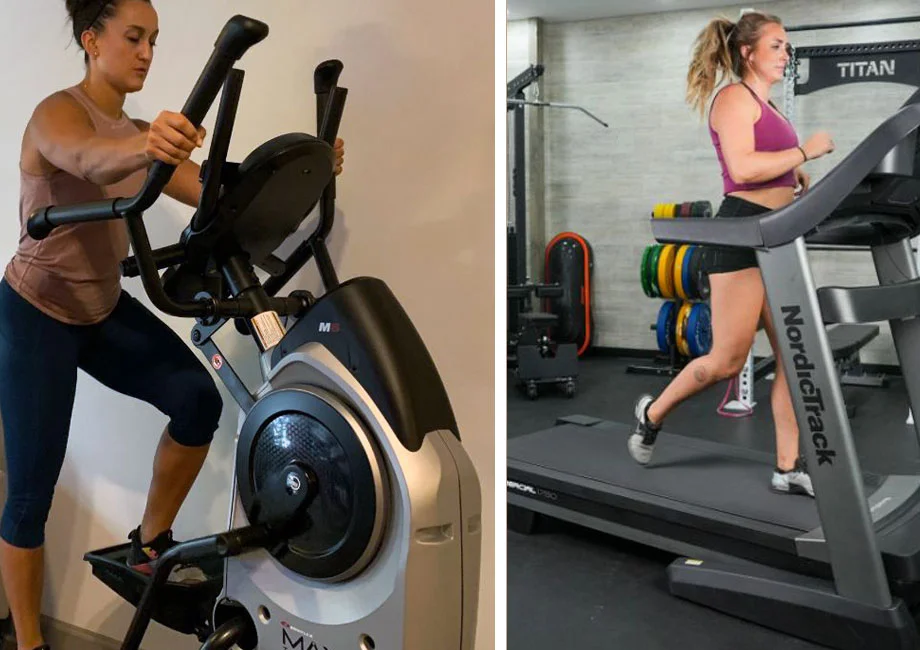
Regular aerobic exercise is important for achieving your fitness goals and essential to overall health. Thankfully, there’s no shortage of ways to get your cardio in at the gym with all the cardio machines available. You’ve got your ellipticals, rowers, stationary bikes—oh my!—but we’re here to discuss two other popular pieces of equipment: the treadmill and the StairMaster.
RELATED: What Does Cardio Do to Your Body?
While both the treadmill and StairMaster put your cardiovascular system to work, these workouts aren’t the same. But is one better than the other? Does the StairMaster have a step-up on the treadmill? We’re here to help you decide, and in this guide, we’ll do a deep dive into the StairMaster vs treadmill debate.
What Are StairMasters and Treadmills?
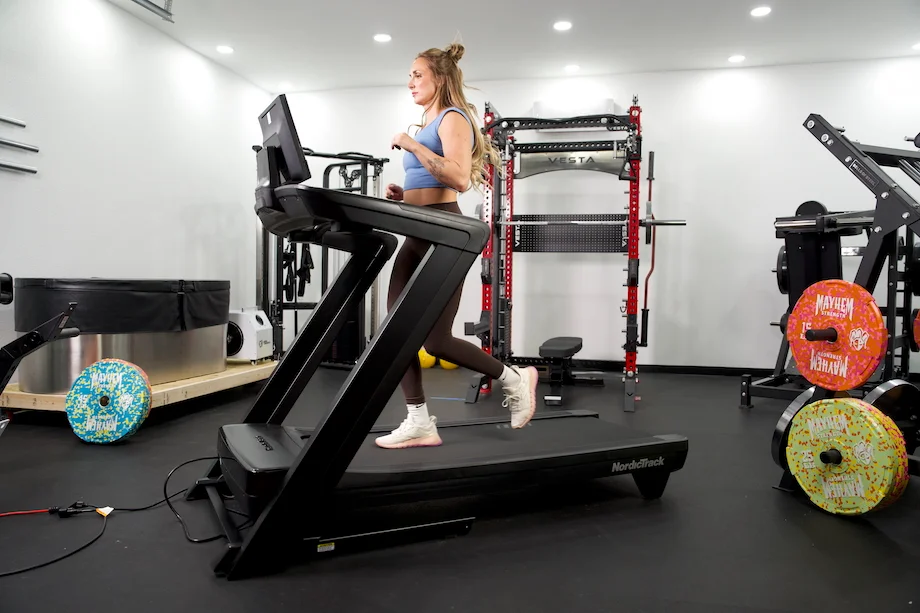
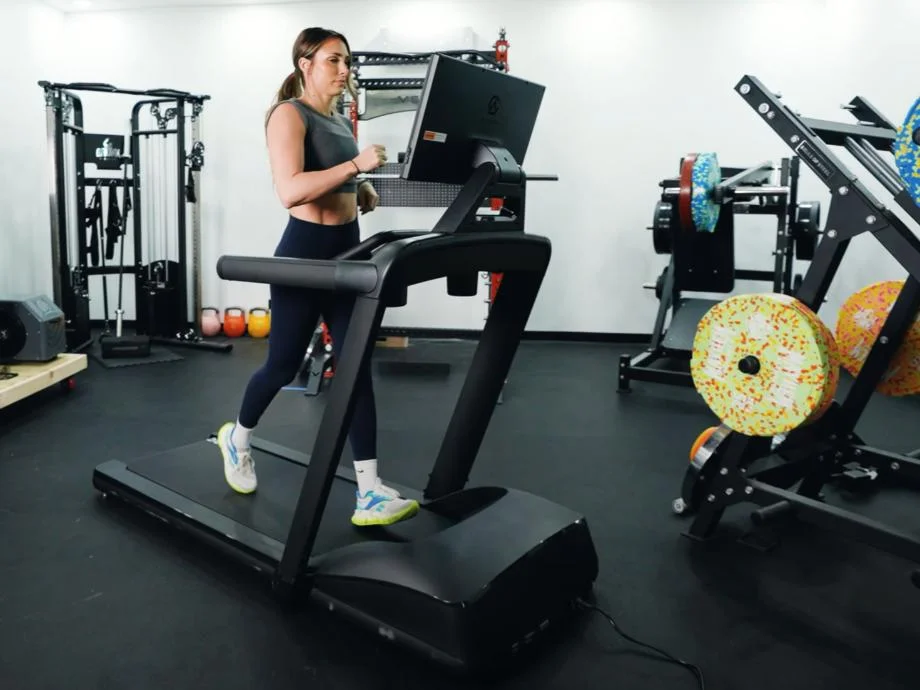
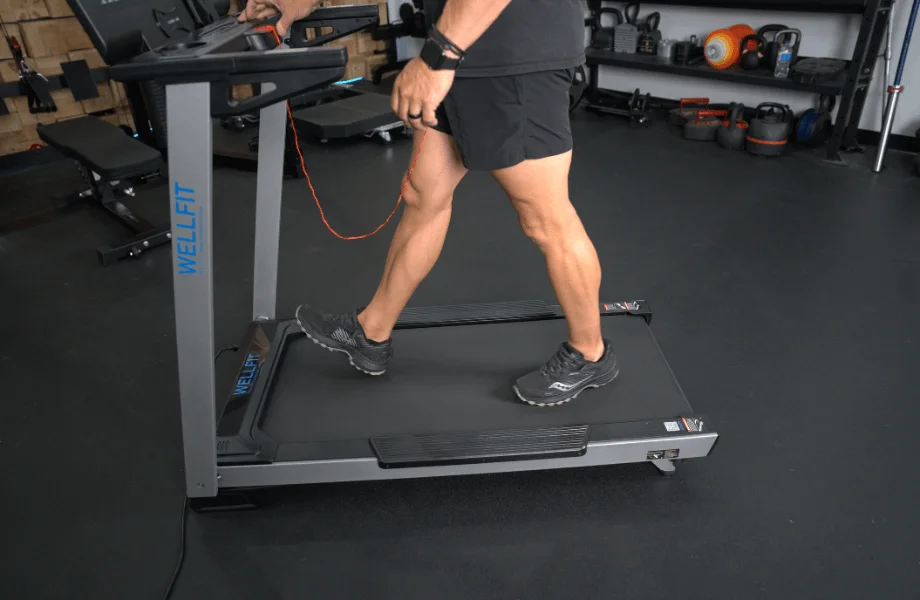
The treadmill is an all-time classic cardio machine that allows users to customize their cardio exercise to fit their fitness goals. Its rotating belt simulates walking, jogging, running, or sprinting at different speeds and inclines. The treadmill offers the benefits of road running without worrying about weather or traffic.
This form of exercise calls on many muscle groups, including the calves, quadriceps, hamstrings, core muscles, and upper body. A treadmill workout might look like steady-state cardio, where you pick one speed and run out the clock, or it might include high-intensity interval training (HIIT) with bursts of speed followed by periods of recovery. Its adjustable settings give this machine tons of versatility in a controlled environment, making it an excellent option for people of all fitness levels.
RELATED: Best Treadmills For a Home Gym
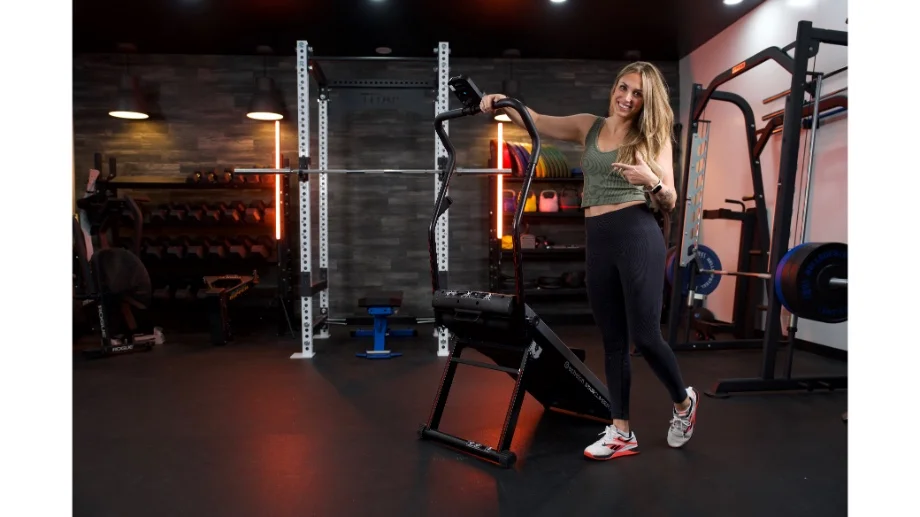
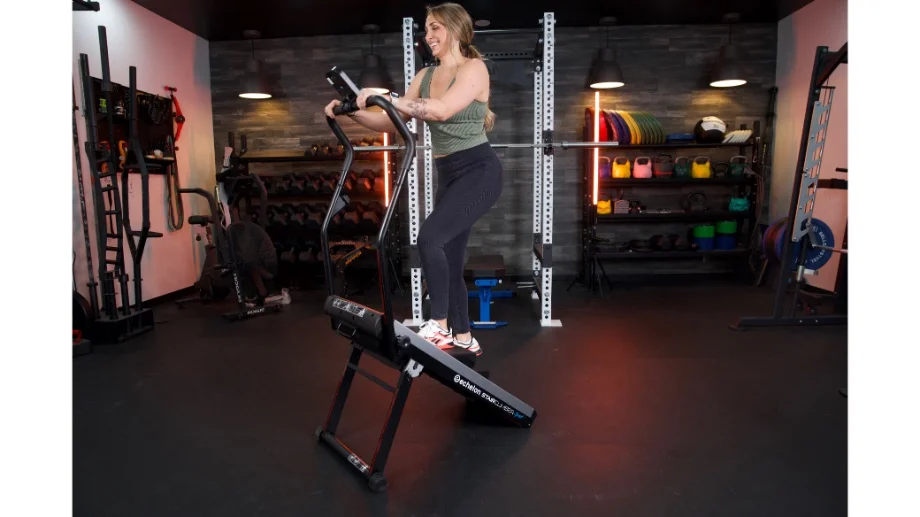
The StairMaster, on the other hand, is the brand name for a stair stepper. Some gyms may interchangeably call this type of cardio machine the StairMaster, a stair stepper, or a stair climber. But no matter what you call it, it provides a hard-hitting cardio workout with its relentless ascent. Its rotating steps simulate a never-ending set of stairs, providing a high-intensity but low-impact workout.
StairMasters engage large lower-body muscle groups, including your calves, quads, and glutes, but the movement pattern minimizes joint stress compared to running. The machine helps raise your heart rate and maximize calorie burn for fat loss and muscle building. It’s an excellent choice for those who want to improve their functional fitness and lower-body strength.
RELATED: Best Weight Loss Programs
Both machines are powerhouses for cardio workouts, and both can help improve endurance and strength when included in a well-balanced training schedule. However, their differences may make one a better fit for your fitness needs.
Differences Between the Stairmaster and Treadmill
The apparent difference between the StairMaster and the treadmill is the range of motion and movement mechanics, but their differences don’t stop there. These two pieces of cardio equipment bring unique benefits and drawbacks—all important to consider when deciding what to add to your workout schedule.
Muscles Targeted
The StairMaster primarily engages muscle groups in the lower half of your body, while the treadmill is more of a full-body workout. Climbing stairs provides a high-intensity, low-impact cardio workout that helps you build strength in your calves, quads, hamstrings, and glutes. Treadmill running also engages these muscles; however, it also strongly engages your core and upper body.
RELATED: Design a Lower-Body Workout
Difficulty Level
Your workouts are what you make them, so the difference in difficulty of the StairMaster vs treadmill is entirely up to you. That said, the treadmill offers more versatility, giving users more opportunity to up their training intensity. Of course, you can always adjust the resistance of the StairMaster to increase your number of steps per minute and the demand put on your cardiovascular system.
RELATED: Beginner Cardio Workout
Both machines can serve all fitness levels, but the treadmill tends to have a steeper learning curve. Most treadmills have several adjustable settings that allow for training variety. To maximize your training, you may need to design your treadmill workouts through trial and error.
Impact on Your Joints
Running puts a great deal of pressure on your joints. Those with a history of joint issues in the ankles, knees, or hips may need to limit their time on the treadmills. Stair steppers, however, are a low-impact cardio machine. They typically do not stress your joints in the same way that running does.
Calories Burned
Both the treadmill and StairMaster are great ways to increase your energy expenditure and burn more calories. If you’re primarily focused on weight loss and want to burn as many calories as you can, both can work, but it depends on the intensity.
According to Harvard Medical School1, a 155-pound person would burn about 216 calories in 30 minutes on a stair step machine, while only burning 198 calories with low-intensity aerobics, such as walking on a treadmill.
However, high-impact aerobics can burn up to 252 calories in 30 minutes for that same person, so it really depends on the intensity. Both the treadmill and StairMaster are great for burning calories, so you can use either option and adjust the intensity and challenge for your personal fitness level.
Versatility
When it comes to versatility, the treadmill wins. With a treadmill, you can walk, jog, run, or anything in between, and most treadmills offer plenty of incline settings. Whether you’re looking for a leisurely walk or a challenging interval session, a treadmill has you covered.
On the other, a StairMaster provides a great challenge, and you may be able to adjust the resistance, but it’s typically working on a fixed plane of motion. You can go faster or slower, but it won’t offer the same versatility as a treadmill.
Size and Cost
This comparison really only applies to those shopping for their home gyms and deciding between a StairMaster and a treadmill. StairMasters typically take up less room, making them more appropriate for gyms limited on space. Their mechanisms focus on vertical movement, meaning they have a compact footprint. Conversely, treadmills account for your running stride, so their belts take up much more space.
And while many different factors can influence cost, stair climbers are usually less expensive than treadmills. Still, there are plenty of affordable options for both pieces of equipment.
Here’s a quick comparison of the popular StairMaster SM3 Step Mill and the NordicTrack Commercial 1750 treadmill.
| StairMaster SM3 Step Mill | NordicTrack Commercial 1750 | |
| Price | About $3,000 (depending on retailer) | Around $2,000 (depending on promo) |
| Footprint | 29″D x 46″W x 73″H | 77.3” L x 37” W x 59.5” H |
| User weight capacity | 350 lbs. | 400 lbs. |
| Warranty | Lifetime frame, 5-year mechanical, 2-year electronics, 1-year labor | 10-year frame, 2-year parts, 1-year tablet, 1-year labor |
Benefits of Using the Stairmaster and Treadmill
The Physical Activity Guidelines for Americans2 recommend that the average healthy adult get at least 150 minutes of moderate-intensity activity and two days of strength training per week. Logging time on either the treadmill or the StairMaster will contribute to those 150 minutes, but each machine gives you a different type of sweat session. And their various mechanisms offer different benefits.
Lower-Body Strengthening
The StairMaster operates with a unique vertical movement that mimics climbing stairs. It primarily targets the lower body but helps promote muscle toning, endurance, and strength. By engaging multiple muscle groups at once, the stair stepper puts a demand on your cardiovascular system without stressing your joints.
While the treadmill typically doesn’t offer the same level of lower-body strengthening, it can certainly challenge the muscles in your legs, especially at high inclines.
Joint-Friendly Training
While treadmill are often used for running, which can cause a lot of wear and tear on the joints over time, many treadmills come with shock-absorbing cushioning. There’s still some joint impact with each step, especially when running, but the cushioning helps, and walking on a treadmill is generally easy on the joints.
Unlike the treadmill, with its repetitive pounding, the StairMaster is gentler on the knees. Its lower-impact cardio may benefit those with joint issues looking to lose body weight and build lean muscle mass.
Improved Cardiovascular Fitness
If you’re looking to improve your cardiovascular health and fitness, you’ll need an activity that allows you to maintain an elevated heart rate. Both the treadmill and StairMaster can be used for a wide variety of training styles and workout types, and most of them are going to provide a great cardiovascular workout and help improve your endurance.
RELATED: Steady-State Cardio vs HIIT
No matter which type of cardio equipment has you sweating, it’s bound to benefit your overall health and expand your fitness capabilities.
Pros and Cons of Using the Stairmaster vs. Treadmill
Now that we’ve established the differences between treadmills and StairMasters, let’s break down their pros and cons:
StairMaster Pros:
- Efficient lower-body workout: The StairMaster targets prominent muscle groups in your lower body, including your calves, quads, hamstrings, and glutes. A StairMaster workout is an effective way to tone the lower body.
- Low-impact training: Climbing stairs is more gentle on your ankles, knees, and hip joints compared to other forms of cardio.
- High-intensity workouts: The stair climber challenges your cardiovascular system, leading to improved endurance and increased calorie burning in a shorter workout window.
- Space-efficient machine: The StairMaster usually has less footprint on the gym floor than other cardio machines like the treadmill. Therefore, it may be ideal for home gyms with limited space.
StairMaster Cons:
- Limited workout variety: Stair climbers focus solely on vertical movement, which limits your workout variety. Those seeking a different type of workout will want a different cardio machine.
- Minimal variations in movement: StairMaster machines primarily engage muscle groups in the lower half of the body, so you’re more limited in your movement.
- Less influence on bone density: Stair climbers offer many benefits for muscle strength and cardiovascular health, but they may not provide the same bone density benefits as running.
- May lead to overuse injuries: While the stair stepper tends to be gentler on your joints compared to running, it requires a repetitive step-up motion that can lead to overuse injuries if not performed in moderation and with proper form.
RELATED: Best Compact Exercise Equipment
Treadmill Pros:
- Endless workout options: Treadmills have multiple setting adjustments that allow you to tailor your workout to fit your needs. You can adjust speed and incline, allowing you to walk, jog, run, or sprint to the finish line of your cardio workout.
- Full-body workouts: Incline treadmills offer a full-body workout, engaging the lower and upper body to walk, jog, run, or sprint.
- Efficient calorie burn: Since the treadmill effectively works the whole body, it’s an efficient way to increase your calorie burn.
- Bone density benefits: Weight-bearing physical activity, like running on a treadmill, can improve bone mineral density,3 especially when combined with strength training. Improved bone health reduces the risk of developing osteoporosis.
Treadmill Cons:
- Harsh on the joints: Running’s repetitive impact can be detrimental to the ankle, knee, and hip joints, which may cause or exacerbate joint issues. Be sure to wear supportive treadmill running shoes and practice proper running form.
- Large footprint: Treadmills usually require more space to set up.
- Risk of accidents: The treadmill’s moving belt is a common safety concern, especially for beginners, as its high speeds pose a risk of falls and inuries.
- Cost: Treadmills aren’t always the most cost-effective type of cardio equipment. Many brands offer machines with bells and whistles, such as touchscreen displays and streaming capabilities, which only increase the number on the price tag.
RELATED: Best Treadmills for Running
How To Choose Between the Stairmaster and Treadmill
If you find yourself standing between the incline treadmill and the StairMaster, unsure which to power up, we’ve got you covered.
Both machines can be effective, challenging ways to get in a great cardio workout from the comfort of your home. Here’s who we think is the best fit for both options.
Who Should Consider a Treadmill
- Runners
- Athletes looking to perform interval training
- Those looking for a low-impact walking tool to increase their daily step count
- Anyone looking for a machine that’s foldable and often easier to move
Who Should Consider a StairMaster
- Fitness enthusiasts looking for maximum calorie expenditure
- Anyone who’s looking to prioritize building muscle in the lower body
- People who prefer steady-state cardio over intervals or HIIT training
We love both treadmills and stair climbers, and think can both can work well for a wide range of people. However, if you’re still on the fence, here are a few other considerations to help you make your decision.
- Consider your health and fitness goals: Determine whether you want to improve your cardiovascular endurance, build strength in your lower body, or achieve body fat loss. Steady-state cardio on a stair climber can build endurance and lower-body muscle strength, while high-intensity workouts on the treadmill can increase endurance and maximize calorie burn.
- Assess your joint health: If you have a history of joint issues, you may need to opt for more low-impact exercise. A stair stepper is great for building muscle without excessive impact on your ankles, knees, and hip joints.
- Consider workout variety: If you get bored quickly during cardio, you may appreciate the workout variety that treadmills offer. With their adjustable speed and incline, treadmills allow you to walk, jog, run, or sprint, meaning no two aerobic workouts have to be the same.
- Account for space and budget: This applies mainly to those building out their home gyms. When deciding between a treadmill and a StairMaster for your home gym, you’ll need to factor in space constraints and budget concerns. Treadmills typically require more space and can occasionally be more expensive than StairMasters, depending on the features.
- Consult a fitness professional: If you still can’t decide between the treadmill or the StairMaster, don’t hesitate to ask a certified personal trainer for some guidance. A CPT can help you navigate the many factors that go into achieving your fitness goals and design a workout plan incorporating the best cardio machine to fit your needs.
RELATED: Best Online Personal Trainers
StairMaster Vs Treadmill: Final Thoughts
If you’re looking for an intense cardio workout at the gym, you won’t have to look far if they’ve got a treadmill or a StairMaster. These powerhouse cardio machines are a guaranteed aerobic (or anaerobic) session, ideal for those looking to improve their cardiovascular health and get closer to achieving their fitness goals.
You should account for several factors when choosing between the two machines, including your fitness goals, impact tolerance, workout variety, space, and budget. Both come with benefits and drawbacks, so select the equipment that best supports your needs as you work towards the best version of you.
- The StairMaster primarily targets the lower-body muscle groups, while the treadmill targets both your lower and upper body.
- The treadmill offers more workout variety with its adjustable speed and incline.
- Stair steppers typically put less stress on your joints.
- StairMasters are ideal for steady-state cardio, while treadmills offer other workout options, such as running hills or HIIT workouts.
Stairmaster vs. Treadmill: FAQs
Is it better to do the treadmill or StairMaster?
It really depends on your goals. Both pieces of cardio equipment can be part of a well-balanced training plan. Choose the treadmill or the StairMaster, depending on your training needs for the day.
Does StairMaster burn belly fat?
There’s no way to spot-burn fat, but burning calories on a stair stepper can lead to total body fat loss, including fat from the abdominal region.
What’s the best cardio machine for weight loss?
Weight loss requires a holistic approach incorporating moderate-intensity physical activity and strength training. Still, treadmills are excellent for burning calories because they target both upper and lower body muscle groups.
Is it OK to do StairMaster everyday?
Most certified personal trainers and fitness experts recommend against using the StairMaster every day. Stair climbers require repetitive climbing motions, leading to potential overuse injuries if not incorporated in moderation.
References
- Harvard Health Publishing. (2021, March 8). Calories burned in 30 minutes of leisure and routine activities. Harvard Health. https://www.health.harvard.edu/diet-and-weight-loss/calories-burned-in-30-minutes-for-people-of-three-different-weights
- U.S. Department of Health and Human Services. Physical Activity Guidelines for Americans.
- McCormack WP, Shoepe TC, LaBrie J, Almstedt HC. Bone mineral density, energy availability, and dietary restraint in collegiate cross-country runners and non-running controls. Eur J Appl Physiol. 2019;119(8):1747-1756. doi:10.1007/s00421-019-04164-z