


A treadmill is a versatile piece of cardio exercise equipment that’s become quite popular among home gym owners. Whether your fitness goals include weight loss, better overall cardio capacity, or marathon training, you can use a running machine to get there.
Along with that versatility comes a range of sizes, which can be both good and bad. It can make choosing the right treadmill feel overwhelming, but understanding treadmill dimensions is key for a number of reasons. For example, a 2023 study published in Frontiers in Neurology1 found that the size of the machine can actually affect your running gait. Also, some specs, like weight capacity and whether or not it will fit in your home, are directly tied to how big the treadmill is.
Let’s dig into why size really does matter when it comes to these popular home fitness machines.
Common Treadmill Dimensions
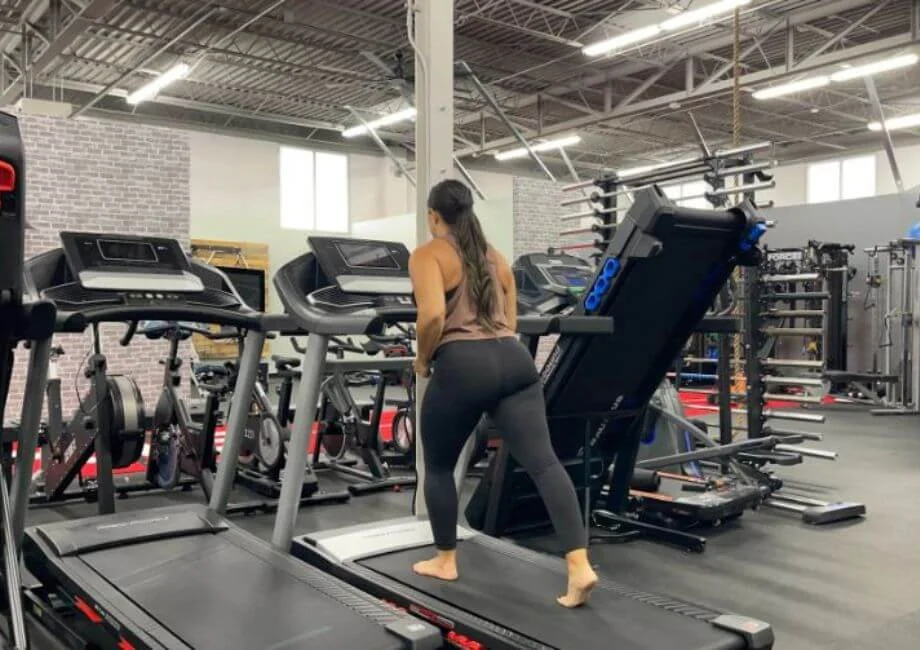
Generally speaking, a treadmill is usually between 5 and 7 feet long and 2 to 3 feet wide. The height of one treadmill to another can vary even more. Some machines, like under-desk treadmills, are just a few inches high, whereas others are 4 to 5 feet tall.
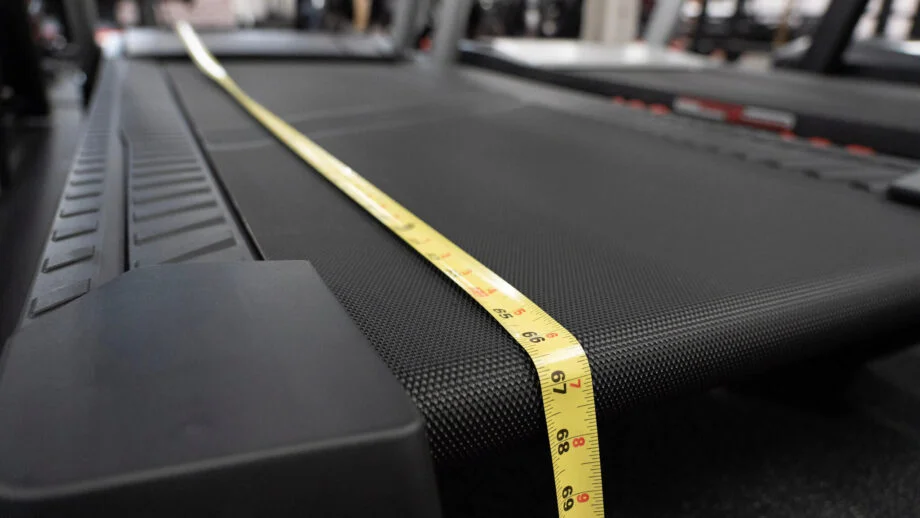
For added specificity, we’ve tested over 50 of the best treadmills, continually examining new ones as they’re released. One component of how we test treadmills is measuring the footprint of each machine. Based on our trials and research, we’ve determined that the average treadmill has a running belt that’s 55 inches long and 18 inches wide, with an average silhouette that’s 75 inches long, 34 inches wide, and 62 inches tall.
The weight of a treadmill can also vary greatly. Some budget treadmills are as light as 50 to 60 pounds, while commercial-grade machines can be upwards of 400+ pounds. A few factors affect this metric, such as the motor size and build quality—while more resilient against wear and tear, durable materials like steel can add to the overall heft of a treadmill profile.
Other factors that might affect a treadmill’s dimensions include add-ons such as handrails, tablet holders, touchscreens, water bottle holders, leveling feet, and an incline motor.
Running Surface Measurements
It’s easy to get caught up in the flashy apps, fancy touchscreens, Bluetooth connectivity, and interactive workout programs, but if you don’t find a home treadmill that is comfortable enough for regular workouts, you will more than likely end up using it as a catch-all for dirty laundry. As such, finding a machine with an accommodating running surface is vital to your training progress.
The treadmill belt size can affect your stride as you walk or jog on the treadmill. Walking treadmills will often feature belts as short as 40 to 50 inches because walkers have a much shorter stride than joggers. A standard running deck is 55 inches long and 18 to 20 inches wide, which should accommodate people of most heights. That said, if you’re 6 feet or taller, it may be best to opt for a 60-inch running belt for optimal comfort and ergonomics.
RELATED: Best Treadmill for Tall Runners
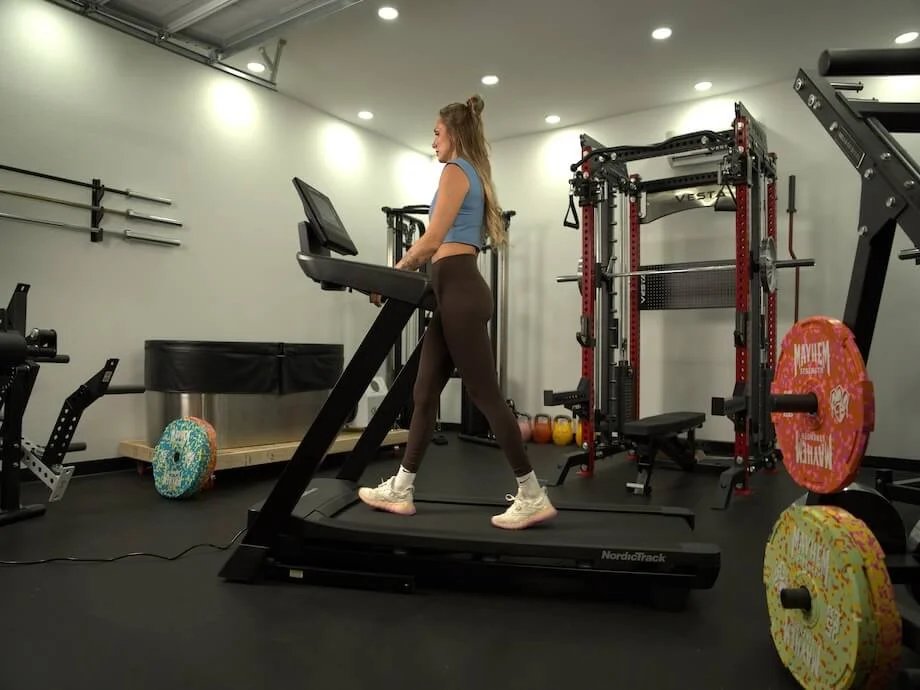
Running on a belt that is too short may require you to adjust your stride on the treadmill, which can alter your gait and running economy. We’ve found this to be very common when using shorter-than-average treadmill decks for faster running workouts, such as those found on under-desk treadmills and walking pads. In general, the faster you plan to train, the longer your running surface should be.
How Much Space Do You Need?
The space that you need for a new treadmill extends beyond just the machine’s footprint. Why? Well, first, you have to be able to get on and off the machine comfortably—you can’t start a sprint workout if you can’t get situated on the treadmill, after all.
Second, a motorized treadmill needs airflow around the motor at the front to run properly. You can’t expect your machine’s power source to operate as needed if it’s choked out by being butted up against a wall. Your power cord will also extend from the front of the treadmill, so allowing for some space can help prevent any crimped cables or unnecessary wear and tear.
Lastly, having just enough space to step onto a treadmill isn’t enough for proper functionality; it can also be essential for staying safe. If you slip on the treadmill and fall to the side, it’s better to fall onto the ground than to crash into furniture.
The ASTM2 (formerly called the American Society for Testing and Materials) recommends having at least 19.7 inches of open space on each side of the treadmill (including the front) as well as 78 inches behind it with no obstructions. Many brands, like NordicTrack and Horizon Fitness, also include suggested spacing in their owners’ manuals.
Size Recommendations
If you’re still not sure how much size you need, and don’t want to go for the biggest treadmill to play it safe, here are a few quick recommendations based on your training preferences.
Treadmill Size for Walking
If you’re only using the treadmill to get extra steps in, you can get away with a smaller-than-average machine. The average under-desk treadmill we’ve tested features dimensions of 53.4 inches long by 22.7 inches wide, with belt surfaces roughly 42.9 inches in length. This should be accommodating enough for the average walking stride length. Even our taller testing experts—some standing over 6 feet, 3 inches—have found comfort and efficiency atop these compact walking profiles.
Treadmill Size for Running
For runners in need of a great in-home treadmill, we highly recommend choosing the longest deck you can afford. Running lengthens your stride since you’re propelling yourself forward more than you would with regular walking, and you don’t want to create a safety issue by stepping on the front hood that encapsulates your treadmill motor bay. The average belt we tested is about 55 inches long, though some belts are up to 60 inches in length, which may be even better for tall runners.
RELATED: Best Treadmills for Running
Treadmill Size for Incline Walking
Incline walking, a popular form of cardio, falls somewhere between regular walking and running. It’s more difficult, but the deck size matters less than the incline settings and adjustability. As long as your treadmill has a standard deck length of 55 inches, we think most users will be comfortable enough with incline walking, though we recommend a longer deck if you’re going to be running on an incline.
Save Room With a Folding Treadmill
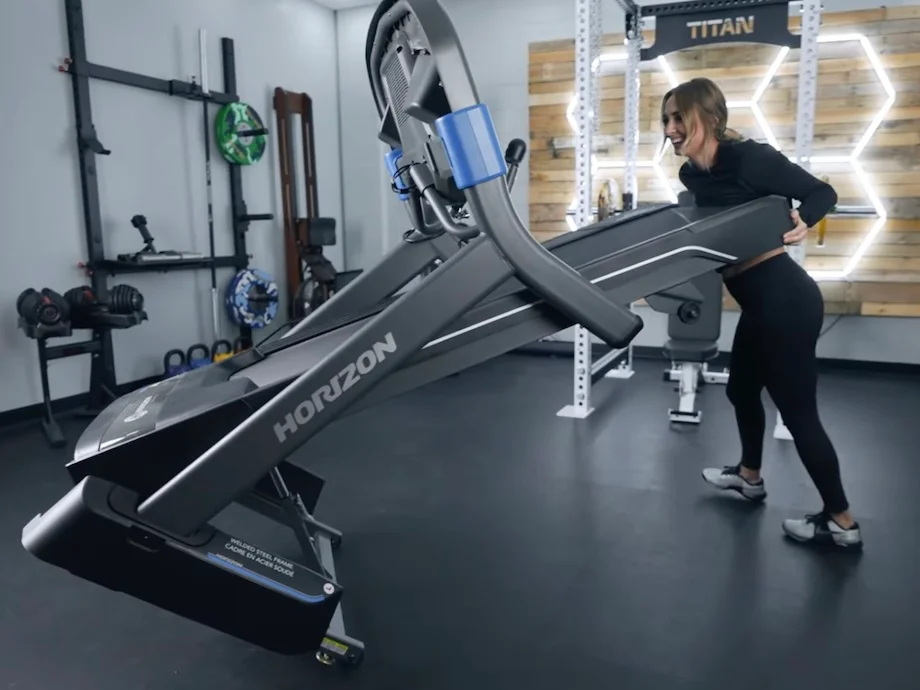
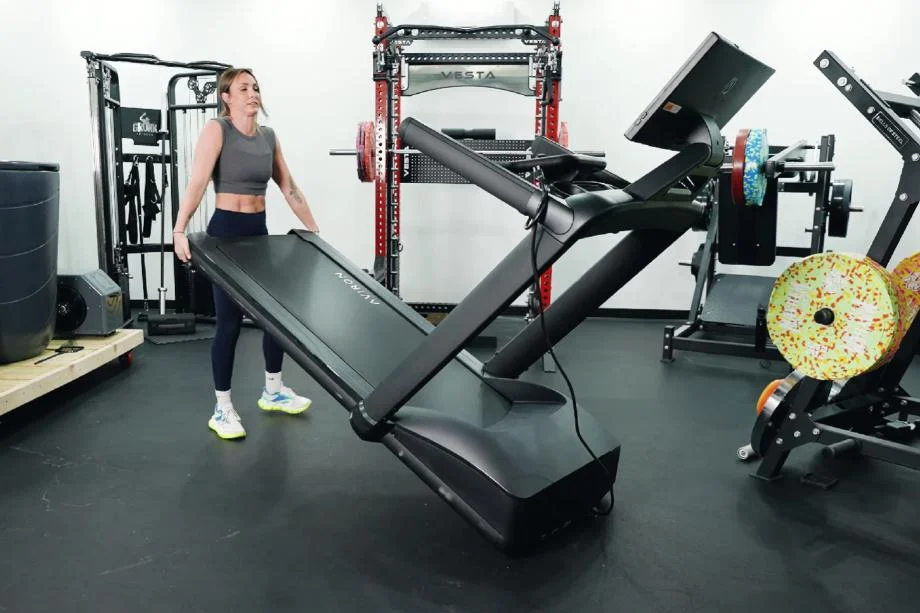
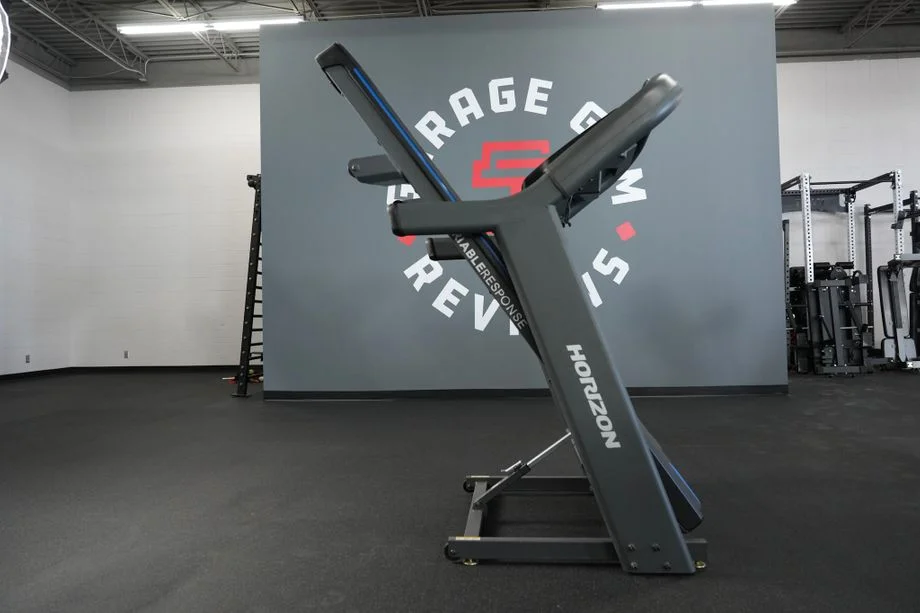
Folding treadmills offer a wide range of benefits for a home gym—namely, they allow you to save some valuable floor space when not in the throes of training. Being able to fold up a large machine like a treadmill can be a huge benefit when incorporating fitness equipment into a small space. Many foldable treadmills come with transport wheels, as well, so you can move the machine in and out of rooms with greater ease.
We have to point out, though, that folding treadmills could pose a safety risk. Treadmill decks that are not secured properly when folded—either via a gas shock or locking mechanism—could fall onto a child or pet, leading to potentially injury. Read the directions carefully and make sure that when you fold the machine for storage, you have secured it properly every time.
RELATED: Treadmill Safety Tips
How to Measure Your Space
To avoid ordering an expensive piece of equipment that’s too big for your home or garage gym, here’s a quick checklist to help ensure you’ve properly measured everything ahead of time:
- Floor Space: As we mentioned above, you need about 20 inches of space on either side of the treadmill, and 78 inches behind it. This offers plenty of space to easily hop and off the machine for workouts, as well as some breathing room in case of the errant slip or tumble. When measuring your home, be sure to add 40 inches to the treadmill’s width and 78 inches to its length to ensure you have plenty of floor space.
- Doorways: This is often overlooked, but you’ll also want to consider the treadmill’s width and any doorways you’ll need to navigate. GGR Staff Writer Matt Dustin, CSCS, PN1-NC, says, “I bought a treadmill and didn’t realize it was wider than the doorways in my home, which means we had to fold it, turn it on its side, and have multiple people help lift and move it through doorways, which was very inconvenient due to its weight.”
- Ceiling Height: This shouldn’t be a concern for most, but it’s worth checking, especially if you’re putting your treadmill in an area with low ceilings or plan to use any high incline settings. Treadmill decks can be 6 to 10 inches off the floor, depending on the model, and will be even higher when set at an incline. You’ll want to consider your own height and make sure the ceiling is at least 18 to 24 inches taller than you are to play it safe.
Treadmill Dimensions: Final Thoughts
The size and weight of a treadmill play essential roles in how sturdy the machine is and even how much you might use it. Measure the area where you want to put your treadmill before you start searching on Amazon or head to the sporting goods store. Find the best treadmill that meets the efficiency requirements for your space, is compatible with your body and fitness goals, and gets you excited to start racking up the miles.
Treadmill Dimensions FAQs
What are the dimensions of a standard treadmill?
The standard motorized treadmill is around 6 to 7 feet in length, 2 to 3 feet in width, and around 4 to 5 feet tall. However, treadmill dimensions can vary widely depending on the type of machine you’re looking at and the features you want.
How much clearance do you need for a treadmill?
The ASTM2 recommends keeping roughly 19.7 inches open on each side of the treadmill (front, included) and at least 78 inches of open space behind it. You also want at least an 8-inch clearance to avoid hitting your head while running. The space around your treadmill should be free of toys or clutter in order to keep the user and anyone around as safe as possible, too.
How wide are treadmills at the gym?
On average, a treadmill is about 2 to 3 feet wide. Treadmill belts—the actual running surface—can range anywhere from 16 inches to 24 inches, but you also have to factor in the rest of the parts that make up the actual full width of the treadmill, such as side rails.
References
- Woiczinski, M., Lehner, C., Esser, T., Kistler, M., Azqueta, M., Leukert, J., Bauer, L., & Kraft, E. (2022). Influence of Treadmill Design on Gait: Does Treadmill Size Affect Muscle Activation Amplitude? A Musculoskeletal Calculation With Individualized Input Parameters of Gait Analysis. Frontiers in neurology, 13, 830762. https://doi.org/10.3389/fneur.2022.830762
- ASTM International. (2025, July 24). Standard specification for motorized treadmills. F2115. https://store.astm.org/f2115-19.html