
In the world of strength training and lifting weights, there are plenty of ways to protect your hands and grip strength, like using weightlifting gloves and wrist wraps. However, another popular tool to use are lifting straps, which are one of the best pieces of support gear to secure your grip on an Olympic barbell and pull some heavy weight.
When it comes to lifting straps, though, there are a lot of things to factor in:
- Style: Is it a figure-eight strap or a classic wrist lifting strap?
- Materials and durability: Are they made of durable materials that will withstand heavy lifts? Are they comfortable?
- Price: Do they offer enough value?
The certified personal trainers, lifting coaches, and athletes on our testing team at Garage Gym Reviews were able to test out some of the best lifting straps on the market today, and have compiled this diverse list of lifting straps to help you determine which straps are best for your lifting needs and goals.
The Best Lifting Straps
- Best Overall Lifting Straps – Gymreapers Lifting Straps
- Best Lifting Straps for Powerlifting – Rogue Ohio Lifting Straps
- Best Figure 8 Straps – Element 26 Padded Figure 8 Weightlifting Straps
- Best Lifting Straps for Beginners – Warm Body Cold Mind Weightlifting Straps Lasso Pro
- Best Lifting Straps for Deadlifting – Rogue Figure 8 Lifting Straps
Best Overall Lifting Straps: Gymreapers Lifting Straps
Good for: Those wanting a reliable strap that’s very comfortable
Best Overall
Gymreapers Lifting Straps
Product Highlights
- Secures hands to the bar
- Durable cotton
- Neoprene padding for wrist comfort
- 9 different color options
Pros & Cons
Pros
- Lasso-style strap is easy to use
- Neoprene padding prevents wrist burn and discomfort
- Multiple colors
Cons
- Cotton can tear on aggressively knurled barbells
Bottom Line
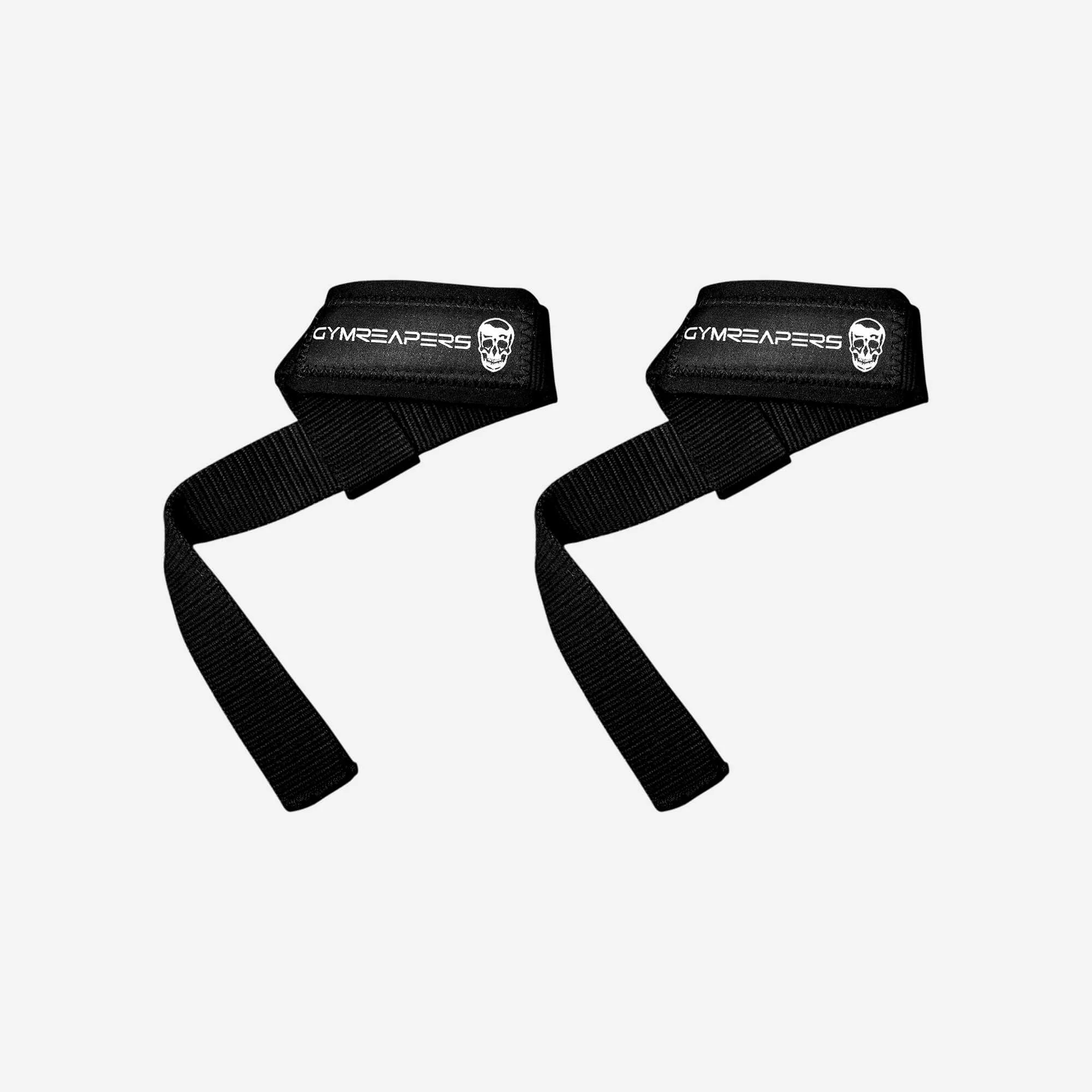
These straps from Gymreapers are a great option for the everyday gym-goer looking to take some strain off of their grip for heavy deadlifts, rows, shrugs, and other pulling exercises. The lasso design is easy for anybody to use—simply put your wrist through the loop, wrap the strap around the bottom of the bar, and rotate the bar to tighten or loosen the strap. All in all, between the neoprene padding and lasso design, this is an easy strap to use from a reputable manufacturer.
Gymreapers Lifting Straps take our top spot of best overall straps for their versatility and super comfortable feel. These straps are lasso style, meaning they loop around the wrist and then wrap around the bar. This style of strap is going to be one of the most versatile straps available due to its tight grip on the bar, but it’s still easy enough to release the bar quickly on a failed lift. Plus, they come in nine different colors (*chef’s kiss*).
When I tested the Gymreapers straps, the first thing that stood out to me was the comfort. These lifting straps are cotton, and they’re soft. In addition to the cotton straps, the wrists have neoprene padding to support the wrists on heavy pulls. These are some of the most comfortable straps I’ve ever tried.
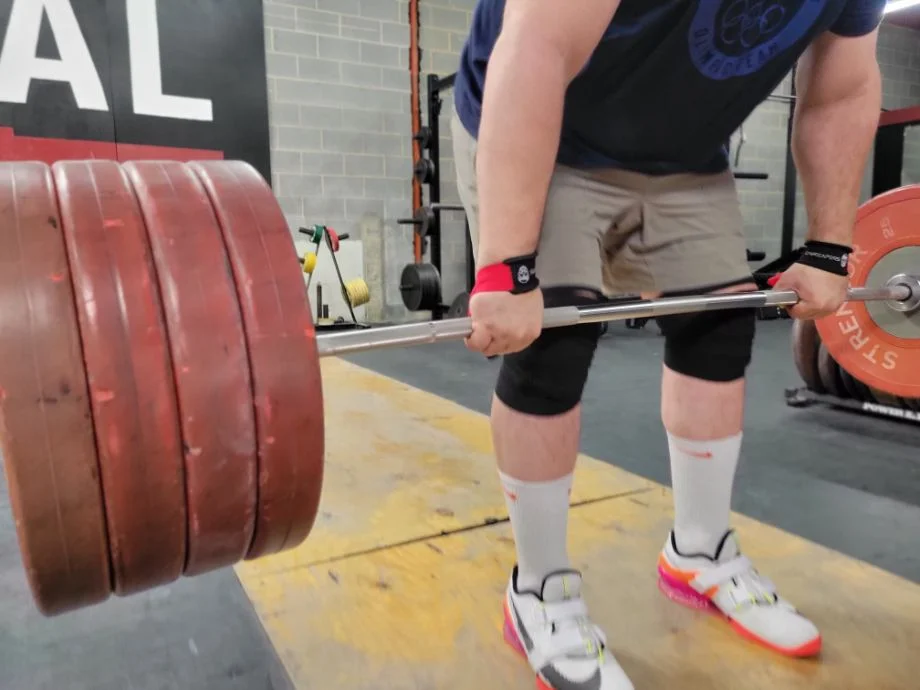
The comfort didn’t detract from their durability, though. I took these through heavy deadlifts, and they felt great. It did take me a few sets to properly wrap the straps up because of the softness of the straps. It felt like it had a little give at first, but after wrapping the straps better, I felt connected to the barbell.
These straps are only $17, but shipping is extra—unless you’re planning to buy $150 of Gymreapers items in addition to the straps—so depending on your location, the straps will cost you around $23 or so. These are a little pricier than most lasso straps, but the high quality of the strap is worth it. In addition, these straps have a lifetime replacement guarantee, so if they do break, Gymreapers has you covered.
| Price | $16.99 |
| Type of strap | Lasso |
| Length | 18” |
| Material | Cotton, neoprene padding |
| Warranty | Lifetime replacement guarantee |
Best Lifting Straps for Powerlifting: Rogue Ohio Straps
Good for: Powerlifters wanting simple lifting straps durable enough for their heaviest sets
Best for Powerlifting
Rogue “Ohio” Lifting Straps
Product Highlights
- Heavy-duty black cotton webbing
- Closed loop lasso design
- Made in the USA
Pros & Cons
Pros
- Reinforced edge to prevent fraying
- Extra long at 20”
- Lasso design is easy to use
- “3 ships free” item
Cons
- Only black color option
- No wrist padding
Bottom Line
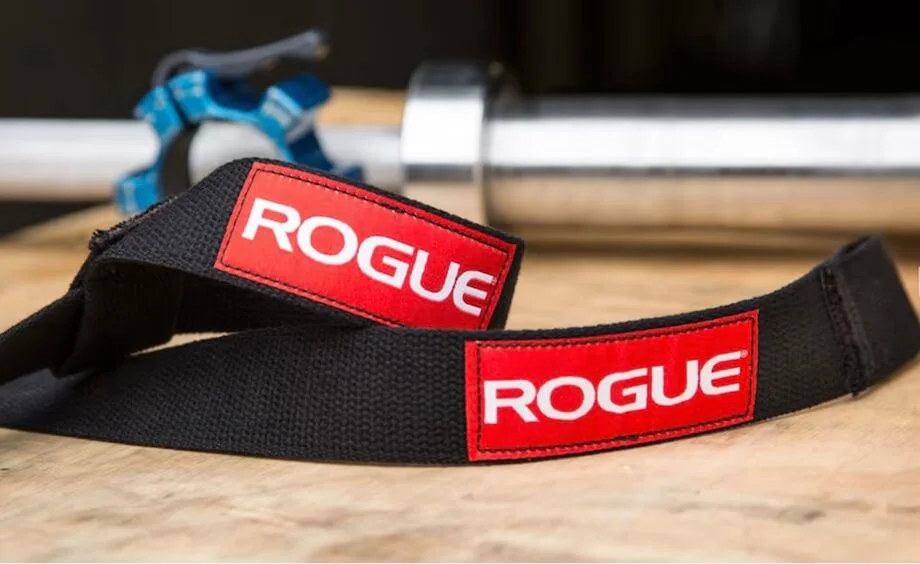
The Rogue Ohio Lifting Straps from Rogue Fitness are built to last with a heavy-duty black cotton webbing. While there is no neoprene padding for the wrists, the beefy 1.5-inch width makes these straps comfortable on the skin with minimal abrasion. Edges are reinforced with all the loose ends sewn down to prevent fraying, making these straps a reliable option for long-term use.
This is the style of lifting straps I used in my youth…Rogue Ohio Straps. These straps are bare bones, but they get the job done. These lifting straps are made with a heavy-duty black cotton webbing that stays pretty durable against the bar. There is reinforced stitching along the edge of the strap to prevent fraying. However, there is no padding along the wrist to help with comfort, and these were some of the stiffest cotton straps I tested.
There’s no customization or color options on these, either. They’re plain black, with a red Rogue logo stitched on the back of the wrists. A lot of the simplicity of the straps is to keep the cost down, and at $15, they’re a pretty solid pair of straps.
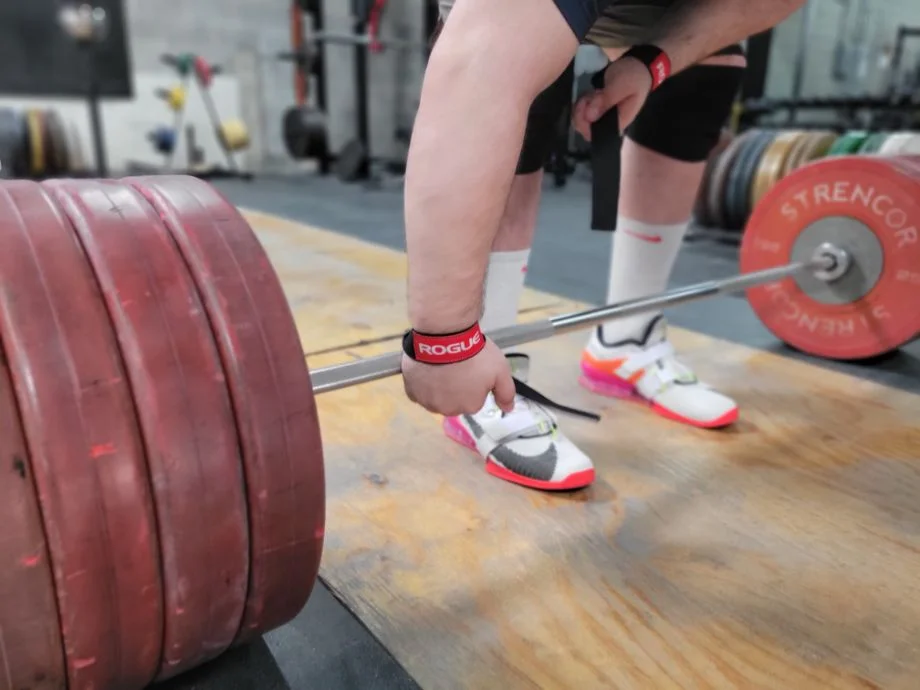
I’ve used Rogue Ohio Straps before, and they were simple straps that lasted through solid work, only falling apart after years of weightlifting workouts. Testing them out again after quite a while, not much has changed. These straps are simple and durable. They’re great for powerlifting movements and accessory work, such as deadlifts, rows, and rack pulls out of a squat rack. The grip doesn’t slip at all, and with a strap length of 20 inches, you can wrap a few times around the bar to ensure it.
Although there aren’t as many options as other straps, and they will take a while to break in and be more comfortable, the Rogue Ohio Straps are sure to last through quite a few workouts.
| Price | $15 |
| Type of Strap | Lasso |
| Length | 20” |
| Material | Black cotton webbing construction |
| Warranty | 90 days |
Best Figure 8 Straps: Element 26 Padded Figure 8 Straps
Good for: People into Strongman training that want to pull heavy weights
Best Figure 8 Straps
Element 26 Padded Figure 8 Weightlifting Straps
Product Highlights
- 3 sizes available based on wrist size
- Durable cotton straps with neoprene padding
- Single, heavy-duty stitching point to ensure quality
- Easy to use
Pros & Cons
Pros
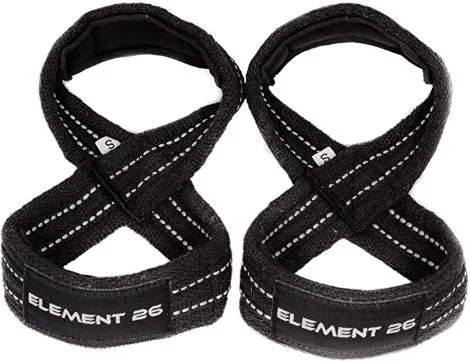
- Easy to use figure 8 style
- 3 sizes
- Padded straps
Cons
- Sizes run a bit large
- Can’t bail on a lift easily
Bottom Line
The Element 26 Figure 8 Straps are certain to keep your grip on a barbell or dumbbell comfortably, taking a secure type of strap and adding neoprene padding for comfort. With a design that “locks” you into the bar, it’s ideal for deadlifts, but not Olympic weightlifting, where you might need a quick bail from the barbell. Although it comes in three different sizes, several reviews claim the straps run large, so be mindful of the size you should actually purchase.
Coming from a competitive weightlifting background, I haven’t used figure 8 straps much at all. This isn’t something you want to admit as a strength athlete, but I’m ashamed to say I had to look up how to properly wrap them. However, once I did use them, I saw what I was missing out on. Out of the ones I tried out, I can say without a doubt that Element 26’s straps were my favorite, and our pick for the best figure 8 straps.
Other figure 8 straps I had used were terribly uncomfortable, but Element 26 added neoprene padding to each loop of the strap, and it helped immensely. The material is a heavy-duty cotton that’s been over-stitched, and when I locked my hand into the barbell, it felt solid, but not too uncomfortable.
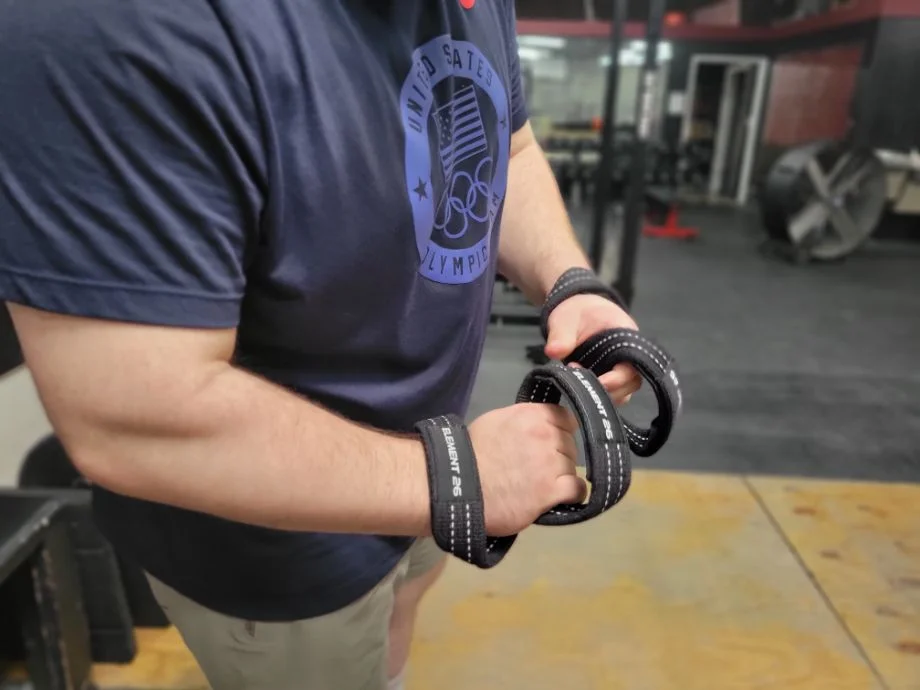
These straps come in three sizes based on your wrist size, with the large for wrist circumferences over 10 inches. I went with the mediums as my wrist was right at 10 inches (and the larges were sold out), but it turned out to be perfect for these straps. Many customer reviews recommended going a size down, as they seemed to size big, which is what I found in my experience.
Because these are figure 8 straps, they’ll have you extremely connected to the barbell. However, because you are wrapped around the bar by two loops, there’s no chance for a quick release. So if you’re looking for more versatility, this style of strap may not be the best fit for you. This will be great for heavy deadlifts and some Strongman movements, though. Element 26 also provides a lifetime warranty with these straps.
| Price | $24.97 |
| Type of strap | Figure 8 |
| Number of sizes | 3 |
| Material | Thick cotton, over-stitched neoprene padding and seams |
| Warranty | Lifetime |
Best Lifting Straps for Beginners: Warm Body Cold Mind Lasso Pro Weightlifting Straps
Good for: Beginners wanting a versatile strap with a good grip and feel
Best for Beginners
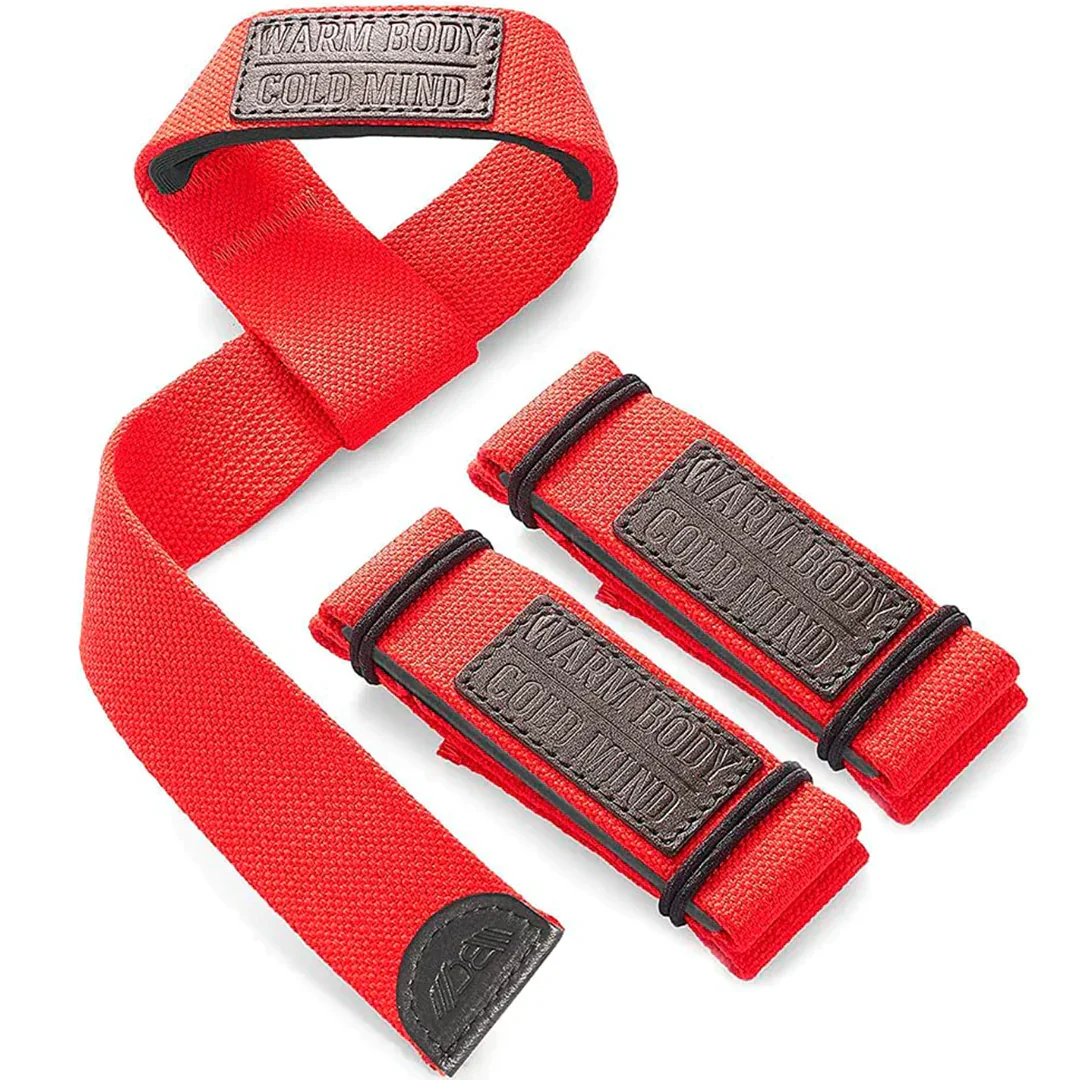
Warm Body Cold Mind Weightlifting Straps Lasso Pro
Product Highlights
- Soft neoprene wrist padding
- Lasso design for more versatility
- One size fits various hand sizes
- Rated to take on up to 770 pounds
Pros & Cons
Pros
- Soft neoprene wrist padding
- Lasso design
- One size fits all
- Rated for 770 pounds
Cons
- Padding may cause issues with being able to tighten the straps fully
Bottom Line
These lasso weightlifting straps are very affordable and built to last. Designed by an Olympic Champion, these straps have the ability to load up to 770 pounds and are very versatile. They are built to last and great for anyone looking to level up their lifting game.
If you’re new to lifting weights or resistance training and want to add lifting straps to your equipment collection, the Warm Body Cold Mind Lasso Pro Lifting Straps are a great option. They strike a great balance between comfort and durability, with a lasso style that will lend itself to a broad number of exercises and modes of training.
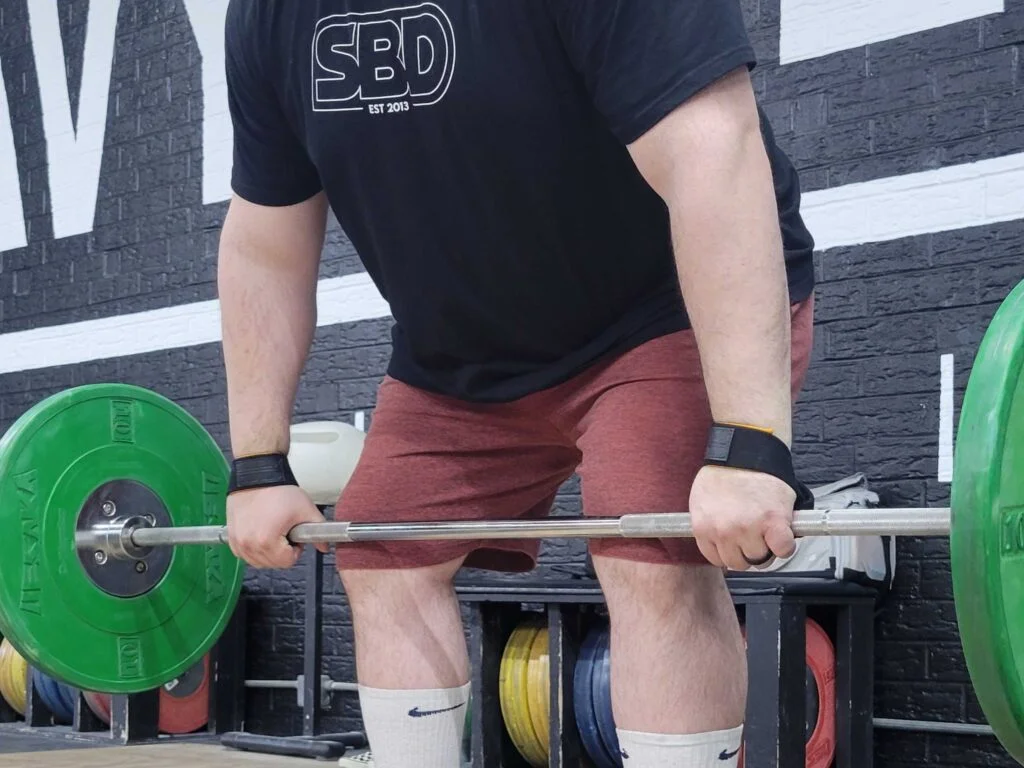
Whether you’re deadlifting or swinging kettlebells around, these straps are suitable. The versatile design makes them a good option for beginners who may be trying a variety of different exercises and lifting styles to find what they prefer.
Built from durable cotton, soft neoprene, and authentic leather they look good and function just as you’d want. While we try not to fixate much on the look of things, we don’t shy away from good-looking gear. I like the look of these. The leather logos on the wrist and ends of the straps add a nice touch. The bright orange neoprene padding on the wrist seems a bit loud at first, but I like the bit of color on a dark lifting strap.
They even have reinforced dual stitching that increases durability and neoprene padded wrist straps for added comfort. Because of how grippy they are, I don’t think they’ll fray or wear down prematurely, making me feel pretty confident about their longevity.
The lasso style is pretty easy to use and good for general and multipurpose use, plus I was impressed with how durable they seemed when I tested them out. The length of the strap is 21 inches, which is a fine strap length.
My first attempt at wrapping the straps around the barbell took a minute due to the cotton grabbing onto the bar so well that it made making minor shifts or adjustments difficult.. Now that they’re broken in, they work great, but still have a ton of grip, especially for a cotton strap.
Warm Body Cold Mind Lasso Pro Weightlifting Straps are affordable, at around $20. At that price, they’re a great pair of lifting straps to start your weightlifting journey.
| Price | $20.99 |
| Type of Strap | Lasso |
| Length | 21” |
| Material | 100% cotton, soft neoprene, and authentic leather, with reinforced dual stitching |
| Warranty | 14 days |
Best Lifting Straps for Deadlifting: Rogue Figure 8 Straps
Good for: Powerlifters needing a connected grip on the bar for their heaviest deadlifts
Best for Deadlifting
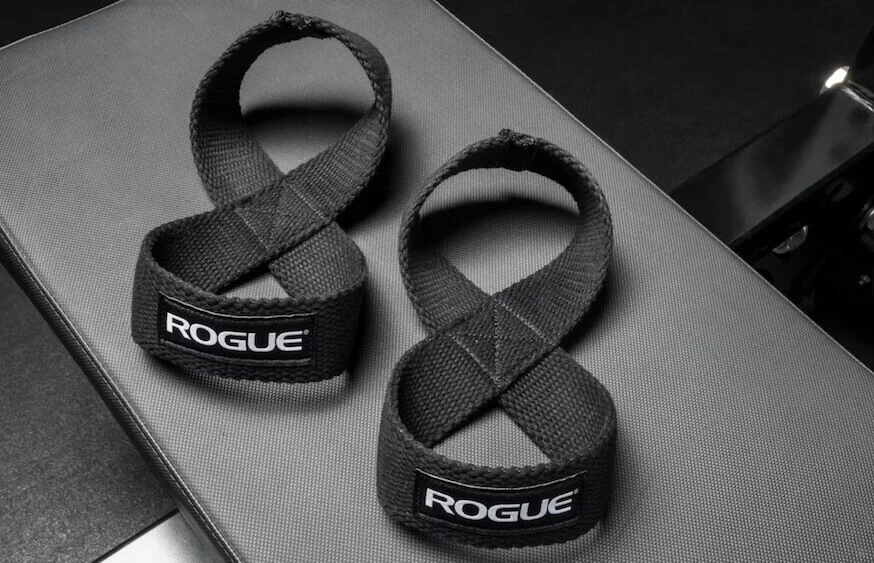
Rogue Figure 8 Lifting Straps
Product Highlights
- Maximum security double loop design
- Extra-strength cotton webbing
- Made in the USA
- Intended for maximal deadlifts
Pros & Cons
Pros
- Thick, durable cotton webbing
- Figure 8 design locks the hands to the bar
- Great for deadlifting
Cons
- Not suitable for olympic lifts or quick release
- 1 color
Bottom Line
The Rogue Fitness Rogue Heavy Duty Figure 8 Lifting Straps provide the most security out of any strap on the market. The figure 8 design loops over the wrist twice, ensuring there is no slippage and the bars won’t roll out of the hand. This type of product is used for heavy pulls or extra-long sets where a high amount of grip strength is needed, most often in strongman events.
For an almost too solid grip, we’ve picked the Rogue Figure 8 Straps as the best deadlift straps. These figure 8 straps are made of an extra-strength cotton webbing in a basket weave to create a supportive and durable lifting strap.
RELATED: Muscles Worked In A Deadlift
There isn’t a lot of customization to these straps, like most figure 8 straps. Rogue chose a classic black for their straps, with the Rogue logo in white on the wrists. These straps don’t have any padding, so they aren’t as comfortable as other straps, but the design of these Figure 8 straps will keep you secured on the bar—although there won’t be any quick release. This makes them ideal for deadlifts, where a failed rep just goes back to the floor.
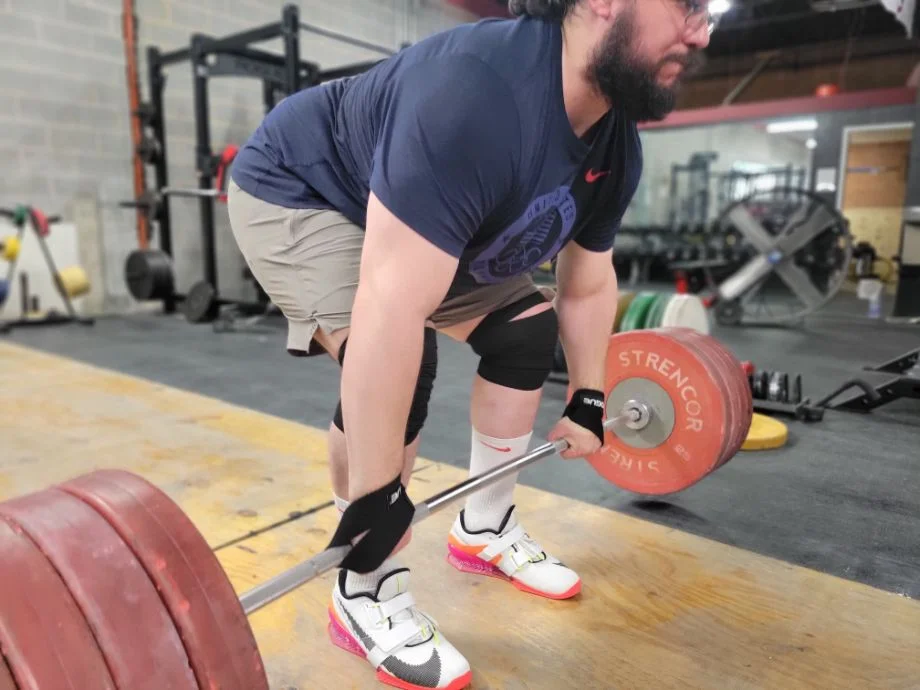
The straps are only one size, which was a tight fit for me, and I’m not sure if a larger athlete or wrist would be able to comfortably use it. Many reviews actually didn’t like the sizing either, and its rating reflects it: a paltry 2.9 out of 5 stars.
However, one review spoke of using a false grip with these straps—meaning the thumbs didn’t wrap around the bar. When I tried this method, the straps felt more comfortable…still tight, but a much better fit. And the straps stay connected enough to maintain a strong grip on the bar even without a full grip. With that said, for a strong grip, these figure 8 straps will do it, but be ready to use a false grip.
| Price | $33.95 |
| Type of Strap | Figure 8 |
| Sizes | 1 |
| Material | Heavy-duty cotton webbing |
| Warranty | 90 days |
Other Lifting Straps We Researched
We tested out a lot of different items for this roundup of the best lifting straps. However, not everything the testers at GGR and I tried made the list. Here are a few other products we tested or researched that are worth noting.
- Ironmind Easy Sew Lifting Straps: Like the Ironmind Strong Enough Straps, these royal blue nylon straps are incredibly durable and help keep you connected during Olympic lifts. However, the short length of these closed loop straps makes it difficult to wrap properly for larger athletes.
- Rogue Leather Straps: Rogue Leather Straps are a solid pair of lasso straps. However, they are stiff from the start and require a lot of breaking in to get any comfort while using them.
- GymShark Lifting Straps: These lasso lifting straps have silicone strips along the strap for improved grip against the bar. Unfortunately, these straps were out of stock when we tried to purchase them for testing (and it looks like they still might be).
- JuanFU Lifting Straps: JuanFU lifting straps are made for Olympic weightlifting. Jacob Penner, a weightlifting coach and certified personal trainer on our expert panel, uses these straps and loves how long they’ve lasted. But, because these cotton straps can get stiff and don’t provide padding, we went with the Weightlifting House straps instead as our favorite Olympic lifting straps.
How We Picked and Tested
I had the honor of testing out a lot of these lifting straps, and I took them through a lot of exercises. As an Olympian in weightlifting, I knew what to look for in good lifting straps, making sure I felt connected to the bar, as well as grippiness and overall durability. Every pair of straps I tested had at least 550 pounds worth of weight plates pulled with them, multiple times.
After selecting our group of lifting straps based on materials used, construction, and value, I took each pair of straps through several workouts. Depending on the type of strap, I did Olympic lifts, deadlifts, pulls and rows, pull-ups, and even dumbbell work to test out each strap’s performance.
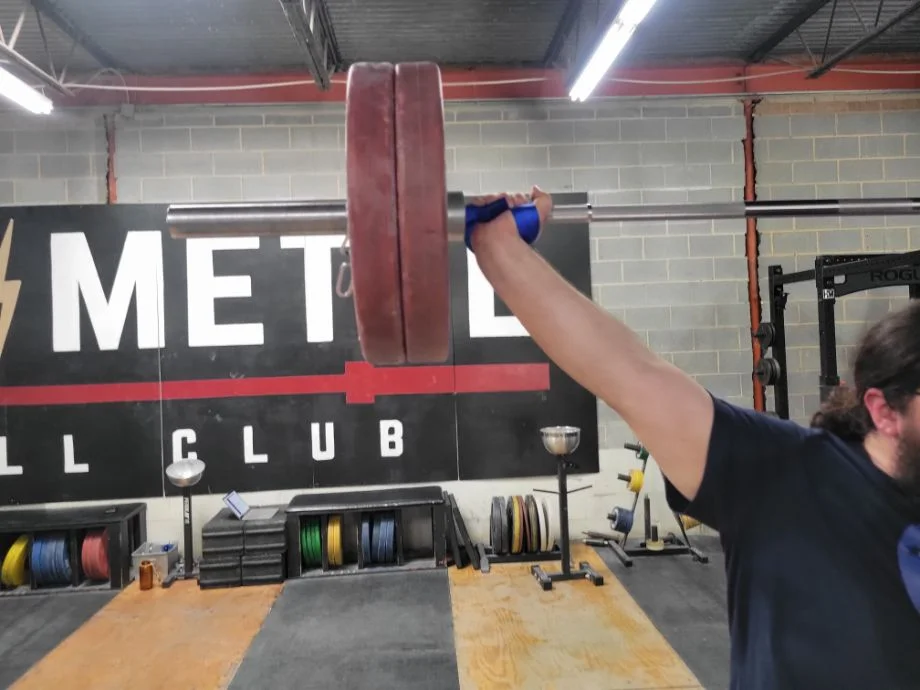
Speaking of which, we looked at quite a few different types of lifting straps, too—closed loop, lasso, figure 8, and lifting grips—to provide you with a diverse final list of lifting straps to help you find the best lifting strap for your needs and goals.
Benefits of Lifting Straps
The main thing that lifting straps do is improve the grip strength you have on a barbell, pull-up bar, or dumbbell. Improving your grip strength allows you to not be hindered by your grip on a heavy lift, and get closer to your maximal loads. There are quite a few benefits to lifting with straps and improving your grip:
- Increase Volume: Relieving your hands and grip with lifting straps can allow you to not fatigue in the hands and forearms first, allowing you to get a few more reps in before fatigue sets in. Over time, this can make your workouts more efficient and effective.
- Wrist Support: Also known as wrist straps, lifting straps typically attach and wrap around the wrist, giving a bit of support during lifts, even in overhead movements like a snatch. However, it won’t give the same level of support as a wrist wrap in most cases.
- Protect Your Hand from Calluses: Easing your grip on the bar and relying on lifting straps can reduce the risk of calluses and blistering on your hand. It’s nice to give your hands a break from time to time.
It’s important to note that there’s a risk of over-reliance on lifting straps. Using lifting straps all the time could actually weaken your grip strength without the straps. You may feel like you can’t lift without them.
While lifting straps are great, it’s good to practice moderation with them—especially if you plan on competing in a strength sport that doesn’t allow them in competition, like Olympic weightlifting. Use them, but also remember to train without them at times to maintain a strong grip and forearm strength.
What to Look for in Lifting Straps
Looking at adding some lifting straps to your home gym equipment? There are a few things to consider before making that purchase.
Style of Lifting Strap
First things first: What are you wanting to use your straps for? Are you using them for Olympic lifts, or just heavy deadlifts? Perhaps you need them for high repetitions on lat pull-downs and barbell rows. The goals and training you have in mind can help determine which type of lifting straps will best appeal to you. Here’s a breakdown of types of straps and where they typically shine:
- Lasso style: Lasso straps have a wrist loop that secures around your wrist with a piece that then wraps around the bar. These are the most common and versatile lifting strap, as they keep you connected with the bar, but can be released quickly if needing to bail from a lift.
- Closed loop: Closed loop, or single-loop straps, are most commonly used in Olympic weightlifting. These straps join together at a point in a teardrop shape, sometimes extending into a single piece to wrap around the bar. Closed loop lifting straps are quick to release, making them ideal for needing to bail out from a snatch overhead.
- Figure 8: These straps are double-looped, and great for lifting heavier weights and Strongman. To properly use these loops, one loop wraps around your wrist then goes under the bar, and then the second loop goes on your wrist. This is easily one of the more connected straps for the bar, but it doesn’t allow quick release by any means, so refrain from Olympic lifts with these.
- Lifting grip: Lifting grips are wrist wraps with a rubber grip that wraps partially around the bar, then you grip the bar to enclose the grip. Grips keep you secured on the barbell for heavy deadlifts and reps of lat pulldowns, pull-ups, and dumbbell work—they even allow for a quick release. Still, the bulkiness of the rubber keeps me from liking them for Olympic lifting.
Materials and Durability
The materials used will help determine the durability of a lifting strap, although the construction is a major part of that. Cotton straps might be the least durable, although the sewn construction can greatly improve the longevity of these straps. If you’re unsure about the durability of a cotton strap, but you like the feel, look for a strap with a good warranty.
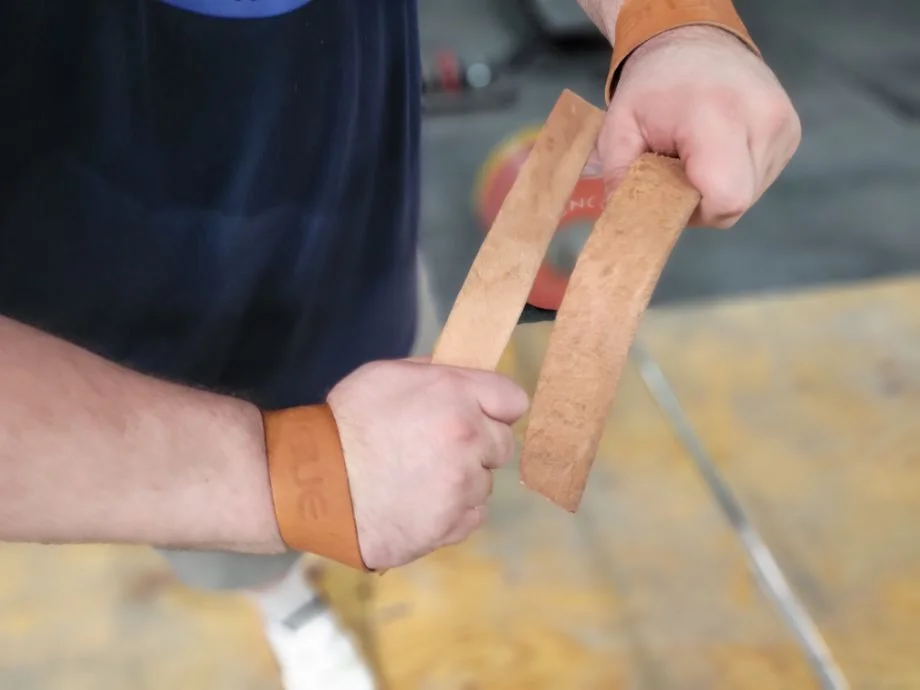
Next is nylon, which is made of plastic fibers and pretty durable from my experience. The only time I’ve seen nylon start to wear down is when sewn edges begin fraying, but that’s taken a while. Leather straps are another durable option that will last for a long time.
Comfort
If you’re planning on doing any number of reps with lifting straps, it’s great for your straps to be comfortable during a long set. A lot of lifting straps will add cushioning to the wrist. The wrist padding is typically made of neoprene, and soft, water-resistant fabric.
The material used can also add or take away from your level of comfort. Cotton straps will probably be more comfortable than others, especially when wrist padding is added. Leather straps typically require a bit of breaking in before they feel comfortable.
Best Lifting Straps FAQs
What brand of lifting straps are the best?
The brand of lifting straps that are best suited for you and your goals depends on what those goals are. There are many different types of straps available on the market, and each offers different advantages and disadvantages, as well. Some of our favorite brands for lifting straps include Gymreapers, Rogue Fitness, and Element 26, among others.
What are the benefits of using lifting straps?
Using lifting straps improves your grip strength without relying on your forearm strength. Because of these, grip isn’t a limiting factor. It can allow you to increase your reps in a workout, as well as protect your hands from calluses and support your wrists a bit, too.
Are lifting straps good for deadlifts?
Lifting straps can be great for deadlifts, as the heaviest deadlifts should be a posterior chain exercise, working the legs and back muscle groups; however, often our grip gives out first. Lifting straps can give us a secure grip and allow us to isolate the muscle groups we want to actually work on.
It’s great to use lifting straps, but don’t develop a reliance on them. This can weaken your grip strength over time and make you feel weaker without your straps.