
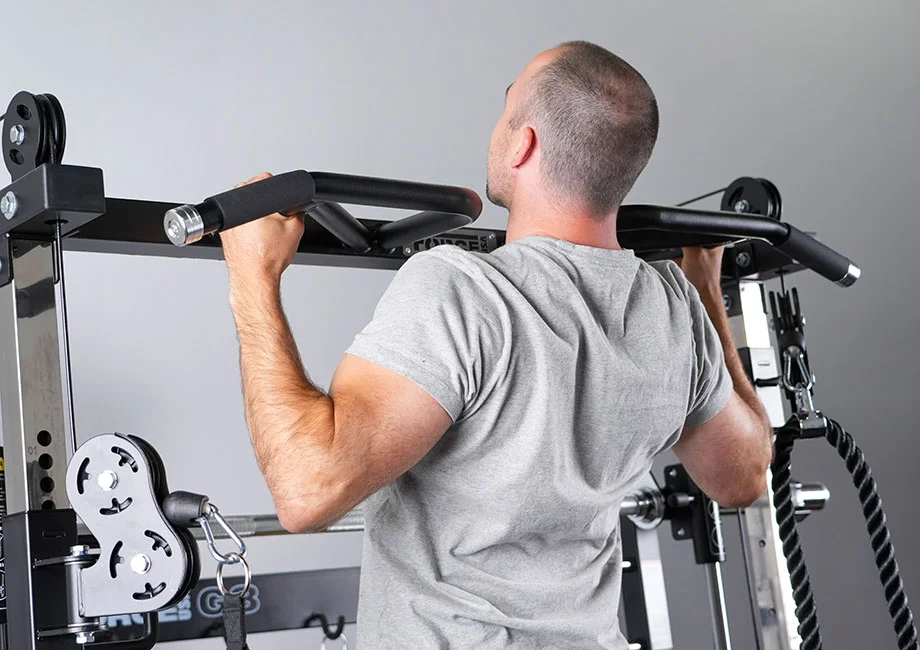
When building muscle and strength in the gym, many people don’t see a major difference between chin-ups and pull-ups. Both variations are some of the best exercises for a stronger back, but they target different muscles and have varying difficulty levels, so it’s important to choose the right movement for your goals.
RELATED: Exercises for Upper Back
While both exercises look similar, there’s quite a big difference between chin-ups, pull-ups, and the many variations available for both options. I’ve been a fitness professional for 12 years and spent six years working in gyms full-time as a personal trainer and strength and conditioning specialist. In this guide, I’m going to break down the details of both back exercises and explain how to choose the right option for your training goals.
Chin-Up vs. Pull-Up: A Closer Look
When you think of classic strength training exercises, your mind probably goes to push-ups, back squats, deadlifts, pull-ups, and chin-ups.
Chin-ups and pull-ups may look very similar, but when you zero in on the anatomy, hand positioning, and which muscles are being targeted, you’ll quickly learn that they function quite differently.
With chin-ups, you use a shoulder-width underhand grip which allows your biceps to assist the muscles in your back. Pull-ups are traditionally done with a wider, overhand grip, which means the muscles in your back have to do most of the work.
Now, let’s take a closer look at the similarities and differences between these two staple bodyweight back exercises.
What are the Similarities Between Chin-Ups and Pull-Ups?
At first glance, chin-ups and pull-ups look quite similar, and in many ways, they are.
Both involve hanging from a bar and lifting your own body weight until your chin passes above the bar. Both variations can be considered vertical pulling movements, as you’re pulling something from above your head.
If you’re a beginner who finds these exercises too challenging—or an advanced trainee who finds them too easy—both can be modified in similar ways to make them more or less difficult.
While chin-ups and pull-ups emphasize different muscles, both strength-training movements can help build strength and muscle in your upper body. Each movement uses the muscles in your back, arms, and shoulders, though the different grip positions put a greater emphasis on different muscles.
With pull-ups, the muscles in your back do most of the work with very little assistance from your biceps, while chin-ups are closer to a 50/50 split between your back and biceps.
What’s the Difference Between Chin-Ups and Pull-Ups?
Now that we’ve covered the similarities, let’s take a closer look at the technical side of things, and how the two exercises differ.
Hand Positioning
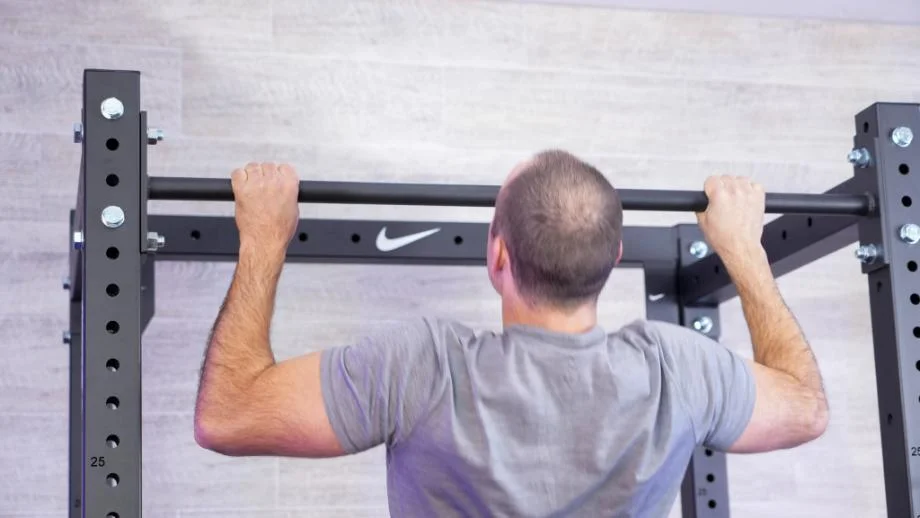
The primary difference is going to be the position of your hands, which helps with the activation of different muscle groups. While there are many variations of pull-up bars you’ll see in home gyms and commercial gyms, pull-ups are typically performed with a grip width that’s slightly wider than your shoulder width, with your palms facing away from you. This is often called an overhand grip or pronated grip.
Chin-ups, on the other hand, are performed with your hands at shoulder width, or sometimes even narrower, and your palms facing toward your own body. This is an underhand or supinated grip.
Muscles Targeted
Now, let’s get a bit more technical and look at what muscles chin-ups work compared to what muscles are working when you do pull-ups.
Both exercises primarily train the latissimus dorsi (lats), biceps, brachialis, posterior deltoids, teres major, rhomboids, lower trapezius, and even your pectoralis major (pecs), depending on the variation you use.
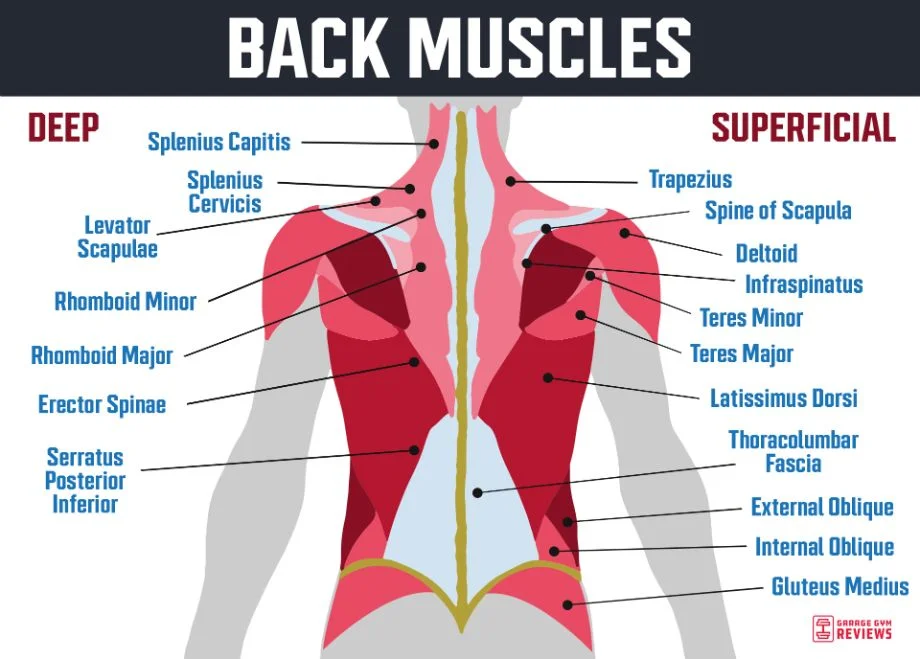
With a chin-up, because your hands are narrower and your palms are facing in, your biceps are significantly more involved, so your arms can assist the pulling muscles in your back.
In a pull-up, the wider, overhand grip makes it significantly harder to do as much with your biceps, so you’re going to rely a lot more on your back muscles to do the pulling, which is why pull-ups are usually more difficult.
Difficulty
While some individuals may have slightly different shoulder anatomy, for the most part, our bodies work the same way. In nearly every case, a chin-up will be slightly easier than a pull-up.
That’s not to say it’s a simple movement, as both exercises require significant upper-body strength, but most people find they can do more chin-ups than pull-ups, and beginners often start by mastering the chin-up, before moving on to pull-ups.
For both chin-ups and pull-ups, you need a significant amount of upper-body strength to hold on to the bar and pull your entire body weight up. You’ll also want a decent level of core strength to prevent your legs and torso from swinging around.
With pull-ups, you’ll need a particularly strong back to complete the exercise with proper form, as your biceps won’t be able to help out very much. Because the grip is wider, you’ll also need a bit more shoulder strength and stability to safely perform a pull-up.
RELATED: Muscle-Building Back And Shoulder Workout
How to Perform Chin-Ups
Why do it: For building upper body strength, especially in your back and biceps, it’s hard to find a better exercise than the chin-up.
How to do it:

- First, get into the proper position with your hands about shoulder-width apart, using an underhand grip with your palms facing you (use a bench or step if needed).
- Start from the bottom, with your arms fully extended above your head.
- Begin the movement by squeezing your shoulder blades back and down, like you’re trying to lower them toward your waist.
- Keep your chest facing slightly up, and pull until your chest reaches the bar.
- Slowly lower yourself down to the bottom to the fully stretched position, and repeat.
Expert tip: For any variation of chin-ups or pull-ups, you’re going to need to start by getting a good grip on the chin-up bar, or handles you’re using. As pull-up stations are generally designed to allow you to lower yourself through a full range of motion without your feet hitting the ground, the bar is often quite high, so you may need to use a bench or step to safely get into the starting position.
Benefits of Chin-Ups
- Strengthens your biceps, forearms, and back muscles
- A great upper-body exercise that’s easier than pull-ups for most people
- Improved core strength and body weight control
RELATED: Beyond The Basic Biceps Curl: How To Gain Arm Mass
How to Perform Pull-Ups
Why do it: Pull-ups are a great way to build a stronger back, and because you’re using such a wide grip, you’re also going to train a lot of the stabilizer muscles around your shoulders.
How to do it:
- Begin by safely getting into the starting position, with your hands shoulder-width apart or wider on the bar, palms facing away from you, and lower yourself to the starting position. You can choose a hand width that feels comfortable with the pull-up bar you’re using, ranging anywhere from a shoulder-width grip to a much wider grip.
- From the fully stretched position at the bottom, start by pulling your shoulder blades and elbows back and down, imagining you’re trying to tuck your elbows into your back pocket.
- Keep your chest pointed up, and raise your body until your chest is touching the bar.
- Slowly lower yourself under control until you’ve reached the starting position, hanging from the bar with your arms fully extended above you.
Expert tip: If you’re going to do wide-grip pull-ups with your hands very apart, you’ll need excellent shoulder mobility, so make sure you’re not going so wide that it causes any shoulder pain or discomfort.
Benefits of Pull-Ups
- Pull-ups work the muscles in your back, arms, and shoulder stabilizers
- This is a challenging exercise for those who find chin-ups too easy
- You can use a wide variety of hand positions to make slight changes to the angle of your arms and muscles targeted
Chin-Up Variations
If you need a break from the standard chin-up, or you’re finding it too difficult, here are some interesting variations you can use to make the exercise easier or add a new challenge.
Band-Assisted Chin-Ups


For those newer to bodyweight exercises, band-assisted chin-ups are a great way to make the exercise more manageable but can be tricky to set up. First, you’ll need a thick, strong resistance band that’s one continuous loop, not the lightweight bands with handles on the end.
You’ll loop the band around the chin-up bar, so the band is hanging down from the center of the bar. Set up for the chin-up as usual, but step on the band with one or both feet. Thanks to the band’s elasticity, it will help pull you up from the bottom, where you’re generally going to be the weakest while providing less assistance as you reach the top, where you’re a little stronger.
Towel Chin-Ups

If you want to improve your grip strength or standard chin-ups are too easy, towel chin-ups are a great variation to try. You’ll need a medium to large towel to drape over the chin-up bar, or you can use two smaller towels if you prefer, and make two separate grips.
Make sure your towel is secured over the bar, grip one end of the towel in each hand, and perform the chin-up by bringing your chest up to the bar. Similar to climbing a rope, you’ll find that the muscles in your hands and forearms have to work significantly harder to hold on to the towel compared to hanging on to a bar.
Neutral Grip Chin-Ups

Also referred to as a close grip chin-up, this exercise is somewhere between a chin-up and a pull-up, so I’m going to place it in the chin-up category since the grip should be about shoulder-width. You’ll also need access to a bar that has neutral grips built in.
If you have a neutral grip bar, the setup will be the same as a standard chin-up, except your palms will be facing each other. The narrower grip allows you to recruit more of your forearm muscles to assist your back and biceps, making this a slightly easier yet still challenging variation.
RELATED: 15 Best Back Exercises
Pull-Up Variations
If you’re struggling with pull-ups, or are seeking an advanced version, here are some variations to try in your next back workout.
Machine-Assisted Pull-Ups

Machine-assisted pull-ups are one of the easiest ways to build strength as a beginner, provided you have access to an assisted pull-up machine. All you need to do is kneel or stand on the machine, depending on which one you have, and the counterweight will push your body back up, allowing you to complete multiple repetitions.
As you progress and get stronger, you can gradually decrease the assistance used until you’re strong enough to do pull-ups without help. You could also perform a lat pulldown, but you’ll be stuck to your seat, which doesn’t feel the same as actually moving your body weight.
Negative Pull-Ups

If you’re strong enough for chin-ups but not quite strong enough for pull-ups, then negative pull-ups are a great option. That said, you’ll need to do them safely to prevent injury.
To perform a negative pull-up, start at the top of the movement, rather than the bottom. This means you need a way to safely reach the top of the bar, so please don’t jump from the ground and try to catch yourself. I’ve seen too many people smash their chins on the bar doing this in my years working in gyms. I’d suggest using a box, bench, or anything else tall enough to help you safely reach the top.
From the top, slowly lower yourself down, ideally over three to five seconds. Once you’re at the bottom, let go and reset yourself. This will help you build strength with your body weight, but you get to skip the part where you’re pulling your body up from the bottom, which is the most difficult part.
Weighted Pull-Ups

If pull-ups are too easy and you’re looking to give your upper body muscles an even greater challenge, you can try weighted pull-ups.
You’ll need a weight belt with a chain attachment to hang a plate from, or you can hold a weight between your feet, though you may need a training partner to help you. Once you’ve got your extra weight, simply perform the pull-up as usual, which will be much more difficult with the added weight.
Inverted Rows

Okay, this technically isn’t a pull-up, but it’s a great way to build the muscles in your back, which will help make pull-ups easier, and you can do this in any power rack or Smith machine.
Jared Nobbe, MA, CSCS, USAW National Level Coach also agrees that inverted rows are a great way to build strength for pull-ups, saying: “The inverted row allows you to challenge yourself in varying positions, bridging the gap from the ring row to the pull-up.”
RELATED: Back Muscles Anatomy
To start, set the bar in the rack somewhere between waist and chest height. Start by squatting or laying underneath the bar, get a grip slightly wider than shoulder width with your palms facing away from you, and then walk your feet out until your body is in a straight line, hanging from underneath the bar.
Now, complete the movement by pulling your shoulder blades back and squeezing your elbows back to raise your chest to the bar. This is quite similar to an upside-down barbell Pendlay row.
The angle is slightly different from a pull-up, but you’ll be working similar muscles, and as you get stronger, you can gradually make the exercise more challenging by using different angles until you’re strong enough for pull-ups.
Are Chin-Ups or Pull-Ups Better for Building Muscle?
If you’re considering either exercise, you’re probably looking to build strength and muscle, and want to know which exercise is the better choice.
The answer? Both can be very effective exercises to provide a proper stimulus to your muscles, encouraging them to grow bigger and stronger.
A 2010 study from The Journal of Strength & Conditioning Research used Electromyographic (EMG) signals to measure muscle activation during both exercises1. The test showed that both chin-ups and pull-ups activate the biceps, lats, lower traps, pecs, erector spinae, and oblique muscles.
Chin-ups are going to be better for building your arms and back together, while pull-ups are best if you only care about growing a wide back. For either exercise, you need to make sure you’re able to complete the movement with proper form, control your body weight, and engage the muscles you’re trying to grow.
Pull-Up vs Chin-Up: Which Should You Do?
The simplest way to choose which exercise to perform is to figure out how strong you are with your body weight. If you can perform multiple sets of chin-ups with proper form but can only do one or two reps with pull-ups, chin-ups are probably going to be the better option until you get stronger. Chin-ups allow your biceps to assist your back significantly more, making them a bit easier than pull-ups.
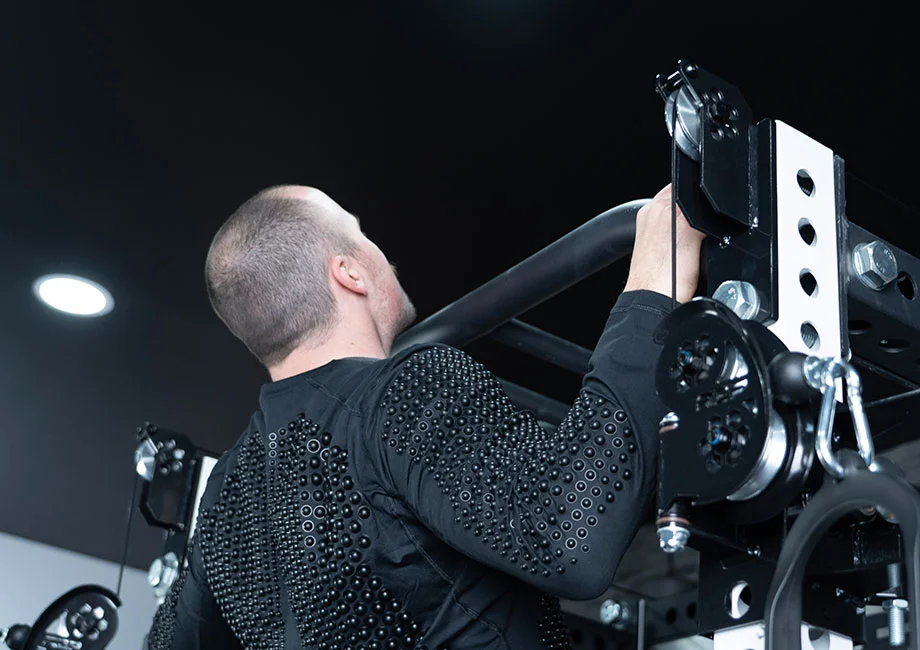
If you’re strong enough to do both, then you can choose based on what muscles you’re trying to focus on. For bigger biceps, chin-ups are a better choice, and for a bigger, stronger back, you’ll probably want to choose pull-ups. Both options are great for building back strength, so don’t feel slighted if you can only do one.
RELATED: The Ultimate 30-Day Pull-Up Progression Plan
However, if you’re a bit more advanced and prefer to prioritize your back muscles instead of your arms, pull-ups are the better choice for your goals.
Which Exercise Wins the Chin-Up vs. Pull-Up Battle? Final Thoughts
While both exercises have their merits, the better exercise depends on your current goals and fitness level. Many advanced athletes, bodybuilders, and fitness enthusiasts regularly perform both, so it’s impossible to say one is better.
They’re two different exercises, and both are fantastic choices to incorporate into your workout routine when you’re looking to build upper body strength and muscle.
Chin-Up vs. Pull-Up: FAQs
Are chin-ups or pull-ups better?
Chin-ups are better for those who want to target their biceps and back together, or anyone who’s not quite strong enough for standard pull-ups. Pull-ups are a better choice for more advanced trainees or anyone who prefers to focus on their back muscles, instead of their biceps. But they’re both excellent exercises.
How many chin-ups are equal to pull-ups?
They’re two different exercises, so it’s impossible to find a perfect formula that compares the two. In my experience as a personal trainer and strength coach, I’ve found that most people can do twice as many chin-ups as they can pull-ups, but there’s no set rule for this.
Can I replace pull-ups with chin-ups?
Depending on your goals, this may be a great option. If pull-ups are too challenging, chin-ups are a great replacement, though you need to consider that you’ll be using significantly more of your biceps muscles in a chin-up vs. pull-up.
Do chin-ups or pull-ups build more muscle?
Both exercises are great for building muscle. Chin-ups will build more muscle in your biceps, back, and forearms, while pull-ups primarily help build a stronger, wider back, with less emphasis on your arms.
References
- Youdas JW, Amundson CL, Cicero KS, Hahn JJ, Harezlak DT, Hollman JH. Surface electromyographic activation patterns and elbow joint motion during a pull-up, chin-up, or perfect-pullup™ rotational exercise. J Strength Cond Res. 2010;24(12):3404-3414. doi:10.1519/JSC.0b013e3181f1598c